
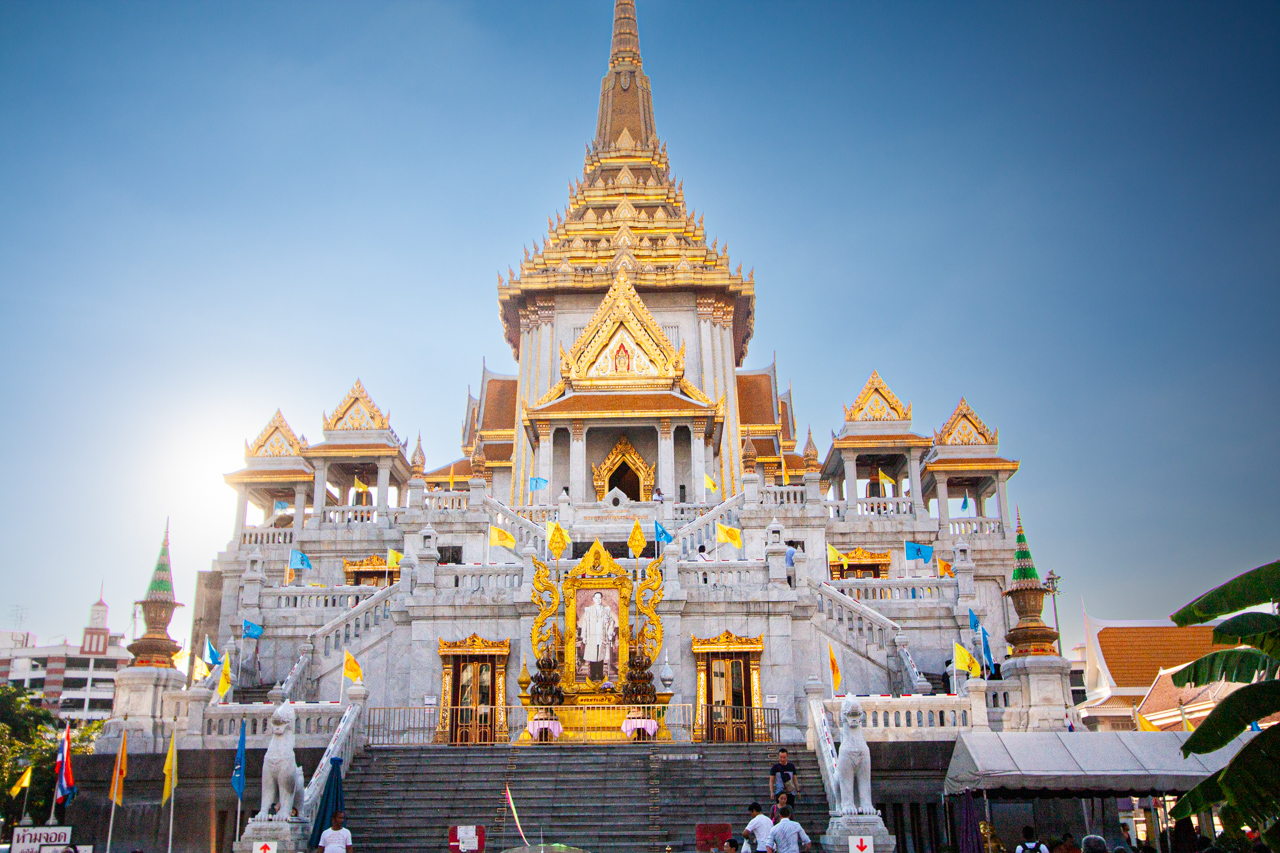
Wondering what to see in Bangkok? You’re in the right place. If you’re searching for the best things to do in Bangkok, this guide will take you straight into the heart of the city.
This place can feel a bit overwhelming at first – it’s loud, intense, smells like sweet mango and incense, yet there’s something about it that quickly pulls you in.
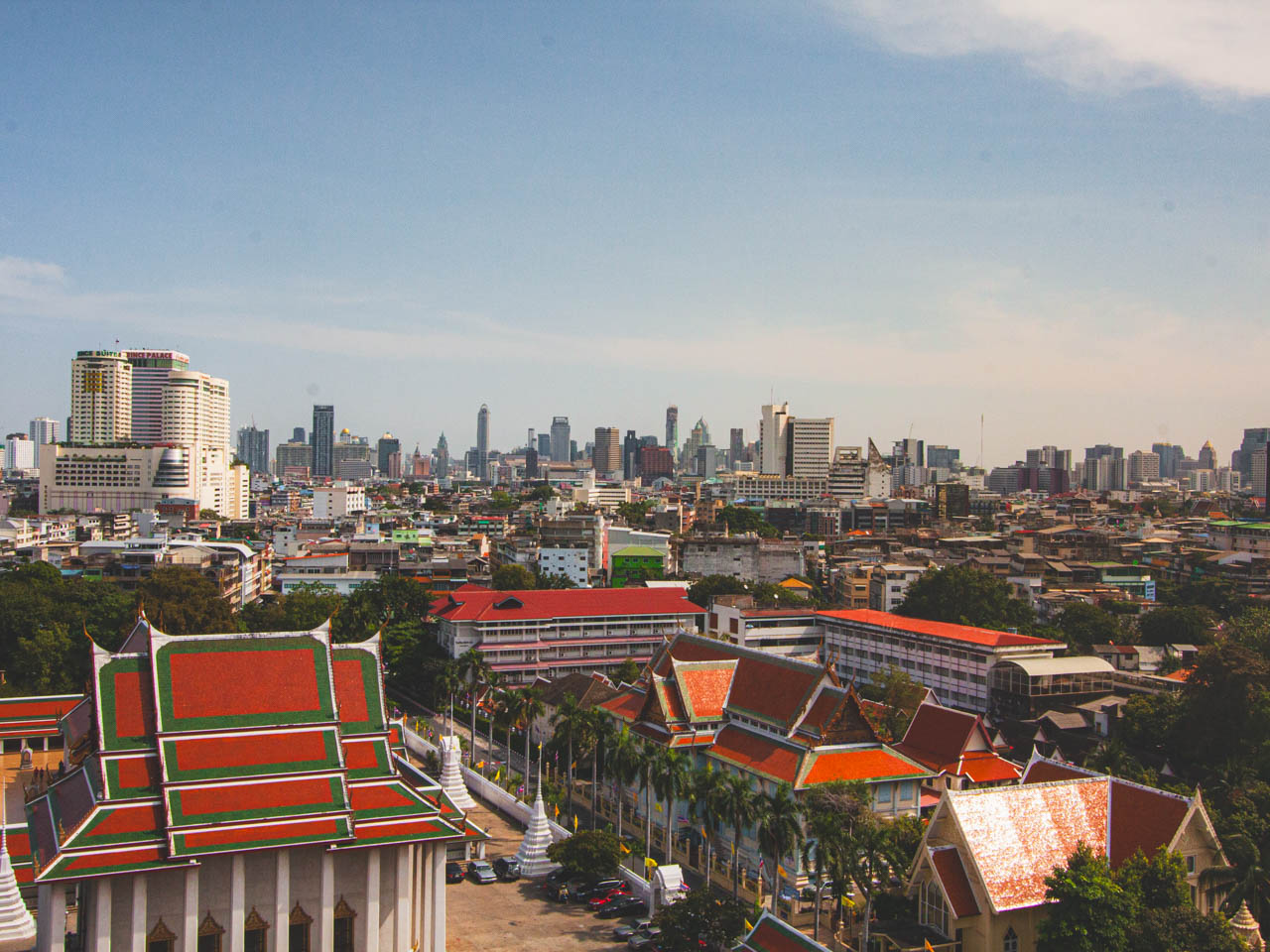
Bangkok is a mix of contrasts: golden temples next to modern skyscrapers, tuk-tuks passing street food stalls, and food that tastes unlike anywhere else.
In this guide, I’ll show you 10 places truly worth seeing – not just “must-sees,” but places that stay with you long after you leave.
I’ll also add some practical tips: how to get there, when’s the best time to visit, and where to stay to feel the city’s rhythm, not just “check it off.”
Ready for Bangkok, my way? Let’s get started.
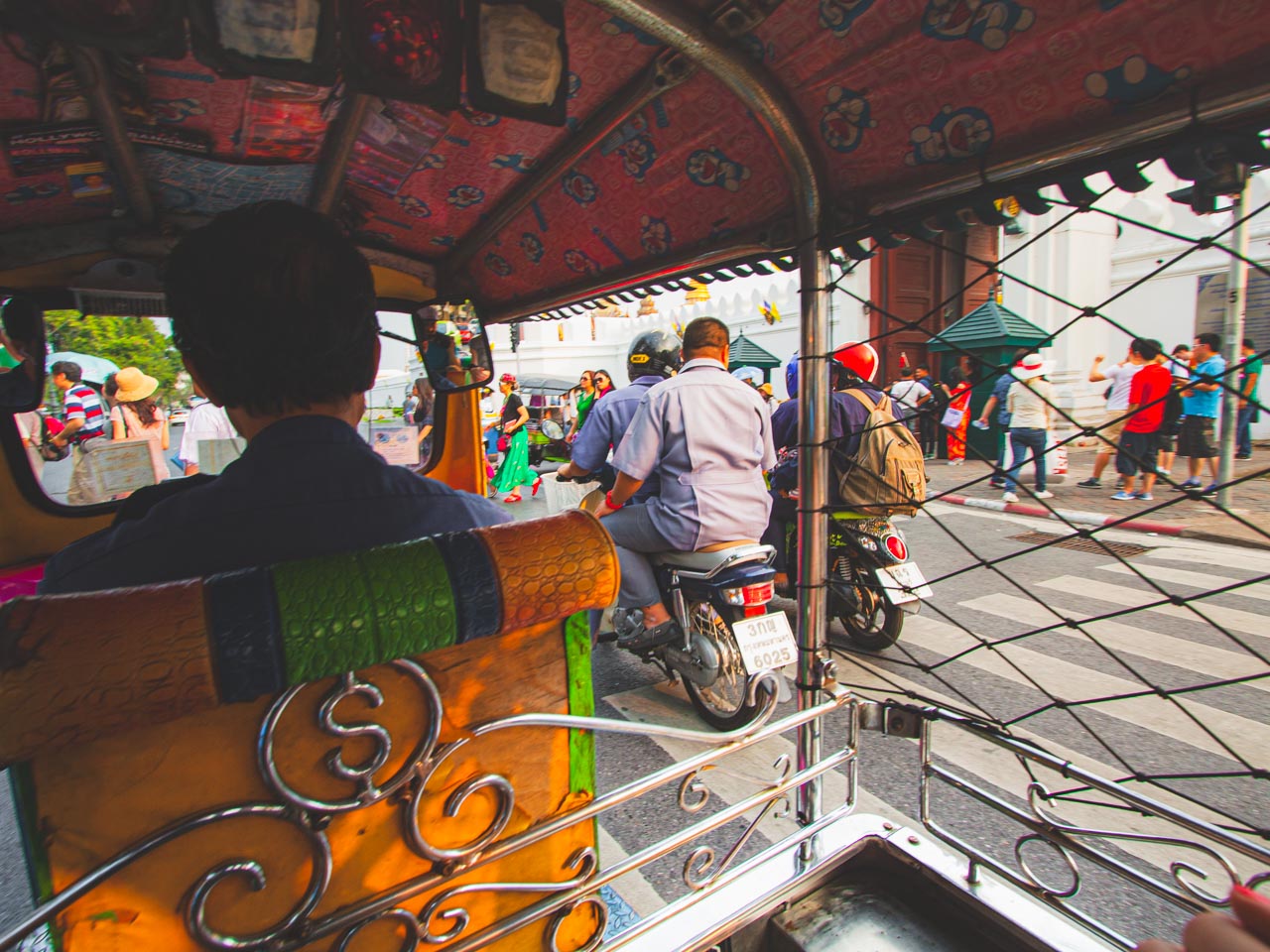
Best Things to Do in Bangkok
1. The Grand Palace and Temple of the Emerald Buddha
If you’re wondering what to see in Bangkok first, the Grand Palace is a place that truly makes an impression.
It’s one of those spots where from the first moment you feel like you’re stepping into another era – full of gold, details, and history that Thailand tells in its own unique way.
The palace was built in 1782 and served as the official residence of the king, his court, and the entire royal administration for 150 years. Today, no one from the royal family lives here anymore, but you can still feel the gravity and spirituality of this place.
No wonder it’s visited by over 8 million people annually – it’s one of the most visited palaces in the world.
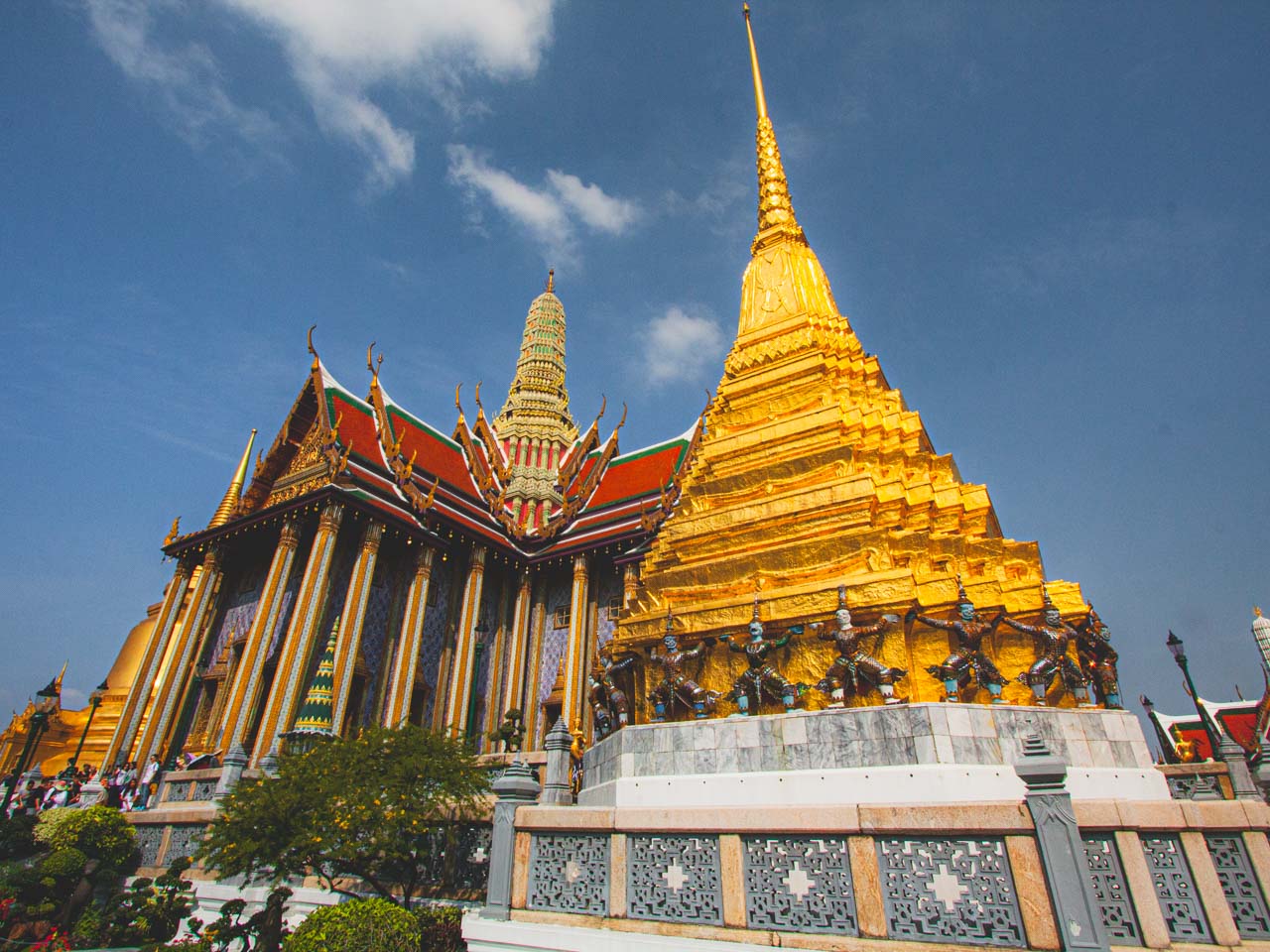
The complex is huge, consisting of over a hundred buildings divided into four courtyards.
The outer courtyard served administrative functions, the middle was the heart of palace life, and the inner courtyard – once accessible only to women – concealed the most intimate part of the royal world.
It’s worth starting your visit at Wat Phra Kaew, the Temple of the Emerald Buddha. Interestingly, although it looks like a classic Buddhist temple, it’s actually a royal chapel – no monks live here.
Inside, you’ll find the famous Emerald Buddha figurine (only 66 cm tall!), which is one of Thailand’s most important symbols.
Despite being popular and sometimes crowded, for Bangkok residents the palace is still the country’s spiritual center – a place full of symbolism, tradition, and royal energy that can’t be mistaken for anything else.
Helpful Info
- Entrance to the Grand Palace costs 500 THB per person, and children under 120 cm enter free.
- It’s best to come early in the morning – before it gets really hot and before the biggest crowds arrive. This is also the best time to peacefully enjoy the space.
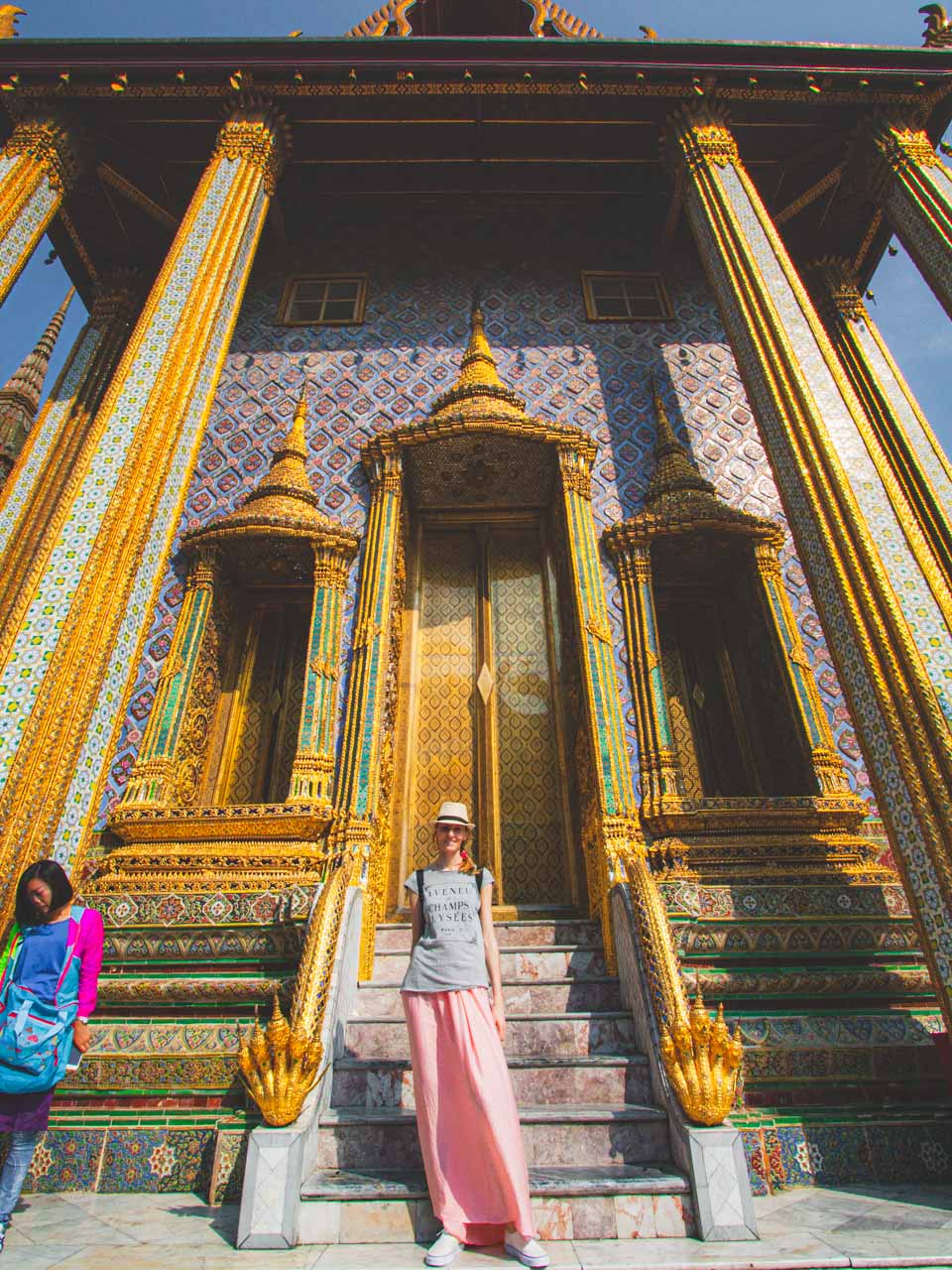
- Remember the dress code: shoulders and knees must be covered. There’s a strict dress code on palace grounds, so even in the heat, it’s worth having a light shirt or scarf that will save the situation.
2. Chakri Maha Prasat
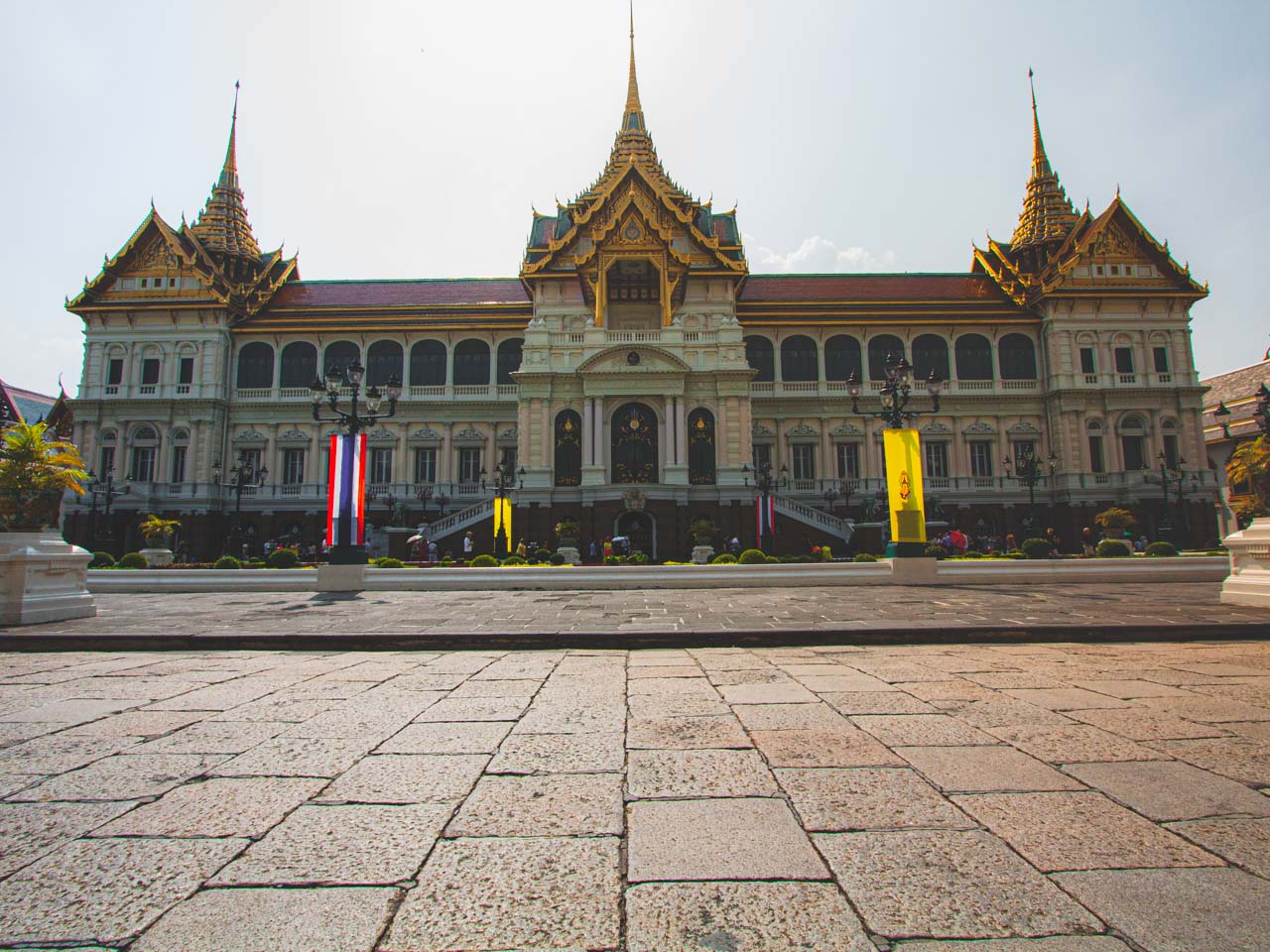
Another place worth seeing in Bangkok is Chakri Maha Prasat – one of the most distinctive buildings on Grand Palace grounds.
It was built on the site of a former garden where King Rama V was born and raised, so it holds special, personal significance for Thais.
The building itself makes a huge impression: European neoclassicism combined with Thai details creates a composition you won’t see anywhere else in Asia.
It’s precisely this contrast – the Western facade and traditional Thai roofs – that makes Chakri Maha Prasat stand out among the entire complex.
This place attracts not only with its history but also with the story of when Thailand was strongly opening up to the world.
That’s why many travelers stop here longer to understand how much this period influenced the country’s culture and identity.
Helpful Info
- You’ll see Chakri Maha Prasat as part of the regular Grand Palace ticket – it costs 500 THB and covers the entire complex.
- If you care about beautiful photos, come early in the morning or late afternoon.
- The light is soft and golden then, and the space becomes quieter. It’s the perfect moment to capture those characteristic roofs and details without crowds in the frame.
3. Temple of the Reclining Buddha
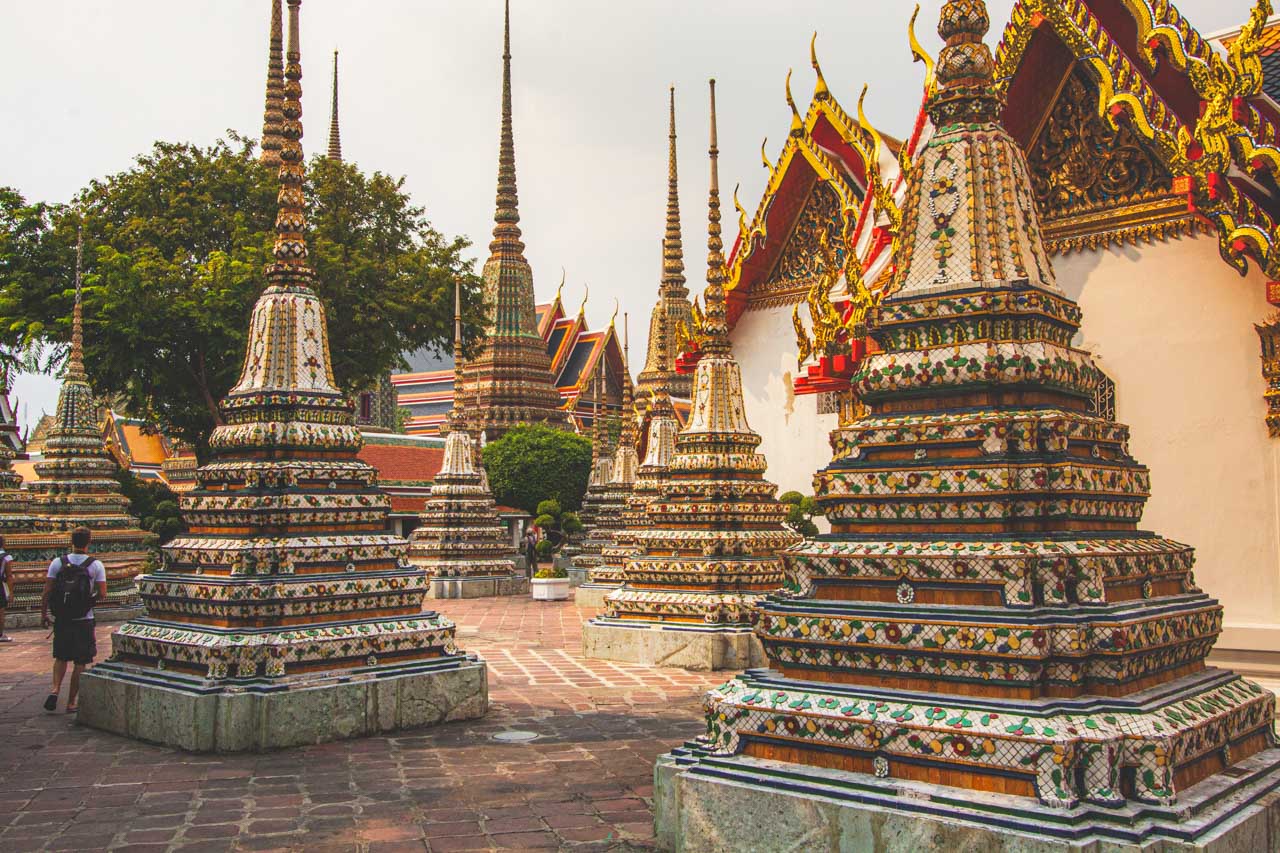
Another place truly worth seeing in Bangkok is Wat Pho, the famous Temple of the Reclining Buddha.
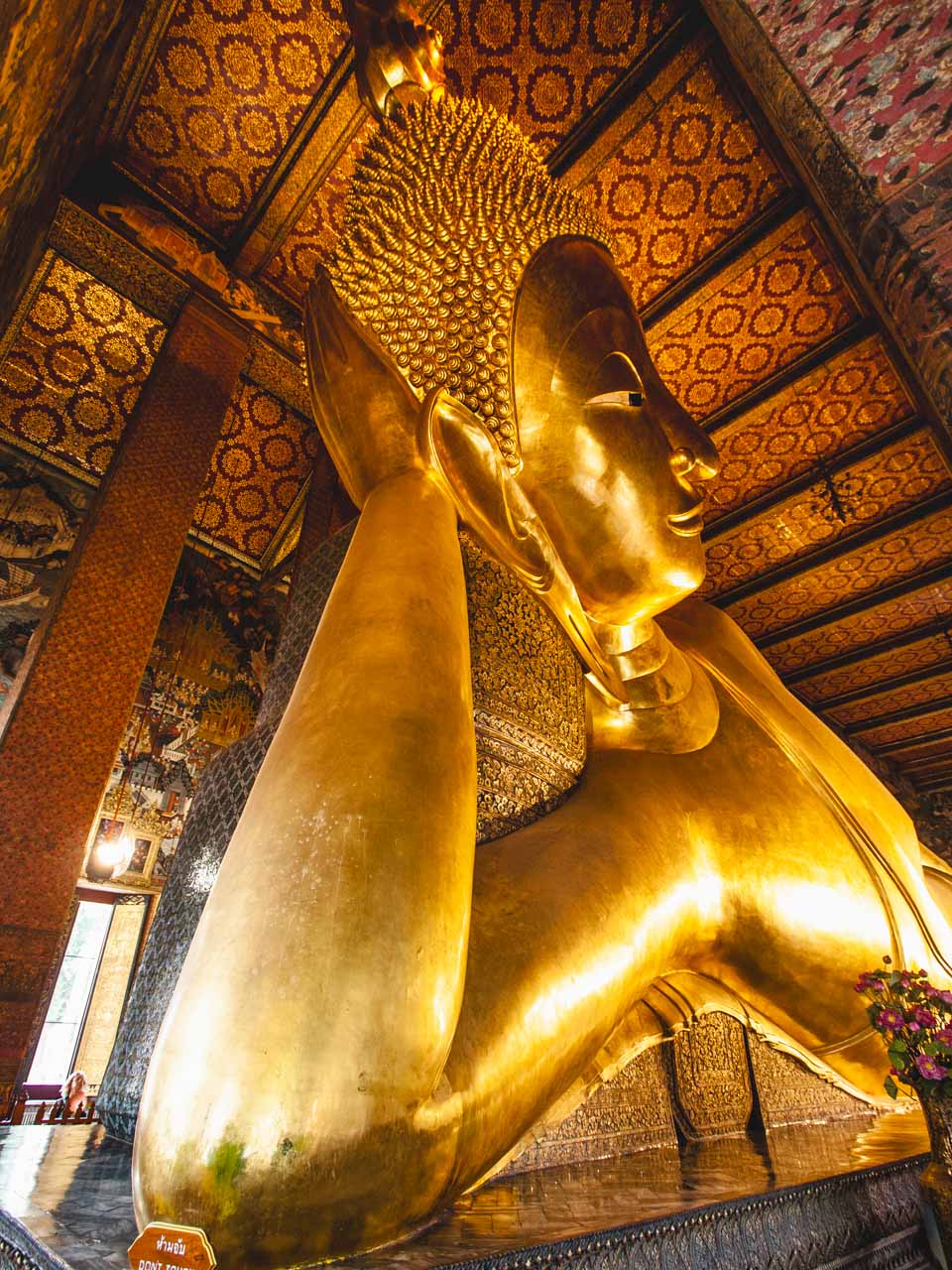
This is where you’ll find the largest collection of Buddha images in all of Thailand, and its heart is the impressive 46-meter-long Reclining Buddha statue.
Up close, it looks like it barely fits in the building – golden, peaceful, filling the entire space with its brilliance.
Wat Pho isn’t just a temple but also a place that has served education for centuries. It’s recognized as Thailand’s oldest public education center, and on its grounds operates a prestigious Thai medicine school.
What’s interesting – and very symbolic – is that traditional Thai massage was born right here. To this day, you can learn it directly at the temple or receive a massage performed by practicing students.
Wat Pho is one of those places where history, spirituality, and everyday life connect in a way that stays with you for a long time.
Helpful Info
- Entrance to Wat Pho costs 300 THB, and children under 120 cm enter free.
- If you want peaceful sightseeing – come in the morning. It’s the best time to feel the place’s atmosphere before crowds arrive.
- And if you plan to get a traditional Thai massage – it’s good to book in advance, then you have a better chance of getting a free slot and a more peaceful experience.
4. Temple of Dawn
Another place truly worth seeing in Bangkok is Wat Arun, the famous Temple of Dawn, located on the western side of the Chao Phraya River.
The ferry ride across itself is a small adventure – the wind, views of temples on both riverbanks, and that moment when Wat Arun begins to emerge more and more clearly.
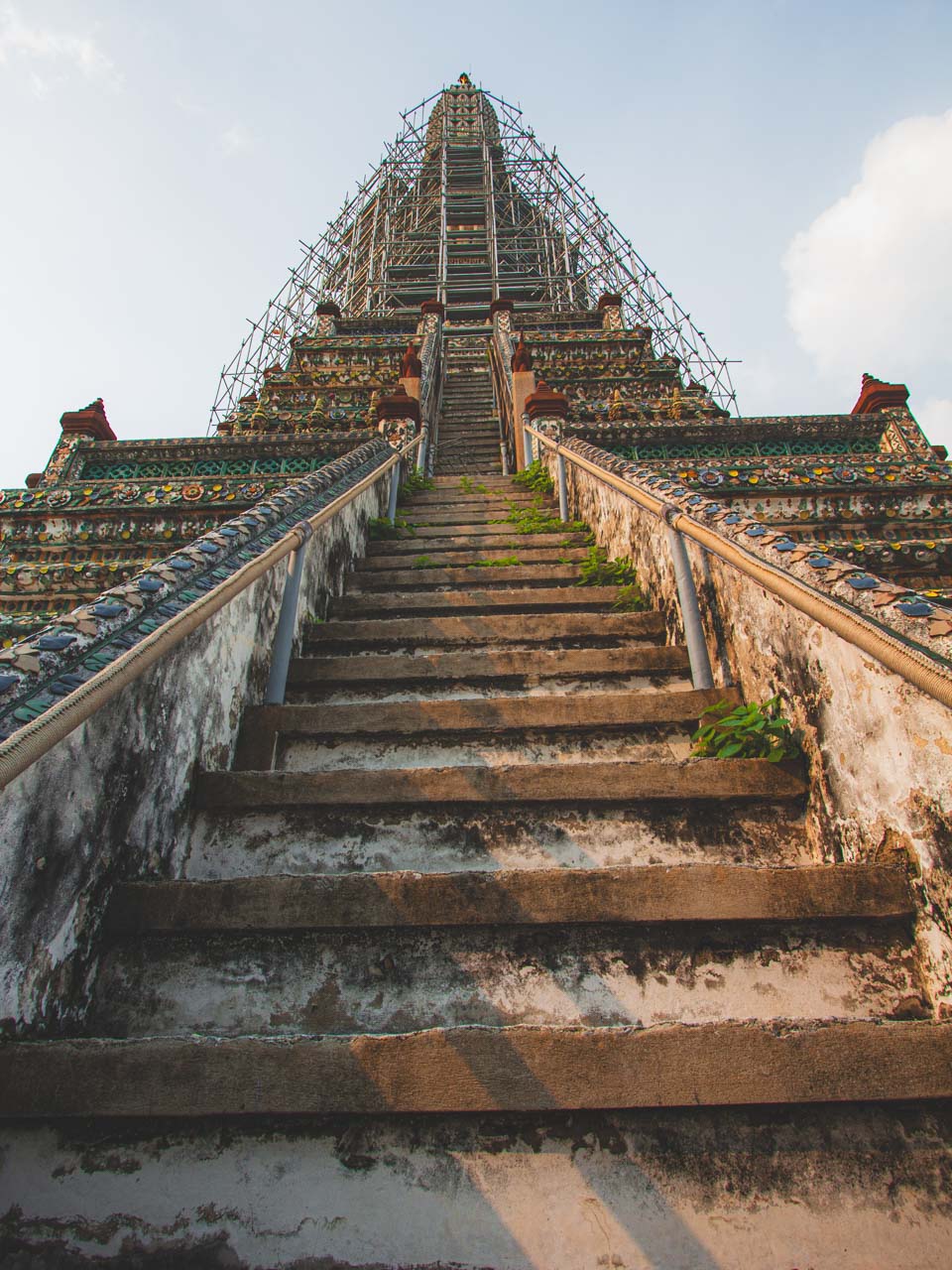
Once you enter the temple grounds, you immediately see why it’s so special. Its colorful walls are covered with broken Chinese porcelain, which in the sunlight looks like a mosaic assembled from thousands of tiny stories.
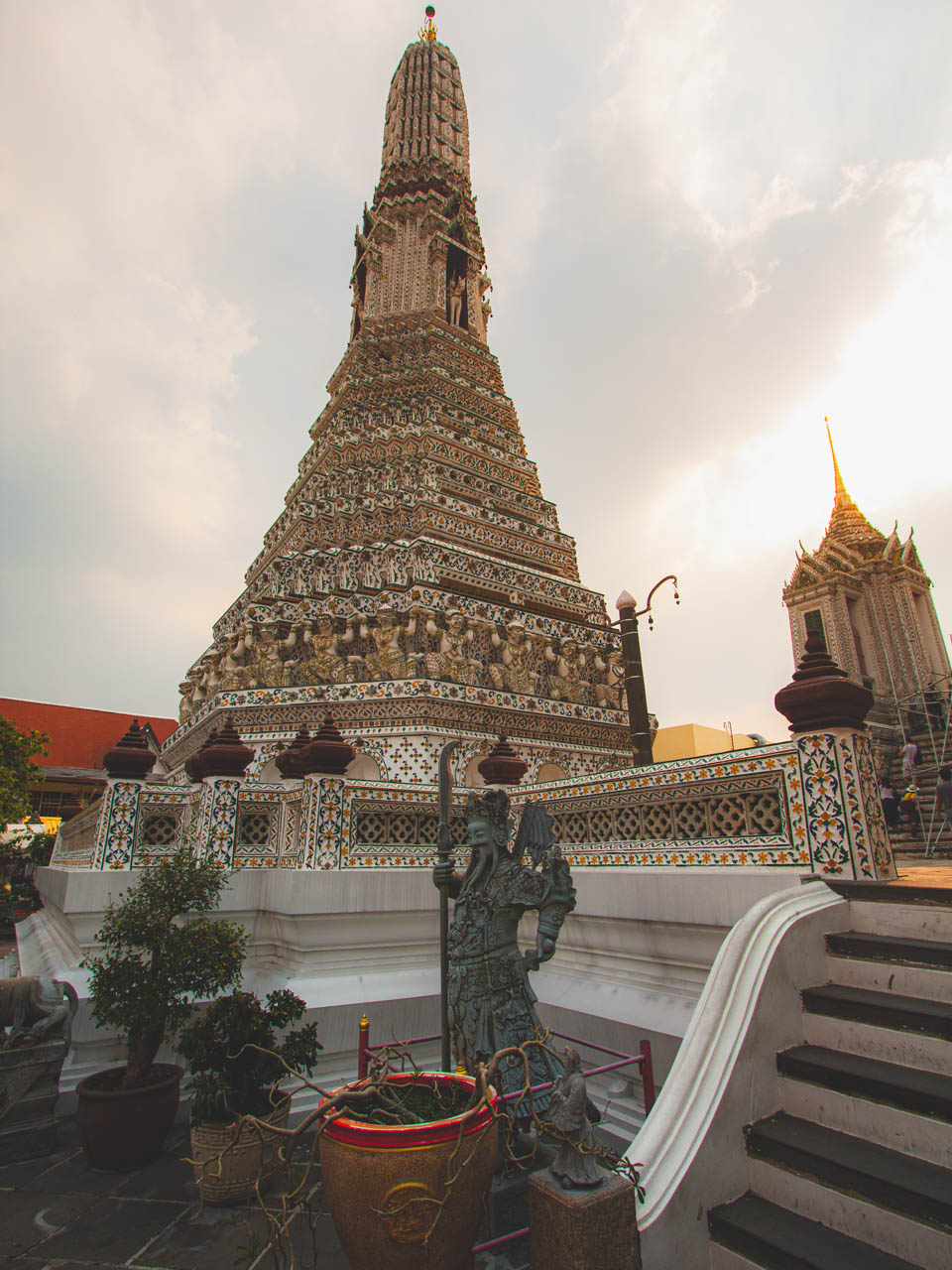
It’s a place that begs you to come closer and see every detail.
The tallest tower is over 100 meters high, making it one of Bangkok’s most impressive structures.
Climbing to the top is challenging – the stairs are really steep, and you feel every step in your legs.
But when you finally stand at the summit, the view makes up for everything: Bangkok’s panorama, the river winding like a ribbon, and golden temple roofs on the other side of the riverbank. It’s one of those perspectives that stays with you for a long time.
Helpful Info
- Entrance to Wat Arun costs 200 THB, making it one of the more affordable attractions in Bangkok.
- It’s best to come early in the morning or late afternoon – the light is beautiful then, and visiting is much more pleasant than in full heat.
- And definitely wear comfortable shoes. The stairs are steep and you really feel them in your legs!
5. Wat Saket, the Golden Mount
One of my favorite places in Bangkok is Wat Saket, known as the Golden Mount. The temple sits in the heart of the city, yet has a surprising peace and breath of history.
Its origins date back to the Ayutthaya Kingdom era, when it functioned as Wat Sakae.
Only when Bangkok became the new capital did King Rama I renovate the temple and give it its current name.
Later rulers continued the expansion, and at the hilltop, they erected a golden chedi with Buddha relics, which became one of the city’s most recognizable symbols.
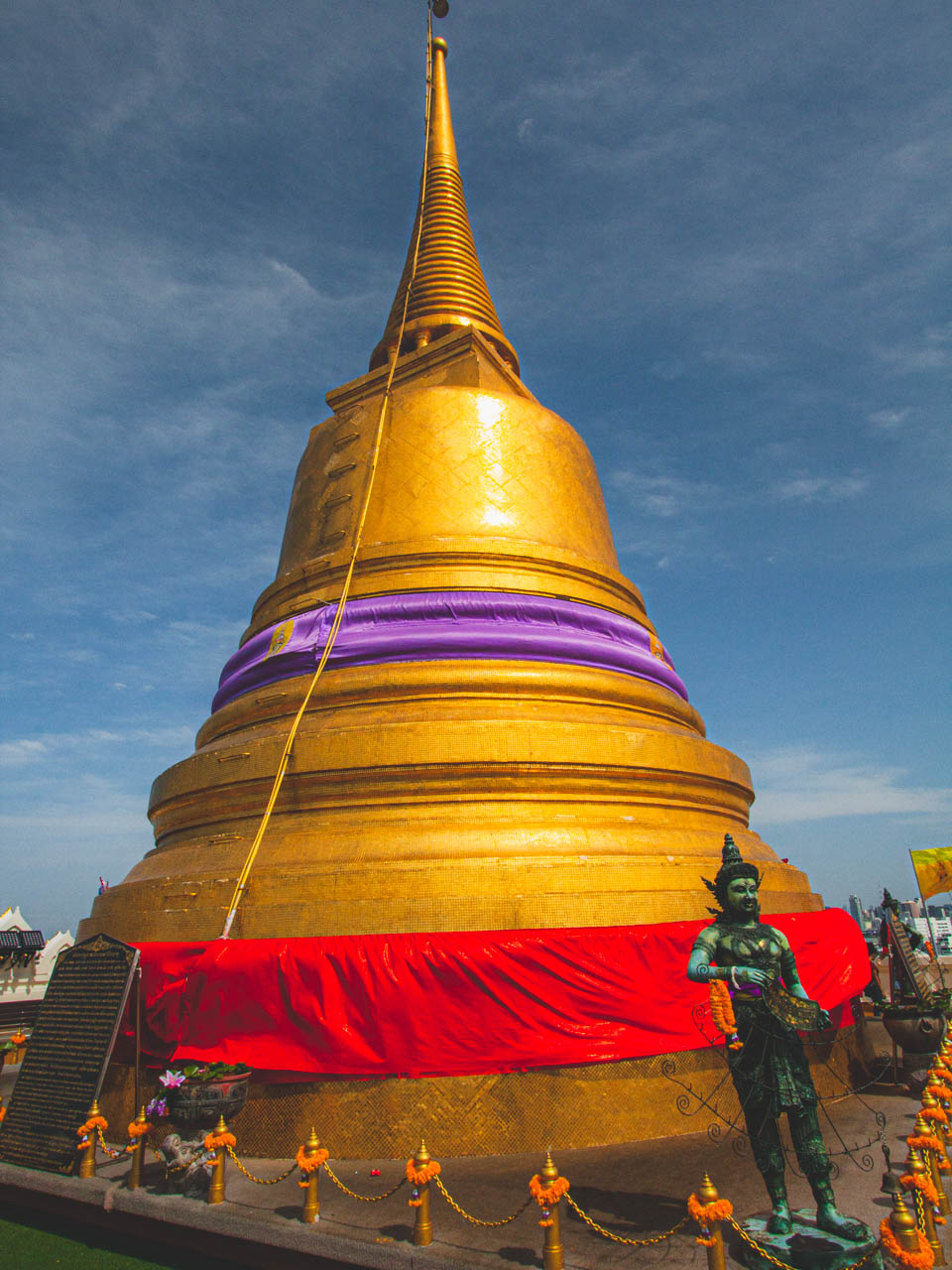
To reach the summit, you need to climb 318 steps. In the heat, this sounds like a challenge, but along the way there’s shade, flowers, small shrines, and bells that add a special atmosphere to this place.
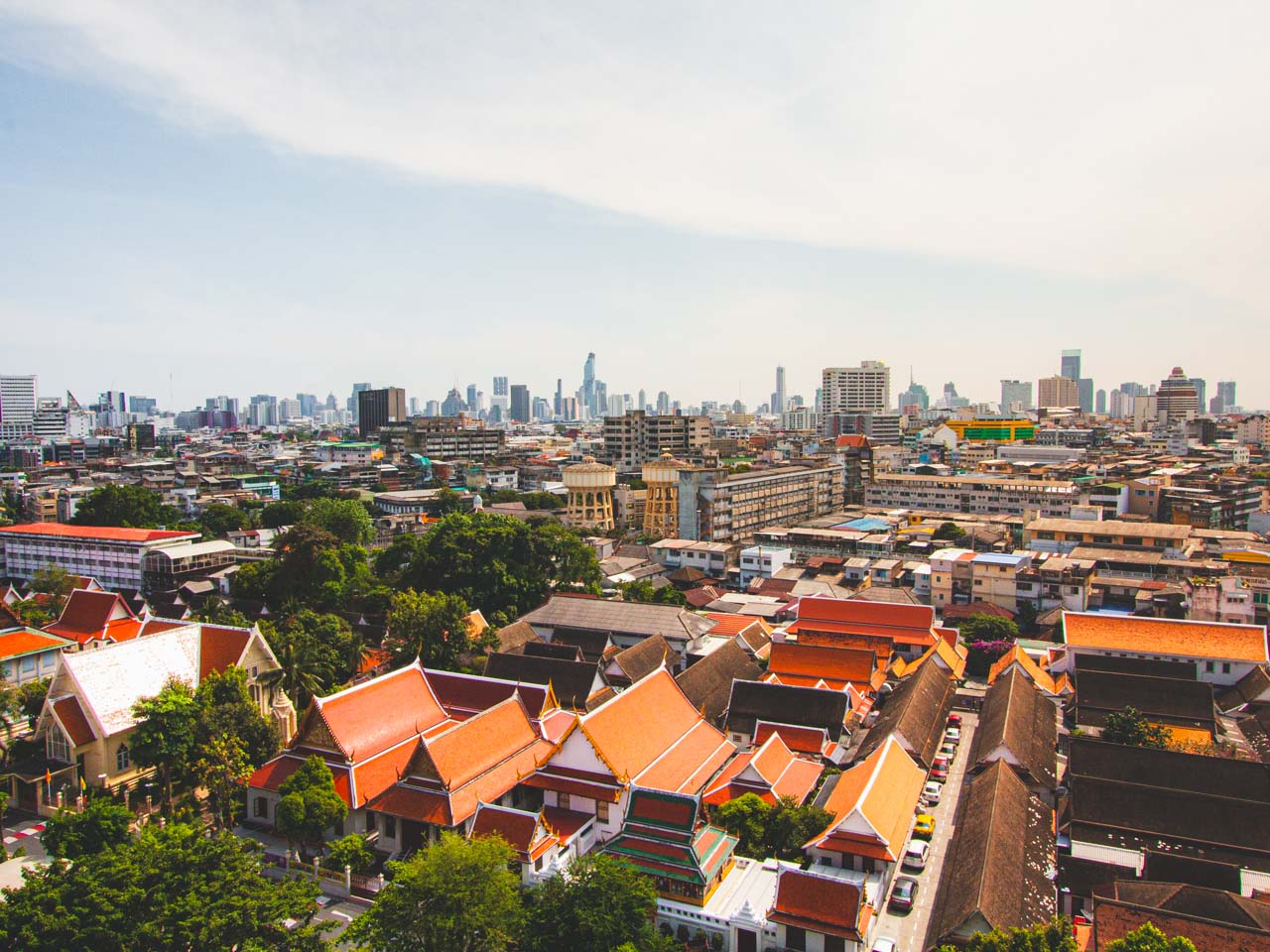
The views from the top? Absolutely worth every step. The panorama of Bangkok at sunset can stop you in your tracks – it’s one of the most beautiful viewpoints in the entire city.
During your visit, you can also do something very local – draw a fortune from Buddha. You kneel, gently shake a metal container, and wait for a wooden stick with a prophecy number to slide out.
Just a warning: not all fortunes are sweet and positive… I learned this the hard way. You do this entirely at your own risk!
Helpful Info
- Entrance to Wat Saket costs 100 THB, making it one of the more affordable attractions in Bangkok.
- If you dream of sunset at the Golden Mount, prepare for crowds – it’s one of the most popular times of day.
- You’ll catch quieter photos and peace early in the morning or late afternoon, when the light is soft and pleasant.
- Also remember to bring water and comfortable shoes – you really feel those 318 steps, especially in tropical heat!
6. Wat Traimit, Temple of the Golden Buddha
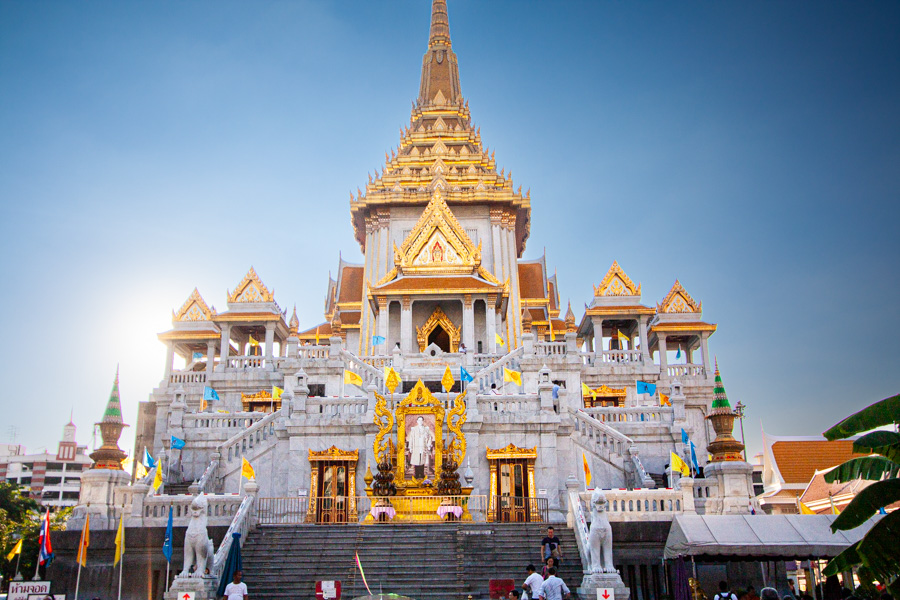
One of Bangkok’s most extraordinary places is Wat Traimit, known as the Temple of the Golden Buddha. Located at the end of Chinatown on bustling Yaowarat Road, it holds something truly impressive.
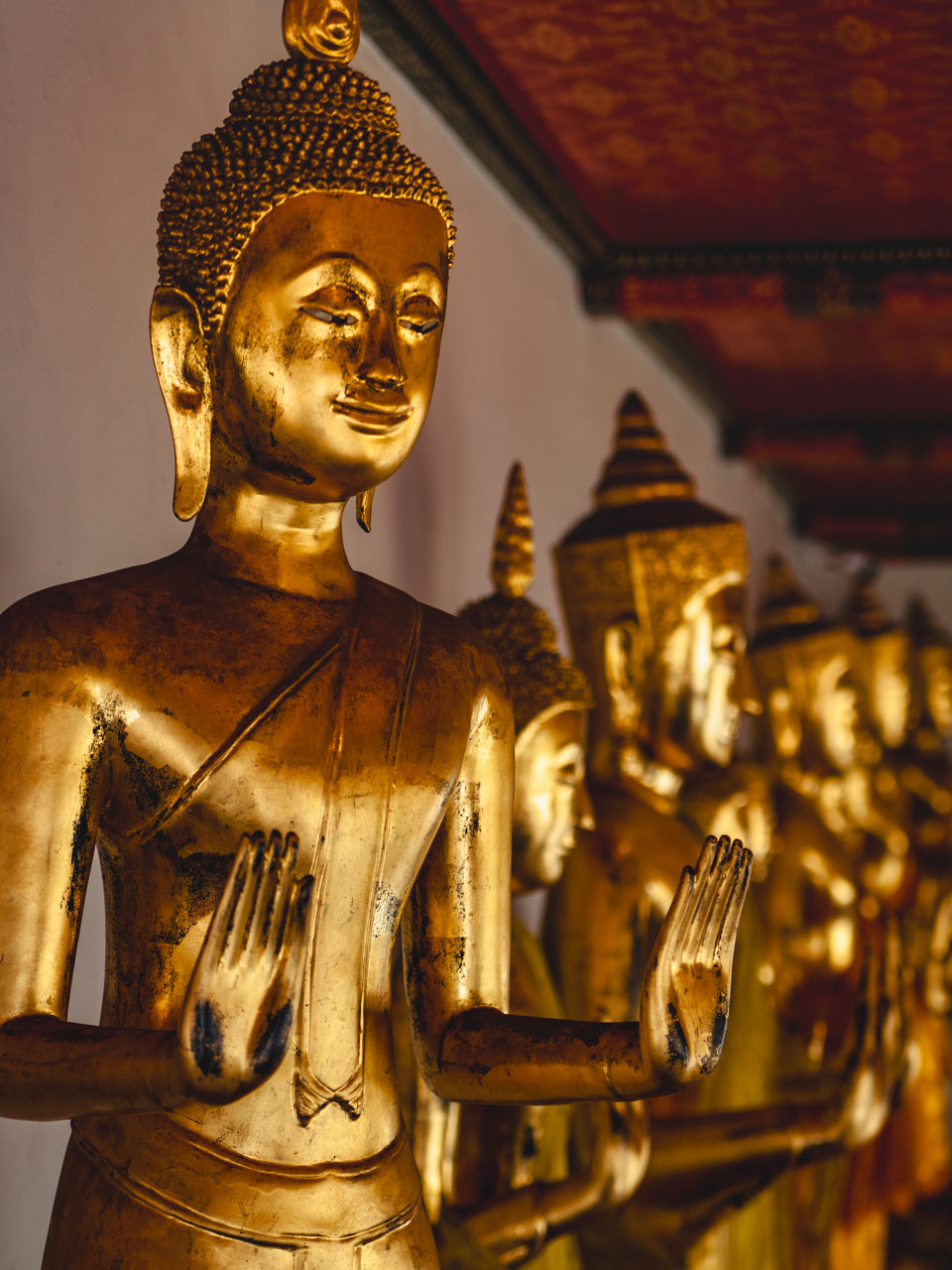
This is where you’ll find the world’s largest golden statue of a seated Buddha. It’s three meters tall, weighs over 5.5 tons, and shines in a way that can’t be compared to any other Buddha image in Thailand.
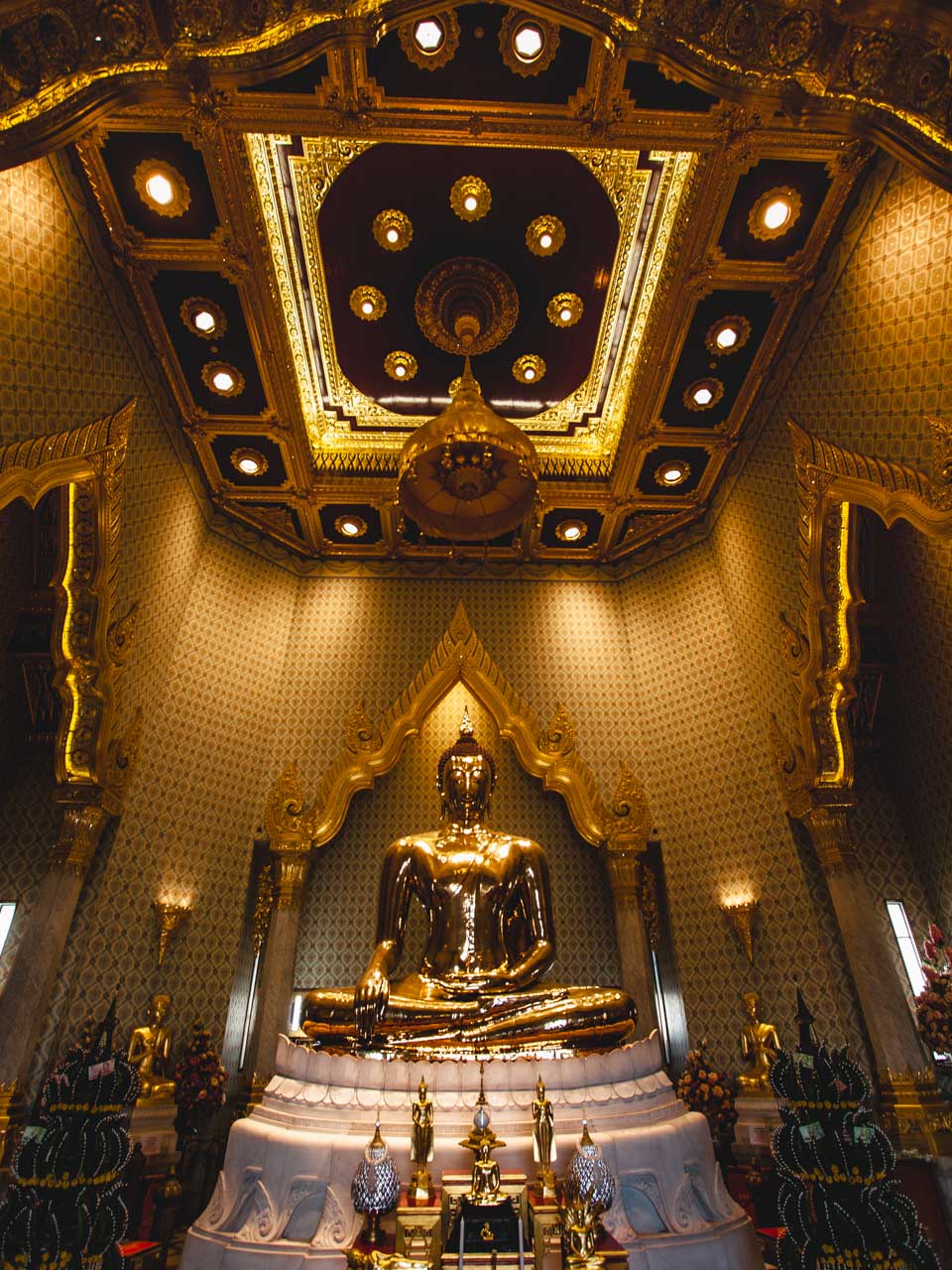
What’s most interesting, though, is that this relic didn’t look valuable for years. The statue, dating from 1238-1370, was covered with a layer of plaster for centuries, probably to hide its value from invaders.
Only in the 20th century, during work moving the statue, did the plaster accidentally crack – and pure gold was discovered underneath. It’s one of the most fascinating stories of accidental discoveries in Thailand.
Wat Traimit is a place that captivates not only with the statue itself but also with its atmosphere – a bit quieter than other, more crowded Bangkok temples.
Helpful Info
- Entrance to Wat Traimit costs 40 THB per person.
- It’s best to come early in the morning, right after opening at 8:00 AM – this is when the temple is still quiet and peaceful, and the Golden Buddha shines in soft morning light. Perfect conditions to really enjoy this place without crowds.
7. Chatuchak Market
If after a full day of temple visiting you want something completely different, definitely head to Chatuchak Market.
This place is a real force of nature – one of the world’s largest weekend markets, where you can feel Bangkok’s pulse in its purest form.
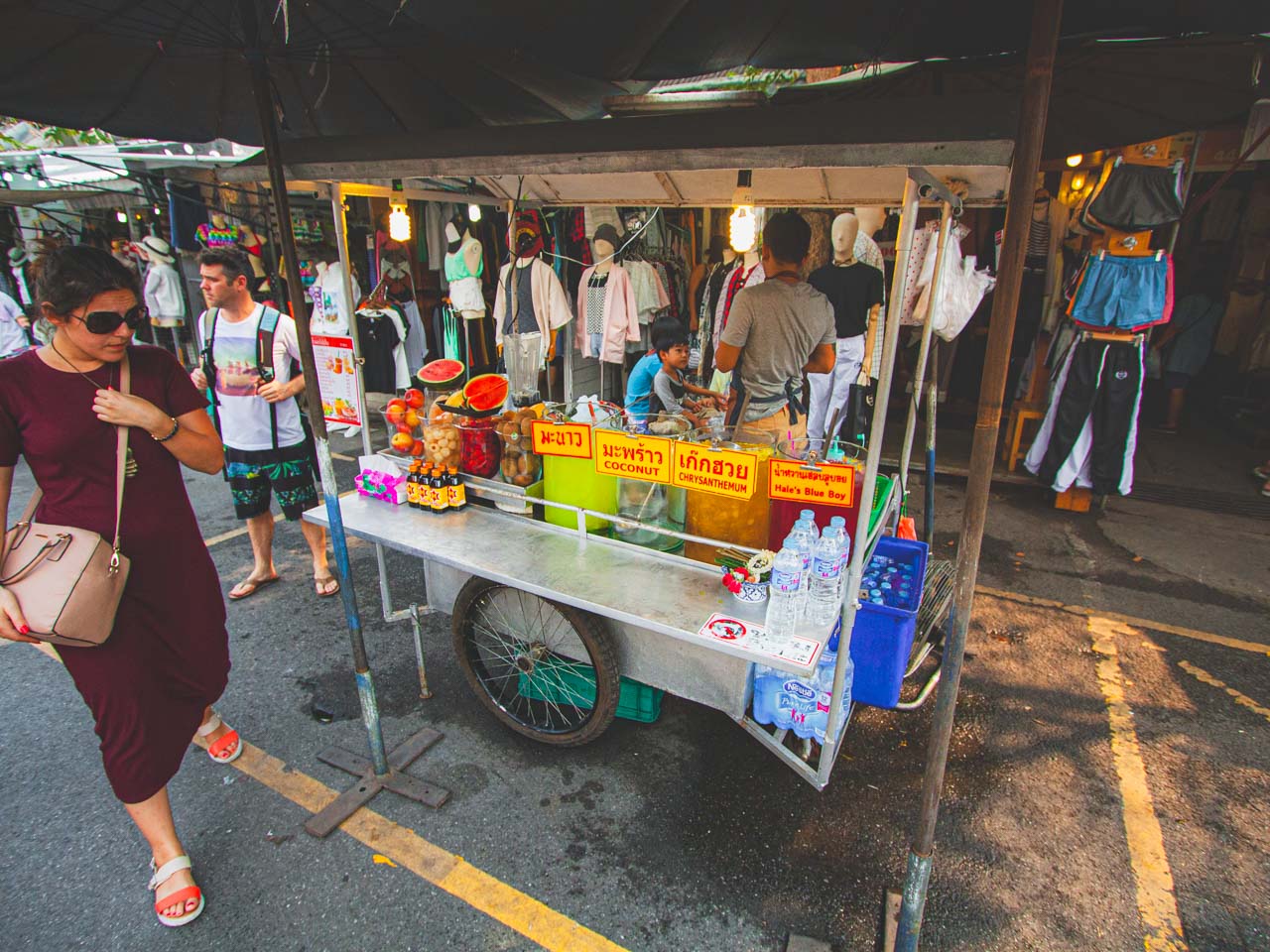
Chatuchak covers 27 acres and is divided into 27 sections, and inside you’ll find over 15,000 stalls with literally everything you can imagine.
From local clothing and jewelry, through ceramics and handicrafts, to plants, antiques, and… pets.
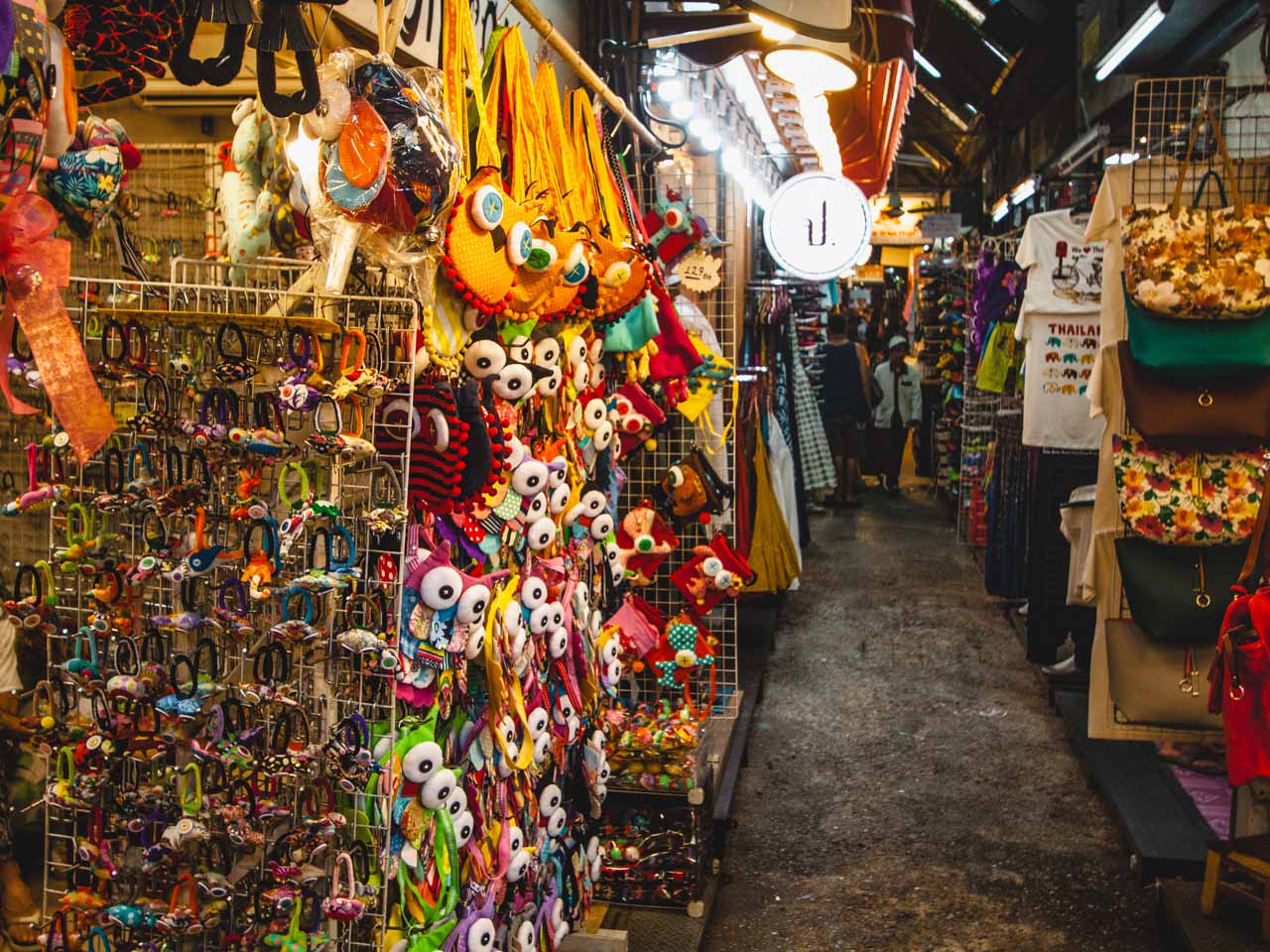
Every day up to 200,000 people pass through here, so prepare for an intense, colorful experience.
But that’s exactly Chatuchak’s magic – it’s a place where you can get lost for an hour (or three) and constantly discover something new.
And remember: here you bargain. Prices at most stalls are negotiable, so haggling is practically written into this place’s atmosphere.
Chatuchak is the perfect address if you want to buy souvenirs from Thailand, but ones that have some soul and local character.
Helpful Info
- Chatuchak Market operates daily from 6:00 AM to 6:00 PM, but each day has a slightly different vibe.
- Wednesdays and Thursdays are for plants, Fridays for wholesale, and weekends offer the full, colorful market experience – that’s when Chatuchak lives most intensely.
- Definitely bring cash, as many stalls still don’t accept cards.
- And remember: here you should bargain.
- Start with a lower price, smile, be nice – and if the conversation stalls, just walk away. Very often the seller will call you back and offer a better price.
8. Jim Thompson Museum
If you like places with history and character, definitely visit the Jim Thompson Museum, located right on Rama I Road.
It’s one of those spaces that transports you beyond Bangkok – even though you’re in the city center, you’re suddenly surrounded by quiet, greenery, and the smell of old wood.
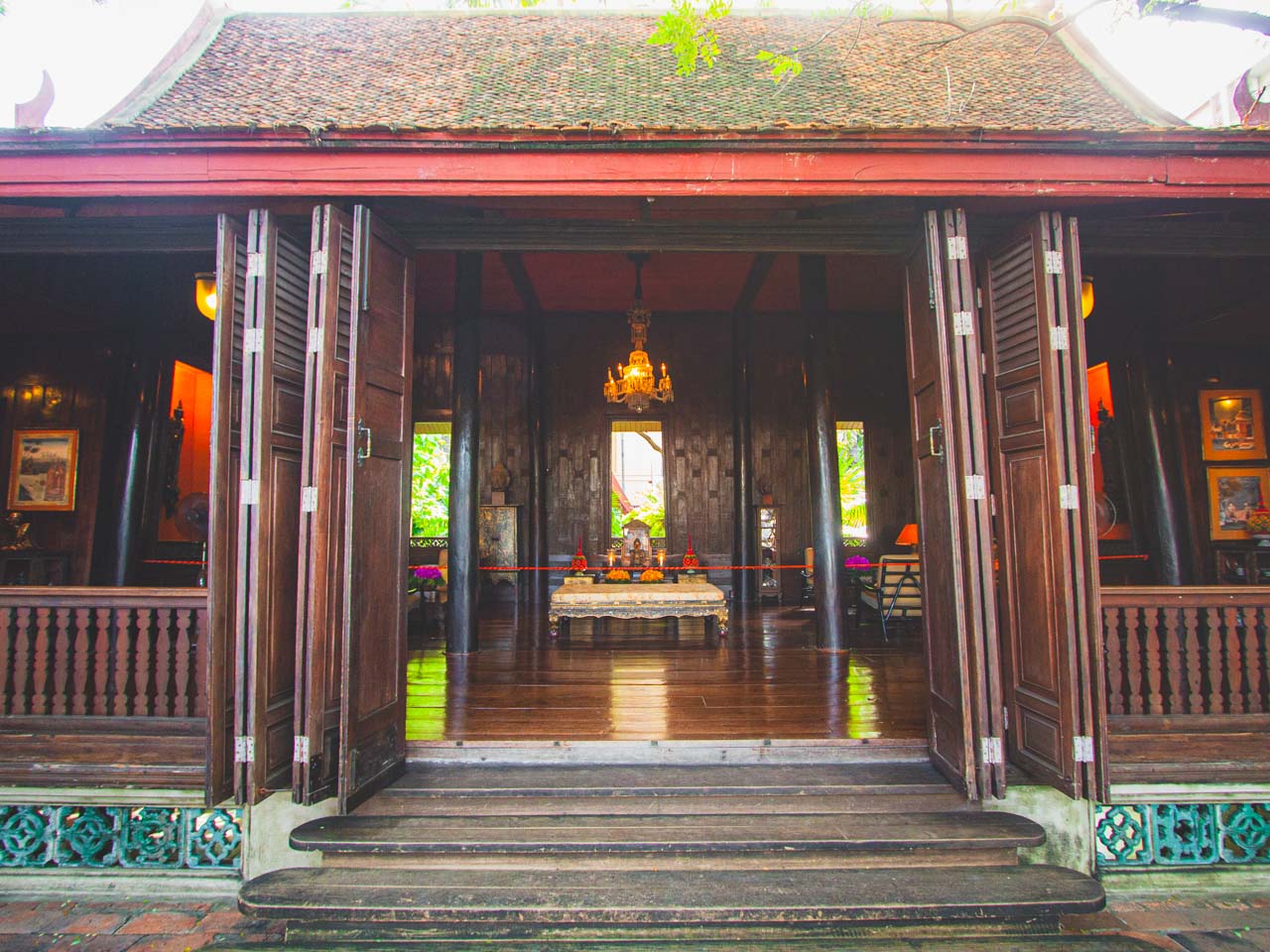
Jim Thompson’s house, built of teak in 1959, looks like an intimate Thai estate taken straight from bygone times.
This is where Jim Thompson lived – an American businessman, traveler, and art collector who in the 1950s and 60s played a huge role in reviving the Thai silk industry.
Thanks to his passion and determination, Thai silk began appearing on world markets again.
The museum isn’t just a place full of beautiful fabrics and art, but also a story about a man who loved Thailand so much that it became his home.
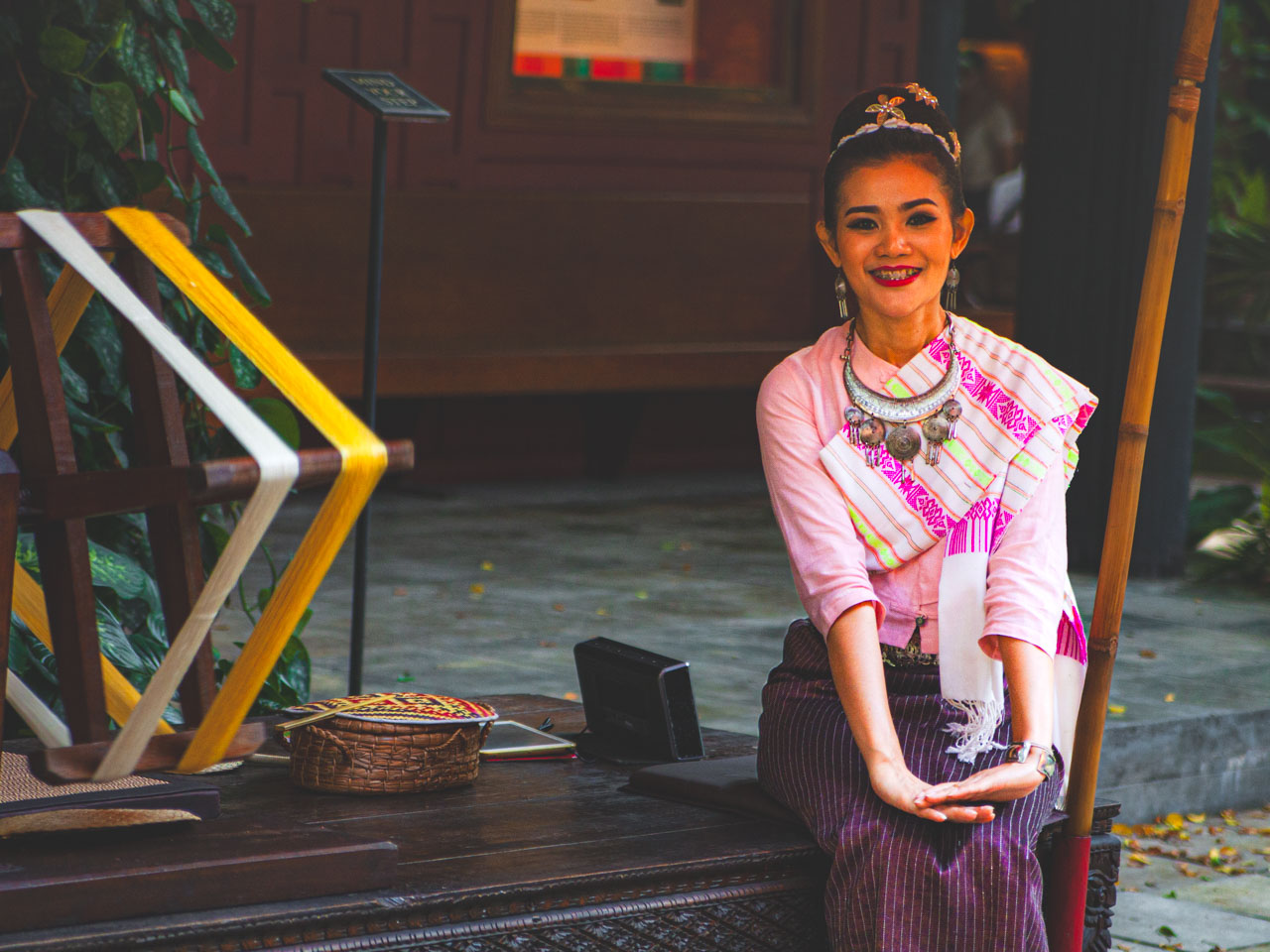
This place is a tribute to Jim Thompson himself, who disappeared under mysterious circumstances in Malaysia in March 1967.
To this day, his disappearance remains one of Southeast Asia’s most intriguing mysteries and continues to fascinate both researchers and ordinary travelers.
During your visit, you can not only peek into his house but also walk through the lush garden surrounding the estate, adding that quiet, tropical charm.
Inside awaits a rich collection of Buddhist statues, traditional Thai paintings, and objects from various corners of Asia.
The collection includes works from Thailand, Burma, Cambodia, and Laos, as well as beautiful Chinese porcelain from the 16th and 17th centuries.
Everything is presented in such a way that you feel time flows differently in this house – slower, more peacefully, more consciously.
Helpful Info
- Jim Thompson Museum is open daily from 10:00 AM to 6:00 PM, and entrance costs 250 THB.
- If you want to truly understand Jim Thompson’s story, his passion for Thai silk, and the significance of the entire collection, it’s worth joining a guided tour.
- The stories and contexts you’ll hear there make the entire house take on a completely different dimension – more personal and full of mystery.
9. Amulet Market
Another unique place worth seeing in Bangkok is the Amulet Market, known as Tha Phra Chan Market.
It’s one of those places where you can observe truly authentic city life – without filters, without tourist gloss, but with tons of interesting stories.
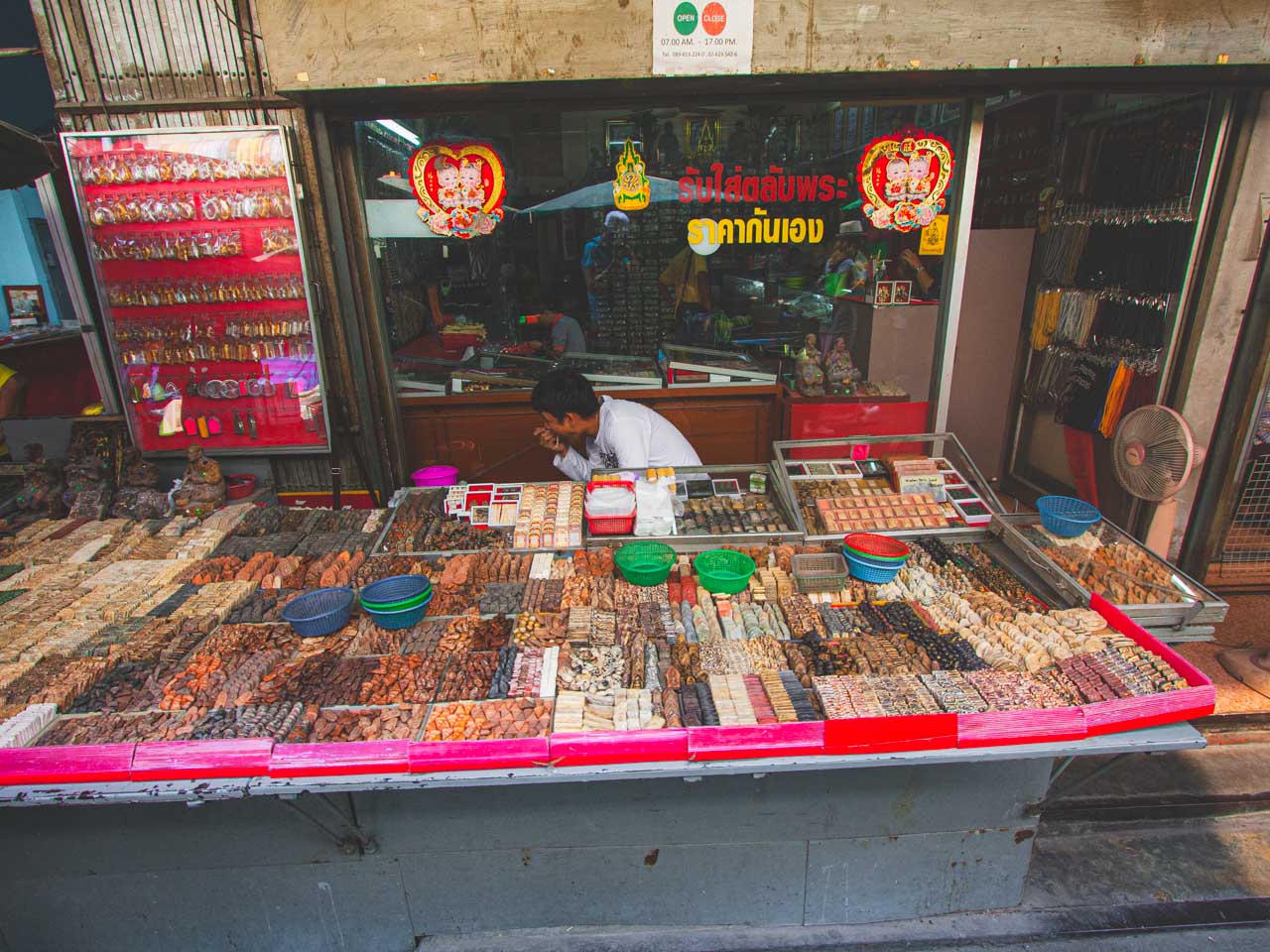
The market is especially popular among local men, who browse hundreds of small talismans searching for that one, perfect amulet for luck, protection, or success.
The atmosphere here is very calm, focused – as if you’re observing a ritual that’s been going on in Bangkok for generations.
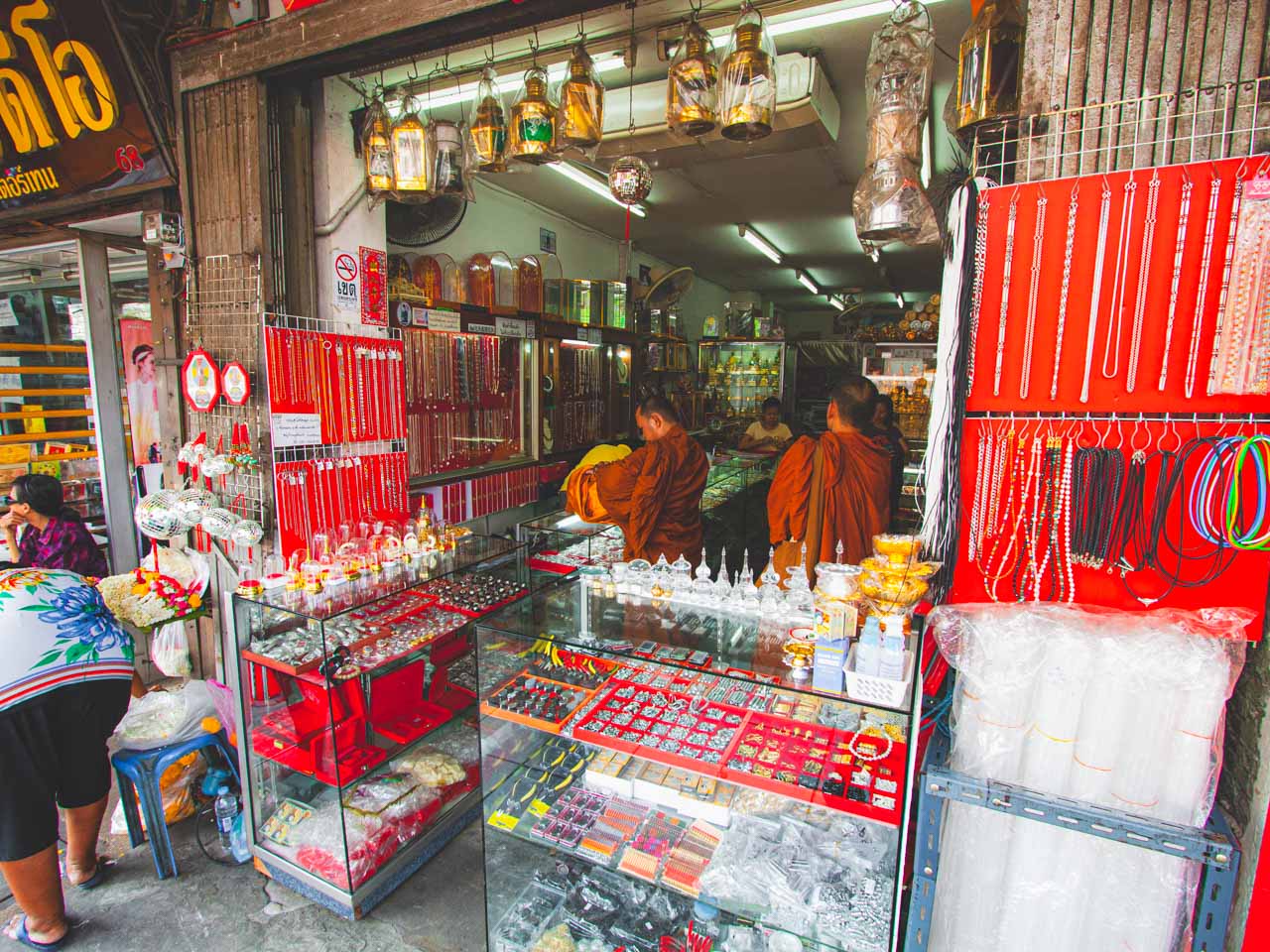
At the amulet market, you’ll meet not only professional collectors.
This place also attracts taxi drivers, tuk-tuk drivers, and people working in riskier professions – many believe that a properly chosen amulet can bring daily protection.
Interestingly, monks also appear among the stalls, carefully examining talismans, searching for hidden symbolism, energy, or special value.
All this makes the market have an atmosphere of searching and quiet magic – as if every object carries its own story.
Helpful Info
- The Amulet Market operates daily from 7:00 AM to 5:00 PM. It’s best to visit early in the morning when it’s still quieter and easier to talk with sellers.
- That’s when you have the best chance to learn more about the meaning of individual amulets, their history, and why some people search for a specific talisman for years.
10. Lumpini Park
For the finale, I have something completely different from temples and markets – Lumpini Park, beautifully situated by a peaceful lake in the heart of Bangkok.
The park was created in the 1920s and named after Lumbini, Buddha’s birthplace in Nepal. It’s an interesting, symbolic touch in a city that pulses with energy daily.
At the southwestern entrance, you’re greeted by a monumental statue of King Rama VI, creating an amazing contrast with modern towers rising just behind it.
It’s one of those places where you really see how Bangkok combines tradition with modernity.
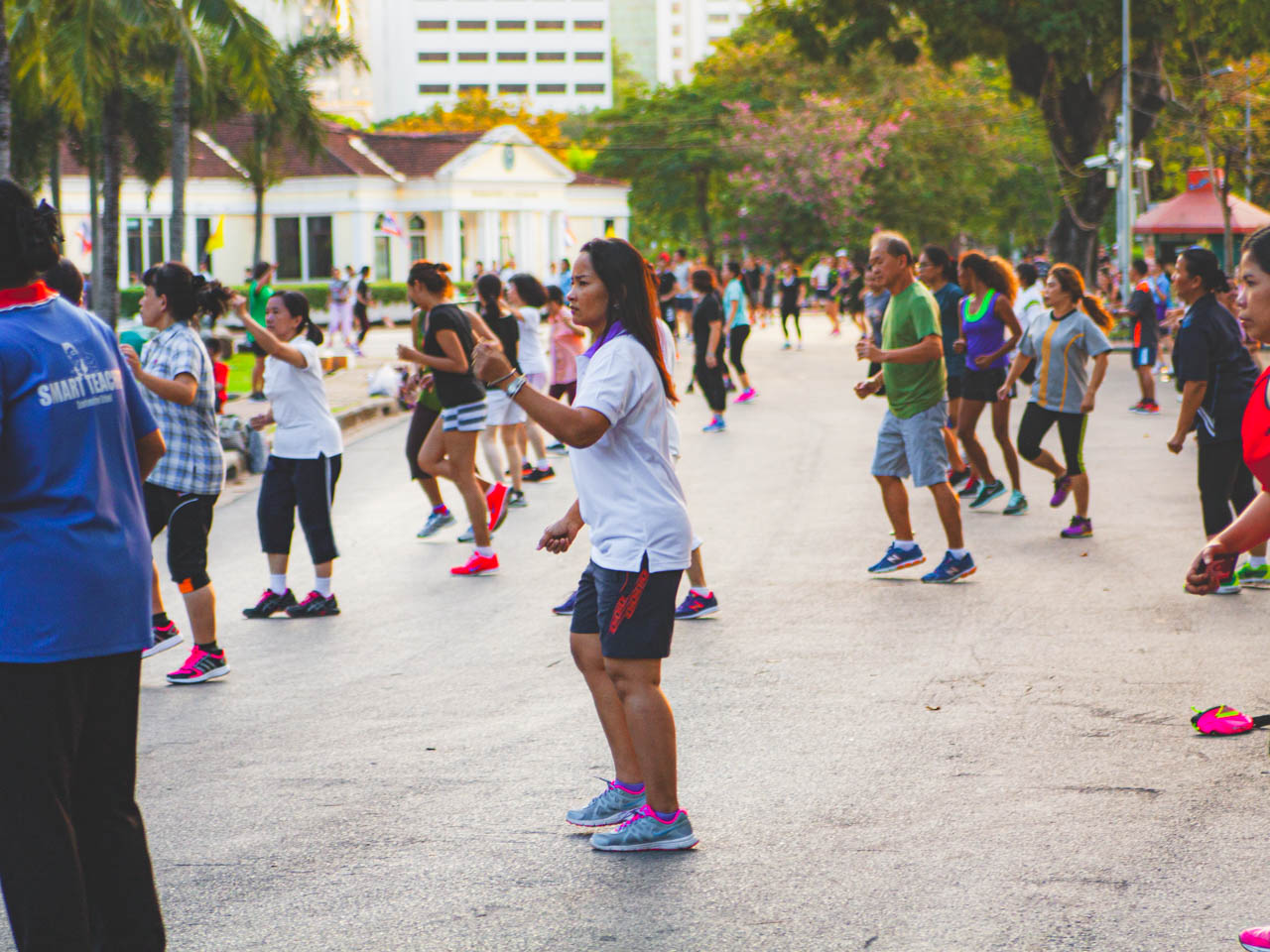
Lumpini is much loved by residents. From early morning to late evening, you’ll find joggers, families on walks, elderly people practicing tai chi, and people who just want to catch their breath from urban chaos.
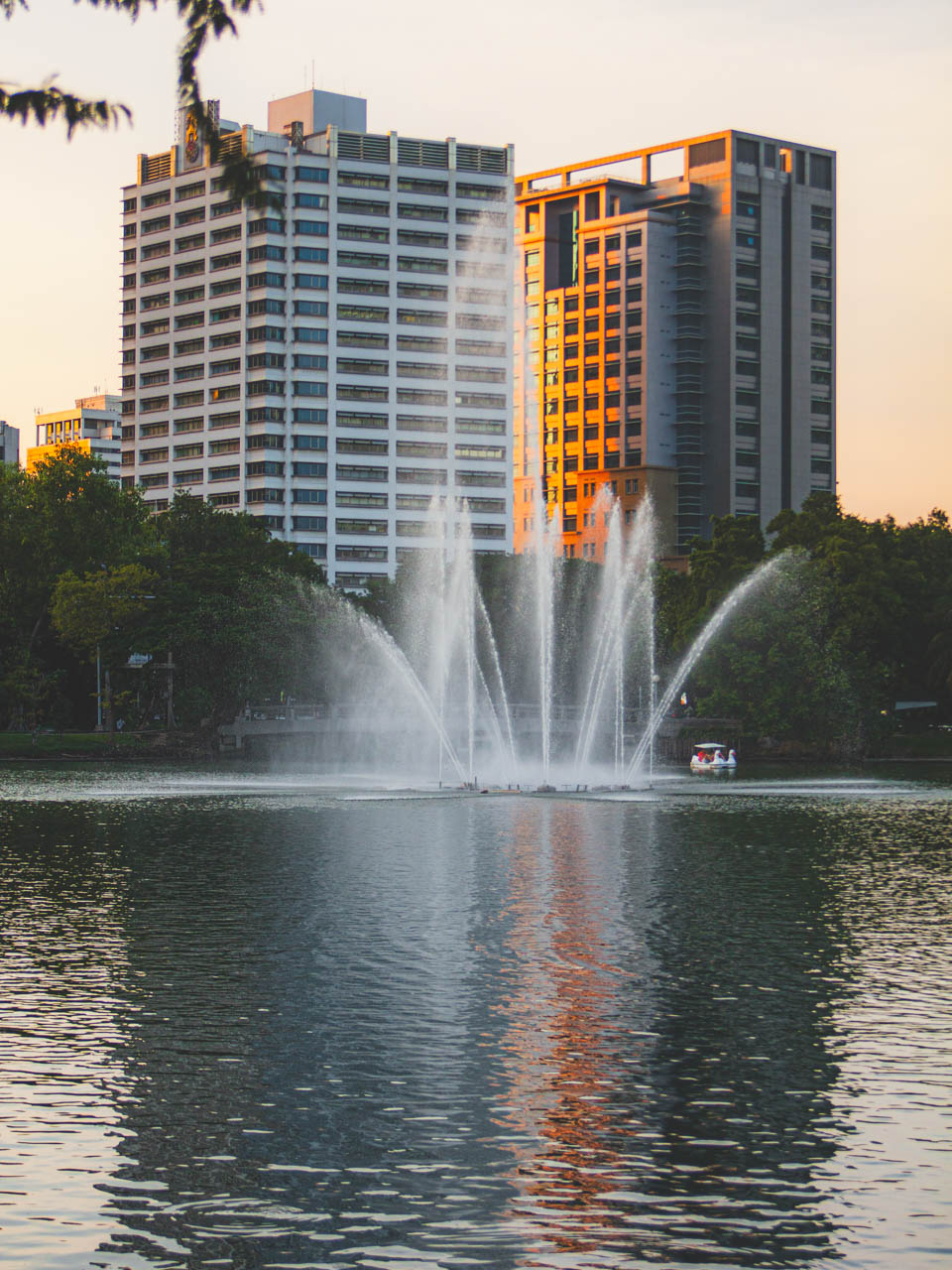
It’s the perfect place to slow down, sit under a tree, or walk around the lake and feel how the city softens for a moment.
In Lumpini Park, it’s easy to see how diverse life in Bangkok is.
You’ll meet joggers, cyclists, families with children, and people who just came to sit in the shade of trees for a moment.
Lovers float on the lake in gondolas, and nature enthusiasts look for monitor lizards that walk around here quite freely – it’s one of the park’s most surprising experiences.
There are also more energetic vibes.
Every day, just before sunrise and before sunset, loud, motivating music resounds in the park.
It’s a sign that aerobics classes are starting, which anyone can join – completely free. A perfect way to feel Bangkok’s urban rhythm from a completely different perspective.
Helpful Info
- Lumpini Park is open daily from 4:30 AM to 10:00 PM.
- It’s one of the best places in Bangkok for a peaceful picnic, so definitely bring snacks or something to drink. In the shade of trees and with a view of the lake, they taste twice as good.
How to Get to Bangkok
From the USA
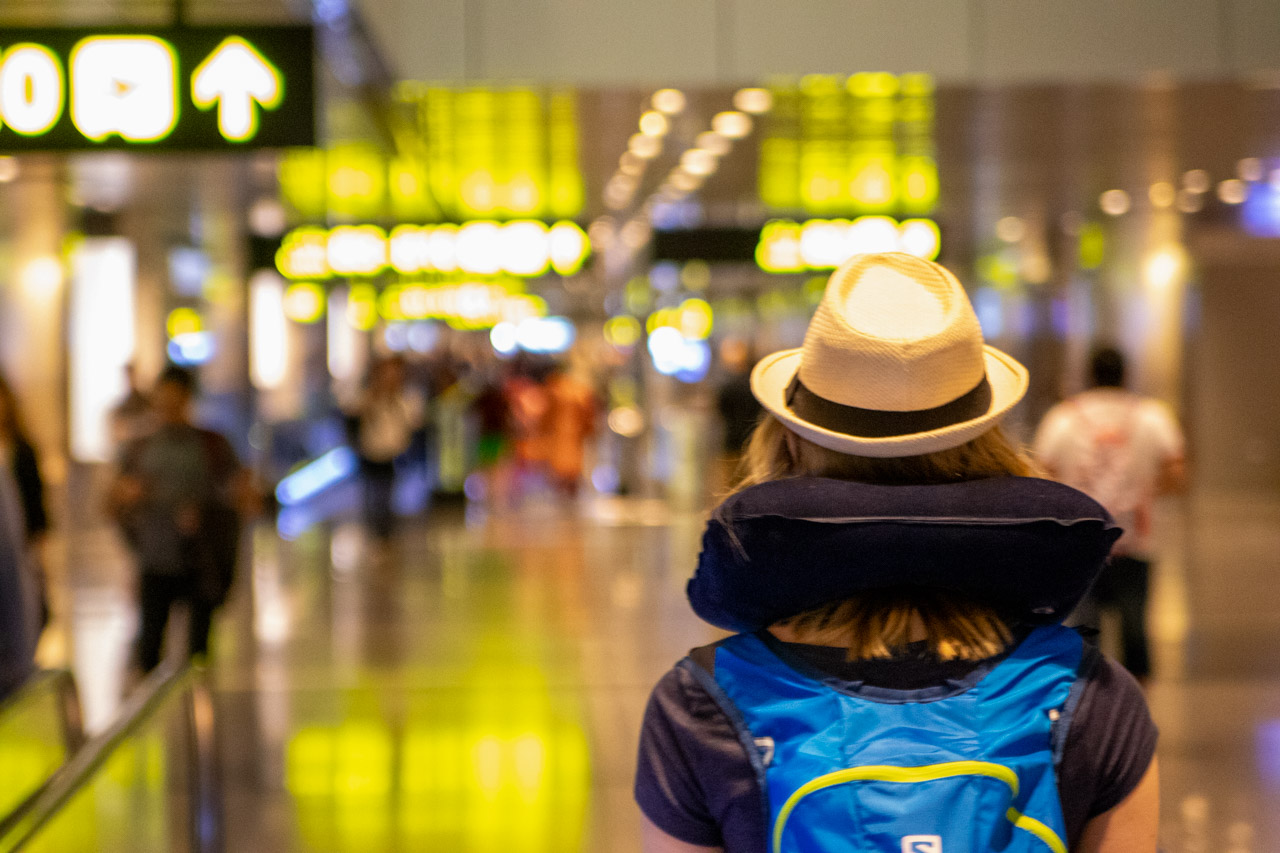
You can fly directly to Suvarnabhumi Airport (BKK) from cities like Los Angeles or New York. The journey is long – usually 15-18 hours – but surprisingly manageable with a good podcast and a neck pillow.
If there’s no direct flight from your city, you’ll likely connect through Tokyo, Seoul, or Taipei, making the total travel time 20-30 hours.
Expect to pay 700-1500 USD for an economy ticket, depending on the season and how early you book.
From Europe
Direct flights leave from London, Paris, or Frankfurt, and take around 11-13 hours.
If you’re flying with a layover, you’ll probably stop in Dubai, Doha, or Istanbul, which usually stretches the trip to 14-20 hours.
Typical prices range from €500-1000 in economy – again, depending on timing and demand.
If you’re dreaming of a longer journey through Thailand, take a look at my complete Thailand guide – it covers every region and makes planning so much easier.
Best Time to Visit Bangkok
The best time to travel to Bangkok is November–February.
That’s when the weather is most mild – temperatures are pleasantly warm, humidity less bothersome, and you can explore the city without feeling like the air “sticks” to your skin.
I visited Bangkok in December and encountered ideal conditions.
Mornings were fresh, days warm but not sweltering, and evenings perfect for walks through Chinatown and long wandering through food-filled streets.
Zero downpours, zero tropical steaming. Simply the best time to discover the city.
How to Get Around Bangkok
Bangkok has plenty of great transport options – each works well in slightly different situations.
BTS Skytrain
The most convenient way to quickly jump from one end of the city to another. Tickets cost 15-59 baht, and trains run from 6:00 AM to midnight. Perfectly avoids traffic jams and reaches most important places.
MRT Metro
If BTS doesn’t reach where you want, MRT metro comes to the rescue. Prices are 16-42 baht, and operating hours are similar. Great option for reaching less obvious Bangkok areas.
Metered Taxis
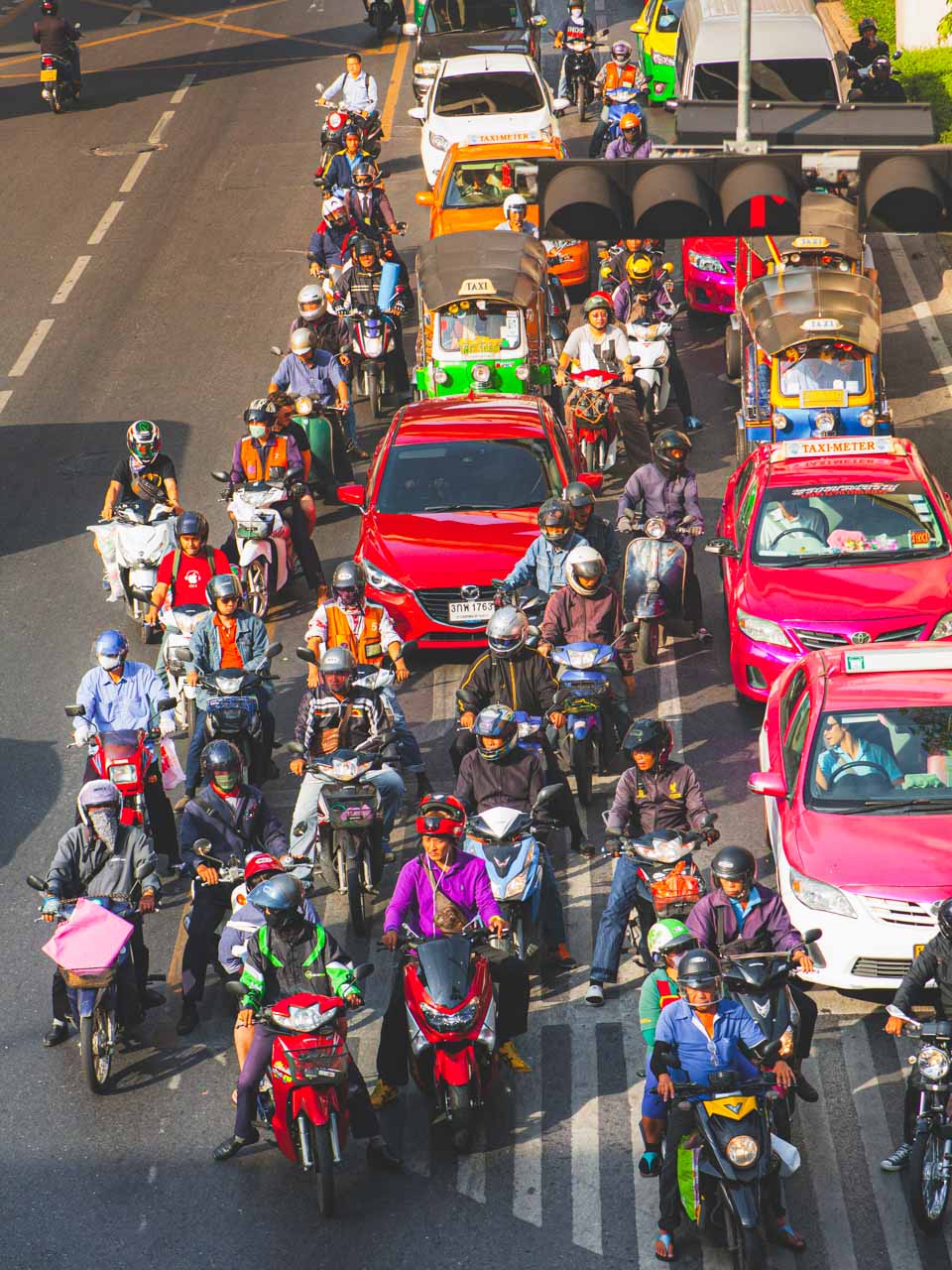
They’re everywhere and convenient, especially for longer routes. Starting fare is 35 baht, each additional kilometer 5-6 baht. Always make sure the driver turns on the meter.
Tuk-tuks
Short, local, and atmospheric. Prices are negotiable, so always agree on the rate before starting. Perfect for short, “touristy” rides.
Chao Phraya Express Boats
One of my favorite options – cheap and scenic. Tickets cost 10-40 baht, and boats usually run from 6:00 to 19:30 on weekdays. Great way to see Bangkok from the river perspective.
Grab
Like Thai Uber. Works around the clock, prices similar to taxis. Perfect if you want to avoid negotiations.
Motorcycle Taxis
Best for short distances. Starting at about 20 baht, they zip through traffic jams lightning-fast. Not for everyone, but works like magic when the city is at a standstill.
Where to Stay in Bangkok
Bangkok has a huge selection of hotels – from hostels to luxury towers – so everyone will find something for themselves, regardless of budget.
If you’re looking for a place with character, I can wholeheartedly recommend Chern Hostel. I stayed there myself and have very good memories of that stay.
It’s a charming, cozy place with original decor and an atmosphere that immediately makes you feel comfortable.
It works great for both couples and families with children. It’s the perfect place for a peaceful base after an intense day in the city.
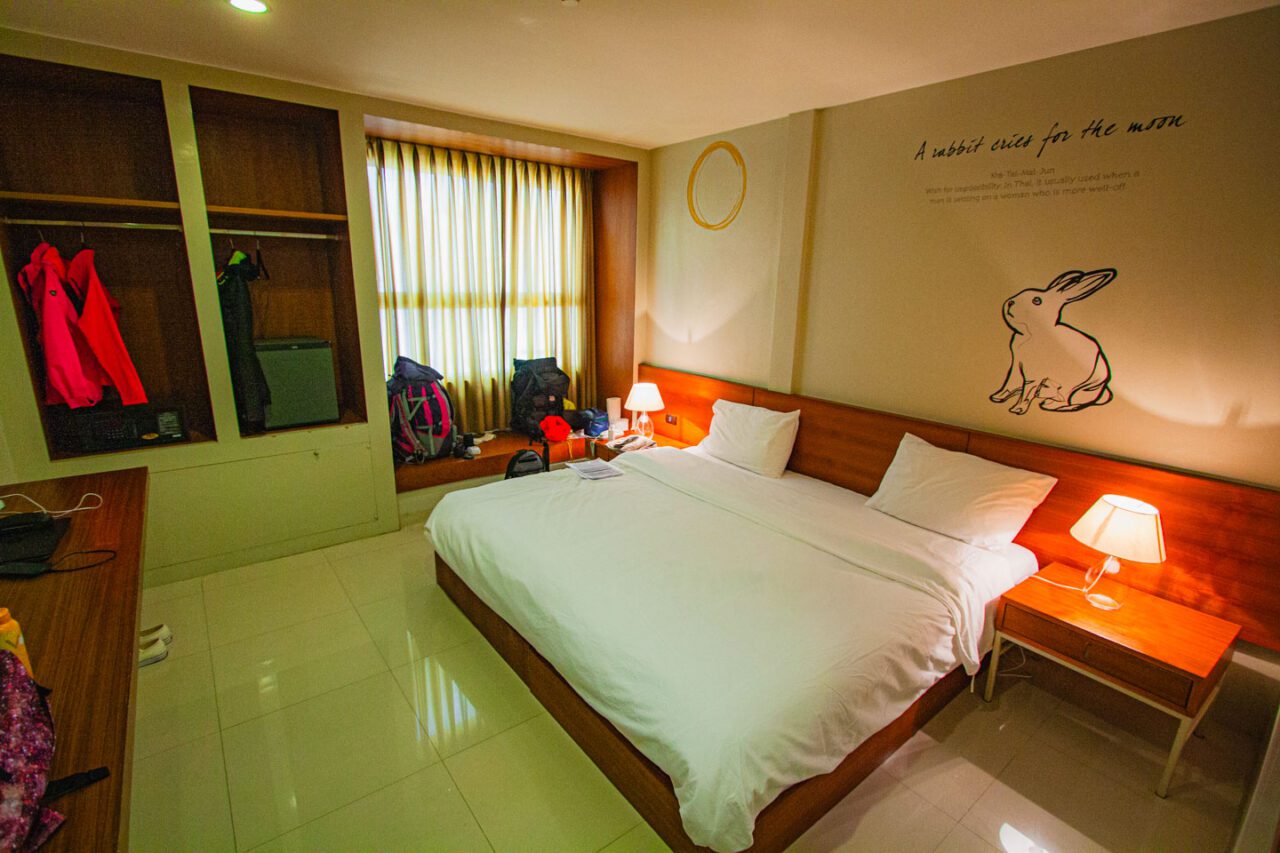
The double rooms at Chern Hostel are clean, spacious, and decorated in a modern yet cozy way – ideal for comfortable rest in the heart of Bangkok.
A big plus is also the outdoor pool, which after a full day of sightseeing works like a small oasis. A moment of immersion in cool water can work wonders, especially in the Thai climate.
Thanks to its great location, the hostel is an excellent base for exploring the city – close to temples, street food, and major attractions.
If you’re looking for a cool, affordably priced place to stay in Bangkok, definitely consider staying at Chern Hostel.
How Much Does Bangkok Cost
Bangkok can be as cheaply delicious or as comfortable as you want.
It’s a city where street food costs less than coffee, and Thai massage after a full day of sightseeing doesn’t ruin your budget.
Low Budget ($30-45/day)
For those who like simplicity and street food.
- street food: $1.50-4
- BTS/metro/boats: $0.50-2
- hostel: $10-20
- entrances: $2.50-8
Medium Budget ($55-90/day)
Most realistic for most people.
- street food + simple restaurants: $2.50-6
- Grab/BTS/boats: $1-5
- nice hotel (e.g., Chern): $38-63
- entrances: $4-10
Comfort ($100-175+/day)
For those who like convenience and atmospheric hotels.
- restaurants: $6-13
- Grab: $5-13
- good hotels with pool: $75-150
- Thai massage: $10-20
Most realistically it comes out to about $63-90/day.
Bangkok makes a perfect starting point for exploring the rest of Thailand. If you’re unsure how to connect the dots, take a look at my 2-week Thailand itinerary.
Where to Eat in Bangkok
1. Khao Gaeng Jake Puey
One place truly worth visiting in Bangkok is Chinatown – especially if you love food.
By day it looks unassuming, a bit chaotic, a bit rough. But when night falls, streets fill with colorful neons, spice aromas, and the buzz of people searching for their favorite dish.
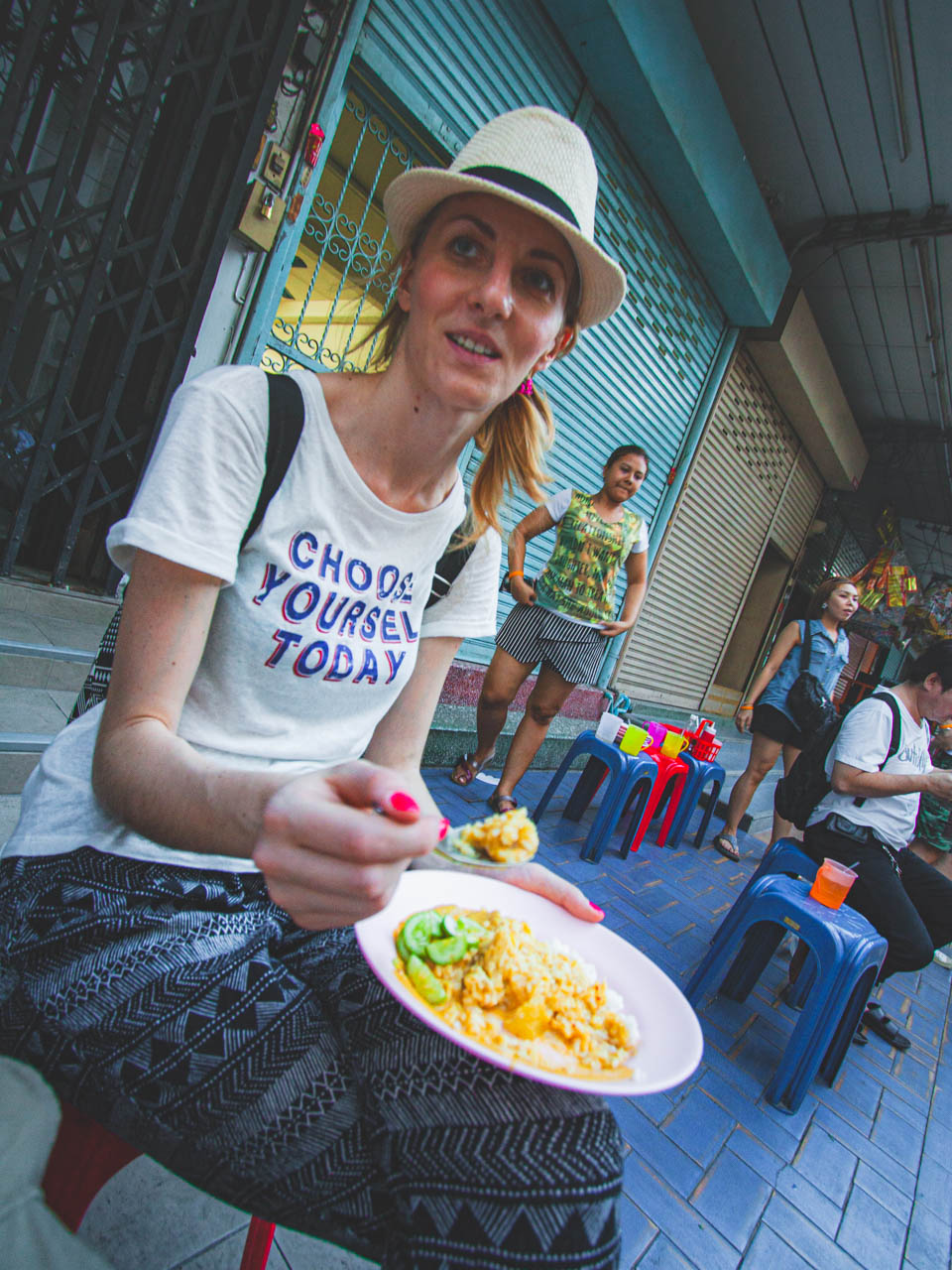
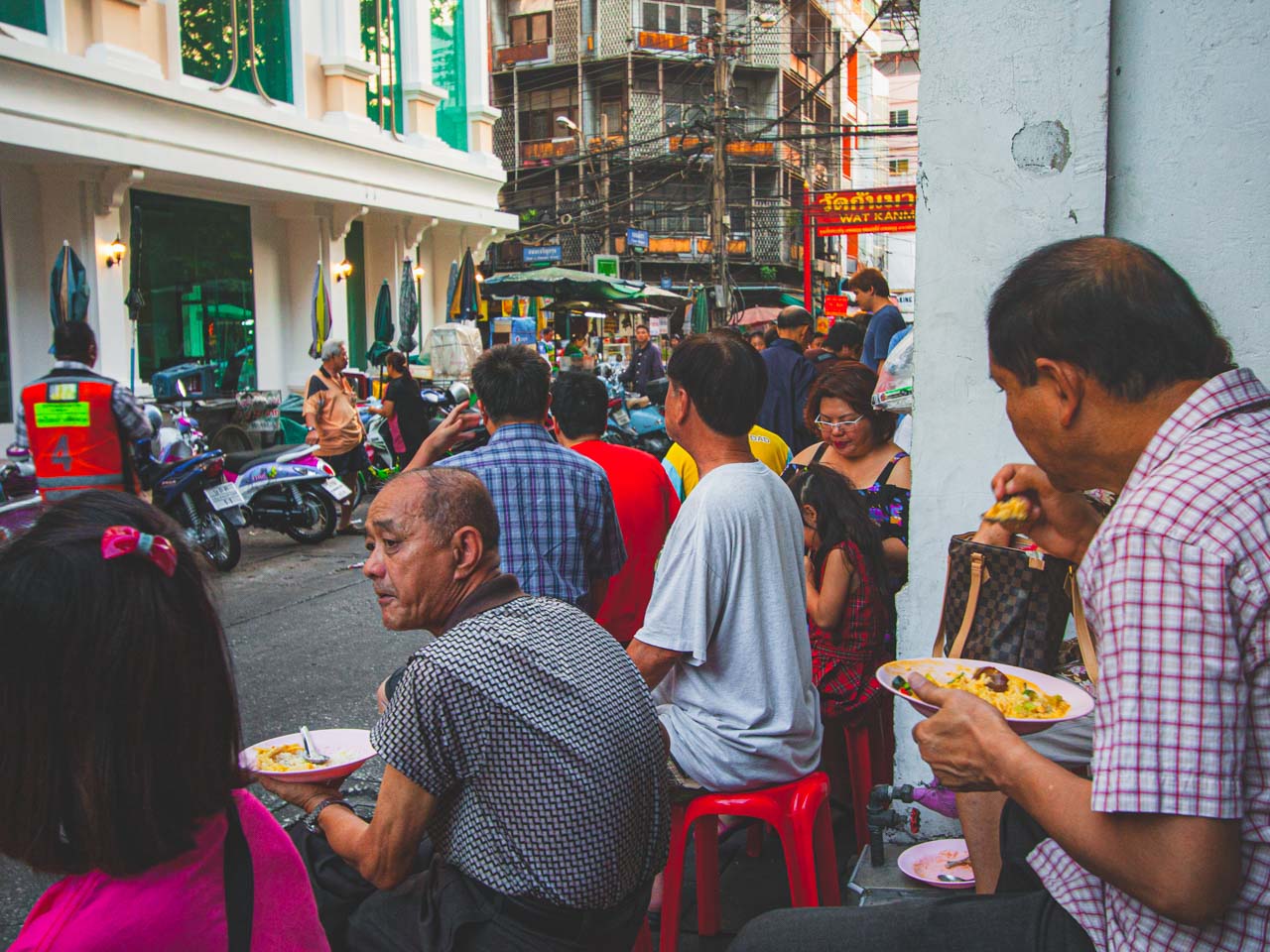
It’s worth visiting Khao Gaeng Jake Puey at the corner of Mangkon and Charoen Krung streets – it’s one of those places that show what street food in Bangkok really is.
This iconic street eatery is famous for… having no tables.
You eat on small red stools right next to a busy street, surrounded by curry aromas and city sounds. It has its charm – raw, authentic, and totally local.
This is where you’ll try one of Bangkok’s best curries, for about 30 baht. Simple, cheap, and so delicious that there are queues in the evenings for good reason.
2. Thip Samai Restaurant
If you love good food, Thip Samai is an absolute must during your Bangkok stay.
This iconic restaurant is famous for pad thai, which many consider the best in the entire city – slightly sweet, smoky, stir-fried over fire, with perfectly springy noodles.
How much locals love this place is evidenced by the queues that form here every evening. And these aren’t tourist queues – it’s mainly locals who’ve been coming back for years.
The wait passes quickly though. Before entering, you can watch a real live-cooking show: flames under woks, chefs’ quick movements, fresh ingredients landing in the pan in a rhythm hard to describe with words.
It only sharpens your appetite more.
And when you finally try pad thai from Thip Samai, there’s a good chance… you’ll want to come back. It’s one of those dishes that stays in your memory for a long time.
3. Moo Satay Plaengnam
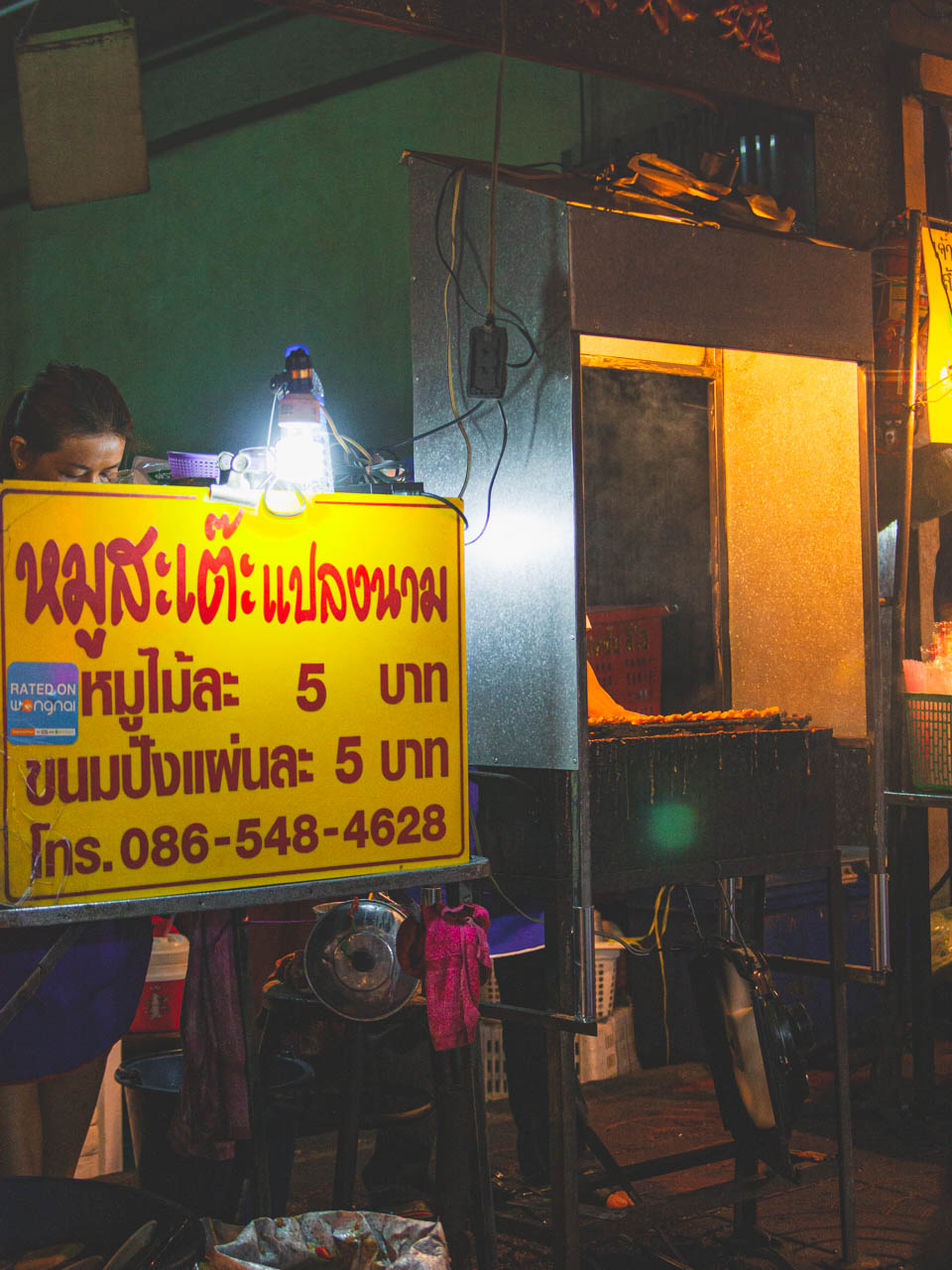
If you love authentic street food, definitely visit Moo Satay Plaengnam. It’s a modest, unassuming stall that in the evenings transforms into a real magnet for residents and tourists.
The place is famous for amazing chicken skewers, grilled over charcoal and served at prices that in Bangkok can still surprise with their affordability.
The aroma of spices, smoke, and freshly grilled meat wafts from here from afar.
The stall’s biggest charm, however, is its owner – Mr. Moo, who for years has been preparing his satays with a smile and great taste sense.
Despite the simplicity, queues form here every evening.
And no wonder – it’s places like this that show the true face of Bangkok street cuisine.
4. Baan ThaTien
Baan ThaTien Cafe is another place on Bangkok’s culinary map truly worth visiting.
Located right next to the Temple of the Emerald Buddha, the cafe delights not only with food but also with a peaceful, unique atmosphere – perfect for a moment’s rest after intensive sightseeing in the area.
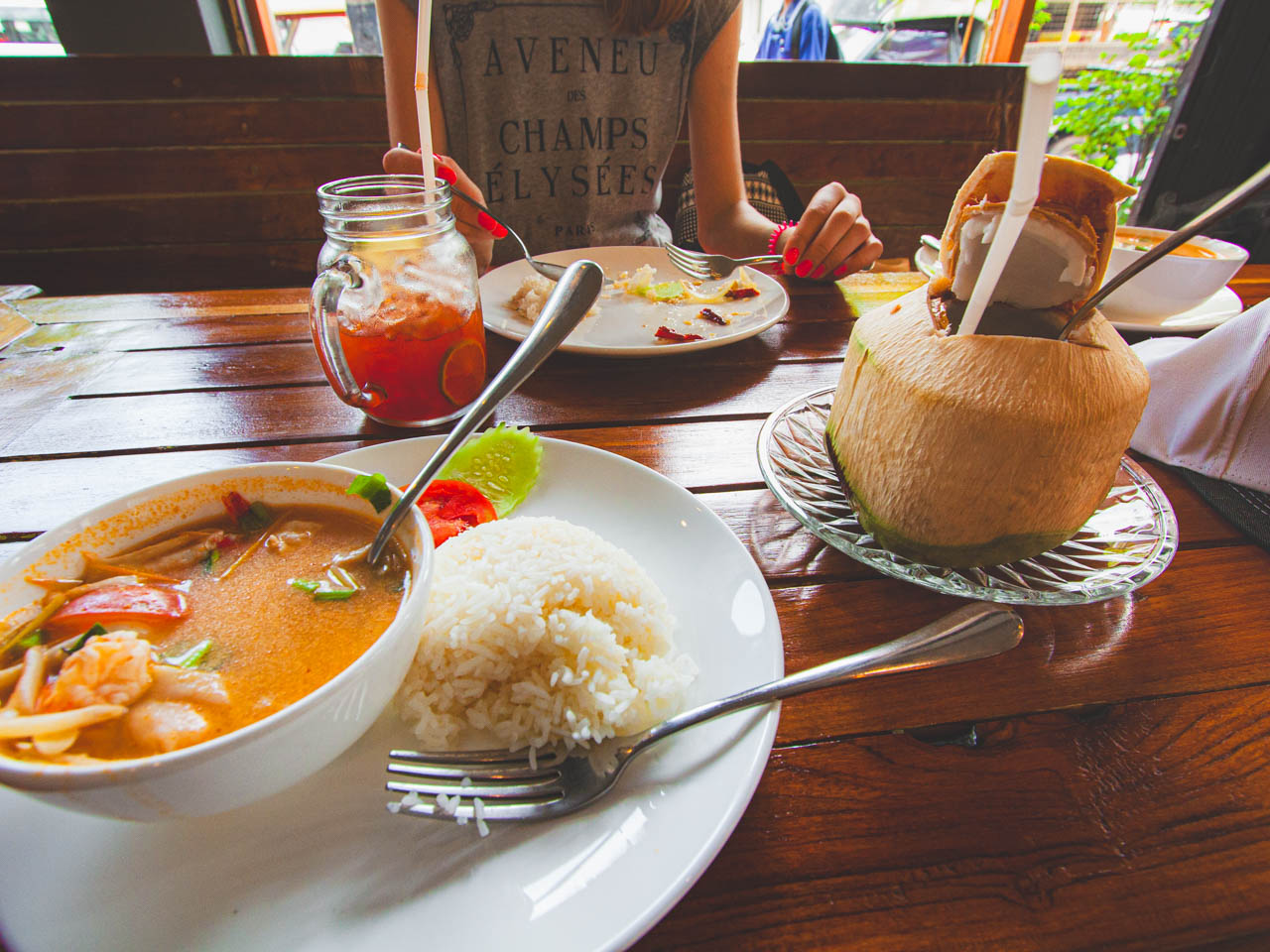
What attracts guests here most is traditional Thai dishes. Their Tom Yum has the perfect balance of spiciness and sourness, and various types of curry are aromatic, creamy, and exactly what you want to eat when in Bangkok.
The dishes are excellently prepared and full of flavor – perfect both for those seeking classics and those wanting to try something new.
It’s a place that will easily satisfy even the most demanding palates.
5. Krua Apsorn
If you love real, traditional Thai cuisine, definitely visit Krua Apsorn.
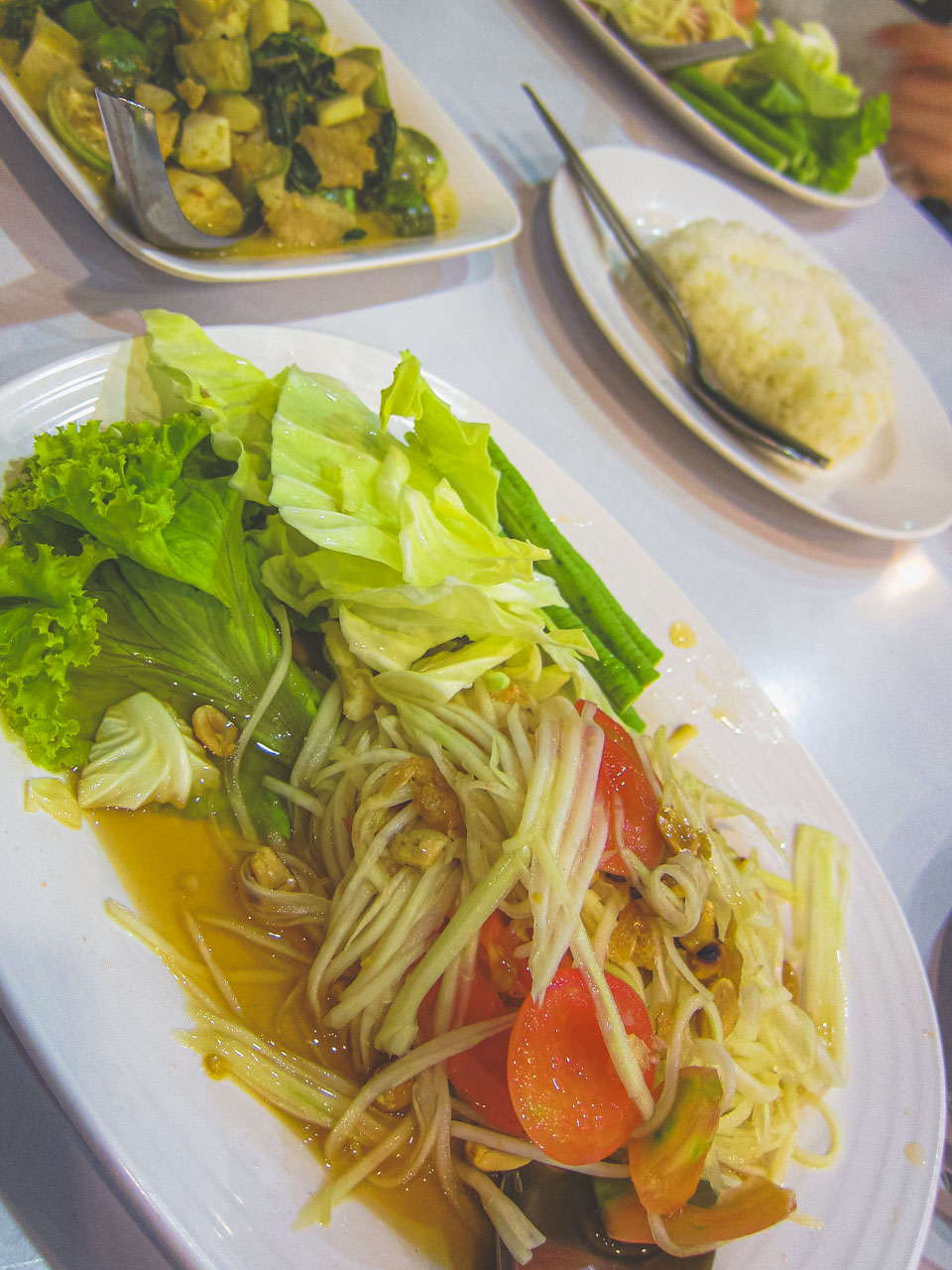
It’s one of those restaurants that has maintained its standard for years – no wonder it was recognized by The Guardian as one of the 50 best restaurants in the world.
Krua Apsorn captivates with simplicity and quality. Everything here is fresh, refined, and full of Thailand’s authentic flavors.
Definitely try their papaya salad – crunchy, aromatic, with the perfect note of spiciness – and green Thai curry, which is creamy, fragrant, and absolutely addictive.
It’s a place you leave with a smile… and with the thought that you need to come back.
6. Food + Plus
Another special place on Bangkok’s culinary map is Food + Plus, a hidden eatery at Siam Square.
This place perfectly shows what Thai cuisine is loved for – expressive flavors, simplicity, and total authenticity.
Food + Plus is located in a long, narrow alley where small kitchens stand side by side serving pre-prepared dishes. Aromatic curries dominate, but you’ll also find other Thai cuisine classics.
The most beautiful thing is that everyone eats at a communal table. There are no separate seats – you sit wherever there’s a free chair.
People of different backgrounds and statuses mix here: students, office workers, seniors, tourists. Everyone comes for the same thing – to eat something delicious, quickly, and fully locally. The atmosphere is relaxed, loud, and full of life.
Definitely try Tom Yum (it’s exceptionally aromatic here) and several types of meat curry. And if you add fresh, chilled fruit juice to that – you have the recipe for a perfect Thai lunch in the heart of Bangkok.
This is only the beginning of what Thai cuisine has to offer. If you want to explore the top 10 dishes you shouldn’t miss while traveling through Thailand, take a look at my Thai food guide.
7. Royal India
If during your Bangkok stay you miss flavors other than Thai, head to Phahurat, the Hindu district of the city.
It’s an extraordinary place – once inhabited by Vietnamese, today it’s home to the Sikh community, known for textile trade and… for becoming one of Thailand’s wealthiest groups.
It’s worth turning into a small alley at Chakphet Road, where the unassuming but locally beloved Royal India hides.
It’s one of those eateries that looks modest but serves food you think about long after leaving.
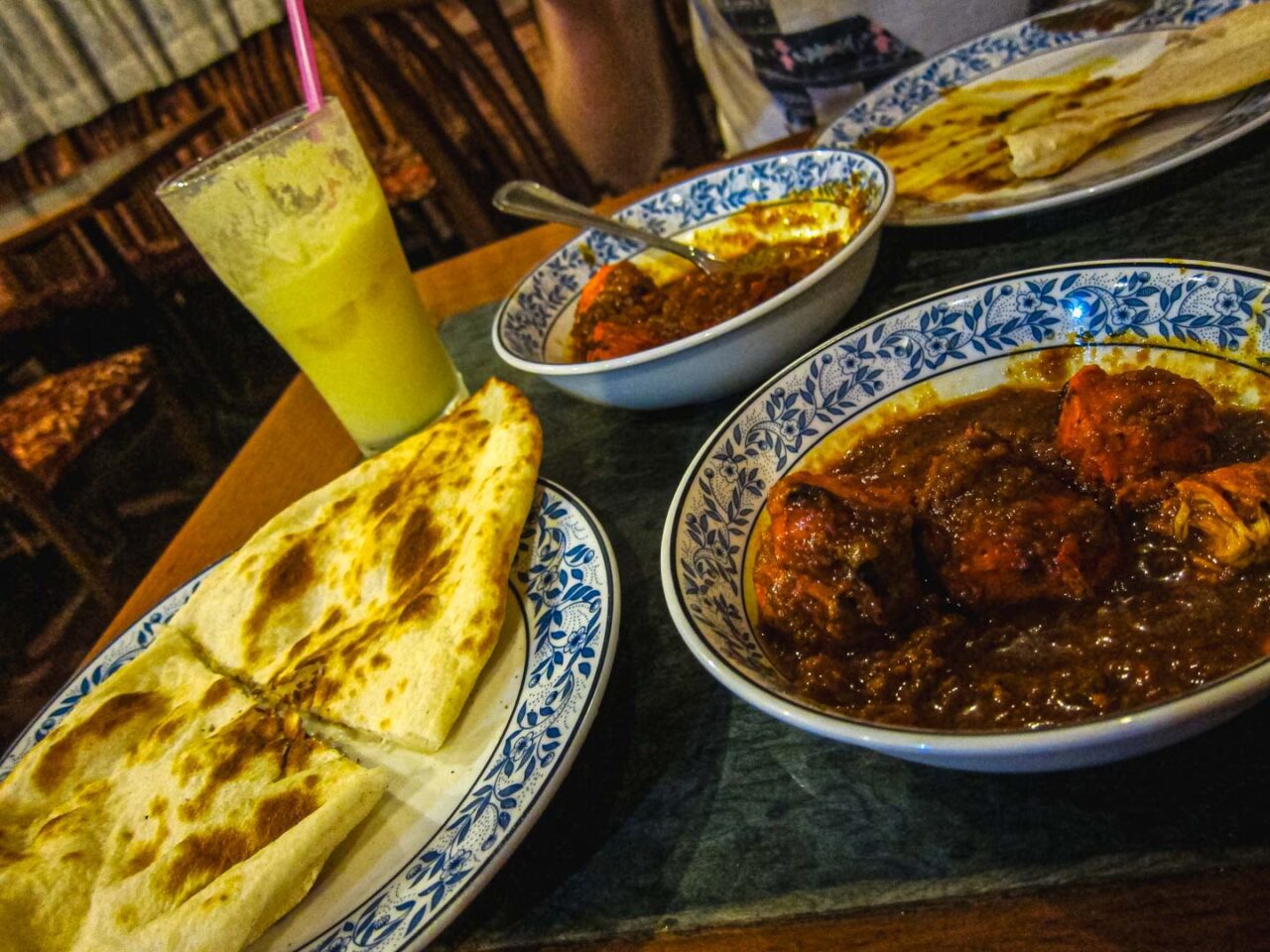
Definitely order their chicken tikka masala with soft, freshly baked naan. The sauce is creamy, aromatic, delicately spicy – everything melts in your mouth.
A perfect break from Thai flavors, but still in the atmosphere of intense Asian street food.
Ready to dive deeper into Thailand?
🏝️ Island Paradise → Koh Samui Complete Guide – Beaches, waterfalls & hidden spots I discovered
🍜 Culinary Adventure → Chiang Mai Cooking Class Review – Learn authentic Thai recipes hands-on
🏛️ Ancient Ruins → Best Things to Do in Ayutthaya – The perfect day trip from Bangkok
📋 Practical Planning → 2-Week Thailand Itinerary – Perfect for shorter trips
Bangkok in 2, 3, and 4 Days
Bangkok in 2 Days
Day 1: temples by the river: Wat Pho → Wat Arun → boat ride on Chao Phraya → Wat Saket at sunset → dinner in Chinatown.
Day 2: Grand Palace → Amulet Market → Jim Thompson House → Thai massage → street food in the evening.
Bangkok in 3 Days
Day 1: Wat Pho, Wat Arun, and river cruise.
Day 2: Grand Palace, Amulet Market, Jim Thompson, and a little massage along the way.
Day 3: Chatuchak (weekend), walk through Lumpini Park, dinner at Thip Samai, and for dessert, a rooftop with a view.
Travel lighter, even before you leave.
start with something simple.
Download The Minimum Plan – Slow Travel:
Bangkok in 4 Days
Days 1-3: as above.
Day 4: Choose your vibe:
- Ayutthaya – ruins, history, quiet,
- floating market – buzz, colors, and boats,
- local neighborhoods (Bang Rak, Thonburi) – Bangkok unfiltered.
Bangkok: A City That Changes Perspective
I remember my first evening in Bangkok – I stood in the middle of Chinatown, surrounded by curry aromas, neon lights, and the buzz of conversations in a language I didn’t understand. And I thought: “This is exactly what I was looking for.”
Bangkok isn’t perfect. It’s loud, chaotic, sometimes overwhelming. But that’s where its magic lies – in this authentic, untamed energy that reminds you the best journeys aren’t always the most comfortable.
This city taught me that true beauty often hides where you least expect it – in a simple plate of pad thai eaten on a plastic stool, in a monk’s smile at the Golden Mount at sunrise, in the chaos of Chatuchak’s morning market.
Ready to make Thailand your next adventure?
- Start with my Koh Samui Travel Guide if tropical paradise calls to you
- Step into Chiang Mai Adventures for a slower, greener side of Thailand.
- Join my Cooking Class in Chiang Mai for authentic cultural immersion
- Get inspired by my 2-Week Thailand Itinerary for the perfect shorter trip
Which place in Bangkok intrigued you most? Or have you been there and have your own hidden gem to recommend?
Share in the comments – your experiences can be invaluable for other travelers planning their trip!
If this guide was helpful, share it with friends dreaming of Thailand. And if you want more insider tips – join my newsletter!
This article contains affiliate links. If you make a booking through these links, I may earn a commission, supporting this blog. Rest assured, my recommendations are based on honest assessments, and using these links doesn't affect prices for you. Thank you for your support!