
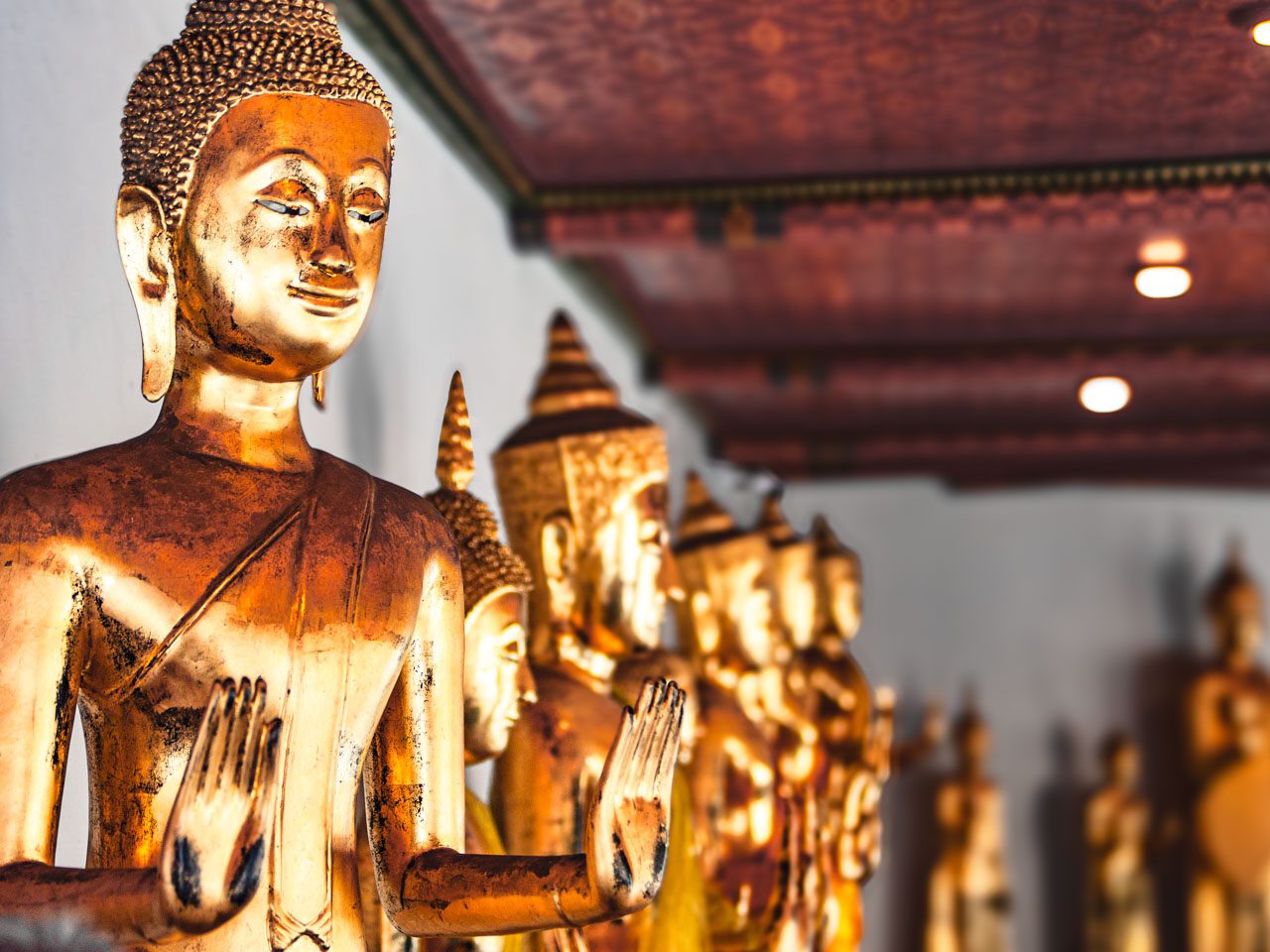
Planning two weeks in Thailand and wondering how to combine Bangkok, the north of the country, and a few days by the sea?
This itinerary follows a route I tested during my own trip.
It includes Bangkok’s most important temples, the ruins of Thailand’s former capital, a slower few days in Chiang Mai, the unusual White Temple, and the beaches and islands around Krabi.
It is a fairly active itinerary. You will visit several very different regions and change accommodation a few times, so do not treat it as a checklist that must be completed exactly as written.
You can skip a day trip, spend longer on the beach, or replace another market with a quiet morning without plans. Thailand will not become less meaningful because you did not see everything.
For information about transportation, weather, costs, and preparing for your trip, continue to my complete Thailand travel guide.
Two-Week Thailand Itinerary at a Glance
- Days 1-3: Bangkok
- Days 4-5: Ayutthaya
- Days 6-8: Chiang Mai
- Day 9: Chiang Rai and the Golden Triangle
- Days 10-14: Krabi, Ao Nang, and the islands
Days 1-3: Bangkok
Bangkok can feel overwhelming at first.
It is loud, hot, crowded, and full of contrasts. Give yourself a little time to adjust rather than trying to understand the city in your first few hours.
Three days allow you to see its most important temples, travel along the Chao Phraya River, try Thai street food, and slowly settle into the rhythm of the country.
Day 1: The Grand Palace, Wat Pho, and the Chao Phraya River
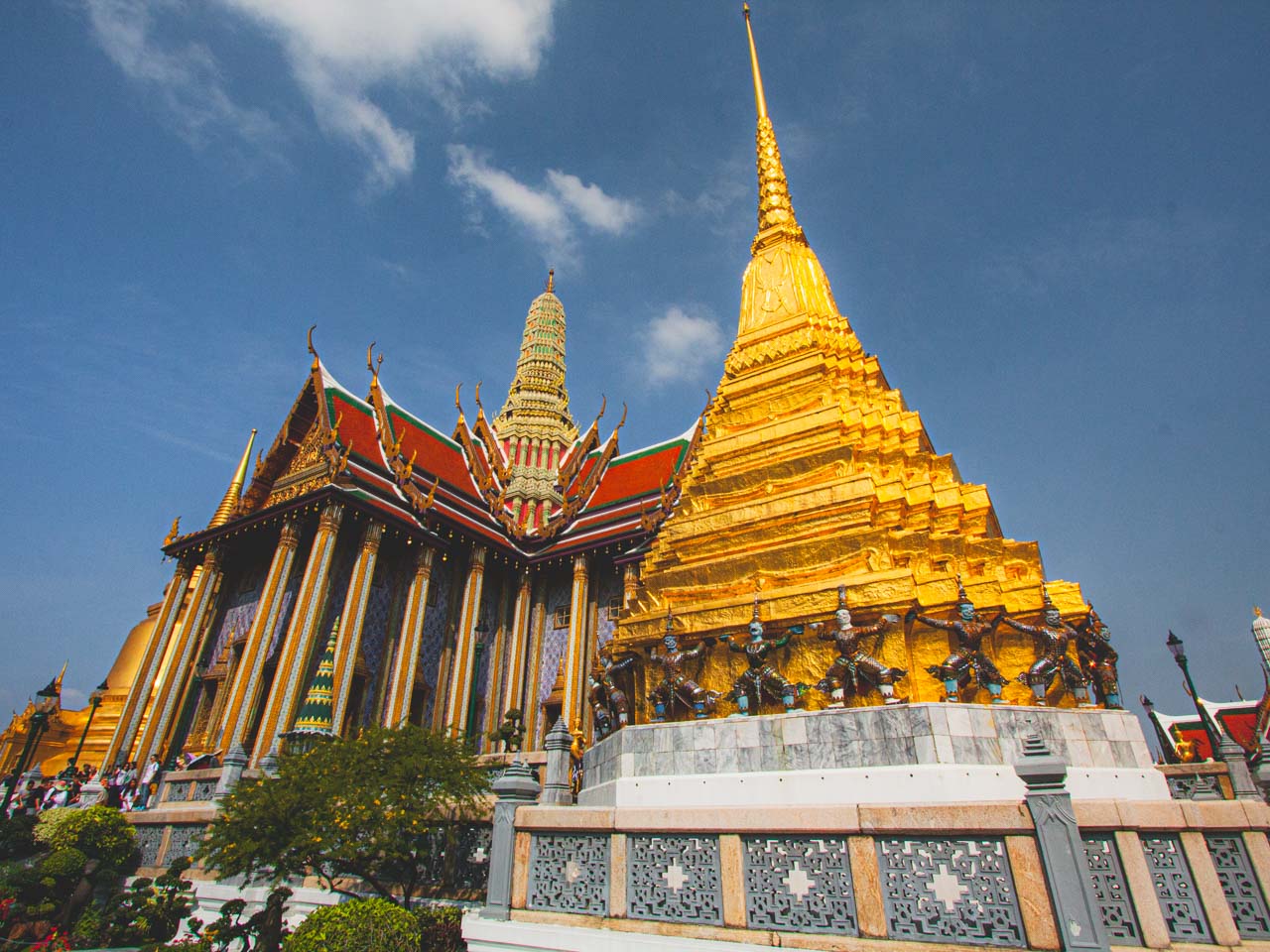
Begin your first morning at the Grand Palace, one of Bangkok’s most important landmarks.
The complex served as the official residence of Thai kings for generations. Today, it is still used for royal ceremonies, and its decorated buildings remain among the most recognizable sights in Thailand.
The palace grounds are also home to Wat Phra Kaew, the Temple of the Emerald Buddha. The statue itself is relatively small, but it is one of the country’s most important religious symbols.
Do not rush through the complex. There are courtyards, mosaics, murals, and architectural details everywhere, so give yourself at least a few hours.
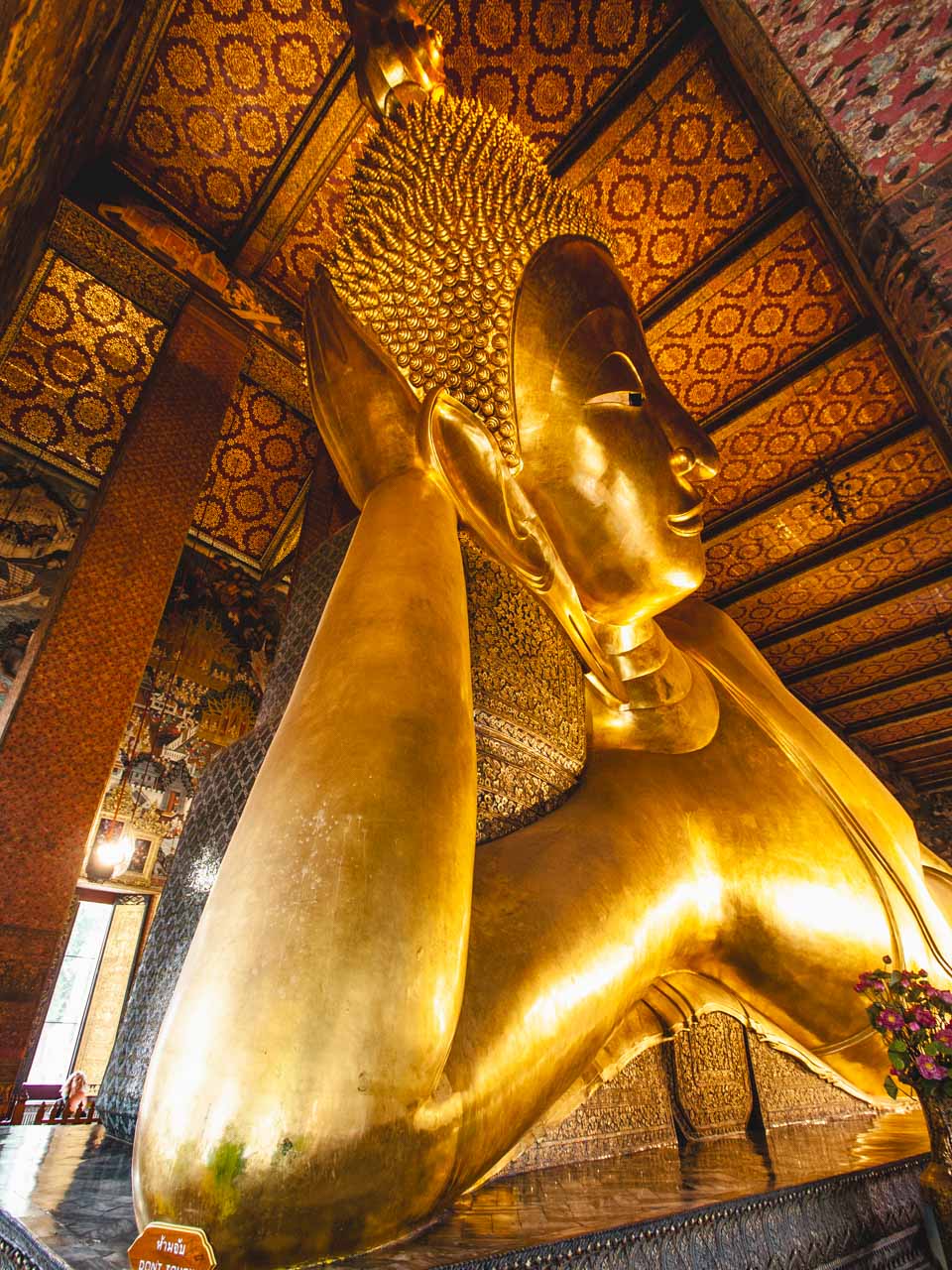
Next, walk to nearby Wat Pho, best known for its enormous Reclining Buddha.
The statue is 151 feet, or 46 meters, long. Its size is impressive, but make sure you also look at the intricate designs on the soles of its feet and explore the smaller courtyards and stupas around the temple complex.
Wat Pho is closely connected with the history of traditional Thai massage. If you need a break after your journey and a full morning of walking, you can book a massage here.
In the late afternoon, make your way to the Chao Phraya River.
You can take a public ferry or choose a longer cruise. From the water, Bangkok looks very different from the busy streets. Modern towers appear alongside older houses, temples, local boats, and riverside neighborhoods.
You do not need an expensive dinner cruise to enjoy the experience. A simple public boat ride around sunset can be just as memorable.
Practical Tips
Arrive at the Grand Palace early, before the heat and the largest tour groups.
Temple visitors must cover their shoulders and knees. You will also need to remove your shoes before entering certain buildings.
Check current ticket prices and opening hours before your visit, as they may change.
Where to Stay in Bangkok
- Chern Hostel – a simple, well-located option for travelers looking for a more affordable stay.
- DE Phanakron Boutique Hotel – a small boutique property close to Bangkok’s historic attractions.
Day 2: Wat Arun, Chinatown, and Khao San Road
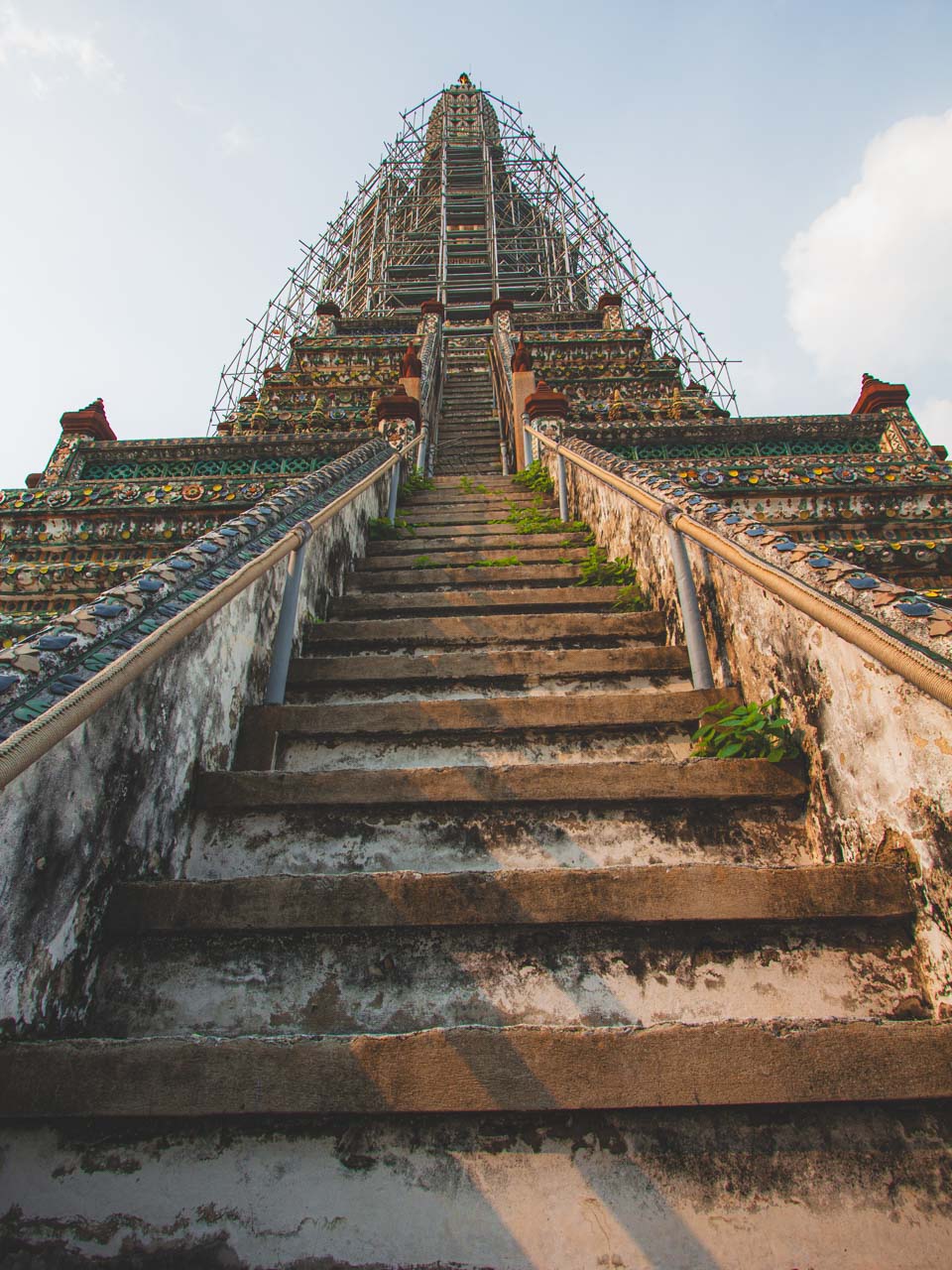
Start your second day by crossing the river to Wat Arun, also known as the Temple of Dawn.
Its central tower is covered with small pieces of porcelain and ceramic that form detailed floral patterns. From a distance, the temple appears pale and almost uniform. Up close, it becomes a mosaic of thousands of individual decorations.
You can climb part of the central tower using steep steps. You do not need to go very high to see the river and the buildings on the opposite bank.
Afterward, head to Chinatown.
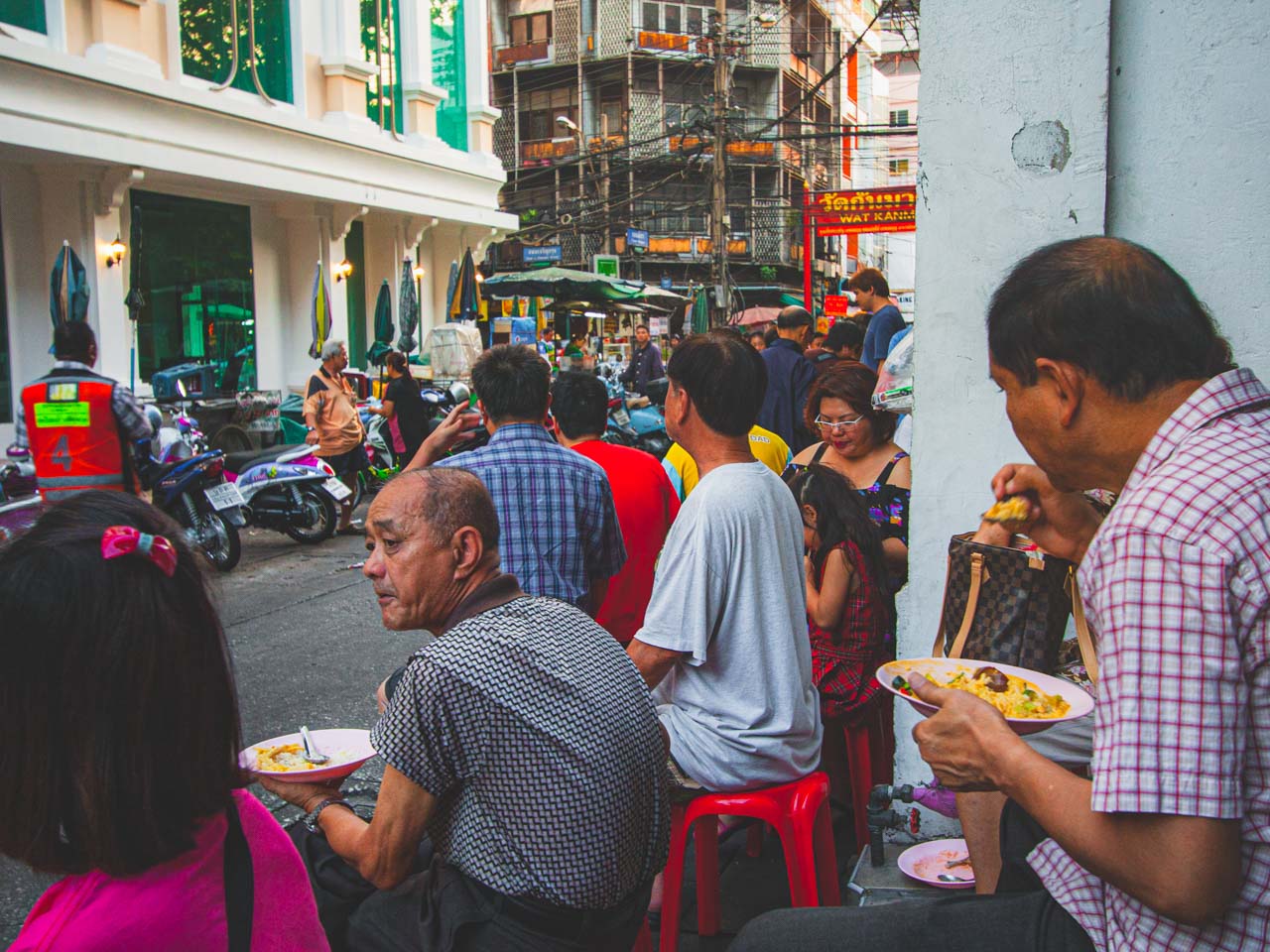
Yaowarat Road is the neighborhood’s best-known street, but do not limit yourself to the main road. The smaller lanes are filled with market stalls, spice shops, temples, bakeries, and places to eat.
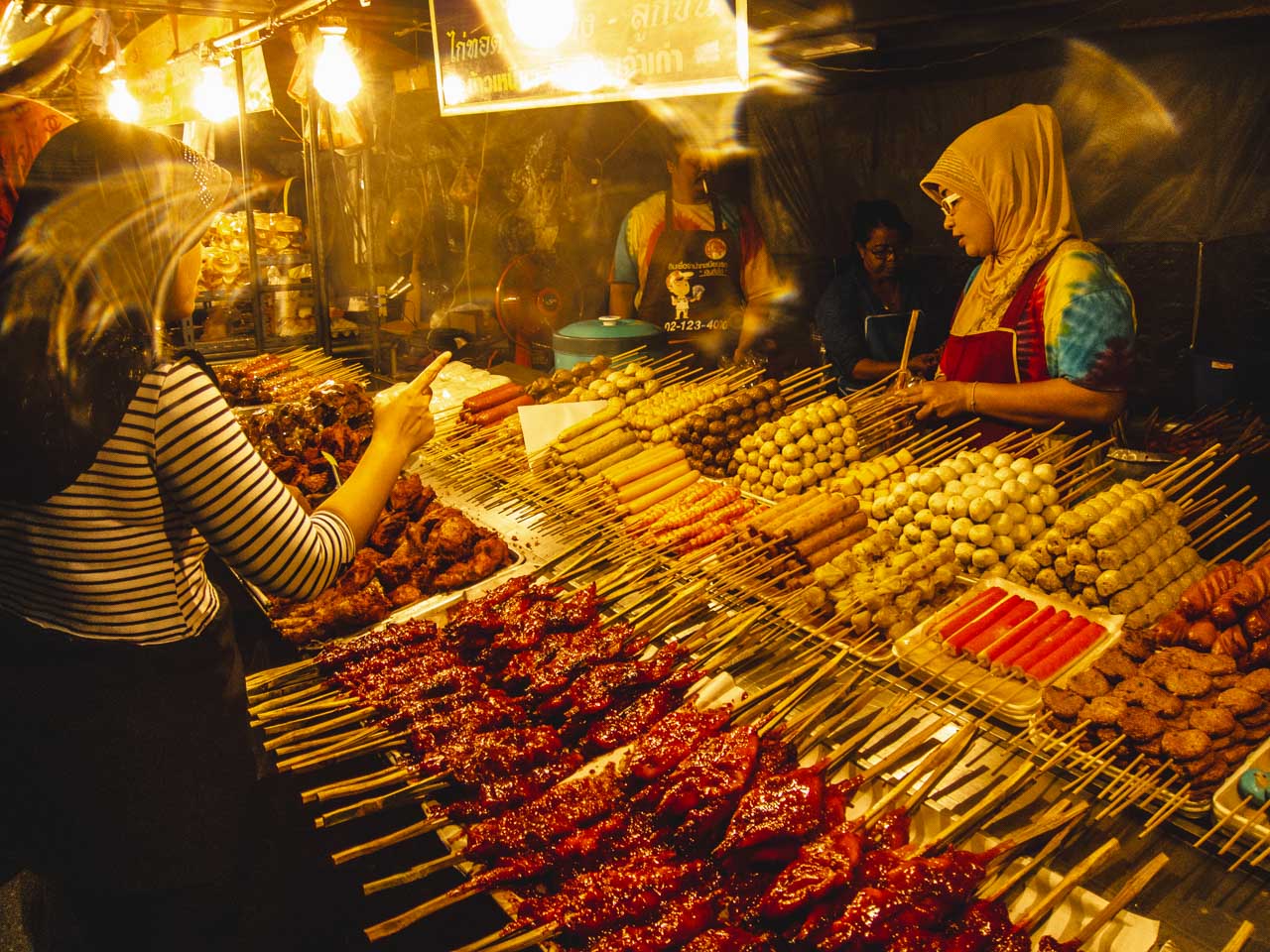
Bangkok is one of the best cities for exploring Thai food. You do not need to recognize every dish before ordering. Choose a busy stall, begin with a small portion, and see where the evening takes you.
For more ideas, continue to my guide to the Thai dishes you should try during your trip.
In the evening, you can visit Khao San Road.
It is one of Bangkok’s loudest and most tourist-oriented streets. Bars, neon signs, vendors, and music create an atmosphere that will not appeal to everyone.
It is still worth seeing once and deciding for yourself whether you want to stay. For a slightly calmer evening, walk to nearby Rambuttri Road or return to the river.
Practical Tips
A small ferry connects the area around Wat Pho with Wat Arun.
Wear shoes with a good grip because the temple steps are steep.
Keep your phone, wallet, and documents secure in crowded places such as Chinatown and Khao San Road.
Day 3: A Floating Market and Chatuchak
On your third day, consider a half-day trip outside central Bangkok.
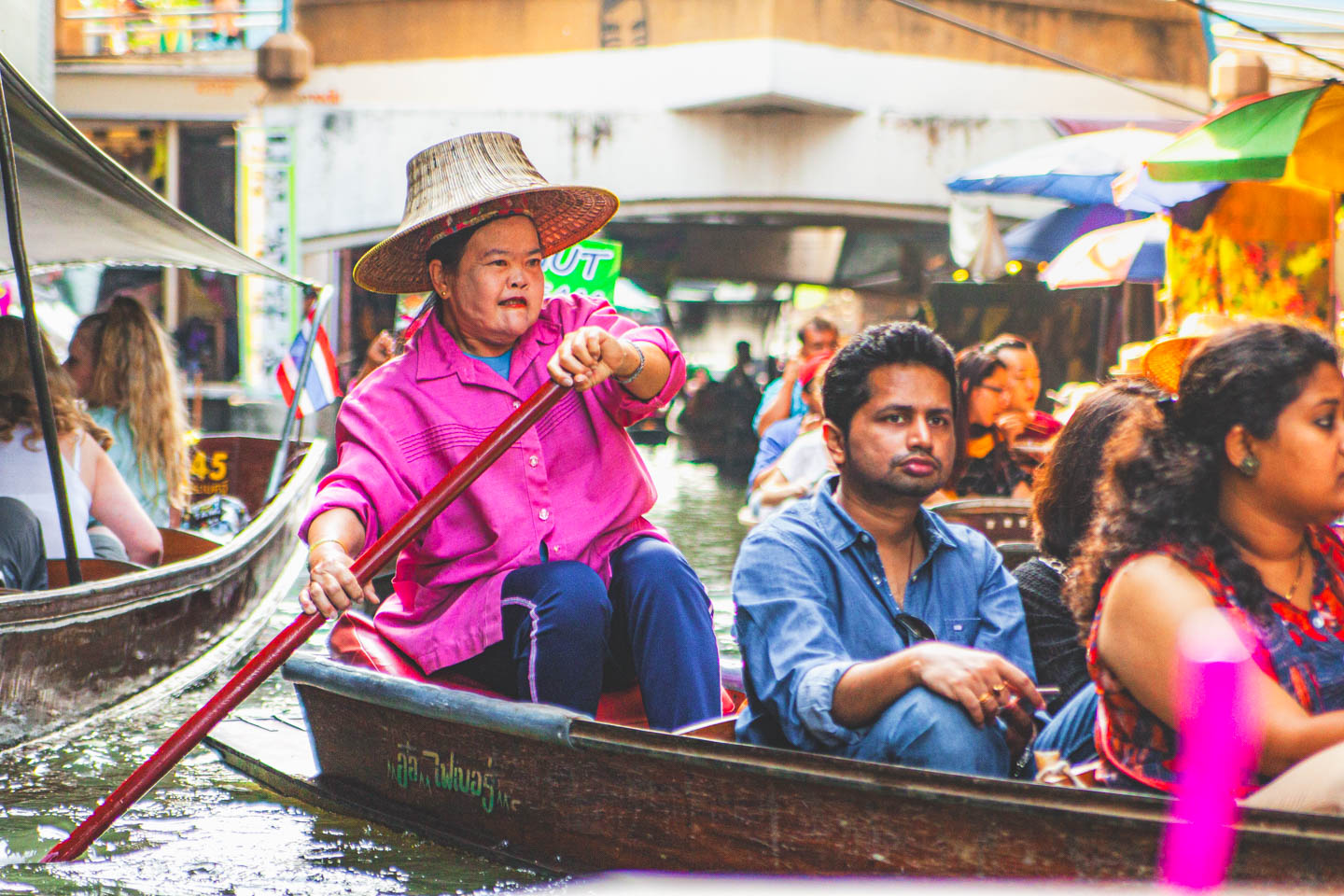
Damnoen Saduak is one of the country’s most famous floating markets. Vendors sell fruit, prepared food, crafts, clothing, and souvenirs from small boats traveling through the canals.
The market is now heavily oriented toward visitors, so do not expect an undiscovered local experience. It is better approached as a chance to see the canal system and a form of trade that once played a larger role in everyday life.
After returning to Bangkok, visit Chatuchak Weekend Market if your stay includes a weekend.
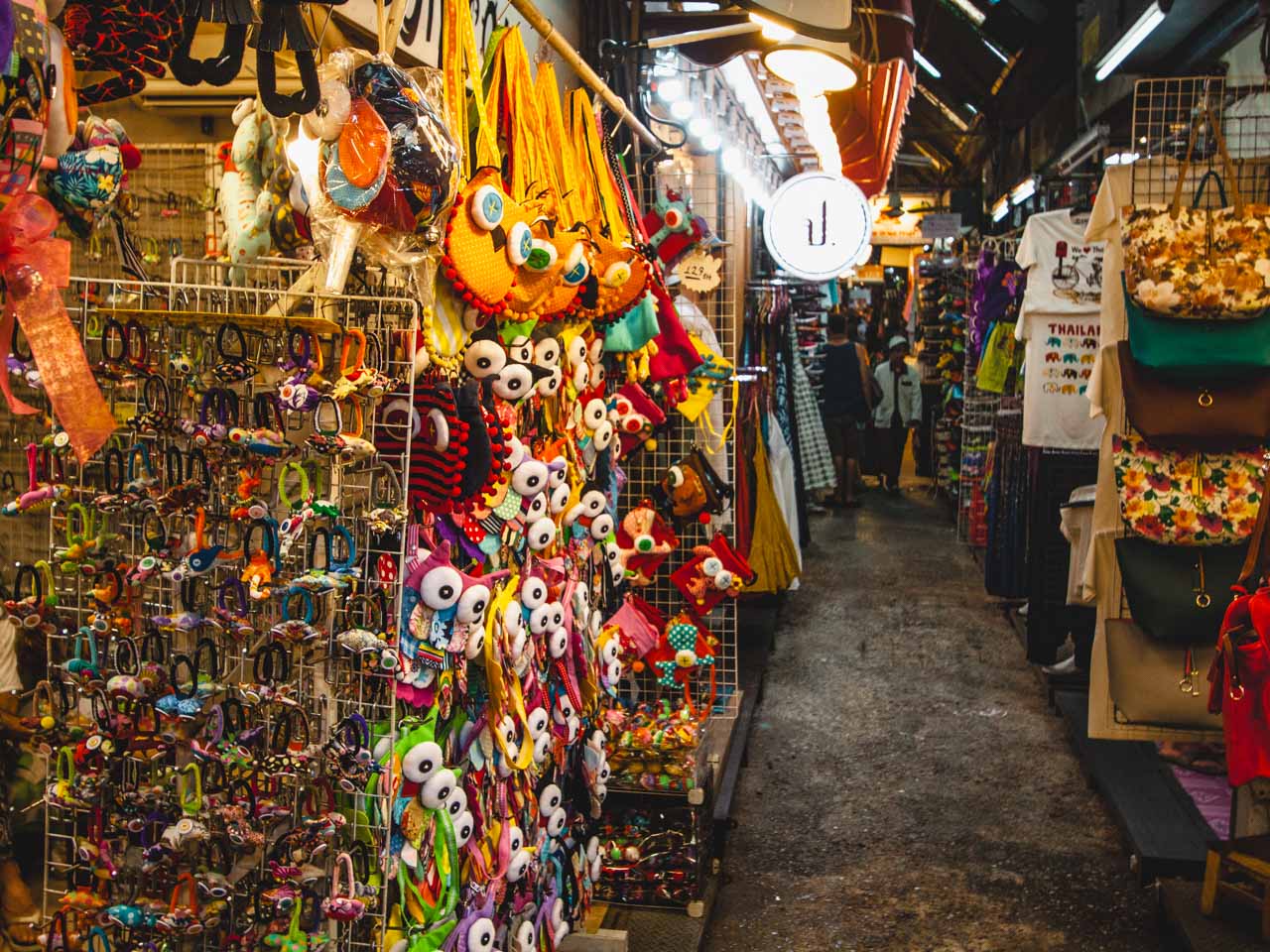
Chatuchak is enormous and divided into many different sections. You can find clothing, ceramics, vintage posters, books, plants, home decor, and food.
Do not try to see the entire market. Choose a few areas that interest you, stop for lunch, and be prepared for crowds and heat.
For more places to add to your time in the capital, see my Bangkok guide for first-time visitors.
Practical Tips
The easiest way to visit Damnoen Saduak is with a tour that includes transportation from Bangkok.
Chatuchak is at its fullest on weekends. Many vendors still prefer cash.
Bargaining is common in some parts of the market, but not for every product. Stay polite and walk away if the price does not feel right.
Days 4-5: Ayutthaya
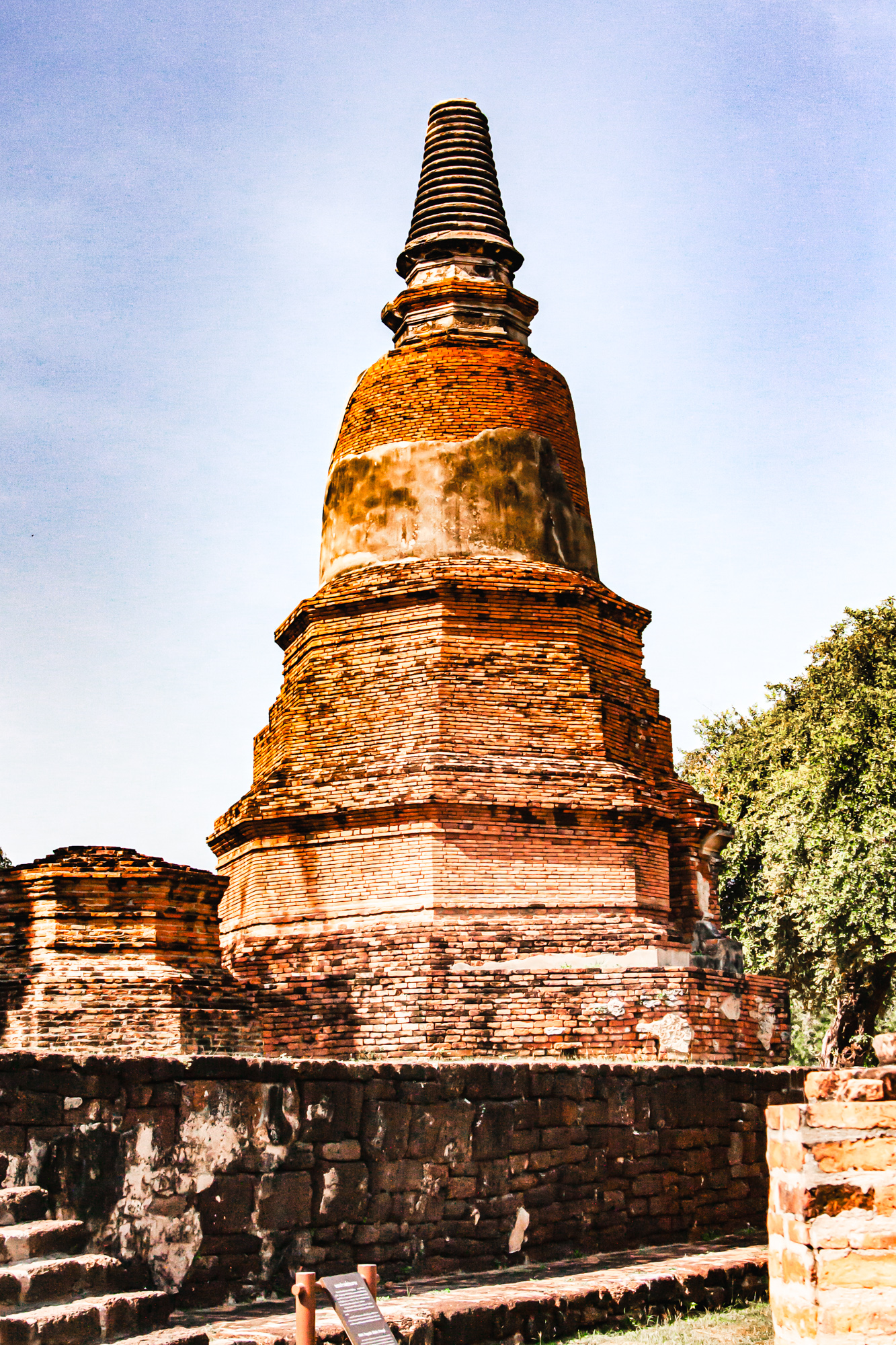
Ayutthaya was once the capital of Siam and one of the most important cities in Southeast Asia.
Today, the remains of temples, stupas, and royal buildings are spread across the modern city. It is possible to visit on a day trip from Bangkok, but spending one night allows you to explore without constantly watching the time.
Day 4: Ayutthaya’s Most Important Temples
Begin with Wat Ratchaburana, one of the better-preserved temples in the historic area.
Its central prang was constructed in a Khmer-influenced style. Some traces of old wall paintings also survive within the complex.
Next, continue to Wat Mahathat.
This is where you will find the well-known stone Buddha head surrounded by tree roots. The image itself is smaller than it often appears in photographs, so it is easy to walk past without noticing it.
After seeing the Buddha head, explore the rest of the complex. Fallen stupas, brick walls, and damaged statues reveal much more about the former city than a single famous photograph.
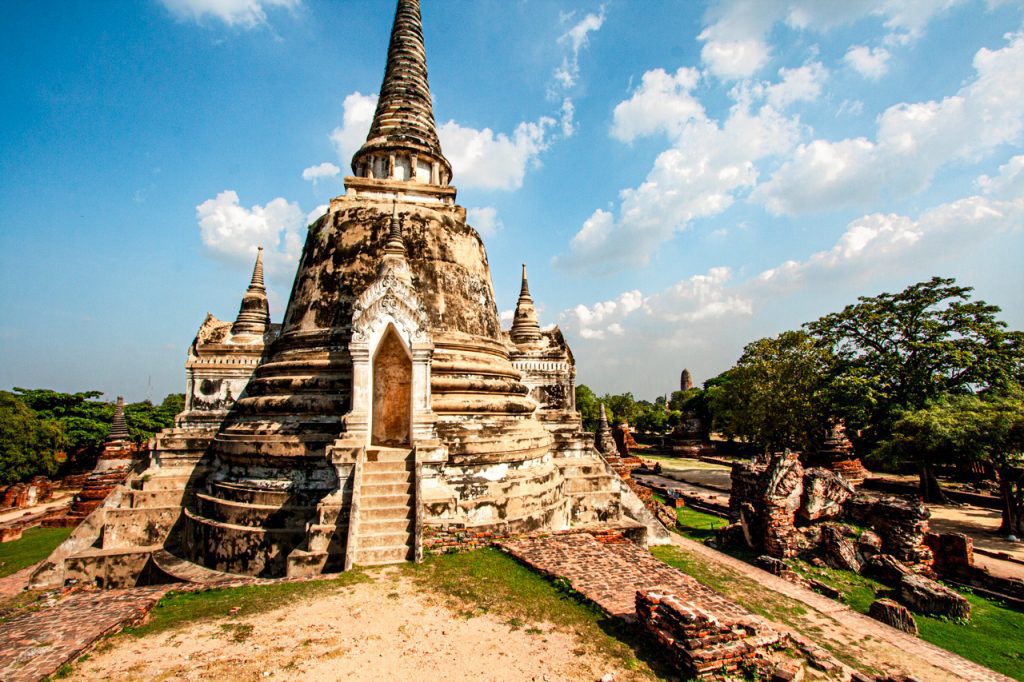
Finish the day at Wat Phra Si Sanphet, the former royal temple with three distinctive chedis.
The site is more open than Wat Mahathat and is particularly pleasant later in the afternoon, when the temperature begins to drop.
You will find a more detailed route between the ruins in my one-day Ayutthaya itinerary.
Practical Tips
Trains connect Bangkok with Ayutthaya. Check the departure station before traveling because different services may leave from different Bangkok terminals.
The temples are spread across a wide area. You can explore by bicycle, hire a tuk-tuk, or arrange a driver for several hours.
Ayutthaya becomes very hot during the day, so carry water and plan regular breaks.
Where to Stay in Ayutthaya
- Baan Thai House – a peaceful property with traditional details and a garden.
- Sala Ayutthaya – a modern riverside hotel overlooking one of the historic temples.
Day 5: Wat Mongkhon Bophit and Wat Chaiwatthanaram
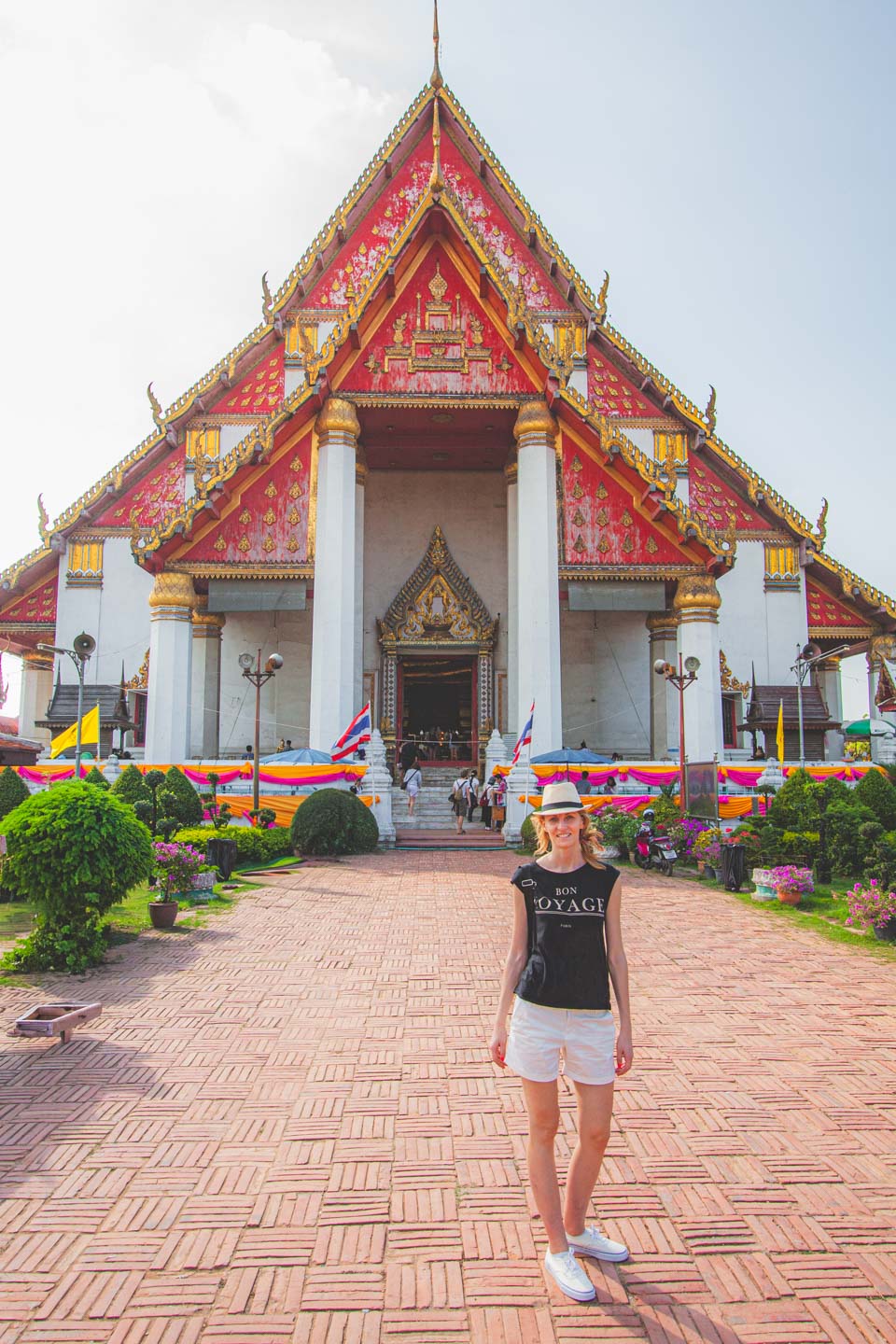
Begin your second day in Ayutthaya at Wat Mongkhon Bophit.
Unlike the surrounding ruins, this is still an active temple. Inside, you will find a large bronze Buddha statue that was carefully restored after the building was damaged by fire.
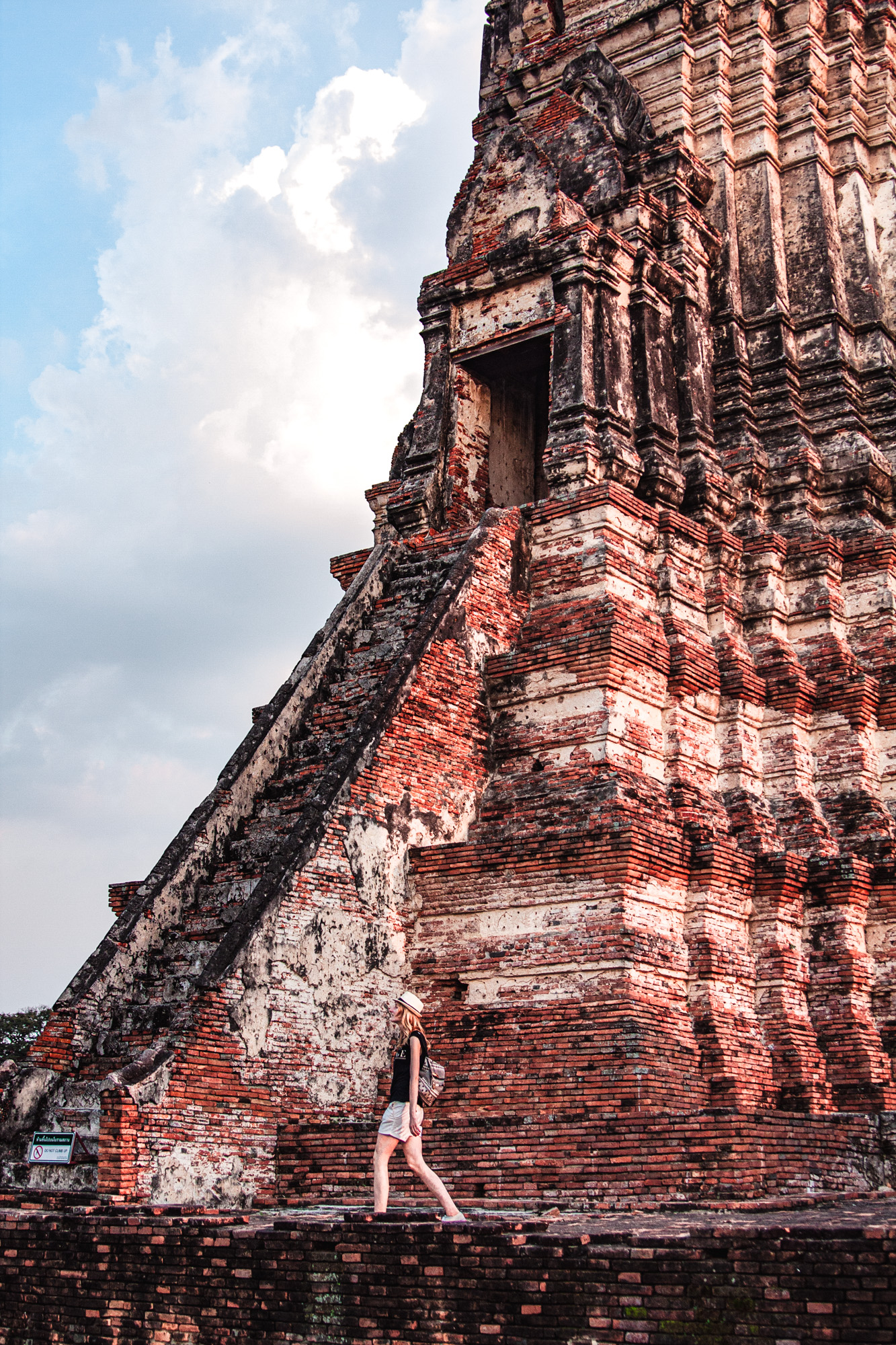
Next, travel to Wat Chaiwatthanaram, one of Ayutthaya’s most recognizable temple complexes.
It stands beside the river and is especially beautiful in the late afternoon, when the brick towers take on a warmer color and the light emphasizes the symmetry of the site.
Instead of trying to fit in several more temples, spend longer here. After two days of ruins, another rushed complex may make less of an impression than one quiet hour in a place you genuinely enjoy.
Afterward, return to Bangkok and fly to Chiang Mai. An overnight train is another option and allows you to avoid an additional flight while saving a night in a hotel.
Practical Tips
Wat Mongkhon Bophit and Wat Chaiwatthanaram can easily be visited on the same day.
Check current opening hours, particularly if you hope to stay at Wat Chaiwatthanaram until late afternoon.
If you choose the overnight train to Chiang Mai, reserve your sleeping berth in advance, especially during the busiest travel periods.
Days 6-8: Chiang Mai
Chiang Mai feels very different from Bangkok.
Its Old City is surrounded by remnants of walls and a moat. Inside, you will find temples, small restaurants, cafés, markets, and quieter streets.
Three days give you time to visit the most important places while still leaving room for food, massage, and aimless wandering.
Day 6: Doi Suthep and the Old City
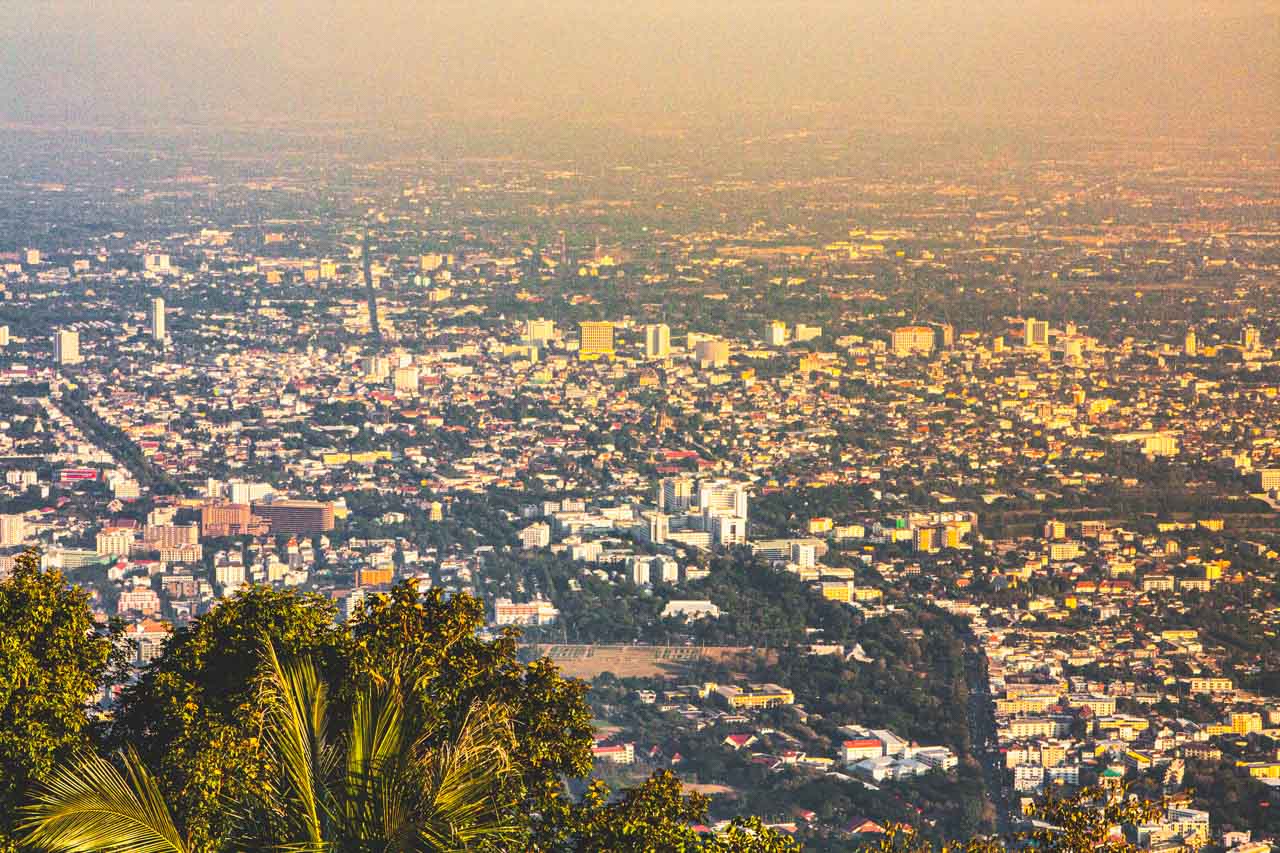
Begin your morning at Wat Phra That Doi Suthep, a temple located on a mountain above Chiang Mai.
A long staircase decorated with naga-shaped railings leads to the entrance. At the top, you will find a golden chedi and views across the city.
The panorama depends on the weather, but even on a hazy morning, the temple itself and its importance to local people make the journey worthwhile.
After returning to the center, visit Wat Phra Singh, one of the Old City’s most important temples.
Look beyond the main shrine and pay attention to the wooden buildings, gold details, and murals depicting scenes from life in northern Thailand.
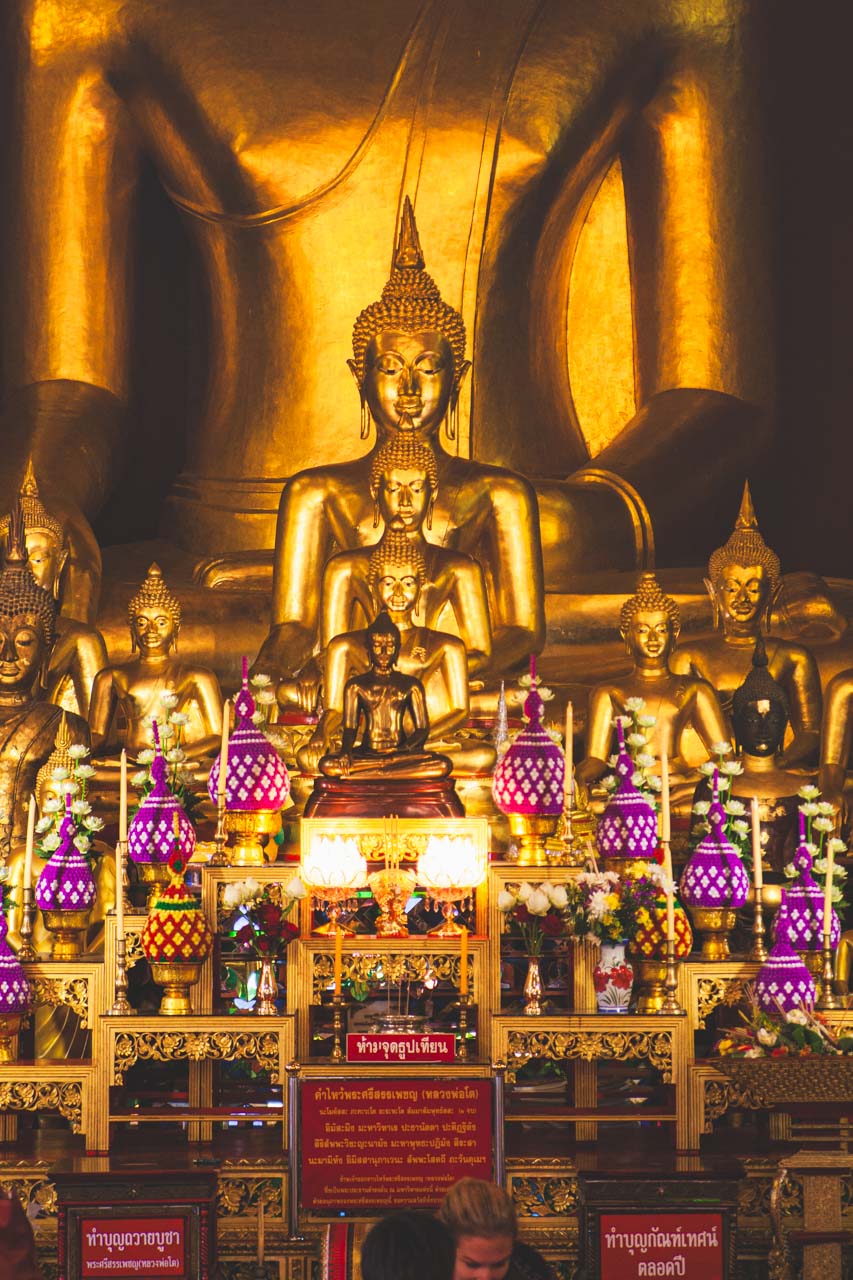
Spend the remainder of the day walking through the Old City.
You do not need to visit every temple marked on your map. It is often more enjoyable to enter a smaller one by chance, stop at a café, or simply observe daily life unfolding between the historic buildings.
For more ideas, continue to my complete Chiang Mai travel guide.
Practical Tips
You can reach Doi Suthep by taxi, scooter, or red songthaew.
From the entrance, you can climb the 309 steps or use the lift.
Arrive early to avoid the hottest part of the day and the largest groups. Cover your shoulders and knees when entering temples.
Where to Stay in Chiang Mai
- BED Phrasingh-Adults Only – a modern hotel inside the Old City.
- The Rim Chiang Mai – a peaceful property with a pool near several major temples.
Day 7: Elephants and the Night Bazaar
If seeing elephants is important to you, research the organization carefully before booking.
Avoid places that offer elephant riding, performances, tricks, or forced contact for photographs. The word “sanctuary” in a business name does not automatically guarantee good animal welfare.
Check the current program, read recent reviews, and look for information about where the elephants came from and what their daily lives are like.
In The Truth About Elephant Riding in Thailand, I share my own experience and explain why I would not make the same choice again.
Practical Tips
Many elephant experiences include transportation from Chiang Mai, but confirm exactly what is included before booking.
Bring suitable footwear and clothes that can get dirty if the program takes place outdoors.
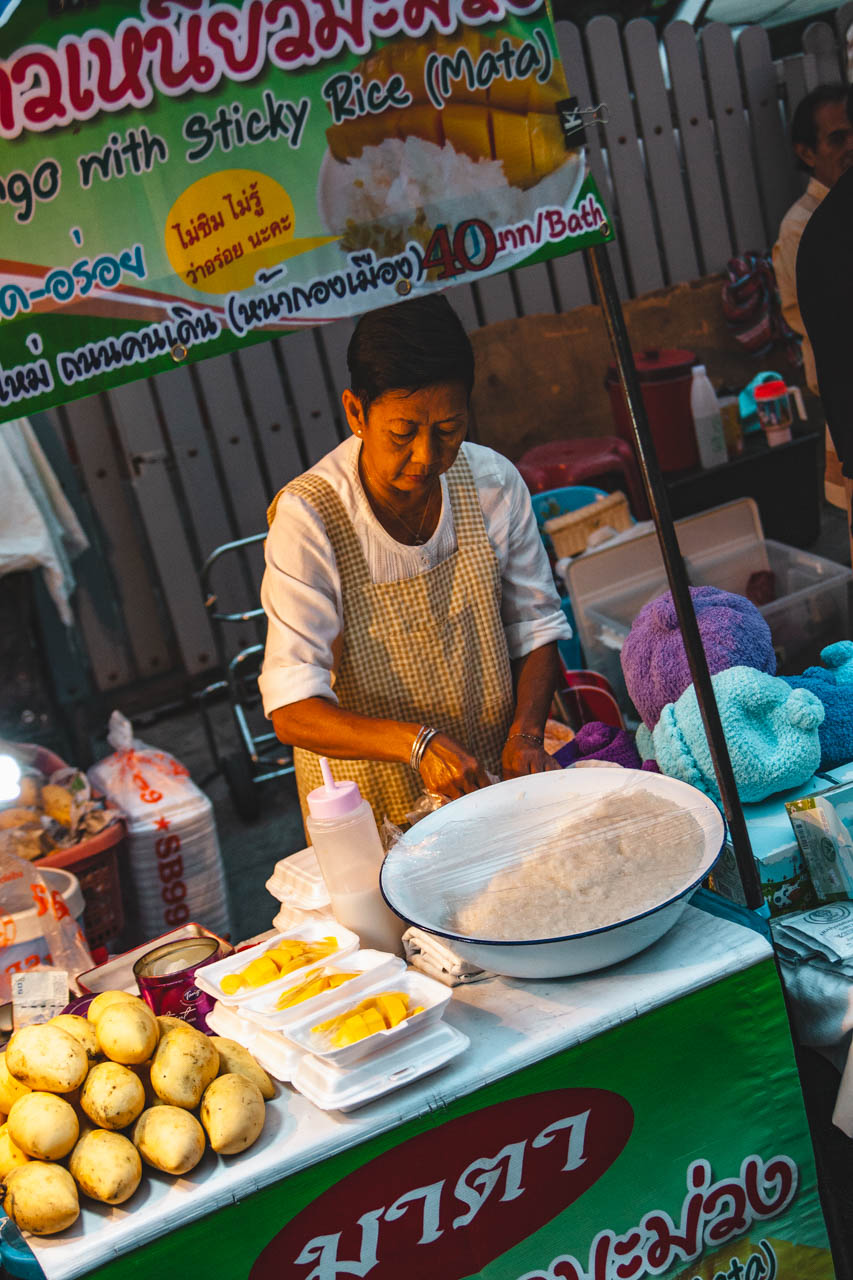
The Night Bazaar operates in the evening. Carry some cash because not every seller accepts cards.
Day 8: A Thai Cooking Class and Massage
On your final day in Chiang Mai, join a cooking class.
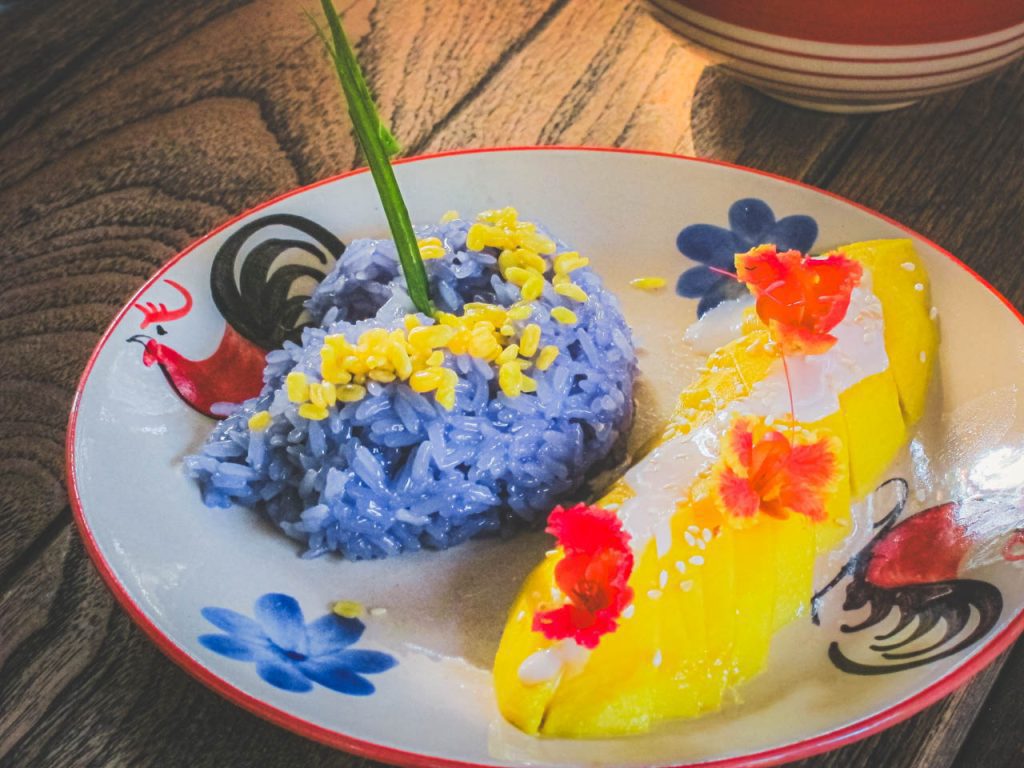
At Thai Farm Cooking School, the day begins with a visit to a local market before continuing to a farm outside the city. You will see how ingredients used in Thai cooking grow and prepare several dishes yourself.
For me, this was one of the most interesting days of the trip. It helped me understand Thai flavors more deeply than simply ordering another meal in a restaurant.
My Thai Farm Cooking School review explains how the day is organized and what we prepared.
After returning to Chiang Mai, book a massage at Fah Lanna Spa or another well-reviewed spa in the Old City.
Do not add several more attractions to the evening. A full-day cooking class and a massage are already enough.
Practical Tips
The cooking class takes up most of the day. Hotel pickup is generally in the morning, with the return scheduled for late afternoon.
Wear light, comfortable clothes and avoid eating a large breakfast because you will prepare and taste several dishes.
Reserve your massage in advance, particularly during busy periods.
Day 9: Chiang Rai and the Golden Triangle
Chiang Rai is approximately three hours from Chiang Mai.
A day trip is possible, but it will involve many hours on the road. For a slower itinerary, consider staying overnight in Chiang Rai or skipping the Golden Triangle.
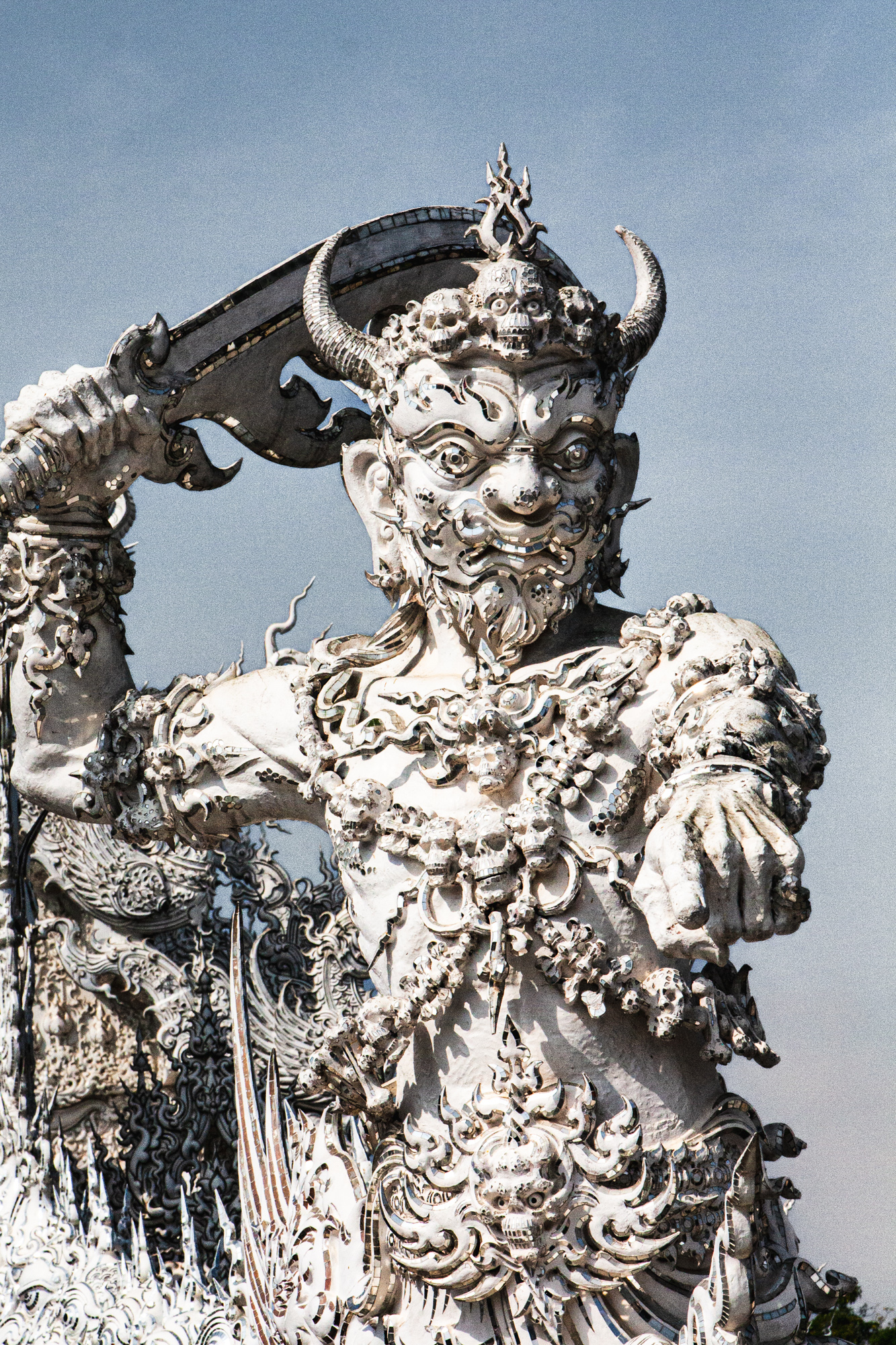
The area’s most famous attraction is Wat Rong Khun, commonly known as the White Temple.
It is not an ancient Buddhist temple. It is a contemporary artwork created by Thai artist Chalermchai Kositpipat, combining Buddhist symbolism with references to modern popular culture.
To enter the main building, you cross a bridge above hundreds of reaching hands representing human desire. Inside, traditional religious images appear alongside unexpected characters from films and popular culture.
The result may feel strange or chaotic, but that tension between tradition and modern life is what makes the temple different from every other religious site on this itinerary.
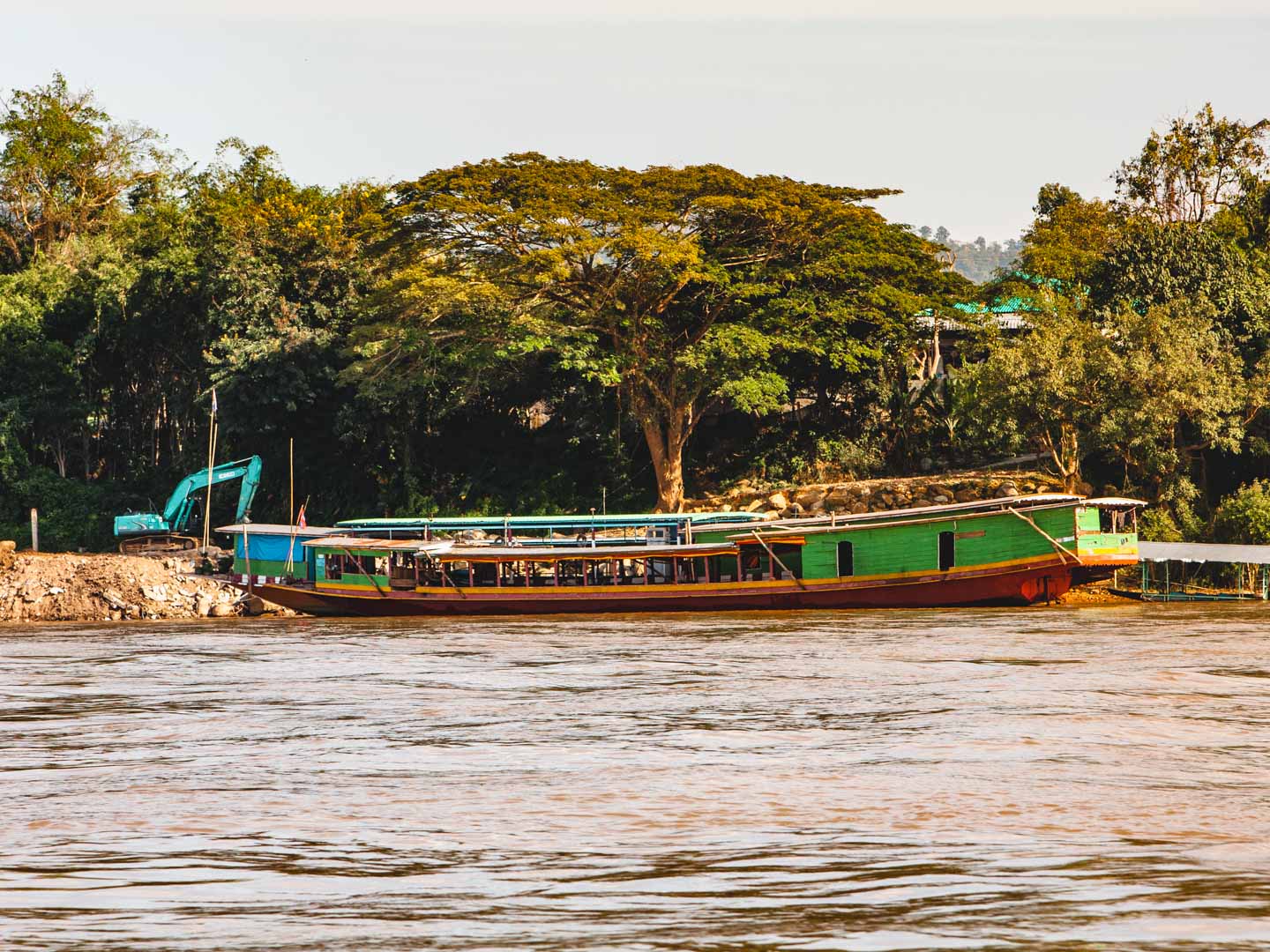
From Chiang Rai, you can continue toward Chiang Saen and the Golden Triangle, where the borders of Thailand, Laos, and Myanmar meet.
The region was once strongly associated with the opium trade. Today, visitors come for the views across the Mekong, small museums, and boat trips.
You do not need to visit the Golden Triangle simply because it appears on popular itineraries. If the region’s history does not interest you, spend more time in Chiang Rai instead.
Practical Tips
A day trip from Chiang Mai to Chiang Rai and the Golden Triangle is long. Consider an overnight stay if you do not want to spend most of the day in a vehicle.
Buses connect Chiang Mai with Chiang Rai, or you can join an organized tour.
Check the current opening hours and dress requirements before visiting Wat Rong Khun.
Days 10-14: Krabi and the Andaman Sea
After several days of temples and cities, continue south to Krabi.
The province is a convenient base for limestone cliffs, beaches, islands, and Phang Nga Bay. This part of the itinerary is where it becomes especially important to leave room for the weather and your energy levels.
You do not need to join a full-day boat trip every morning. A quiet day on Railay or Ao Nang may be more enjoyable than another transfer beginning at seven.
Day 10: Krabi Town and Tiger Cave Temple
Fly to Krabi and begin with a night in Krabi Town.
The town feels less like a beach resort than Ao Nang. It has local restaurants, markets, a riverside promenade, and views of the Khao Khanab Nam limestone formations.
If you have enough energy, visit Wat Tham Sua, or Tiger Cave Temple.
A long and steep staircase leads to the viewpoint at the top. The climb is physically demanding, particularly in Thailand’s heat and humidity.
Do not begin in the middle of the day. Carry plenty of water and turn around if the conditions feel unsafe. You can also visit the temple complex at the bottom without climbing to the viewpoint.
After returning to town, walk along the river and look toward Khao Khanab Nam, the two limestone formations considered symbols of Krabi.
In the evening, visit Krabi Walking Street if it is operating during your stay.
For more ideas in the region, see my five-day Krabi itinerary.
Practical Tips
The easiest way to travel from Chiang Mai to Krabi is by air. Direct flights may not operate every day, so compare the available connections before planning the route.
Airport buses and taxis connect Krabi Airport with Krabi Town.
Climb Tiger Cave Temple early in the morning, carry plenty of water, and avoid the hottest hours.
Krabi Walking Street operates only on selected days, so check the current schedule.
Where to Stay in Krabi Town
- Sweet Dreams Hometel – a small guesthouse with simple rooms and good reviews.
- Family Tree Hotel – a comfortable, family-run hotel in central Krabi Town.
Day 11: Ao Nang and Railay Beach
Move to Ao Nang, which will be your base for the remaining days.
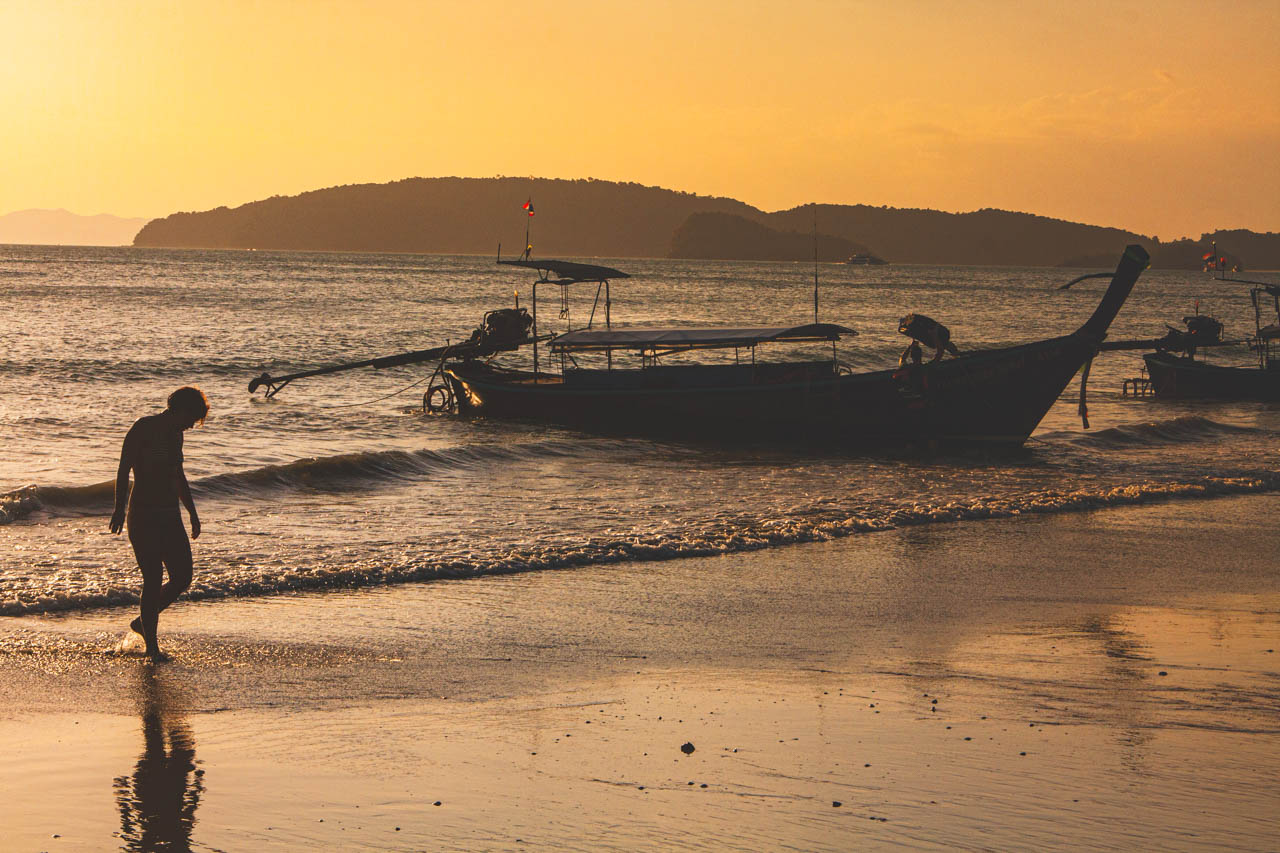
Traditional longtail boats regularly travel from Ao Nang to Railay. The journey is short, and views of the limestone cliffs begin before you reach the shore.
Railay is not technically an island, but the cliffs cut it off from the road network, so it can only be reached by boat.
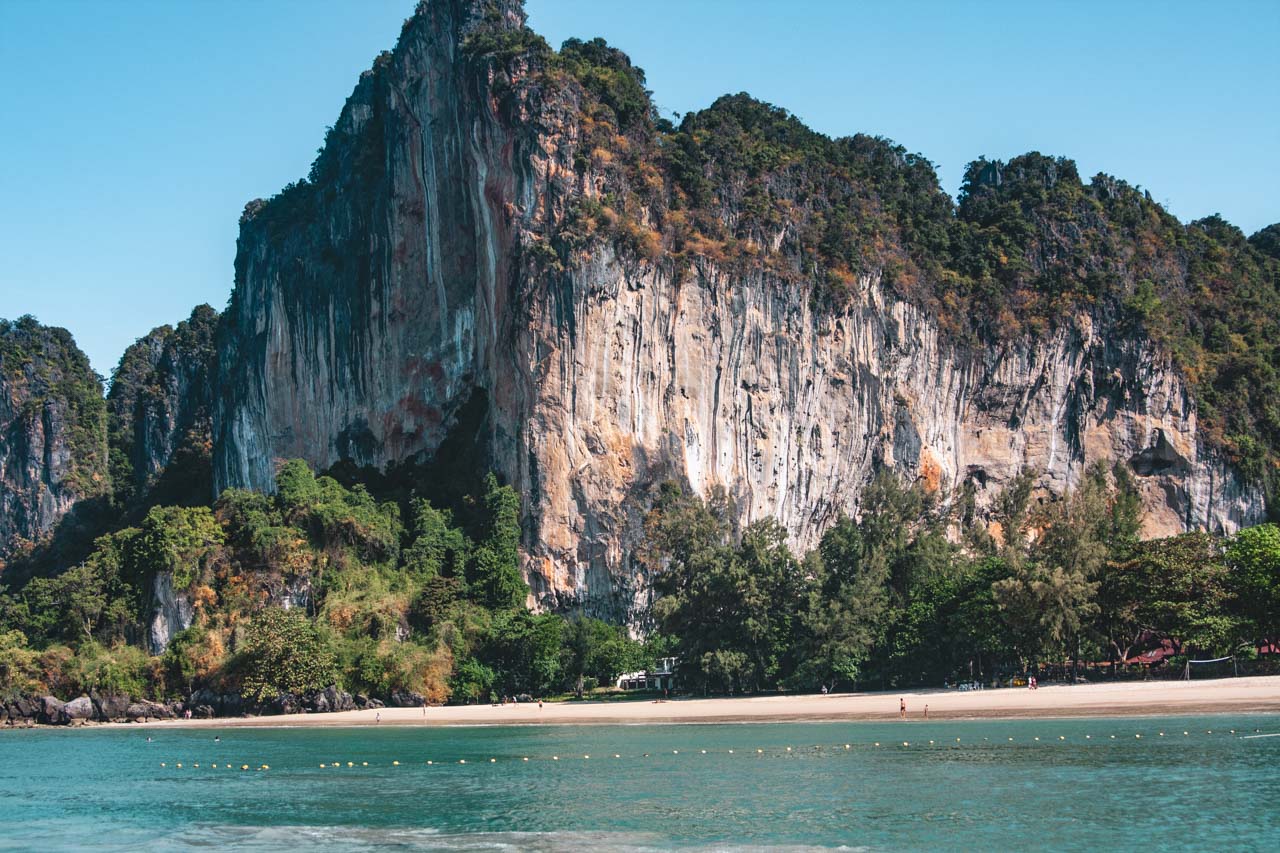
You can stay on Railay West or walk across the peninsula to Phranang Cave Beach.
Instead of rushing between every beach and viewpoint, choose one area, have a slow lunch, and stay until late afternoon.
Railay is popular, but it often becomes calmer early in the morning and later in the day, once many day visitors have left.
Return to Ao Nang for an evening walk beside the sea.
Practical Tips
Songthaews and taxis connect Krabi Town with Ao Nang.
Longtail boats to Railay leave regularly, but they may wait until enough passengers have arrived.
Check the time of the final return boat and carry cash for your ticket. Services may be limited or cancelled when the sea is rough.
Where to Stay in Ao Nang
- The Dream Garden – simple rooms within walking distance of Ao Nang Beach.
- Mini House Aonang – a small property with spacious rooms and friendly service.
Day 12: The Phi Phi Islands and Maya Bay
The next morning, join a full-day trip to the Phi Phi Islands.
Maya Bay on Phi Phi Leh is the best-known stop. The bay became internationally famous after appearing in the film The Beach.
The beach is surrounded by high limestone cliffs and is undeniably beautiful, but prepare for crowds and environmental restrictions designed to protect the area.
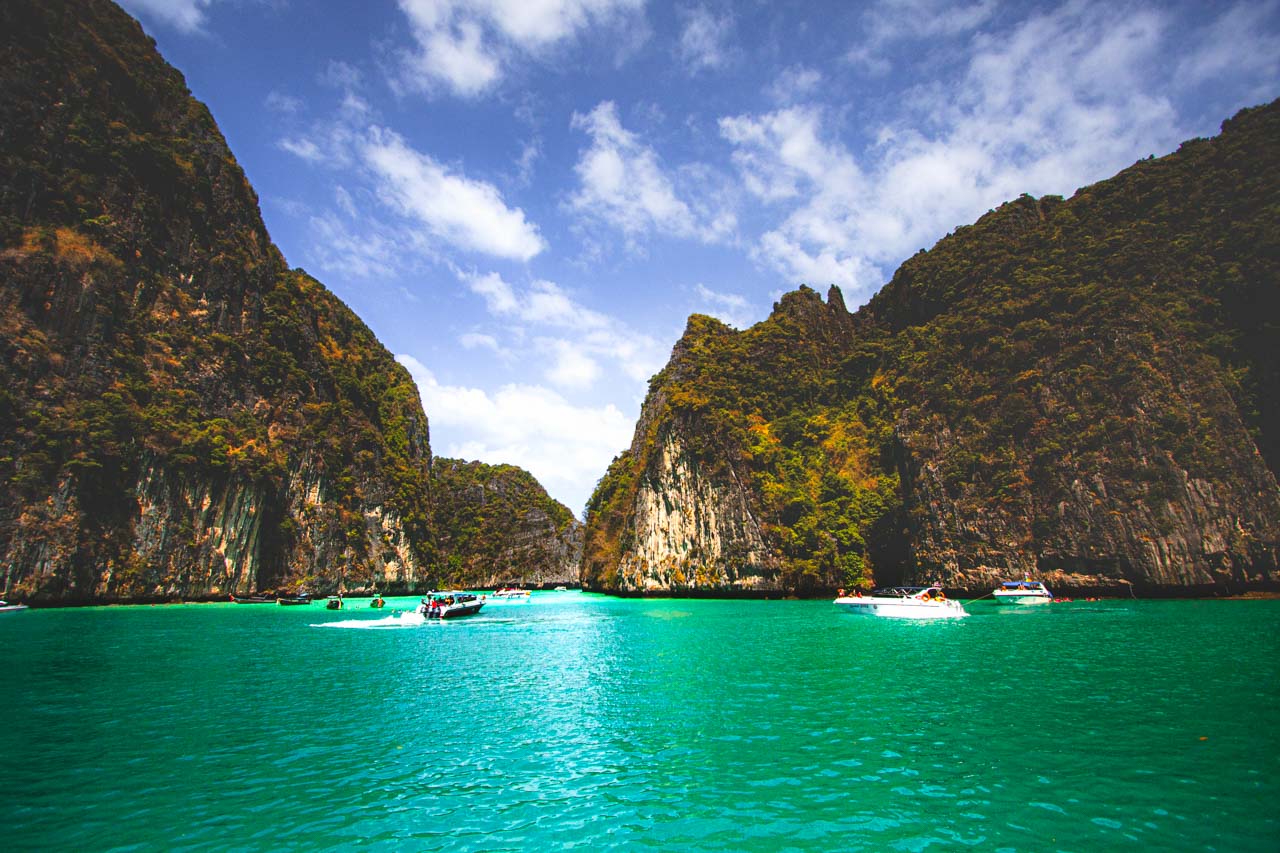
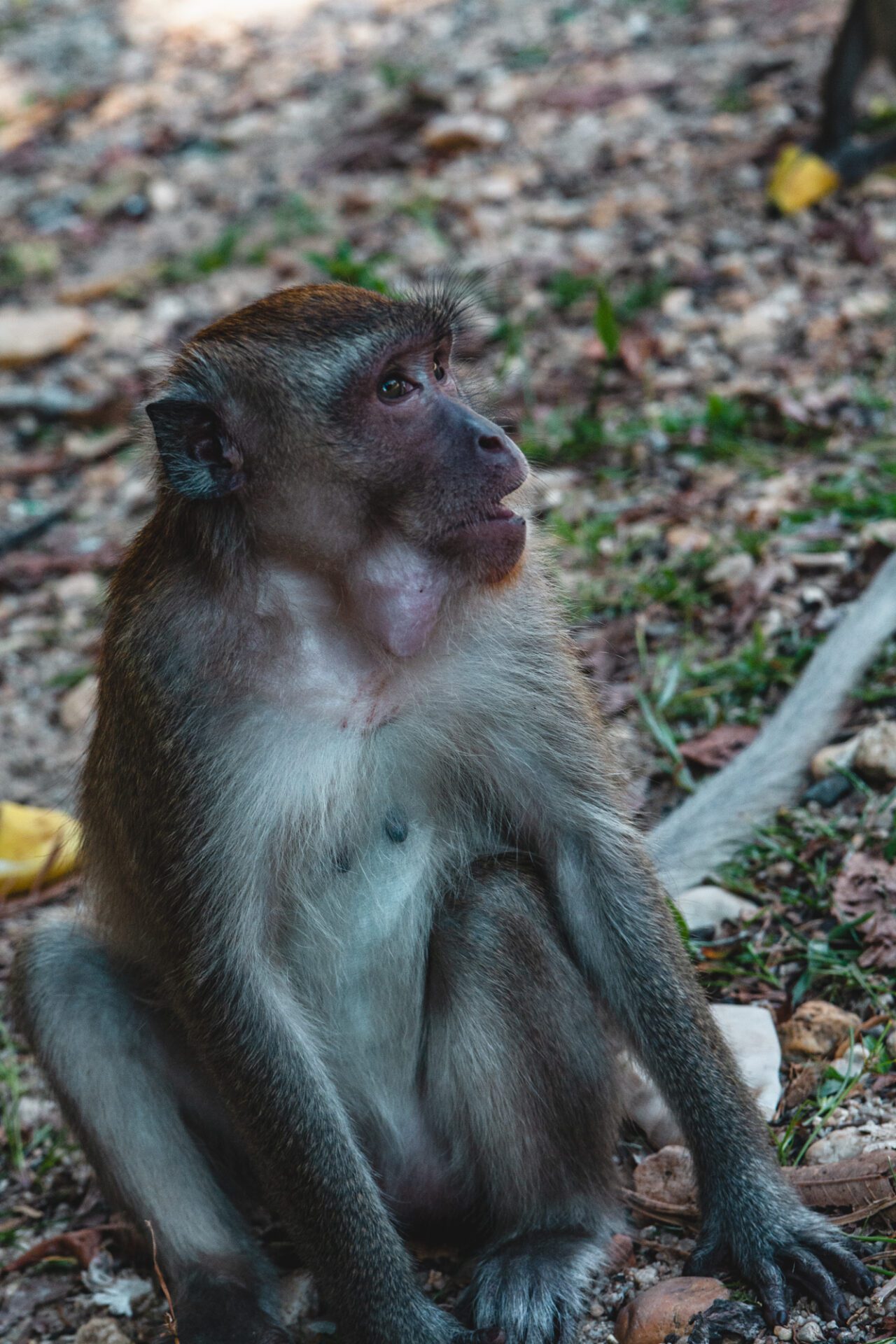
Boat tours often include Phi Phi Don, snorkeling stops, Viking Cave, and Monkey Beach.
Do not approach the monkeys or try to feed them. They can become aggressive, especially when they associate visitors with food.
Practical Tips
Before booking, compare several operators. Check the size of the group, the type of boat, the number of stops, and how much time is spent at each location.
Confirm whether the national park fee is included in the tour price.
Maya Bay is periodically closed to allow the ecosystem to recover. Check the latest rules before booking.
Keep your food, phone, and loose possessions secured when visiting areas with monkeys.
Take reef-safe sunscreen, sun protection, and medication for seasickness if you are sensitive to boat travel.
Day 13: Emerald Pool and the Hot Springs
On day 13, travel inland to Emerald Pool, a natural swimming area surrounded by forest.
A path through the jungle leads to the pool. Arrive early if possible, before the larger tour groups.
Blue Pool is located nearby. Its color is striking, but swimming is not permitted.
You can also visit the area’s hot springs, where naturally warm water flows through small rock pools surrounded by vegetation.
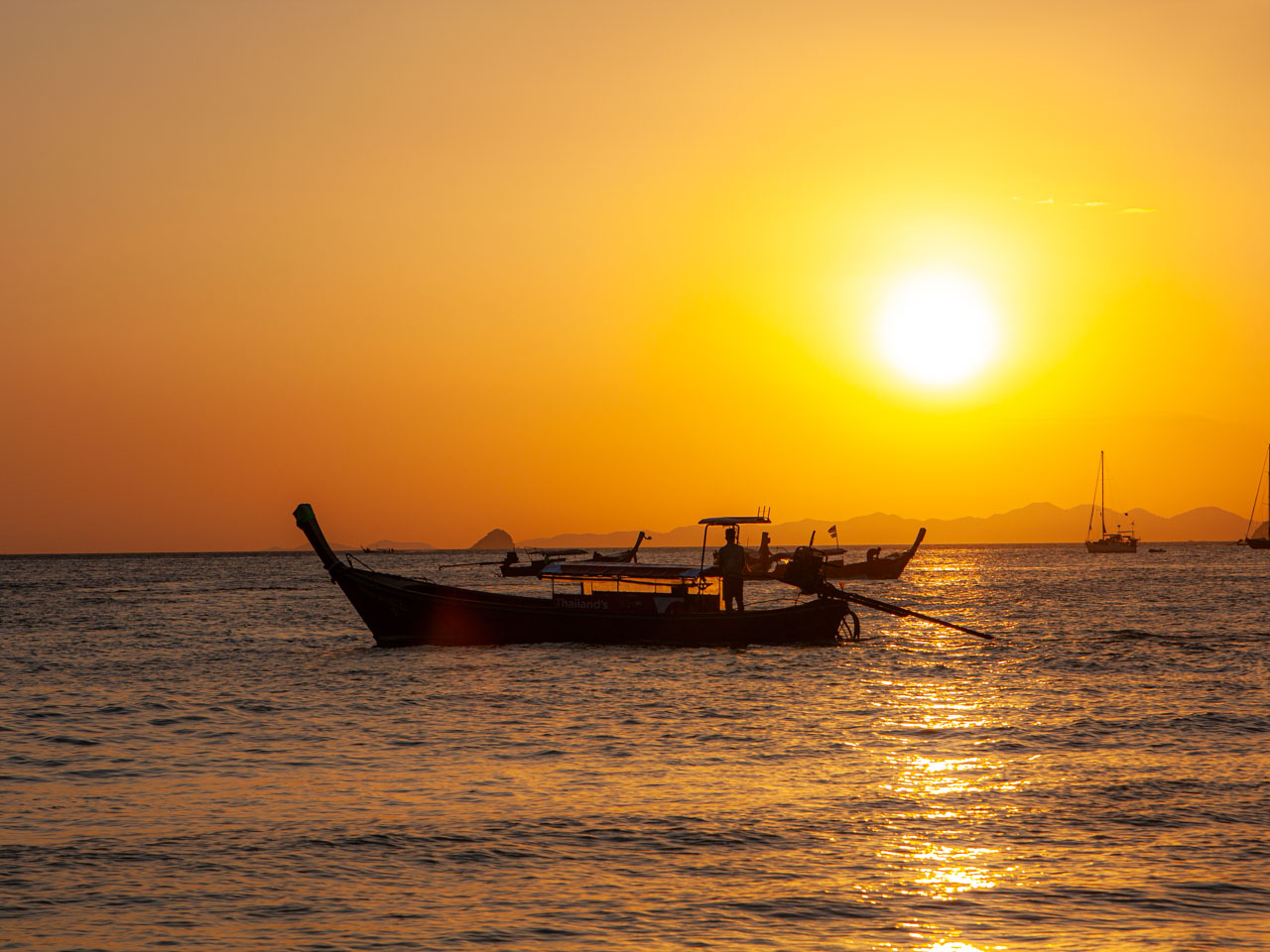
After returning to Ao Nang, keep the evening simple. Have dinner, sit on the beach, or book another massage.
Practical Tips
Emerald Pool, Blue Pool, and the hot springs can be combined in one day.
You can join an organized trip or hire a driver for the day.
Arrive early and bring swimwear, a towel, comfortable shoes, drinking water, and insect repellent.
Access to certain areas may change with the season or weather, so check current information before leaving Ao Nang.
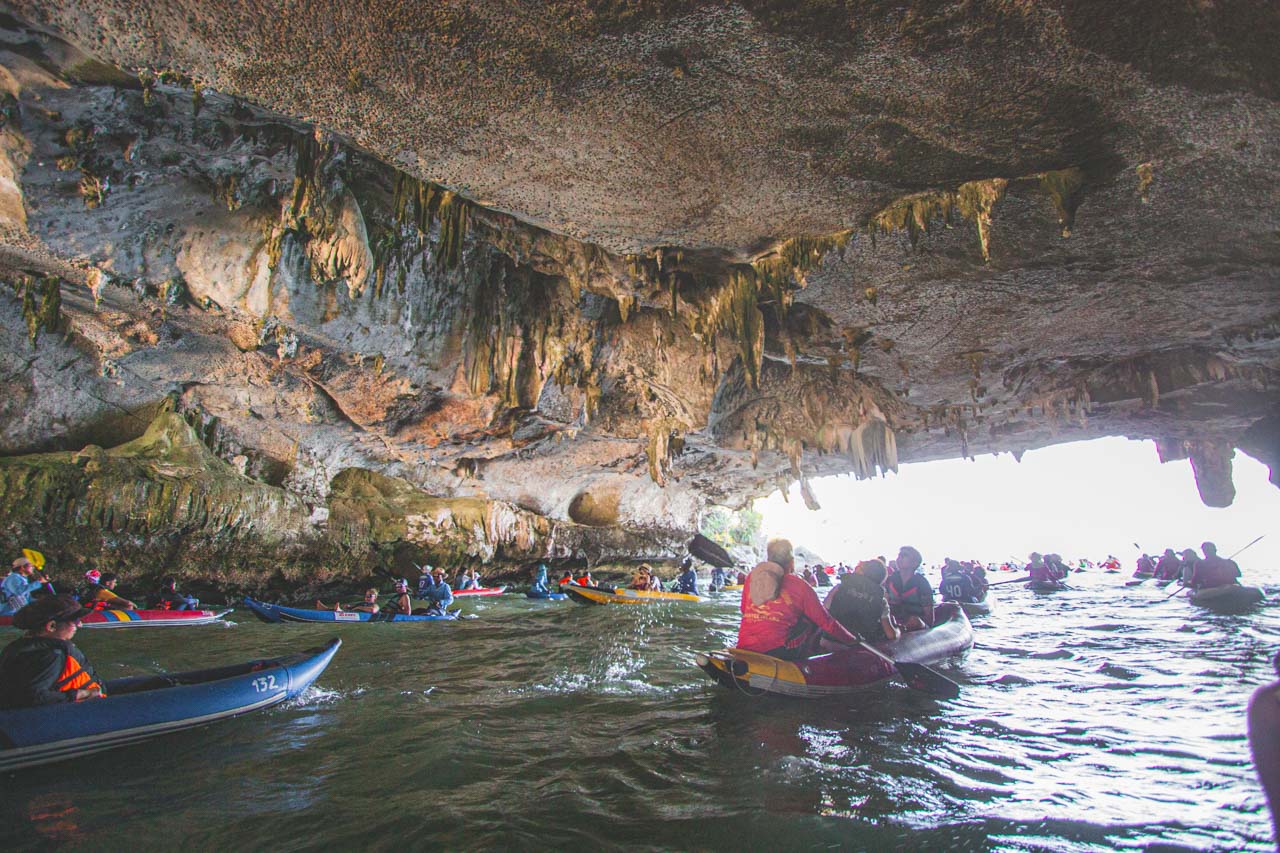
Day 14: Phang Nga Bay and James Bond Island
For your final day, visit Ao Phang Nga National Park.
Its most recognizable formation is Ko Tapu, commonly known as James Bond Island after its appearance in The Man with the Golden Gun.
The rock itself is relatively small, and the surrounding area receives many visitors. The wider landscape is the more interesting part of the trip: limestone formations, mangroves, caves, and small islands rising from the water.
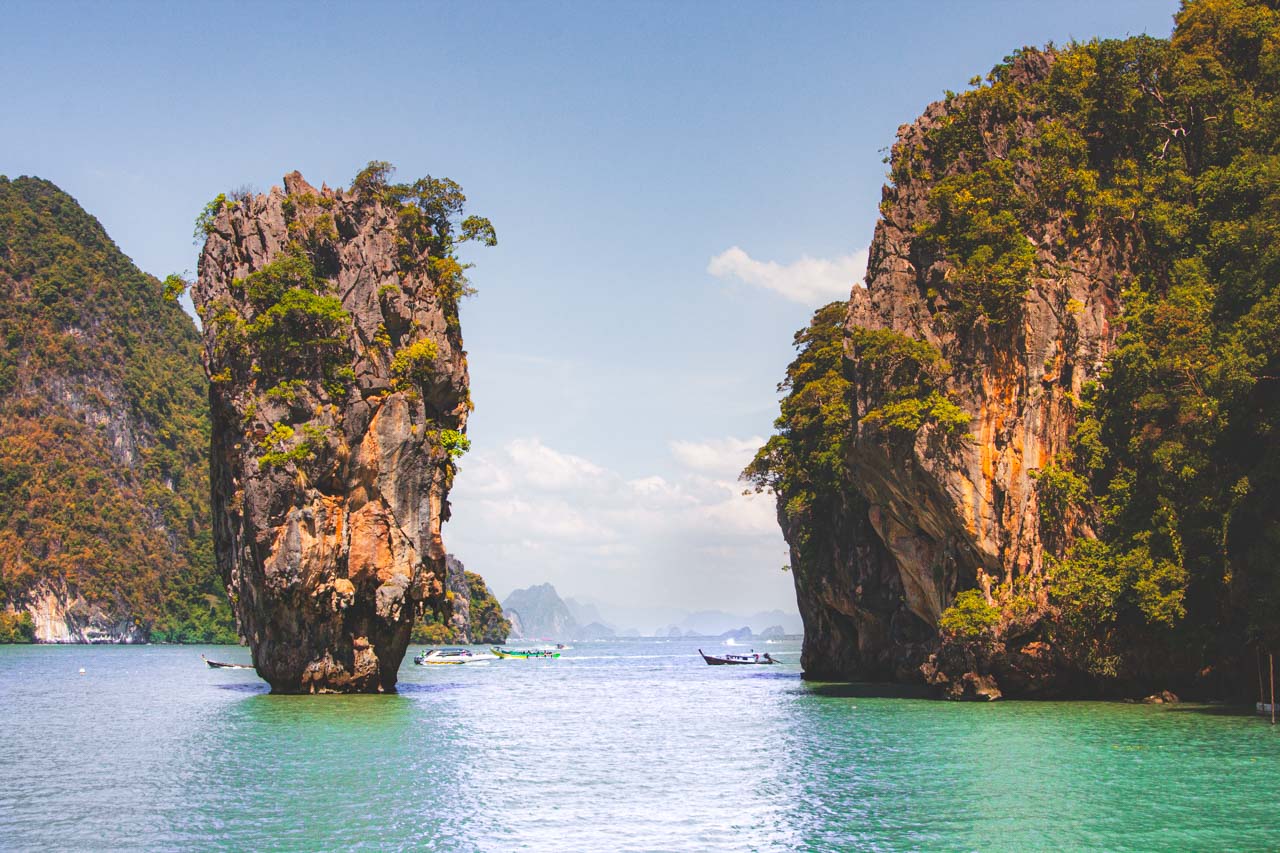
Many tours also include kayaking through caves and into lagoons that cannot be reached by larger boats.
Another common stop is Koh Panyi, a village built on stilts above the water.
The village now receives many tour groups, but it is still interesting to see its unusual layout and the football pitch constructed over the bay.
Return to Ao Nang and keep your last evening unplanned. A meal beside the sea or a walk along the beach is enough after two busy weeks.
Practical Tips
Tours use both speedboats and traditional longtail boats. Before booking, check the length of the trip, group size, and whether kayaking is included.
Confirm whether the national park fee is part of the advertised price.
Do not schedule this tour immediately before a flight or important transfer. Weather and sea conditions can delay your return.
Is Two Weeks Enough for Thailand?
Two weeks are enough to experience several very different parts of Thailand, but not enough to see the entire country.
This route combines a major city, a former capital, northern Thailand, and several days by the Andaman Sea. It works well for a first trip if you want to combine sightseeing with some time on the beach.
You should, however, expect several transfers, early mornings, and domestic travel days.
For a slower trip, skip Chiang Rai and spend an additional day in Chiang Mai. You could also remove one of the boat excursions and stay longer on Railay or in Ao Nang.
Not every trip has to include every place that looks beautiful on a map.
How to Continue Your Thailand Trip
Have more time or already thinking about another visit?
🏝️ Looking for an island escape? → Koh Samui Travel Guide
🍜 Most interested in Thai food? → Thai Farm Cooking School Review
🏛️ Planning an excursion from Bangkok? → One Day in Ayutthaya
📋 Need practical planning advice? → Complete Thailand Travel Guide
Travel lighter, even before you leave.
start with something simple.
Download The Minimum Plan – Slow Travel:
What Thailand Taught Me About Letting Go of the Plan
Thailand was the first country I visited in Southeast Asia.
Before leaving, I planned every day carefully, checked transportation connections, and saved all the places I did not want to miss. Once I arrived, I quickly understood that not everything could be predicted.
Sometimes the best part of the day was not another temple, but a quiet meal at a street stall.
Not the next island, but an evening sitting on the beach in Ao Nang.
Not an itinerary completed perfectly, but a small street in Chiang Mai that I followed without knowing where it would lead.
This route gives you structure and makes the logistics easier.
It does not need to control every hour of your trip.
Leave some room for changing the plan, bad weather, tiredness, and places you will only discover after arriving. Those are often the moments you remember most clearly.
Which part of this itinerary interests you most: Bangkok, northern Thailand, or a few days beside the Andaman Sea?
Pin it for later
This article contains affiliate links. If you make a booking through these links, I may earn a commission, supporting this blog. Rest assured, my recommendations are based on honest assessments, and using these links doesn't affect prices for you. Thank you for your support!