
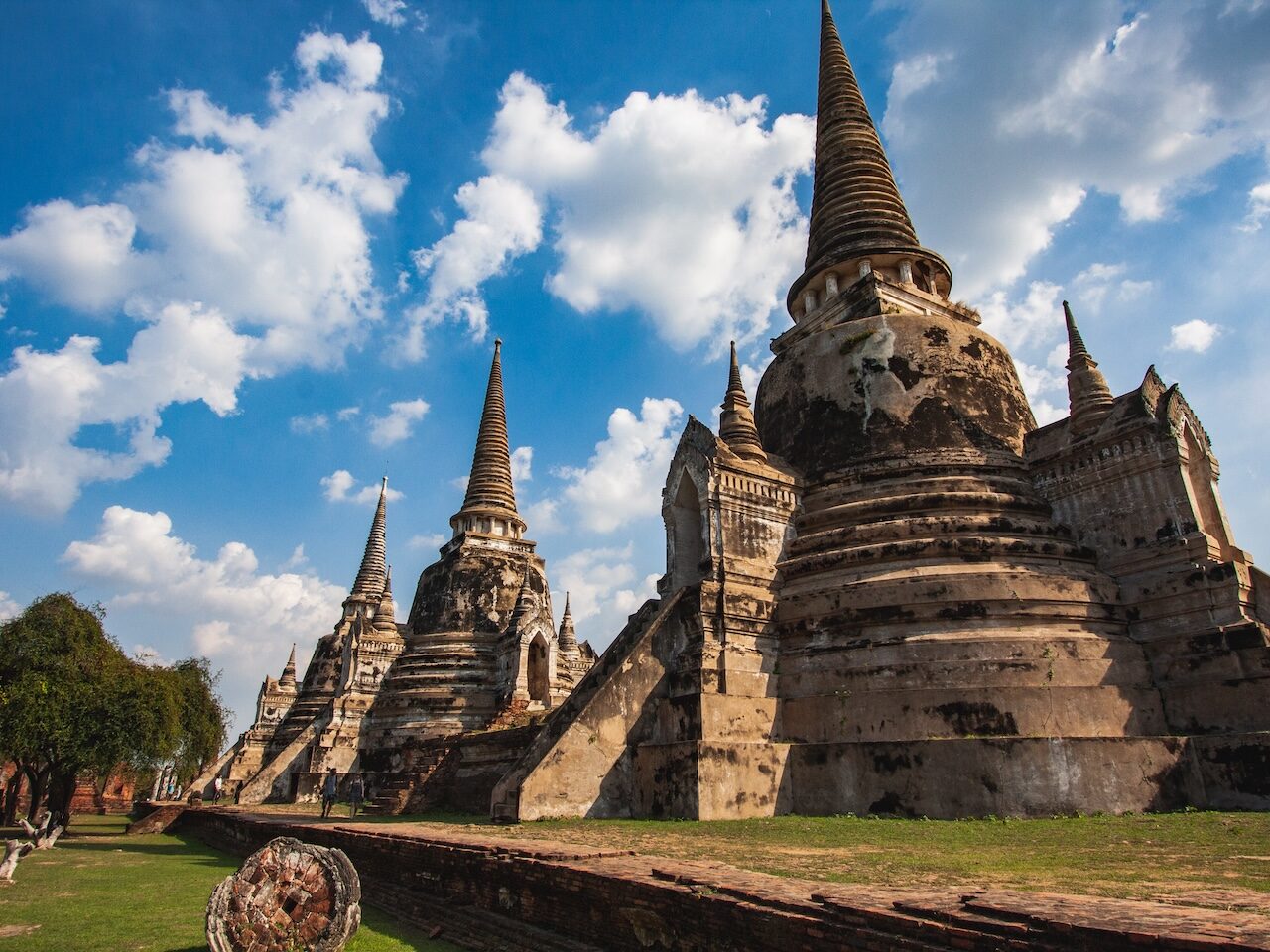
Thailand was the first country I visited in Southeast Asia, and it is still one of the places I think about most often.
It is also far more varied than it may initially appear. You can spend several days surrounded by the noise and energy of Bangkok, explore the ruins of an ancient capital, learn to cook in Chiang Mai, and then slow down beside the Andaman Sea or on an island in the Gulf of Thailand.
In this Thailand travel guide, I have gathered the information I would have wanted before my first trip: when to go, how to get around, where to stay, what to eat, and what to watch out for.
You will also find a suggested three-week itinerary and an overview of the places that are most worth considering.
For a shorter route, continue to my 2-Week Thailand Itinerary.
When Is the Best Time to Visit Thailand?
There is no single perfect month for visiting the entire country.
Thailand is long, and the weather in the south can be very different from conditions in Bangkok or Chiang Mai. The best time to travel therefore depends on the regions you plan to visit.
Most of Thailand experiences three broad seasons:
- a cooler and generally drier period from around November to February,
- a hot season from approximately March to May,
- a rainy season that usually lasts from May or June until October.
These seasons do not begin and end on exact dates. Conditions change from one year to another, and an afternoon downpour does not necessarily mean an entire day of rain.
The Dry Season
November to February is the most popular period for visiting Thailand.
Temperatures in Bangkok and northern Thailand are usually more comfortable, humidity is lower, and rainfall is less frequent. It is a good time for sightseeing, hiking, and traveling between different parts of the country.
The main disadvantage is that popular destinations become busier and accommodation prices increase, particularly around Christmas and New Year.
The Hot Season
March, April, and May can be challenging, especially in Bangkok, Ayutthaya, and northern Thailand.
Exploring temples in the middle of the day quickly becomes exhausting. Plan important sights for the morning, take a longer break in the afternoon, and return outside before sunset.
Songkran, the Thai New Year, takes place in April. It can be an unforgettable time to visit, but it also brings crowds, water celebrations in the streets, and greater demand for hotels and transportation.
The Rainy Season
Thailand’s rainy season does not always mean continuous rain.
Showers are often intense but relatively short. After an hour or two, the sky may clear again.
The humidity is higher, some boat tours are cancelled, and walking trails can become muddy. On the other hand, accommodation is often more affordable and the most popular places feel less crowded.
Weather in Different Regions
Bangkok, Ayutthaya, and northern Thailand
The most comfortable period is generally between November and February. In Chiang Mai, mornings and evenings can feel surprisingly cool.
When planning northern Thailand, also check current air-quality conditions. The agricultural burning season may affect Chiang Mai and surrounding regions in late winter and early spring.
Phuket, Krabi, and the Andaman Coast
The most reliable conditions for beaches and boat trips usually occur between November and April.
Outside this period, the sea can be rougher and some seasonal connections between islands may operate less frequently.
Koh Samui and the Gulf of Thailand
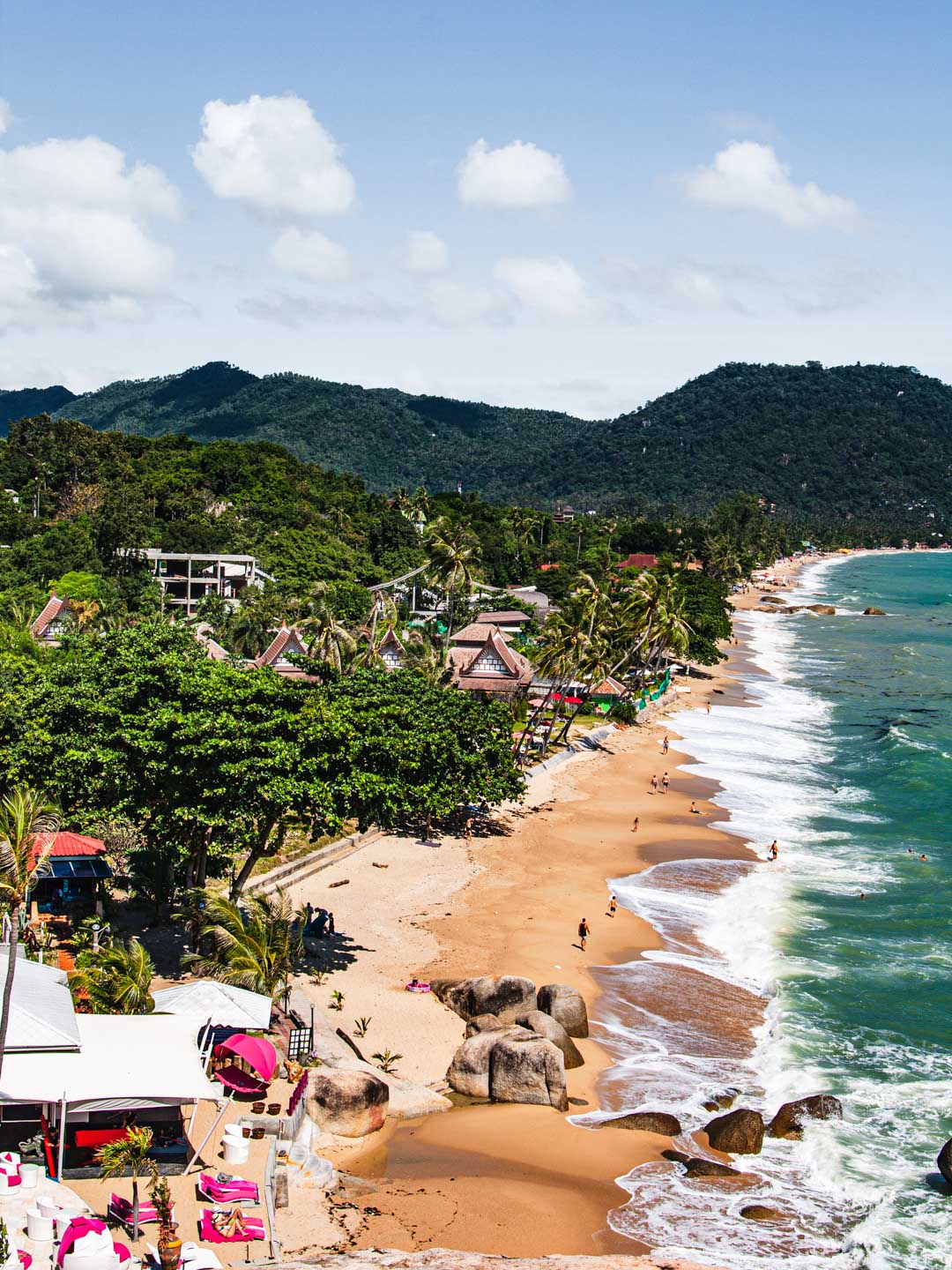
Koh Samui follows a different weather pattern from Phuket and Krabi. Good conditions can continue through the European summer, while the wetter period often arrives later in the year.
Always check the forecast separately for each region on your route.
How to Get to Thailand
Most international travelers arrive in Bangkok.
Suvarnabhumi Airport handles the majority of long-haul international flights. Bangkok’s second airport, Don Mueang, is used primarily by low-cost and regional airlines.
Flights from Europe
Several European cities offer direct connections to Bangkok, while many other routes require one stop.
Common transfer hubs include Doha, Dubai, Istanbul, Frankfurt, Amsterdam, Helsinki, Vienna, and Zurich.
A direct flight from Europe usually takes around 11–13 hours. A journey with one connection will often take approximately 14–18 hours, depending on the route and the length of the transfer.
Flights from the United States
There are generally no nonstop commercial flights between the continental United States and Thailand.
Most itineraries include a connection in East Asia, Southeast Asia, the Middle East, or occasionally Europe. The total journey commonly takes around 18–25 hours, although it can be longer.
How Much Do Flights to Thailand Cost?
Flight prices vary enormously depending on your departure city, travel dates, baggage allowance, and the length of the connection.
Instead of focusing on one promotional price, compare:
- several days before and after your preferred dates,
- nearby departure airports,
- the cost of checked baggage,
- the total journey time,
- whether all flights appear on one booking.
The cheapest flight is not always the best option. Separate tickets may require you to collect and recheck your luggage, and you may have no protection if the first flight is delayed.
How to Find Cheaper Flights
To improve your chances of finding a reasonable fare:
- set a price alert,
- compare several departure airports,
- avoid the busiest holiday periods,
- check midweek departures,
- compare the full cost after baggage and seat fees,
- look carefully at the length of each connection.
You can find more ideas in my guide to finding cheaper flights.
Currency and Payments in Thailand
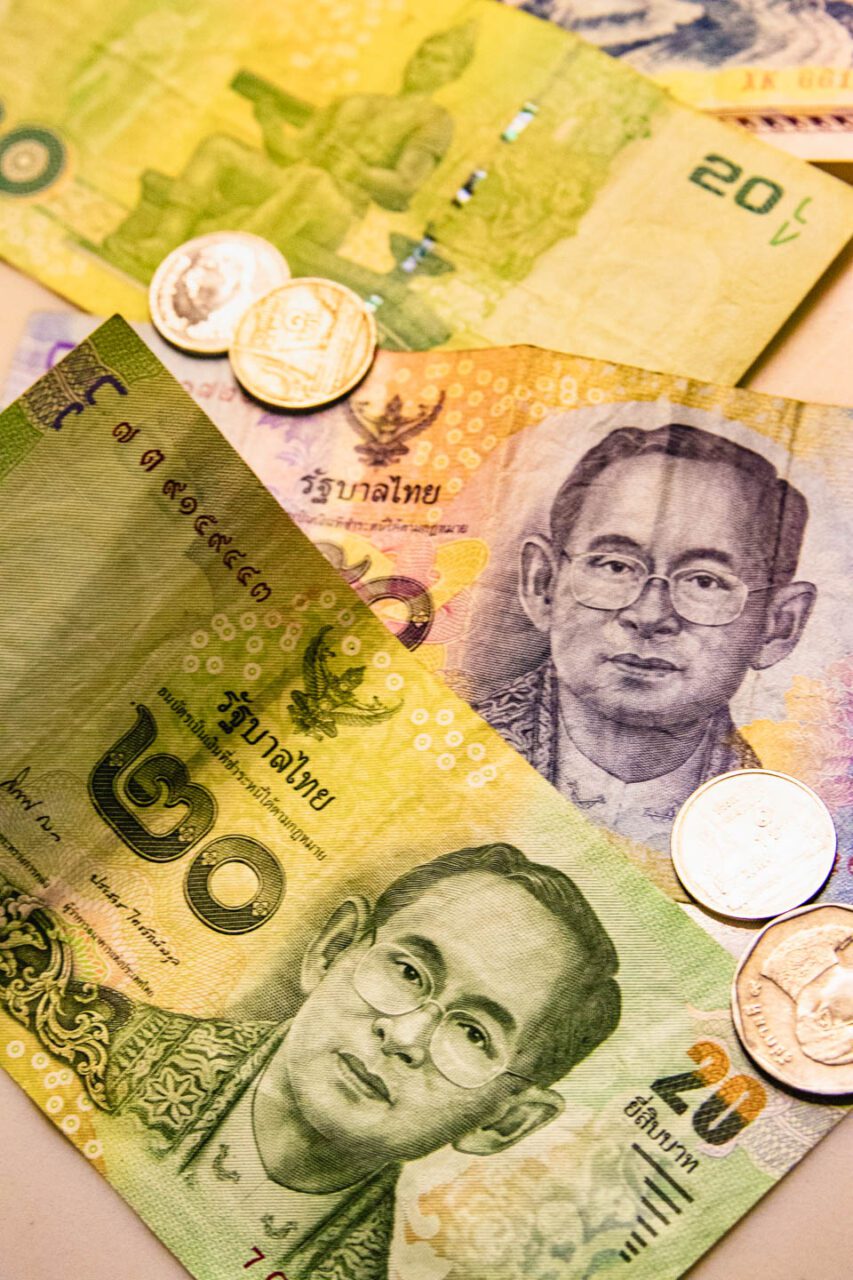
Thailand’s currency is the Thai baht, abbreviated as THB.
Exchange rates change regularly, so check the current rate in a banking app or currency converter before your trip.
Can You Pay in US Dollars or Euros?
Foreign currencies are not normally accepted for everyday purchases.
You will need baht for restaurants, markets, local transportation, and most smaller businesses.
Cash or Card?
Cards are widely accepted in hotels, shopping centers, and larger restaurants. Cash is still important at markets, street-food stalls, small cafés, ticket counters, and for local transportation.
Carry a selection of smaller notes. Drivers and vendors may not always be able to change a large denomination.
Exchanging Money
I would not exchange my entire travel budget at the airport.
Change enough for your first transport, meal, and other immediate expenses. Better exchange rates are often available in the city.
If you bring US dollars or euros, make sure the notes are in good condition. Damaged, written-on, or heavily worn bills may be rejected.
ATMs
Thai ATMs usually charge an additional fee for cards issued abroad.
It may therefore be more economical to make fewer, larger withdrawals rather than several small ones.
When an ATM offers to convert the transaction into your home currency, it is usually better to decline the conversion and complete the withdrawal in Thai baht. Your bank or card provider will then apply its own exchange rate.
Visas and Entry Requirements for Thailand
Thailand’s entry rules depend on your nationality.
Polish and US passport holders are currently eligible to enter Thailand without a visa for tourism for up to 60 days.
Many other nationalities are covered by the same visa-exemption scheme, but you should confirm that your passport is included before traveling.
The stay may be extended for up to another 30 days at a Thai immigration office. Extensions are granted at the discretion of the immigration authorities.
You may be asked to provide:
- a passport valid for at least six months,
- proof of onward or return travel within the permitted stay,
- confirmation of accommodation,
- evidence that you have enough money for your trip.
Since May 1, 2025, all non-Thai nationals arriving by air, land, or sea must also complete the Thailand Digital Arrival Card, or TDAC.
The form must be submitted online within three days before arrival. It is free and does not replace a visa or visa exemption.
Thailand’s visa-exemption policy may change, so check the latest requirements for your nationality on an official Thai embassy website shortly before departure.well. Your mobile internet may not work immediately after landing.
Vaccinations for Thailand
The vaccinations recommended for Thailand depend on your itinerary, the length of your stay, your planned activities, and your medical history.
Someone spending one week in an island resort may receive different advice from a traveler planning rural stays, long hikes, or regular contact with animals.
Schedule an appointment with a travel-health professional several weeks before departure.
A doctor may discuss protection against illnesses such as:
- hepatitis A and B,
- tetanus, diphtheria, and pertussis,
- typhoid,
- rabies,
- Japanese encephalitis.
Not every traveler needs every vaccine. Make the decision with a qualified medical professional rather than relying only on a general online list.

Mosquitoes, Malaria, and Dengue
The risk of malaria is generally lower in Thailand’s most popular tourist destinations than in remote forested and border regions.
That does not mean you can ignore mosquito protection. Dengue and other mosquito-borne illnesses also occur in Thailand.
Useful precautions include:
- applying an effective insect repellent,
- wearing light clothing that covers the skin,
- using air-conditioning or a mosquito net,
- closing windows without screens,
- avoiding standing water around your accommodation.
If you plan to visit remote border areas, spend nights in the jungle, or complete a long rural trek, discuss your route with a travel-health doctor.
Where to Stay in Thailand
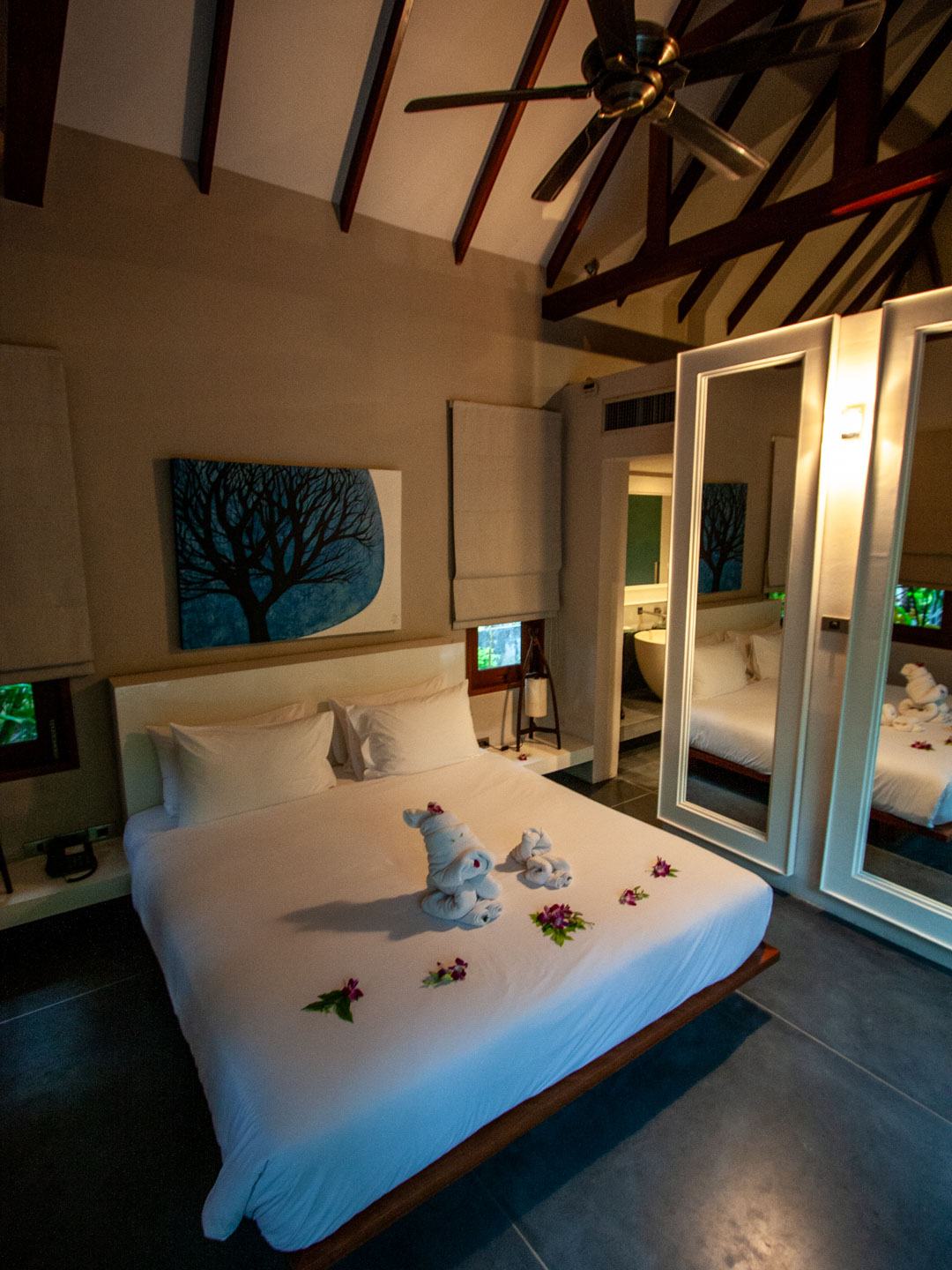
Thailand offers accommodation for almost every style of travel.
You can choose from simple hostels, family-run guesthouses, boutique hotels, beach resorts, and luxury properties with private pools.
The standard is often good for the price, but always read recent reviews. Photographs may be several years old, and tropical conditions can affect buildings quickly.
Hostels
Hostels are useful for solo travelers and anyone trying to reduce accommodation costs.
Many now offer private rooms in addition to dormitories. Check whether the property has air-conditioning, secure lockers, quiet-hour policies, and a practical location.
Guesthouses
During my trip, I frequently stayed in small guesthouses.
They offered more privacy than a hostel but felt calmer and more personal than a large hotel. Breakfast was sometimes included, and owners often helped with transportation or local tours.
Mid-Range Hotels
Bangkok and Chiang Mai have a wide selection of comfortable mid-range hotels.
Before booking, check how close the hotel is to public transportation or the areas you intend to visit. A cheaper room far outside the center may lead to additional taxi costs and longer travel times.
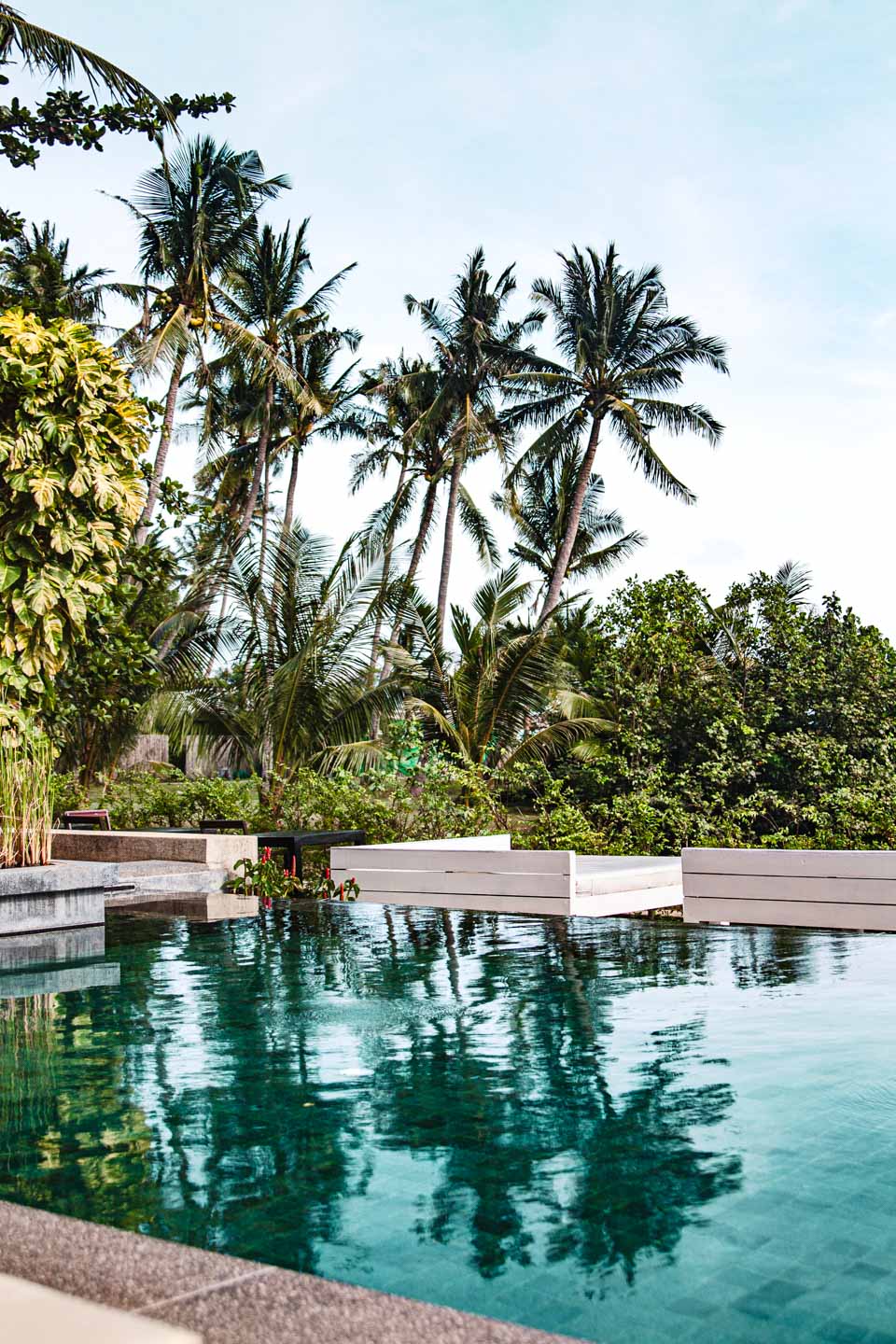
Beach Resorts
Prices on the islands depend heavily on the season, proximity to the beach, and the standard of the resort.
Before booking, check:
- whether the beach is suitable for swimming,
- how far the hotel is from restaurants,
- whether you will need a scooter or taxi,
- whether the rate includes taxes and service fees,
- whether construction is taking place nearby.
How Much Does a Trip to Thailand Cost?
The cost of traveling in Thailand depends more on your travel style than on the country itself.
You can eat at local markets and stay in small guesthouses, or choose private transportation, organized boat trips, and beachfront resorts.
For a two-week trip, excluding international flights, a rough budget per person might look like this:
- Budget travel: approximately 800-1,200 USD
- Comfortable mid-range travel: approximately 1,400-2,200 USD
- Higher-end travel: from around 2,700 USD
These are only broad planning figures.
Traveling alone can cost more because you are not sharing accommodation. Popular islands, domestic flights, diving, private boats, and beachfront hotels can also increase the total significantly.
The largest expenses are usually:
- international flights,
- island accommodation,
- domestic flights,
- organized boat trips,
- diving and other activities,
- travel insurance.
Local food and everyday transportation can remain relatively affordable, particularly outside the most tourist-oriented resorts.
Rather than relying on one fixed daily budget, check accommodation and transportation prices for your own dates and then add money for food and several paid activities.
Food in Thailand
Food was one of the most memorable parts of my journey through Thailand.
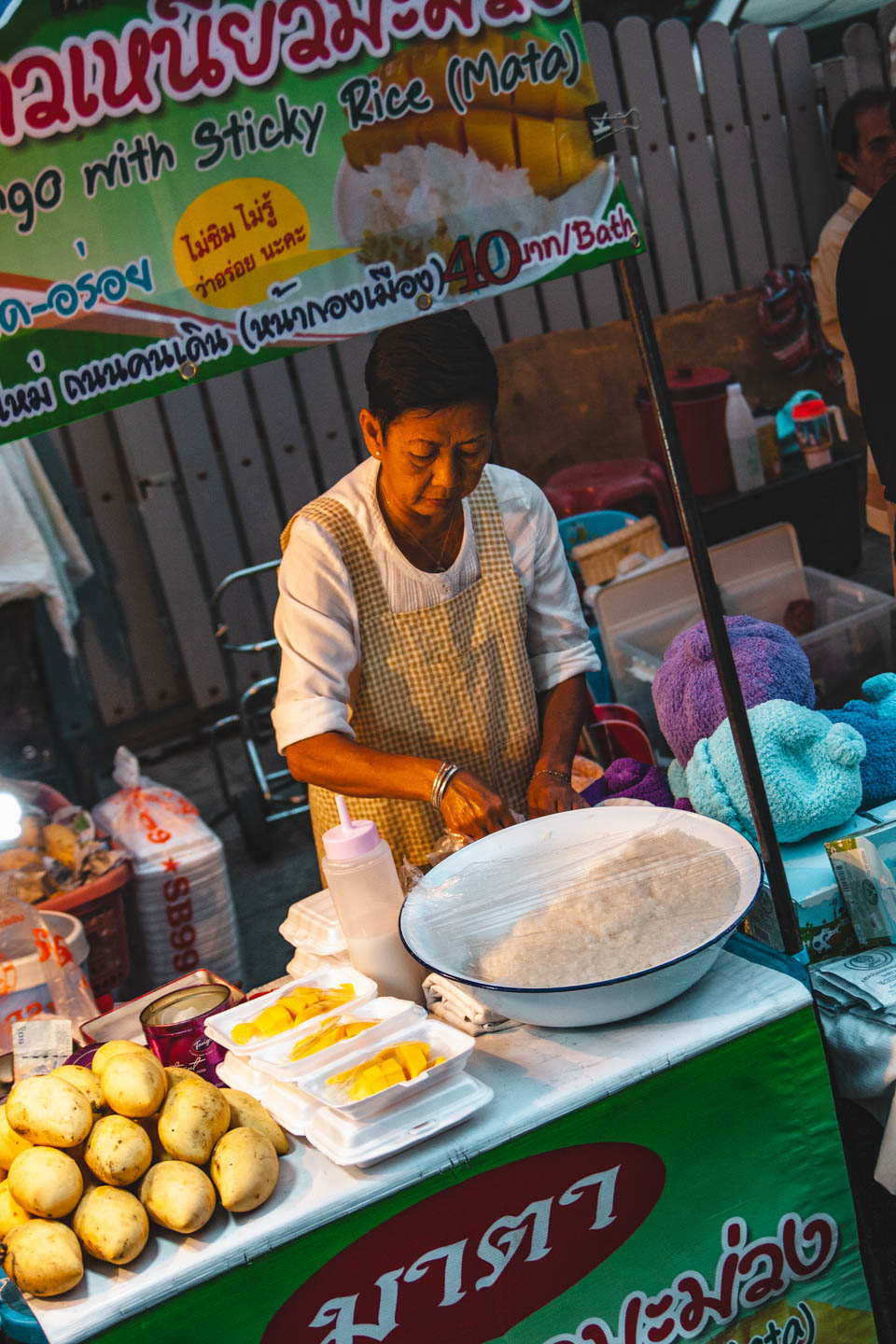
It was not only the individual dishes, but also the entire experience: small stalls, night markets, shared tables, and open kitchens beside the street.
You do not need to eat in expensive restaurants to find excellent food. One of your favorite meals may come from a small stall used mainly by local customers.
Street Food
Typical street-food options include:
- pad thai,
- noodle soups,
- curries,
- fried rice,
- grilled skewers,
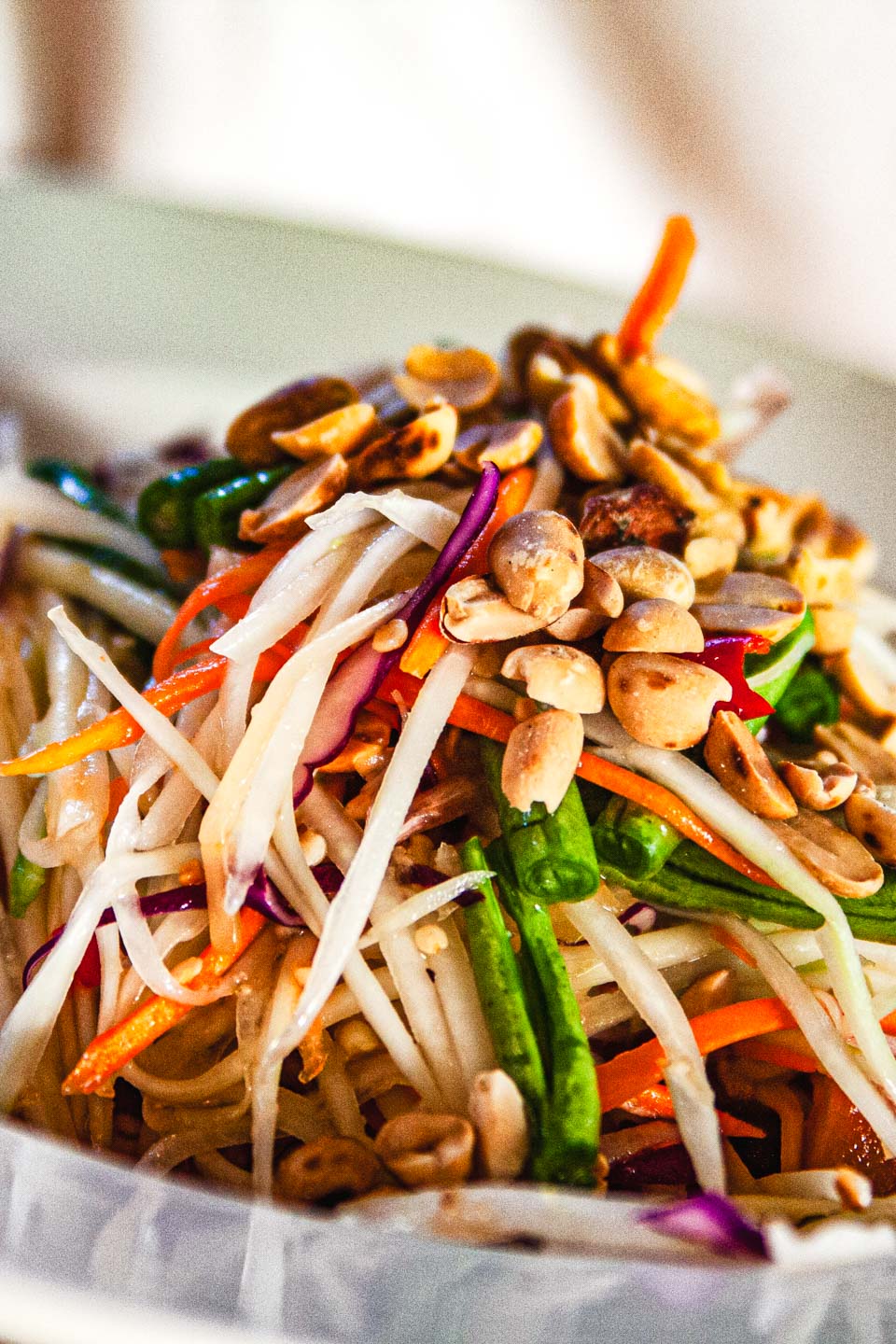
- papaya salad,
- mango sticky rice,
- freshly cut fruit.
Instead of searching endlessly for “the best pad thai in Thailand,” look for a place with steady customer turnover and food prepared to order.
Local Restaurants
Small local restaurants are a good option when you need to sit down, escape the heat, or choose from a larger menu.
Do not judge the food by the simplicity of the interior. Plastic chairs and basic tables say very little about the quality of the cooking.
Regional Thai Food
Thai cuisine varies between regions.
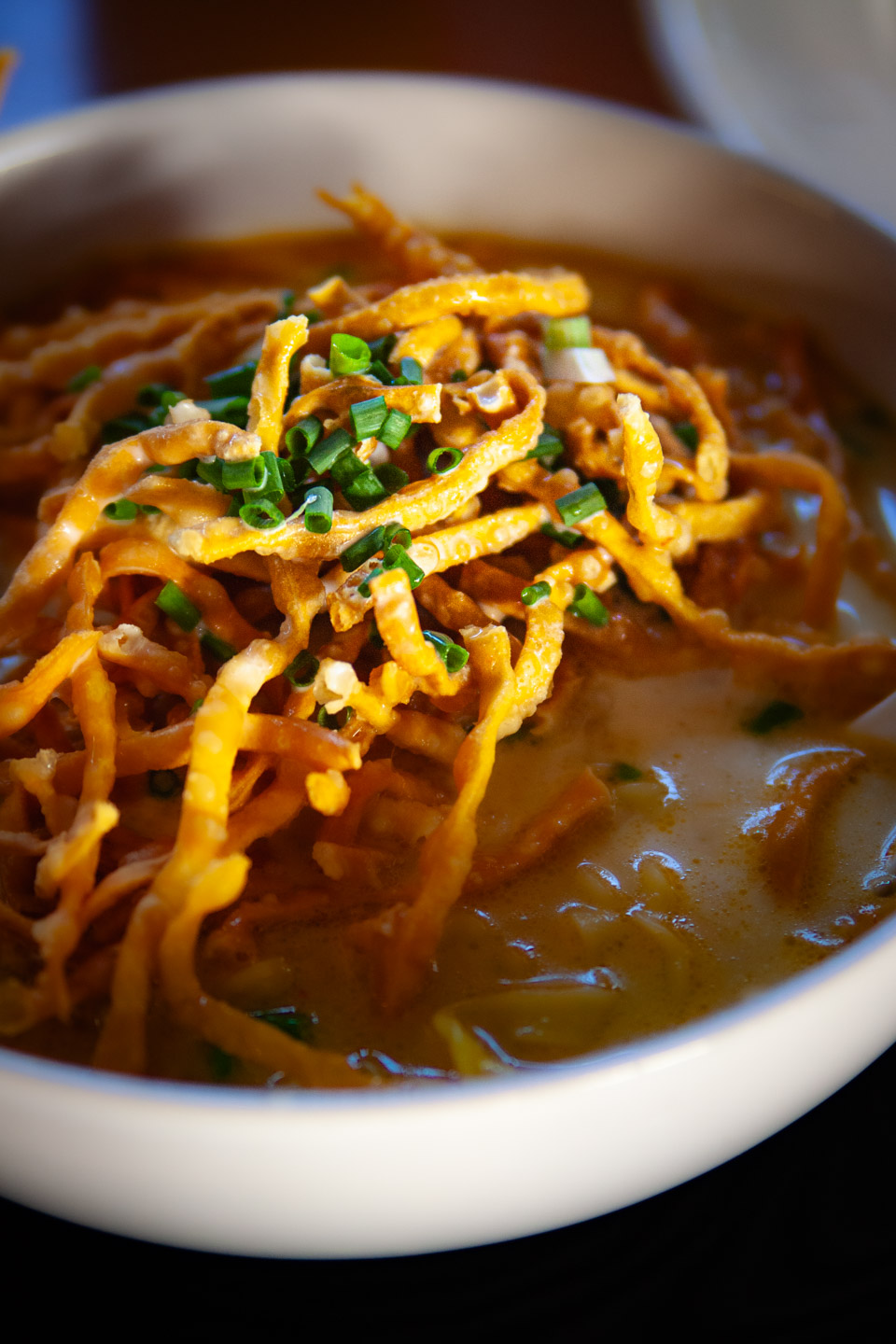
In northern Thailand, try khao soi: noodles in a rich curry broth topped with crispy noodles.
Southern Thai food often includes stronger spices, coconut milk, seafood, and intensely flavored curries.
Bangkok is a good place to try dishes from almost every region of the country.
For more inspiration, see my guide to the Thai dishes you should try.
Is Street Food Safe in Thailand?
No one can guarantee that you will avoid every stomach problem while traveling.
You can, however, reduce the risk.
Choose places where:
- there is a steady flow of customers,
- ingredients appear to be stored properly,
- food is cooked in front of you,
- meals are served hot,
- the preparation area looks reasonably clean.
Wash or sanitize your hands before eating and drink bottled or properly filtered water.
You do not need to avoid all ice automatically. Many restaurants and street stalls use commercially produced ice made with purified water. If you are uncertain about a particular place, order your drink without it.
Whenever possible, buy whole fruit and peel it yourself or choose fruit cut in front of you.
Taking a Cooking Class in Thailand
One of my favorite experiences in Chiang Mai was a class at Thai Farm Cooking School.
The day began with a market visit before we traveled to a farm and prepared several dishes.
It was a useful way to understand how ingredients such as lemongrass, galangal, Thai basil, and curry paste are used.
You can read a complete description in my Thai Farm Cooking School review.
Travel Insurance for Thailand
For a trip outside your home country, choose insurance that includes sufficiently high medical coverage.
Also check whether the policy includes:
- medical transportation,
- emergency evacuation,
- personal liability,
- delayed or lost baggage,
- pre-existing medical conditions,
- the activities you plan to do.
If you intend to ride a scooter, dive, hike, or take part in adventure sports, read the exclusions very carefully.
An insurer may refuse a claim after a scooter accident if the driver did not have the correct license, was not wearing a helmet, or had consumed alcohol.
Do not choose a policy based only on the lowest price. The limits and exclusions matter more.
How to Get Around Thailand
Thailand has an extensive transportation network, but it can feel confusing during a first visit.
You can travel between major regions by plane, train, or bus. Locally, travelers use taxis, ride-hailing apps, tuk-tuks, songthaews, ferries, and longtail boats.
Taxis and Ride-Hailing Apps
Bangkok has regular taxis as well as ride-hailing services.
In a standard taxi, ask the driver to use the meter. If the driver refuses and proposes a very high fixed price, wait for another vehicle.
Ride-hailing apps make it easier to estimate the cost and reduce misunderstandings about the destination.
Tuk-Tuks
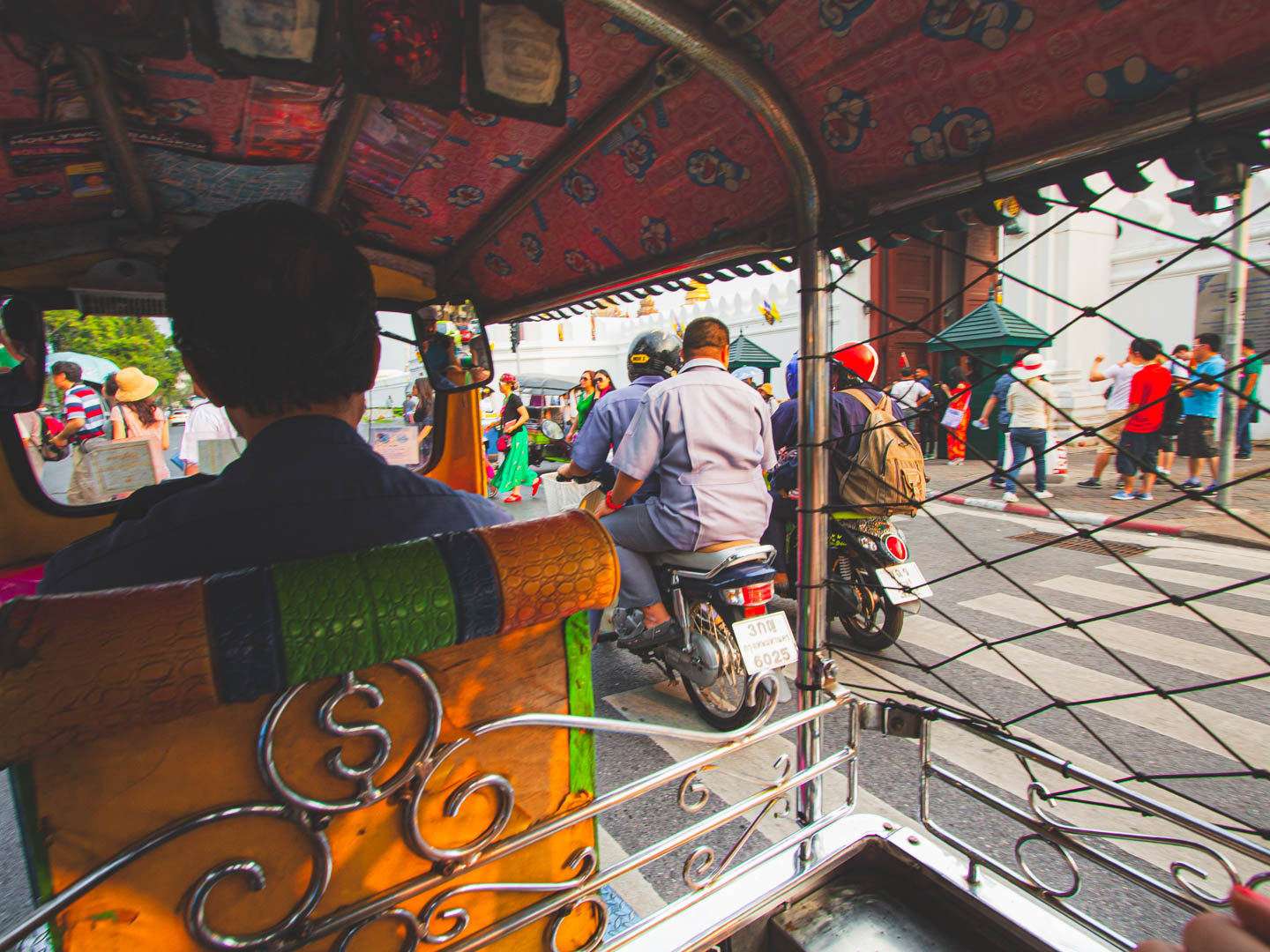
A tuk-tuk ride is worth experiencing once, but it is not always the cheapest way to travel.
Agree on the fare before getting in. Ask your accommodation or check a ride-hailing app for a rough idea of what the route should cost.
Avoid drivers offering a long tour of the city for a suspiciously low price. These trips often include unwanted stops at jewelry, tailor, or souvenir shops.
Songthaews
A songthaew is a pickup truck adapted to carry passengers on benches in the back.
In Chiang Mai and several other regions, songthaews function as shared transportation. Depending on the location, they may follow a fixed route or operate more like a shared taxi.
Show the driver your destination and agree on the price before boarding.
Domestic Flights
Domestic flights save time, especially between Bangkok, Chiang Mai, Krabi, and Phuket.
Check carefully which Bangkok airport your flight uses. Suvarnabhumi and Don Mueang are in different parts of the city, and traveling between them can take a considerable amount of time.
Low-cost airlines often charge additional fees for checked baggage, seat selection, and food.
Trains
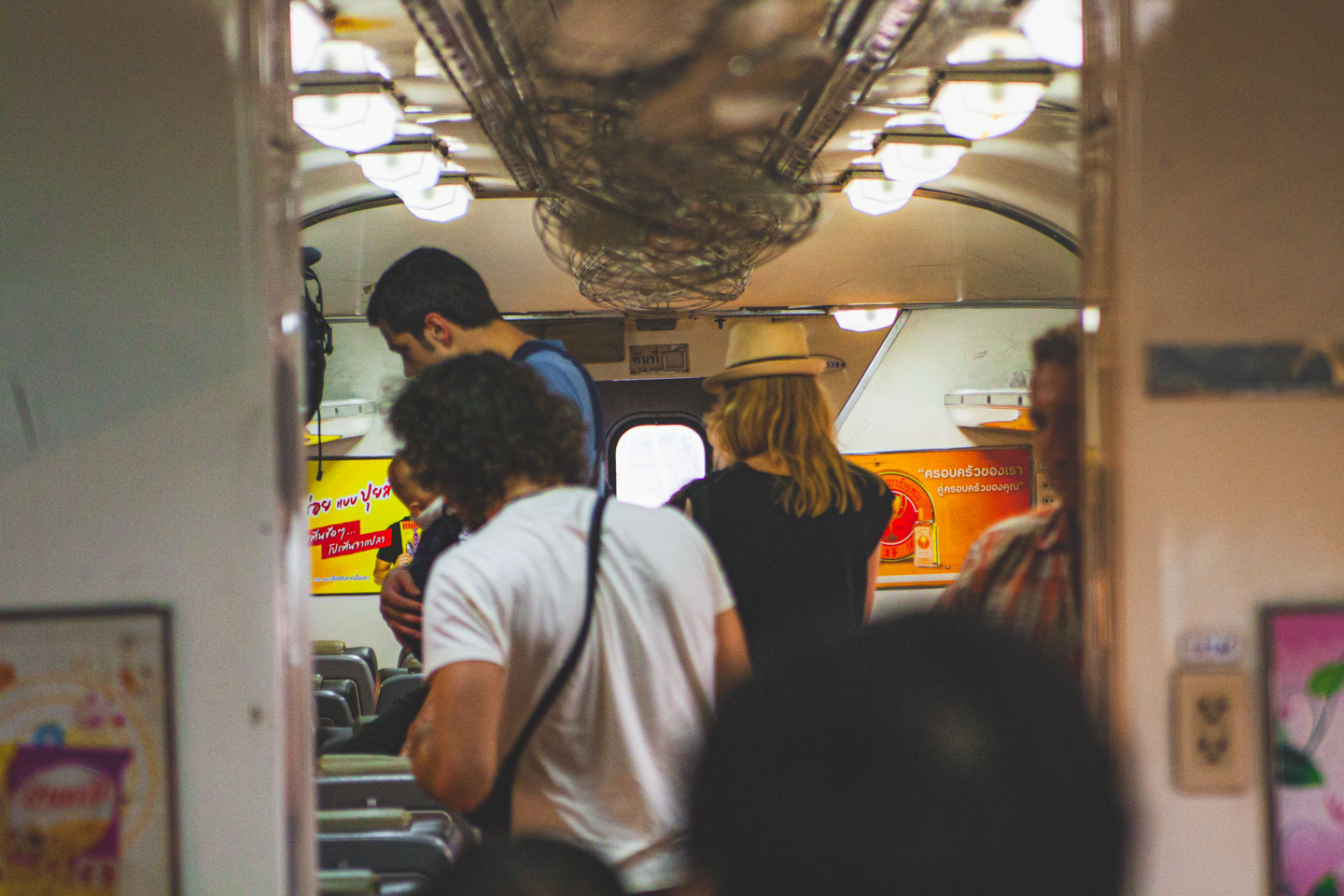
Trains are useful between Bangkok and Ayutthaya and on the overnight route to Chiang Mai.
They are slower than flying, but they allow you to see more of the country and avoid another day spent in airports.
Reserve sleeping berths in advance, especially during busy travel periods.
Air-conditioned carriages can become very cold, so bring a sweater or light scarf.
Buses and Minivans
Long-distance buses connect most major cities.
Choose established operators for overnight journeys rather than selecting an unfamiliar company based only on the lowest fare.
Minivans can be faster, but they usually provide less space for luggage. They are not always the most comfortable or safest choice, particularly when drivers travel at high speeds.
Ferries and Boats
Boats are part of everyday transportation in southern Thailand.
Longtail boats connect beaches, islands, and bays. Speedboats are used for faster transfers and organized day trips.
Schedules depend on the season and sea conditions. Do not arrange an important international flight immediately after a boat journey.
Renting a Scooter in Thailand
Renting a scooter may appear to be the easiest way to explore an island, but it is not a good choice for everyone.
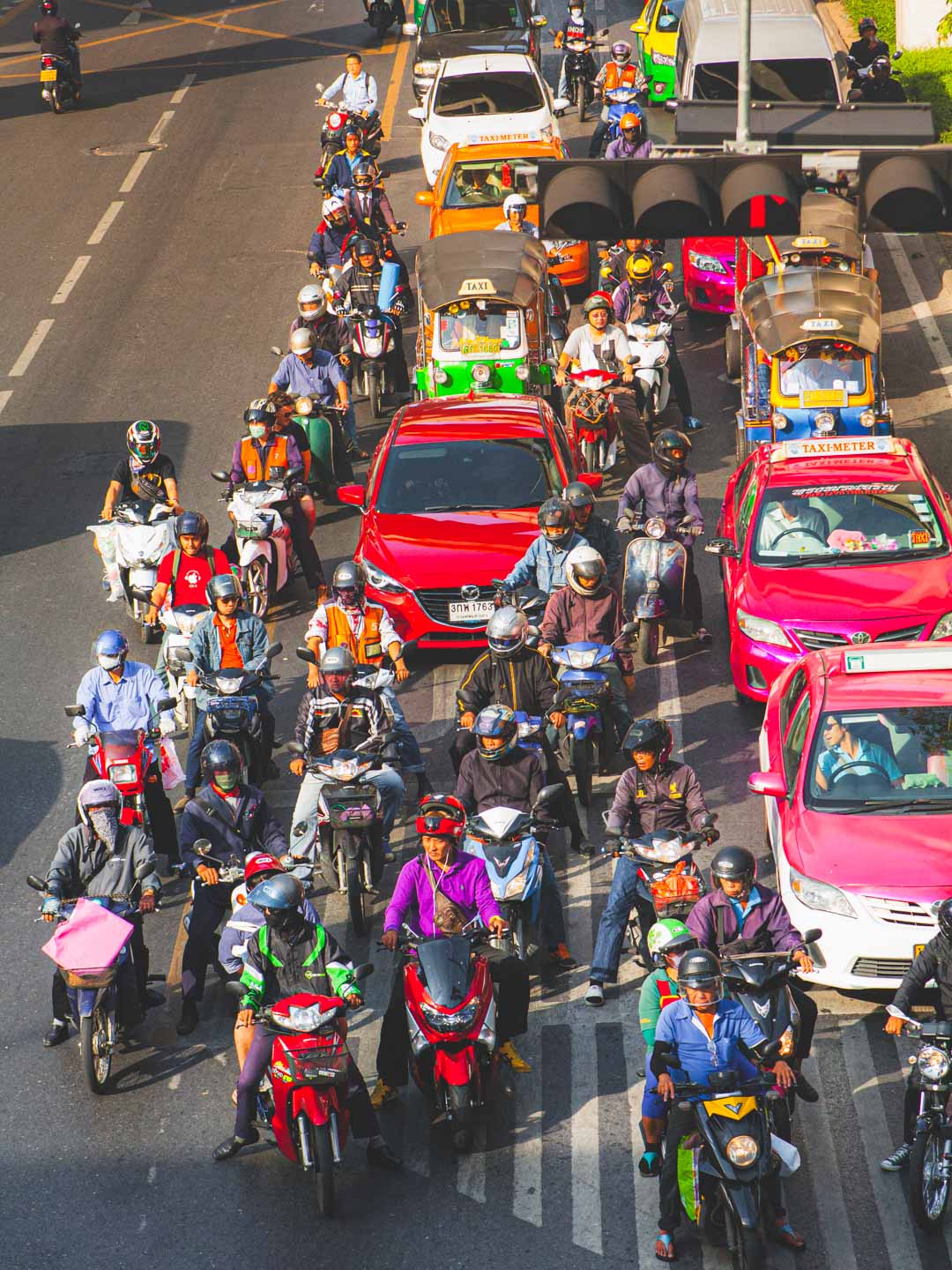
Traffic travels on the left, roads can be slippery, and local driving habits may differ considerably from what you are used to.
Do not learn to ride a scooter for the first time in Thailand.
You need the appropriate license, an international driving permit where required, and insurance that covers riding a motorcycle or scooter.
Always wear a helmet, even for a short journey.
Photograph all existing damage before leaving the rental company, and avoid leaving your passport as security whenever possible.
Renting a Car in Thailand
A car can be useful in northern Thailand or less tourist-oriented regions.
It is rarely necessary in Bangkok. Traffic, parking, and left-hand driving can make it more stressful than helpful.
When renting a car:
- choose comprehensive insurance,
- confirm the license requirements,
- inspect the vehicle before accepting it,
- avoid night driving on poorly lit roads,
- watch carefully for scooters.
What to Avoid in Thailand
Thailand is a popular and relatively easy country to travel around, but there are still several things worth knowing.
Tap Water
Drink bottled or properly filtered water.
Most hotels provide complimentary drinking water.
Scooter Accidents
Road accidents are one of the most serious risks for travelers.
Do not ride without experience, the correct documents, insurance, and a helmet.
Pickpocketing
Keep your phone and wallet secure in crowded markets, transportation hubs, and nightlife areas.
Store your passport safely and carry a copy when possible.
Tourist Scams
Be cautious when someone tells you that a temple is closed and immediately offers an alternative “special tour.”
These trips frequently lead to shops selling jewelry, suits, or souvenirs.
The Royal Family
Thailand has strict laws concerning the monarchy.
Avoid public criticism of the royal family and treat objects bearing the monarch’s image, including banknotes, respectfully.
Elephant Attractions
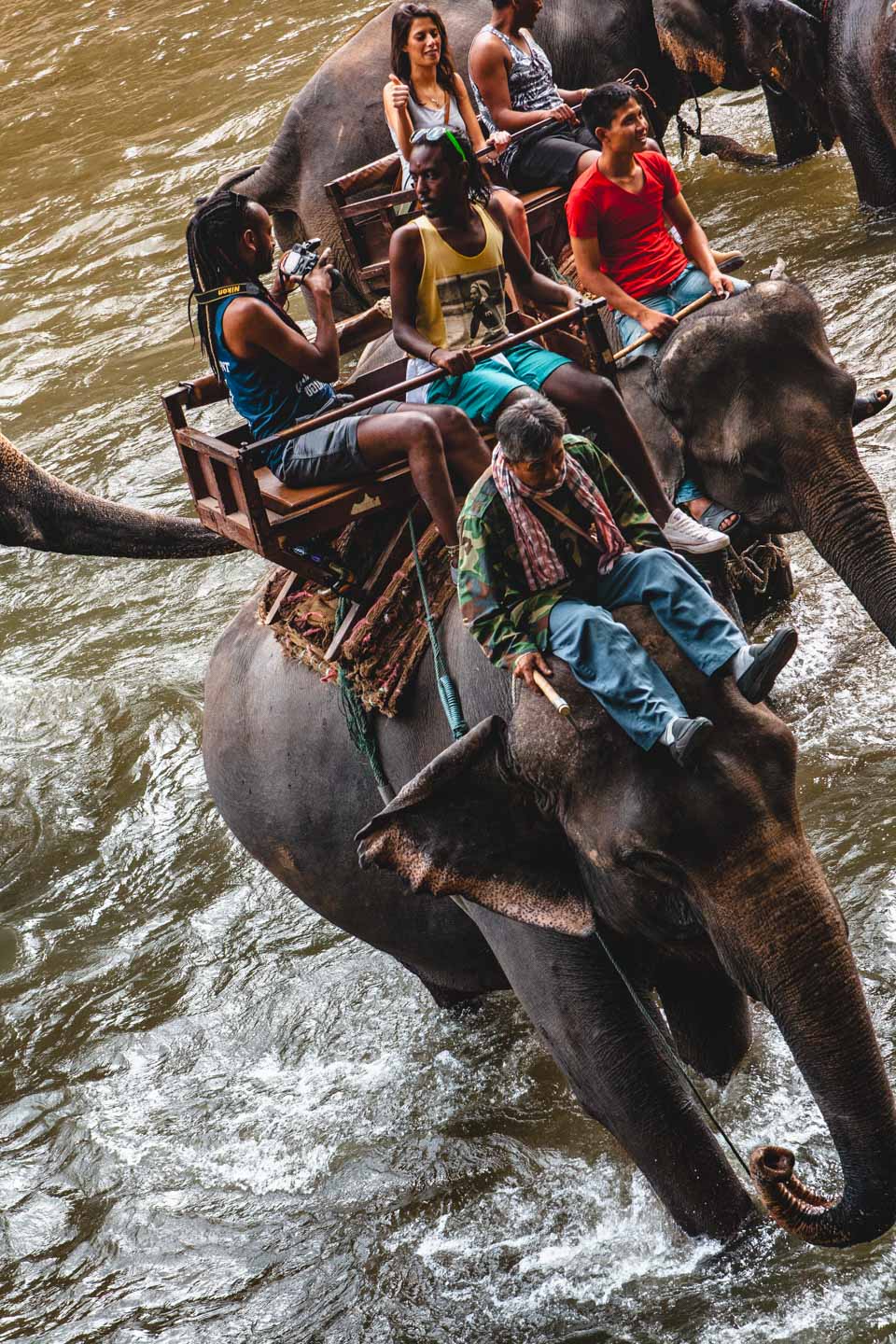
Avoid elephant riding, shows, tricks, and businesses that force close contact for photographs.
The word “sanctuary” does not automatically mean that an organization operates ethically.
Read more in my article about why you should avoid elephant rides in Thailand.
Best Places to Visit in Thailand
Thailand offers much more than beaches.
The best route depends on whether you are most interested in cities, history, food, nature, or rest.
Bangkok
Bangkok is intense, full of contrasts, and difficult to understand in a single day.
You will find royal temples, modern shopping centers, old canals, small markets, and some of the country’s best food.
For more ideas, see my Bangkok guide for first-time visitors.
Ayutthaya
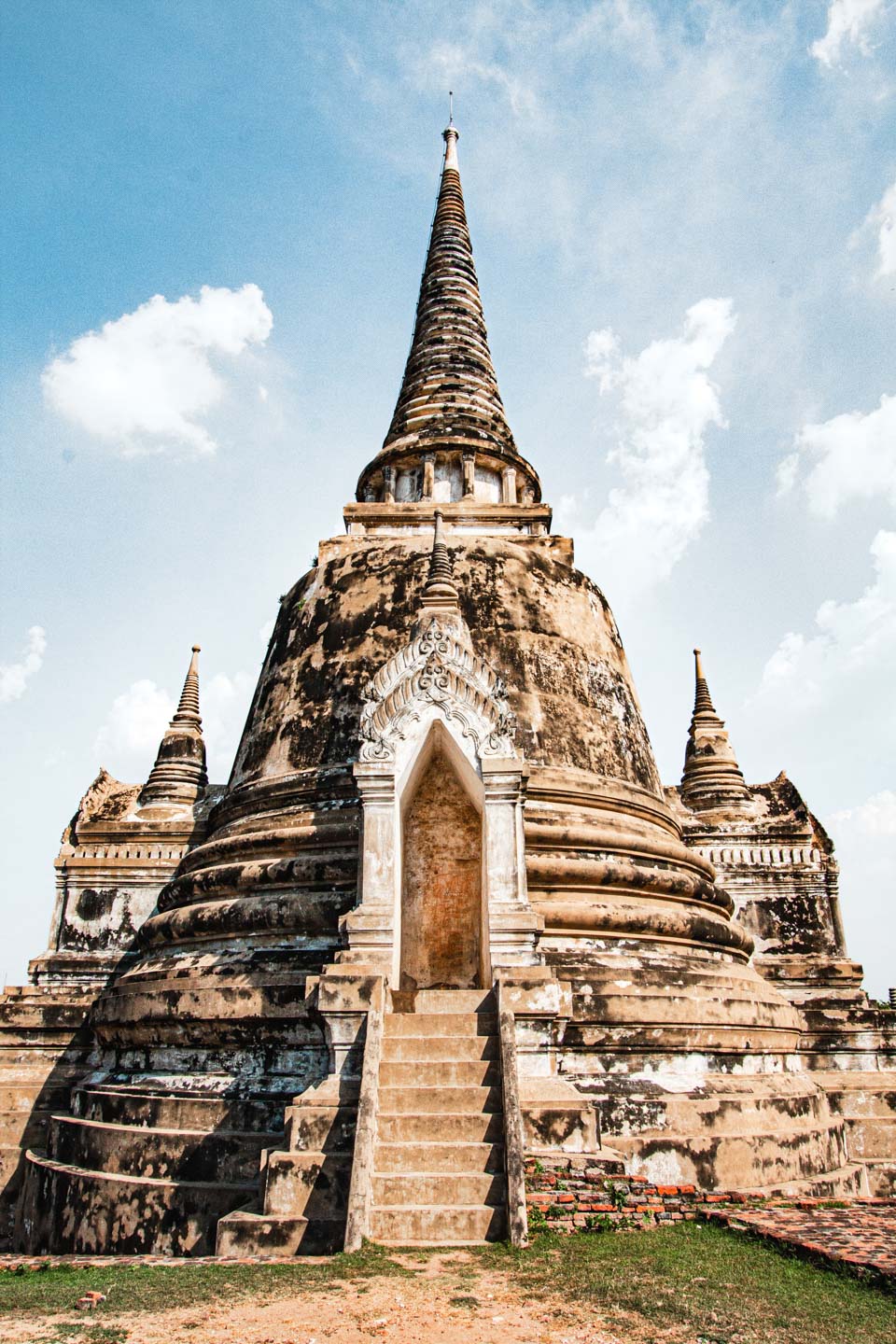
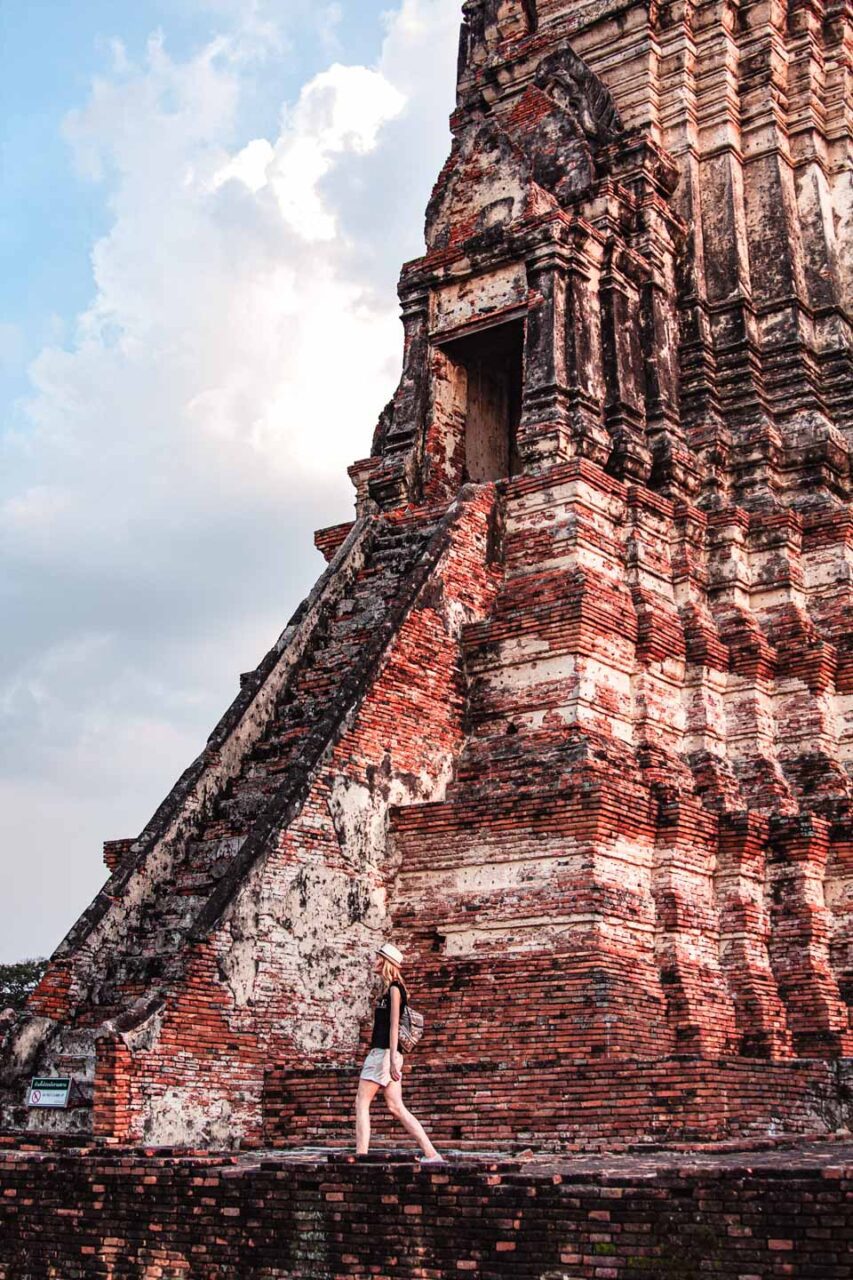
The ruins of Thailand’s former capital are close enough to Bangkok for a day trip.
Stay overnight when possible. The historic sites are more peaceful in the morning and late afternoon.
See my one-day Ayutthaya itinerary for a detailed route.
Chiang Mai
Chiang Mai is a good place to spend several slower days.
You can visit temples, join a cooking class, explore night markets, and travel into the surrounding mountains.
Find more ideas in my Chiang Mai travel guide.
Chiang Rai
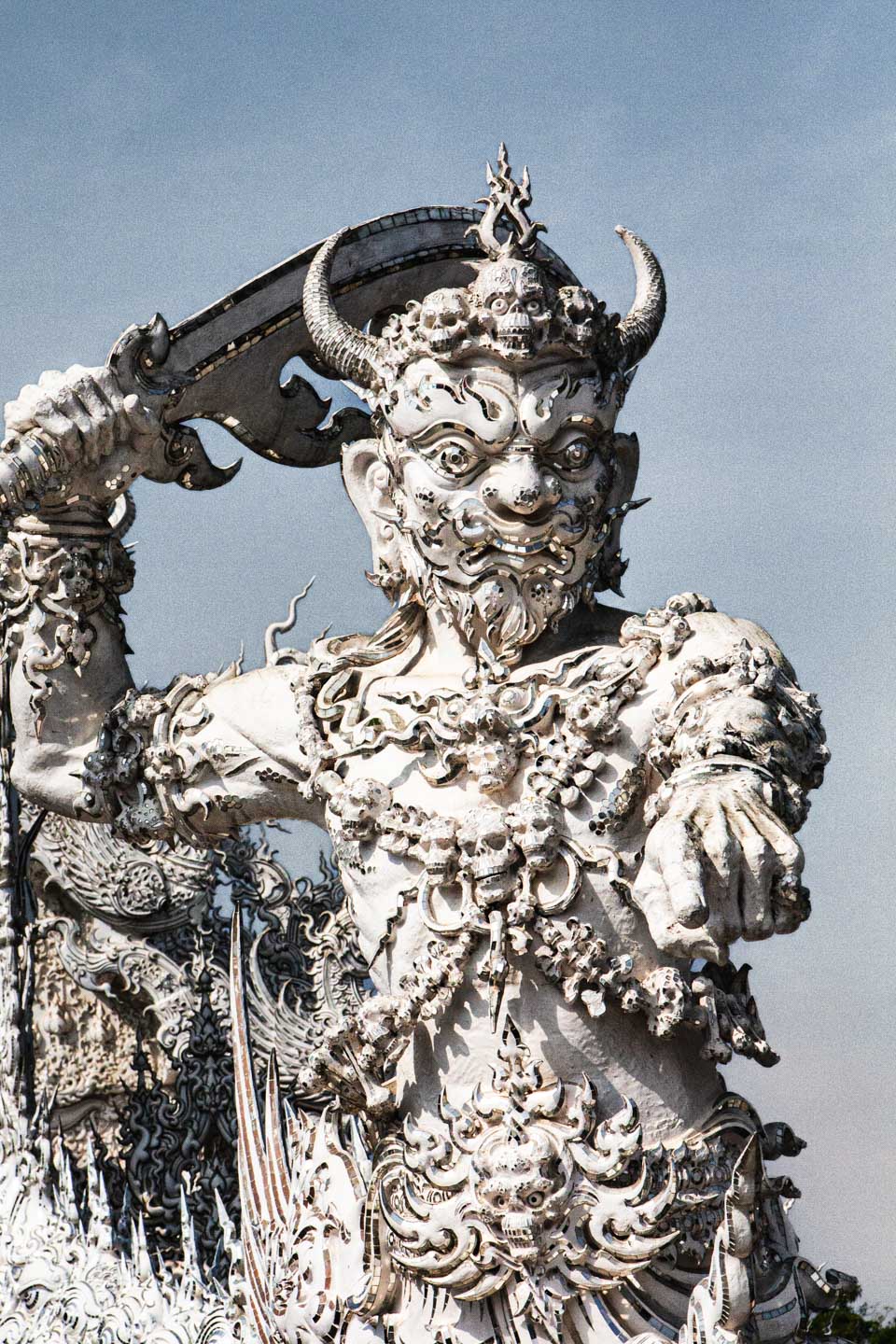
Chiang Rai is best known for the contemporary White Temple.
It can be visited on a day trip from Chiang Mai, but the drive is long. Staying overnight gives you more time and avoids spending most of the day in a vehicle.
Koh Samui
Koh Samui offers a broad selection of beaches, hotels, and restaurants.
It works well for travelers looking for an easy island stay while still having access to waterfalls, temples, and smaller villages.
Continue to my Koh Samui travel guide.
Krabi and Ao Nang
Ao Nang is a practical base for exploring Krabi Province.
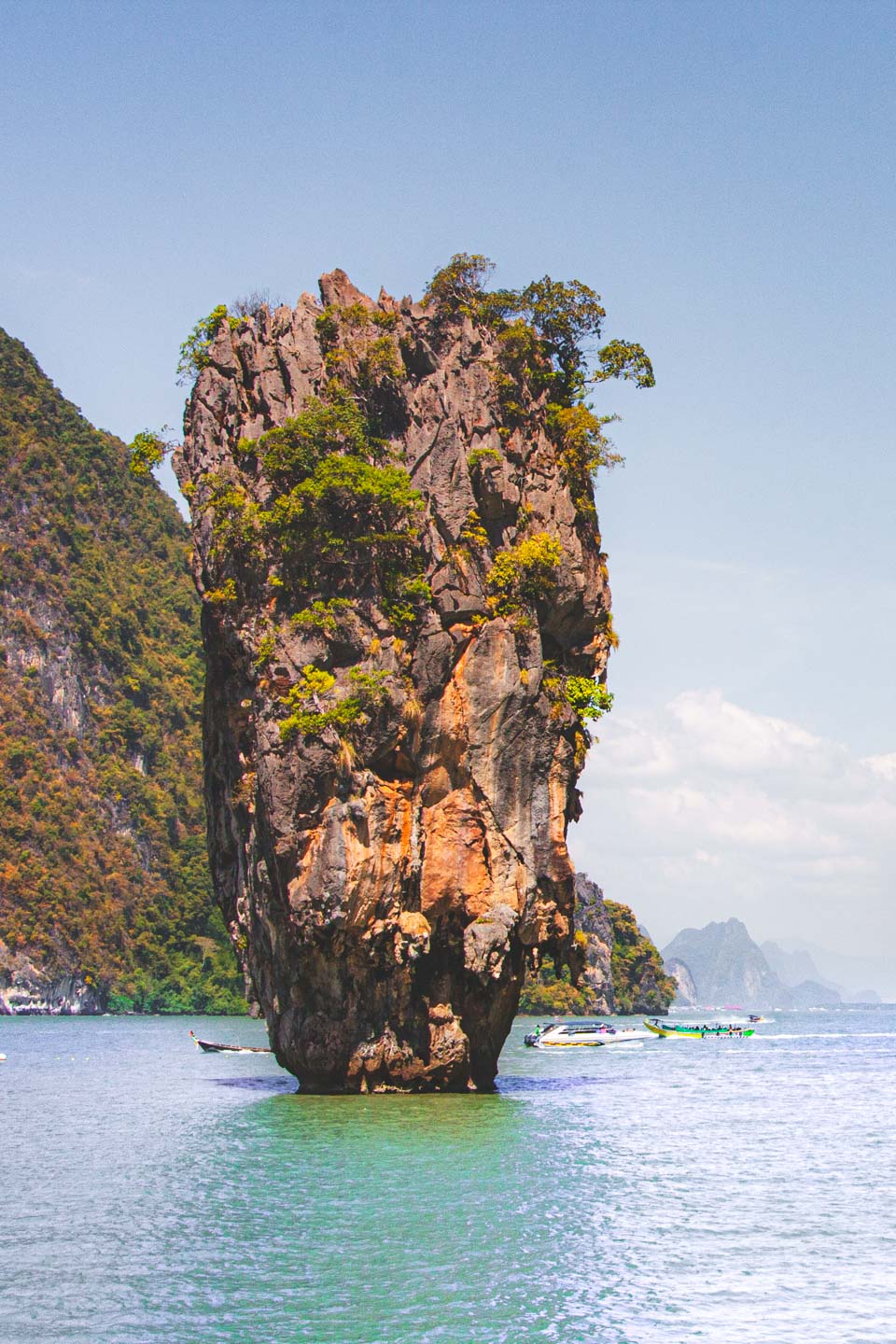
From here, you can reach Railay, the Phi Phi Islands, Bamboo Island, and Phang Nga Bay.
See my 5-Day Krabi Itinerary for a detailed plan.
The Phi Phi Islands
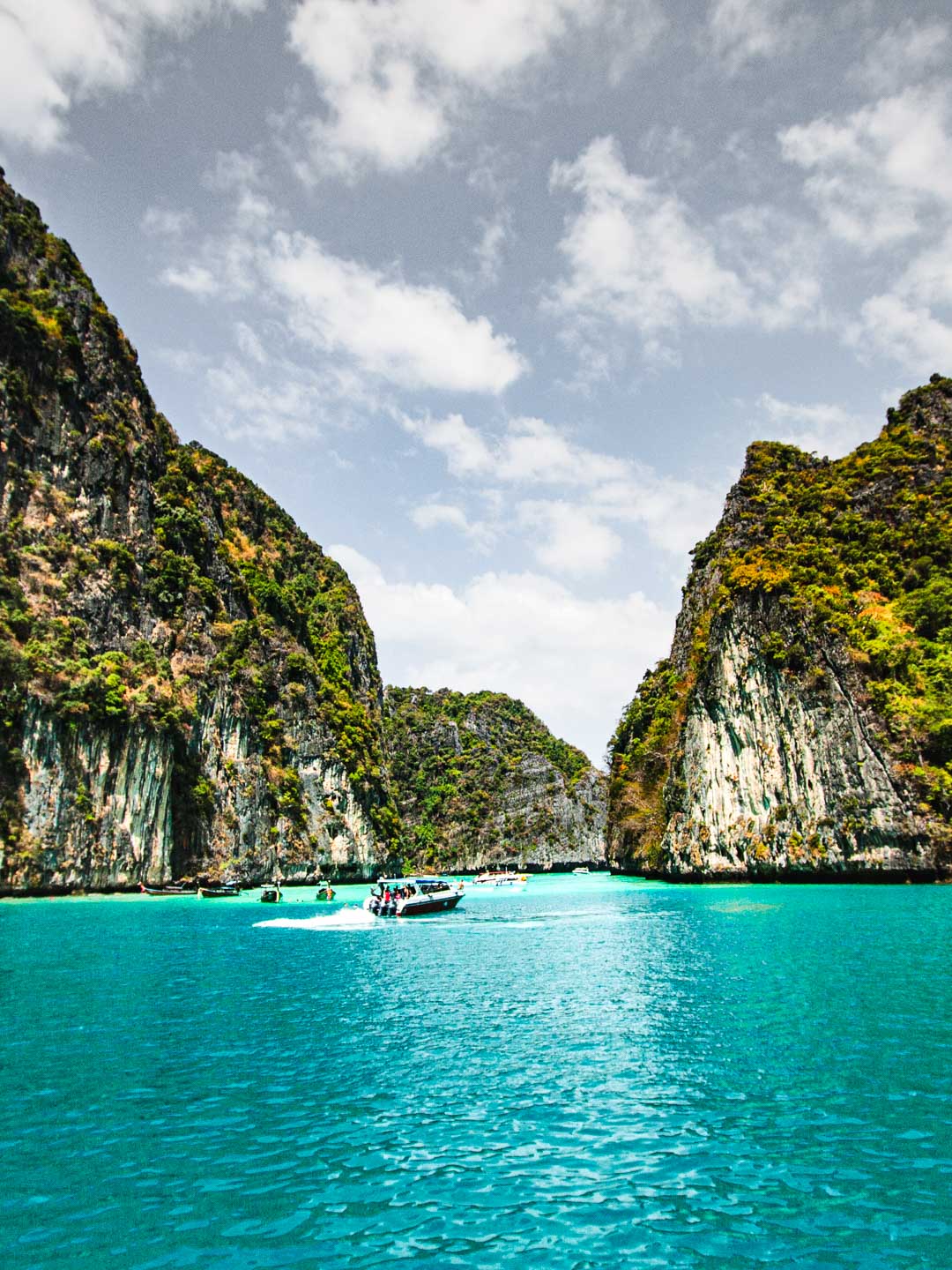
The Phi Phi Islands are beautiful but extremely popular.
Do not expect empty beaches. Prepare for organized tours, limited time at each stop, and environmental restrictions.
Khao Sok National Park
Khao Sok is a good option for travelers wanting to experience tropical forest and a lake surrounded by limestone formations.
You can stay in a floating bungalow, join a jungle walk, or take a boat trip across Cheow Lan Lake.
Koh Lipe
Koh Lipe lies far south, close to the Malaysian border.
Reaching it takes more time, so the island fits better into a longer itinerary than a fast two-week route.
Where to Eat in Thailand
Treat this list as a starting point rather than a permanent ranking.
Restaurants change their hours, owners, and menus. Check recent reviews and leave some space for places you discover by accident.
Bangkok
- Thip Samai – a well-known restaurant specializing in pad thai.
- Baan ThaTien Cafe – a small café close to Wat Pho.
- Royal India – an Indian restaurant near Chinatown.
Ayutthaya
- Lunglek Boat Noodles – known for small bowls of boat noodles.
- Ban Mai Rim Nam – a riverside restaurant.
Krabi
- Ko Tung – a local restaurant in Krabi Town.
Koh Samui
- Kob Thai – a restaurant surrounded by a tropical garden.
- Sala Thai Restaurant – a quiet place serving classic Thai dishes.
Chiang Mai
- Mr Kai Restaurant – a simple local restaurant with a broad menu.
Regardless of the specific restaurant, try khao soi while you are in northern Thailand.
A Three-Week Thailand Itinerary
Three weeks allow you to combine Bangkok, northern Thailand, and time in the south without changing hotels every night.
The following itinerary is still active, but it offers more breathing room than a typical two-week route.
Days 1-5: Bangkok and the Surrounding Area
Day 1: Settle into the city and visit Chinatown or Chatuchak if it is the weekend.
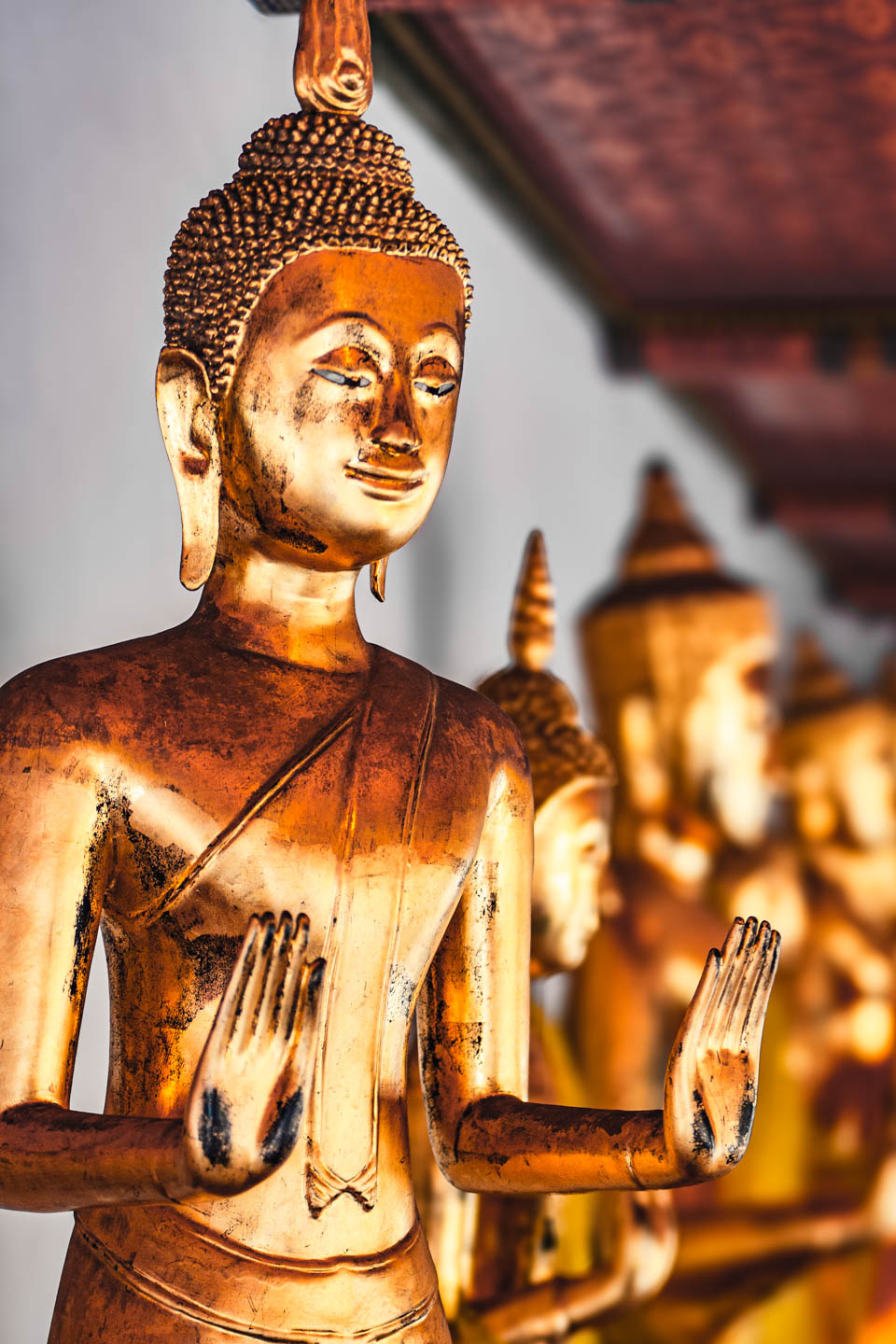
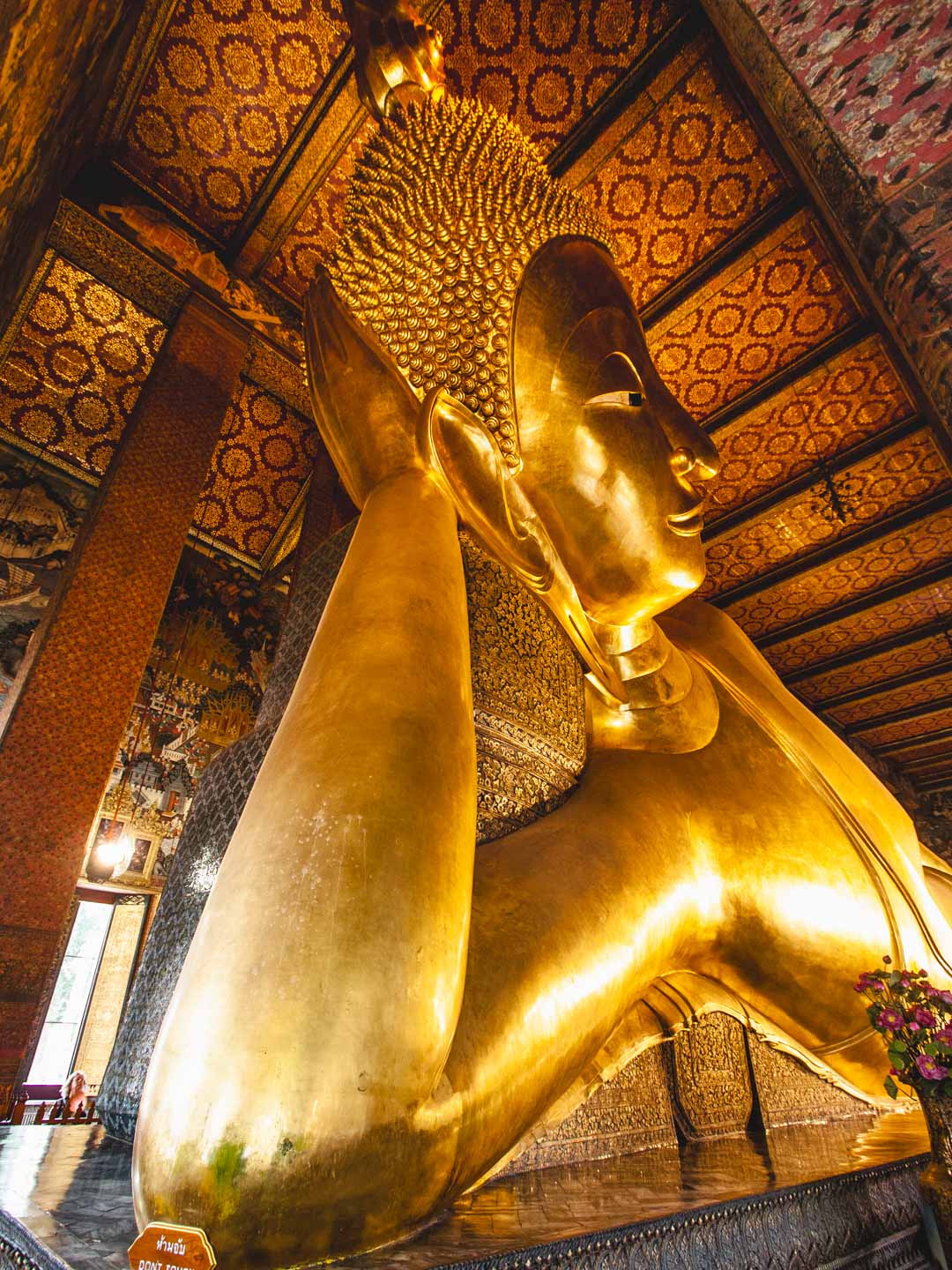
Day 2: Explore the Grand Palace, Wat Phra Kaew, and Wat Pho.
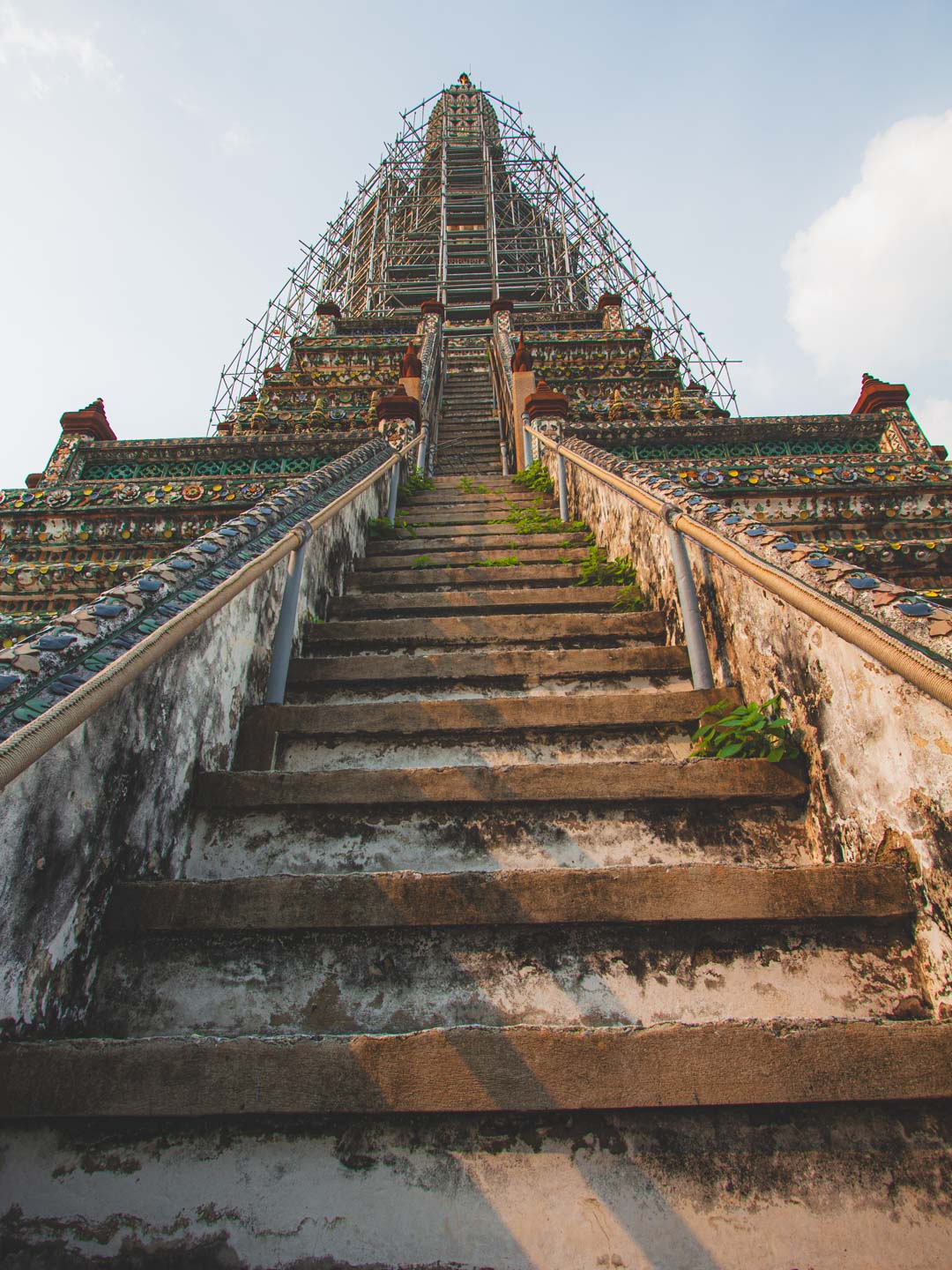
Day 3: Visit Wat Arun, travel along the river, and explore a quieter Bangkok neighborhood.
Day 4: Take a full-day trip to Ayutthaya.
Day 5: Spend a slower day in Bangkok or visit Erawan National Park.
Do not try to see everything in your first two days. Jet lag, heat, and the intensity of Bangkok can quickly make sightseeing feel like work.
Days 6-9: Chiang Mai and Chiang Rai
Day 6: Visit Wat Phra Singh, Wat Chedi Luang, and the Old City.
Day 7: Travel to Doi Suthep and spend a quiet afternoon in Chiang Mai.
Day 8: Join a Thai cooking class.
Day 9: Visit Chiang Rai or spend an additional day in Chiang Mai.
Chiang Rai can be visited on a day tour, but the return journey is long.
For a slower trip, stay in Chiang Mai and avoid adding another full travel day.
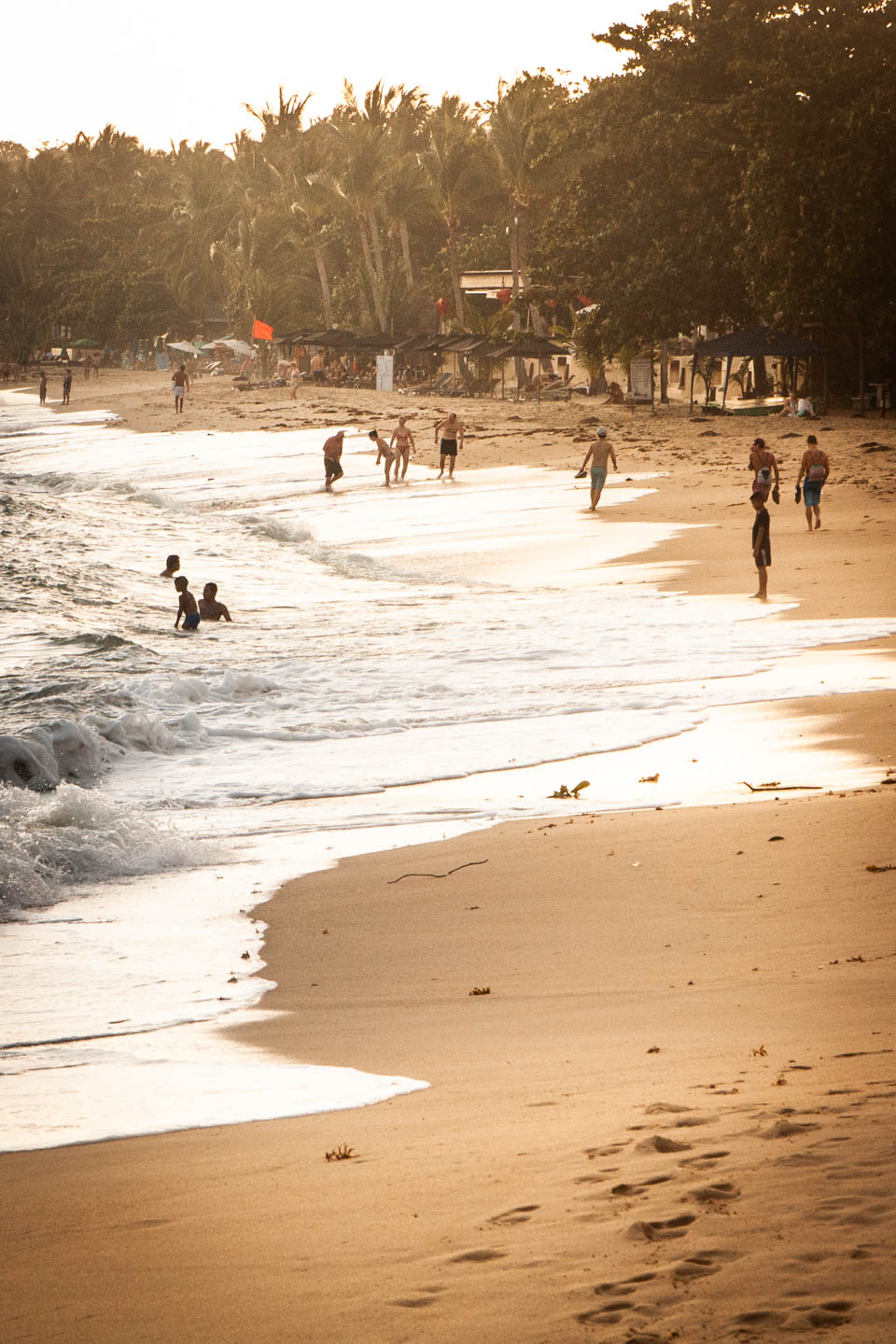
Days 10-15: Koh Samui
After the busier first half of the trip, spend several days on an island.
Do not plan an attraction for every day.
Consider visiting:
- Silver Beach,
- Lamai Beach,
- Maenam Beach,
- Big Buddha Temple,
- Fisherman’s Village,
- Na Muang Waterfall.
Leave at least one or two days for the beach, a massage, and unhurried meals.
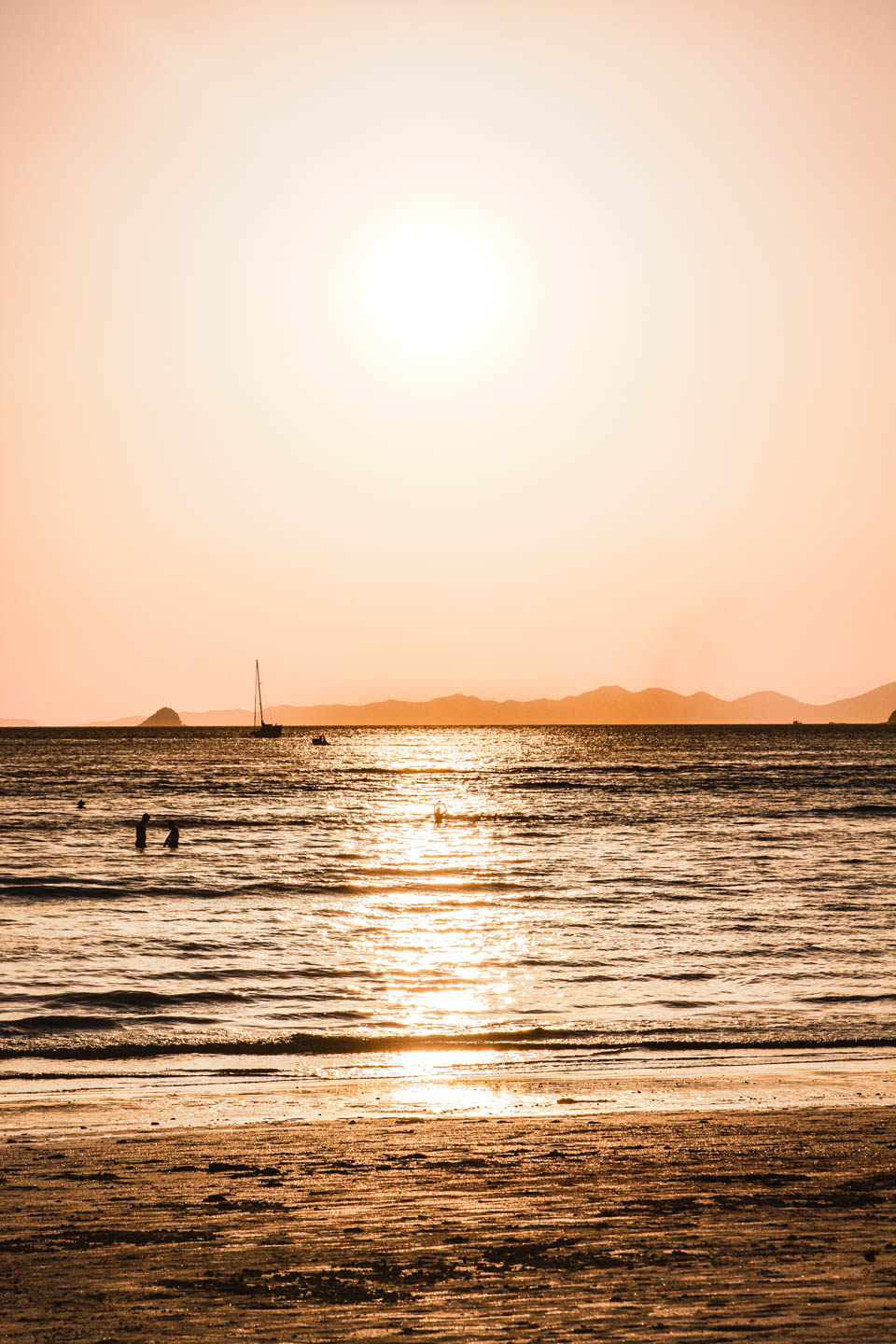
Days 16-21: Krabi and the Andaman Sea
Day 16: Arrive in Krabi and spend a quiet evening in Ao Nang.
Day 17: Visit Railay and Phranang Cave Beach.
Day 18: Join a trip to the Phi Phi Islands.
Day 19: Take a day without plans or visit Nopparat Thara Beach.
Day 20: Explore Phang Nga Bay or visit Emerald Pool and the hot springs.
Day 21: Enjoy a final walk, massage, and a slow departure day.
Do not arrange a full-day boat trip immediately before an important flight. Weather can delay your return.
Interesting Facts About Thailand
Thailand Was Never Formally Colonized
Thailand, formerly known as Siam, maintained its independence during the European colonization of Southeast Asia.
Its position between British- and French-controlled territories played an important role in the country’s history.
Bangkok Has an Exceptionally Long Ceremonial Name
Bangkok’s official ceremonial name in Thai is much longer than the version used internationally.
Residents usually call the city Krung Thep, meaning City of Angels.
Siamese Cats Come from Thailand
The breed known internationally as the Siamese cat originated in the former Siam.
The cats appeared in historic Thai manuscripts and were closely associated with the royal court.
Red Drinks Are Left at Spirit Houses
Small spirit houses stand outside homes, businesses, and hotels.
People leave flowers, food, and drinks as offerings. Bright red soft drinks are a common sight.
Thai Banknotes Feature the Monarch
Money should therefore be treated respectfully.
Trying to stop a dropped banknote with your foot can be considered deeply offensive.
Travel lighter, even before you leave.
start with something simple.
Download The Minimum Plan – Slow Travel:
Thailand Travel Guide: Final Thoughts
Thailand is a good destination for a first trip to Southeast Asia.
Transportation between the main regions is well developed, accommodation is available at many different price levels, and the trip can be adapted to a range of budgets.
At the same time, it is easy to plan too much.
Bangkok, Chiang Mai, Koh Samui, Krabi, and the islands may appear relatively close together on a map, but every transfer takes time and energy.
Choose two or three regions rather than trying to see the entire country during one trip.
Good preparation will make the journey easier, but avoid planning every hour. Leave room for the weather, tiredness, a longer meal, and places you will only hear about after arriving.
Those are often the moments you remember most clearly.
Continue Planning Your Thailand Trip
🏝️ Looking for an island escape? → Koh Samui Travel Guide
🍜 Most interested in food? → Chiang Mai Cooking Class Review
🏛️ Want to explore the capital? → 10 Best Things to Do in Bangkok
📋 Only have two weeks? → 2-Week Thailand Itinerary