
Planning a cooking class in Chiang Mai? Here’s what our day at Thai Farm Cooking School looked like, from the morning market visit to the dishes we made ourselves.
After a week of eating street food and developing a slight obsession with pad thai, my partner and I wanted to learn how to recreate some of those flavors back home in Poland.
We chose Thai Farm Cooking School and came away glad we’d set aside a full day for it. We made our own dishes, but we also learned more about the ingredients we’d been eating throughout our trip.
If you’re wondering whether to book a cooking class in Chiang Mai, I’ll take you through our day, what we cooked and what I’d check before going.
Why We Chose Thai Farm Cooking School
I’ll be honest: we first noticed Thai Farm Cooking School because it was ranked number one on TripAdvisor at the time.
What made me want to book it, though, was the visit to an organic farm. I liked the idea of seeing where some of the ingredients grew before we started cooking.
When we visited, the full-day class cost 1,500 THB per person. It included a market visit, time on the farm, cooking instruction, food, drinks and transport from the pickup area.
Check the current price and program before booking, as these details can change. The school currently lists a digital recipe book among the inclusions.
After taking the class, I understood its appeal. We didn’t just follow a set of recipes; we spent the morning learning about ingredients and then used them in our own cooking.
Thai Farm Cooking School vs. Other Chiang Mai Cooking Schools
When choosing a class, I paid attention to more than the menu. These are the details that mattered to me and that I’d compare before booking any cooking school in Chiang Mai.
| Feature | Our experience at Thai Farm Cooking School | What to check when comparing classes |
| Location | We cooked on a farm outside Chiang Mai, with mountains in the distance. | Is the class held in the city or farther out? |
| Market visit | We stopped at Ruamchook Market, where Yummy explained several ingredients. | Is a market visit included, and how much time is set aside for it? |
| Farm visit | Yummy showed us herbs, vegetables and fruit growing on the farm. | Will you visit a garden or farm, or go straight to cooking? |
| Cooking stations | Each of us had our own station. | Will you prepare your own dishes or cook in a group? |
| Menu | We could choose dishes from different categories. | How much choice do you have, including any dietary options? |
| Recipes | We received recipes to use after the class. The school currently provides a digital recipe book. | Are recipes included, and in what format? |
| Duration | We took the full-day class. | Would a full-day or half-day class fit your plans better? |
| Price | We paid 1,500 THB per person when we visited. | What does the current price include, especially transport? |
For us, the combination of the market, farm and time at our own cooking stations made the full-day class worthwhile.
Our Market Adventure at Ruamchook
Our day started at Ruamchook Market. I wasn’t particularly excited about an 8:30 a.m. pickup on vacation, but I enjoyed this part of the class once we got there.
Yummy, our instructor, took time to explain ingredients we’d seen in Thai dishes without always knowing much about them.
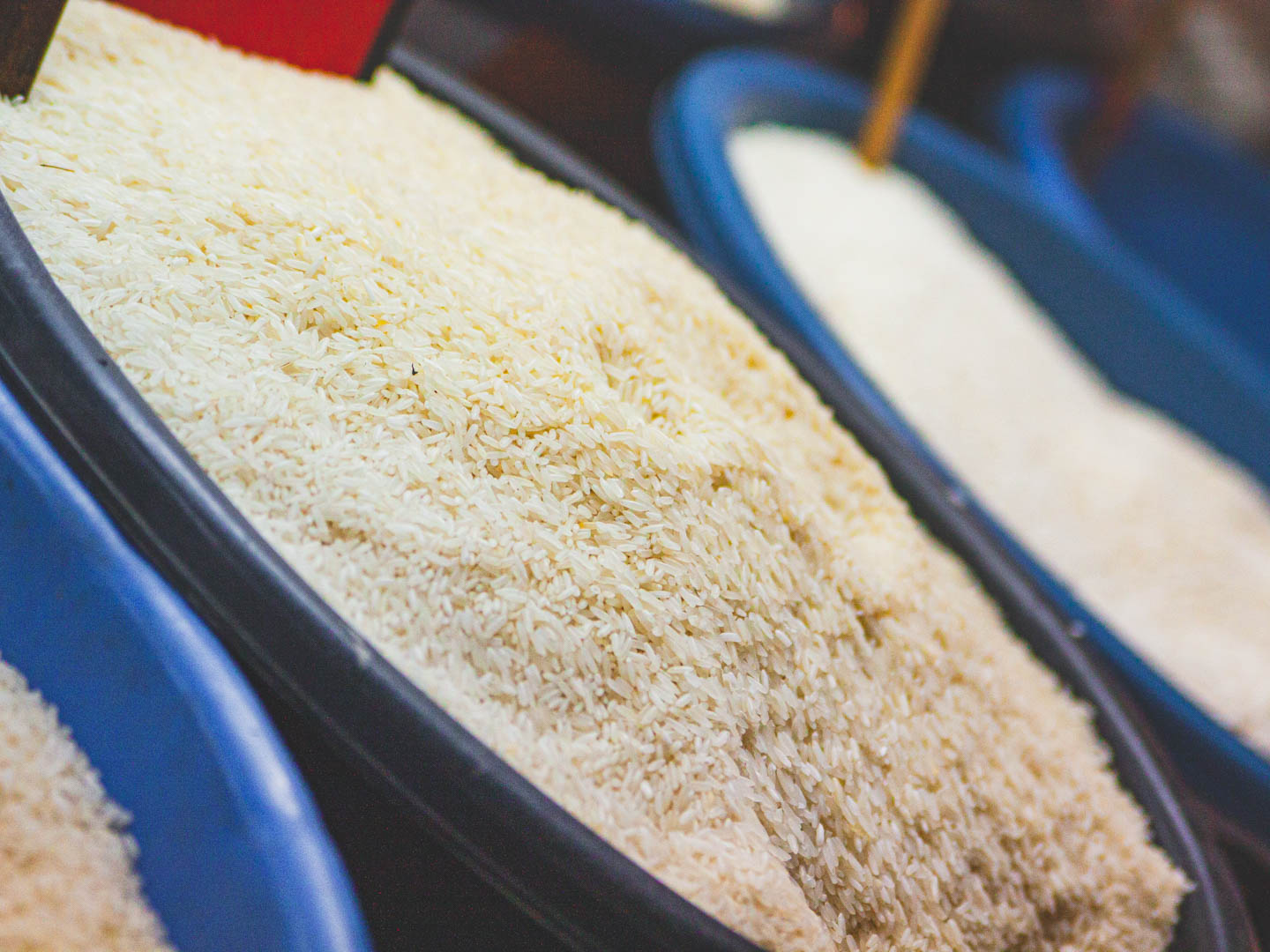
She talked about rice and showed us how fresh coconut milk is made by hand. I’d cooked with coconut milk before, but I’d never seen that process up close.
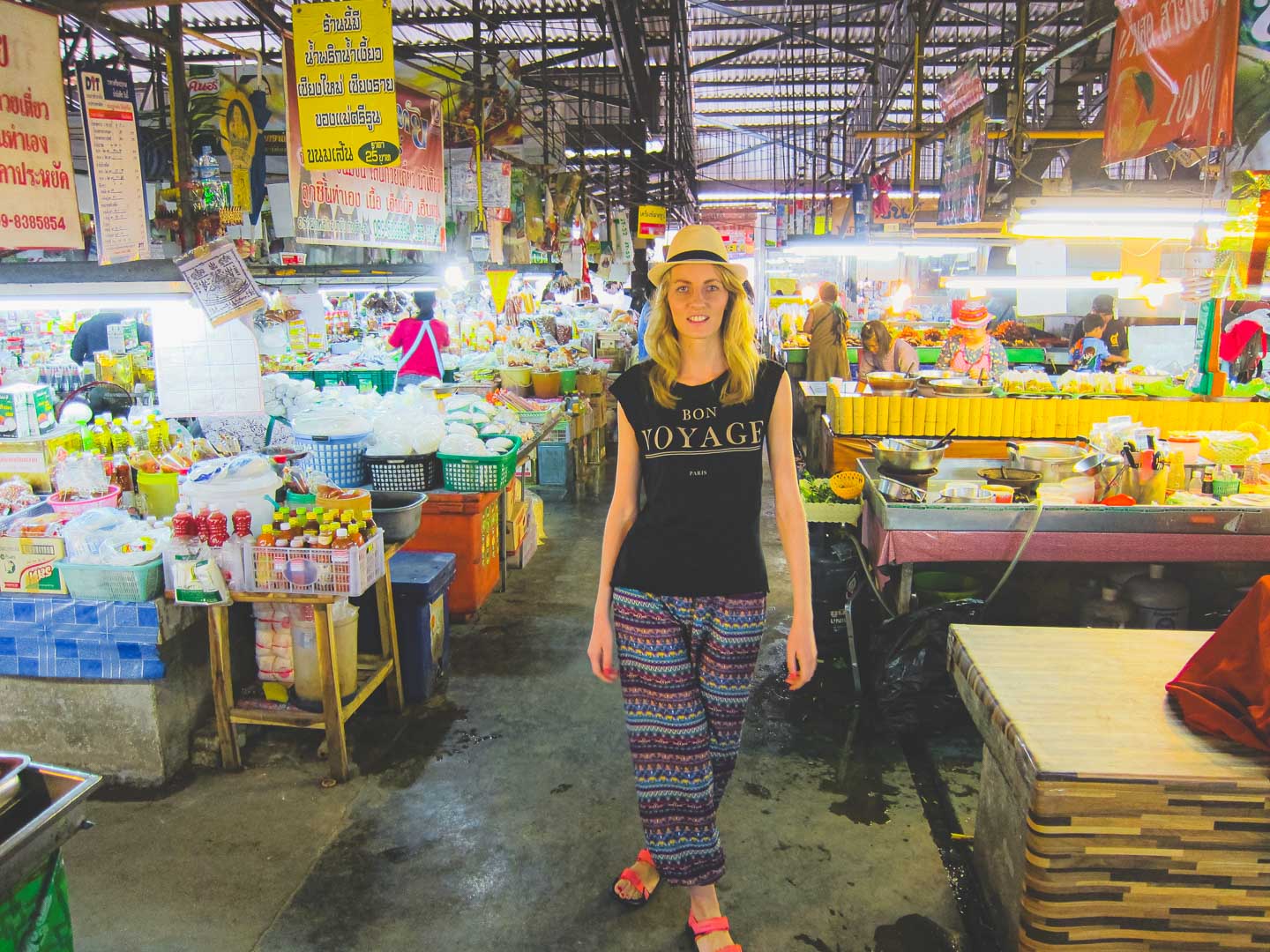
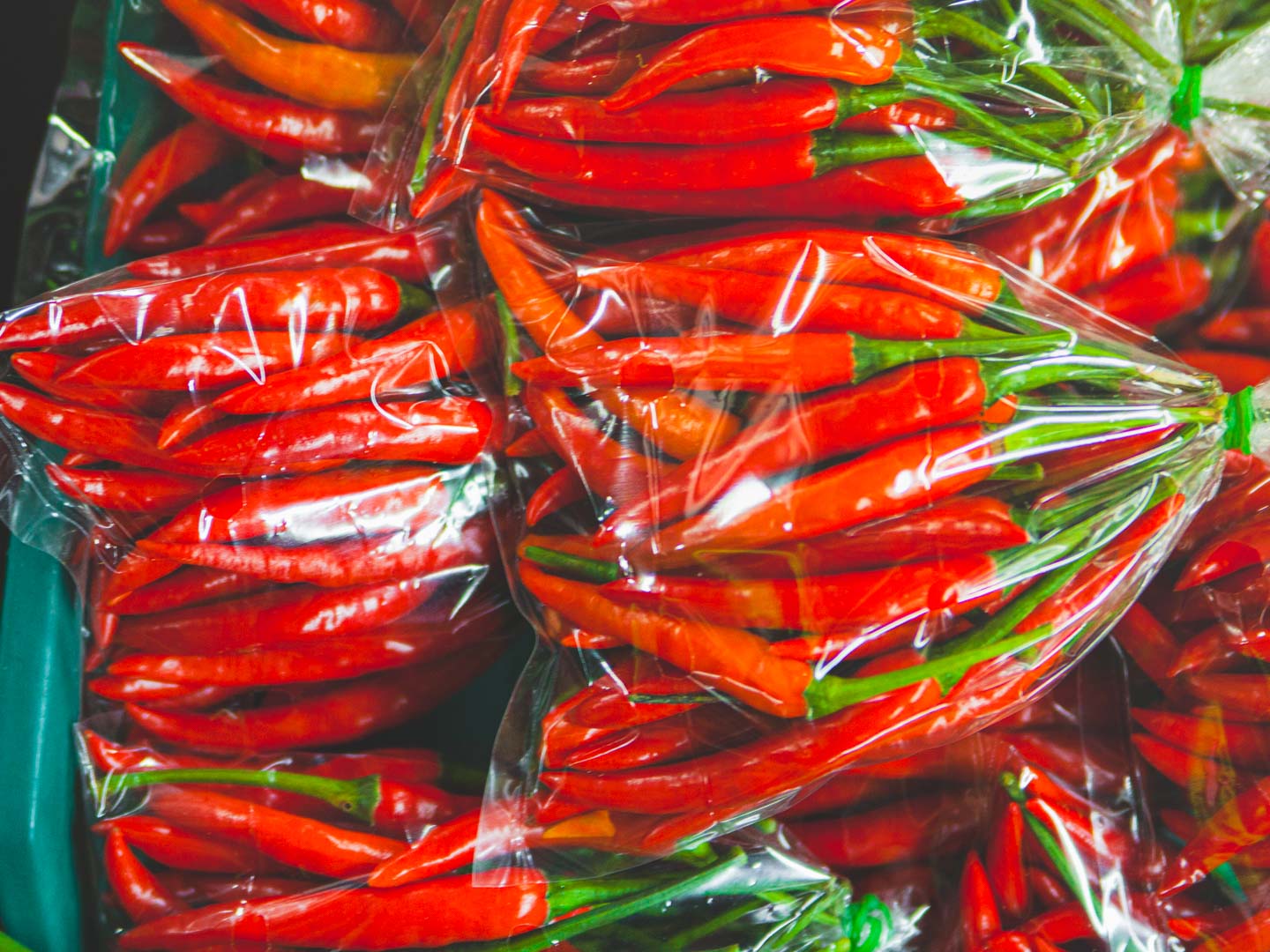
Afterward, we had time to wander around on our own. I stopped to photograph the spice stalls and look at what was for sale. Later in the day, it was easier to recognize some of those ingredients when they appeared at our cooking stations.
The Farm at Thai Farm Cooking School
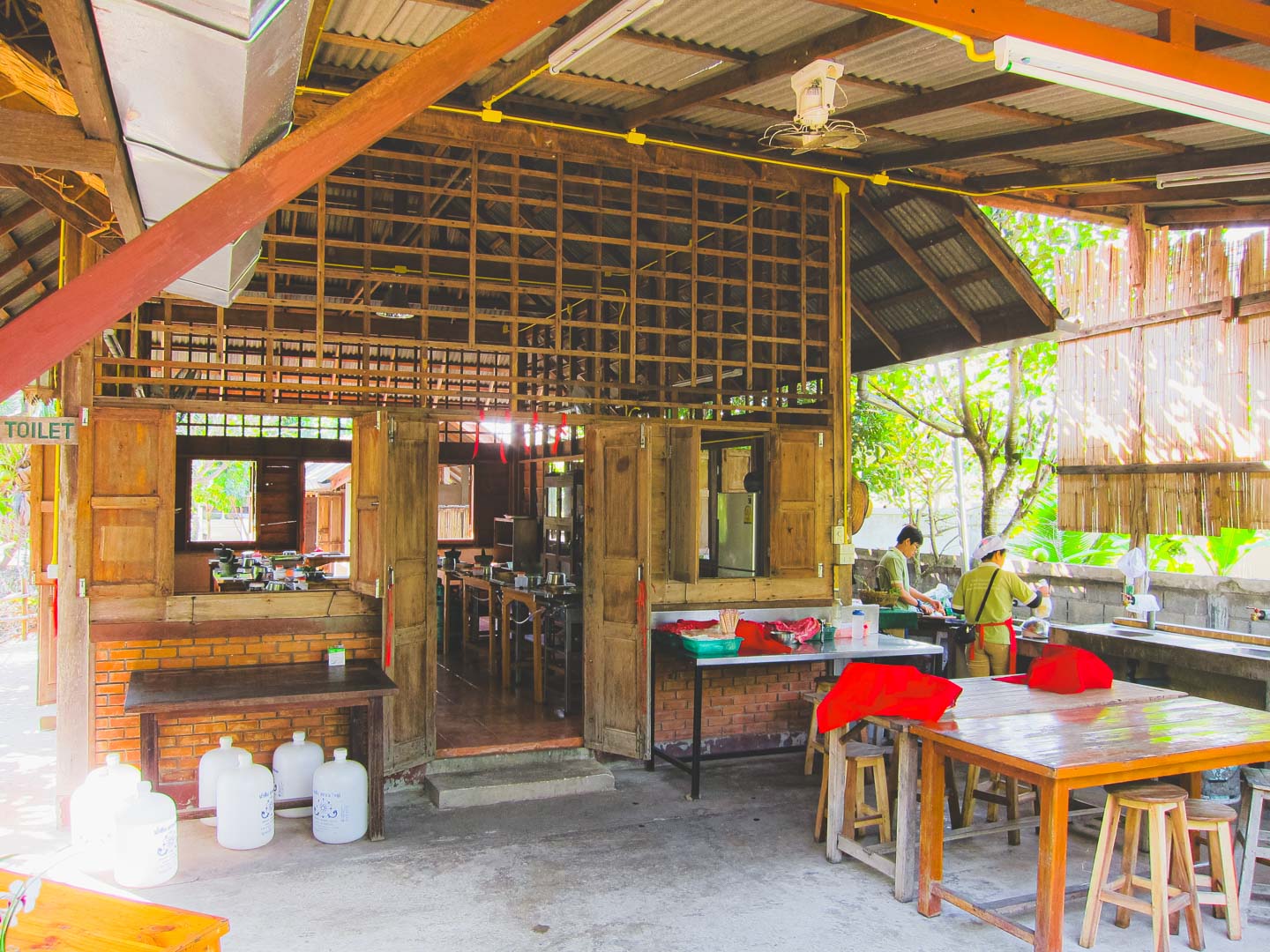
After the market, we got back in the minivan and headed to the farm. I’d expected the farm visit to be a quick walk around a few plants, so I was pleasantly surprised by how much I enjoyed it.
There was a pond, mountains in the distance and a welcome break from the noise of Chiang Mai. Yummy showed us what was growing there and explained how different herbs and vegetables are used in Thai cooking.
The fresh lemongrass smelled especially good. I also remember seeing papaya growing on a tree. These were small things, but they made me pay closer attention to ingredients I’d previously known mostly from a plate or a supermarket shelf.
Want all the recipes from this cooking class?
I’m sharing the complete collection of 8 authentic Thai recipes we learned, with step-by-step instructions and my personal tips for making them at home.
Get your free copy: Complete Thai Recipe Collection (8 recipes including Tom Yum, Yellow Curry, Pad Thai + 5 more) + my secret Chiang Mai local spots!
Time to Actually Cook!
Six dishes in one day sounded like a lot before we arrived. Once we started, though, the lesson moved at a pace I could follow.
Each of us had a cooking station on the open-air terrace overlooking the pond. I liked being able to make my own food, with Yummy there to explain the steps and help when I needed it.
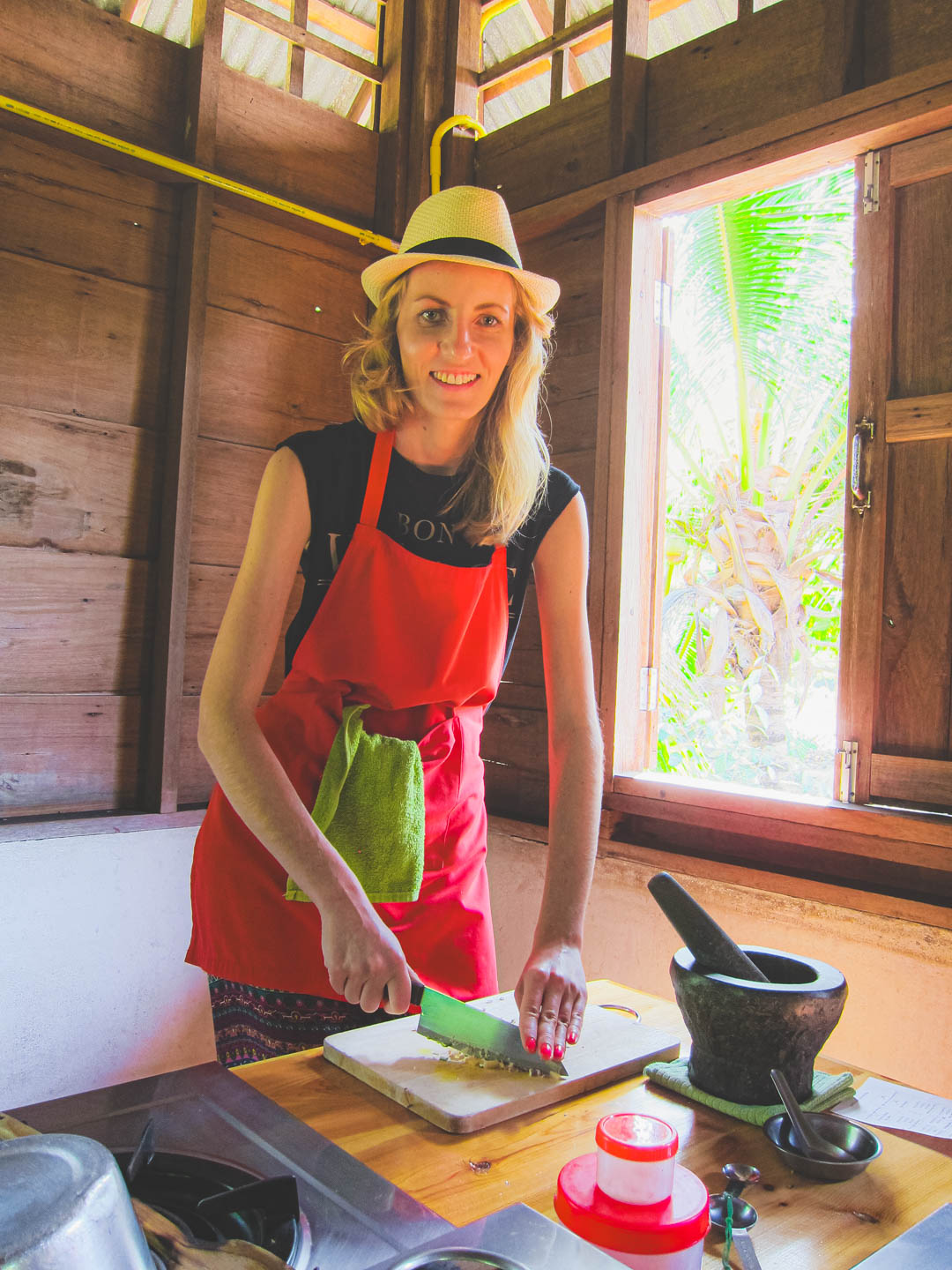
We started by making curry paste with a mortar and pestle. My arms got a workout, and I was slower than some of the other people in the class. The ingredients smelled wonderful as I worked them together.
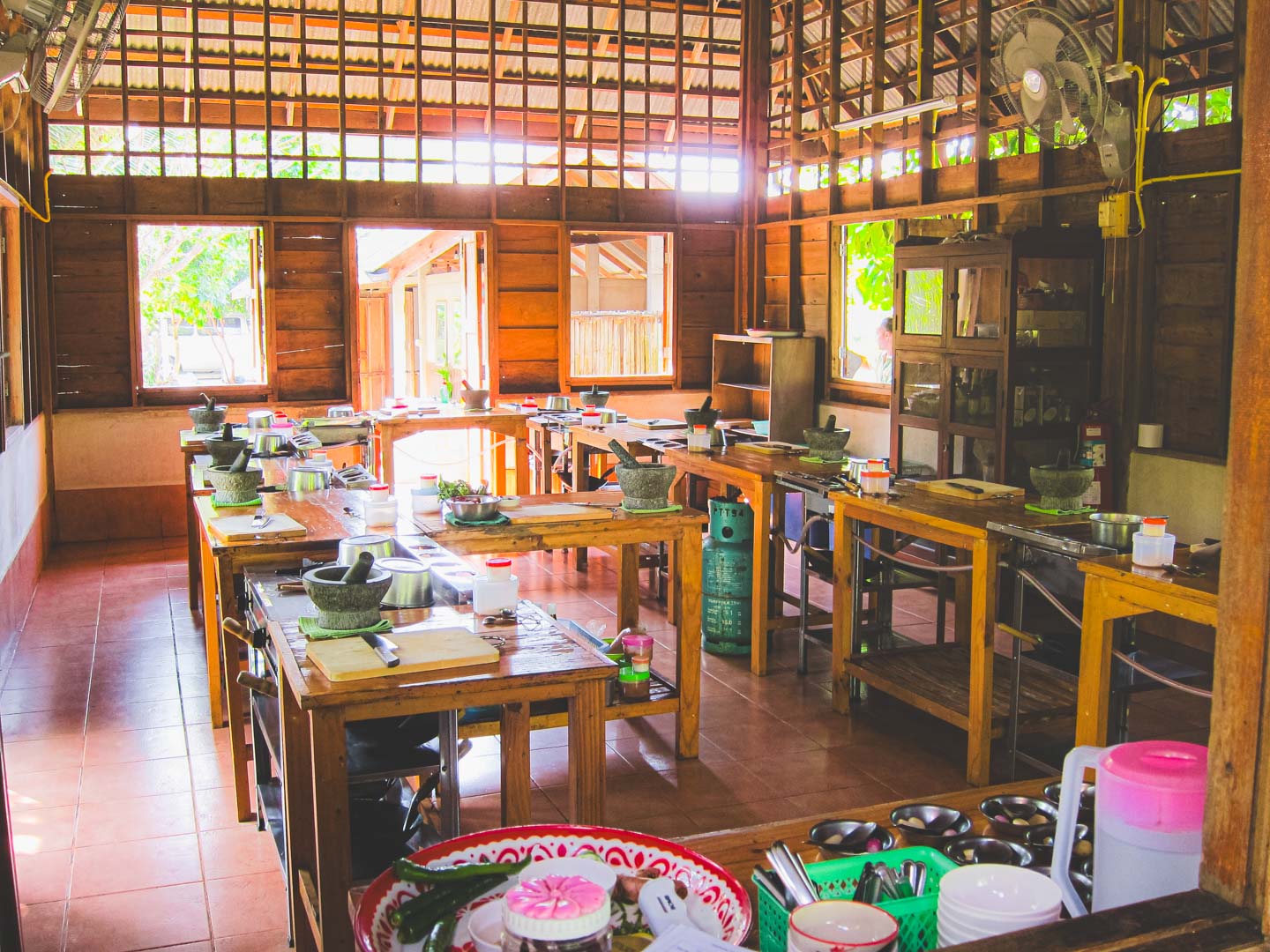
We could choose dishes from several categories, so not everyone made exactly the same meal. Across our choices and the food prepared during the day, these are the dishes I remember:
Curries
- Red and yellow curry paste, made with a mortar and pestle
- Chicken curry
Soups
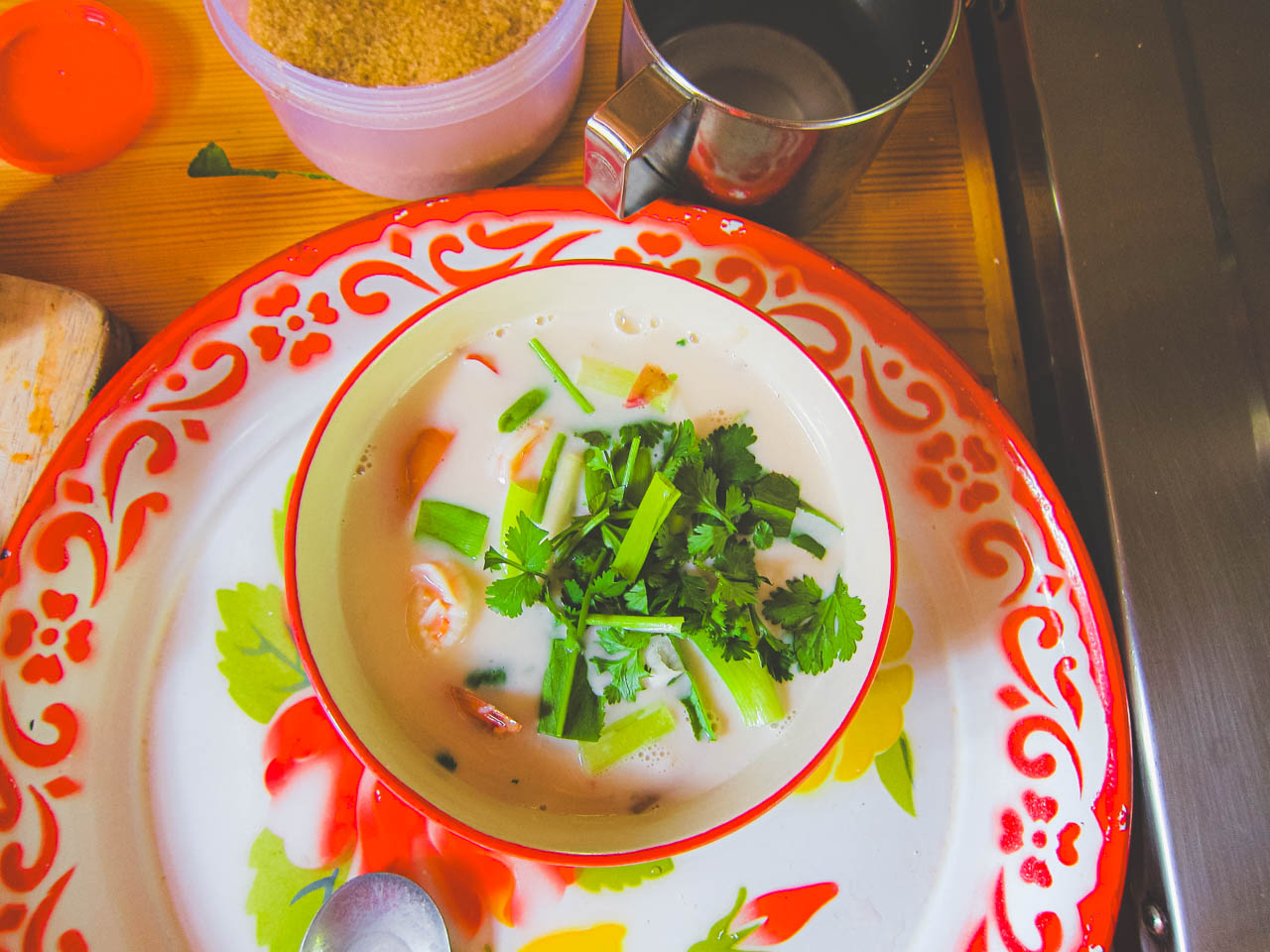
- Tom yum with shrimp
- Coconut soup
Stir-fries
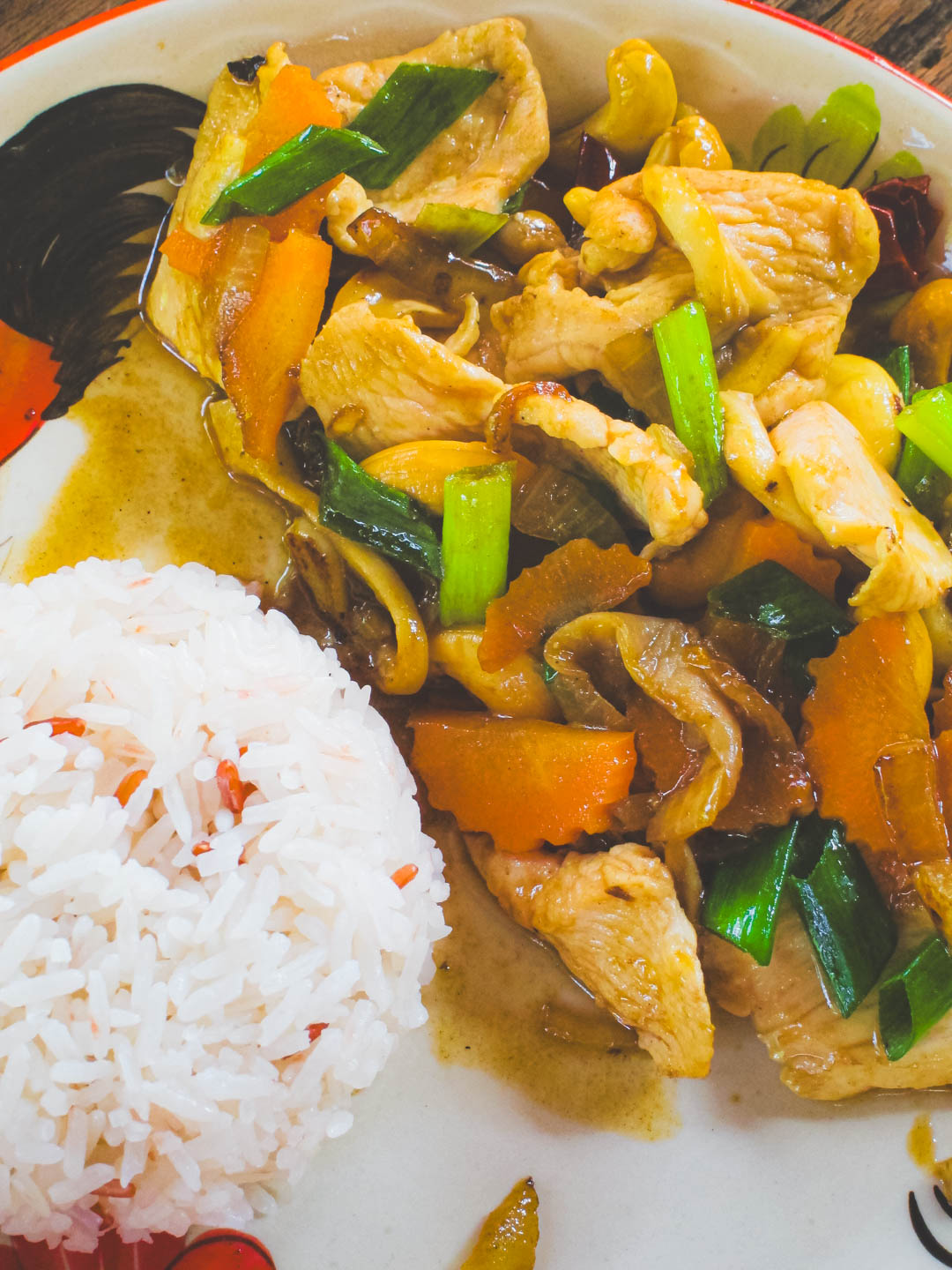
- Chicken with cashew nuts
- Chicken with Thai holy basil
Other dishes and desserts
- Bananas in coconut milk
- Spring rolls
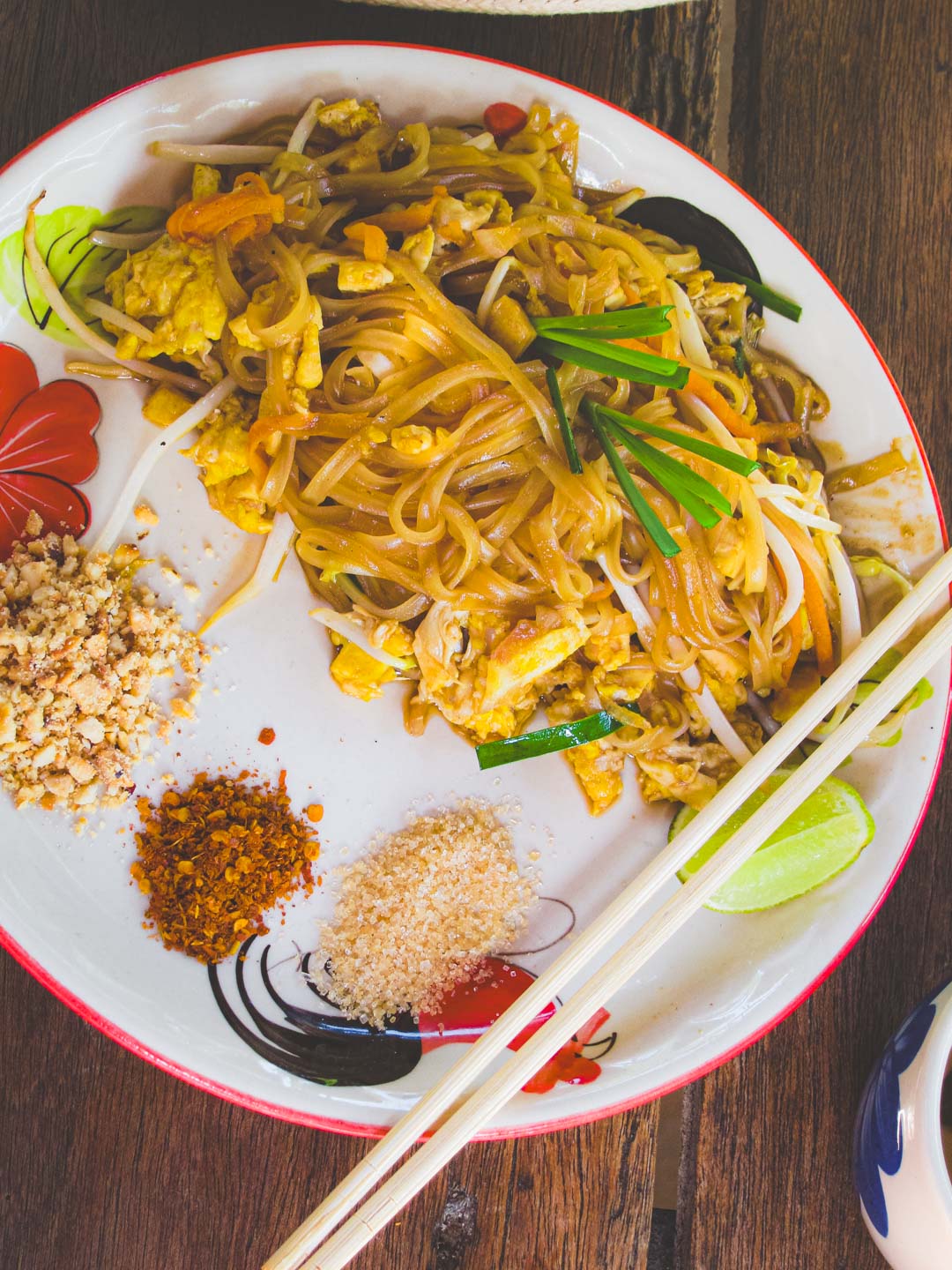
- Pad thai
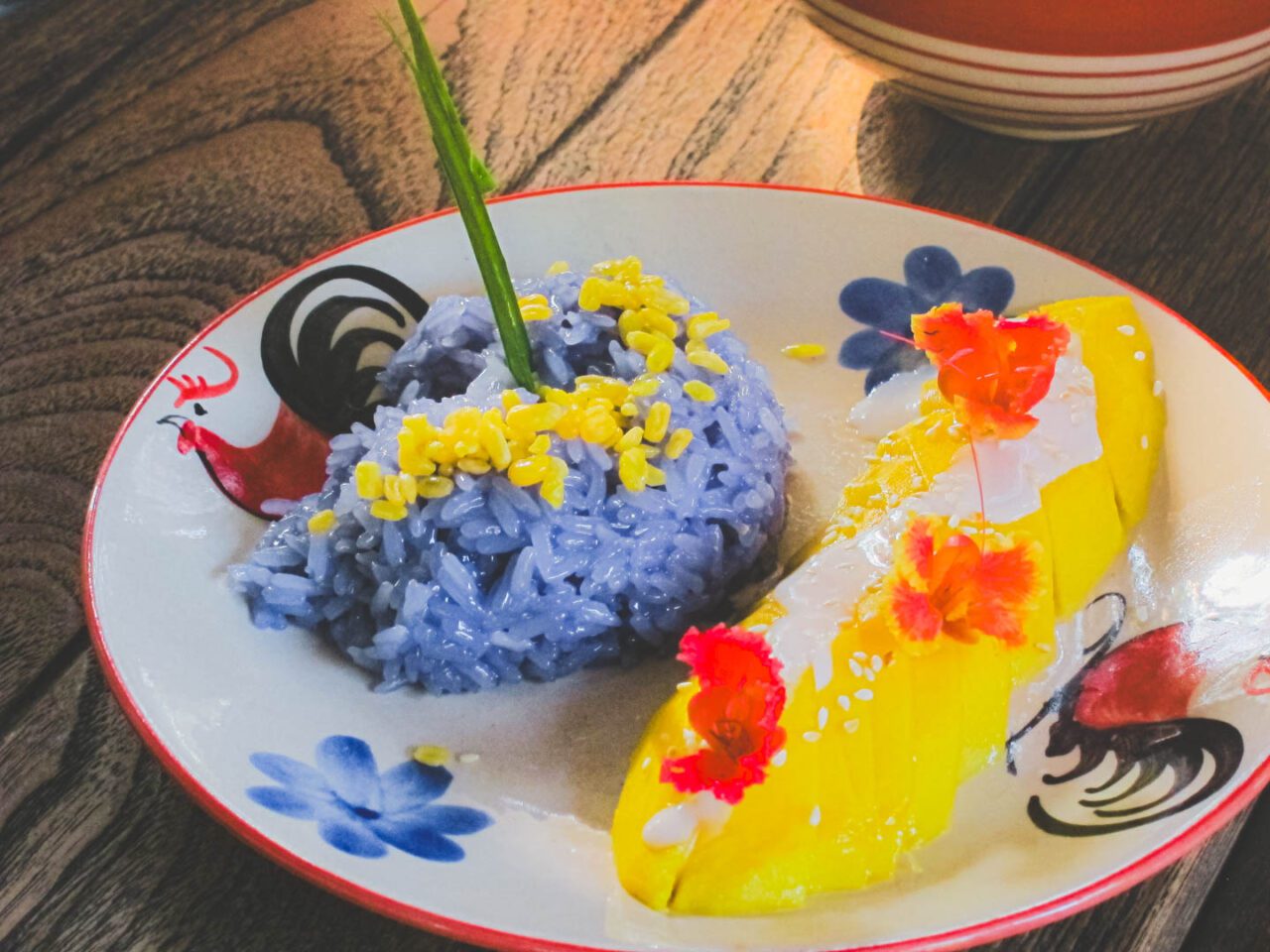
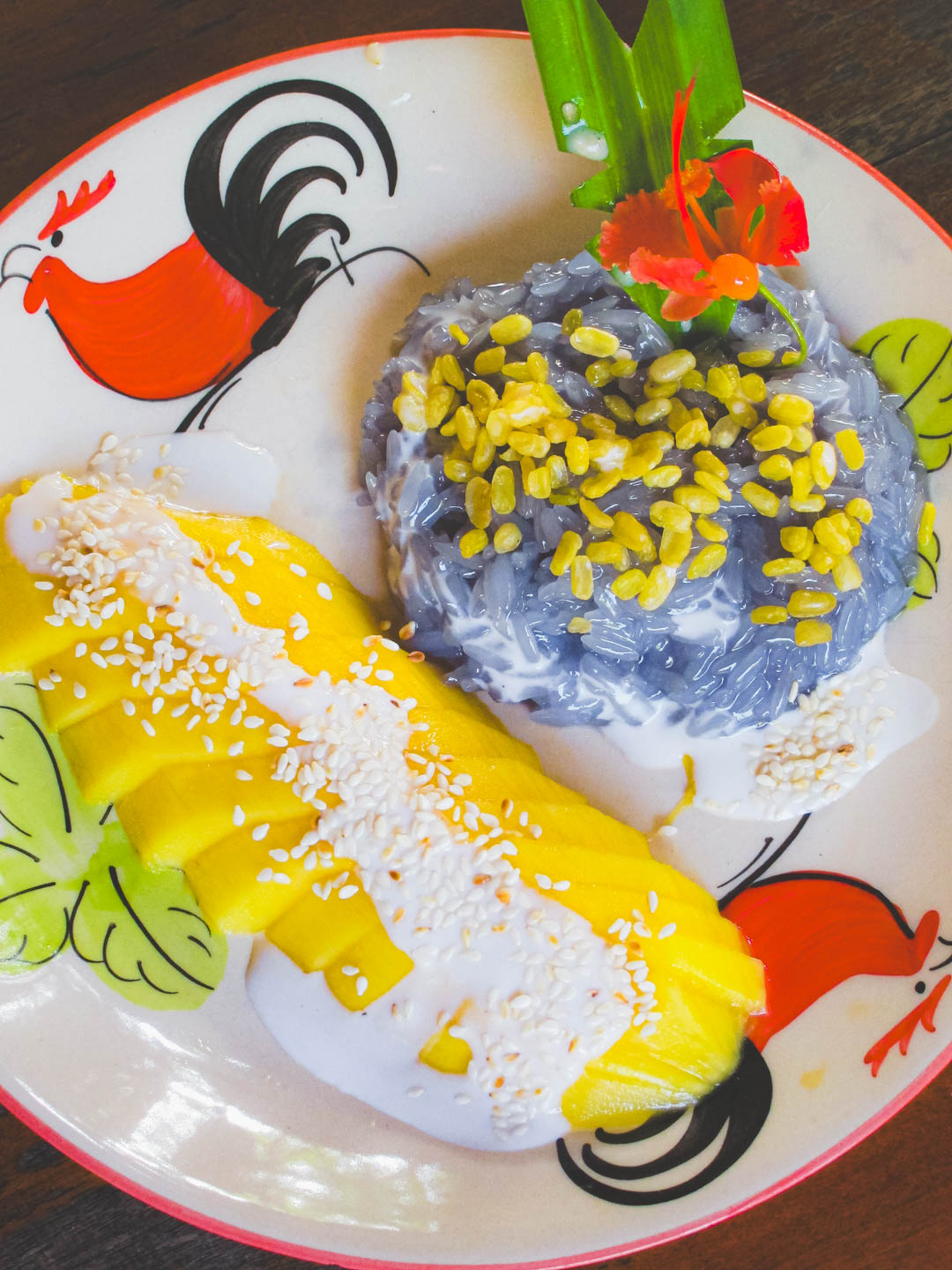
- Mango sticky rice
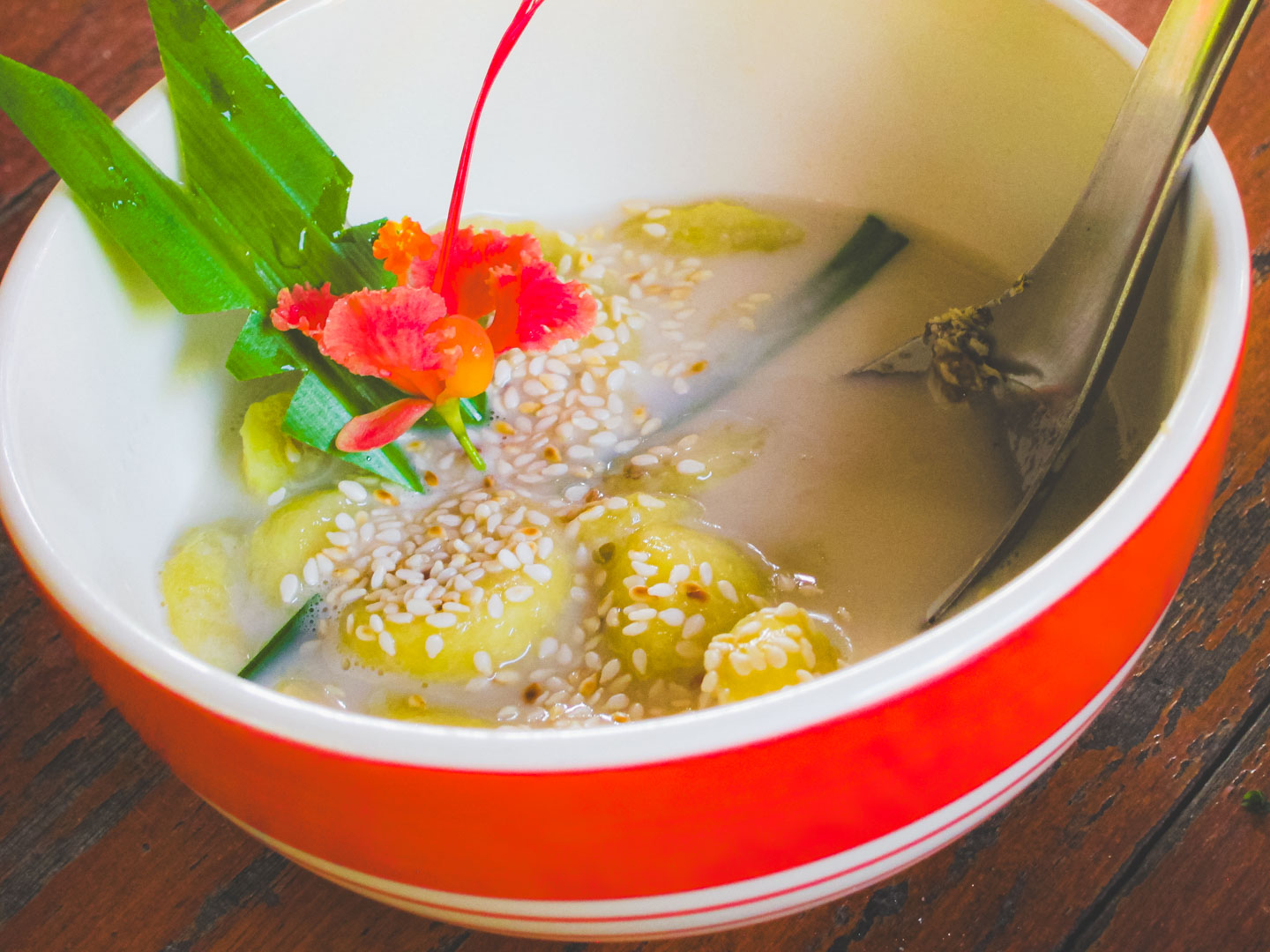
My personal highlight was making pad thai. I’d ordered it many times, but preparing it myself helped me understand how the sweet, sour and salty flavors come together.
I enjoyed making mango sticky rice, too. We’d eaten it several times in Chiang Mai, yet I hadn’t thought much about the preparation behind such a simple-looking dessert.
Two Recipes I Took Home
These are two recipes I returned to after the class. They’re the versions I’ve used at home, based on what I learned during our trip.
Thai Basil Chicken (Pad Kra Pao Gai)
Before this class, I hadn’t realized how different Thai holy basil tastes from the Italian basil I knew. It has a more peppery flavor, and I liked how it worked with the garlic and chilies in this dish.
Ingredients:
- 100 g minced chicken
- 2 tablespoons oil
- 3 cloves garlic, crushed
- ⅓ cup chopped long beans or green beans
- 2–3 bird’s eye chilies, adjusted to taste
- 1 cup Thai holy basil leaves
- 1 tablespoon fish sauce
- 1 tablespoon oyster sauce
- ½ teaspoon sugar
- ¼ cup chopped onion
- 3 tablespoons water
- Rice, to serve
Heat the oil in a wok. Add the garlic, onion, chilies and chicken, and stir-fry until the chicken is cooked. Add the beans, sauces, sugar and water. Stir until everything is combined and the beans are tender. Add the basil leaves at the end and serve over rice.
I now eat vegetarian, so when I make this dish today, I use tofu and vegetarian alternatives to the fish and oyster sauces.
Mango Sticky Rice
This one takes a little planning because the sticky rice needs to be soaked ahead of time. I think it’s worth remembering to do it.
Ingredients:
- Sticky rice, soaked according to the package instructions
- Coconut milk
- Palm sugar
- Salt
- Ripe mango
Steam the soaked rice until tender. Warm the coconut milk with palm sugar and a little salt. Mix some of the sauce with the warm rice, give it time to absorb, then serve with sliced mango and the remaining coconut sauce.
Want to make more Thai dishes at home?
Download my free e-book with eight Thai recipes, including tom yum, yellow curry and pad thai. I’ve added my cooking tips and favorite places in Chiang Mai, too.
The Best Part: Eating What We Made
After cooking, we sat down on the terrace to eat. The setting was lovely, but what I remember most is looking at the dishes on the table and knowing we’d prepared them ourselves.
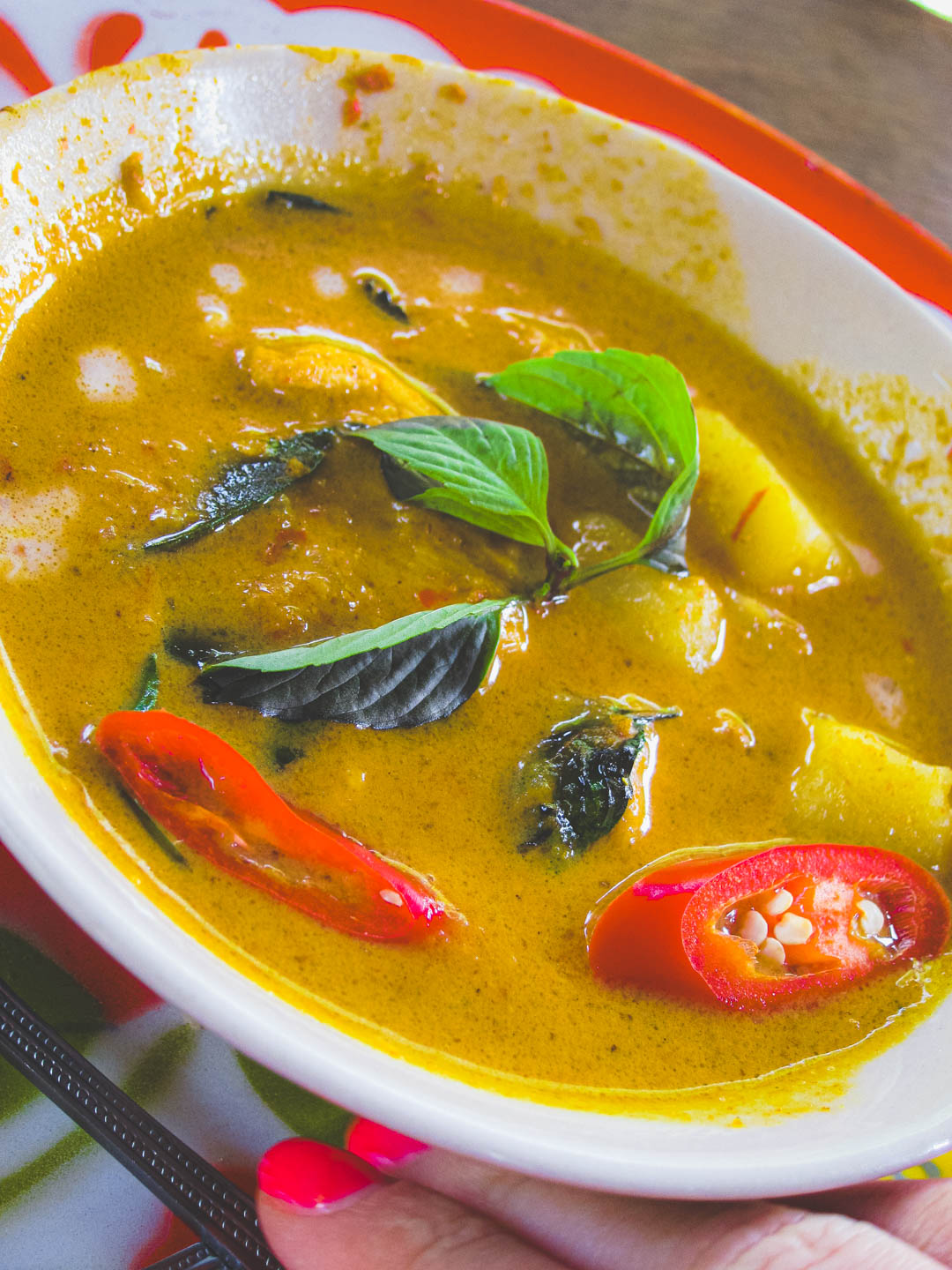
I was proud of my yellow curry, even though I’d added a bit too much chili. My partner’s pad thai turned out well on his first try, which he was very pleased about.
The portions were generous. We couldn’t finish everything, so we took food back to our hotel. I had leftover homemade curry for breakfast the next day.
I also enjoyed talking with the other travelers while we ate. After spending the day cooking alongside one another, it was easy to compare dishes and laugh about the parts we’d found tricky.
How Do You Want to Explore Thailand?
🗺️ Planning the whole trip? → My 2-week Thailand itinerary
🏙️ Spending time in the capital? → Things to do in Bangkok
🏖️ Heading south? → My 5-day Krabi itinerary
🍜 Curious about more Thai food? → Thai dishes to try during your trip
FAQ: Chiang Mai Cooking Class
How much does a cooking class in Chiang Mai cost?
We paid 1,500 THB per person for the Thai Farm Cooking School full-day class. That was the price at the time of our visit, so check the current rate before making plans.
What’s included in a Thai Farm Cooking School class?
Our day included:
- Pickup and drop-off within the school’s pickup area
- A visit to Ruamchook Market
- Time on the farm learning about ingredients
- Our own cooking stations and instruction from Yummy
- Ingredients, food and drinks
- Recipes to take home and use again
The school currently includes a digital recipe book. If transport matters to you, check that your accommodation falls within its pickup area.
Do I need to be good at cooking?
No. Yummy guided us through each step, and I could work at my own pace. You can also adjust the amount of chili in your dishes. If you’re unsure, start with less than you think you need; I learned that with my curry.
Was This Cooking Class in Chiang Mai Actually Worth It?
For me, yes. I enjoyed making the dishes, but I also liked seeing the ingredients at the market and on the farm first.
After returning to Poland, we made the yellow curry three times and bought a proper mortar and pestle. Friends asked us for the recipe. The class gave us something we could carry into our everyday cooking, which is part of why I still remember it so clearly.
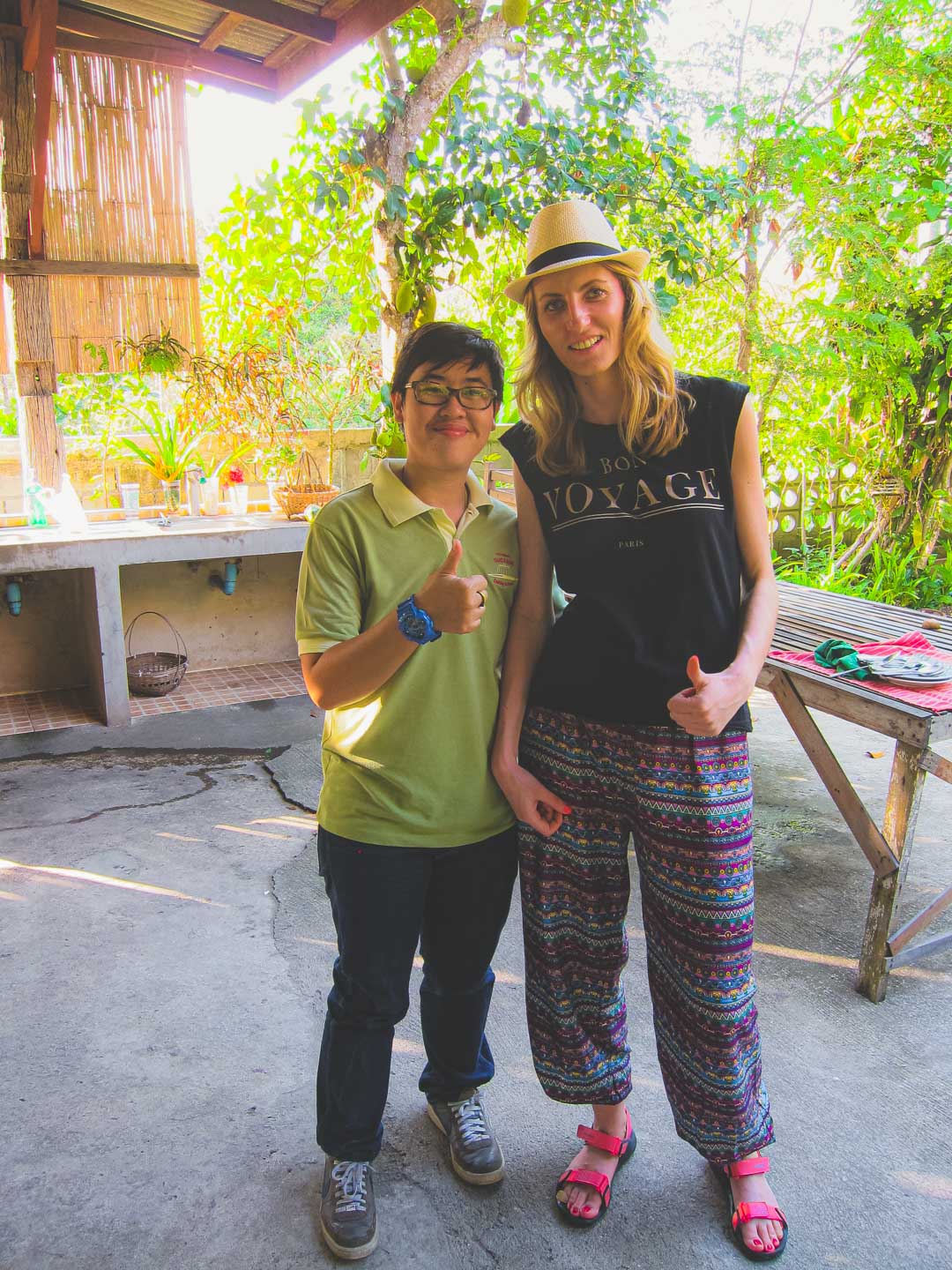
Yummy made a difference, too. She explained things patiently, answered questions and made the day enjoyable from the market visit to the last dish.
If you’re traveling during a busy period, I’d book ahead rather than leave the class until your last day in Chiang Mai.
💡 Pro tip: Book in advance during high season (Nov-Feb) – classes fill up fast.
Travel lighter, even before you leave.
start with something simple.
Download The Minimum Plan – Slow Travel:
What Stayed With Me After This Cooking Class
Ordering pad thai at home felt different after I’d made it myself. I understood a little better how much goes into balancing its flavors, and I wanted to try recreating more of what we’d eaten in Thailand.
We made yellow curry several times after returning to Poland. Each attempt reminded me of the farm, Yummy’s instructions and my slightly overenthusiastic use of chilies.
That’s why I’m glad we spent a day cooking in Chiang Mai. The recipes were useful, but the memories attached to them have lasted just as long.
If you enjoy Thai food and have a day to spare, I’d recommend considering a cooking class. You don’t need to arrive knowing how to cook; you just need to be willing to try.
Ready for More Thailand Adventures?
- My 2-week Thailand itinerary – plan the rest of your trip
- Things to do in Bangkok – explore the capital
- My 5-day Krabi itinerary – spend time on the southern coast
- Thai dishes to try – keep exploring Thai food