
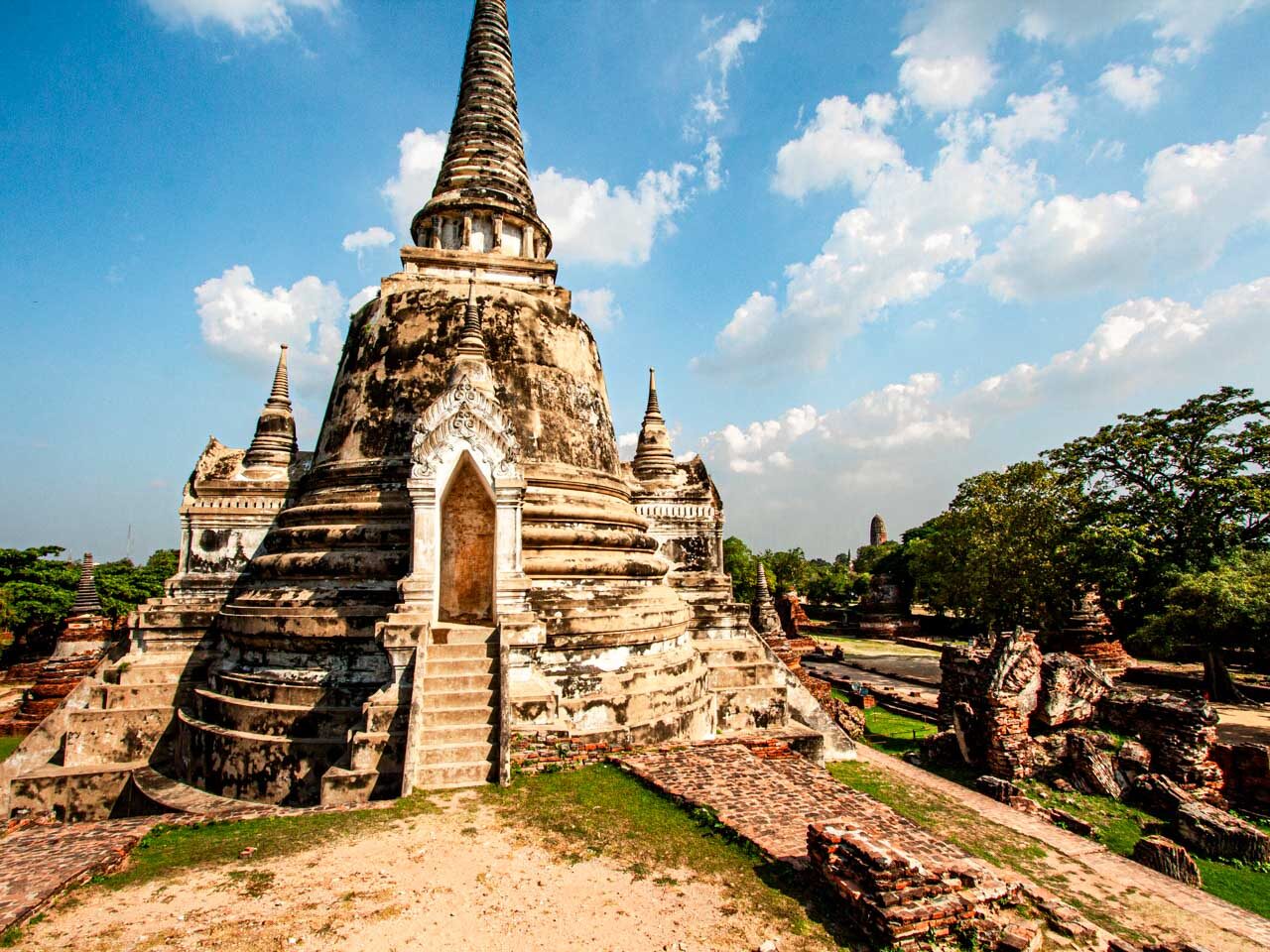
Wondering what to see in Ayutthaya in one day? It’s a good choice for a day trip from Bangkok, especially if you’d like a change of pace and a chance to explore Thailand’s former capital.
What I remember most are the brick temple towers, the Buddha head surrounded by tree roots, and the late-afternoon light by the river. Although Ayutthaya attracts plenty of visitors, there are quieter corners between its best-known sights.
Ayutthaya was once one of Southeast Asia’s most important cities. Today, the remains of the old capital sit alongside a modern town, local restaurants, and temples where people still come to pray.
In this guide, you’ll find:
- Temples worth visiting on an Ayutthaya day trip.
- How to get there from Bangkok, including approximate costs.
- A suggested one-day itinerary.
- Places to stop for a meal.
- Advice on when to visit.
These are places I visited myself. Use the route as a starting point, then adjust it to the weather, your available time, and how much sightseeing you feel like doing.
Planning a longer trip? Take a look at my Complete Thailand Travel Guide for practical advice before you go.
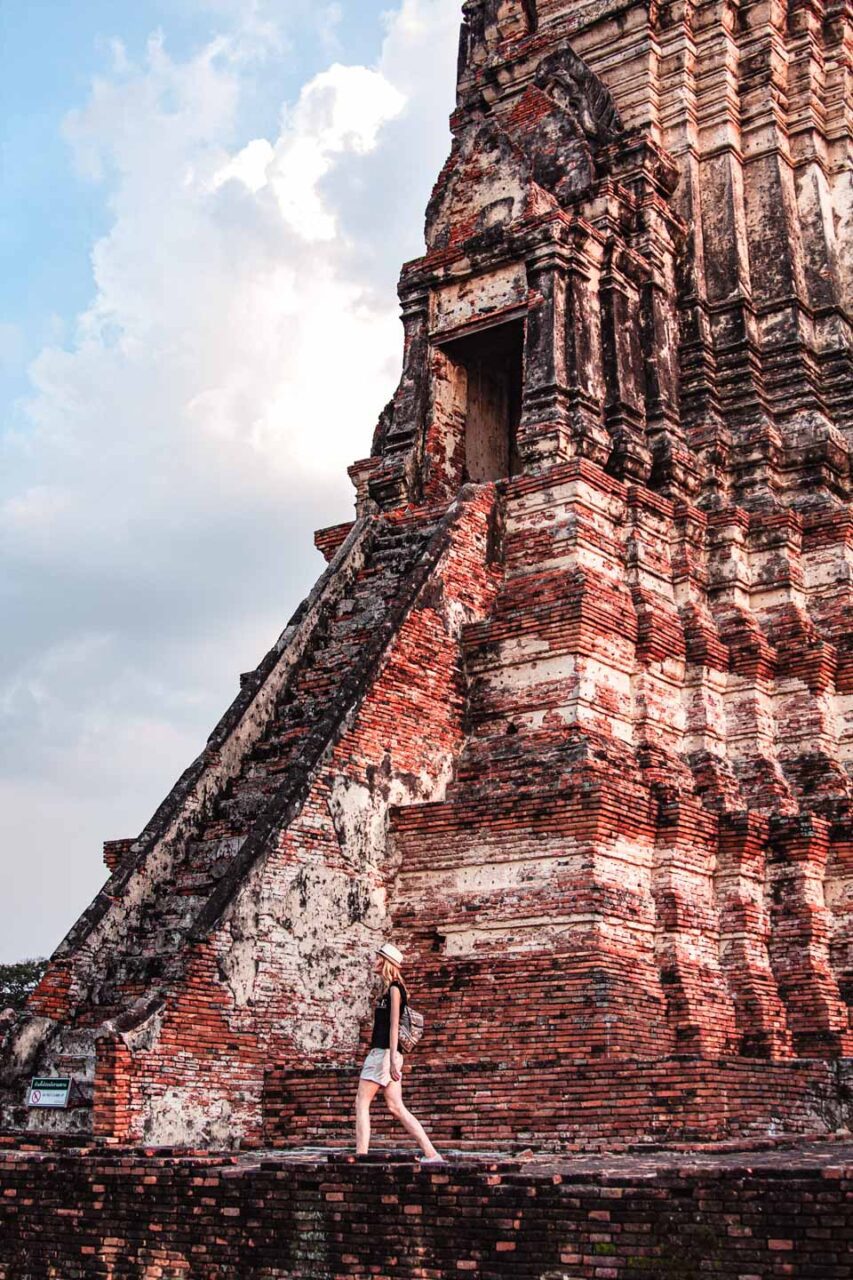
A Little Background on Ayutthaya
Founded in the 14th century by King U Thong, Ayutthaya served as the capital of the Kingdom of Siam for more than 400 years.
At its peak, it was an important center of international trade. Merchants arrived from China, Japan, India, and Europe, and foreign communities established settlements around the city. Goods traded here included silk, porcelain, and spices.
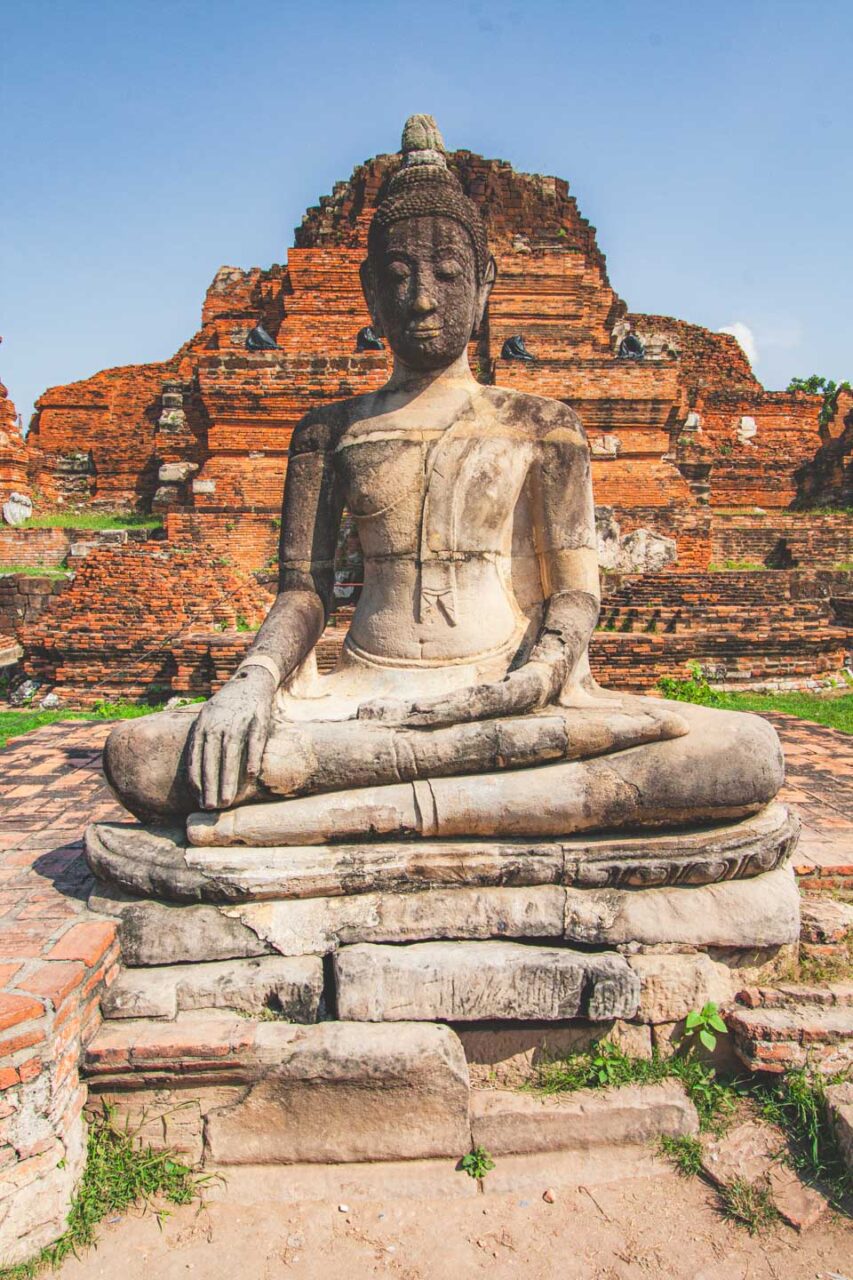
It’s hard to picture all that activity while walking among the temple ruins today. Still, the brick walls, rows of damaged Buddha statues, and tall towers give you some idea of the former capital’s scale.
Burmese forces destroyed the city in the 18th century. It never regained its former role, but the surviving monuments help tell its story.
For me, visiting Ayutthaya was a worthwhile change from Bangkok. Walking through the old temple grounds felt quite different from exploring the capital’s busy streets.
If you’re starting your trip in Bangkok, my 15 Things to Do in Bangkok guide includes sightseeing ideas and places to eat.
What to See in Ayutthaya in One Day
Before you go, choose a few temples you’d particularly like to visit. There are plenty of historic sites, and walking around exposed ruins in the heat can be more tiring than the photos suggest.
One day is enough to see several of Ayutthaya’s main sights, but I wouldn’t try to fit everything in. Each complex has a different layout and character, so it’s worth leaving time to look around properly.
The five temples below formed the main stops on my route. Some are close together, while others are easier to reach by bicycle or tuk-tuk.
If you rent a bike, consider the distances and temperature. A short ride on the map can feel much longer in the midday sun.
Attractions Map
Use the map to locate the temples and restaurants before setting off. It helps to group nearby stops together rather than spending the day retracing your route.
Wat Ratchaburana: Royal History and Hidden Treasure
Wat Ratchaburana was my first temple of the day. It’s a good place to begin, particularly if you enjoy learning about the events behind a historic site.
The temple was built in 1424 by King Borommarachathirat II at the cremation site of his two brothers, who died fighting each other for the throne.
Knowing that story changed how I looked at the ruins. They felt more connected to the people and events that shaped the city.
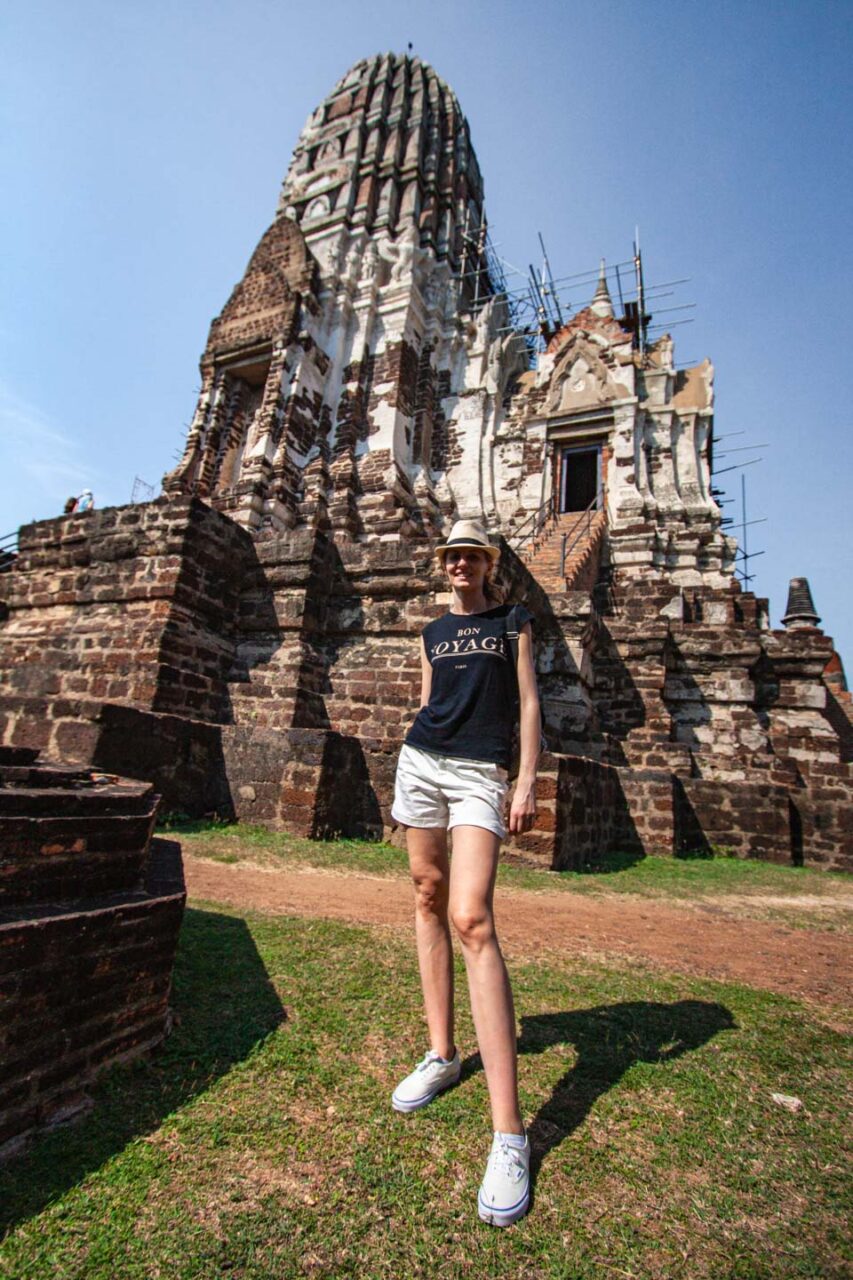
The temple’s tall prang, or tower, dominates the grounds. During my visit, it was possible to climb up and enter it.
Fragments of wall paintings survive inside, and gold objects and relics were discovered in a chamber within the tower. That treasure is one of the best-known parts of Wat Ratchaburana’s history.
Take some time to look at the architecture, too: the details on the tower, the remaining walls, and the arrangement of the buildings around it.
When I visited, it was quieter here than at nearby Wat Mahathat. I could wander around without rushing and stop whenever something caught my attention.
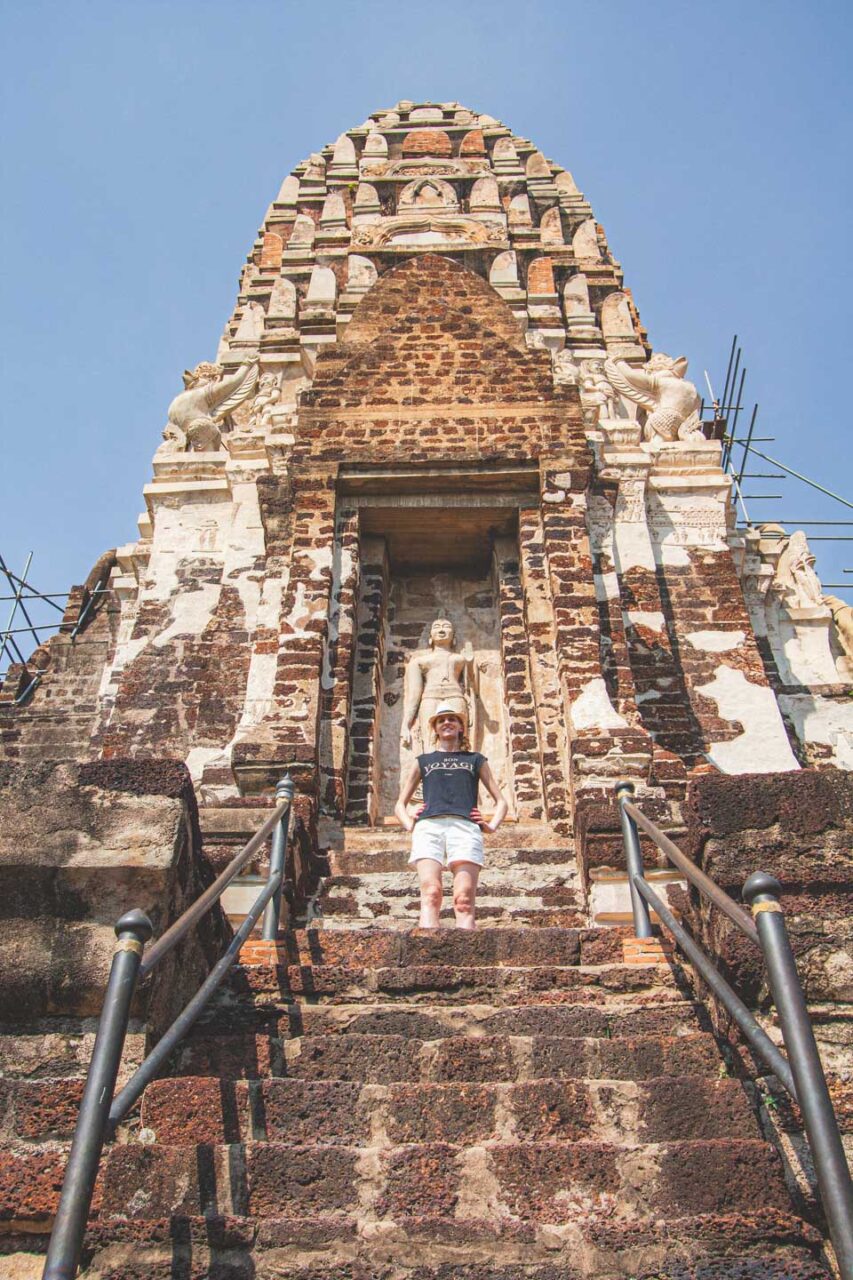
Wat Mahathat: The Buddha Head in Tree Roots
You’ve probably seen a photo of Wat Mahathat, even if you don’t recognize the name. This is where you’ll find the famous Buddha head surrounded by tree roots.
I’d seen it many times before traveling to Thailand, but I still wanted to see it in person. It became one of the moments I remembered most from the day.
The temple dates to the 14th century and was an important religious center in the former capital. Today, you can walk among the remains of towers, walls, and Buddha statues.
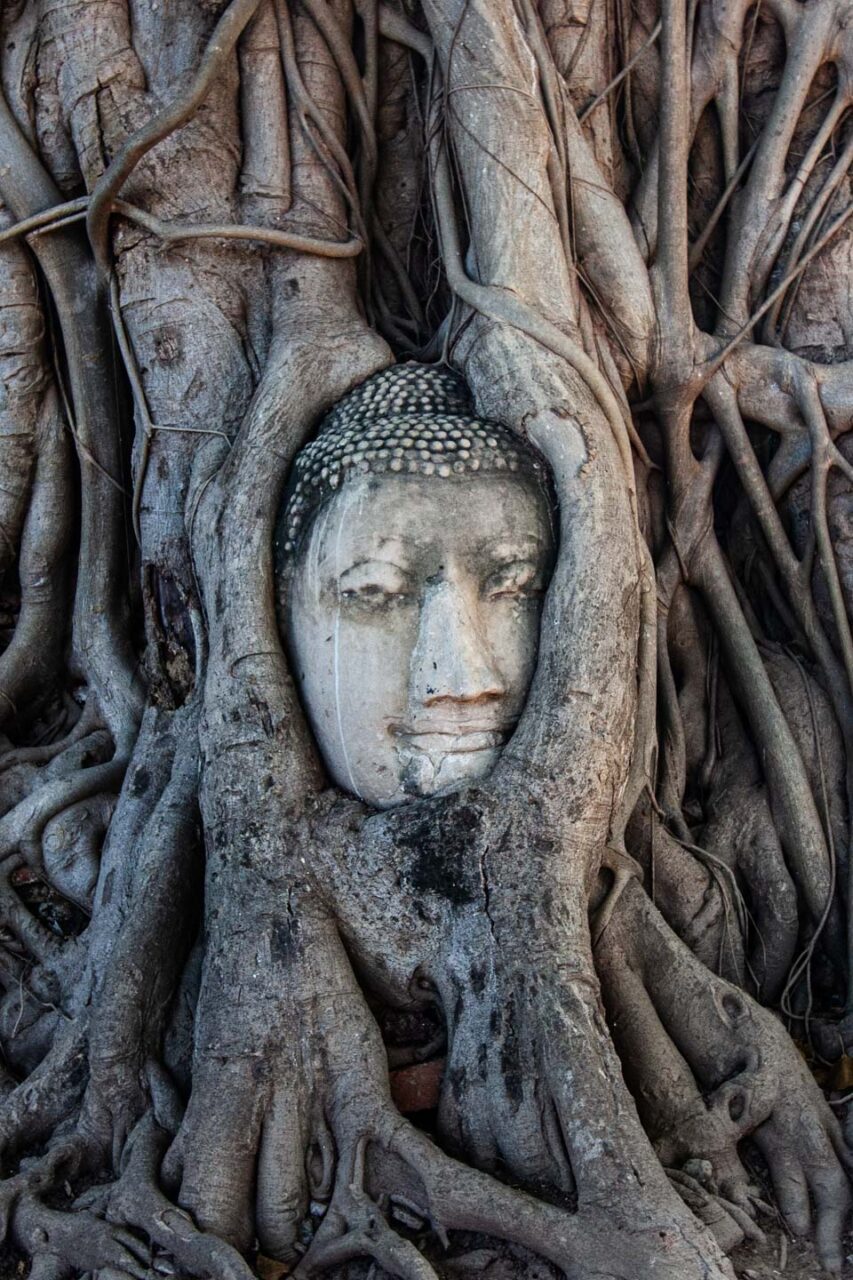
This is one of Ayutthaya’s most popular stops, so expect other visitors around the Buddha head.
It’s worth walking beyond that spot, though. Wat Mahathat deserves more time than a single photo. The wider grounds give you a better sense of how large the original complex was.
I particularly liked the contrast between the old brickwork and the trees. In places, the roots and greenery have become part of the ruins themselves.
When photographing the Buddha head, follow the guidance displayed at the site. It remains a religious image, even though it has also become a well-known symbol of Ayutthaya.
Admission is 80 THB for foreign adults.
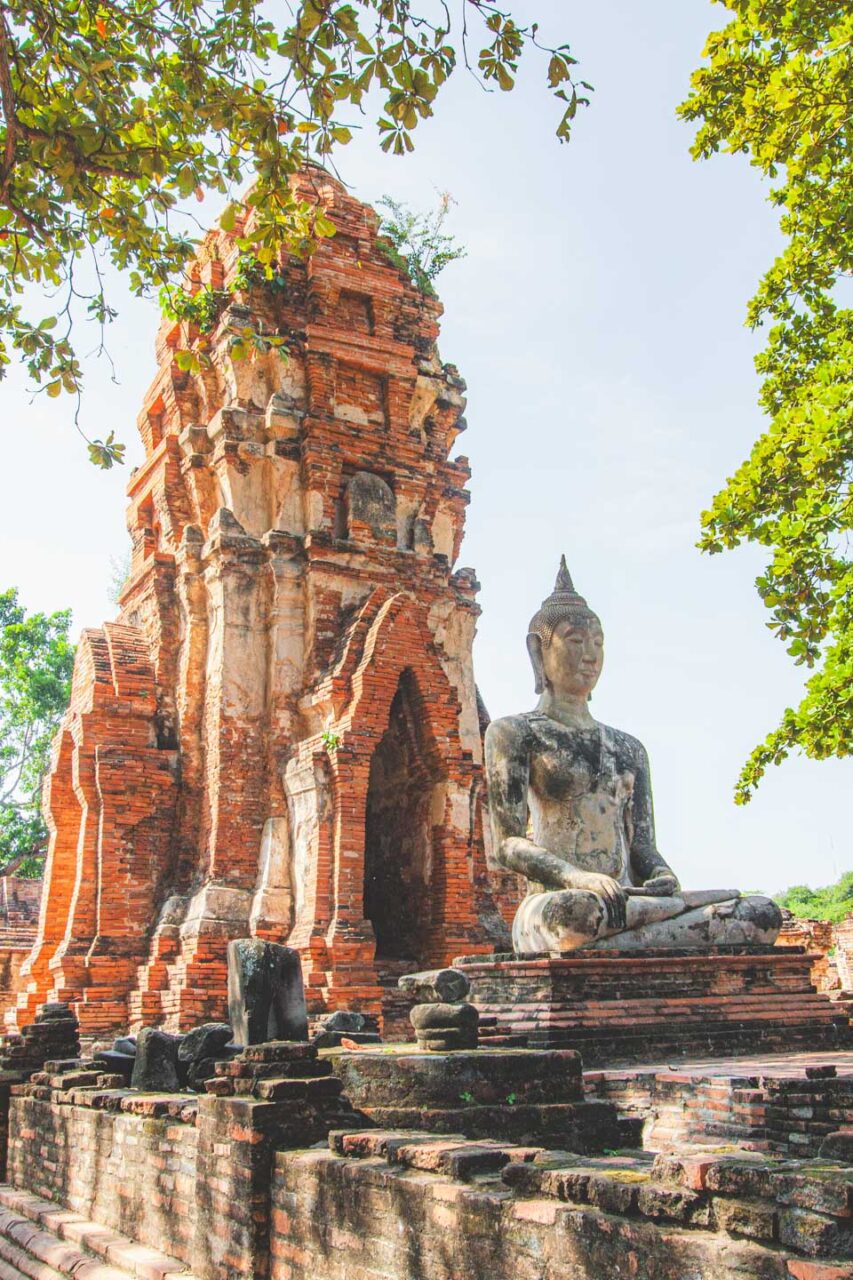
Wat Phra Si Sanphet: Three Royal Chedi
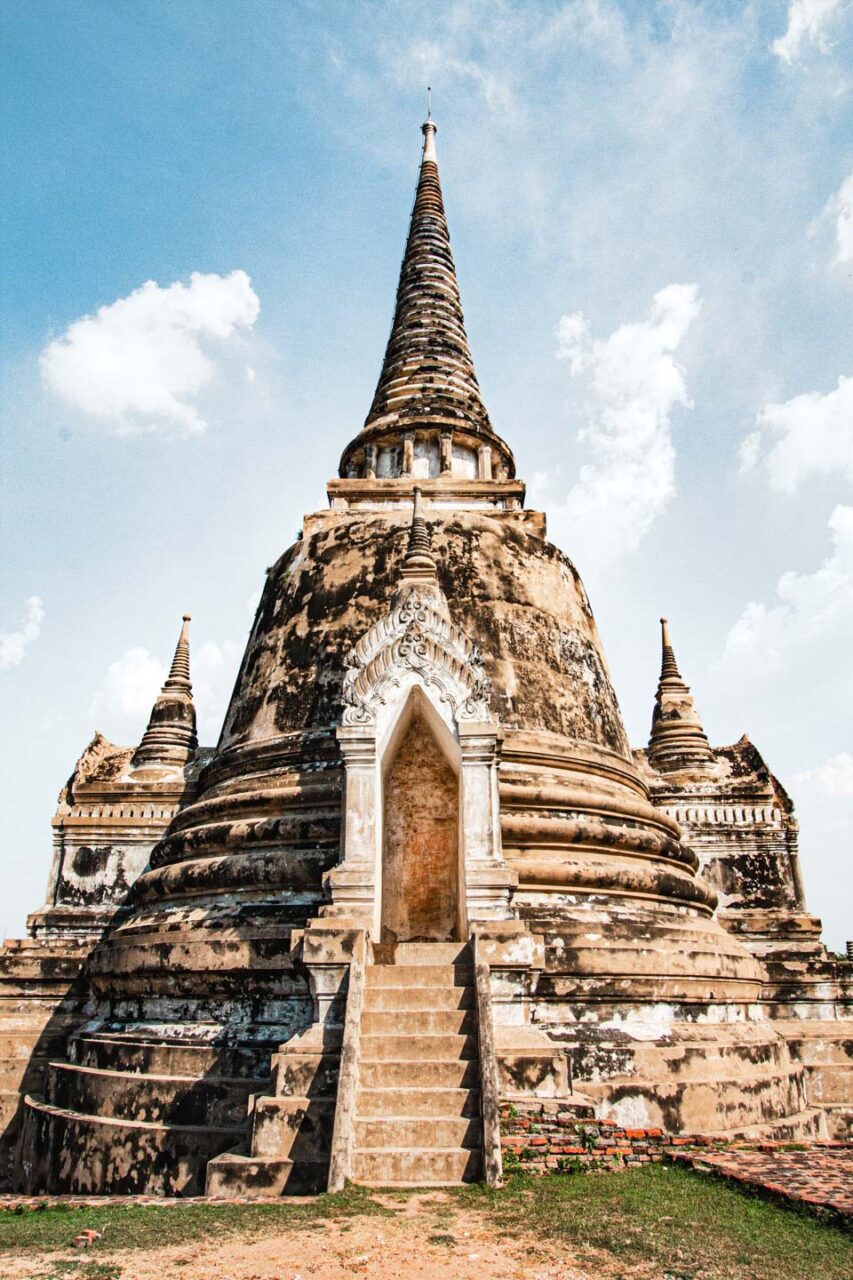
If I had to choose the temple whose architecture stayed with me most, it would be Wat Phra Si Sanphet.
Its three large chedi, or stupas, are among Ayutthaya’s most recognizable sights. Even among the ruins, you can still see the symmetry of the original complex.
This was once a royal temple within the palace grounds. Ceremonies took place here, and the chedi held the ashes of kings.
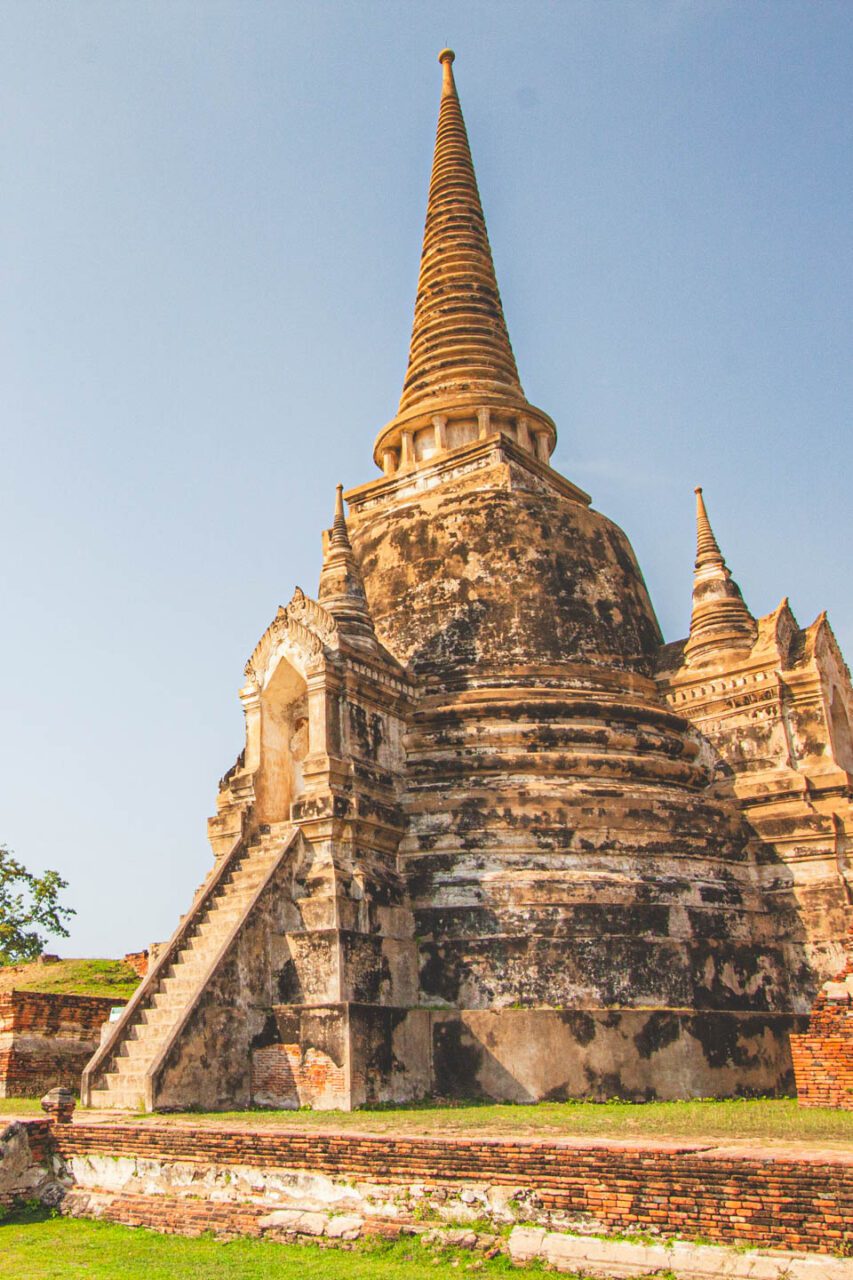
The temple also provided a model for the later Wat Phra Kaew complex in Bangkok. Thinking of it as part of a royal palace helps put its importance into perspective.
Much of the original structure has gone, but the surviving buildings still convey its scale. Walk around the chedi to see their proportions and the remains of the structures that once surrounded them.
What I enjoyed here was the space. I could move between the ruins, pause, and look at the towers from different angles.
It’s worth allowing enough time to explore rather than stopping only for the familiar photograph of the three chedi.
Wat Mongkhon Bophit: A Gilded Buddha Beside the Ruins
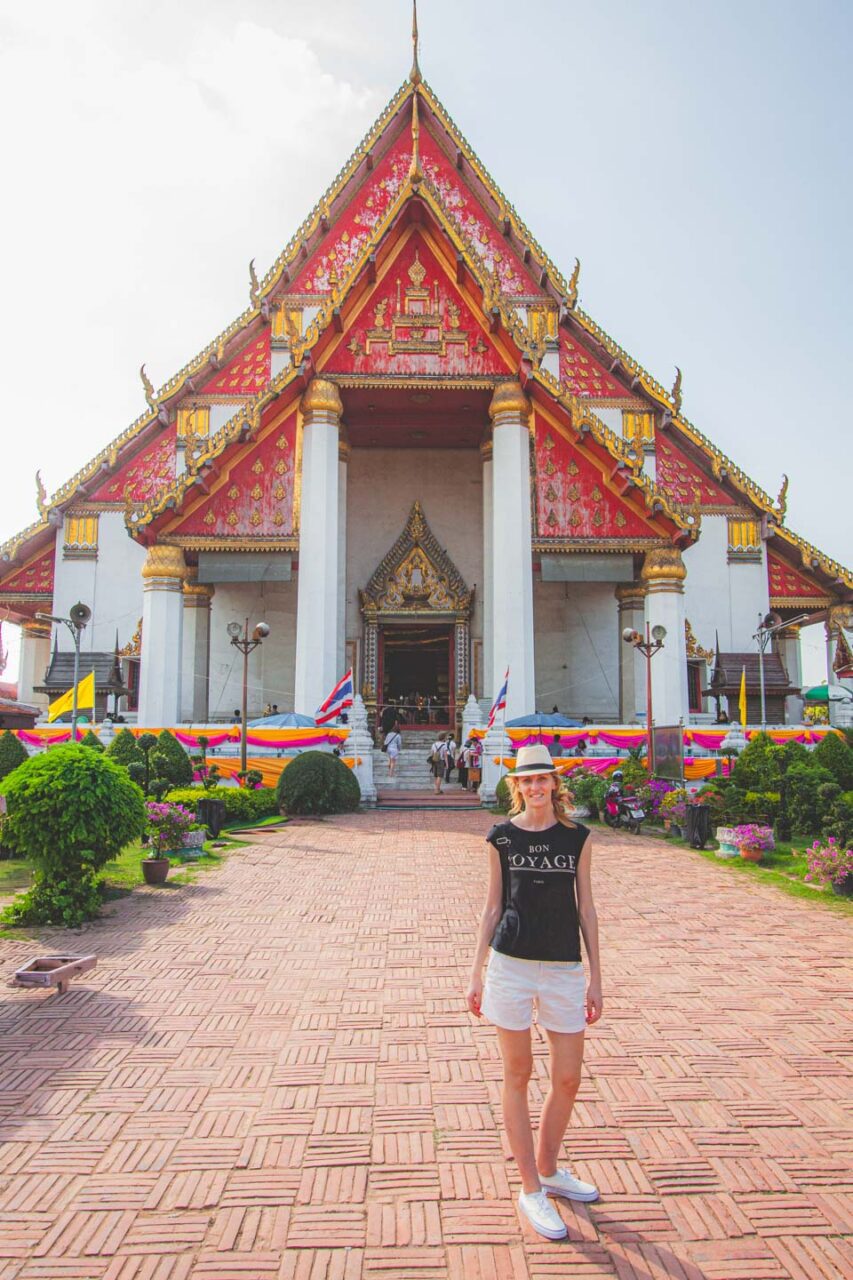
Wat Mongkhon Bophit is right next to Wat Phra Si Sanphet, making it easy to visit both during the same stop.
After walking among ruined temples, stepping into an active place of worship gives you another perspective on Ayutthaya. People come here to pray, incense hangs in the air, and the pace feels different from the sightseeing outside.
The main feature is an enormous gilded bronze Buddha statue. Its size becomes particularly noticeable when you see people seated in front of it.
The statue has been damaged and restored over the centuries. What you see today reflects both its history and the work done to preserve it.
I enjoyed sitting inside for a little while after walking between the historic sites. It was a welcome pause in the day.
This stop also shows that Ayutthaya is still a living city with active religious traditions alongside its ancient monuments.
Dress respectfully and remove your shoes where required before entering.
Wat Chaiwatthanaram: A Lovely Last Stop
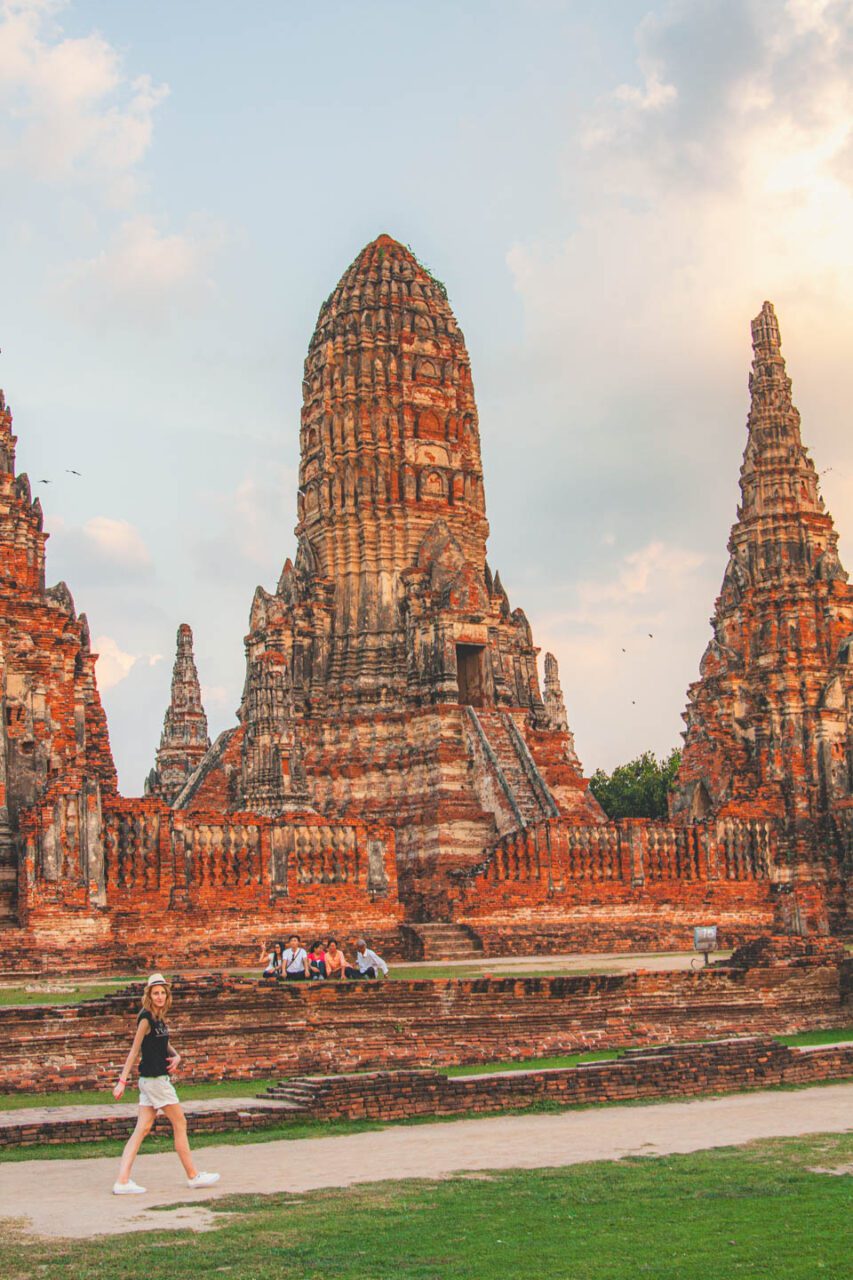
I saved Wat Chaiwatthanaram for the end of my temple route. Late afternoon turned out to be a lovely time to visit.
The warm light brought out the color of the bricks, and after several hours of sightseeing, I was happy to take my time walking around the final complex.
Built in 1630 during the reign of King Prasat Thong, the temple is known for its tall central Khmer-style prang, surrounded by smaller structures.
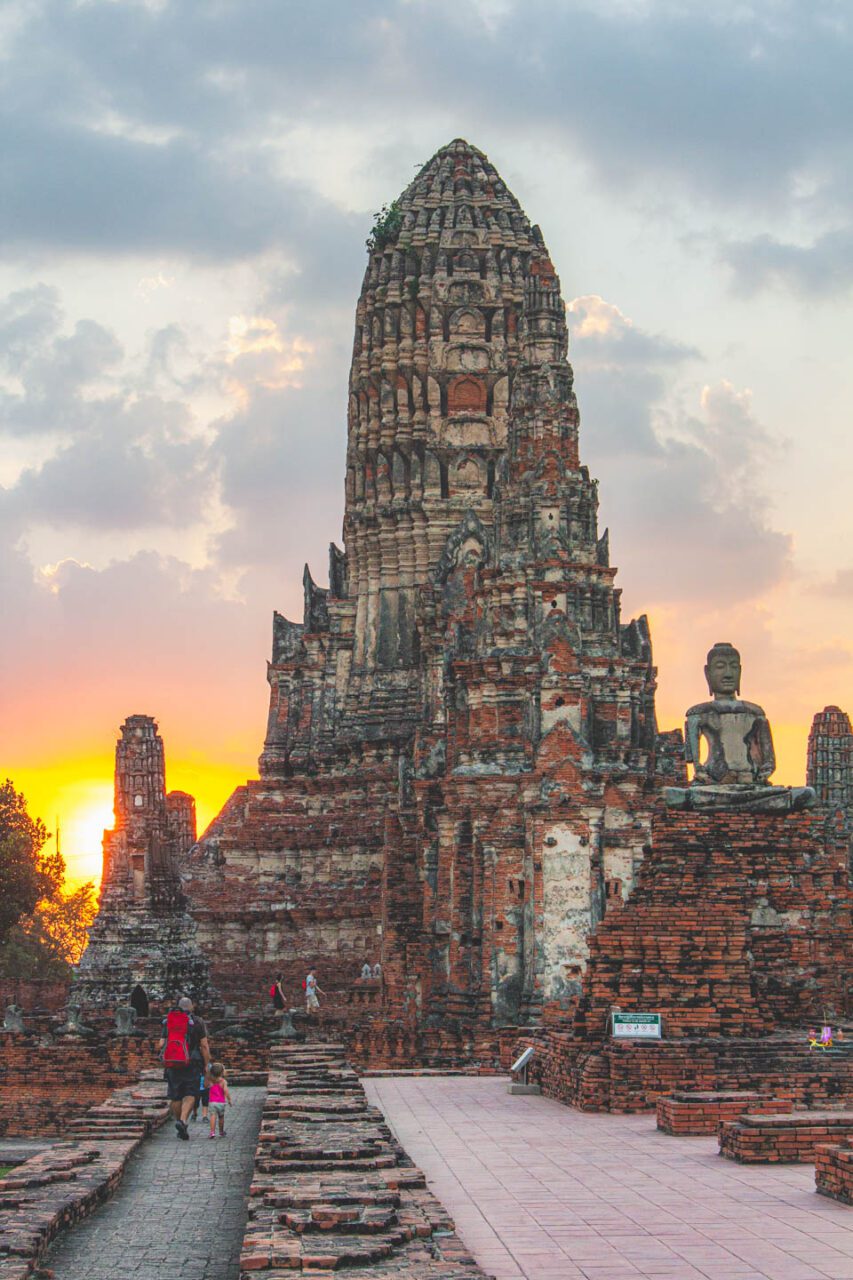
The Khmer influence is easy to notice in the layout and shape of the towers. They may remind you of the temples at Angkor.
Walk around the grounds before settling on a spot for photos. Different viewpoints reveal other parts of the buildings and rows of surviving statues.
Its location beside the Chao Phraya River adds to the appeal. The water and late light made this one of my favorite places to finish the sightseeing portion of the day.
How to Get to Ayutthaya from Bangkok
By Train
I chose the train and enjoyed the journey. It was inexpensive, and once we left Bangkok, I could sit back and watch the towns and scenery outside.
Trains to Ayutthaya depart from Hua Lamphong and Krung Thep Aphiwat Central Terminal, depending on the service. Local trains run from Hua Lamphong, while Krung Thep Aphiwat serves faster long-distance trains, among other services.
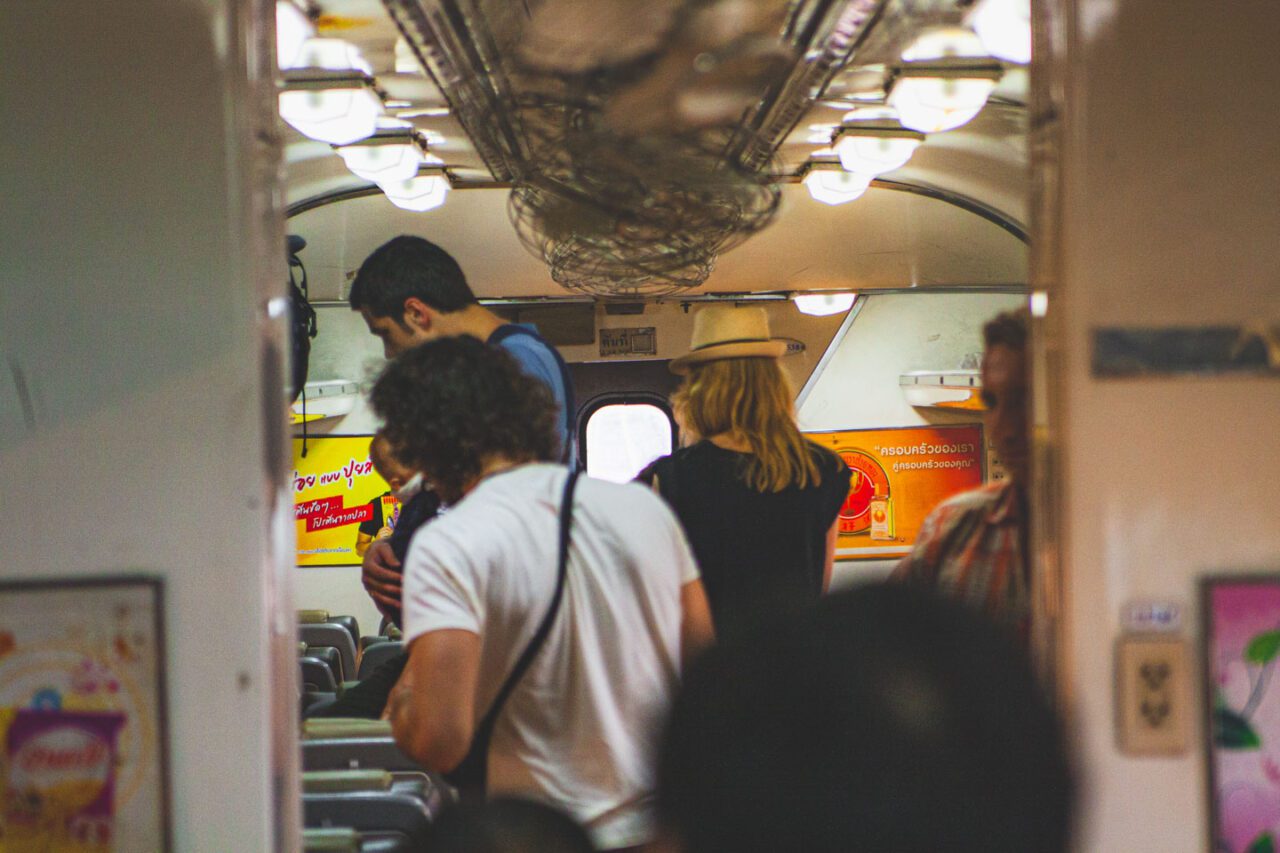
Approximate one-way fares:
- Third class without air conditioning: around 15-20 THB on the cheapest local and rapid services.
- Second class without air conditioning: around 61 THB on a rapid train.
- Air-conditioned and express services: higher fares, depending on the train and class.
Travel time: generally around 1.5-2 hours on a local train, with some faster services taking about an hour.
For a short journey, a basic carriage without air conditioning can be a reasonable choice if you’re comfortable with the heat. An air-conditioned seat may suit you better if comfort is the priority.
Local train tickets can be bought at the station. For a service with reserved seating, booking ahead is useful.
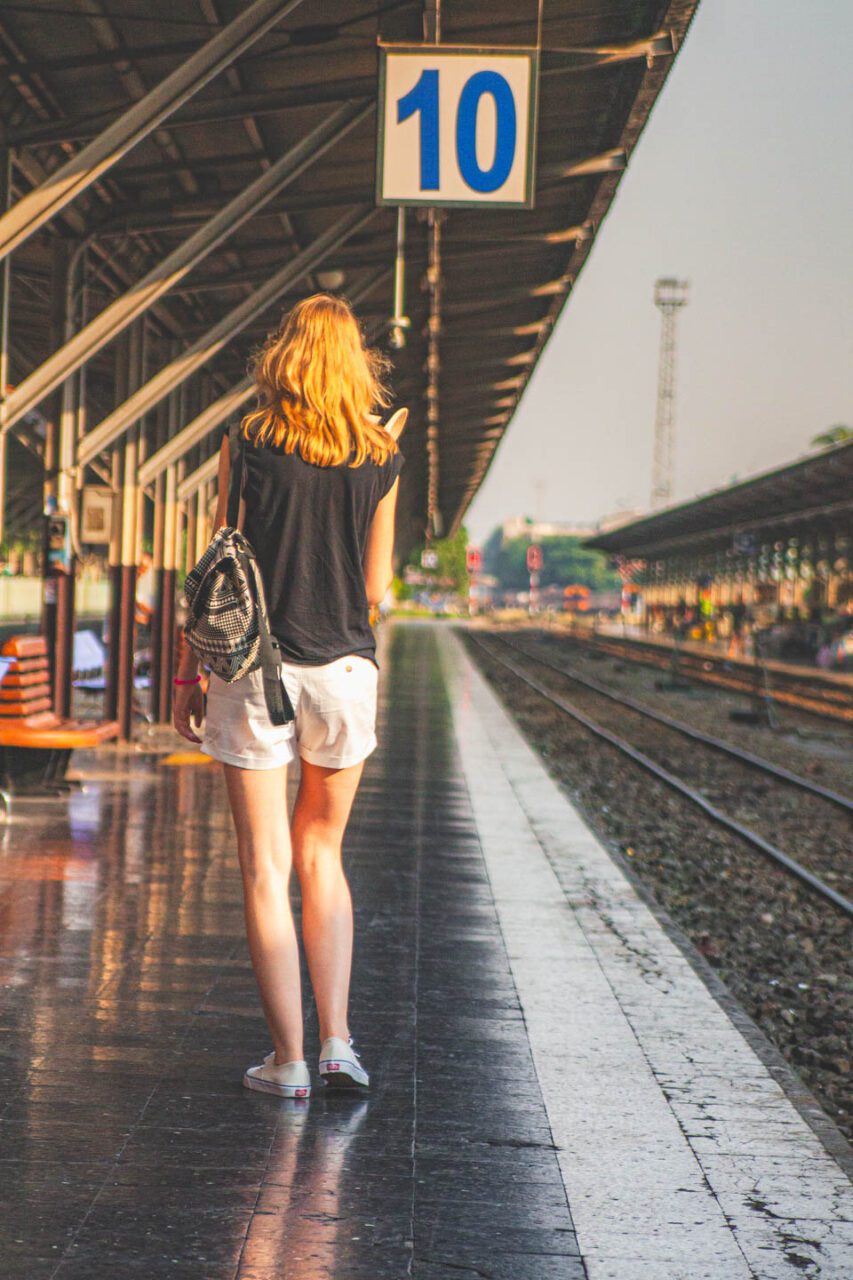
Aim to arrive about 30 minutes before departure so you have time to find the platform. Choose your return service when planning the day, too – it will help you decide how long to spend at your last stop.
By Minivan
Another option is a minivan from Mochit New Van Terminal, near Mo Chit bus station. Pay attention to the terminal name, as minivans don’t necessarily leave from the same place as larger buses.
Approximate fare: around 110-150 THB per person each way in online booking listings.
Travel time: usually around 1.5-2.5 hours, depending on the service and traffic.
A minivan can work well if the train times don’t suit your plans. Include the journey from your hotel to the terminal when comparing the options, though.
Booking ahead is helpful on weekends and holidays, especially if you’re traveling together and want seats on the same departure.
By Taxi or Private Car
For a more convenient journey, you can book a private transfer from Bangkok to Ayutthaya.
Approximate cost: around 1,500-2,200 THB per car each way, depending on the provider, pickup location, and vehicle.
Travel time: around 1-1.5 hours in light traffic, although leaving central Bangkok can take longer.
You can also hire a car with a driver for the whole day. This is a separate service from a one-way transfer and can include the return journey and transport between temples.
Agree on the time available and whether fuel and tolls are included before booking.
It can be a comfortable option if you’re traveling with several people or don’t want to cycle between sights in the heat.
I was happy with the train, but a driver makes it easier to move between the more spread-out temples.
Planning more stops around the country? My Complete Thailand Travel Guide includes practical advice for the rest of your trip.
When to Visit Ayutthaya
The cooler, drier months, generally November to February, are a comfortable time to plan your visit.
“Cooler” is relative, though. Much of the sightseeing takes place in open grounds, so water, a hat, and regular breaks are still useful.
I visited in December. The weather was sunny and dry, although there were more visitors than I expected at the best-known sites.
During hotter months, start early and consider visiting fewer temples. A shorter route gives you time to enjoy each stop without spending the whole day walking in strong sunshine.
In the rainy season, allow some flexibility for downpours. Rain doesn’t necessarily mean abandoning the day, but it can make cycling and exploring exposed ruins less comfortable.
Whatever time of year you choose, leave room for a proper meal and a rest.
A Suggested One-Day Ayutthaya Itinerary
This route groups the nearby temples together and leaves Wat Chaiwatthanaram for later in the day.
Morning
- Wat Ratchaburana: begin with the central prang and surrounding ruins.
- Wat Mahathat: see the Buddha head, then explore the rest of the grounds.
- Lunglek Boat Noodles: stop for a meal near Wat Ratchaburana.
Early Afternoon
- Wat Phra Si Sanphet: walk around the three royal chedi.
- Wat Mongkhon Bophit: visit the neighboring Buddha statue and take a short break inside.
Late Afternoon
- Wat Chaiwatthanaram: finish your temple visits beside the river.
You can include Ban Mai Rim Nam for a longer lunch or an early dinner, depending on your appetite and return plans.
If you want to stay for sunset and then have dinner, make sure your transport back to Bangkok leaves enough time for both. Otherwise, enjoy the late-afternoon light and keep the evening simple.
Treat this as a flexible route rather than a schedule to follow exactly. The heat and how long you spend at each temple will shape your day.
Where to Eat in Ayutthaya
Lunglek Boat Noodles: A Stop Opposite Wat Ratchaburana
For a meal between temples, I enjoyed Lunglek Boat Noodles, a small eatery opposite Wat Ratchaburana.
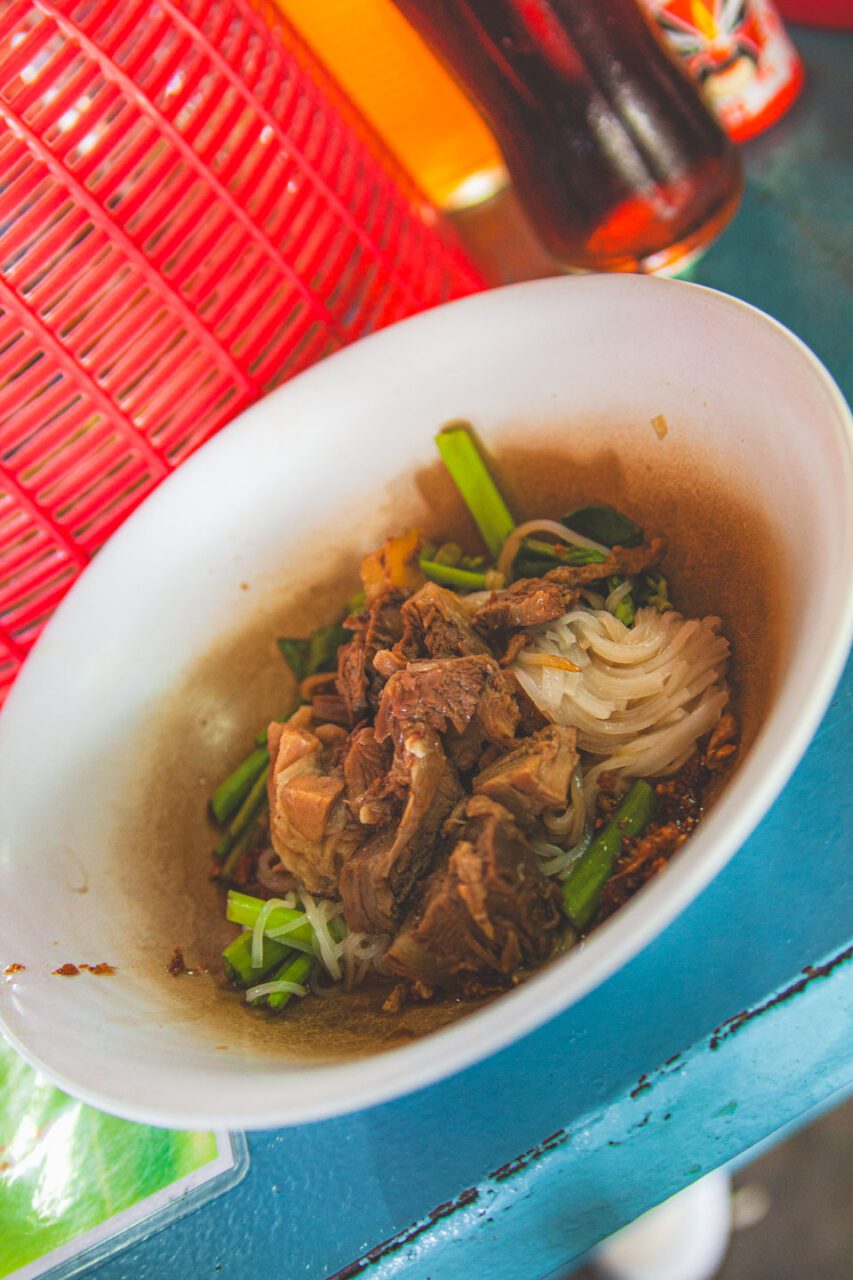
This is where I tried boat noodles: noodles and meat served in a rich, deeply flavored broth.
The portions are small, so you can begin with one bowl and order another if you’re still hungry. It’s a useful stop when you want something to eat without taking a long lunch break.
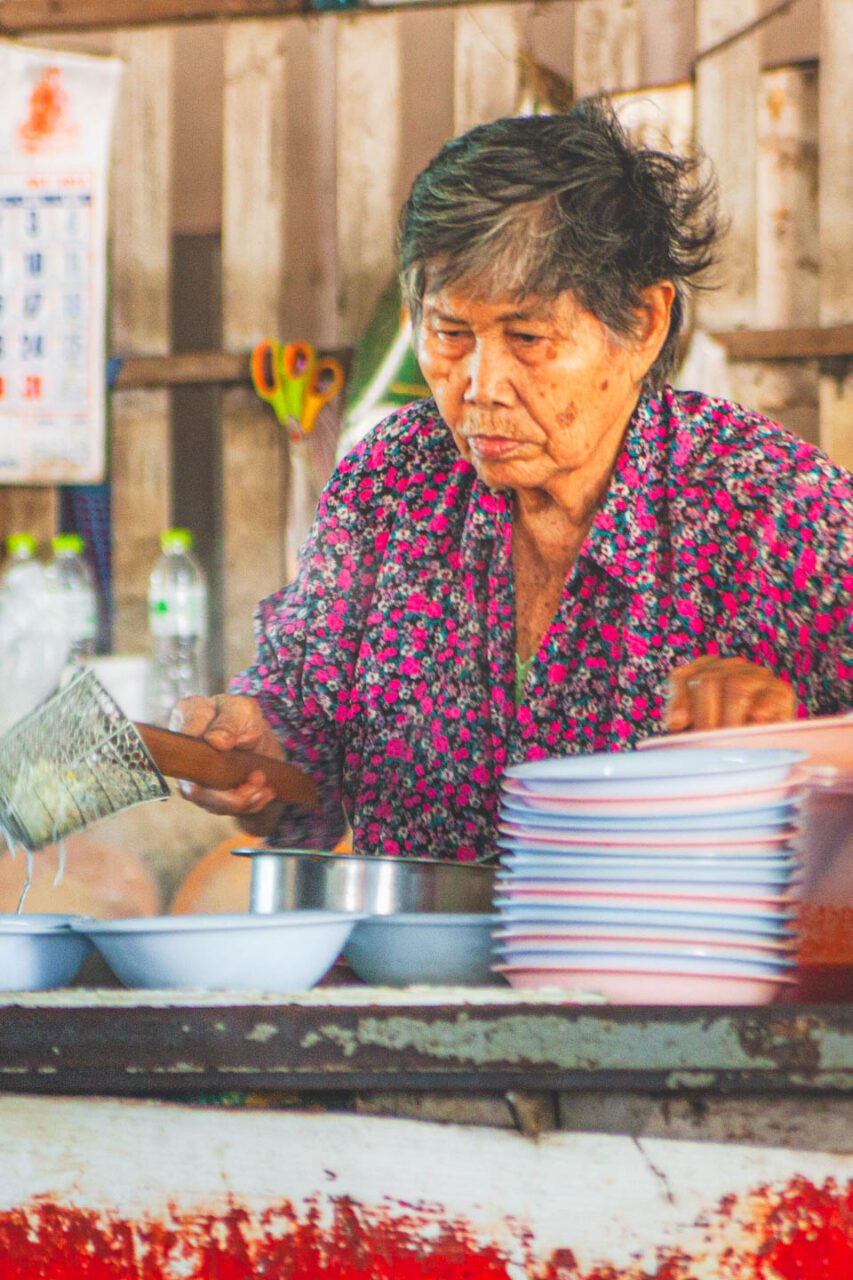
What I remember most is the broth and the straightforward setting: simple chairs, bowls arriving quickly, and a meal without much ceremony.
After visiting Wat Ratchaburana, we didn’t need to go far to find somewhere to eat. I like stops that fit naturally into the route.
For more dishes to look out for during your trip, read What to Eat in Thailand: 10 Thai Dishes Worth Trying.
Ban Mai Rim Nam: A Meal by the River
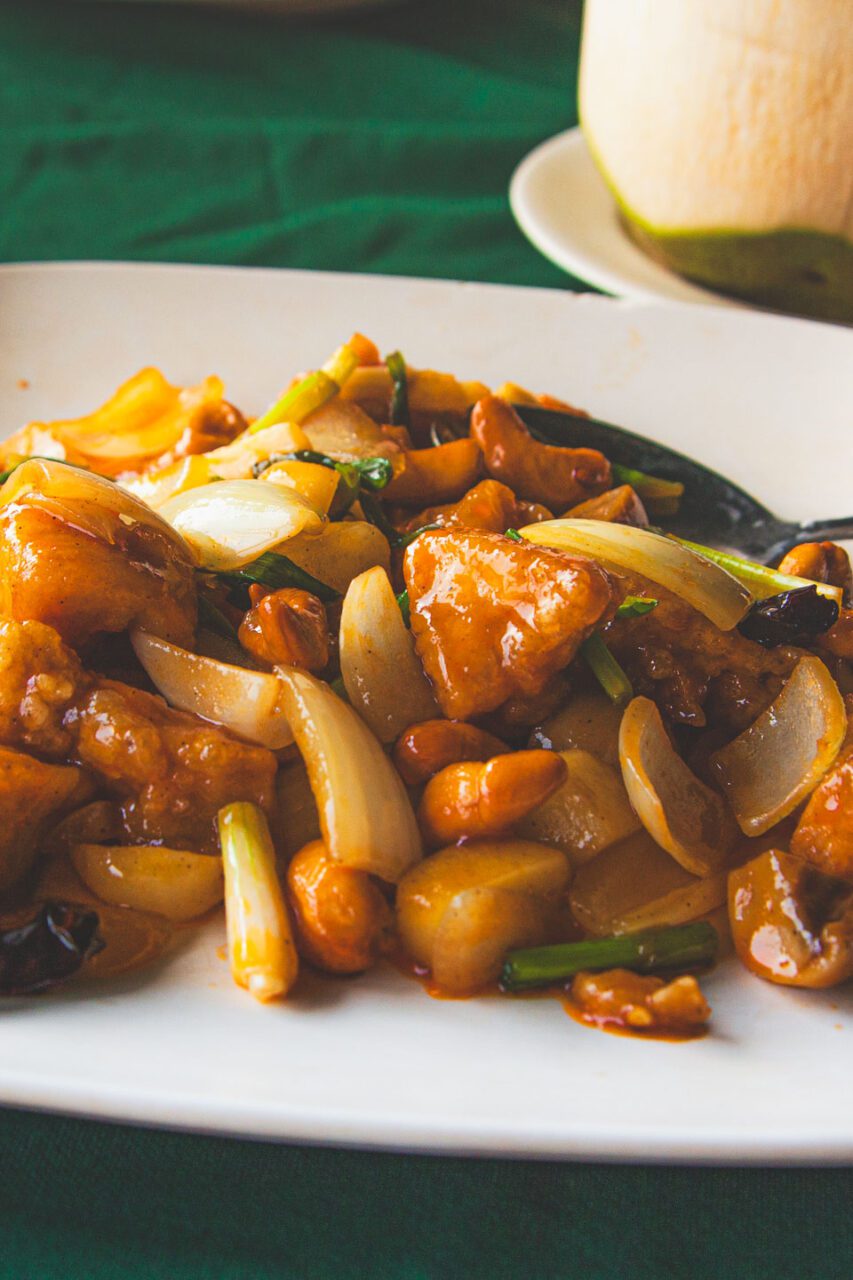
For a longer break, I chose Ban Mai Rim Nam, beside the Chao Phraya River.
After walking around the temples, it was nice to sit down and stop thinking about the next sight for a while.
During my visit, the menu included Thai dishes, curries, and seafood. A coconut drink was particularly welcome after several hours in the sun.
The riverside setting was the main appeal for me. The view made me happy to linger rather than finish eating and immediately move on.
If you’re planning a busy day, leave space for a slower stop like this. I find the remaining sights much more enjoyable after a proper break.
Looking for ideas for the rest of your trip? These guides may help:
15 Things to Do in Bangkok – sightseeing and food in the capital.
5-Day Krabi Itinerary – ideas for exploring southern Thailand.
The Ultimate Koh Samui Travel Guide – practical advice for an island stay.
Complete Thailand Travel Guide – useful information before you go.
2-Week Thailand Itinerary – a suggested route around the country.
Travel lighter, even before you leave.
start with something simple.
Download The Minimum Plan – Slow Travel:
Is an Ayutthaya Day Trip Worth It?
Yes, I enjoyed visiting Ayutthaya for the day, and I’d recommend it if you want to explore the former capital during your stay in Bangkok.
When I boarded the train that morning, I had a fairly general idea of what to expect. By the evening, I had specific memories: the tower at Wat Ratchaburana, the roots around the Buddha head, and the warm light on Wat Chaiwatthanaram’s bricks.
I also liked how different the temples felt. At one, it was the history that caught my attention; at another, the layout of the buildings or the people who still came to pray.
You don’t need to visit every historic site to have a good day here. Choose a few places, leave time for food, and take the weather into account.
That makes it easier to remember each temple individually, rather than reaching the end of the day with a blur of brick ruins.
A day trip worked well for me. If you enjoy photography, prefer a slower pace, or want to avoid returning to Bangkok that evening, you could consider staying longer.
For more help planning your Thailand trip, take a look at:
- 2-Week Thailand Itinerary – a route for a longer trip.
- 15 Things to Do in Bangkok – ideas for your time in the capital.
- 5-Day Thailand Itinerary – suggestions for the south.
- Koh Samui Travel Guide – help planning your island visit.
Have you been to Ayutthaya? Which temple did you enjoy most? Let me know in the comments. If you’re still planning your trip, I’d love to hear which place you’re most looking forward to seeing.
Save this guide for later or send it to someone you’re traveling to Thailand with.