
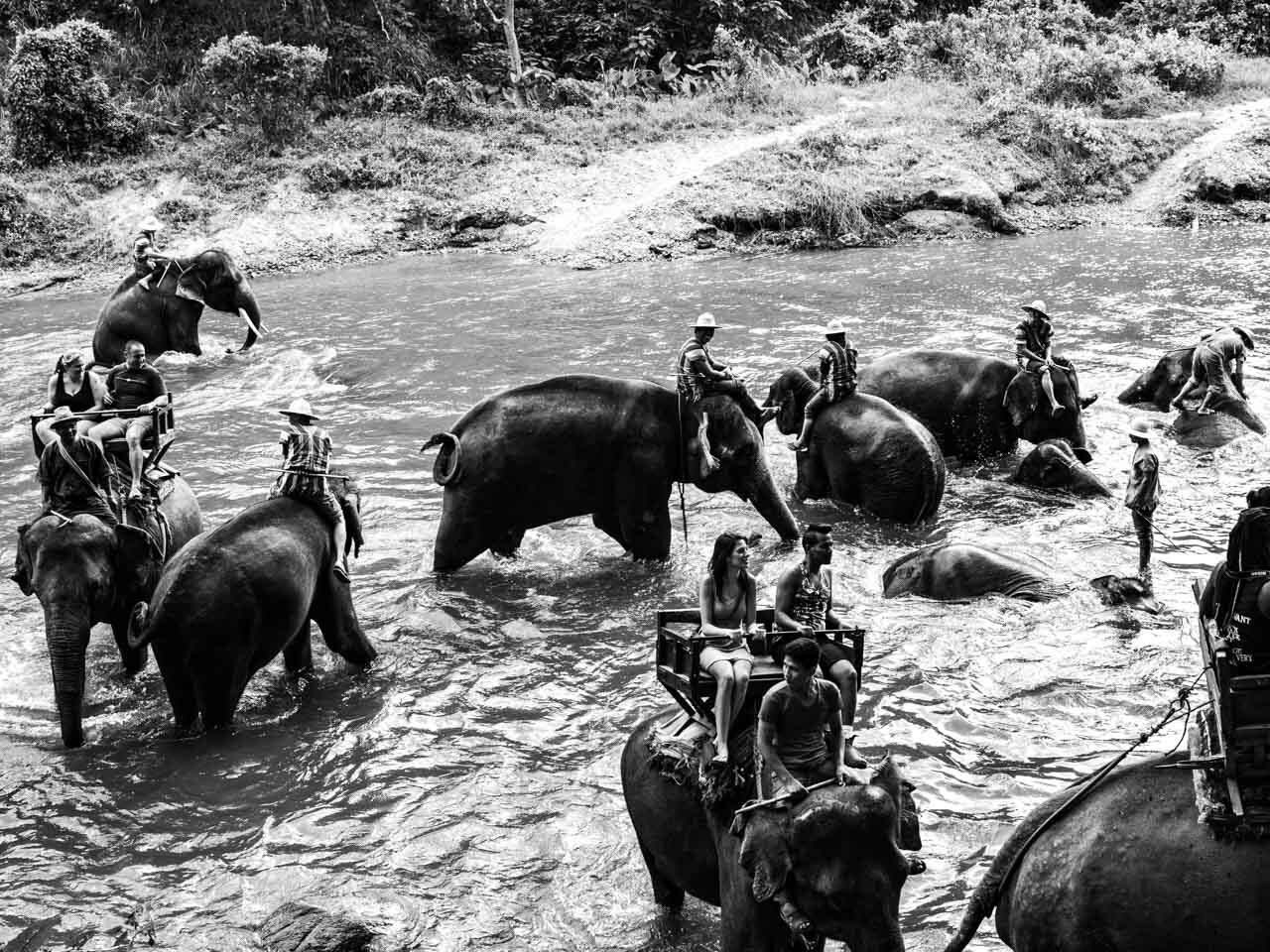
On my first trip to Thailand, riding an elephant was on my list of things I wanted to do. I imagined an unforgettable encounter with an animal I’d never seen up close. I paid for the ride and climbed into the seat on its back.
Today, I regret that decision.
Only after the ride did I begin asking questions about the elephant’s life beyond the route prepared for tourists. What happened after the last group left? How had the elephant learned to follow commands? Did it have space to move, time to rest, and contact with other elephants?
I’m writing this as someone who bought the experience herself. I’m not here to shame other travelers who made the same choice. I want to explain why I wouldn’t do it again and what I wish I’d asked before paying for my ticket.
The issue goes beyond rides. Research by World Animal Protection has found poor conditions at many elephant tourism venues in Thailand.
Bathing and hand-feeding are also often sold as ethical alternatives, even though they can still require elephants to have repeated close contact with visitors.
Planning a trip to Thailand? My two-week Thailand itinerary can help you put your route together. You can also read my guide to 10 things to avoid in Thailand for practical tips on temple etiquette, photography, and local customs.
1. I Began to Notice What Elephants Carry on Their Backs
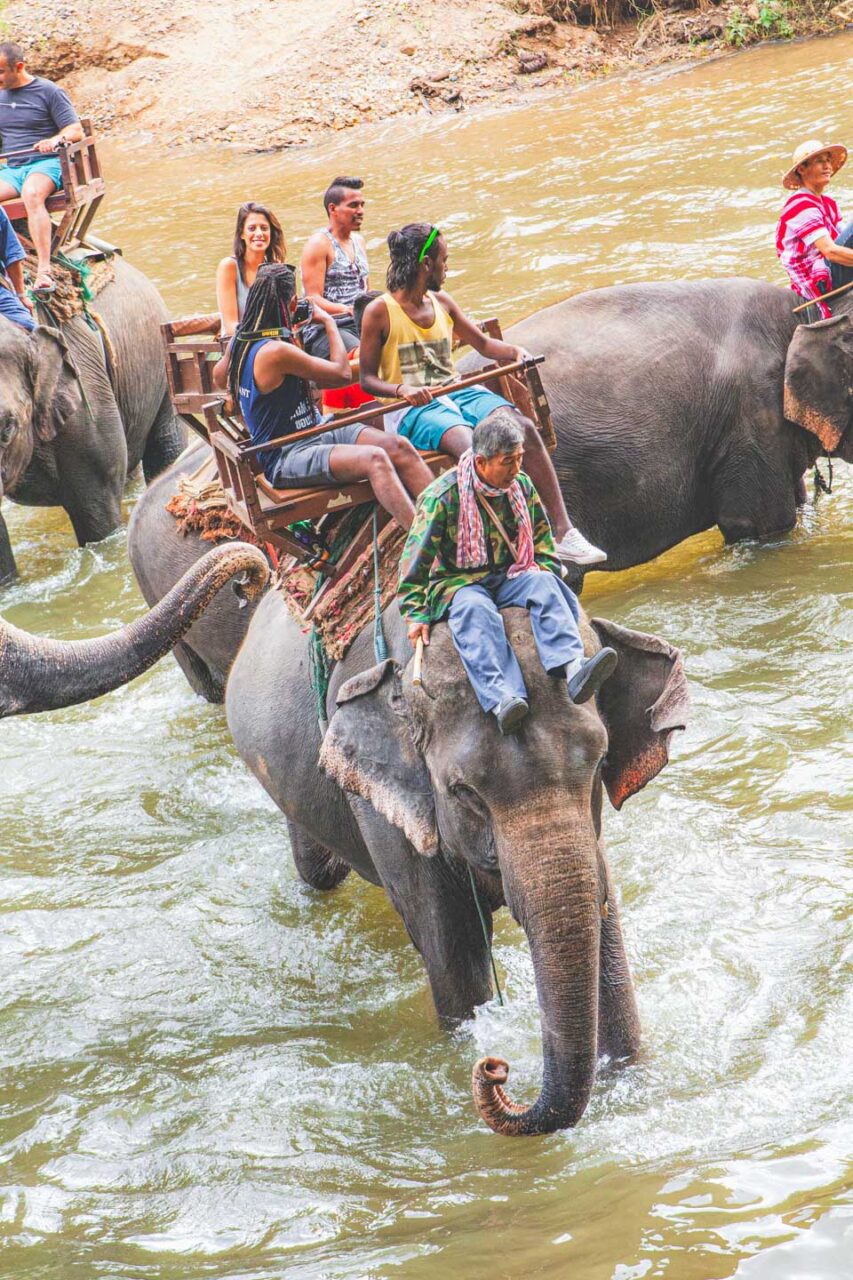
While I was riding, I was focused on the experience itself. Only afterward did I pay closer attention to the equipment placed on the elephants’ backs.
At the camp near Chiang Mai, I saw seats that looked heavy and marks where the equipment met the animals’ skin.
I’m not a veterinarian, and I couldn’t determine the cause or condition of every mark I saw. Still, it was difficult to reconcile that sight with the carefree experience I’d imagined.
I also realized that my half-hour ride wasn’t the elephant’s only ride that day. For a visitor, it’s a brief part of a vacation. For the elephant, it may be one of many trips along the same route.
I don’t need to claim that every seat causes the same injury to every elephant. What I saw was enough to make me unwilling to add another ride to an elephant’s day.
2. I Started Asking How Elephants Learn to Follow Commands
During the ride, the elephant stopped, walked, and turned when the handler directed it to. At the time, I accepted that as a normal part of the experience.
Later, I realized I should have asked how the animal had been taught to respond and what happened when it didn’t cooperate.
At one of the places I visited, I saw a young elephant restrained by a chain. I found it upsetting. A short observation couldn’t tell me the animal’s full history or exactly how it had been trained.
But I could no longer assume that an elephant standing quietly for a tourist ride meant everything was fine.
Animal welfare organizations have documented training practices in the elephant tourism industry that involve isolation, restraint, and violence.
That doesn’t mean I can assign the same history to every elephant a traveler might see. It does mean there’s good reason to look carefully at a venue before paying to visit it.

3. I Paid Attention to the Tools Used by Handlers
At the camp, I saw handlers carrying metal hooks. When I’d been focused only on the elephants and the visitors, details like that escaped my attention. After my ride, I began watching how people directed the animals.
One moment stayed with me: a handler used a hook to stop an elephant. The animal’s reaction made it hard for me to accept the explanation that the tool was only for “gentle guidance.”
I can’t claim that one visit taught me everything about every mahout or that every use of such a tool is identical. But what I saw made me want to ask how a venue controls the animals in its care.
If I were choosing a place to see elephants today, I’d want to know what happens when an elephant doesn’t follow a command.
4. I Knew Almost Nothing About the Elephant I Rode
I paid for the ride without knowing much about the elephant carrying me. Where had it come from? How had it arrived at the camp? How long had it been giving rides? What would happen when it could no longer do so?
Only later did I notice how often tourism venues use words like rescue and sanctuary without providing many details about the individual animals.
A vague website doesn’t prove that anything illegal has happened. That would be a serious conclusion to draw from too little information.
For me, though, it’s a reason to ask questions before booking. If a venue tells visitors it has rescued its elephants, I’d like to know what that means and what their lives are like now.
The word sanctuary alone is no guarantee of high welfare standards. Organizations monitoring elephant tourism have noted that venues using names such as “sanctuary” or “refuge” may still offer intensive tourist interactions.

5. Life Beyond the Ride Looked Different
As a customer, I initially saw the part of the camp set up for the activity. When I stayed longer, I saw elephants restrained with limited room to move.
I couldn’t assess every animal’s conditions over a full day. But I saw enough to understand how incomplete a picture the ride had given me. For half an hour, you look at the road and the scenery. Then you move on with your plans. The elephant stays.
Today, I’d look for information about how much time elephants spend free to move, where they rest, and how they receive water, shade, and care.
Short chains, inadequate living conditions, and insufficient veterinary care have been documented at some elephant tourism venues in Thailand.

6. My Ride Was One of Many
Only after I got down did it sink in that more visitors would come after me. What had felt like a unique half-hour experience for me was part of a repeating daily schedule.
I can’t tell you exactly how many hours the particular elephant I rode worked that day. I wrote down what I was told at the camp, but I had no way to verify its full schedule. I don’t want to present those hours as a confirmed fact.
The question still matters: how many groups does a venue welcome each day, and can an elephant rest or avoid an interaction? If an activity is offered at several fixed times, I’d want to understand how the venue balances that schedule with the animals’ needs.
Today, I’d choose an experience that doesn’t have to promise every visitor a ride, a bath, or a close-up photo.

7. Elephants Need Other Elephants
I saw elephants standing apart despite being fairly close to one another. I particularly remember one reaching its trunk toward another elephant it couldn’t quite touch.
I don’t know how long they were separated or whether they had opportunities to interact later. But that moment made me ask a question I hadn’t considered before the ride: could these elephants form and maintain relationships with one another?
Elephants are social animals. Limited contact with other elephants is among the welfare concerns identified in research on tourism venues.
Good conditions now mean more to me than a large enclosure in a promotional photograph. I’d want to know whether the elephants can use that space and choose when to approach or move away from one another.

8. Feeding Isn’t Automatically a Harmless Alternative
I remember watching visitors hand elephants one serving of food after another. At the time, it looked like a kind way to connect with the animals.
Today, I’d wonder how many groups do the same thing each day and who controls what the elephants are given.
I couldn’t tell by looking exactly how much one elephant ate or whether its health was affected. I shouldn’t present guesses about that as facts.
I would ask about the activity itself. Is tourist feeding part of a diet planned by the caretakers? Can the elephant walk away? Is every visitor promised the chance to feed it, regardless of what the rest of its day has been like?
These questions matter even at venues that don’t offer rides. Close interactions, including feeding and bathing, have become popular alternatives to elephant rides.
Calling them ethical doesn’t remove the need to examine the animals’ living conditions.

9. I Began Thinking About Elephants That No Longer Give Rides
At the camp, I noticed an older elephant moving differently from the others. When I asked about it, the answer didn’t put my mind at ease. I can’t tell you what medical condition it had or what care it received outside the moment I witnessed.
But it made me realize that it’s worth asking about the animals you don’t see participating in a venue’s activities.
Does the place care for elephants that are old or ill? Can they receive veterinary treatment? What happens when they can no longer take part in any visitor program?
I wouldn’t assume that an older elephant standing alone is necessarily neglected. It may have particular needs. I would, however, want a venue to be able to explain how it cares for that animal.

10. The Ticket Price Didn’t Tell Me What I Needed to Know
I paid 1,500 baht for a thirty-minute ride. I remember the amount because, at the time, I was mainly asking myself whether the experience was worth the money.
I wasn’t asking whether I wanted to pay for that kind of encounter with an elephant at all.
That’s the part of my decision I return to now. I bought a ticket without understanding the animal’s living conditions or the methods that made the ride possible. My intentions weren’t cruel, but I hadn’t asked enough questions.
A high ticket price doesn’t tell you whether a venue calling itself a sanctuary is good for elephants, either.
A polished website can’t replace clear information about daily care, space, relationships between animals, and the rules governing contact with people.

How Can You See Elephants in Thailand Without Riding Them?
After that experience, I began researching places where I could observe elephants without rides or shows. I haven’t visited the alternatives I found, so I don’t want to recommend a particular sanctuary based only on its website or photos.
If you’re considering a visit, check its current program and ask how the elephants spend their days:
- Does the venue offer rides or performances?
- Does the visit include bathing, hand-feeding, or posing for photos?
- Can elephants move away from visitors?
- What space, veterinary care, and contact with other elephants do they have?
- Is the information about individual animals clear and up to date?
The current World Animal Protection elephant-friendly tourist guide is one place to begin your research. The organization recommends experiences centered on observing elephants without requiring close contact.
Travel lighter, even before you leave.
start with something simple.
Download The Minimum Plan – Slow Travel:
Why I’m Telling You About a Ride I Regret
It would be easier to write that I knew what to avoid from the start. I didn’t. I rode an elephant, paid for the experience, and only afterward began to understand how much I hadn’t checked.
I can’t undo that choice. I can talk about it honestly, so someone planning a similar activity might ask those questions earlier than I did.
If you’re putting together a trip, you may also find my two-week Thailand itinerary and guide to things to avoid in Thailand helpful.
Have you ever changed your mind about a travel activity after trying it?
Do you know other examples of tourism that harms animals? Share your experiences in the comments.
If this article opened your eyes like my experience opened mine, share it with other travelers. Together we can change tourism for the better.
I would love to visit Thailand someday and see the elephants in their native habitat. I would never ride one though for all the reasons listed. They are such smart and amazing creatures I’d hate to see them resigned to that!
Elephants are indeed very intelligent. I’ve heard stories that they have extremely good memory so they can remember things for entire life!
This is a great article! It always hurt me to see people on elephants. I never thought it was something I wanted to experience. I don’t even really visit any zoos when travelling. If I were to do an excursion involving animals, it would have to be a safari where I’m still away from the animals and hopefully not distrubing them for too long. Thanks for sharing x
http://www.lynnmumbingmejia.com
I would love to go to safari to see the “big 5” of african animals in their natural habitat 🙂
I love this post! I absolutely adore elephants and it makes me cry every time I see people riding them on my travels 🙁 It breaks my heart.
Did you visit a true ethical sanctuary in Chiang Mai? I’ve been researching and Elephant Nature Park in Chiang Mai rescue elephants who are old and sick and bring them back to health. They have a ‘saddle off’ initiative to educate others of the affects of riding elephants. I’ve followed them for a while but I want to make sure that they are truly ethical before visiting.
Unfortunatelly when we’ve been in Thailand few years back we haven’t been educated well on that topic and we’ve chosen other. Once we’ve seen how they treat them in “bad” camp I’ve decided to write about it, so other’s can make informed decision.
In this post: https://runawayann.com/en/blog/2017/04/11/chiang-mai-elephants-rafting-and-night-bazaar/ I’m recommending Elephant Nature Park as one of the good ones.
I have never ridden an elephant, and now I will never ride one. A great and heartfelt post. Thanks for sharing it.
I’m glad that the post was helpful 🙂