
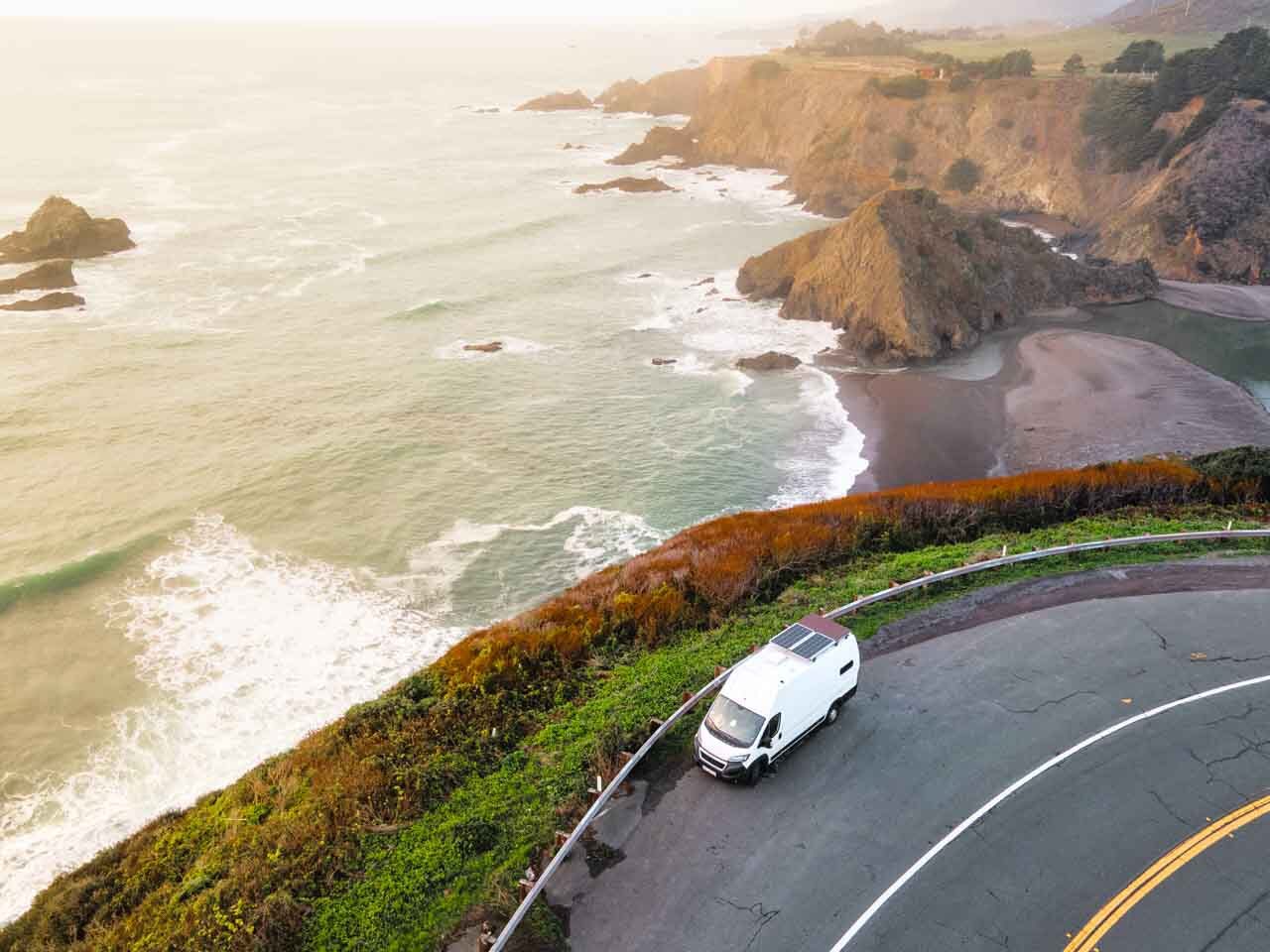
I used to plan my road trips like a checklist.
More places. More stops. More things to “see.”
On paper, it all looked perfect.
In reality, I spent most of my time watching the clock. Driving more than actually feeling the places I was in. Arriving in beautiful spots… already exhausted.
And I remember the moment I thought – is this really the point?
It took me a few years of traveling across the U.S., living in a van, and making every possible mistake to understand something very simple:
A good road trip isn’t about how much you see. It’s about how much space you leave for yourself.
A USA road trip is one of the most beautiful ways to travel – and one of the easiest to get wrong.
And that’s exactly why the way you plan it matters more than the route itself.
If you’re wondering how to plan a USA road trip without overloading it or burning out – this is my way of doing it.
Tested in real life, over years of doing it wrong first.

Who this way of traveling is for
This isn’t for everyone.
It’s for you if:
- you don’t like rushing and would rather feel a place than just check it off
- you’ve come back from a trip more exhausted than when you left
- you feel like others are seeing more, but you want to feel more
- you’d take one evening you truly remember over ten that blur into each other
If you’re nodding right now – you’re in the right place.
Why most road trips don’t work
Most road trips fall apart before they even begin.
Not because the route is bad. Not because the places aren’t worth seeing.
But because we try to fit too much into too little time.
A USA road trip gives you incredible freedom – but it’s also very easy to fall into the trap of an overloaded itinerary. And that’s when that freedom turns into just another thing to manage.
We plan our trips the same way we plan busy weeks – packing, optimizing, trying to make the most of everything.
Three national parks in five days. Sunrise here, sunset there. A quick stop “since we’re already nearby.”
At first, it’s exciting.
But somewhere halfway through, something shifts.
Too many places in too little time
When you have ten stops in ten days, you’re somewhere new every day. Every day you’re unpacking and packing again.
Every day you’re learning a new place, looking for parking, trying to figure things out.
That’s not travel. That’s logistics with a view.
Planning like a checklist
There’s something in human nature that makes us want to check things off.
This park – done. That canyon – done. On to the next.
But places aren’t items on a list. They’re experiences. And experiences take time.
You can’t truly feel Zion in two hours. You can’t understand Monument Valley just by passing through.
The constant “let’s just see one more thing”
I know this feeling.
You’re in a beautiful place, but you already know you’ll be leaving in an hour. So you’re not fully there.
You’re already on your way to the next stop.
And then you come back home with hundreds of photos and this quiet feeling that… something is missing.
A full trip isn’t the same as a fulfilling one. It’s still a road trip. Just not the one you were hoping for.
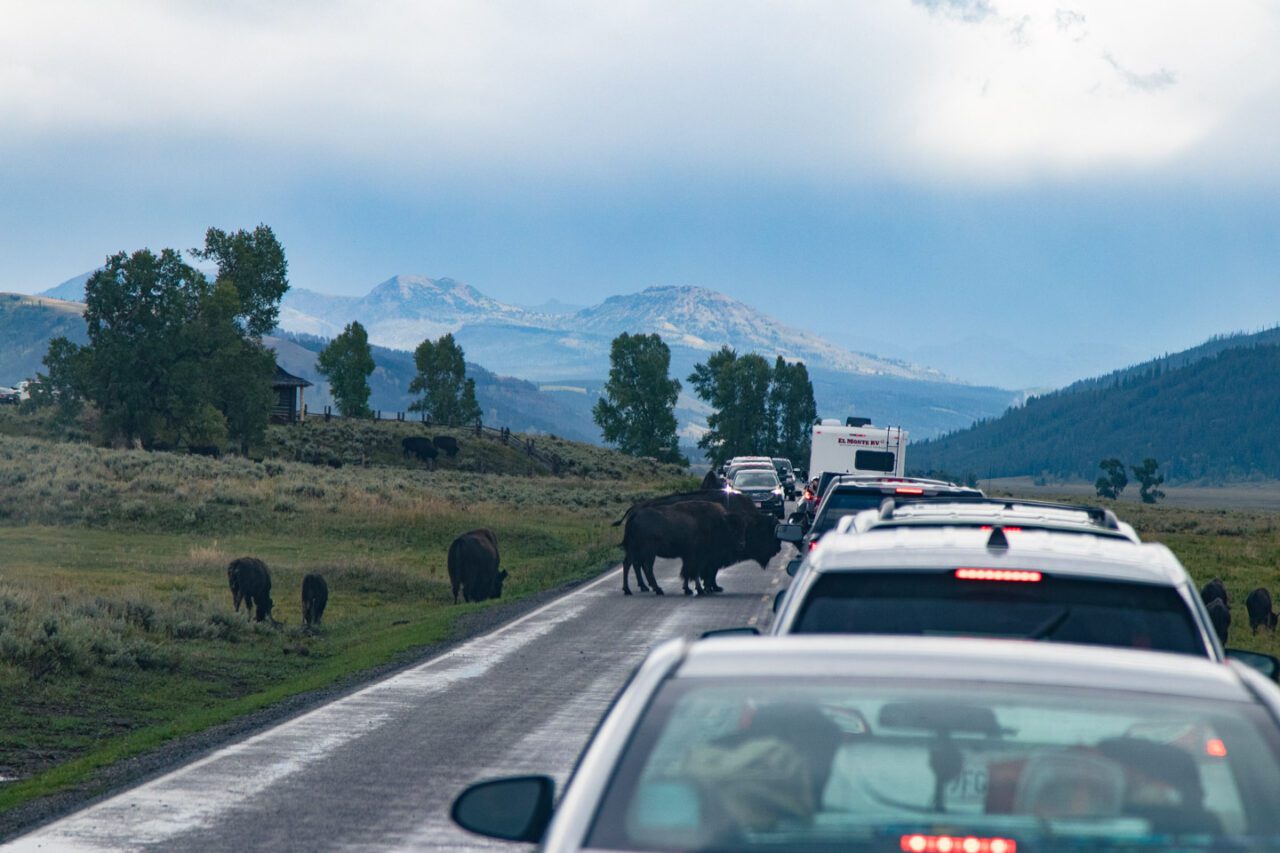
How I plan a USA road trip now (without rushing)
I don’t try to see everything anymore. I choose less – on purpose.
Fewer stops. More time in one place. More space in between.
I started thinking about road trips not as a list of points, but as a rhythm.
A slow morning somewhere quiet. A longer stop that wasn’t in the plan. An afternoon without a specific goal.
Some days are simple. Some feel almost empty.
And that’s exactly why the whole trip starts to feel full.
Because when you stop rushing forward, you finally start being where you are.
And only with time did I understand what wasn’t working before.
Fewer places, more time – how not to overload your USA road trip
There’s one more thing I see all the time – itineraries that were never meant to work in the first place.
I used to do the same. I would write down everything I “had to see.”
Now I know that if your list goes beyond 15-20 places for a 2–3 week trip, something is off.
Not because it’s impossible. But because at that point, you start checking things off instead of actually experiencing them.
Two or three main stops per week is my standard now.
It sounds like very little. But when you spend three days in one park, you start noticing things that people rushing through in a day will never see.
The light at sunrise. A trail that’s not on any “must-see” list. A conversation by the fire.
That’s what stays with you.
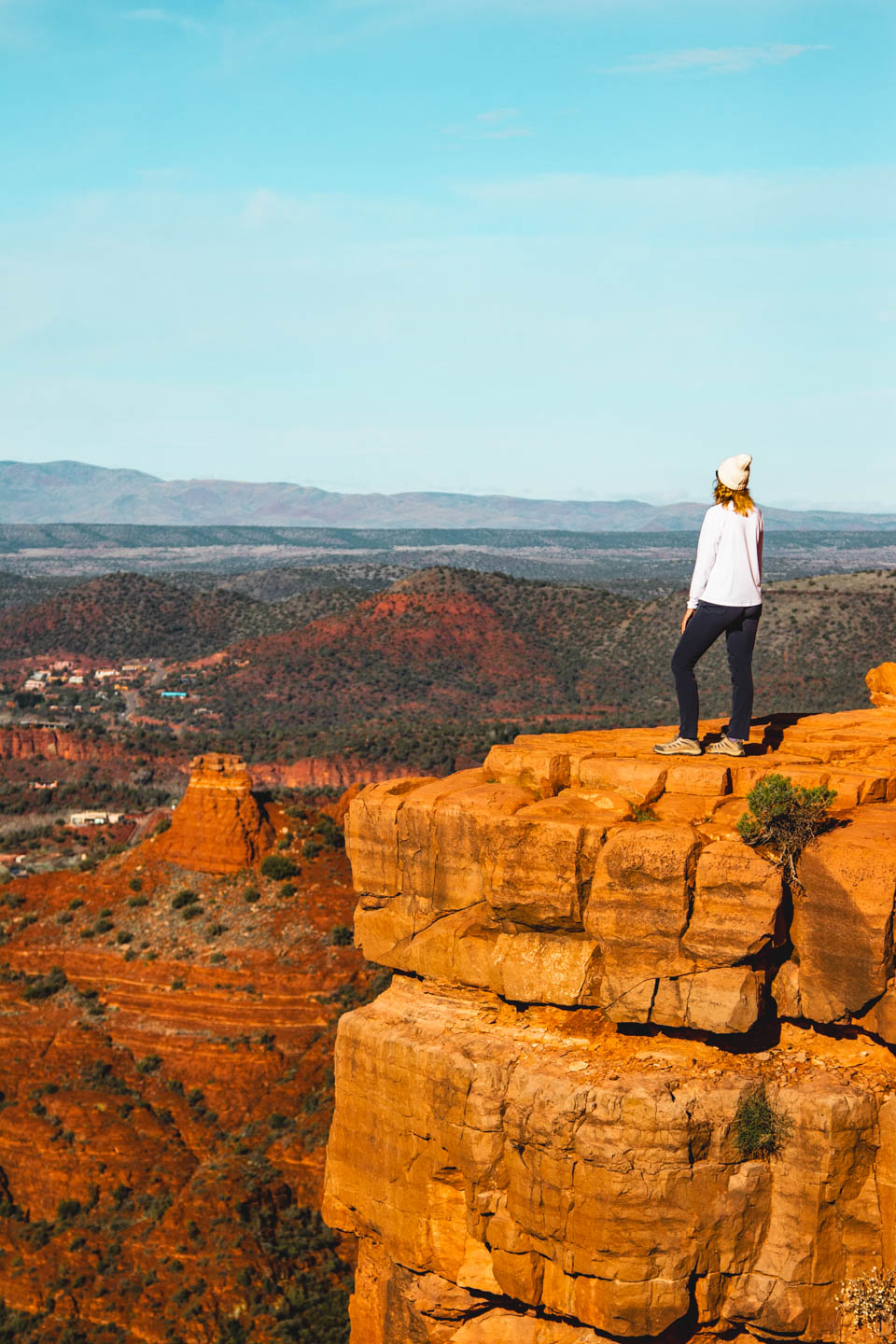
One place = one experience – how to truly feel a place in the USA
I stopped treating every stop as something I had to see. Instead, I started asking myself: what do I want to remember from this place?
One evening in Monument Valley, watching the sunset, told me more about that land than an entire day of objective sightseeing ever could.
My Monument Valley guide came out of staying longer like that – I wrote about the things I only noticed once I stopped rushing.
Leaving space in your plan – why it matters
Now I intentionally leave “empty” days. I don’t plan every hour.
Maybe I’ll drive somewhere spontaneously. Maybe I’ll stay at camp and read. Maybe I’ll find something that isn’t on any map.
That space isn’t wasted time. It’s the best part of the trip.
The best moments are never planned anyway.
Rhythm instead of a checklist – how to plan without overplanning
A good road trip has its own rhythm – like breathing. A day in motion, a day of stillness. An intense hike, followed by a slow afternoon with coffee.
When I start to feel that rhythm, I know I’m on the right path.
If You Want to Travel More Slowly
If this pace resonates with you, I’ve put together a free guide called “The Minimum Plan” – with five simple decisions that genuinely make your travel plan lighter.

How to plan a USA road trip – practically
Alright, let’s get into the details.
The philosophy matters – but you still need a plan. The difference is, you can plan it in a smarter way.
The first days: pace and jet lag
There’s one thing that’s very easy to ignore when planning – jet lag.
In the first few days, you wake up at 5 a.m., it feels like you have more time,
but your body is still somewhere else.
This is not the moment for ambitious plans or intense sightseeing.
It’s the moment to slow down even more.
How many days you really need
This is one of the most common questions when planning a USA road trip –
and also one of the most misunderstood.
Forget how much you can see in seven days.
Start with a different question: how much time do you want to spend in each place?
It often feels like you need to see as much as possible to make the trip “worth it” –
but that’s exactly when the rushing begins. And that’s when it stops being enjoyable.
If you want to see the Grand Canyon, Utah, and Sedona – you need at least ten days. And even then, you’ll be making compromises.
My rule: it’s better to cover less ground and truly feel it than to cross half a continent and come back exhausted.
If you only have a week – choose one region. A week in Arizona is a route I can recommend with complete confidence.
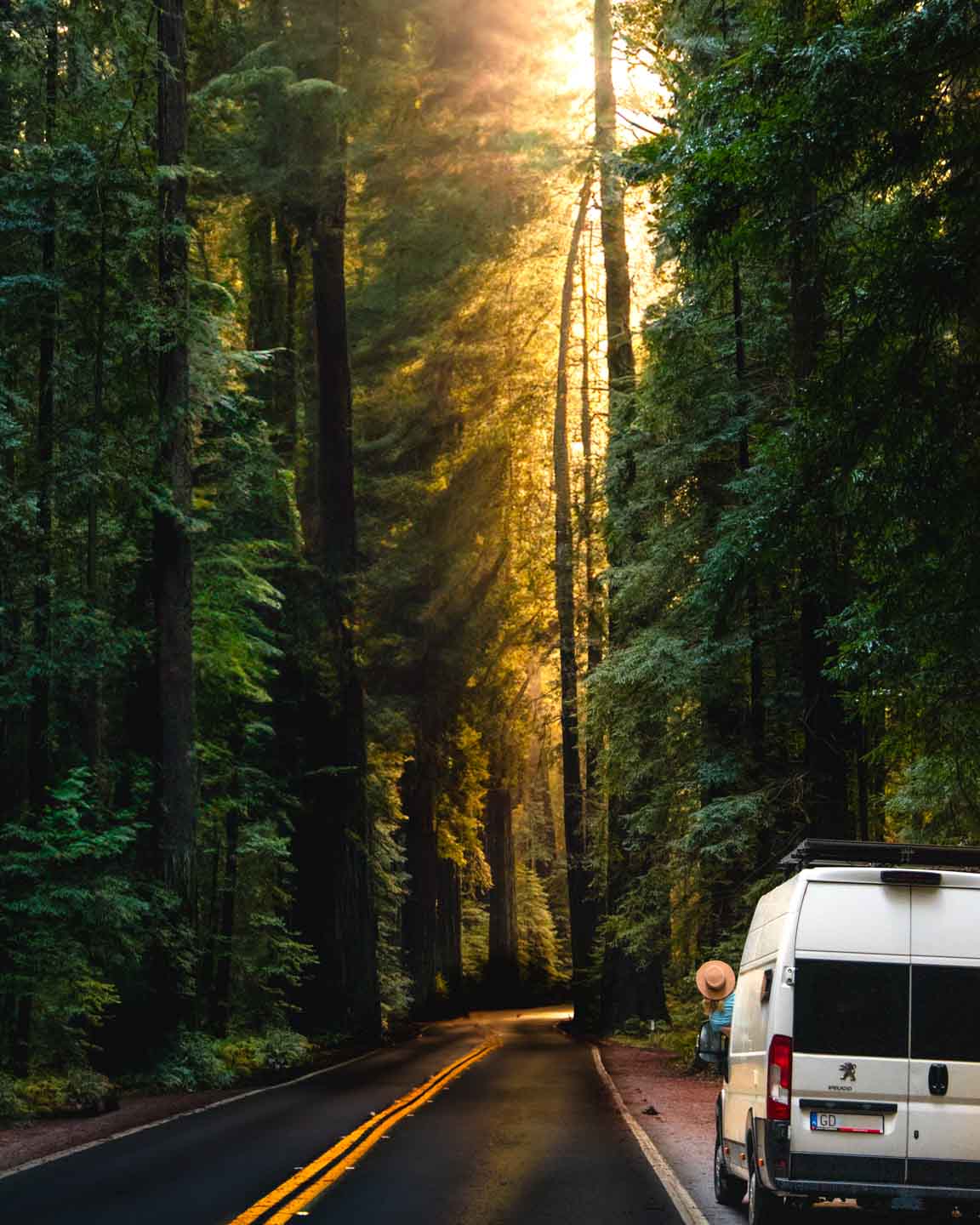
How many hours of driving per day actually make sense
This is one of the most important parts of planning – and often what decides whether your trip feels enjoyable or exhausting.
My limit is 3-5 hours behind the wheel. Not because I can’t do more – but because of the quality of the experience.
When you drive 8 hours, you arrive tired, eat whatever is available, go to sleep, and leave again in the morning.
You don’t remember anything except the highway.
With 3-4 hours of driving, you still have an open afternoon. You can go for a walk, sit somewhere and take it in. Have a good meal. Just be.
In the U.S., this really makes a difference – distances are not the same as in Europe, and it’s easy to underestimate them when planning.
My rule in numbers:
- 3-5 hours of driving per day – maximum
- at least 2 nights in one place
- max 1-2 stops per day
I remember one day in Utah when I drove for six hours, and the only thing I remember is a gas station and coffee in a styrofoam cup.
The U.S. is big. The distances are different. Plan for that honestly.
How many stops is too many
One, maybe two stops per day.
And that doesn’t mean two national parks.
It means one real stop – and maybe one short break along the way. A scenic viewpoint. Or even a gas station with a desert view.
Anything more than that starts to feel like chasing.

How to choose your route
This is where many people start overcomplicating things – when in reality, it’s the moment to simplify.
I always pin everything on a map – not to follow it exactly, but to see what it actually looks like.
How far the places really are. Where things suddenly get empty. Where it might be worth staying longer.
A map brings your plan back to reality very quickly.
Loop vs. one-way route
This is the first question worth asking.
A loop is easier logistically. You return to where you started, and you don’t have to worry about dropping off your car in a different city.
A one-way route can be more beautiful – you’re constantly moving forward, the landscape changing like a film.
But it takes more planning, and it’s often more expensive due to one-way rental fees.
My advice: don’t overcomplicate it.
One main route, a few detours, and plenty of space in between.
A 7-day Utah road trip is a great example of a route that works well for a first trip –
you get to see different places, but without chaos or rushing.
But if you want to travel more slowly, it’s worth shortening even that route and staying longer in fewer places.
Where to stay (realistically)
You have a few options – and each comes with its own trade-offs.
- Hotels and motels – comfort, a shower, a proper bed. They’re not the cheapest, but after a long day of driving, they can feel priceless. In smaller towns, you can often find a room for $80-120, but in popular areas, prices usually start around $120-150.
- Airbnb – a good choice if you’re staying a few nights in one place. You get a kitchen, more space, a slower rhythm. Less practical if you’re moving every day.
- RV or campervan – that’s where a different kind of story begins.
Campervan road trip – what it really looks like
This is my favorite question – because this is where I have the most to say.
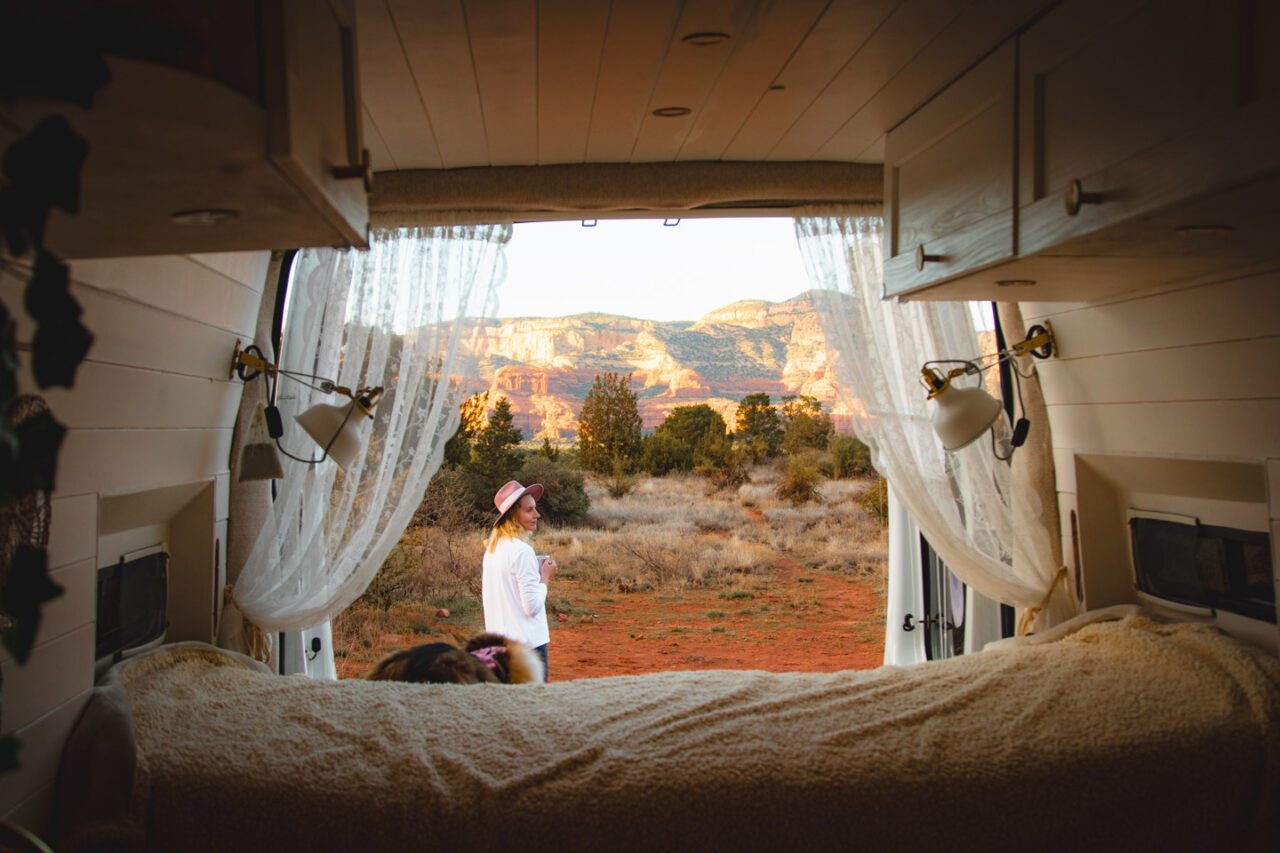
For a few years, I traveled in my own van – coming back to it at different times, on different routes.
We built it together with my husband and drove it across the American Southwest – through deserts and national parks.
And I know how romantic it looks from the outside.
I also know how rarely people talk about the hard parts.
Where to sleep in a van in the US (BLM, campgrounds & reality)
When we traveled in our van, we relied on something that doesn’t really exist in Europe at this scale – BLM land.
BLM, or Bureau of Land Management, refers to public federal land where you can camp for free.
The deserts of Arizona, Utah, New Mexico – these are vast, open spaces where you can simply pull over and stay for the night.
Then there are campgrounds – in national and state parks, paid lots with basic facilities, and private campgrounds with electricity and showers.
We usually mixed both. Three nights on BLM land, one night at a campground with a shower.
That’s what it looked like for us in real life.

How to find places
When we traveled in our van, we mostly used apps like iOverlander, FreeRoam, and Campendium. You check the map, read reviews from other travelers, and pick a spot.
But sometimes, you just drive and see what you find.
That was my favorite way.
You turn onto side roads, wander a bit, until something feels right – a quiet spot, a view from the window, maybe a sunset.
And somehow, those are always the places you remember the most.
What’s hard (and what no one tells you)
A campervan means freedom. But it also means constantly managing your resources.
Water. Power. Where to empty your tanks. Where to charge your laptop before work the next day. Where the nearest store is when you’re down to two eggs and half a can of beans.
In summer, in Arizona, the temperature inside your van can easily go above 100°F (38°C) if you don’t have proper ventilation.
Winter in Utah means snow on the roof and frozen pipes.
This isn’t glamping.
This is living on wheels – with all the reality that comes with it.
If you’re wondering where to actually stay during this kind of trip – BLM land, campgrounds, off-grid spots, what truly works – I’ve broken it all down in detail here.
How do you want to travel the US?
🚗 Rent a car → Complete guide to renting a car in the US
🏕️ Thinking about a campervan? → 10 things to know before your van trip
🌵 Looking for a route in Arizona → An Arizona road trip I’ve actually done
🏔️ Utah & national parks → 7 days in Utah – a perfect first-time itinerary
Which one feels closer to your kind of travel?
What a slow road trip day actually looks like
So it doesn’t stay just theory – this is what a day looks like when everything starts to click.
No alarm. You wake up when you’re ready.
Coffee somewhere with a view – desert, mountains, sometimes nothing specific, and still… beautiful. Thirty minutes, maybe an hour. No phone, if you can help it.
Then a short drive – two, maybe three hours behind the wheel.
Music, or silence.
The kind of landscape you actually notice, because you’re not rushing through it.
One stop. Maybe a trail, maybe just a viewpoint. Something real – but just one thing.
An evening without hurry. A sunset you stay for until the very end – not halfway through because you need to move on.
This is it.
No checklist. No pressure to see more. Just a day you’ll actually remember.
Before you finish planning – there are still a few things that can ruin even the best route.
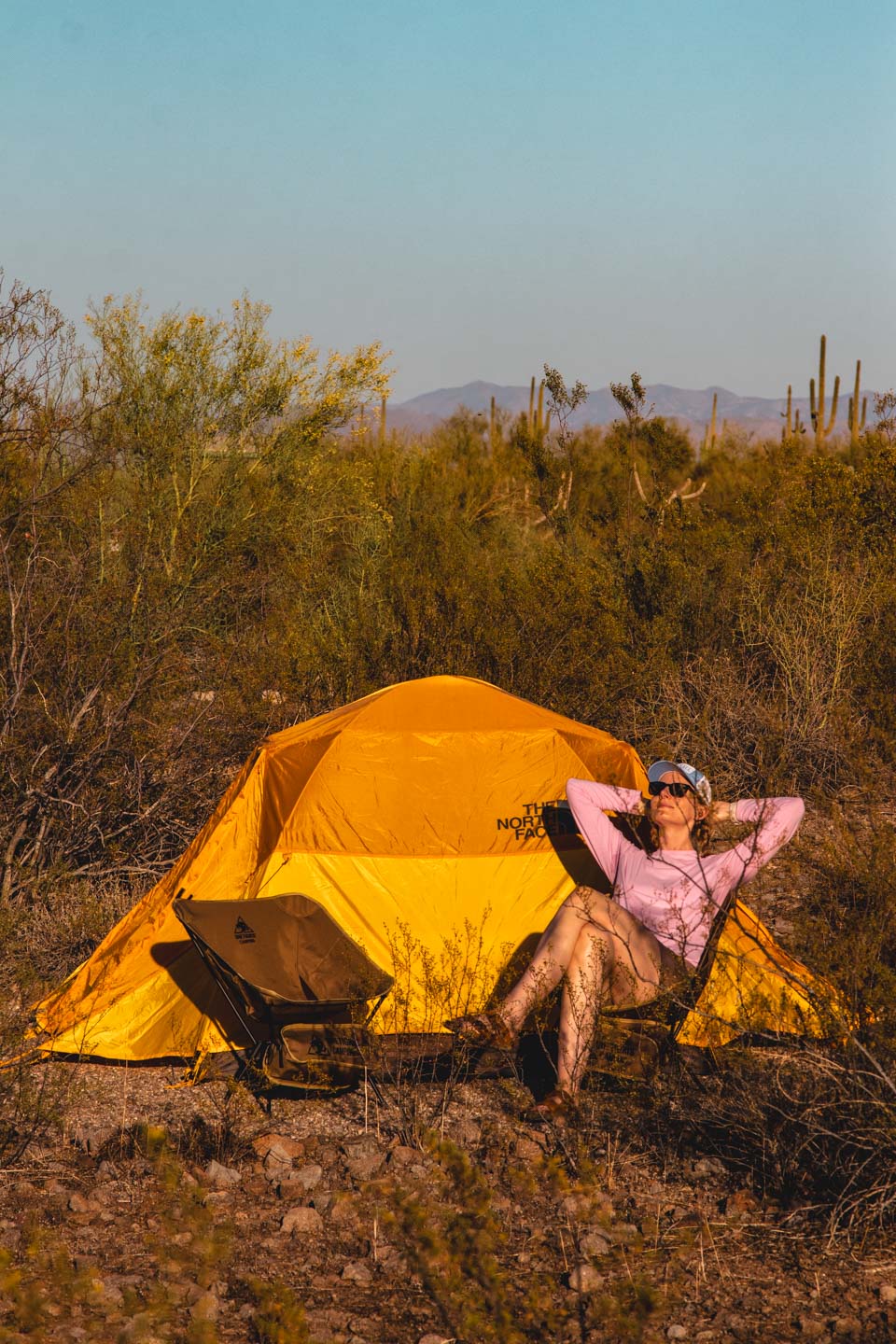
The most common mistakes when planning a US road trip
These are the ones I see most often – and the ones I’ve made myself.
Overpacking your itinerary
Ten stops in seven days. A new place every day, a new stay, constantly figuring things out.
It’s exhausting before you even get to enjoy it.
No buffer day
When every day is planned, you have nowhere to go when something goes wrong.
A flat tire. Getting sick. Or simply not wanting to move on.
One buffer day per week – that’s the minimum.
Chasing attractions
Sunrise at Bryce Canyon – and instead of sitting and watching, I was already thinking about the next stop.
That was the mistake.
Stay. Wait. Let the light change.
Ignoring your energy
In Europe, a three-hour drive can take you across half a country. In the US, it’s often just the beginning of the day.
Long highways. Repetitive landscapes stretching for hundreds of miles. Elevation that you don’t immediately feel – but your body does.
Listen to yourself. If you’re tired, stop earlier.
Underestimating distances
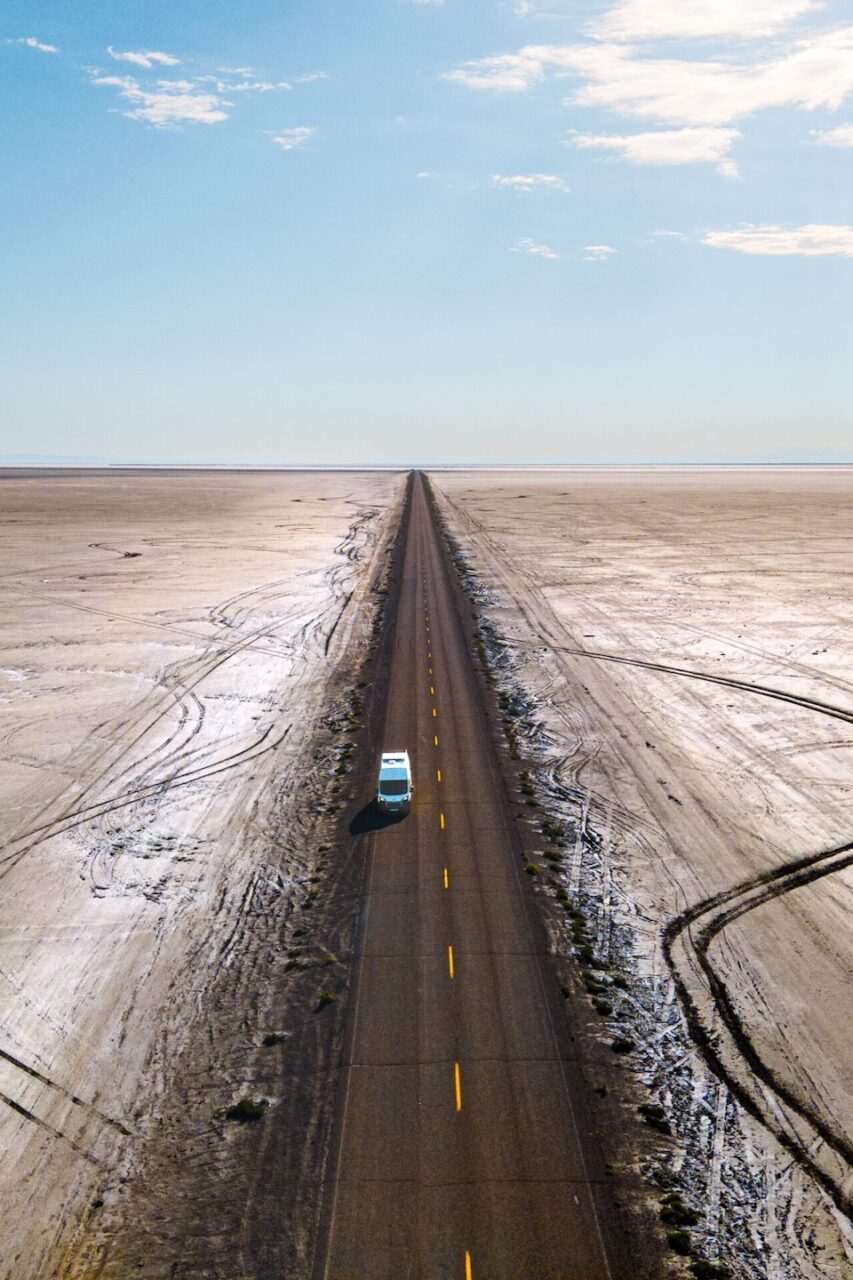
On the map, Phoenix to Las Vegas looks close. In reality, it’s almost a five-hour drive.
The US works differently. Always check travel time – not just distance.
How to make your trip actually feel good
This is my favorite part. Because this is no longer about logistics.
Slow mornings
I discovered this by accident – once, when I overslept and missed my planned “sightseeing.”
And it turned out that sitting with a coffee, looking out at the desert for an hour,
gave me more than a full day on the move.
Since then, I protect my mornings.
No early departures unless I really have to. No rushing right after waking up.
Morning is the most beautiful light. The quietest moment of the day. Time that actually belongs to you.
Fewer places, more time
I know I’ve said this before. But I’ll say it again – because it matters the most.
When you spend three days in one place instead of one, you start to understand it.
You return to the same spots at different times of day.
You meet people you didn’t plan to meet. You notice things no guidebook will ever tell you.
This isn’t wasting time. This is what real travel feels like.
Letting go – without guilt
I haven’t seen every park in Utah. I haven’t been to every place you’re “supposed” to see.
And you know what? I don’t regret it.
What I do regret are the moments when I rushed. When I drove through something beautiful just because there was another stop on the list.
Letting go isn’t failure. It’s maturity in the way you travel.
Being where you are
This is the hardest part.
You’re in a beautiful place, but your mind is already somewhere else.
You take a photo, but you don’t really feel what you’re looking at.
You’re talking to someone, but only half-listening, because you’re checking how far it is to the next campground.
I notice this in myself. I still struggle with it.
But when it works – when I’m truly where I am – those are the moments I remember the longest.
Not the photos. Not the places I checked off.
Just the moments.

Travel lighter, even before you leave.
start with something simple.
Download The Minimum Plan – Slow Travel:
You can come back more rested than when you left
A road trip in the US is something special.
Not just because the landscapes are beautiful – though they are. Not just because everything feels new – though at first, it does.
But because the road gives you something that’s hard to find in everyday life.
Space.
Space for your thoughts. For silence.
To feel who you really are – when you don’t have to be productive, available, always “on.”
You don’t have to see everything. You really don’t.
One park where you stay two days instead of two hours. One sunset you watch until the very end. One evening without a plan.
That’s enough.
And you can come back home not exhausted – but calmer. More yourself.
Maybe the best road trip isn’t the one where you see the most – but the one you return from feeling more at peace than when you left.
Tell me in the comments – how are you planning your road trip? A loop, or a one-way route?
And if you know someone who’s planning a trip through the US, share this with them.
Maybe this is exactly what they need right now.