
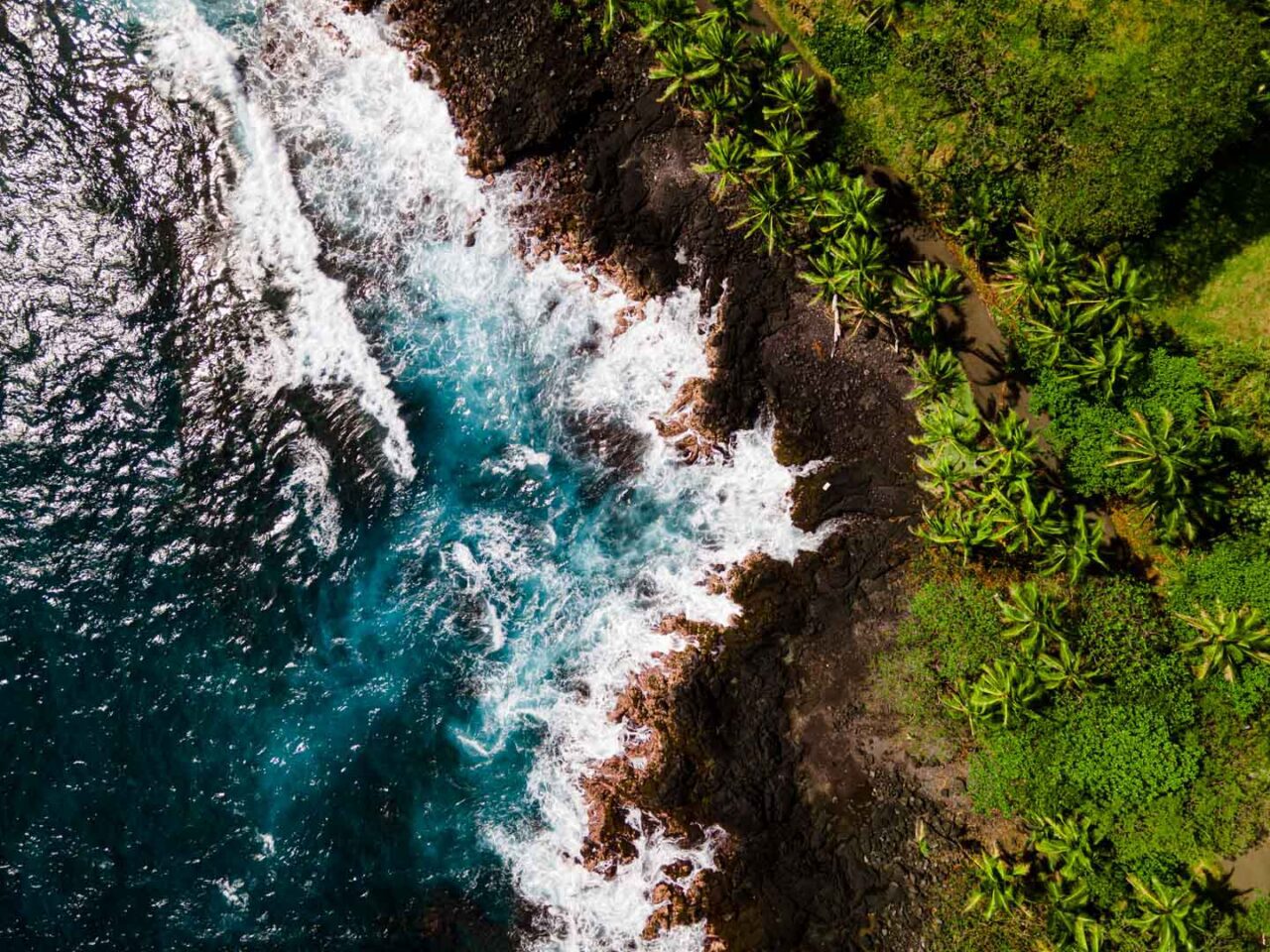
Looking for the best things to do on the Big Island? You’re in the right place.
I spent nearly ten weeks exploring Hawaiʻi Island, and even now, it’s one of those places I keep coming back to in my thoughts.
There’s something about this island that stays with you.
Maybe it’s the contrast – black sand beaches, active volcanoes, quiet rainforests, and some of the clearest night skies I’ve ever seen.
Or maybe it’s the pace. The feeling that you don’t have to rush to experience it.
What makes the Big Island truly special is its diversity. Within a single day, you can move between completely different landscapes – from higher elevations to tropical coastlines, from raw lava fields to green valleys.
It’s a place that works for both – days filled with movement and moments when you just sit and take it all in.
In this guide, I’m sharing 15 experiences that stayed with me the most.
Some are well-known, others a bit more hidden – but all of them felt worth slowing down for.
Planning your Hawaii adventure? Check out my comprehensive Hawaii Travel Guide where I answer the 20 most common questions about visiting the islands!
Map of Top 15 Things to Do on Hawaii Island
1. Explore Hawaiʻi Volcanoes National Park
Hawaiʻi Volcanoes National Park is one of those places that’s hard to fully grasp until you’re there.
You’re walking across land that, not long ago, was still molten. Still moving. Still being created.
The landscape is shaped by two powerful forces – Kīlauea and Mauna Loa – volcanoes that continue to redefine this part of the island. Kīlauea, especially, feels alive in a way that’s hard to describe.
It’s not dramatic in an obvious way. It’s quieter than that.
But once you’re there, you can feel it.
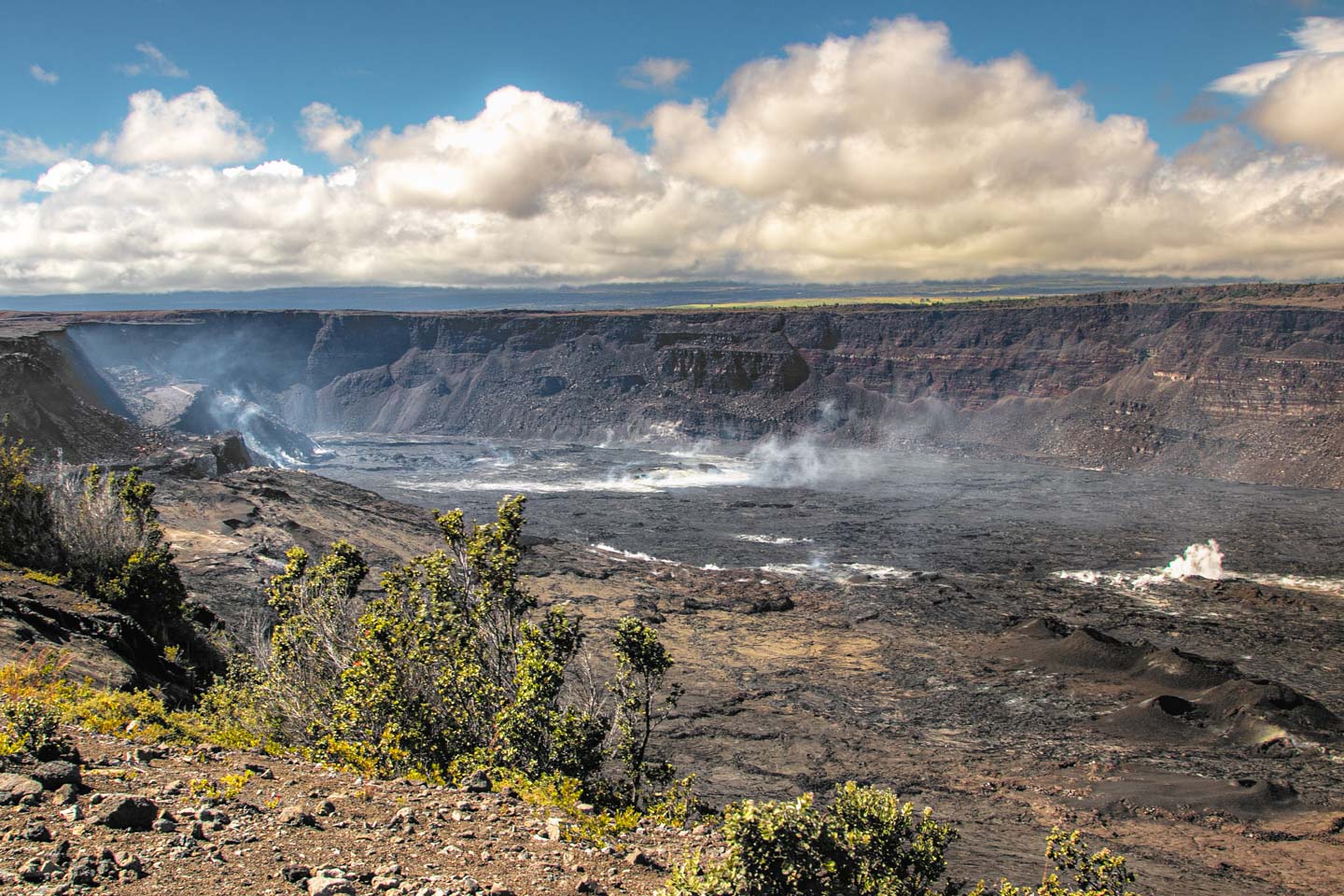
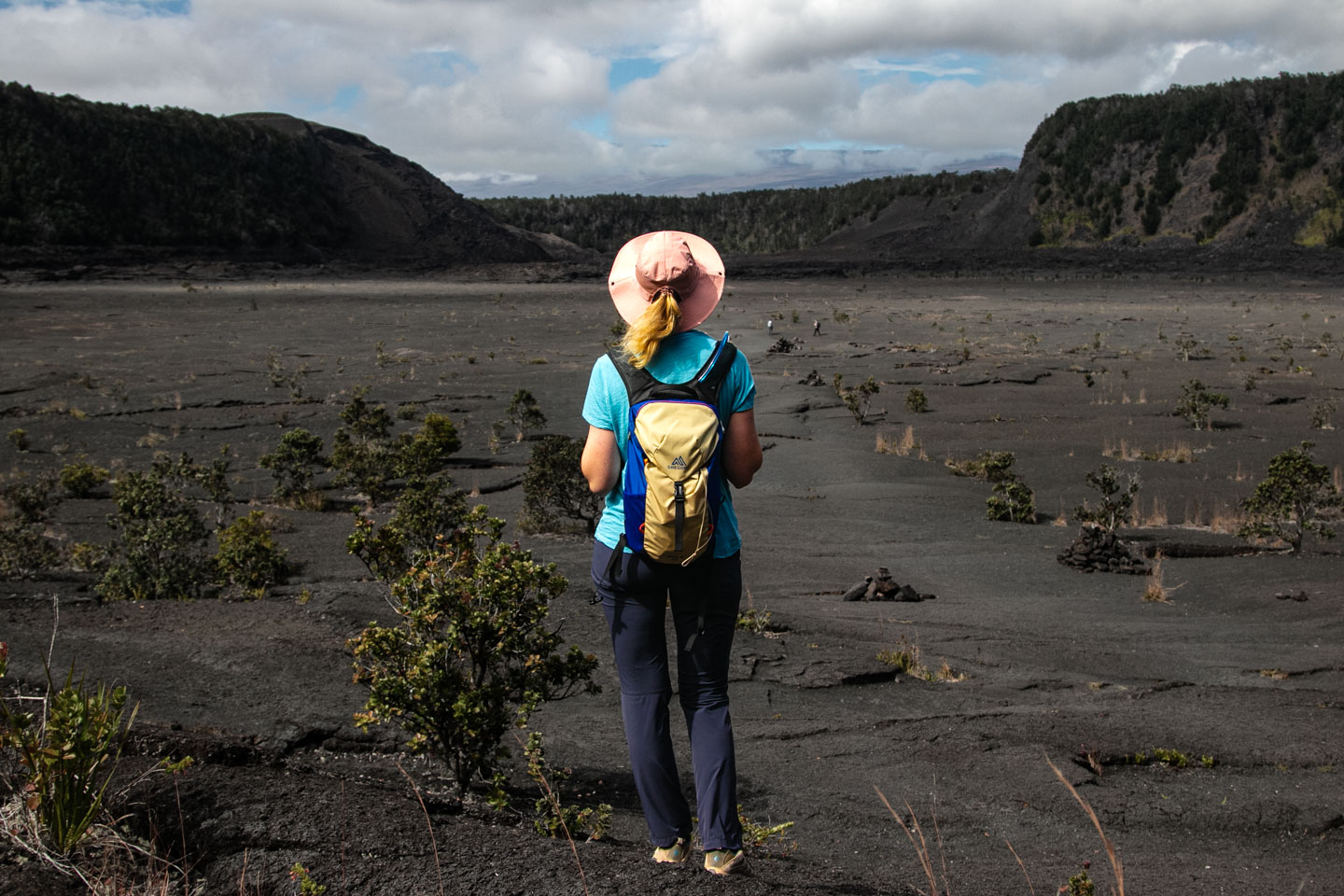
The Kīlauea Iki Trail (3.3 miles) was one of the most memorable experiences for me.
You begin in a lush rainforest – everything feels soft, green, almost quiet. And then, suddenly, the landscape opens up. The trail leads you across what was once a lake of molten lava.
Walking there feels surreal. The ground beneath your feet is solid now, but it still carries a sense of movement, of something that hasn’t fully settled.
Don’t skip the Thurston Lava Tube (Nāhuku) either. Stepping into this centuries-old lava tunnel feels like entering a different world – cooler, darker, more enclosed.
And then there’s the Sulphur Banks Trail (Haʻakulamanu). The smell is strong, especially on warmer days, but the landscape is unlike anything else in the park – soft yellows, whites, and mineral textures shaped by volcanic gases.
Each of these places shows a different side of the island – raw, evolving, and quietly powerful.
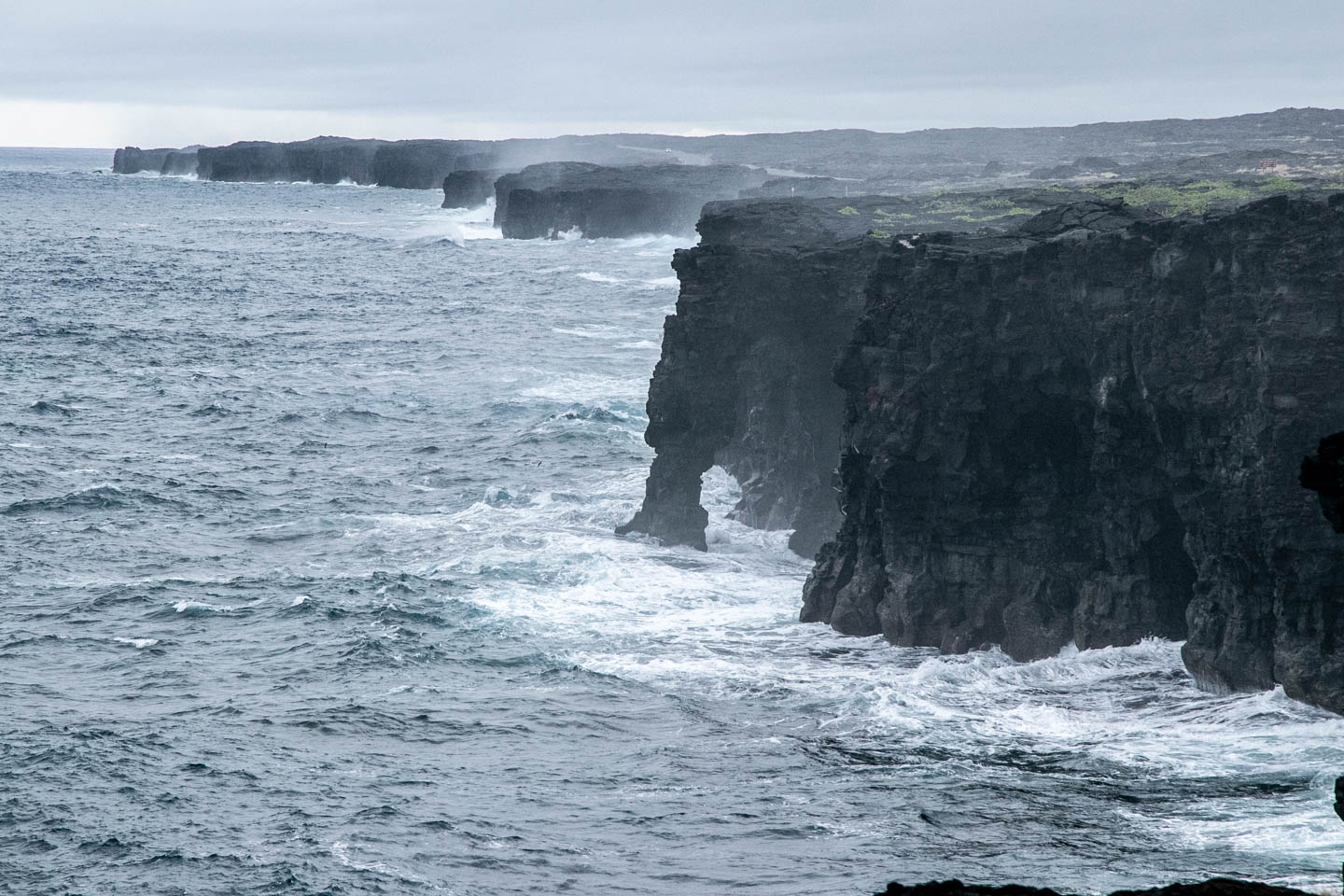
I ended up spending almost a full day here, slowly making my way along Chain of Craters Road all the way to the ocean.
It’s one of those places where time just… stretches.
The Puʻuloa Petroglyphs Trail was hot and exposed, but completely worth it. Standing among these ancient carvings, I felt a quiet connection to the people who lived here centuries ago.
It’s hard to explain – but it’s something you feel more than understand.
There wasn’t any flowing lava when I visited (the last eruption had been in September 2023), but honestly, it didn’t take away from the experience.
This place doesn’t need spectacle.
It’s powerful enough as it is.
Practical Info
- Entry costs $30 per vehicle – and honestly, it felt more than worth it for the experience.
Want to dive deeper into the park? I’ve got you covered with my detailed guide to 10 Best Things to Do in Hawai’i Volcanoes National Park – including all the best trails, viewpoints, and insider tips!
2. Take in the View at Pololū Valley
I first heard about Pololū Valley from a local barista – and I’m really glad I listened.
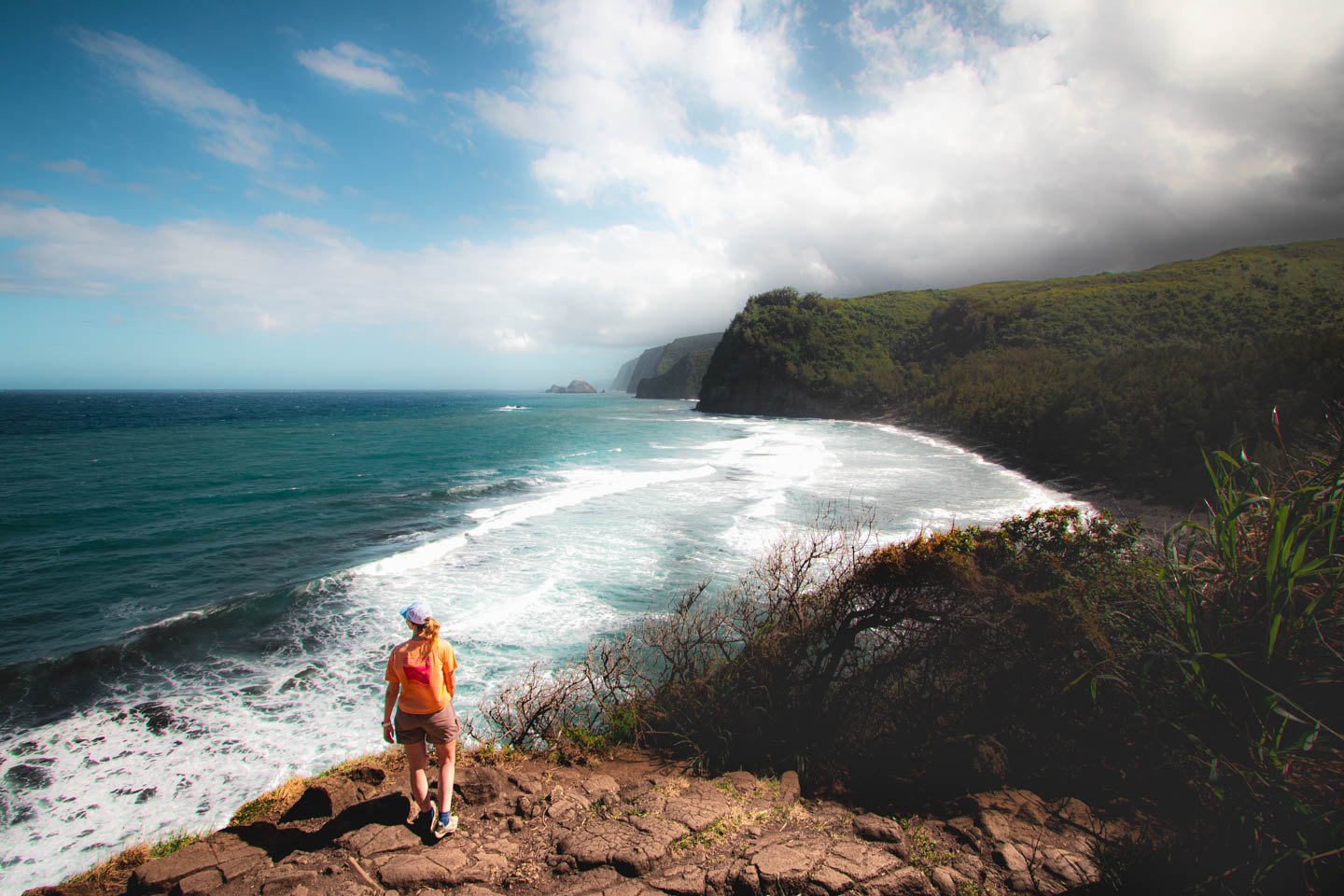
Tucked away on the northern coast, this deep green valley feels almost hidden. When you reach the lookout, the view opens up suddenly – steep cliffs, black sand beach below, and the ocean stretching out in front of you.
It’s one of those places that immediately makes you pause.
Pololū is also considered a sacred place in Hawaiian culture, with stories connected to the origins of the island. You can feel that sense of meaning when you stand there – not in an obvious way, but quietly, in the atmosphere.
The wind, the scale, the silence – it all comes together in a way that’s hard to describe, but easy to feel.
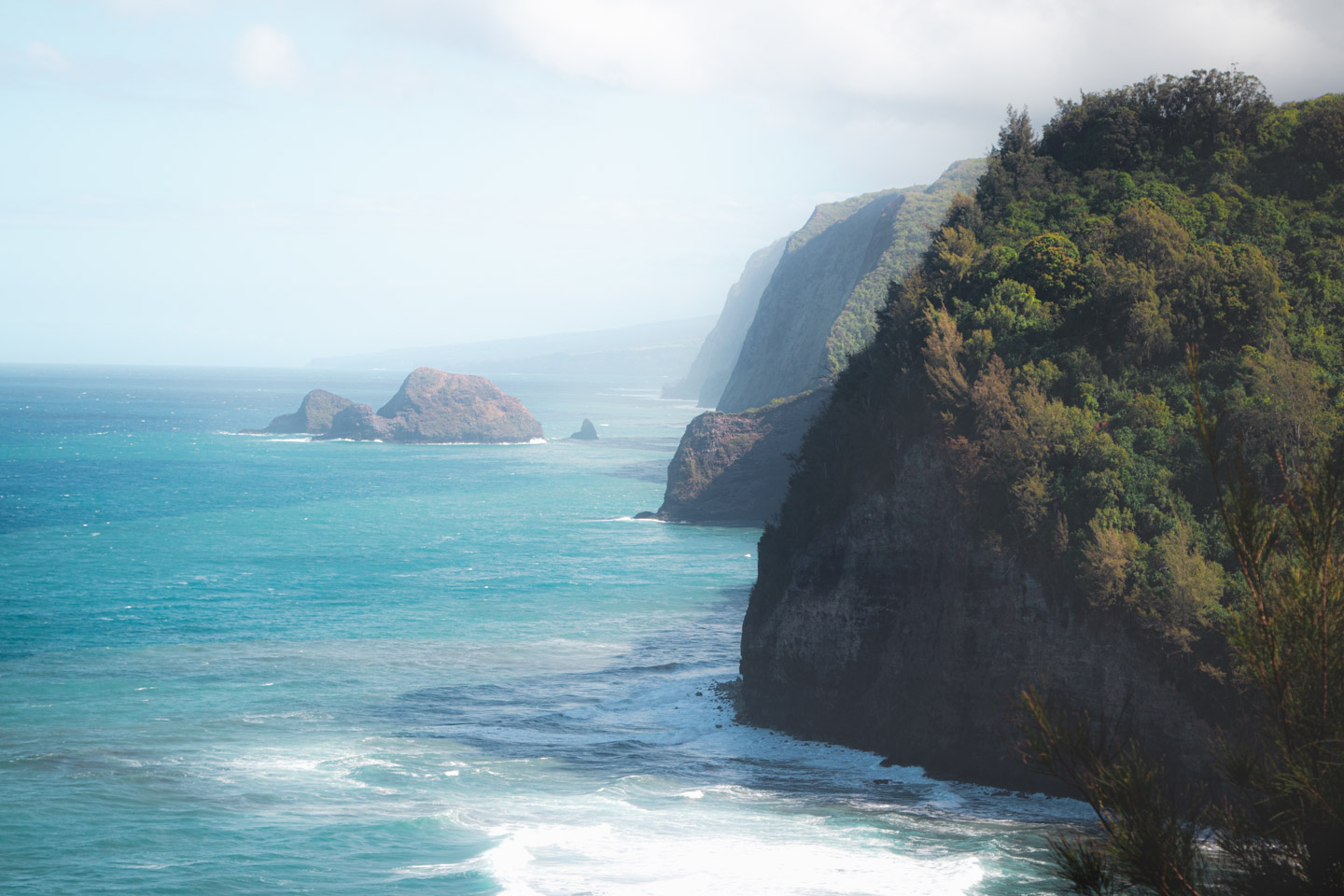
The trail down is relatively short, but steep enough to make you slow down – especially on the way back up.
About halfway, I stopped for a moment and sat on a rock ledge, just taking it all in. It’s one of those views that naturally pulls you out of whatever you were thinking about before.
At the bottom, the black sand beach feels wild and untamed. The ocean here is powerful, and it’s best admired from the shore.
I ended up talking to a local man who was sitting nearby. He told me his grandparents used to grow taro in the valley, and listening to him added a completely different layer to the place.
It stopped being just a beautiful view.
It became a story.
If you feel like continuing, the trail leads further toward Honokane Nui Valley. It’s more demanding, but the landscape opens up even more – and somehow feels even quieter.
3. Watch the Sunset from Mauna Kea
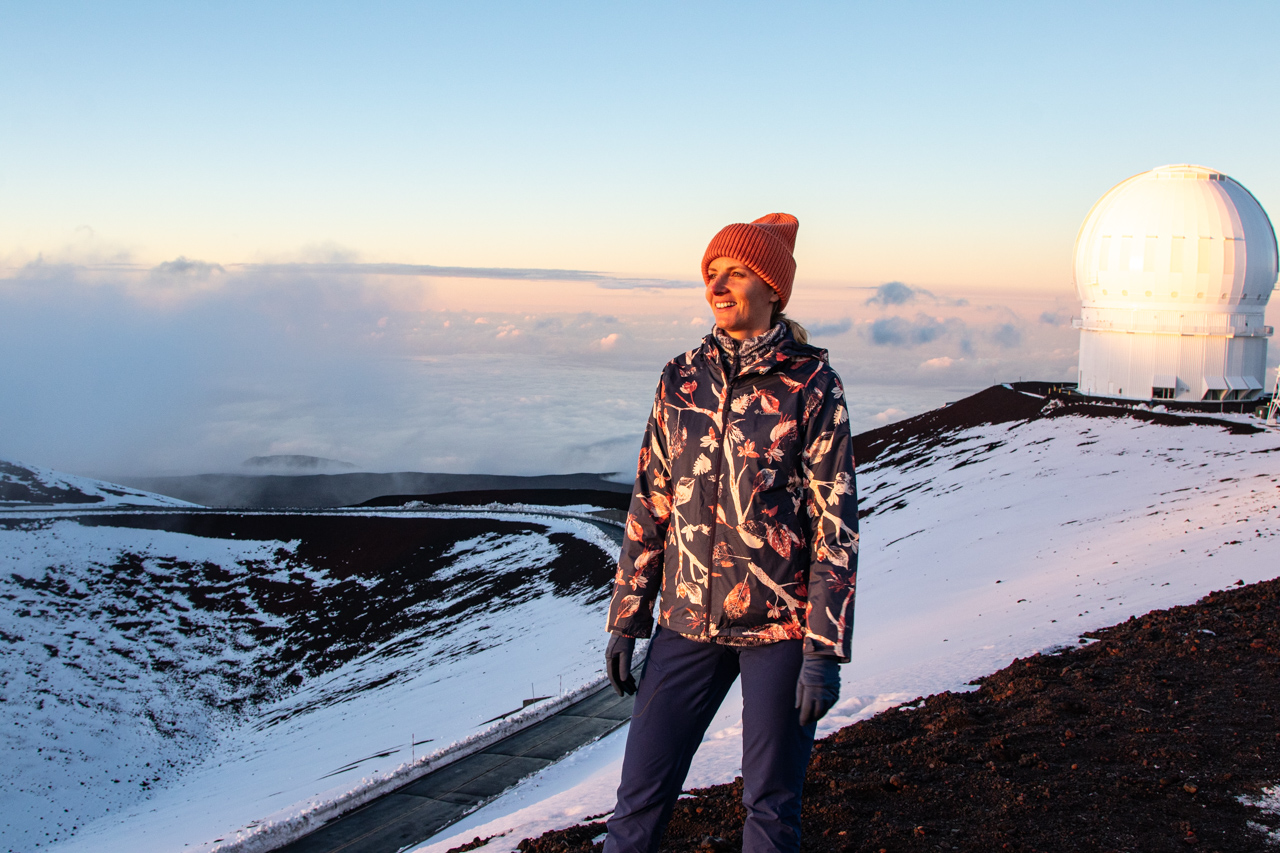
Driving up to Mauna Kea was one of the most memorable experiences on the island.
Rising to 13,803 feet above sea level, it’s already impressive – but what makes it even more fascinating is that much of the mountain lies below the ocean. From base to summit, it’s actually the tallest mountain on Earth.
The drive up is not something you rush. The road becomes unpaved, the air thinner, and everything starts to feel a little more remote.
I stopped at the Visitor Information Station (around 9,200 feet) to adjust to the elevation, which made a big difference. It gives your body time to catch up before heading higher.
And then there’s the temperature.
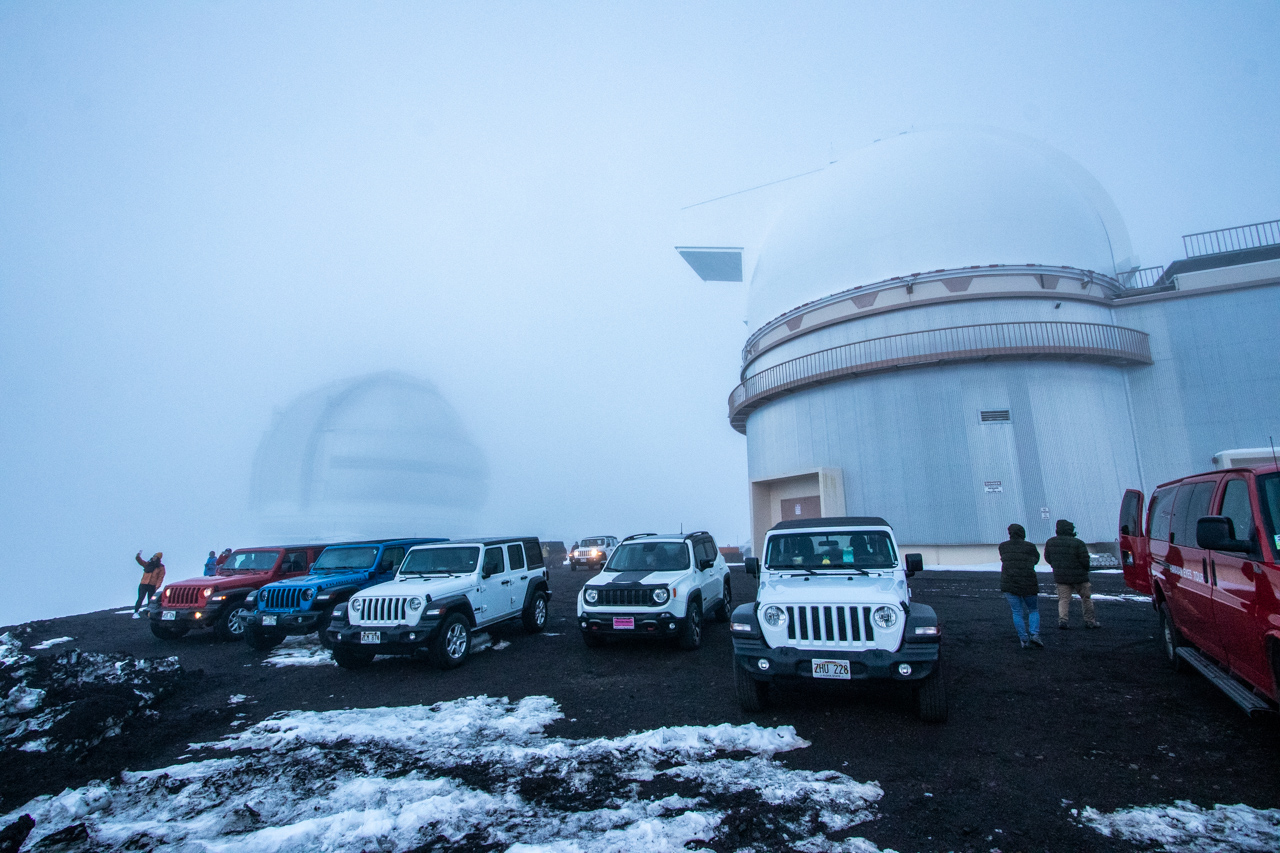
It’s cold. Much colder than you expect in Hawaiʻi.
By the time I reached the top, I was wearing everything I had with me – and still feeling it. The wind, the altitude, the silence… it all makes the experience feel a bit more intense.
But that’s also what makes it unforgettable.
And then… the sunset.
Standing above the clouds, you watch the light slowly fade, the sky changing color almost imperceptibly – from warm golds to soft pinks, then deeper blues.
It doesn’t feel dramatic in a loud way.
It feels quiet. Expansive.
Like you’re watching something that doesn’t need to impress – it just is.
When the sun disappears, the temperature drops even more, and the sky begins to fill with stars. Slowly at first, and then all at once.
It’s one of the clearest night skies I’ve ever seen.
Up here, you’re not just high above the island – you feel slightly removed from everything familiar.
Mauna Kea is also a deeply sacred place in Hawaiian culture, and at the same time, home to some of the world’s most important astronomy observatories.
That contrast – between ancient meaning and modern science – makes the experience feel even more layered.
Not overwhelming.
Just… profound.
4. Slow Down at Hapuna Beach
After days filled with hiking and exploring, I found myself craving something simpler.
The ocean. Warm sand. A moment to just be.
That’s how I ended up at Hapuna Beach.
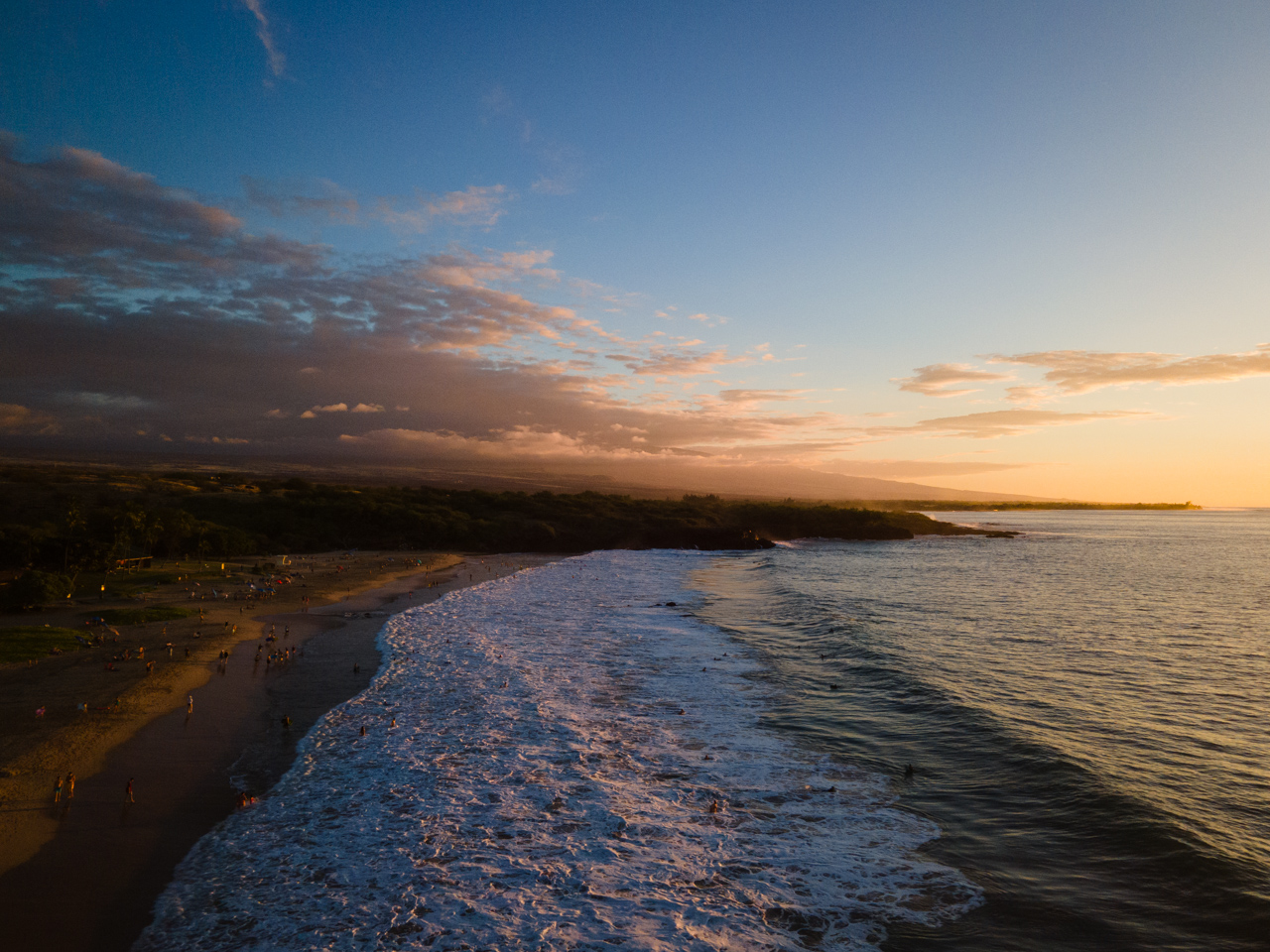
This long stretch of white sand on the island’s northwestern coast feels open and calm. The sand is soft and bright, and the water shifts between shades of turquoise and deep blue depending on the light.
I arrived on a quiet weekday, when the beach felt almost empty. It made everything slower – the waves, the time, even my thoughts.
In the summer months, the ocean is usually gentle and inviting. In winter, it changes character, with stronger waves and a different kind of energy.
I stayed until sunset.
The light softened, the colors warmed, and everything seemed to slow down even more.
One of those moments where you don’t feel the need to do anything – just sit, watch, and stay a little longer.
Practical Info
- Entry is $5, plus $10 for parking.
- The beach closes around 7:30 PM, so it’s worth keeping an eye on the time – especially if you’re planning to stay for sunset.
5. Explore the Wild Side of Puna
The Puna region surprised me in the best way.
Located on the southeastern side of the island, it feels a little more raw, less polished – like a place that follows its own rhythm.
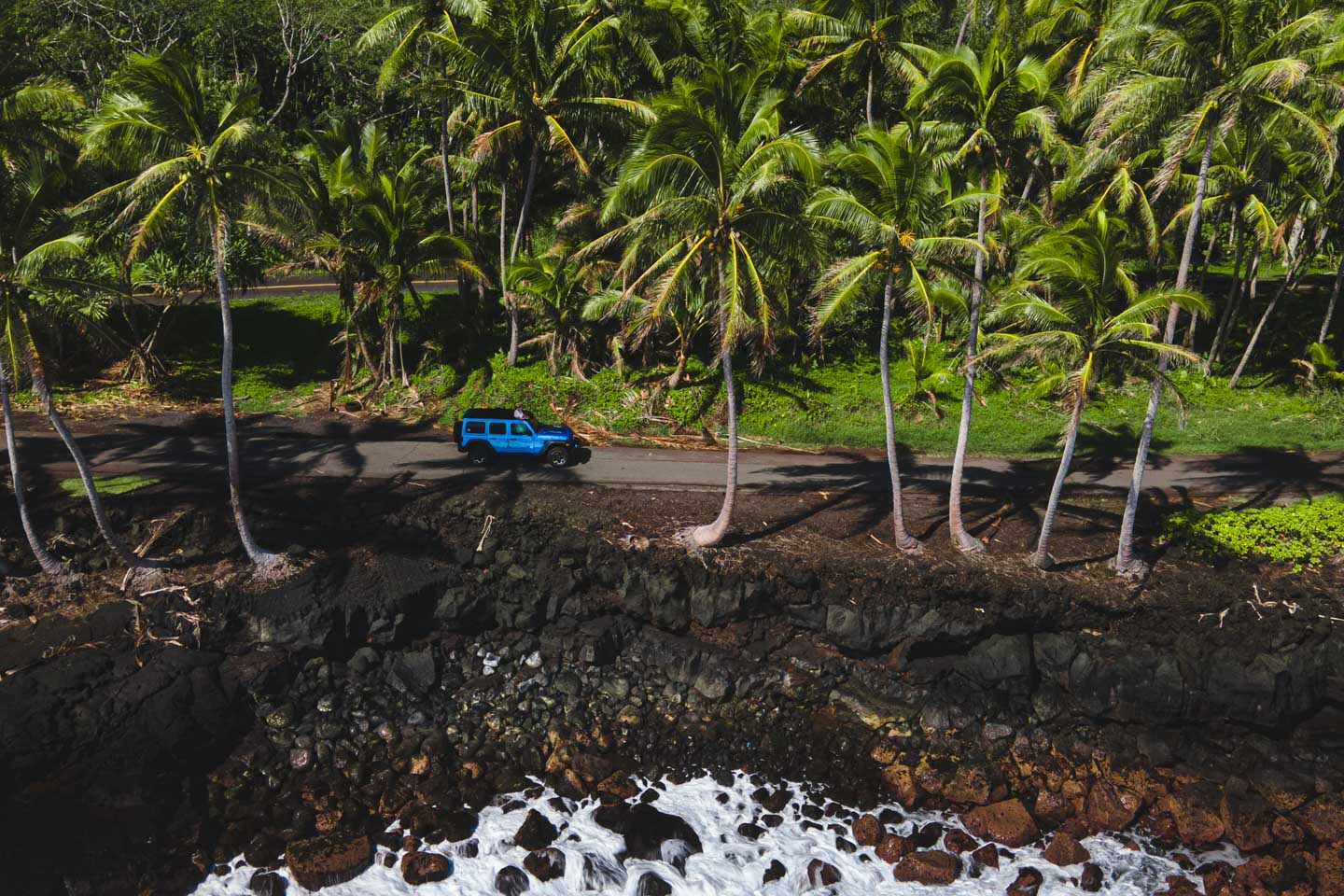
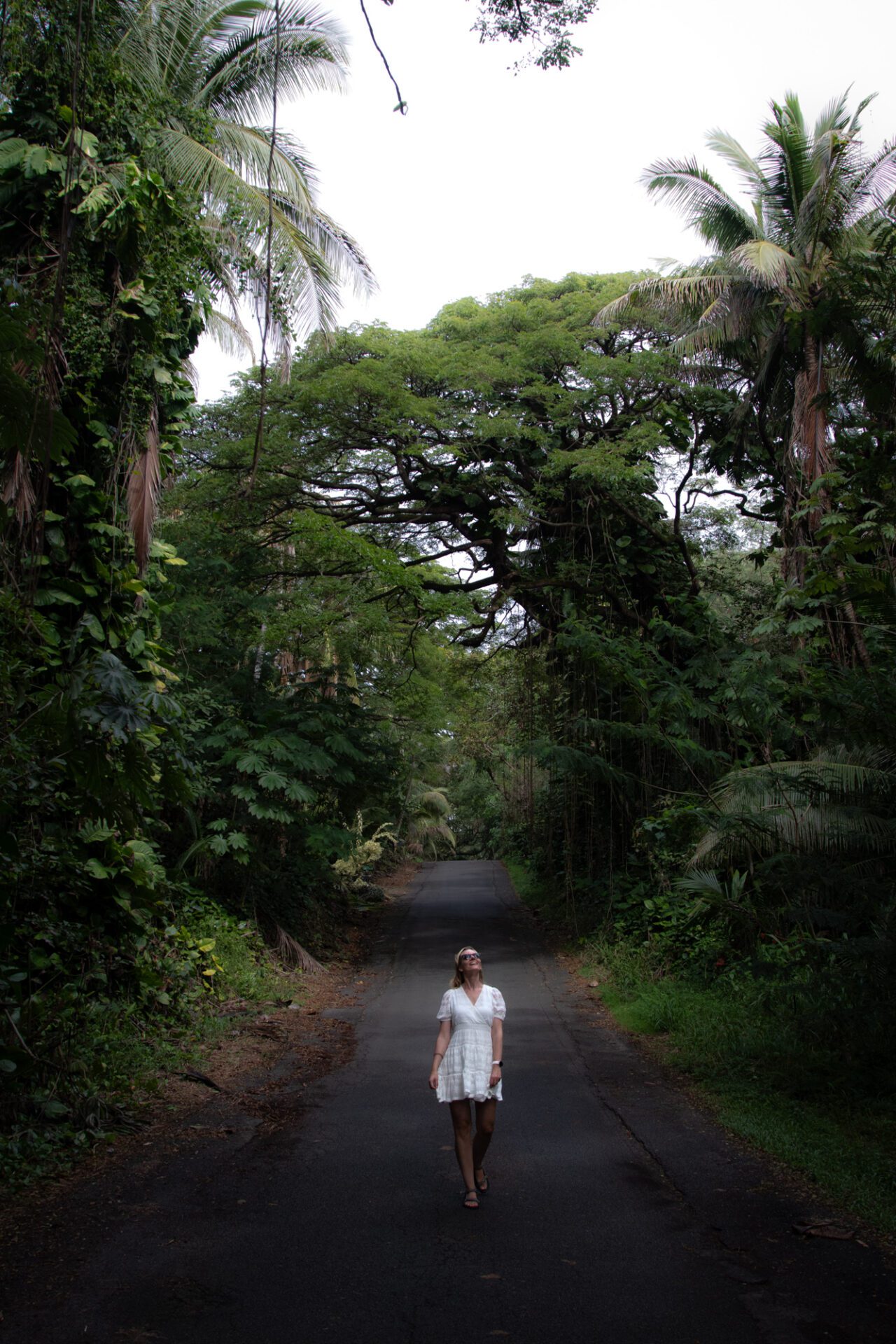
Driving along Highway 137 (Red Road) is an experience in itself. The road winds through dense greenery, often forming natural tunnels of trees overhead. Light filters through in a way that makes everything feel slightly surreal.
It’s not a drive you rush.
There’s something around every bend that makes you slow down, or pull over for a moment.
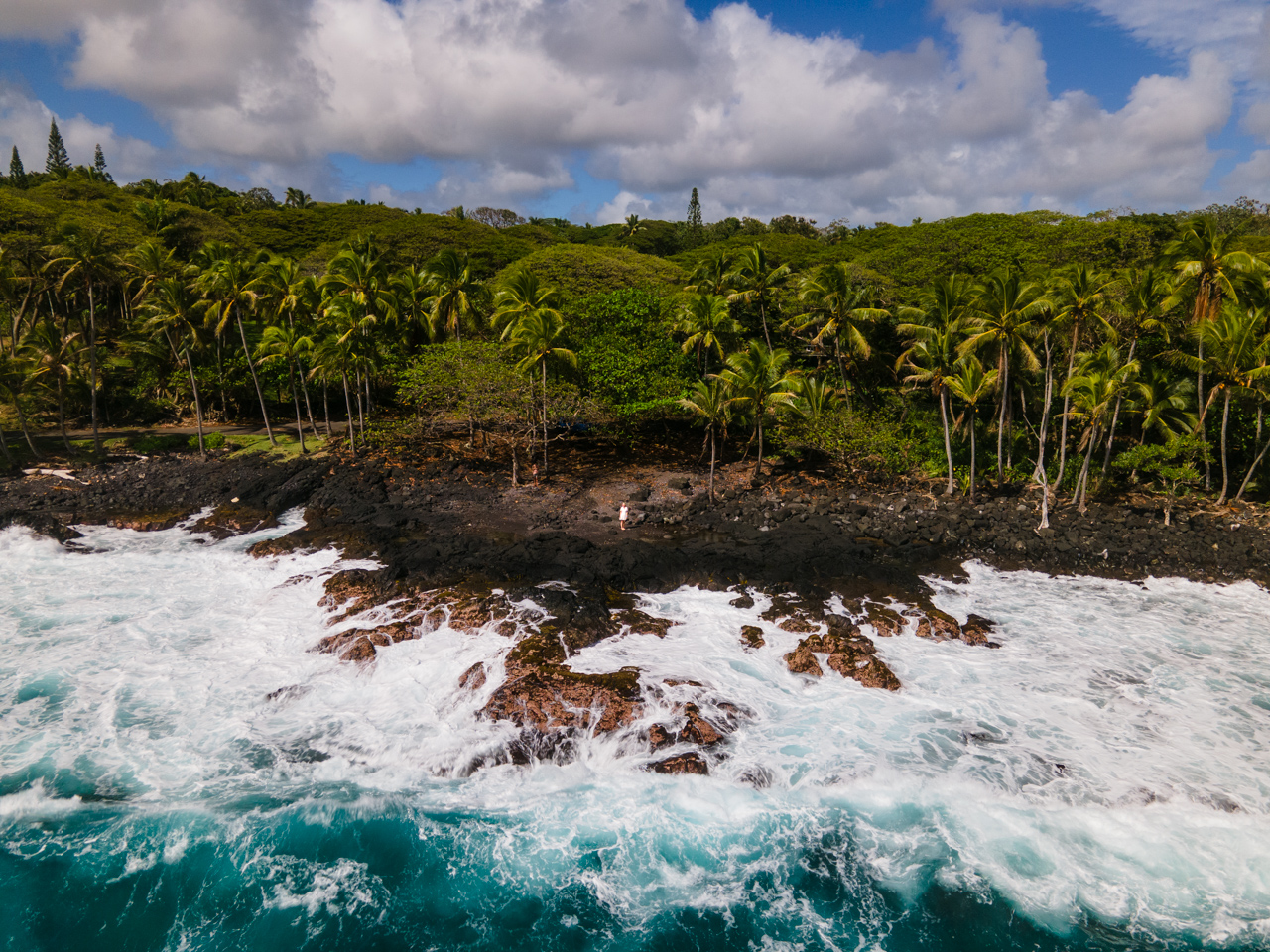
One of the most striking stops is Isaac Hale Beach Park – an area deeply shaped by the 2018 eruption. In some places, the lava flow came incredibly close, stopping just short of the coastline.
Walking there, you can see how recent it all is.
Fresh black lava meets the ocean, and the contrast feels almost unreal – like you’re witnessing a landscape that’s still in the process of becoming.
Puna isn’t the most obvious part of the island to visit.
But if you have the time, it offers something different – quieter, wilder, and a little more unpredictable.
I followed a local tip and made my way down a small jungle path to the Pohoiki Warm Pool.
The walk itself felt a bit off the beaten path, but that’s part of what made it special. At the end, I found a natural pool warmed by volcanic activity – steam rising gently, surrounded by greenery.
It was quiet. Almost still.
For a moment, it felt completely removed from everything else.
Nearby, it’s worth stopping at Lava Tree State Monument – a place where lava once flowed around living trees, leaving behind hollow, vertical formations. They feel almost sculptural, but also slightly eerie.
And then there’s the Star of the Sea Painted Church – a small, colorful building that survived the 2018 lava flow. Standing there, knowing how close it came, adds a quiet sense of resilience to the visit.
Puna is full of places like this.
Unexpected, a little hidden, and shaped by forces you can still feel.
6. Slow Moments at Anaehoʻomalu Bay (A-Bay)
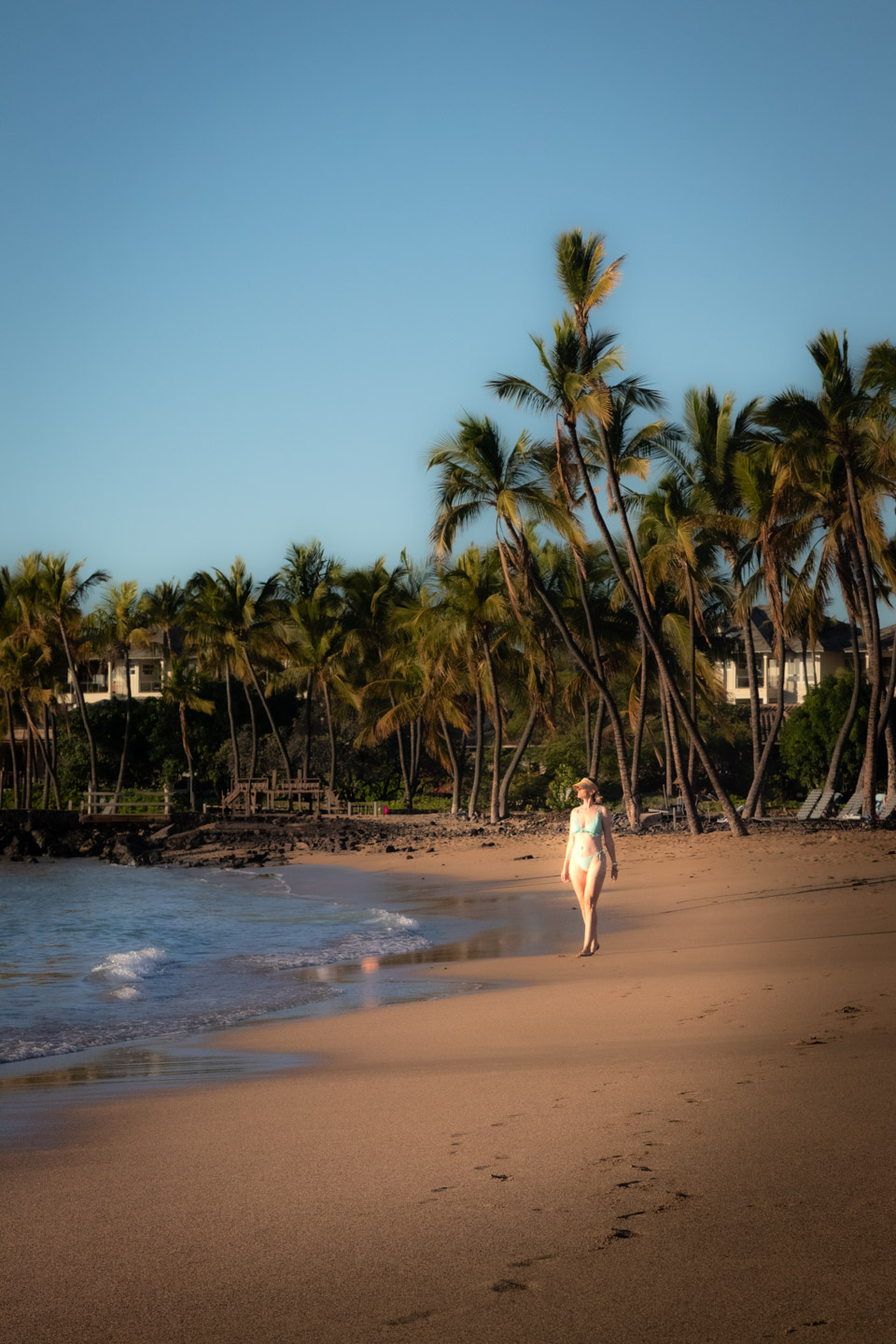
Anaehoʻomalu Bay, often called A-Bay, quickly became one of those places I kept coming back to.
Located on the Kohala Coast, it has a calm, open feel – the kind of beach where you don’t need a plan.
The water is usually gentle and clear, making it perfect for slow swims or simply floating for a while. The gradual entry into the ocean makes everything feel easy and unhurried.
What makes this place even more special are the ancient Hawaiian fishponds just behind the beach. Built centuries ago, they were once used by Hawaiian royalty – and they add a quiet sense of history to the landscape.
It’s not just a beach.
It’s a place to pause, reset, and stay a little longer than you planned.
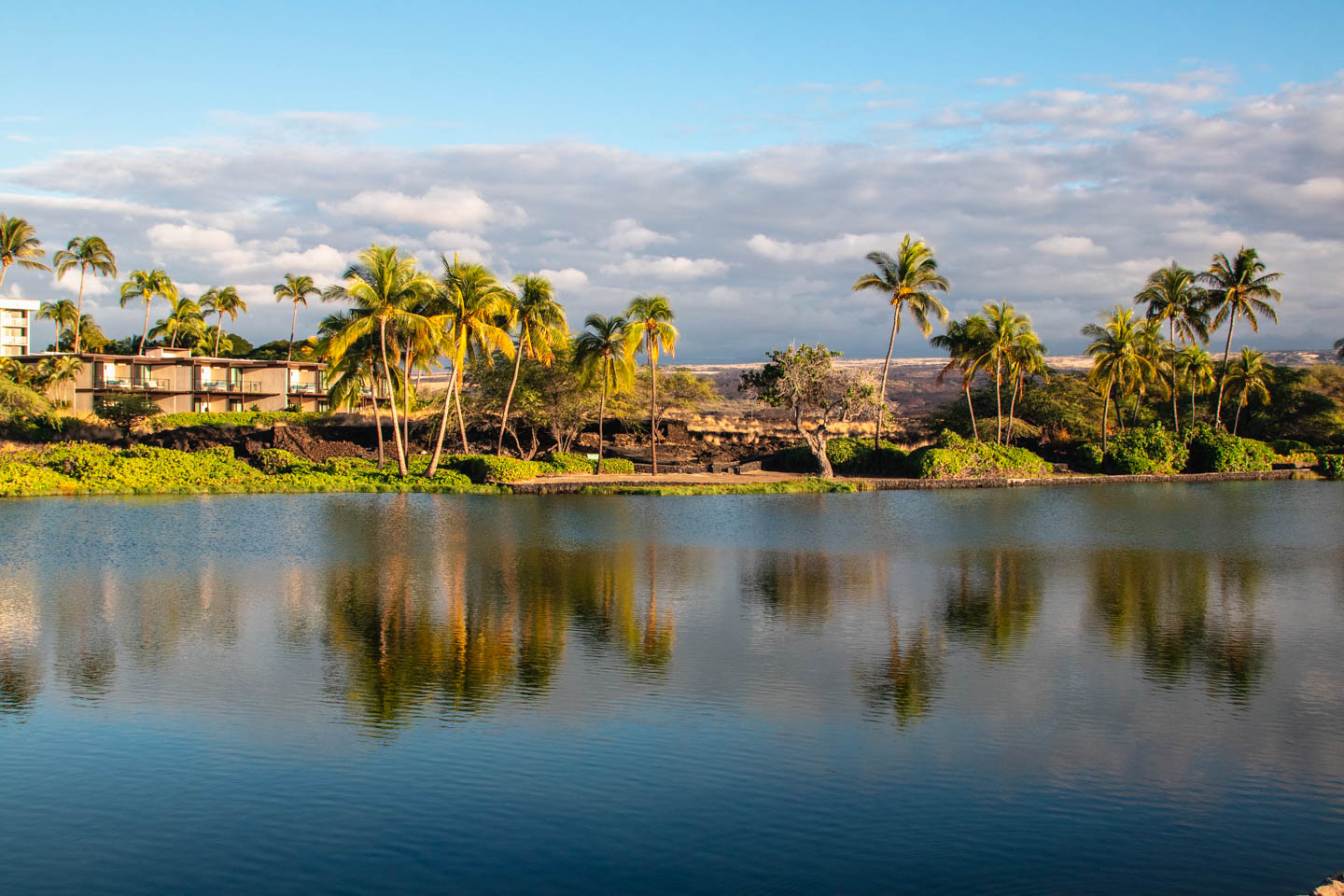
At sunset, this place changes completely.
The sky softens into shades of pink and orange, and the palm trees reflect gently in the still water of the fishponds. It’s quiet, almost still – the kind of moment that makes you pause without even thinking about it.
One afternoon, I followed the coastal trail and found small tide pools hidden between the rocks. Tiny fish moved through the shallow water, and for a while, it felt like I had the whole place to myself.
Until I noticed that a few of those “rocks” nearby were actually sea turtles, resting in the sun.
I also had dinner one evening at Lava Lava Beach Club – right on the sand. It’s more on the touristy side, but sitting there with your feet in the sand as the sun disappears into the ocean… it’s one of those simple experiences that stays with you.
Sometimes, that’s all you need.
7. A Walk Through Hawaiʻi Tropical Botanical Garden
I almost skipped the Hawaiʻi Tropical Botanical Garden – and I’m really glad I didn’t.
Tucked along the coast near Onomea Bay, this place feels like stepping into a different world.
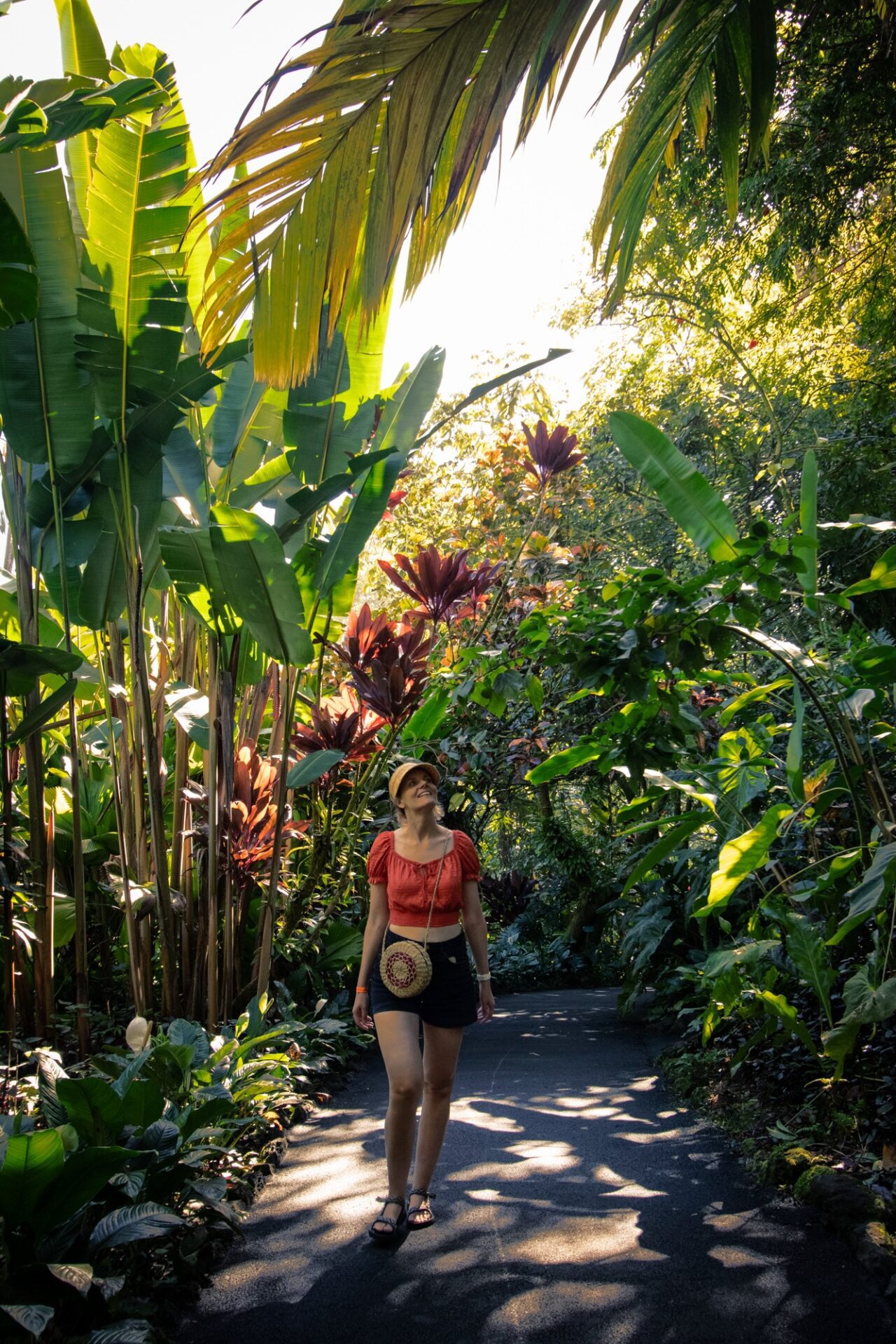
The paths wind gently through dense, layered greenery. Plants grow in every direction – above you, around you, sometimes almost closing in – creating a feeling of being completely immersed.
There’s an incredible variety here. Large, sculptural leaves, delicate flowers, deep greens mixed with bright, unexpected colors.
Everything feels alive.
The air is warm and heavy with the scent of plants and flowers, and after a while, you start to slow down without even noticing.
It’s not just a garden.
It’s a place you move through quietly, taking it in step by step.
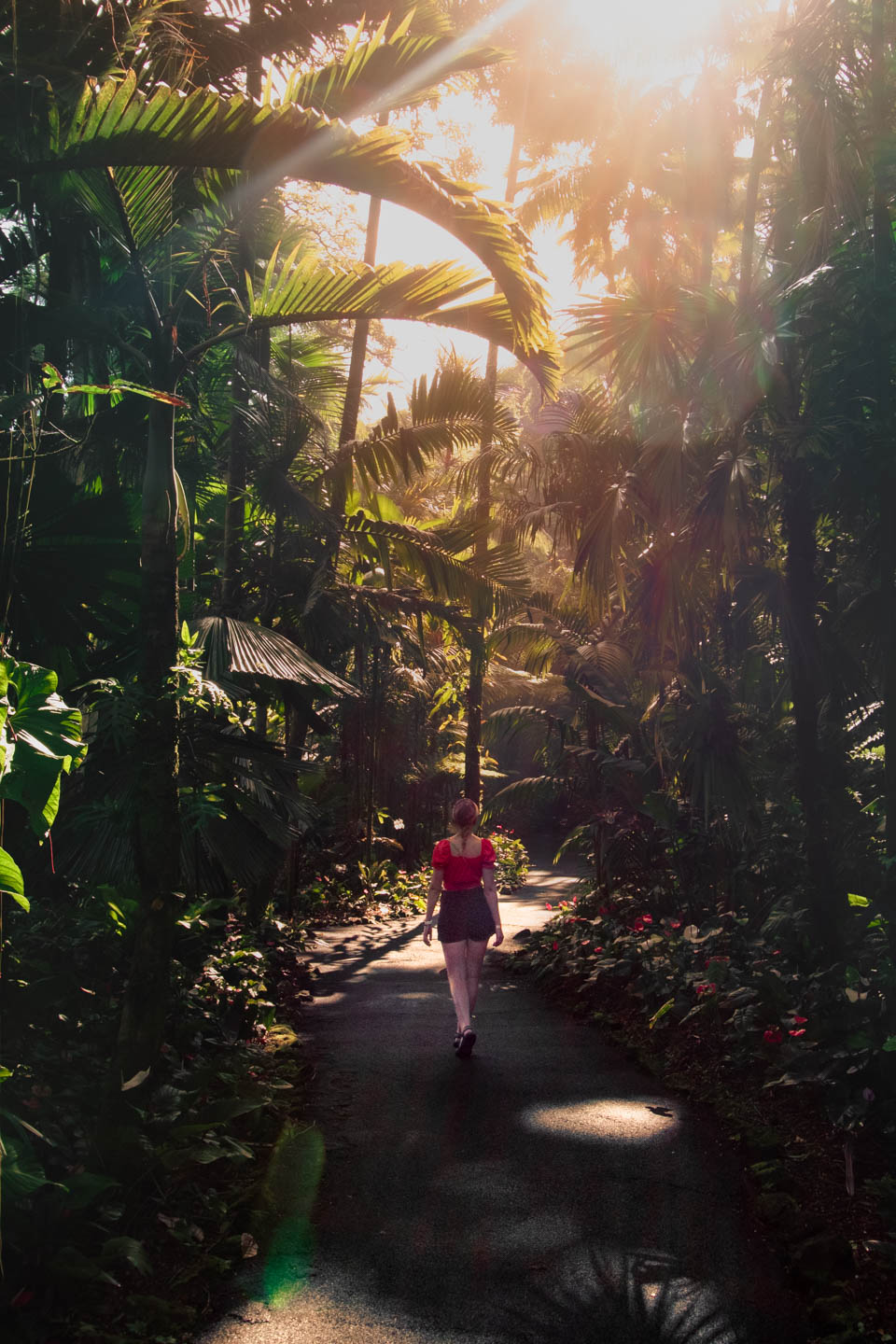
The garden was created by a couple who slowly transformed this space from overgrown jungle into what it is today.
Before that, the land was part of an old fishing village, where people once grew their own food. Walking through the garden now, you can still sense that connection – the way certain areas feel more open, more lived in.
At one point, I turned a corner and suddenly heard water.
And then saw it.
Onomea Falls, cascading quietly through the greenery.
It wasn’t dramatic or loud – just unexpected, tucked into the landscape in a way that felt almost hidden.
I spent close to two hours here, but it didn’t feel like enough.
It’s the kind of place where time slows down – and you don’t really want to leave.
Practical Info
- Admission is $35 – which may feel a bit high at first, but makes sense once you’re there.
- The garden is open daily from 9 AM to 5 PM. Last entry is at 4 PM, so it’s best to arrive earlier if you want to take your time exploring.
8. Turtle Moments at Punaluʻu Black Sand Beach
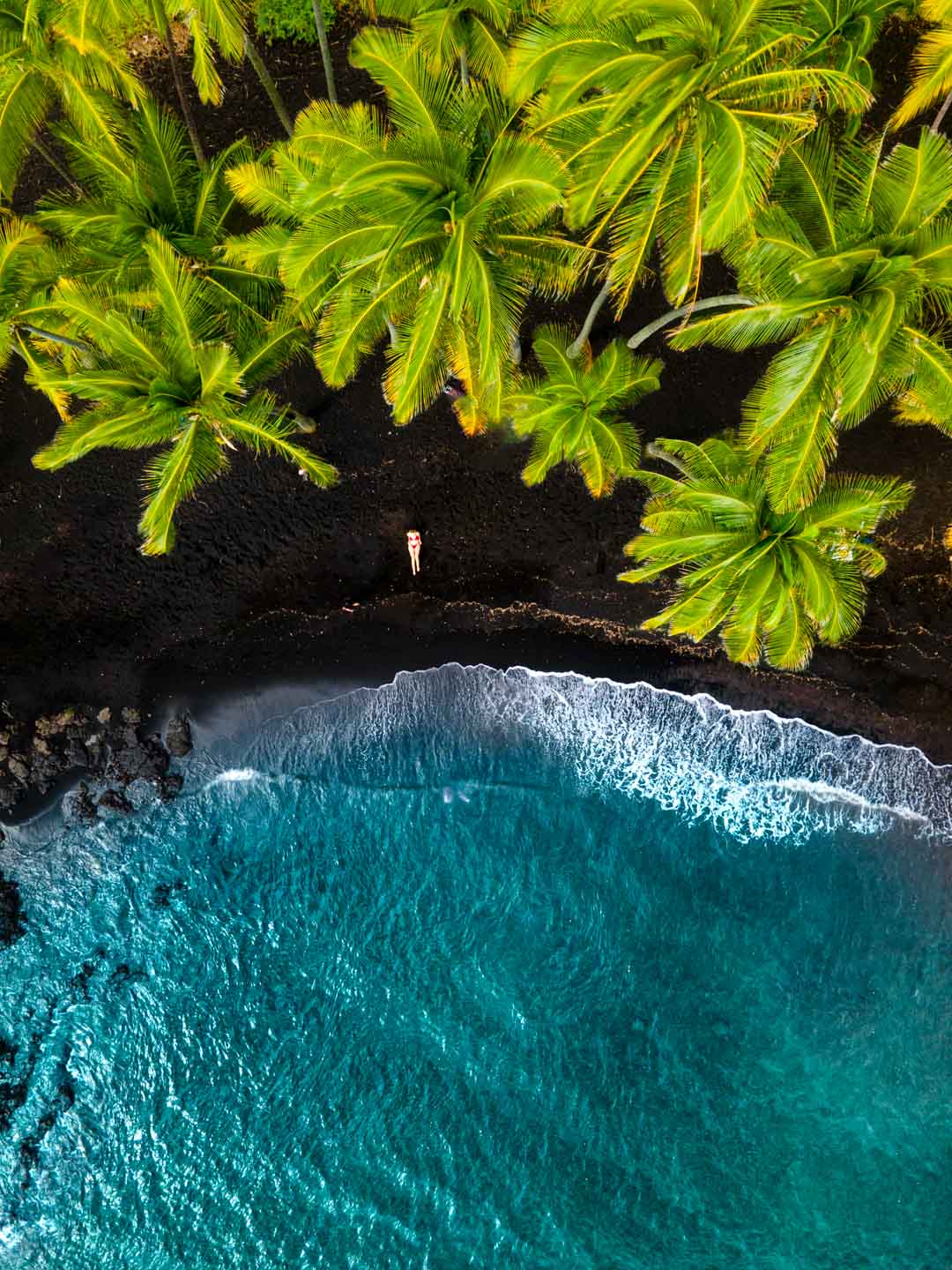
Punaluʻu Black Sand Beach is one of those places that immediately feels different.
The contrast is striking – deep black sand, turquoise water, and green palms moving gently in the wind. It almost doesn’t look real at first.
Located on the southern coast of the island, it has a calm, open feel. Not dramatic in a loud way, but visually unforgettable.
The beach was formed when hot lava met the ocean, cooling rapidly and breaking into small, dark fragments over time.
Unlike many black sand beaches in Hawaiʻi that have slowly disappeared, this one remains – shaped by the same forces that created it, but still holding its form.
It’s simple, but it stays with you.
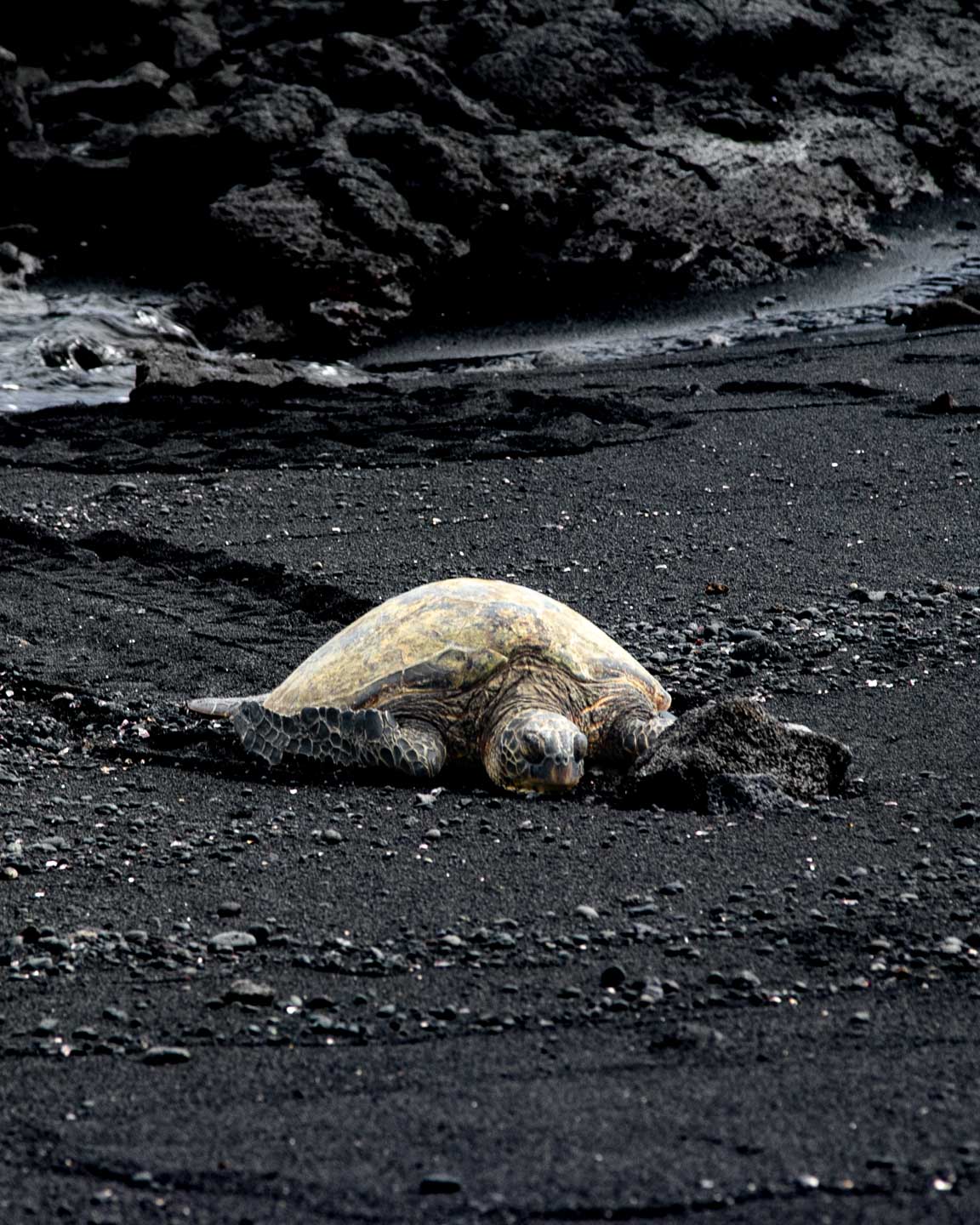
And then… the turtles.
Several sea turtles were resting near the shore – some moving slowly through the water, others lying still on the warm black sand.
I kept my distance, as recommended, and just watched for a while.
There’s something about seeing them like this – completely at ease, unbothered - that makes the whole place feel even calmer.
The sand here is different from what you might expect. It’s coarser, and under the sun it heats up quickly, so it’s worth being mindful when walking barefoot.
There are a few simple facilities nearby – picnic tables and a small snack stand – which makes it easy to stay a bit longer.
And it’s worth it.
This is the kind of place where you don’t need to do much – just sit, watch, and let the moment unfold.
9. A Quiet Kind of Beauty at Maniniʻowali Beach (Kua Bay)
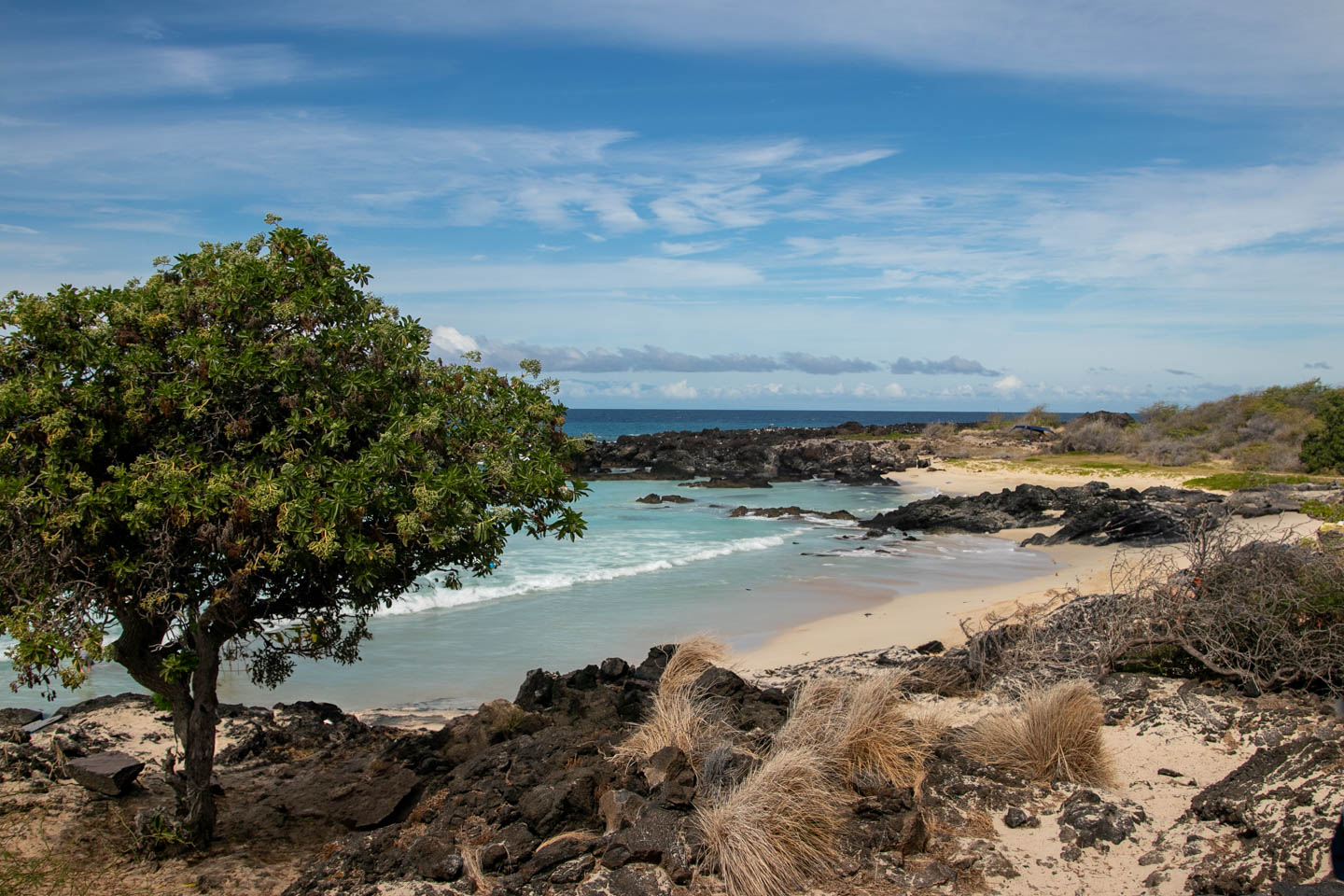
Maniniʻowali Beach, often called Kua Bay, is one of those places that feels almost too perfect at first glance.
Located north of Kailua-Kona, it’s slightly more tucked away – and that’s part of its charm.
The sand is bright and soft, the water clear and intensely blue. Depending on the light, the colors shift constantly, but they always feel vivid.
The beach forms two gentle coves, and it’s easy to move between them – swimming, resting, then returning to the water again.
I arrived in the morning, when it was still relatively quiet. By midday, more people started to arrive, but it never felt overwhelming.
There are no real facilities here, so it’s worth coming prepared – water, something to eat, and sun protection.
It’s a simple place.
But one that stays with you long after you leave.
10. A Step Back in Time at Puʻuhonua o Hōnaunau
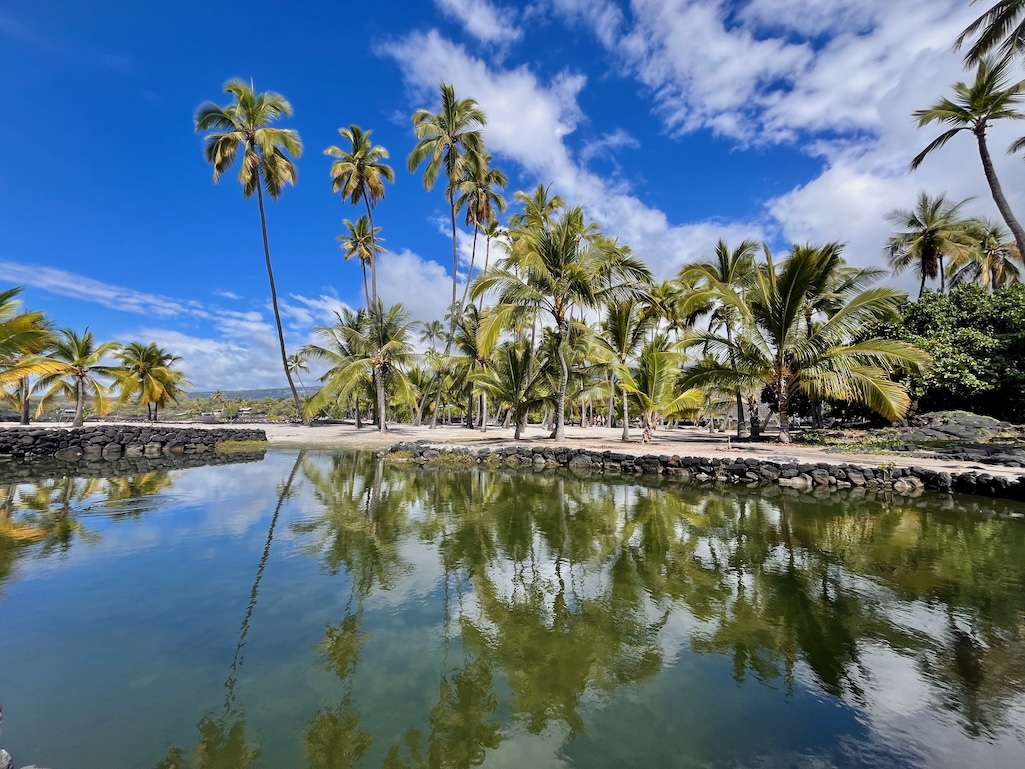
Puʻuhonua o Hōnaunau National Historical Park, known as the Place of Refuge, is one of the most meaningful places on the island.
Located south of Kailua-Kona, it feels calm and grounded from the moment you arrive.
This was once a sanctuary – a place where people who broke kapu (sacred laws) could seek refuge. If they reached it, they were forgiven and allowed to return to society.
Walking through the site, it’s easy to imagine the weight this place once carried.
It wasn’t just symbolic.
It meant safety. A second chance.
It’s not a place that overwhelms you.
It stays quiet – but leaves a lasting impression. found shelter here, which added this whole dramatic layer to my visit.
One of the first things that caught my attention was the Great Wall, built in the 16th century and rising over 10 feet high.
Standing there, it’s hard not to wonder how it was created – stone by stone, long before modern tools.
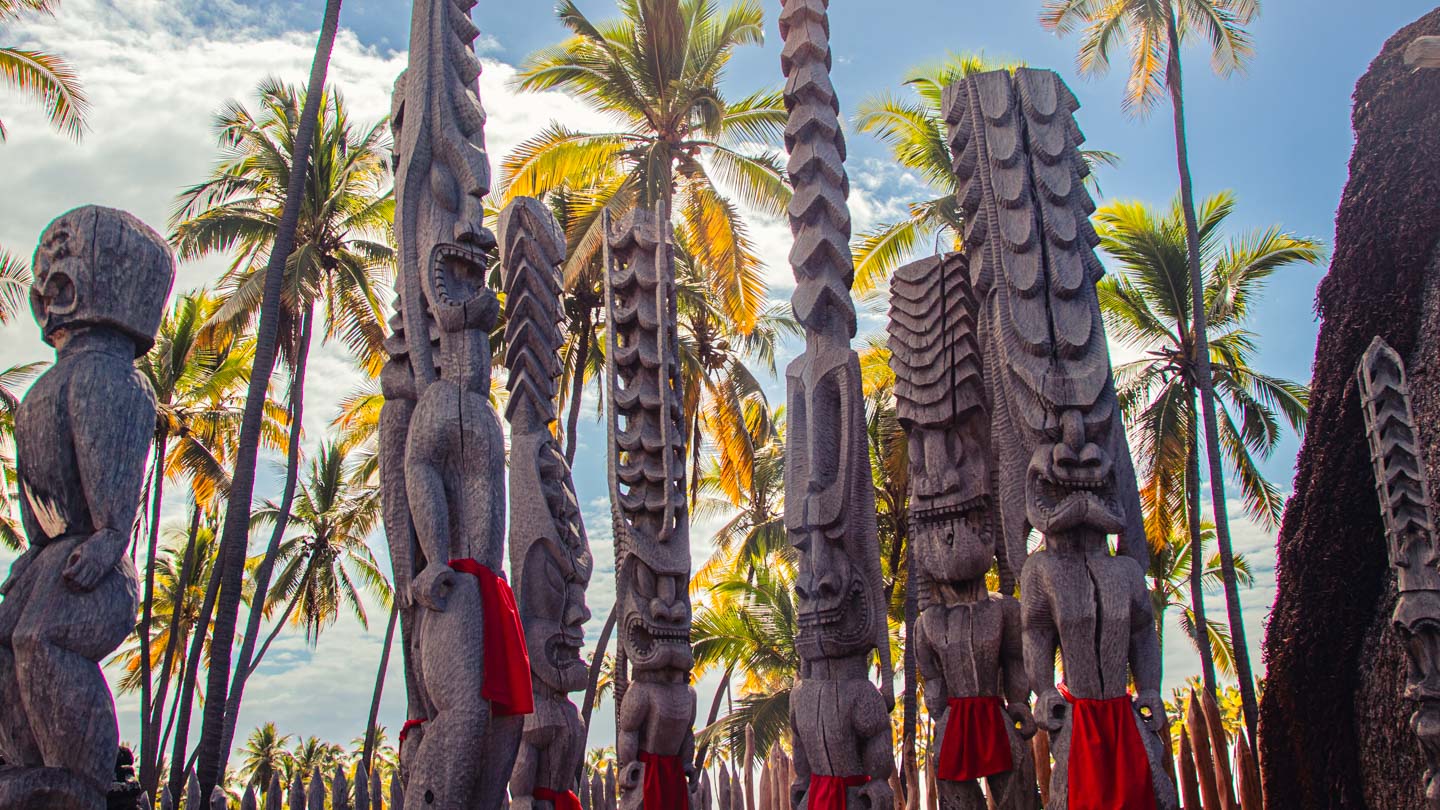
As you walk through the site, you’ll come across temple platforms, traditional thatched structures, and wooden kiʻi – carved figures that feel both powerful and watchful.
The setting itself is just as memorable.
Palm trees sway above, ancient fishponds reflect the light, and the shoreline opens into a calm, protected cove. I spotted a few sea turtles moving slowly through the water, almost unnoticed.
I arrived in the late afternoon, when the light softens and everything takes on warmer tones.
It’s a quiet place.
One that invites you to slow down and take it in, step by step.
Practical Info
- Entry is $20 per vehicle.
- The park is open daily from 8:15 AM until sunset.
- You’ll need about an hour to explore, though it’s worth giving yourself a bit more time if you want to move slowly and take it all in.
11. Into the Green at Akaka Falls
After the dry, sun-baked landscapes on the Kona side, arriving at Akaka Falls feels like stepping into a completely different world.
Located near Hilo, on the island’s lush eastern side, everything here is greener, softer, and filled with the sound of water.
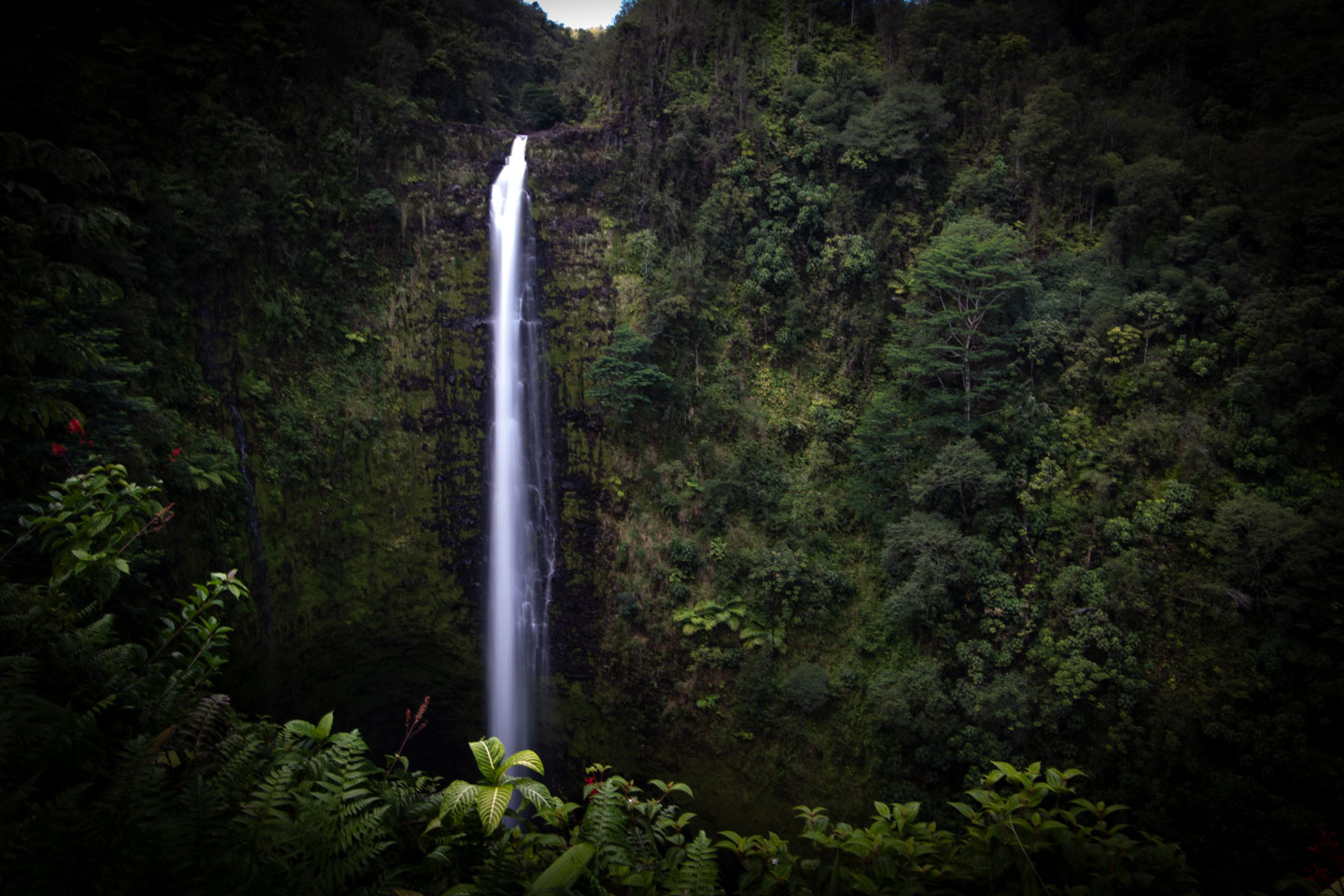
The waterfall itself drops 442 feet into a deep, tropical gorge. You don’t see it all at once – the path leads you through dense vegetation first, and then suddenly, it appears.
Tall, narrow, and steady.
The name “Akaka” is often translated as “split” or “separation,” which feels fitting when you watch the water cut through the landscape below.
It’s not a place you stay for hours.
But it leaves an impression – simple, quiet, and very alive.
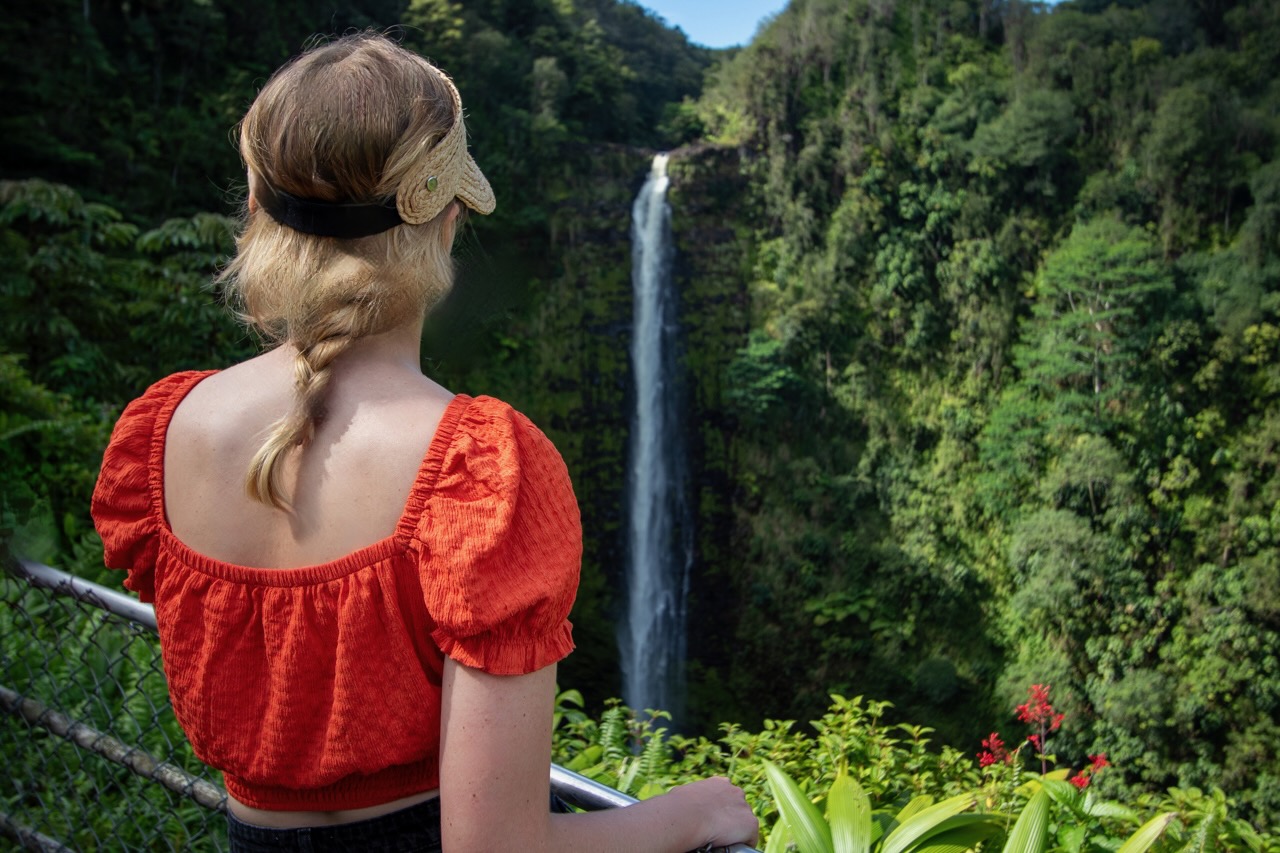
The paved loop trail (about 0.45 miles) is short and easy, especially compared to some of the island’s longer hikes.
It leads you through dense, tropical greenery, where everything feels close – leaves, moisture, the sound of water.
Along the way, you’ll catch glimpses of Kahūnā Falls, partially hidden behind the vegetation. It’s impressive in its own right, but somehow still secondary to what waits ahead.
When I visited, the air was still fresh after light rain, and the waterfall felt especially full.
As the sun moved in and out of the clouds, soft rainbows appeared in the mist – subtle, shifting, almost easy to miss if you weren’t paying attention.
I ended up standing there longer than planned, watching the water fall, feeling the spray in the air.
Quietly, without rushing.
Practical Info
- Entry is $5 per person, plus $10 for parking.
- The park is open daily from 8:30 AM to 5:00 PM.
12. A Hidden Stretch of Sand at Mahaiʻula Beach
Getting to Mahaiʻula Beach is part of the experience.
The unpaved road leads through wide lava fields, where the landscape feels open, almost empty. It’s not the smoothest drive, but it adds to the sense of being a little off the main path.
From the parking area, a short walk across dark volcanic rock brings you closer to the coast.
And then, suddenly, the scenery changes.
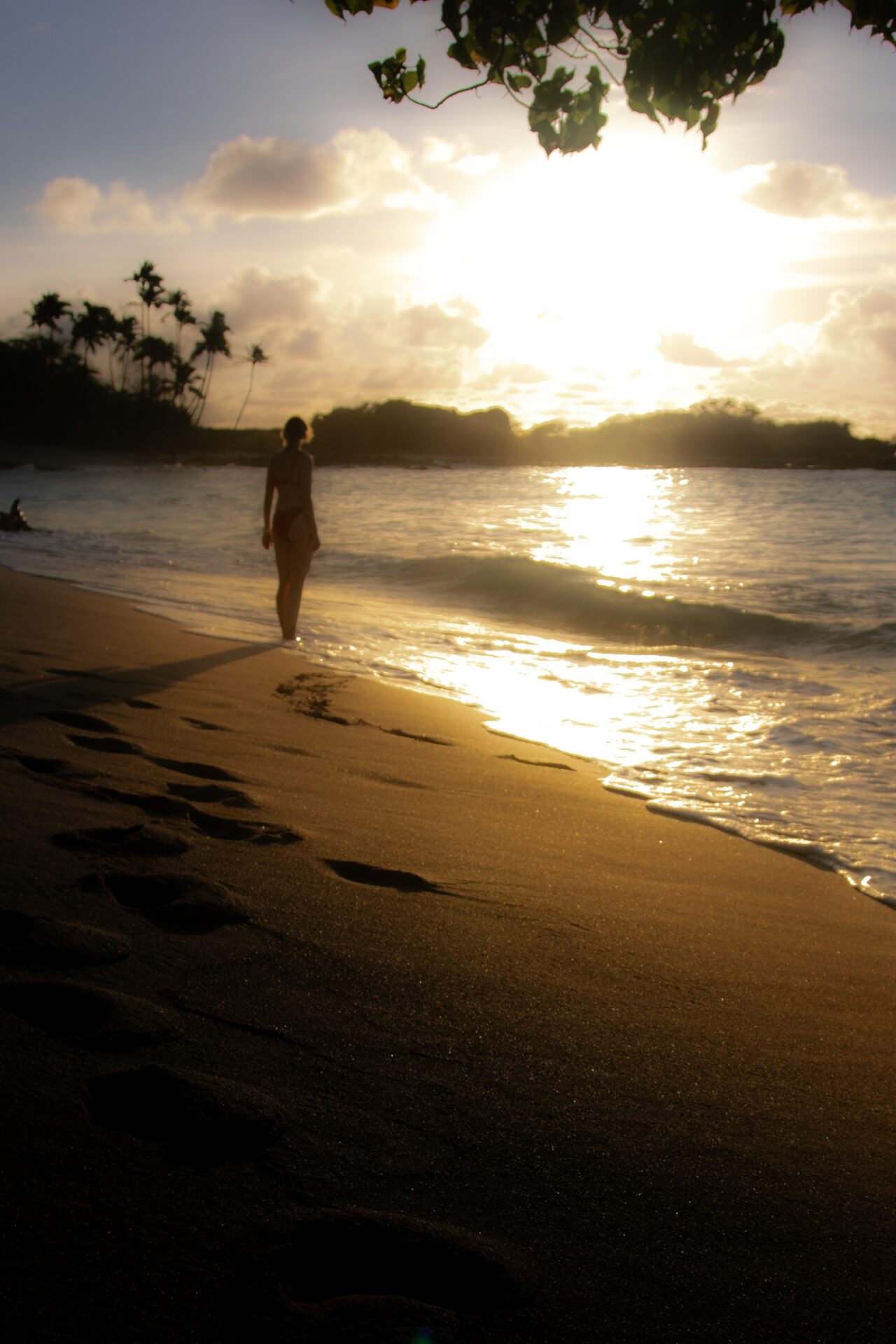
A quiet crescent of white sand, lined with palm trees, appears between the lava fields and the ocean.
It feels simple. Undeveloped.
Like a place you arrive at rather than plan.
The kind of beach where you slow down naturally – and stay longer than you expected.
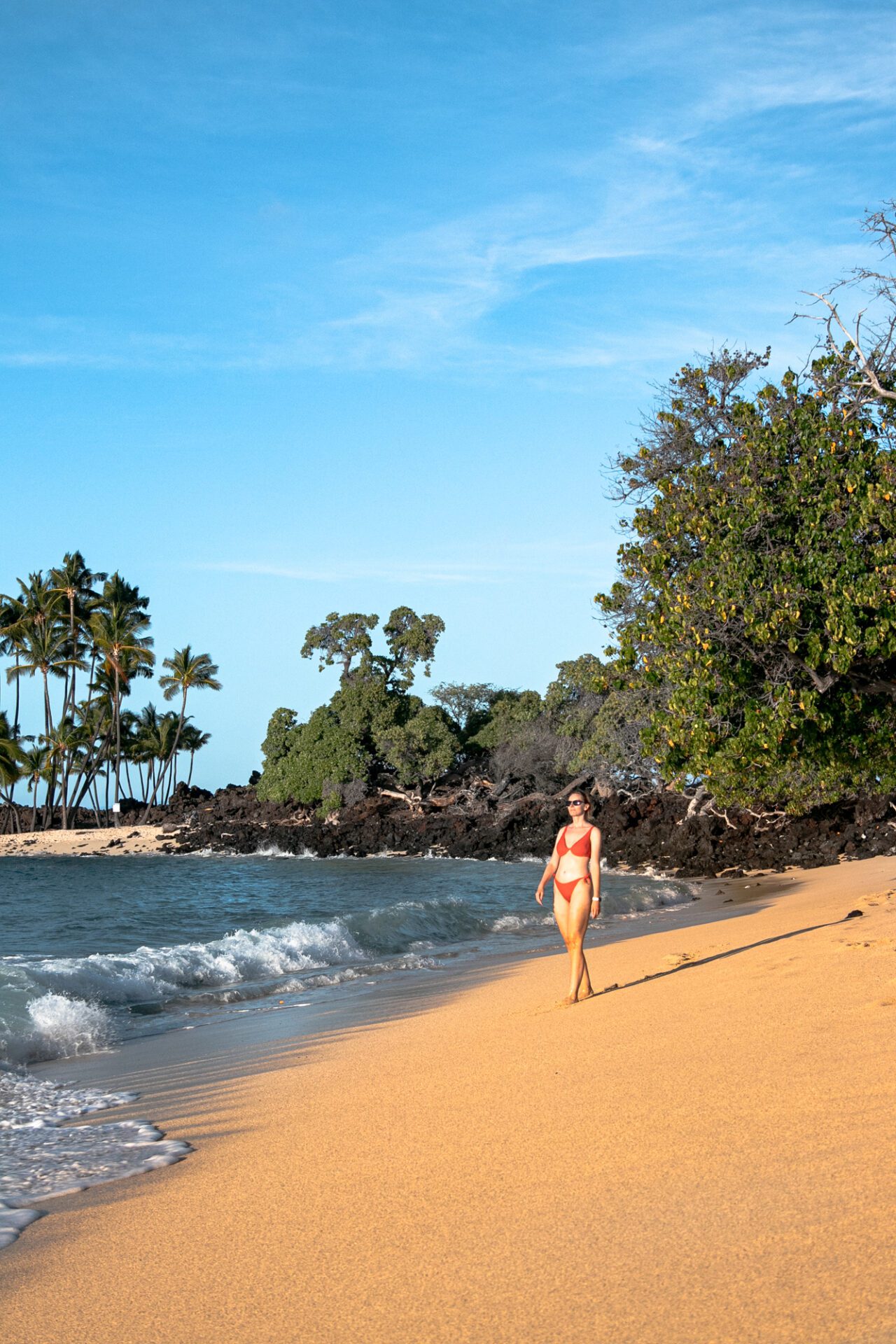
For a while, I had the beach almost to myself.
Only a few wild goats wandered nearby, moving slowly across the sand and rocks, completely unbothered.
The palm trees along the shore created natural pockets of shade, which made it easy to stay longer without feeling the intensity of the sun.
I settled in with a book, occasionally looking up – just to take in the view again.
It’s one of those places where nothing specjalnego się nie dzieje.
And that’s exactly why it feels so good.
I stayed until sunset.
The light softened, the colors shifted, and everything slowed down even more. With so few people around, it felt quiet and almost private – a simple, peaceful ending to the day.
Pro Tip
- There are no facilities here – no bathrooms, no water, no food options.
- It’s best to come prepared with everything you might need for a few hours.
How do you want to continue your Hawaiian adventure?
🌋 Volcano Exploration → 10 Things to Do in Hawai’i Volcanoes NP – Detailed guide to all trails and attractions
🍴 Culinary Discoveries → Best Places to Eat on the Big Island – My personally tested top spots
🏝️ Trip Planning → Hawaii Travel Guide – Everything you need to know before you go
🗺️ More USA Adventures → 10-Day PNW Itinerary – Explore more of America
What interests you most?
13. Slow Days in Hilo
After the dry, sunny days on the Kona side, arriving in Hilo felt like a shift in rhythm.
The occasional rain didn’t feel like a downside – it made everything softer, greener, more alive.
Hilo has a slightly worn, authentic charm. It’s not polished, but that’s exactly what makes it feel real.
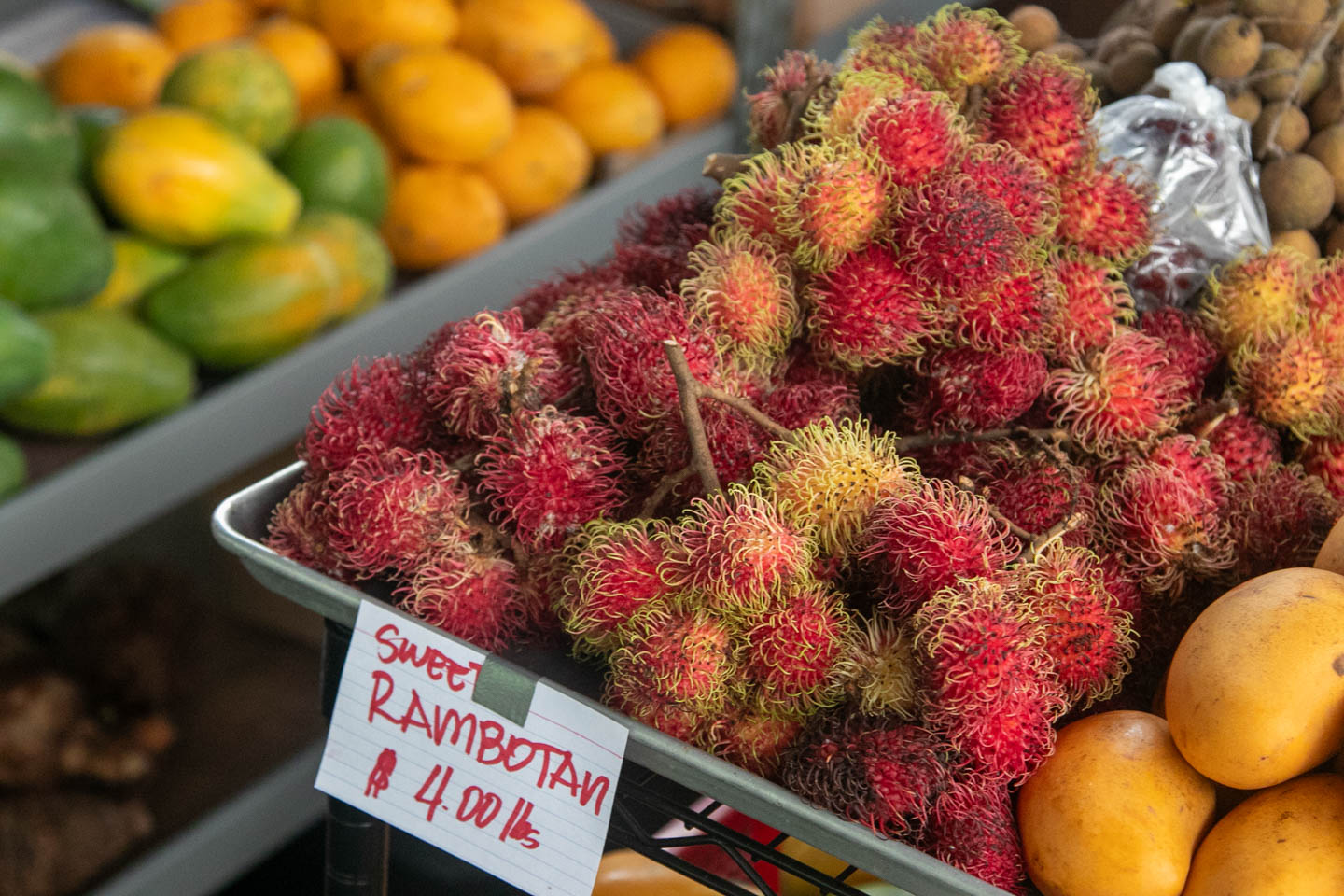
One of my favorite rituals here was visiting the local farmers market in the morning.
Trying fruits I’d never tasted before, learning their names, asking how to eat them – it felt simple and grounding. The apple bananas and lilikoi, especially, stayed with me long after.
I ended up talking to one of the vendors, who shared stories about growing up on the island while handing me extra samples with a quiet smile.
It wasn’t just about the food.
It was about the moment.
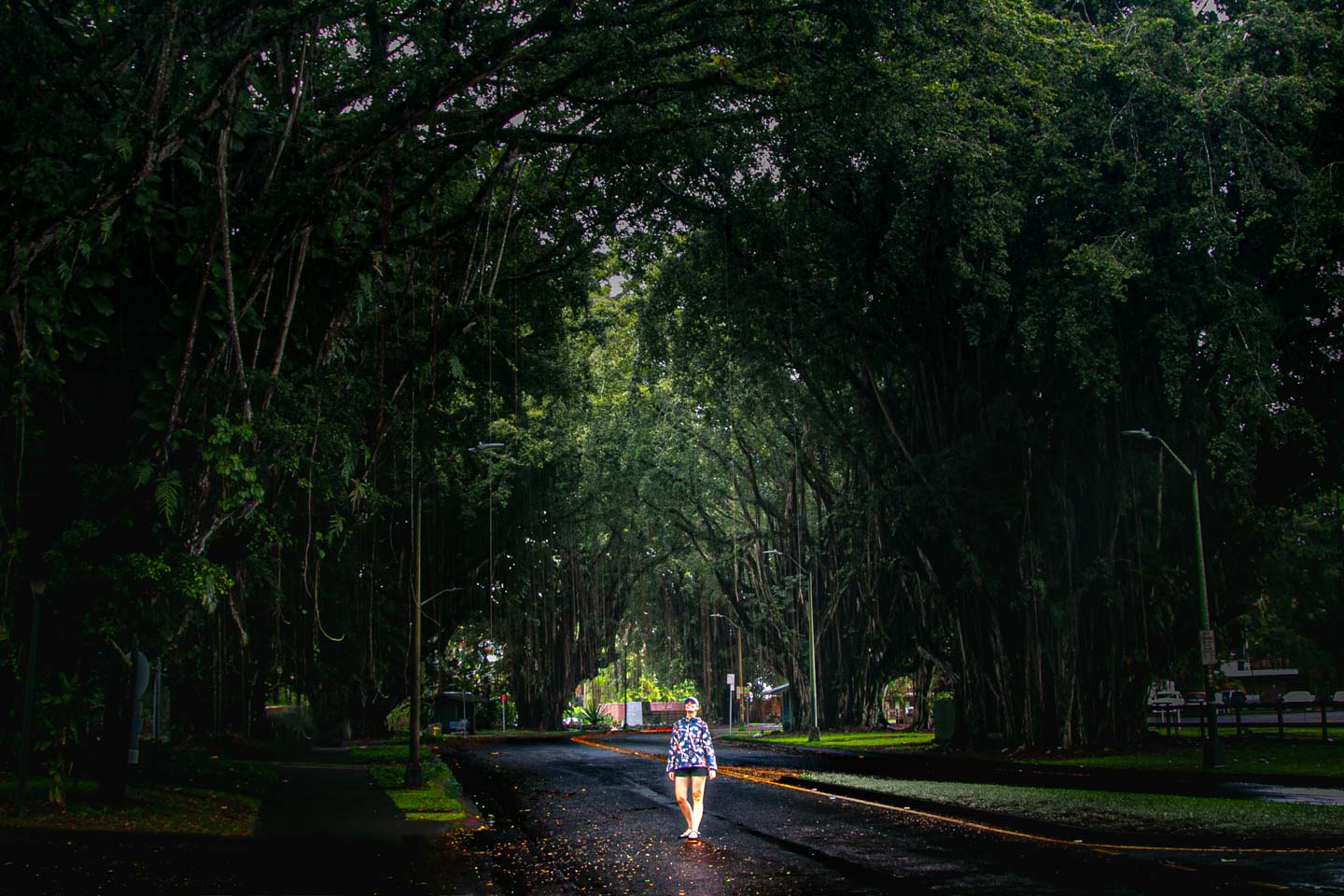
I often found myself walking along Banyan Drive, where massive trees stretch overhead, their aerial roots reaching down and creating a quiet, almost otherworldly space.
Many of them were planted decades ago by visitors – including names like Amelia Earhart and Babe Ruth. There’s something subtle about that connection to the past, as if different timelines overlap for a moment.
The Pacific Tsunami Museum brought a different kind of reflection.
Learning about the waves that once reached deep into the town – and seeing the water levels still marked on buildings – adds a layer you don’t expect at first. It stays with you.
Afterward, I needed something calmer.
Liliʻuokalani Gardens became that place. During one of the heavier rain showers, I found shelter near the pagoda, watching the surface of the water shift with each drop of rain.
It felt still. Grounding.
And then, when the rain passed, a rainbow appeared over Hilo Bay – clear and vivid, almost unreal.
One of those moments that feels simple, but somehow complete.
Practical Info
- The Pacific Tsunami Museum costs $5-15 and is open daily from 10 AM to 4 PM.
- The Lyman Museum (great for learning more about Hawaiian history) costs $2-7 and is open on weekdays from 10 AM to 4:30 PM.
- The Hilo Farmers Market takes place daily from 7 AM to 3 PM.
14. Chasing Light at Rainbow Falls
Just a short drive from downtown Hilo, Rainbow Falls is one of those places that feels both accessible and quietly special.
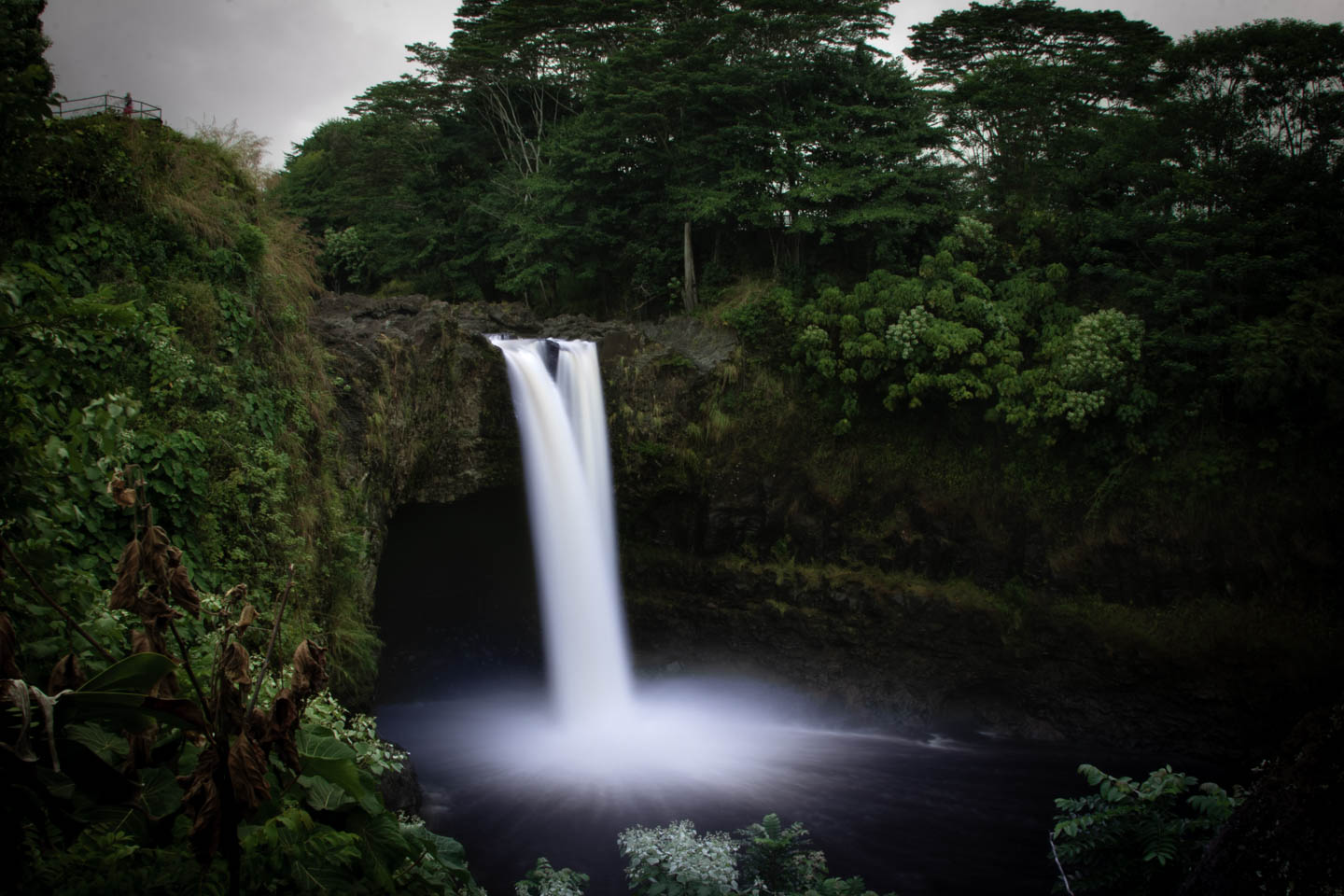
The waterfall drops about 80 feet into a lush, green gorge – steady, rhythmic, almost calming to watch.
If you arrive in the morning, when the light is just right, you’ll often see soft rainbows forming in the mist.
I timed my visit for mid-morning, and it was worth it. The light shifted gently, and the rainbows appeared and disappeared with it – subtle, never quite the same twice.
The falls flow over a lava cave that, according to Hawaiian tradition, was home to Hina, the mother of Maui. Knowing that adds another layer to the place – something you don’t see, but can feel.
There’s a main viewing area, but if you follow the path to the side, you can also walk above the falls.
From there, the perspective changes completely – the river moves calmly, and then suddenly disappears over the edge.
It’s a short stop, but one that stays with you.
Simple. Quiet. And, somehow, complete.
15. A Quiet Moment at Laupāhoehoe Point
My last stop on the Big Island was Laupāhoehoe Point – a place that feels both beautiful and reflective.
Located on the northeastern coast, it’s where the ocean meets the land in a more intense way. Waves crash against the dark lava rocks, constant and powerful.
It’s easy to just sit there for a while.
Watching the rhythm of the water, noticing how the landscape has been shaped over time.
There’s a history here, too – one that adds weight to the place and changes how you experience it.
I found a spot on the rocks and stayed longer than planned, just observing.
It’s not a place that asks for much.
Just your attention.
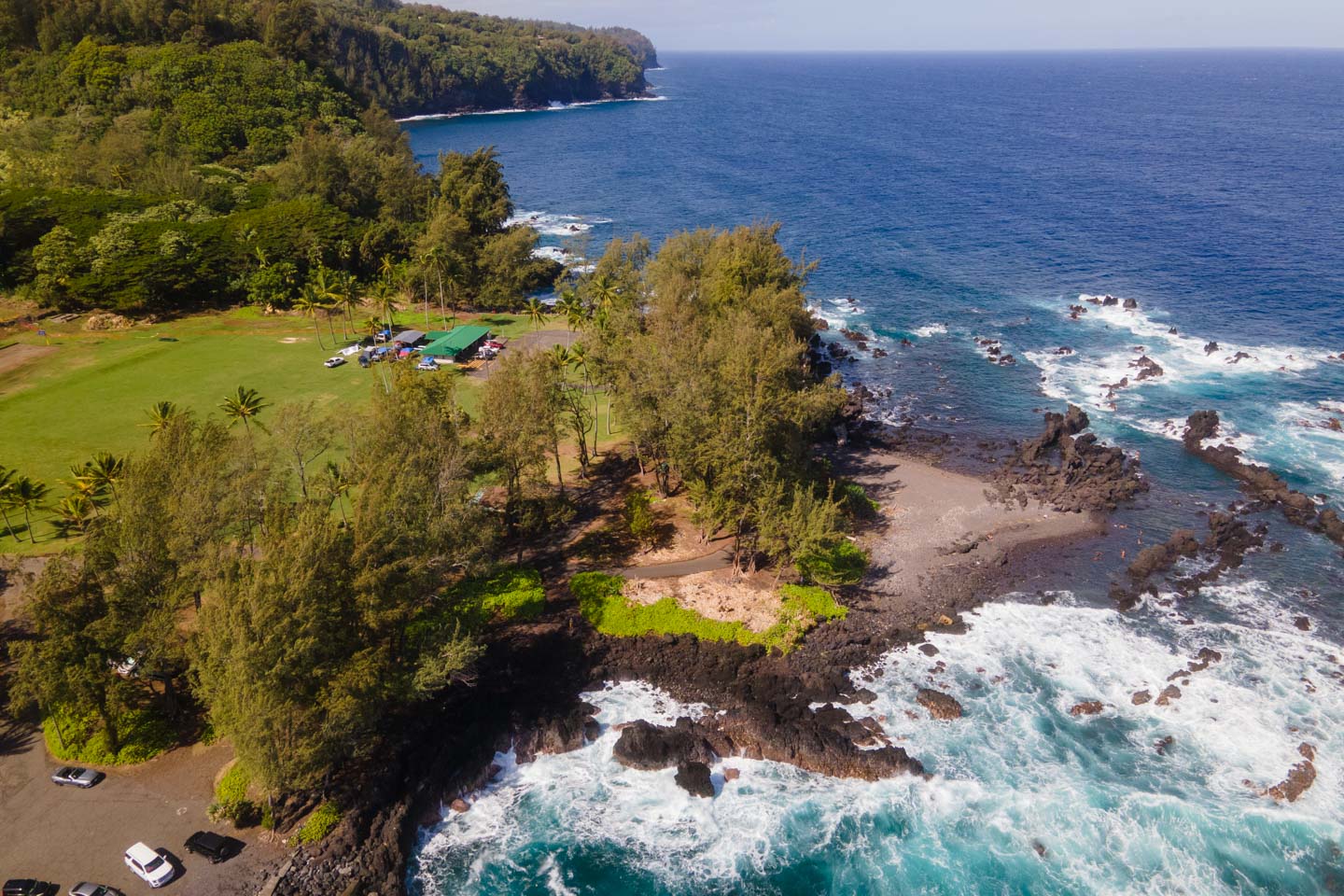
The park itself feels calm at first – open grass, gentle slopes, a quiet place to sit.
But the shoreline tells a different story.
Small memorial plaques scattered throughout the area share what happened here in 1946, when a tsunami took the lives of 24 people – many of them children and their teachers.
Reading their names and ages, while standing in a place that looks so peaceful today, changes the way you see it.
It adds weight.
I stayed for a while, watching the waves move against the rocks, thinking about how this island is shaped by both creation and destruction – often at the same time.
It felt like a meaningful place to end the journey.
Not dramatic.
Just honest.
Travel lighter, even before you leave.
start with something simple.
Download The Minimum Plan – Slow Travel:
Your Big Island Adventure Starts Here
The Big Island changed the way I think about travel.
It’s not just about how much you see – but how deeply you experience it.
Where else can you stand on volcanic ground still shaping itself, swim alongside sea turtles, and end the day under a sky full of stars?
There’s something raw about this island.
Something grounding.
But at the same time, it offers quiet moments – sunsets over the ocean, warm air carrying the scent of flowers, the steady rhythm of waves in the background.
During these ten weeks, I realized that the most meaningful trips aren’t the busiest ones.
They’re the ones that stay with you.
I hope this guide helps you find your own moments here – the ones that feel simple, real, and somehow exactly right.
Ready for your Hawaiian adventure?
- Hawaii Travel Guide – Practical info about planning your trip
- 10 Things to Do in Hawai’i Volcanoes NP – Detailed park guide
- Best Places to Eat on the Big Island – My best culinary discoveries
- 10-Day Pacific Northwest Itinerary – Explore more of the United States
Which place on the Big Island stayed with you the most?
I’d love to hear what caught your attention – or what you’re planning to see.
If this guide was helpful, feel free to save it for later or share it with someone who might be dreaming about Hawaiʻi