
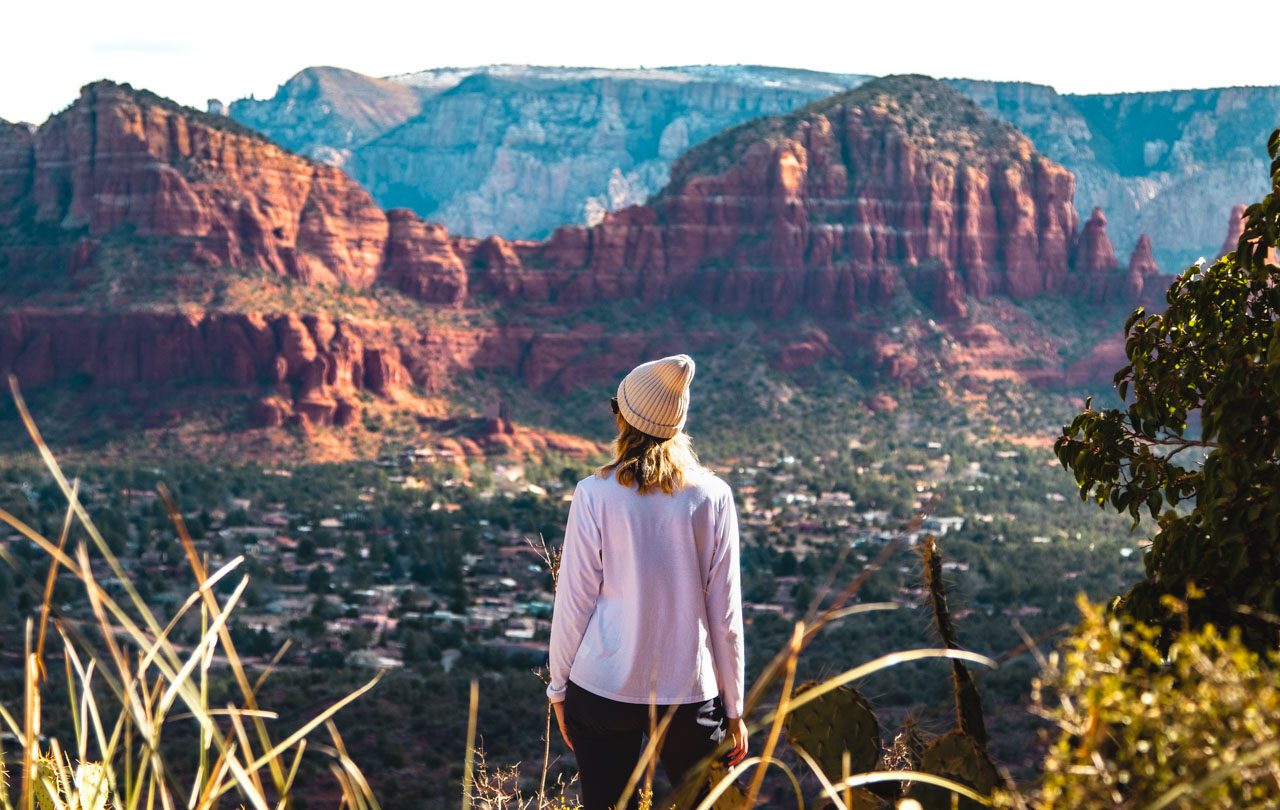
Sedona is one of those places that stays with you long after the trip ends.
Not just because of the red rocks or famous trails, but because of the way this landscape makes you slow down without even noticing it.
The silence feels deeper here. The space feels endless. And somehow, even an ordinary walk starts feeling a little different.
If you’re wondering what to see in Sedona, I gathered 14 places that genuinely stayed with me – from panoramic hikes and hidden caves to peaceful corners by the creek where the desert suddenly turns green.
You’ll find iconic viewpoints, quieter trails, practical travel tips, and places that feel beautiful not only in photos, but also in the moments between them.
I also included everything I wish I knew before visiting: when to go, where to stay, how to avoid crowds, and which places are actually worth waking up early for.
Because Sedona isn’t only about sightseeing. It’s about the feeling this place leaves behind.
And honestly, few places do that better.
Planning a longer Arizona adventure? Check out my complete 7-day Arizona road trip itinerary – Sedona is just one of many magical stops in this state.
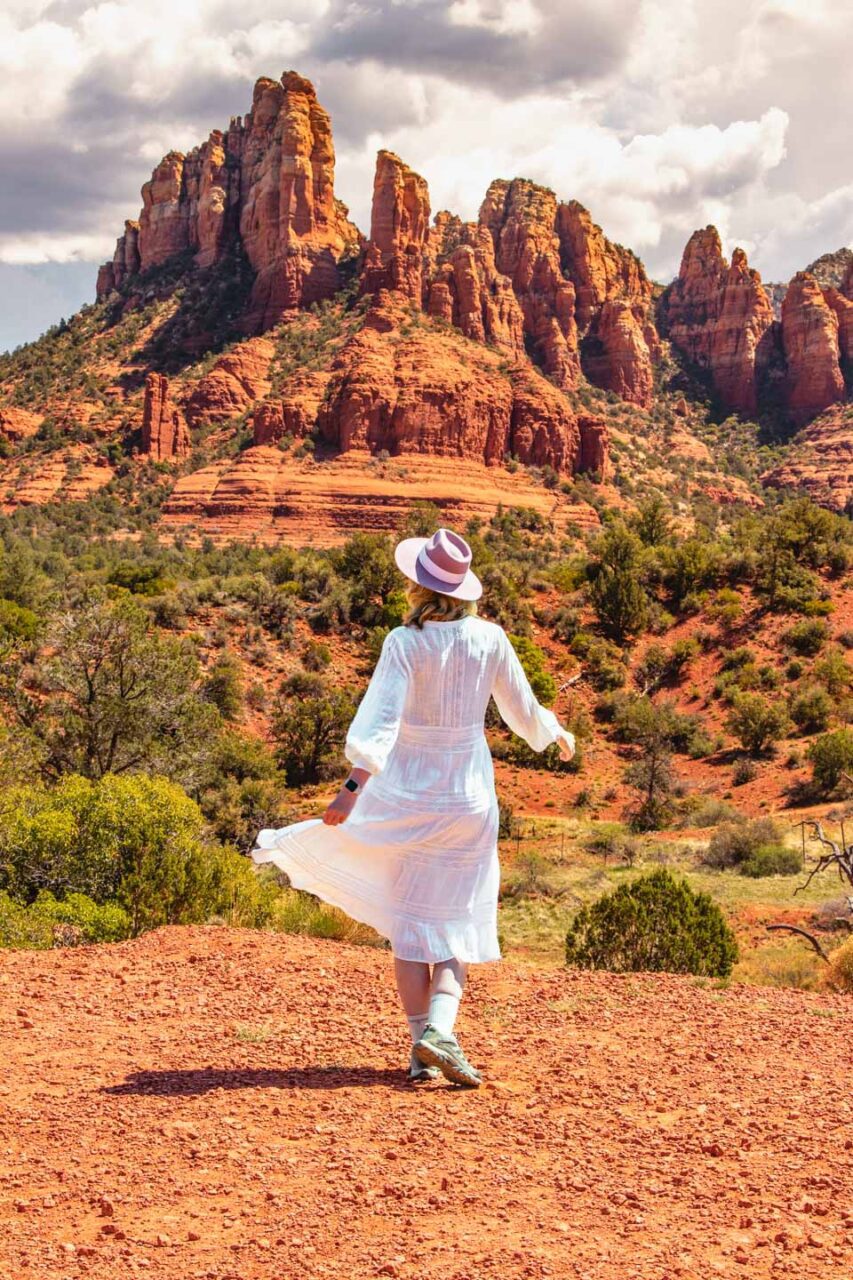
Best Hikes in Sedona, Arizona
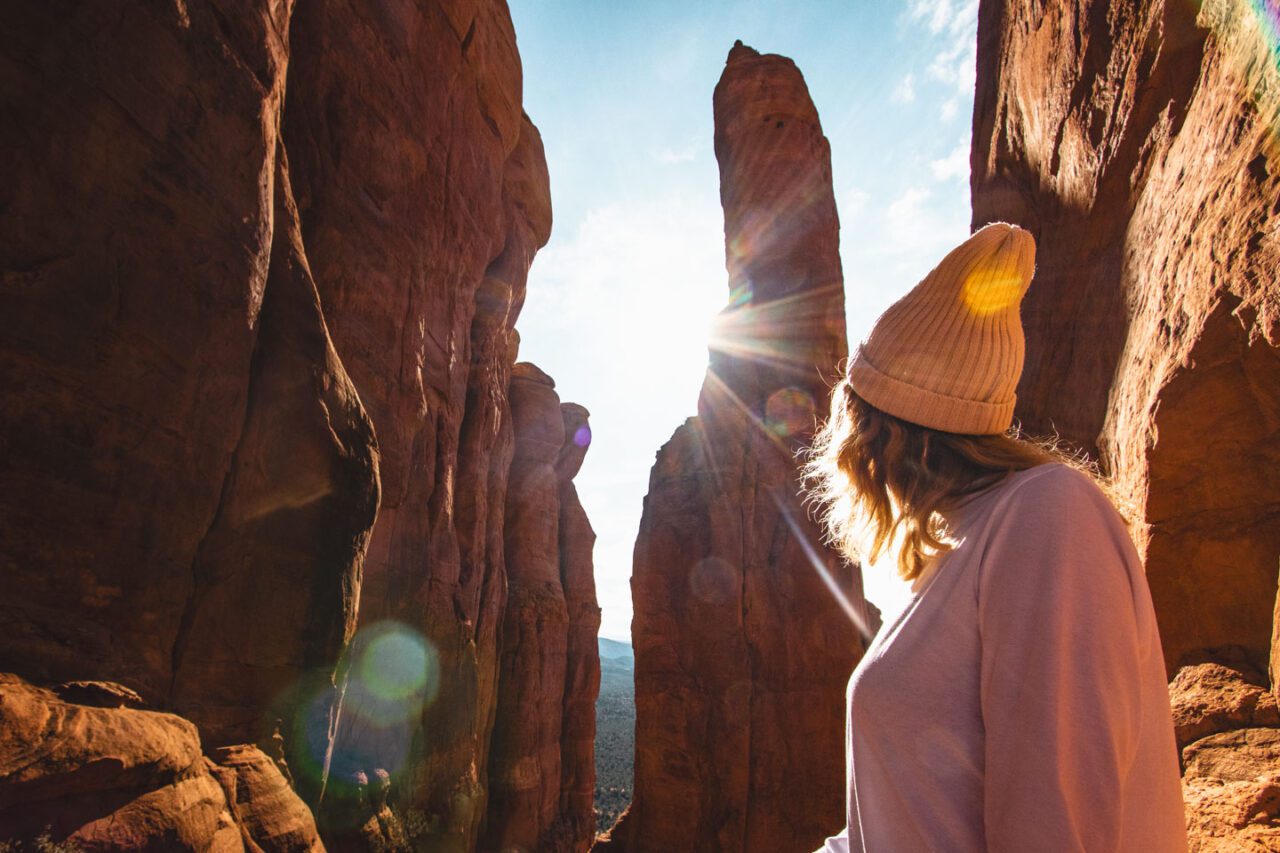
1. Cathedral Rock
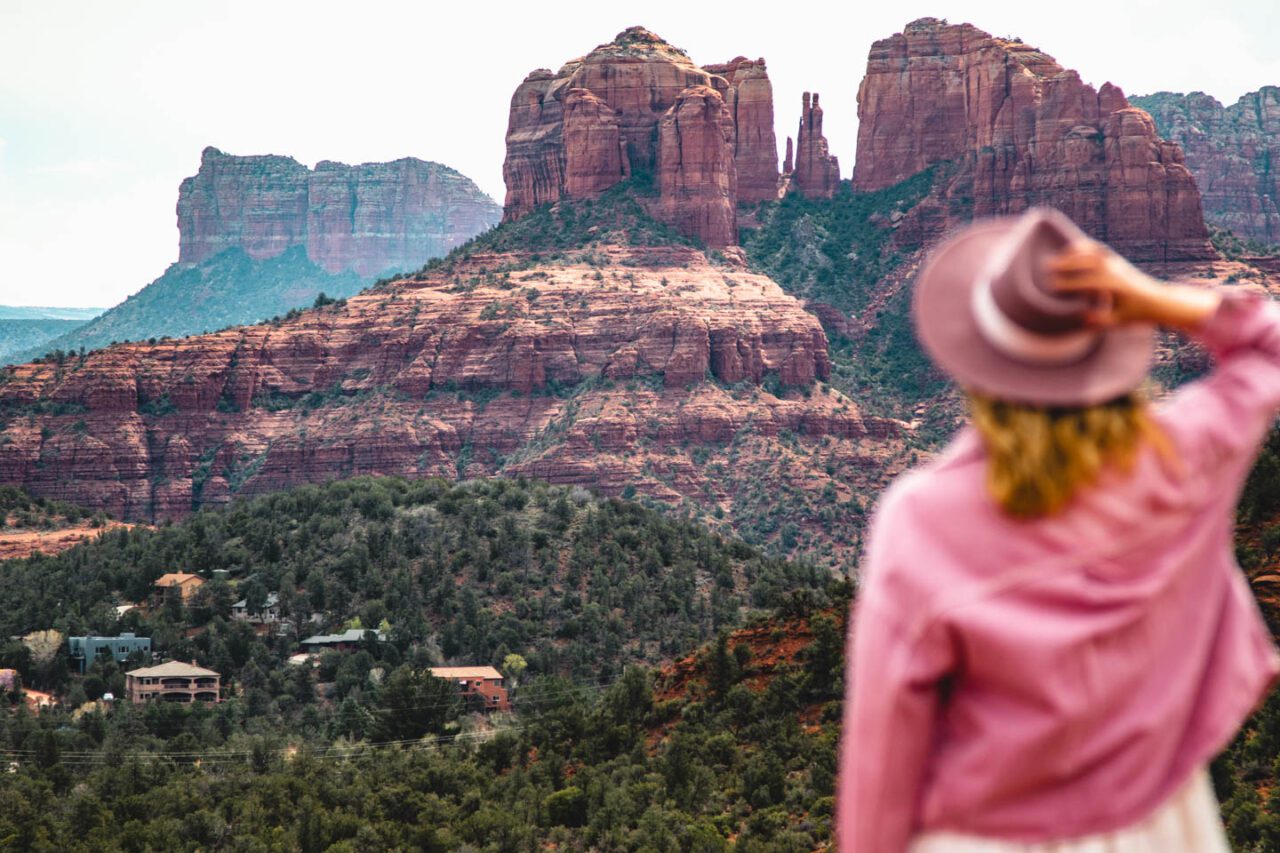
Cathedral Rock is one of those places you remember for a long time.
This impressive, perfectly nature-carved rock rises from the Coconino National Forest landscape like a silent cathedral of red sandstone.
This is where many travelers and photographers stop for longer – not just for the views, but for the atmosphere that immediately slows your breathing.
This place is also one of Sedona’s four famous vortexes – points that, according to local stories, are conducive to calming, meditation, and that kind of internal “reset.”
Regardless of whether you believe in the energy of places, Cathedral Rock can do something important: quiet your thoughts and focus you on what’s right in front of you.
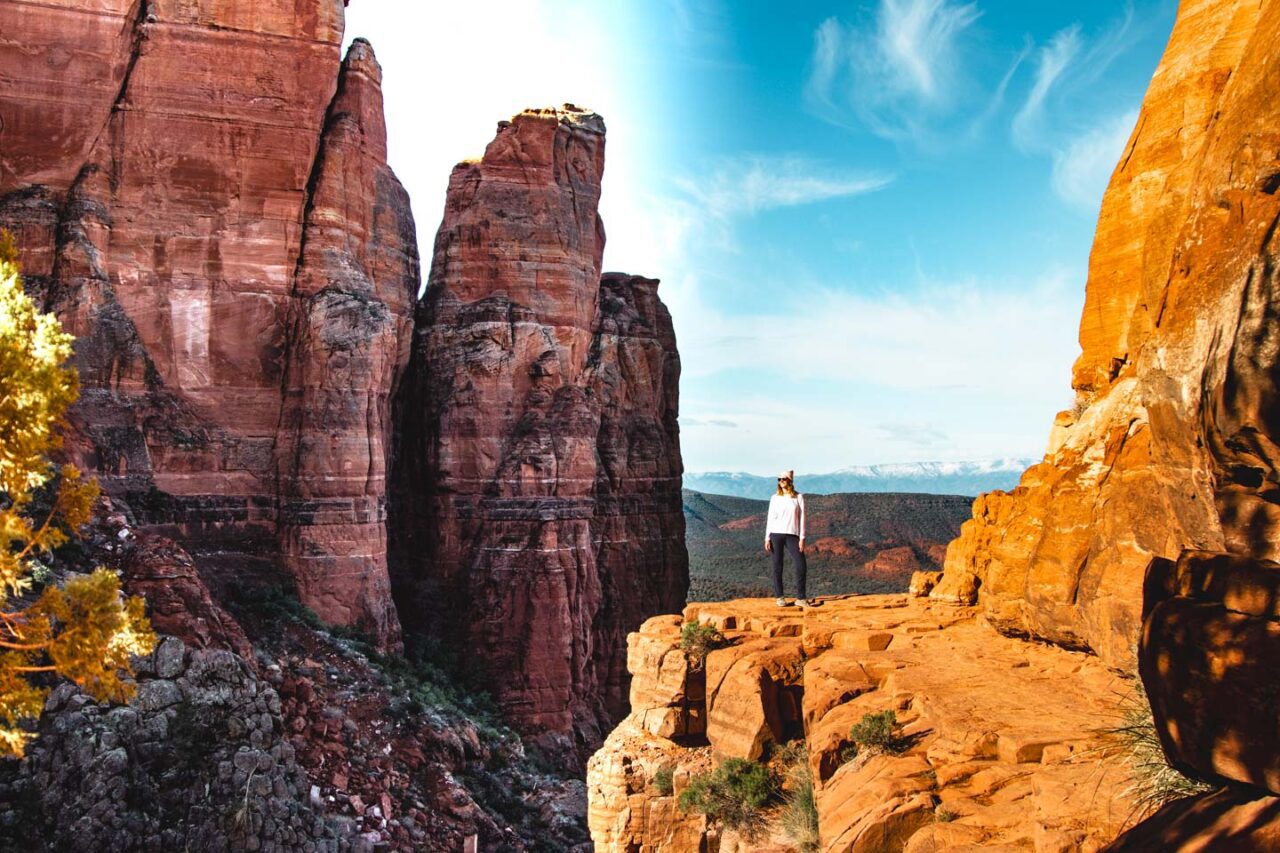
The most beautiful views await at the very top, reached by the short but truly steep Cathedral Rock Trail No. 170.
This is one of those approaches where hands are needed as often as feet – and where each step has a touch of adrenaline.
But once you reach the top, the entire climb stops mattering.
Before you, Sedona’s red rocks open up, Oak Creek valley, and that characteristic, desert-lit landscape that’s hard to compare to anything else.
If you want to feel this place truly for yourself, choose early morning or sunset – that’s when Sedona is quietest, and the light arranges itself most beautifully on the sandstone.
Practical Information
- Trail Length: 1.9 km (1.2 miles)
- Hiking Time: 1-2 hours
- Elevation Gain: 226 m (741 feet)
- Difficulty Level: moderate – short but steep
- Parking: Cathedral Rock Trailhead parking is usually open Monday through Wednesday. Thursday through Sunday, it’s best to leave your car at North SR 179 Park & Ride and take the free bus #15 (runs year-round).
- Fee: Red Rock Pass ($5-20) or America the Beautiful Pass – starting January 2026: $80 for US residents, $250 for non-residents
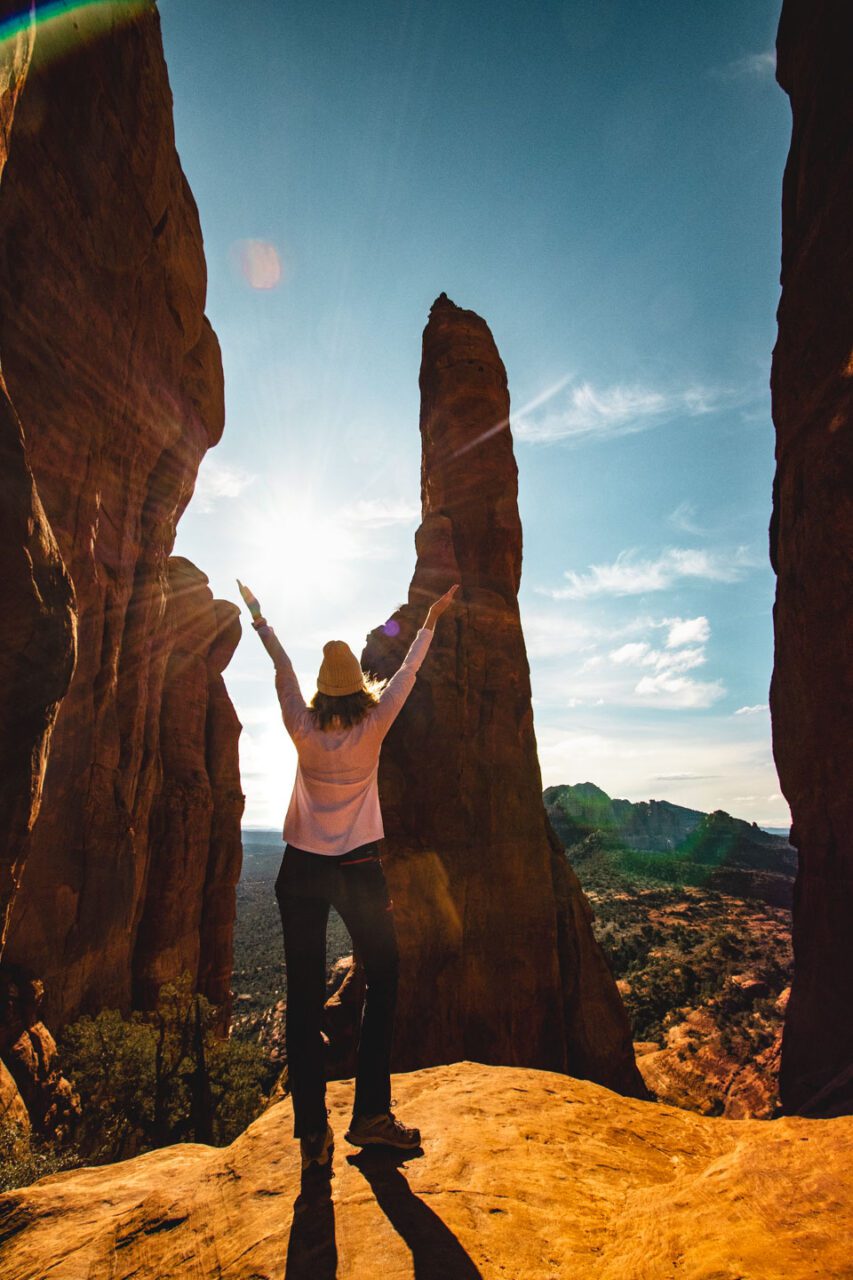
2. Bell Rock
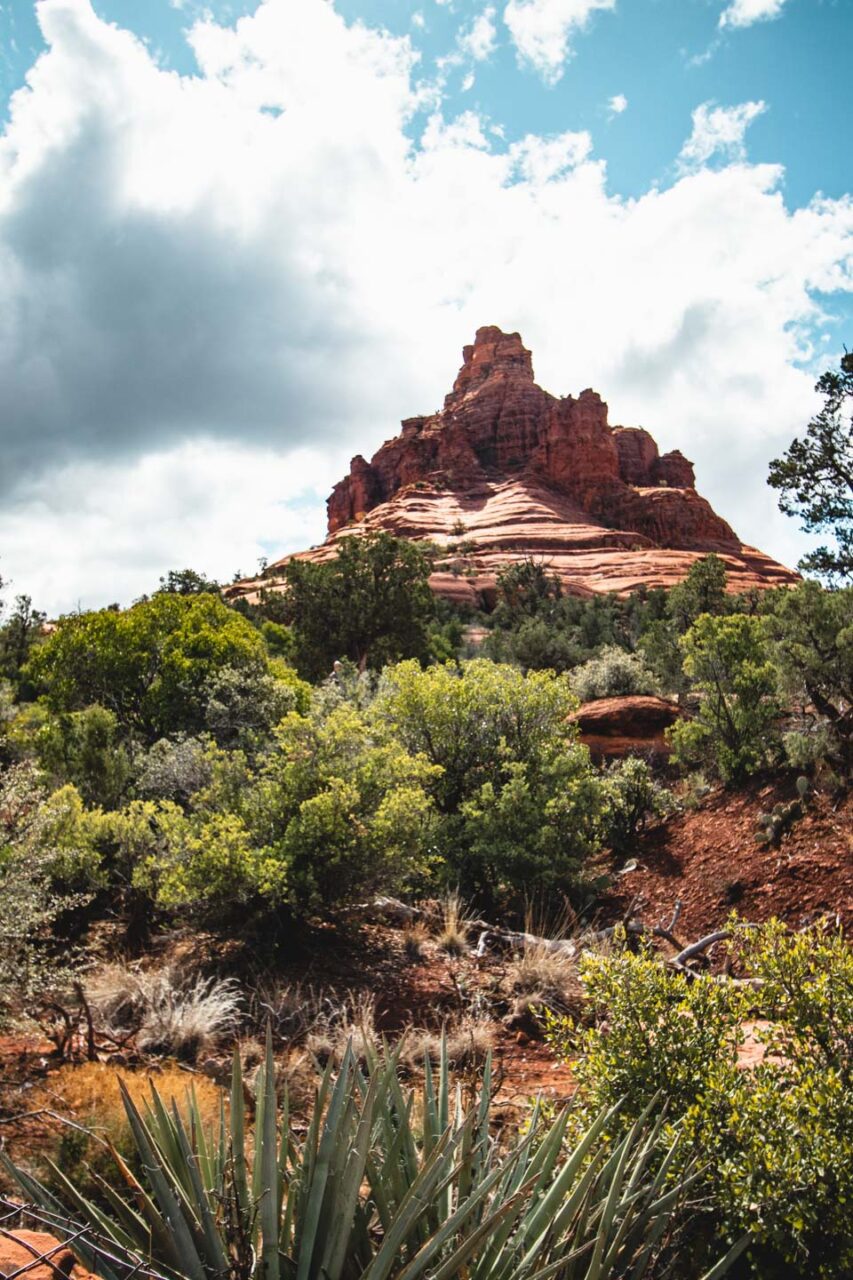
Bell Rock is one of those rocks you can’t mistake for anything else.
Its shape really does resemble a huge bell – perfectly symmetrical, distinct, beautifully standing out against the sky. It’s a place that catches your eye from first sight.
Like Cathedral Rock, Bell Rock is considered one of Sedona’s vortexes. Some come here for energy and meditation, others simply for space and peace – and each approach is welcome here.
Due to steep walls, it’s also a popular spot among people who like to climb.
But you don’t need to be a climbing ninja to feel the magic of this place. Several trails run around Bell Rock: from an easy walk along Bell Rock Pathway to more demanding approaches to the rock that give some adrenaline and lots of satisfaction.
No matter which path you choose – the views here are always worth the effort. Light arranges itself differently on Bell Rock at every time of day, and it makes the landscape look like a living Arizona postcard.
Practical Information
- Trail Length: 1.6-5.8 km (1-3.6 miles)
- Hiking Time: 1-2.5 hours
- Elevation Gain: about 122 m (400 feet)
- Difficulty Level: from easy walk to more demanding approaches
- Parking: Courthouse Vista Trailhead or Bell Rock Pathway Trailhead Parking Lot
- Fee: as above
3. Courthouse Butte
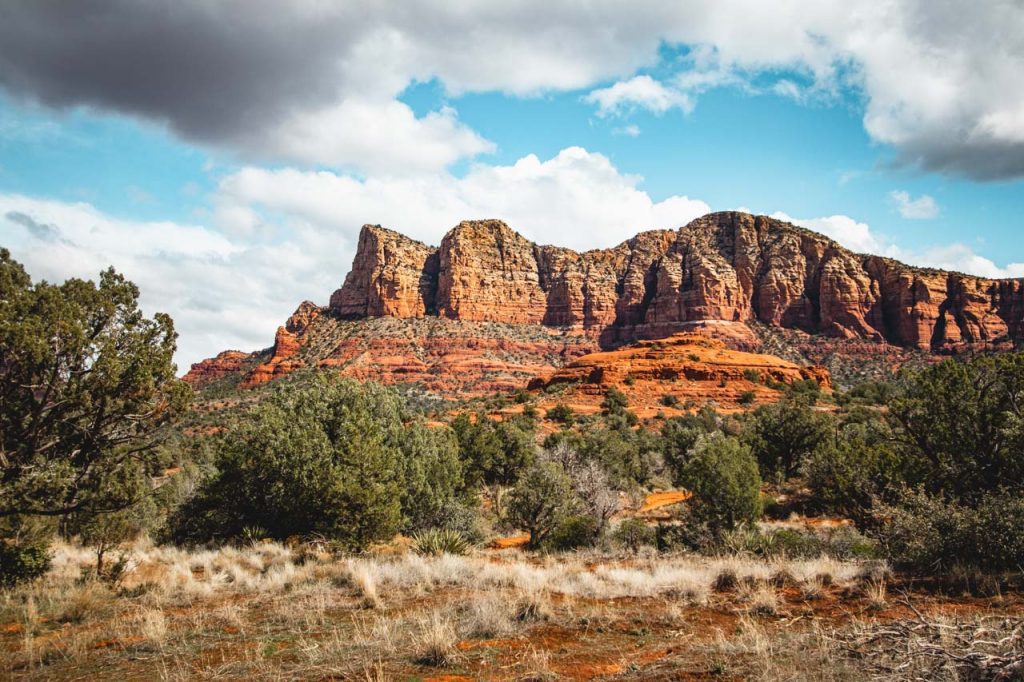
Courthouse Butte is another beautiful formation in Sedona, located right next to Bell Rock.
Powerful, calm, carved over millions of years – it looks a bit like a huge stone building watching over the entire valley. Hence its name.
The rock rises to about 1662 m above sea level, so it’s higher than Bell Rock, and its massive silhouette impresses from every side. It’s a great place for people who like trails with space and wide frames.
The beautiful Courthouse Butte Loop Trail runs around Courthouse Butte – a trail that lets you see this area from different perspectives and capture shots of both Courthouse and Bell Rock.
It’s a peaceful, red-immersed walk, perfect for late morning or afternoon.
Practical Information
- Trail Length: 6.8 km (4.2 miles)
- Hiking Time: about 2.5 hours
- Elevation Gain: 104 m (341 feet)
- Difficulty Level: moderate
- Parking: Courthouse Vista Trailhead or Bell Rock Pathway Trailhead Parking Lot
- Fee: as above
4. Devil’s Bridge
Devil’s Bridge is one of those Sedona attractions you hear about before you even get here.
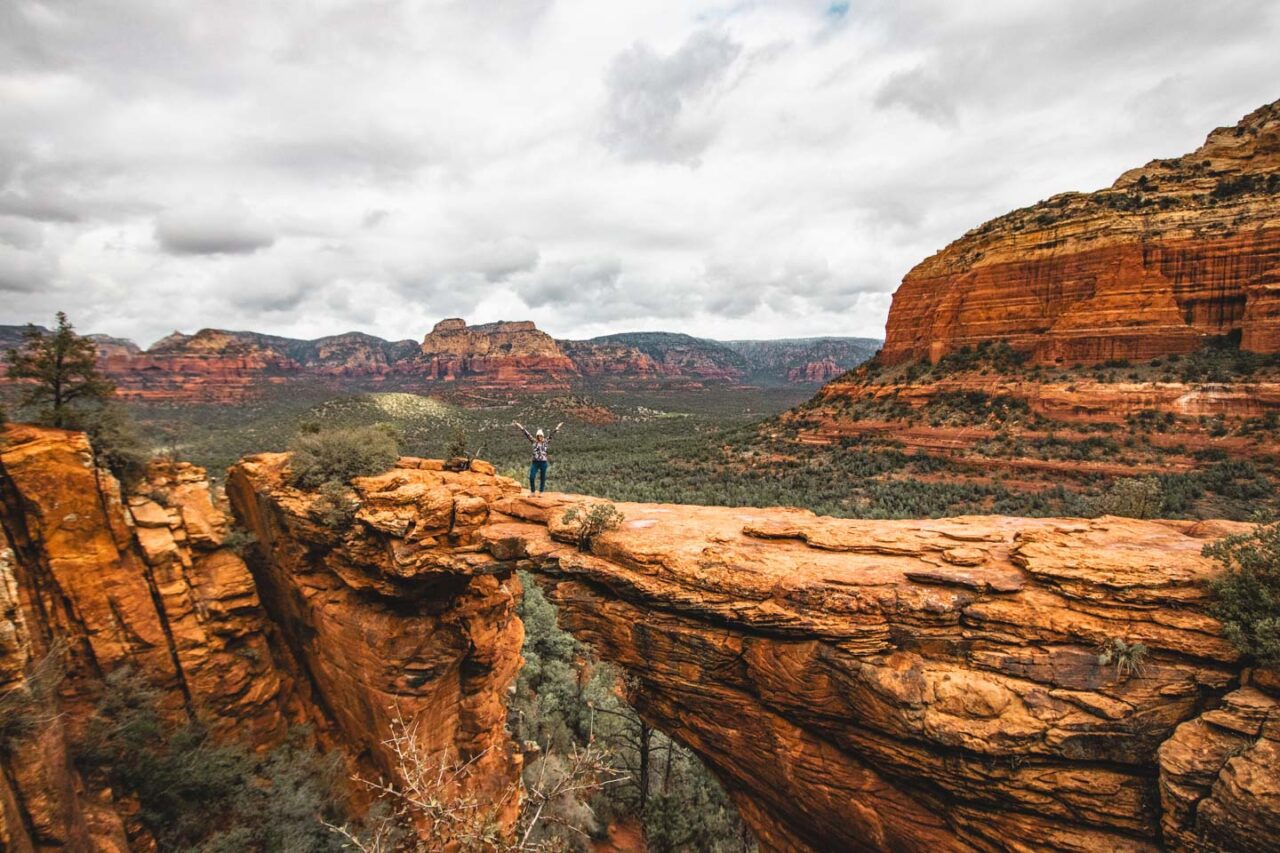
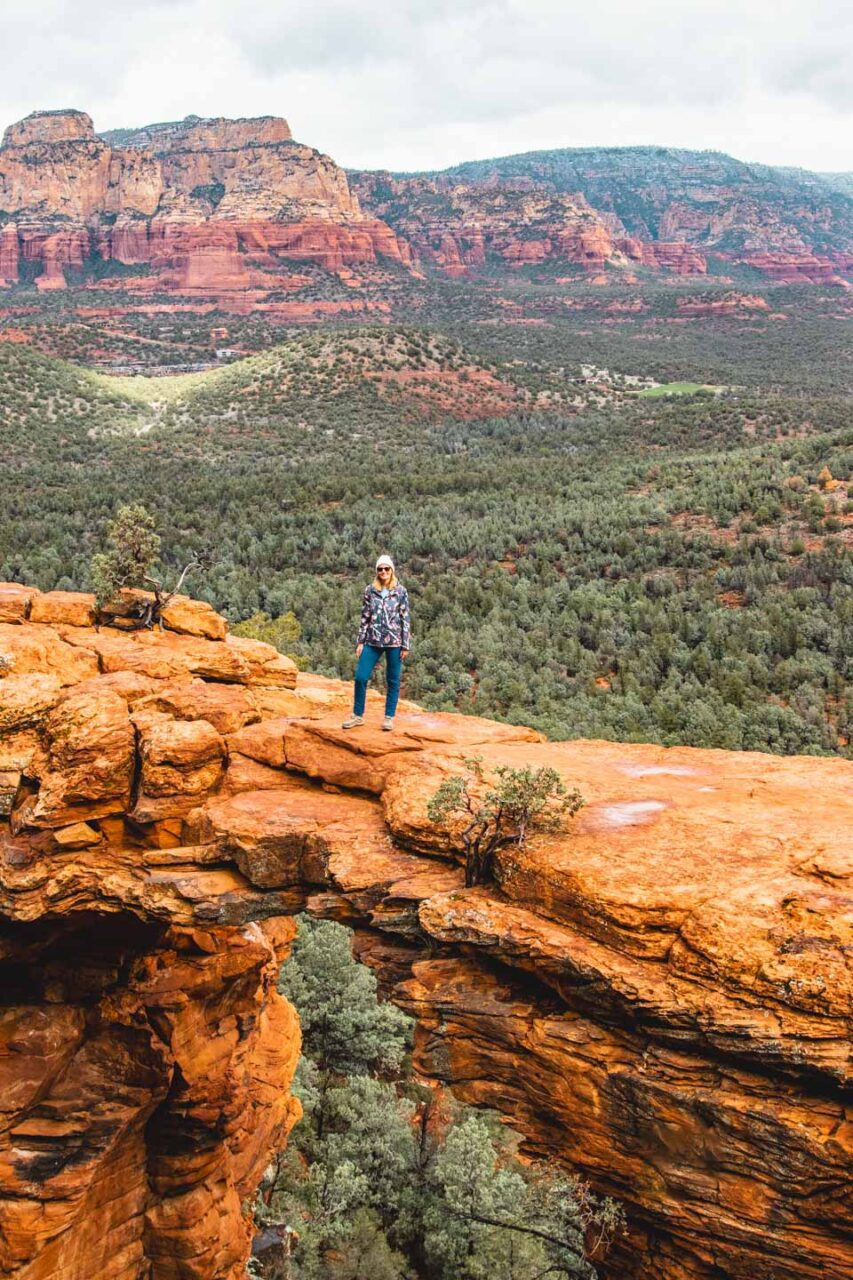
It’s the largest natural arch in the area – tall, slender, suspended above a desert valley in a way that immediately impresses. It’s about 14 meters long and 16 meters high, but in person it seems much larger.
The most unique thing is that you can walk onto the arch itself.
Narrow, only a few feet wide, it gives a moment of light adrenaline and simultaneously one of Sedona’s most beautiful views. It’s the kind of place you remember for a long time – and which most people return to at least in their thoughts.
The most convenient way to reach the arch is starting from Mescal Trailhead and following Devil’s Bridge Trail No. 120.
The route is pleasant, slightly uphill in places, and the last section leads over several stone steps. Nothing difficult, and the views along the way do their job.
However, Devil’s Bridge is one of the most crowded places in Sedona.
If you want to avoid the line for a photo on the arch and feel this place truly for yourself, choose early morning. That’s when the light is most beautiful, and the moment at the top – quietest.
Practical Information
- Trail Length: 6.3-9.3 km (3.9-5.8 miles)
- Hiking Time: 1.5-2 hours
- Elevation Gain: 161 m (528 feet)
- Difficulty Level: moderate
- Parking: Mescal Trailhead – free / Dry Creek Road Trailhead – requires Red Rock Pass
- Alternatively: free bus #11 (Thursday-Sunday, year-round)
- Fee: as above
5. Boynton Canyon
Boynton Canyon is one of those places in Sedona where landscape and atmosphere go hand in hand.
It’s one of the most picturesque canyons in the area – wide, quiet, and surrounded by red rock walls that change color with daylight.
This place is also considered one of the vortexes, so it attracts both nature lovers and people seeking calm.
The canyon is a real treat for those who like combining nature and history. Along the way you’ll encounter diverse plants, shade from trees, and fragments of ancient cultures.
This is important terrain for Hopi and Yavapai tribes – petroglyphs and ruins are found in the area, reminding us how long and rich this region’s history is.
Boynton Canyon Trail No. 47 leads to Boynton Canyon. It’s pleasant, moderately easy, and the views reward every kilometer.
It’s also a great choice for families – the route isn’t technical, and nature makes a really beautiful impression here.
Practical Information
- Trail Length: 10.1 km (6.3 miles)
- Hiking Time: 3-4 hours
- Elevation Gain: 244 m (800 feet)
- Difficulty Level: moderate
- Parking: Boynton Pass Road
- Fee: as above
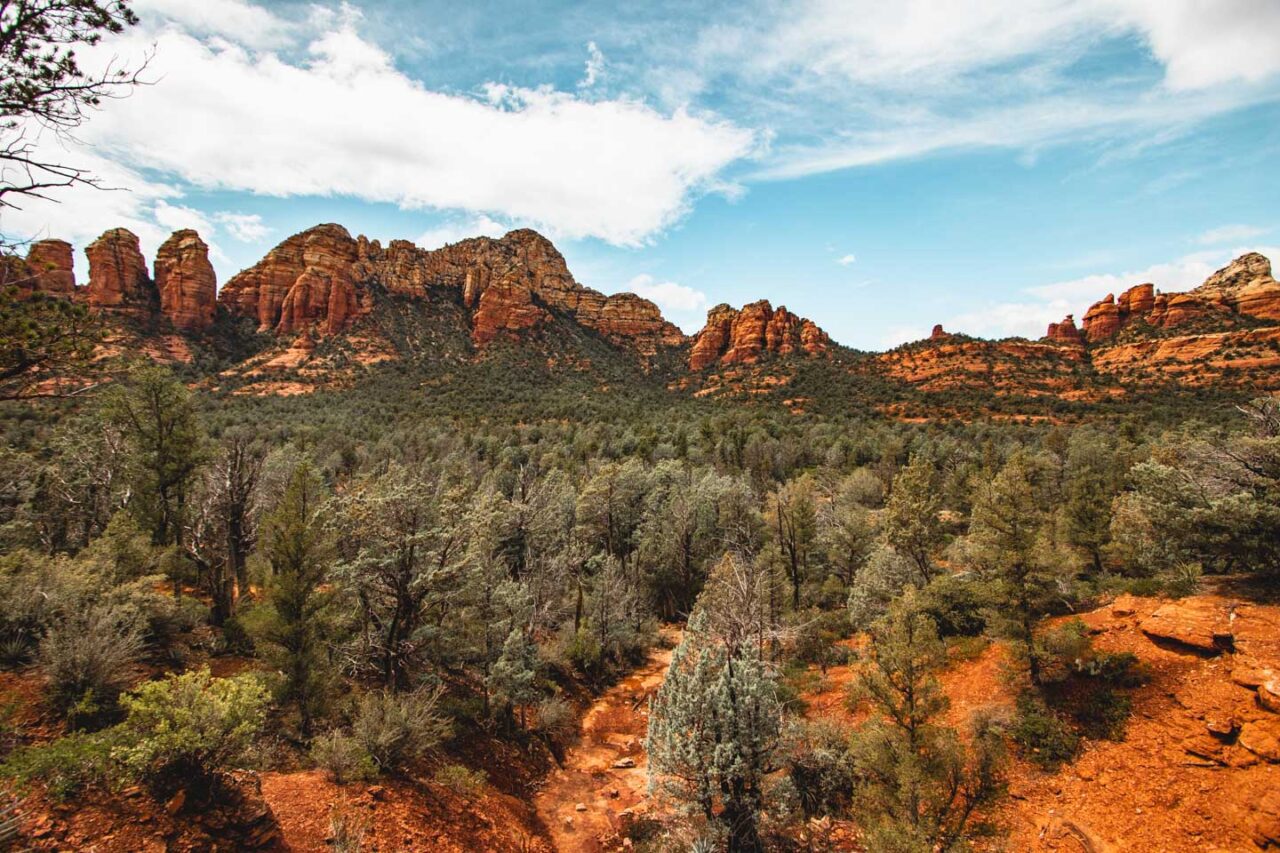
6. Subway Cave
Subway Cave is one of the most photogenic spots in all of Sedona.
The cave has the shape of a perfect, rounded tunnel – it looks a bit like a natural portal leading straight into the heart of red rocks. No wonder photographers love this place.
For a long time Subway Cave was a secret, known mainly to local residents. Only social media – especially Instagram – made it one of Sedona’s most recognizable “hidden gems.”
This place also has its stories.
The cave was once inhabited by indigenous people, and on its walls you can still spot traces of their presence – delicate rock paintings that add magic and depth to this place.
To reach Subway Cave, take Boynton Canyon Trail. After about 3.2 km turn right and head north.
The final section is somewhat steeper, but when you enter the cave and see the view of red formations from its interior – everything pays off in one second.
Practical Information
- Trail Length: 7.7 km (4.8 miles)
- Hiking Time: about 3 hours
- Elevation Gain: 335 m (1100 feet)
- Difficulty Level: moderate
- Parking: Boynton Pass Road
- Fee: as above
Planning more adventures across the Western USA?
I share tested trails, hidden spots, and practical tips from every park and trail I explore – straight from my travels through Utah, California, Arizona, and the entire West.
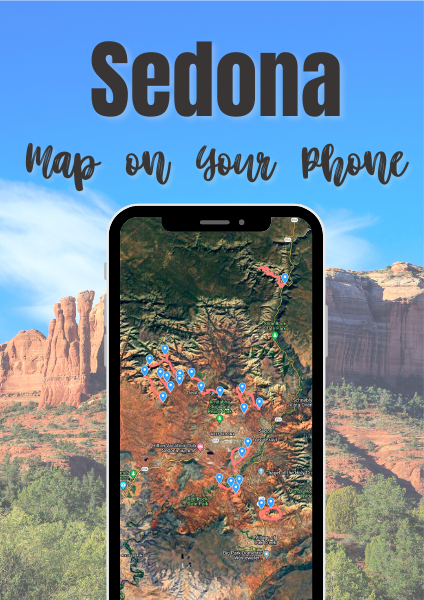
A little bonus for new readers: a free Sedona map with my 15 favorite trails 📍
7. Airport Mesa
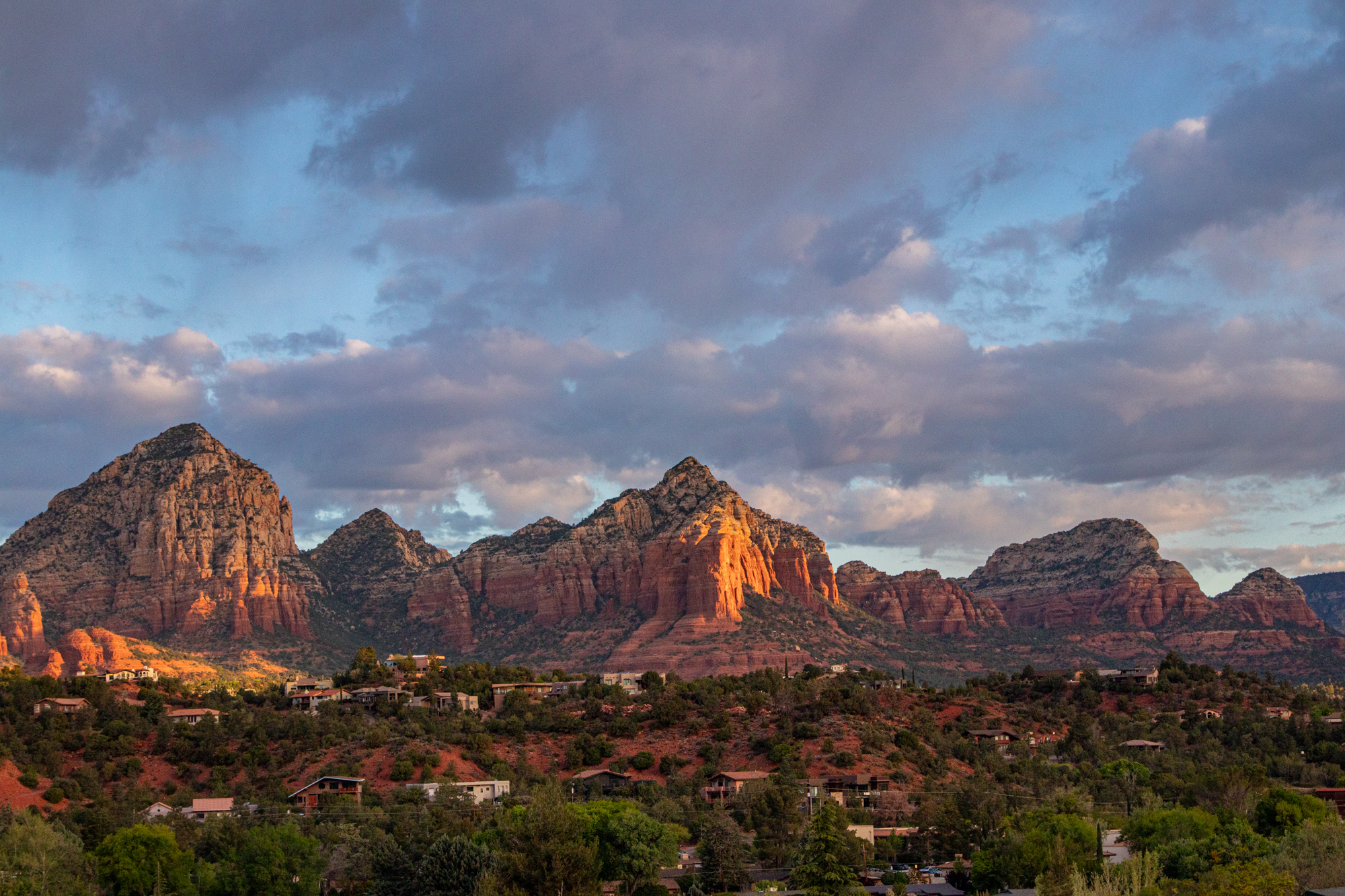
Airport Mesa is one of those places in Sedona where you really feel the space.
The summit offers wide, panoramic views of Cathedral Rock, Bell Rock, and the entire valley – especially beautiful at sunrise and sunset, when the red rocks start to “glow” in soft light.
This place also has its history and atmosphere. Airport Mesa is considered one of the local vortexes, so people seeking calm, meditation, or just a moment of peace with a view that does something good for the soul come here.
Access is simple – a paved, well-marked road means you can reach the viewpoint by both car and foot.
And if you feel like a short but beautiful hike, choose Airport Loop Trail. The route circles the entire Mesa and gives great shots at any time of day. It’s the kind of trail that does its job without hurry.
Practical Information
- Trail Length: 5.3 km (3.3 miles)
- Hiking Time: about 1.5 hours
- Elevation Gain: 131 m (429 feet)
- Difficulty Level: moderate
- Parking: Airport Vista Parking Lot – $3 / Airport Road – free
- Fee: as above
8. Fay Canyon
Fay Canyon is one of those peaceful, picturesque places in Sedona that can surprise with simplicity and beauty.
The trail is short, pleasant, and full of greenery, while the canyon’s red walls add that characteristic Sedona climate. It’s an ideal route for a light morning or afternoon walk.
Fay Canyon Trail No. 53 leads to the canyon – a gentle trail that also works for families with children.
Along the way it’s easy to feel the silence and wildness of nature here, because it’s a less crowded place than many other attractions in the area.
One of the most interesting points is Fay Canyon Arch – a natural rock arch hidden slightly off the main trail. Just a small turn, and suddenly you’re standing under a beautiful, geometric formation that photographers love.
At the end of the trail it’s worth climbing the rock on the right side – it’s a short effort, but the view of the canyon from above is one of the nicest rewards on this route.
Practical Information
- Trail Length: 3.9 km (2.4 miles)
- Hiking Time: 1-1.5 hours
- Elevation Gain: 91 m (298 feet)
- Difficulty Level: moderate (though the route is short and pleasant)
- Parking: Fay Canyon Trailhead
- Fee: as above
9. Birthing Cave
Birthing Cave is one of the most unique places in Sedona.
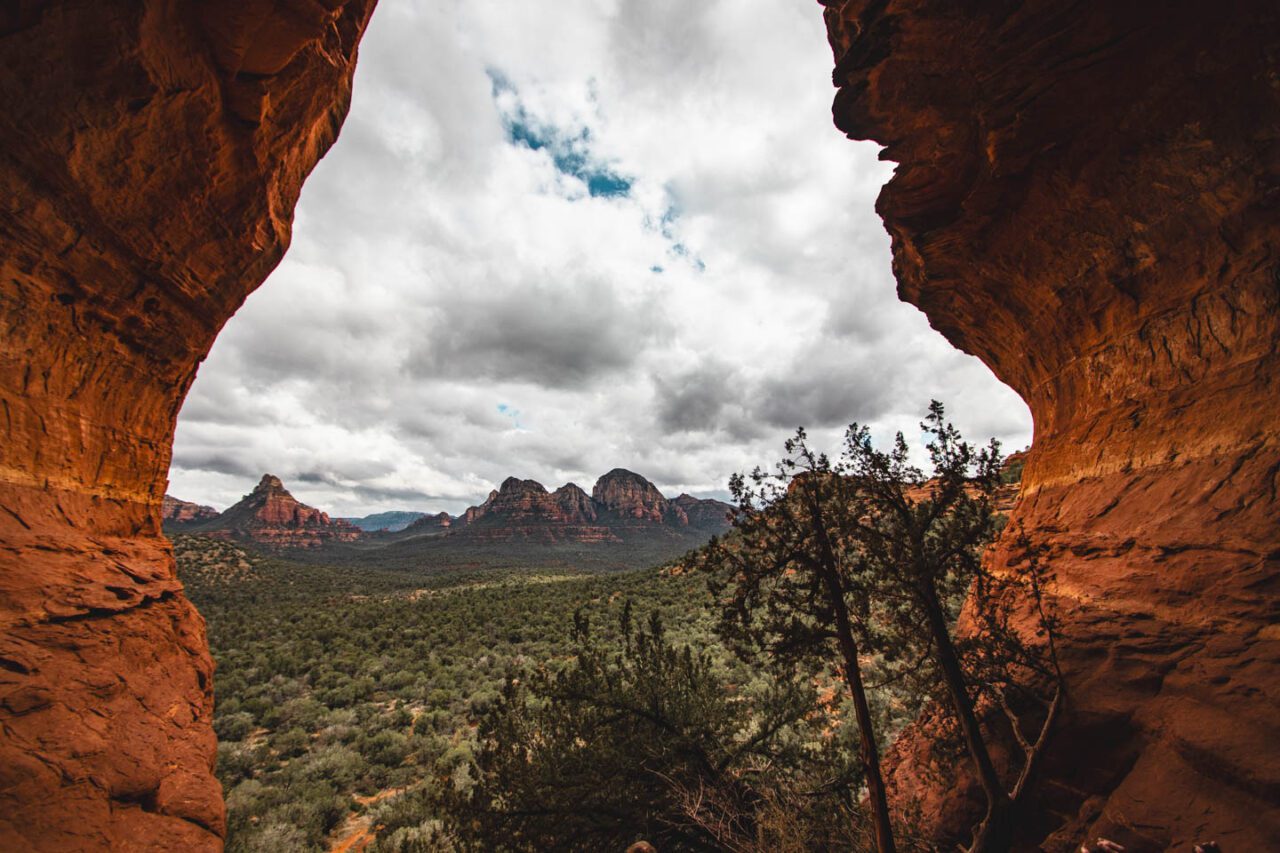
The cave has a shape resembling a natural womb – wide, enveloping, and open to a panorama of red rocks. That’s why many people talk about it as a place with “energy” and peace that’s hard to find elsewhere.
Access is relatively simple. You start from Long Canyon Trailhead, then at the fork you turn left onto an unmarked path leading straight to the cave.
The first part of the route is very easy, while the end is steeper and requires a short climb on sandstone.
However, it’s worth going up – the view from inside Birthing Cave is one of the most characteristic frames in all of Sedona.
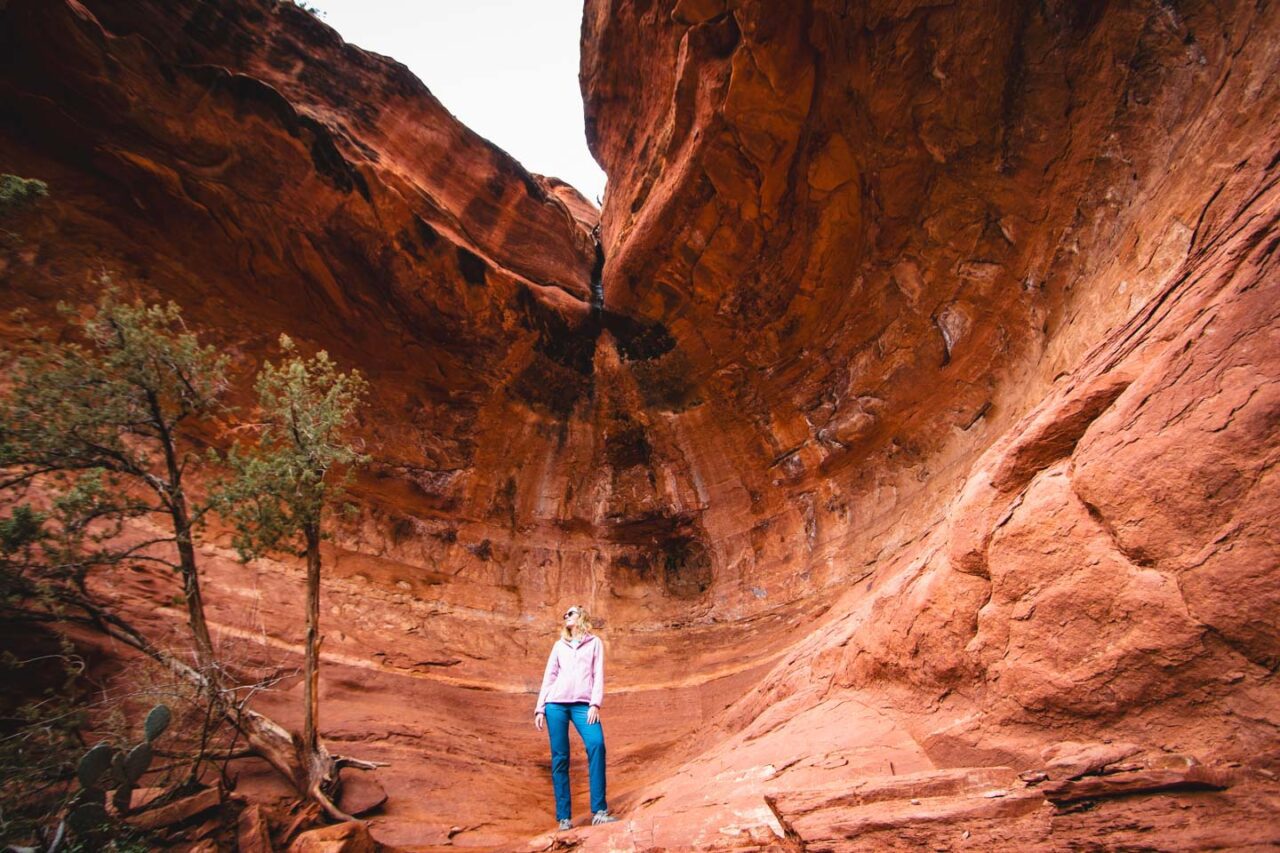
Although the last section requires some effort, it’s worth entering the very center of the cave.
From its interior the landscape looks painted – red rocks arrange themselves in natural frames, and the entire valley opens softly and widely before you.
Birthing Cave is especially beautiful at sunrise and sunset. Light then reflects off the cave walls and creates frames that are hard to compare to anything else.
If you care about silence and lack of crowds, it’s best to go there early morning, before other hikers and photographers appear.
Practical Information
- Trail Length: 3.1 km (1.9 miles)
- Hiking Time: 1-1.5 hours
- Elevation Gain: 74 m (242 feet)
- Difficulty Level: moderate (short but steep at the end)
- Parking: Long Canyon Road
- Fee: none – trail is free
10. Bear Mountain
If you like trails with a good dose of adrenaline and long views, Bear Mountain Trail No. 54 will hit the spot.
It’s one of the most demanding routes in Sedona – elevation gain reaches about 640 m (2100 feet) here, so you feel it in your legs from the first minutes.
The trail is steep, but rewards at every stage. Along the way the landscape changes like a kaleidoscope: red plateaus, rock shelves, canyons, and wide panoramas that open up more and more the higher you go.
On the route you’ll also find several places where you can peacefully sit, catch your breath, and just look at the desert. Thanks to this, even people without much experience can approach this trail at their own pace.
It’s worth remembering to check weather conditions before setting out. In winter, after heavy snowfall or with icing, it’s best to skip it – rocks can be really slippery then.
Practical Information
- Trail Length: 7.4 km (4.6 miles)
- Hiking Time: 4.5-6 hours
- Elevation Gain: 640 m (2100 feet)
- Difficulty Level: difficult
- Parking: Bear Mountain Trail – Oski Approach / Doe Mountain Parking
- Fee: as above
Discovering more of the Western USA?
🏜️ Planning an Arizona road trip → A 7-day itinerary through the most beautiful places
🗿 Dreaming of Utah’s red rock country → The perfect 7-day Utah itinerary
🌊 Tempted by the California coast → The most scenic route along the Pacific Coast Highway
🏺 Curious about Santa Fe → What to see and what made me want to return
Which direction is calling you the most?
11. Crescent Moon Ranch/ Red Rock Crossing
Crescent Moon Ranch is one of the most idyllic places in all of Sedona.
Located right by Oak Creek, it’s perfect for a peaceful walk, picnic under trees, or a short swim in the river on a warm day. It’s like a small, green oasis among red rocks.
The place also has its history – in the early 20th century a farm operated here, and part of the old buildings survived to this day, adding charm and a slightly nostalgic climate to the entire area.
This is where the famous Red Rock Crossing is located – one of the most postcard-worthy shots in Sedona.
The view of Cathedral Rock reflecting in the water at sunset is absolutely magical, and no wonder it’s one of the most photographed places in the region.
The easiest way to get here is a short walk from Crescent Moon Picnic Site. You can also come from Secret Slickrock Trailhead if you feel like a short, picturesque hike with beautiful panorama along the way.
Practical Information
- Trail Length: 1.1-3.4 km (0.7-2.1 miles)
- Hiking Time: about 30 min
- Elevation Gain: 13-24 m (42-80 feet)
- Difficulty Level: easy
- Parking: Secret Slickrock Trailhead – free / Crescent Moon Picnic Site – $12
- Fee: according to chosen parking option
12. Soldier Pass
Soldier Pass is one of those Sedona trails that have everything at once. Picturesque landscapes, interesting rock formations, and several characteristic spots that make the route popular at any time of year.
This is where you’ll find Seven Sacred Pools – natural rock pools; the huge Devil’s Kitchen sinkhole, looking like an open gate to Earth’s interior; and hidden Hidden Cave, where light arranges itself at the perfect angle and creates a unique climate.
It’s one of the most diverse trails in all of Sedona – a great option if you want to feel the essence of this region in a short time.
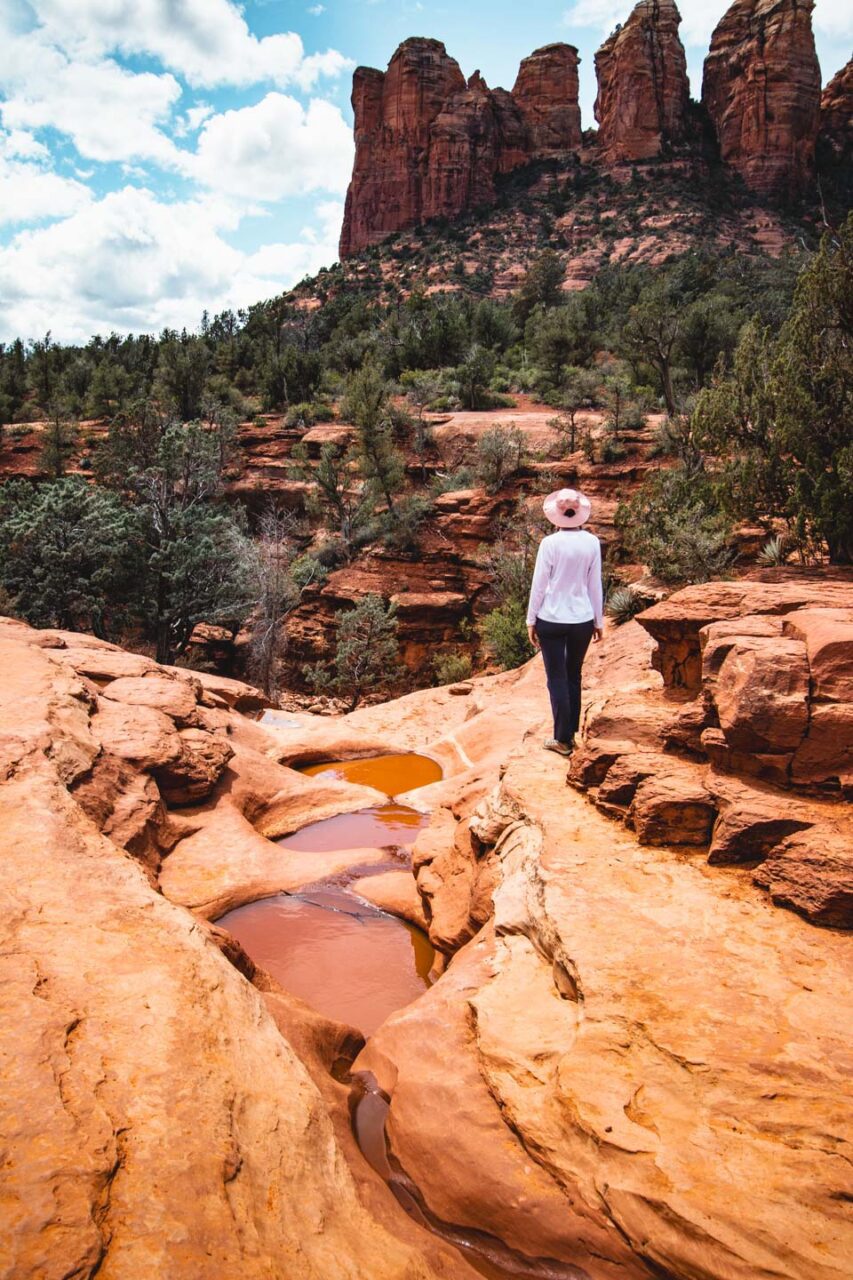
Seven Sacred Pools creates seven natural “steps” that fill with water after rain and reflect red rocks like mirrors.
It’s one of those places that look different at every season – sometimes completely dry, sometimes full of light and reflections.
Devil’s Kitchen is the largest sinkhole in all of Sedona. A huge, irregular hole in the ground that impresses from far away.
And Hidden Cave is a small, hidden cave with a beautiful view of the valley – perfect place for a short break and photos.
To see this route in peace, it’s best to set out early morning or late afternoon.
Spring and fall are peak season, so at these times the trail can be really crowded. Earlier hour gives not only silence, but also the most beautiful light.
Practical Information
- Trail Length: 1.8-7.2 km (1.1-4.5 miles)
- Hiking Time: 0.5-2.5 hours
- Elevation Gain: 29-261 m (95-856 feet)
- Difficulty Level: easy-moderate
- Parking: Soldier’s Pass Trailhead (Monday-Wednesday) or free bus #14 (Thursday-Sunday, year-round)
- Fee: as above
13. Brins Mesa
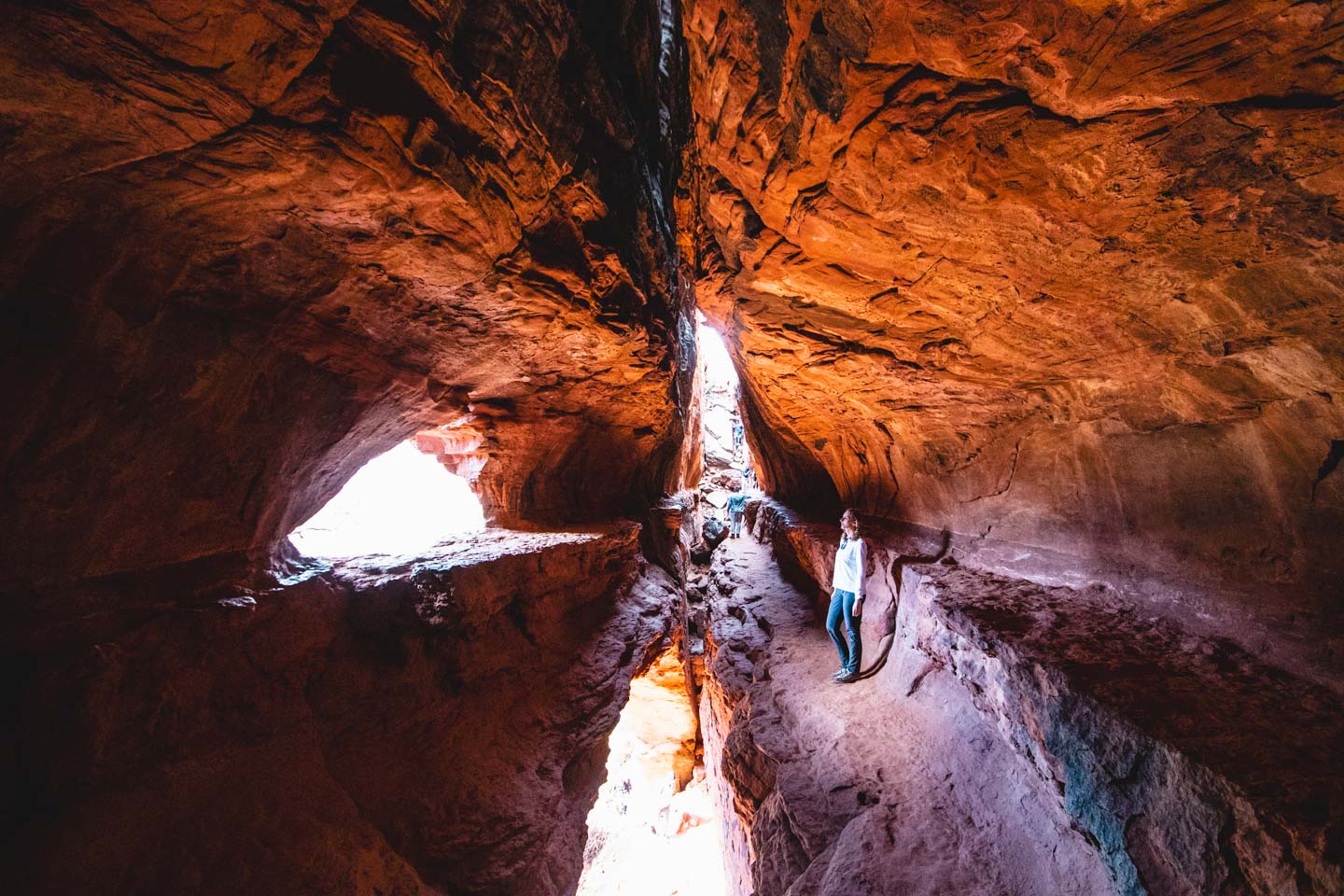
Brins Mesa is one of those places in Sedona where landscape opens before you like a huge, red stage.
This area offers several beautiful trails, but the best known is Brins Mesa Trail No. 119.
The route leads to a wide, open space with views of Coffee Pot Rock, Wilson Mountain, and Chimney Rock – formations that change color with daylight.
If you feel like a longer, more varied hike, you can combine Brins Mesa with Soldier Pass Trail and make a full loop.
Thanks to this you’ll also see Seven Sacred Pools and Devil’s Kitchen as part of one expedition – a beautiful mix of Sedona’s landscapes and energy.
Regardless of which option you choose, one thing is certain – views will reward every step.
Practical Information
- Trail Length: 5.8-9 km (3.6-5.6 miles)
- Hiking Time: 1.5-3 hours
- Elevation Gain: 199-321 m (652-1053 feet)
- Difficulty Level: moderate
- Parking: Jordan Trailhead
- Fee: as above
14. West Fork
West Fork of Oak Creek Trail is the perfect ending to Sedona adventures.
Trail #108 leads through narrow Oak Creek canyon, where tall, bright rock walls meet tree greenery and river shade.
It’s one of the most picturesque places in the area – loved by photographers, families, and everyone who wants to feel a calmer, more forest-like version of Sedona.
The route is relatively easy, though along the way there are several stream crossings – in summer it’s a pleasant refreshment, and in fall an extra dose of adventure.
West Fork works great for a peaceful walk, especially if you don’t feel like steep climbs.
To see this place in its most magical version, it’s best to set out early morning and avoid weekends – it’s one of the most popular trails in all of Arizona.
Practical Information
- Trail Length: 10.4 km (6.5 miles)
- Hiking Time: 3.5 hours
- Elevation Gain: 172 m (564 feet)
- Difficulty Level: moderate
- Parking: Call of the Canyon Day Use Area
- Fee: $12
Other Must-See Places in Sedona
The places I mentioned above are only the beginning.
Sedona has this kind of energy where even unplanned stops can become your favorite memories from the trip. If you have a little more time, these spots are absolutely worth adding to your itinerary.
Chapel of the Holy Cross
One of Sedona’s most iconic landmarks. Built directly into the red rocks, the chapel feels both minimalist and monumental at the same time.
Even if you’re not religious, it’s worth visiting for the atmosphere alone. The views from up there are beautiful, especially later in the afternoon when the light turns softer over the canyon.
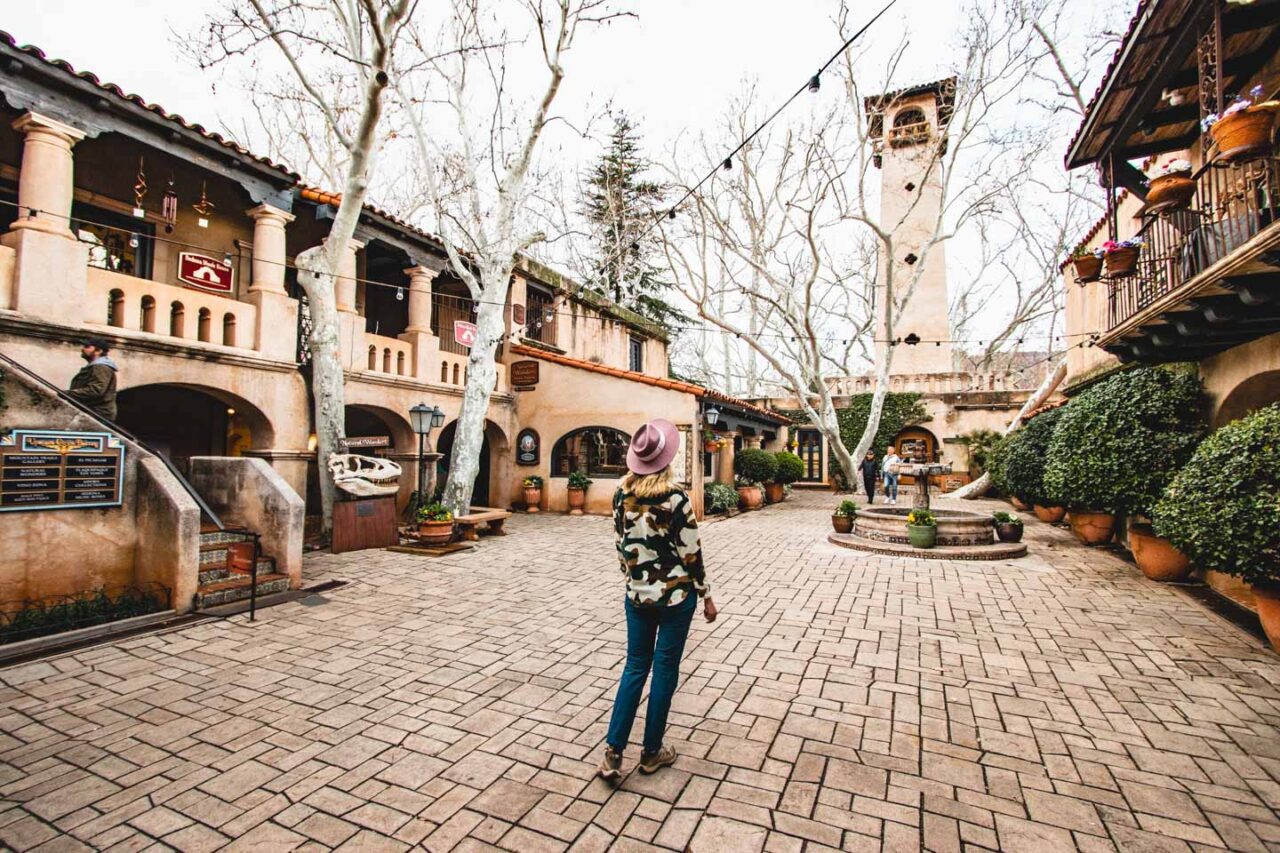
Tlaquepaque Arts & Shopping Village
A small arts village full of galleries, local boutiques, courtyards, fountains, and hidden corners that feel almost Mediterranean.
It’s the kind of place where you walk in “just for a moment” and somehow stay for an hour. I especially love it in the evening, when the lights turn on and everything feels slower and quieter.
Slide Rock State Park
Perfect for hot days in Arizona. This park is famous for its natural rock slides and swimming spots along Oak Creek.
In summer, it becomes one of the best places to cool down after hiking. The contrast between cold water, green trees, and red rocks makes this area feel completely different from the rest of Sedona.
Palatki Heritage Site and Honanki Heritage Site
These ancient cliff dwellings and rock art sites give you a completely different perspective on Sedona.
You’ll see preserved petroglyphs, old stone structures, and traces of the Indigenous communities who lived in this region centuries ago. The atmosphere there feels quiet, raw, and deeply connected to the landscape around it.
When is the Best Time to Visit Sedona
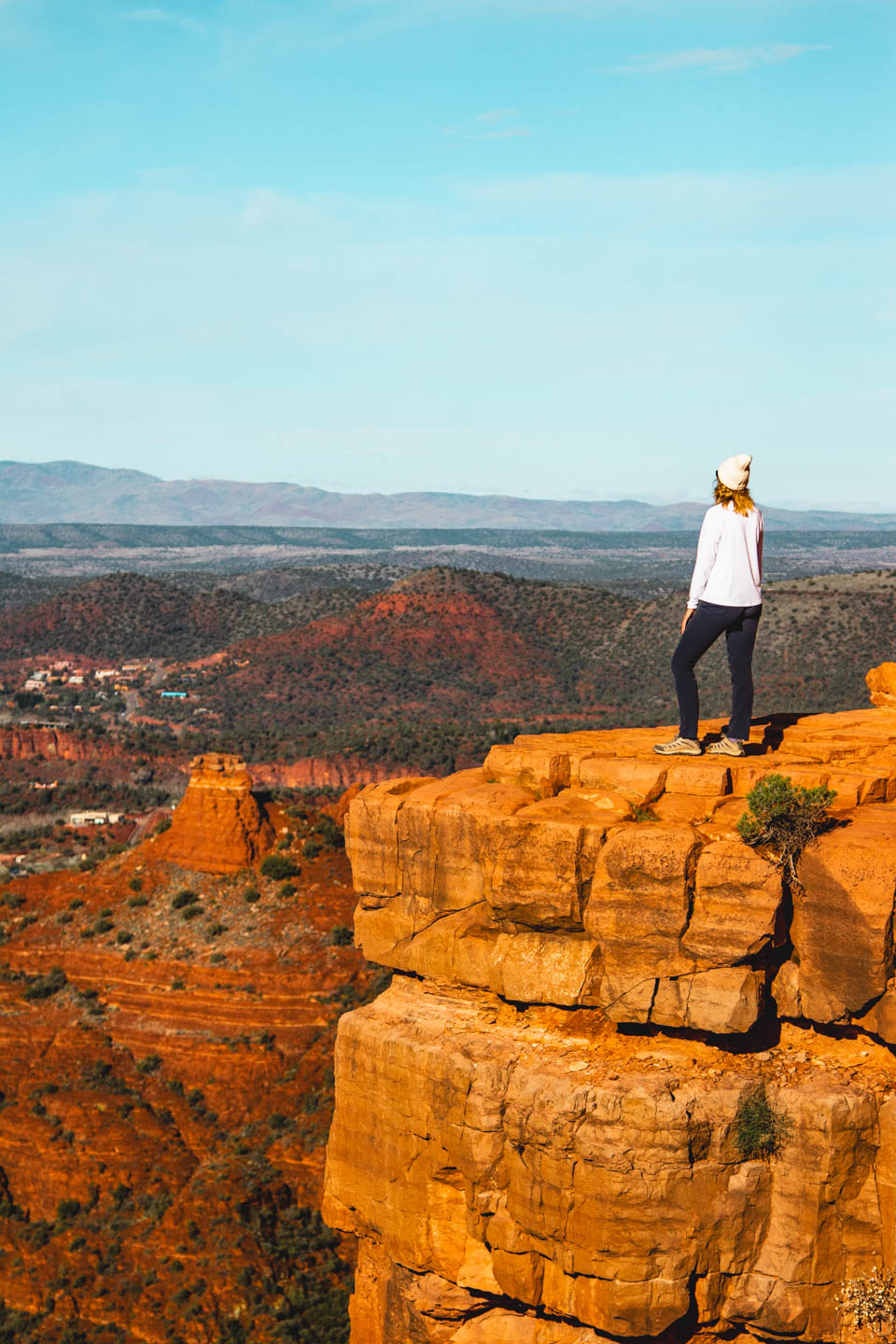
The best time to visit Sedona really depends on the kind of experience you want.
Some people come for hiking and warm desert mornings. Others want empty trails, quiet sunsets, or that soft golden light that makes the red rocks glow.
Personally, I think Sedona feels best in spring and fall.
Spring (March to May)
Spring is one of the most beautiful times to be in Sedona. Days are warm but usually still comfortable for hiking, mornings feel fresh, and the desert slowly starts coming back to life.
This is when the red rocks look especially intense in the sunlight, and the weather is almost perfect for spending entire days outside.
The downside?
It’s also one of the busiest seasons, especially during weekends and spring break periods.
Fall (September to November)
Fall has a very similar feeling – warm days, cooler mornings, beautiful hiking conditions, and softer light later in the day.
It’s one of my favorite times for slower mornings, scenic drives, and longer hikes without summer heat draining all your energy.
Summer (June to August)
Honestly, summer is the one season I usually wouldn’t recommend for Sedona.
Temperatures can become extremely intense, especially in the middle of the day, and hiking under direct desert sun quickly stops being enjoyable.
This is also monsoon season in Arizona, which means sudden storms, flash flood risks, and muddy trails.
If you visit in summer, early mornings become essential.
Winter (December to February)
Winter in Sedona feels surprisingly peaceful. The crowds get smaller, mornings are crisp and quiet, and sometimes the red rocks even get dusted with snow, which looks unreal.
It can get cold, especially before sunrise and after sunset, and some trails may become icy in shaded areas. But if you don’t mind cooler weather, winter has a calm, slower atmosphere that’s hard to find during busier months.
If you want the best hiking conditions, aim for spring or fall. If you care more about peace and quiet, winter may actually surprise you the most.
What to Pack for a Hike in Sedona
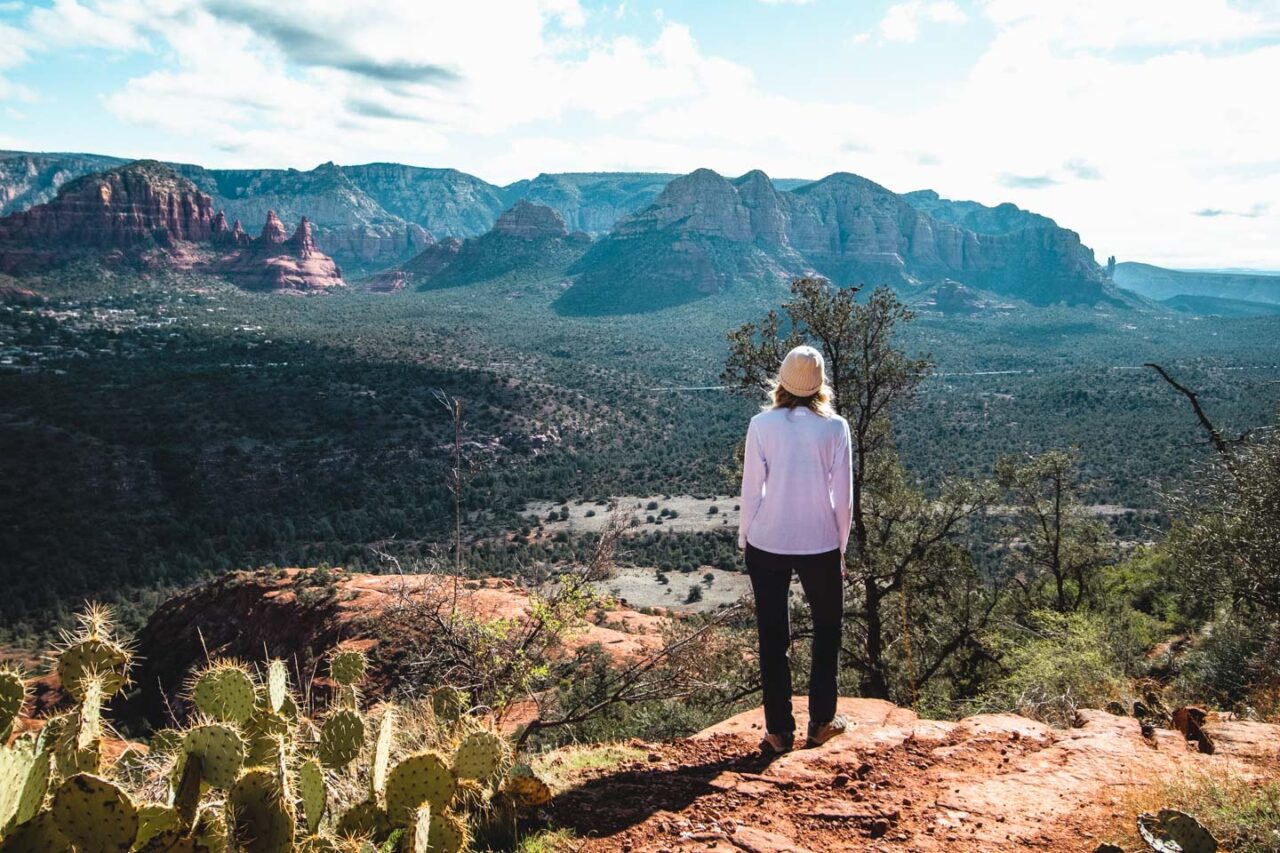
Sedona’s weather can surprise you. Mornings may feel cool and peaceful, while midday sun can turn the trails into an oven surprisingly fast.
That’s why even shorter hikes are worth preparing for properly.
Here are a few things I never head into Sedona without:
- Water – and more water than you think you need
The dry Arizona climate dehydrates you much faster than expected, especially if you’re hiking under full sun. I always recommend bringing a proper water bottle or hydration backpack, even for shorter trails. - Sun protection
A hat, sunglasses, and good sunscreen make a huge difference here. Sedona sun feels intense almost year-round, and there’s often very little shade on the trails. - Comfortable hiking shoes
The red rock terrain can be uneven, slippery, and much steeper than it looks in photos. Good hiking shoes or trail runners will make the experience so much more enjoyable – especially on places like Cathedral Rock or Devil’s Bridge. - Small snacks
Energy bars, nuts, fruit, or something salty are always worth packing. Sometimes the best moments in Sedona happen when you stop somewhere quiet with a view and stay there a little longer than planned. - A light layer
Even warm days can start with chilly desert mornings, especially in spring, fall, or after sunset. I usually keep a light sweatshirt or layer in my backpack just in case.
How Long to Stay in Sedona
If you really want to feel Sedona – not just rush between viewpoints and check the famous spots off a list – give yourself at least 3 to 5 days here.
Sedona isn’t the kind of place that’s only about attractions. It’s also about the pauses in between.
Slow mornings with coffee overlooking the red rocks. Quiet trails before the heat arrives. Sunsets that make you stay a little longer even after the light disappears.
Three days is enough to see the highlights and experience the atmosphere of the area.
But four or five days gives you something more valuable – space. Space for an extra hike, a slower breakfast, an unplanned stop by Oak Creek, or an evening when you do absolutely nothing except watch the desert change colors.
And honestly, Sedona feels best when you stop trying to fit everything in.
Where to Stay in Sedona
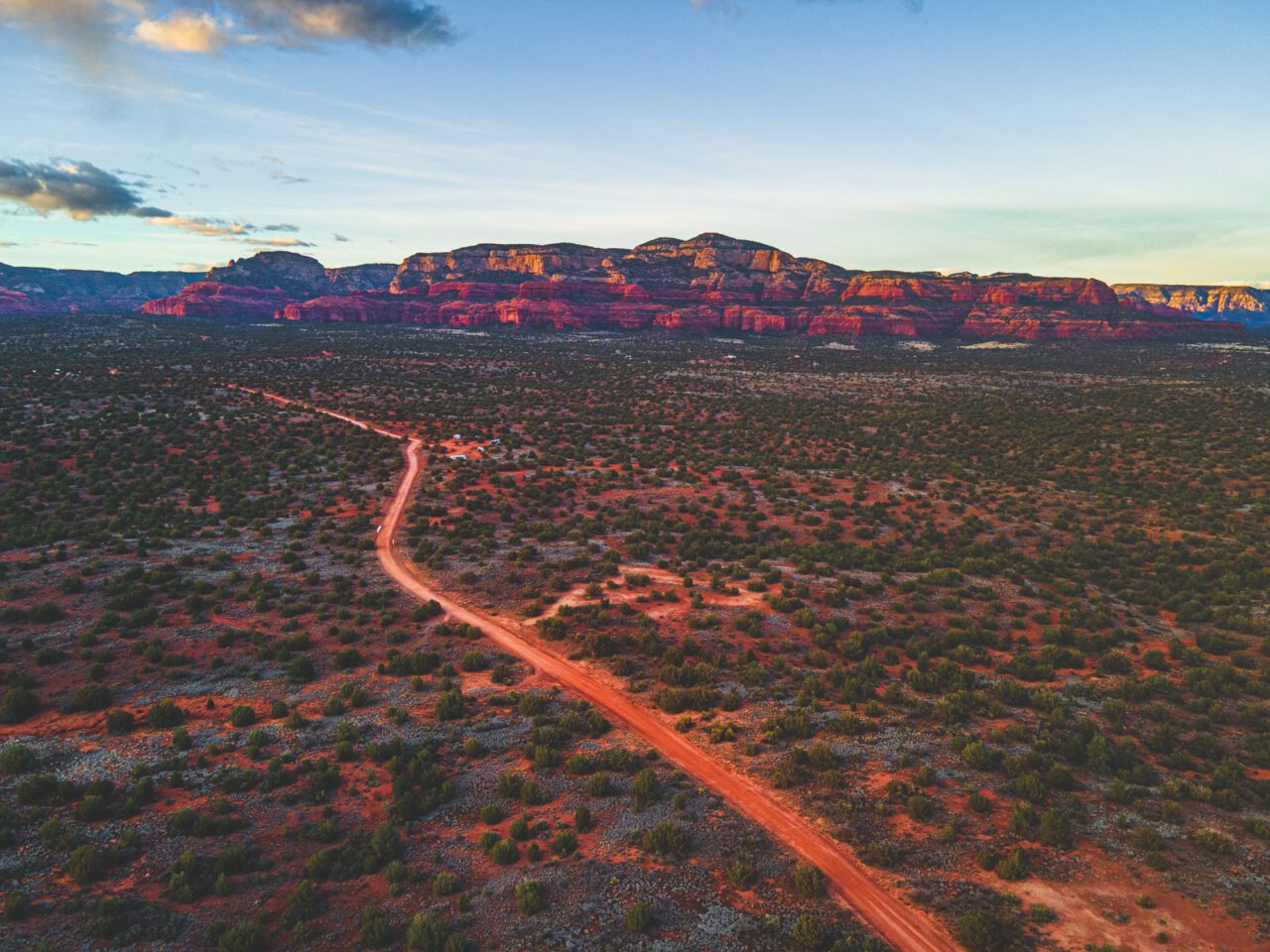
Sedona has everything from luxury desert resorts hidden between red rocks to simple motels, campgrounds, and quiet stays surrounded by nature.
And honestly, where you stay changes the whole feeling of the trip.
You can wake up in a spa overlooking Boynton Canyon, drink coffee next to Oak Creek, or sleep under the stars with the smell of desert air still on your clothes after a hike.
Here are a few places worth considering depending on your style of travel and budget:
- Luxury option: Enchantment Resort
One of the most beautiful places to stay in Sedona. Hidden among the red rocks of Boynton Canyon, it feels quiet, intimate, and completely immersed in nature. The views are unreal, especially at sunrise and golden hour.
This is the kind of place where mornings feel slow in the best possible way.
Perfect if you want a more peaceful, restorative Sedona experience with spa access, pools, and direct trail access. - Mid-budget option: Best Western Plus Arroyo Roble Hotel & Creekside Villas
A really solid option if you want comfort and a great location without spending resort-level money. It’s close to Uptown Sedona, restaurants, shops, and many popular viewpoints.
The views are still beautiful, and it works especially well if you plan to spend most of your days exploring. - Budget option: Sedona Village Lodge
Simple, clean, and practical. Nothing overly fancy, but honestly – for many people Sedona is all about being outside anyway.
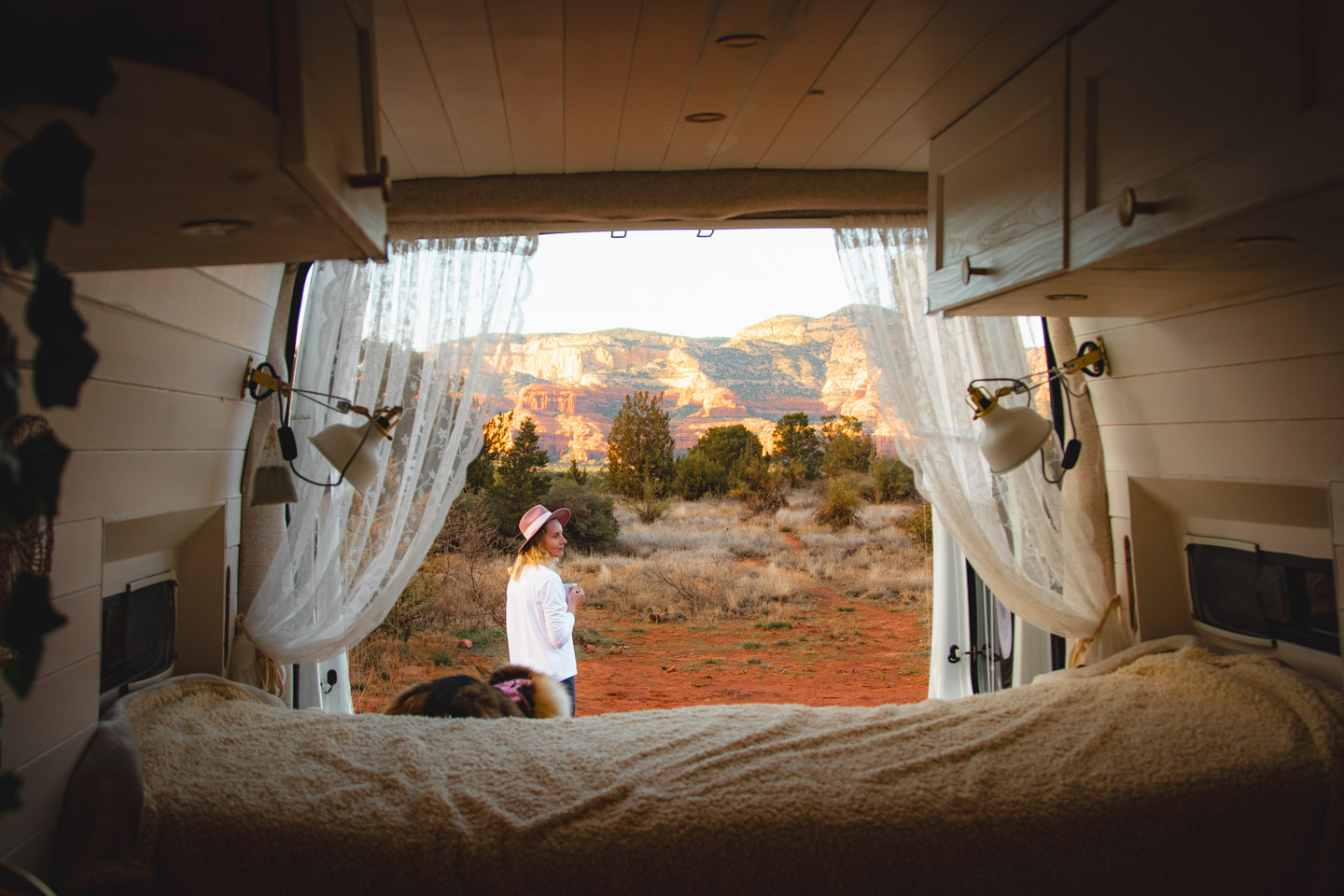
It’s a good choice if you mostly need a comfortable place to sleep after long days on the trails. - Camper option: Manzanita Campground
One of the most atmospheric camping spots around Sedona. Surrounded by greenery and close to Oak Creek, it feels cooler and more peaceful than the main tourist areas.
If you travel by camper or simply want a slower, more nature-focused experience, this place has a really beautiful energy to it.
Travel Tips for Sedona
To fully experience Sedona – its soft morning light, red rock trails, and the calm that settles over the desert – a few simple things make a huge difference:
- Start your days early. Sedona is at its most magical in the morning. The air is cooler, the trails quieter, parking is easier, and the light makes the red rocks glow in a way photos never fully capture.
- Download offline maps before heading out. Phone signal disappears surprisingly often around hiking areas, so having your route saved can save a lot of stress.
- Bring more water than you think you need. Arizona heat feels different, especially if you’re not used to the dry desert climate. Comfortable hiking shoes, sunscreen, sunglasses, and a hat quickly become essentials here, not extras.
- Treat the landscape gently. Stay on marked trails, don’t leave anything behind, and remember that Sedona’s beauty is also fragile. A big part of what makes this place feel special is how untouched parts of it still are.
- Use the free shuttle system when possible. During busier months, it makes getting around certain trailheads much easier and saves you from stressful parking searches.
- If you can, avoid weekends. Sedona has become incredibly popular, and some trails can feel crowded by midday. Weekdays are slower, calmer, and much more in tune with the feeling this place gives at its best.
- Book accommodations in advance. Especially in spring and fall, when Sedona is at its most beautiful. The small boutique hotels, adobe stays, and places with the best views tend to disappear quickly.
Travel lighter, even before you leave.
start with something simple.
Download The Minimum Plan – Slow Travel:
Sedona Left Something Bigger in Me Than Just Photos
The first time I saw Cathedral Rock at sunrise, everything went quiet for a moment.
Not because Sedona is just beautiful. It’s because this place does something softer than that.
It slows you down.
The red rocks, the desert light, the silence between trails… somehow they make you breathe deeper and stop rushing for a while.
In Sedona, I always feel like there’s finally enough time. Enough time to walk slower, think less, and simply exist without needing every moment to be productive or unforgettable.
And honestly, that’s what keeps pulling me back.
Not just the views. The feeling.
I hope this guide helps you find your own version of Sedona. The kind of place that stays somewhere inside you long after the trip is over.
Ready to hit the road?
- Arizona Road Trip – a 7-day itinerary with maps and insider tips
- Utah in 7 Days – red canyons and formations you’ll never forget
- Monument Valley – a guide to one of the most iconic valleys of the American West
- USA Travel Hub – everything you need to know
Which Sedona attraction intrigued you most? Or maybe you’ve already been there and have your favorite place?
Write in the comments – I’d love to hear about your experiences and help with planning if you have questions.
And if this guide was helpful, send it to a friend who dreams of Arizona’s red rocks.
Pin it for later
This article contains affiliate links. If you make a booking through these links, I may earn a commission, supporting this blog. Rest assured, my recommendations are based on honest assessments, and using these links doesn't affect prices for you. Thank you for your support!