

Planning a road trip through Europe?
Renting a car here often sounds more complicated than it really is. Different rules, unfamiliar road signs, stories about manual cars and “crazy drivers” – it’s easy to feel unsure before you even start.
This guide isn’t here to overwhelm you with rules.
It’s here to explain how renting a car in Europe actually works in practice – what matters, what doesn’t, and where people usually make things harder than they need to be. Everything below is based on real experience, not just rental company fine print.
You don’t need to know everything. You just need to understand enough to feel calm once you’re behind the wheel.
If Italy is part of your route, have a look at my guide to the most beautiful towns in Tuscany – places best explored slowly, by car, and without rushing from one highlight to the next.
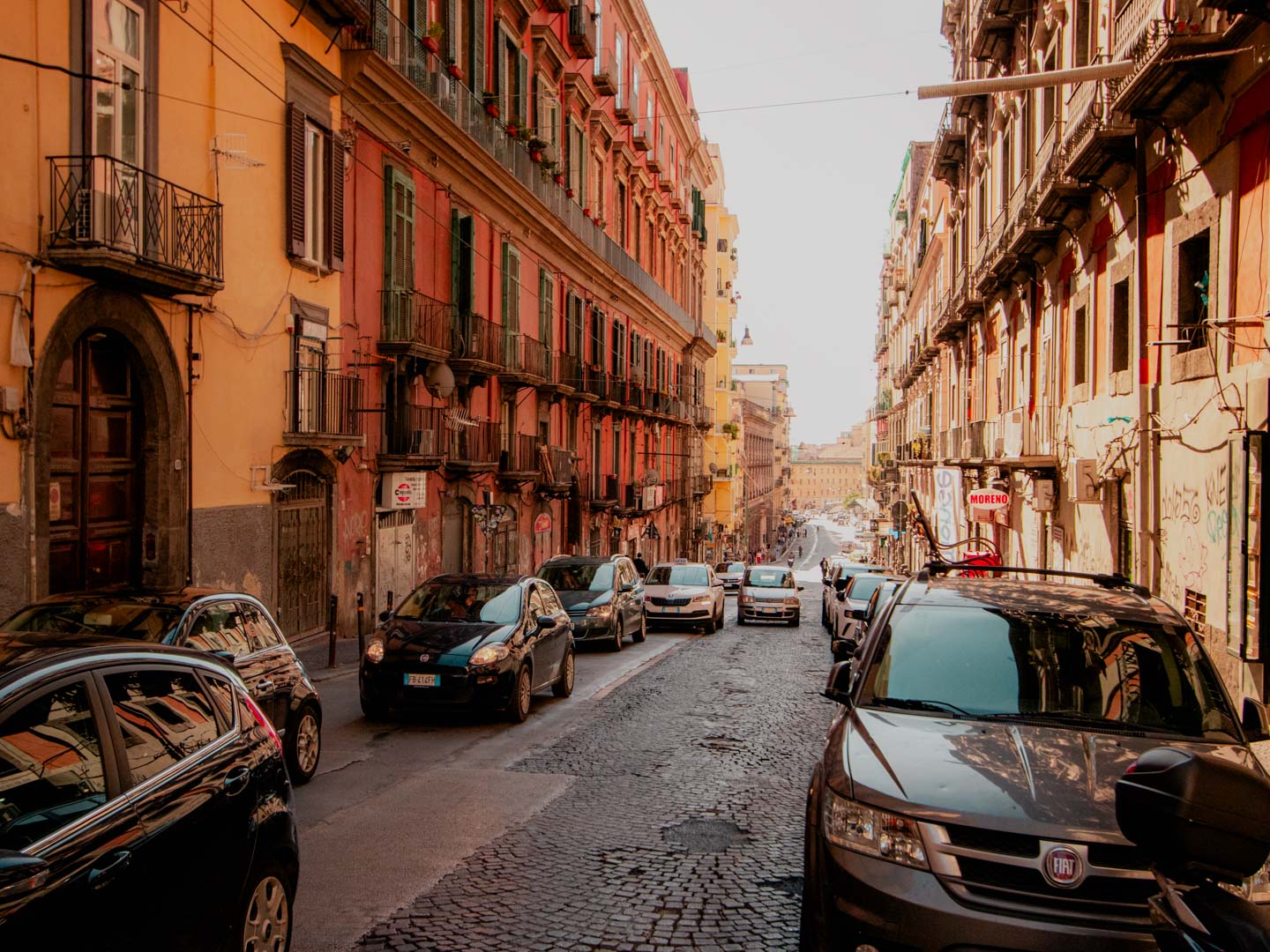
1. Can I rent a car and drive around Europe?
Yes, and for many trips it’s one of the best ways to explore Europe.
Tourists can rent cars in most European countries with a valid driver’s license, a passport, and a credit card in the driver’s name. The process itself is usually straightforward and similar across countries.
What’s worth checking in advance are age requirements. Many rental companies set the minimum age at 21 or 25, and younger drivers may pay an extra fee. Drivers under 18 cannot legally drive.
Crossing borders between European countries is often allowed, especially within the Schengen area, but it’s important to confirm this in the rental conditions before booking.
2. Can I rent a car in Europe with a US driver’s license?
Yes, a US driver’s license is generally accepted across Europe.
Some countries officially recommend having an International Driving Permit as an additional document. In practice, I’ve rented cars in several European countries and have never once been asked for one.
That said, an IDP is inexpensive and easy to obtain in the US.
If you’re planning a longer trip, visiting smaller towns, or just want an extra layer of reassurance, having one doesn’t hurt. Think of it as a backup rather than a requirement.
3. Is it hard for Americans to rent and drive a car in Europe?
Renting a car is easy. Driving one requires a short mental adjustment.
Outside of major cities, driving in Europe feels very familiar to anyone used to driving in the US. Roads are well maintained, highways are intuitive, and signage is clear even if you don’t speak the language.
The biggest difference is right-of-way rules. In many European countries, cars coming from the right have priority, even at intersections without stop signs.
It feels counterintuitive at first, but after a day or two it becomes second nature.
European drivers may appear more assertive, especially when overtaking, but that doesn’t mean you need to drive that way. Driving calmly and predictably is completely acceptable and often appreciated.
4. Is renting a car in Europe expensive?
It can be – but not always, and not in the way people expect.
Daily rental prices vary widely depending on country, season, and pick-up location. Fuel prices are generally higher than in the US, and toll roads are common in countries like France, Italy, and Spain.
What often makes rentals feel expensive isn’t the base price, but the accumulated costs: fuel, tolls, parking, and insurance upgrades over several days.
Interestingly, rentals on islands or in less touristy regions are sometimes cheaper than on the mainland. Prices don’t always follow the logic people expect.
5. Why does car rental in Europe feel more expensive than in the US?
The main difference is how prices are structured.
In the US, rental prices often look low at first, but insurance and additional fees are added later. In Europe, basic insurance is usually included in the base price, which makes it look higher upfront.
Once you compare total costs instead of just the daily rate, the difference often becomes smaller than expected. It’s a different system, not necessarily a worse one.

6. Is it cheaper to rent a car in France, Spain, or Italy?
In general, Spain and Italy tend to be slightly cheaper than France.
That said, prices can vary significantly depending on location, season, and demand. One-way rentals, especially between countries, almost always come with additional fees and should be planned carefully.
7. How much does it cost to rent a car in Europe per day?
You can find rentals anywhere from around $20 to $100+ per day.
Compact cars are usually the best choice. They’re easier to park, cheaper to fuel, and better suited to narrow streets and historic town centers.
Larger cars aren’t necessarily more comfortable here – they often just make things more stressful.
8. Can I rent a car in one country and return it in another?
Yes, many major rental companies allow this, and it can be very convenient for longer routes.
However, one-way rentals usually involve extra fees. Smaller local agencies may offer better daily prices, but often don’t allow cross-border returns at all.
This is one of those details worth checking early, before you build your entire itinerary around it.
9. Is renting a car in Europe a good idea?
It depends entirely on your itinerary.
In large cities, renting a car is usually unnecessary and stressful. Public transport is excellent, and parking can be expensive and complicated.
For countryside regions, small towns, coastlines, and mountain areas, a car is often essential. Many of Europe’s most beautiful places simply aren’t accessible by train or bus.
If your trip includes both cities and rural areas, a good strategy is to explore the city first and rent a car only when you’re ready to move on.
10. Does US car insurance work in Europe?
In most cases, no.
US car insurance policies rarely cover rentals outside North America. European rentals include basic insurance by default, with optional upgrades to reduce out-of-pocket costs in case of damage.
This is one area where reading the rental conditions carefully really pays off.

11. Does US health insurance cover Europe?
Often only partially, if at all.
Travel insurance isn’t mandatory, but it’s highly recommended.
While medical care in Europe is generally more affordable than in the US, unexpected situations are much easier to handle when you’re properly covered.
12. Are rental cars in Europe manual or automatic?
Manual cars are the norm and usually cheaper.
Automatic cars are available, but they cost more and should be booked in advance. Not every car category includes an automatic option.
13. Is it easy to rent an automatic car in Europe?
It’s possible, but you need to plan ahead.
Rental companies prepare a specific car for each booking. If you don’t reserve an automatic in advance, you may not be able to swap it at the counter.
14. Is it cheaper to rent a manual or automatic car?
Manual cars are almost always cheaper.
Automatic versions of the same car category typically cost more, and in some cases you may need to upgrade to a larger vehicle to get an automatic transmission.
15. Why are most European rental cars manual?
Manual cars are more common in Europe because they’re cheaper to buy and maintain, and most local drivers know how to drive them.
While automatics are becoming more popular, manual cars still dominate rental fleets.

16. Are manual cars worth renting?
If you’re comfortable driving manual, yes.
If you’re not used to it or have never driven one before, choose an automatic. Feeling relaxed behind the wheel matters more than saving money.
17. Is driving in Europe difficult?
Not outside major cities.
Highways and rural roads are easy to navigate. The main adjustment is getting used to narrower roads and more frequent overtaking.
You don’t need to drive like locals. Drive at your own pace.
18. Do they drive on the right or left in Europe?
In most of Europe, you’ll be driving on the right side of the road, just like in the US.
The main exceptions are the United Kingdom and Ireland, where driving is on the left. If those countries are part of your route, give yourself a little extra time on day one. The first roundabout can feel odd – then it becomes surprisingly natural.
19. Can seniors rent a car in Europe?
Yes, seniors can rent a car in Europe.
Some rental companies apply extra rules for drivers over a certain age (often 65 or 70), such as additional documentation or a small extra fee.
It’s not something to worry about, but it is something to check before you book – especially if you’re planning a longer trip or want a specific car type.
20. Is it worth renting a car in Italy?
If you’re staying in major cities like Rome, Milan, or Venice, you don’t need a car – it will mostly create stress (parking, traffic zones, and limited-access areas).
But once you leave the cities, Italy becomes a completely different experience.
The countryside is where a rental car makes sense: Tuscany, the Dolomites, Puglia, small hill towns, vineyard roads, quiet coastal viewpoints you’d never reach by train.
It also tends to feel familiar for American travelers – the rhythm of a road trip is similar, just on shorter distances, with more stops that happen “by accident.”
There are a few places where a car becomes a burden, not a gift. Cinque Terre is a good example – parking is difficult and it’s much easier to take the train between villages.
In situations like that, I usually park in a nearby town with a train station and continue without the car.

21. Do rental cars in Europe have GPS?
Sometimes, but it’s usually an extra paid add-on – and in my experience, rarely worth it.
Your phone is almost always the better option. Download offline maps before you go (especially if you’ll be driving through mountains or rural areas), bring a car charger, and you’re set.
22. Do American GPS devices work in Europe?
Yes – GPS works everywhere.
But instead of relying on a separate device, I’d still use a smartphone. It’s easier, more reliable, and you can keep everything in one place (maps, parking notes, saved locations, and your route).
23. Is Hertz available in Europe?
Yes. Hertz operates in many European countries and is widely available at airports and in major cities.
24. What are the main car rental companies in Europe?
Some of the biggest names you’ll see across Europe are Hertz, Avis, Europcar, Enterprise, and Sixt.
That said, local rental agencies can be a great option too – especially on islands or in smaller regions, where local companies sometimes offer better prices and simpler terms.
25. How do I rent a car in Europe step by step?
If you want a full walkthrough – booking, insurance, pick-up, tolls, and returns – I’ve written a detailed step-by-step guide here:
Explore my complete guide to renting a car in Italy (and how the process works in practice).
Where Do You Want to Go Next in Europe?
🚗 Slow road trip → The Most Beautiful Towns in Tuscany
hill towns, back roads, and places best explored by car
🏛️ Art and everyday life → Florence Beyond the Highlights
a calmer way to experience the city, without rushing
🌊 Coast and light → Amalfi Coast in 5 Days
a slow itinerary along one of Italy’s most dramatic coastlines
🏨 Practical and calm → Where to Stay on the Amalfi Coast
locations, towns, and stays that make the journey easier
🍕 City energy → Naples in One Day
a first taste of the city, without trying to see everything
What feels right for this trip – the road, the coast, or a city with character?
Travel lighter, even before you leave.
start with something simple.
Download The Minimum Plan – Slow Travel:
Renting a Car in Europe: Final Thoughts
If you made it this far, you now have a clear picture of how renting a car in Europe really works – without the noise and unnecessary stress.
Once you understand the basics, everything becomes simpler. You can focus on the journey itself, not on rules, paperwork, or worst-case scenarios.
If something is still unclear, feel free to leave a comment. I’m happy to help when I can.
And if this guide feels useful, consider sharing it with someone planning a European road trip. It might save them a few unnecessary mistakes along the way.
Drive calmly. Leave room for detours. Those are often the moments that stay with you the longest.