

Dreaming of seeing Naples in one day? You can – provided you do not try to see everything.
Naples felt different from the other Italian cities I had visited before. It was louder, more chaotic, and less polished.
It did not seem interested in looking elegant or making a perfect first impression. It was simply itself: intense, alive, and full of contrasts.
In the narrow streets of the historic centre, ancient history mixes with everyday life, scooters, street shrines, conversations drifting from balconies, and the smell of coffee and pizza.
At times, Naples reminded me of cities I had visited in Asia: the same movement, the same energy, and the feeling that everything was happening at once.
This is the birthplace of pizza, but food is only one part of the experience.
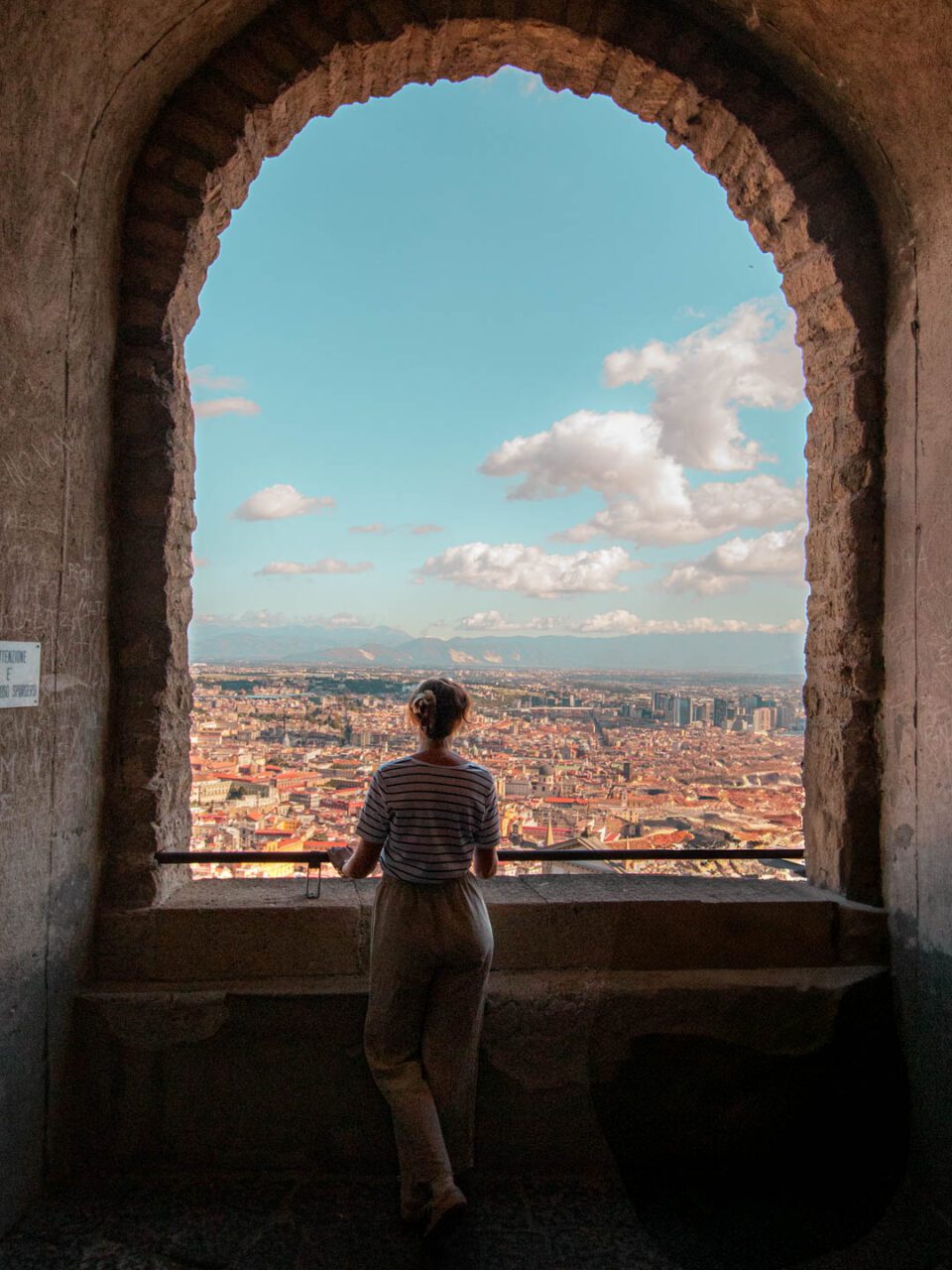
I remember the morning espresso, the crowded streets, the voices coming from open windows, and the view over the city from Castel Sant’Elmo just as clearly.
One day is not enough to understand every layer of Naples.
It is enough, however, to walk through its historic centre, try a few local flavours, and discover how different it feels from the more orderly streets of Florence, Venice, or Rome.
This Naples one day itinerary is not a list of every attraction in the city.
It is a realistic route that allows you to see the most important places, eat well, and leave some space for what often turns out to be the best part of Naples: the things you find between the planned stops.
Wear comfortable shoes and do not try to control every hour.
Naples is best experienced when you allow it to change your plans a little.
Planning a trip to Italy? This article is part of my Italy travel guide, where I share personal stories and practical tips from cities, small towns, and memorable routes across the country.
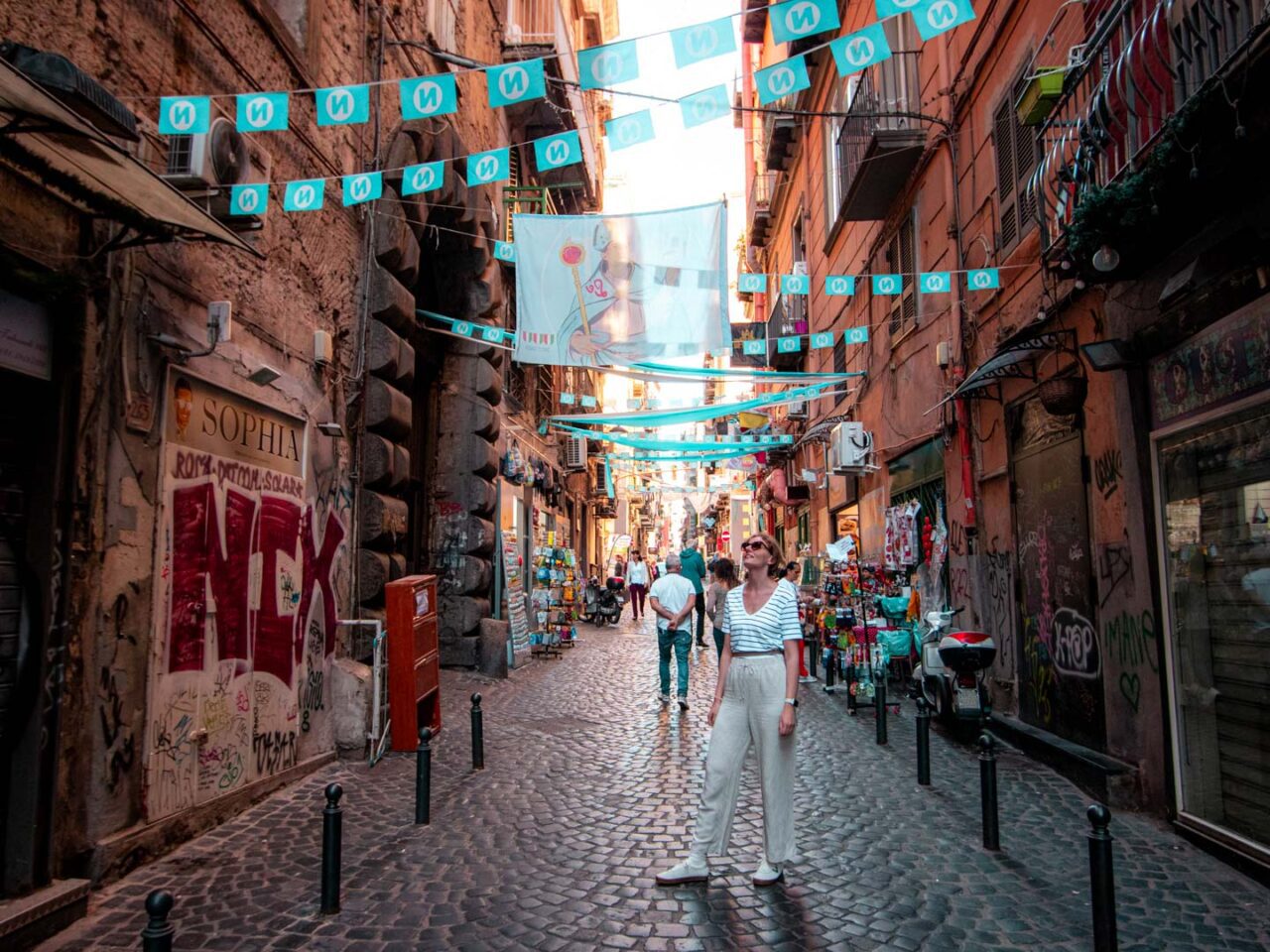
Naples in One Day: Itinerary at a Glance
Morning:
- Neapolitan breakfast and espresso
- Spaccanapoli
- Naples Cathedral
- Via dei Tribunali
Afternoon:
- Pizza fritta or classic Neapolitan pizza
- Quartieri Spagnoli
- Via Toledo
Evening:
- Funicular to Vomero
- Castel Sant’Elmo
- Panoramic views over Naples and Mount Vesuvius
If you are more interested in museums than neighbourhoods, replace part of the afternoon with the National Archaeological Museum.
If you would rather walk beside the sea, choose the waterfront and the area around Castel dell’Ovo.
I would not try to add both to the main itinerary.
How to Explore Naples Without Rushing
Naples can feel overwhelming within the first few hours.
Scooters pass close to pedestrians. Conversations, horns, music, and street vendors compete for attention. Residents, visitors, delivery drivers, and people sitting outside small cafés all share the same narrow streets.
A lot happens at once.
That is why I would not try to see everything.
Choose a few places that genuinely interest you and leave enough time to stop along the way. Naples is best explored on foot, without scheduling every coffee, church, and pastry shop.
This itinerary shows you what is possible in one day.
You do not have to follow every stop.
Morning in Naples
Begin with Espresso and a Sweet Breakfast
Start the day as many Neapolitans do: with coffee and something sweet.
During my trip, I kept returning to Espresso Napoli on Corso Umberto. I ordered a strong espresso and a pastry filled with pistachio cream, which quickly became my morning ritual.
You do not need to travel across the city for this particular café, though.
The historic centre is full of small bars where you can drink coffee at the counter and order a cornetto, sfogliatella, or babà.
In Italy, a bar is often where people go for a quick coffee and breakfast rather than somewhere reserved for evening drinks.
You do not need an hour for this stop. Fifteen or twenty minutes is enough to begin the day at a more Neapolitan pace.

Walk Along Spaccanapoli
After breakfast, make your way into the historic centre.
Spaccanapoli is the route that appears to cut the oldest part of Naples almost perfectly in two. From above, it looks like a straight line passing through the dense city centre.
At street level, it does not feel like one grand boulevard.
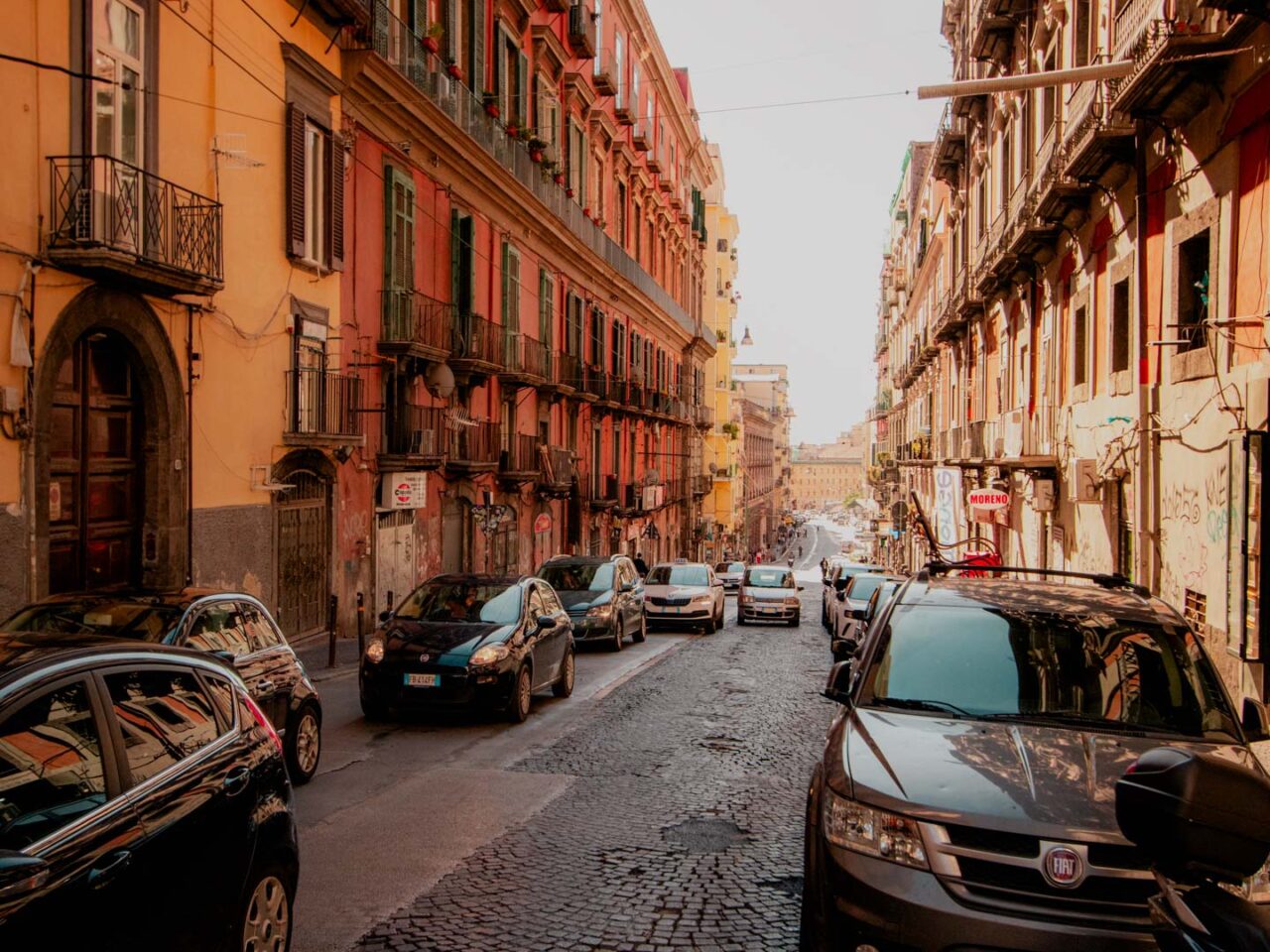
Instead, it is a sequence of narrow streets surrounded by tall apartment buildings, churches, workshops, shops, and small places selling food.
You do not need to stop at every attraction.
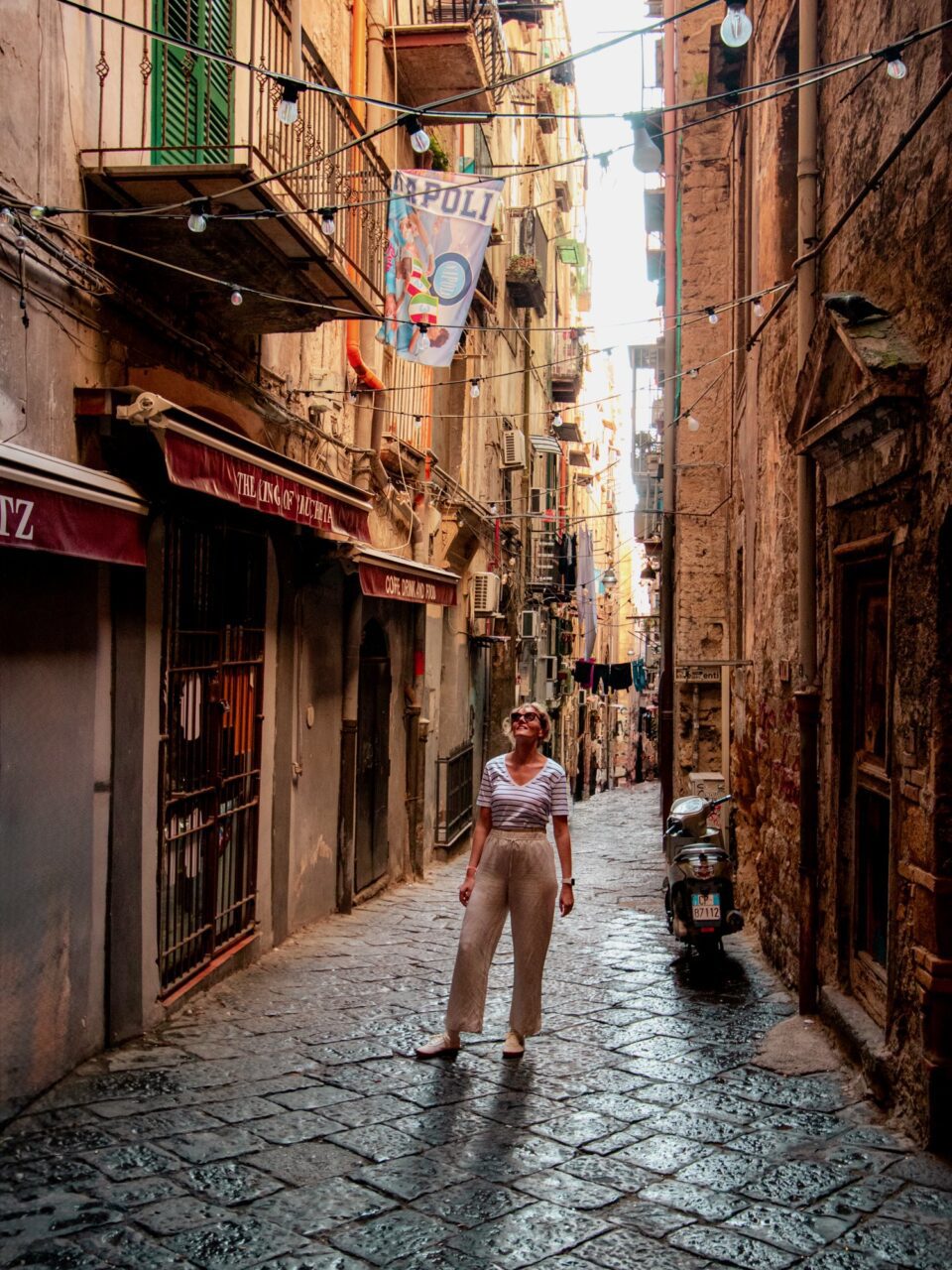
Much of the pleasure comes from the walk itself: noticing the balconies, street shrines, courtyards, washing hanging above the road, and everyday life continuing despite the number of visitors.
Along the way, you can step inside one of the churches or turn onto Via San Gregorio Armeno, known for its workshops producing figures for traditional Neapolitan nativity scenes.
Love medieval castles and Italian architecture? See what I discovered in Florence:
Visit Naples Cathedral
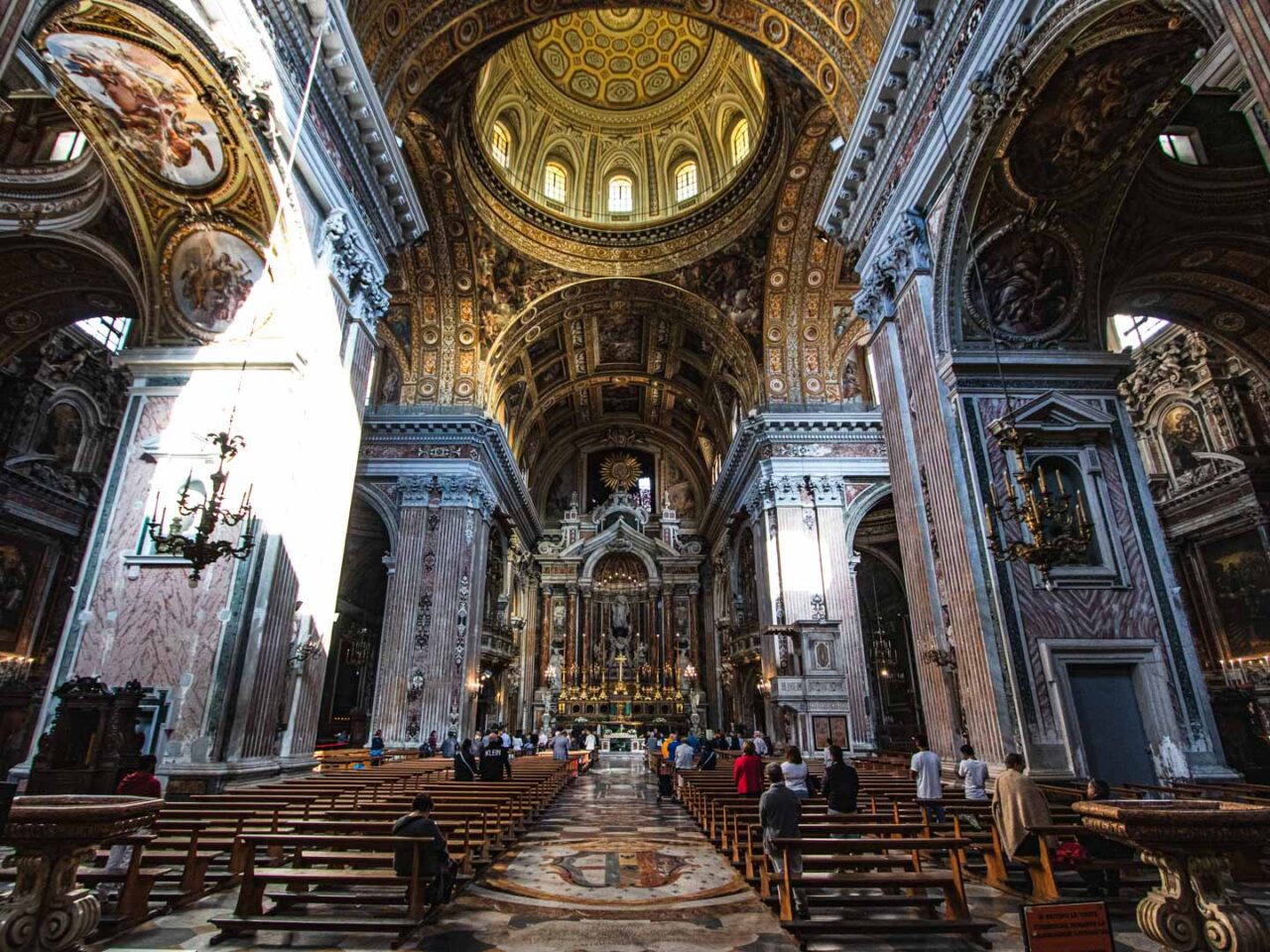
Your next stop can be the Duomo di Napoli, or Naples Cathedral.
From the street, it is surprisingly easy to walk past it too quickly. The interior is much more monumental than the façade initially suggests.
The most important part of the cathedral is the Chapel of San Gennaro, the patron saint of Naples.
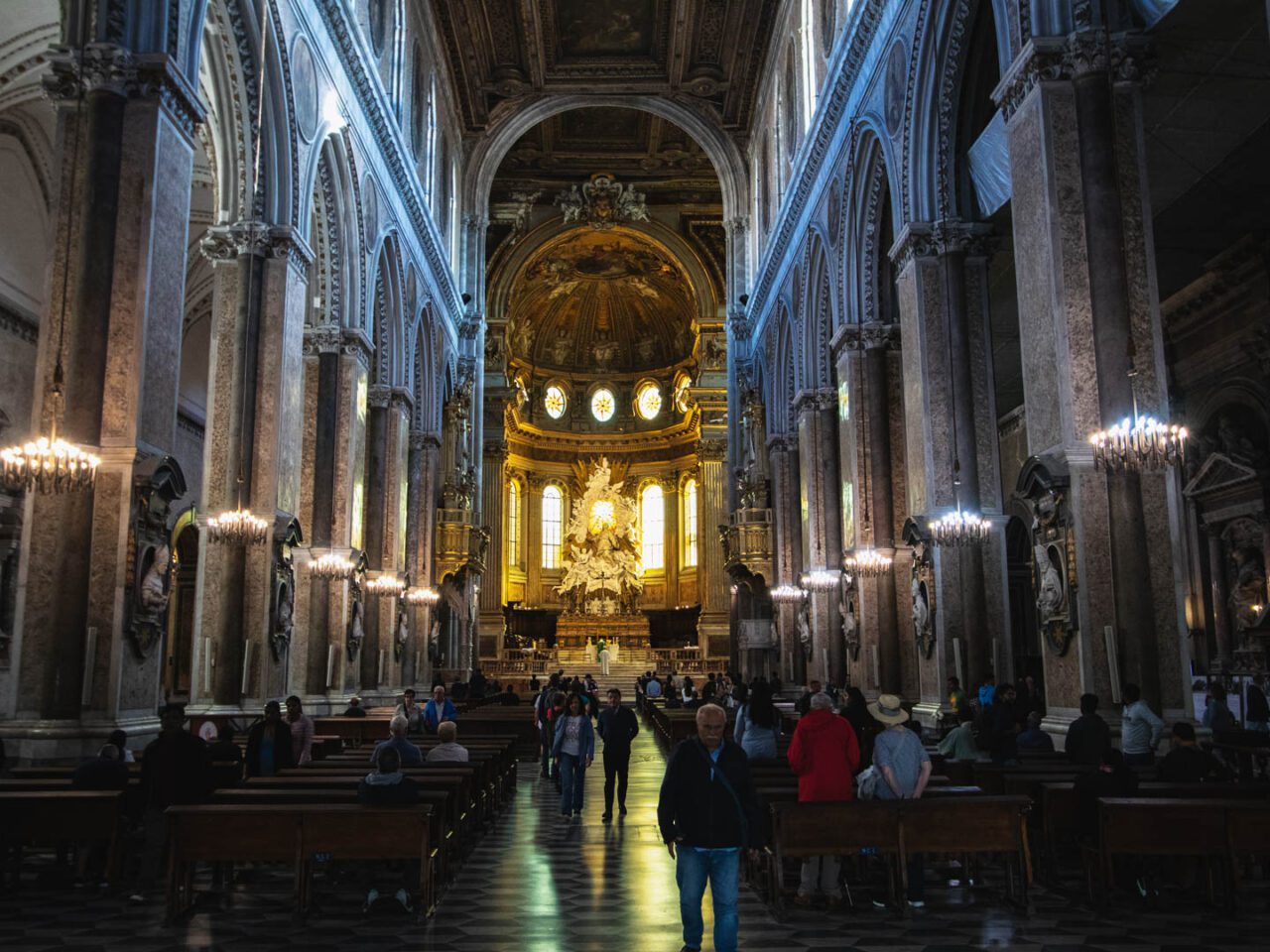
The cathedral holds relics connected with the ceremony of the liquefaction of the saint’s blood. For many residents, it remains an important religious event and a significant part of the city’s identity.
Even if you are not especially interested in religious relics, the cathedral is worth entering for its chapels, artwork, and dome.
Remember that this is not only a historic attraction. It is an active place of worship, and services may be taking place during your visit.

Continue Along Via dei Tribunali
After leaving the cathedral, continue towards Via dei Tribunali.
This is one of the main streets running through the historic centre and a natural continuation of the morning walk. It is lined with churches, cafés, pastry shops, small businesses, and some of the city’s best-known pizzerias.
The street can become very crowded around midday.
Do not try to move through it too quickly. Treat it as somewhere to explore rather than simply a route between two attractions.
You can stop for another espresso, try a sfogliatella, or simply watch the activity around you.
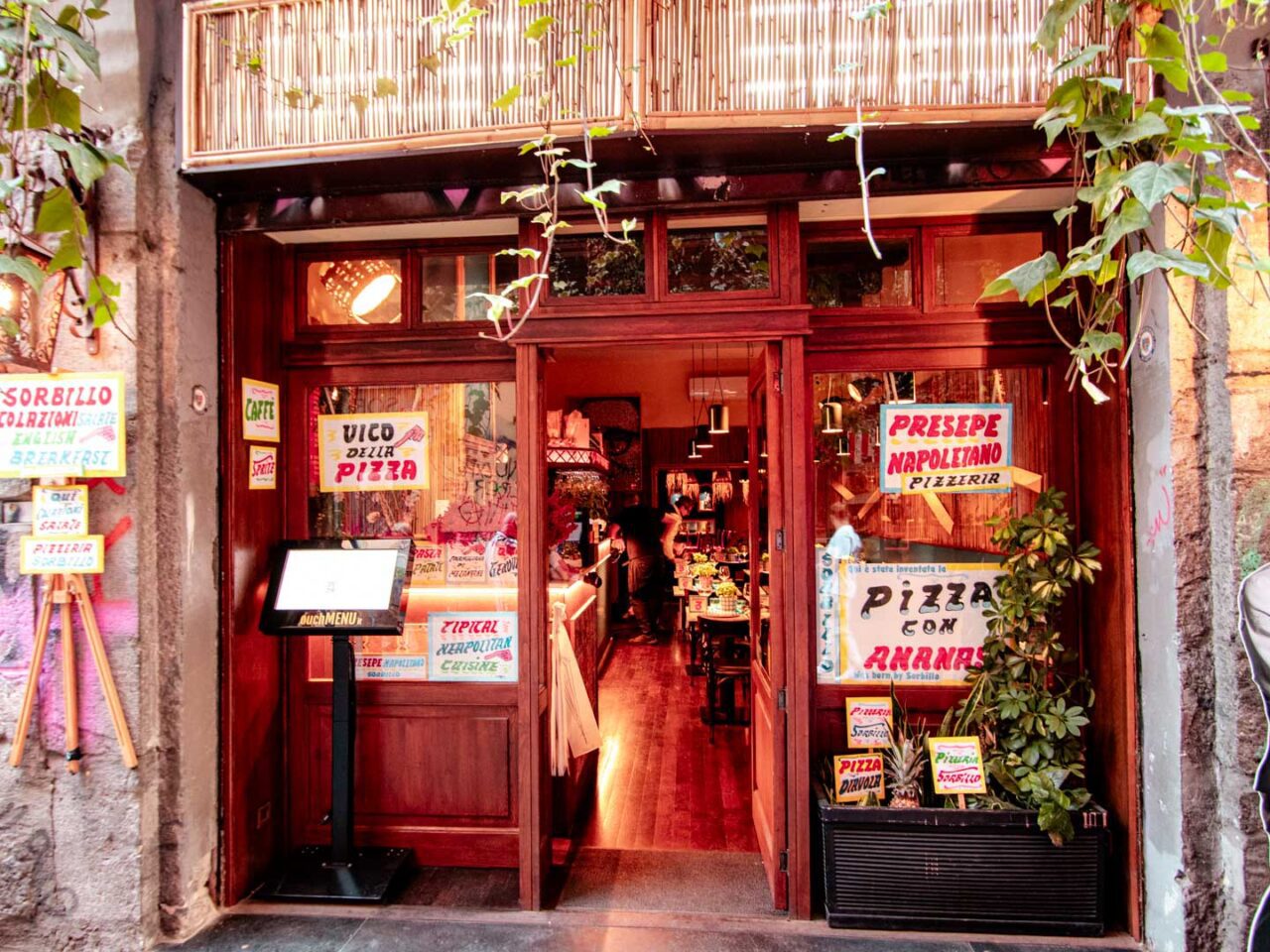
Where to Eat Pizza in Naples
It is easy to waste a surprising amount of time searching for the “best pizza in Naples.”
I am not convinced that there is one pizzeria that will be best for everyone. Many places serve excellent pizza, and the differences often come down to the dough, toppings, atmosphere, and length of the queue.
During my visit, I went to 1947 Pizza Fritta Napoli, where I tried pizza fritta – fried pizza.
My version was not folded like a calzone. It looked closer to a traditional open pizza, but the dough had been prepared in a completely different way.
What I remember most was the stracciatella di bufala. The mild, creamy cheese balanced the richer fried dough and made the pizza feel less heavy than I expected.
Pizza fritta is still very filling, so I would not plan another large food stop immediately afterwards.

If you prefer classic pizza, choose one of the pizzerias around Via dei Tribunali or walk to L’Antica Pizzeria da Michele.
I would not wait for more than an hour simply because one restaurant appears in every Naples guide.
During a one-day visit, it is often better to find very good pizza without an enormous queue and keep enough time for the city.
For dessert, try a sfogliatella, pastiera, or rum-soaked babà.
Afternoon in Naples
Explore Quartieri Spagnoli
After lunch, walk towards Via Toledo and Quartieri Spagnoli, the Spanish Quarter.
The neighbourhood was originally developed in the 16th century to house Spanish soldiers. Today, it is one of the most recognisable parts of Naples.
Its narrow streets climb uphill between closely packed buildings. Washing and decorations hang overhead, tables stand outside small restaurants, and murals and religious shrines cover the walls.
The best-known landmark is the Diego Maradona mural and the small square surrounding it.
In recent years, it has become extremely popular. Do not expect to discover a quiet, hidden corner of Naples.
Visit the mural, but then continue through the surrounding streets rather than reducing the entire neighbourhood to one photograph.
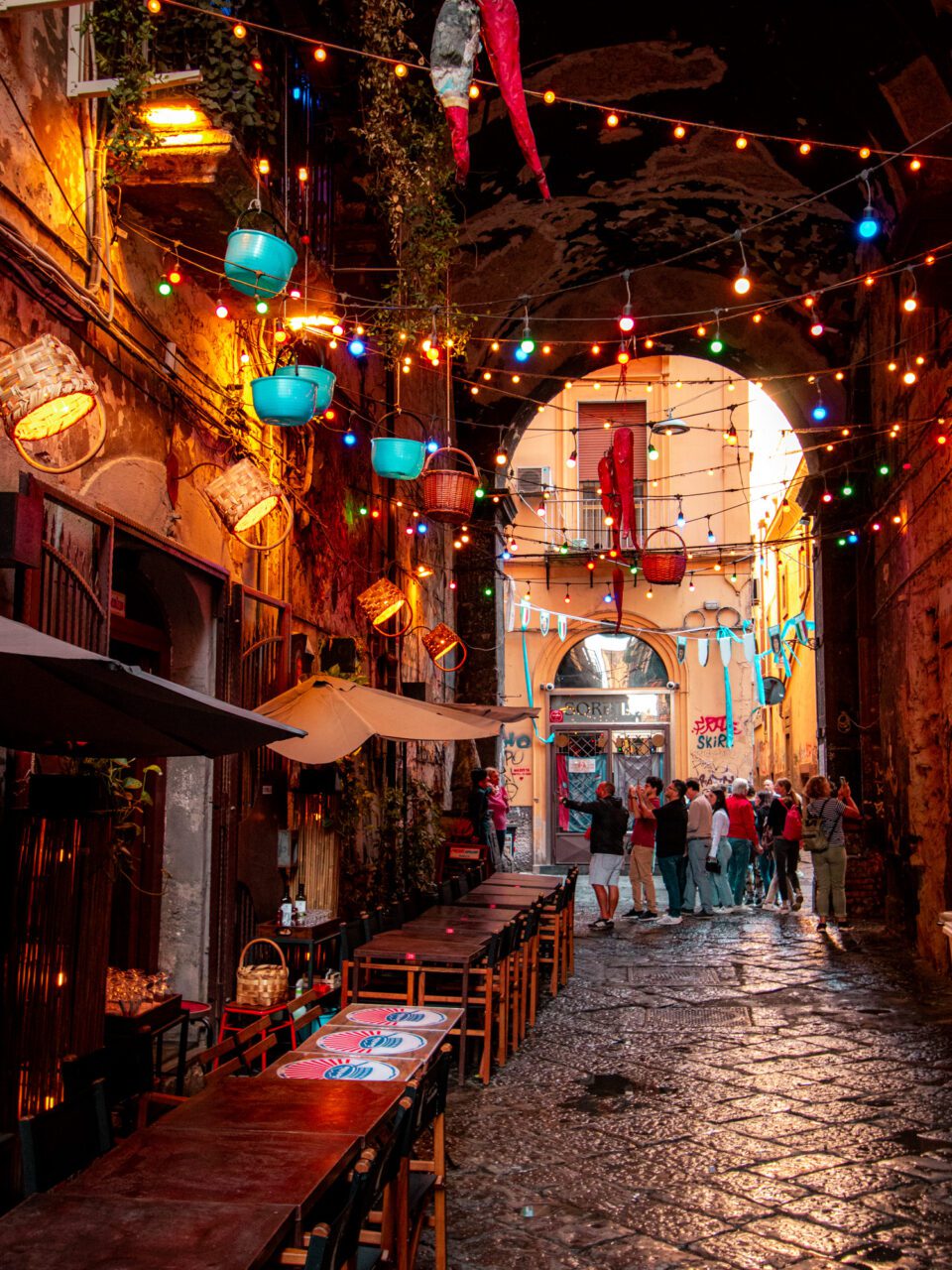
The area remains busy with residents, restaurants, and visitors in the evening.
As in any crowded urban neighbourhood, pay attention to your phone and wallet, particularly around the busiest attractions. There is no need to treat the Spanish Quarter as somewhere that suddenly becomes forbidden after dark.
Normal city awareness is enough.
Walk Along Via Toledo
From Quartieri Spagnoli, it is easy to return to Via Toledo.
This is one of the main streets in central Naples, filled with shops, cafés, and pedestrians. After the narrow lanes of the historic centre, it can feel unexpectedly broad and orderly.
Take a brief look inside Toledo Metro Station, one of the best-known stations on Naples’ Art Line.
Even when you do not need to use the metro, the station is worth seeing for its architecture and blue, mosaic-covered interior.

Evening in Naples
Castel Sant’Elmo and the View Over the City
To finish the day, travel up to Vomero Hill.
The easiest option is the Funicolare Centrale, which connects central Naples with the Vomero district. From Piazza Fuga, continue uphill on foot towards Castel Sant’Elmo.
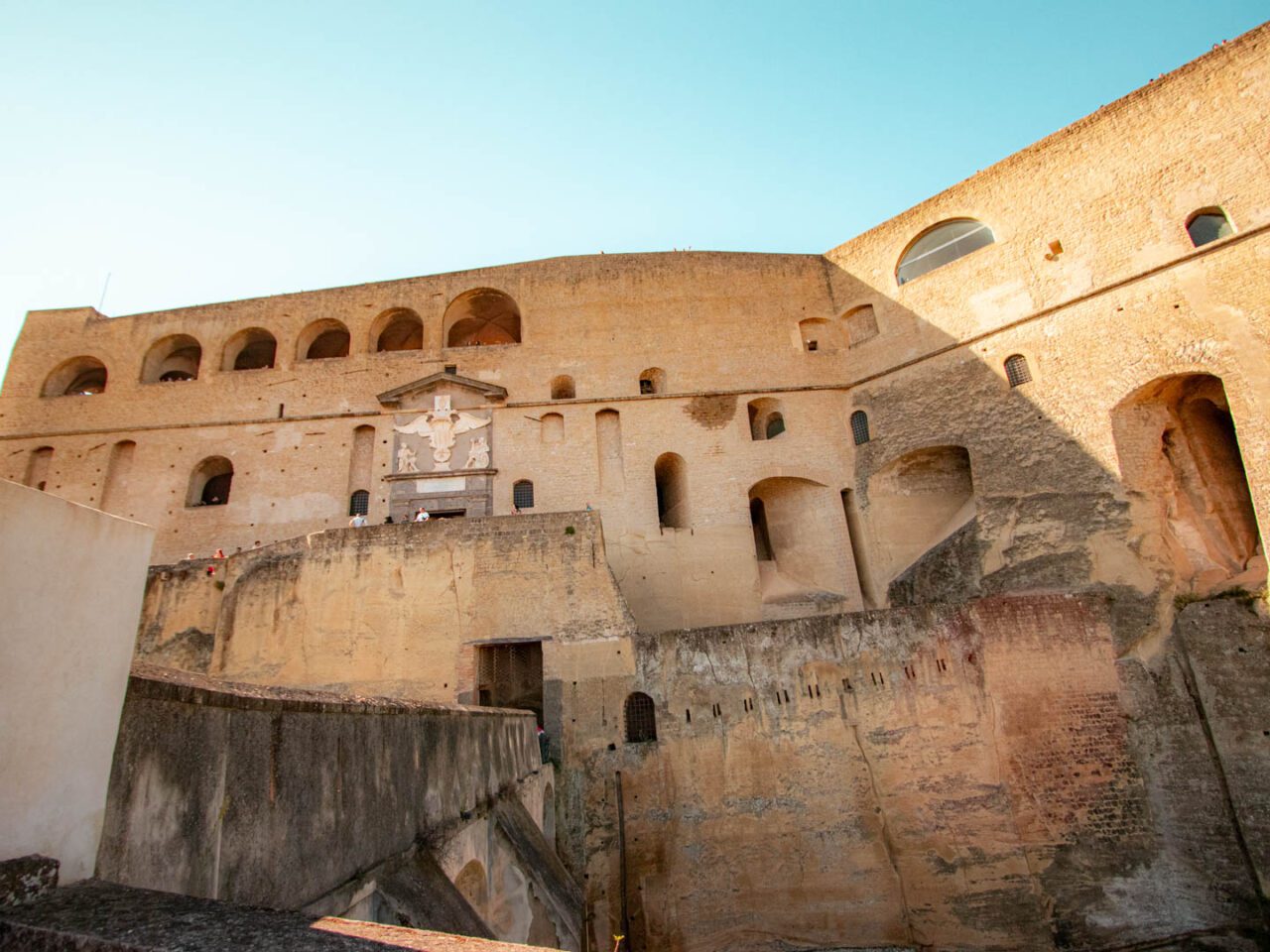
The fortress has a distinctive star-shaped structure, but the main reason to visit late in the day is the view.
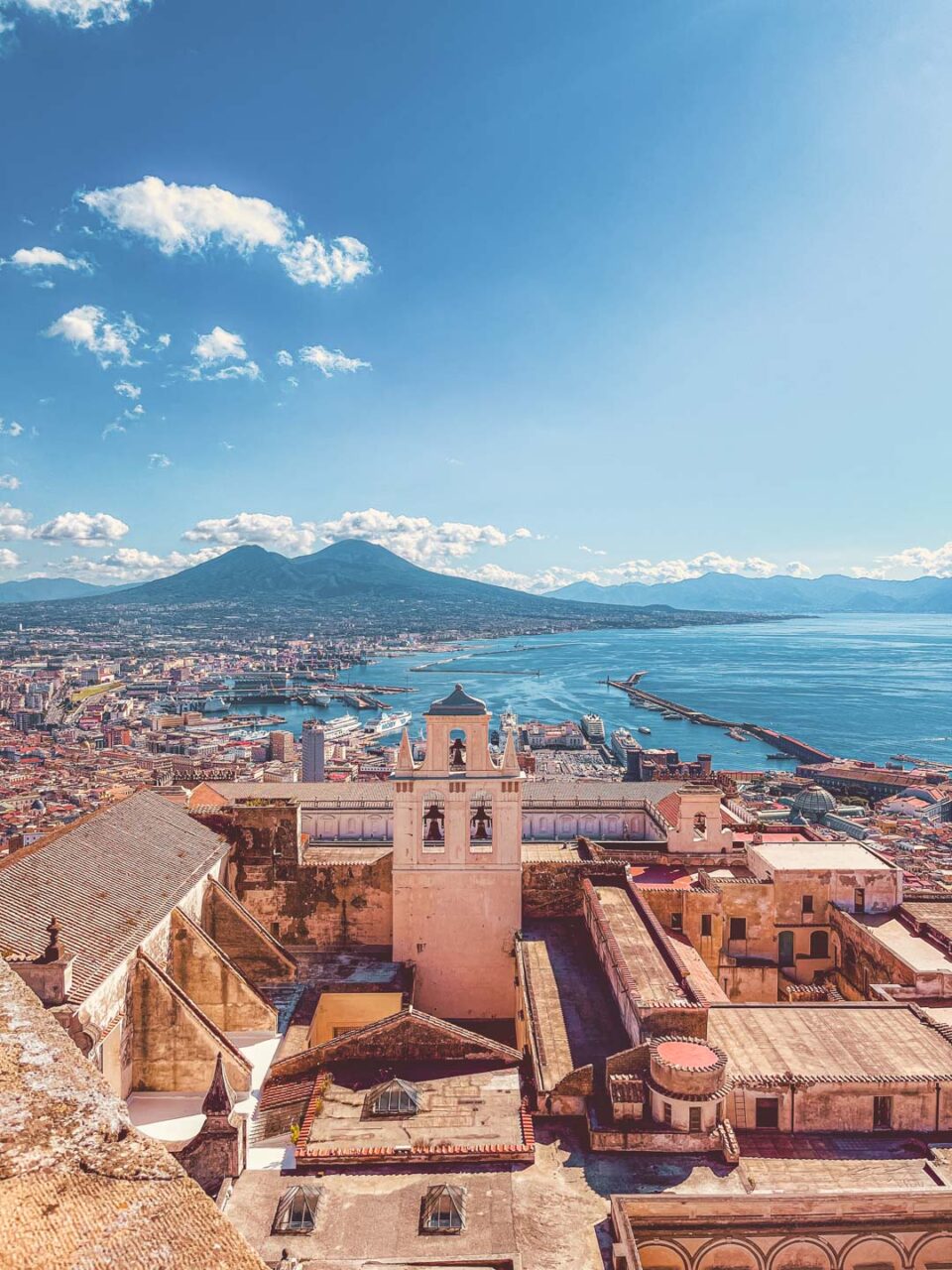
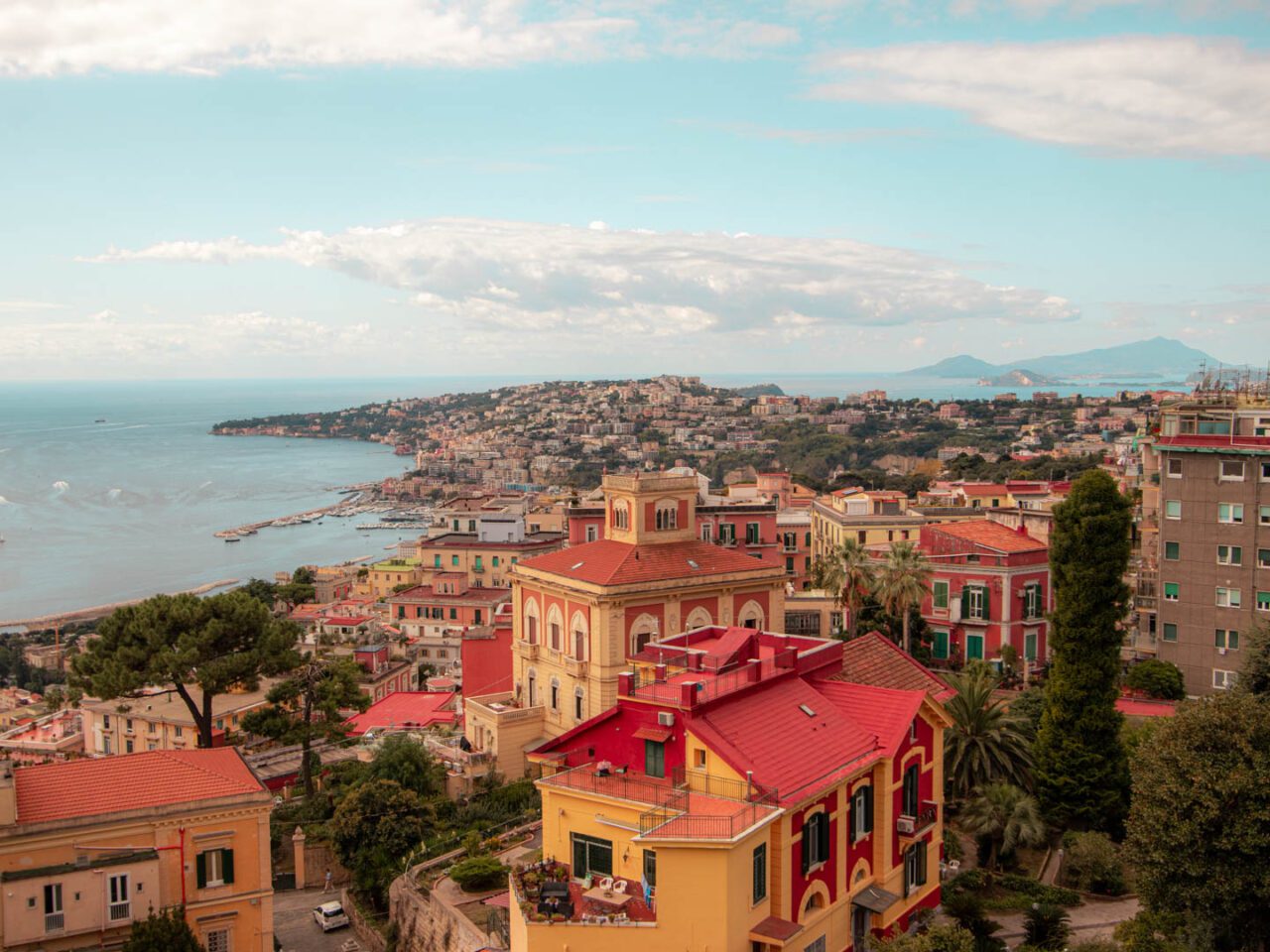
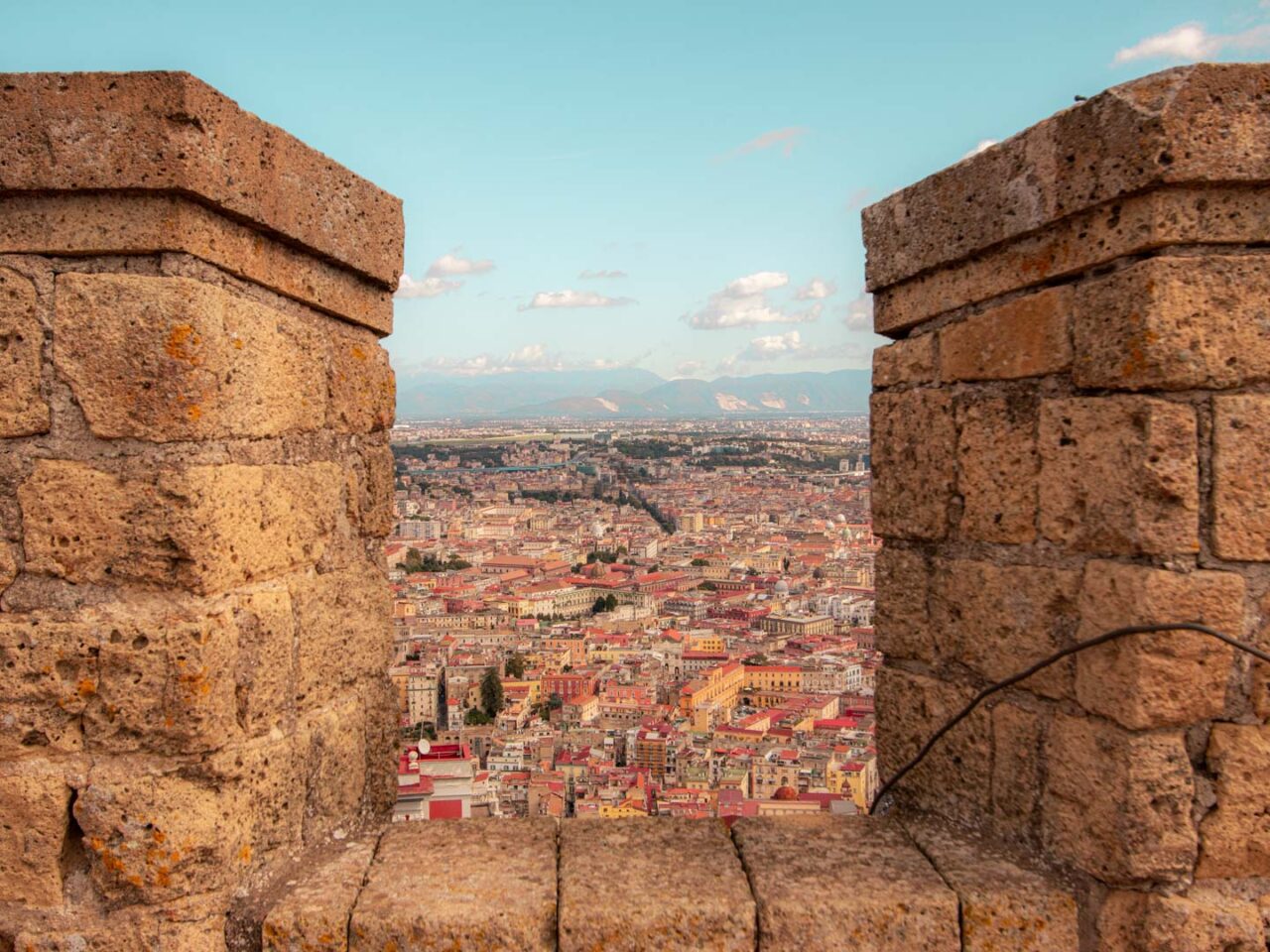
From its walls, you can see the historic centre, the port, the Bay of Naples, and Mount Vesuvius. Only from this height do you begin to understand how dense and extensive the city really is.
You may even be able to identify some of the streets you walked along earlier.

Check the official opening hours shortly before your visit, especially when planning around sunset. Opening times and access to specific areas can change because of events, maintenance, or weather conditions.
During summer, sunset may take place after the castle closes.
In that case, visit the fortress first and then walk towards Piazzale San Martino, where you can continue watching the light change over the city.
It is a calmer and more logical ending than travelling back into the historic centre simply to add another attraction to an already full day.
What Can You Choose Instead?
Option 1: The National Archaeological Museum
If ancient history interests you more than neighbourhoods and viewpoints, choose the National Archaeological Museum of Naples.
Its collections include mosaics, frescoes, sculptures, and objects discovered in Pompeii and Herculaneum, as well as the impressive Farnese collection.
Allow at least two or three hours for your visit.
I would not add the museum to the complete itinerary above. Instead, skip Quartieri Spagnoli or Castel Sant’Elmo and give the museum enough time.
If you are short on time, focus on the rooms connected with Pompeii and Herculaneum rather than trying to see the entire collection.
Check current opening hours and gallery access before your visit.
Planning more travel in Italy?
🏛️ Art and culture? → Florence in One Day
🌅 Tuscan towns? → The Most Beautiful Towns in Tuscany
💕 Romantic canals? → My Venice Travel Guide
🏔️ Mountain lakes? → Lake Como Itinerary
Which destination feels right for your next trip?
Option 2: The Waterfront and Castel dell’Ovo
If you would rather spend time beside the sea, walk along the waterfront towards Borgo Marinari.
This is where you will find Castel dell’Ovo, the oldest castle in Naples.
According to legend, the Roman poet Virgil hid an egg in the castle’s foundations, and the fate of Naples depended on it remaining unbroken.
The castle is undergoing extensive restoration. Municipal plans published for the project aim for completion during the first quarter of 2027, but the schedule may still change. Check the current access status before planning your visit.
Even when the interior is unavailable, the surrounding waterfront, Borgo Marinari, and views across the bay make this a pleasant area for a walk.
Choose this option instead of the museum or part of the historic-centre route rather than adding it to an already full day.
Want to explore more of Naples?
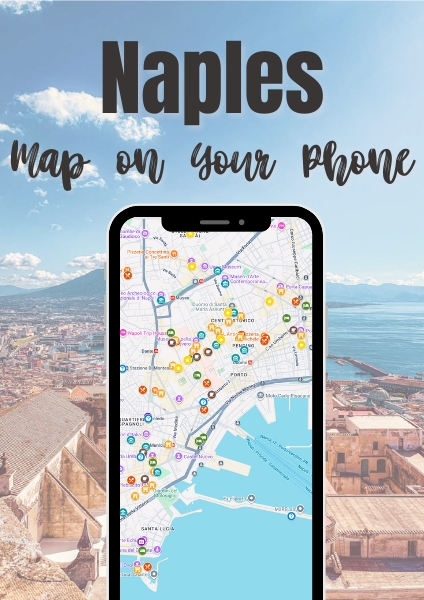
I’ve saved more than 100 places on my Naples map, including attractions, restaurants, cafés, and viewpoints.
Bonus for new readers: Get my Naples map and save it directly to your phone. 📱
How to Get from Naples Airport to the City Centre
Naples International Airport is relatively close to the city centre, although traffic can make a short distance take longer than expected.
One of the simplest options is the Alibus, which connects the airport directly with the central railway station and the Port of Naples.
You can also take a taxi.
When staying in the historic centre, check whether your accommodation can be reached directly by car. Some streets are extremely narrow or located within restricted traffic areas.
Nonstop routes to Naples from the United States change seasonally, so I would not build the article around a fixed list of airlines and cities.
Check current schedules for your travel dates. If a nonstop flight is unavailable, connections through Rome, Paris, Amsterdam, Frankfurt, or London are usually straightforward.
How to Get Around Naples
The historic centre is best explored on foot.
Many of the main attractions are relatively close together, and walking allows you to see details that would be easy to miss from a vehicle.
For longer distances, the metro and funiculars are useful.
Metro Line 1 connects several important areas, including Garibaldi, Duomo, Università, Municipio, Toledo, Dante, Museo, and the Vomero district.

I would not recommend driving into central Naples.
The narrow streets, heavy traffic, scooters, limited parking, and restricted ZTL areas make a car much more stressful than useful.
If Naples is part of a longer Italian road trip, leave the car at your hotel or in a car park outside the historic centre.
When Is the Best Time to Visit Naples?
I visited Naples in October.
The weather was excellent for walking, but there were more visitors than I expected. October is no longer a particularly quiet month in southern Italy.
The most comfortable conditions for sightseeing are generally found in spring and autumn.
I would consider:
- April and May
- the second half of September
- October
- early November
Summer can be hot, humid, and tiring, especially when walking through the historic centre with little shade.
Winter has a different atmosphere.
Before Christmas, Via San Gregorio Armeno fills with nativity figures and seasonal decorations. Be prepared, however, for rain, humidity, and cooler wind coming from the bay.
How Many Days Do You Need in Naples?
One day is enough for a first introduction to Naples.
You can walk through the historic centre, visit the cathedral, eat pizza, and see the city from above.
It is not enough for:
- a long visit to the archaeological museum
- the underground sites of Naples
- a relaxed walk along the waterfront
- neighbourhoods beyond the historic centre
- a day trip to Pompeii or Herculaneum
For Naples itself, I would allow two or three days.
Add another full day for Pompeii, Herculaneum, or another trip through Campania. I would not combine Pompeii with a complete day of sightseeing in Naples.
Travel lighter, even before you leave.
start with something simple.
Download The Minimum Plan – Slow Travel:
Where to Stay in Naples
For a short visit, location matters more than almost anything else.
Staying in or near the historic centre allows you to begin exploring early without relying on transport and return easily after a long day of walking.
Hostel Mancini: For Solo Travellers
Hostel Mancini is located near Piazza Garibaldi, within walking distance of the main railway station and the historic centre.
It is a practical location when arriving by train or continuing elsewhere in Campania.
Decumani Hotel de Charme: For Couples
This hotel occupies a historic building in the centro storico.
It is a good option if you prefer more traditional interiors and want the main streets of the old city within walking distance.
Santa Chiara Boutique Hotel: For a More Comfortable Stay
Santa Chiara Boutique Hotel is located close to Spaccanapoli, placing you in the centre of the historic district.
Before booking any central hotel, read the most recent reviews and check whether the room faces a busy street.
In Naples, an excellent location can also mean noise.
Planning more travel in Italy? Discover the most beautiful towns in Tuscany:
Naples in One Day: A City That Does Not Pretend
Naples is often overshadowed by Rome, Florence, and Venice.
It is less elegant, less orderly, and not particularly concerned with making a good first impression.
That is exactly why it surprised me.
I expected another Italian city filled with churches, historic buildings, and good food. Instead, I found somewhere that occasionally reminded me of an Asian metropolis: loud, intense, and full of life unfolding directly on the street.
Naples is a city of contrasts.
Monumental churches stand beside small workshops. Scooters pass beneath balconies covered in washing. Only a short distance from the crowded streets, the city opens towards the bay and Mount Vesuvius.
What I remember most is not only the attractions, but the rhythm of the entire day: morning espresso, the walk along Spaccanapoli, fried pizza with stracciatella, and the view from Castel Sant’Elmo.
One day is not enough to understand Naples.
It is enough to feel its energy and decide whether it is somewhere you want to return to.
I would return without hesitation – not simply to see more attractions, but to allow myself to get slightly lost in its streets again.
Planning More Travel in Italy?
- Florence in One Day – for art, history, and Renaissance architecture
- 10 Most Beautiful Towns in Tuscany – for smaller towns and a slower journey
- Lake Como Itinerary – for mountains, water, and historic Italian villas
- My Venice Travel Guide – for canals, palaces, and walks without a strict destination
Which destination best matches your next trip to Italy?