
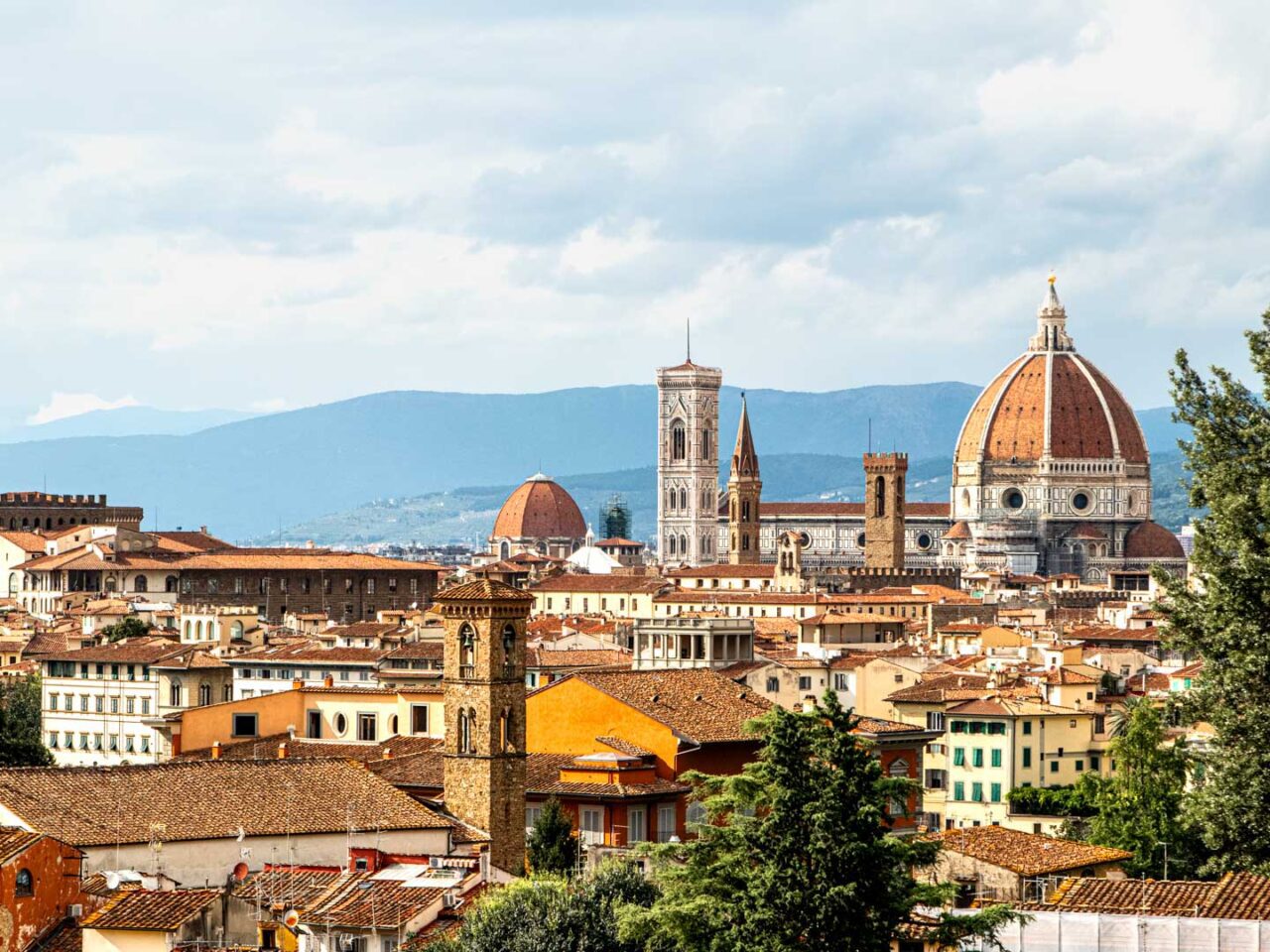
Wondering how to spend just one day in Florence without turning it into a checklist?
I still remember the moment I walked into the Uffizi and saw Botticelli’s Birth of Venus in real life. Not on a screen, not in a book. Just there. Quiet. Almost unreal. And suddenly it all made sense – why people keep coming back to this city.
Florence has this softness to it. It’s where Dante was born, where the first opera came to life, where Leonardo da Vinci and Michelangelo left something of themselves behind. And yet, it doesn’t feel overwhelming. It feels… close.
Here’s the truth no one really tells you – one day in Florence is enough. Not to see everything, but to feel it. To walk without rushing. To sit down for a coffee without looking at the time. To let the city unfold a little slower.
In this guide, I’ll show you exactly how I’d spend one day here – from the Duomo and Ponte Vecchio to the Uffizi, with a few places to eat and small moments in between that made this day stay with me.
I’ve also added simple timing tips that make everything easier – less waiting, less stress, more space to just be there.
If you only have 24 hours in Florence, this is how I’d do it.
Planning a trip to Italy? Take a look at my full Italy guide – you’ll find even more tips, inspiration, and soulful places to explore.
9:00 – Uffizi Gallery: start slow, start early
I always begin my day in Florence at the Uffizi.
Not because it’s the most “important” place – but because the morning light, the quiet, the stillness… it just feels right. Like the city hasn’t fully woken up yet.
Go early. Really.
I didn’t the first time, and I ended up standing in line for almost two hours, already tired before the day even started.
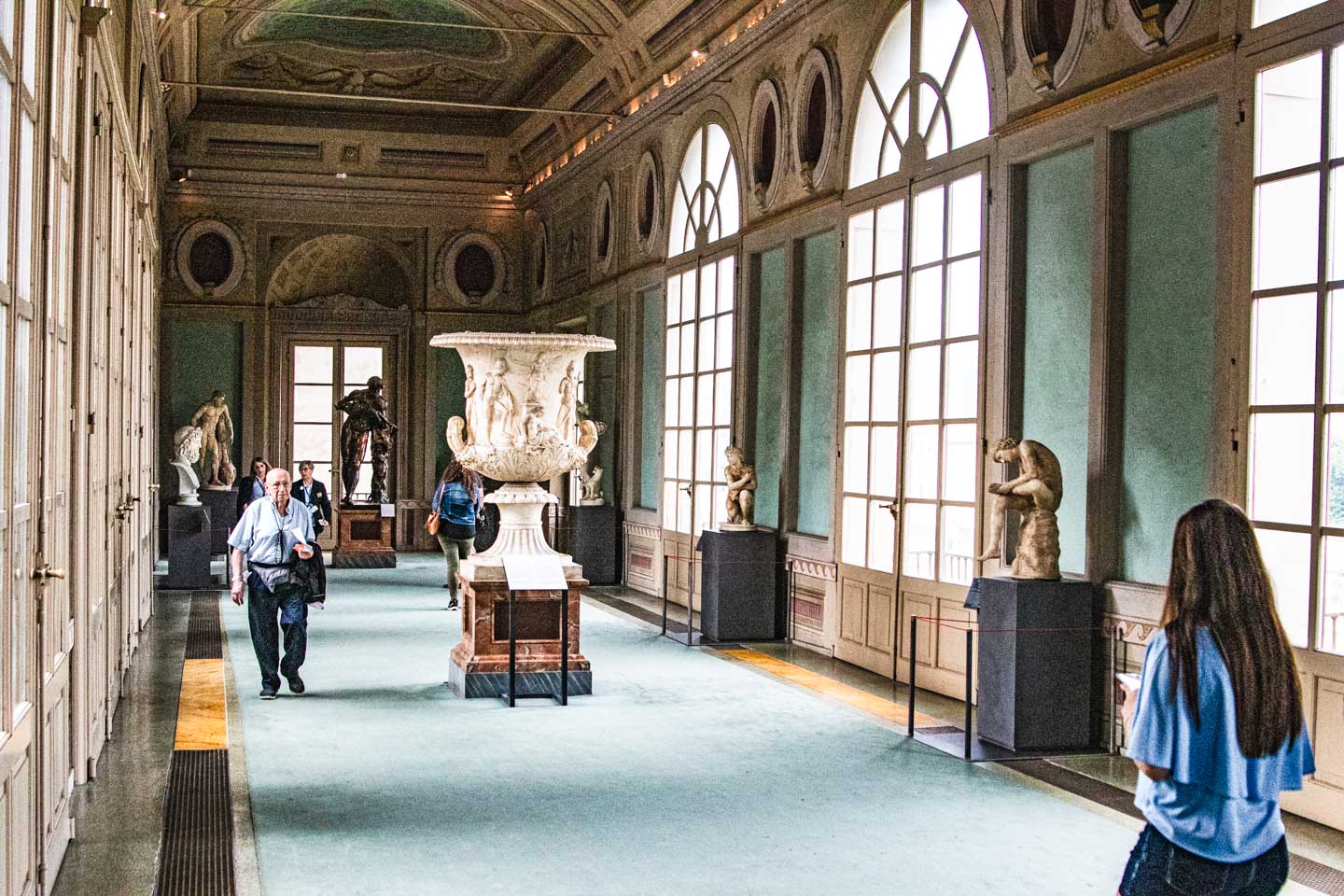
The Uffizi isn’t just a museum. It used to be the administrative heart of the Medici family, and you can still feel that sense of power and history in the space itself. Long corridors, high ceilings, windows opening toward the Arno.
And then the art.
It’s one of those places where you don’t need to see everything. In fact, don’t try. Just move slowly. Stop when something catches you. Let yourself stay a little longer.
This is how Florence begins.
What to see (without trying to see everything)
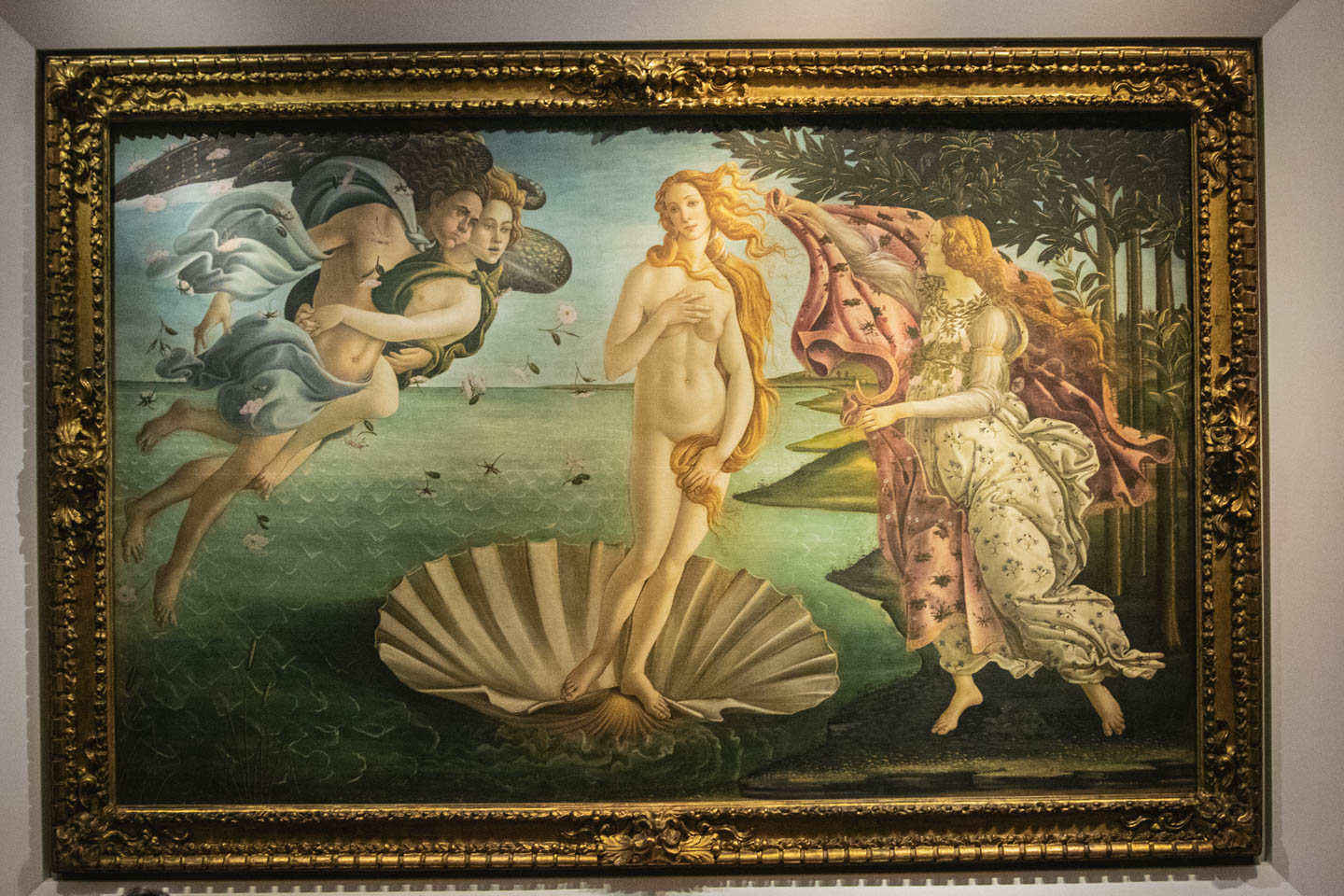
Start with the rooms that hold Botticelli. Madonna Magnificat, The Birth of Venus, Primavera.
This is where I always slow down the most.
The first time I saw The Birth of Venus, I didn’t move for a while. Not because I had to – but because I didn’t want to. There are so many small details you just don’t notice anywhere else.
Then drift toward Leonardo’s rooms. The Annunciation, The Adoration of the Magi.
Seeing his brushstrokes up close feels different than you expect. Less “perfect”, more human. Almost unfinished in places. I loved that.
On the other side, you’ll find Michelangelo’s Tondo Doni, Titian’s Venus of Urbino, and Raphael’s Madonna del Cardellino. Even if you’re not “into art”, these are the ones that stay with you.
But honestly? Don’t treat this like a checklist. Pick a few rooms. Stay a little longer. Skip the rest if you feel like it.
A small ritual at the end
Before you leave, go upstairs to the café.
Order a coffee, step outside, and just look. Terracotta rooftops, the dome in the distance, the soft noise of the city below.
It’s one of those quiet Florence moments you don’t plan – but remember.
Practical Information
- The Uffizi Gallery is open from Tuesday to Sunday, usually from the morning until early evening (last entry is around 6:30 pm).
- Tickets cost around €25, depending on the time of day. It’s worth paying a few extra euros for an online reservation – it saves you from standing in line.
- Plan to spend about 2-3 hours here. And don’t try to see everything. A few rooms, slowly, is more than enough.
11:30 AM – Piazza della Signoria: step into the city
When you leave the Uffizi, don’t rush anywhere.
You’re already exactly where you need to be.
Piazza della Signoria opens up almost suddenly – wide, a little dramatic, full of movement. This has been the heart of Florence for centuries, and you can feel it. Not in a loud way, but in that quiet sense that a lot has happened here.
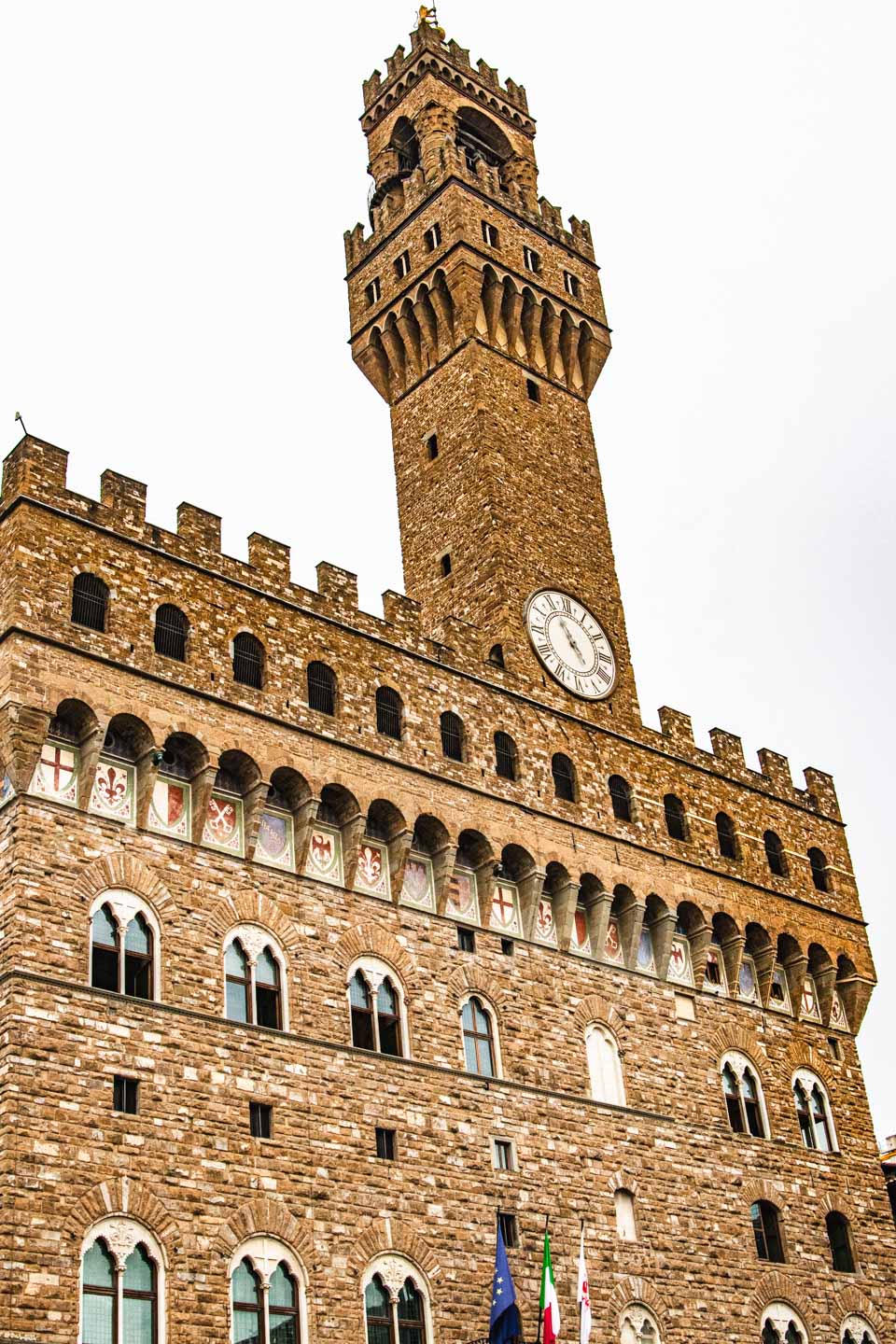
Stand for a moment in front of Palazzo Vecchio. You don’t have to go in. Just look.
There are sculptures all around you, and most people barely notice them. They take a photo and move on.
But if you slow down, it becomes something else.
Yes, there’s the replica of David. It’s impressive, of course. But walk a little further, into the Loggia.
Find Perseus holding Medusa’s head.
It’s… unsettling. Beautiful, but also a bit haunting. The details, the expression – it stays with you longer than you expect.
This is one of those places where you don’t need a plan. Just a few extra minutes of attention.
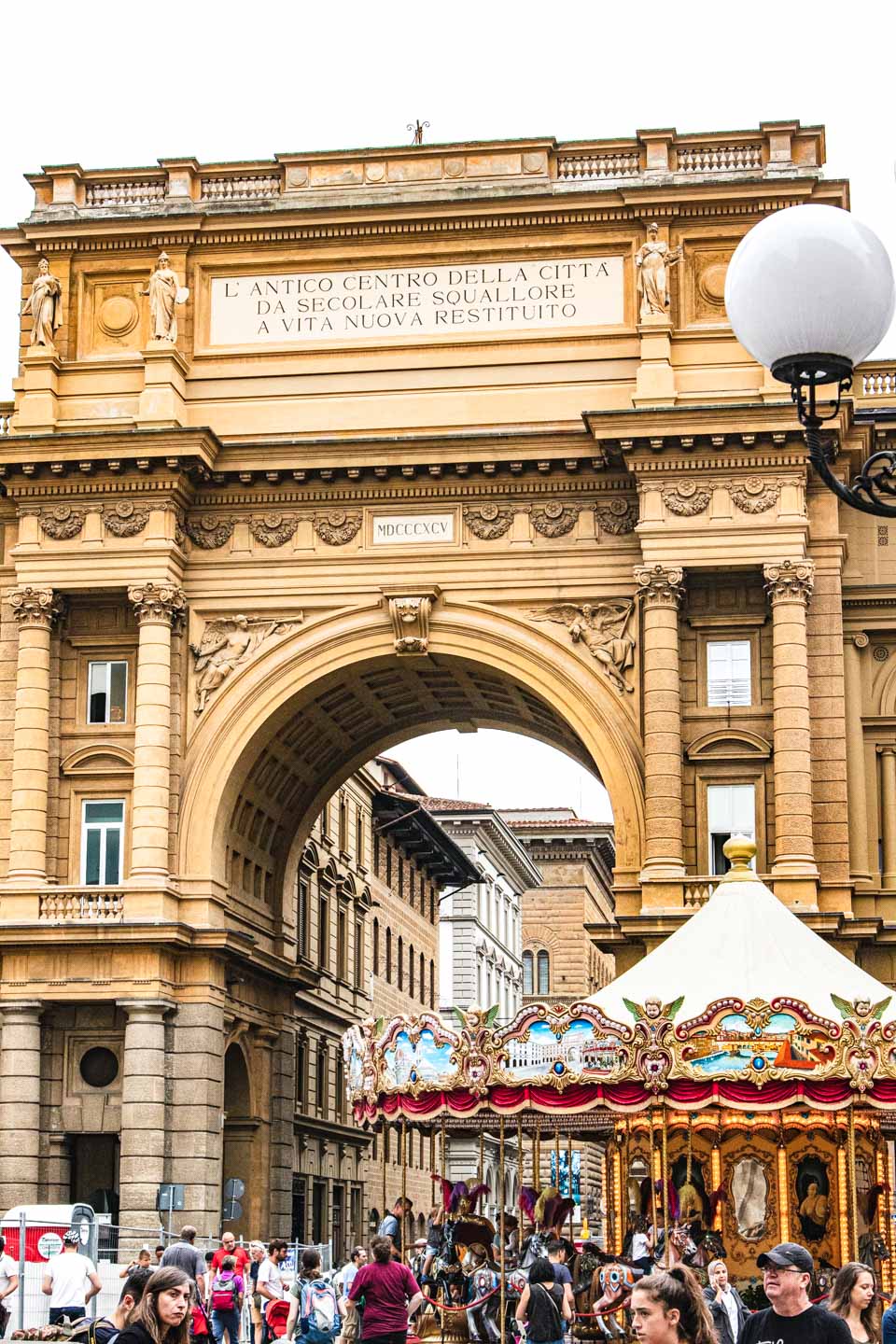
The Neptune Fountain might feel a little worn today, but locals have a nickname for it – Il Biancone, the “big white guy.” Very Florentine. A bit ironic, a bit affectionate.
Right next to it, you’ll see Cosimo I on horseback. Calm, composed, powerful. A quiet reminder of how much control the Medici once had over this city.
And then there’s something most people walk right past.
A small stone circle near the fountain.
I didn’t notice it the first time either.
This square has seen centuries of history – public executions, political speeches, celebrations. And this is the exact spot where Savonarola was burned at the stake in 1498.
It’s strange, standing there. So much life happening around you, and at the same time… so much history underneath.
If you feel like slowing down for a moment, this is a good place to do it.
Grab a gelato nearby, find a place to sit, and just watch the city move.
Love exploring Italy’s historic gems? Check out my San Gimignano guide for another medieval Tuscan treasure.
12:30 PM – Mercato Centrale: a slow food stop
If there’s one place where Florence feels less like a museum and more like real life, it’s here.
Mercato Centrale.
It’s loud, a little chaotic, full of smells and voices and movement – and somehow, that’s exactly what you need in the middle of the day.
The building itself is beautiful in that simple, industrial way – iron, glass, soft light coming through. But what matters is what’s inside.
Start on the ground floor.
This is the more traditional part – local vendors, small stands, people doing their everyday shopping. Bottles of olive oil lined up in the sun, wheels of pecorino, fresh produce depending on the season.
Take your time walking through. You don’t have to buy anything. Just look, smell, notice.
This is a different side of Florence. Less polished, more real.

Upstairs: where you actually sit down and eat
Head to the first floor when you’re ready for something more than just looking.
It’s a big, open space with different food stalls all around – each one focused on something simple and done well. Pasta, sandwiches, wine, desserts. Everything made fresh, right in front of you.
This is where I like to slow down for a bit.
What I’d order
If it’s your first time here, keep it classic:
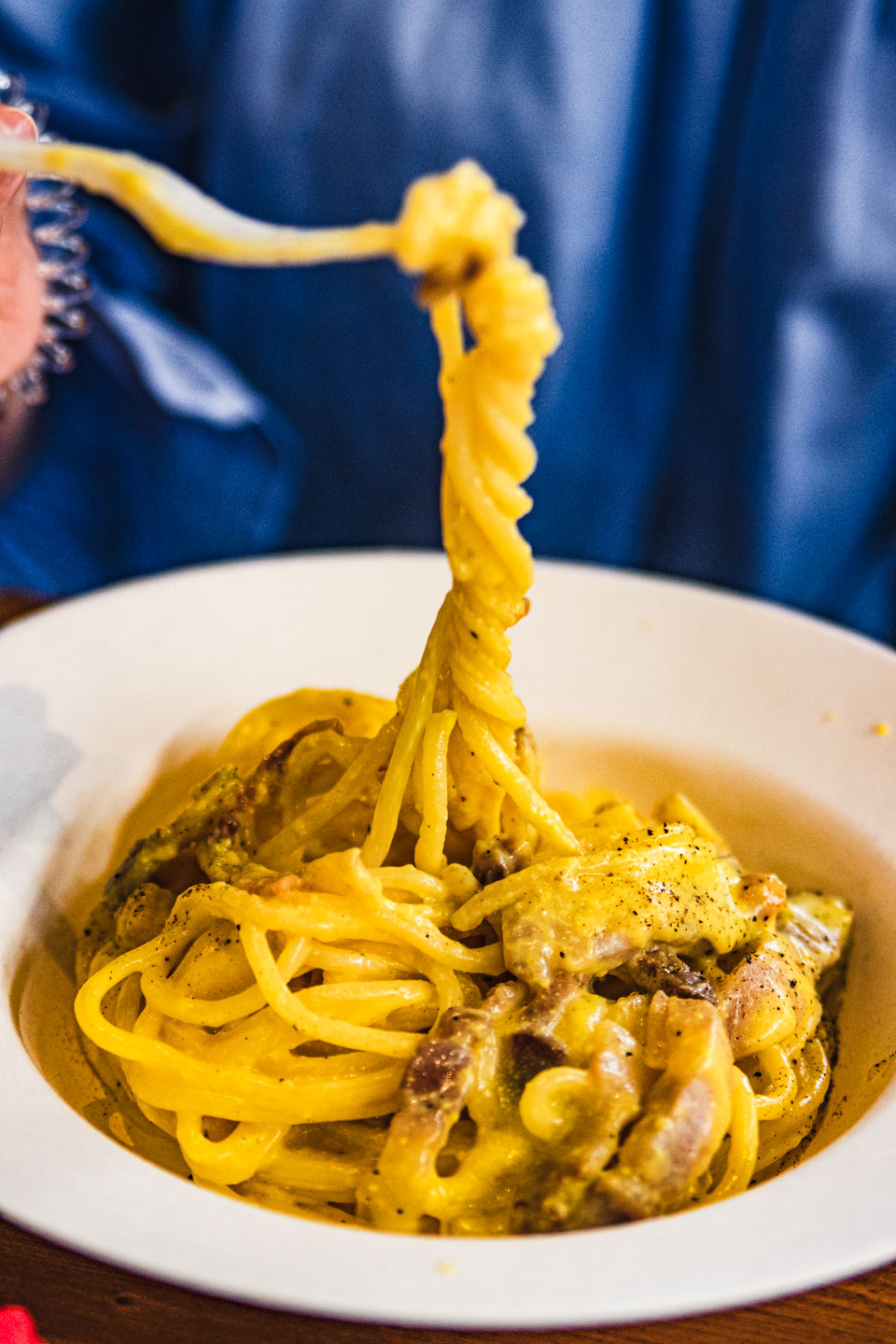
- Pici al sugo di cinghiale – thick, handmade pasta with wild boar sauce
- A lampredotto sandwich – very local, a bit unusual, but worth trying at least once
- A glass of Chianti Classico – nothing complicated, just good wine
- And cannoli to finish
Not all at once (unless you’re really hungry). Just pick what you feel like in the moment.
A small tip
Try to go a little earlier or a little later than peak lunch time. Around 1-2 pm it gets crowded and a bit hectic.
Find a spot, sit down, and give yourself time.
This isn’t a quick stop. It’s your pause in the middle of the day.
Practical Information
- Mercato Centrale is open daily, usually from around 10:00 am until late evening (often close to midnight).
Want to discover Florence beyond the obvious?
I share the places I actually find along the way – the quiet corners, small food spots, and little moments that don’t make it into most guides, but end up staying with you the longest.
If that’s your kind of travel, you can join me here.
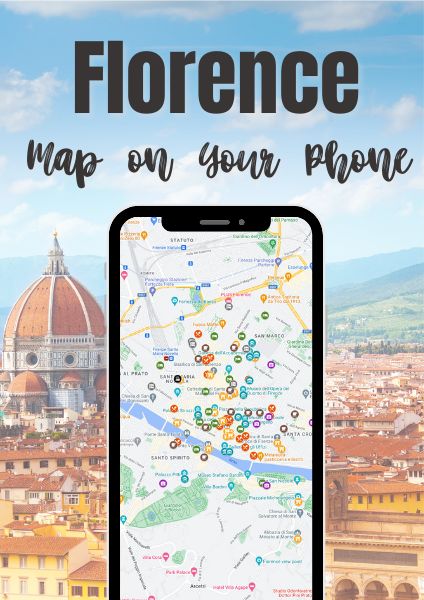
As a small bonus, I’ll send you my personal Google Map with 100+ Florence spots 📍
2:00 PM – Florence Cathedral: the moment you look up
There’s no real way to skip the Duomo. And honestly… you shouldn’t.
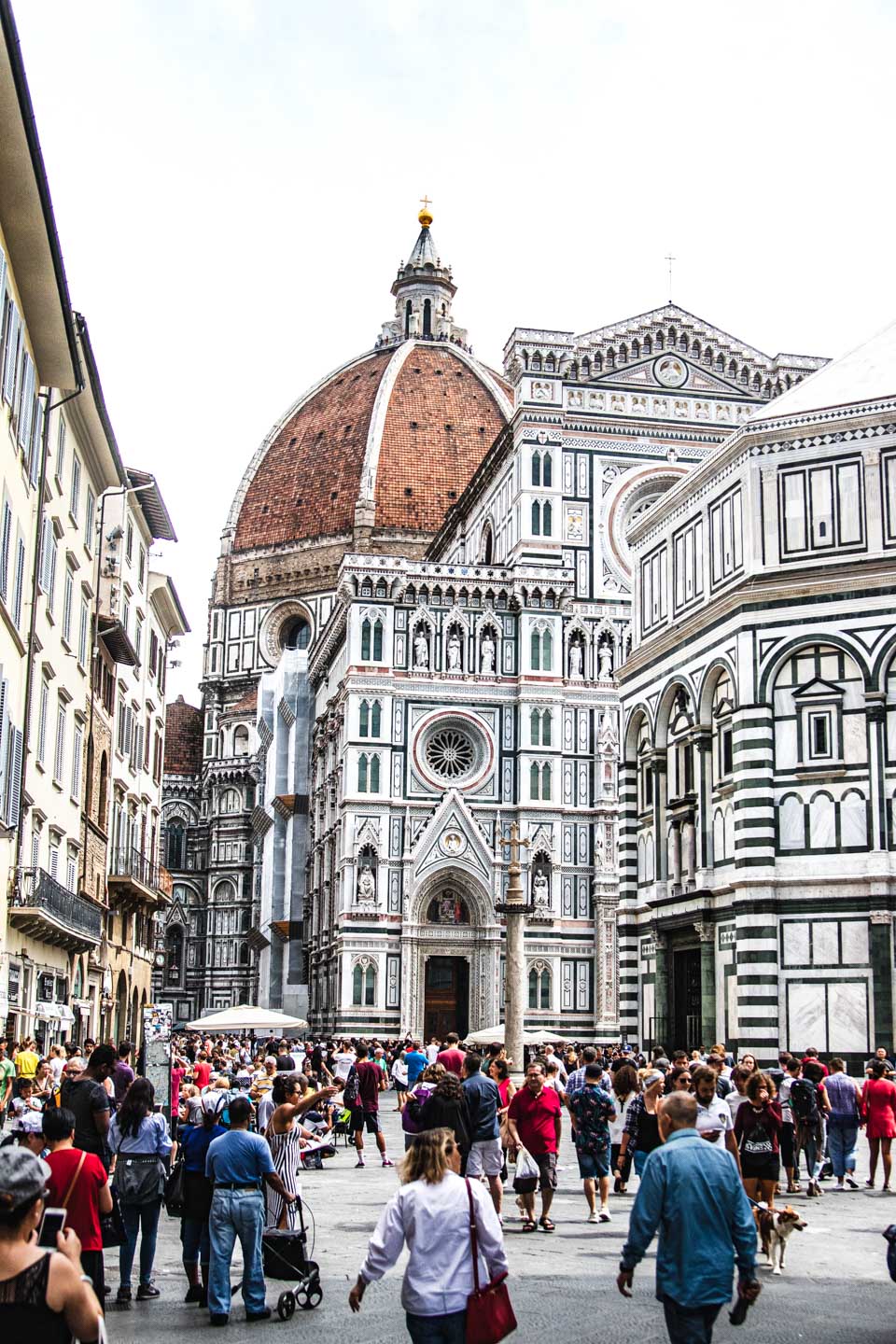
You’ll see it before you even get there. The dome rising above everything, almost unreal against the sky. And then suddenly you’re standing right in front of it, and it feels even bigger than you expected.
The Cathedral of Santa Maria del Fiore isn’t just beautiful – it’s overwhelming in the quietest way.
Construction started in 1296 and took nearly 150 years to complete. And somehow, you can feel that time in the details.
The façade is what everyone notices first – soft pink, green, and white marble, layered and intricate, almost like lace carved in stone.
But what really stays with you is the dome.
Brunelleschi’s idea. His solution to something that, at the time, seemed impossible.
I’ve climbed it more than once, and every time it feels a little different. Not easier – but worth it.
Even if you don’t go inside right away, just pause here for a moment.
Look up.
The dome: if you feel like earning the view
The real magic is Brunelleschi’s dome.
It’s massive – over 50 meters across – and still feels a bit unreal when you think about how it was built. Even today, it doesn’t fully give up its secrets.
If you decide to climb it, just know this: it’s not an easy walk.
There are 463 steps. Some parts are narrow, a little steep, a bit claustrophobic. You’ll feel it in your legs.
But then you reach the top.
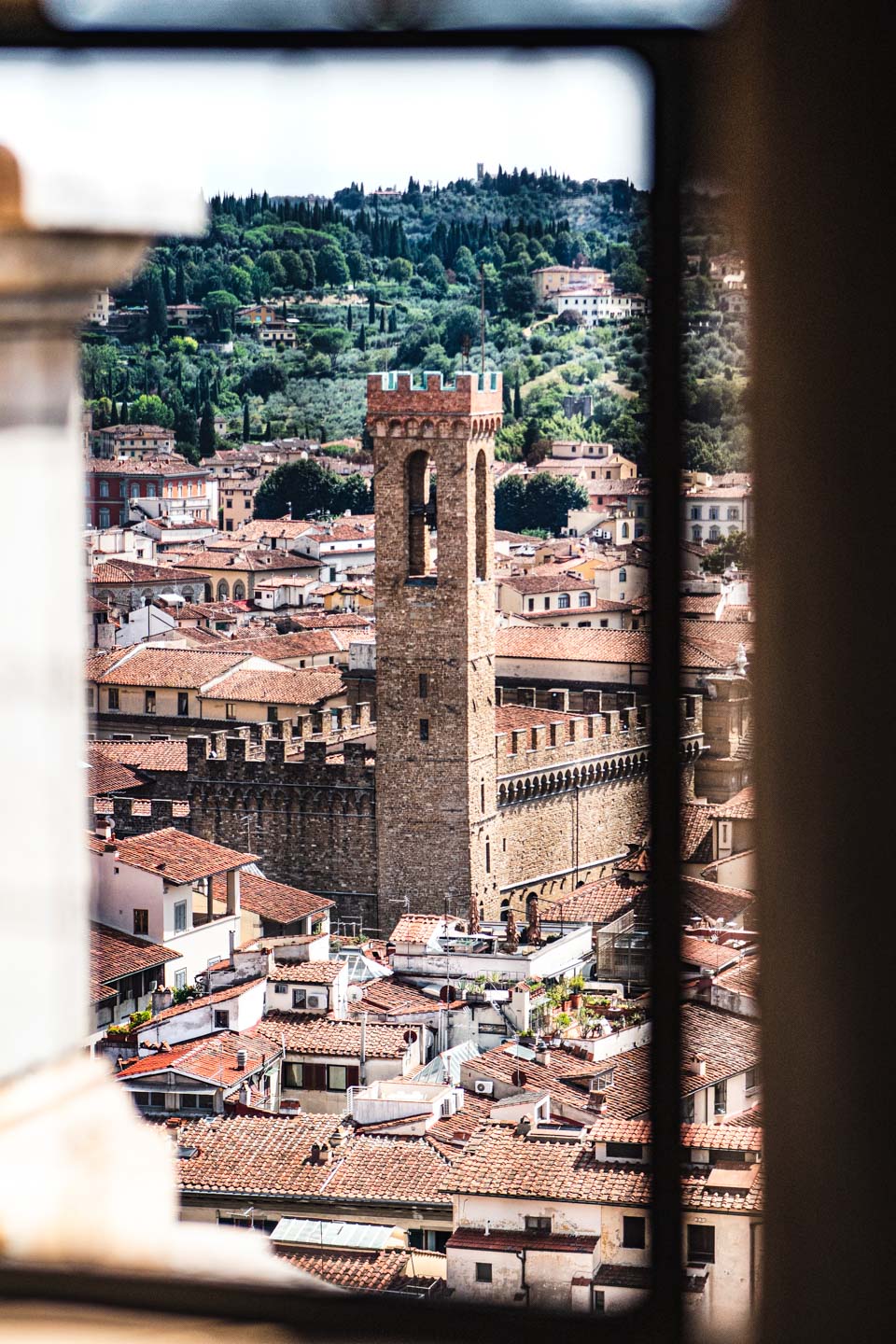
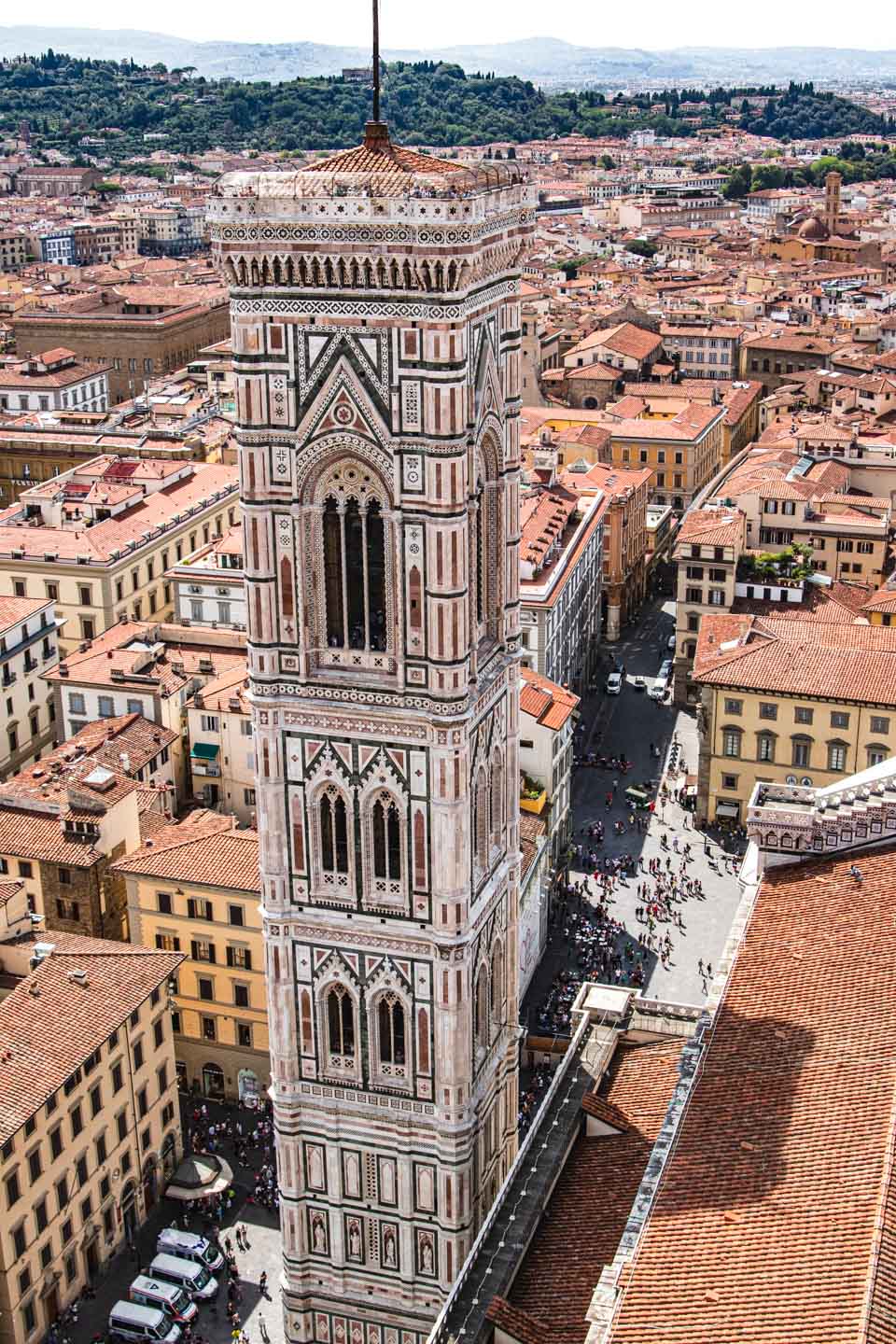
And suddenly Florence opens up around you – terracotta rooftops, soft hills in the distance, the city stretching quietly in every direction.
Take your time up there.
Catch your breath. Look around. Stay a little longer than you think you should.
It’s one of those views you don’t forget.
Inside the dome
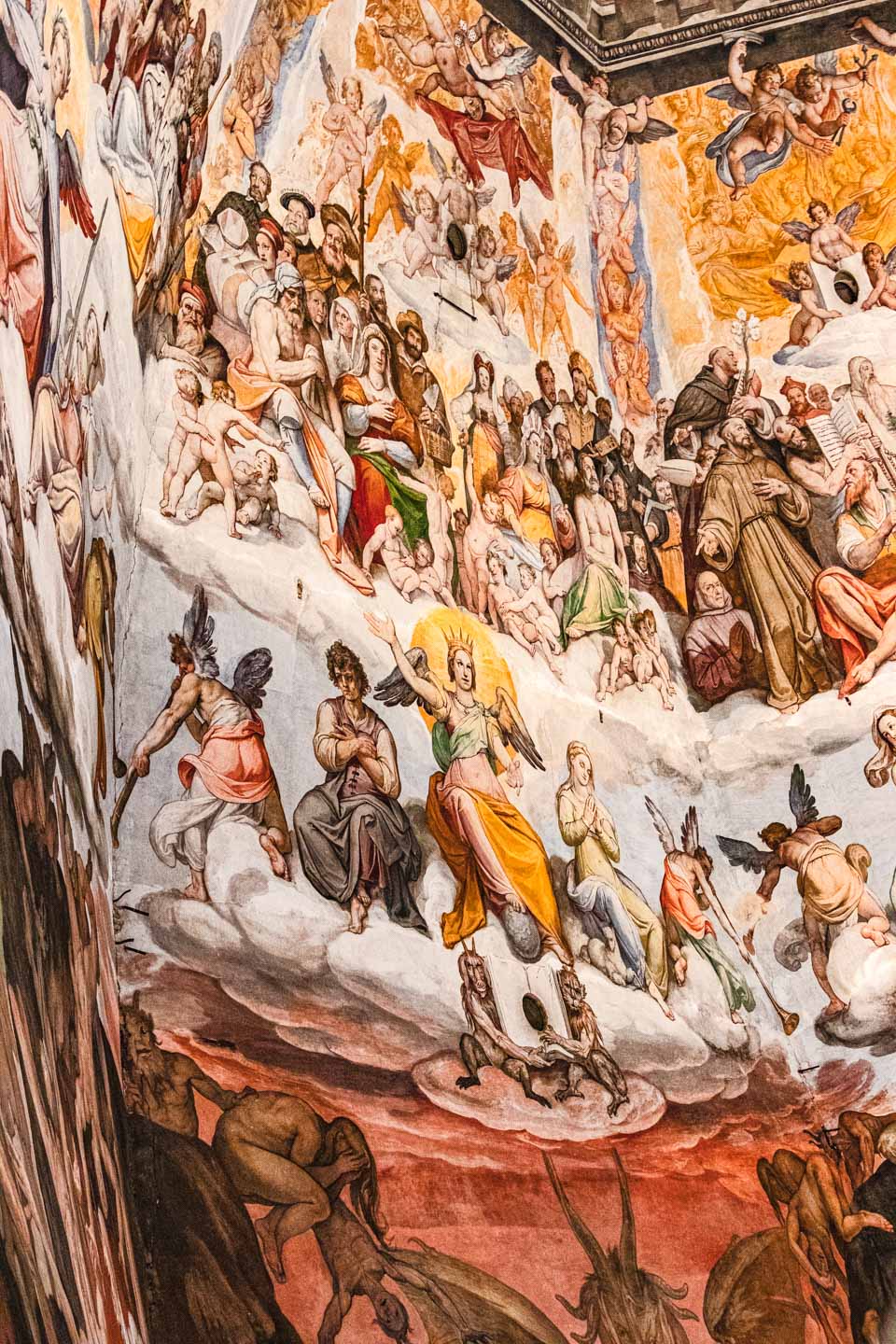
On the way up, there’s a moment when you’re suddenly face to face with the frescoes.
Vasari’s Last Judgment isn’t something you just look at from afar here – you’re right there, close enough to notice the details, the colors, the intensity of it all.
It feels almost overwhelming in the best way.
A small photo tip
The narrow walkway around the dome gives you some of the best views – over the city, across the rooftops, into the distance.
But don’t get so focused on photos that you forget to look up.
That ceiling above you… that’s the part that stays.
Practical Information
- Entry to the Cathedral of Santa Maria del Fiore is free.
- If you want to climb the dome, you’ll need a combined ticket for the cathedral complex (around €30).
- It’s best to book it in advance for a specific time – spots are limited and sell out quickly.
- The entrance to the dome is on the north side of the cathedral, a bit easy to miss if you’re not looking for it.
- Opening hours change depending on the day, but the dome is usually accessible from the morning until late afternoon.
3:30 PM – Baptistery & Opera del Duomo: the quieter side
After the Cathedral, most people move on.
I wouldn’t.
Right next to the Duomo, there are two places that feel a little more… hidden. Slower. Less crowded. And honestly, just as memorable.
The Baptistery of San Giovanni
From the outside, it’s simple. Octagonal, calm, almost understated compared to the Cathedral.
But step closer.
Those bronze doors – the ones people call the “Gates of Paradise” – are actually replicas. The originals are kept safe in the museum nearby. But even these are enough to stop you for a moment.
Inside, everything changes.
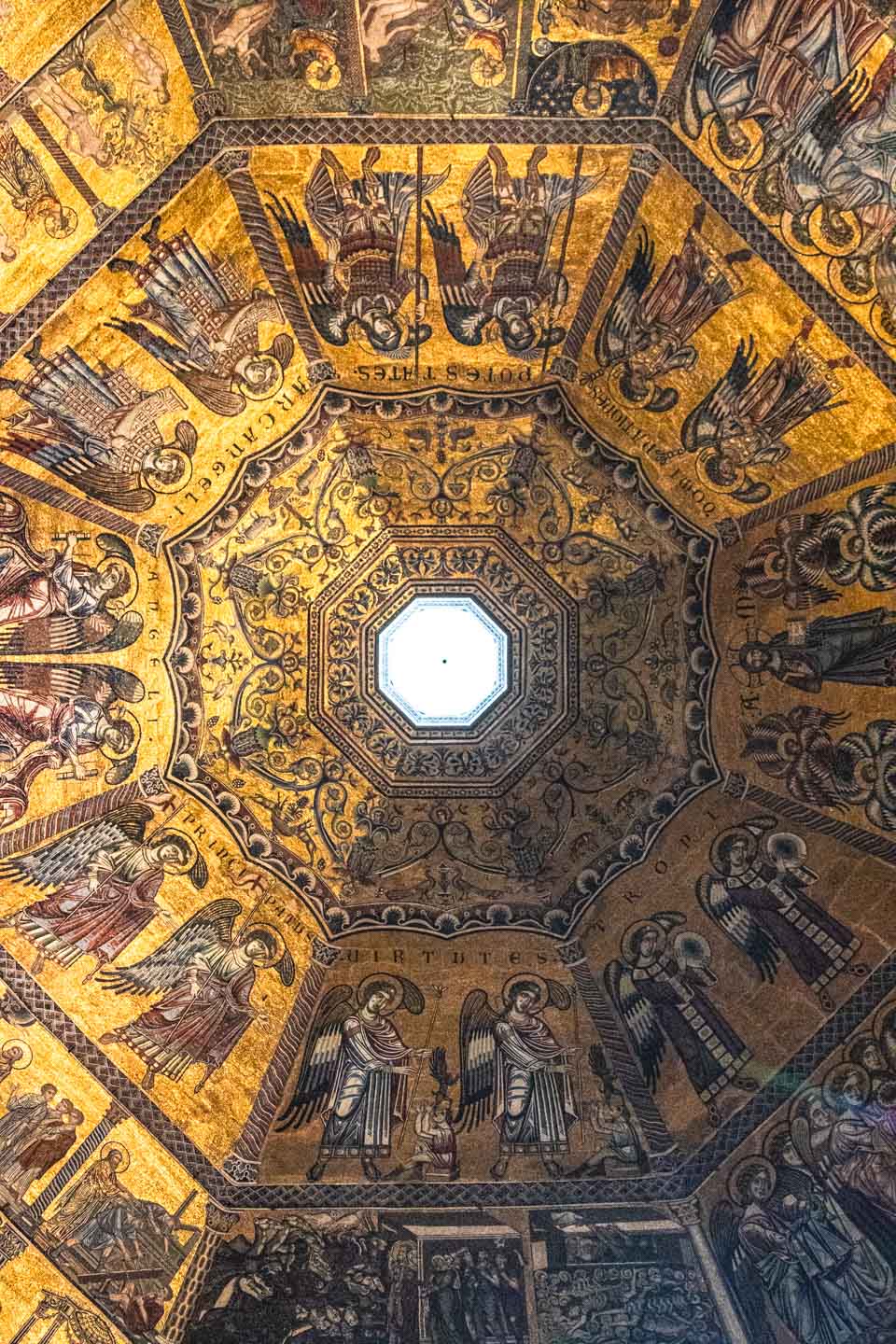
The ceiling is covered in golden mosaics, telling biblical stories in layers. It’s the kind of place where you instinctively look up and just… stay there for a while.
It’s currently under restoration at times, so you might not always see it fully. But when it’s open, it feels like stepping into something almost unreal. Like being inside a piece of jewelry, all gold and light.
This is one of those quiet Florence moments again.
No rush. Just look.
Museo dell’Opera del Duomo
If you only have time for one more stop in this area, make it this one.
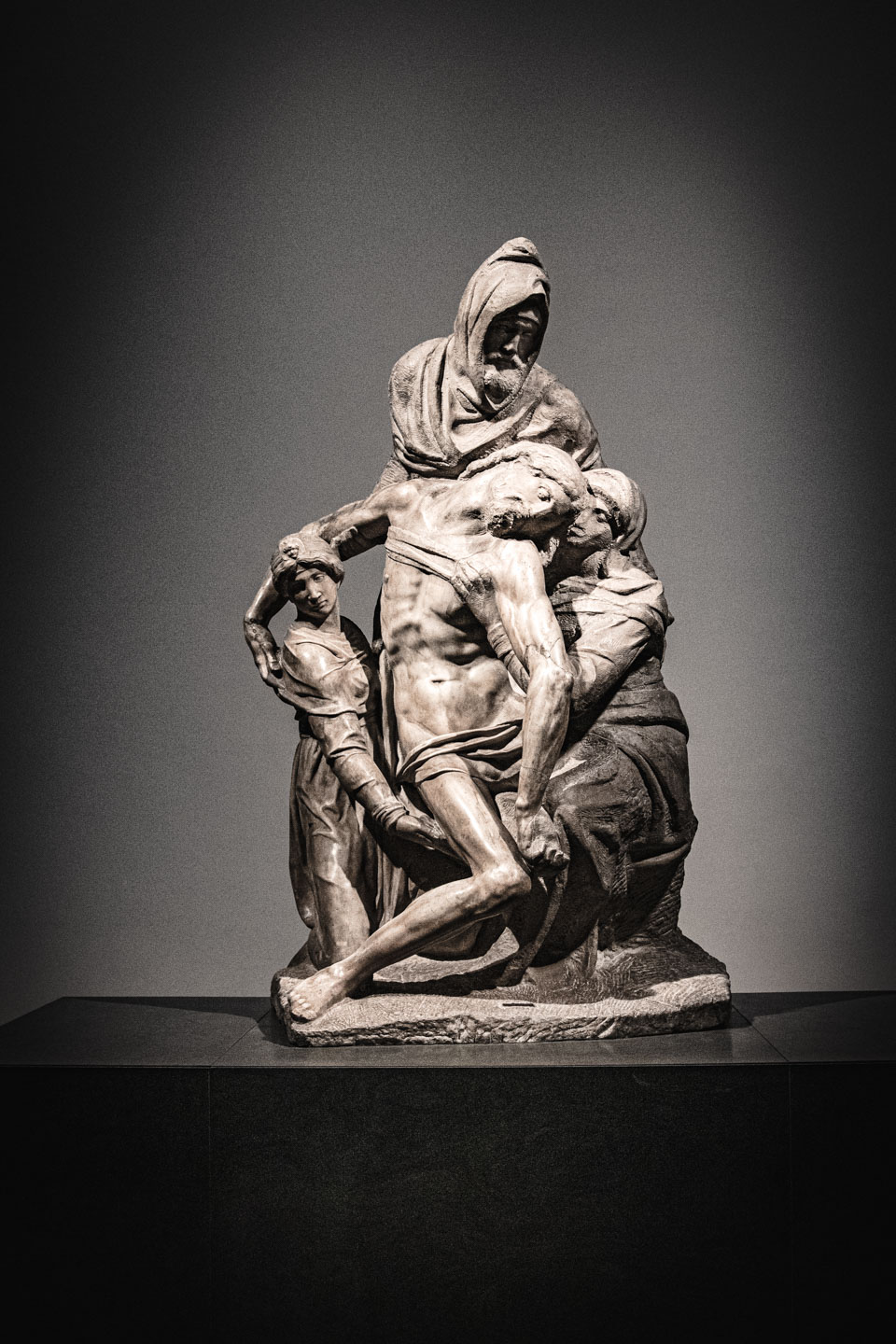
This is where the originals are. The pieces that used to be outside, exposed to weather and time, now kept in a quiet, almost intimate space.
You’ll find Michelangelo’s unfinished Pietà here – raw, imperfect, deeply human.
And Donatello’s wooden Mary Magdalene, which honestly stayed with me longer than I expected. There’s something about it that feels very real. Not polished. Not distant.
Take your time with these.
And then don’t skip the details people often walk past – the original panels of the “Gates of Paradise” and the models used to build the dome.
Seeing Brunelleschi’s ideas up close makes everything you just saw at the Cathedral make more sense.
It stops being just beautiful – and becomes something you start to understand.
Practical Information
- The Cathedral Museum and the Baptistery are open daily, usually from around 8:30 am to 7:00 pm.
- Access to the Baptistery is included in the combined ticket for the cathedral complex (around €30).
- It’s worth knowing that the Baptistery is currently under restoration, so the ceiling mosaics may not always be visible.
4:30 PM – Ponte Vecchio: a slow walk across
By late afternoon, Florence softens a little.
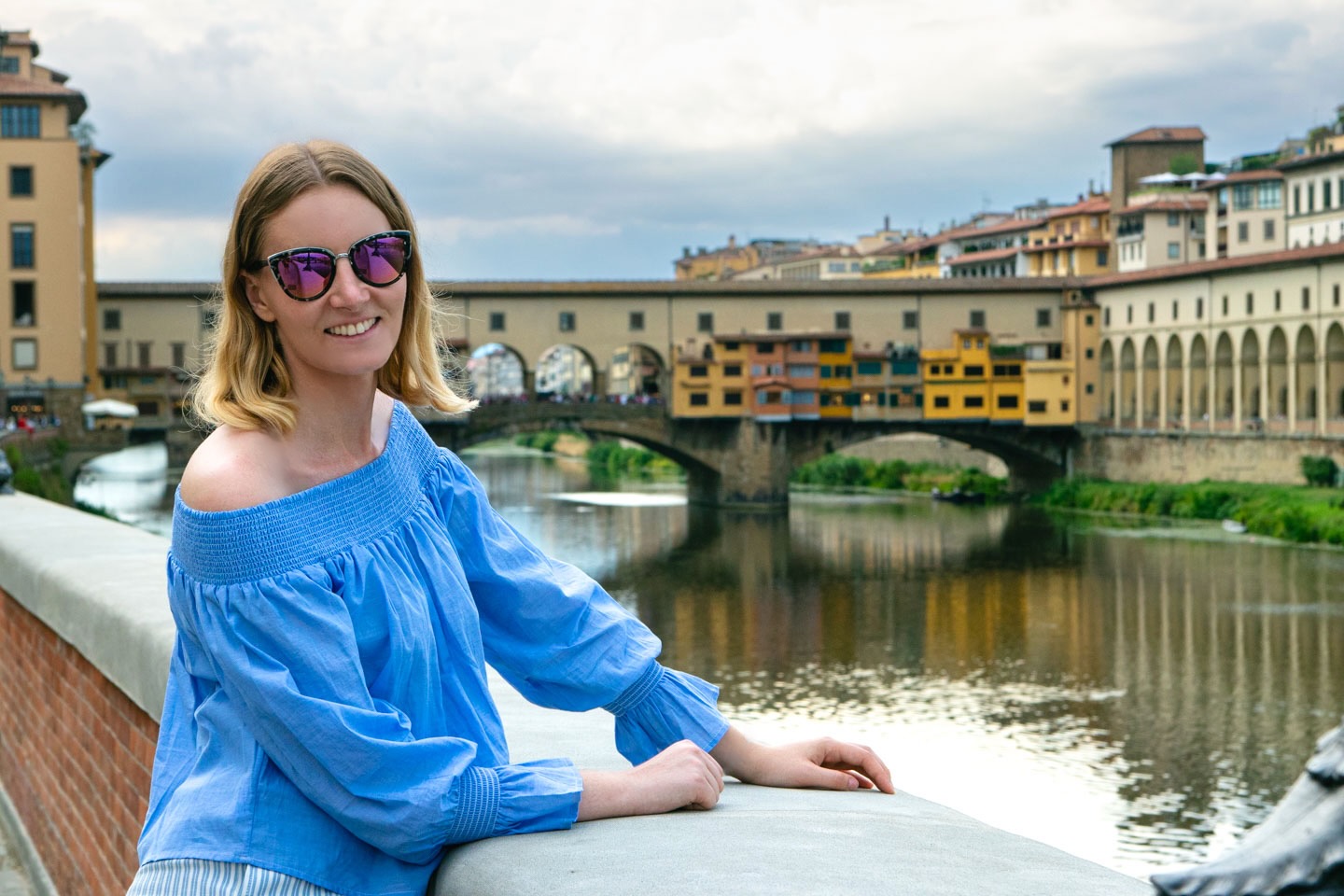
This is the perfect time to walk toward Ponte Vecchio.
It’s one of those places you’ve probably seen before – in photos, on postcards – and still, when you get there, it feels different. Warmer. More alive.
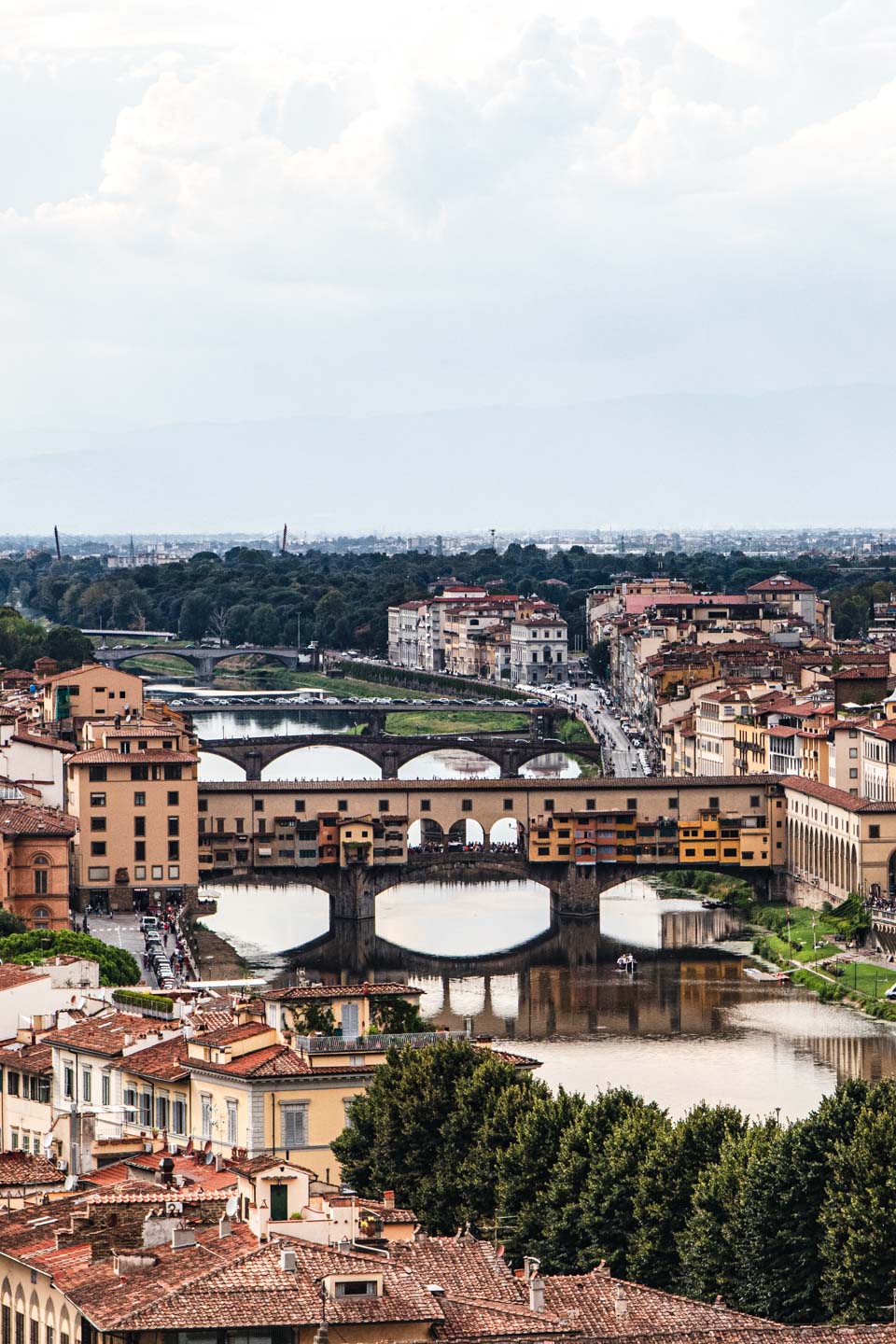
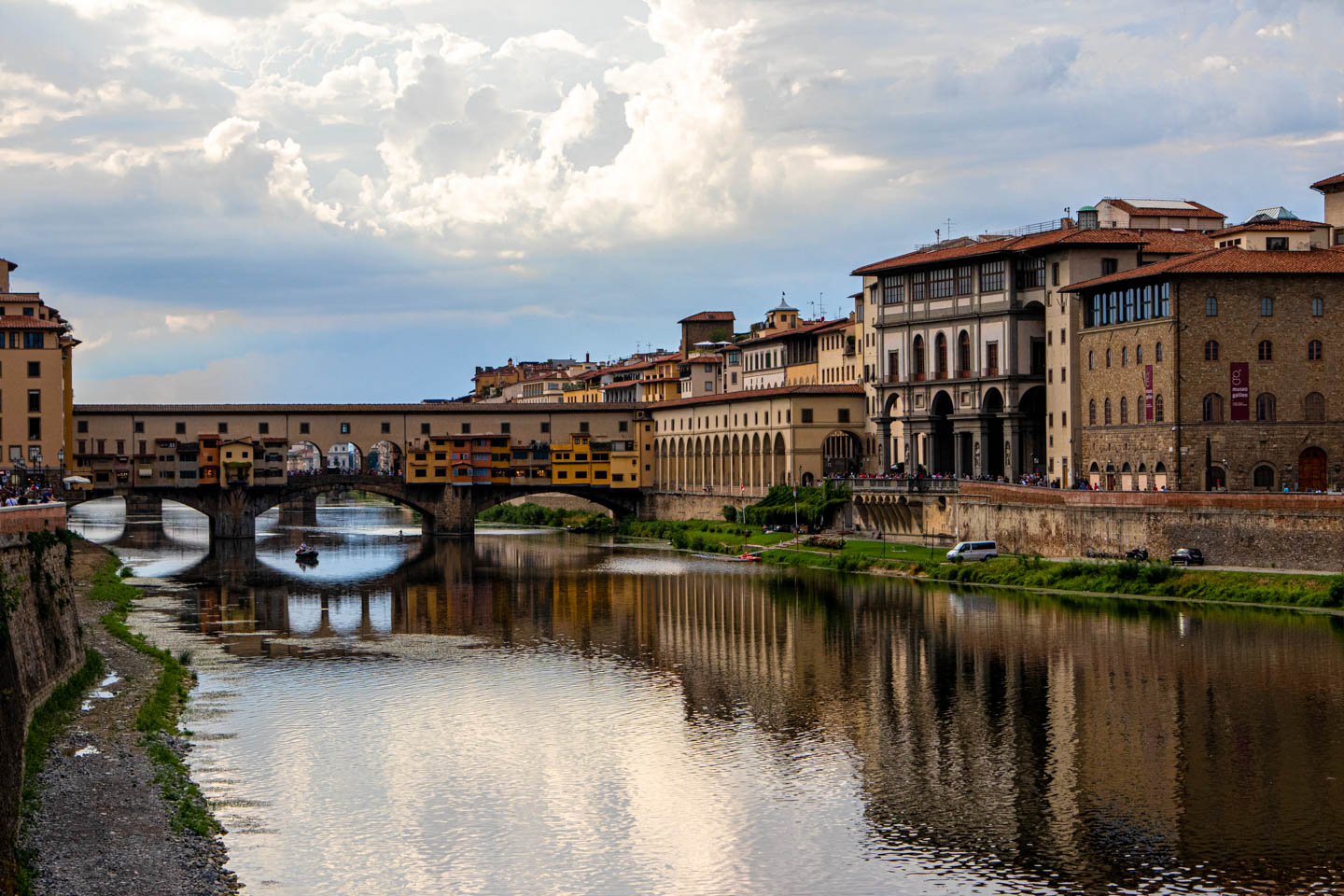
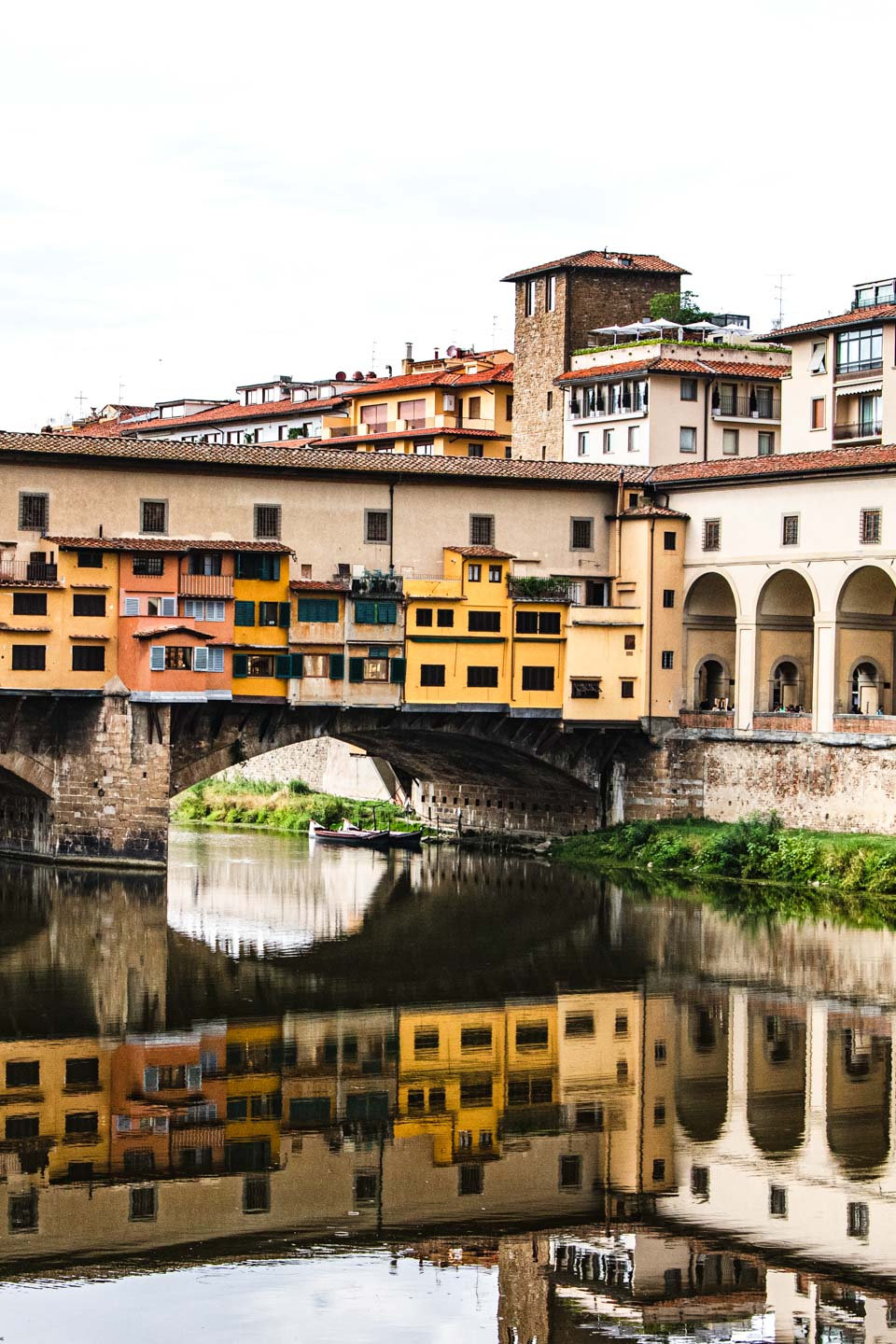
The bridge has been here since 1345. And somehow, it doesn’t feel old in a distant way. It feels… lived in.
The small shops along the sides used to belong to butchers and tanners (hard to imagine now). Later, the Medici turned them into goldsmiths and jewelers – and that tradition stayed.
Today it’s all tiny windows, soft reflections, gold catching the light.
Walk slowly across. Stop in the middle. Look at the river.
And then, look up.
There’s a narrow passage running above the shops – the Vasari Corridor. It was built so the Medici could move through the city without being seen, from Palazzo Vecchio to Palazzo Pitti.
It’s been closed for years, and only recently reopened.
But even if you don’t go inside, just knowing it’s there changes the way you see the bridge.
Another layer. Another story.
Stay here a moment longer than you planned.
Where to pause for photos (or just a moment)
If you want a few beautiful views, these are the ones I always come back to:
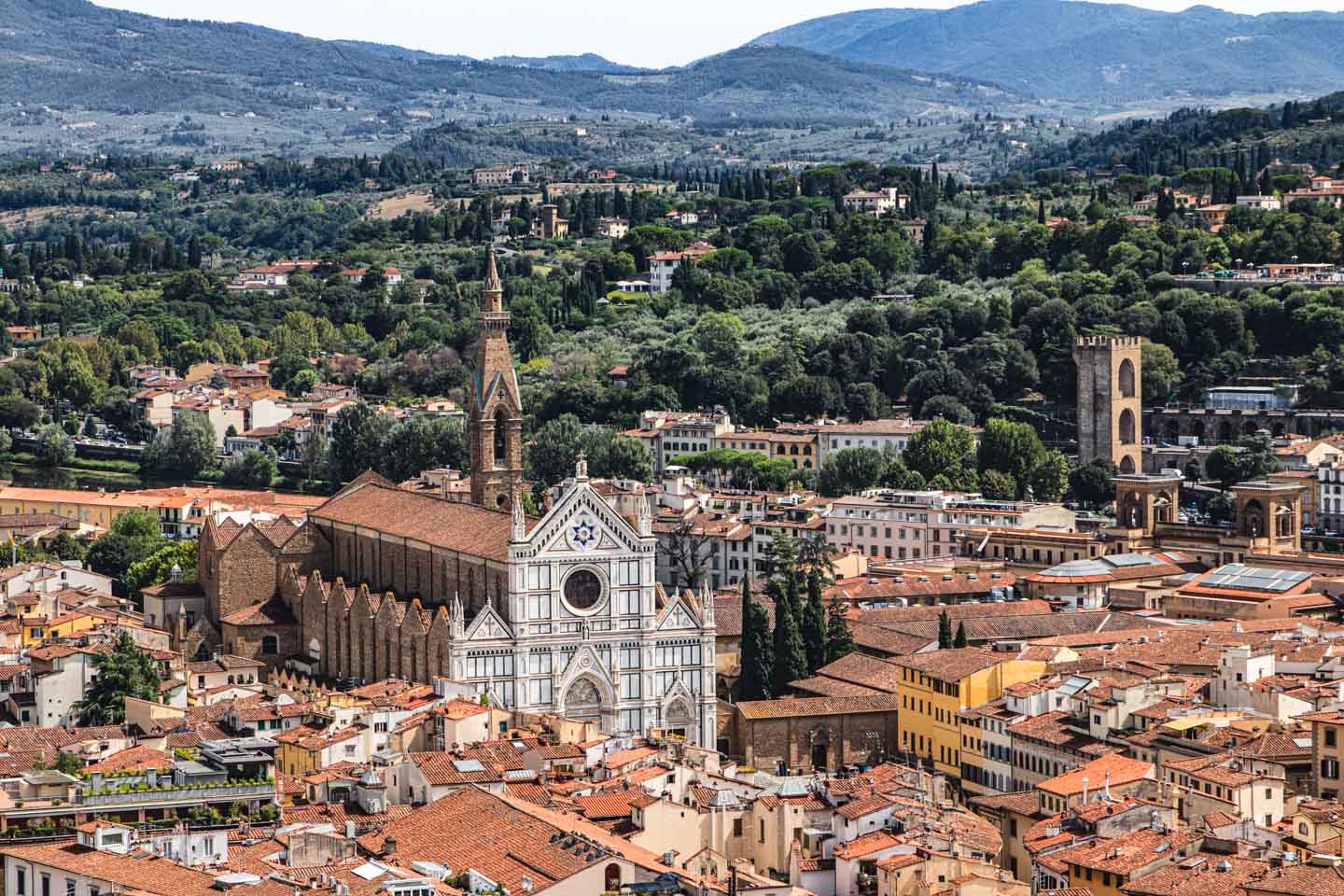
- From the bridge itself, looking east toward Santa Croce – softer, quieter
- From Ponte Santa Trinita, looking back at Ponte Vecchio – probably the most classic view
- And if you’re here close to sunset… just stay. The light changes everything
But honestly, don’t chase too many angles.
Pick one spot. Stand there for a minute. Look, not just photograph.
A small crowd tip
Midday gets busy – really busy.
If you can, come earlier in the morning or later in the afternoon. It feels like a completely different place when it’s a little quieter.
Practical Information
- The Vasari Corridor has recently reopened after several years – and for the first time, it’s accessible to visitors.
- To see it, you’ll need a special Uffizi ticket with the Vasari Corridor option (around €43-47).
- Booking online is required, and it’s best to do it in advance – spots are limited.
- Visits run in small groups from Tuesday to Sunday, with the first entry around 10:15 am and the last one around 4:35 pm.
Planning more Italian adventures? My Milan in a Day guide shows you how to maximize another incredible Italian city!
5:30 PM – Piazzale Michelangelo: ending the day slowly
If there’s one place to end the day in Florence, it’s here.
Piazzale Michelangelo.
It’s a bit of a walk uphill, but that’s part of it. The city slowly fades behind you, the noise softens, and then suddenly – the view opens up.
And it’s exactly what you hope it will be.
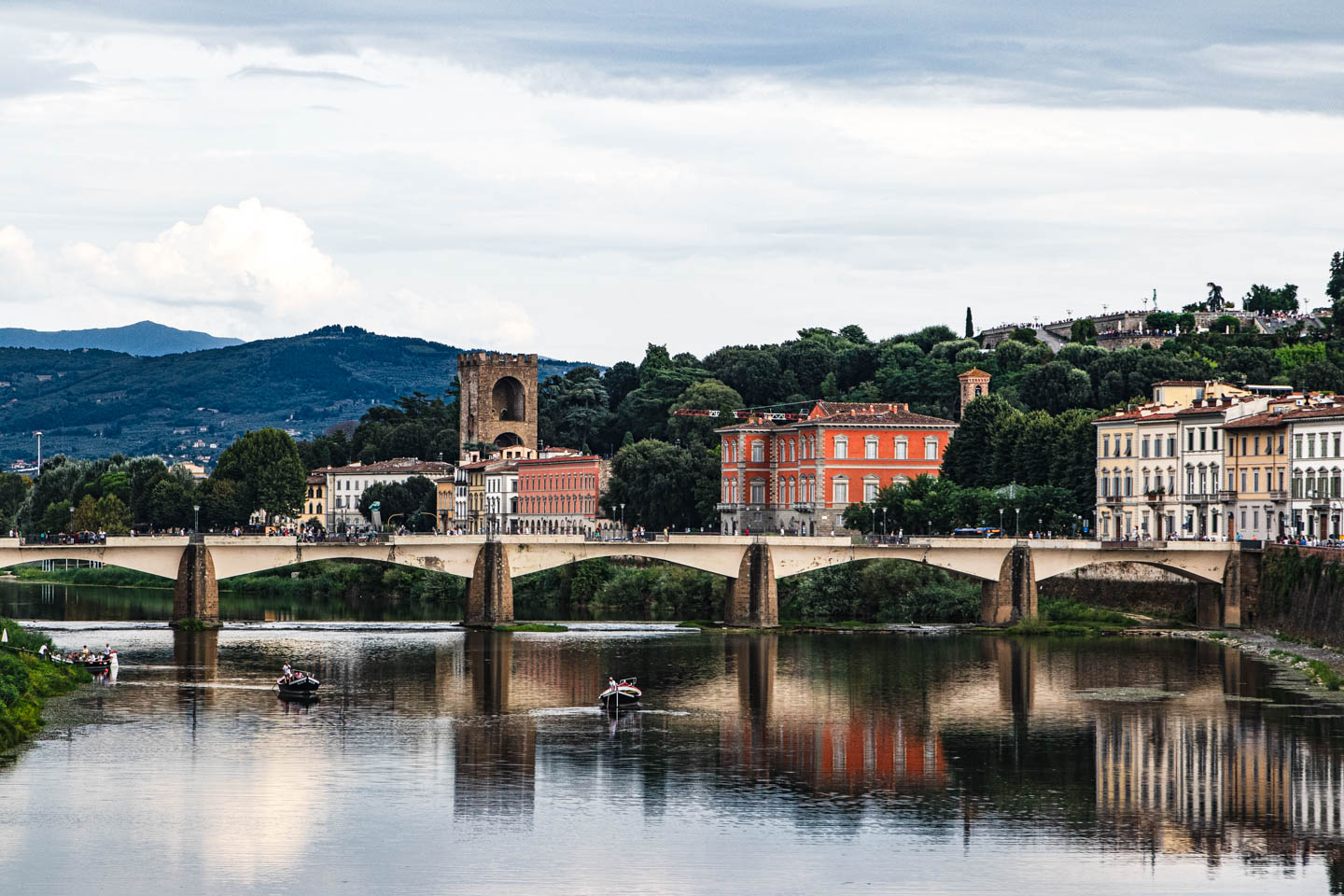
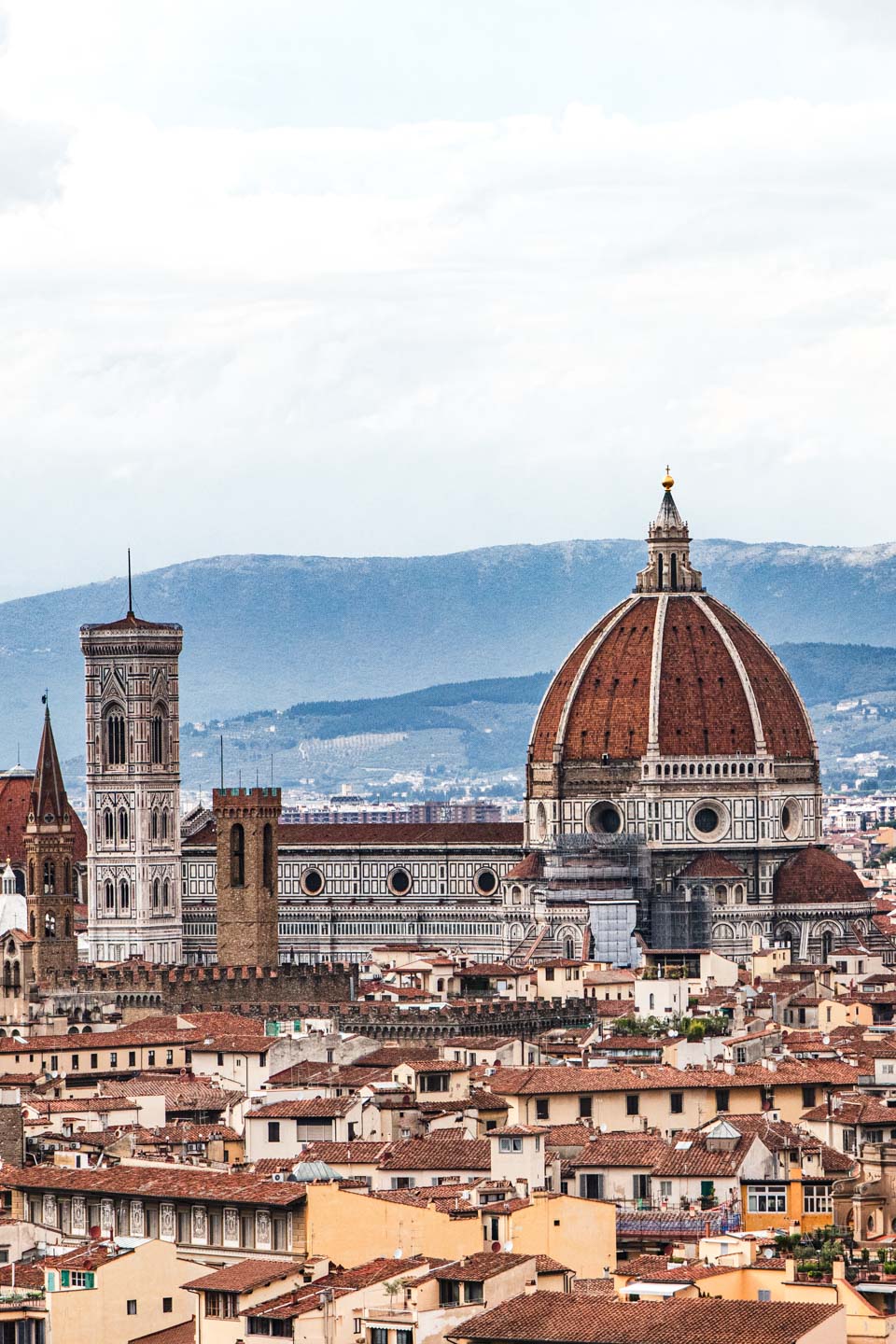
Florence laid out below, almost like a painting. The Duomo rising above the rooftops. Palazzo Vecchio’s tower cutting through the skyline.
Bridges stretching across the Arno. And beyond that, soft hills disappearing into the distance.
If the sky is clear, you can see all the way toward Chianti.
But more than the view, it’s the feeling.
Sit down somewhere. Don’t rush to take photos. Wait for the light to change.
This is your pause at the end of the day.
The moment everything slows down again.
Getting there
It’s about a 20-minute walk uphill from the center. Not the easiest at the end of the day, but honestly… worth it.
If you’re tired, you can take bus 12 or 13.
When to come
Try to arrive about 45 minutes before sunset.
That’s when the light starts to soften, and Florence turns warm – almost golden. The rooftops, the dome, everything slows down with it.
A small detail
You’ll notice bronze copies of Michelangelo’s sculptures here, including a replica of David watching over the city.
But the real reason to come isn’t the statues.
It’s the view. And the feeling that comes with it.
Before you go to Florence
When to Visit Florence
I’ve seen Florence in different seasons, and if I had to choose again, I’d always go for April-June or September-October.
August was my first time here – and honestly, it was a lot. Crowded, heavy heat, the kind that makes you slow down not by choice, but because you have to.
Spring (April-June)
Soft light, blooming gardens, and that perfect in-between temperature where walking all day still feels good.
Fall (September-October)
A little quieter, still warm, with that golden, end-of-summer feeling. It’s also harvest season around Chianti, which makes everything feel even more… alive.
Summer (July-August)
Long days, beautiful evenings – but also intense heat and crowds. It can feel overwhelming if you’re not prepared for it.
Winter (November-March)
Fewer people, cooler air, sometimes rain. But also a slower, more local side of Florence. Museums, cafés, long meals. A different kind of trip.
Getting to Florence
From the US
There are no direct flights, so you’ll need to connect – usually through Rome, Milan, Frankfurt, Paris, or Amsterdam.
Total travel time is around 12-15 hours. Flights typically start from around $650 round trip, depending on the season.
From Europe
It’s much easier.
Direct flights from cities like London, Paris, or Munich take about 2 hours and can be surprisingly affordable (from around €90).
A small trick that I actually loved: fly into Pisa instead.
Flights can be cheaper (sometimes from €50), and Florence is only about 1–1.5 hours away.
What I’d do again
I flew into Pisa once, mostly to save money – and ended up loving it.
The drive through the Tuscan countryside felt like part of the trip, not just a transfer. Soft hills, small towns, that slow rhythm you come here for in the first place.
Where to Stay in Florence
Where you stay here really shapes the whole experience.
Florence is small, which means you don’t need to overthink it – but choosing the right area makes everything feel easier and slower.
Historic Center
If it’s your first time, this is the easiest choice.
You’re within walking distance of everything – the Duomo, Uffizi, small streets, cafés.
I stayed at Hotel Spadai and loved how simple everything felt. Step outside, and you’re already in it.
Near the train station
Not the most romantic area, but practical.
If you’re arriving late, leaving early, or just want something more budget-friendly, this works well. Hotel Bencidormi is a good, simple option.
Oltrarno
This is where Florence starts to feel more local.
Quieter streets, small workshops, fewer crowds. Still just a short walk to the center, but with a completely different pace.
If you want that slower, more “lived-in” feeling – this is it.
A small tip
Book early, especially for spring and fall.
The best places disappear quickly – and Florence is one of those cities where location really matters.
Florence tips I wish I knew before
Some things in Florence are small, almost easy to miss – but they add so much to the experience.
Yes, it can feel like “too much”
There’s actually a name for it – Stendhal Syndrome. When the art, the beauty, the history… just becomes overwhelming.
And honestly? I get it. That’s why it helps to slow down and not try to see everything.
A tiny ritual for luck
Near Mercato Nuovo, you’ll find a bronze boar.
Rub its nose – locals say it means you’ll come back to Florence one day.
It’s simple, a bit touristy… but also kind of nice.
Look for the small windows
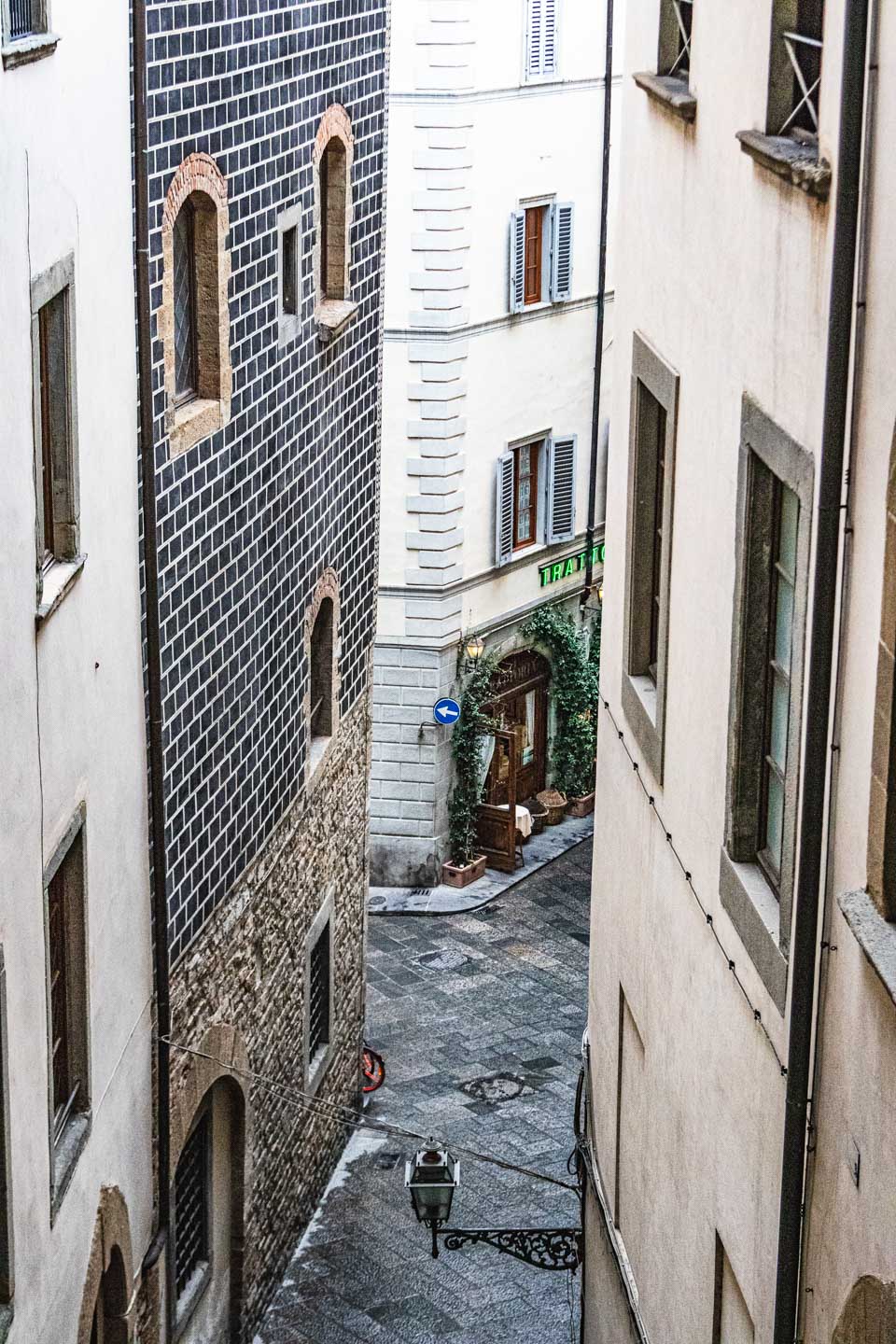
On some old buildings, you’ll notice tiny openings in the walls.
These are buchette del vino – wine windows. Centuries ago, people would buy wine directly through them, straight from the cellar.
Once you start noticing them, you’ll see them everywhere.
A story from the war
Ponte Vecchio is the only bridge in Florence that survived WWII.
Not by accident – it was reportedly ordered to be spared.
Knowing that changes how you walk across it, even just a little.
Something unexpected
If you’re here in June, you might catch Calcio Storico.
It’s… intense. Part football, part rugby, part something else entirely – played in historical costumes, right in the city.
Not for everyone, but definitely unforgettable.
How do you want to continue exploring Italy?
🏰 Medieval Tuscany → San Gimignano Guide – Tuscan towers and medieval charm
🏔️ Northern Lakes → 2-Day Lake Como Itinerary – Alpine beauty and elegant villas
🏛️ Renaissance Cities → Milan in a Day – Fashion, art, and incredible architecture
🚗 Road Trip Planning → Car Rental in Italy Guide – Everything you need for Italian adventures
Which Florence attraction surprised you most on this itinerary?
Travel lighter, even before you leave.
start with something simple.
Download The Minimum Plan – Slow Travel:
Florence, in the end
When I first planned a day in Florence, I treated it like a stop.
Just one more place between others.
I didn’t expect it to stay with me.
But it did – quietly, slowly, without trying too hard.
There are moments here that feel almost unreal. Standing in front of David. Walking streets that haven’t really changed for centuries. Watching the light turn everything warm at the end of the day.
But what surprised me most wasn’t the “big” things.
It was how Florence feels.
Like a place where the past and present exist next to each other without effort. Where you don’t need to rush to understand it. Where you can just walk, stop, look – and that’s enough.
And the strange part?
One day works. But so does a week.
Because Florence doesn’t give you everything at once. It unfolds slowly – if you let it.
Ready to plan your perfect Florence day?
- Google Map with Florence Attractions – 100+ locations ready to use
- San Gimignano Ultimate Guide – Medieval Tuscan charm
- Milan in a Day Itinerary – Fashion capital adventures
- 2-Day Lake Como Guide – Alpine lake elegance
Pin it for later
This article contains affiliate links. If you make a booking through these links, I may earn a commission, supporting this blog. Rest assured, my recommendations are based on honest assessments, and using these links doesn't affect prices for you. Thank you for your support!