
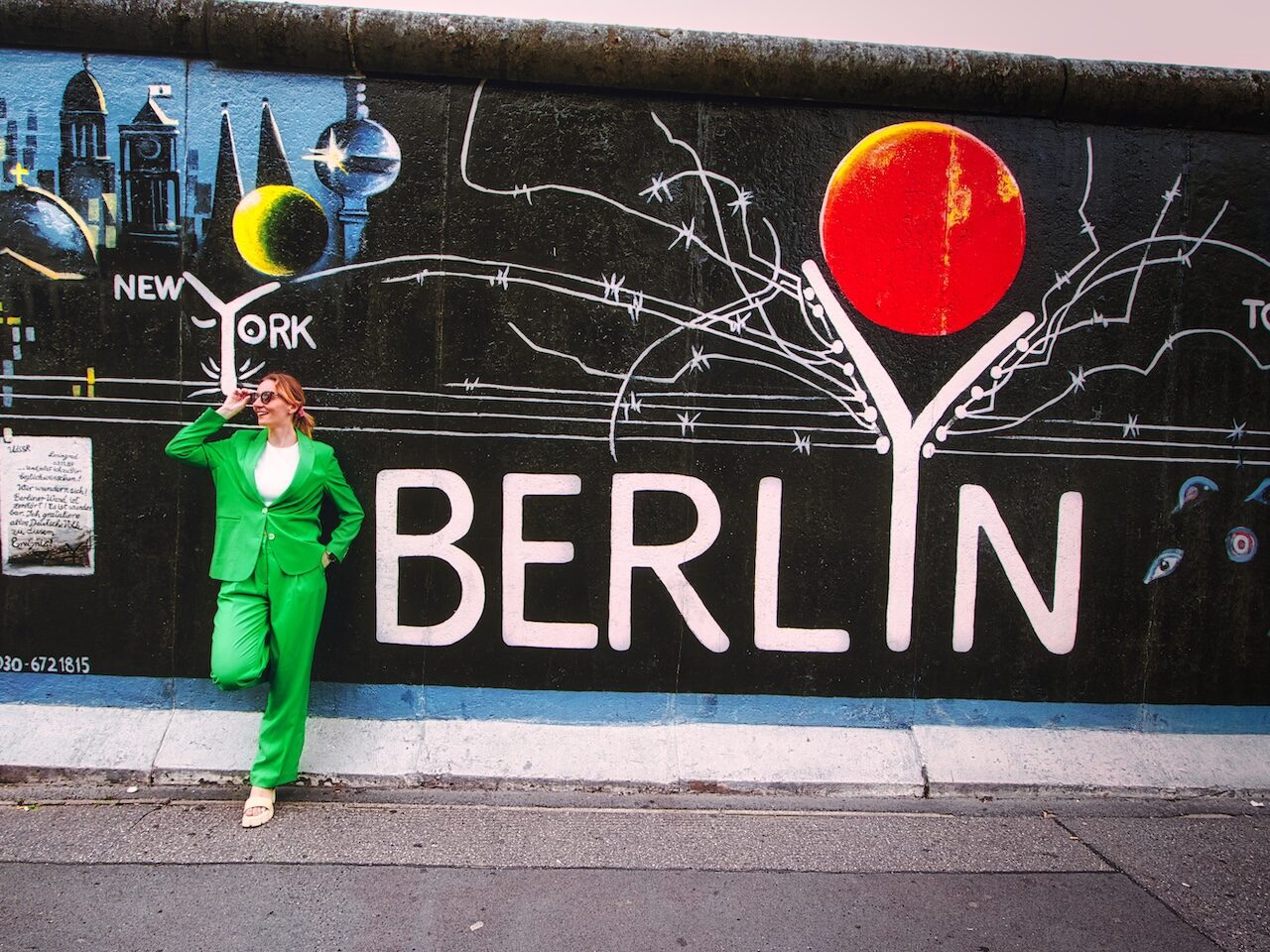
Wondering what to do in Berlin? That’s great, because this is one of those cities I find myself thinking about more often than I planned.
Berlin has something elusive about it – rawness, ease, and an enormous freedom to be yourself.
It’s a city of contrasts. Some come here for history and icons, to see the Brandenburg Gate, Pergamon Museum, or Charlottenburg Palace.
Others fall for it through food, nightlife, galleries, and street art that can stop you in your tracks on an ordinary street.
Berlin doesn’t try to please. And maybe that’s exactly why it’s so easy to sink into it. Walk without a plan, sit by the canal, step into a small café, or stumble upon an exhibition you never meant to find.
If you’re wondering what else is worth seeing and how to feel Berlin a little deeper, this article is for you. I’ve gathered 20 ideas for things to do in Berlin – without rushing and without a checklist.
Happy reading!
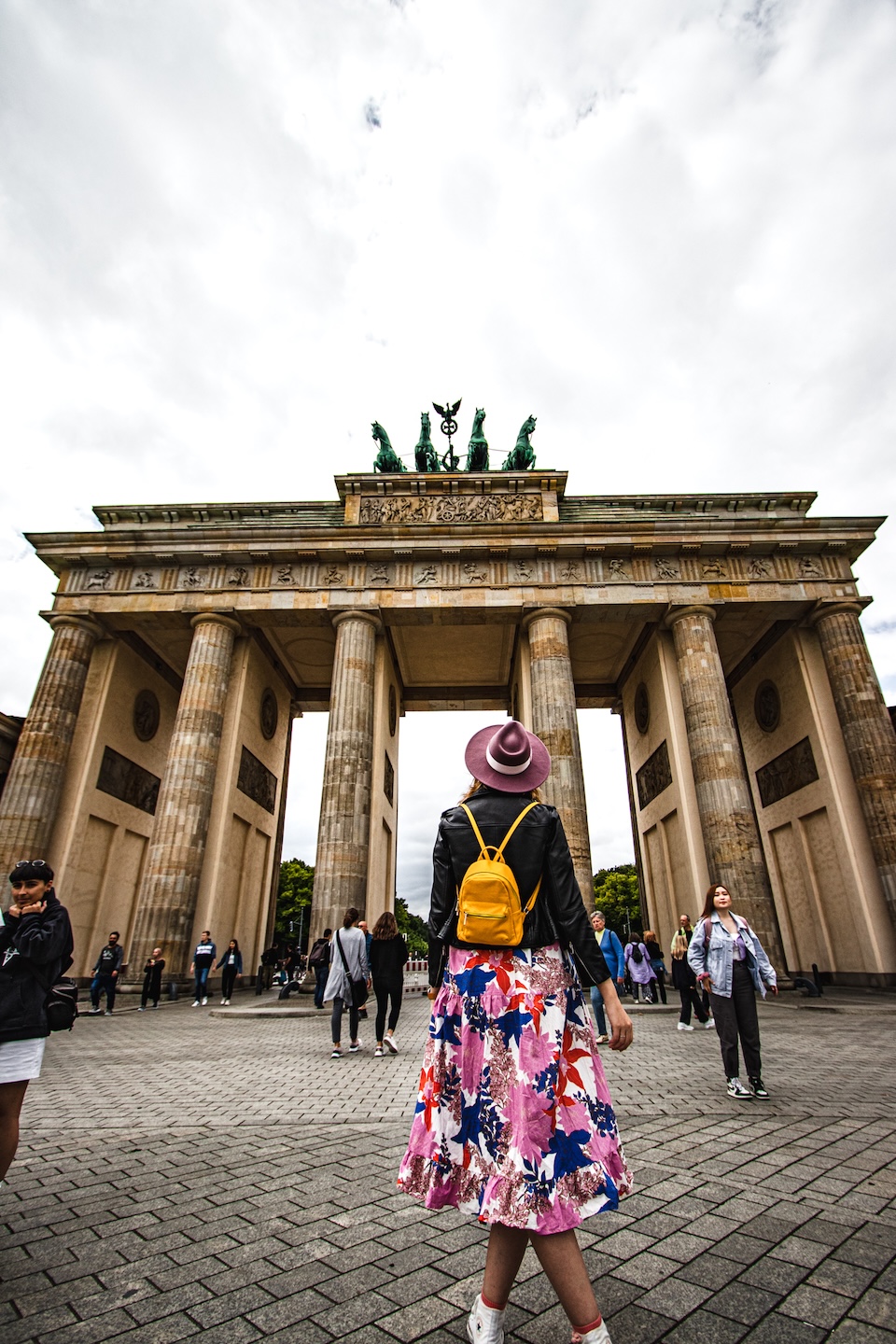
1. Walk Under the Brandenburg Gate
If you’re in Berlin for the first time, this moment comes naturally. Sooner or later, you’ll find yourself at Pariser Platz in the Mitte district, standing before one of the city’s most recognizable symbols.
The Brandenburg Gate has something more than just monumental form.
Standing 26 meters tall and 65.5 meters wide, for years it witnessed history that changed Europe. Parades, divisions, falls, and new beginnings.
This is where Napoleon Bonaparte rode through in triumphal procession, and decades later the gate became a symbol of divided Berlin.
Built in the late 18th century, it still captivates with its classical, harmonious form. Interestingly, Berlin once had 18 such gates. Today, only one remains. And maybe that’s exactly why it makes such a strong impression.
It’s worth coming here not just for a photo. Better to pause for a moment, look around, and feel how history blends with the city’s daily rhythm.
My tip: come here early morning or late evening. The square is much quieter then, and the Brandenburg Gate looks most beautiful in soft light.
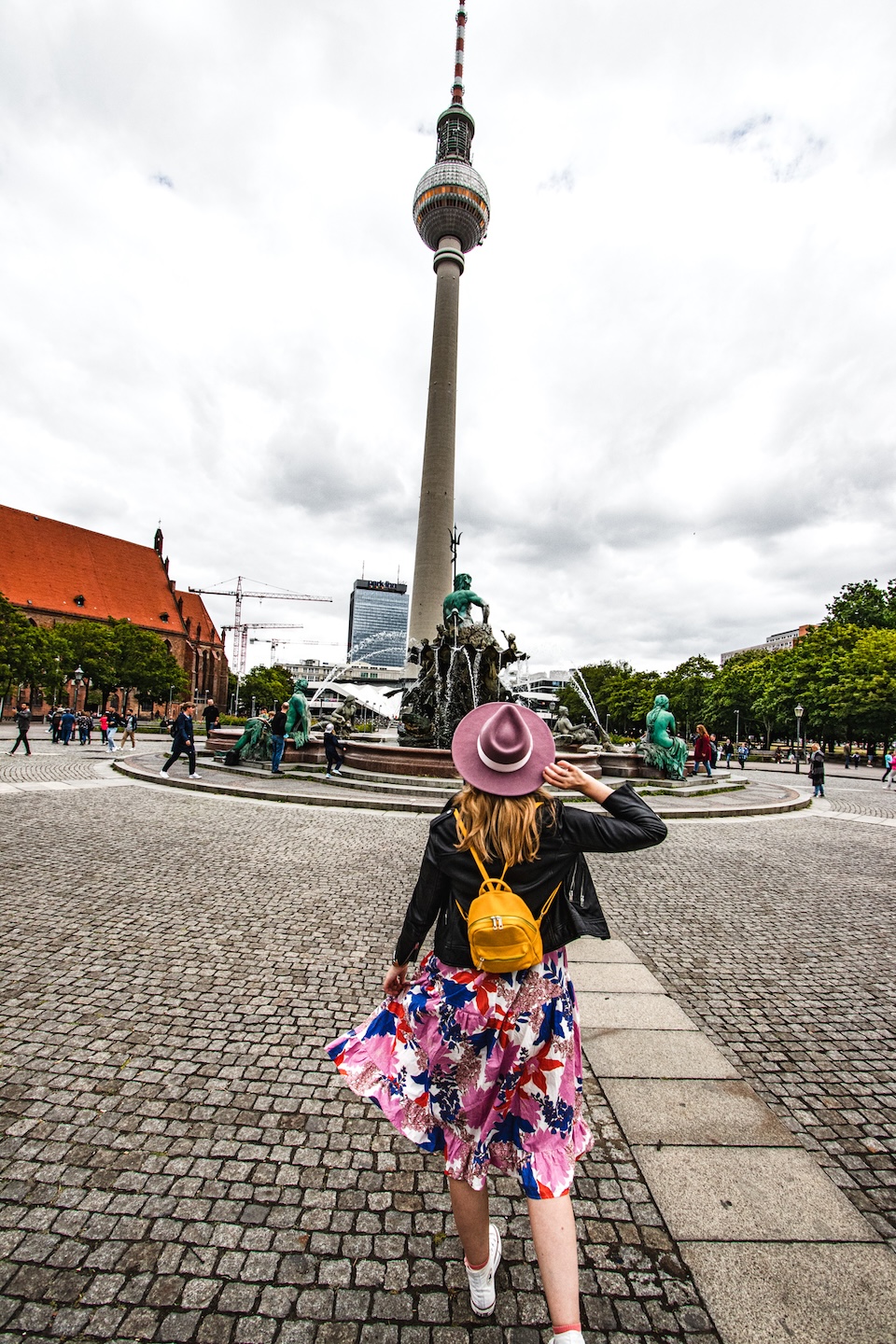
2. See Berlin from the TV Tower
The Berlin TV Tower is one of those city landmarks visible from almost everywhere. Built in 1969, over the years it has become one of Berlin’s most recognizable symbols, and to this day it’s impossible to mistake it for anything else.
At 368 meters tall, it’s the tallest building in Germany, and the view from its top is truly impressive.
Berlin spreads out here like a map – with distinct districts, green parks, and the river cutting through the city. It looks especially beautiful at sunset, when the light softens and the city begins to slow down.
No wonder the TV Tower attracts over a million visitors annually. It’s one of the most popular attractions not only in Berlin, but throughout Germany.
At the top, there’s not only a viewing platform but also a revolving restaurant. It’s one of those places where the space and view matter more than rushing – worth planning your visit in advance, especially during peak season.
My tip: if you can, book your ticket online and aim for late afternoon. You’ll see Berlin during the day, at sunset, and after dark – three versions of the city in one place.
3. Go Up to the Reichstag Dome
It’s hard to imagine a first visit to Berlin without stopping by the Reichstag – the monumental building located by Tiergarten, where the German parliament sits today.
It’s a place where history very clearly meets the present.
The building itself was constructed in the second half of the 19th century and impresses with its neo–Renaissance architecture. But what attracts people most is at the very top.
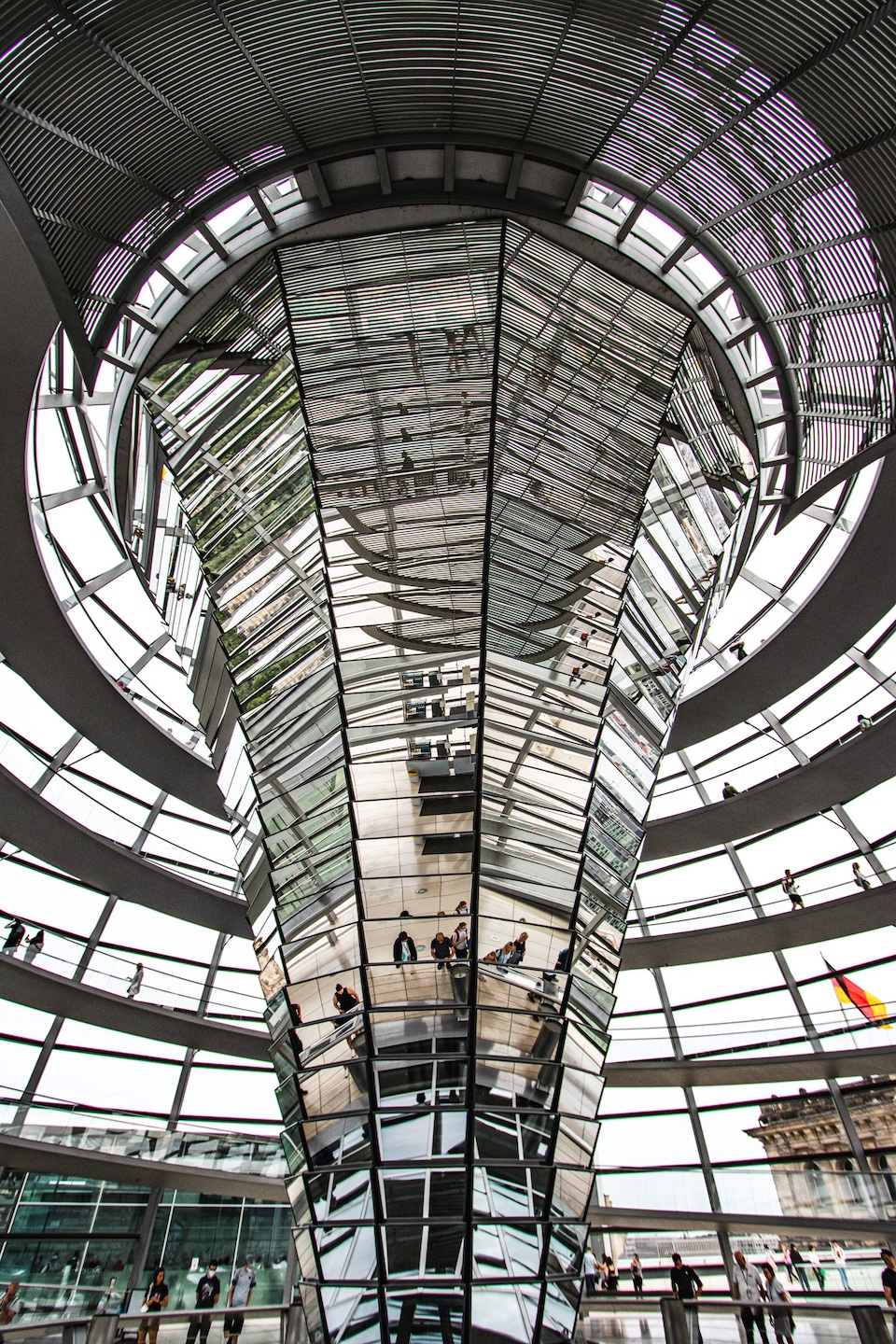
The glass dome designed by British architect Norman Foster is one of Berlin’s most distinctive landmarks.
The dome is 24 meters high and 40 meters in diameter. You reach the viewing platform via a spiral ramp that slowly leads upward and is an experience in itself.
From above, a wide view of Berlin spreads out, and through the glass interior, you can look down into the parliamentary chamber.
It’s one of those places that allows you not only to see the city from a different perspective but also to pause for a moment over its history and present.
My tip: entry to the dome is free but requires advance online booking. The best times are morning or late afternoon, when the light is soft and traffic is lighter.
4. Climb the Victory Column
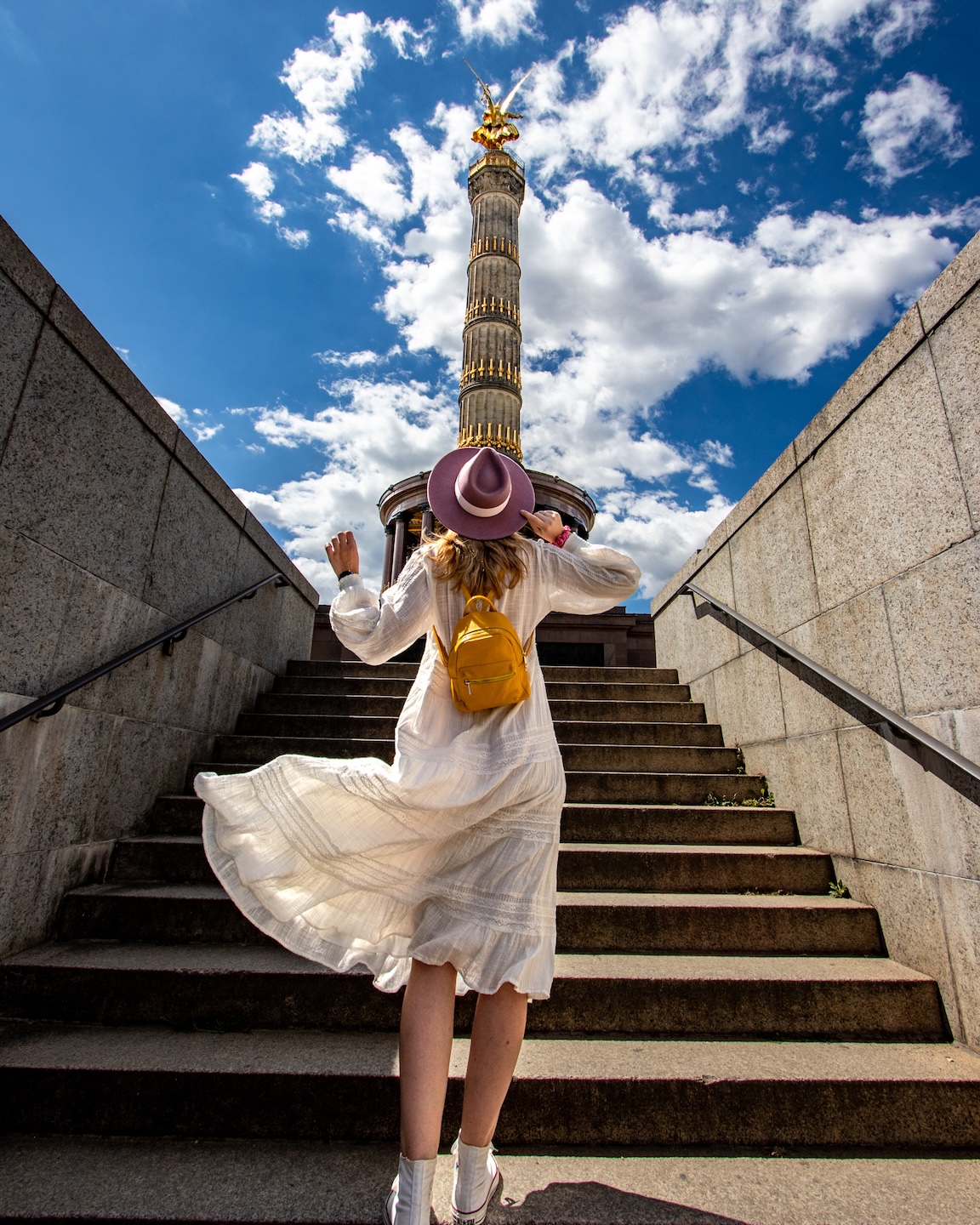
The Victory Column with golden Victoria on top is one of those places that surprises you only when you look at Berlin from above.
The monument rises in the heart of Tiergarten and offers a completely different view than from popular viewpoints.
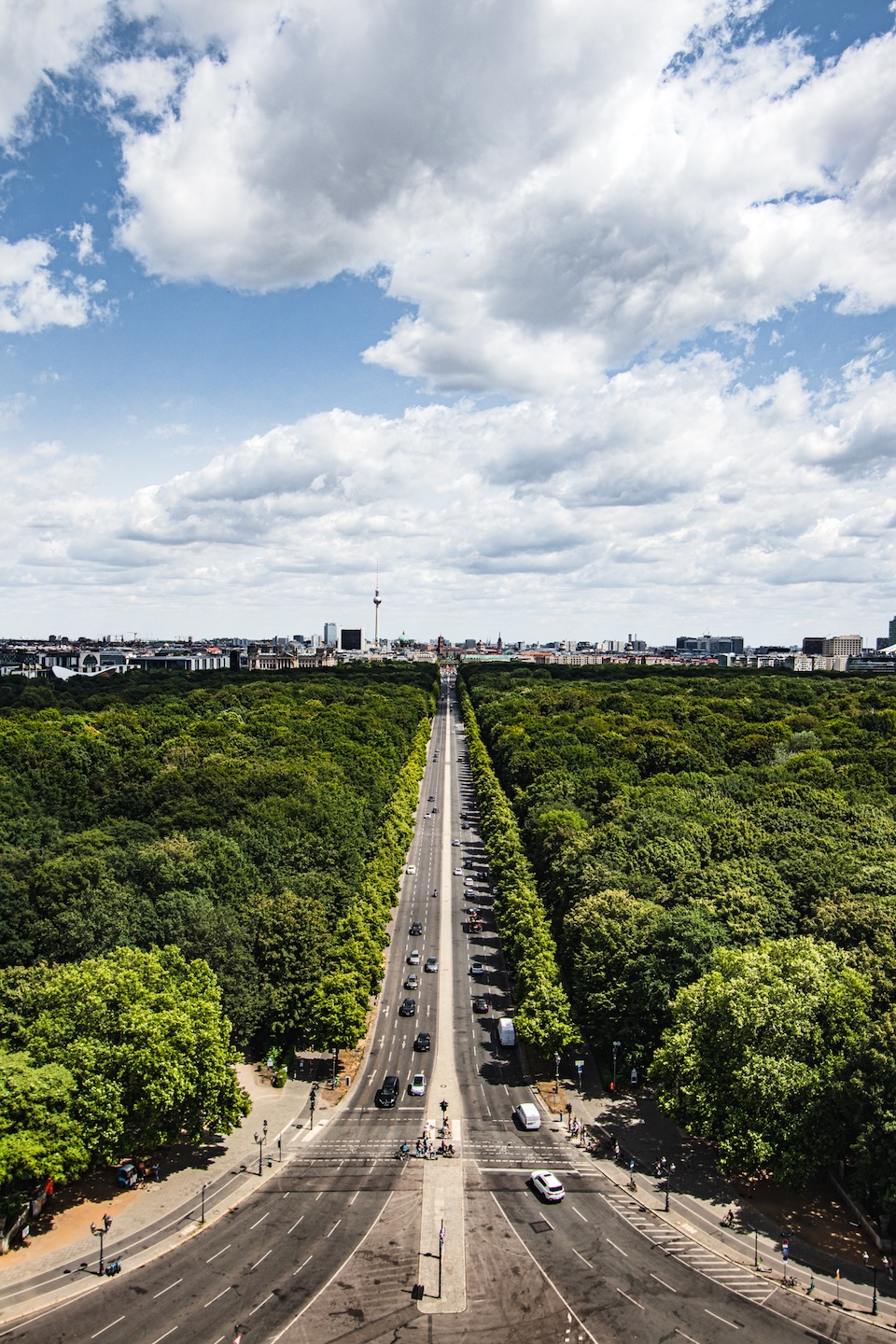
After climbing 285 steps, a panorama opens up of the city’s green lungs, wide avenues, and Berlin’s rooftops. You can also see Bellevue Palace, the official residence of the German President.
It’s one of those views that let you really feel the scale of the city.
The column was erected in the second half of the 19th century to commemorate German military victories. Interestingly, it originally stood in a completely different location, opposite the Reichstag.
Today, few associate it with history. Much more often, it evokes associations with Berlin’s alternative culture, techno music, and the legendary Love Parade festival.
It’s a place that perfectly shows Berlin as it really is: layered, non-obvious, and full of contrasts.
My tip: entry to the Victory Column is paid, but the ticket costs little compared to the view from above. If you have a choice, come here on a sunny day and combine your visit with a walk through Tiergarten.
5. Admire Murals at East Side Gallery
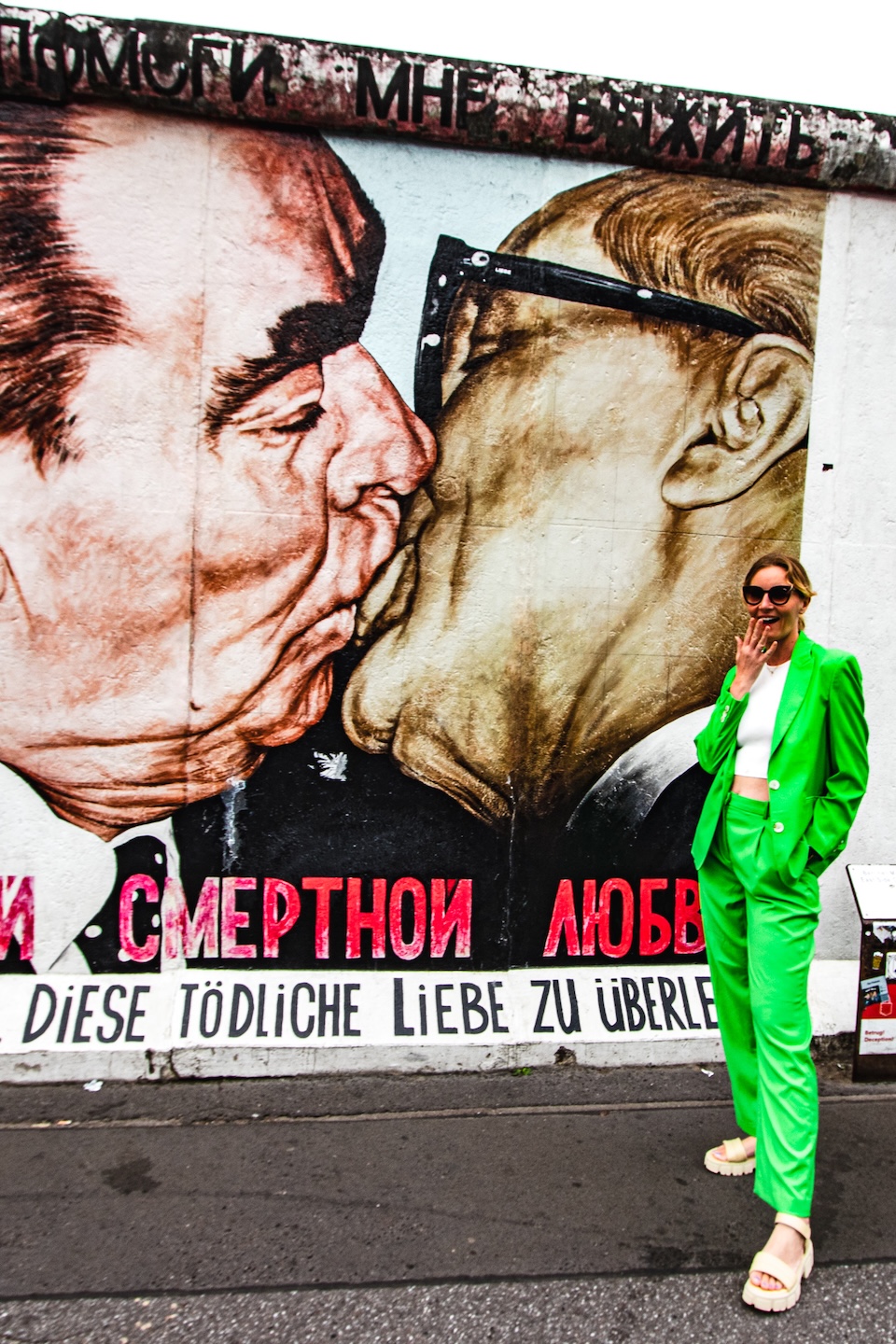
If there’s one place that perfectly captures Berlin’s spirit, it’s the East Side Gallery. It’s probably the world’s largest open-air gallery and simultaneously the most colorful fragment of the city’s history.
The murals were created on the longest-preserved section of the Berlin Wall, which runs along Mühlenstraße, right by the Spree River. Over a kilometer long, you’ll see 105 works created by artists from around the world.
The first paintings appeared here almost immediately after the wall fell, in December 1989. This is art that wasn’t created for galleries or under curator direction.
It’s spontaneous, emotional, and very Berlin. Among the authors are Thierry Noir, Jim Avignon, and Ingeborg Blumenthal.
One of the most famous murals is “The Fraternal Kiss,” depicting Brezhnev and Honecker. It’s also one of the works I always return to and photograph on each visit.
Also worth noting are the characteristic jumper by Gabriel Heimler and the “Berlyn” inscription by Gerhard Lahr.
This place is best absorbed slowly. Walking along the murals, it’s easy to understand why Berlin so often talks about freedom, memory, and self-expression.
My tip: come here early morning or during the week. The murals feel completely different when you don’t have to navigate through crowds and can pause at those that move you most.
Berlin often changes the way you travel. After a city like this, it’s easy to look for other places with depth and character.
If coastal cities appeal to you, Gdansk offers a completely different architectural rhythm – calm, historic, and shaped by the Baltic.
6. Visit the Pergamon Museum
Berlin is a city of museums, and if you have even a little space in your plan, it’s worth entering at least one of them. The Pergamon Museum is the one that makes the biggest impression with its scale and scope.
It’s located on Museum Island, a UNESCO World Heritage Site. The place itself has something solemn about it, but the real surprise begins after crossing the museum threshold.
The Pergamon Museum was created in the early 20th century and practically consists of three separate parts: collections of ancient art, the Museum of the Near East, and the Museum of Islamic Art.
It’s a space where history doesn’t fit in display cases. It’s monumental and very tangible.
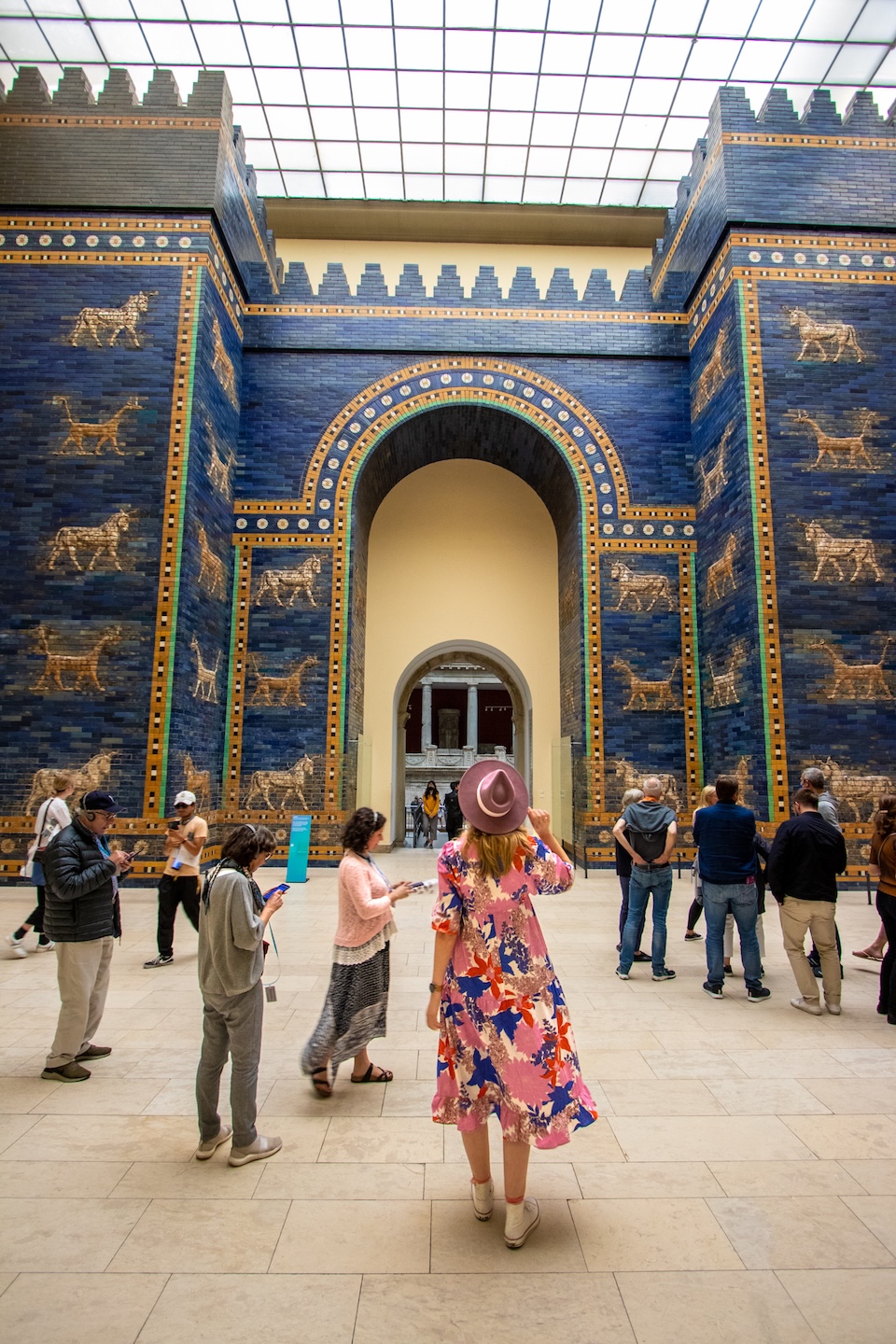
The most famous exhibits are the Great Altar of Zeus, the Ishtar Gate, and the impressive facade of Mshatta Palace. It’s one of those museums where it’s not about quickly “checking off” but about slowly moving between halls and giving yourself time to marvel.
My tip: plan your visit in advance and check current exhibition availability. Best to come here in the morning when halls are quieter and touring doesn’t turn into a race. If you don’t have a whole day, choose one part of the museum and focus only on it.
Worth knowing: The Pergamon Museum is currently undergoing major renovation. If all goes according to plan, the most famous halls are scheduled to return for visitors in spring 2027. When planning your visit, check in advance which parts are currently accessible.
7. Try Food from Around the World
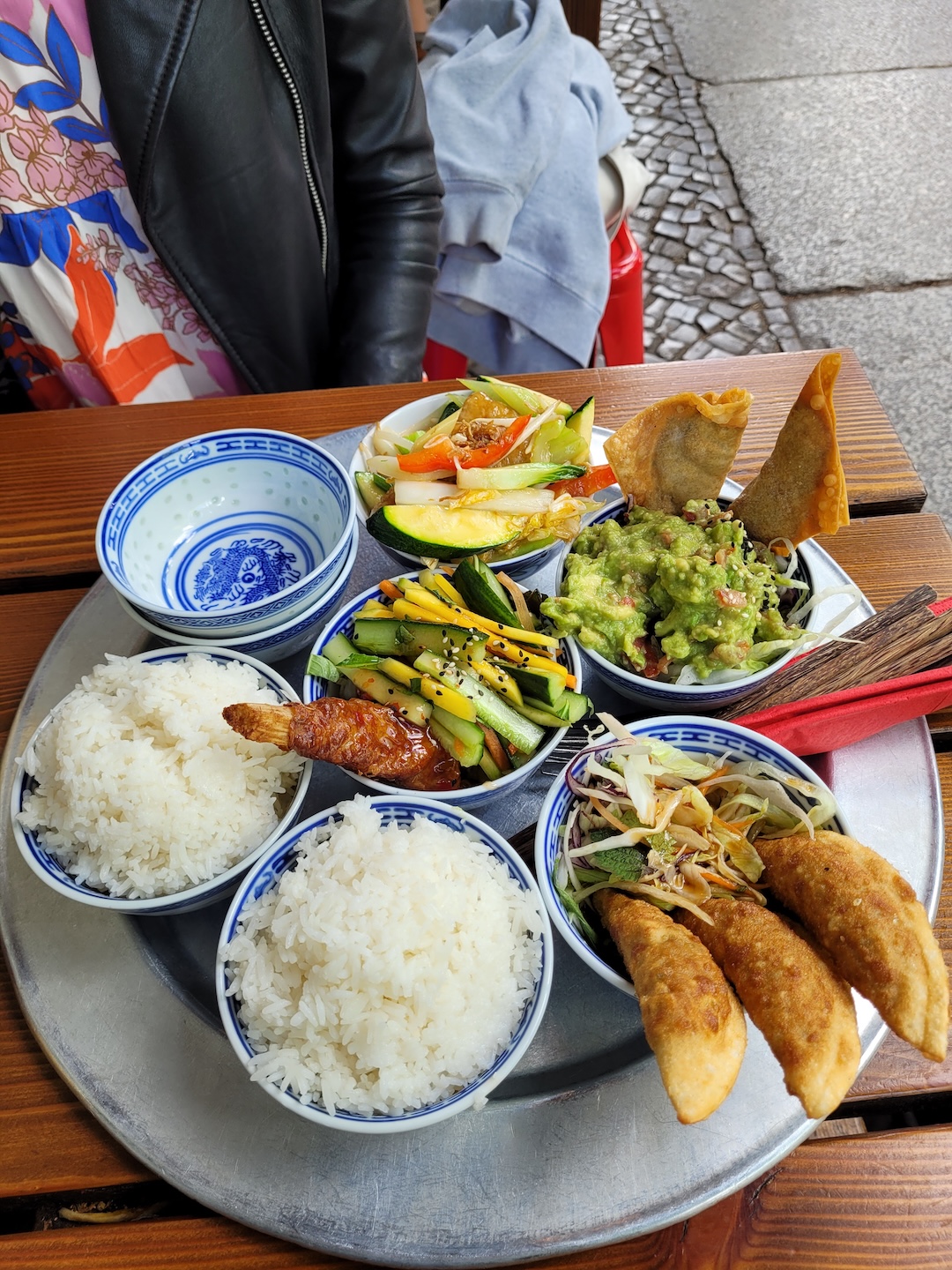
One of the things I love most about Berlin is its culinary diversity. It’s a city of many cultures, especially Turkish and Arabic, and you can see this best on the plate.
From street food led by the iconic döner kebab, to elegant Michelin-starred restaurants – Berlin can be simultaneously very simple and very refined. And it does so without pretension.
Regardless of whether you’re in the mood for German, Greek, Vietnamese, or something completely new cuisine, Berlin offers enormous choice and freedom to taste the city your own way.
Importantly, even if you don’t eat meat, you won’t leave here hungry. The vegetarian and vegan scene is really strong here and was one of my biggest, very positive surprises.
My tip: if you want to eat well in Berlin and try flavors from different parts of the world, save these places:
- MALOA Poke Bowl – light and fresh poke bowls
- The Hummusapiens – hummus on a completely new level
- Umami – solid Asian classics
- Gude Falafel – some of the best falafel in the city
- Long March Canteen – intense, distinctive flavors
- Bro Burger – perfect spot for a burger
- 1990 Vegan Living – very good vegan cuisine
- Brammibal’s Donuts – cult vegan donuts
8. Go for Coffee at Hackesche Höfe
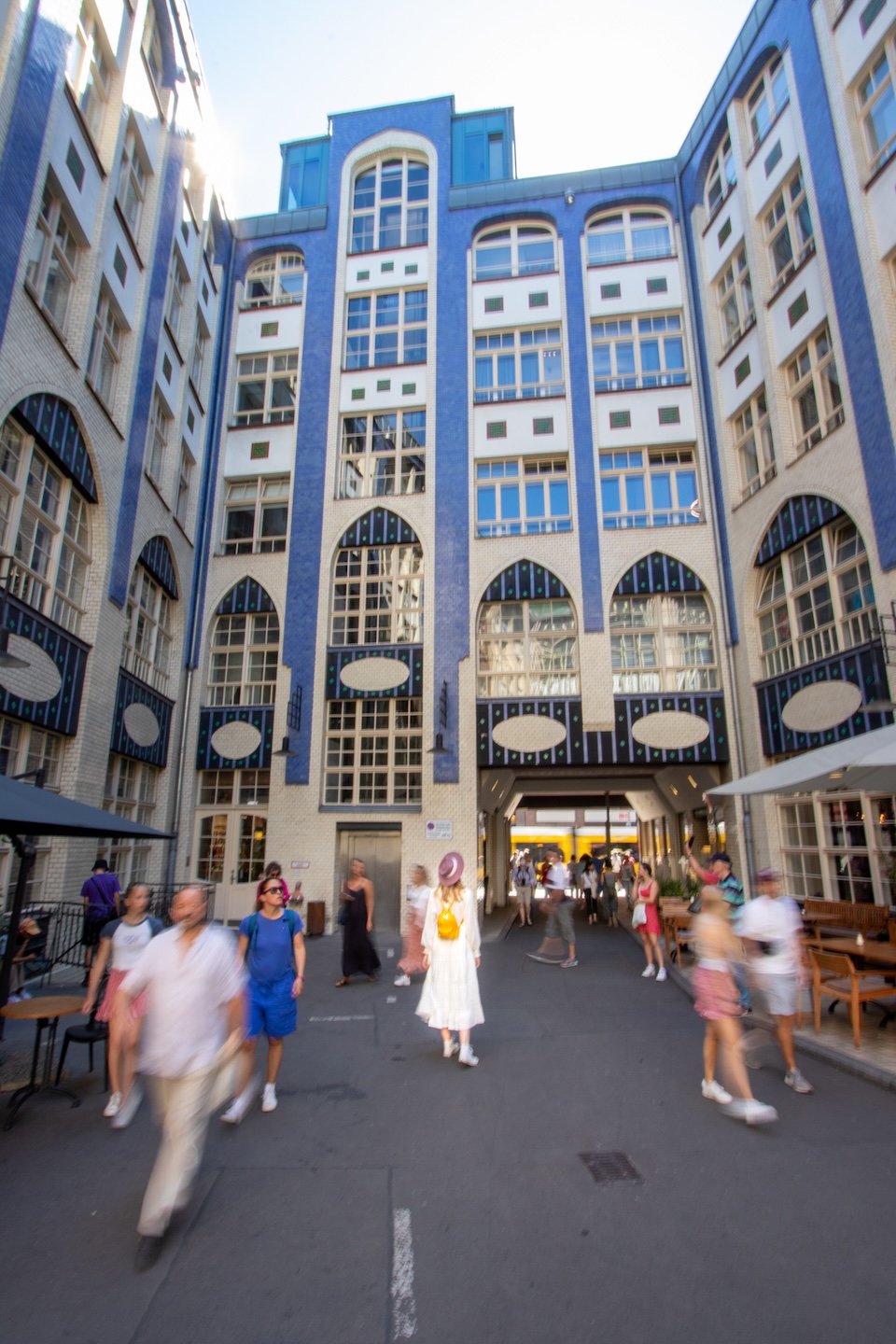
Hackesche Höfe is one of Berlin’s most photogenic corners, located right by Hackescher Markt. And I’ll admit right away – it’s one of those places I always return to with pleasure.
The complex of connected courtyards stands out with Art Nouveau facades and a very characteristic atmosphere. It’s urban, but simultaneously quieter than on main streets. Perfect place to slow down for a moment.
You’ll find atmospheric cafés here, small boutiques, and art galleries.
Walking between courtyards is pure pleasure and a great escape from urban bustle. No wonder that on warmer days, not only tourists but Berliners themselves look in here.
While you’re at it, also peek into nearby Dead Chicken Alley – a small courtyard known for strong, original murals. It’s Berlin in a more raw, authentic version.
My tip: best to come here midday or late afternoon. For coffee, a short walk, and observing the city that moves at its own rhythm.
9. Attend a Concert at the Olympic Stadium
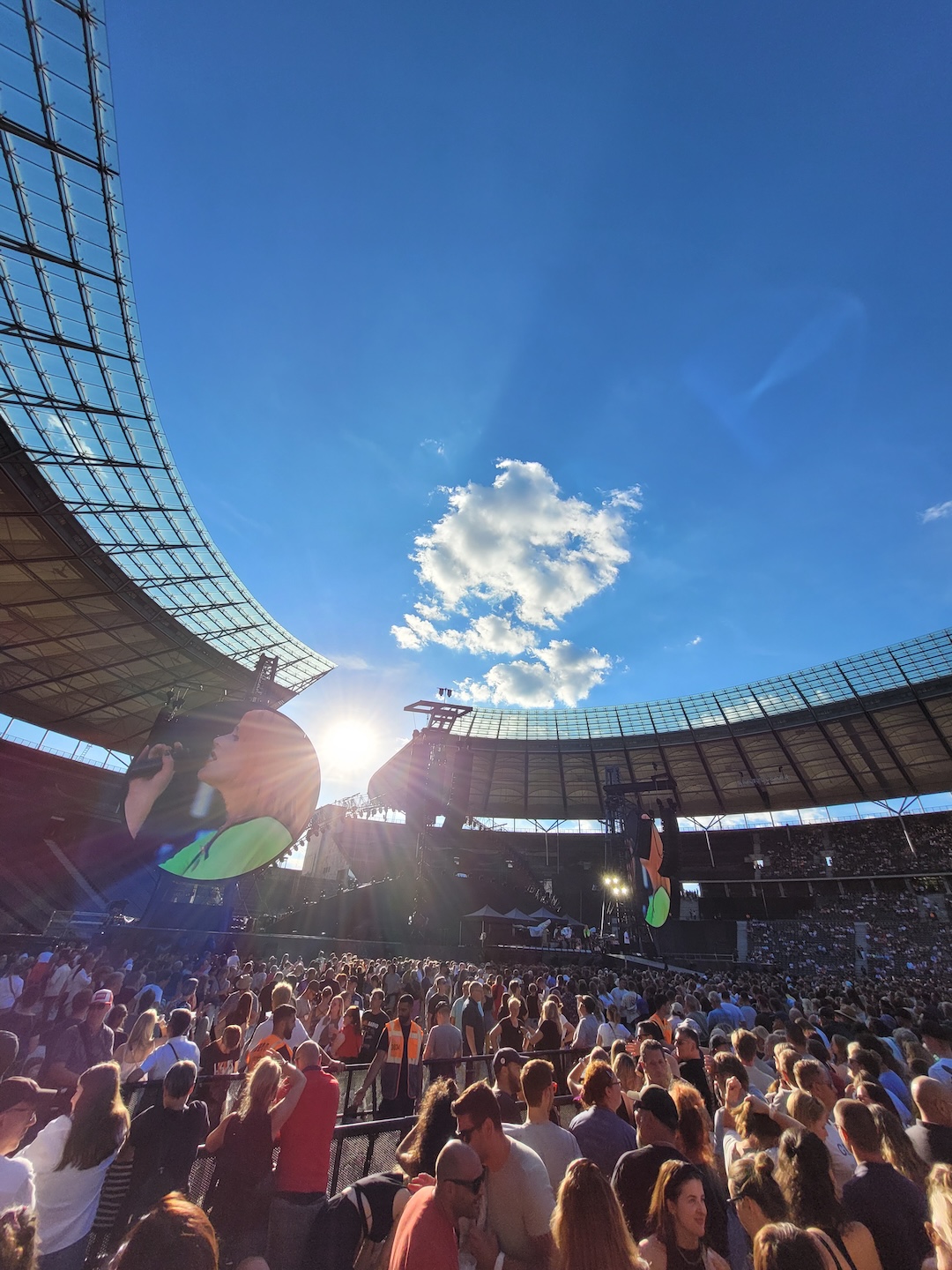
The Olympic Stadium is one of those places in Berlin that impresses with its sheer scale. Opened in 1936, it can hold about 75,000 people and has been an important part of the city’s sporting and cultural life for years.
The facility can be toured with a guide to learn its history, but I feel the real emotions only begin when the stadium fills with people. During a match or major concert, this place completely changes energy.
If you catch a performance by your favorite artist or band, don’t hesitate for a moment. A concert at the Olympic Stadium is an experience that stays in memory for a long time. Sound, lights, and shared atmosphere do their work.
Artists who have performed on this stage include Madonna, The Rolling Stones, Tina Turner, U2, Pink, and Coldplay. That speaks for itself.
My tip: check the event calendar even before your trip to Berlin. Even if you hadn’t planned a concert, you might find yourself catching something truly special.
10. Hunt for Treasures at a Flea Market
If you like city markets and searching for things with history, Berlin is the ideal city for this. Flea markets are part of the weekend ritual here and a great excuse for an unhurried walk.
At Berlin stalls, you can find almost everything: vintage clothes, old porcelain, books, vinyl records, posters, and small items that have something unique about them.
These are places where it’s easy to lose track of time and leave with something you weren’t looking for at all.
The oldest flea market in Berlin takes place on Straße des 17. Juni and is over 45 years old. On Sunday mornings, the atmosphere here is especially pleasant, especially if you combine your visit with a walk through Tiergarten.
Also worth checking out are the market at Marheinekeplatz, at Rathaus Schöneberg, at Boxhagener Platz, and around the Bode Museum. Each has a slightly different atmosphere and its own rhythm.
My tip: come in the morning before it gets crowded and give yourself time. Flea markets in Berlin taste best without a plan and without rushing.
Planning more European city breaks?
I share proven tips, hidden spots, and local gems from every city I explore.
Bonus for new readers: Interactive Berlin map with 100+ places + list of best cafés and restaurants 📍
11. Pay Tribute to Holocaust Victims
There are places in Berlin where you naturally slow down and words fall silent.
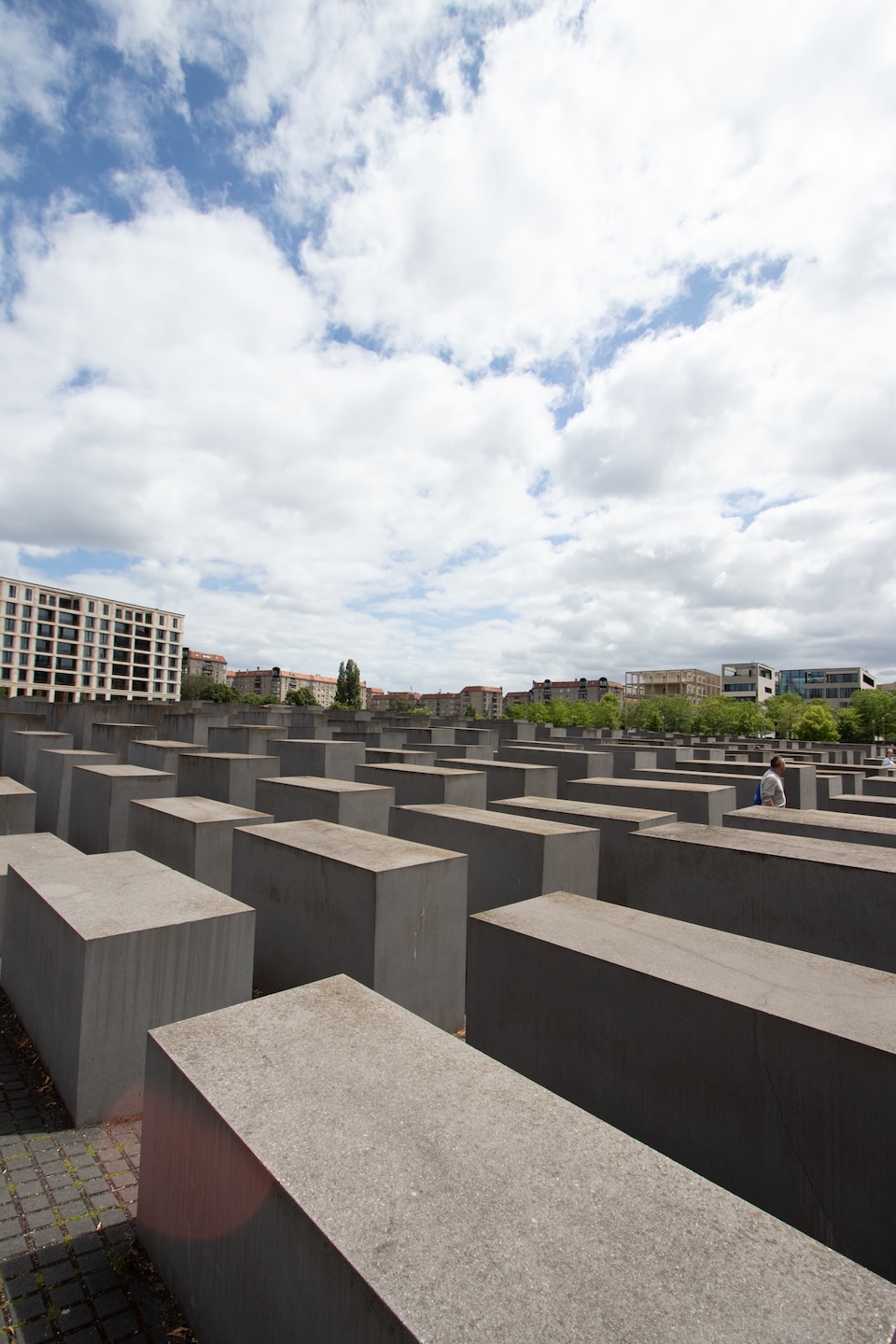
One of them is the Memorial to the Murdered Jews of Europe – a space dedicated to the memory of approximately six million Jews murdered during World War II.
The memorial is located in the city center and occupies nearly 19,000 square meters. 2,711 concrete blocks arranged in a regular grid create a labyrinth where it’s easy to lose orientation.
This feeling of disorientation isn’t accidental – it’s meant to encourage reflection, silence, and personal experience.
This place doesn’t tell history directly. Rather, it suggests it. It leaves space for your own emotions and thoughts, without imposing interpretation.
Also worth visiting is the Memorial Information Center, where there’s an exhibition dedicated to Nazi crimes and the fates of specific people. It’s difficult but a very important complement to the visit.
My tip: come here without rushing and give yourself time. This is one of those places that needs no commentary or photo. Presence is enough.
12. See Charlottenburg Palace
Charlottenburg Palace is one of those places in Berlin that allows you to step into a completely different world for a moment.
Baroque architecture, symmetry, and space make an impression from first sight, but it’s history that gives this place real depth.
The palace was built in the late 17th century and served as the summer residence of the Hohenzollern dynasty for nearly 150 years.
It was named after Sophie Charlotte of Hanover by her husband, Frederick I of Prussia, and has retained its royal character to this day.
Right next to the palace stretches one of Germany’s most beautiful garden complexes.
The French palace garden contains the New Pavilion, Belvedere, and the Mausoleum of Queen Louise. It’s an ideal place for a long walk, especially in warmer months.
When visiting Charlottenburg, you can peek inside the palace interiors and freely stroll through the gardens. It’s one of those Berlin places that taste best without rushing.
My tip: entry to Charlottenburg Palace gardens is free, while touring the palace interiors is paid. If you’re mainly interested in the walk and atmosphere of the place, the gardens alone are quite sufficient. If you’re interested in history and details, it’s worth buying a ticket to the interiors.
How do you want to explore next?
🏛️ Warsaw in one day → History, modern architecture, and contrasting neighborhoods
🏰 Krakow in one day → Timeless streets, layered history, and quiet moments between landmarks
🌊 Gdansk in one day → Coastal pearl with unique architecture
🎨 Wroclaw in one day → City of bridges and dwarfs awaits discovery
What appeals to you most?
13. Enjoy the Nightlife
Berlin doesn’t fall asleep quickly. And that’s exactly what’s so appealing about it. Besides good food and monuments, the city is famous for nightlife that has earned itself one of the world’s most distinctive statuses over the years.
After dark, you can choose theater, a concert, an intimate bar, or immerse yourself in the club scene Berlin has been known for decades.
It’s a city where night has no single scenario. Everything depends on mood and what you’re in the mood for that evening.
Berlin’s club culture began taking intensive shape in the ‘90s, when the city attracted people from around the world.
That’s when techno became something more than just music here. It became a way of spending time and a form of freedom.
The most famous clubs include Berghain, Watergate, Tresor, and Sisyphos. Each has its own rhythm and completely different energy.
Berghain is already a legend. The club is housed in a former power plant and is famous for long, sometimes multi-day parties.
It’s hard to get in, and entry rules are shrouded in mystery. But in Berlin, it’s never about guarantees. More about experience and being here and now.
My tip: if clubs aren’t your thing, Berlin still has something to offer you after dark. Sometimes the best evening is a glass of wine by the Spree or a small bar you found completely by chance.
14. Marvel at Berlin Cathedral
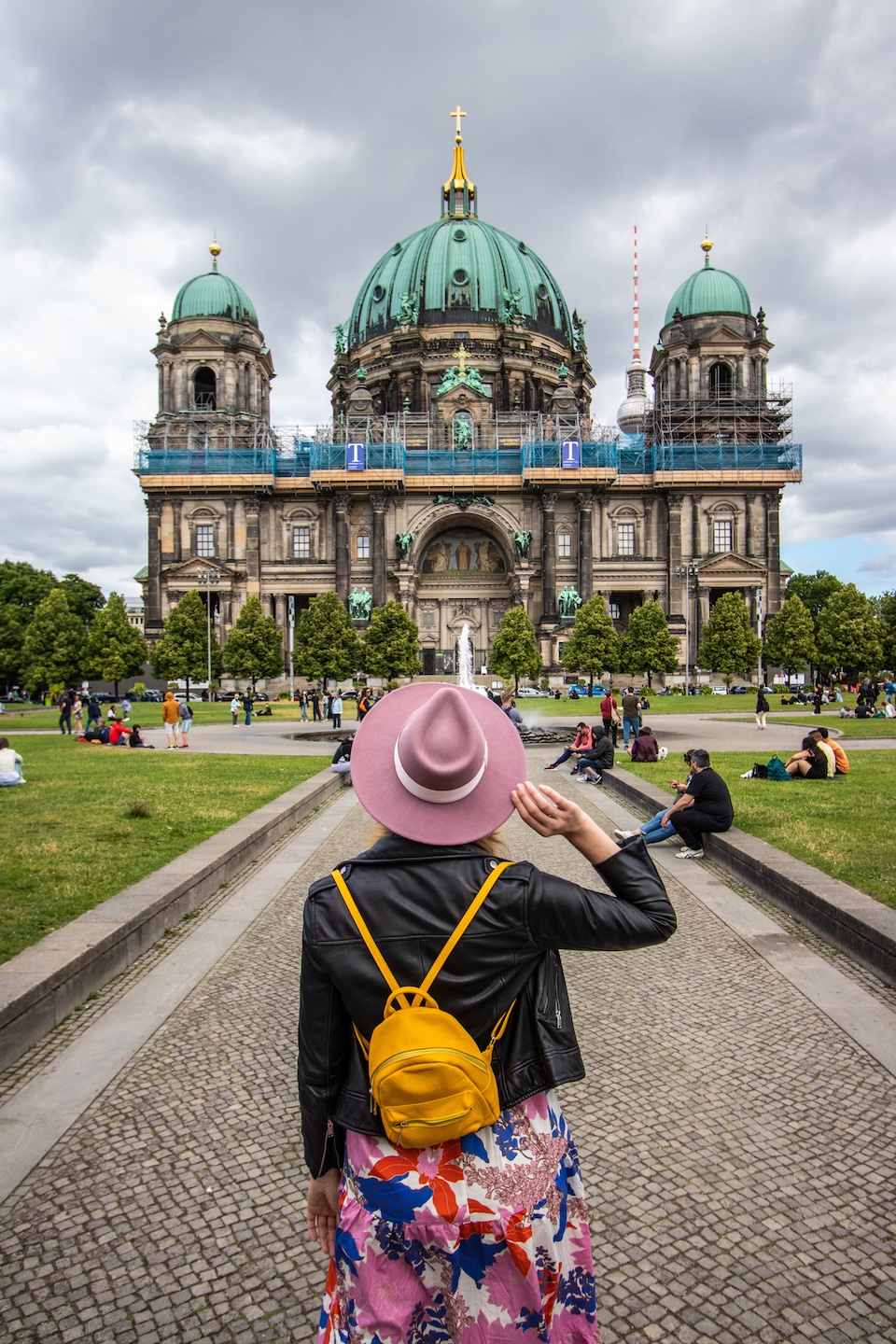
Berlin Cathedral is one of those buildings that catches your eye immediately. Built in 1905, it’s the largest Protestant church in Germany and one of Berlin’s most impressive places.
It’s located on Museum Island and its architecture combines elements of Renaissance and Baroque. The monumental dome, rich details, and space make a huge impression, even if you’re not planning a long visit.
In the cathedral’s basement is the crypt of the Hohenzollern dynasty, where about 90 of its members are buried. It’s one of the most important such places in Europe and a very strong historical accent of this visit.
The cathedral isn’t just a monument. Services, concerts, state ceremonies, and cultural events take place here. It’s a place that lives and is still an important part of the city.
My tip: if you have the opportunity, go inside and give yourself a moment of silence. Even a short visit lets you really feel the scale and atmosphere of this place.
15. Enjoy a Picnic in Tiergarten Park
On warm days, Berlin tastes best on grass. A picnic in the park is one of those simple rituals that let you really slow down and feel the city from a quieter side.
Tiergarten is the most obvious choice. New York has Central Park, London has Hyde Park, and Berlin has Großer Tiergarten – not without reason called the city’s green lungs.
The park covers 210 hectares and gives a sense of space that’s often lacking in large metropolises.
Expansive lawns, paths hidden among trees, and waterside spots make it easy to find your own piece of quiet here. No wonder it’s one of Berliners’ favorite parks, especially in spring and summer.
Interestingly, this was once royal hunting grounds. Today it’s open to everyone and ideal for a picnic, a book, conversation, or simple idleness.
My tip: take something simple to eat, a blanket, and give yourself time. Tiergarten isn’t a place to “check off.” It’s a place where it’s worth simply being.
16. See a Panda at Berlin Zoo
Berlin Zoo is one of those places that can surprise you even when you’re not planning a long visit. Zoo Berlin is among Europe’s most visited zoos and has several good reasons for this.
It’s Germany’s oldest zoological garden, opened in 1844, occupying about 35 hectares of green space.
Interestingly, Berlin Zoo can boast the world’s largest number of animals – over 20,000 individuals representing about 1,380 species live here.
On site, you’ll see both the most famous, like giant pandas and polar bears, as well as less obvious species such as forest okapis or northern kiwis.
A walk between enclosures is a good opportunity to slow down for a moment and look at the city from a completely different perspective.
It’s also worth knowing that Berlin Zoo actively engages in endangered species protection programs and supports environmental initiatives worldwide.
My tip: if you’re not a fan of long zoo visits, choose one or two zones and focus only on them. The visit will be calmer and more pleasant, without the feeling of rushing.

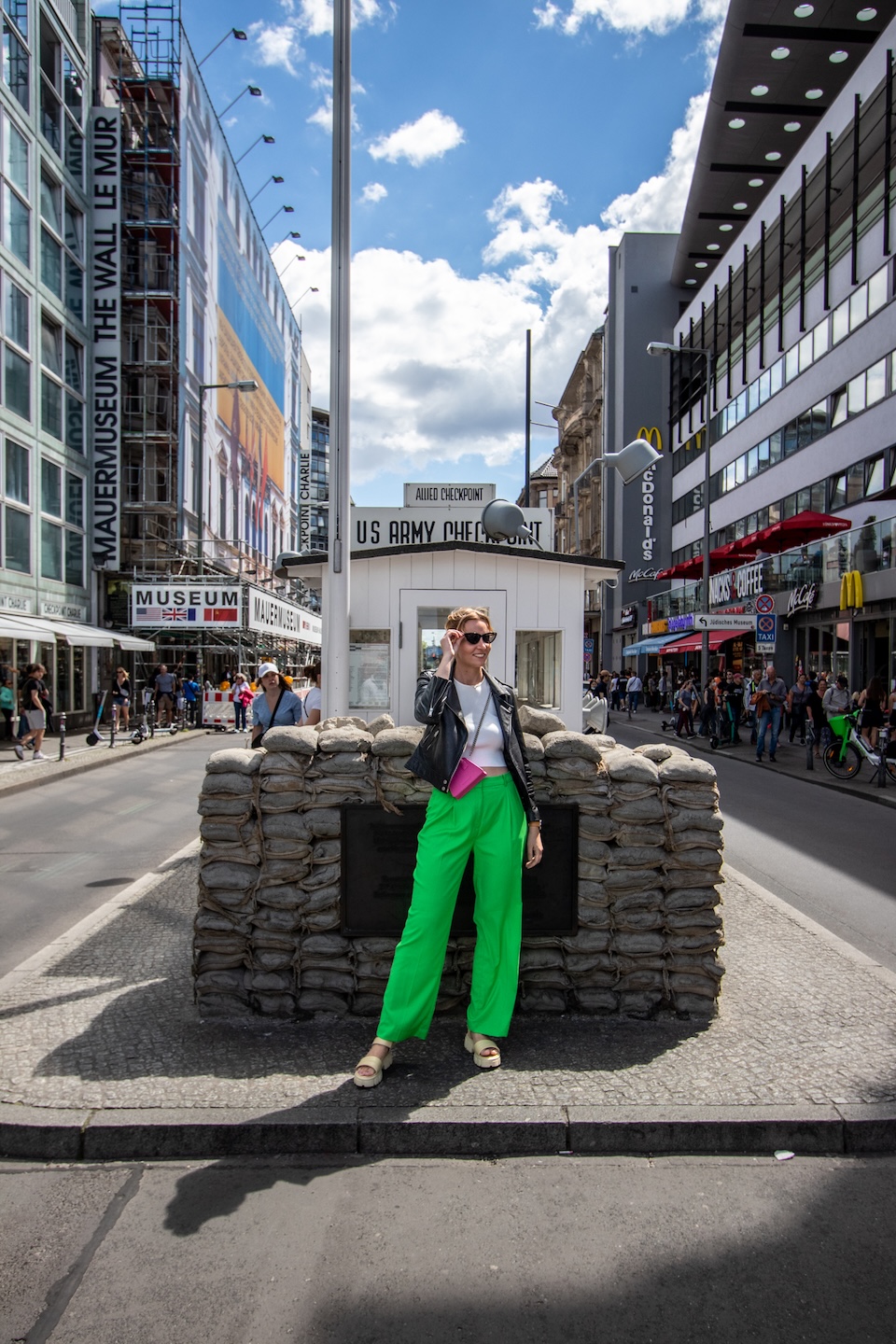
17. Take a Photo at Checkpoint Charlie
Checkpoint Charlie, located at the intersection of Friedrichstraße and Zimmerstraße, is one of those places in Berlin you know before you even arrive.
It was once the most famous border crossing between East and West Berlin – a place of tensions, escapes, and histories that are hard to imagine today.
Today, Checkpoint Charlie is a symbol of the Cold War and one of the city’s most visited attractions. Tourists line up here for photos, often not realizing that the visible guardhouse is only a replica.
The original building was dismantled shortly after the wall fell and moved to the Allied Museum.
This place has inspired literature and spy cinema for years. It appears in films like The Spy, Octopussy, and Bridge of Spies. History and pop culture strongly intersect here.
Right nearby is the Wall Museum, which shows how Berlin residents tried to cross to the other side of the wall. Some stories and ideas really stay in your head for a long time.
My tip: approach this place with perspective. Take a photo if you want, but it’s also worth pausing for a moment and looking at Checkpoint Charlie not just as a point on a map, but as a fragment of the city’s very difficult history.
18. See Asisi’s Panorama
The Berlin Wall is inseparably connected with the city’s history. And even if Berlin today lives at a completely different rhythm, it’s still here that it’s easiest to feel the weight of those years.
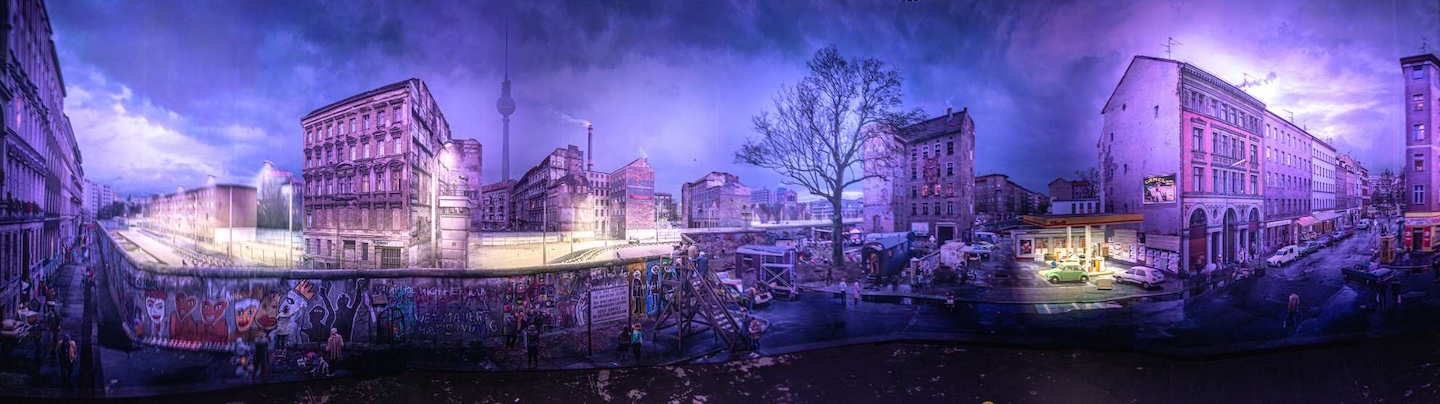
One of the places that does this most powerfully is the panorama by Yadegar Asisi.
Berlin Wall Panorama is a monumental visualization showing the daily life of West Berlin residents in the 1980s.
There’s no sensation or simplification here. There’s ordinariness, grayness, and the tension that accompanied life right next to the wall and death strip separating the city from East Berlin.
The panorama is incredibly realistic and engrossing more than you might expect. It’s accompanied by sound and music with original quotes from politicians of both blocs.
Combined with lighting, the whole creates an atmosphere of unease that stays in your head long after leaving.
This isn’t an exhibition you “view.” It’s an experience you live through. And one of those places in Berlin that really helps understand the city before it became what it is today.
My tip: plan your visit without rushing and give yourself a moment of silence after leaving. This is one of those experiences that needs time to resonate.
19. Learn History at Topography of Terror
At first glance, it might seem like one of those places better avoided. Yet Topography of Terror is one of the most important points on Berlin’s map if you want to truly understand the city’s history.
This is exactly where the headquarters of the Gestapo and SS were located. From here, the apparatus of terror was directed that led to the extermination of Jews, Roma, and millions of other victims throughout Europe.
Though little remains of the former buildings, the place still carries a weight that’s hard to ignore.
Topography of Terror doesn’t sensationalize emotions. It’s factual, concrete, and very moving. It consists of two parts: an outdoor exhibition and an indoor display.
The first tells about the functioning of the Nazi power apparatus in Berlin and its impact on the city. The second explores SS and police activities in the Third Reich and the scale of crimes committed.
This isn’t an easy visit, but a very necessary one. One of those after which you leave in silence and with the feeling that history stops being abstract.
My tip: plan your visit when you have space and time for a calm walkthrough. This is a place worth seeing without rushing and without distractions.
Get your free map featuring 100+ Berlin places
20. Take a Cruise on the Spree
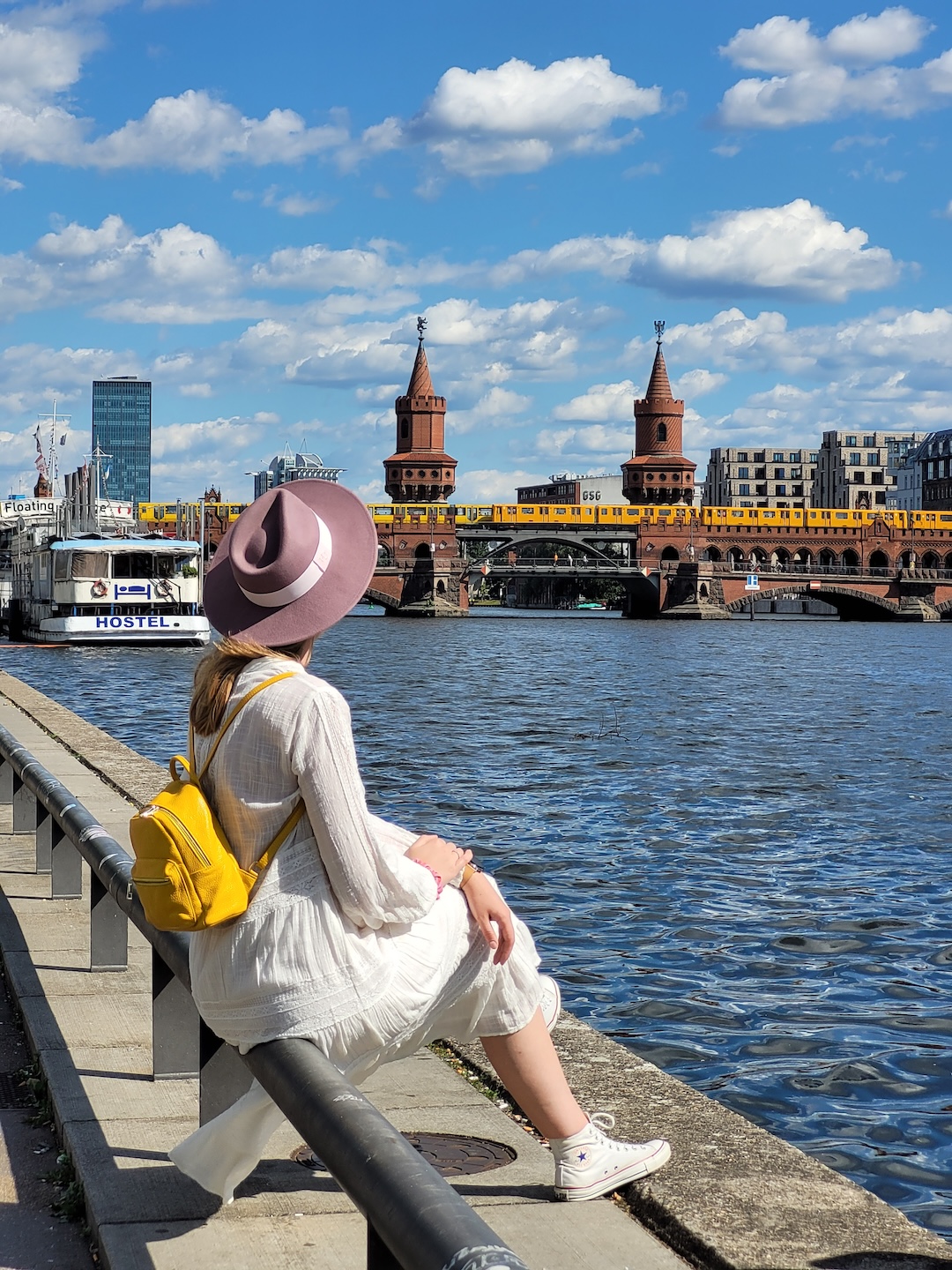
A cruise on the Spree is one of the most pleasant ways to see Berlin from a completely different perspective. The city naturally slows down here, and familiar places arrange themselves into a calm, flowing story.
During the boat trip, you pass Museum Island, Berlin Cathedral, the Reichstag, and the characteristic Oberbaum Bridge. It’s a classic route that lets you see Berlin without walking and without rushing.
Depending on the option chosen, the cruise usually lasts from one to four hours.
Along the way, you can also admire quieter sections of the city, including the Landwehrkanal waterscape, which shows Berlin from a more local, everyday side.
If you prefer something more active, kayak trips are also available in season. It’s a completely different way of sightseeing, more intimate and offering much freedom.
Regardless of whether you choose a boat or kayak, one thing is certain – Berlin from the water can really surprise.
My tip: choose a cruise in late afternoon. The light is soft then, the city looks calmer, and the whole experience has a more summery, unhurried atmosphere.
Travel lighter, even before you leave.
start with something simple.
Download The Minimum Plan – Slow Travel:
Where to Stay in Berlin
If you’re looking for accommodation in Berlin that has atmosphere and good location, it’s worth paying attention to Hotel Indigo Berlin – East Side Gallery in the Friedrichshain–Kreuzberg district.
I stayed there myself and it’s one of those places you simply remember fondly. The hotel is modern, designer, and located right next to East Side Gallery, in an area full of cafés, walks along the Spree, and relaxed, Berlin energy.
The interiors are refined but without excess. It’s comfortable and aesthetic, and there’s an on-site restaurant with local cuisine.
A big plus is also the rooftop terrace, where in the evening you can sit with a drink and look at Berlin from a slightly calmer perspective.
It’s a good base if you want the city within arm’s reach but also to return in the evening to a place where you can really rest.
My tip: if you’re planning intensive sightseeing, accommodation in this part of the city makes it easy to combine walks, public transport, and evening outings without constantly moving across the entire city.
Berlin Awaits – Are You Ready?
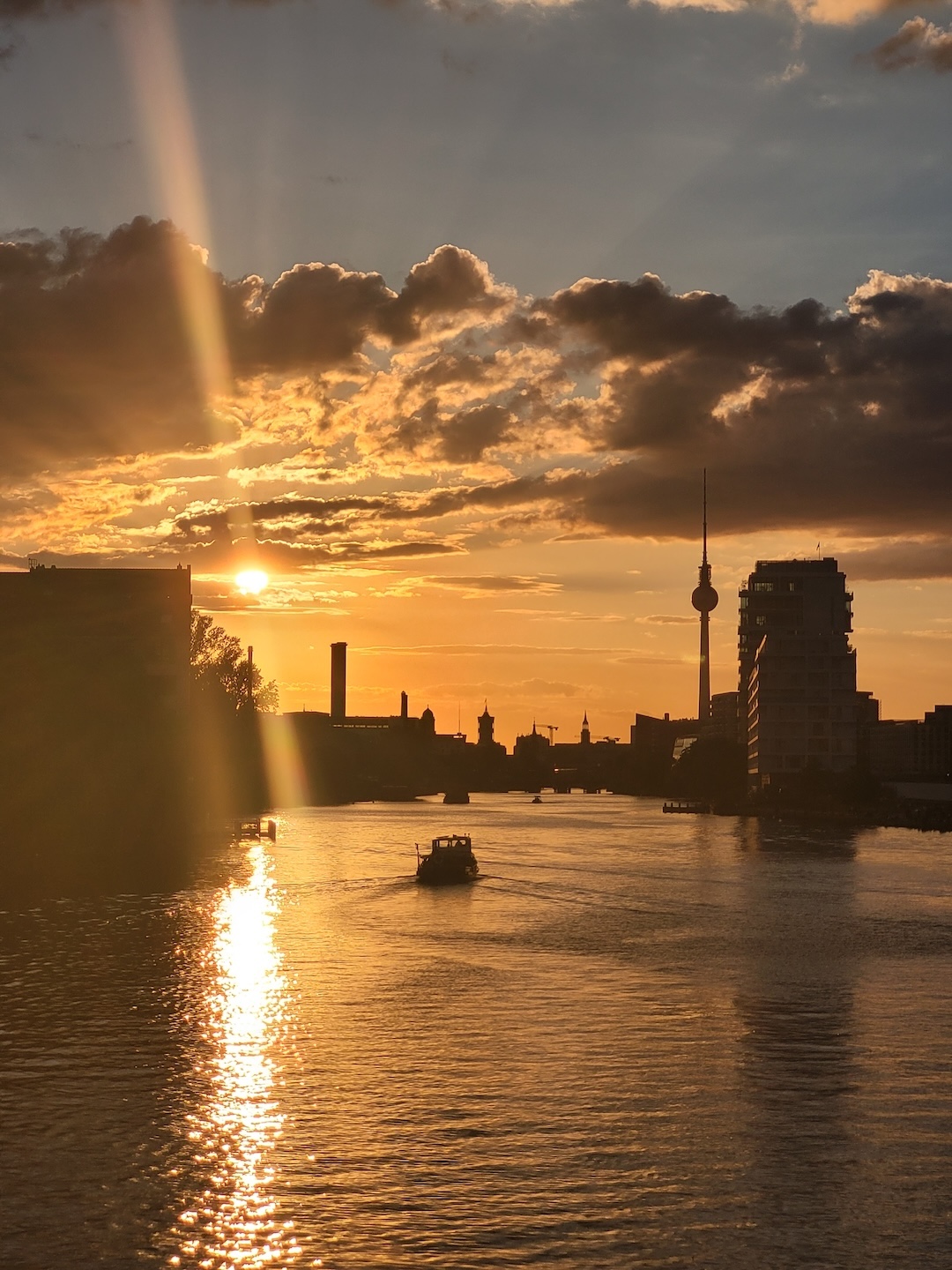
Berlin is one of those cities that changes perspective. After a few days, you return with a head full of images, tastes, and moments that are hard to close in one story.
For me, Berlin has always been a city of contrasts and freedom. A place where history meets modernity in the most unexpected corners, and life moves at its own, unhurried rhythm.
I hope these 20 ideas help you feel Berlin more deeply and find places in it that really speak to you.
Ready to explore more of Europe?
- Kraków in One Day – a perfectly paced walk through history and atmosphere
- Wroclaw One-Day Guide – Poland’s most underrated city
- Gdansk Complete Walking Tour – Stunning Baltic architecture
- Europe Car Rental Guide – Essential for exploring beyond cities
Which Berlin attraction intrigued you most? Or maybe you have your own favorite place in this city?
Write to me – I’d love to hear about your Berlin discoveries and I might include them in the next update of this post.
If this article was helpful to you, share it with a friend who dreams of Berlin. Let more people discover this city’s true character.
Save pin for later
This article contains affiliate links. If you make a booking through these links, I may earn a commission, supporting this blog. Rest assured, my recommendations are based on honest assessments, and using these links doesn't affect prices for you. Thank you for your support!