
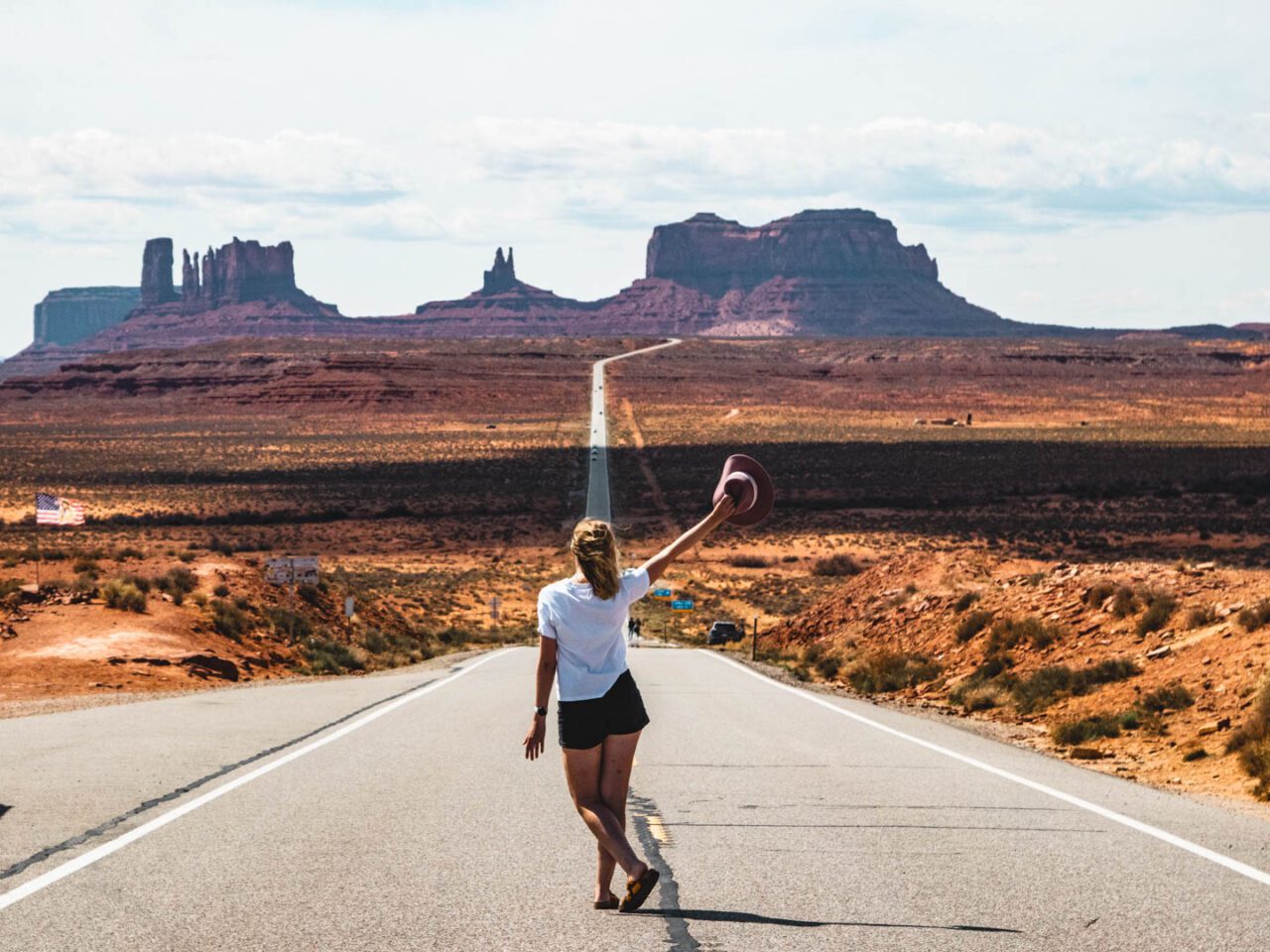
A 10-day campervan road trip through Arizona and Utah – from Sedona and the Grand Canyon to Monument Valley, Bryce Canyon, and Capitol Reef.
There was a loose idea, a map with a few pinned places, and that quiet excitement that comes when you know you’re about to spend days on the road, waking up somewhere new every morning.
The Southwest has a way of pulling you in slowly. Not through big moments, but through space. Through silence. Through those endless roads where time feels softer and the days stretch a little longer.
This 10-day campervan itinerary takes you through some of the most beautiful places in Arizona and Utah, but more than that, it shows you what this kind of journey can actually feel like.
If you’re planning a Southwest road trip and wondering how to connect these places into one experience, this is the route we followed – with enough structure to guide you, and enough freedom to make it your own.
Quick Overview
- Start/End: Phoenix, Arizona
- Duration: 10 days
- States: Arizona + Utah
- Total driving: ~1,300-1,500 miles (2,100-2,400 km)
- Route type: loop from Phoenix
- Best for: slow travel, nature lovers, first campervan trip
Is This Southwest Campervan Trip for You?
Before you start pinning routes and comparing campgrounds, it’s worth asking the honest question.
This itinerary is a good fit if you’re taking your first longer van trip and want a route with some natural rhythm to it, if you’re a slow travel person who’s more interested in how a place feels than how many stops you can check off, or if you’re drawn to landscapes – wide ones, quiet ones, the kind that make you feel small in the best possible way.
It’s probably not the right fit if you’re hoping to rush through the highlights in a few days, or if you need a hotel with a pool at the end of every drive.
This kind of trip asks something of you. It asks you to slow down, to be flexible, to be okay with not knowing exactly where you’ll sleep tonight.
If that sounds familiar – keep reading.
Planning Your USA Trip – Start Here
If you’re just getting started with planning your American adventure, these guides will help you understand the country, pick a region, and build an itinerary:
- USA Travel Hub (all my guides in one place)
- Arizona 7-Day Road Trip
- 7-Day California Coast Itinerary
- 10-Day Pacific Northwest Itinerary
- Big Island, Hawaii Guide
Map & Route Overview
This is a roughly circular route starting and ending in Phoenix, Arizona.
Total driving: ~1,300-1,500 miles (2,100-2,400 km), depending on your exact route and detours.
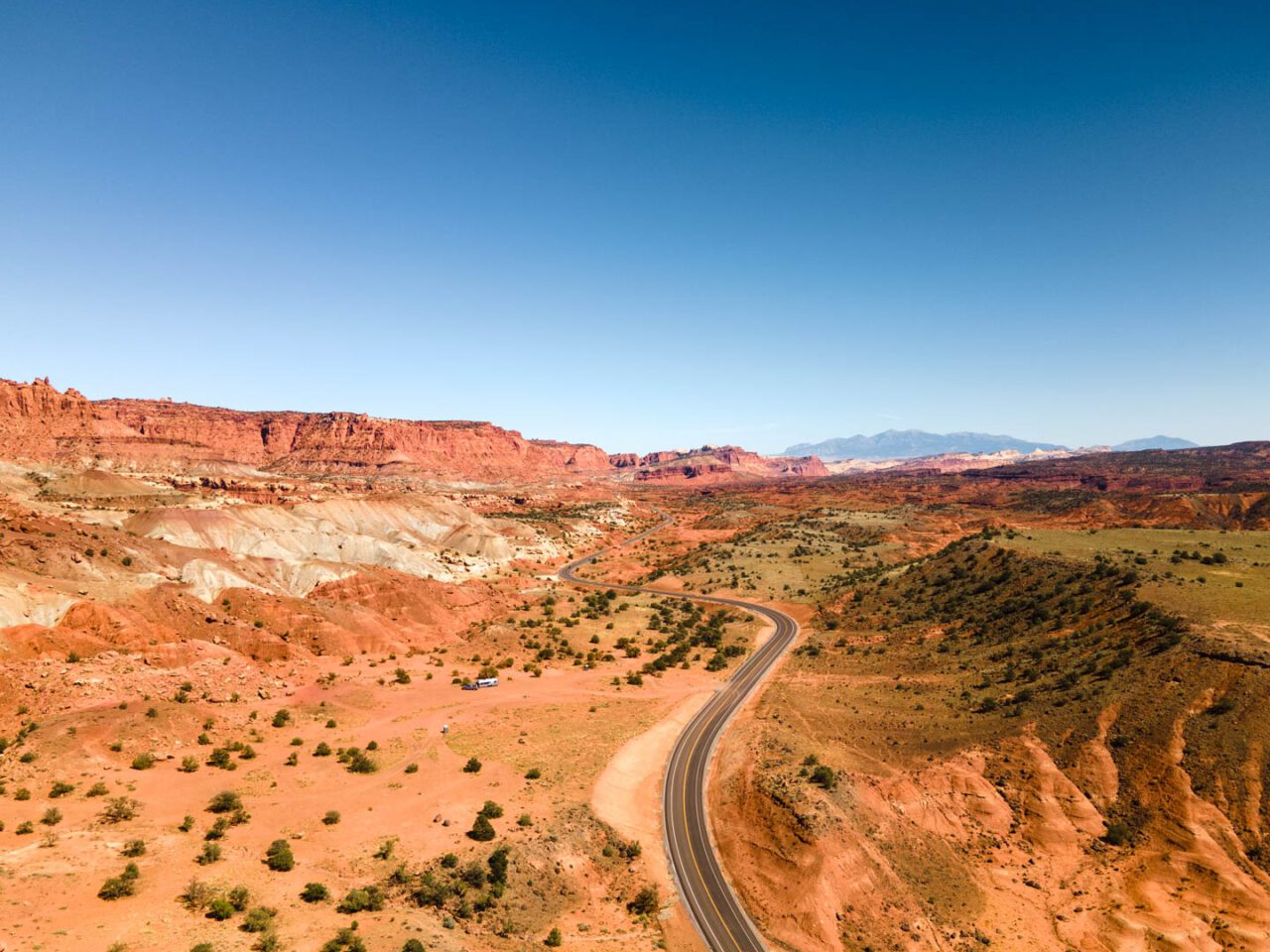
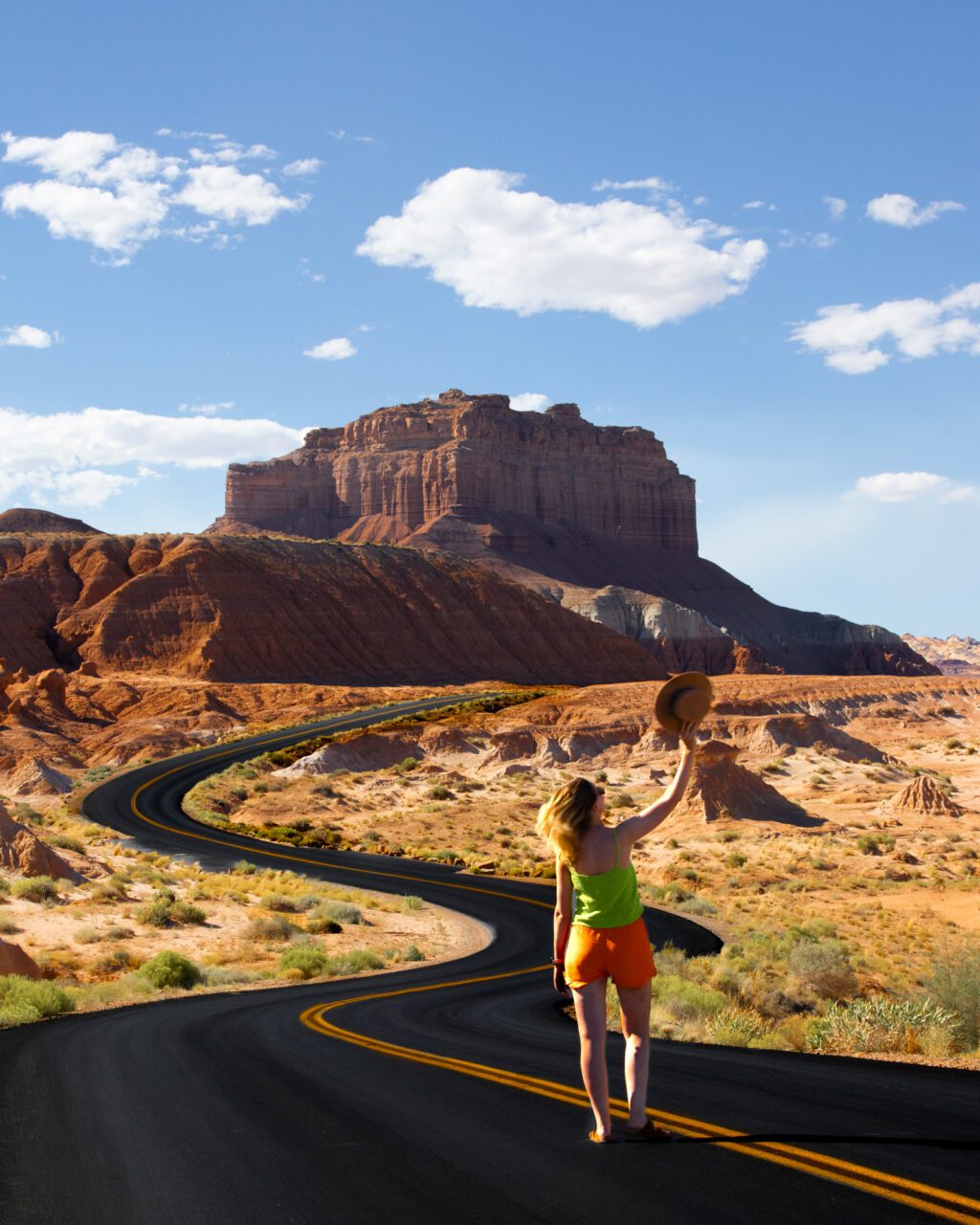
The route moves northeast from Phoenix through Sedona, continues up to the Grand Canyon’s South Rim, then heads east through Page and Monument Valley before crossing into Utah for Bryce Canyon and Capitol Reef. The return leg brings you back south through Arizona.
You’re not rushing between states – you’re moving through them slowly, letting each landscape settle before the next one begins.
Exact Route Breakdown (Day by Day Driving)
| Day | Route | Drive time |
|---|---|---|
| Day 1 | Phoenix → desert spot outside the city | ~1 hour |
| Day 2 | Base in Sedona area | ~2 hours from Phoenix |
| Day 3 | Sedona → Page | 3-3.5 hours |
| Day 4 | Page → Grand Canyon South Rim | 2-2.5 hours |
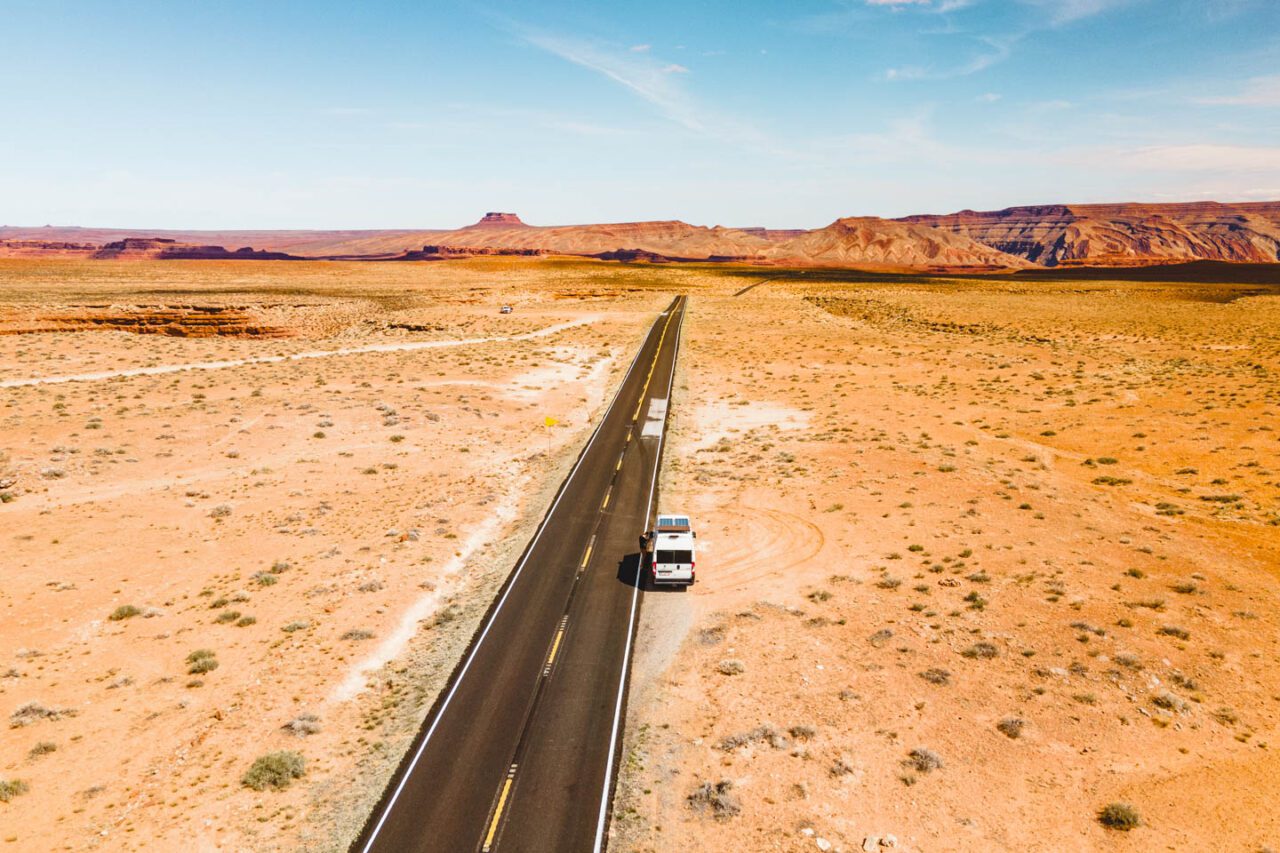
| Day 5 | Grand Canyon → Monument Valley | 3-3.5 hours |
| Day 6 | Monument Valley → Goosenecks / Page area | 2-4 hours |
| Day 7 | Page area → Bryce Canyon | 2.5-3 hours |
| Day 8 | Bryce Canyon → Capitol Reef | 2-2.5 hours |
| Day 9 | Capitol Reef → Arizona Strip | 4-6 hours |
| Day 10 | Arizona Strip → Phoenix | 4.5-5.5 hours |
These are driving times only – not including stops, which on most days will easily add an extra 1-2 hours.
The total loop is around 1,300-1,500 miles (2,100-2,400 km), depending on your exact route and how often you pull over.
10-Day Southwest Campervan Itinerary
Day 1 – Arrival & First Night in the Desert
We hit the road in the afternoon, when the sun was already soft and the air still warm in that dry, desert way.
There’s always a small moment at the beginning of a trip like this – when everything feels slightly unfamiliar. The space is new, the rhythm hasn’t settled yet, and even the simplest things take a bit longer than usual.
We weren’t traveling alone – our cats were with us too, quietly settling into the space, finding their corners as everything around us began to shift.
We didn’t try to go far on the first day.
Instead, we drove just outside the city, letting the landscape slowly shift from buildings to open space. That first transition is something I always remember – the moment when the trip really begins.
By sunset, we found a quiet spot with nothing around us but low desert plants and wide, open sky.
No plan. No reservations. Just that feeling of being exactly where we needed to be.
We made something simple to eat, sat outside longer than we planned, and watched the light disappear.
That first night is never about distance. It’s about arriving – not just to a place, but into the pace of the journey.
Day 2 – Sedona & That First Real Slow Morning
We woke up earlier than planned, not because of an alarm, but because of the light.
It was already warm, even in the morning, and the kind of quiet you only get when you’re surrounded by open space. No traffic, no voices, just that soft desert stillness.
That was the first moment the trip started to feel real.
We made coffee slowly, without rushing anywhere, and then stepped outside with our mugs. For a while, there was nothing to do except sit, look around, and let the day begin on its own.
Sedona was only a short drive away, but we didn’t go straight there.
We stopped a few times along the road, pulling over wherever the view felt too good to pass. That’s something I’ve learned with this kind of travel – the places in between often stay with you just as much as the destinations.
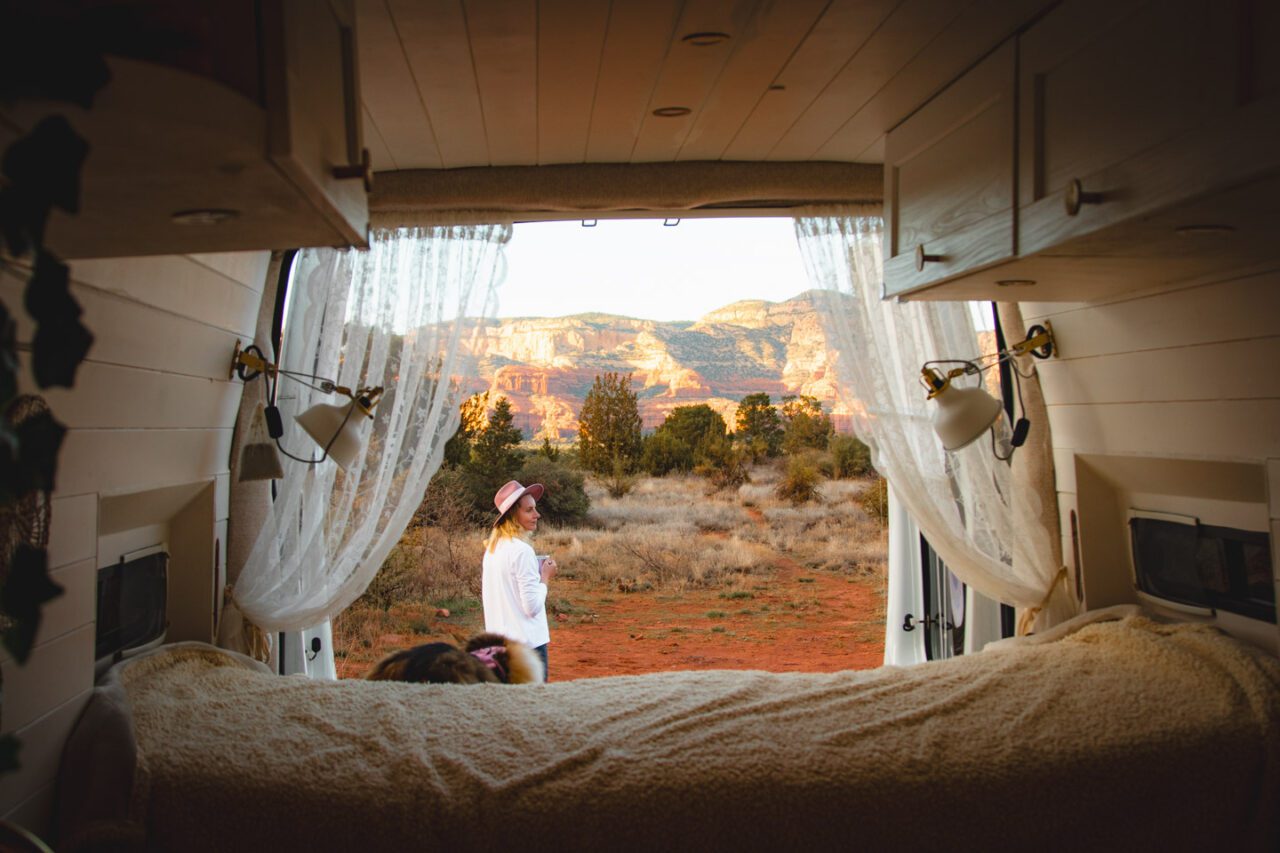
By late morning, the red rocks started to appear.
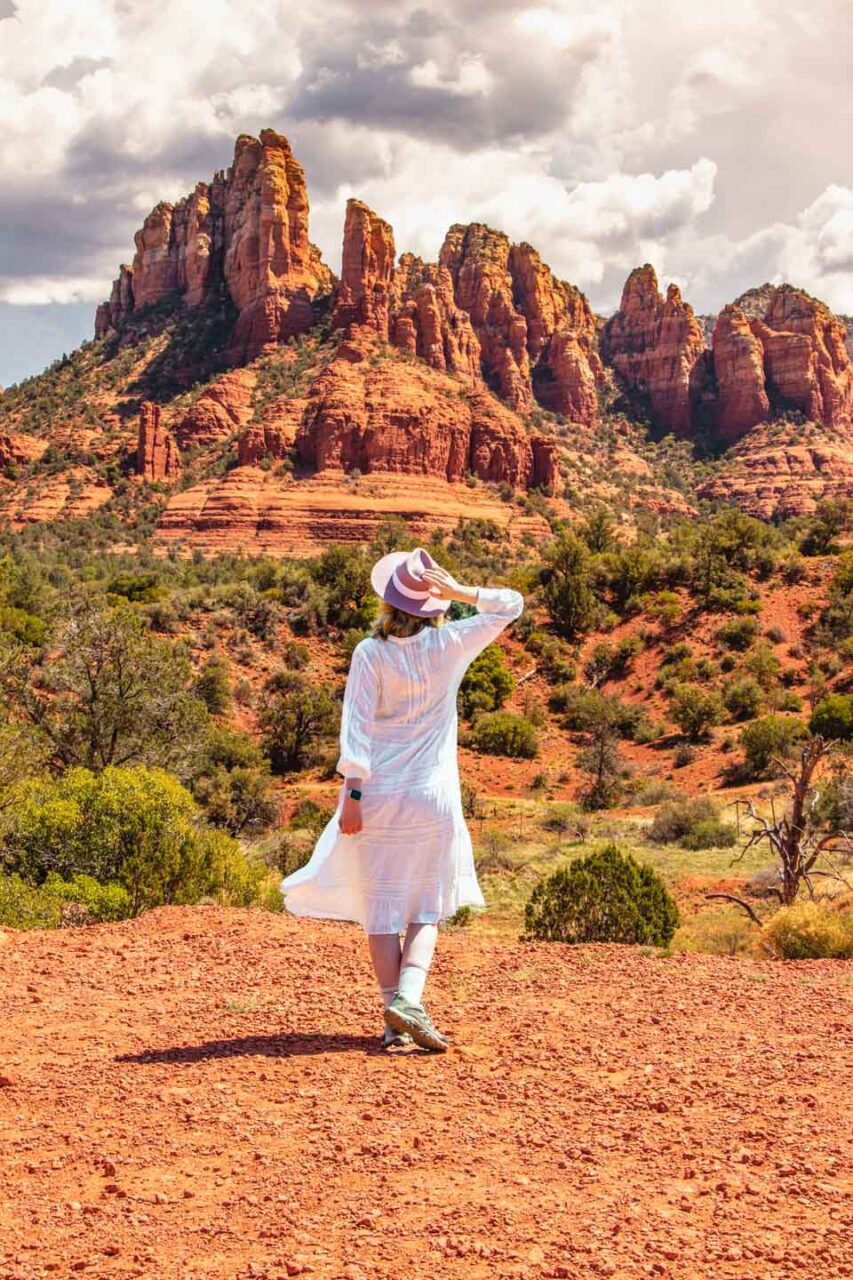
Sedona is one of those places that almost feels unreal at first. The colors are deeper than you expect, the scale is bigger, and the light changes everything throughout the day.
If it’s your first time here, keep things simple. You don’t need to see everything. Pick one or two places and give them time.
We chose an easy hike – something not too long, just enough to move, breathe, and take it all in. We ended up on Bell Rock Pathway, which felt like the right kind of start – open views, soft trails, nothing too demanding.
Cathedral Rock and Bell Rock are the most popular, and for a reason. Even a short walk here feels like stepping into a completely different landscape.
If you want more hiking options before you arrive, my guide to the best hikes in Sedona has everything mapped out.
In the afternoon, the heat builds quickly, especially in warmer months. This is a good moment to slow down again – find shade, grab something cold to drink, or just drive a little and see where the road takes you.
For sunset, we found a quiet spot slightly away from the main viewpoints, just off a dirt road outside of town.
The light here doesn’t just fade – it shifts. From bright red to soft orange, then into something deeper and calmer. It’s one of those moments that doesn’t need much explaining.
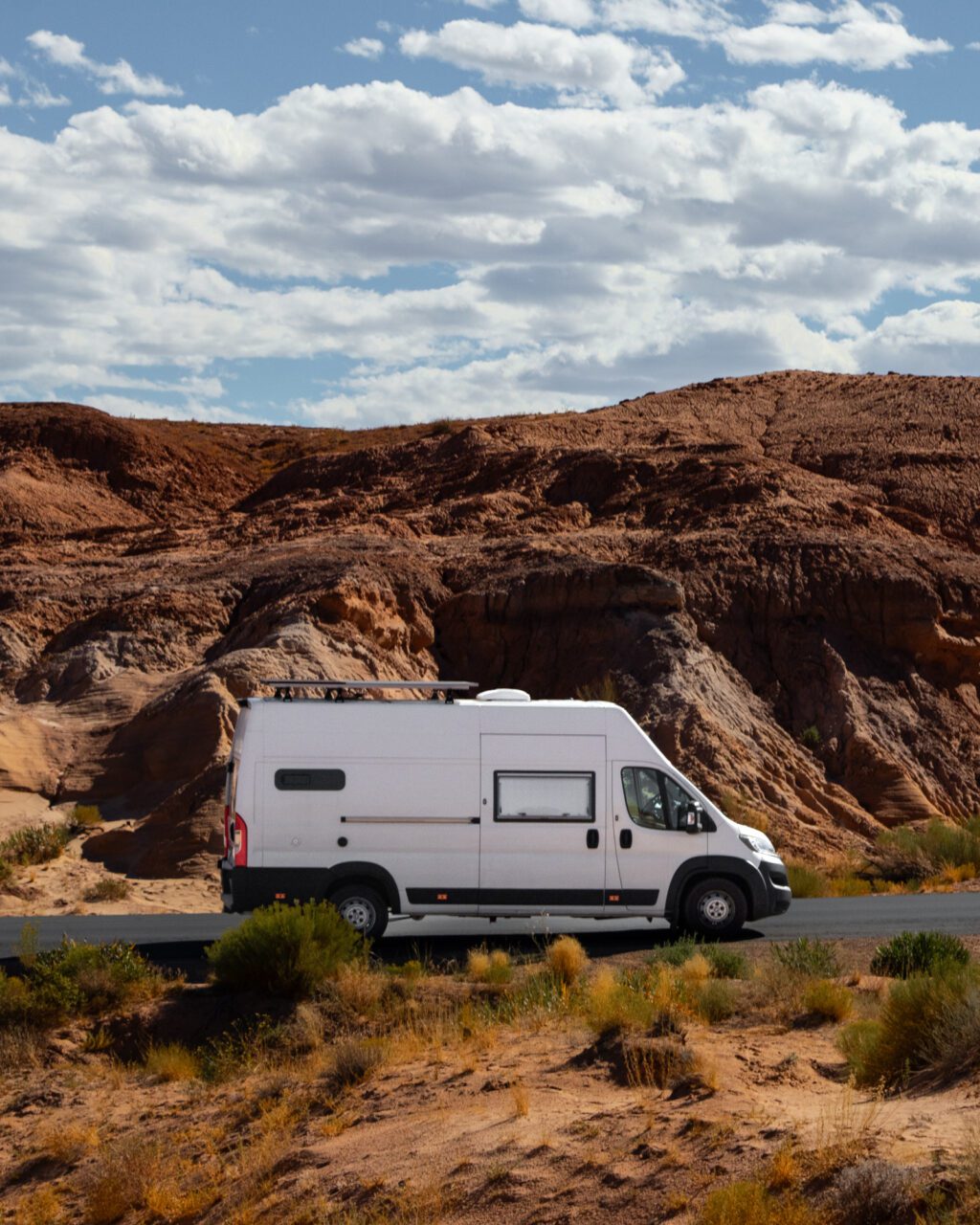
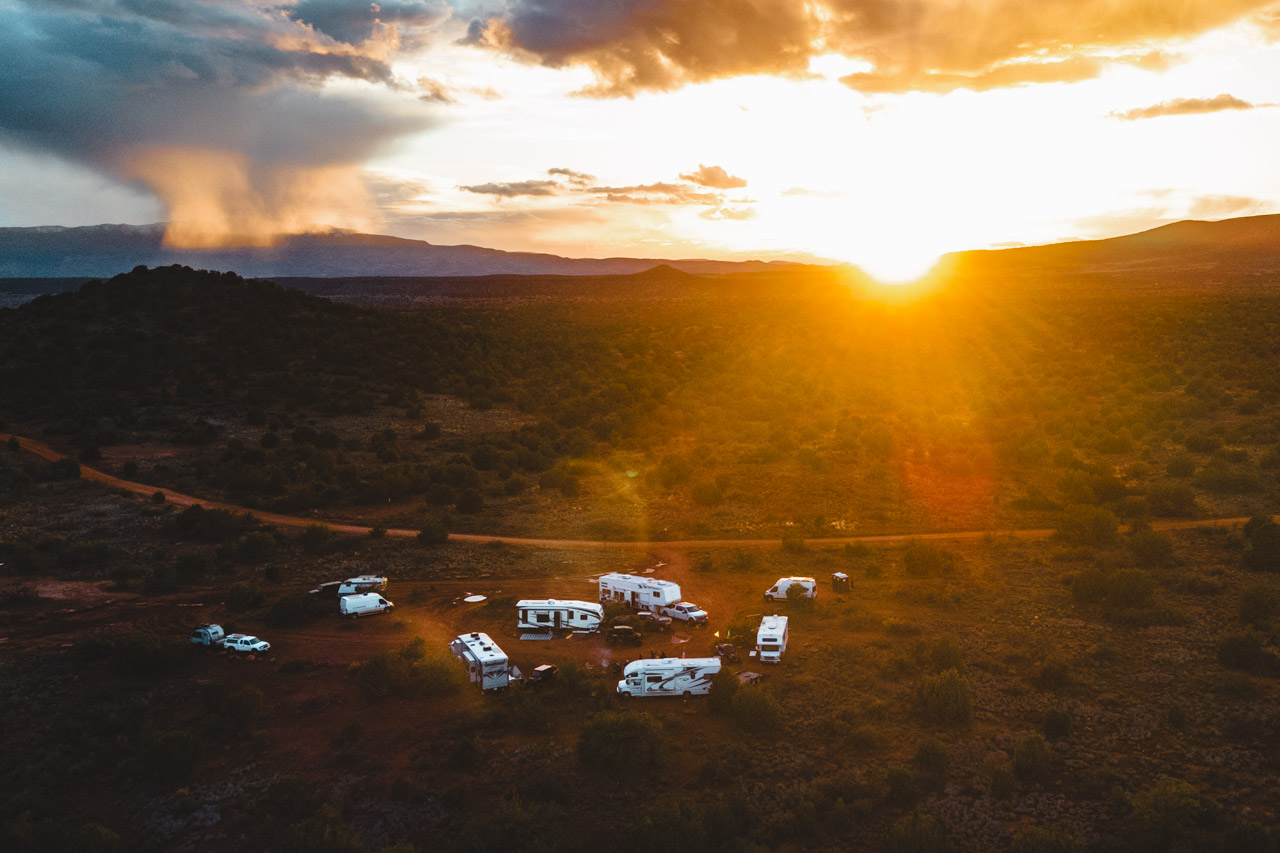
If you’re doing this route by campervan, Forest Road 525 – also called Red Canyon Road – is one of the most popular dispersed camping spots near Sedona.
It’s accessible for RVs and regular cars, and the red rock views right from your doorstep are hard to beat. No hookups, no facilities, but that’s exactly the point.
That evening, we didn’t do much. Dinner was simple. The air was still warm. And for the first time, it felt like we weren’t just traveling – we were already in the rhythm of it.
Day 3 – The Road Day
There was no rush that morning.
We packed slowly, almost without thinking, like the routine had already started to settle in. Coffee, a few things put back into place, windows open for a while longer.
And then – just the road.
No major stop planned. No “must-see” waiting ahead. Just a direction and enough time to follow it.
Days like this are easy to overlook when you’re planning a trip. They don’t show up on maps. They’re not marked as highlights. But somehow, they often become the ones you remember most.
The landscape started to shift as we drove – from red rocks into something softer, more open. Long stretches of road with barely any cars, the kind where you stop checking the time because it simply stops mattering.
We pulled over more than once, sometimes for a view, sometimes for no reason at all. That’s one of the quiet advantages of traveling this way – you don’t have to earn a stop. You just take it.
Around midday, we found a small place along the road – nothing special, just somewhere to stretch, eat something simple, and sit for a moment longer than planned.
If you’re doing this route, keep your expectations low and your schedule open on driving days.
This stretch from Sedona toward Page is roughly a 3-3.5 hour drive without stops – but realistically, it often turns into 3-4 hours once you factor in viewpoints and breaks.
Distances in the Southwest can be longer than they seem on a map, and the heat adds a different kind of rhythm to the day.
Day 4 – Grand Canyon
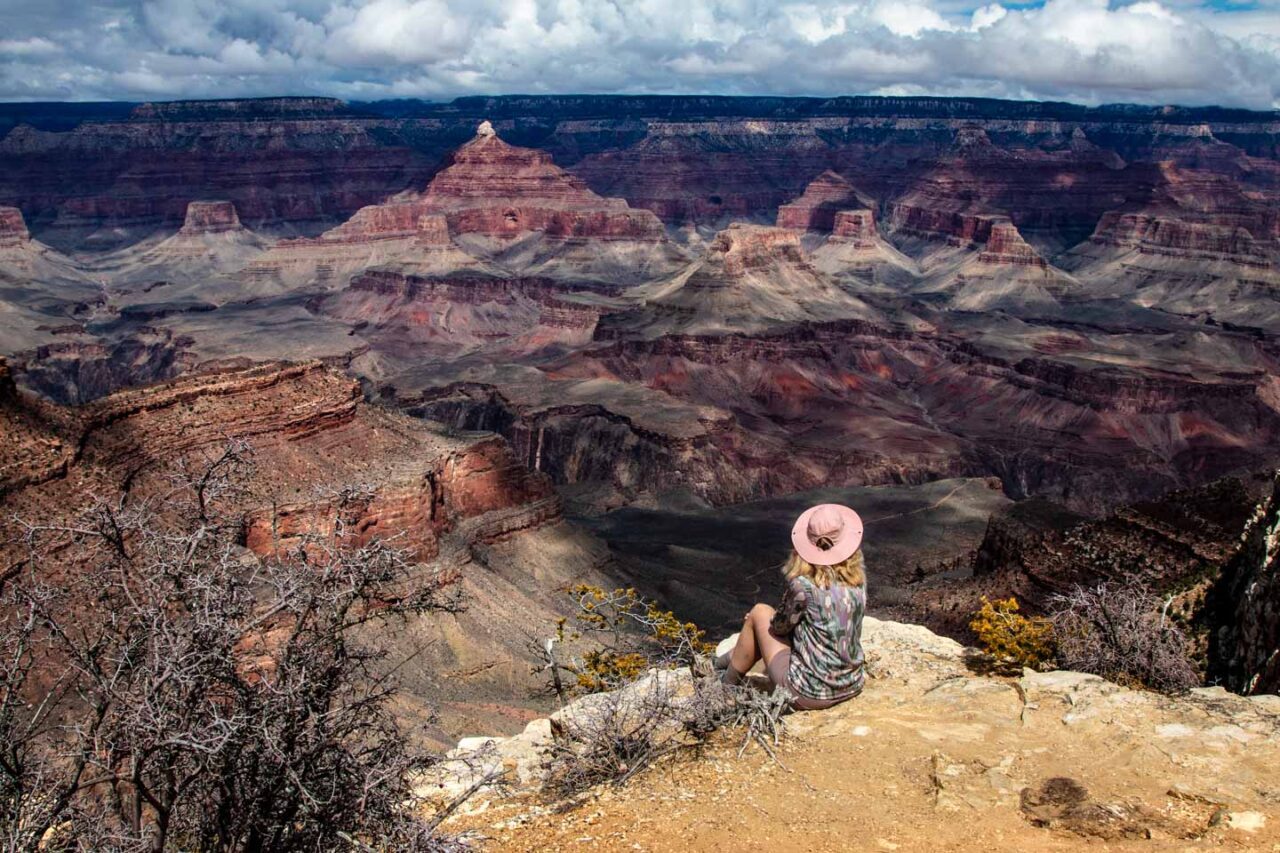
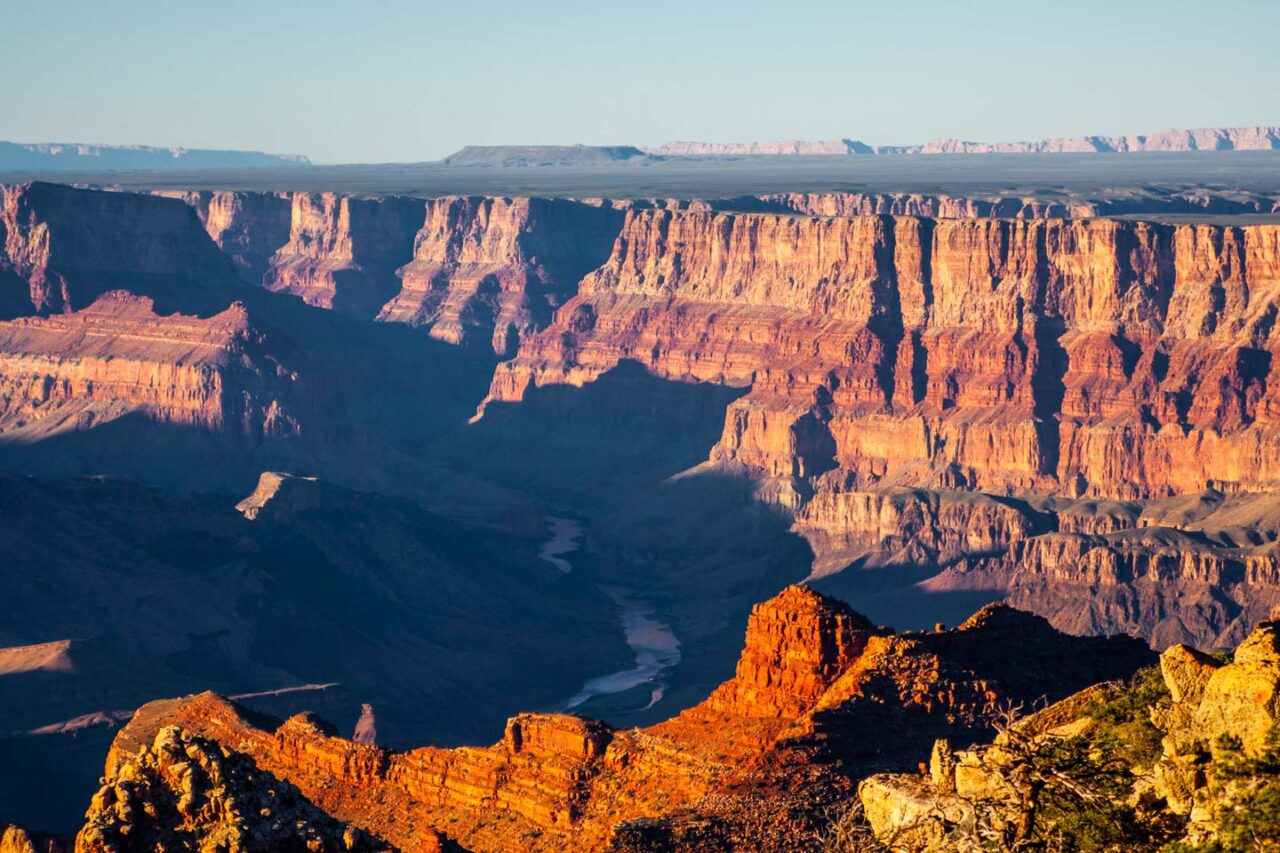
I’d been to the Grand Canyon before, and I still wasn’t ready for it.
That’s the strange thing about this place – it doesn’t matter how many photos you’ve seen. Standing at the rim is a different experience entirely. It takes a moment for your brain to understand what it’s looking at.
We arrived early, before the crowds fully settled in, and just stood there for a while. No commentary. No photos at first. Just looking.
The South Rim has well-marked trails and viewpoints, so it’s easy to find your own pace here. We walked along the Rim Trail for an hour or so – long enough to see the light change across the canyon, short enough to still feel slow.
One thing worth knowing: the Grand Canyon gets genuinely busy, especially in summer and spring.
We stayed at Mather Campground, right on the South Rim – it’s the main campground inside the park, well-located and easy to walk from. Book it early on Recreation.gov, especially if you’re going in peak season. It fills up fast.
The evening was cooler than expected at that elevation. We made dinner in the van, sat outside as long as we could stand the cold, and watched the stars appear one by one.
That’s the version of the Grand Canyon nobody tells you about. Not the crowds or the viewpoints – but that stillness, after dark, when it’s just you and the size of it.
Day 5 – Monument Valley
The drive toward Monument Valley is one of those drives.
You see it coming from a long way off. The Mittens appear on the horizon like something out of a painting, and then slowly, slowly, they get bigger. For about twenty minutes, you’re just driving toward them in disbelief.
Monument Valley isn’t a national park – it’s a Navajo Nation Tribal Park. That context matters.
It’s not a managed tourist experience. It’s a place with a living culture attached to it, and arriving with that awareness changes how you move through it.
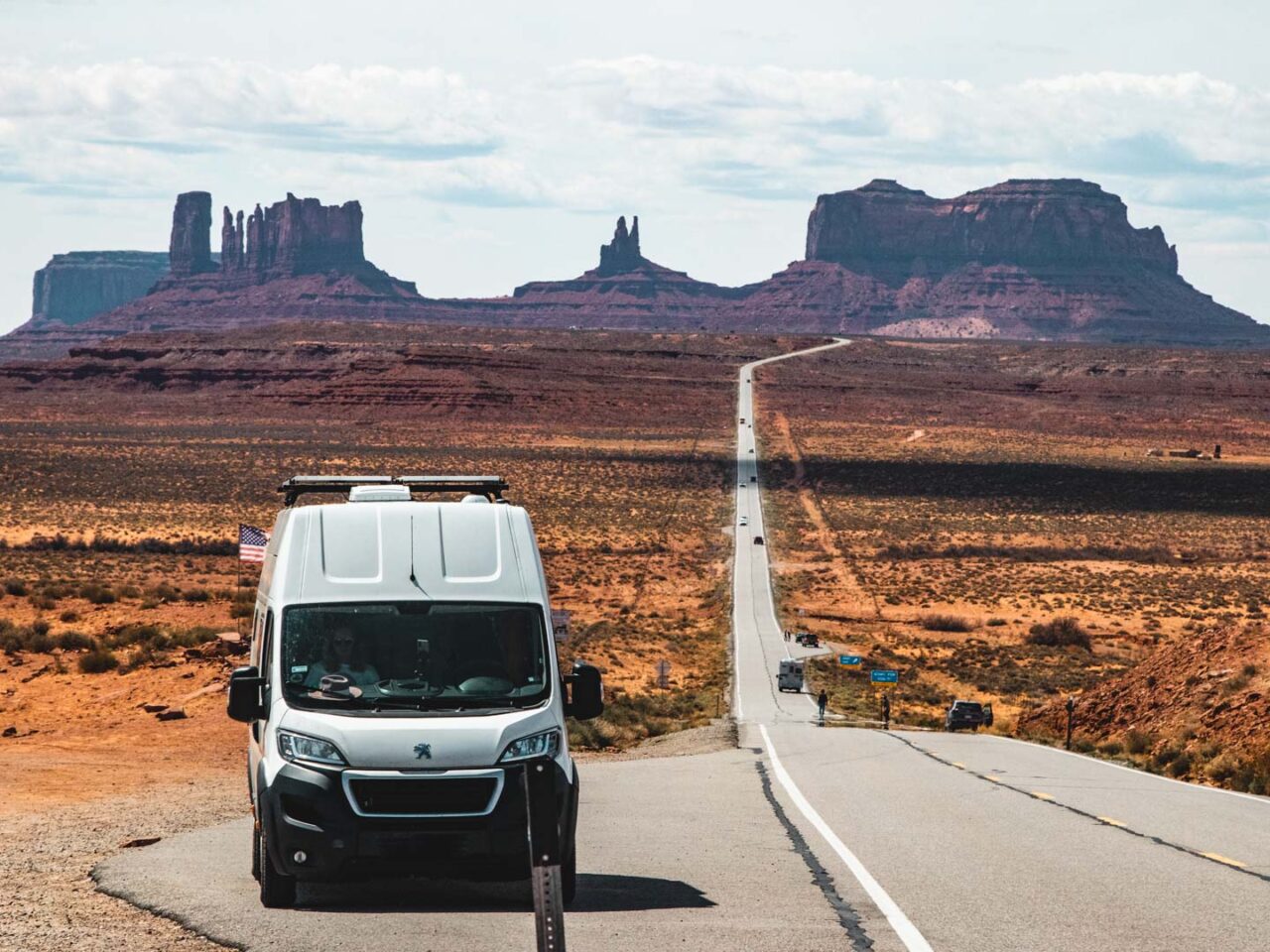
We paid the entrance fee, but instead of driving the full 17-mile dirt loop, we parked the van and chose the Wildcat Trail – the only self-guided hike in the valley.
Our campervan wasn’t made for that kind of road – without 4×4 it didn’t feel worth pushing it – and honestly, this turned out to be the better way to experience it.
Walking slowly between the formations, seeing them up close, felt completely different from just passing through.
The scale is something Sedona didn’t prepare me for. The silence, too. Just wind, red dust, and those shapes rising out of the desert.
If you want more context before you visit, my Monument Valley travel guide covers the practical details – entrance fees, best time of day, and a few things to keep in mind out of respect for the Navajo Nation.
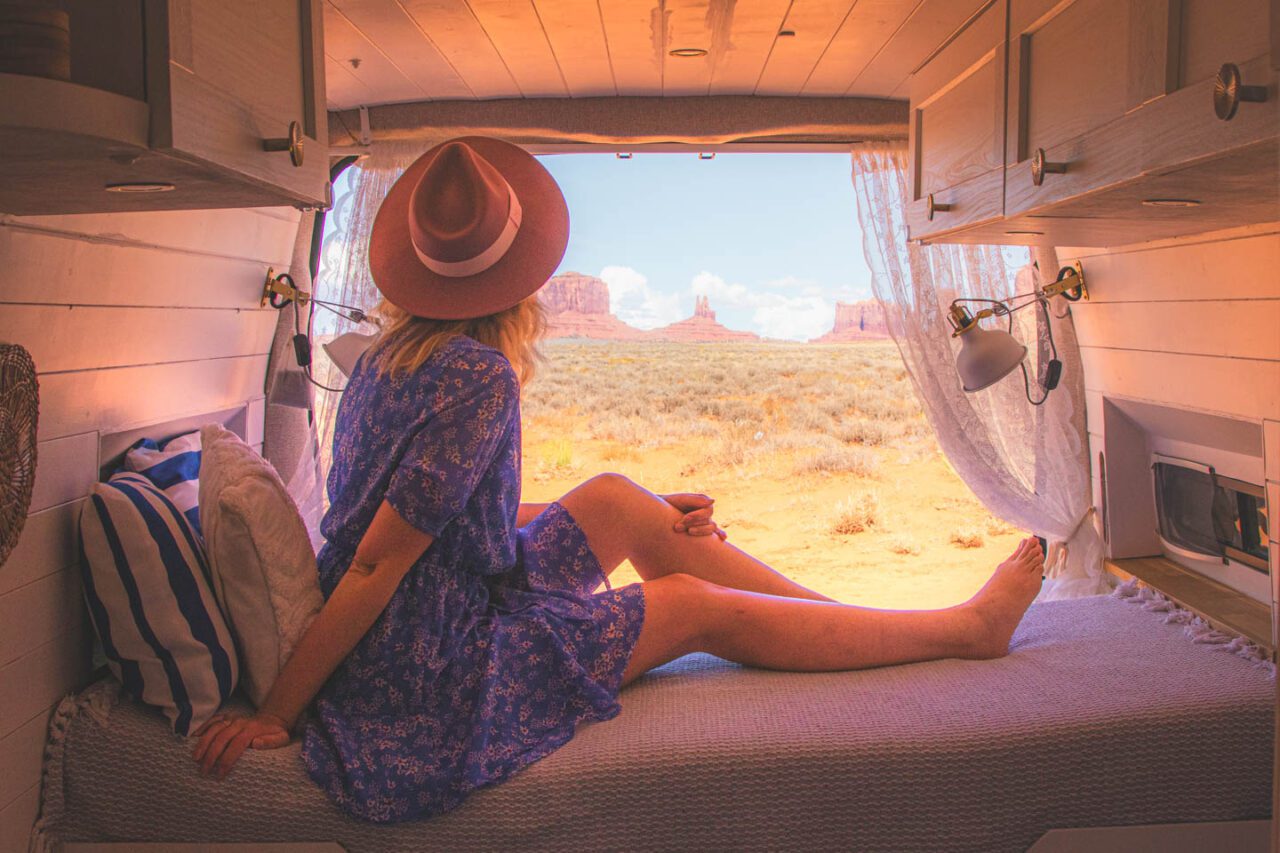
We camped that night at Arrowhead Campground – a small, privately run site owned by a Navajo family, right at the edge of the valley. Waking up with the Mittens visible from the van window is something I won’t forget quickly.
The sky was clear, the Milky Way was showing off, and for once I didn’t feel the need to document any of it.
Day 6 – Antelope Canyon & The Quiet Curve of Goosenecks
Page was one of the few places on this trip where we had something booked in advance.
Antelope Canyon isn’t the kind of place you can just walk into. You go with a guide, at a specific time, moving through it in a small group. It’s structured in a way that most of this trip wasn’t.
And maybe that’s what makes it stand out.
Inside the canyon, everything changes. The light filters in from above in narrow beams, shifting as the sun moves.
The walls feel almost fluid – shaped by water, wind, and time in ways that are hard to fully take in while you’re walking through it. It felt almost unreal – like walking inside something that wasn’t meant to be seen this closely.
It’s one of the most photographed places in the Southwest, and yes – it gets busy. But once you’re inside, it quiets down in a different way. People speak softer. Movements slow.
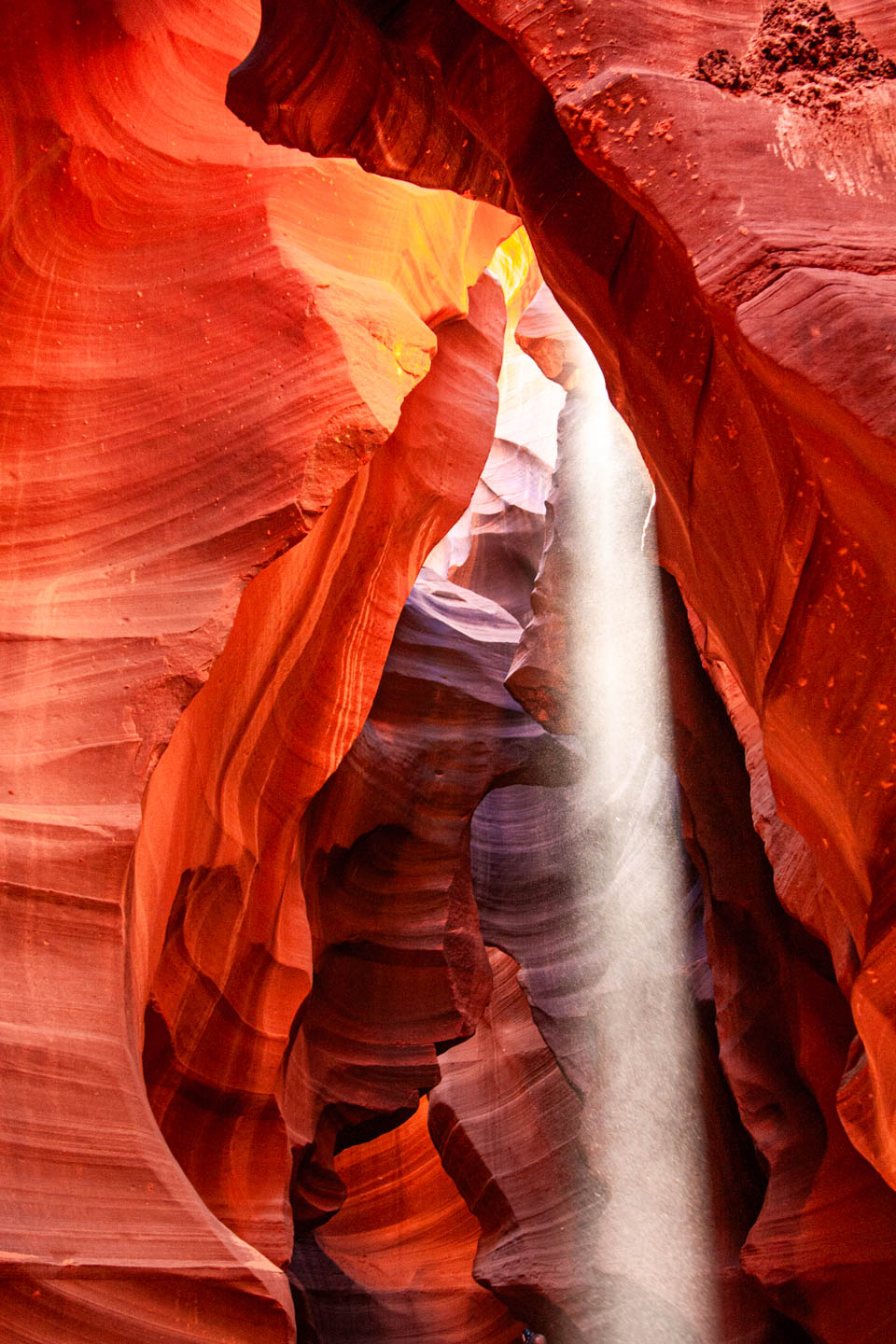
Even with others around, the space feels contained, almost private for a moment at a time.
We stayed present there in a way I didn’t expect.
And then, just as quickly, it was over.
The original plan was to stop at Horseshoe Bend on the way out of Page. It’s one of the most iconic viewpoints in the region – a perfect curve of the Colorado River, easy to reach, easy to photograph.
But after a few days on the road, we felt less drawn to the obvious stops.
So instead of turning toward the main parking lot, we kept driving.
Goosenecks State Park sits further out, closer to the edge of Utah, and it’s the kind of place you don’t accidentally pass through. You have to choose it. This part of the route involves a bit more driving, but the changing landscapes make it worth it.
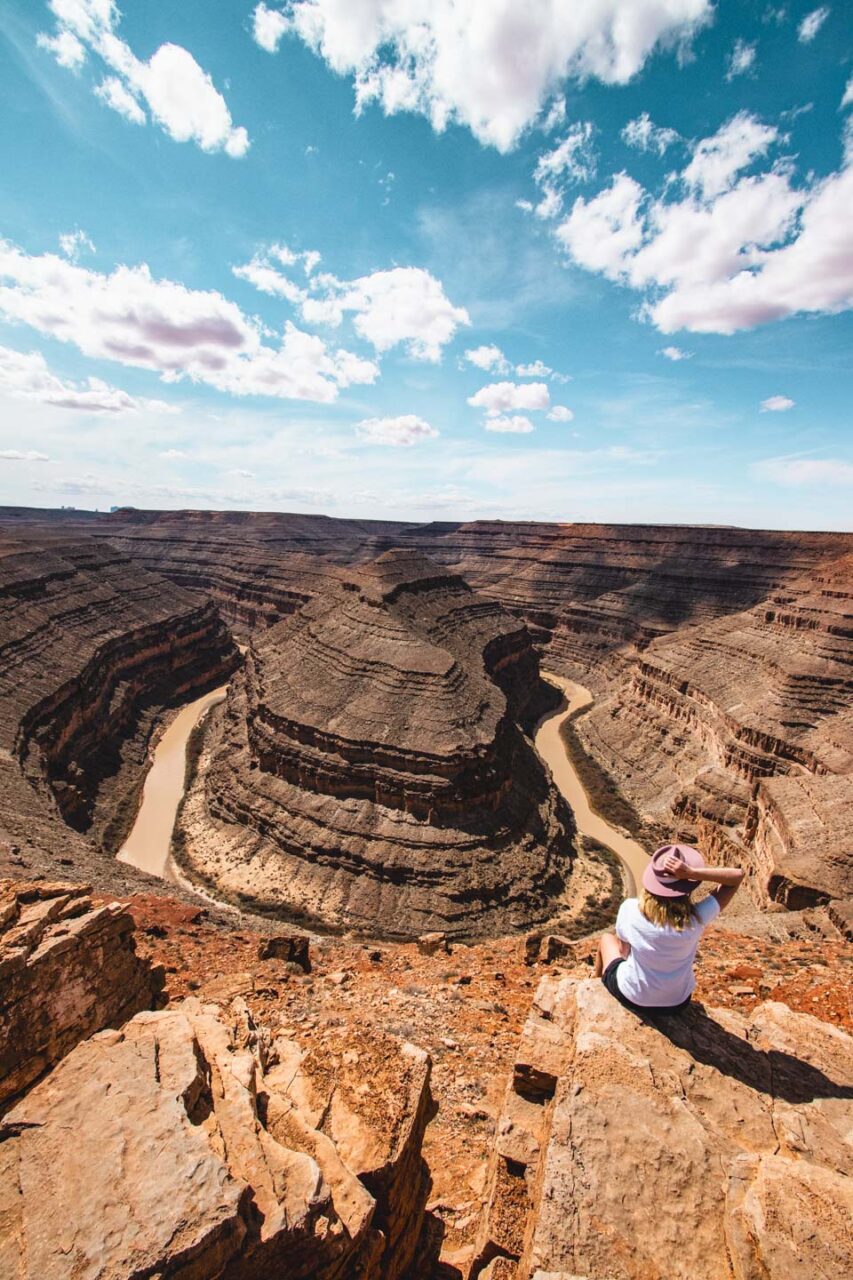
When we arrived, there was almost no one there.
The overlook doesn’t come with fences or crowds or marked viewpoints. You walk up to the edge, and suddenly the land drops away in a series of deep, looping bends carved by the San Juan River over millions of years.
It’s just as dramatic as Horseshoe Bend – but it feels completely different. No noise. No lines of people waiting for a photo. Just wind, distance, and that same sense of scale that the Southwest does so well.
We stood there longer than we planned. Not talking much. It didn’t feel like a place to document – it felt like a place to take in slowly, without trying to capture it.
If you’re planning this route, Horseshoe Bend is the easier and more popular stop near Page.
But if you have the time and want something quieter, Goosenecks is worth the extra drive – especially in the late afternoon, when the light softens and the shadows deepen inside the canyon bends.
We stayed nearby that night, not far from the edge. Dinner was simple again. The sky was clear. And for once, there was no decision left to make about where to go next.
Just that feeling of having chosen something slightly less obvious – and knowing it was the right call.
Planning a campervan trip through the Southwest and not sure where to start?
I write about slow travel, van life, and the kind of road trips that don’t feel like a race – from every corner of the US and beyond.
Bonus for new subscribers: Ultimate Utah Budget Travel Planner + Secret Free Camping Spots Map 📍
Day 7 – Bryce Canyon
We reached Bryce Canyon later that morning, just before the crowds really started to build.
That was the right call.
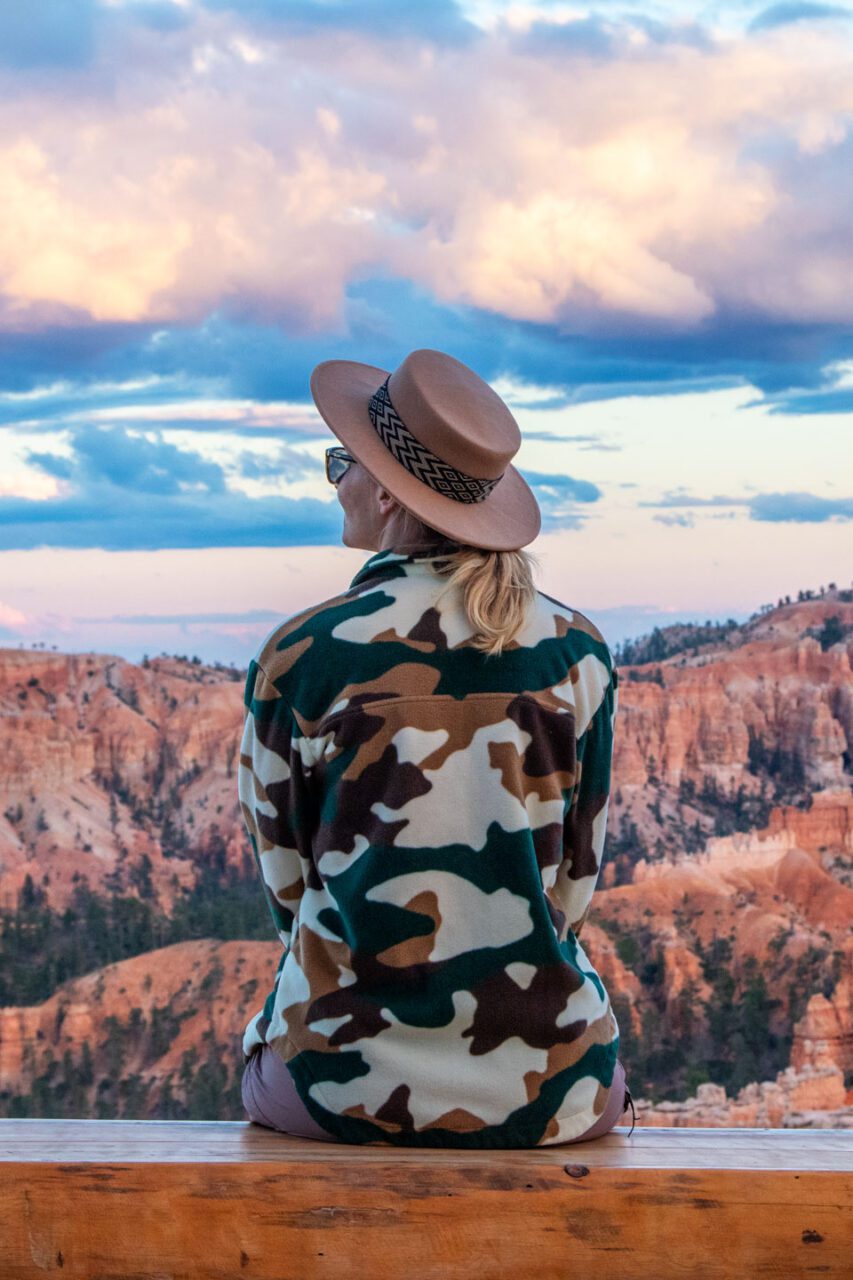
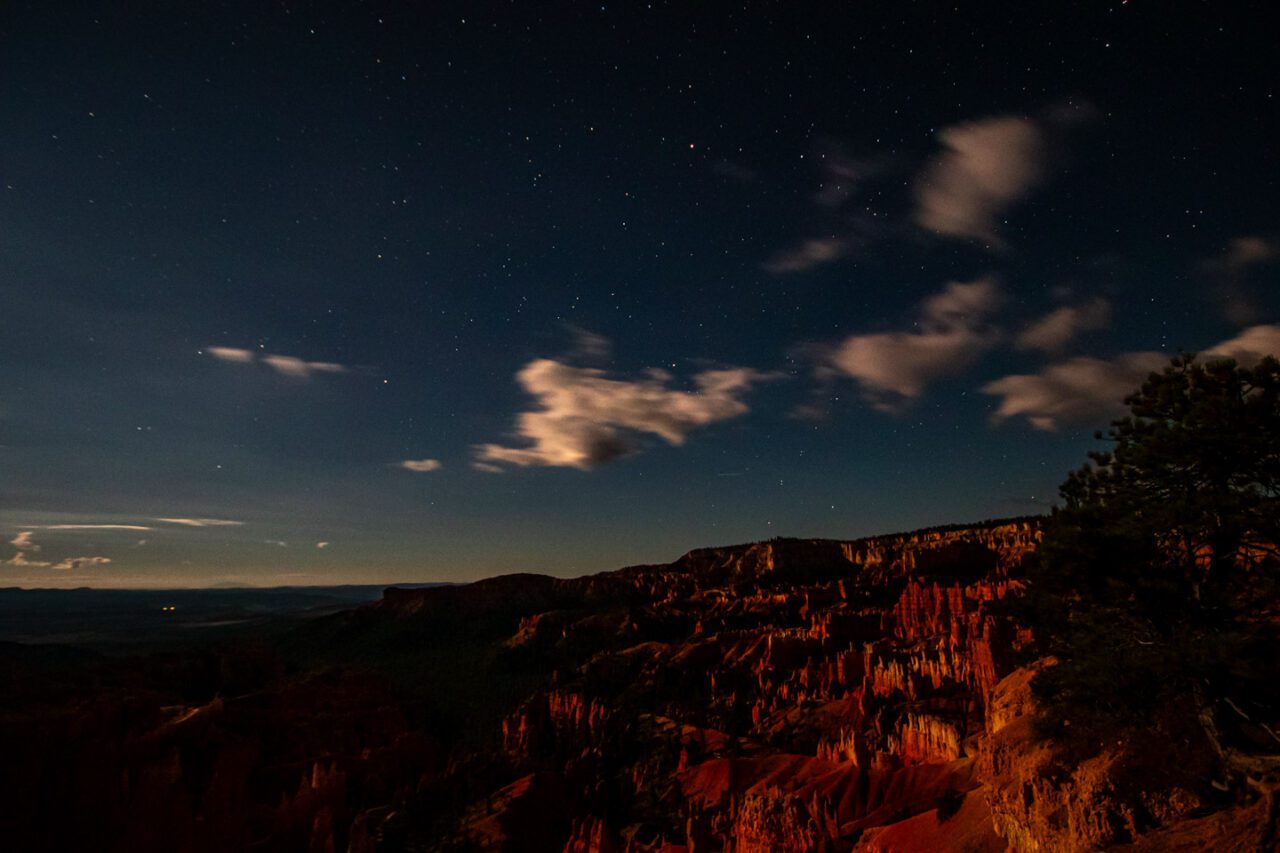
Even in full daylight, the Bryce Amphitheater felt unreal. The hoodoos – those tall, narrow rock spires – glow in shades of orange and pink that you won’t believe are real until you’re standing in front of them.
We hiked down into the canyon rather than just looking from the rim.
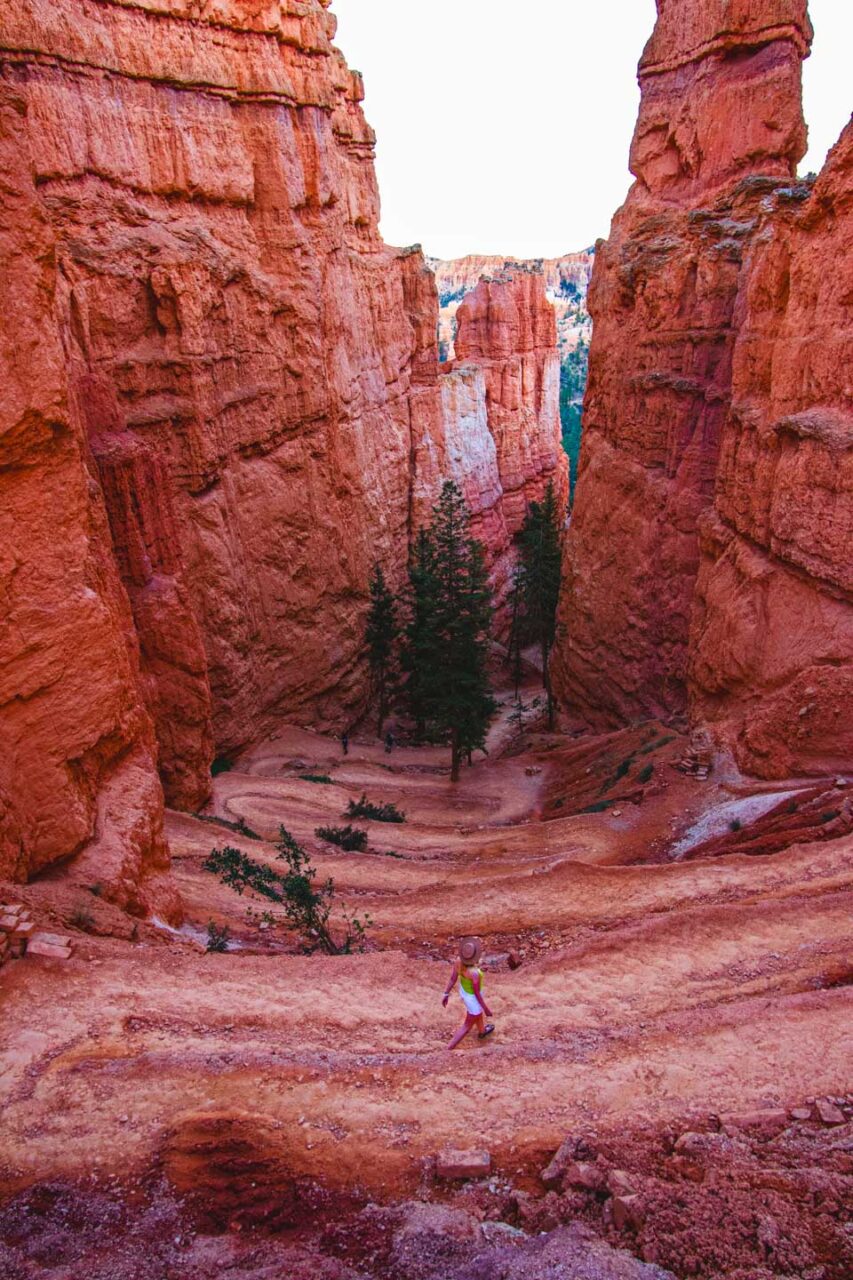
The Navajo Loop Trail takes you right through the formations, past the famous Thor’s Hammer, down into a section called Wall Street – a narrow slot between towering walls of rock.
It’s not a hard hike, but it’s steep coming back up, especially in warm weather.
Give Bryce more time than you think you need.
If you want to know which trails to prioritize, my guide to hiking Bryce Canyon breaks down all the main routes with honest difficulty ratings.
The campground inside the park – North Campground, right near the rim – is well-positioned. We managed to get a spot, made dinner early, and were asleep before nine. Elevation fatigue is real, and this was the first night it caught up with us.
Day 8 – Capitol Reef & Choosing the Quieter Road
Zion was the obvious next stop on this route.
And for a moment, we considered it.
But after a few days on the road – after Sedona, the Grand Canyon, Monument Valley – something in us shifted. We didn’t feel like following the most popular path anymore.
We wanted something quieter.
So instead of turning west toward Zion, we kept going east.
Capitol Reef isn’t a place that tries to impress you right away. It doesn’t have the dramatic first moment of the Grand Canyon or the scale of Monument Valley.
It unfolds slowly – in layers, in colors, in small details you only notice if you give it time.
The drive into the park is part of the experience. Long stretches of road cut through cliffs in shades of rust, gold, and soft beige. No traffic. No noise. Just that same feeling of space, but somehow more grounded here.
We stopped more than we planned – not for specific viewpoints, just for the way the light hit the rock, or the quiet that felt different from the days before.
Capitol Reef is less about “what to see” and more about how you move through it.
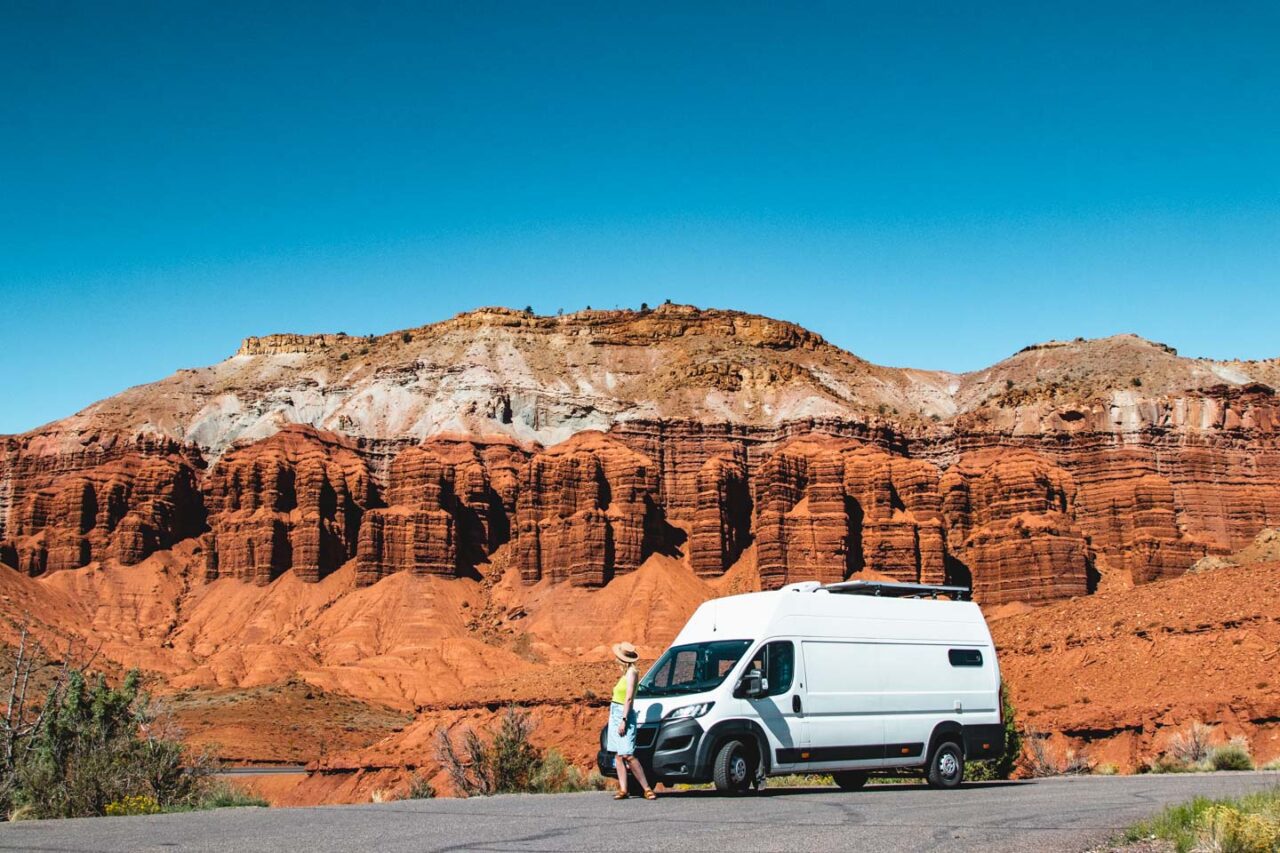
We did a short walk in the morning, nothing marked as a must-do. Just enough to feel the texture of the place – the dry air, the silence, the way sound disappears faster out here.
Later, we drove part of the scenic road, taking it slow, pulling over when it felt right.
If you’re deciding between Zion and Capitol Reef, Zion is more dramatic and more popular – but Capitol Reef offers something quieter, more spacious, and easier to have mostly to yourself.
If you’ve already done Zion or you’re craving a slower pace, this is the one to choose.
If you’re planning this stop, don’t overpack the day. One short hike and a slow drive is enough. This is not a checklist place. It’s a place to reset.
By afternoon, the heat settled in again – softer than in Arizona, but still present. We found a shaded spot, had something simple to eat, and stayed longer than we expected.
That’s the thing about quieter places. They don’t demand your attention – they invite it.
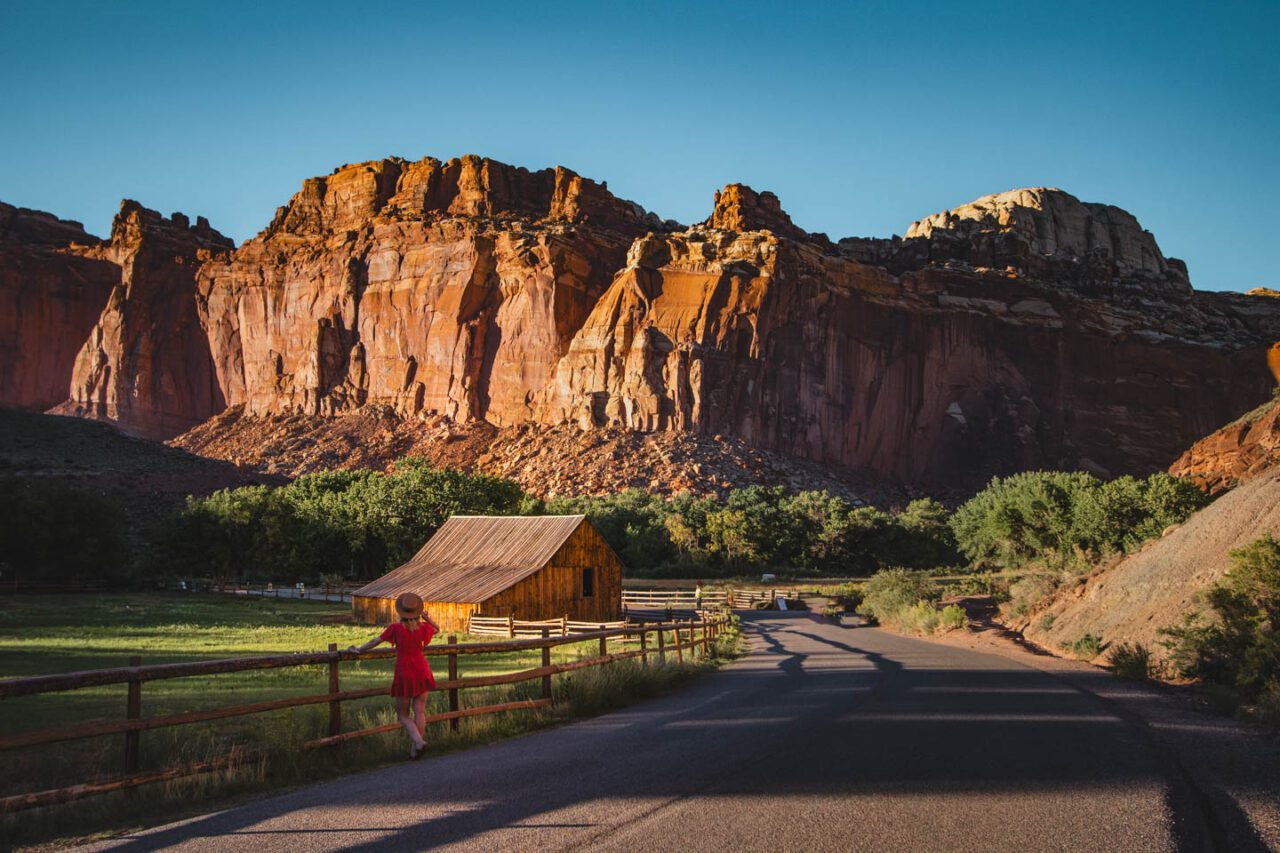
There are a few simple campgrounds in and around the park. We stayed at Fruita Campground, right inside the park – one of the prettiest campgrounds I’ve slept in anywhere in the Southwest.
It sits among old fruit orchards and is surprisingly green compared to everything around it.
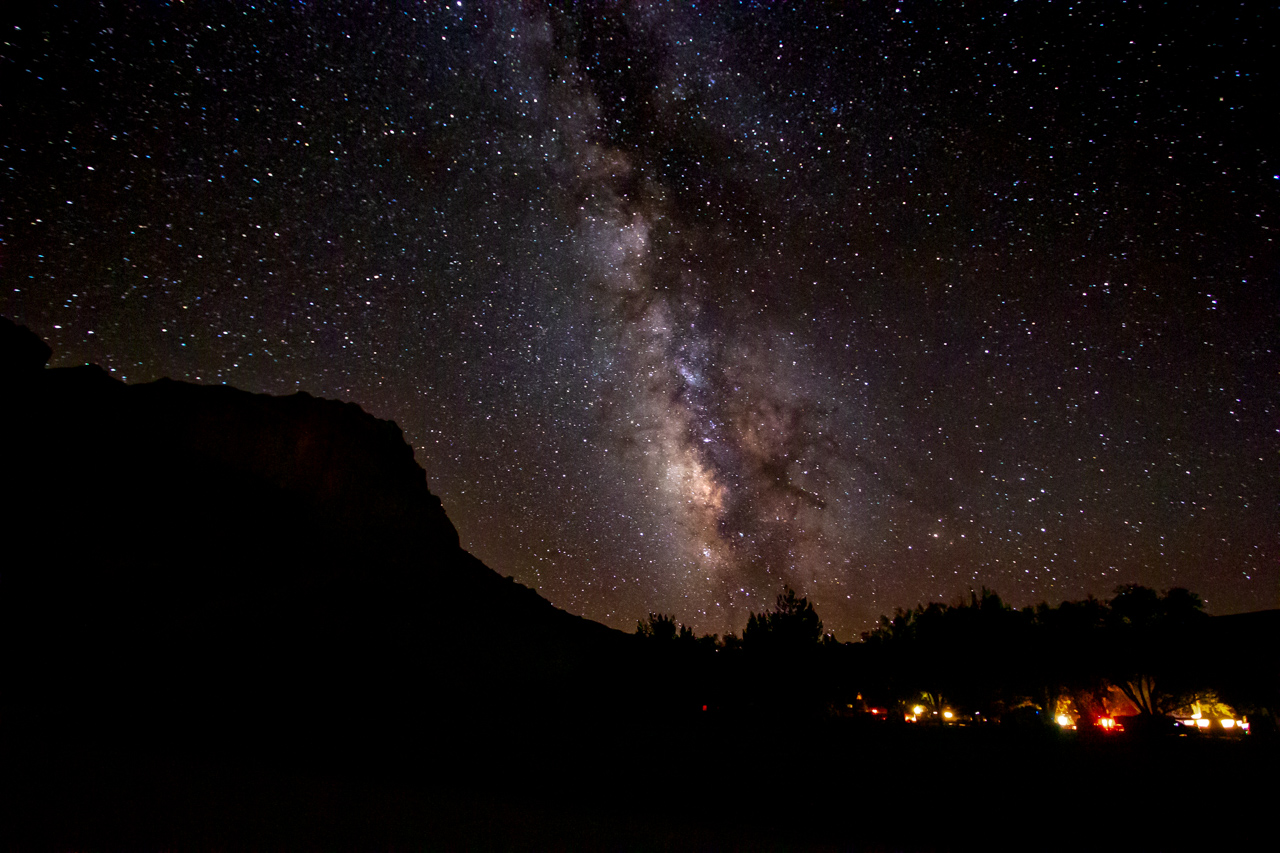
That night, the park rangers were hosting a stargazing program, and we stayed longer than I expected, just looking up.
Capitol Reef is a designated Dark Sky park, and at that elevation, away from any city light, the stars aren’t just visible – they’re overwhelming. It was one of those moments I didn’t plan for and didn’t want to end.
That evening, everything slowed down again. No big sunset viewpoint. No crowd gathering for the last light. Just the colors softening over the cliffs, and that feeling – familiar by now – of being exactly where we chose to be.
Where do you want to explore next?
⛺ I want to go deeper into Utah → 7-Day Utah Road Trip Itinerary
🌵 I want a dedicated Arizona road trip → Arizona Road Trip Itinerary
🚐 I’m new to campervan travel and want to start with the basics → 10 Things to Know Before You Hit the Road
🌊 I want to add the California coast → A Slow 7-Day Road Trip Itinerary
Which of these is calling you?
Day 9 – Somewhere Slower
Day 9 was not part of the original plan.
We’d been moving – slowly by most standards, quickly by mine – for eight days, and somewhere on the road back toward Arizona, I realized I needed a day that wasn’t about a place.
We found a campsite near the Arizona Strip, the remote stretch of Arizona north of the Grand Canyon, and we just stayed. All day.
There was a short walk in the morning, nothing marked on any trail map. Just a dirt road that led somewhere interesting, then back.
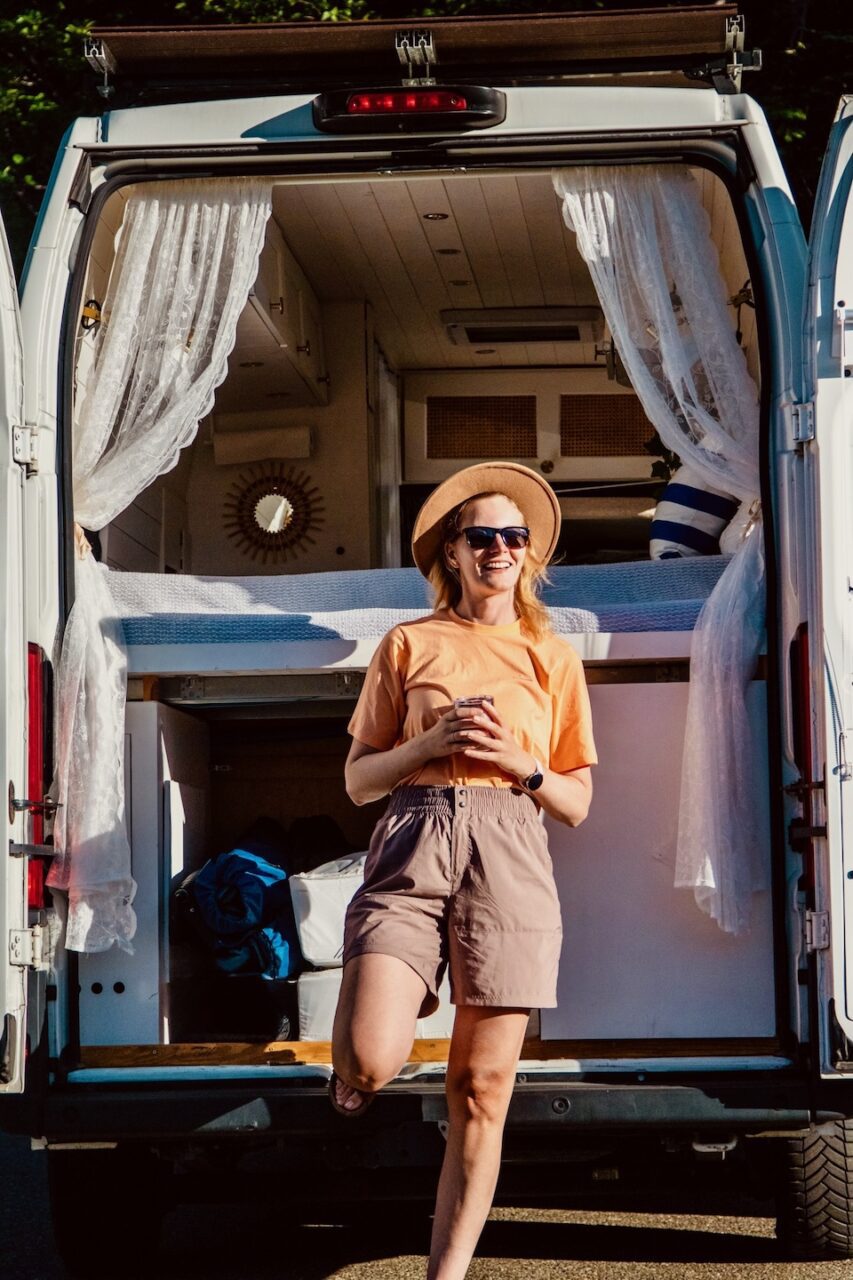
We read. We reorganized the van. I sat outside and did nothing in particular for a longer stretch than I have in months.
This is the part of slow travel that doesn’t photograph well. There’s no highlight. No story to tell. But it’s also the part that makes the whole thing sustainable – and honestly, the part I would plan into every trip if I were doing it again.
Don’t skip your slow day.
Day 10 – Back to Phoenix
The drive back to Phoenix felt different from every other day.
Not sad, exactly, but with that particular quality that comes at the end of a journey – when you’re still in it, but you can already feel it ending.
We took a longer route back than necessary. Stopped for coffee somewhere in the desert. Pulled over once more for no reason, just to stand in the sun for a few minutes before getting back in.
By the afternoon, we were back in the city. We carried our bags inside, slightly sunburned and completely rearranged.
Where to Sleep on This Route
This is one of the most common questions before a campervan trip, and the answer is: it depends on how flexible you want to be.
Inside national parks: We stayed at Mather Campground at the Grand Canyon (South Rim, walkable to the rim – book early on Recreation.gov), North Campground at Bryce Canyon (right near the amphitheater, fills fast), and Fruita Campground inside Capitol Reef (the most unexpectedly beautiful campsite on the whole trip – orchard trees, dark skies, highly recommend).
If you’re traveling in peak season, book national park campgrounds as early as possible – they often fill up weeks in advance.
Private campgrounds: At Monument Valley, we stayed at Arrowhead Campground – a small, Navajo-owned site right at the edge of the valley. Having the Mittens visible from the van in the morning is worth the price of admission.
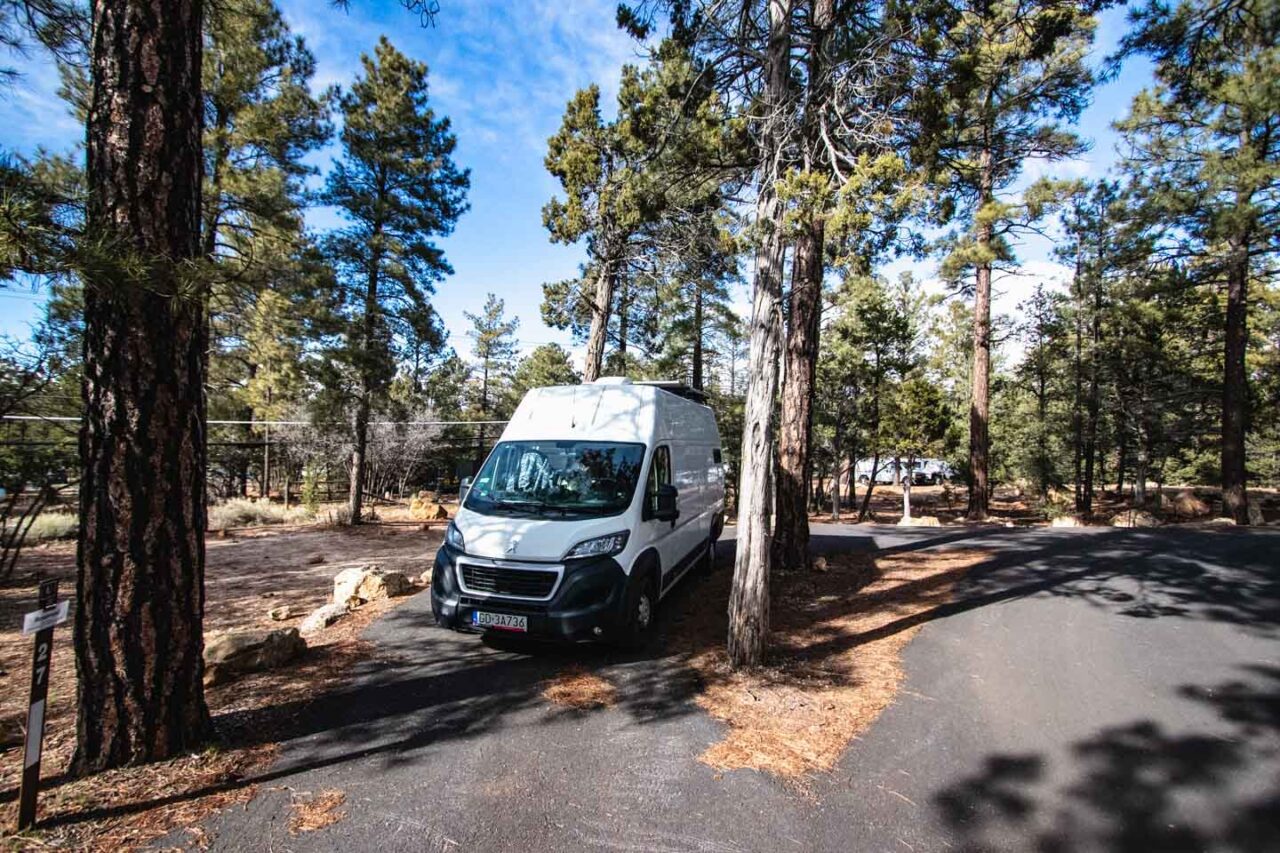
Dispersed camping (free): Near Sedona, Forest Road 525 (Red Canyon Road) is one of the most popular free camping spots in the area – accessible for RVs and cars, close to the red rocks, and easy to find.
Much of the land around these parks is BLM or National Forest, which allows free dispersed camping with no hookups and no reservations – but you need to be fully self-contained.
Not all spots have facilities, so plan ahead for water, waste, and basic supplies.
Apps worth using: iOverlander, Campendium, and The Dyrt are the most useful for finding spots, reading recent reviews, and knowing what to expect. Google Maps helps for the last mile.
Parking: In towns like Sedona or Page, overnight van parking is more restricted. Don’t assume a parking lot is fair game – check signage and local rules.
The Southwest has more free camping options than almost anywhere else in the country, and that’s a big part of what makes this route work so well for campervan travel.
What This Trip Really Feels Like
It feels like mornings.
Specifically, it feels like the first ten minutes of every morning – coffee, open door, whatever landscape is outside that day. That part doesn’t get old, even on day nine.
It also feels like small frustrations. The campsite that was full when you arrived. The afternoon too hot to do much of anything. The nights when the van feels smaller than usual and the drive ahead feels longer than planned.
Both things are true. The beauty and the difficulty exist in the same trip, often in the same afternoon.
What I can tell you is that by day four or five, something shifts. The rhythm settles. You stop thinking in terms of “what’s next” and start moving through the days more instinctively.
That’s when the trip becomes something else entirely – less of an itinerary and more of an experience that’s actually changing how you feel.
That’s the part that’s hard to explain before you go. But you’ll recognize it when it happens.
Tips for Driving the Southwest by Campervan
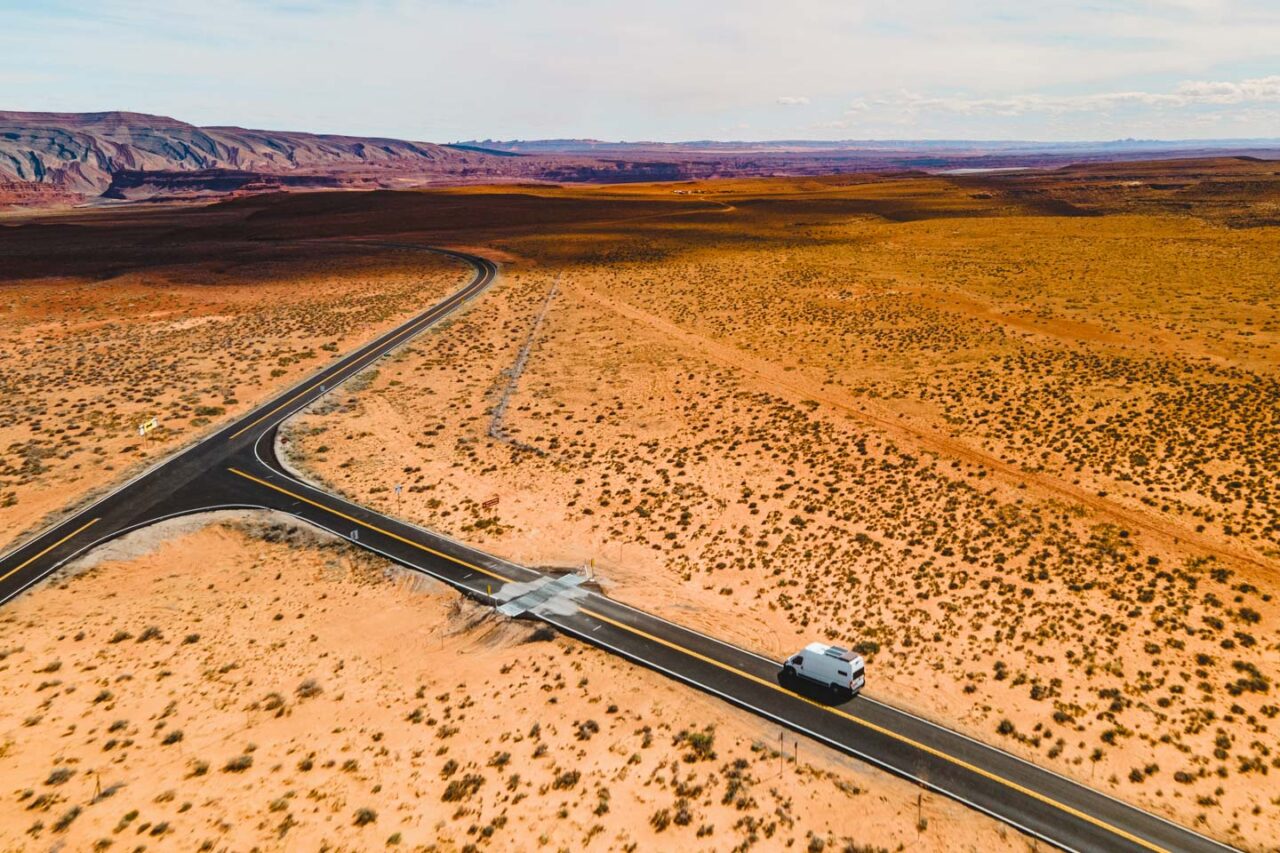
Distances are deceptive. What looks like a two-hour drive on the map can become three once you account for stopping, slow roads, and the fact that you’ll want to pull over a lot.
Heat is the real variable. In summer, temperatures in low-elevation areas like Page or the Grand Canyon floor can exceed 100°F (38°C). Plan your driving for early morning and late afternoon. Rest in shade during midday.
Gas stations are far apart. Never let the tank drop below half. Especially on stretches through the Navajo Nation and the Arizona Strip, distances between stations can be 50-80 miles.
Book the places that matter. Antelope Canyon tours and national park campsites need advance reservations. Everything else can be figured out on the road.
Cell service disappears. Download offline maps before you leave. Google Maps, Maps.me, or Gaia GPS all work offline. Don’t rely on signal for navigation in remote areas.
For a broader overview before you go, RV camping tips for the USA covers a lot of the practical ground – from hookup basics to what to keep in your kit.
For a broader overview before you go, RV camping tips for the USA covers a lot of the practical ground – from hookup basics to what to keep in your kit.
Travel lighter, even before you leave.
start with something simple.
Download The Minimum Plan – Slow Travel:
If You Want to Slow Down Even More
Ten days is a solid introduction to this region. But if you want to go deeper, there are a few ways to break this down:
Utah only: Seven days focused entirely on Zion, Bryce, Capitol Reef, and Canyonlands is an entirely different – and worthwhile – trip. My 7-day Utah road trip itinerary is built for first-timers who want to take their time.
Arizona only: Sedona, Monument Valley, the Grand Canyon, and Antelope Canyon can fill a full week on their own. My Arizona road trip itinerary covers that route in detail.
Add California: Zion to Joshua Tree to the coast is a natural extension if you have more time and want to keep driving west.
The Part That Stays With You
This wasn’t about seeing everything. It was about feeling where we were.
That might sound like something people say at the end of travel essays, but I mean it practically: there’s a version of this trip where you rush from park to park, collect the viewpoints, drive the miles.
That’s a valid trip. But it’s not what makes this region remarkable.
What makes it remarkable is the space between. The road days, the slow mornings, the evenings where nothing happens except the sun going down in a color you don’t have a name for.
If you do this trip – and I think you should – build in more time than you think you need. Pick fewer places. Stay longer. Let the Southwest do its thing.
It’s good at it.
And somehow, even after ten days, it still didn’t feel like enough.
Ready to plan your own route?
- 7-Day Utah Road Trip Itinerary – a slower, deeper version of the Utah portion
- Best Hikes in Sedona – for when you want more than one morning there
- Arizona Road Trip Itinerary – the full Arizona standalone guide
Have you done a campervan trip through the Southwest? What was your favorite stretch – Utah or Arizona? Leave a comment below. I read every one.
Know someone planning a road trip through the Southwest? This article might be exactly what they need.