
Planning a trip to Java and wondering what to see in Yogyakarta?
Good thing you’re here.
One day in Yogyakarta sounds like a joke. A city of temples, palaces, batik, coffee, dawn prayers, and evening horns. Even if you’re staying longer, that one day for “real” sightseeing can be a little overwhelming.
I felt it too.
Because how do you choose? What do you skip? Can you actually feel Jogja in 24 hours?
I won’t pretend you’ll see everything. You won’t. And that’s okay.
But you can do something more important. You can fall in love with this city.
My day in Jogja – as the locals call it – was dense with impressions. From a small cup of strong Javanese coffee in a narrow side street to a walk through old palace courtyards where time moves a little differently.
It was intense. It was chaotic. It was magical.
Want to see Yogyakarta through my eyes? Come with me. Let me tell you how to live one day in this city in a way that stays with you for a long time.
Have more time in Indonesia?
If Yogyakarta is just one stop on a longer journey, check out my full guide: A 3-Week Indonesia Itinerary That Stays With You.
It’s a tried-and-tested route through temples, volcanoes, rice fields, and islands that truly stay in your heart. No chaos – just rhythm and room for wonder.
One Day in Yogyakarta – What to See
My Encounter with History at the Kraton Royal Palace
My first stop was the Kraton – the Sultan’s palace. The heart of Yogyakarta.
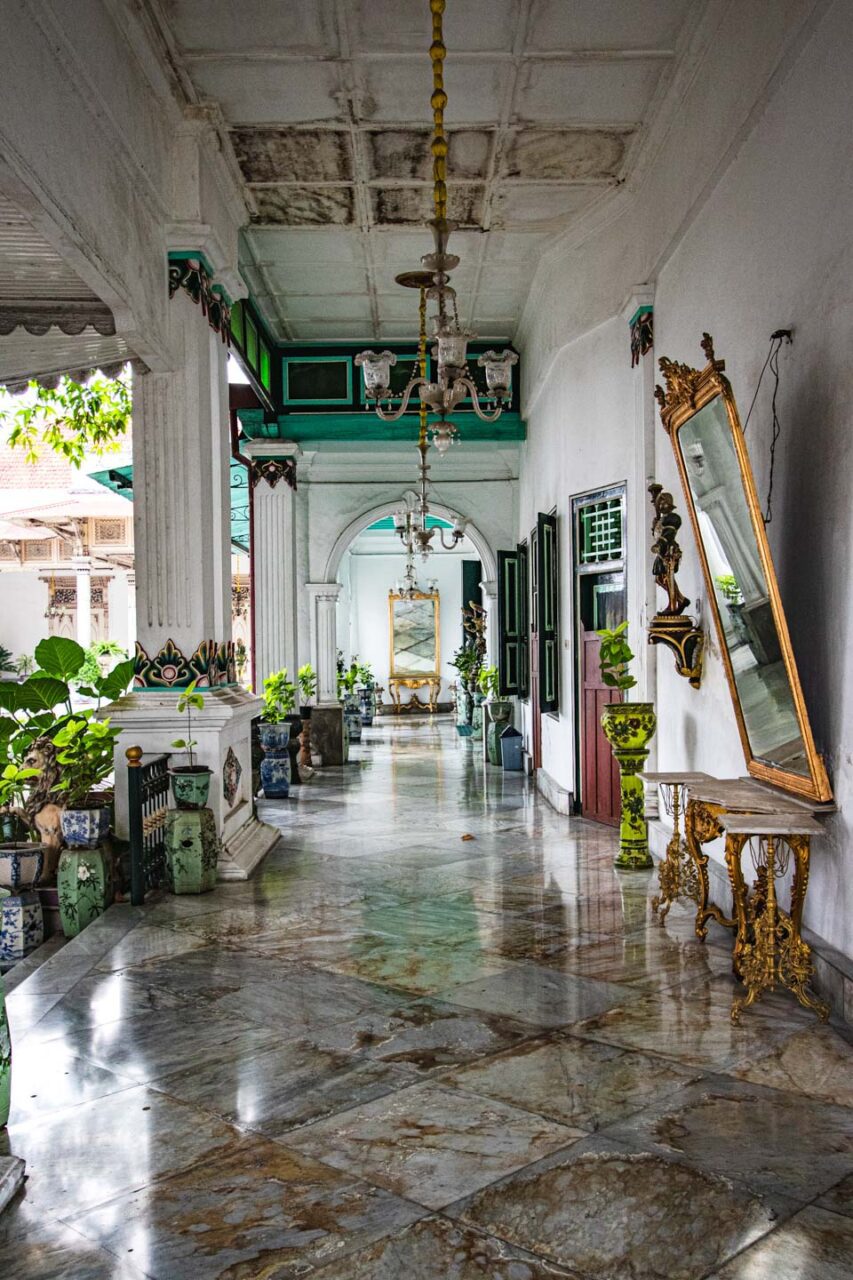
The moment I stepped through the gate, the city’s pace slowed. Courtyards, wooden columns, golden details. Silence broken only by the murmur of guides and the soft footsteps of visitors.
This isn’t a museum in the traditional sense. Part of the complex is still home to Sultan Hamengkubuwono X and his family. That awareness changes everything. This place is still alive.
I was lucky enough to catch a gamelan performance. The delicate, hypnotic sounds drifted through the pavilion, and for a moment, I genuinely felt time stretch.
I stood under the golden ceiling, looking at the throne chambers, thinking about how much history had passed through these walls.
What stopped me most was the batik collection. The precision, the symbols, the colors. Every pattern tells a different story. The portraits of former sultans have something magnetic about them too – those faces are calm, dignified, and a little unreadable.
If you’re planning just one day in Yogyakarta, the Kraton is the right place to start. This is where you really feel what Jogja is.
A small tip: plan your visit for the morning. Kraton operates mostly during morning hours and tends to close early, so the time to explore is shorter than it seems.
The entrance fee was 15,000 rupiah. I paid an extra 1,000 rupiah for photography privileges. Worth it. Those photos still bring back that quiet, golden morning.
Taman Sari – A Garden of Silence in the Heart of the City
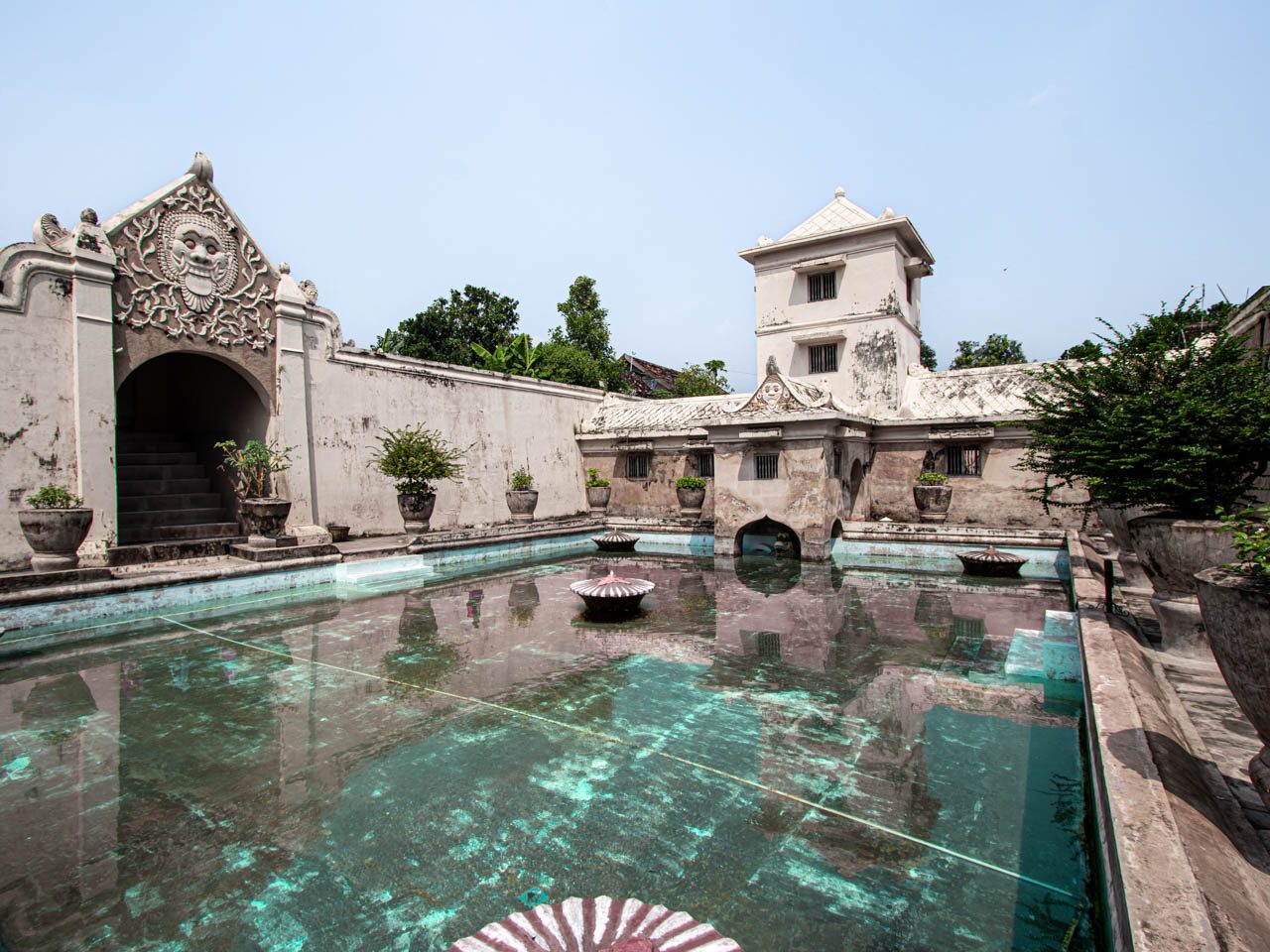
From the Kraton, I walked to Taman Sari. The Sultan’s former water garden.
Today the place is a little imperfect. Partially ruined, cracked, worn by time. And maybe that’s exactly why it feels so real.
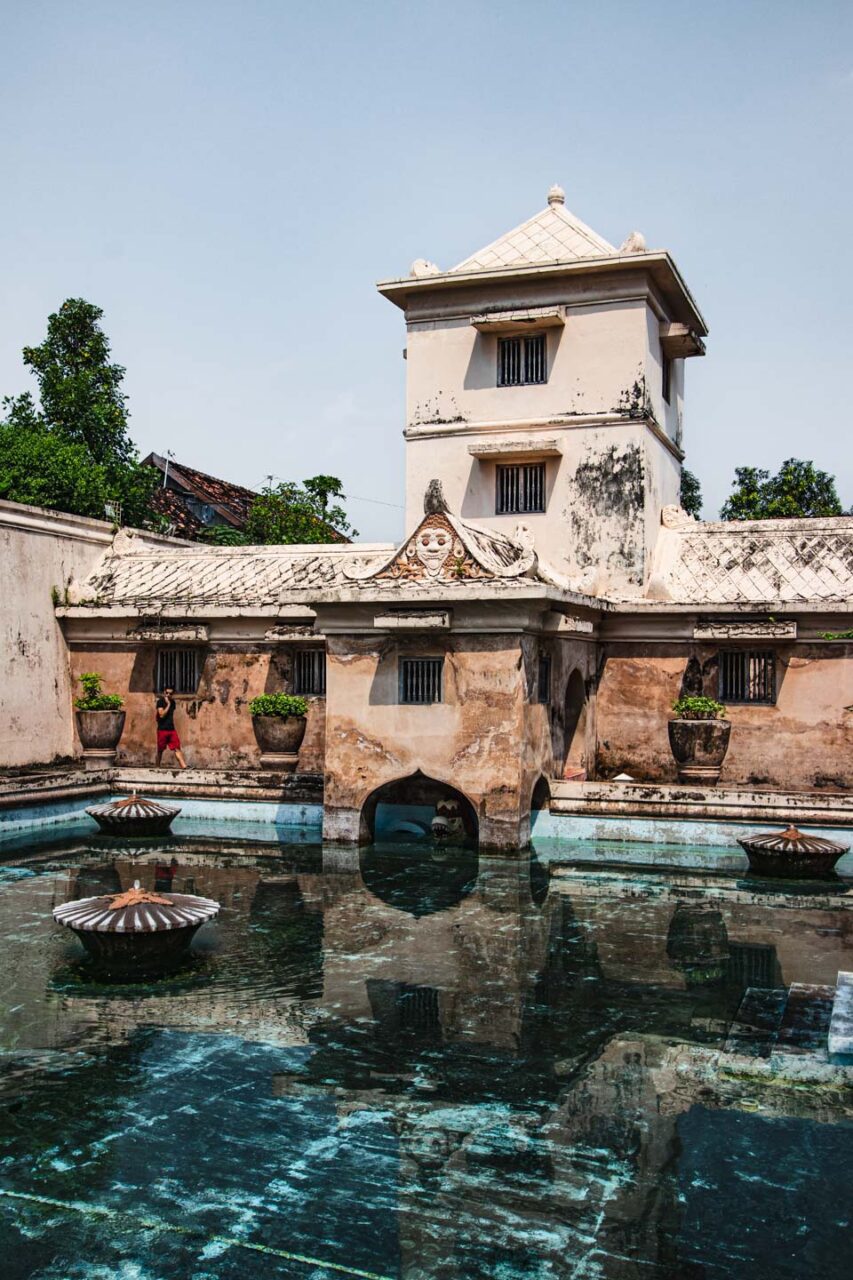
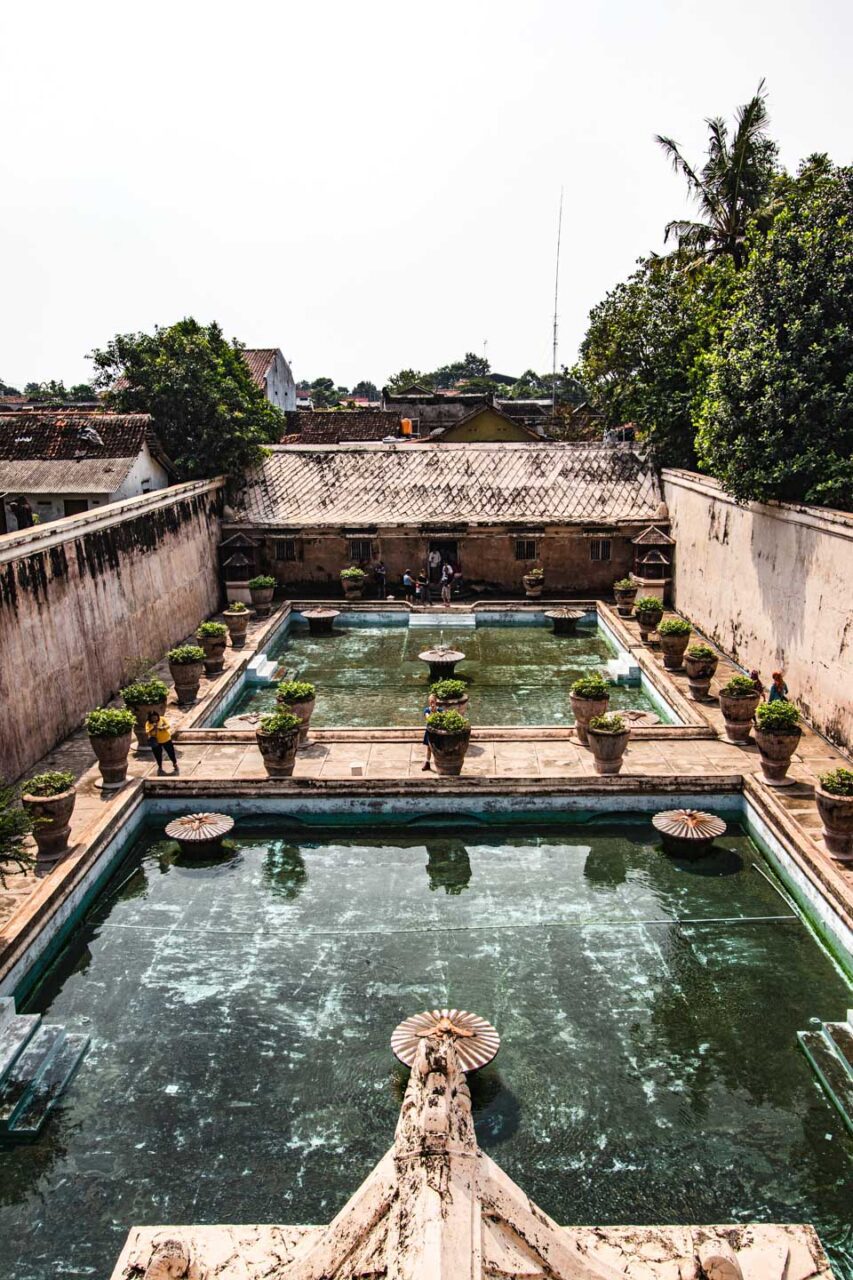
First, the pools. Turquoise water, pale walls, geometric lines. It’s easy to imagine this was once a private world within the palace – a place for rest, bathing, whispers, and secrets.
Then the underground mosque. This might be the most moving part of Taman Sari.
You descend narrow stairs, the light softens, the air grows cooler. The central column and circular space feel symbolic, almost meditative.
At the end, I climbed the watchtower. According to legend, this is where the Sultan would watch women bathing below. Today you see Yogyakarta’s rooftops, a tangle of streets, and the ordinary life of the city.
I stood there alone for a moment. Without rushing. And I thought – this is exactly why we travel. Not for a checklist. For that one quiet I am here.
Entrance fee: 15,000 rupiah. Not much, for a place that lets you glimpse Java’s past for a few minutes.
Jalan Malioboro – Between Bargaining and the Smell of Satay
After the palace quiet came a completely different kind of energy.
Jalan Malioboro is the heart of tourist Yogyakarta. A long, loud, colorful boulevard where everything happens at once. Horns, vendors calling out, laughter, music from tiny shops.
I walked slowly. Every few steps I stopped at stalls selling batik, wooden masks, handmade jewelry.
Eventually I found the one. A batik in earth tones, with a delicate traditional pattern. Bargaining was part of the ritual. Smiles, a calculator passed back and forth, theatrical sighs.
When I paid half the original asking price, I felt a quiet satisfaction. It wasn’t even really about the money. It was about the experience.
You also can’t walk past the street food. The smell of grilled satay ayam drifted through the air. I stopped at a small cart.
The vendor proudly told me his peanut sauce was the best in all of Jogja. It was thick, aromatic, slightly sweet. Good enough to believe him.
And then the becaks – bicycle rickshaws waiting at the curb. The drivers calling to tourists, half joking, half serious. Eventually I got in.
A short ride through the crowded streets let me see the city from a different perspective. Lower, slower, closer to people.
If you have just one day in Yogyakarta, Malioboro is where you’ll feel the city’s pulse. Even if you only spend an hour there.
Pasar Beringharjo – Colors, Herbs, and Gudeg
Just beside Malioboro, I ducked into Beringharjo Market. Unremarkable from the outside. A completely different world inside.
This is one of those markets where it’s easy to lose track of time. Narrow passages, stacked piles of batik, baskets of spices, the scent of dried herbs and fresh fruit. Everything intense, a little chaotic, and very real.
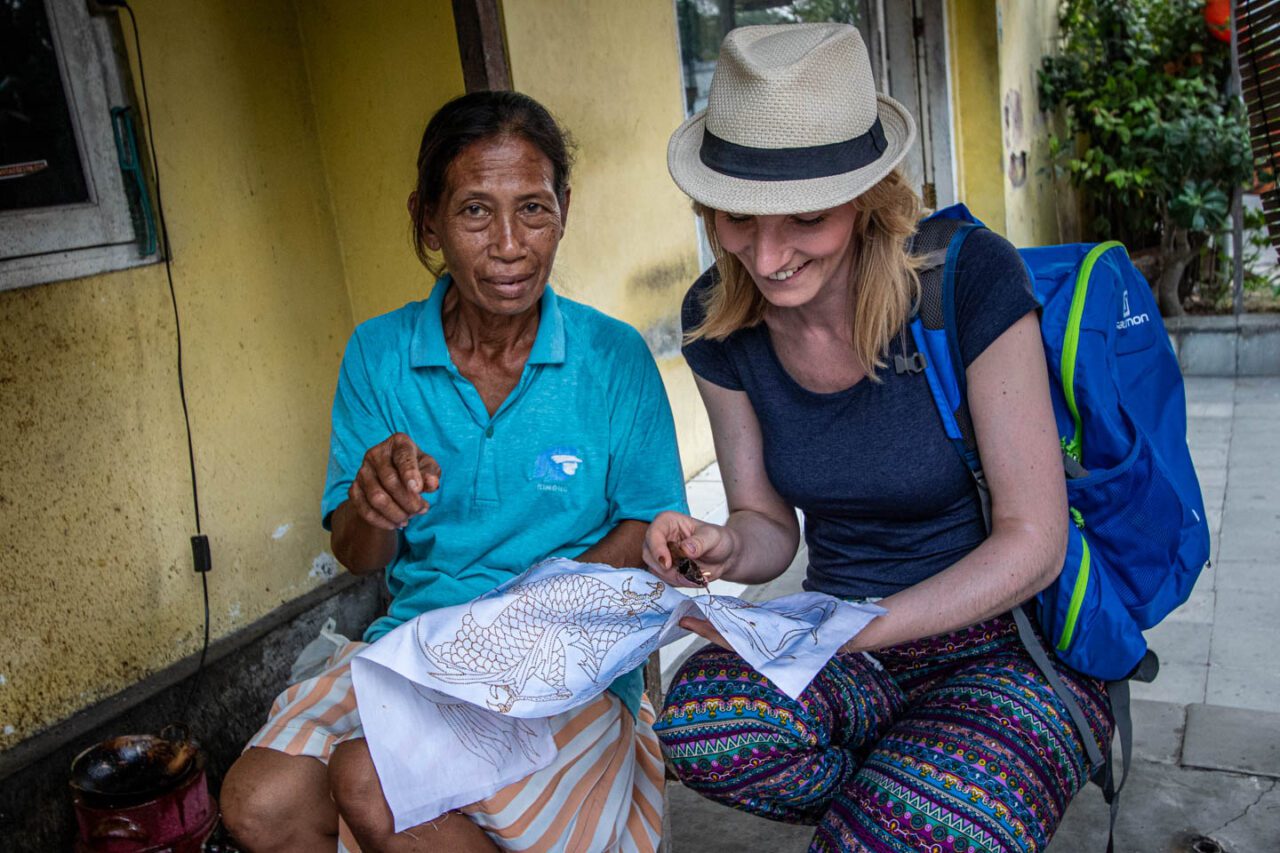
I stopped at a batik stall. The vendor calmly explained the difference between dyeing techniques.
Hand-crafted patterns are more complex, they take weeks of work, and can cost up to a million rupiah. When you hear the story, the price stops being surprising.
But the real discovery was the food.
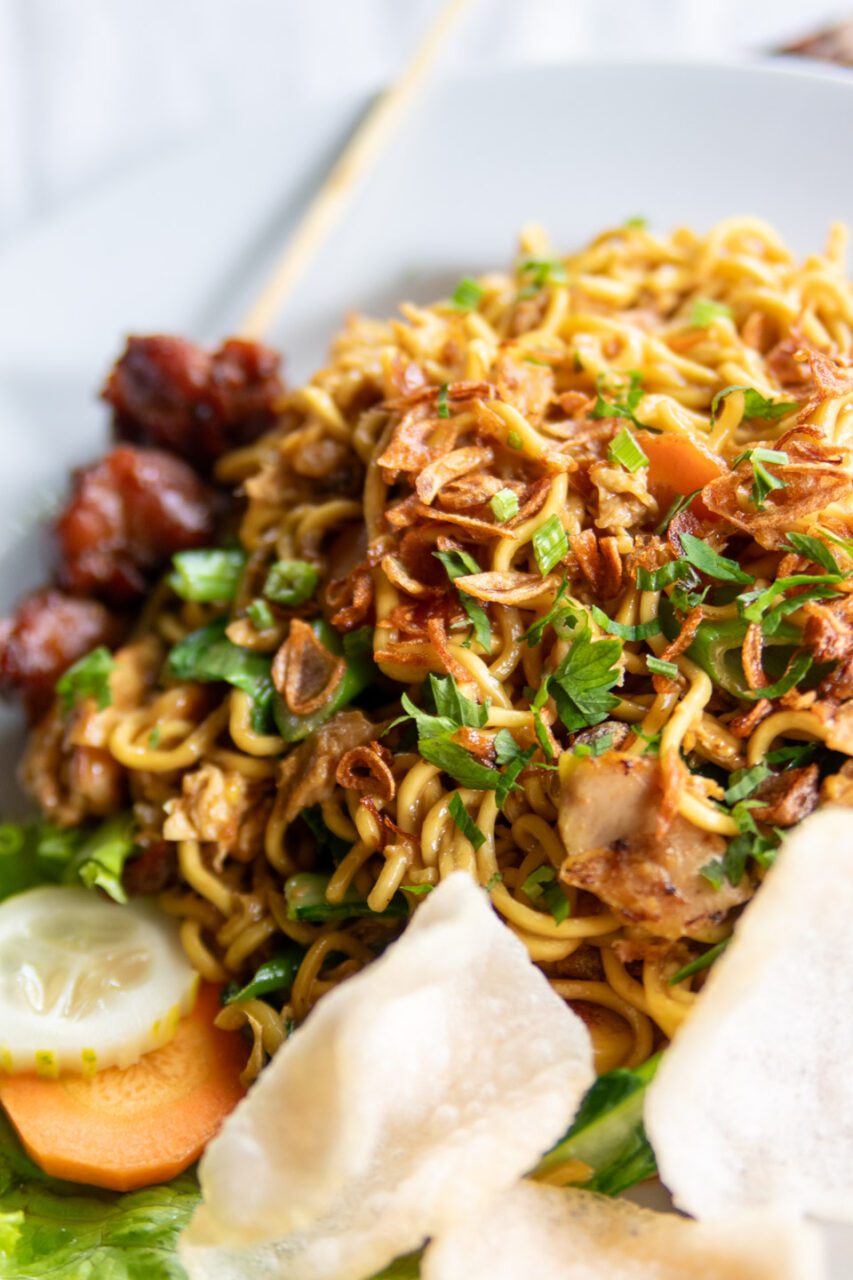
In one corner of the market, I tried gudeg – Jogja’s local specialty. Braised jackfruit in a sweet-spicy sauce, served with rice and sides. An unusual flavor, slightly caramelized, deep.
It wasn’t a dish I understood immediately. But it stayed with me.
If you have one day in Yogyakarta, Beringharjo is the place to see the city from the inside. Literally and figuratively.

Wayang – Shadow Theater and Ancient Stories
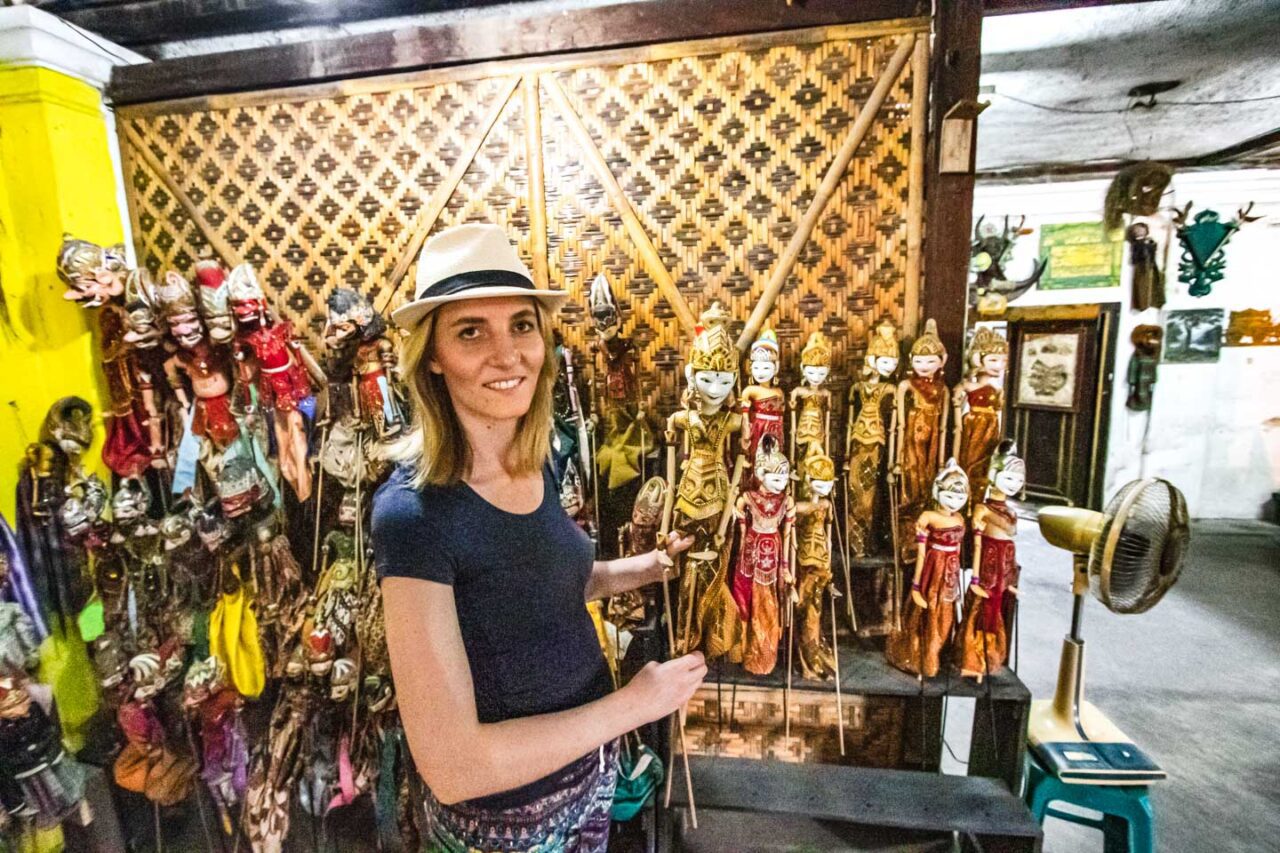
At the end of the day I found my way to a small puppet workshop. Unremarkable from the outside. A completely different dimension inside.
Craftsmen sat bent over tables, focused and precise. Fine tools, pieces of leather, paint, gold leaf. I watched the characters for shadow theater – wayang – being created. Each one has its own story, character, and role in a larger narrative.
What moved me most was how Hindu and Muslim influences intertwine within these puppets. Javanese culture isn’t single-layered. It’s like batik. Pattern upon pattern.
The workshop master showed me the heroes of ancient epics and patiently told their stories. I listened in silence, trying to follow the names and symbols.
I saw the process of making wayang kulit – intricately cut buffalo leather puppets – and the colorful wooden wayang golek figures. Each stage requires time and focus.
For a moment I thought about taking one home. But the best ones are expensive. And fragile. There wouldn’t be room for them in a suitcase.
Sometimes memory is enough. And the awareness that for a brief moment, you were close to a world that has existed for hundreds of years.
How do you want to keep exploring Indonesia?
🏝️ Relax on a paradise island → My Gili Trawangan Guide – what to see, where to stay, and how many days to spend
🌋 Chase the volcanoes → Mount Bromo Guide – everything you need to know to catch that perfect sunrise frame
🪷 Dive into local culture → What to Do in Ubud – 14 tested ideas for a great stay
🏛️ Is Java worth visiting? → Java Unlocked – pros, cons & my honest experience
Which part of Indonesia calls to you most?
Travel Tips for Yogyakarta
When Is the Best Time to Visit Yogyakarta?
If you only have one day in Yogyakarta, timing actually matters.
I was there in June, during the dry season, which runs roughly from May to September. Days were warm but manageable, with no rain interrupting the sightseeing.
It’s a good choice if you want to calmly visit the Kraton, Taman Sari, and still stroll Malioboro without ducking from downpours.
From October to April the rainy season begins. Showers are intense, often tropical – but usually brief. In return, the city is sometimes less crowded, and accommodation prices can be more favorable.
If you choose that period, pack a light rain jacket or a small umbrella. A downpour can appear suddenly and disappear just as quickly.
Regardless of the season, one thing is certain: in Yogyakarta, it’s always warm. And always intense.
How to Get to Yogyakarta
I flew to Jogja from Bali, not from Jakarta like most travelers.
The flight was short. What I remember most is the landing. Through the window you could see the outline of Javanese volcanoes, rice fields, and a light mist rising from the ground. For views like that, it’s worth booking a window seat.
If you’re flying from Jakarta, the trip takes under an hour. Tickets cost around 550,000 rupiah, depending on timing and airline.
It’s a fast, comfortable option – especially if you only have one day in Yogyakarta and don’t want to lose time in transit.
The alternative is the train. From Jakarta it’s about 7-8 hours, with prices starting at around 260,000 rupiah and going up to 430,000 rupiah in higher classes.
Several locals told me the train windows give you the best view of the real Java. Villages, rice fields, everyday life. Sometimes the slower road lets you see more.
If you’re planning the trip, your choice of transport comes down to one question: are you saving time, or do you want to start traveling the moment you leave?
Where to Stay in Yogyakarta
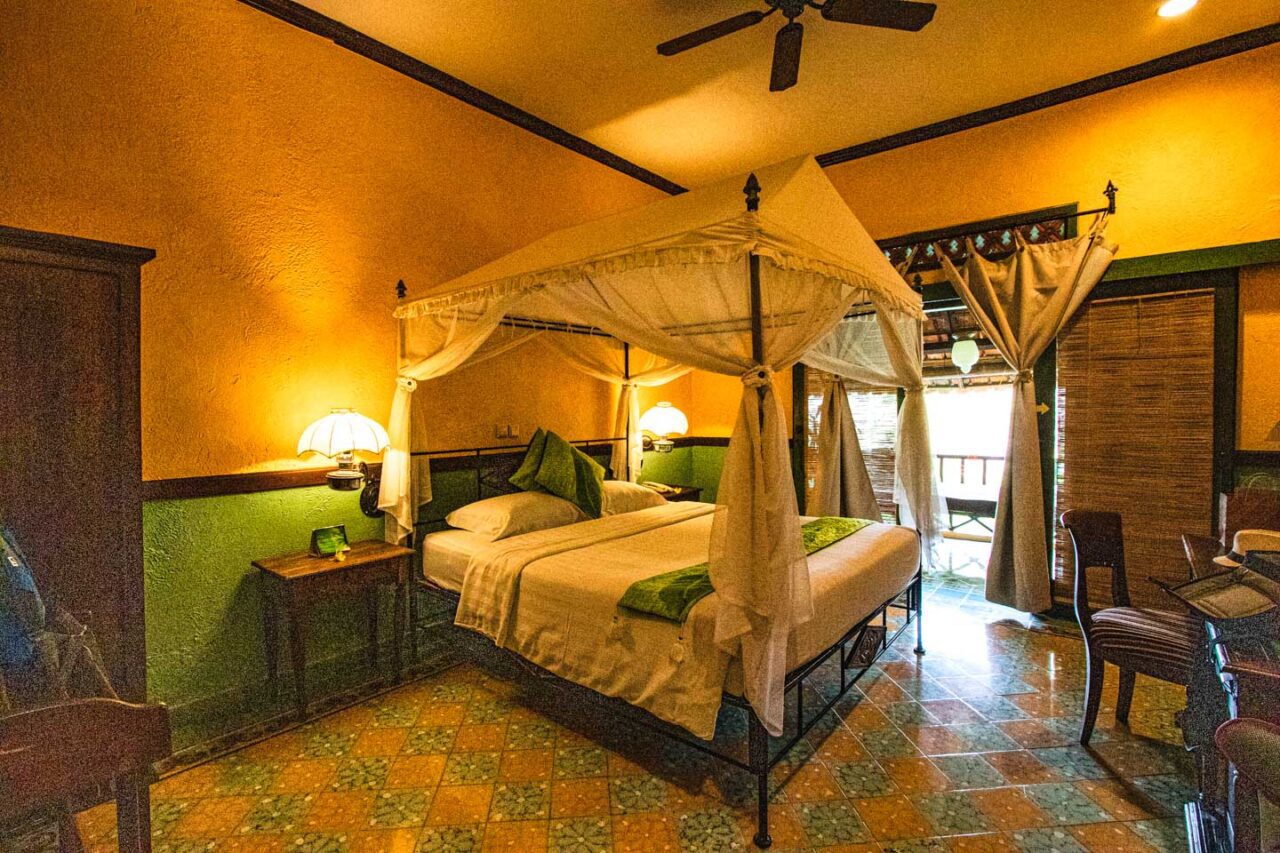
During my time in Jogja, I stayed at Jogja Village, in the Prawirotaman neighborhood.
This part of the city has a completely different rhythm than the area around Malioboro. Quieter, more local, with small cafés and an artistic atmosphere. After a full day of impressions, it was exactly what I needed.
From my room window I could see a green garden with a small pool. The kind you walk out to barefoot in the morning with coffee in hand. The only shame was that with just one day in Yogyakarta, it’s hard to find time to lie beside the water.
Breakfasts were a pleasant combination of Western and local flavors. I tried bubur ayam – rice porridge with chicken. A simple dish, but warming and very homey. Perfect before a day of sightseeing.
If you’re looking for somewhere quieter than the city center but still well-connected to the main attractions, Prawirotaman is a good choice.
What and Where to Eat in Yogyakarta
After a full day of impressions I was genuinely hungry. And a little tired of making decisions. That’s when a student from a local university recommended Bedhot Resto. He just said: “local and good.” That was enough.
This isn’t a place with a designer interior. More honest, straightforward, full of locals. Which is always a good sign.
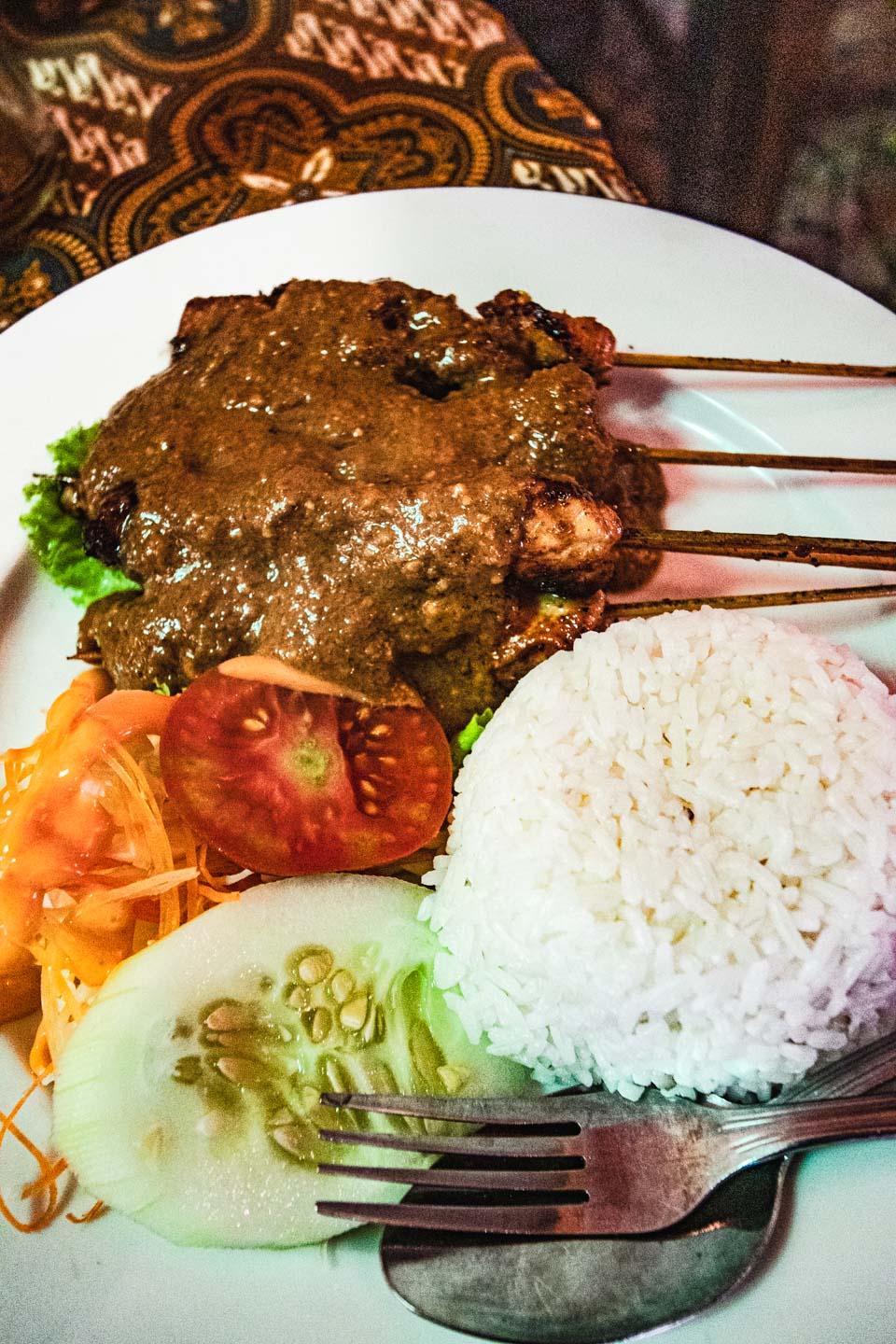
I ordered Javanese chicken with vegetables and rice. Nothing complicated on paper, but the spices were perfectly balanced and the meat was tender and juicy.
What I remember most, though, was the satay ayam. Chicken skewers with a thick, slightly sweet, deeply flavored peanut sauce. I’ve been trying to recreate that taste at home ever since. Without success.
The whole meal cost under $5. And it was one of those meals you remember long after you’re back.
If you only have one day in Yogyakarta, end it at the table.
Travel lighter, even before you leave.
start with something simple.
Download The Minimum Plan – Slow Travel:
A Note on Kopi Luwak
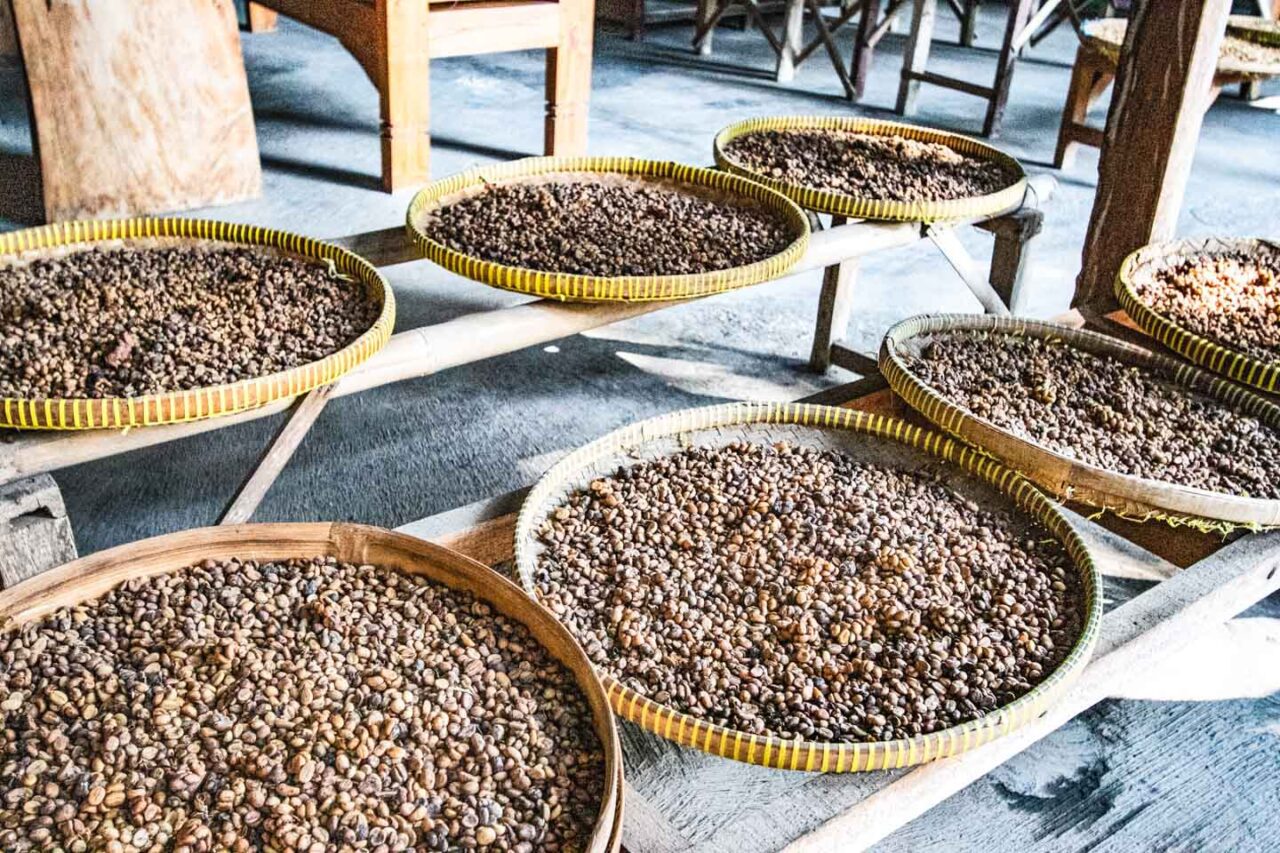
Walking around Yogyakarta, you may come across offers to taste kopi luwak – often described as one of the most expensive coffees in the world.
It’s made from beans that have passed through the digestive system of a civet cat. The animal eats ripe coffee cherries, and the undigested beans are later collected, dried, and roasted.
Supporters claim this gives the coffee a milder flavor and less bitterness.
It sounds exotic. The problem starts elsewhere.
In many places on Java, civets are kept in small cages and fed exclusively on coffee cherries to increase production. This is no longer a romantic story about a wild animal in the jungle – it’s just an industry.
If you decide to try kopi luwak, check that it comes from a verified, ethical source. And if you have doubts, Yogyakarta has no shortage of excellent, freshly roasted coffee without that backstory.
Sometimes the simplest choice is the best one.
Yogyakarta in One Day – Final Thoughts
One day in Yogyakarta isn’t the perfect plan. But it’s enough to feel something.
To walk through palace courtyards, eat satay on the street, lose yourself among batik fabrics, and pause for a moment beside the sounds of the gamelan.
I spent three days in Jogja, but only one was dedicated to intense sightseeing. And you know what? That was the day that made me hungry for more.
Yogyakarta blends tradition and everyday life in a very natural way. History here isn’t locked inside a museum. It happens right beside you.
Is one day enough? Enough to fall in love. Not enough to see everything.
That’s why I know I’ll be back.
Have you been to Yogyakarta? What would you add to a one-day plan like this? I’d love to write your suggestions down for next time.
Ready to explore more of Indonesia?
- My Gili Trawangan Travel Guide – paradise island with no cars and no rush
- Mount Bromo Guide – don’t miss this volcanic wonder
- Is Java Worth Visiting? – my honest experiences and the island’s most beautiful places
- Things to Do in Ubud – a great addition to any Indonesia trip
This article contains affiliate links. If you make a booking through these links, I may earn a commission, supporting this blog. Rest assured, my recommendations are based on honest assessments, and using these links doesn't affect prices for you. Thank you for your support!