
Some places stay with you not just because of the views, but because of everything that happened along the way. Mount Bromo in East Java, Indonesia, is definitely one of those places for me.
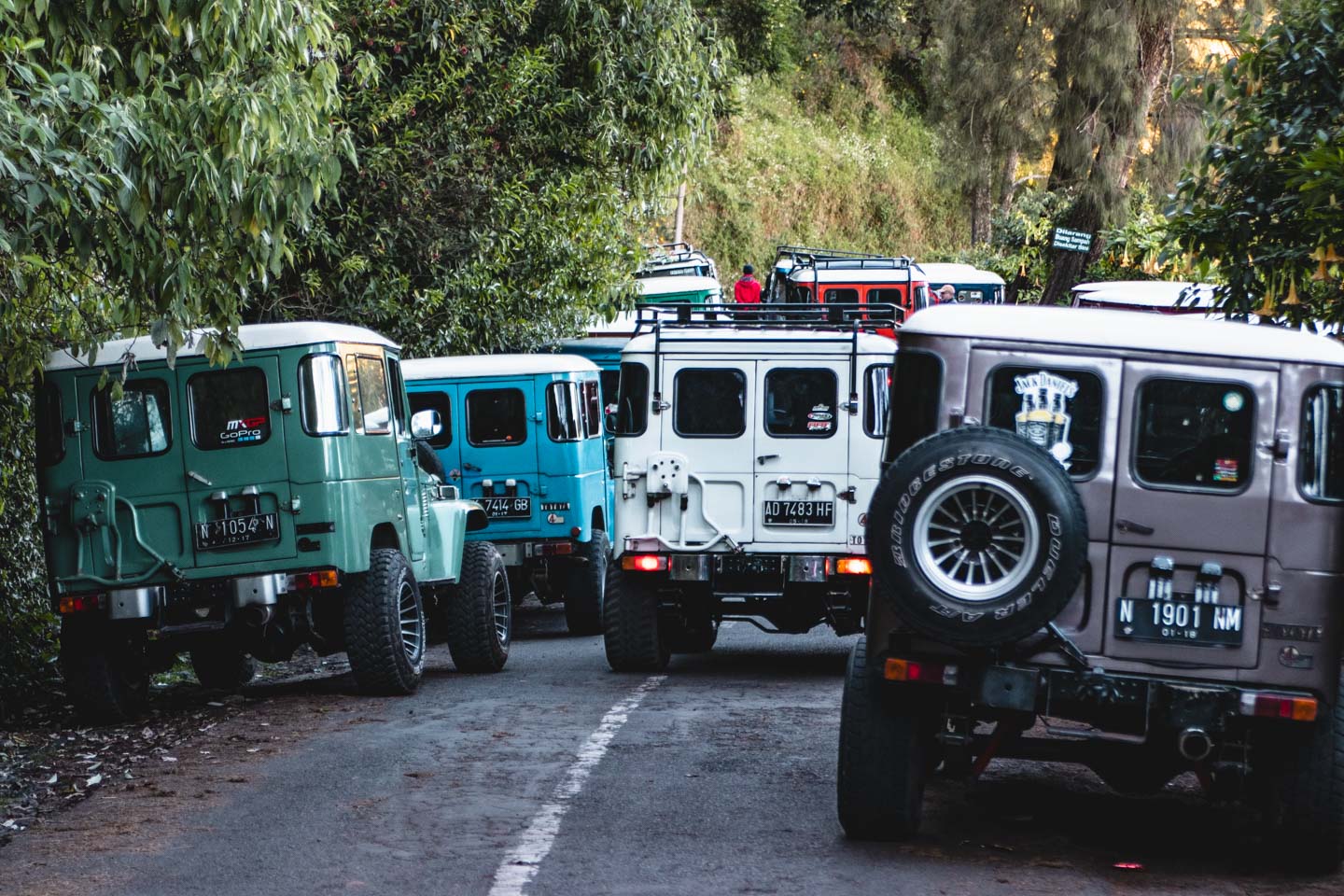
I still remember waking up in the middle of the night, the freezing air, the long line of jeeps moving through the darkness, and a cup of hot tea just before sunrise.
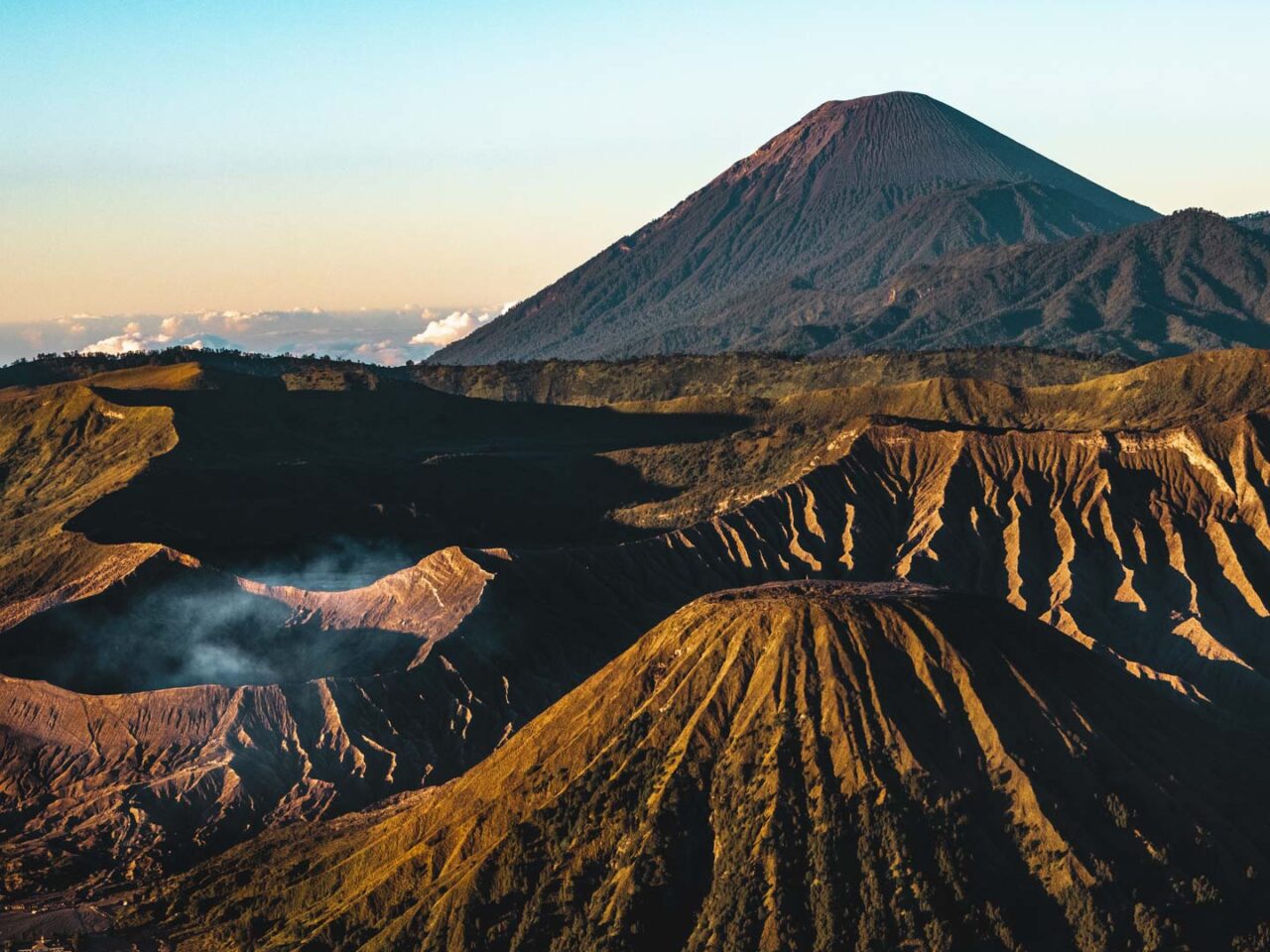
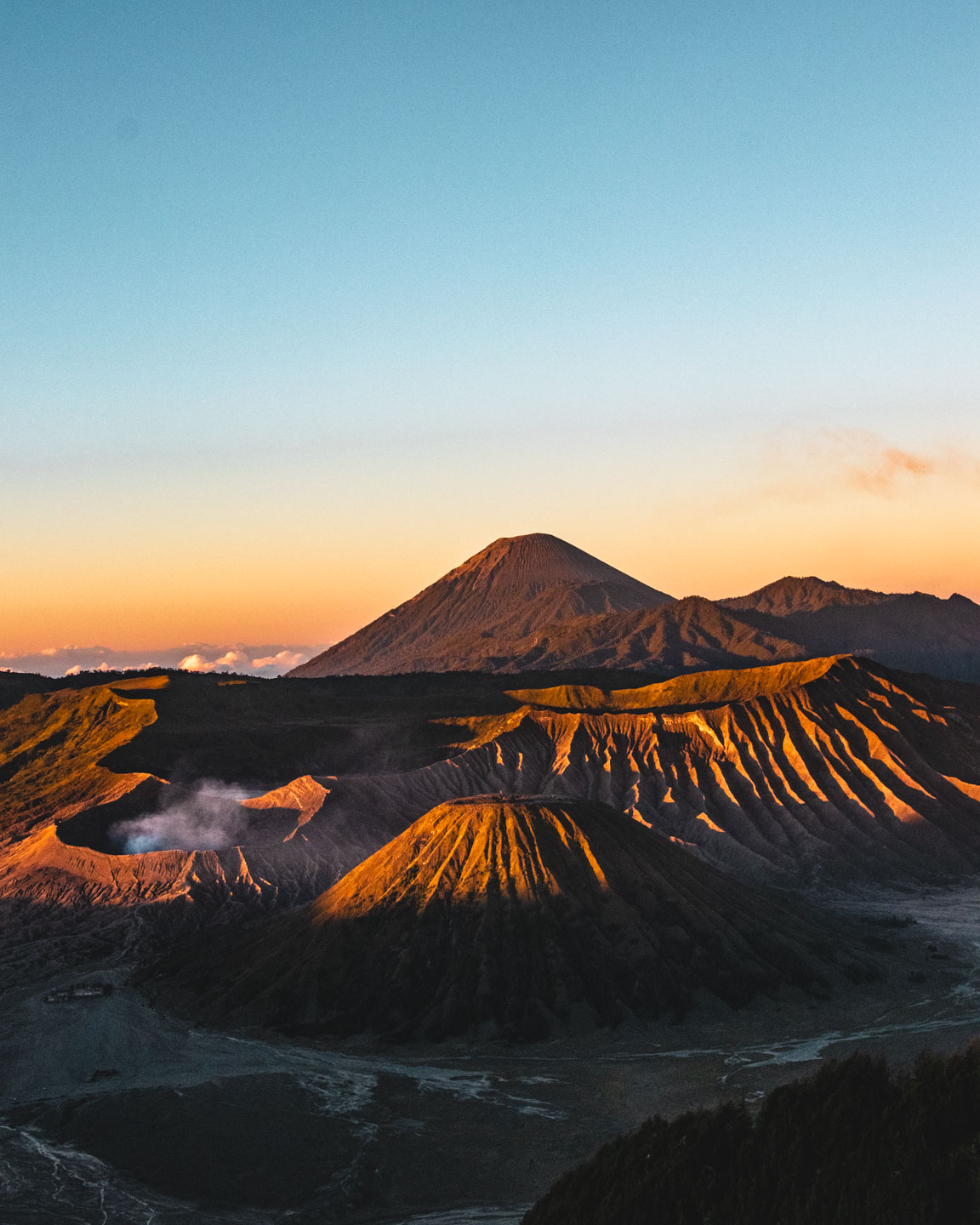
And then there was the view of the vast Tengger Caldera, with volcanic peaks slowly emerging from the morning mist.
It was one of the most memorable mornings of our trip to Indonesia.
Visiting Mount Bromo doesn’t require a multi-day trek, but it does take a little planning. You’ll need to wake up early, prepare for surprisingly cold temperatures, and remember that you’re exploring an active volcanic area.
In this Mount Bromo travel guide, I’ll share our personal experience, where we watched the sunrise, and what it was like standing on the crater rim.
You’ll also find practical information for 2026, including entrance fees, transportation, accommodation, and safety tips.
Mount Bromo: Essential Information Before Your Visit
| Information | What You Need to Know |
|---|---|
| Location | East Java, Indonesia |
| Mount Bromo elevation | Approximately 2,329 meters (7,641 feet) |
| National park | Bromo Tengger Semeru |
| Popular base for visiting | Cemoro Lawang |
| Best time to visit | Usually May-September |
| Entrance fee for international visitors | 255,000 IDR |
| Jeep rental | Approximately 600,000–-750,000 IDR per vehicle |
| Sunrise tour departure | Usually around 3:00-3:30 AM |
| Temperature before sunrise | Often around 5-10°C (41-50°F) |
| Recommended time | Usually half a day |
Prices are approximate as of October 2026. Access to certain parts of the national park depends on volcanic activity, weather conditions, and official restrictions.
Our Journey to Mount Bromo
Our Mount Bromo adventure began long before sunrise.
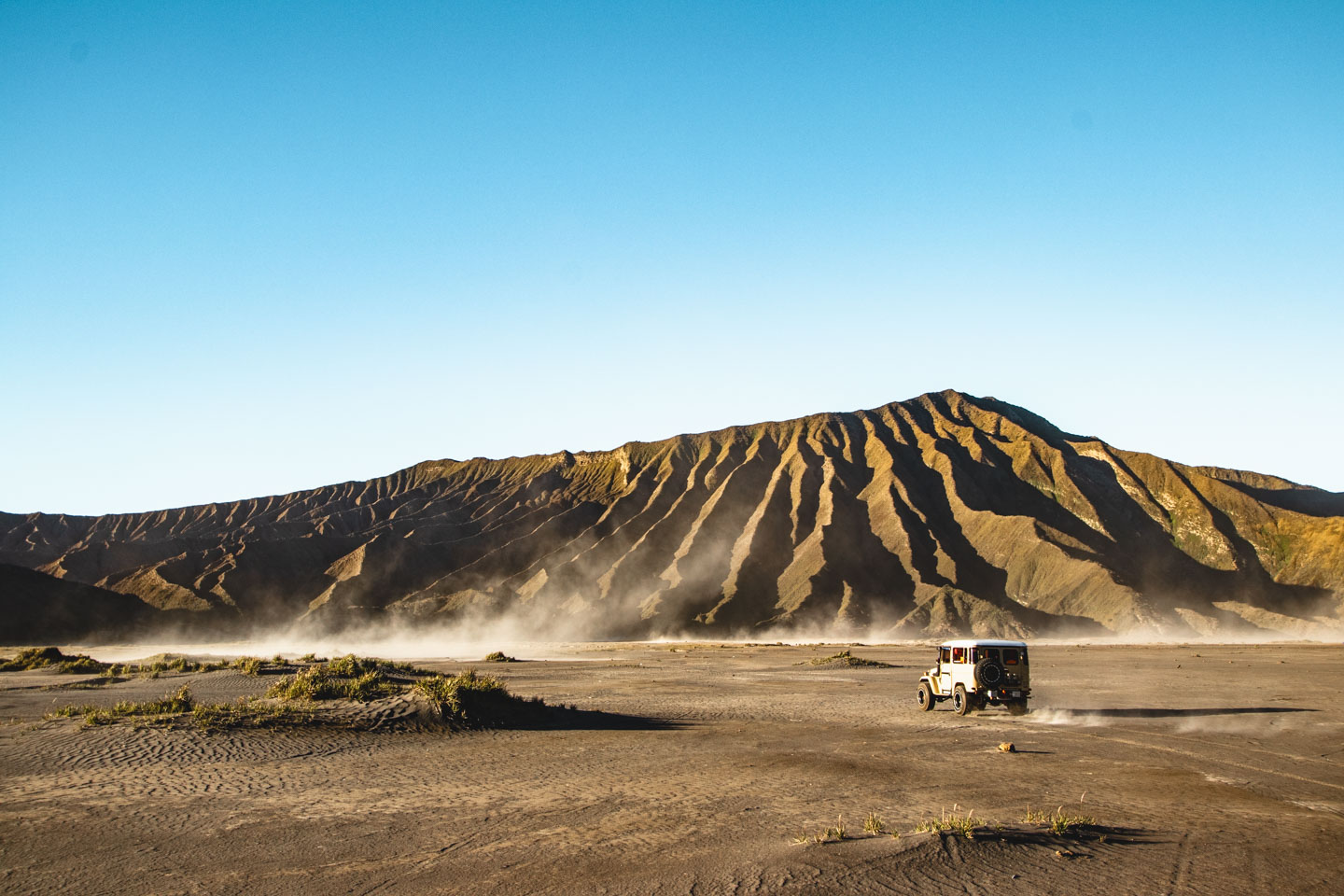
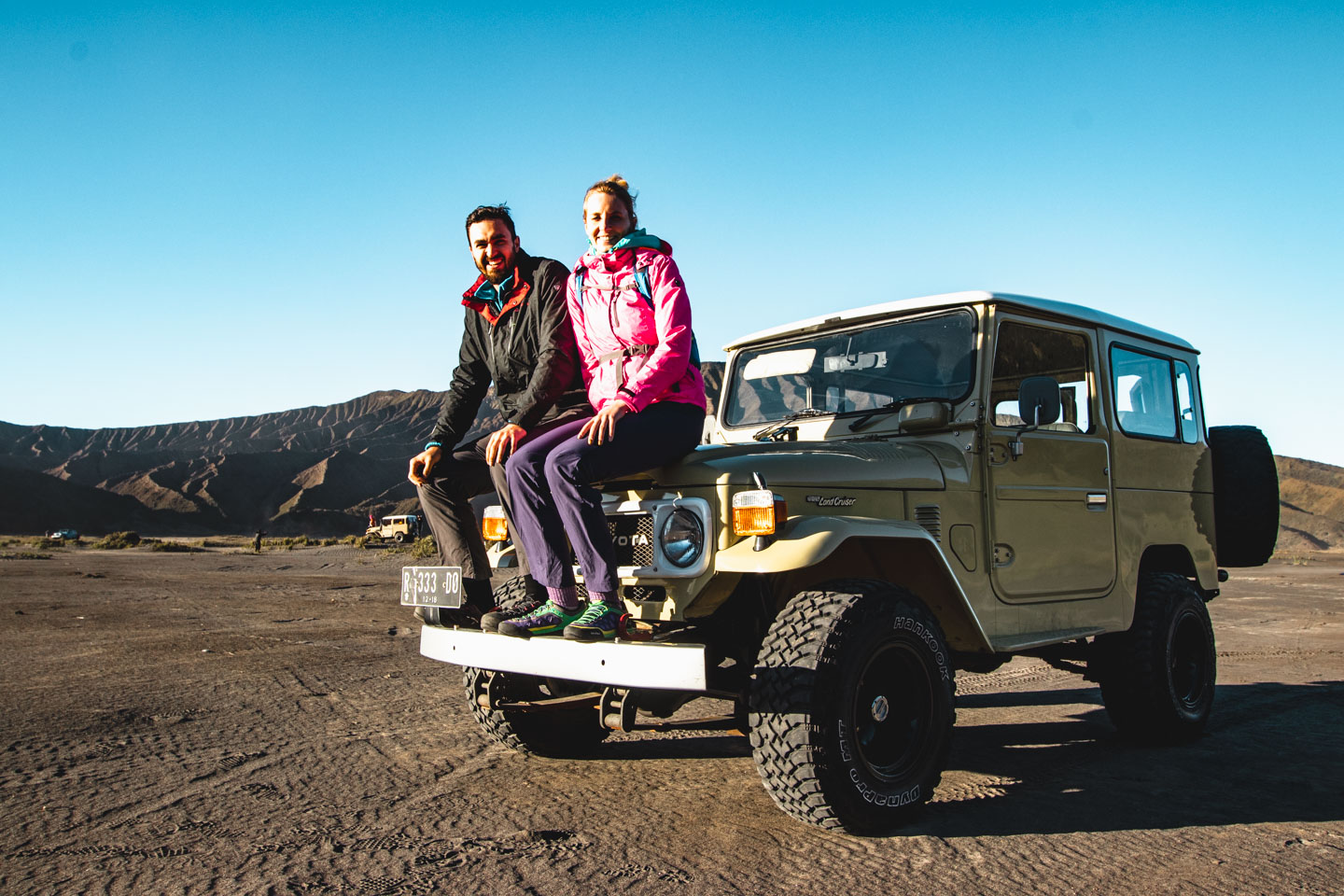
We climbed into a jeep near Cemoro Lawang and set off along winding roads toward the Tengger Caldera.
It was dark and surprisingly cold.
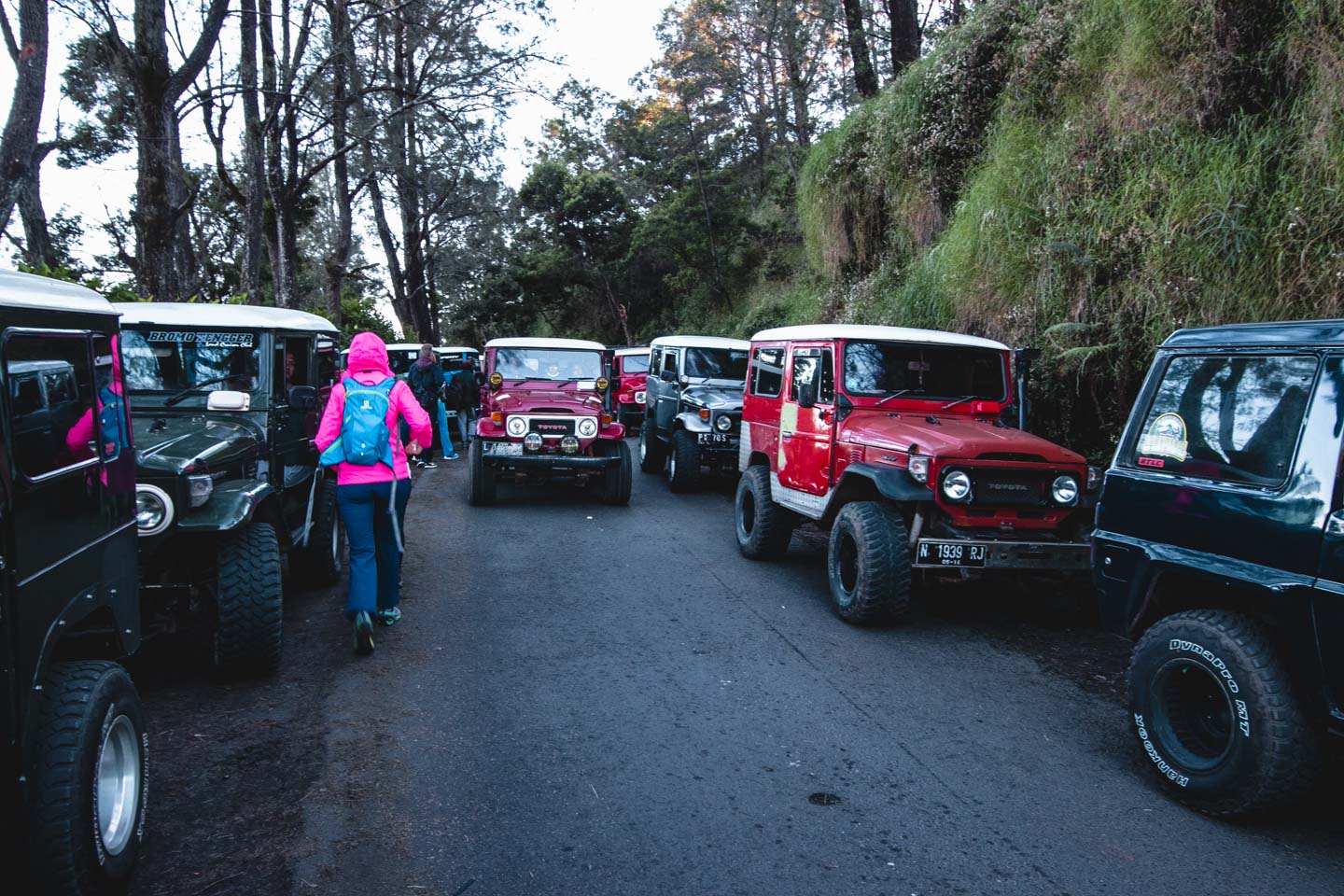
Other jeeps were traveling in the same direction, carrying visitors who, just like us, were hoping for clear skies and a beautiful sunrise over the volcanoes.
I remember the headlights stretching along the road and the sound of the engine, which was almost the only thing we could hear.
Despite the early hour, I couldn’t sleep.
We were getting closer to a place I’d wanted to see for a long time.
Tengger Caldera: An Extraordinary Volcanic Landscape
Mount Bromo is located within Bromo Tengger Semeru National Park, one of Indonesia’s most remarkable volcanic regions.
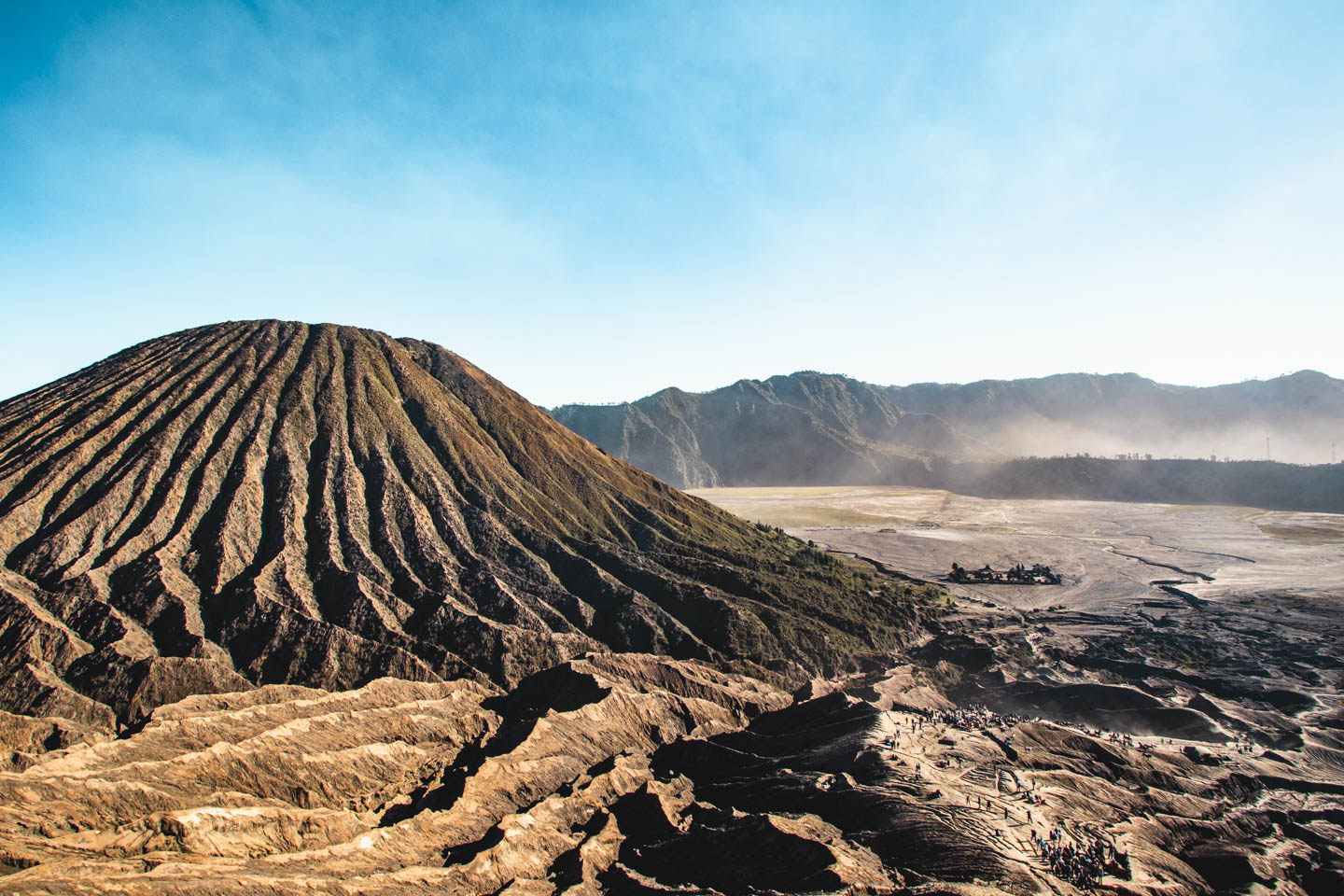
The volcano rises from the vast Tengger Caldera, whose floor is covered with dark volcanic sand and ash.
This unusual landscape is what makes Mount Bromo so recognizable.
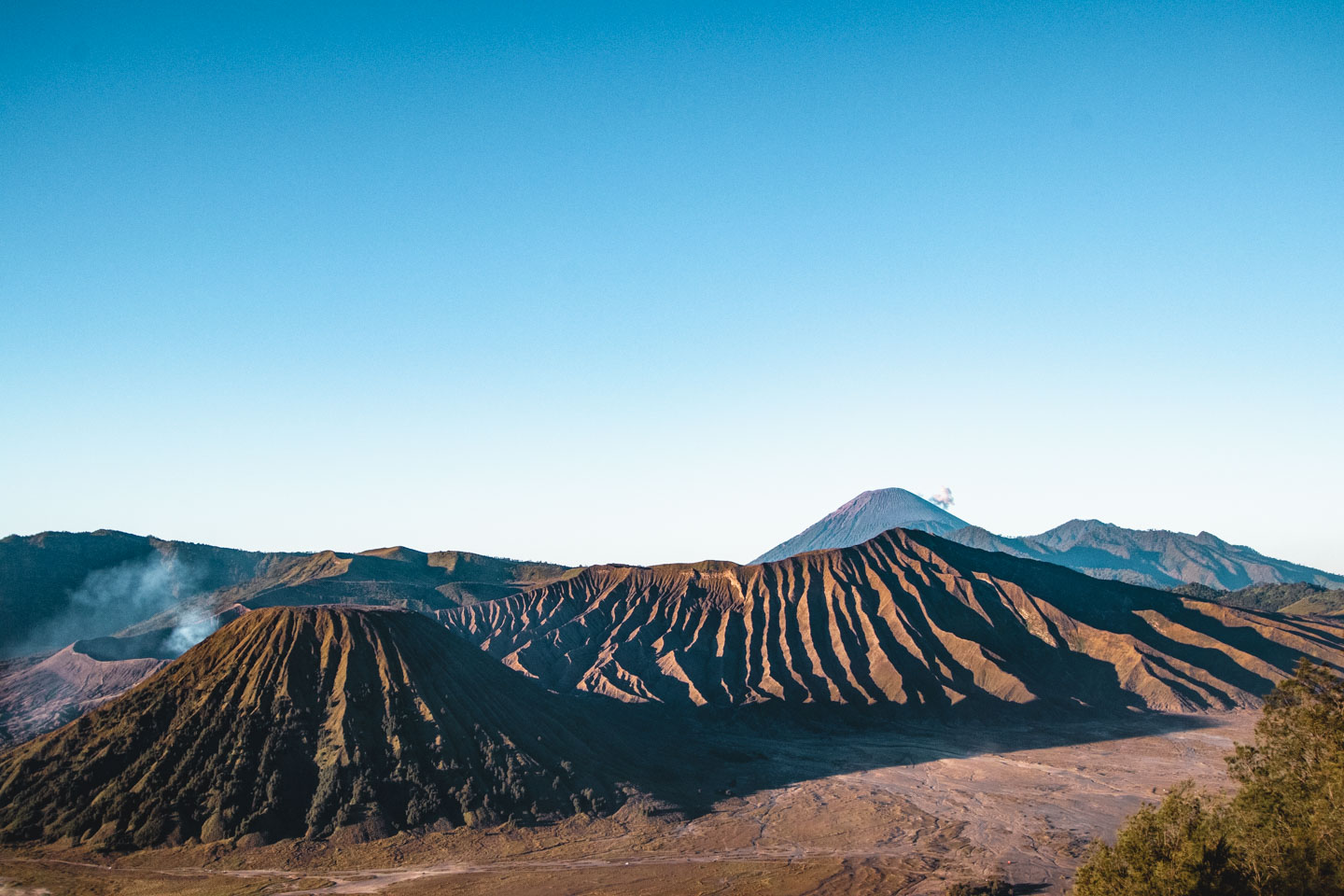
From the viewpoints, you can see several volcanic peaks, including Bromo, Batok, and Kursi.
In the distance stands Mount Semeru, the highest mountain on Java, reaching approximately 3,676 meters (12,060 feet).
Interestingly, Mount Bromo isn’t the tallest volcano in the area.
It is, however, one of the most recognizable, and it remains active.
Mount Semeru is also an active volcano, and both are monitored for volcanic activity.
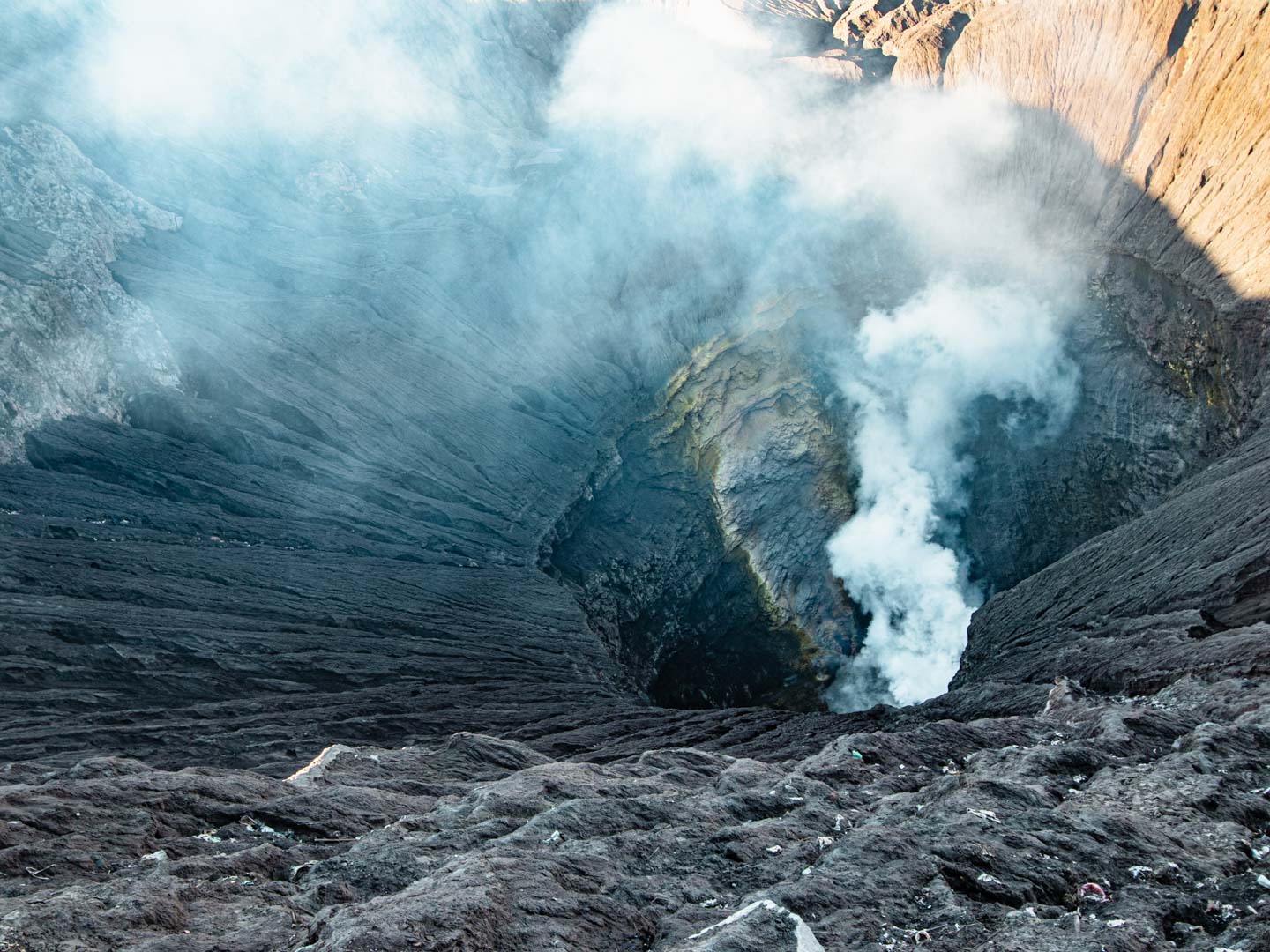
During our visit, steam and volcanic gases were rising from Bromo’s crater, reminding us that this landscape is still being shaped by geological forces.
Looking across the caldera, I found it difficult to believe that such an extraordinary place existed just a few hours from Java’s busy towns and cities.
Watching the Sunrise Over Mount Bromo
At around 4:00 AM, we arrived at Penanjakan viewpoint, approximately 2,700 meters (8,860 feet) above sea level.
The air was freezing.
Before finding our spot, we stopped at a small roadside warung for a cup of hot tea.
I remember that moment particularly well.
We were exhausted, cold, and standing in the darkness, waiting for the first signs of daylight.
Yet that simple cup of sweet tea became one of my favorite memories from the entire excursion.
As the sky gradually began to brighten, the landscape slowly revealed itself.
First came soft shades of pink and purple. Then, as the sun rose, more light spread across the volcanic peaks.
From above, we could clearly see the contrast between the vast, almost desert-like caldera and the mountains surrounding it.
For a while, we simply stood there and watched.
Even though other tourists were gathered around us, the view made the early wake-up call completely worthwhile.
Watching the sunrise over Mount Bromo is one of the most memorable experiences I’d recommend during a trip to Java.
Of course, there’s one thing you can’t control: the weather.
Clouds and thick fog can sometimes obscure the volcanoes, even during the dry season.
That’s why I wouldn’t plan an entire trip around getting one perfect photograph.
The landscape is impressive in its own right, even when conditions aren’t ideal.
Crossing the Sea of Sand
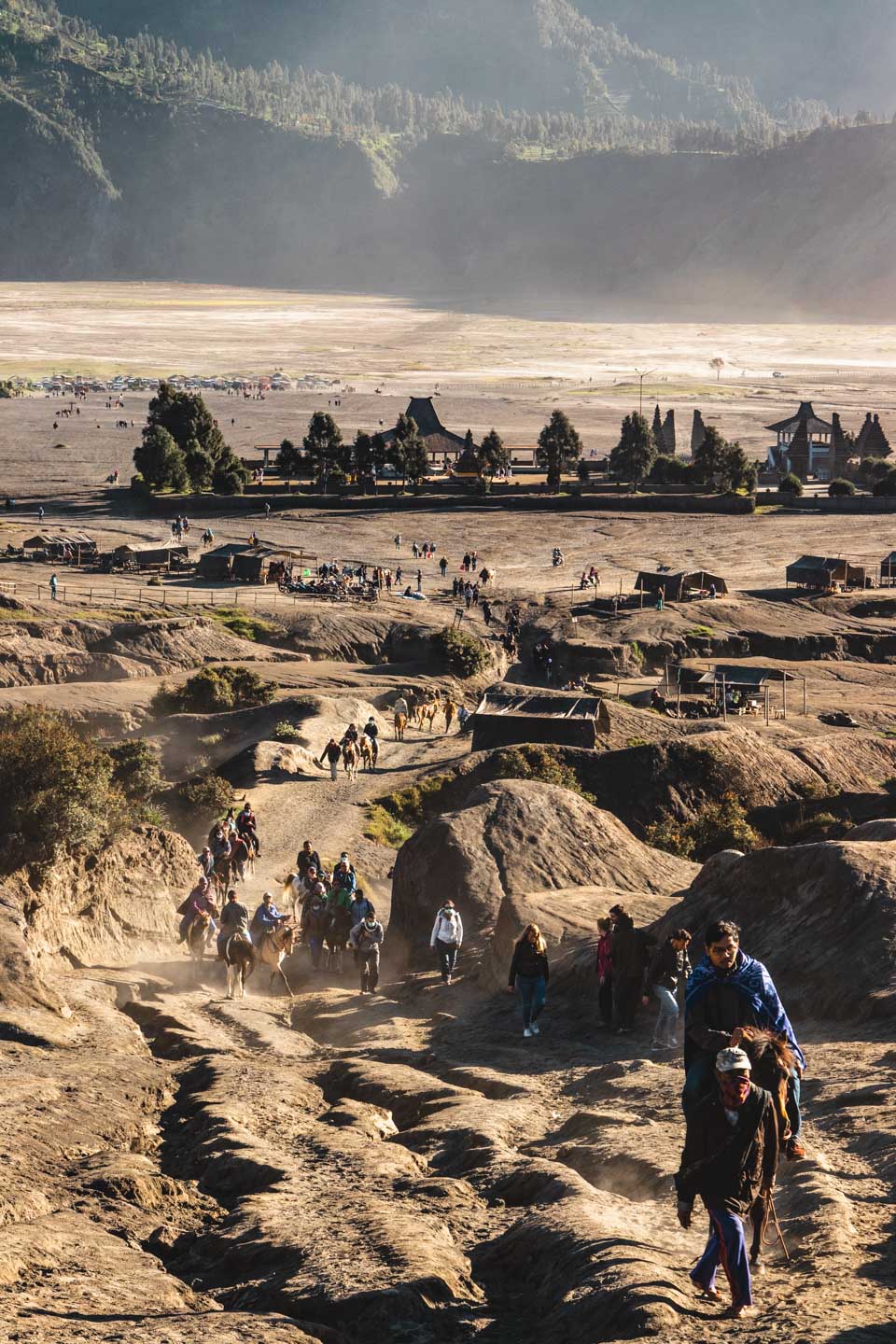
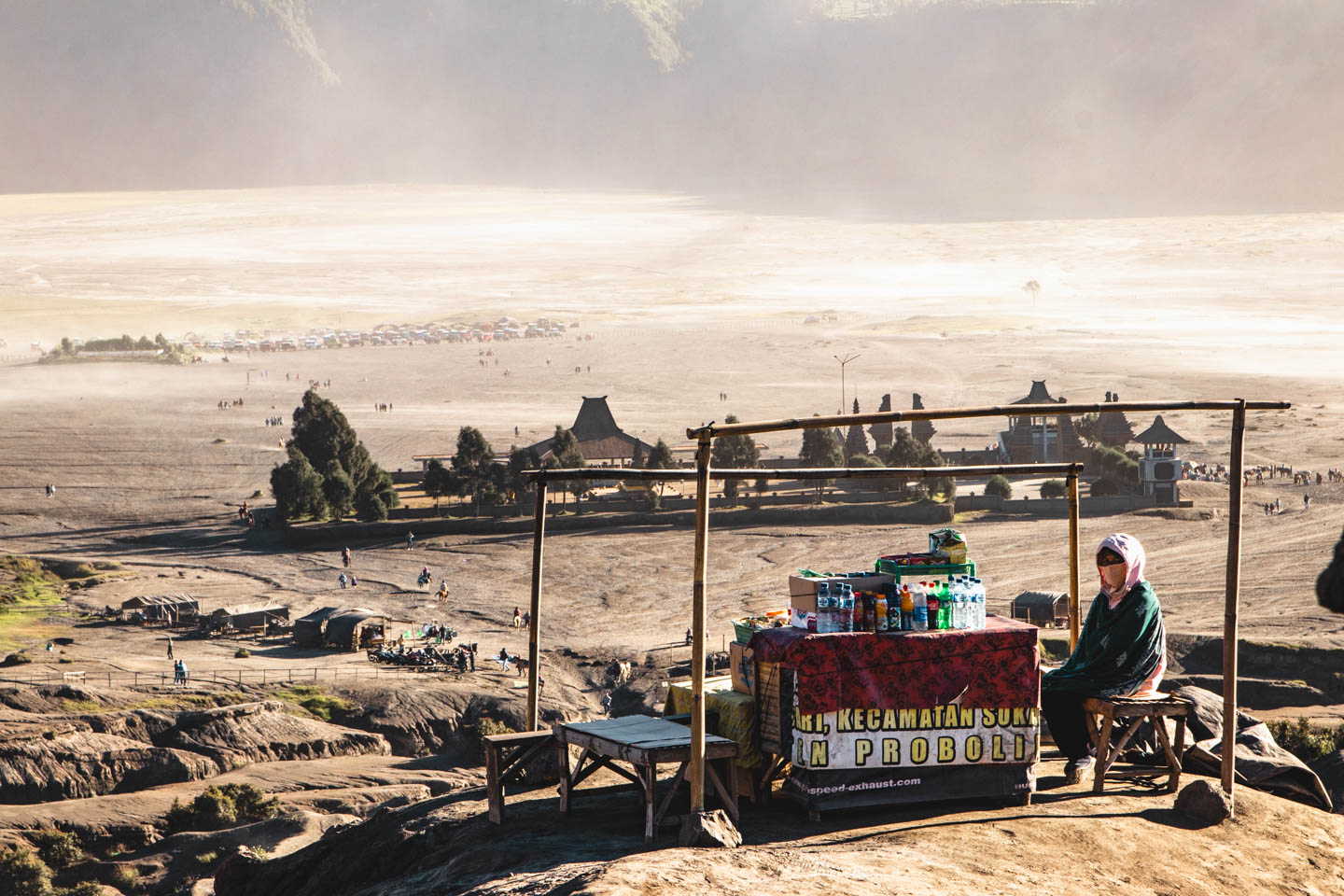
After sunrise, we headed toward Laut Pasir Tengger, better known as the Sea of Sand.
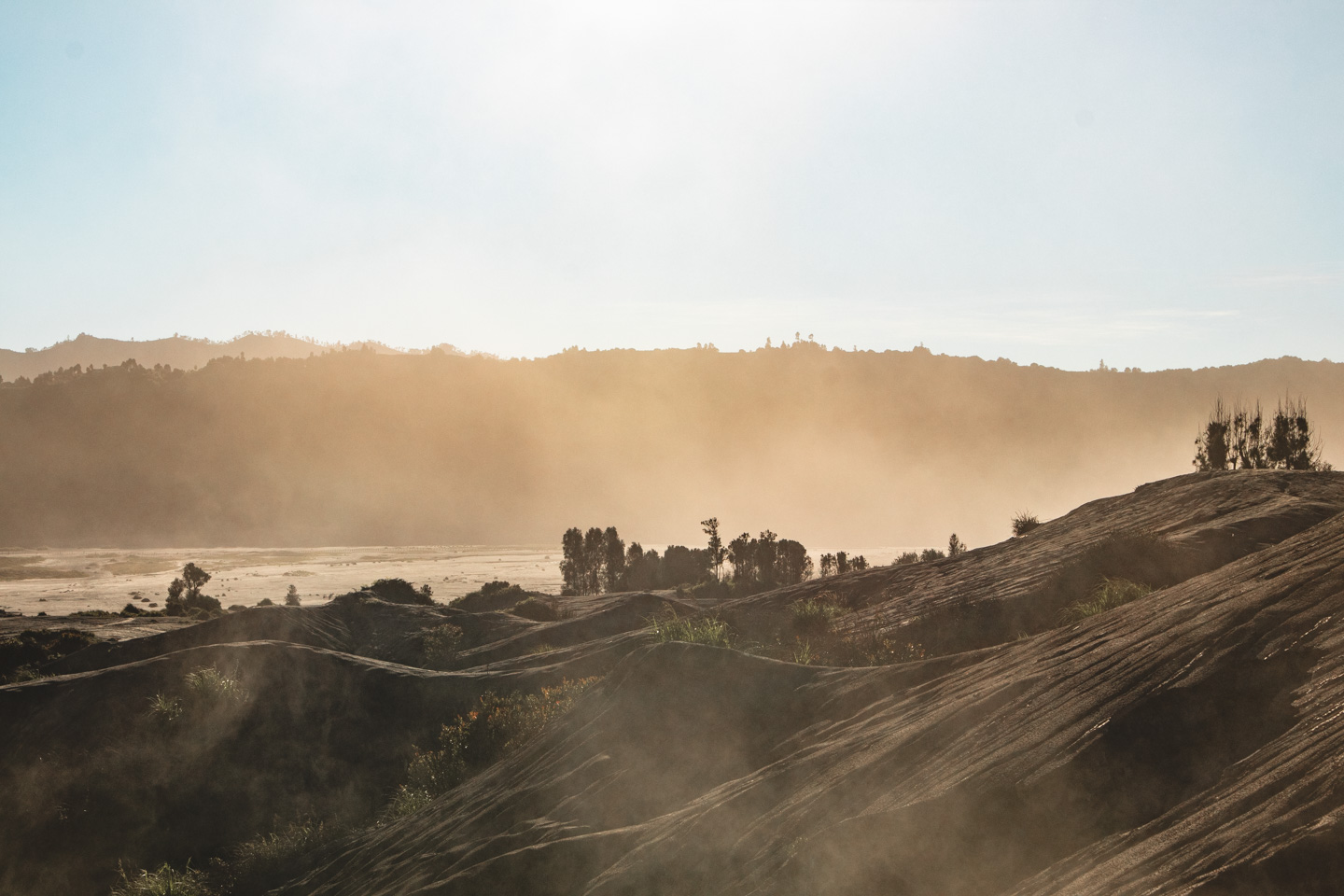
This vast area of volcanic sand lies inside the Tengger Caldera.
The landscape is remarkably barren.
There are almost no trees or dense vegetation. Instead, dark sand stretches toward the volcanic slopes, creating scenery unlike anything I’d seen before.
During our walk, we passed Pura Luhur Poten, a Hindu temple that holds great spiritual importance for the local Tengger community.
The temple is associated with traditional religious ceremonies, including Yadnya Kasada, during which offerings are made as part of the community’s spiritual traditions.
Seeing a temple surrounded by such a stark volcanic landscape was an unexpected highlight.
It was also a reminder that Mount Bromo isn’t simply a tourist attraction.
For the Tengger people, it’s a place deeply connected to their culture, religion, and identity.
During our visit, we were able to continue walking toward the volcanic cone.
However, access to the crater area can be restricted, depending on current volcanic activity.
Before planning to follow the same route, make sure the relevant trails and areas are officially open.
Standing on the Rim of Mount Bromo’s Crater
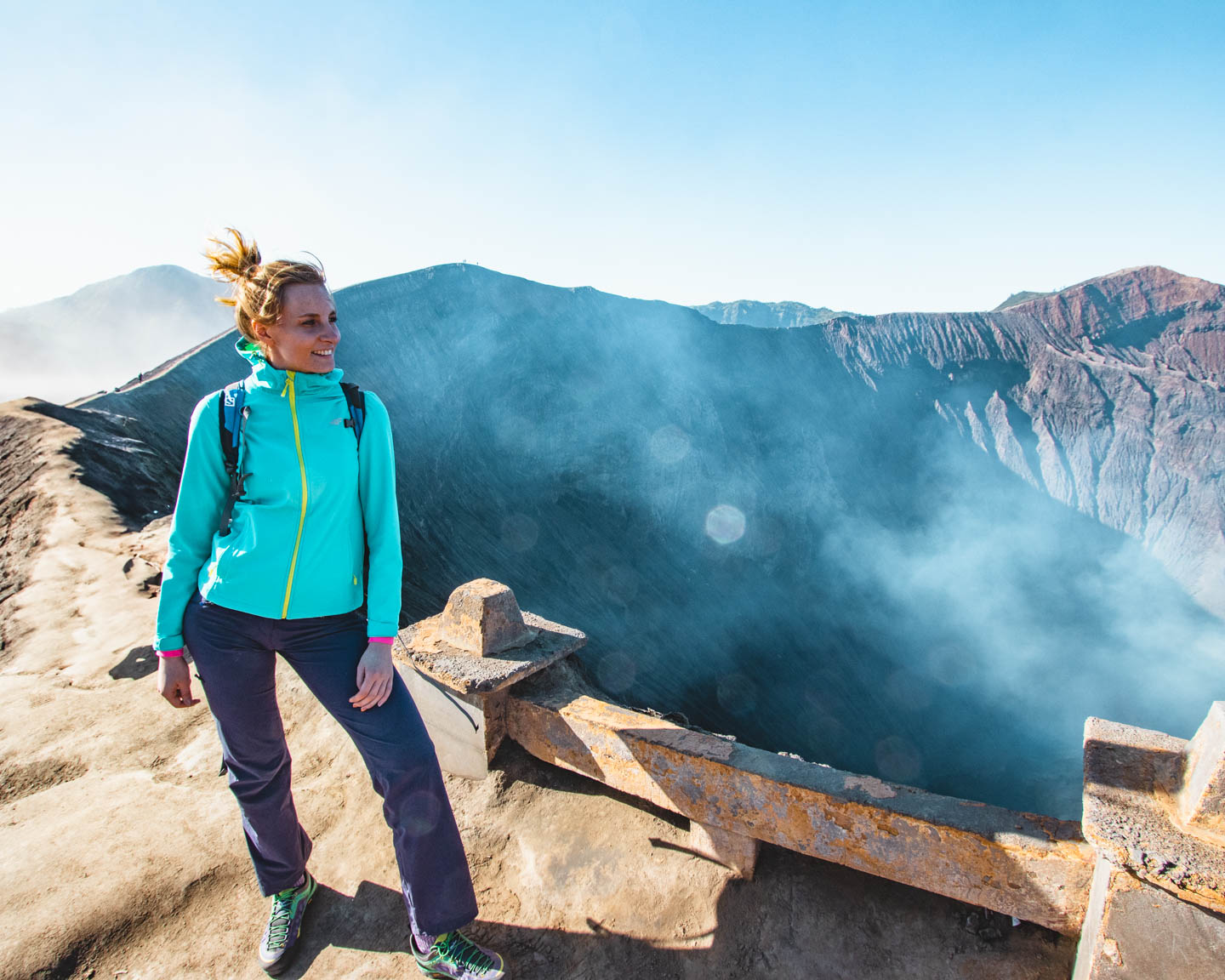
One of the most intense moments of our journey was reaching the edge of Mount Bromo’s crater.
At the time of our visit, access was permitted.
To reach the top, we had to climb a long staircase leading up the volcano’s slope.
After such a short night, I could definitely feel the effort in my legs.
But the biggest surprise came when we finally reached the rim.
Thick volcanic gases were rising from the crater, and a low rumbling sound came from somewhere deep below us.
The smell of sulfur was intense.
I also remember feeling a faint vibration beneath my feet and realizing that I was standing on the edge of an active volcano.
It was fascinating and a little unsettling at the same time.
Mount Bromo is beautiful, but it’s also unpredictable.
Important safety note: My photographs from the crater rim reflect the conditions and access rules during our visit. They do not mean that visitors are currently allowed to reach the same location.
When volcanic activity increases, Indonesian authorities may introduce exclusion zones around the crater. These restrictions can change with little notice.
Always check the latest official information before approaching the volcano, and never enter a restricted area.
I’m grateful that I had the opportunity to experience Bromo from such a close distance.
But it’s not an experience worth risking your safety to recreate.
Mount Bromo Travel Tips: Everything You Need to Know
Best Time to Visit Mount Bromo
The best time to visit Mount Bromo is generally between May and September, during Java’s dry season.
At this time of year, you’re more likely to experience clear skies and good visibility at sunrise.
That doesn’t mean beautiful weather is guaranteed.
Conditions in the mountains can change quickly, and fog may cover the volcanoes even during the dry season.
We visited Mount Bromo in June, during Ramadan.
I remember the area being quieter than I’d expected, and we had no trouble finding a good place to watch the sunrise.
However, I wouldn’t assume that visiting during Ramadan always means fewer tourists.
Ramadan follows the Islamic lunar calendar, so its dates change each year. Visitor numbers also depend on weekends, public holidays, and local school vacations.
If possible, I’d recommend visiting on a weekday and spending at least one night near the volcano.
That way, you won’t have to begin your sunrise excursion with a long overnight transfer.
Mount Bromo Entrance Fees in 2026
Visiting Mount Bromo requires an entrance ticket to Bromo Tengger Semeru National Park.
According to the official fee schedule introduced on October 30, 2024, the following rates apply:
| Ticket Type | Price |
|---|---|
| International visitor – weekday | 255,000 IDR |
| International visitor – weekend or public holiday | 255,000 IDR |
| Indonesian visitor – weekday | 54,000 IDR |
| Indonesian visitor – weekend or public holiday | 79,000 IDR |
| Jeep rental from Cemoro Lawang | Approximately 600,000-750,000 IDR per vehicle |
The national park entrance fee and jeep rental are separate costs.
Some tour operators include the entrance ticket in their package price, while others charge it separately.
Before booking, always check exactly what’s included.
You can find official ticketing information on the Bromo Tengger Semeru National Park website.
Prices are approximate as of October 2026 and may change.
How Much Does a Mount Bromo Sunrise Jeep Tour Cost?
A private jeep tour departing from Cemoro Lawang typically costs around 600,000-750,000 IDR per vehicle, depending on the route and operator.
This is generally the price for the vehicle, rather than for each passenger.
Some vehicles can accommodate up to six passengers, although capacity depends on the operator and vehicle.
For example, if two people share a jeep costing 700,000 IDR, the transport works out to 350,000 IDR per person, before adding the national park entrance fee.
If you’re traveling alone, joining a shared tour may be more economical.
I’d compare a few local offers before booking, paying attention to the route, pickup time, number of passengers, and included fees.
Is Mount Bromo Open in 2026?
Access to Mount Bromo can change because of volcanic activity, wildfires, and weather conditions.
In 2026, parts of the tourist area were temporarily closed due to vegetation fires.
The last reopening I was able to confirm took place on September 19, 2026, following a temporary closure.
However, this doesn’t guarantee that every route or viewpoint will be accessible on the day of your visit.
Before traveling, check for updates about:
- National park opening and ticket availability.
- Temporary closures caused by fires or severe weather.
- Exclusion zones related to volcanic activity.
- Access to the crater and individual viewpoints.
The official national park website is bromotenggersemeru.id.
I wouldn’t book a tour specifically promising crater-rim access without confirming that the route is currently permitted.
Even if the crater is closed, there may still be opportunities to enjoy the wider volcanic landscape from designated viewpoints.
What Is the Weather Like at Mount Bromo?
One of the things that surprised me most was how cold it was.
Indonesia is usually associated with tropical temperatures, but the higher viewpoints around Mount Bromo can be freezing before sunrise.
Morning temperatures often fall to around 5-10°C (41-50°F), and the wind can make it feel even colder.
So even if you’ve spent the previous days enjoying tropical weather, don’t assume that a T-shirt will be enough.
I’d recommend dressing in layers.
Bring a warm sweater, a wind-resistant jacket, and possibly a hat and gloves.
Once the sun rises, temperatures usually increase, and you can remove a layer or two.
It’s a small detail, but it can make the entire experience much more comfortable.
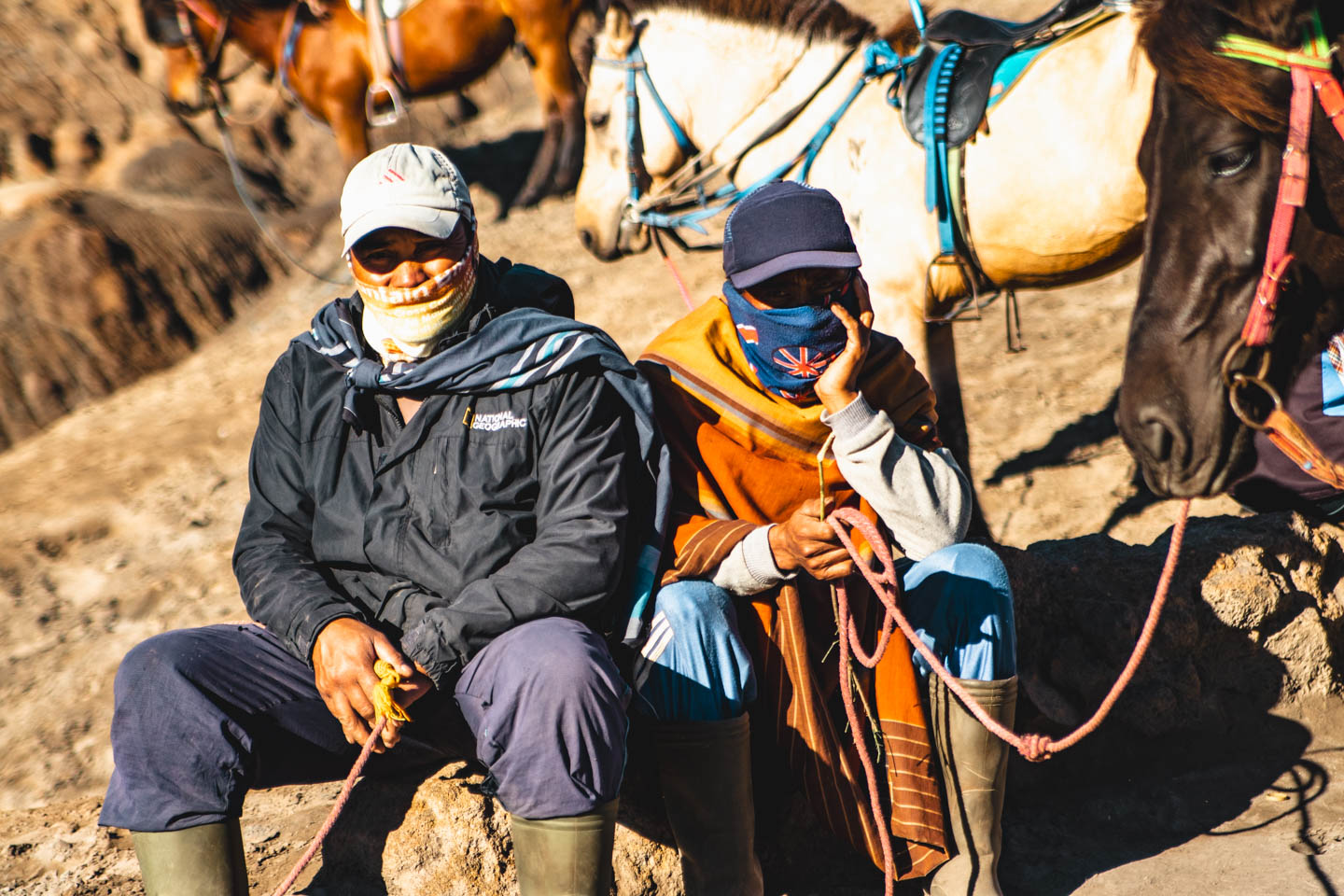
What to Pack for Mount Bromo
You don’t need specialist trekking equipment for a standard visit to the viewpoints, but a few things are worth bringing:
- Warm clothing: A jacket, sweater, hat, and possibly gloves for the early morning.
- Comfortable shoes with good grip: Volcanic sand and uneven ground can make walking difficult.
- A properly fitted dust mask: Useful when volcanic dust is blowing across the Sea of Sand.
- Water and a small snack: Especially if you’re leaving before sunrise.
- A flashlight or headlamp: Helpful when walking in the dark.
- A camera or smartphone: With a fully charged battery.
- Cash in Indonesian rupiah: For small purchases, food, and any additional local charges.
If you’re sensitive to dust or volcanic gases, consider staying at more distant viewpoints rather than approaching the crater area.
Always follow the latest safety advice and stay outside restricted zones.
How to Get to Mount Bromo
One of the most popular bases for visiting Mount Bromo is Cemoro Lawang, a small village near the Tengger Caldera.
You can reach the area from Surabaya, Malang, or Probolinggo.
Here’s one of the most straightforward ways to organize the journey.
Step 1: Travel to Surabaya
Surabaya is one of the main transportation hubs in East Java.
You can reach it by air from Jakarta and other Indonesian cities.
International flight availability depends on the current schedule.
If you’re traveling around Java, you can also reach Surabaya by train.
Step 2: Travel from Surabaya to Probolinggo
From Surabaya, you can continue to Probolinggo by train, bus, or private transfer.
The journey usually takes approximately 2-3 hours, depending on your chosen transportation and connection.
If you prefer traveling by train, check the schedule before booking accommodation.
Step 3: Continue to Cemoro Lawang
From Probolinggo, you can reach Cemoro Lawang by local minibus or private transportation.
Allow approximately 1.5-2 hours for the journey.
I wouldn’t rely on local minibuses following a strict timetable, so leave some flexibility in your plans.
Step 4: Arrange a Sunrise Jeep Tour
Once in Cemoro Lawang, you can organize a jeep tour to one of the sunrise viewpoints.
Many excursions also include the Sea of Sand and, when access is permitted, other areas around Mount Bromo.
Check the exact itinerary before booking.
A jeep isn’t the only way to explore the area, as some viewpoints can be reached on foot.
However, it’s a convenient option if you want to visit several locations early in the morning.
Our Journey to Bromo: A Night Train, Ramadan, and Hot Soup
We reached Probolinggo by train from Yogyakarta.
It was a long journey, but I enjoy traveling around Indonesia by rail.
There’s something about watching everyday life unfold outside the window that makes the journey feel like part of the experience.
After a short stop in Surabaya, we continued toward Ngadisari.
We arrived late at night, during Ramadan.
There was no electricity in the village at the time, and the temperature was much colder than we’d expected.
I remember looking for somewhere, anywhere, that was still open and serving food.
Eventually, we found a small warung.
An older woman prepared a steaming bowl of soto ayam for us by flashlight.
There was nothing fancy about it, but it’s one of those travel memories I still think about.
We were tired, cold, and hungry.
And that bowl of hot soup was exactly what we needed.
After dinner, we returned to our hostel and set the alarm for 3:15 AM.
We didn’t get much sleep, though.
Jeeps kept driving past throughout the night, making it difficult to rest.
But once we saw the Tengger Caldera the following morning, the lack of sleep didn’t seem quite so important anymore.
What Time Should You Leave for Mount Bromo Sunrise?
If you’re staying in Cemoro Lawang, most sunrise tours depart at around 3:00-3:30 AM.
The exact departure time depends on the season, your accommodation, and which viewpoint you plan to visit.
We arrived at Penanjakan at approximately 4:00 AM.
That gave us enough time to find a good spot, enjoy some hot tea, and wait for sunrise without rushing.
Depending on the time of year, sunrise generally occurs sometime between 5:00 and 5:45 AM.
My advice: Don’t plan to arrive just a few minutes before sunrise.
The most popular viewpoints can become crowded, and traffic involving tour jeeps may delay your arrival.
I’d much rather arrive early, wrap up in a warm jacket, and enjoy the anticipation than spend the morning worrying about missing the view.
Travel lighter, even before you leave.
start with something simple.
Download The Minimum Plan – Slow Travel:
Where to Stay Near Mount Bromo
If you want to watch the sunrise over Mount Bromo, I’d recommend staying near Cemoro Lawang.
It saves you from having to organize a much longer overnight journey from Surabaya or Malang.
Keep in mind, though, that accommodation in this part of Java can be fairly basic.
Temperatures are also much colder at night than in most of Indonesia’s popular tourist destinations.
Here are three places worth considering.
Cafe Lava Hostel
Cafe Lava Hostel is one of the better-known accommodation options in Cemoro Lawang.
Although we didn’t stay here ourselves, its convenient location makes it worth considering.
It’s a practical choice if you’re looking for straightforward accommodation close to the caldera.
There’s also a restaurant area where visitors can enjoy a warm meal or drink after an early morning excursion.
Before booking, check the current room facilities, hot-water availability, and heating arrangements.
Those details matter more here than you might expect.
Bromo Permai 1
Another accommodation option in Cemoro Lawang is Bromo Permai 1.
It’s generally a fairly simple hotel, but its biggest advantage is its location near the volcano.
It can be a convenient base if you want to minimize travel time before sunrise.
I’d recommend checking recent guest reviews and room photographs before making a reservation.
Also, don’t assume that every room offers a direct view of the caldera.
Gubuk Ndeso Homestay
If you prefer smaller, family-run accommodation, take a look at Gubuk Ndeso Homestay.
It’s a good option to investigate if you value a quieter atmosphere and don’t need a large hotel.
The property is located farther from the most popular part of Cemoro Lawang, so make sure you understand how transportation to the sunrise viewpoints will work.
With all three properties, I’d compare not only the nightly rate but also the exact location, recent reviews, and early-morning transportation arrangements.
Is Mount Bromo Worth Visiting? My Experience
Of all the places we visited during our trip around Indonesia, Mount Bromo remains one of the most memorable.
And not just because of the volcanic scenery.
I also remember that cold night in a small village, the hot soup prepared by flashlight, the early morning jeep ride, and the cup of tea we drank while waiting for sunrise.
All those little moments became part of the experience.
Of course, visiting Mount Bromo has its less comfortable side.
You’ll need to wake up very early, prepare for cold temperatures, and share the most popular viewpoints with plenty of other visitors.
It’s also an active volcanic area, meaning access to certain locations can change.
Despite all that, Mount Bromo is one of the places I’d most strongly recommend visiting during a trip to Java.
Even if you’re unable to approach the crater itself, the view across the Tengger Caldera at sunrise makes the journey worthwhile.
If I planned this trip again, there’s one thing I’d do differently.
I’d stay in the area a little longer instead of treating Mount Bromo as just a sunrise excursion.
I’d love to see how the landscape changes throughout the day and spend more time exploring the nearby villages.
Because some of my favorite travel memories don’t come from the famous viewpoints.
They happen somewhere along the way.
Planning More Adventures in Indonesia?
If you’re exploring Java or planning a longer trip through Indonesia, you might also enjoy these guides:
- Indonesia 3-Week Itinerary – My personal route and practical travel tips for exploring the archipelago.
- Yogyakarta in One Day – The best things to see in Java’s cultural heart.
- Things to Do in Ubud– Temples, rice terraces, and places worth discovering in Bali.
- Gili Trawangan Travel Guide – Beaches, restaurants, and practical tips for visiting the island.
And now I’m curious: would you rather watch the sunrise over Mount Bromo or explore the volcanic Sea of Sand?
Let me know in the comments. I’d love to hear about your travel plans!
Save this guide on Pinterest so you can come back to it when planning your Indonesia trip.
This article contains affiliate links. If you make a booking through these links, I may earn a commission, supporting this blog. Rest assured, my recommendations are based on honest assessments, and using these links doesn't affect prices for you. Thank you for your support!