
Looking for ideas for your Yucatán itinerary? From the moment I set foot there, I knew this place had something special.
The Yucatan Peninsula is a place that has everything: tropical climate, wild nature, Mayan ruins, and paradise beaches.
I spent three weeks there, testing every day of this plan firsthand. Some places amazed me, others turned out to be overhyped – but I’ll tell you everything honestly.
Pre-Columbian ruins, charming colonial towns, and delicious Mexican cuisine await you.
But also seaweed on some beaches (yes, it’s true), crowds at popular spots, and prices that sometimes make your head spin.
I’ll also share many practical tips from my mistakes – because yes, I made a few during this trip. Check out my guide and see what’s really worth seeing in Yucatan.
Planning a trip to the Yucatan? Check out my full Mexico travel guide – it’s packed with extra tips, routes, and soulful places that will help you plan your journey even better.
My Tested 3-Week Yucatan Itinerary
Below you’ll find my suggested 3-week itinerary for Yucatán. I tested this route myself, and honestly – I’d go back tomorrow.
In the plan, you’ll find places that truly amazed me, but also those that… well, maybe could have been skipped.
I tried to be honest, so you’ll find both raves about Cenote Taak Bi Ha and disappointment with the crowds at Chichén Itzá.
Of course, there are many other great places on the peninsula that you can’t see in one trip. However, I tried to choose those that gave me the most – both in the “wow” category and good memories.
I hope that thanks to this plan, your Yucatan trip will be as unforgettable as mine!
Days 1-3: Tulum Centro
Start your Yucatan adventure with a stay in Tulum, a small resort just two hours south of Cancun.
When I first came to Tulum, I wasn’t sure if all the hype was justified. Spoiler: it is. But with a few caveats.
You’ll find beautiful beaches, delicious food, and interesting monuments here. The problem? Prices can be absurd, especially in the hotel zone by the beach.
That’s why before heading to the beach, I recommend staying in centro (the so-called pueblo).
I spent several nights there and it was the best decision – I discovered local cuisine, paid a normal price for tacos (30 pesos instead of 150!), and had an excellent base for nearby attractions.
Tulum Centro is also a great option in terms of prices – it’s much cheaper than the beachfront hotel zone.
Where to Eat in Centro Tulum
Centro Tulum is where I truly discovered authentic Mexican cuisine. Not fancy restaurants for tourists, but real local spots where residents eat.
Taqueria Honorio
I had the best cochinita pibil of my life here. A taco cost about 40 pesos, and the line of locals said it all. Most people come after 8:00 PM, when the meat is freshest and juiciest.
Taqueria La Chiapaneca (Antojitos La Chiapaneca)
Perfect spot for breakfast. You must try tacos de cochinita pibil – slow-roasted pork in Mayan spices. It was an absolute revelation.
Burrito Amor
I went here when I wanted something lighter. They have great smoothie bowls, vegan options, and very fresh ingredients. Prices range between 80 and 120 pesos – a bit more expensive than taquerias, but still very reasonable.
DelCielo
The best coffee in Tulum. No discussion. Perfect place for morning coffee and breakfast in a calm café atmosphere.
Where to Stay in Centro Tulum
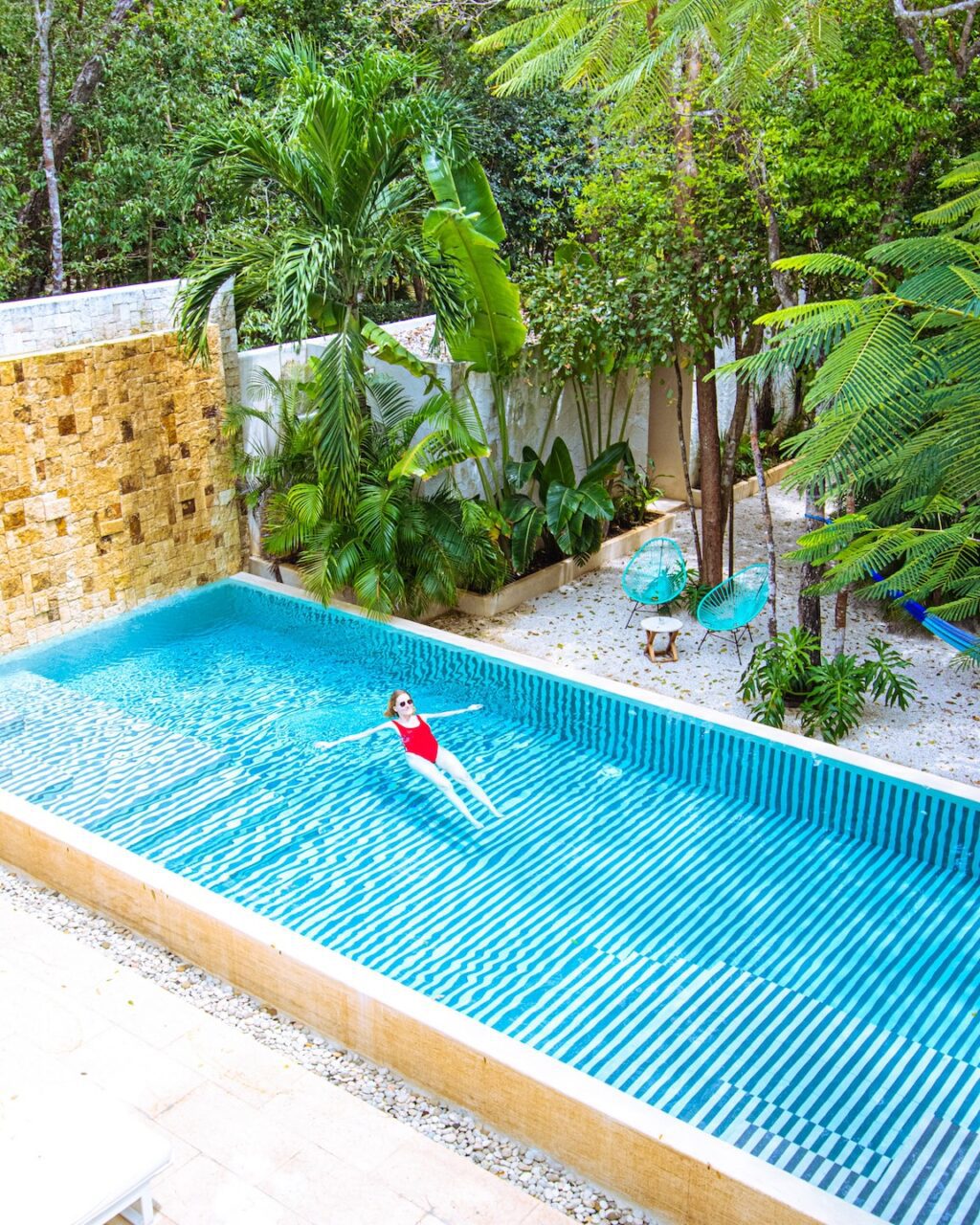
I stayed at Tiki Tiki Tulum and it was a great base for exploring cenotes, the town, and restaurants in the center. Intimate, stylish, and with a wonderful atmosphere – exactly what I expected.
What I loved about Tiki Tiki Tulum:
- Spacious rooms with working(!) air conditioning – absolutely crucial in the heat
- Beautiful green garden with hammocks – perfect for afternoon chill
- Year–round pool that saved me after a full day in cenotes
- Bar with delicious cocktails (coconut margarita – amazing!)
- Breakfast included in the price – fresh and really tasty
- Very helpful staff – they recommended great spots and cenotes off the beaten path
Tiki Tiki Tulum is a great choice if you want to sleep in a quiet, atmospheric place in the center, but at the same time have a pool, breakfast, and cool design.
You’ll find my full, detailed review of Hotel Tiki Tiki Tulum – along with a comparison to the beach hotel – in my Tulum hotel guide. There I share all the details from stays at these two completely different places.
Day 1: Gran Cenote
On your first day in Tulum, head to one of the most famous cenotes in Yucatan – Gran Cenote.
And here’s the first important lesson: arrive EXACTLY at opening at 8:10 AM. I was late by an hour on the first day and… it was a circus. Buses full of tourists from Cancun, zero peace, selfie sticks everywhere.
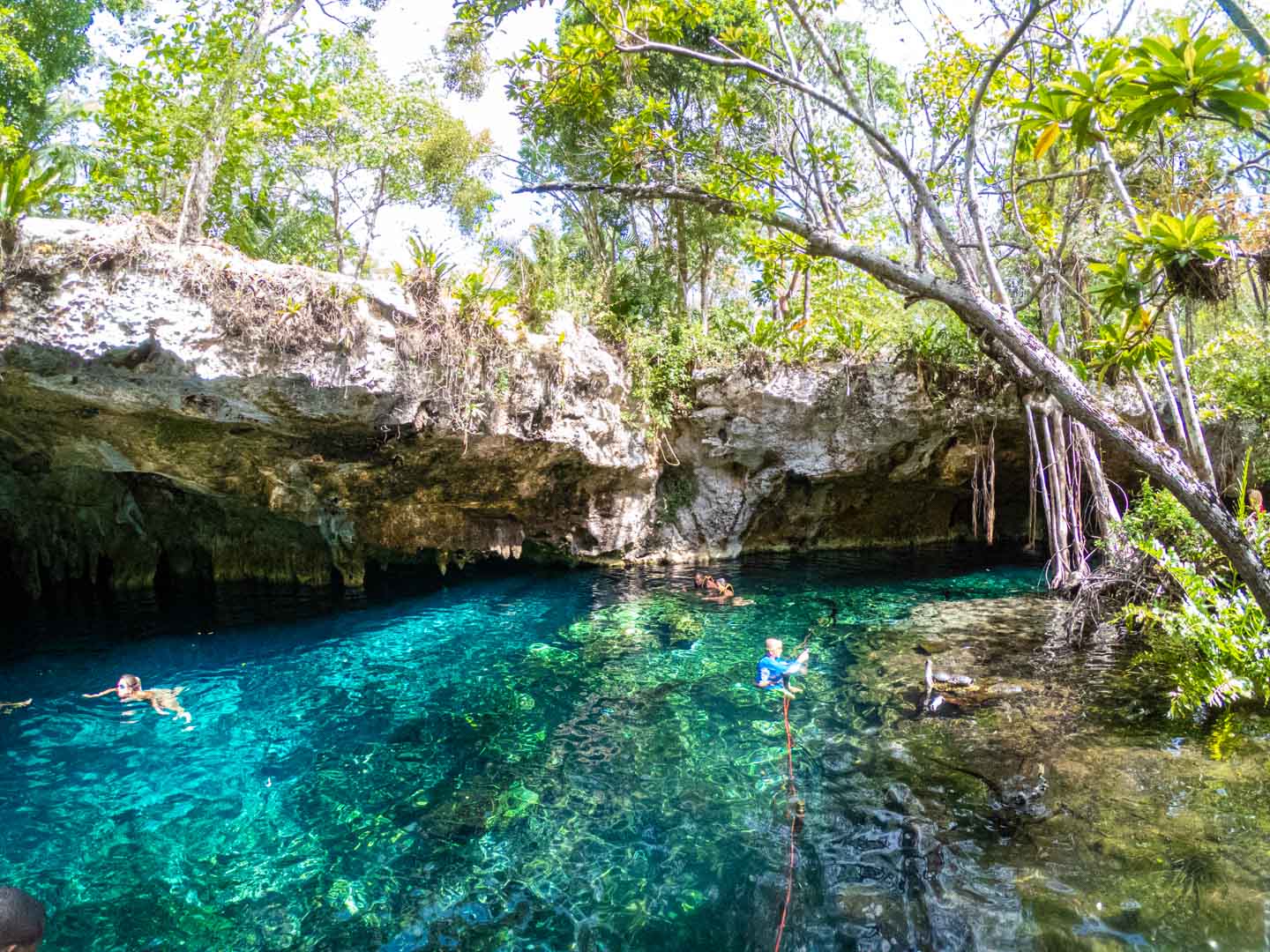
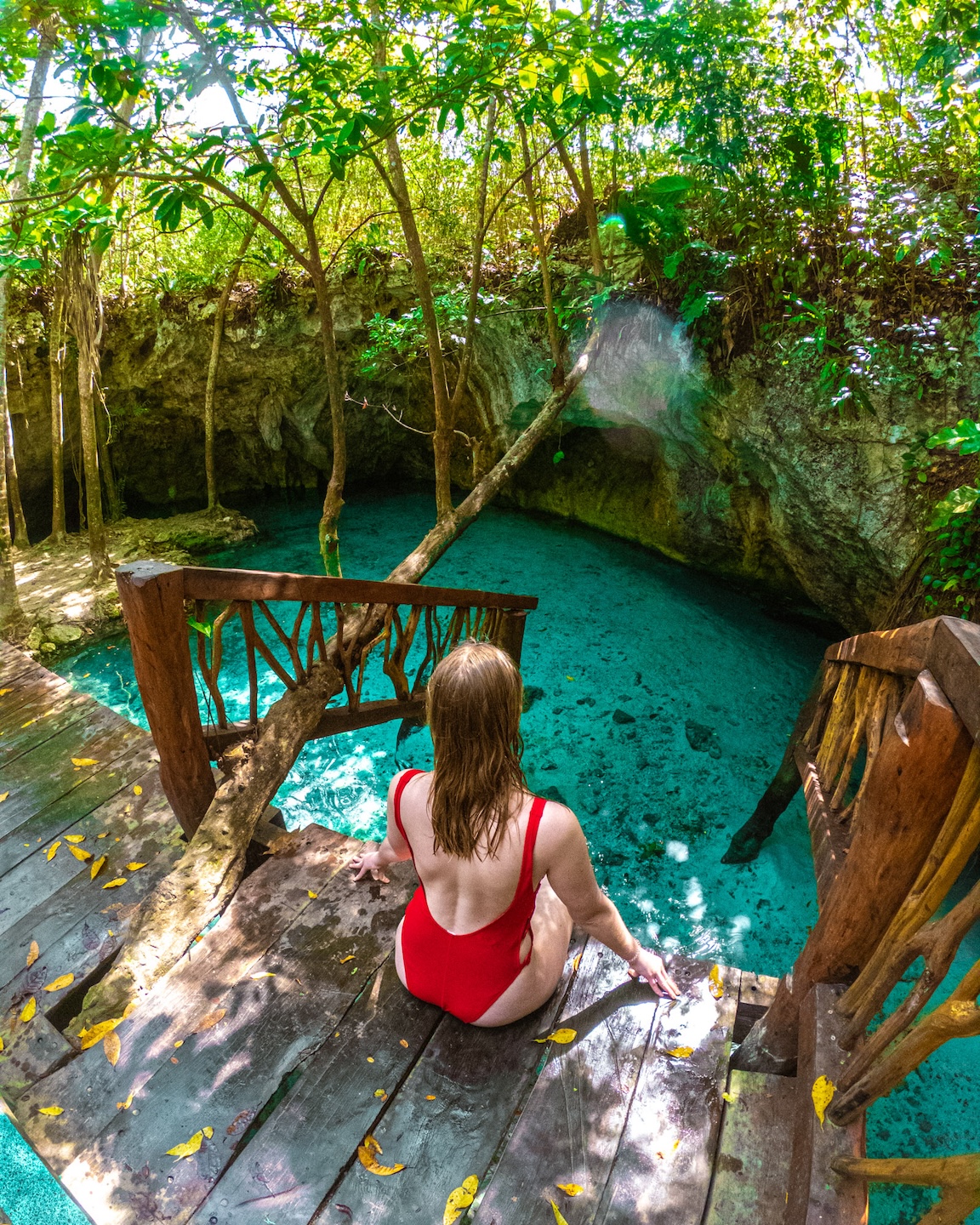
I came back the next day at 8:00 AM and experienced a completely different place. Crystal-clear water, turtles swimming around, rays of sunlight coming through the opening in the rock. Magical.
Gran Cenote is actually several connected cenotes. You can snorkel (equipment rental is an additional 150 pesos) or just relax on the wooden dock.
Practical Information:
- Opening hours: 8:10 AM-4:45 PM
- Entrance: 500 pesos (about $25) – yes, it’s a lot, but worth it
- Parking: free
- Changing rooms and showers available (cold water only)
- Be there at 8:00 AM!
Day 2: Cenote Caracol
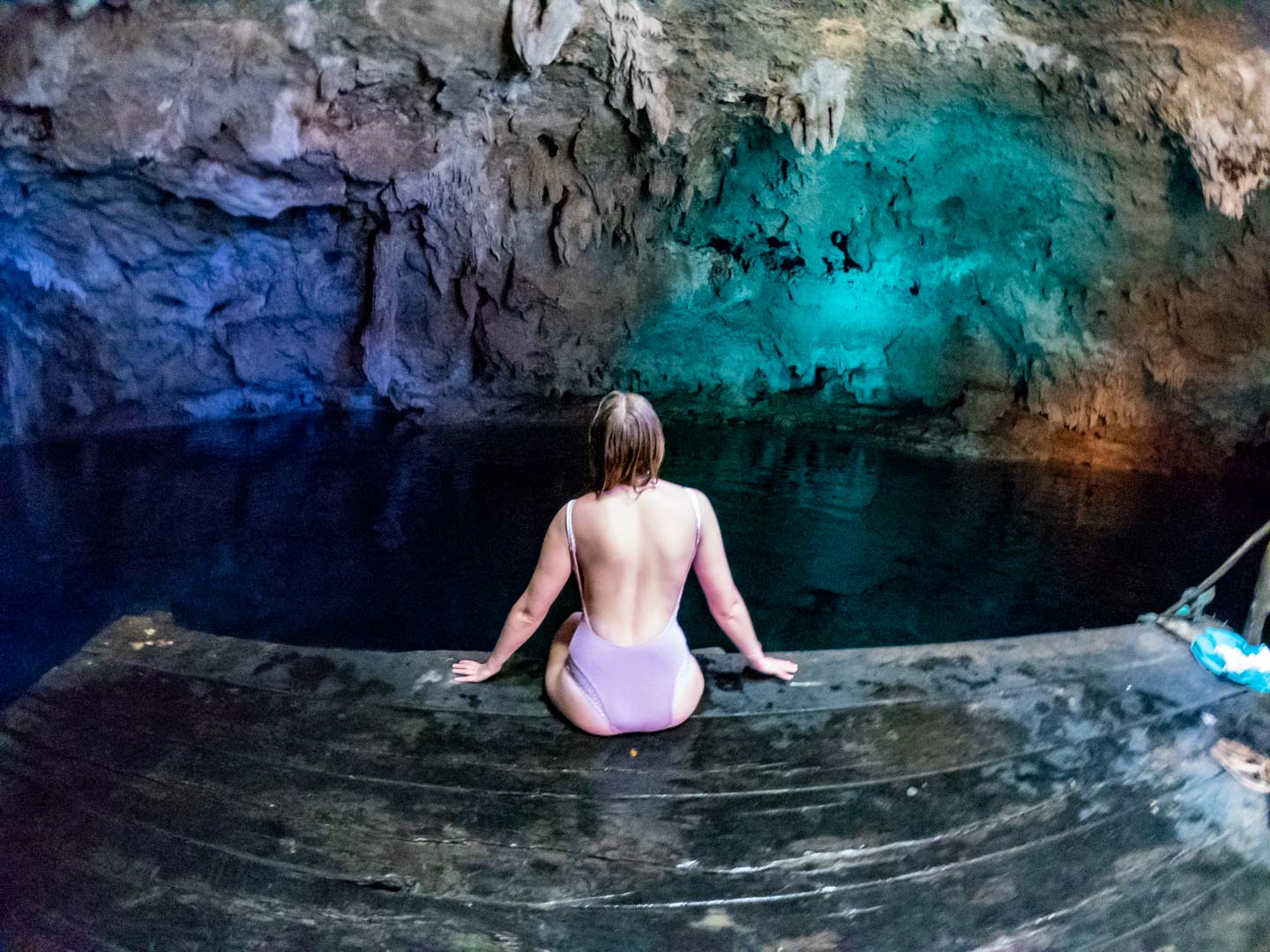
The next day, go on a jungle excursion where underground Cenote Caracol awaits.
Warning: the road there is 45 minutes of driving on a bumpy road, which Google Maps doesn’t always show correctly.
Ask at your hotel reception for exact directions or hire a driver (about 600 pesos round trip with a 2-hour wait).
But it’s really worth the trouble! In return, you get a cenote that’s truly magical – and most importantly, practically empty.
I was there with only two other people the entire time. Compared to the crowds at Gran Cenote, it was like a private paradise.
On-site, you can rent snorkeling equipment (100 pesos) and dive into crystal-clear water. The water was cooler than in other cenotes – about 73-75°F, so it can be refreshing.
And if snorkeling bores you, there’s the Tamakas-Trintizia cave nearby. Honestly? I skipped it because I was so enchanted by the cenote that I didn’t want to leave.
Practical Information:
- Opening hours: 8:00 AM-5:00 PM
- Entrance: 300 pesos
- Bring your own towel (there aren’t any on-site)
Day 3: Kaan Luum Lagoon
On the third day, head to the picturesque Kaan Luum Lagoon – a hidden gem located just 15 minutes from centro Tulum.
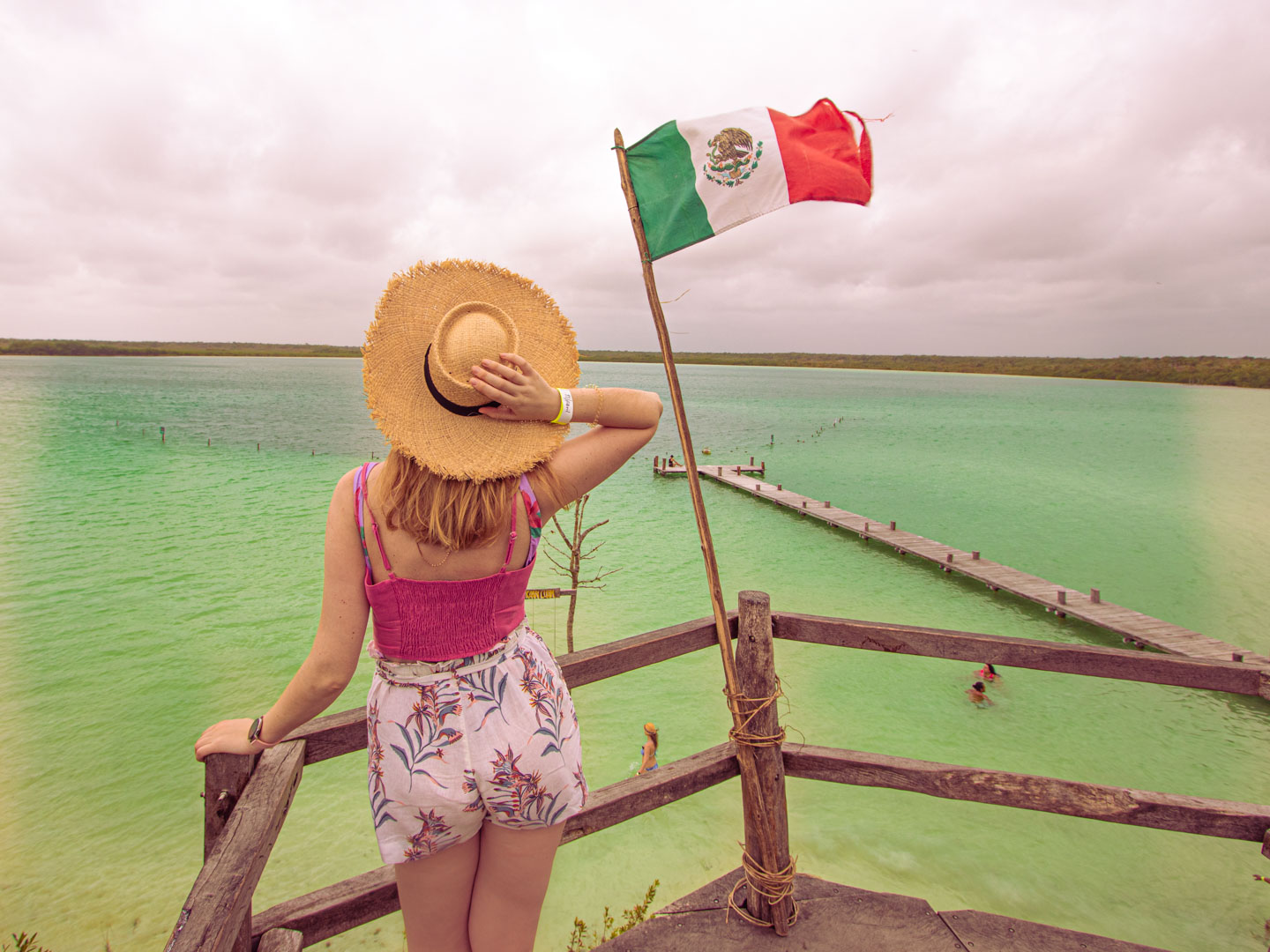
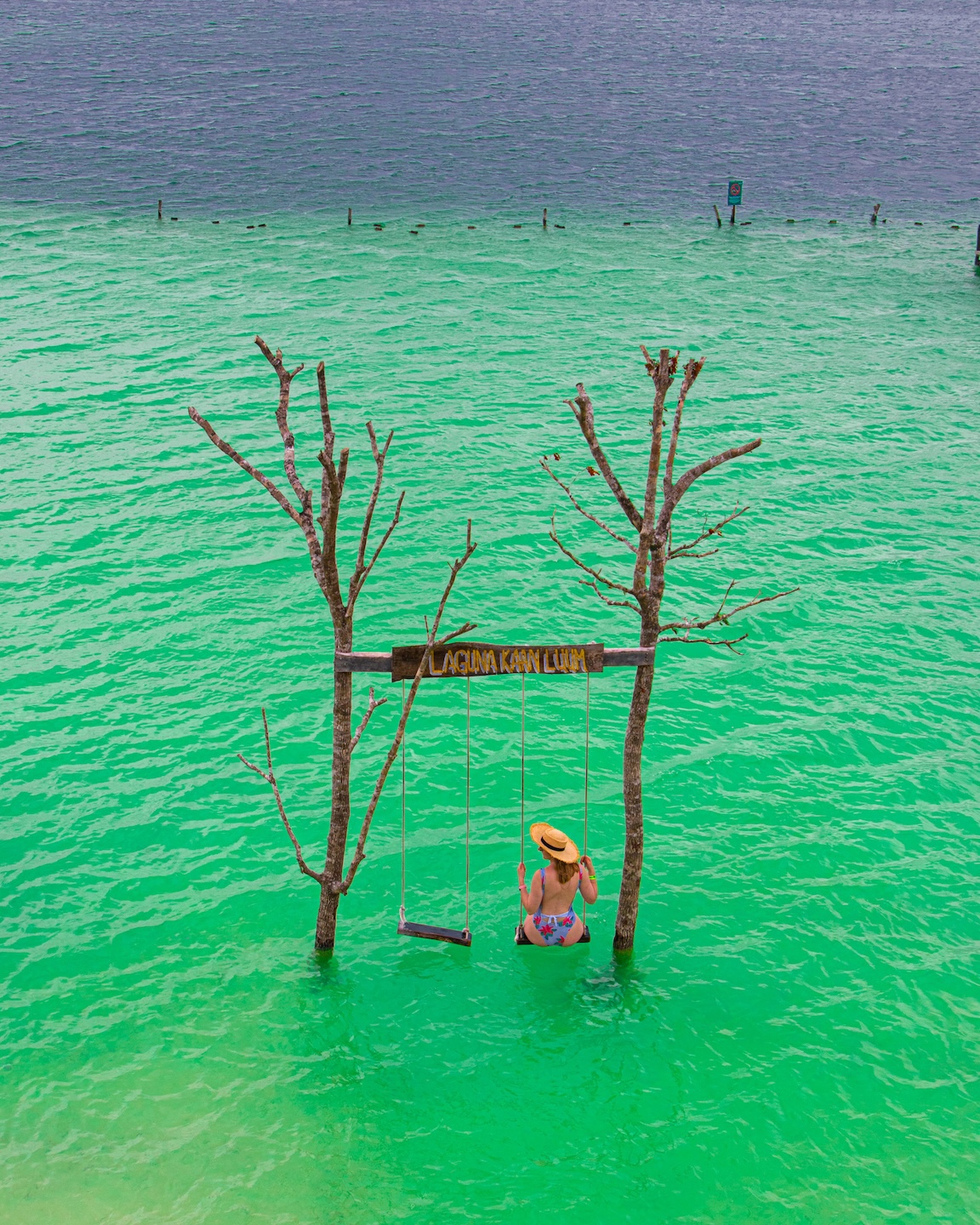
The lagoon features shallow, warm waters in shades of turquoise. In its center is a deep cenote (about 262 feet deep!), which is best seen from the viewing platform or… if you have a drone.
I didn’t have a drone on my first visit and I regretted it – aerial photos are absolutely spectacular. I saw them later on Instagram and felt a bit sad.
Hammocks are suspended over the water (which everyone photographs, so there’s a line!), swings, a viewing tower, and a wooden dock.
My Advice:
Come in the morning (9:00-10:00 AM) for the best light and before the crowds. After noon it gets really crowded
Practical Information:
- Opening hours: 9:00 AM-4:00 PM (last entry at 3:30 PM)
- Entrance: 300 pesos
- Parking: 50 pesos
Days 4-7: Tulum Beach
After three days in centro, move to the hotel zone by the beach. This is where the real Tulum begins – the Instagram one.
Beaches are literally at your fingertips, restaurants often located right on the sand, sunset dinners become a daily occurrence.
But be prepared for much higher prices. A cocktail that cost 120 pesos in centro is now 350 pesos here. Tacos? 250 pesos for three. Hotel? Minimum $200 per night.
I decided to stay at a beachfront glamping site and honestly? It was worth it. You can treat yourself once in a while. After all, where else can you sleep in the treetops or in a luxury tent in the jungle?
If you’re looking for more details on what to do in Tulum, check out my complete guide to the top things to do in Tulum.
Where to Stay in Tulum by the Beach
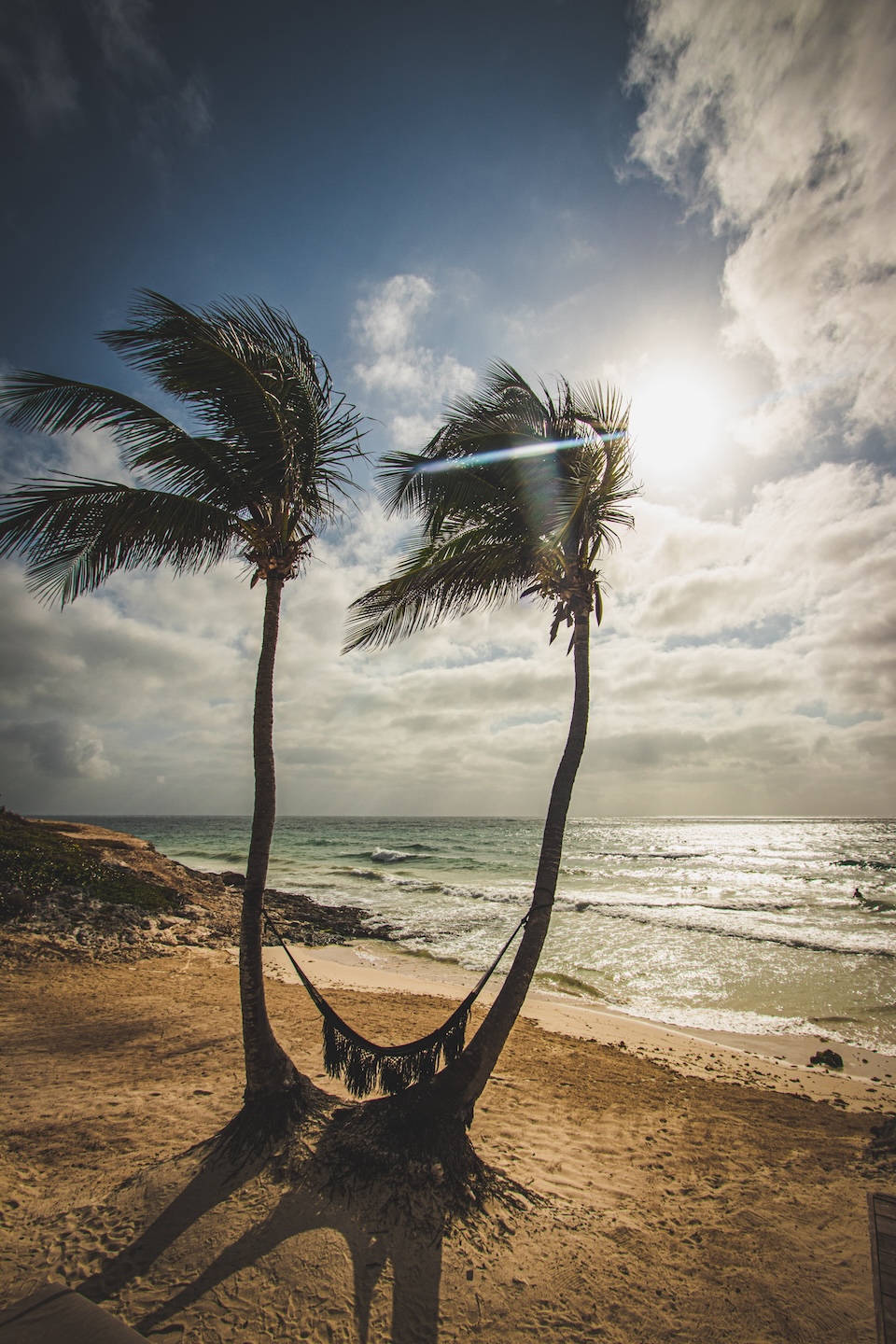
If you dream of a unique, boutique accommodation right by the ocean, I can wholeheartedly recommend Our Habitas Tulum. This was my gift to myself – and it was absolutely worth it.
The hotel sits directly on a private beach and offers amazing “tents” that have nothing in common with regular tents except being surrounded by nature.
In reality, these are luxury, designer structures with king-size beds, private bathrooms, and large terraces overlooking the jungle or the Caribbean Sea.
The place is minimalist, aesthetic, and full of calm, boho energy – perfect if you’re looking for a break from loud downtown Tulum.
What amazed me about Our Habitas Tulum:
- Morning yoga classes on the beach (free, at 7:00 and 9:00 AM)
- MORO restaurant with brilliant fusion cuisine (Middle Eastern flavors + local ingredients)
- Private beach only for hotel guests
- Amazing vibe – luxury, but in a natural, boho style
- Sense of privacy and immersion in nature
This is the perfect choice if you want to experience Tulum in the most magical, peaceful, and refined way.
You’ll find my full, detailed review of Our Habitas – along with a comparison to the downtown hotel – in my Tulum hotel guide.
You can read my full review of Our Habitas – plus how it compares to the downtown hotel – in my Tulum hotel guide.

Day 4: Tulum Ruins
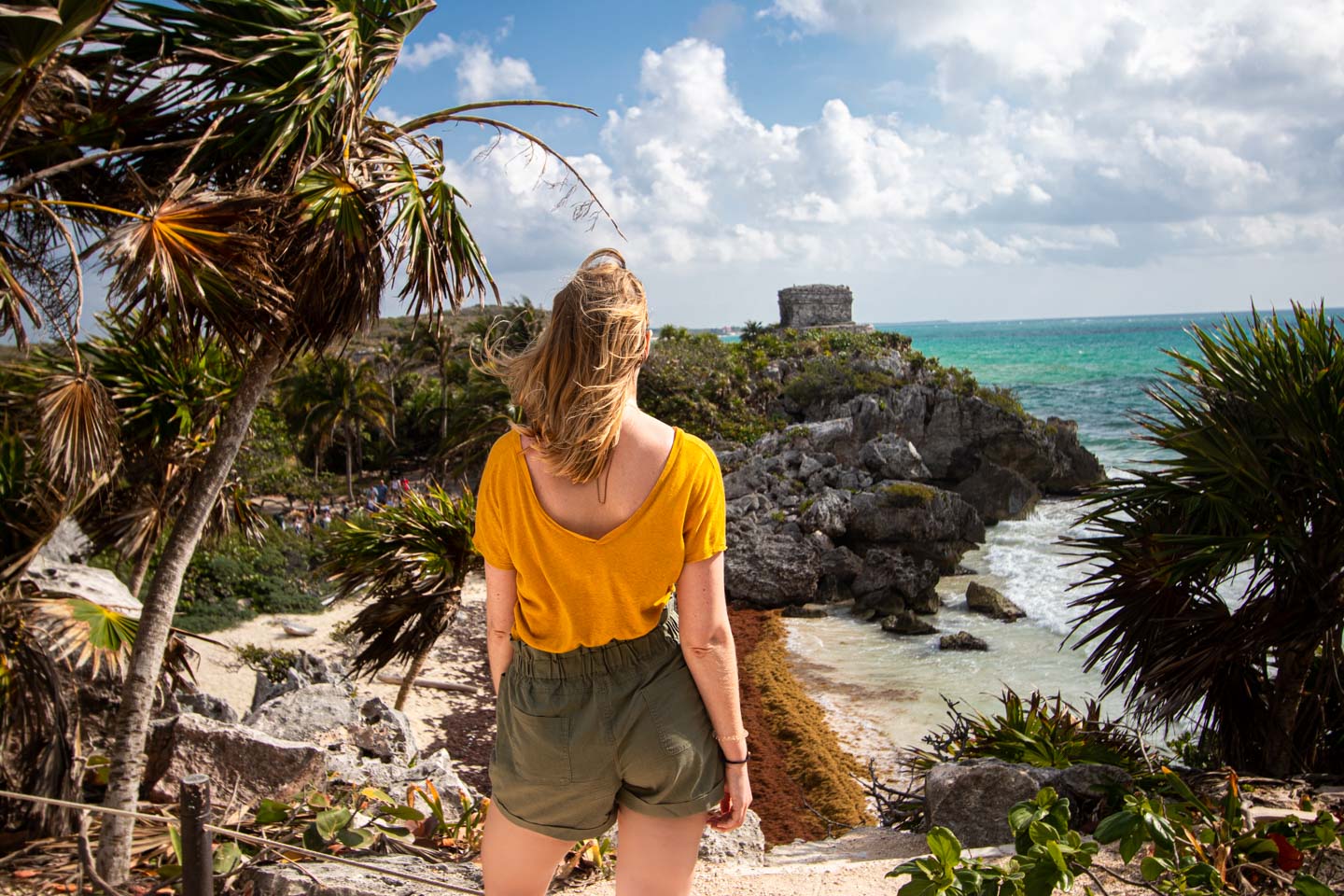
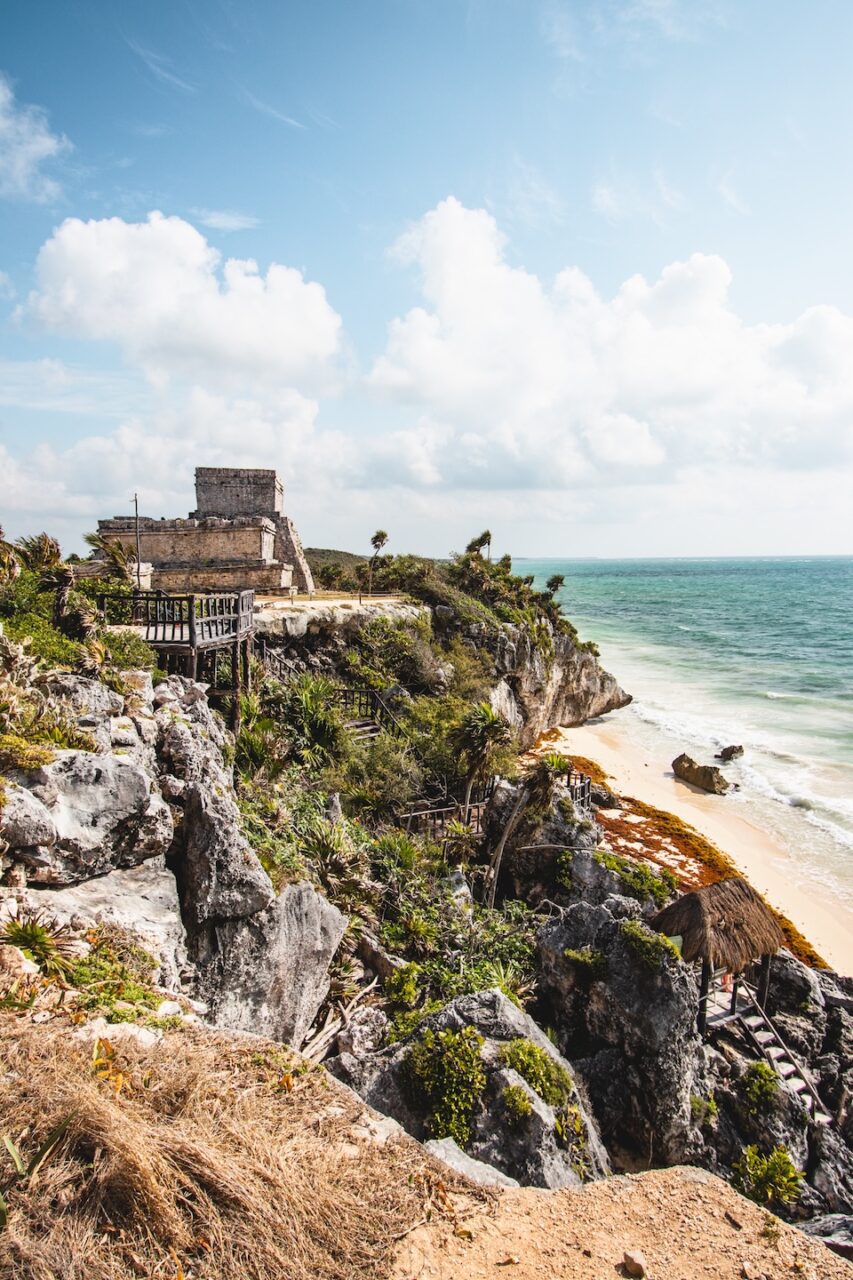
On the fourth day, head to the Mayan city ruins – one of the region’s biggest attractions.
And I’ll be honest here: it was beautiful, but also a bit disappointing. Why? Crowds. Huge crowds. And heat – 95°F with no shade.
But what makes this place special is its location on a cliff overlooking the sea.
Sunrise over the Caribbean Sea with a view of El Castillo temple? It was one of the most beautiful moments of my trip.
It used to be an important Mayan trading center. Today it’s one of the most photographed places in Mexico.
While touring, be sure to see:
- Temple of the Descending God – with a characteristic figure of a diving deity
- Playa Ruinas – beach right below the ruins (perfect for cooling off after sightseeing)
- El Castillo – main temple that served as a lighthouse
- Temple of the Frescoes – with preserved murals (you can no longer enter inside)
My Tips:
- Come at opening at 8:00 AM (yes, again!) – after 10:00 AM it’s packed
- Avoid Sundays (free entry for Mexicans = mega crowds)
- Bring water (a bottle on-site is 50 pesos!)
- Hat and sunscreen are a must
- Plan for 2-3 hours of sightseeing
Practical Information:
- Opening hours: 8:00 AM-5:00 PM
- Entrance: 515 pesos (~$26 USD)
- Parking: 150 pesos
Day 5: Cenote Taak Bi Ha
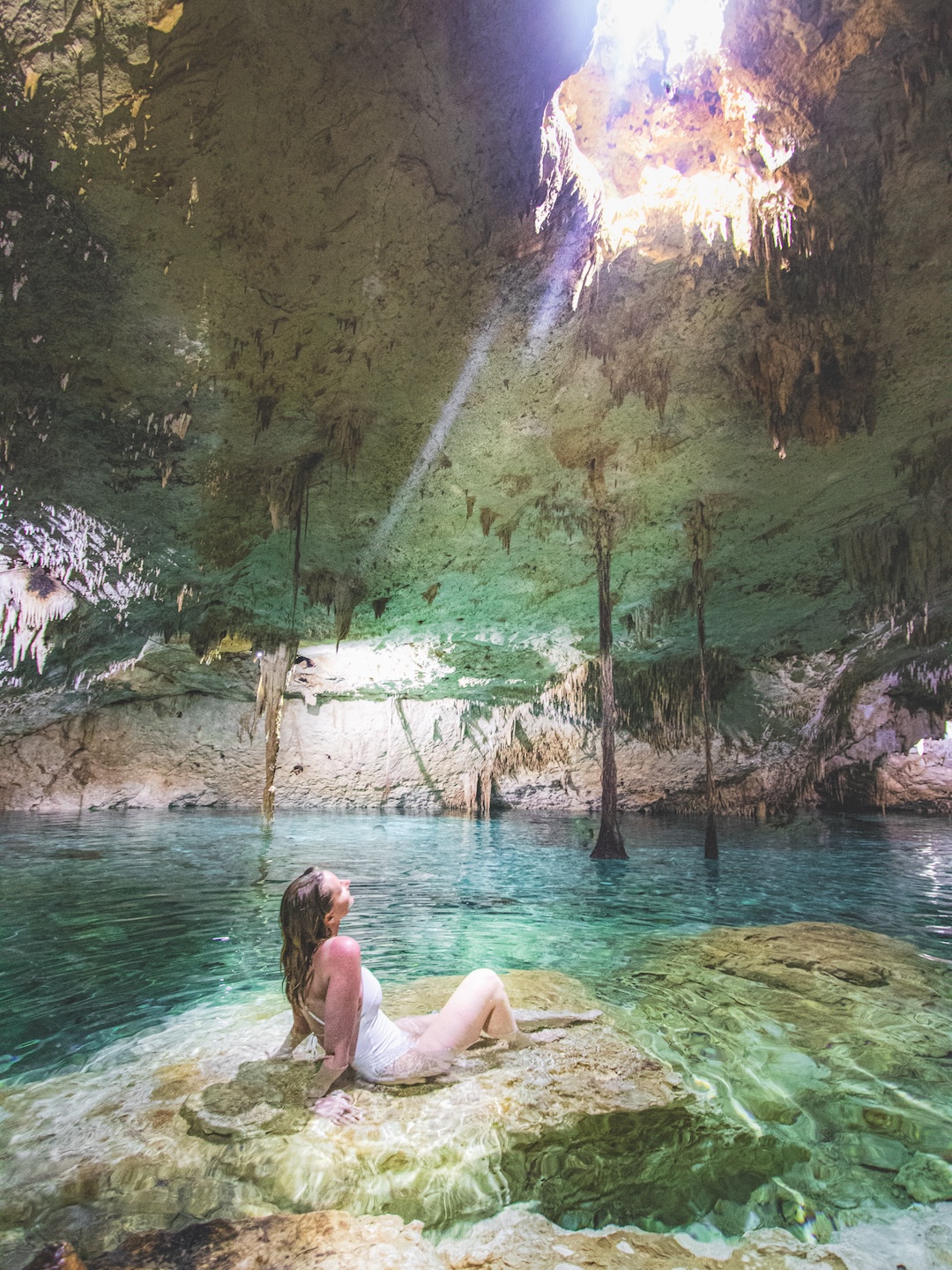
This was my favorite cenote in all of Yucatan. Seriously. Of all the ones I visited, this one made the biggest impression on me.
Why? It’s deep underground, decorated with beautiful rock formations – stalactites and stalagmites that look like works of art.
Additionally, it’s beautifully lit, which gives an opportunity to take unique photos (finally my Instagram looked like something more than just selfies!).
The water was colder than in other cenotes (about 72°F), but you just take a deeper breath and go in. After a moment, your body gets used to it.
The biggest downside? The light for photos is best between 11:00 AM-1:00 PM, but that’s also the most crowded time.
I was there at 9:30 AM and had the cenote practically to myself for 45 minutes. Then crowds from Playa del Carmen started arriving.
Practical Information:
- Opening hours: 9:30 AM-5:00 PM
- Entrance: 350 pesos
Day 6: Instagram Spots in Tulum
On the sixth day, have yourself an “Instagram day.” Even if you don’t plan to take photos like influencers, these places are really worth seeing – they’re true works of art.
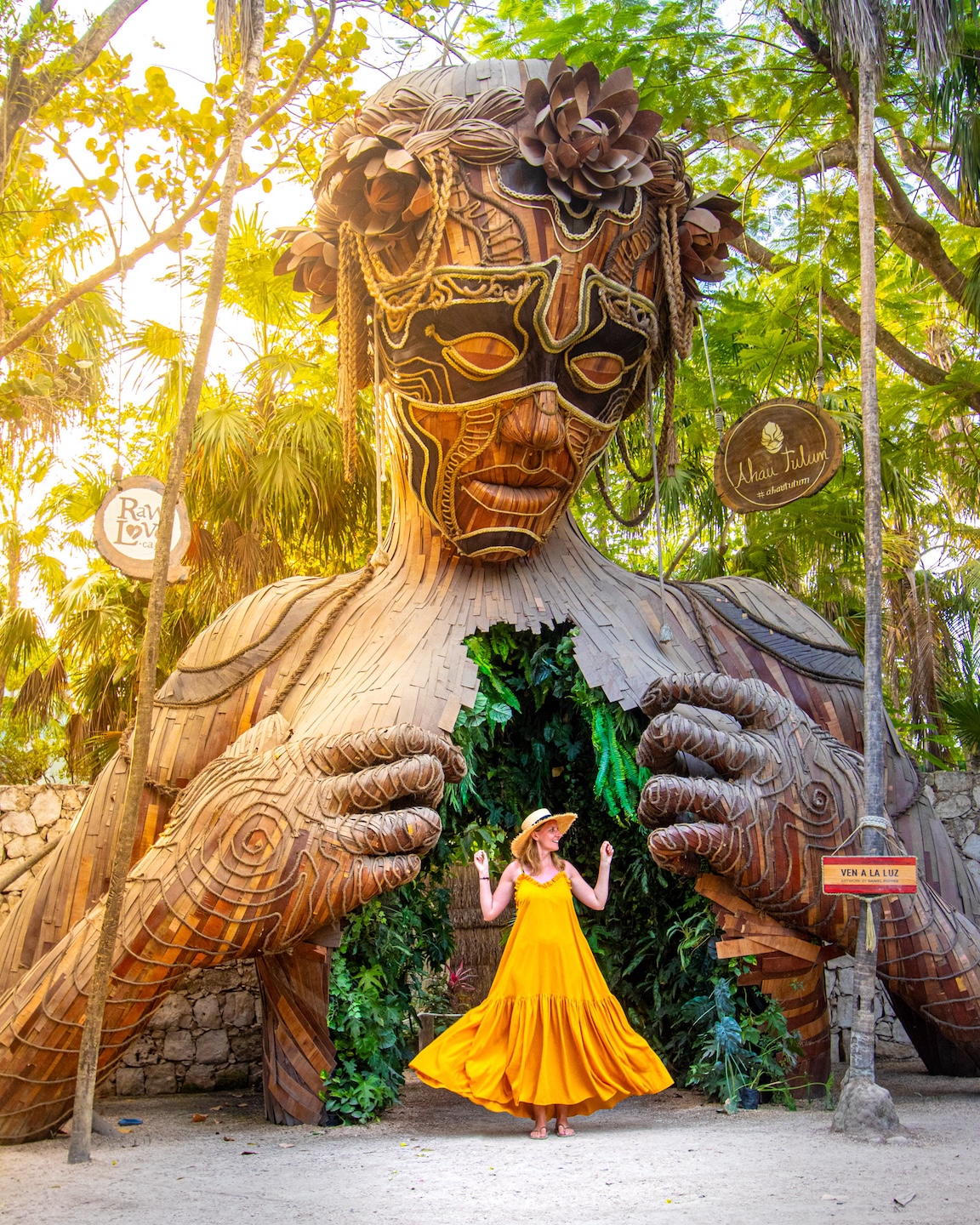
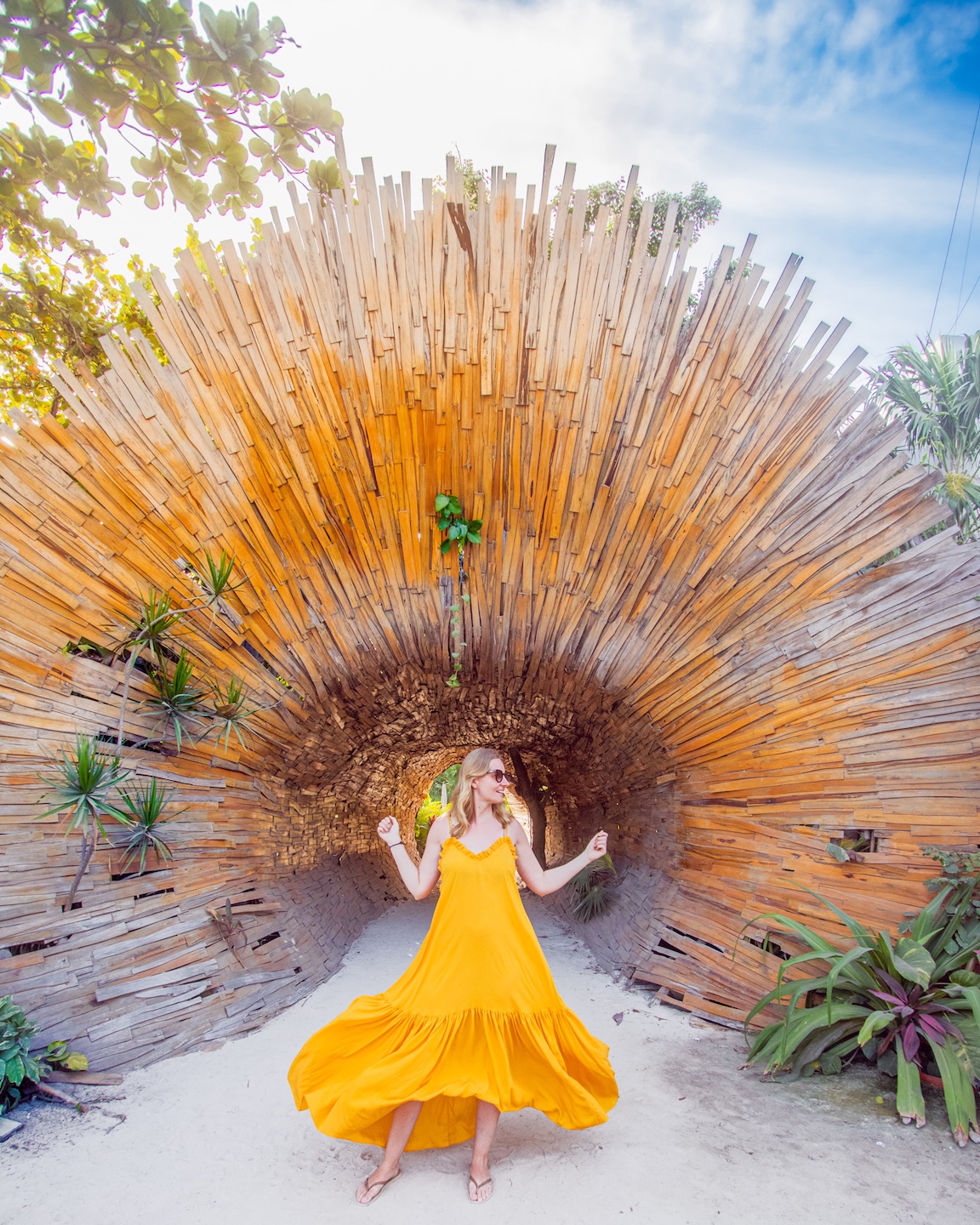
Escultura Ven a la Luz – wooden sculpture in front of Hotel Ahau Tulum. This is the most photographed place in Tulum.
I was there at 6:45 AM (sunrise!) and for 15 minutes I had it to myself. By 8:00 AM there was already a line of 30 people.
Follow That Dream Sign at Lolita Lolita Tulum boutique – iconic pink neon.
Note: the shop only opens at 10:00 AM, so you can’t take photos early in the morning. I was there at 10:15 AM and waited about 20 minutes for my turn.
Other places worth capturing:
- Entrance to Selina Tulum hotel (graffiti art)
- Giant pink rabbit at Conestesia
- Cute swings at Matcha Mamma
- Turquoise tuk-tuk at I Scream Bar (ice cream is a must!)
My Advice:
Plan these places for one day, preferably starting at dawn. This way you’ll avoid crowds and have better light.
Day 7: Playa Paraiso and/or Playa Pescadores
On my last day in Tulum, I decided to see if public beaches are as beautiful as the private ones by hotels.
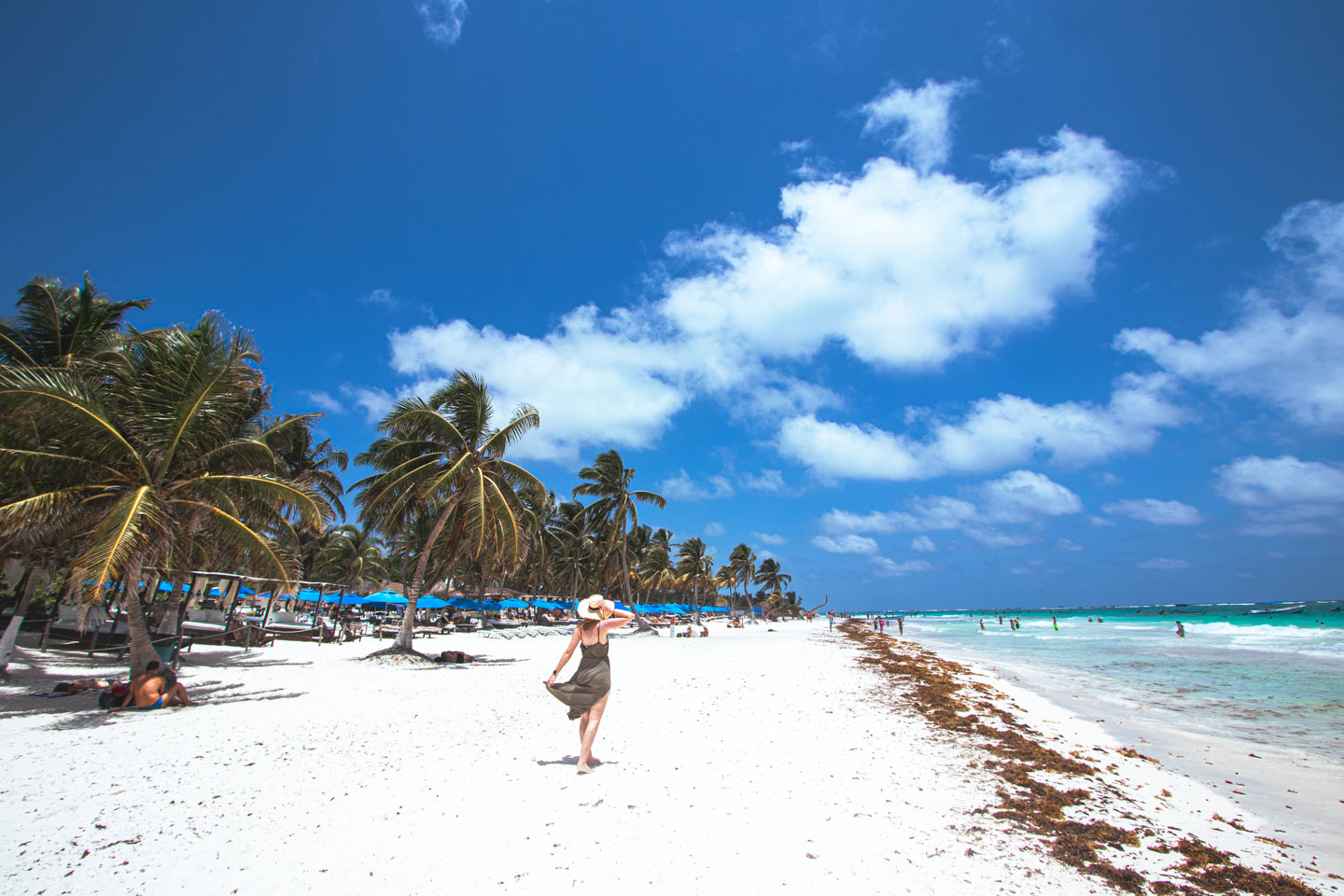
Playa Paraiso – and you know what? It really is paradise. Golden sands, turquoise water, palm trees bent by the wind.
This is the beach that drew crowds to Tulum and has been repeatedly named one of the best beaches in the world.
But there’s one problem: seaweed (sargassum).
I was there in April and it was fine, but I heard from locals that from May to August it can be really bad. Entire beaches covered with seaweed, unpleasant smell. Something Instagram doesn’t talk about.
Playa Pescadores – a quieter option, a bit further north. The name comes from fishermen who set out to sea from here early in the morning.
At 6:30 AM I watched them prepare their boats – it was authentic and beautiful.
There are restaurants on the beach serving freshly caught fish (ceviche for 180 pesos, grilled fish for 250 pesos).
Practical Information:
- Bring your own towel and water
- Both beaches are free
- No lockers/showers
- Lounge chairs: 200 pesos per day (can be negotiated)
- Best in the morning (7-11 AM) – afternoons are hot and more crowded
Days 8-11: Merida
On the eighth day, I left the coast and headed inland to Merida, the capital of Yucatan state. The drive from Tulum took me about 3.5 hours (with one coffee stop in a small village).
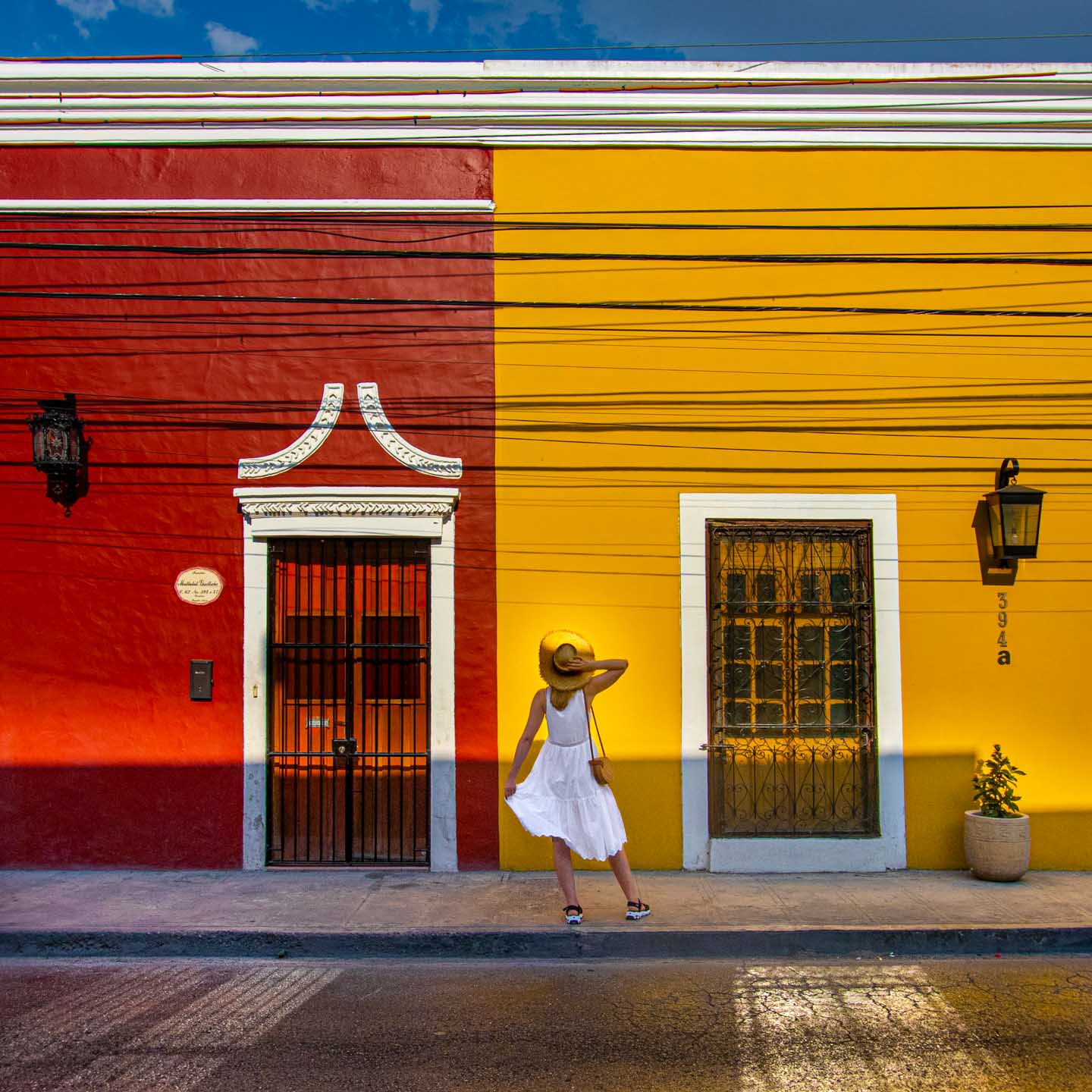
Merida was a complete contrast to Tulum. Instead of beach vibes, I got colonial charm, fewer tourists, and… real Mexico. Definitely one of my favorite places on the entire route.
It’s a city full of colonial charm, with beautiful buildings that transport you back in time. Colorful facades, narrow streets, lively plazas – I felt like I’d gone back 200 years.
It’s also the region’s cultural center, with numerous museums, art galleries, and unique music and dance.
And here you must try the local cuisine! Merida is famous for the best Yucatecan cuisine in the entire region. If you want details, check out my post about 10 dishes you must try in Yucatan.
Where to Stay in Merida
I stayed at Rosas & Xocolate Boutique Hotel+Spa and… wow.
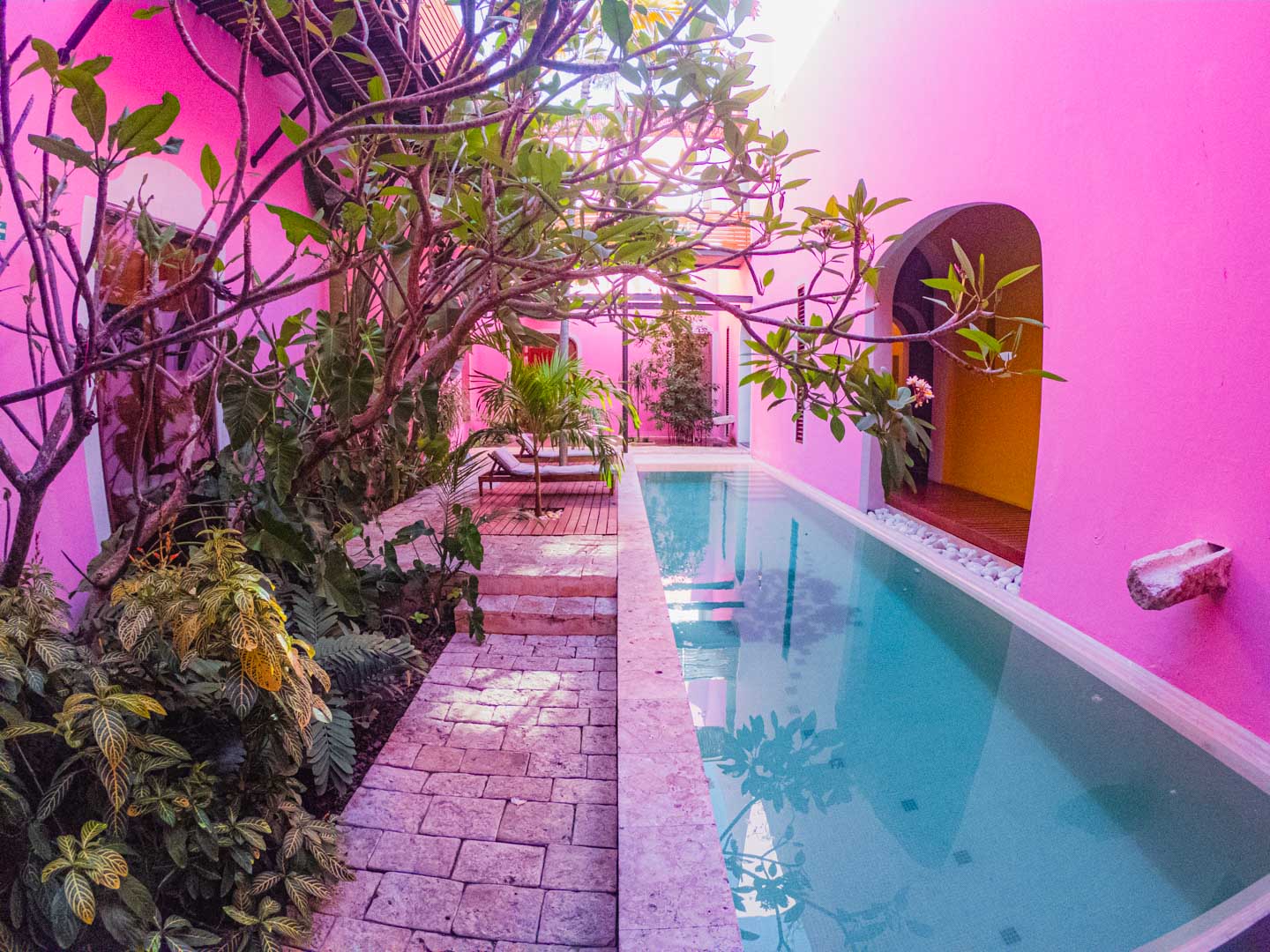
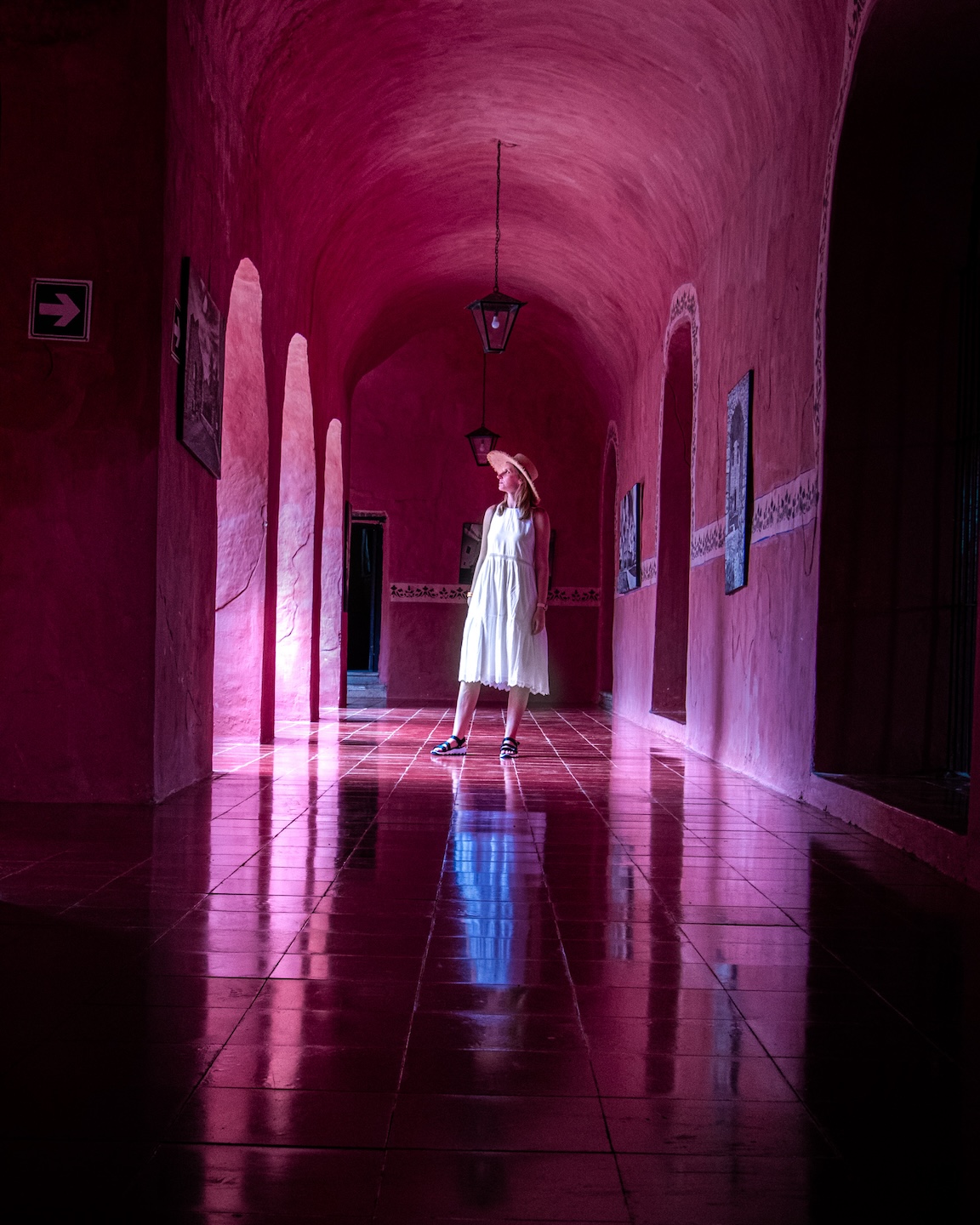
That pink! I’d seen this place a million times on Instagram and thought: “probably overhyped.” Nope. In reality, it’s even better.
The hotel is housed in a restored French-style mansion on Paseo Montejo – Merida’s most beautiful avenue, full of colonial villas.
Its characteristic, intensely pink walls make it stand out from a mile away. It’s one of those places you can’t miss.
What amazed me about Rosas & Xocolate:
- Elegant restaurant with excellent breakfast included in the price
- Stone pool – perfect after a day of sightseeing in the heat
- Spa with massages (mine for 800 pesos was one of the best of my life)
- Rooftop terrace with city views – perfect for sunset
- Location in the heart of Merida – close to everything, and the atmosphere is magical
This is a hotel that combines design, luxury, and local vibe – perfect if you want to experience Merida more stylishly and with a bit of pampering.
Day 8-9: Exploring Merida
I spent two full days exploring Merida and honestly regretted not staying longer. This city has an amazing atmosphere and really has a lot to offer.
Plaza Grande – the central square where I started my adventure. Every day at 9:30 AM, free city tours depart from here (in Spanish and English).
Ours lasted 2 hours and was great – I learned tons of interesting facts about the city’s history.
Merida Cathedral – the oldest cathedral in continental America! It was built in 1598 on the ruins of an old Mayan temple. Standing there, I thought about all the centuries of history this place has witnessed.
La Casa de Montejo – beautiful 16th-century townhouse with a museum. It’s the only Renaissance house in Mexico that has survived nearly five centuries.
Entry is free (yes, free!), and inside you can see how Spanish nobility lived.
Other places worth seeing:
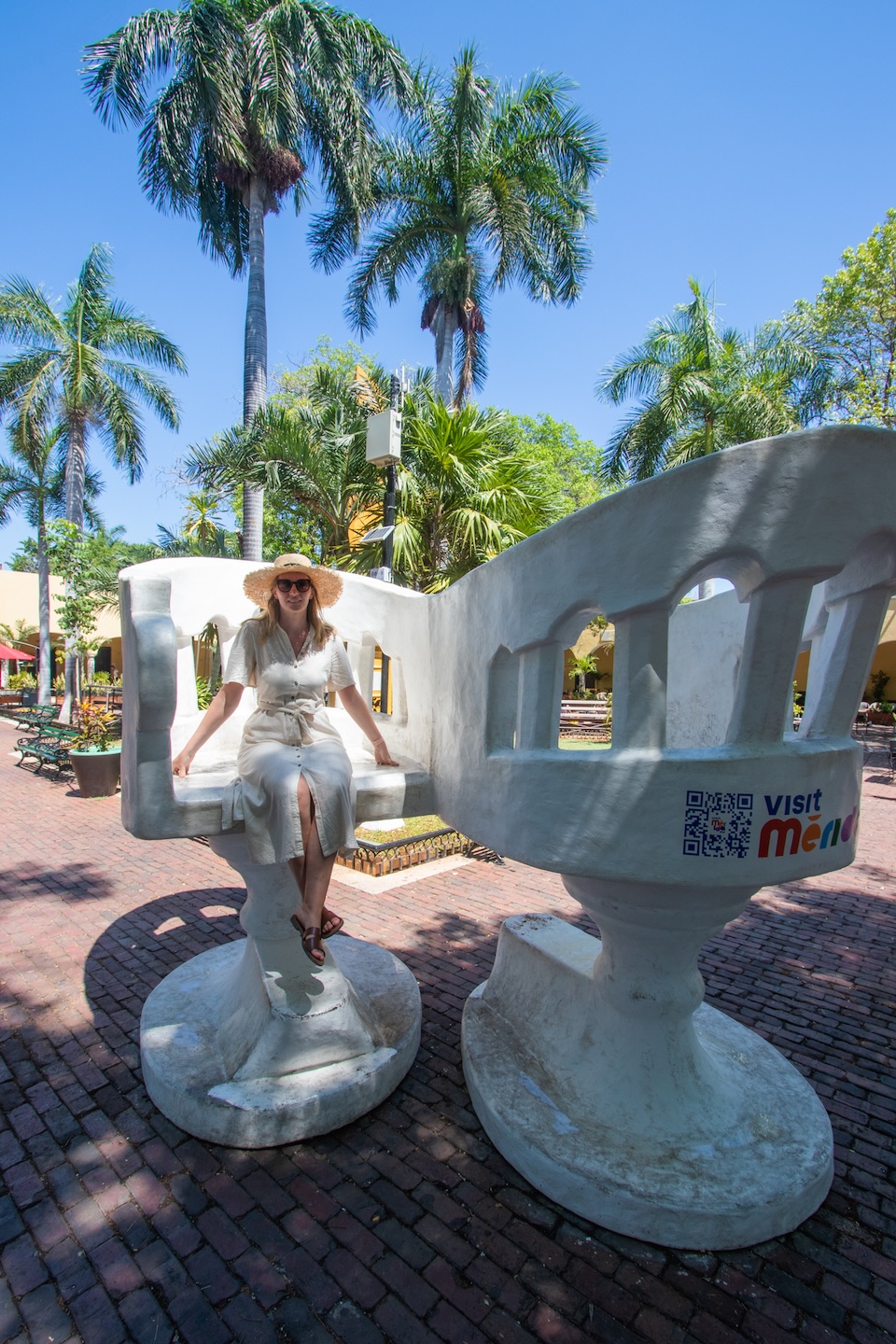
- Park Santa Lucia with giant “kissing chairs” (perfect photo spot)
- Paseo de Montejo – main avenue with original sculptures and beautiful mansions
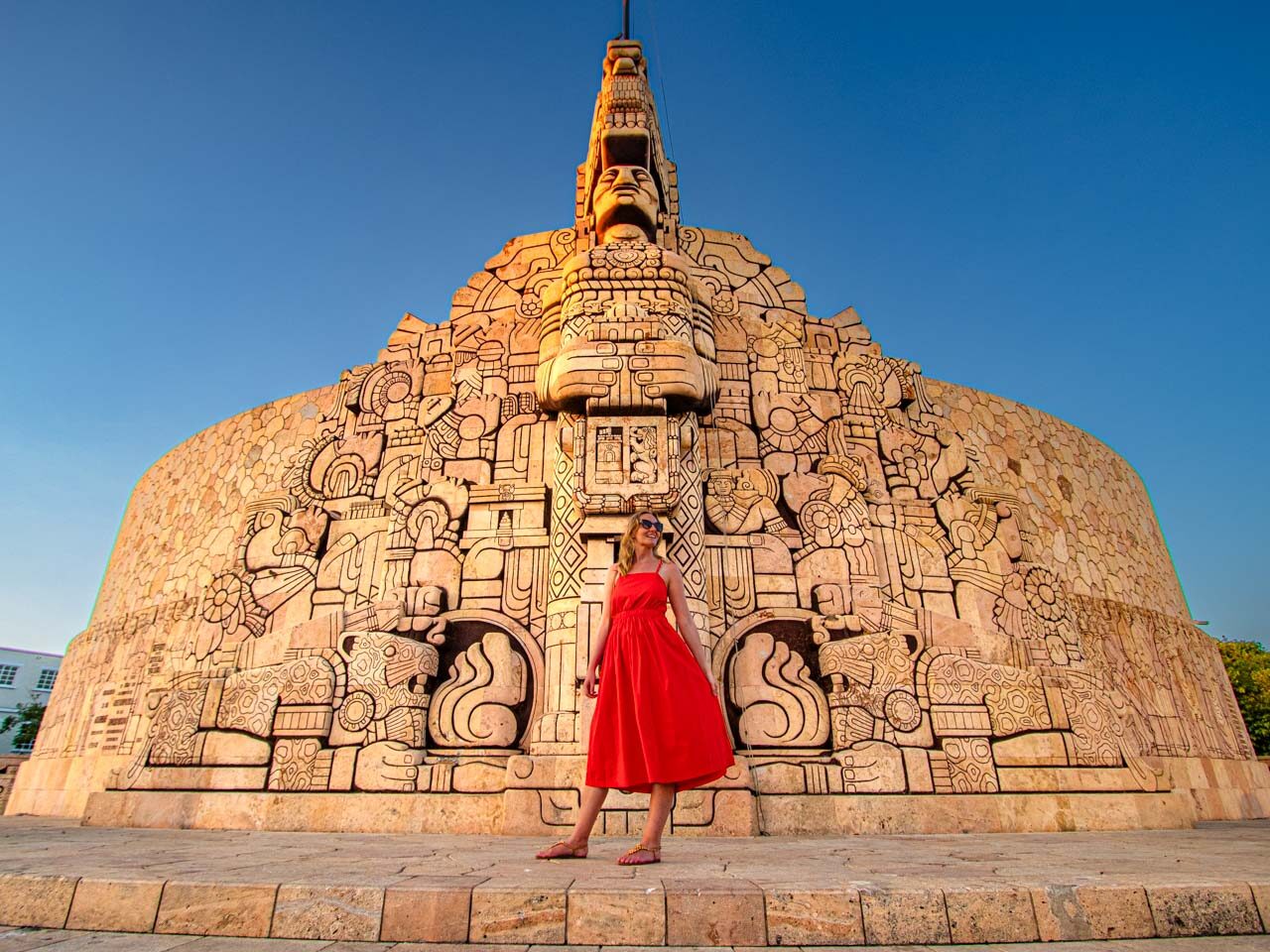
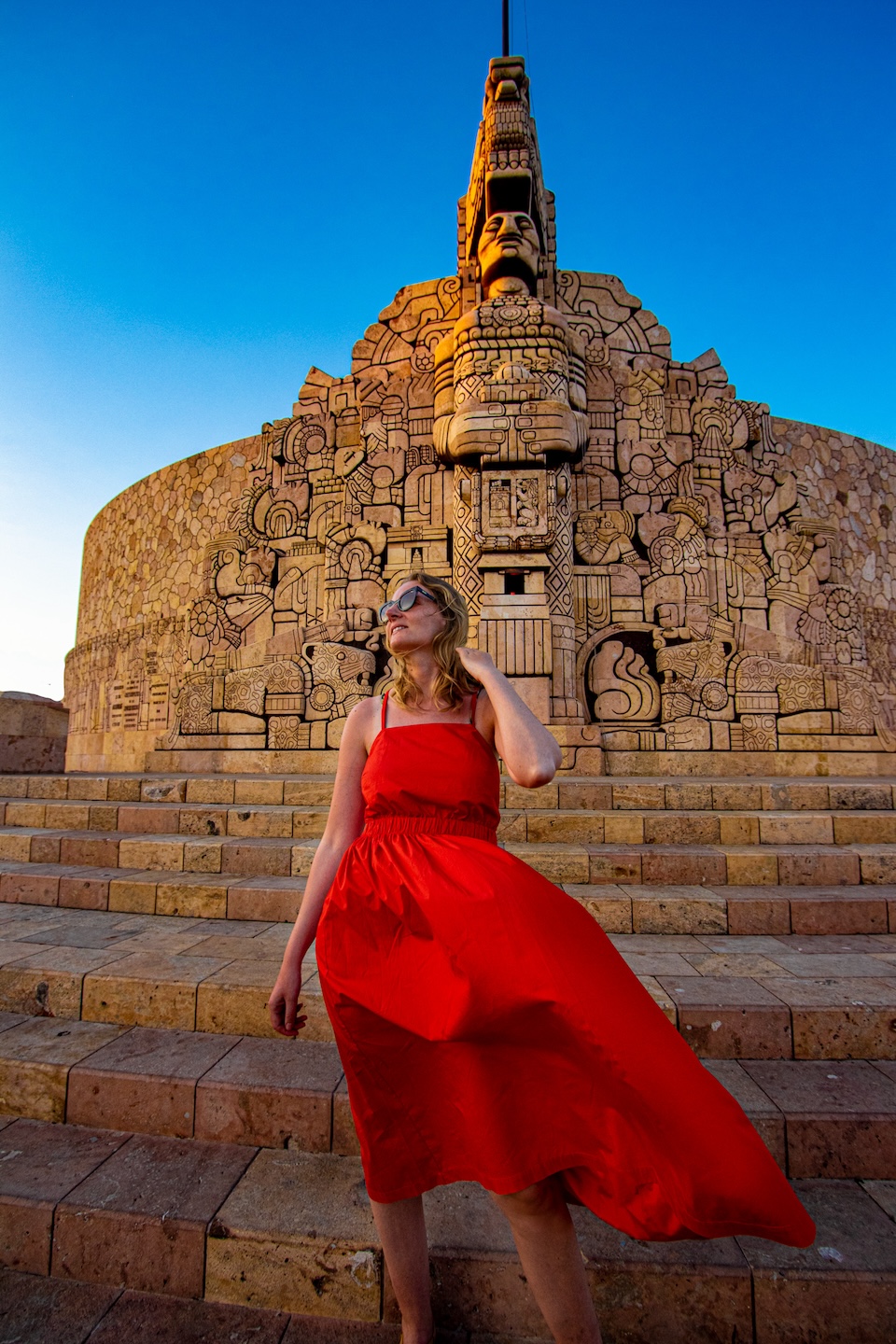
- Monumento a la Patria – impressive monument with Mayan and Spanish stories
- Gran Museo del Mundo Maya – best museum about Mayan culture (entrance: 150 pesos)
My Advice:
Dedicate the first day to downtown (Plaza Grande, cathedral, museums). The second day to Paseo de Montejo and Gran Museo del Mundo Maya.
Where to Eat in Merida
Merida is where I truly fell in love with Mexican cuisine.
This is where traditional Mayan dishes meet a modern approach to flavor, and the food is fresh, aromatic, and full of character. Here are my tried-and-true spots.
Taqueria La Lupita
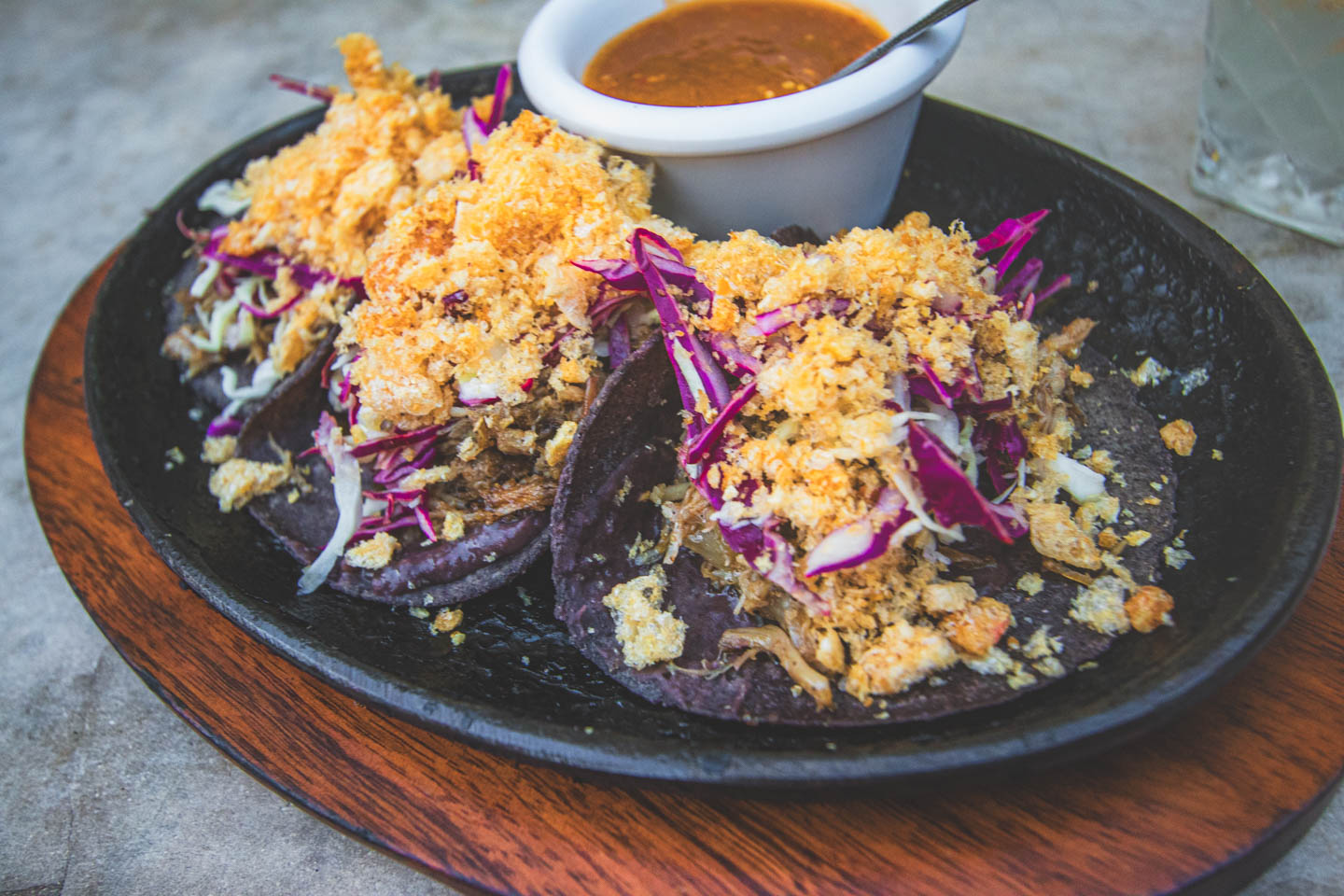
Best tacos in Merida – I went there three times and each time it was perfect.
Their tacos de cochinita pibil (30 pesos each) are an absolute revelation. Locals eat here mainly after work, so authenticity is guaranteed.
De La Union
Second spot for great tacos, recommended by hotel staff. Fewer tourists, more local atmosphere. Definitely try tacos de lechón, or roasted piglet – tender, juicy, and full of flavor.
Latte Quatro Sette
Best coffee in Merida. I came back here every morning. Cold brew with vanilla ice cream (80 pesos) became my fuel during city sightseeing.
Pola Gelato Shop
Best ice cream in Merida and some of the best I had in Mexico. Flavors are inspired by local ingredients: passion fruit, mango chili, horchata. A double cone cost 65 pesos and was worth every penny.
Catrín
Perfect place for dinner and a good cocktail. Elegant, modern, but still with a local twist. Their hibiscus margarita (140 pesos) is an absolute must-try.
Day 10: Uxmal
After two days in Merida, I went on a trip to Uxmal – one of the most beautiful ancient Mayan cities.
This UNESCO World Heritage Site is located less than 1.5 hours south of Merida. The road was beautiful – I drove through small towns and agave fields.
The city was built in the characteristic Puuc style, known for its spectacular decorations.
When I first saw those details in stone, I was shocked – how did they do this without modern tools?!
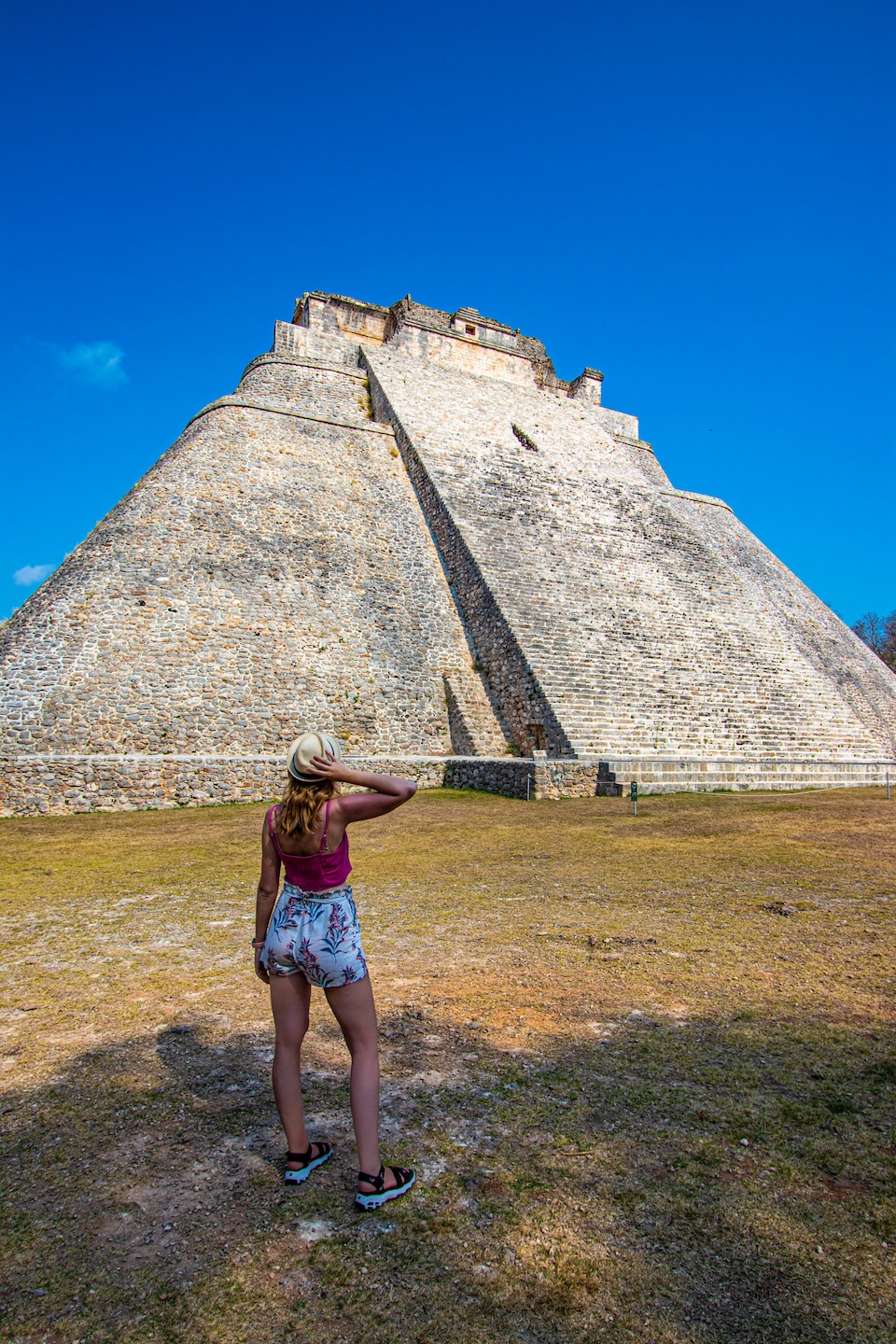
What I liked most about Uxmal? You can still climb most of the ruins (except the Pyramid of the Magician). At Chichén Itzá you can’t anymore, so this was a real treat.
Make sure to see:
- Governor’s Palace – 328 feet long, considered a masterpiece of Mayan architecture
- House of the Nuns, Turtles, and Pigeons – each with unique details
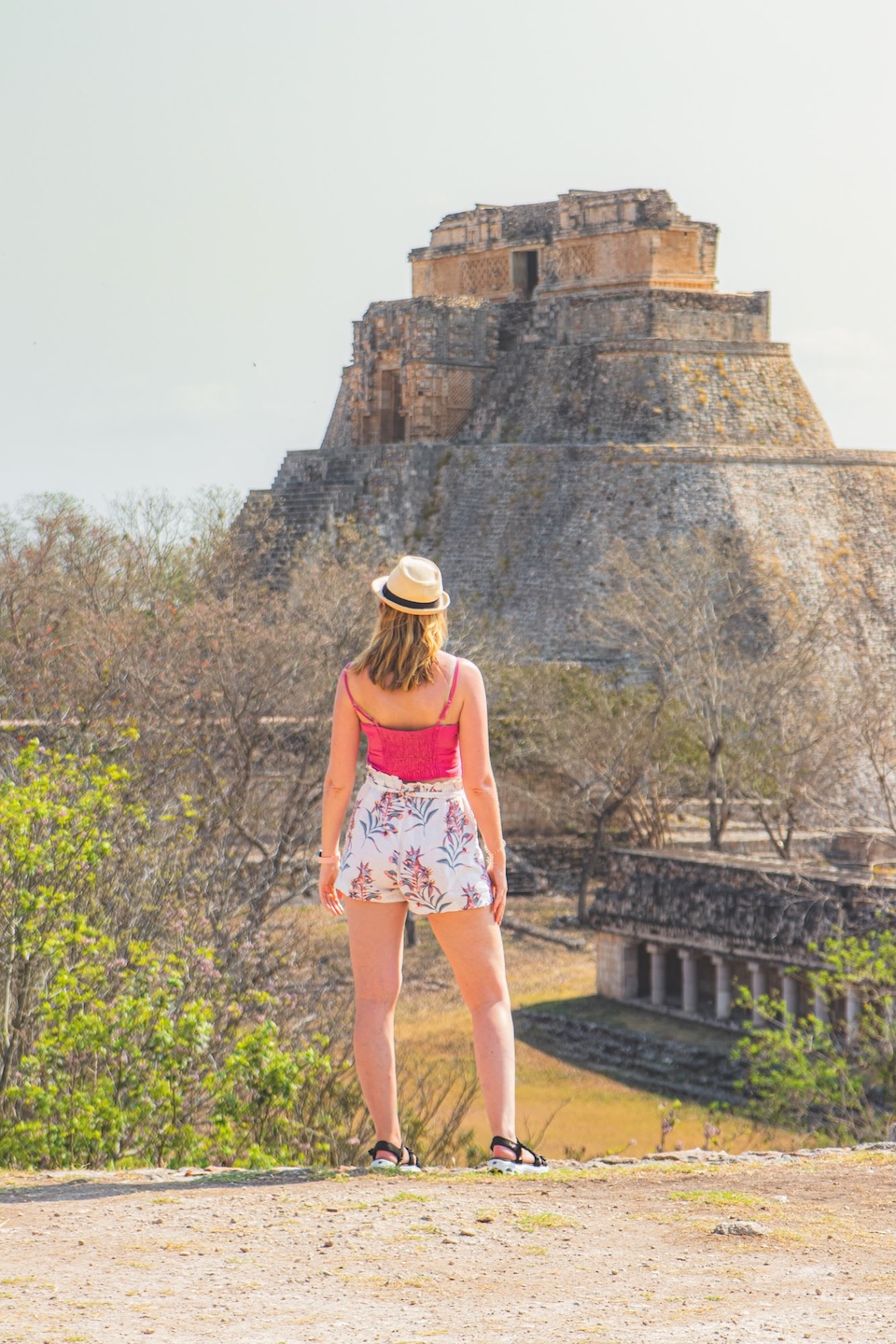
- Pyramid of the Magician (Pirámide del Adivino) – 115 feet high, legendary construction
- Great Pyramid – you can climb it! The view from the top is spectacular
My tips:
- Come in the morning (opens at 8:00 AM) – after 11:00 AM buses from Merida arrive
- Bring lots of water (on-site a bottle is 60 pesos!)
- Good walking shoes – there’s lots of walking
- Plan for 3-4 hours of sightseeing
- Sunscreen and hat are essential (zero shade)
Practical Information:
- There’s a restaurant on-site (expensive and mediocre – better to eat before/after)
- Opening hours: 8:00 AM-5:00 PM
- Entrance: 556 pesos (about $28) – expensive, but worth it
- Parking: 116 pesos
Day 11: Izamal
After Uxmal, on the way to Chichén Itzá, I stopped in Izamal. And it was one of the best spontaneous decisions of the whole trip!
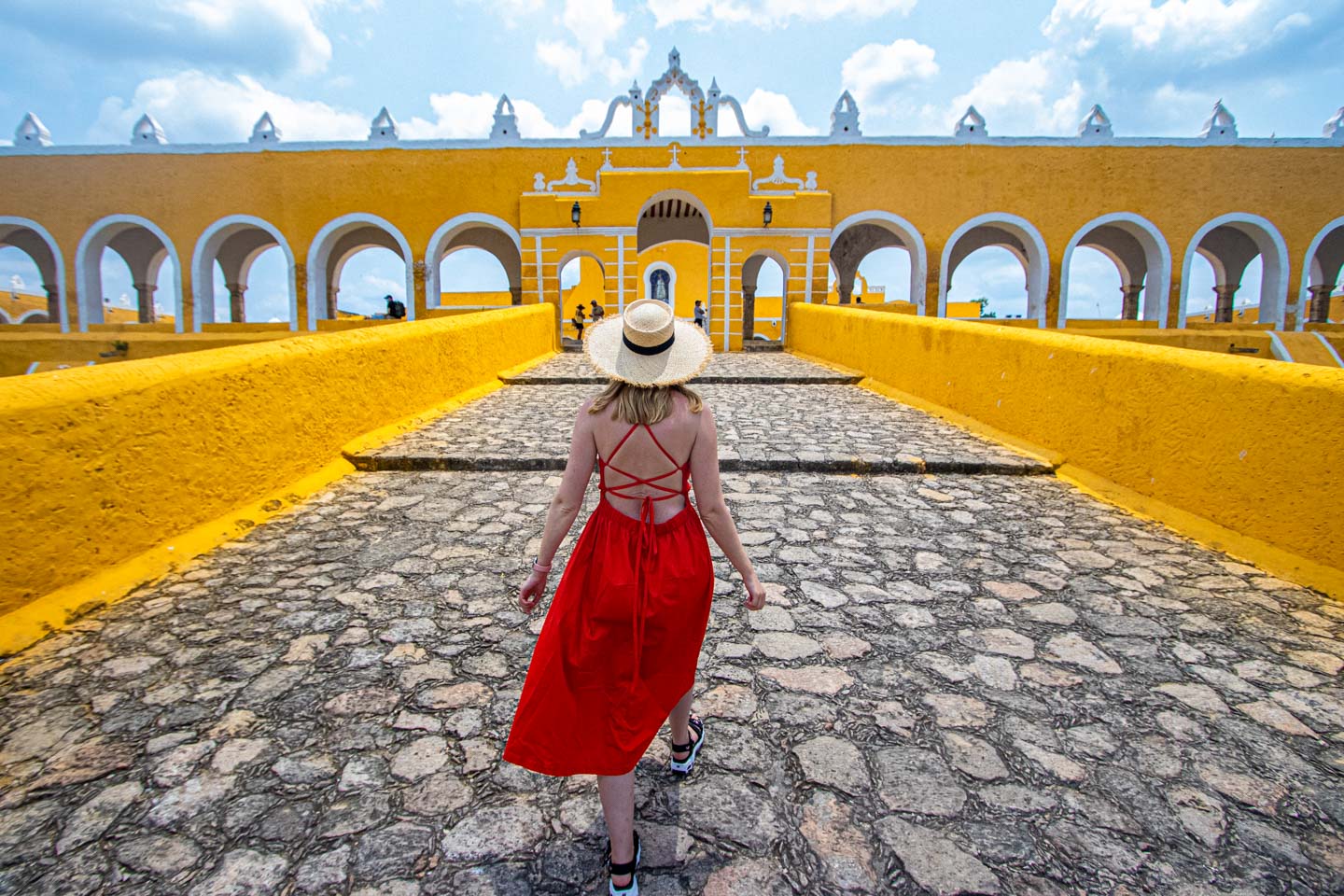
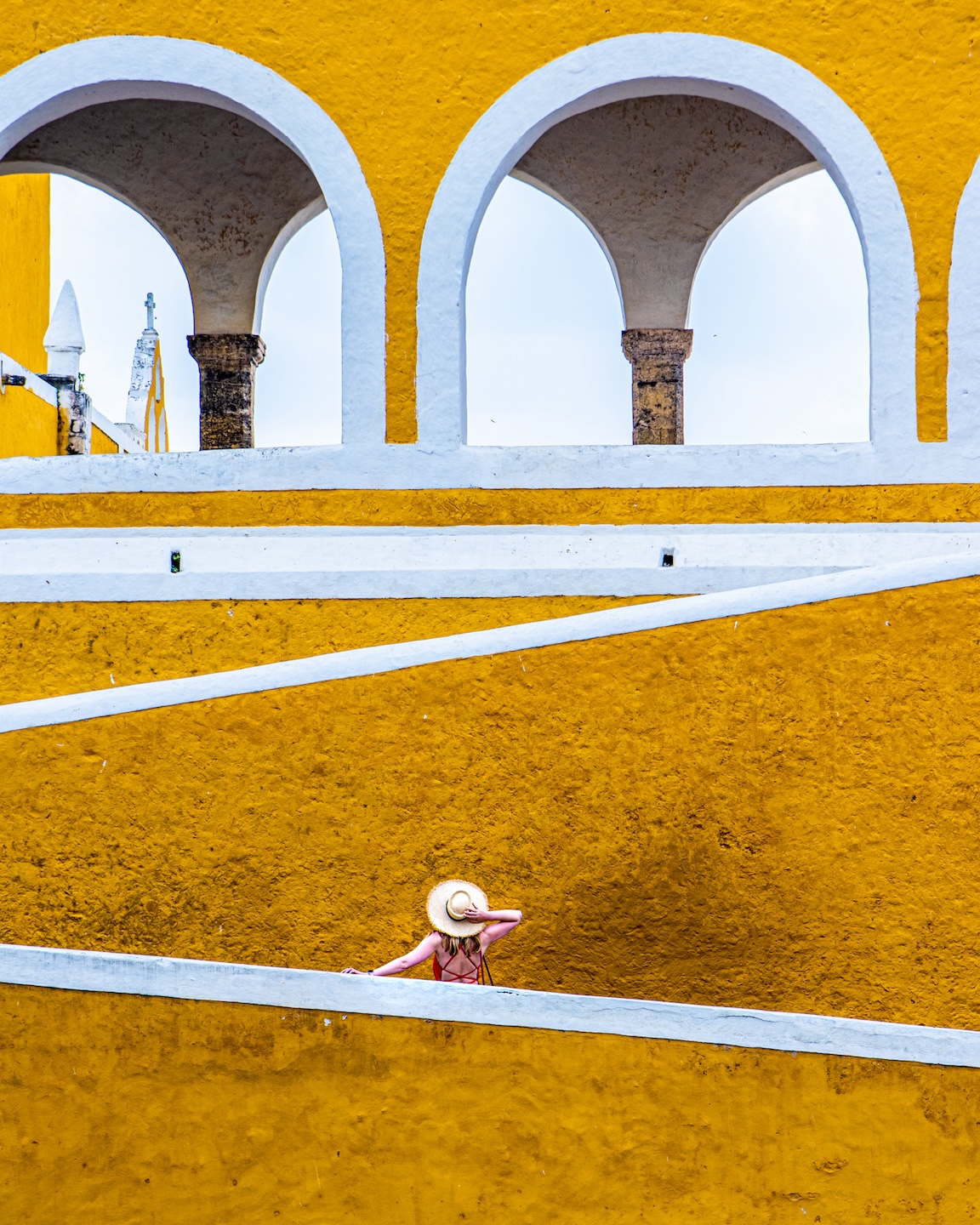
Izamal is a town where everything – literally everything – is painted yellow. Buildings, sidewalks, even some cars. It’s surreal, beautiful, and totally photogenic.
Nobody really knows why they chose yellow. Some say to honor Pope John Paul II, others say to repel insects. Either way, the effect is stunning.
I spent only 2 hours here and regretted not staying longer. Izamal deserves at least half a day, if not a full day.
Make sure to see:
- Kinich Kakmó – pre-Columbian Mayan ruins in the city center. You can climb them and admire the view of the entire yellow city.
- Calle 31 street – the most photogenic street. Yellow walls, colorful doors, horses and carriages (calesas).
- Convento de San Antonio de Padua – huge yellow Franciscan convent from 1562. The courtyard is the second largest in the Americas (after the Vatican!).
My Advice:
Come in the afternoon (after 3:00 PM) when the sun gives the most beautiful light on the yellow walls. Stay for sunset – the city looks magical in the golden hour.
Days 12-14: Chichén-Itzá
Day 12: Chichén-Itza
After visiting Izamal, I reached Chichén Itzá – the most famous pre-Columbian Mayan city in Yucatan. And I’ll be honest here: it was a “wow” moment combined with some disappointment.
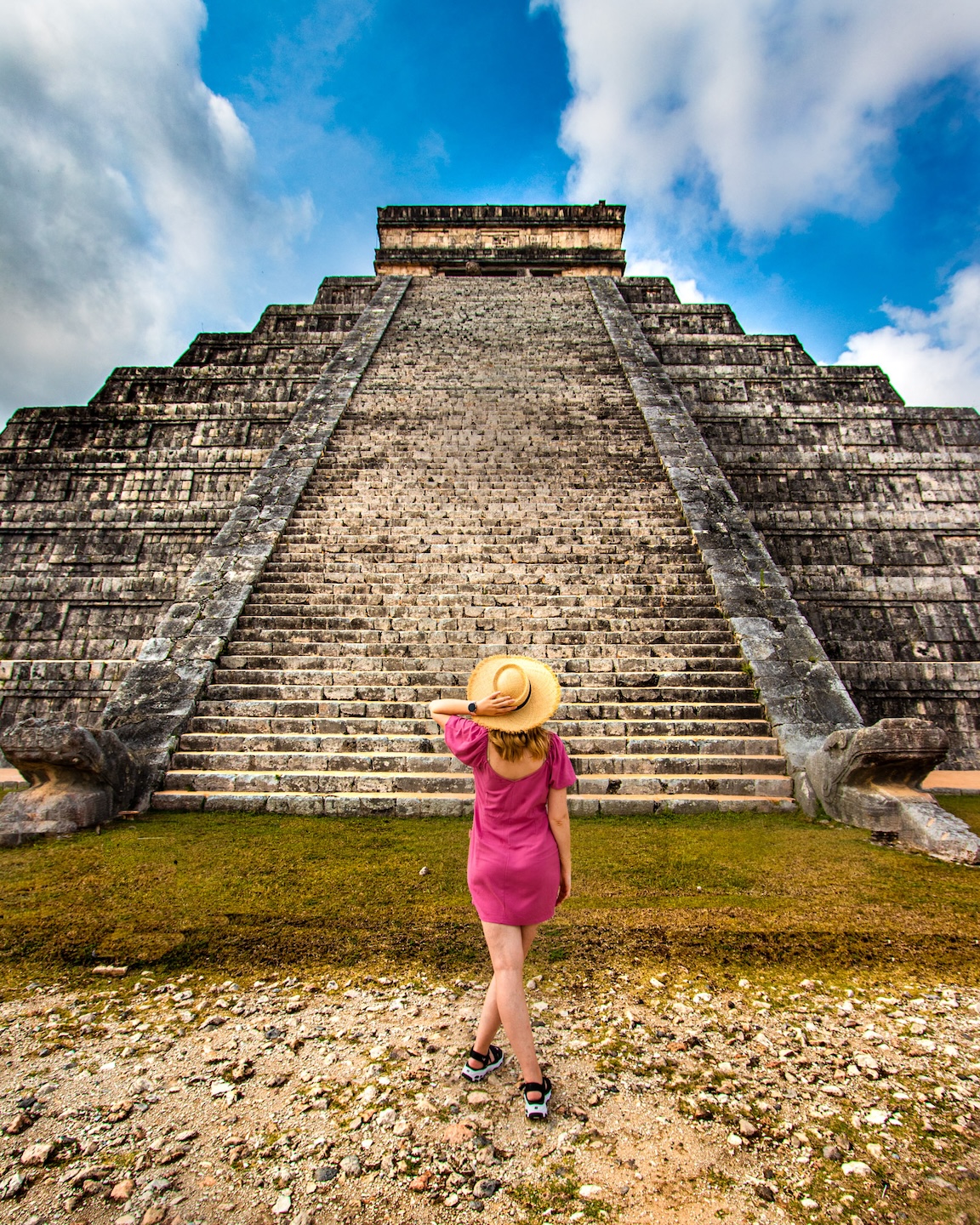
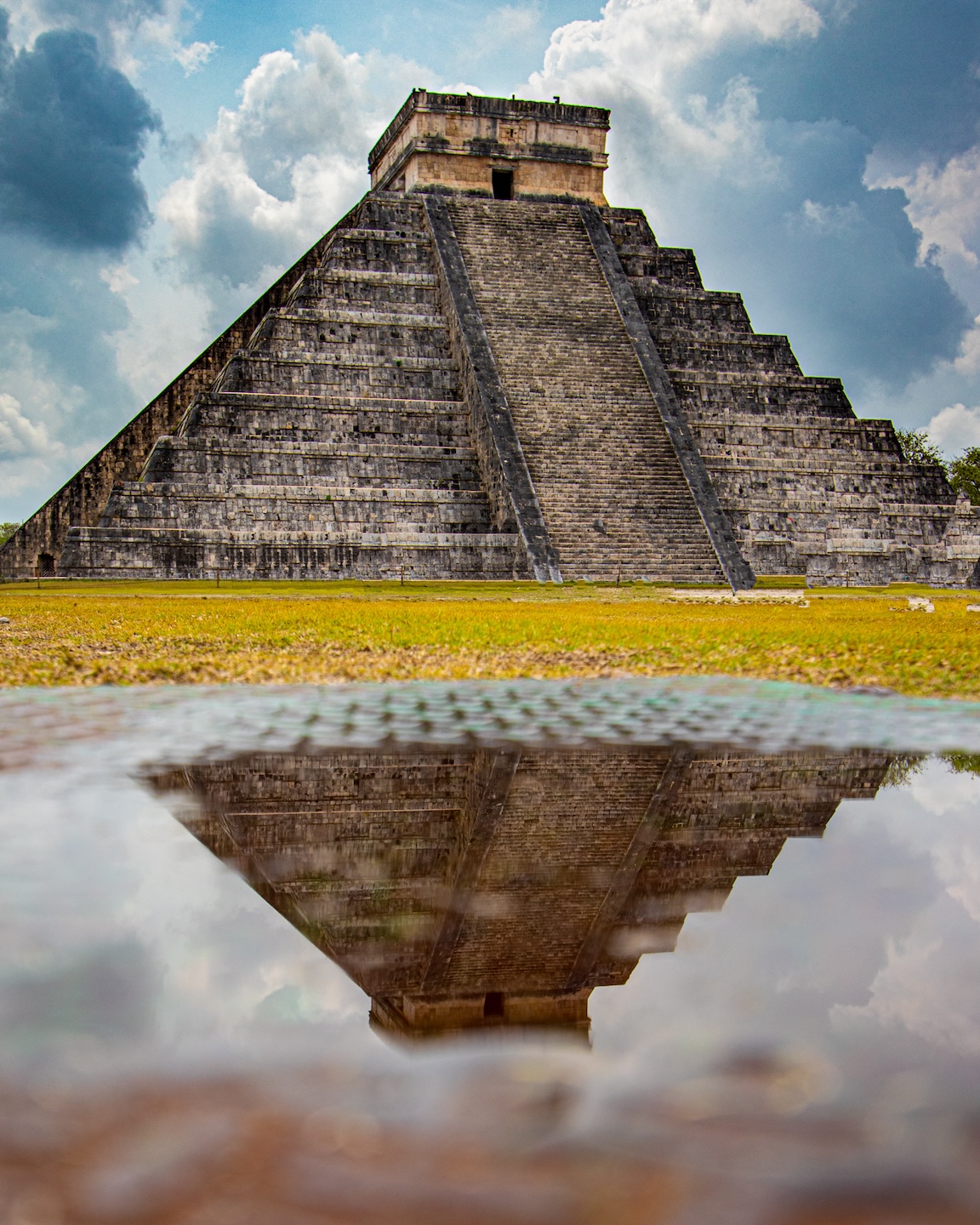
“Wow” because… well, of course, it’s one of the seven wonders of the modern world. The Temple of Kukulcán (El Castillo) is absolutely impressive. When I first saw it, I literally stood frozen.
“Disappointment” because of the crowds. Huge crowds. And vendors yelling “almost free!” at every step. And the heat. God, that heat.
Touring this massive complex, it’s easy to understand why Chichén Itzá is a UNESCO World Heritage Site. There are 26 Mayan ruins on the grounds!
Make sure to see:
- Ball Court – largest in Mesoamerica! 551 feet long
- El Castillo (Temple of Kukulcán) – 98-foot pyramid, symbol of the Mayans
- Temple of the Warriors – with hundreds of columns, each carved
- Thousand Columns – impressive series of columns (no, I didn’t count them all)
- El Caracol (Observatory) – Mayan astronomers were geniuses
My Honest Tips:
- Come exactly at opening at 8:00 AM – and I mean EXACTLY. I stood in line at 7:45 AM and entered as one of the first. I had 45 minutes of relative peace.
- Or come an hour before closing (4:00 PM) – most buses have already left
- AVOID SUNDAYS – free entry for Mexicans = absolute chaos
- Bring at least 2 liters of water per person (on-site 1 bottle is 60 pesos!)
- Hat, sunscreen, comfortable shoes – irreplaceable
Practical Information:
- Opening hours: 8:00 AM-5:00 PM (last entry at 4:00 PM)
- Entrance: 648 pesos on-site OR $95 online (you’ll avoid the line)
- Buy tickets online through the official site – it really saves time
- Parking: 110 pesos
- Plan for 3-4 hours of sightseeing
- They accept credit cards (rare in Mexico!)

Day 13: Cenote Ik Kil
The next morning, completely sweaty after yesterday’s sightseeing in the heat, I went to Cenote Ik Kil – the perfect place to cool off.
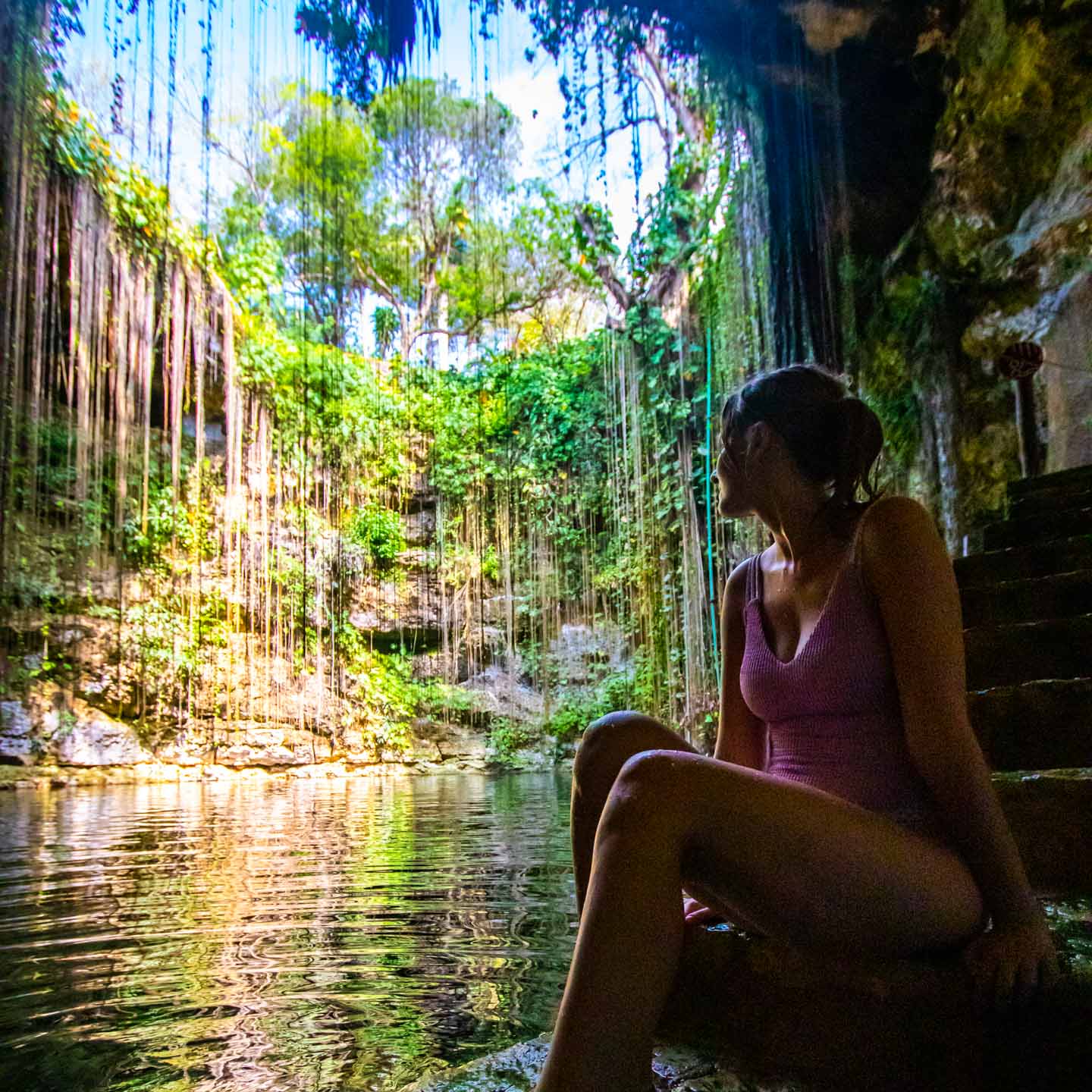
This cenote, about 262 feet deep, makes a huge impression. When I first looked down, I froze – it was like looking into a giant natural cathedral.
Vegetation growing on its walls, hanging vines falling from above, rays of sunlight coming through the opening in the rock… it was magical. I understood why cenotes were sacred to the Mayans.
To get to the water, you have to go down more than 90 stone steps. I counted. It was a good workout after yesterday’s walking.
But the view from those stairs is one of the most beautiful I’ve seen. It’s definitely worth stopping halfway and taking a photo.
At the bottom, there are diving platforms (about 26 feet high). I watched for 20 minutes before I gathered courage and… jumped. The water was cold (about 75°F), but after a hot day it was perfect.
Lifeguards oversee safety (which is reassuring, especially when you’re jumping from the platform).
My Tips:
- Come in the morning (9:00-10:00 AM) – after 11:00 AM buses from Cancun arrive
- Life jacket is mandatory (included in price)
- Lockers available for 30 pesos
- There’s a restaurant, but average (better to eat nearby or later)
- You can spend the night in cabins (from 800 pesos)
Practical Information:
- Opening hours: 9:00 AM-5:00 PM
- Entrance: 200 pesos for adults (100 pesos for children)
- Cash recommended!
- There are showers and changing rooms
Day 14: Uayma
On the fourteenth day, on the way to Valladolid, I stopped in the small town of Uayma. Honestly? I drove past it several times before finally turning. And I was very happy I did.
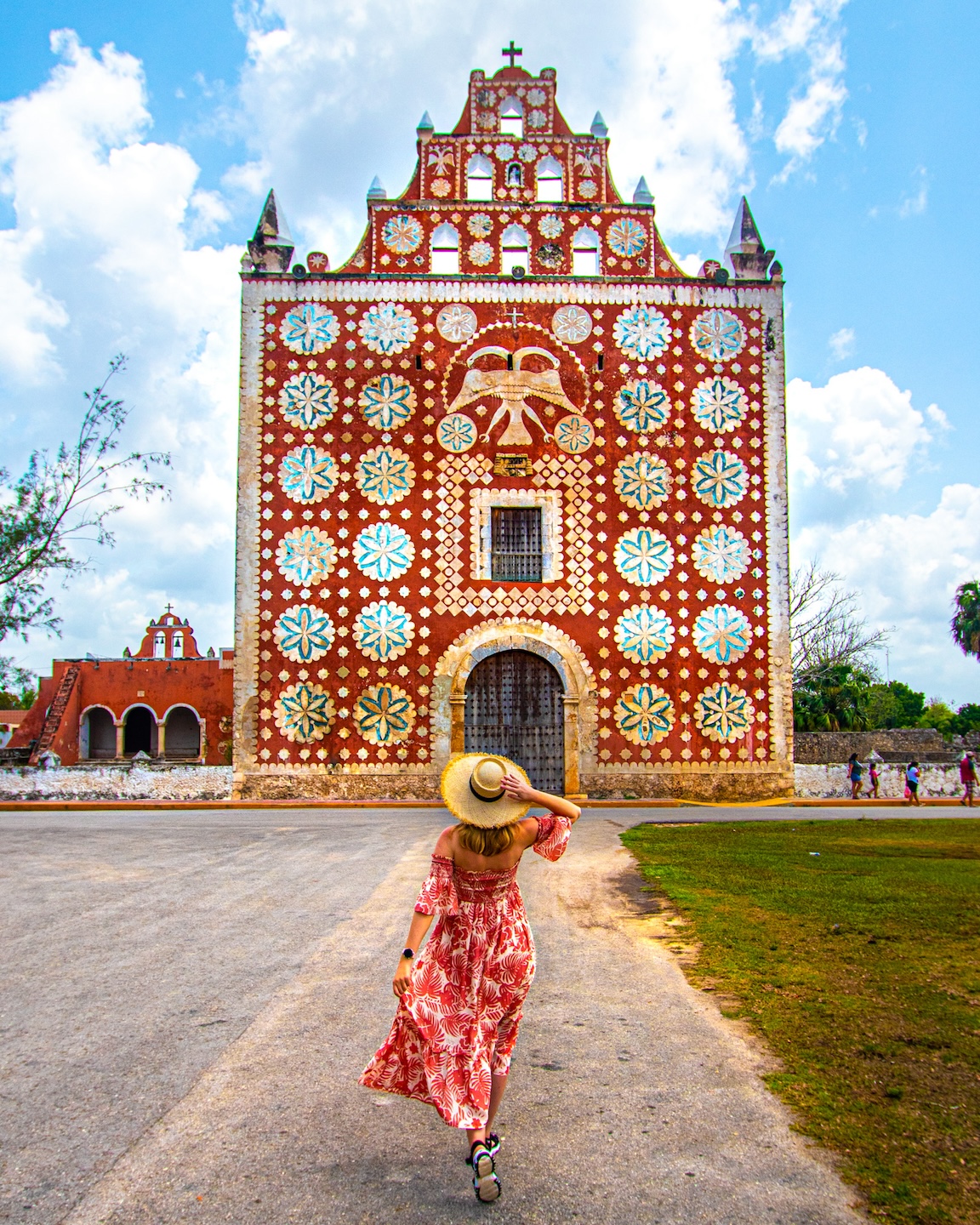
Uayma gained popularity thanks to one of the most beautiful churches in Yucatan – Iglesia de Uayma.
What makes this church special is its patterned facade in white and red. It looks like giant stone lace. The details are amazing – I could stand and look for hours.
The temple was originally built by the Spanish in 1646, and stones from nearby Mayan ruins (including Chichén Itzá) were used in its construction. So you have a piece of Mayan history built into a Christian temple – what irony.
In the 19th century, the church was almost completely destroyed during the Mayan uprising (Guerra de Castas). Its reconstruction took almost 150 years. Today we can admire its beauty again.
Practical Information:
- Church entrance: FREE
- Opening hours: 8:00 AM-6:00 PM (sometimes closed at noon)
- Parking: free on the main square
- Sightseeing time: 30 minutes is enough
- There are a few eateries in town (tacos for 25 pesos)
Where to Stay in Chichén Itzá
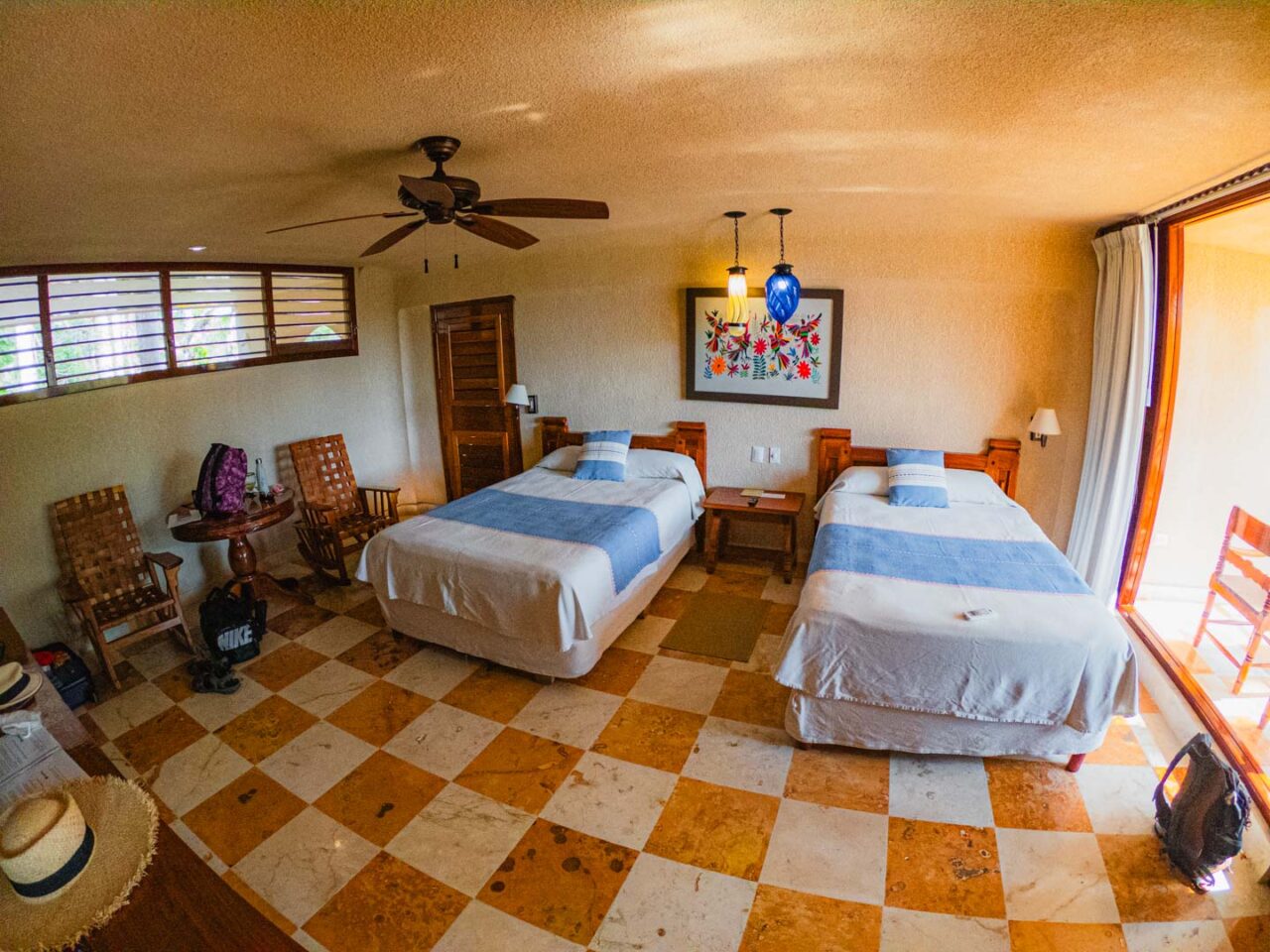
I stayed at Mayaland Hotel & Bungalows and it was one of the best decisions on the entire route. This hotel is located on the grounds of the Chichén Itzá archaeological park.
Yes, exactly – you sleep literally in the middle of the complex.
Why is this so special?
Mayaland guests have exclusive access to the ruins at 7:30 AM, or 30 minutes before official opening. This is a game-changer. For half an hour I had El Castillo practically to myself – no crowds, no lines, no heat. Priceless.
The hotel is set in lush, tropical scenery, and the bungalows are scattered across a huge green area. From the rooms you can have views of either the jungle or even the ruins themselves.
What amazed me about Mayaland:
- Early, private access to ruins (absolute must!)
- Beautiful colonial style and atmosphere of bygone years
- Three pools – after a day in the heat they were a lifesaver
- Restaurant with local specialties – cochinita pibil was great
- Evening light and sound show at the ruins (free for hotel guests)
If you want to visit Chichén Itzá without crowds and feel the atmosphere of the place on your own terms – Mayaland is the best possible choice.
Days 15-18: Valladolid
After visiting Uayma, I headed to Valladolid, less than 20 minutes away. And I fell in love at first sight.
Valladolid is a charming colonial town with just under 60,000 residents. Like Izamal, it received the title of pueblo mágico – Mexico’s magical city. And it really is magical.
Despite growing popularity among tourists (read: me and other backpackers), Valladolid has retained its authentic character. There are no fancy restaurants like in Tulum, no beach clubs. There’s authentic city life.
It’s a place where grandmas still sit in front of their houses and watch people, where locals meet in the main square in the evenings, where children play in the streets. Real Mexico.
If you’re interested in Mayan history and culture, you must come here. Valladolid is also a great base for nearby cenotes and Ek Balam.
I spent 4 days here and every morning I thought “maybe I’ll stay one more day.”
Where to Stay in Valladolid
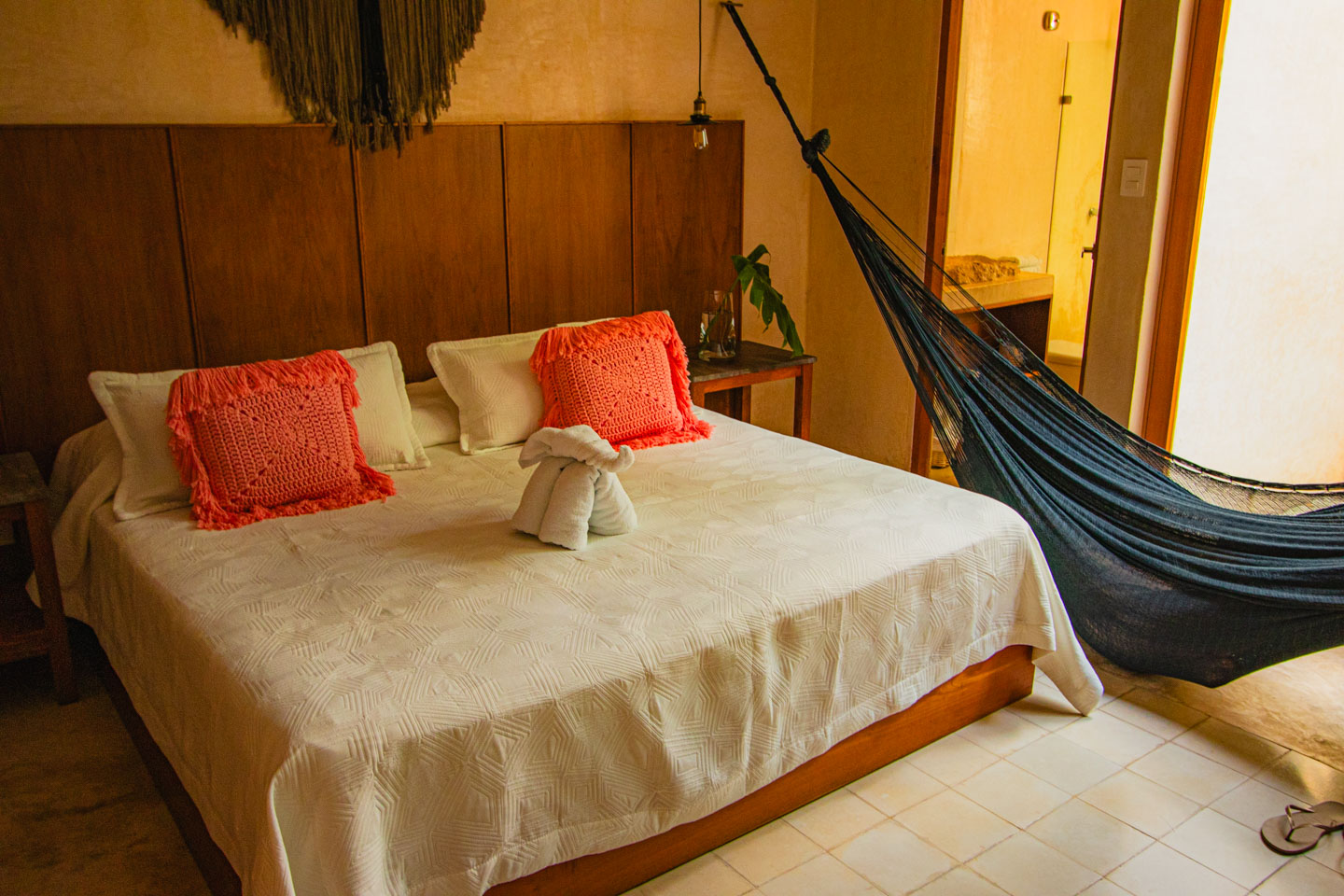
I stayed at Colonte Hotel Origen and can honestly recommend it as the perfect base for exploring cenotes and the town.
It’s an intimate, boho hotel with an amazing atmosphere – perfect if you like quiet, aesthetic places (just right for photos!).
Why I recommend Colonte Hotel Origen:
- Spacious rooms with beautiful, minimalist decor
- Tropical garden full of palms and flowers
- Outdoor pool that in the evenings was my salvation after a full day in the heat
- Breakfast included in price – their huevos rancheros are absolutely amazing
- On-site bar – margarita for 100 pesos tasted exceptionally good after a whole day of walking
- Great location – only 5 minutes walk from the main square
- Excellent service – staff recommended several local spots that turned out to be hits
This place combines comfort, aesthetics, quiet, and great location – really a great choice if you’re looking for a comfortable hotel at a reasonable price.
Day 15: Valladolid
I started exploring Valladolid from the central square – Parque Francisco Cantón de Rosado. This is the heart of the city, where everything happens.
In the morning, grandmas walked here with their grandchildren, at noon men played dominoes under trees, in the evening young people sat on benches and flirted. City life in its pure form.
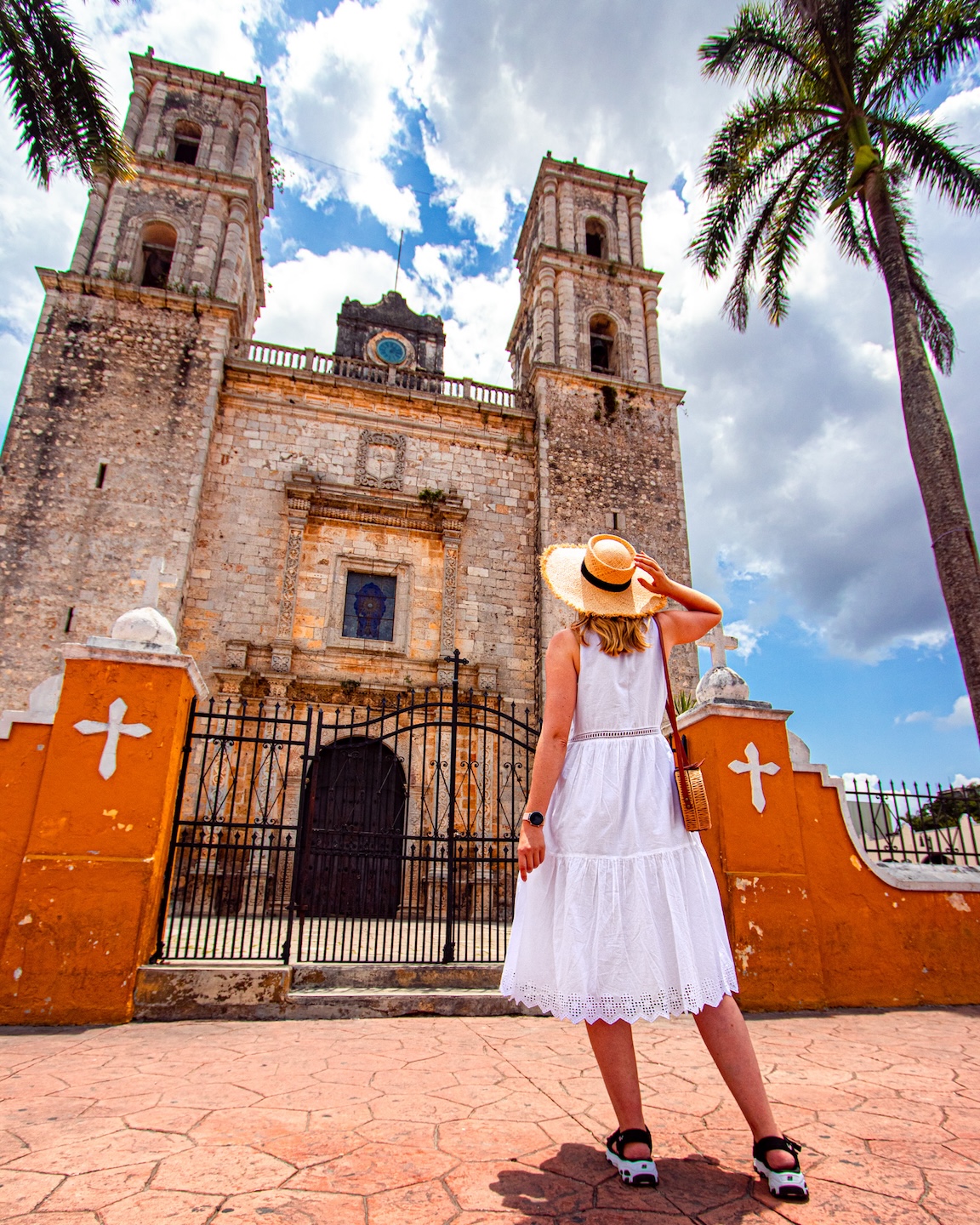
San Servacio Church – main church on the square, whose construction began in 1545. It’s simpler than the cathedral in Merida, but has its charm.
I went inside during evening mass and it was very moving – grandmas singing in Spanish, lit candles, silence…
Casa de los Venados – museum of Mexican art with the largest private collection in the country. Over 3,000 works of folk art!
The guided tour lasts about 1.5 hours and costs 100 pesos. Honestly? Worth it. I learned tons about Mayan culture and Mexican art.
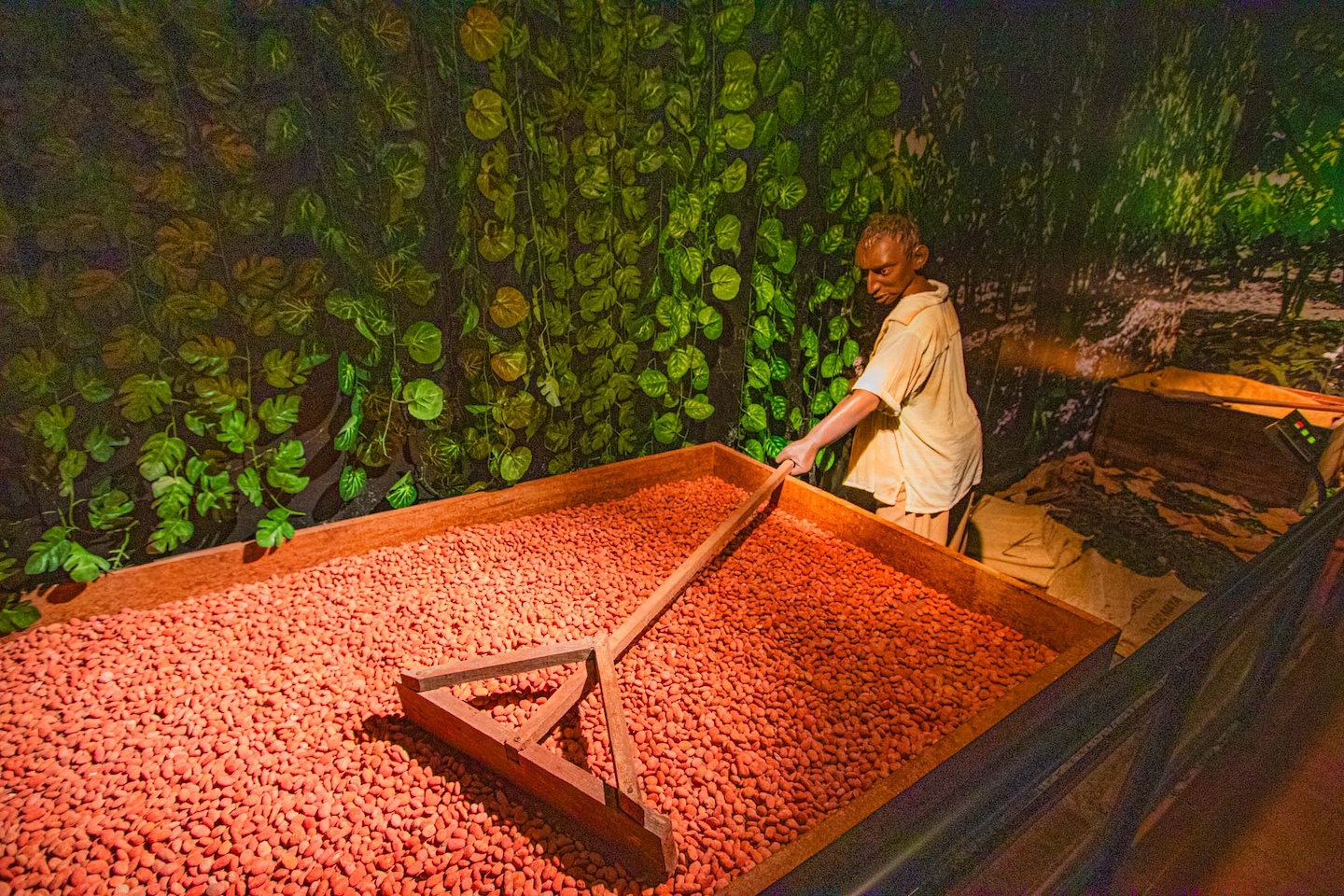
Choco-Story – museum dedicated to cacao, which was valuable to the Mayans (they even used it as currency!). The tour ends with chocolate tasting. Entrance: 210 pesos.
San Bernardino de Siena – one of the oldest churches in Yucatan, located in the Sisal district. The temple is accessed via Calzada de los Frailes – a beautiful street full of colorful houses, eateries, and shops with local handicrafts.
In the evenings (around 9:00 PM) there’s a light show on the church facade – absolutely worth it!
Cenote Zaci – located right in the city center. I spent my first afternoon here, cooling off after sightseeing. The cenote is open (not underground), and has a restaurant nearby. Entrance: only 60 pesos.
My Advice:
Dedicate the first day to downtown (plaza, churches, Casa de los Venados, Choco-Story). In the evening, walk along Calzada de los Frailes + light show at San Bernardino.
Where to Eat in Valladolid
In Valladolid, I found some of the best and at the same time cheapest places to eat in all of Yucatan. Here are my favorites:
Tresvanbien
Perfect place for lovers of Argentine cuisine. Their empanadas (40 pesos) are absolutely amazing – I ate here four times in just four days. Location: Calzada de los Frailes.
Bazar Municipal
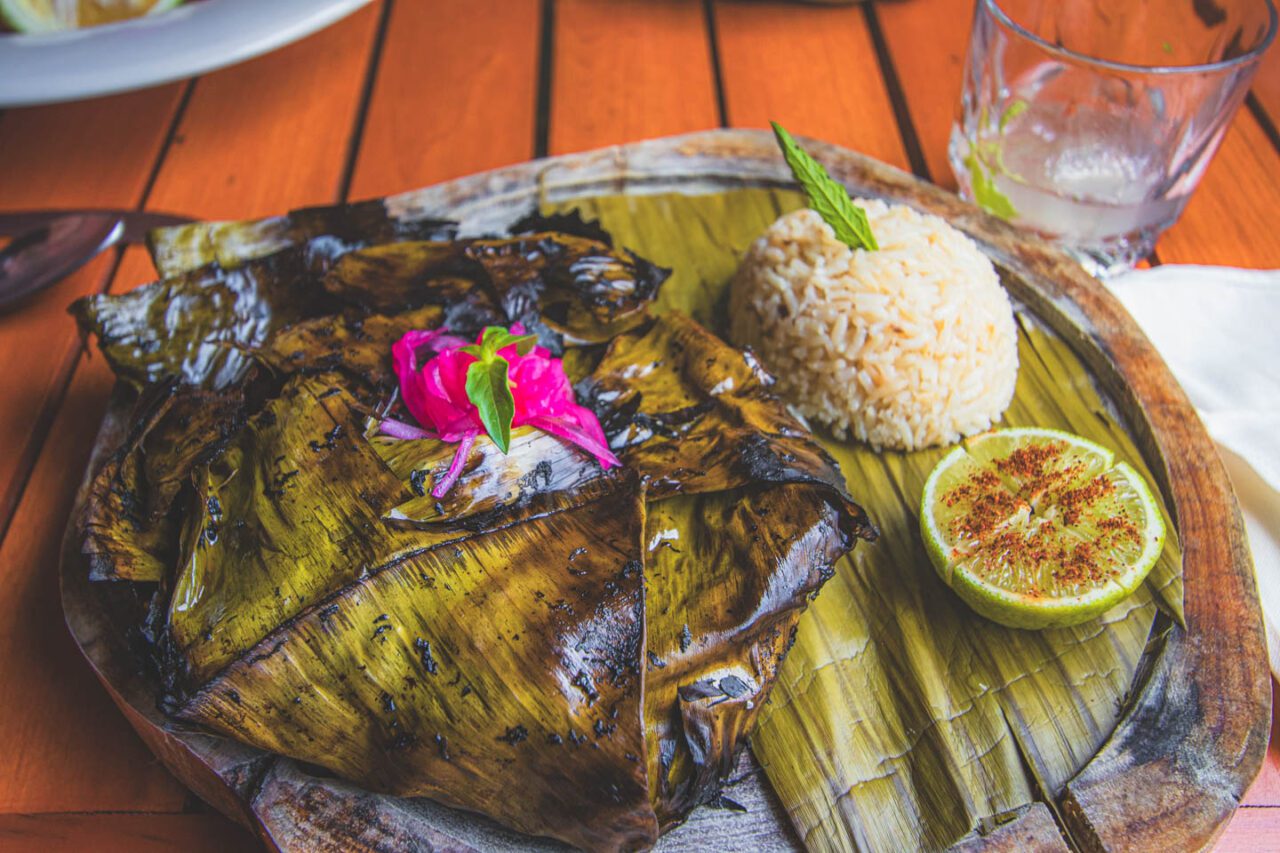
Market hall full of small, local eateries. Locals eat here and you must eat here too! Try panuchos (fried tortilla with beans and turkey – 25 pesos each) or salbutes (similar, but lighter). The most authentic food in the city.
IX CAT IK Tradicional Cocina Maya
For those who want to try traditional Mayan cuisine in a slightly more elegant setting. Great cochinita pibil (180 pesos) and poc chuc (200 pesos). A bit more expensive, but quality is really top.
Yakunaj Cocina Mexicana
Delicious tacos with fish and seafood. Ceviche (150 pesos) was super fresh, and fish tacos (45 pesos/each) crispy and full of flavor.
Day 16: Cenote Suytun
On the sixteenth day, I went to one of the most famous cenotes on the peninsula – Cenote Suytun. And it was love at first sight.
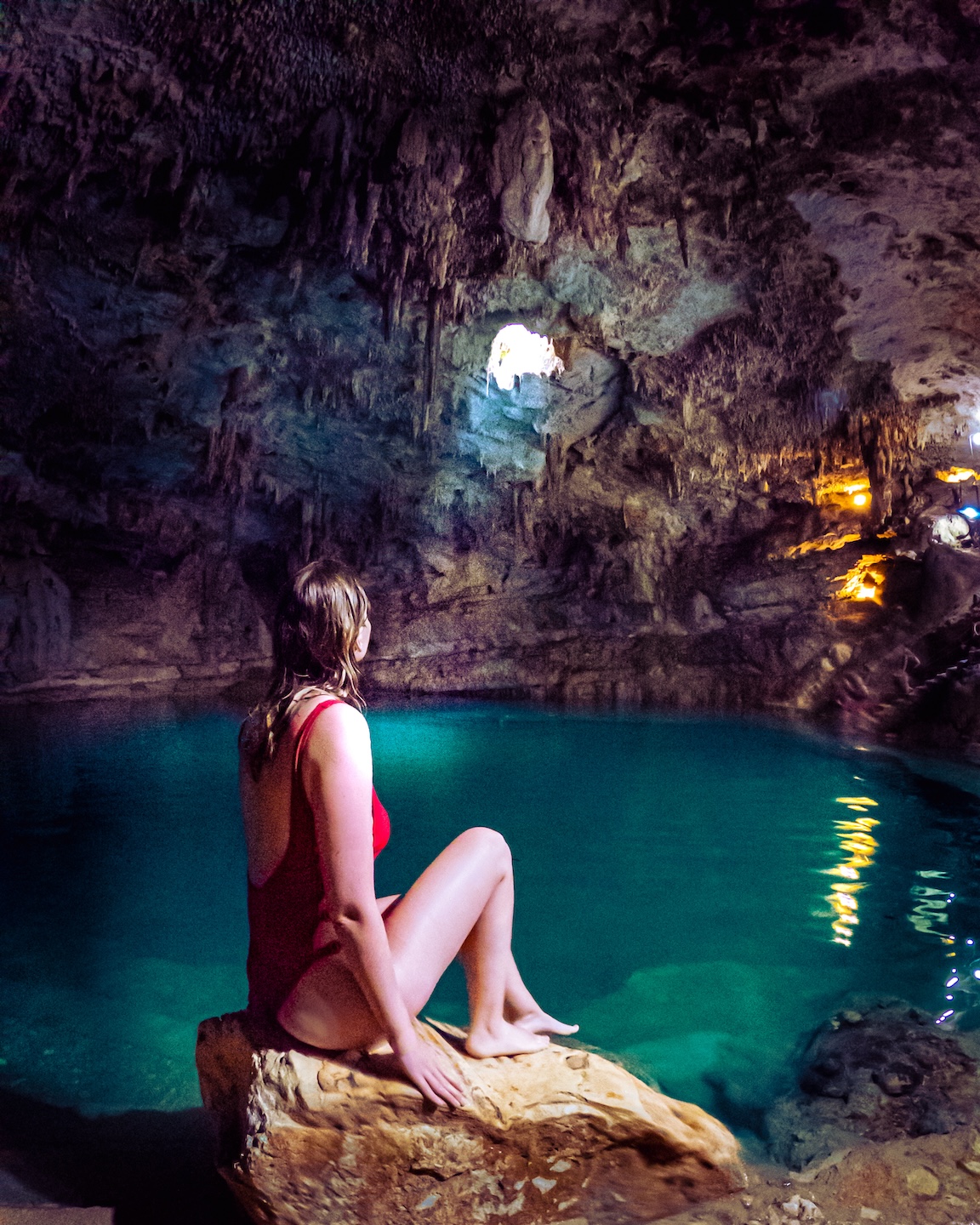
The cenote features crystal-clear, turquoise water, stalactites hanging from the ceiling, and that LEGENDARY stone platform that leads into the cenote.
You know those photos from Instagram where someone is standing on the platform and a beam of light comes through the opening in the ceiling? Yes, that’s Cenote Suytun.
What distinguishes this cenote is the beam of light that at the right time of day (and year) comes through the opening in the ceiling, creating an incredibly photogenic effect.
Unfortunately, taking that perfect photo isn’t easy at all.
I was there in April at noon and the light was okay, but not spectacular. The best light is supposedly between 11:00 AM-1:00 PM in the months March-May.
Additionally, the line for that perfect photo on the platform? About 45 minutes of waiting. People take dozens of shots, trying to capture that one ideal one.
But even so, the cenote is beautiful. The water is cooler than in others (about 72°F), but crystal clear. Swimming there was amazing – stalactites overhead, fish swimming nearby…
My Tips:
- Come between 11:00 AM-1:00 PM for the best light (but it will be crowded)
- OR come at 9:00 AM for peace (but the light will be less spectacular)
- Bring a waterproof phone case (important!)
- Life jacket is mandatory (included)
Practical Information:
- Opening hours: 9:00 AM-5:00 PM (last entry at 4:30 PM)
- Entrance: 250 pesos for adults (200 pesos for children)
- Cash only!
Day 17: Ek Balam
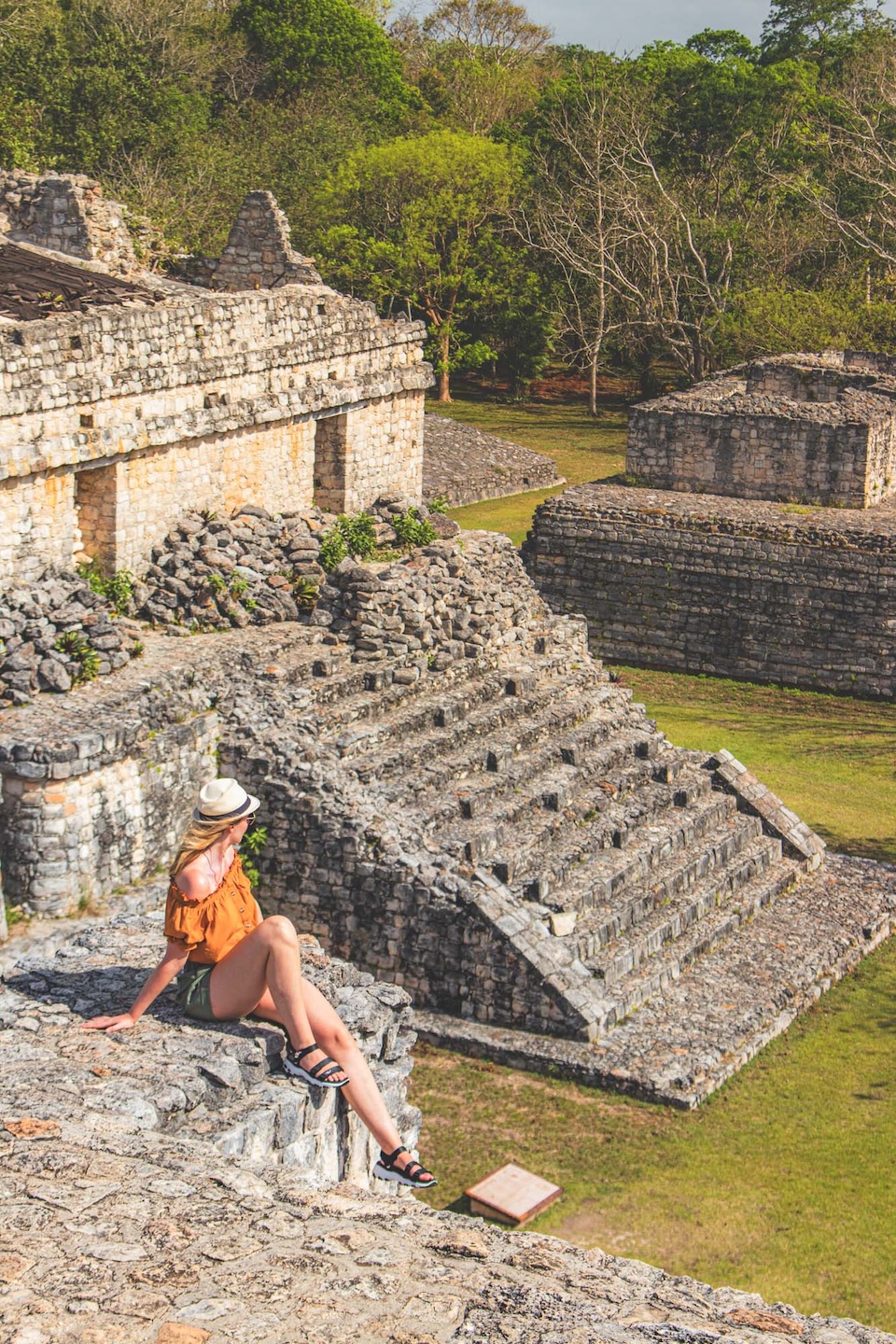
On the seventeenth day, I went to the Ek Balam archaeological site, about 30 minutes north of Valladolid. This is where I found my favorite Mayan ruins from the entire trip.
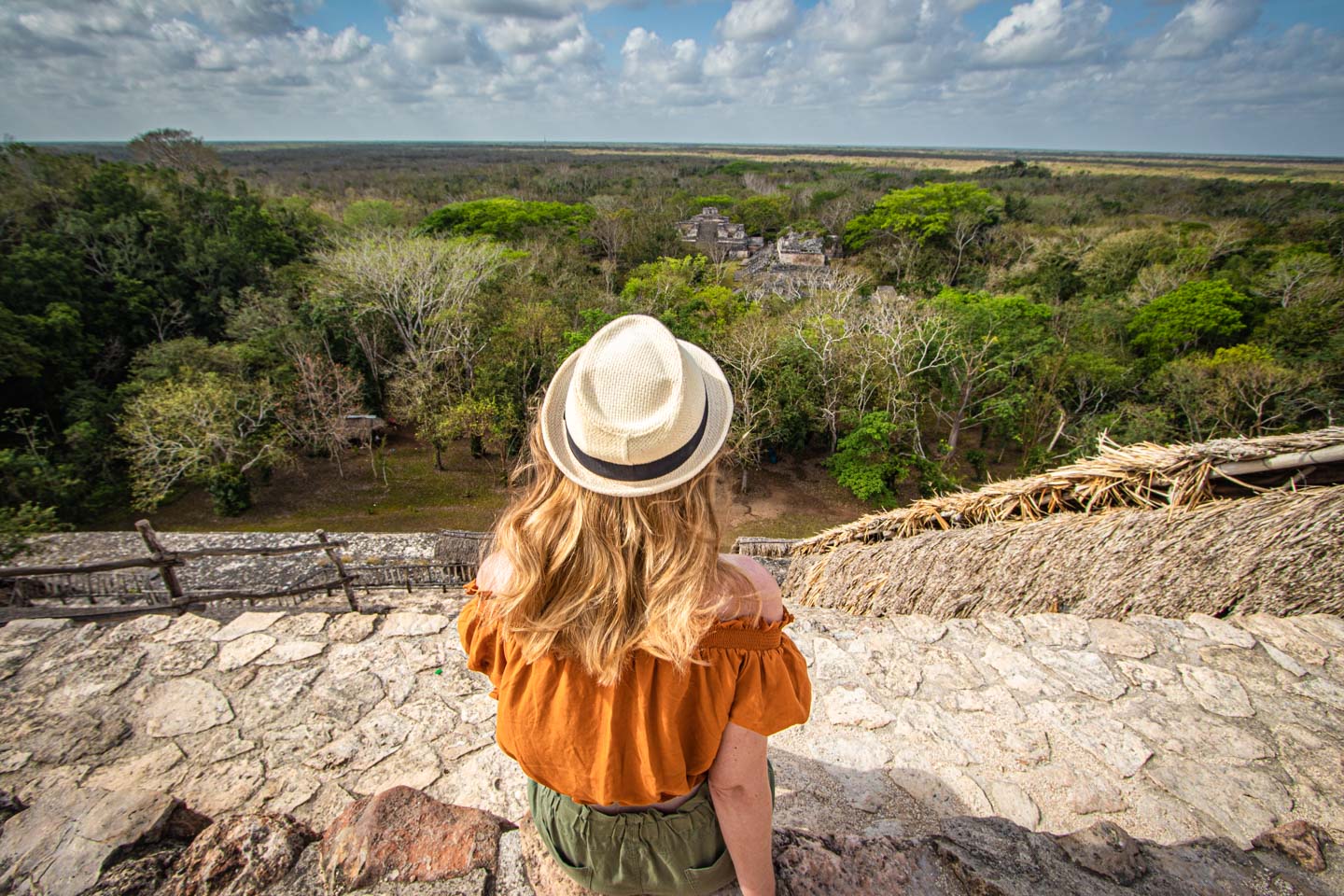
Why? Because unlike Chichén Itzá, you can still climb most of the pyramids here. And the views from the top… wow.
Ek Balam, which in Mayan language means “star jaguar,” has a history dating back to 300 BC. In its heyday, it was a wealthy city, inhabited by 12,000 to 18,000 people.
Today, 45 ruins surrounded by defensive walls can be seen on the complex grounds. Sightseeing takes about 2-3 hours.
The most important attractions include:
- Acropolis – the highest pyramid in Ek Balam (102 feet high)
- Entrance Arch – gateway to the sacred city
- Oval Palace – unusual circular structure
- Ball Court – smaller than at Chichén Itzá, but better preserved
The Acropolis was the biggest attraction of my visit. This is where the first known king of Ek Balam – Ukit Kan Lek Tok – was buried.
His tomb is decorated with extraordinary sculptures of “angels” (or spirits) with outstretched wings that look like gatekeepers of the entrance.
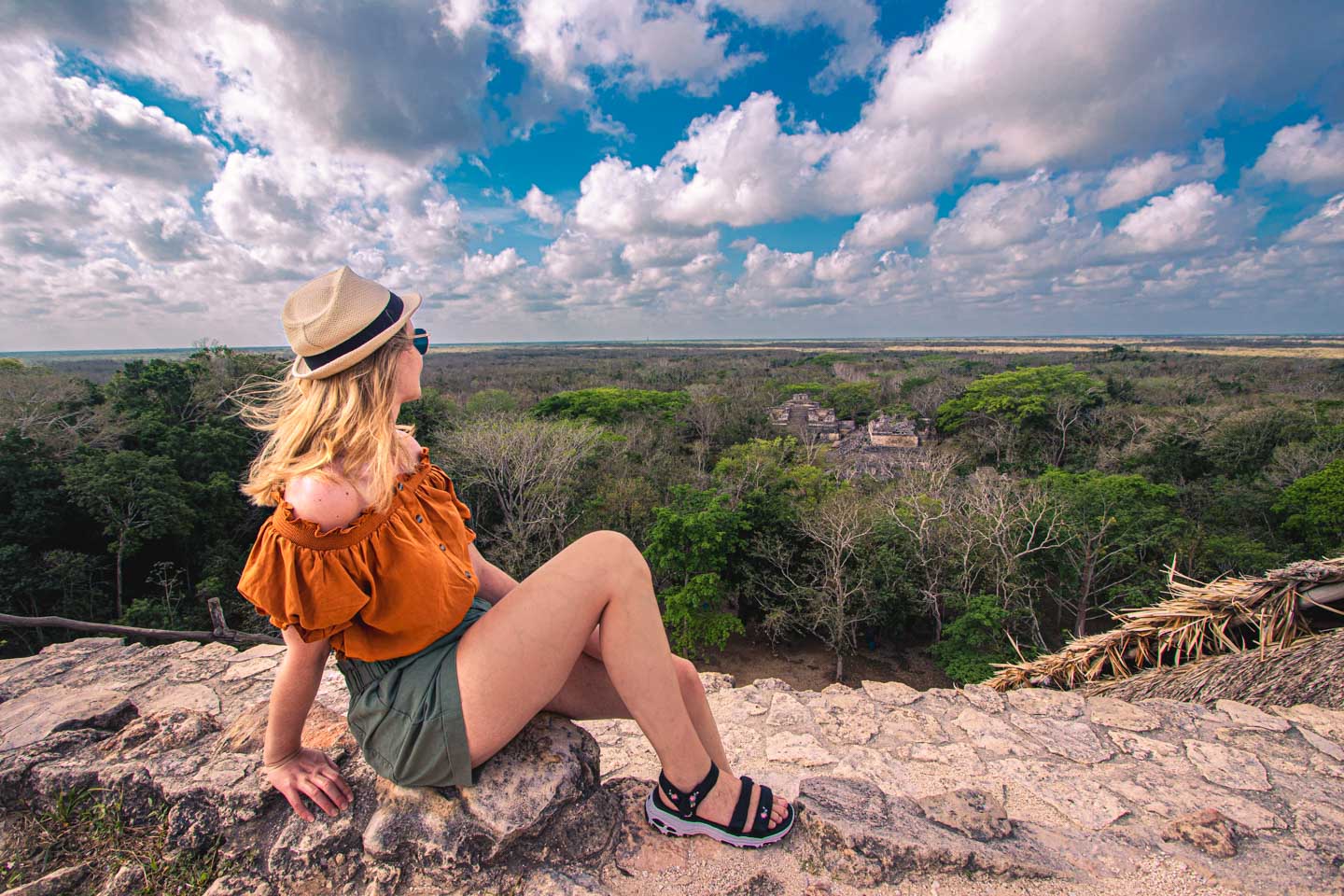
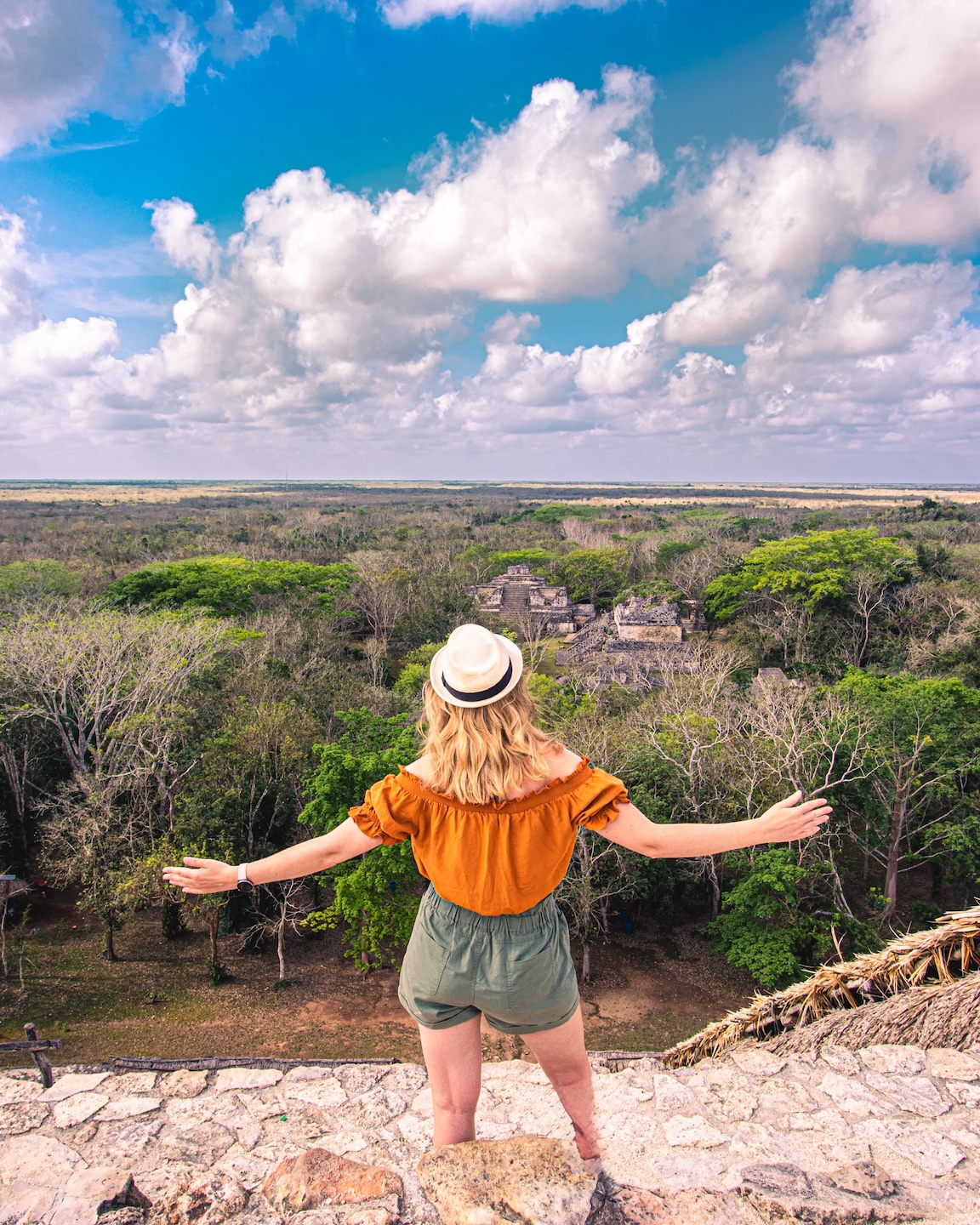
And best of all? You can climb it! The stairs are steep – really steep, almost vertical – but the view from the very top makes up for everything. The jungle stretches to the horizon, and other pyramids emerge from the greenery. Total spectacle.
When I stood there, at the top, with the wind in my hair, looking at the endless jungle… it was one of those “wow, I’m really here” moments.
My Tips:
- Come in the morning (8:00-9:00 AM) – after 11:00 AM tours from Valladolid arrive
- Comfortable walking shoes are essential – the stairs are steep!
- Bring lots of water (on-site it’s expensive)
- Pack a hat and sunscreen – there’s no shade on the pyramids
- After sightseeing, you can go to nearby Cenote X’Canché (additional 170 pesos)
Practical information:
- Opening hours: 8:00 AM-5:00 PM
- Entrance: 561 pesos (expensive, but less crowded than Chichén Itzá)
- Parking: 100 pesos
Day 18: Las Coloradas
On my last day in Valladolid, I drove north toward Las Coloradas – the famous pink lagoon. The journey took about 2 hours, but those views… absolutely worth it.
Las Coloradas is part of the Ria Lagartos Biosphere Reserve, which is also known for excellent conditions for observing flamingos (but I didn’t see flamingos there – supposedly the best time is April-August).
The pink waters of the lagoon beautifully contrast with the blue sky and white salt on the shores. It really looks like from another planet. I understood why every influencer has a photo here.
What makes the water pink? It’s not a filter or Photoshop. Las Coloradas is a salt works – a salt factory has been operating here for years.
The pink color is due to red algae, plankton, and crustaceans present in the water that produce red pigments.
Interestingly, these lands were used for salt extraction by the Mayans!
What you should know:
- The water color VERY much depends on the weather. Sunny day = intense pink. Cloudy day = more orange/brown.
- Swimming is prohibited (due to high salt content)
- It’s a salt works, not a natural wonder (some people feel cheated)
- Recently you have to pay for entry (about 400 pesos)
- There’s almost no infrastructure (one basic toilet)
And yet, if you catch a sunny day, the views are spectacular. I spent about an hour there – taking photos and just absorbing this surreal landscape.
How do you want to explore Yucatan?
🍽️ Flavors of Mexico → 10 Yucatan Dishes You Must Try – guide to local cuisine
🏖️ Paradise island → Isla Holbox Guide – small island without cars
🏛️ Mayan Culture → Things to Do in Tulum – ruins, cenotes and more
🏨 Where to stay → My Experience from 2 Tulum Hotels – honest reviews without BS
What tempts you most?
My Tips:
- Come on a sunny day – on a cloudy day it’s not worth it
- Best light: 11:00 AM-2:00 PM
- Bring lots of water and sunscreen (zero shade)
- Pink and white outfit = best photos
- On the way, stop in Rio Lagartos for lunch (fresh fish!)
Practical Information:
- Entrance: about 400 pesos (price changes)
- Parking: 50 pesos
- Hours: 8:00 AM-5:00 PM
- Cash only!
Days 19-21: Isla Holbox
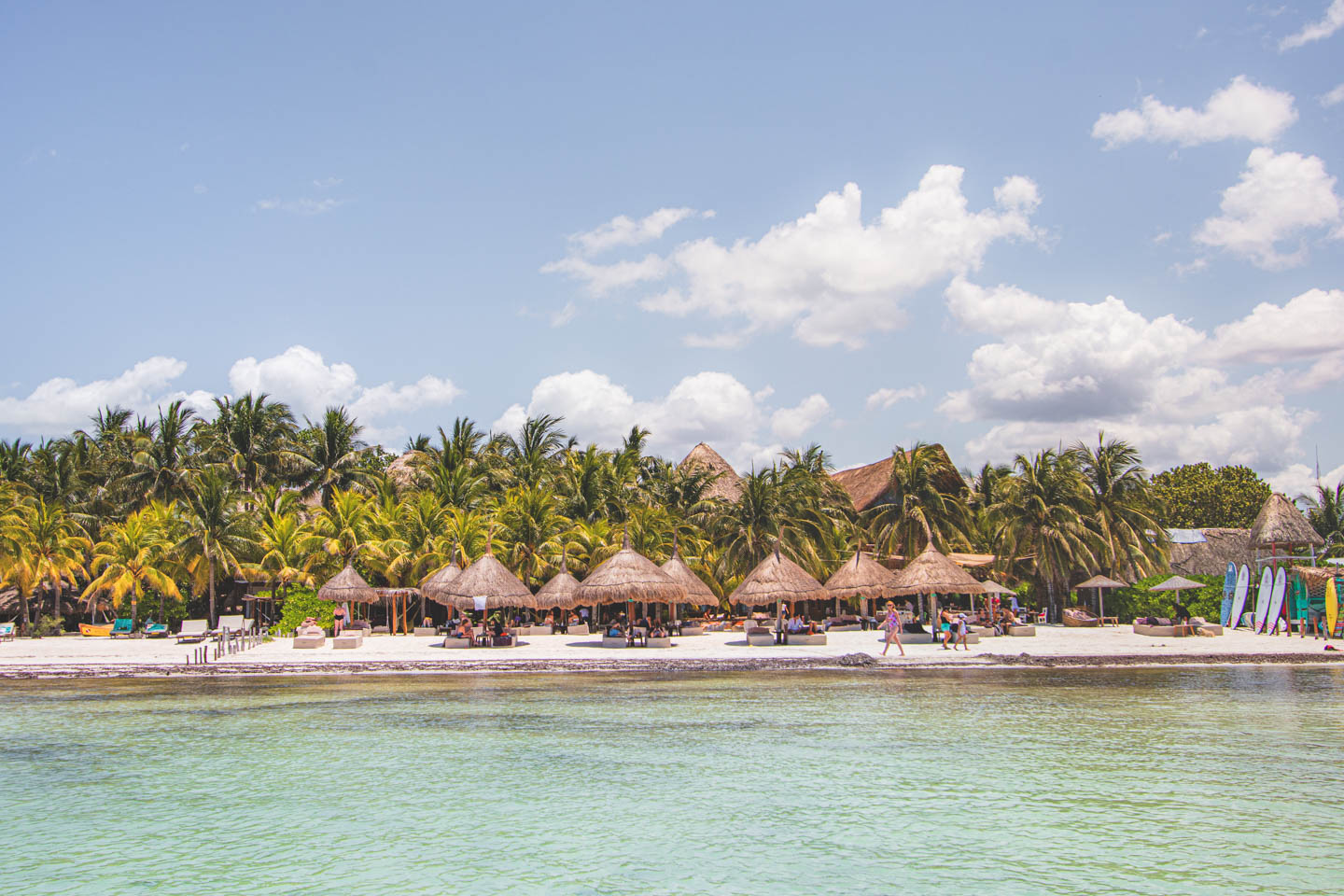
I spent the last three days of my Yucatan adventure in blissful laziness on the tropical island of Isla Holbox. And it was the perfect way to end this intense journey.
Isla Holbox is Mexico’s hidden gem – at least for now. The island is known for beautiful beaches, turquoise sea, relaxing atmosphere, and… NO CARS.
Yes, there are no cars on the entire island. People get around by golf carts, bicycles, or simply on foot.
It was like a reset after all those crowds in Tulum and Chichén Itzá. Here time flows slower. People are calmer. The whole atmosphere is completely relaxed.

Isla Holbox offers many attractions, so I definitely wasn’t bored:
- Beach lounging – obvious, but the beaches are really beautiful (though sometimes seaweed is a problem)
- Bike riding – I rented a bike for 200 pesos/day and rode around the whole island
- Bioluminescent swimming – glowing water at night (May-October)
- Flamingo watching
- Eating fresh fish – ceviche here is the best
Most of the time I spent on beach chill – books, tacos, fresh coconuts. No plan, no rush, no stress. Just pure bliss.
This was the perfect end to my 3-week Yucatan adventure. From Mayan ruins through colonial towns to a paradise island. Yucatan has everything.
If you want more details about Isla Holbox, check out my complete island guide – there you’ll find everything, including where to sleep, what to eat, and what to do.
Helpful Tips
How to Get to Yucatan
The easiest way to get to Cancun is simply flying in – there are plenty of direct flights from both Europe and the U.S.
From Europe, you can fly straight from cities like London, Paris, Frankfurt, Amsterdam, or Madrid.
The journey takes around 10-12 hours (long – but a good Netflix download always saves the day), and return tickets often start at about €600.
You can also catch great deals, especially in September–October, outside the peak season.
From the U.S., it’s even simpler. Direct flights leave from Chicago, Miami, Los Angeles, New York, and many other hubs. They take about 2-6 hours, with round-trip prices typically between $200 and $500.
When to Go to Yucatan
The Yucatan Peninsula is warm year-round, and the temperature rarely drops below 77°F (so it’s always hot!).
In my opinion, the best time to travel: December-April (dry season).
I was there in April and the weather was perfect – sunny, warm (about 82-86°F), practically no rain. Perfect.
Rainy season: May-October. It rains almost every day (usually afternoon storms), and additionally there’s a risk of hurricanes (especially August-October).
September is the rainiest month, and March the driest.
If you care about good weather and want to avoid crowds, it’s worth going to Yucatan at the beginning (December-January) or end (March-April) of the dry season.
Warning: I personally don’t recommend summer, because that’s when seaweed (sargassum) can appear on some Yucatan beaches.
I’ve seen photos of Tulum beaches in June – it was tragic. Entire beaches covered with seaweed, unpleasant smell. Instagram versus reality.
How to Get Around Yucatan
In my opinion, the best way to get around Yucatan is to rent a car. It was one of the best decisions of my trip.
Thanks to this, traveling around the peninsula is comfortable, fast, and saves a lot of time. You can stop wherever you want, visit remote places, go at your own pace.
Driving on Yucatán’s roads feels similar to driving in the U.S. – the main highways are well-maintained and easy to navigate. For example, the drive from Cancun Airport to Tulum takes about two hours.
How to Rent a Car
Most rental companies are located near Cancun airport, and they’re easy to reach by free shuttle bus.
It’s best to book the car in advance online – I used Rentalcars.com and it was fine. Rental price is about $25-35 USD per day (for a basic compact car).
IMPORTANT: Before you start, definitely get full insurance and take photos/video of the car from every side. This is super important – I know stories of people who were blamed for damage they never even saw.
Note! You can drive in Mexico with your U.S. driver’s license, but it’s still recommended to carry an International Driving Permit. I had one with me and no one ever asked for it – but better safe than sorry.
Driving costs:
- Gas: about $1.20/liter (full tank about 300 pesos)
- Toll highways (cuota): expensive! Cancun-Tulum = 366 pesos
- Free roads (libre): slower, but okay
- Parking in cities: 50-100 pesos
Travel lighter, even before you leave.
start with something simple.
Download The Minimum Plan – Slow Travel:
3-Week Yucatán Itinerary: A Journey You’ll Carry With You
The Yucatan Peninsula is one of Mexico’s most beautiful regions, offering everything you need for an unforgettable trip – from rich history to incredible nature.
Gorgeous beaches (sometimes with seaweed, but that’s life), Mayan ruins (impressive, though crowded), delicious local food (best tacos of my life!), friendly people, and amazing cenotes.
I spent 3 weeks there and came back with hundreds of photos, a few extra pounds (oh those tacos!), and memories that last forever.
Was it perfect? No. There were crowds, high prices, sometimes poor wifi, heat, and yes, I made a few mistakes (why didn’t I buy the ticket to Chichén Itzá online?!).
Was it worth it? Absolutely, 100%, no questions. I’d go back tomorrow.
I hope this detailed guide will help you plan your own Yucatan adventure. Now you know what to see, where to eat, how much it costs, and what to avoid.
My final advice: Don’t try to see everything. Choose places that really interest you. Leave time for spontaneous discoveries. Some of my favorite moments weren’t planned – they just happened.
If you have questions about Yucatan that I haven’t answered in this guide – feel free to write in the comments. I’ll be happy to help!
Ready to discover more of Yucatan?
- 3-Week Yucatan Travel Itinerary – complete route with Tulum, Holbox, Valladolid
- My Experience from 2 Tulum Hotels – honest reviews of Our Habitas and Hotel Tiki Tiki
- Isla Holbox Travel Guide – small island without cars and the most beautiful sunsets
- 10 Yucatan Dishes – what you must try in Mexico
Which part of Yucatan tempts you most? Mayan ruins, paradise beaches, or maybe colonial cities?
Let me know in the comments! And if this guide helped you, share it with friends who are planning a trip to Mexico.
Save this pin for later!
This article contains affiliate links. If you make a booking through these links, I may earn a commission, supporting this blog. Rest assured, my recommendations are based on honest assessments, and using these links doesn't affect prices for you. Thank you for your support!