
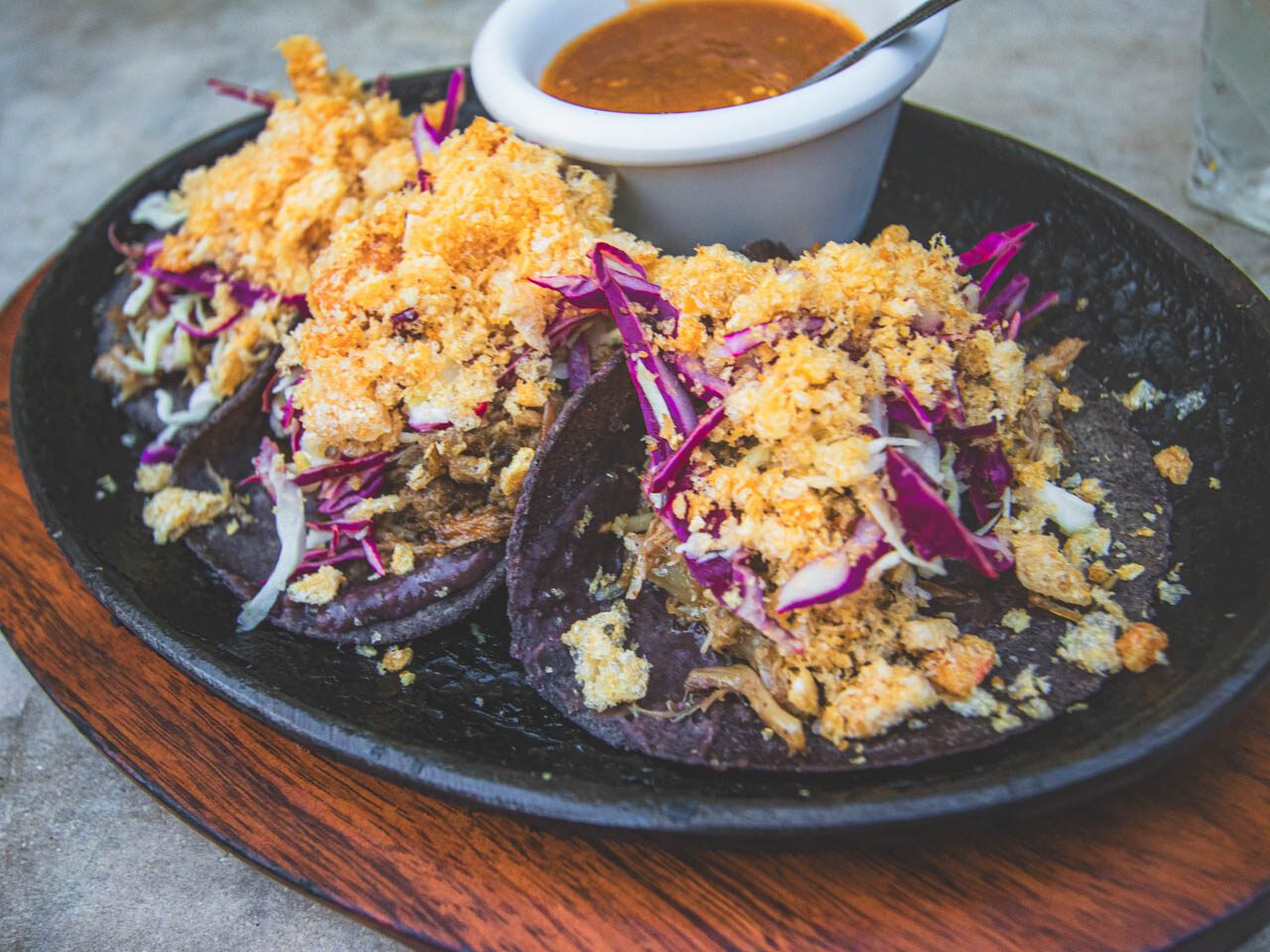
When I think about my trip to the Yucatan Peninsula, I don’t just remember the turquoise cenotes, ancient Maya ruins, and colorful colonial towns. I also remember the smell of freshly made tortillas, small taquerías filled with locals, and evening walks through Mérida that somehow always ended with something delicious to eat.
Yucatecan food surprised me with its variety. It’s quite different from what most of us usually imagine when we think of Mexican cuisine.
Many traditional dishes feature local ingredients, cooking techniques passed down through generations, and flavors you won’t necessarily find elsewhere in Mexico.
Think slow-cooked meats seasoned with achiote, corn tortillas prepared in countless ways, fragrant citrus-infused soups, and even desserts that combine sweet fillings with salty cheese.
During my three-week road trip around the peninsula, I discovered plenty of interesting local specialties. Some were familiar, while others were completely new to me.
In this guide, I’m sharing 10 traditional Yucatan dishes worth discovering, along with tips on where to find them and what to expect when ordering.
Planning a trip to the Yucatan? Check out my Mexico travel guide – you’ll find a detailed, tried-and-tested 3-week itinerary plus all the practical tips you need
1. Cochinita Pibil – Yucatan’s Most Famous Dish
One of the most recognizable dishes in Yucatecan cuisine is cochinita pibil, a traditional preparation of slow-cooked pork marinated in citrus juice and spices.
Its distinctive reddish-orange color and rich flavor come mainly from achiote, a seasoning made from annatto seeds.
The marinade also contains sour orange juice, garlic, and aromatic spices.
But what makes cochinita pibil especially interesting is its traditional cooking method.
The meat is wrapped in banana leaves and cooked for hours in an underground oven known as a pib.
This technique has its roots in Maya cooking traditions, although today cochinita pibil is often prepared in conventional ovens.
The result is incredibly tender pork that practically falls apart.
It’s commonly served in corn tortillas with pickled red onions and spicy habanero salsa.
For me, it’s one of the dishes that best illustrates how closely Yucatecan cuisine is connected to its history and local ingredients.
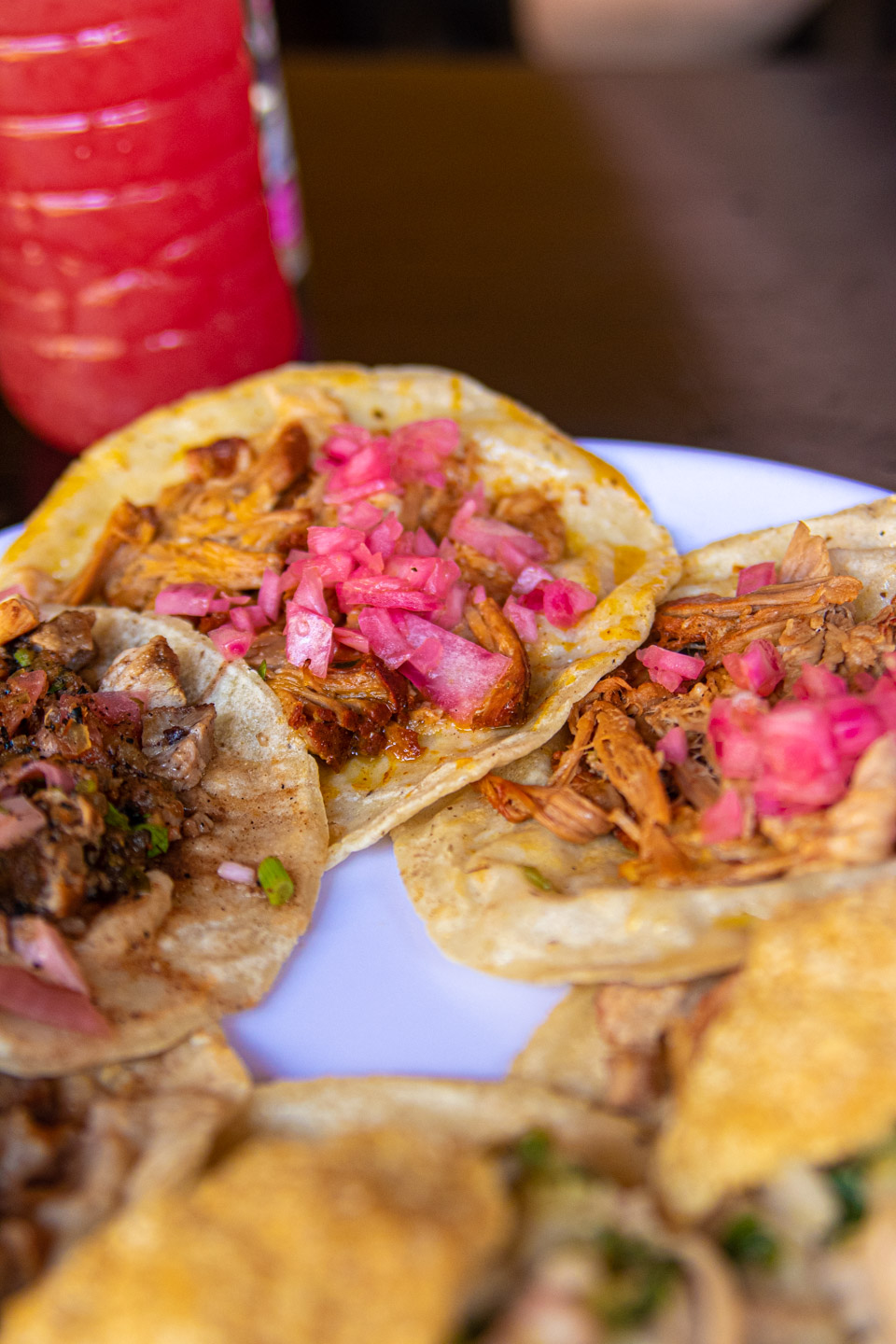
Where to Try Cochinita Pibil
In Tulum, Taquería Honorio is well known for its traditional regional tacos.
Another popular spot is Antojitos La Chiapaneca, particularly if you’d also like to try tacos al pastor.
Both are located in Tulum Town, where you’ll generally find more affordable food than in the beachfront hotel zone.
Find more about the best places to eat in my ultimate Tulum travel guide – the best spots in the resort.
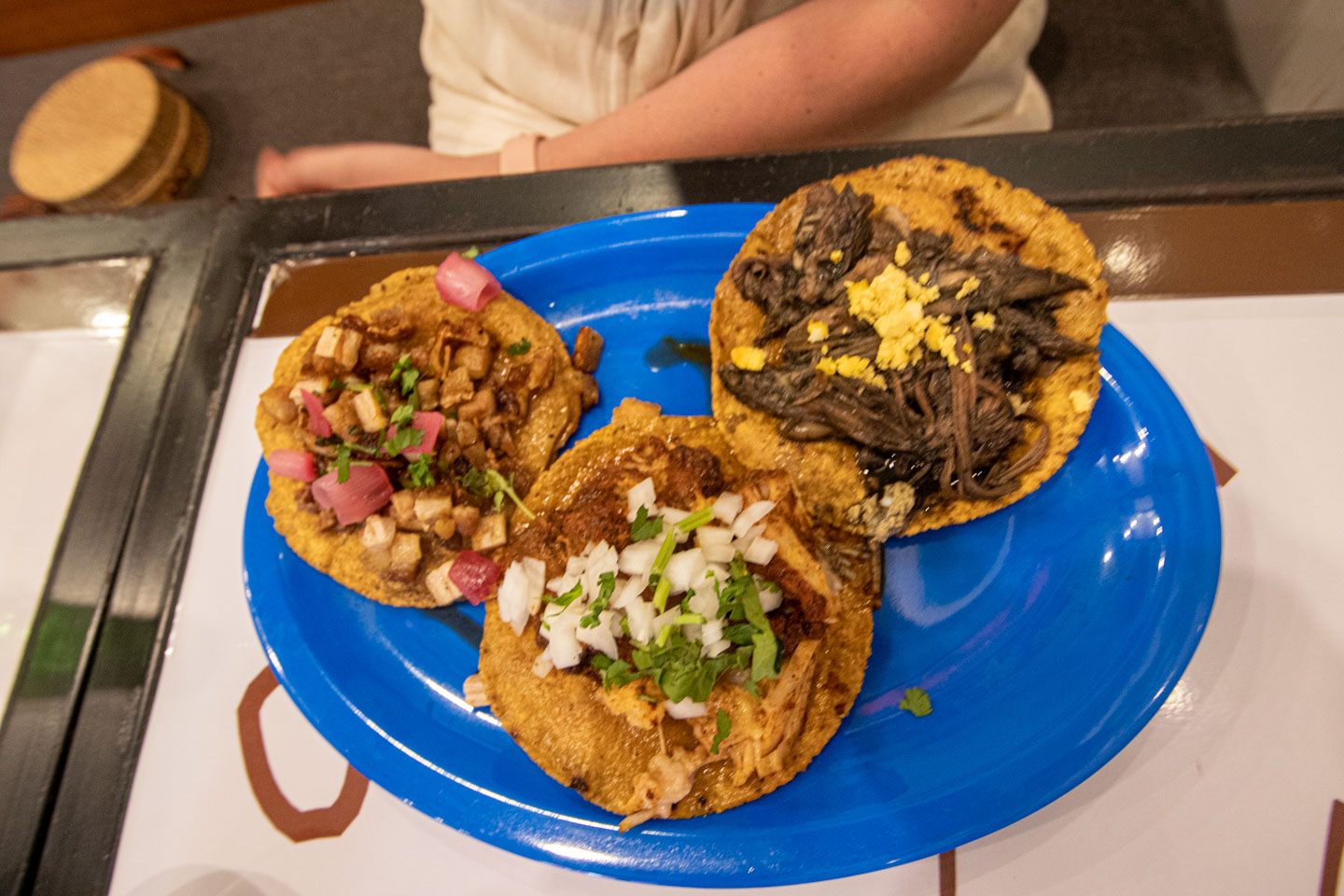
2. Panuchos and Salbutes – Two Delicious Takes on Corn Tortillas
Corn is at the heart of Mexican cuisine, and Yucatan has some particularly interesting ways of using it.
Two great examples are panuchos and salbutes, traditional snacks that look quite similar at first glance.
The difference lies in how the tortillas are prepared.
Panuchos are made with corn tortillas stuffed with black beans and then fried until lightly crispy.
They’re usually topped with shredded turkey or chicken, pickled red onions, lettuce, and avocado.
Salbutes, on the other hand, don’t have the bean filling.
Instead, the tortillas puff up slightly when fried, creating a softer and airier texture.
Both dishes are popular throughout Yucatan, especially around Mérida and Campeche.
I’d recommend trying them at a local market or small restaurant where they’re freshly prepared.
If you enjoy exploring regional food, order one of each and compare the textures and flavors.
3. Relleno Negro – A Traditional Black Stew with a Rich, Smoky Flavor
Not every traditional Yucatan dish looks the way you might expect.
Relleno negro is a perfect example.
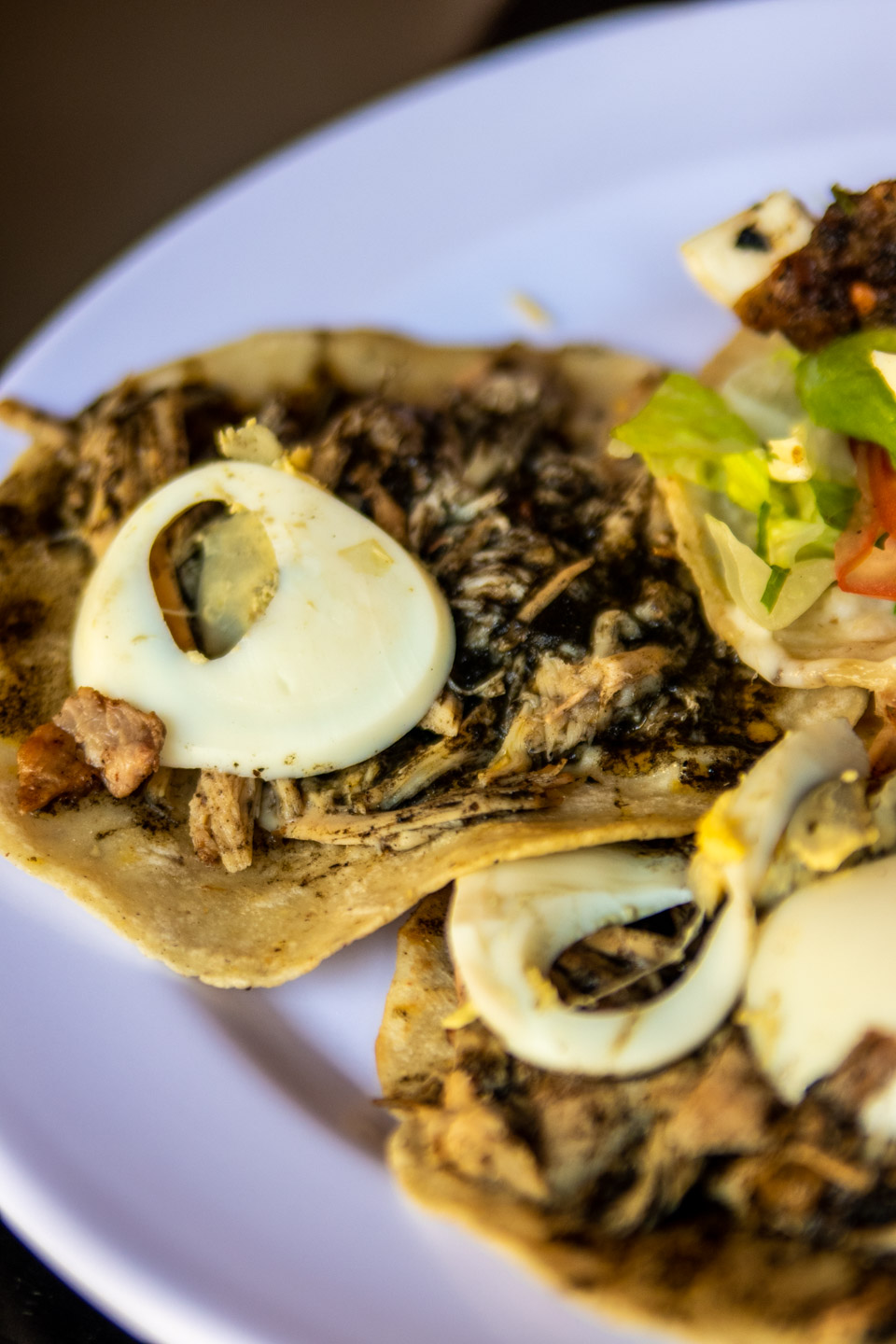
This regional specialty gets its striking black color from a seasoning paste called recado negro, also known as chilmole.
The paste is made with heavily roasted, blackened chili peppers and aromatic spices, giving the dish its distinctive smoky flavor.
Traditional relleno negro is most often prepared with turkey, although pork is sometimes used as well.
Hard-boiled eggs are another characteristic ingredient.
Depending on the preparation, it can be served as a rich meat stew or used as a filling for tacos.
Its appearance might seem unusual at first, but relleno negro is an important part of Yucatan’s culinary heritage.
It’s also a reminder of just how diverse Mexican cuisine can be from one region to another.
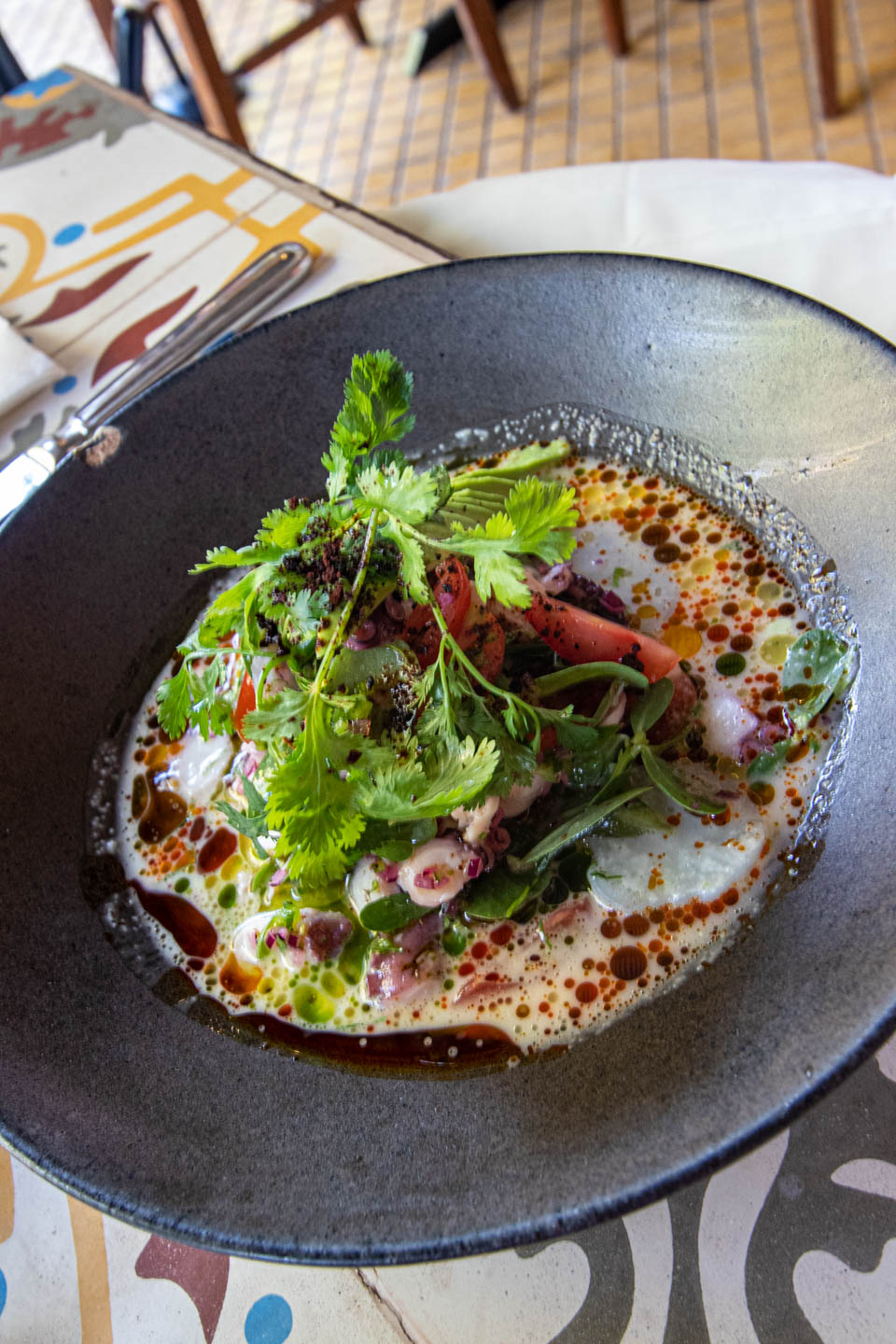
4. Pulpo Frito Ceviche – A Coastal Seafood Specialty
With the Gulf of Mexico and the Caribbean Sea surrounding much of the peninsula, it’s no surprise that seafood plays an important role in Yucatecan cooking.
One interesting dish to look out for is pulpo frito ceviche, which combines octopus with the fresh citrus flavors associated with ceviche.
The exact preparation varies from restaurant to restaurant.
Octopus may be marinated with citrus juice and seasonings, then fried or served alongside fresh vegetables, onions, and herbs.
The contrast between tender octopus, slightly crispy edges, and bright citrus flavors gives the dish its distinctive character.
It’s an interesting choice if you enjoy seafood and want to explore something beyond the usual fish tacos.
I’d look for it in coastal restaurants specializing in freshly prepared seafood.
5. Huevos Motuleños – A Traditional Yucatan Breakfast
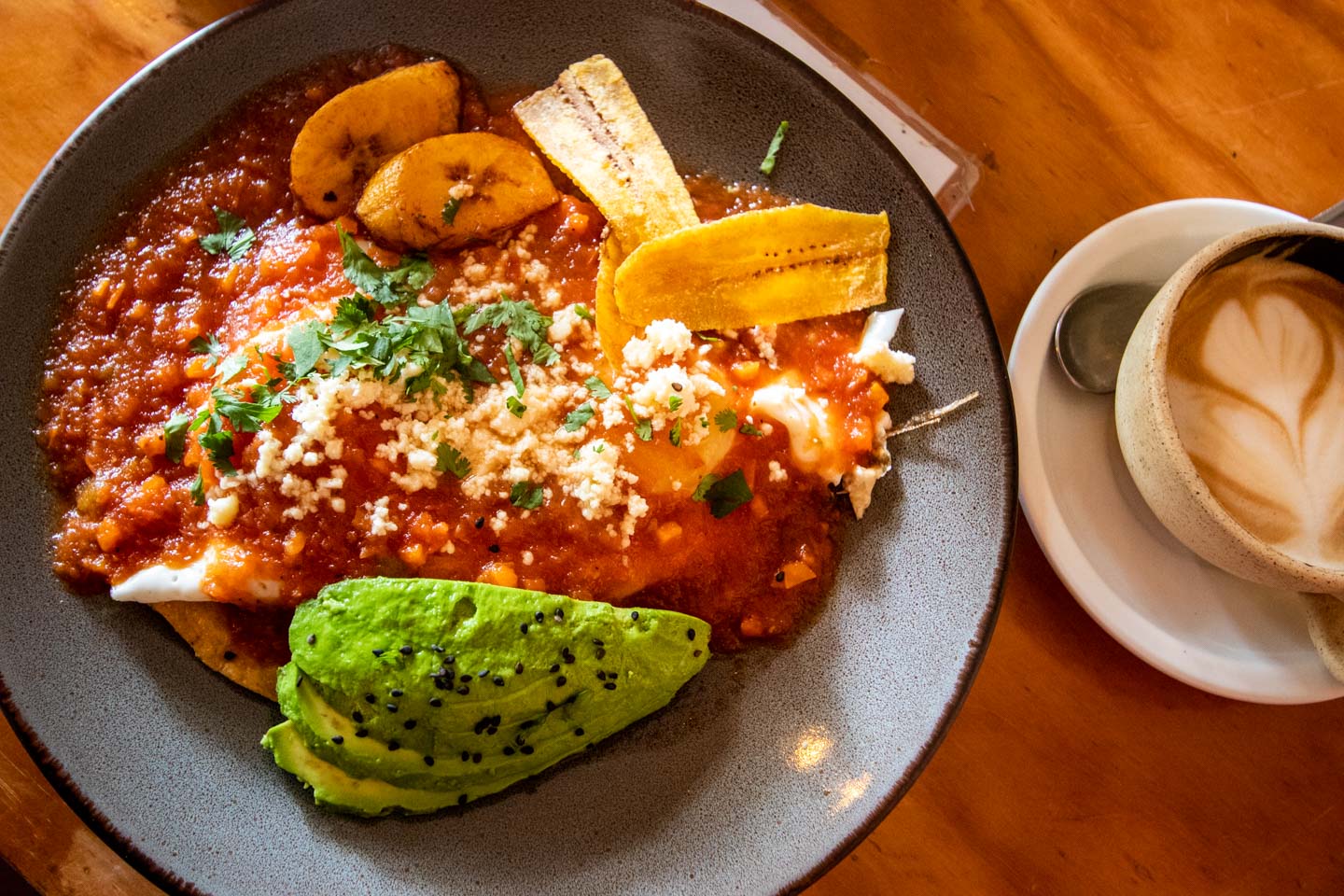
If you prefer a substantial breakfast, huevos motuleños is a dish worth knowing.
Its name comes from Motul, a small town north of Mérida.
Today, it’s one of the best-known breakfast dishes in Yucatecan cuisine.
Traditional huevos motuleños consists of fried eggs served over corn tortillas spread with black beans.
The eggs are covered with tomato sauce and topped with ingredients such as peas, ham, and white cheese.
Fried plantains are often served on the side, adding a touch of sweetness.
It’s an interesting combination of flavors: salty cheese, savory tomato sauce, creamy beans, and sweet plantains.
And it’s definitely more filling than a quick coffee and pastry.
If you’re vegetarian, ask whether the dish can be prepared without ham and whether the beans contain lard.
6. Sopa de Lima – Yucatan’s Famous Citrus Soup
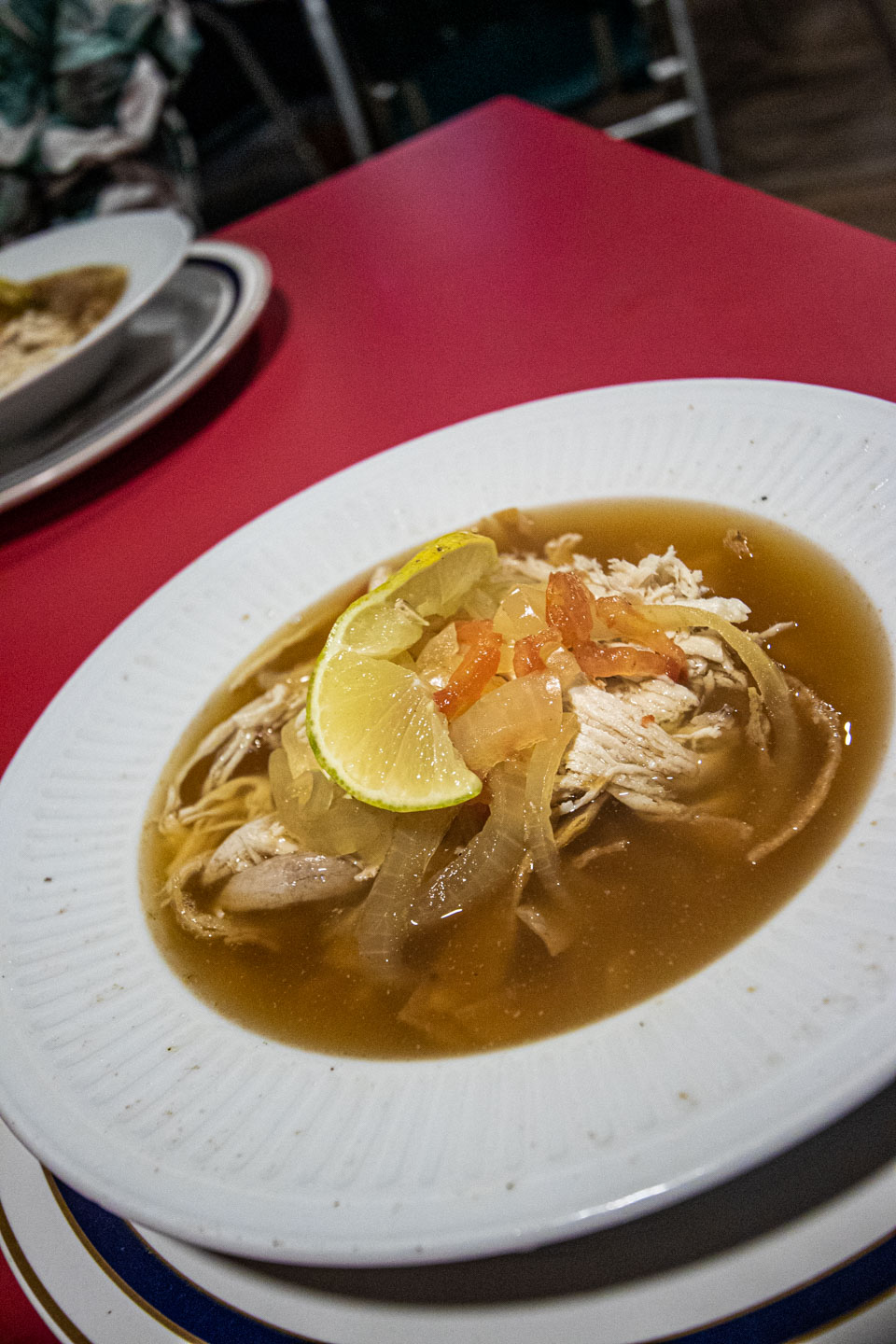
One of Yucatan’s most recognizable soups is sopa de lima.
It’s made with a fragrant broth, usually prepared with chicken or turkey, and flavored with spices and a local citrus fruit called lima.
The citrus gives the soup its fresh, slightly tangy flavor.
Shredded meat is added to the broth, and the soup is finished with crispy strips of fried tortilla.
Depending on the restaurant, you might also find additions such as cilantro or chili peppers.
What I like about Yucatecan cuisine is that even seemingly simple dishes have their own distinctive character.
Sopa de lima is a great example.
The combination of warm broth, bright citrus flavors, and crunchy tortillas makes it quite different from the soups most people associate with Mexican food.
The most memorable sopa de lima I had during my trip was in Mérida.
If you’re planning to visit the city, you’ll find more restaurant recommendations in my Yucatan road trip itinerary.
I had my best sopa de lima in Merida – in my 3-week Yucatan itinerary, you’ll find all the tried-and-tested restaurants.
7. Queso Relleno – A Cheese Lover’s Surprise
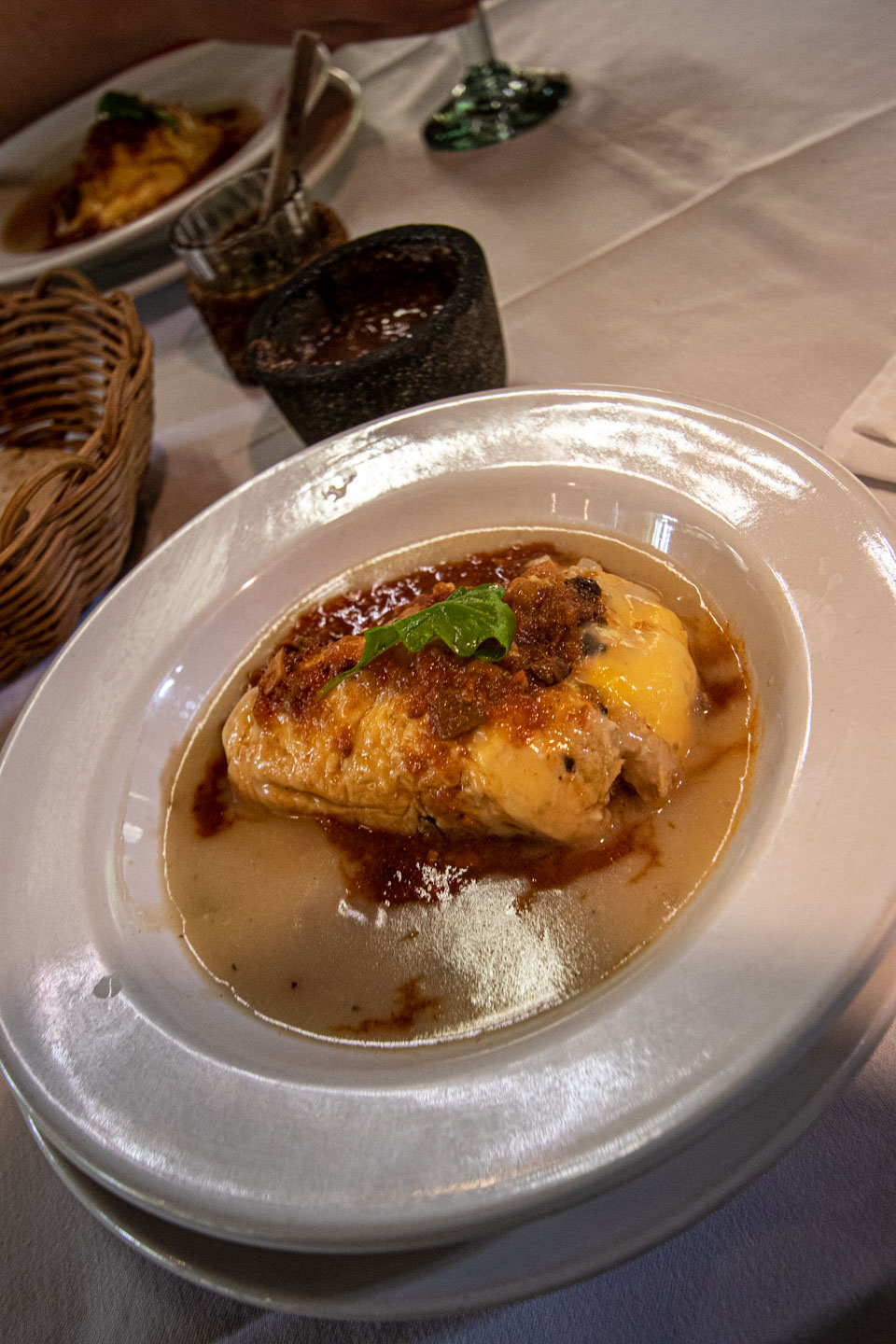
Queso relleno is one of the more unusual dishes you’ll come across in Yucatecan cuisine.
Its main ingredient is Edam cheese, which became popular in the region through historic trade connections with Europe.
Over time, it became the centerpiece of a dish that blends European ingredients with local cooking traditions.
To prepare queso relleno, a portion of Edam cheese is hollowed out and filled with seasoned ground meat.
The filling may include ingredients such as olives, capers, raisins, and almonds.
The stuffed cheese is then served with two sauces.
The first is a thick, pale sauce called k’ool. The second is a flavorful tomato-based sauce.
The combination is surprisingly interesting.
Mild cheese, savory filling, and contrasting sauces create a dish unlike much of what you’ll find elsewhere in Mexico.
Queso relleno is also a wonderful example of how Yucatan’s cuisine evolved over centuries, combining regional traditions with ingredients introduced through trade.
Where to Try Queso Relleno
If you’re visiting the yellow town of Izamal, consider having lunch at Restaurante Kinich, a restaurant known for traditional Yucatecan cuisine.
It’s where I encountered one of the most memorable versions of this dish during my trip.
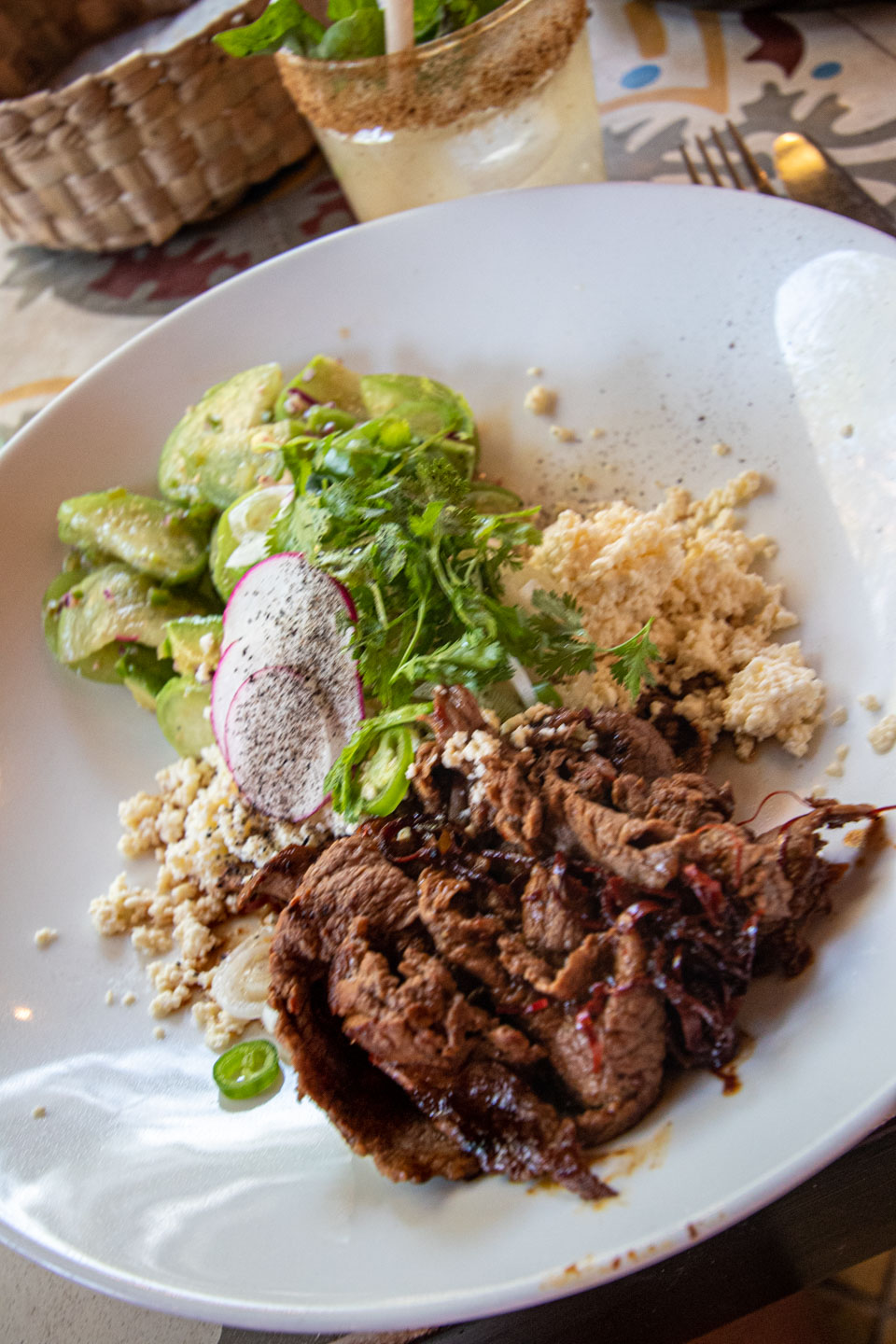
8. Poc Chuc – Citrus-Marinated Grilled Pork
Another traditional Yucatan dish is poc chuc, made with thin slices of pork marinated in sour orange juice and grilled over charcoal.
Its name refers to the traditional method of cooking meat over fire.
What makes poc chuc distinctive is the combination of bright citrus flavors and the smoky aroma of grilling.
The meat is commonly served with pickled red onions, avocado, beans, and chiltomate, a sauce made with roasted tomatoes and chili peppers.
It’s an interesting example of Yucatan’s culinary history.
Pork and sour oranges were introduced to the region through European influence, but local preparation methods gave the dish its distinctly Yucatecan identity.
If you’re interested in traditional cuisine, dishes like this reveal how the region’s history can be reflected in the food on your plate.
9. Tortas de Lechón – Yucatan’s Famous Roast Pork Sandwich
Not every traditional Yucatan specialty requires a long restaurant meal.
Sometimes all you need is a simple sandwich from a neighborhood taquería.
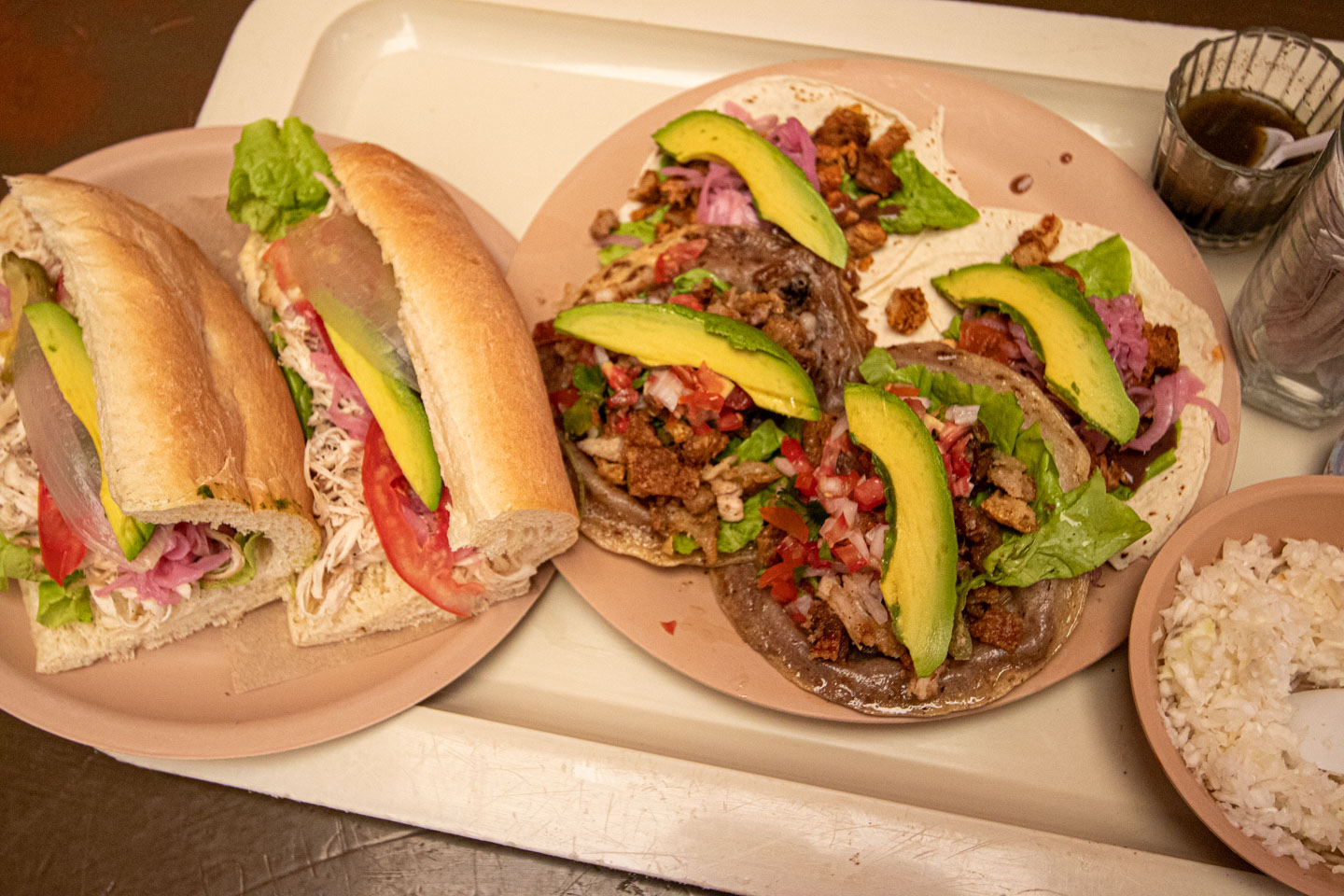
Torta de lechón is a popular regional sandwich filled with slow-roasted pork.
It’s typically made using a local bread roll called pan francés, with juicy pork, crispy crackling, and pickled red onions.
If you like spicy food, you can add habanero salsa.
Tortas de lechón are particularly popular in the morning, making them a common breakfast option.
I like how dishes like this offer a glimpse into the everyday side of regional cuisine.
No elaborate presentation or unusual ingredients.
Just traditional flavors prepared in a way locals have enjoyed for generations.
Where to Try Lechón in Mérida
In Mérida, Taquería La Lupita is a well-known spot for regional specialties, including tacos de lechón.
The restaurant also gained wider attention through Netflix food programming.
10. Marquesitas – Yucatan’s Sweet and Savory Street Food
Let’s finish with something sweet.
Although there’s a slightly unexpected ingredient involved.
Marquesitas are one of Yucatan’s most recognizable street-food desserts and something I’d definitely recommend looking out for during your trip.
They resemble thin, crispy wafers rolled around a variety of fillings.
The most traditional addition is grated Edam cheese, known locally as queso de bola.
It’s often combined with sweet ingredients such as chocolate, hazelnut spread, cajeta, or condensed milk.
The combination of sweet filling and slightly salty cheese might sound unusual, but that’s exactly what gives marquesitas their distinctive flavor.
The dessert originated in Mérida, where crispy wafers began being sold in the 20th century as an alternative to ice cream.
Over time, marquesitas became one of the symbols of Yucatan’s street-food culture.
Today, you’ll find them at small stalls, particularly in the evenings when locals gather in parks and town squares.

Where to Try Marquesitas in Mérida
During your stay in Mérida, look for a marquesitas stall along Paseo de Montejo.
An evening walk down this beautiful avenue, followed by a freshly made marquesita, is one of the simplest ways to enjoy the city.
You don’t need a reservation or a special plan.
Just choose your filling and find somewhere to sit and enjoy it.
What to Eat in Yucatan if You’re Vegetarian
Although many traditional Yucatecan dishes feature pork, poultry, or seafood, vegetarian travelers can still find interesting local flavors.
There’s one thing worth remembering, though.
A dish without visible meat isn’t necessarily vegetarian.
Beans may be cooked with lard, while soups and sauces sometimes contain meat-based broth.
If you’re vegetarian, it’s worth asking about the ingredients and preparation methods.
Possible options include huevos motuleños without ham, properly prepared vegetarian panuchos, vegetable-based dishes, and marquesitas.
A few useful Spanish phrases:
- ¿Tiene opciones vegetarianas? – Do you have vegetarian options?
- ¿Lleva carne o caldo de carne? – Does it contain meat or meat broth?
- ¿Los frijoles llevan manteca? – Are the beans prepared with lard?
- Sin carne, por favor. – Without meat, please.
Asking a few simple questions can help you avoid surprises and discover dishes that fit your dietary preferences.
Travel lighter, even before you leave.
start with something simple.
Download The Minimum Plan – Slow Travel:
Where to Find the Best Traditional Yucatecan Food
During my trip, I noticed that food prices varied quite a bit depending on where I was.
In Tulum’s tourist areas, a meal could cost considerably more than a similar one in Mérida or Valladolid.
But that didn’t necessarily mean the more expensive restaurant served better food.
Quite the opposite, in fact.
Some of my favorite food-related memories came from small restaurants that weren’t particularly stylish or popular on social media.
That’s why I enjoy visiting local markets, trying neighborhood taquerías, and asking residents where they like to eat.
Sometimes the best meal of your trip is the one you never planned.
If you’re deciding where to spend more time exploring traditional Yucatecan food, I’d particularly recommend Mérida and Valladolid.
Both cities make wonderful bases for discovering regional cuisine.
What to Eat in Mexico: My Favorite Food Memories from Yucatan
For me, discovering Yucatecan cuisine became much more than another activity on my Mexico itinerary.
It was a way to learn about the region’s history, traditions, and everyday life.
I remember the little taquerías in Tulum, slow mornings over coffee in Mérida, and evening walks that somehow always left room for something sweet.
Every dish tells a different story.
About Maya traditions, European influences, local ingredients, and cooking techniques that have survived for generations.
Of course, you don’t need to try everything on this list.
If you’re planning a trip to Yucatan, choose a few dishes that genuinely interest you and look for places where they’re prepared using regional recipes.
Some of the most memorable food discoveries happen when you stop following another online checklist and walk into a restaurant simply because something about it catches your attention.
And that’s one of my favorite things about discovering a place through its food.
Planning a Trip to Mexico?
If you’d like to explore more of Yucatan, take a look at my other travel guides:
- 21-Day Yucatan Itinerary – My road trip through Tulum, Mérida, Valladolid, and Isla Holbox.
- Complete Tulum Guide – My favorite places and the attractions that didn’t quite live up to the hype.
- My Experience at 2 Tulum Hotels – My experience at Hotel Tiki Tiki and Our Habitas Tulum.
- Isla Holbox Travel Guide – Beautiful beaches, restaurants, and practical tips for visiting the island.
And now I’m curious: which traditional Yucatan dish would you most like to try?
Or have you already discovered a favorite Mexican specialty?
Let me know in the comments. I’d love to hear about your food discoveries!
Save this guide on Pinterest so you can come back to it before your trip.