
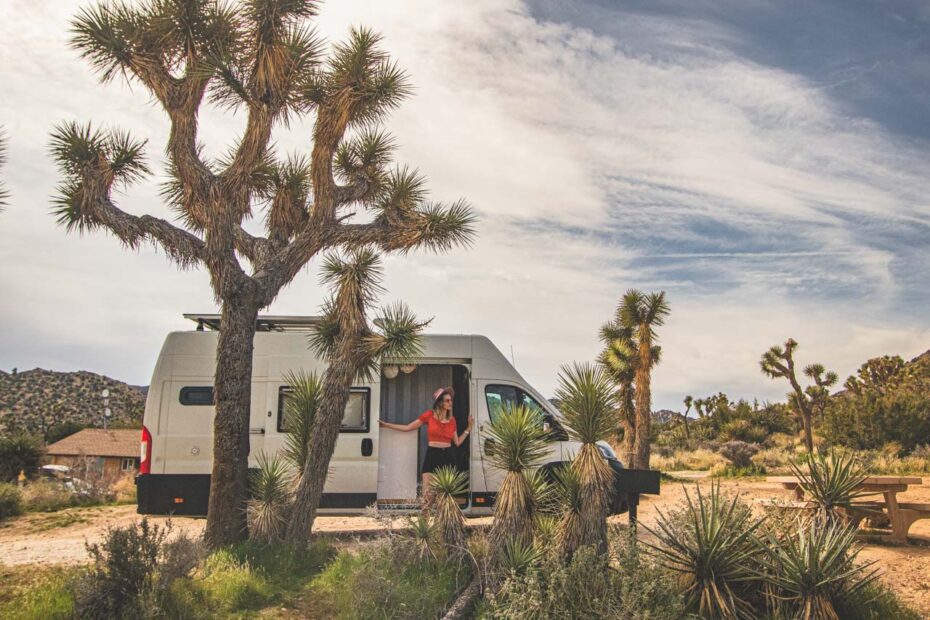
Looking for the best Joshua Tree National Park hikes? You’ve come to the right place!
Over the past year, I’ve visited many beautiful places in the USA, but Joshua Tree stayed with me longer than most.
It’s a park that doesn’t attack you with attractions – it slowly reveals itself. The more time you give it, the more powerfully it works.
Characteristic Joshua trees, raw desert landscapes straight out of westerns, and sunsets that truly stick in your memory. There’s something quiet and very real about this place.
In this guide, I’ll show you the best hiking trails and spots in the park and share practical tips that’ll help you plan your visit without rushing and without chaos.
You’ll learn what to see in Joshua Tree National Park and how to experience it at your own pace. Let’s begin.
Planning Your USA Trip – Start Here
If you’re just getting started with planning your American adventure, these guides will help you understand the country, pick a region, and build an itinerary:
1. Hidden Valley
Trail length: 1.0 miles (1.6 km)
Hiking time: 0.5 hours
Hidden Valley is one of those places in Joshua Tree that immediately pulls you in.
This enclosed, rocky valley surrounded by massive boulders feels like a natural amphitheater and in fact, according to local stories, it once served as a hideout for cattle rustlers.
Today it’s one of the most pleasant spots for a peaceful walk and a good starting point for further park exploration.
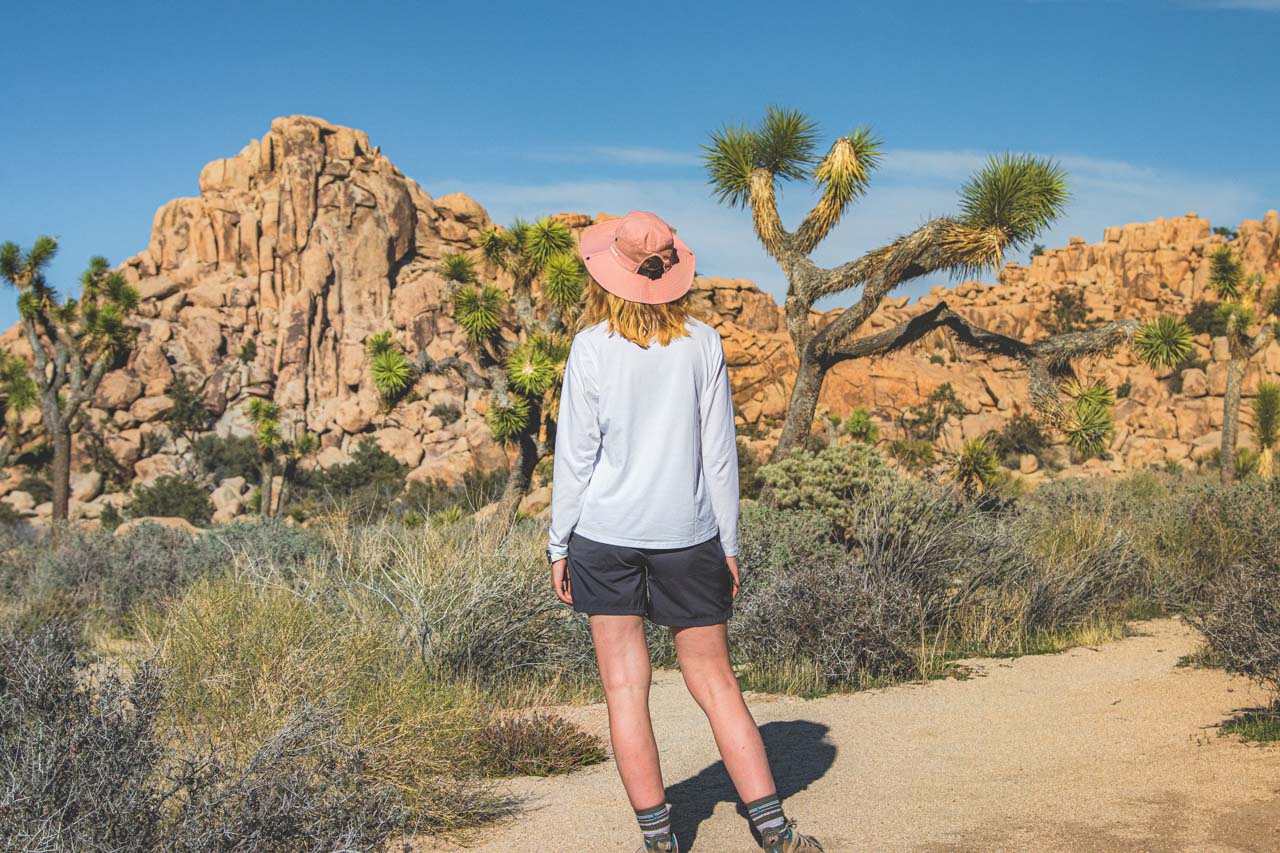
The Hidden Valley Trail loop is short and easy, but very diverse. Along the way you’ll see characteristic rock formations, desert vegetation, and of course Joshua trees that look particularly photogenic here.
It’s an ideal stop for your first encounter with the Joshua Tree landscape or for a short break during the day, without pressure and without rushing.
2. Barker Dam
Trail length: 1.3 miles (2.1 km)
Hiking time: 0.5 hours
Barker Dam is one of those places in Joshua Tree where landscape meets history.
This small water dam was built by early settlers who tried to capture precious water for cattle and desert life.
Today it’s a peaceful loop trail, good for a short walk and a moment of nature observation.
After rains, the reservoir can fill with water and then attracts birds and other wildlife. Most of the year the place remains dry, which only emphasizes the harsh character of this part of the park.
The trail leads between picturesque rock formations and works great even after sunset.
If you like quiet and night skies, Barker Dam is one of the better places for peaceful stargazing in Joshua Tree.
3. Arch Rock
Trail length: 1.2 miles (1.9 km)
Hiking time: 0.5 hours
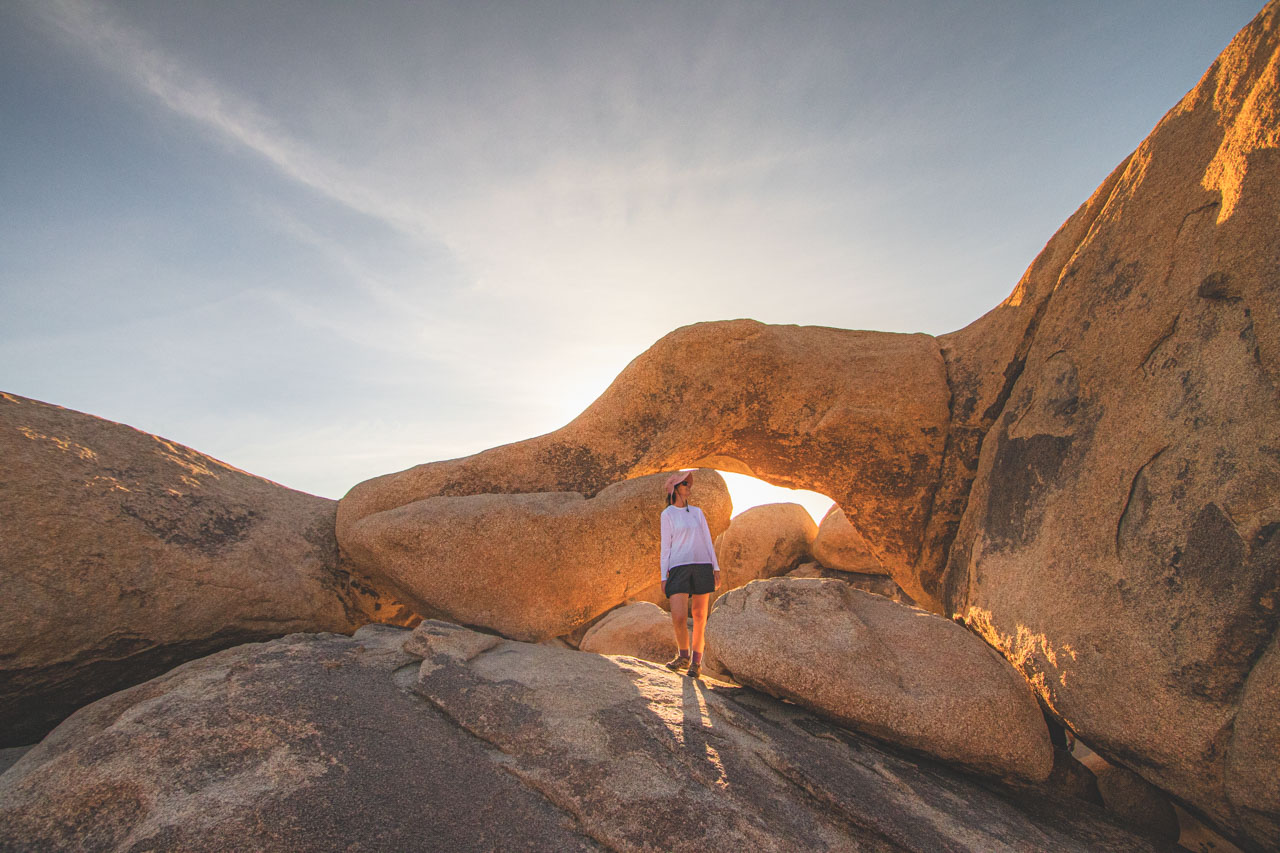
If you think natural rock arches are the domain of Arches National Park, Joshua Tree can pleasantly surprise you.
Arch Rock is one of those details you discover somewhat by chance, and that’s exactly why it makes the biggest impression.
This impressive arch was formed through long-term erosion and looks best when you approach it on a calm, short trail starting at the parking lot near White Tank Campground.
The trail itself is easy and very pleasant, with beautiful views of Joshua Tree’s characteristic rocks.
Arch Rock is about 30 feet (9 meters) wide and it’s no wonder it’s one of the most frequently photographed spots in the park.
In the area you’ll also find plenty of space for exploring smaller rock formations and places popular with climbers.
A perfect stop if you like getting off the main trail and looking where the landscape speaks more quietly.
4. Heart Rock
Trail length: 1.6 miles (2.6 km)
Hiking time: 0.5 hours
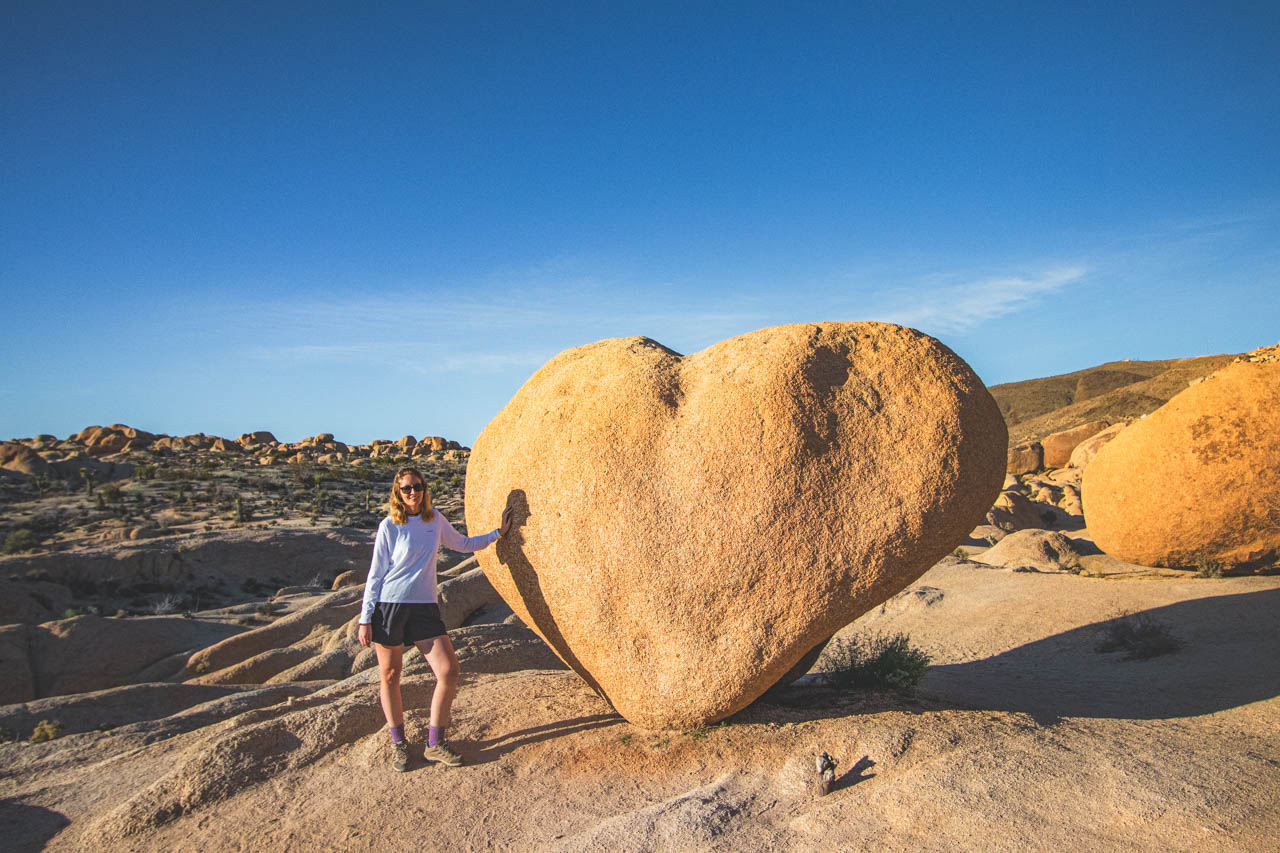
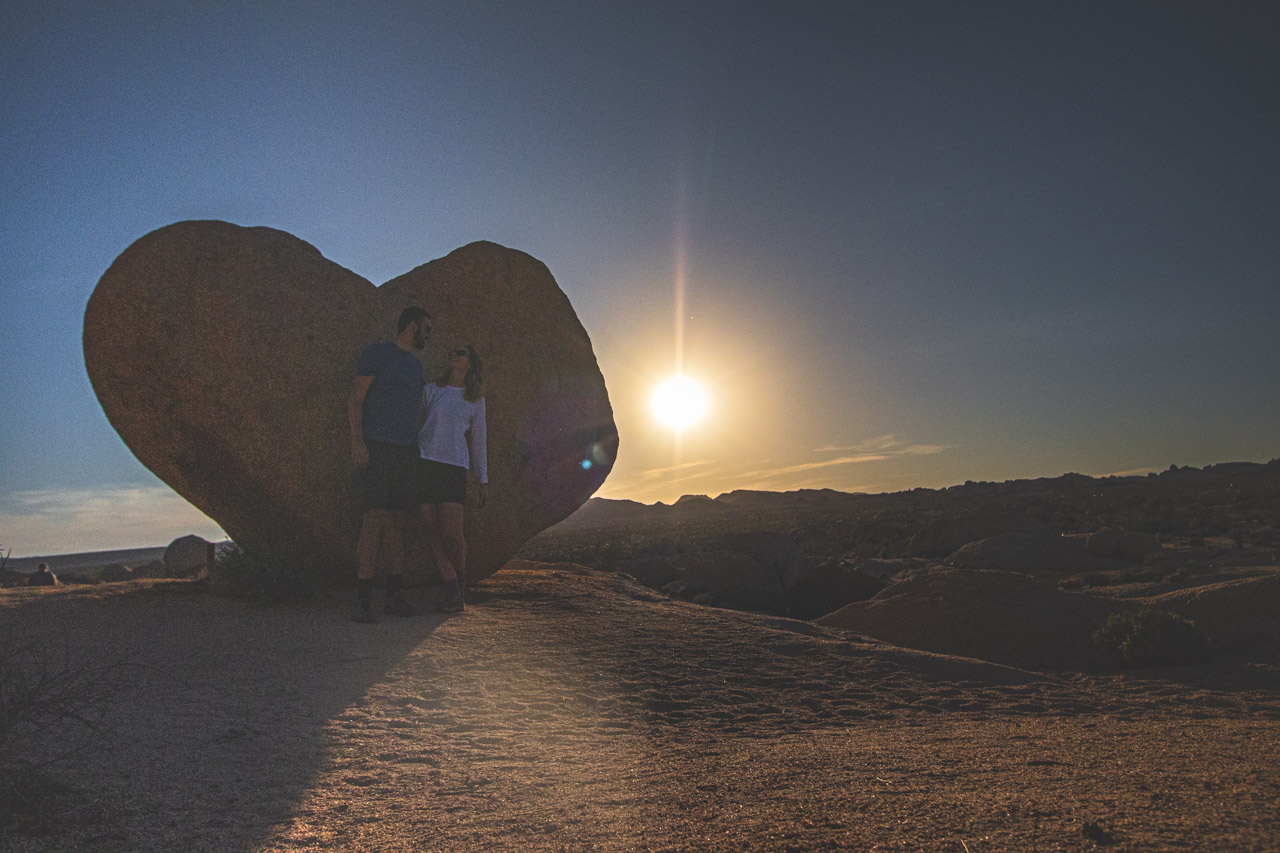
Rocks in Joshua Tree can surprise with their form and Heart Rock is one of those small discoveries that brings a smile.
The natural heart-shaped formation has become a quiet symbol of the park and attracts both photographers and couples looking for a bit of romance in the desert.
Heart Rock is located not far from Arch Rock and you can reach it on the same trail, turning left at one of the forks. It’s a short, peaceful walk that combines well with the earlier stop.
The rock itself isn’t the biggest or most spectacular attraction in Joshua Tree, but its shape and surrounding landscape do their job.
It’s particularly nice here at the end of the day, when the light becomes soft and the desert slowly quiets down before sunset.
5. Keys View
Trail length: 0.1 miles (0.16 km)
Hiking time: 5 minutes
If you don’t feel like a longer walk or simply want to see something “immediately,” Keys View is one of those points you can easily drive to.
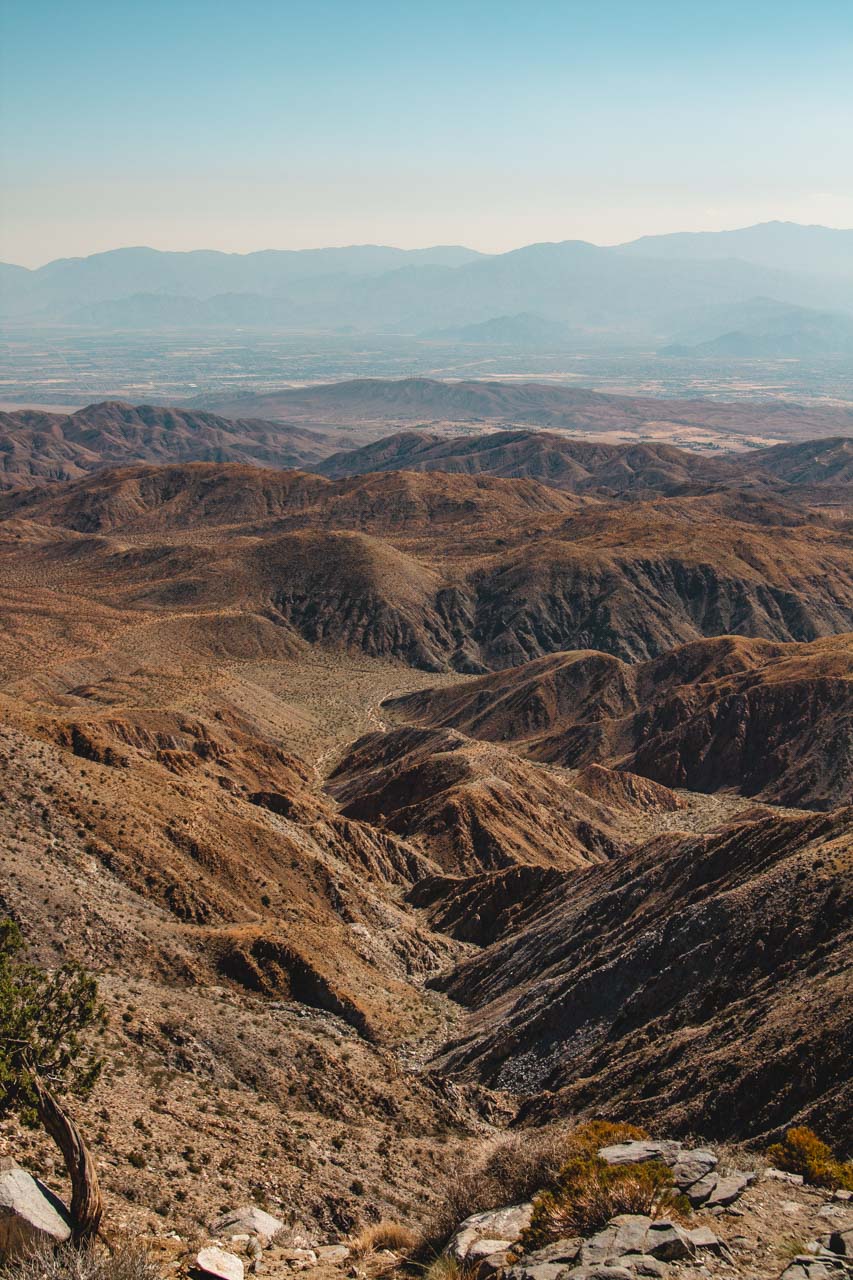
From this place stretches a wide panorama of Coachella Valley, the San Jacinto Mountains range, San Gorgonio Mountain, and the San Andreas Fault line.
In good weather, visibility can be truly impressive and it’s hard to believe how far the eye can see.
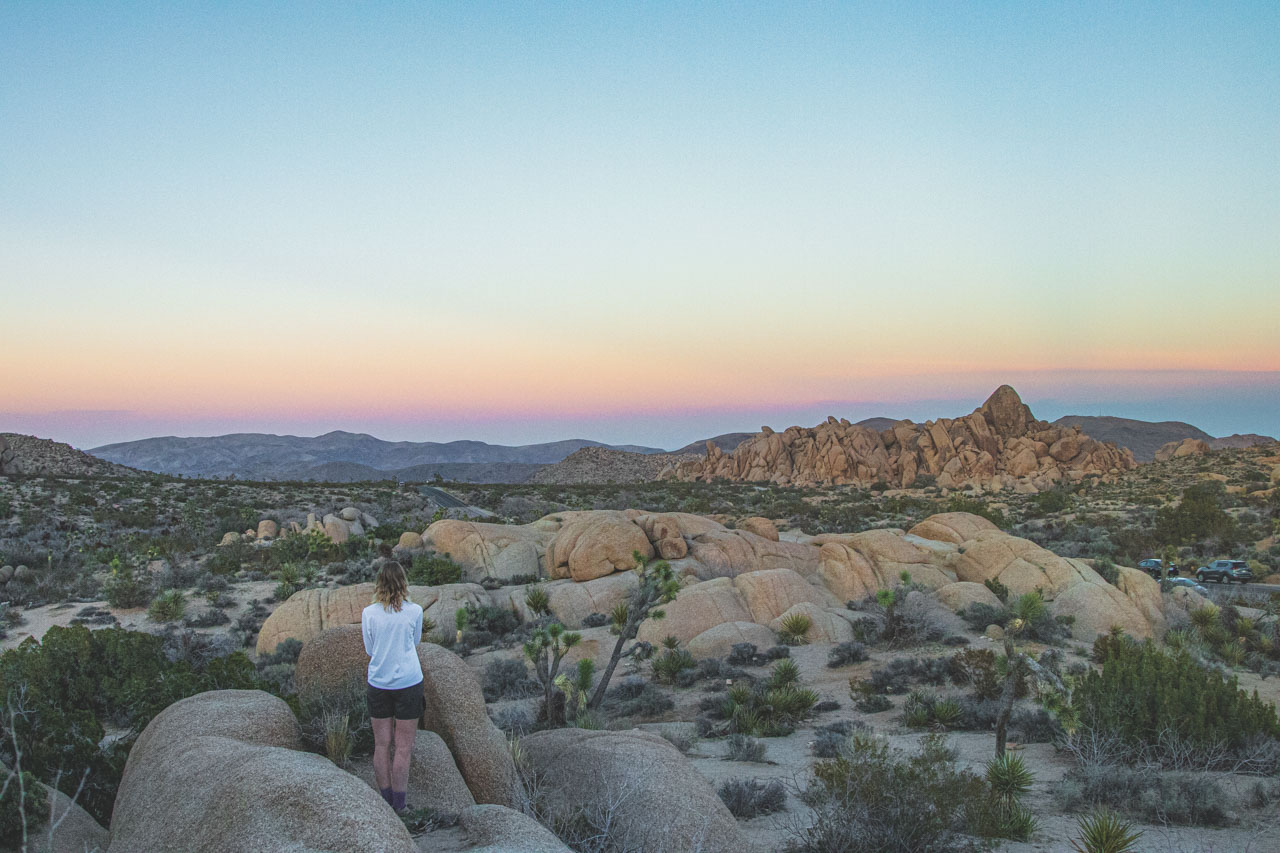
This is one of the best places in the park for watching the sunset. A short, paved path leads to the viewpoint, where the landscape opens up suddenly and effortlessly.
A perfect stop at the end of the day, when the desert slowly changes colors and everything slows down for a moment.
6. Skull Rock
Trail length: 1.7 miles (2.7 km)
Hiking time: 1-1.5 hours
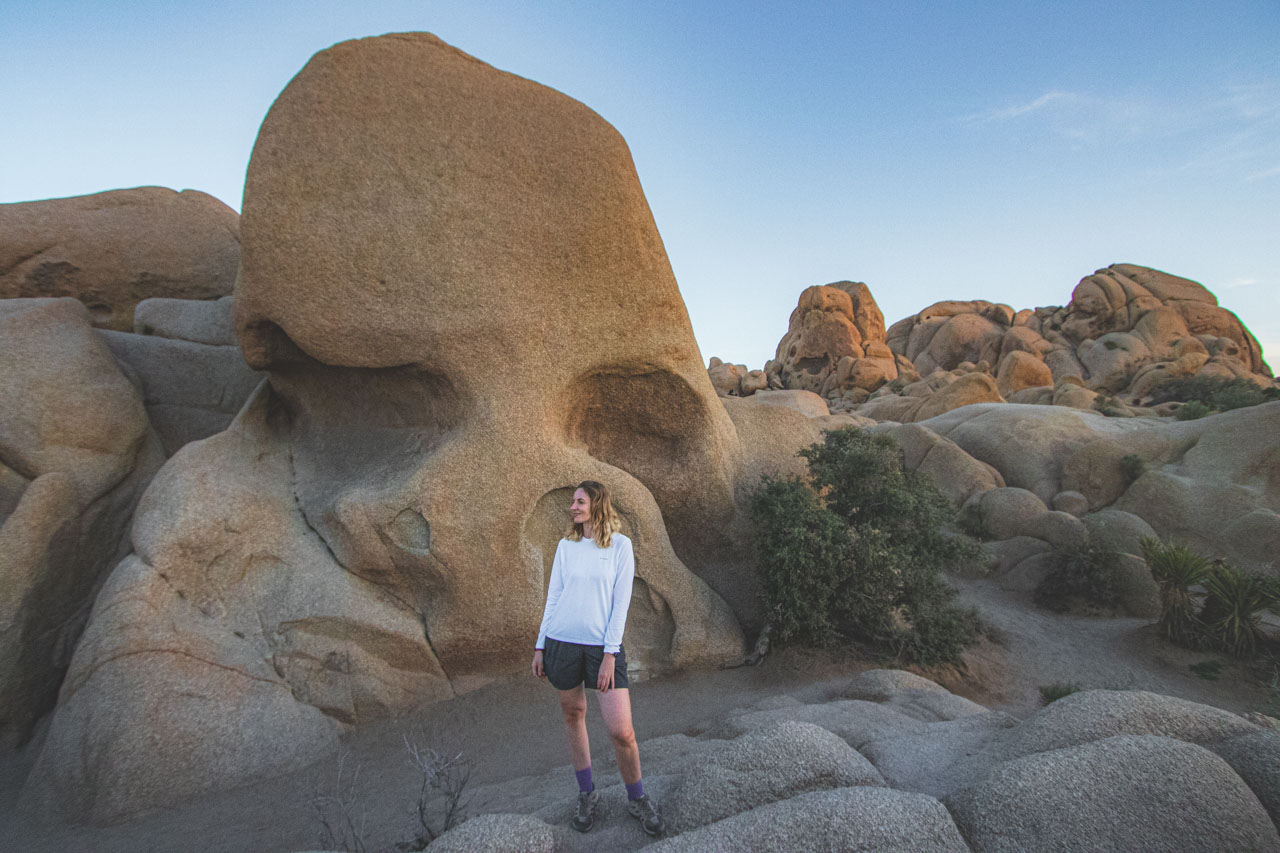
Skull Rock is one of the most characteristic rock formations in Joshua Tree and one of those places that’s hard to miss.
The rock’s shape really does resemble a human skull, and this effect is the result of thousands of years of water and wind action.
The formation is located right by the park’s main road, so it’s very easily accessible. A short stop is enough to see it, but it’s worth staying longer and taking the loop leading around the surrounding rocks.
The roughly 2-mile trail lets you peek into less obvious corners of this part of the park, with interesting rock formations and typical desert vegetation.
Skull Rock also has a completely different character after dark. In the light of flashlights it looks more harsh and mysterious, making it one of the more interesting places for an evening walk in Joshua Tree.
7. Ryan Mountain
Trail length: 2.9 miles (4.7 km)
Hiking time: 2 hours
If you’re in the mood for a more intense hike, Ryan Mountain is one of the best choices in Joshua Tree. It’s a trail that gives you a sense of effort, but very honestly pays you back.
The round-trip trail is almost 3 miles and leads to a summit at 5,457 feet (1,663 meters) above sea level.
The ascent is quite steep and demanding in places, but at the top the landscape opens wide in all directions. It’s one of those places where you really feel the scale of the desert.
It’s best to set out early in the morning, before it gets hot and before larger groups appear. Water, sun protection, and a calm pace are essential.
Ryan Mountain is a good choice if you want to see Joshua Tree from a different perspective and aren’t afraid to get a bit tired along the way.
How do you want to explore America?
🏞️ National Parks Adventure → 10 Amazing Things to Do in Yosemite – My personal tested hiking trails and photography spots
🌊 Pacific Coast Highway → 7-Day California Coast Itinerary – Every scenic stop and hidden beach I discovered
🌲 Pacific Northwest Explorer → 10-Day Oregon & Washington Guide – Waterfalls, forests, and coastal magic
🏜️ Southwest Desert Experience → Arizona Road Trip – From red rocks to slot canyons
What type of American adventure calls to you most?
8. Hall of Horrors
Trail length: 0.6 miles (1 km)
Hiking time: 0.5-2 hours
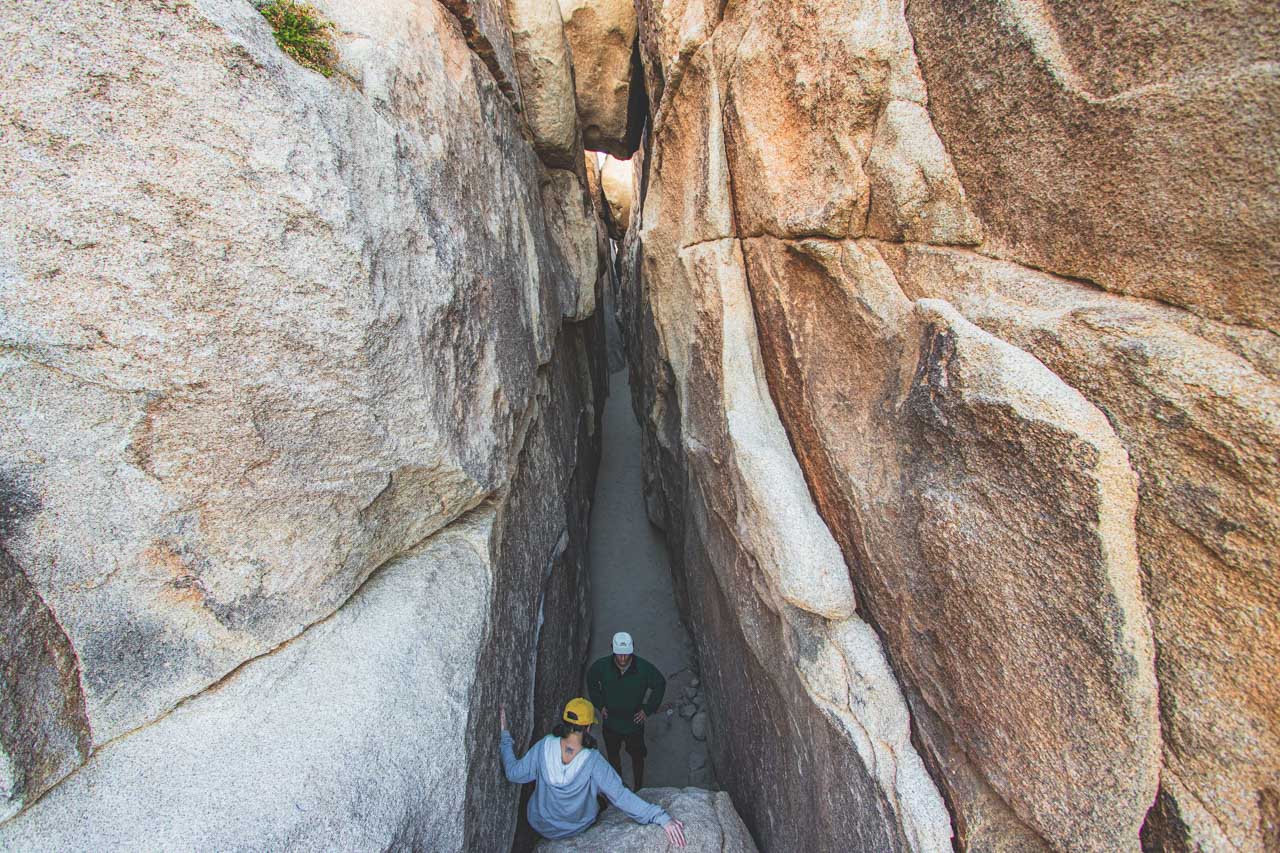
Hall of Horrors is one of the more unusual places in Joshua Tree National Park and a great example of how diverse the landscape here can be.
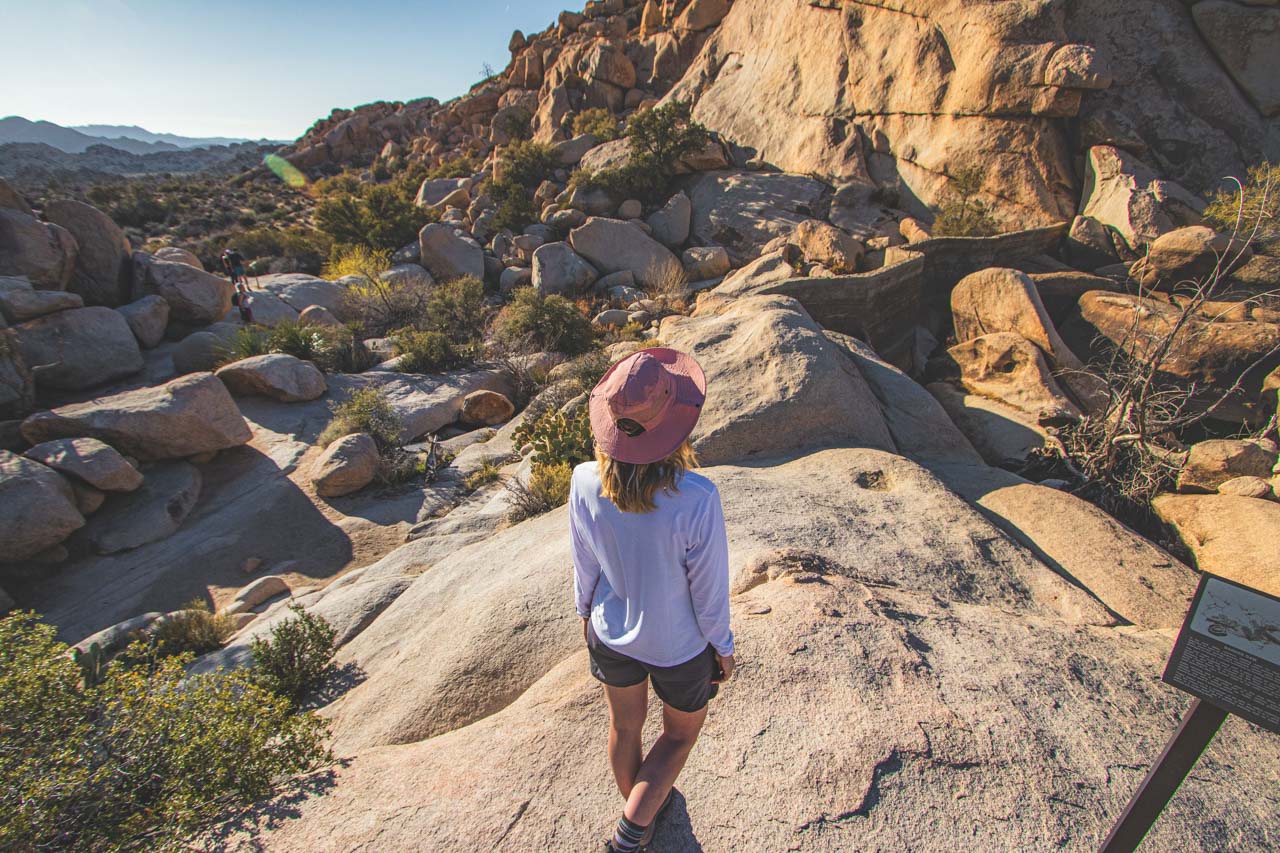
It’s a rock labyrinth full of narrow passages, crevices, and natural corridors, particularly beloved by bouldering enthusiasts.
The name may sound ominous, but in reality it’s a very engaging and interesting place to explore. You can freely circle between rocks, peek into small “caves,” and discover successive passages at your own pace.
It’s an ideal stop if you feel like something less obvious than a classic trail.
Hall of Horrors works great both as a climbing spot and for photography, especially when light softly falls between rocks and emphasizes their raw structure.
9. Cholla Cactus Garden
Trail length: 0.2 miles (0.3 km)
Hiking time: 5 minutes
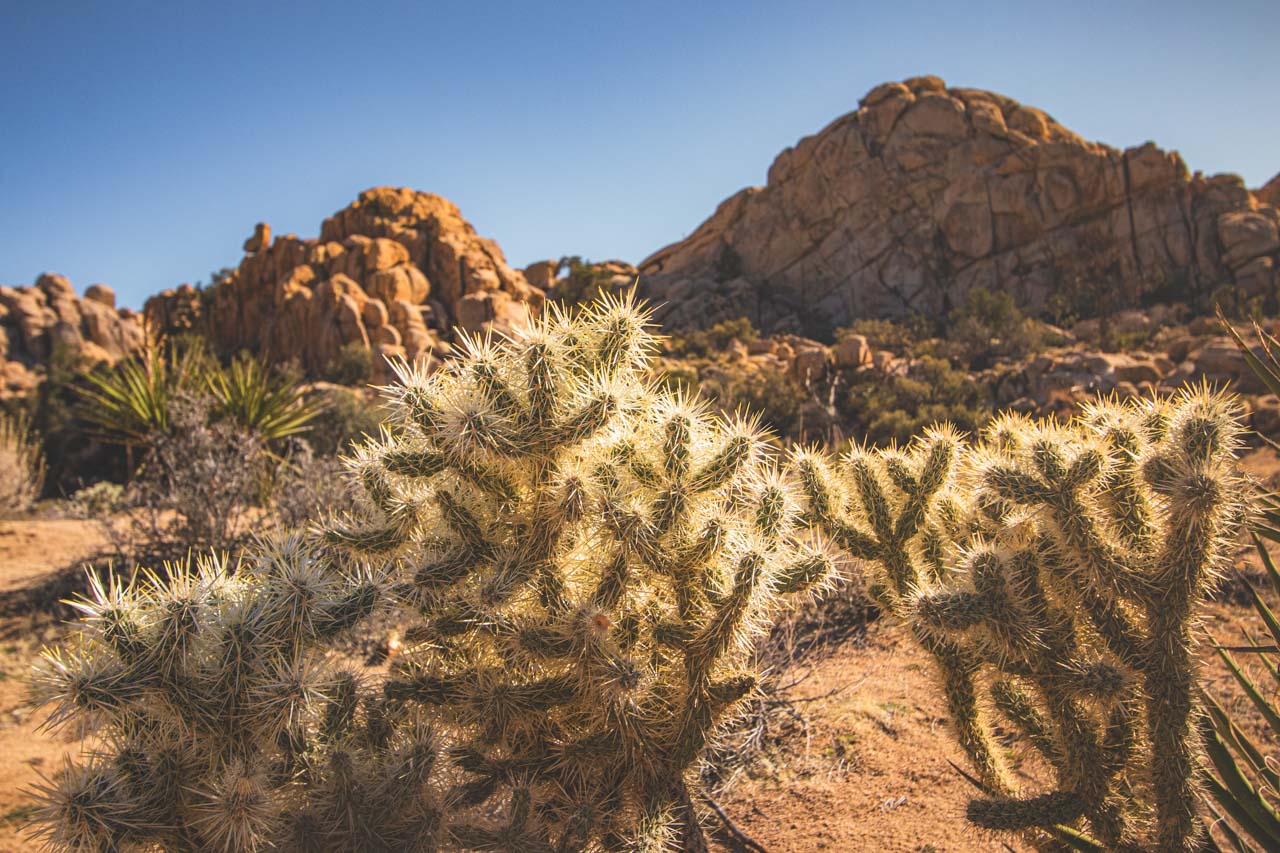
Cholla Cactus Garden is one of the most photogenic places in Joshua Tree, but it’s worth approaching it a bit more calmly than just for a “quick photo.”
The dense forest of cholla cacti looks almost unreal here, especially when light starts working with the landscape.
Cholla, colloquially called “jumping cacti,” have a somewhat treacherous reputation. Their spiny fragments very easily attach to clothes and skin, so caution is really advised here.
It’s best to show up here at sunrise or sunset. That’s when the cacti take on a warm, golden color, and the entire garden looks like something from another world.
A short, marked path runs through the area and it’s definitely worth sticking to it. This place enchants most when you observe it from a distance and without rushing.
10. Black Rock Canyon
Trail length: 5.6 miles (9 km)
Hiking time: 3 hours
Finally, I’ve saved a place I particularly love for its peace. Black Rock Canyon lies in the western part of the park and has a completely different rhythm than the more crowded areas of Joshua Tree.
It’s a great area for longer hikes and wildlife observation. It’s quieter here, fewer people, and more space to really be with the landscape.
If Joshua Tree means mindfulness and slowing down to you, this is where it’s easiest to feel.
If you have more time and energy, it’s worth heading out on the Warren Peak Trail. The trail leads to a summit with views of Yucca Valley and the surrounding mountain ranges.
It’s one of those points where perspective suddenly changes and everything comes together.
Black Rock Canyon is also a very good place for observing the night sky. Minimal light pollution means that after dark the desert shows a completely different face.
A perfect end to the day in Joshua Tree, without noise and without rushing.
Helpful Tips
How Much Does It Cost to Enter Joshua Tree
Entry to Joshua Tree National Park costs $30 per vehicle and is valid for 7 days (Standard Pass). This is the most commonly chosen option if you’re exploring the park by car.
Tickets for pedestrians and motorcyclists are also available, as well as an annual pass covering only this park.
If you’re planning to visit more national parks, I recommend purchasing the America the Beautiful Pass.
For US residents, the pass costs $80 per year. From January 2026, for people from outside the US, it costs $250 and provides access to all US national parks for a full year.
It’s a good option for road trips and longer stays, when parks naturally appear on your route and you don’t want to think about tickets every time.
How to Get to Joshua Tree
Joshua Tree National Park is located about 140 miles (225 km) east of Los Angeles, and getting there is straightforward if you’re traveling by car.
The most commonly chosen option is driving on Interstate 10, then turning onto CA-62, which leads directly to the park area. It’s a convenient route, also good for first-time visitors.
Alternatively, you can enter the park from the south, also from Interstate 10, exiting at Cottonwood Spring.
This entrance is located about 25 miles (40 km) east of Indio and is a good choice if you’re coming from the desert side or want to start exploring from the quieter part of the park.
It’s one of those parks where the journey itself already introduces you to the desert climate and helps you slow down even before entering Joshua Tree.
Best Time to Visit Joshua Tree
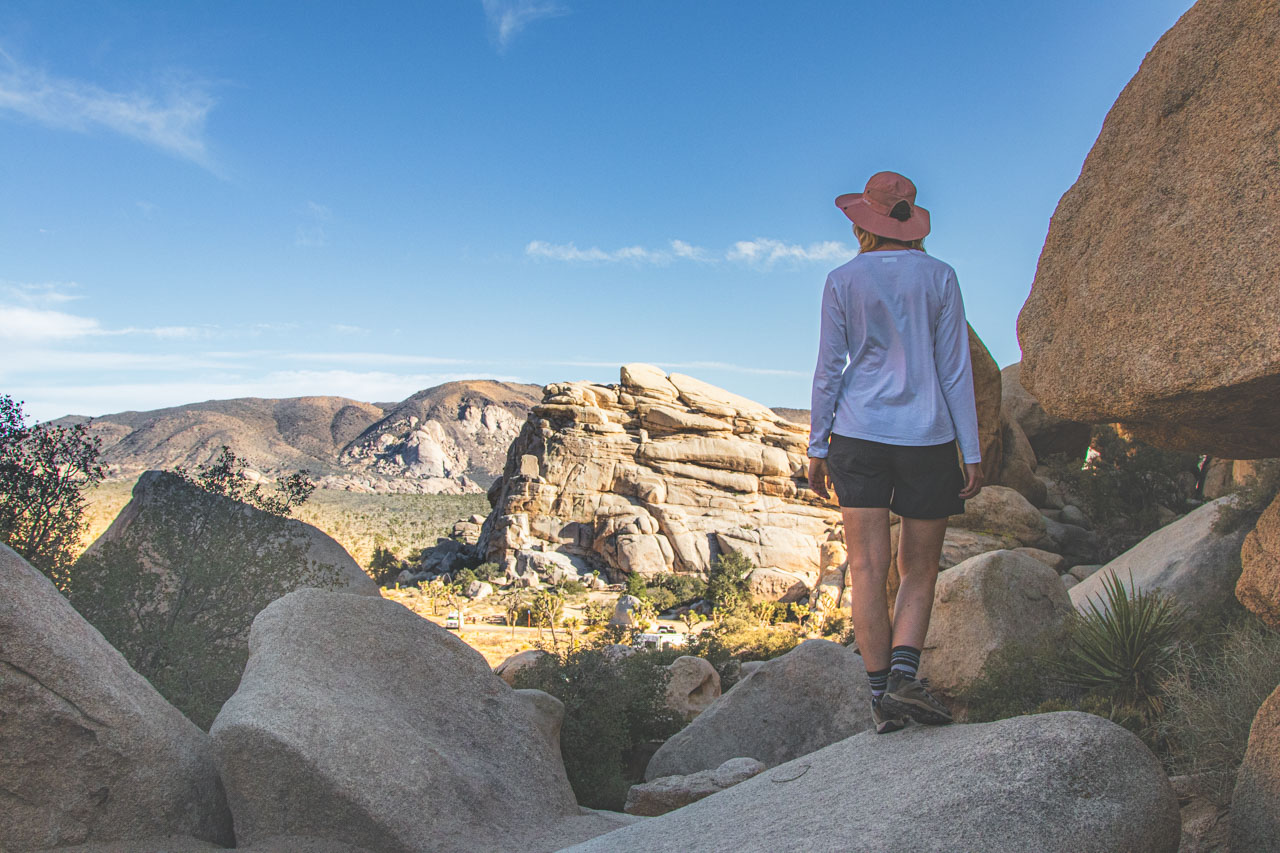
The best time to visit Joshua Tree National Park is spring (March-May) and fall (October-November).
Temperatures are more pleasant then, and conditions favor walks, hikes, and peaceful exploring without battling the heat.
In summer, the park can get really hot, which severely limits outdoor activities, especially in the middle of the day.
In winter, days can be mild, but nights are cold. However, it’s a good time if you want fewer visitors and a quieter atmosphere.
Joshua Tree tastes best when you don’t have to rush, either from the sun or from crowds.
What to Pack for a Hike in Joshua Tree
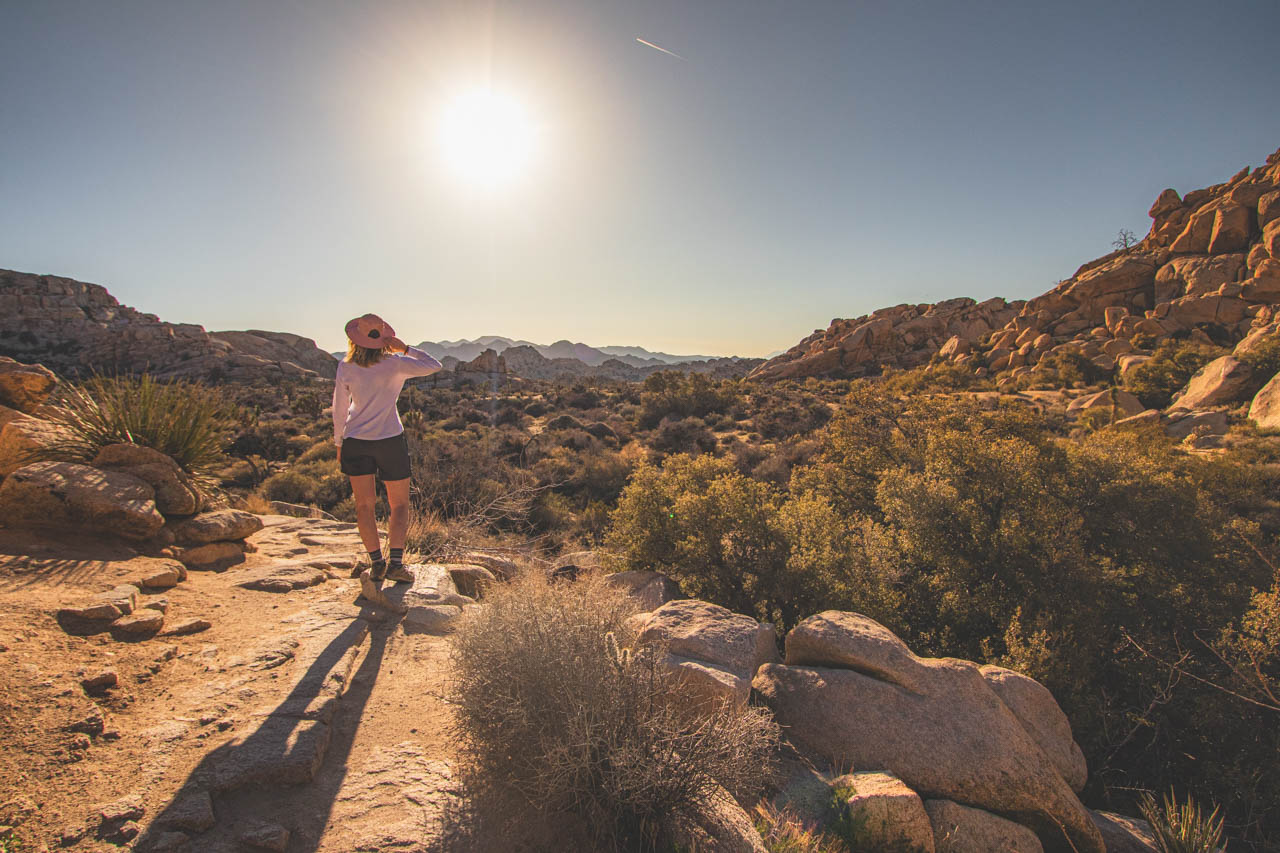
Joshua Tree is a desert, so basics really count here. Even on short trails, it’s worth being prepared.
- Water, Water, Water: Pack a backpack with a spot for a water bottle. Staying hydrated is super important on the trail! Here’s my favorite water bottle.
- Sun Protection: Don’t forget a hat, sunscreen, and sunglasses to keep the sun at bay. I swear by this sunscreen.
- Comfy Hiking Shoes: A good pair of hiking boots is a must for a smooth and safe hike. These are my recommended pair.
- Snacks: Grab some energy bars or nuts – they’re perfect for keeping your energy up while you explore. These are my top picks.
How Many Days for Joshua Tree
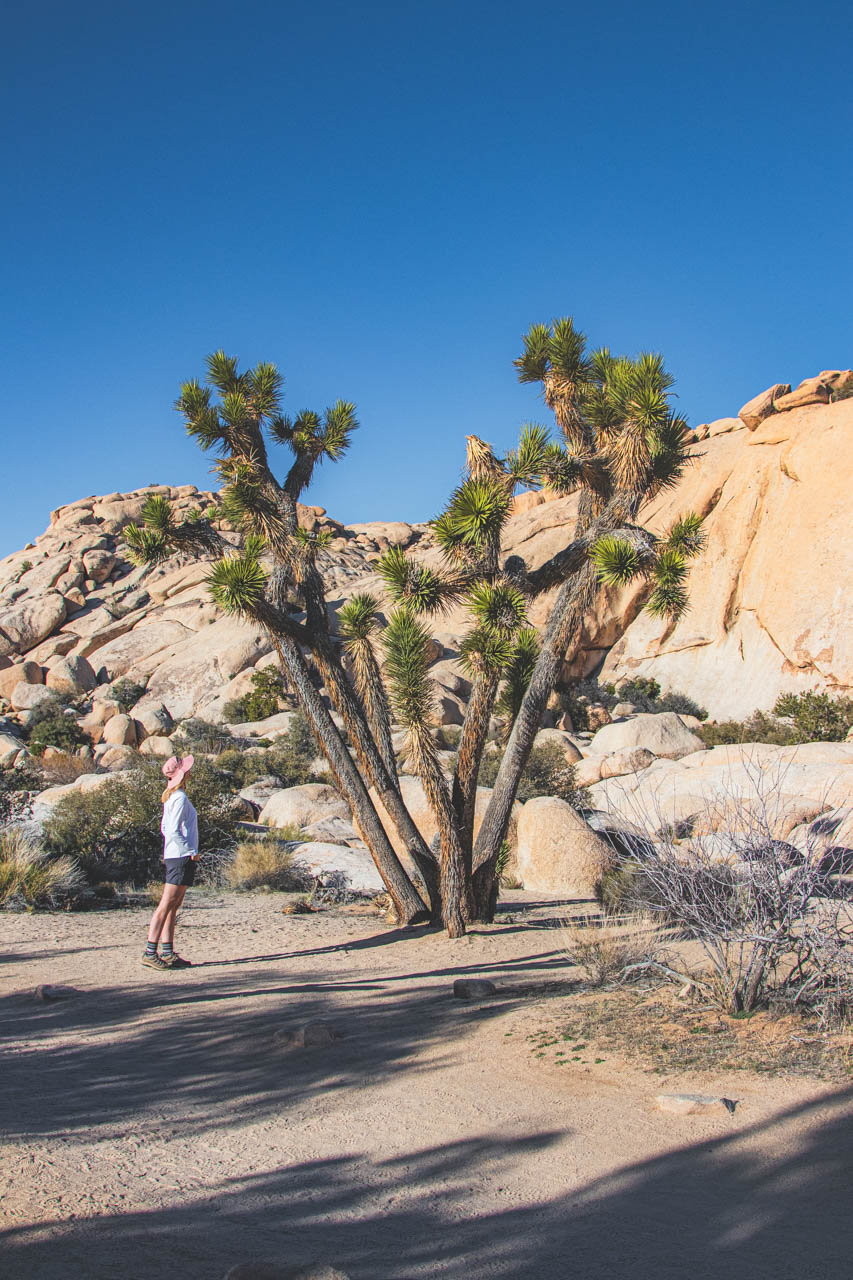
It’s worth dedicating 2-3 days to exploring Joshua Tree National Park.
That’s enough time to see the most important places, like Hidden Valley, Skull Rock, Keys View, or Barker Dam, take short hikes, and catch your breath between stops.
If you’re planning more hiking trails or climbing, consider a longer stay.
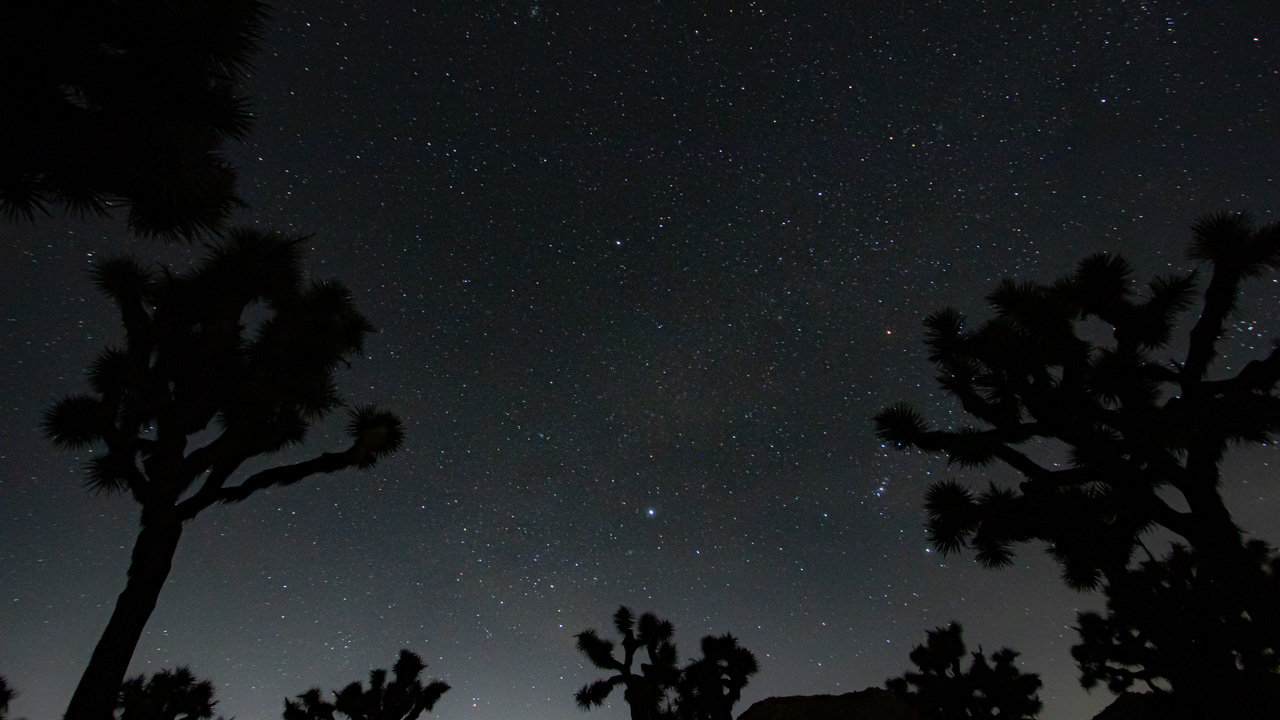
Extra days let you slow down, better feel the park’s rhythm, see more sunsets, and really enjoy the night sky that Joshua Tree is most famous for.
Where to Stay in Joshua Tree
In Joshua Tree National Park and its vicinity, you have several sensible accommodation options, depending on whether you’re closer to nature or to a comfortable bed after a full day in the desert.
Campgrounds on Park Grounds
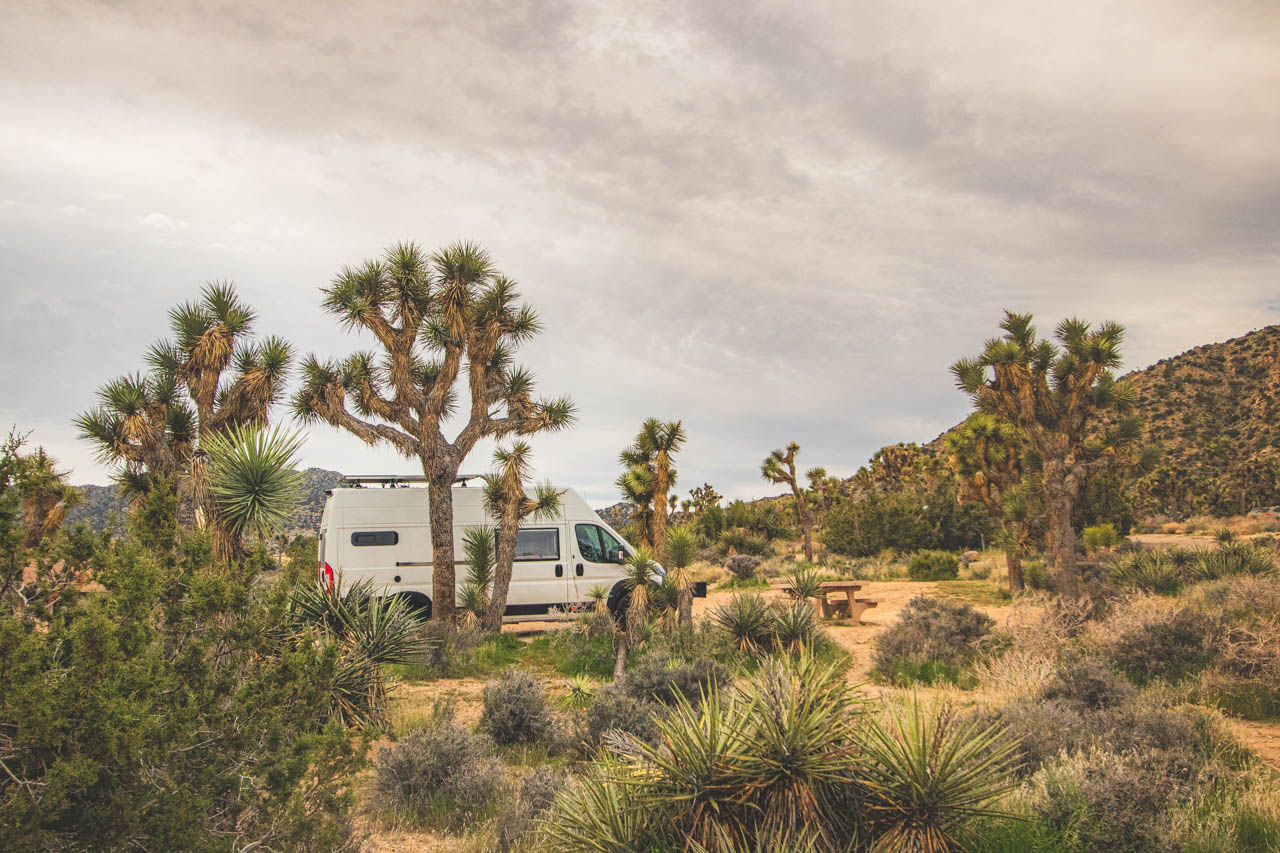
Places like Cottonwood Campground, Indian Cove Campground, Jumbo Rocks Campground, or Black Rock Campground let you really feel the desert climate.
Most of them don’t have running water and require advance reservation at recreation.gov. Prices typically range between $20-25 per night.
Nearby Towns
In the towns of Joshua Tree, Twentynine Palms, and Yucca Valley you’ll find hotels, motels, and rental cottages.
It’s a good option if you want quick access to the park and a bit more comfort. Prices start at about $70 per night, depending on standard and location.
Recommended Accommodations
- Fairfield Inn & Suites Twentynine Palms
Modern hotel with pool and gym. Prices from about $120 per night. - High Desert Motel
Simple but well-maintained motel in Joshua Tree, with pool. Prices from about $80 per night. - Sacred Sands
Intimate, luxury B&B right at the park boundary. Private apartments with patio and hot tubs. Prices from about $300 per night. - Pioneertown Motel
Iconic motel in a historic movie town. Rustic, polished interiors. Prices from about $150 per night. - Harmony Motel
A place with history and a very relaxed, friendly atmosphere. Prices from about $90 per night.
Regardless of whether you choose camping under the stars or accommodation in one of the towns, it’s worth booking in advance, especially in spring and fall, when Joshua Tree enjoys its greatest popularity.
Other Tips
When visiting Joshua Tree National Park, it’s worth remembering a few simple rules. These are details that really make a difference in the desert.
- Bring at least 4 liters of water per person per day. Hydration is key, even on short walks.
- Watch children, especially near cacti and climbing rocks. The terrain can be treacherous, and falls hurt more than you’d think.
- Beware of flash floods. During storms, avoid dry creek beds and low-lying areas – they can fill with water very quickly.
- Pets are prohibited on trails and near picnic areas. It’s best to leave your pet at home.
- Respect nature. Don’t feed animals, don’t destroy plants, and don’t take “souvenirs” from the park.
- Prepare for no signal. In much of the park, cell networks don’t work, so it’s worth having a plan and not relying solely on your phone.
Joshua Tree rewards you with peace and space if you approach it with mindfulness and respect.
Joshua Tree National Park: Fun Facts
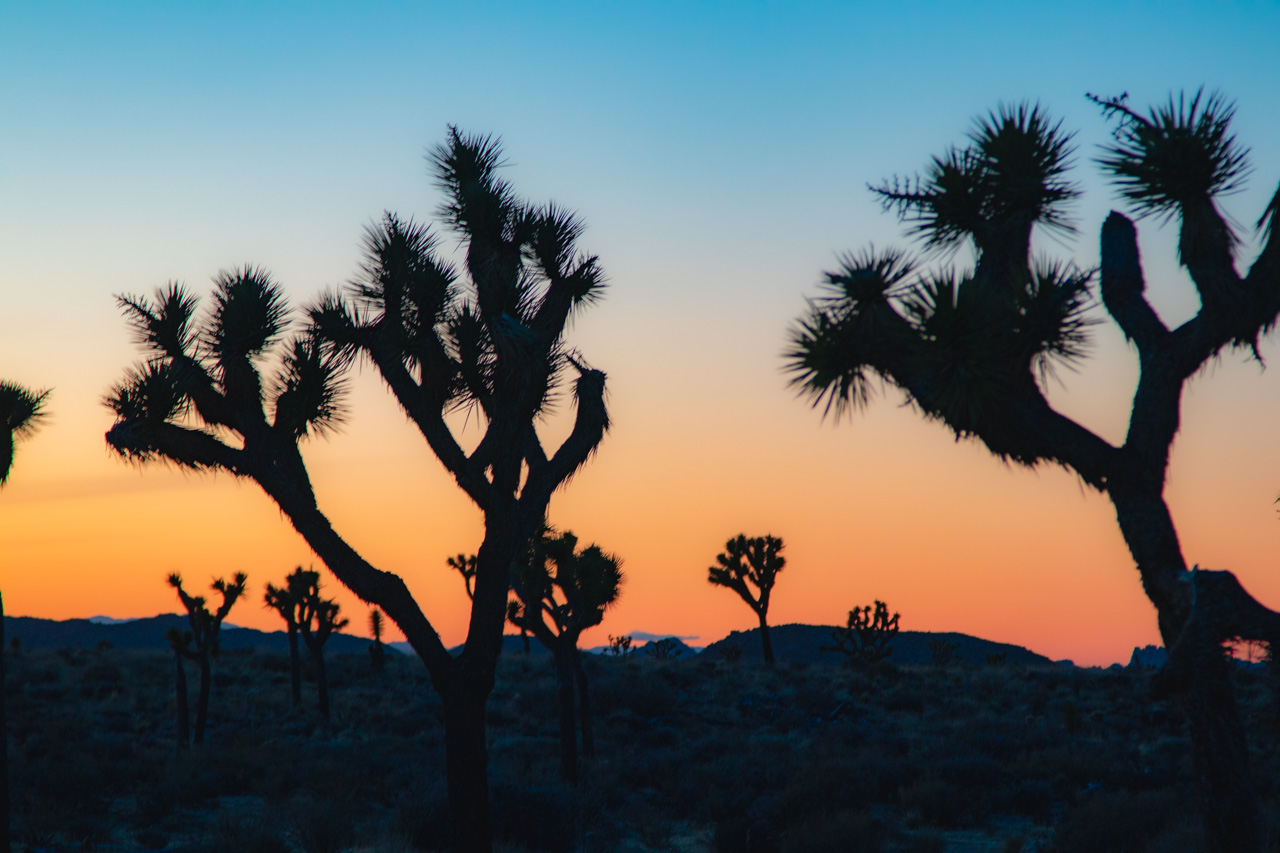
- The park lies at the junction of two deserts: Mojave and Colorado, which is visible in the landscape and vegetation.
- It covers an area of about 1,235 square miles (3,200 km²).
- Over 80% of the terrain has wilderness area status.
- In summer, temperatures often exceed 100°F (38°C), so planning your day has huge significance here.
- The park is home to hundreds of plant and animal species adapted to desert conditions, including bighorn sheep, hawks, desert tortoises, and iguanas.
- Joshua Tree was recognized as a national monument in 1936.
- In 1994, the US Congress granted it national park status.
- The park’s name comes from the characteristic Joshua trees, which grow mainly in the higher parts of the Mojave Desert.
In short: it’s a place where geography, history, and desert nature meet in a very distinct way.
Joshua Tree: Fun Facts
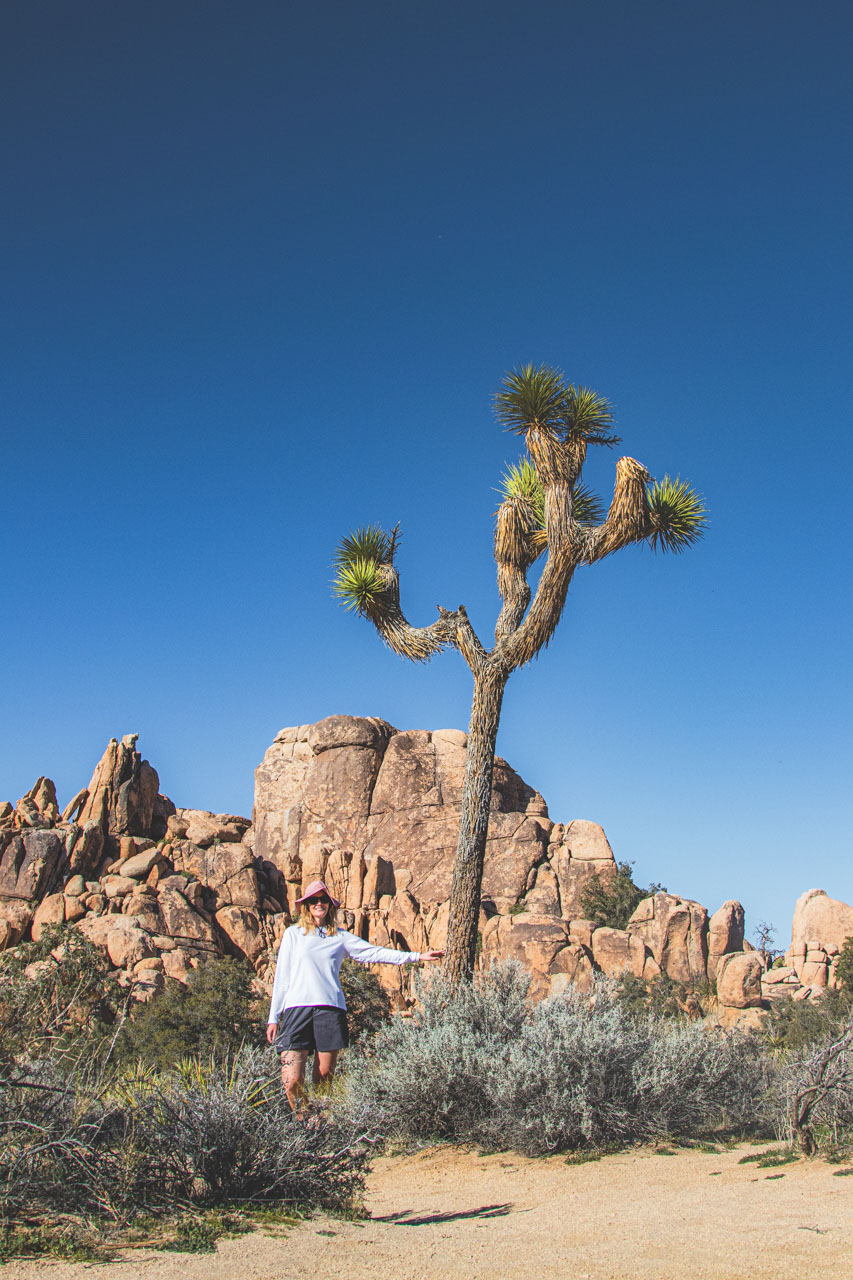
- Despite its name, the Joshua tree isn’t a tree, but a yucca. It doesn’t have typical rings like classic trees.
- It’s one of the largest plants in its family, the same family that includes agaves.
- It can grow up to 40 feet (12 meters) tall, about as much as a four-story building.
- It lives very long, even up to 900 years, but grows slowly, only a few centimeters per year.
- For the first few decades it looks like a single trunk, without characteristic branches.
- Joshua tree flowers smell like coconut, which can be quite a surprise in the desert.
- New trees grow from seeds only when enough rain falls in winter. Without it, they have no chance to start.
It’s one of those plants that best shows how patient and harsh the desert can be.
Travel lighter, even before you leave.
start with something simple.
Download The Minimum Plan – Slow Travel:
Joshua Tree National Park – Summary
Joshua Tree National Park in California is a place that works quietly but stays in memory for a long time.
The harsh desert, characteristic Joshua trees, rock formations, and cactus gardens create a landscape you want to return to in your thoughts.
It’s a park both for a short visit and for a longer stay, when you can slow down, walk without a plan, watch sunsets and the night sky.
Regardless of how much time you spend here, Joshua Tree can give exactly as much as you need in that moment.
Ready to start planning your American adventure?
Here are a few guides I think you’ll love next – all tested, personal, and full of insider tips:
- Hawaii Travel Guide – My favorite beaches, volcanoes, and island-hopping tips.
- Hidden Gems in Oregon – Budget-friendly spots most tourists miss
- NYC in 3 Days Itinerary – My curated mix of iconic sights and hidden corners
- Renting a Car in the USA – Insurance, deposits, road rules (all explained simply).
I hope this guide on what to see in Joshua Tree was helpful. If so, I’d appreciate if you’d share it with others.
And if you’ve already experienced Joshua Tree, I’d love to read about your impressions in the comments.
Pin it for later!
This article contains affiliate links. If you make a booking through these links, I may earn a commission, supporting this blog. Rest assured, my recommendations are based on honest assessments, and using these links doesn't affect prices for you. Thank you for your support!