
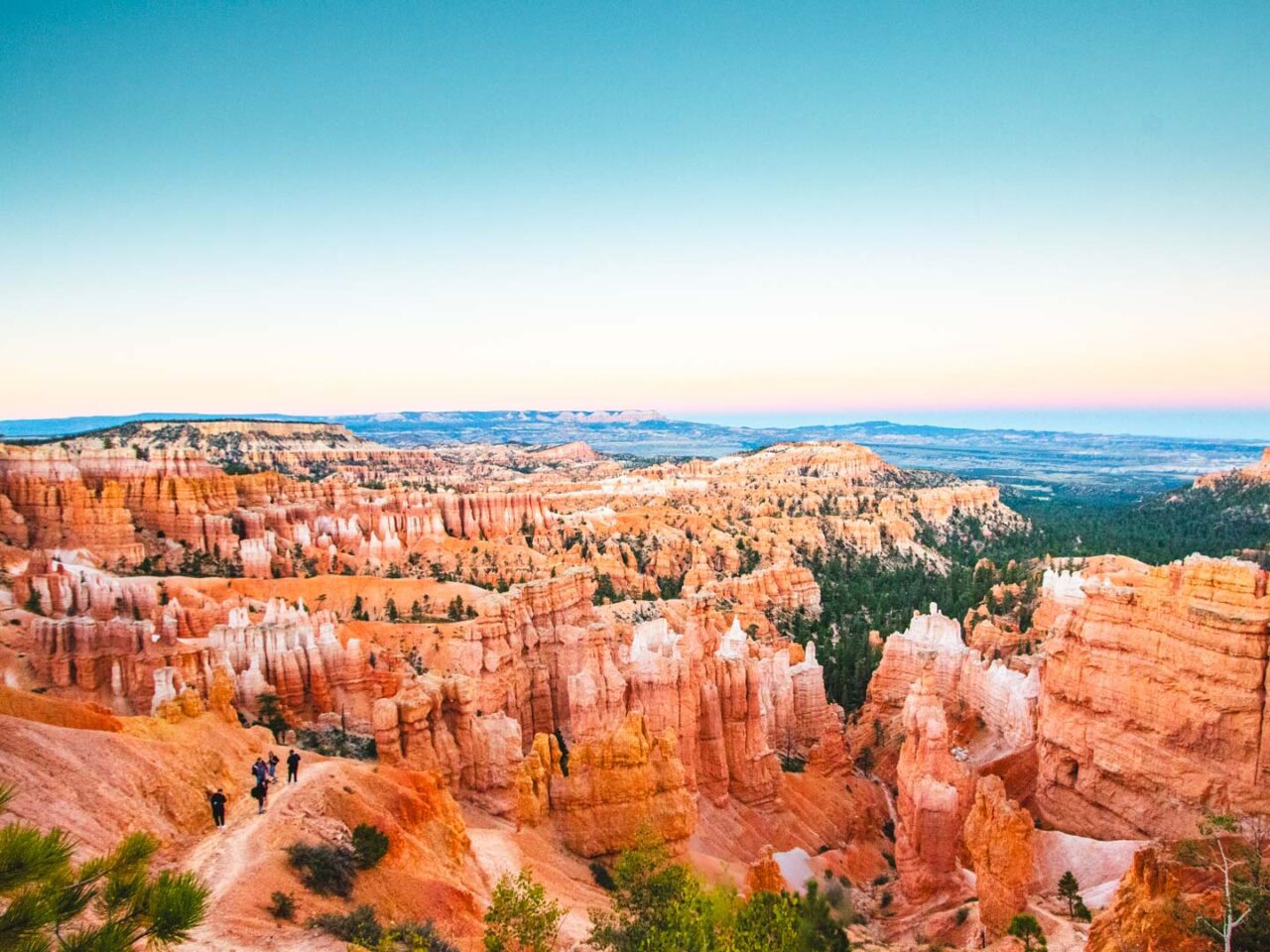
Looking for the best hikes in Bryce Canyon? This is one of those places that quietly stays with you long after you leave.
Bryce Canyon National Park is one of my favorite parks in the United States. Not because it’s the biggest. Not because it’s the most famous.
But because nowhere else have I seen such a concentration of hoodoos – surreal, rust-colored spires rising from the earth like a stone forest.
It’s a place where sunrise feels like a quiet light show, and the night sky is truly black and filled with stars.
Where you descend into the formations and suddenly feel tiny. Quiet. Present. Bryce is paradise for those who love to hike. And look. And move without hurry.
In this guide, I’ll share 9 hikes truly worth doing – without the pressure of checking off boxes, but with space for wonder. I’ll also include the practical tips I wish I’d known before my first visit.
If you’re craving a place that looks like another planet yet allows you to truly slow down, come along. Let’s begin.
If Bryce is just one stop on your route, here you’ll find my tested itinerary for a whole week in Utah – day by day, with a logical route and places actually worth seeing.
1. Peekaboo Loop
Length: 5.5 miles (8.9 km)
Time: 3-4 hours
Elevation gain: 1,555 ft (474 m)
Level: Moderate
I’m starting my list with a trail that truly makes an impression.
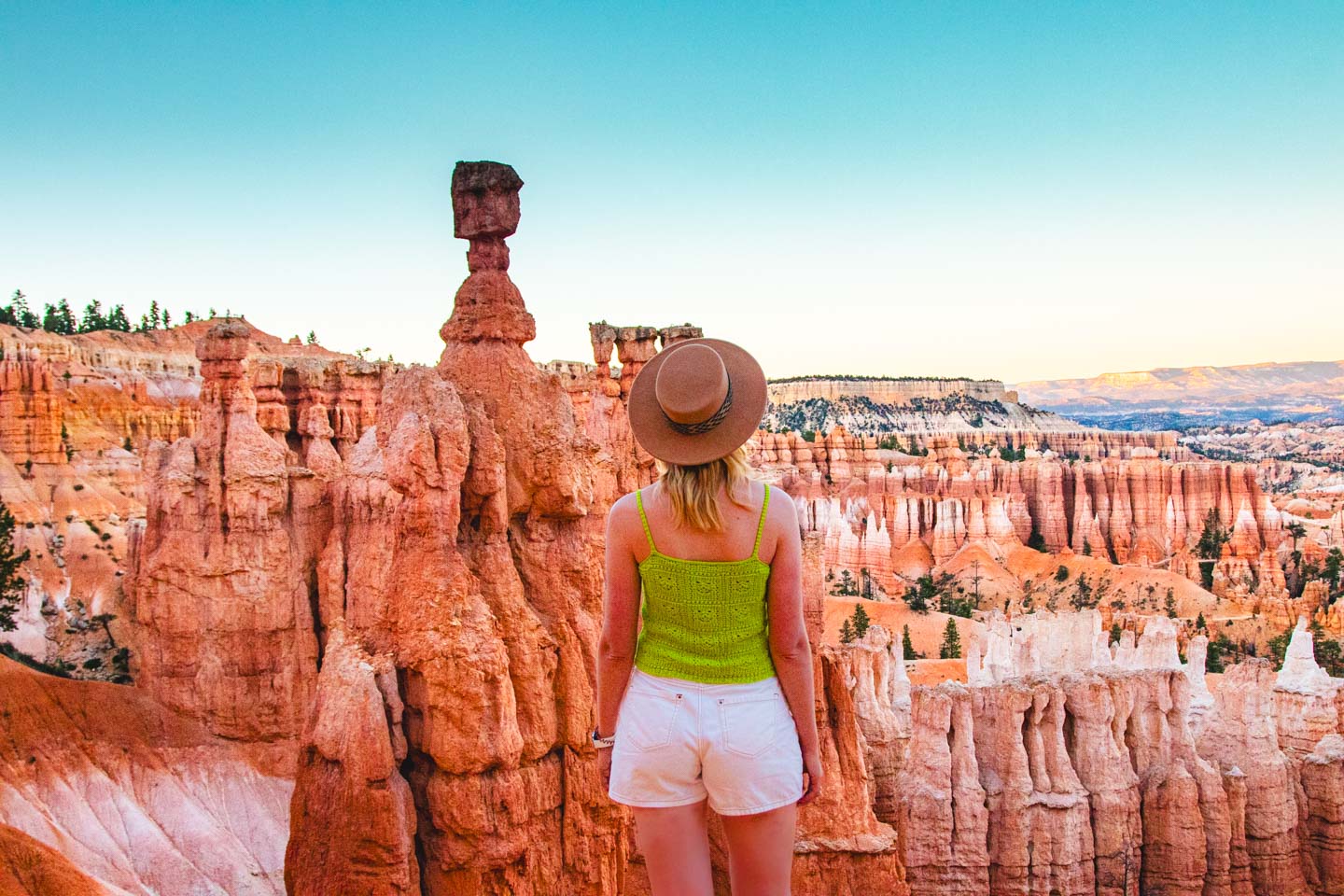
Peekaboo Loop is one of those routes where Bryce shows its most theatrical face.
The trail is 5.5 miles with about 1,555 feet of elevation gain, so your legs will feel this hike. But that’s exactly why you descend deep among the hoodoos and see them from a completely different perspective than from the viewpoints.
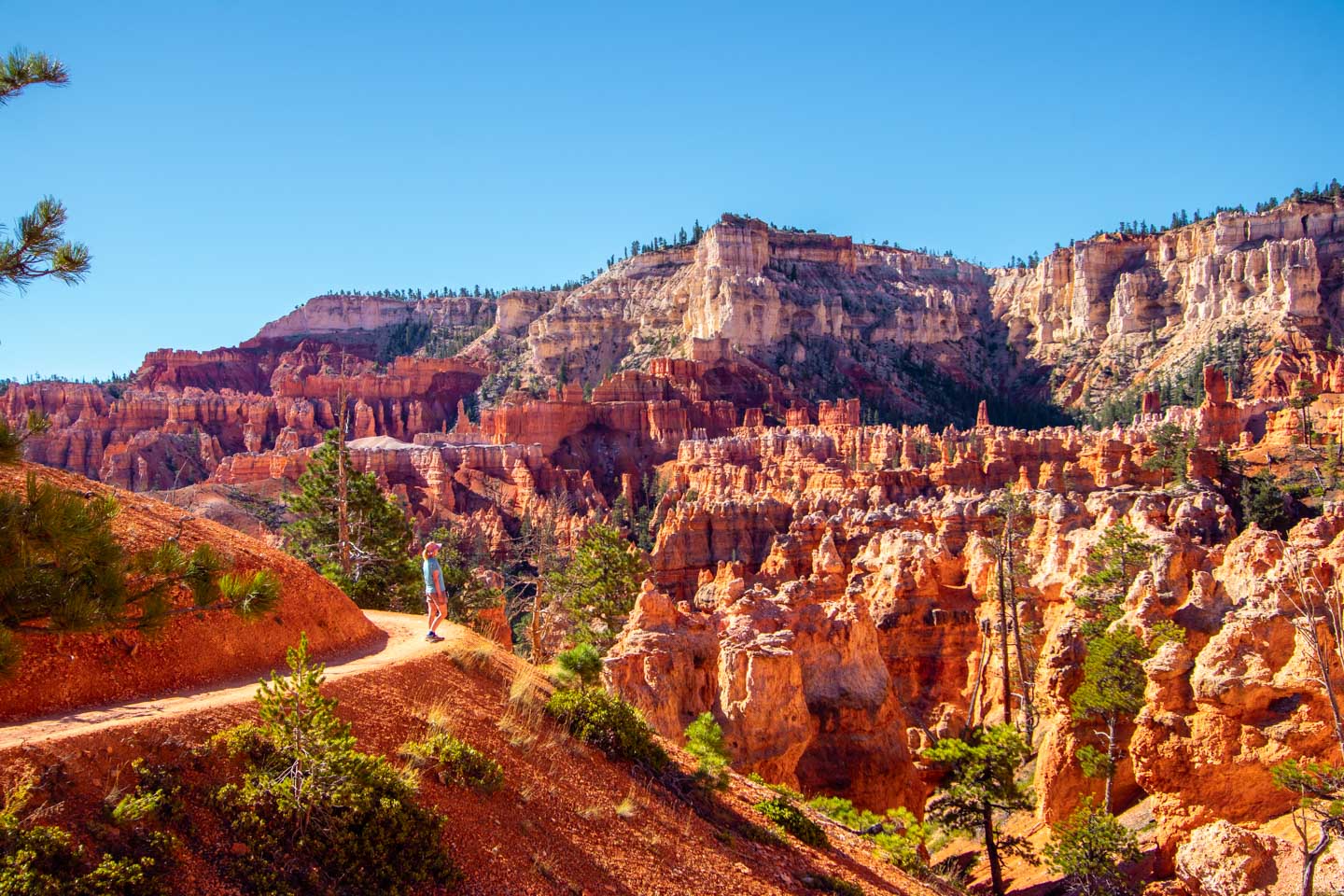
Most people start from Bryce Point and immediately descend into the canyon. The first minutes are silence and red walls all around. Then the loop begins – rock arches, natural “windows,” narrow passages between spires.
The hoodoos here are huge, massive, sometimes looking like stone cathedrals. You walk among them and feel really small. This isn’t a scenic walk with a railing. This is immersion in the landscape.
If you can, start early in the morning. The light is softer then, colors more saturated, and the trail is still quiet. Midday can get hot, and the sun reflects off the rocks harder than you’d expect.
If I had to recommend just one longer trail in Bryce Canyon National Park, I’d choose this one.
Not because it’s “the most famous,” but because it lets you really enter the landscape, not just look at it.
2. Navajo Loop
Length: 1.3 miles (2.1 km)
Time: 1-2 hours
Elevation gain: 515 ft (157 m)
Level: Easy to moderate
If Peekaboo is immersing yourself in the canyon for several hours, Navajo Loop is its intense, shorter version. Short, but truly spectacular.
The trail starts at Sunset Point and within minutes you’re descending between rock walls.
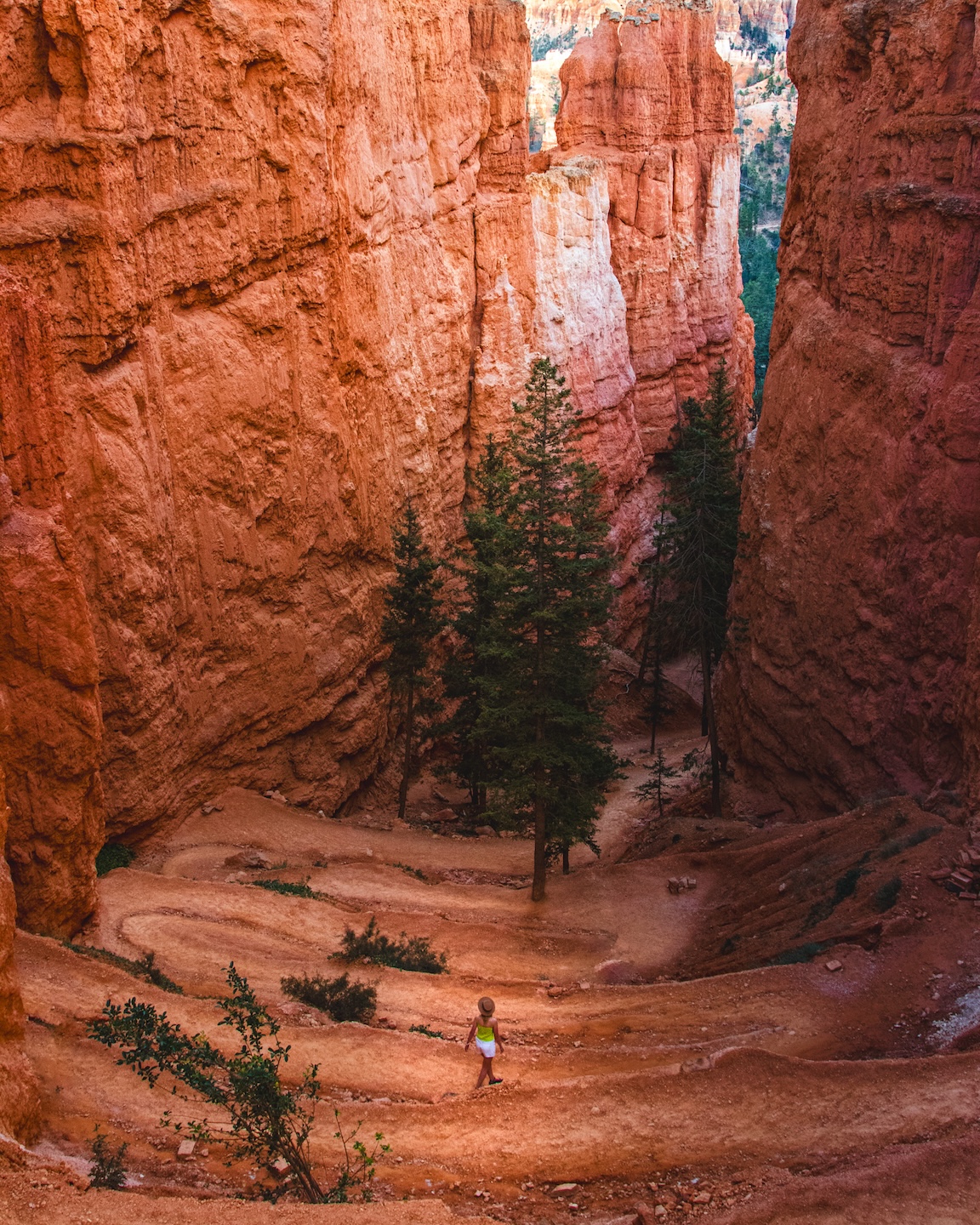
The most spectacular part is Wall Street – a narrow canyon with high, almost vertical walls and characteristic switchbacks. It’s the only section like this in all of Bryce Canyon National Park.
In winter, Wall Street is sometimes closed, then the Two Bridges variant remains. Still beautiful, just less dramatic.
This is the perfect trail if you’re short on time but want to really descend among the hoodoos and feel the scale of this place. 1.3 miles is enough to see Bryce up close, and 515 feet of elevation gain gives a light workout without major breathlessness.
Best to come here early morning or late afternoon. The light between the walls does magic then, and the color of the rocks changes from orange to deep rust.
Navajo Loop is a small loop, but a huge impression. Perfect if you want to feel Bryce intensely, even in a short time.
3. Navajo / Peekaboo Loop
Length: ~4.9 miles (7.9 km)
Time: 3-4 hours
Elevation gain: ~1,476 ft (450 m)
Level: Moderate to strenuous
If you only have time for one longer hike and want to see Bryce from different perspectives, this option is ideal.
The combined Navajo and Peekaboo loop is figure-eight shaped and lets you descend deep among the formations, then emerge with the feeling you’ve truly walked through the heart of the canyon.
Start usually from Sunset Point. First you descend the Wall Street switchbacks, then connect with the longer Peekaboo section. The landscape changes fluidly, sometimes narrow and dramatic, sometimes wider with an open panorama of hoodoos.
This is where you’ll see everything most characteristic about Bryce Canyon National Park: rock spires of various shapes, natural arches, “windows” in the rocks, and moments where light creates a real spectacle.
You’ll definitely feel the elevation gain in your legs, especially on the climb at the end. But it’s exactly this effort that makes the views taste stronger.
This isn’t a quick walk. It’s a hike that requires some focus, water in your pack, and a bit of humility. In return, you get the most complete Bryce experience in one route.
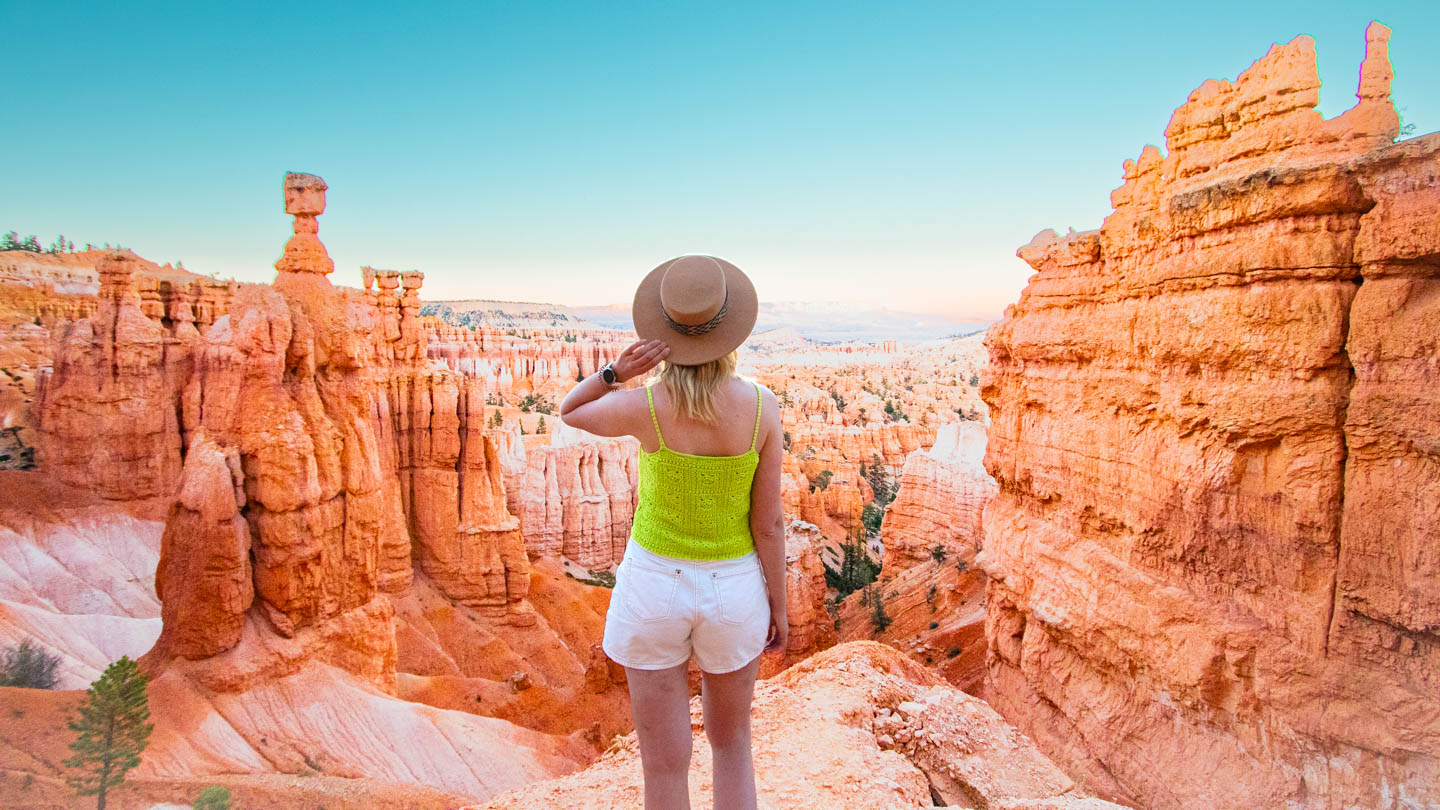
4. Queen’s Garden
Length: 1.8 miles (2.9 km)
Time: 1-2 hours
Elevation gain: 450 ft (137 m)
Level: Easy
If I had to recommend one short trail in Bryce Canyon National Park to someone visiting for the first time, I’d choose Queen’s Garden.
It’s one of the gentlest routes in the park, yet gives the feeling of descending “into” the canyon.
The trail starts at Sunrise Point and from the first minutes leads down among light, nature-sculpted walls.
The most famous formation is the so-called Queen Victoria – a hoodoo that indeed resembles a figure wearing a crown. But for me, that’s not the most important thing.
What’s most beautiful is how morning light moves across the rocks and brings out their creamy, pink, and orange hues.
The 450 feet of elevation gain makes this a great option for families or people who don’t want a big workout. The trail is clear, well-maintained, and gives plenty of space for peaceful photos.
Best to come here early morning. It’s quieter then, cooler, and the light really works magic. Queen’s Garden is the gentle, calm version of Bryce. Perfect if you want to feel this place without breathlessness.
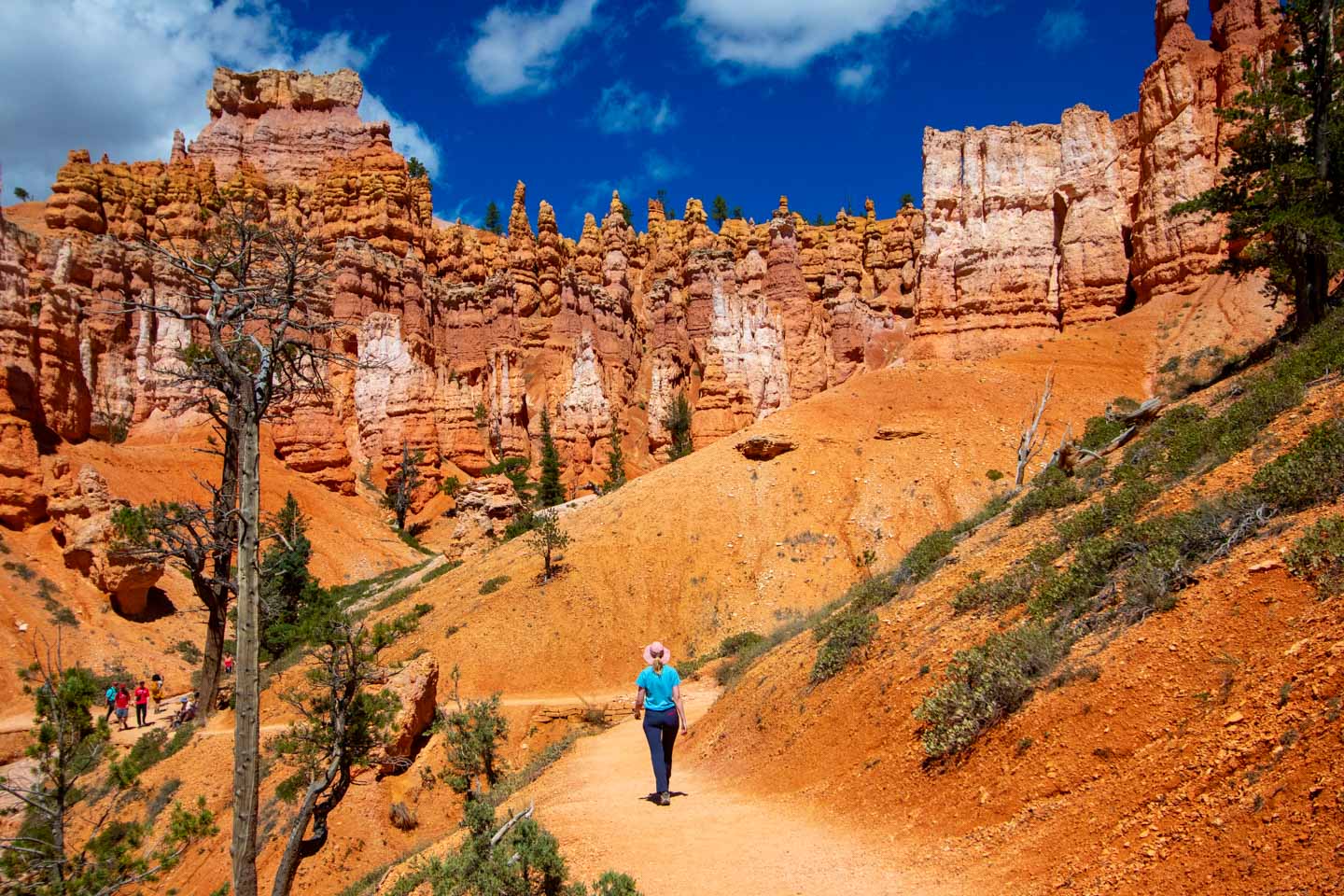
5. Queen’s / Navajo Combination Loop
Length: 2.9 miles (4.6 km)
Time: 2-3 hours
Elevation gain: 627 ft (191 m)
Level: Easy to moderate
If you’re visiting Bryce Canyon National Park for the first time and want to see as much as possible in a reasonable time, this is in my opinion the best choice.
It’s a combination of two routes: the gentler Queen’s Garden and the more dramatic Navajo Loop. Together they create a perfect loop that shows different faces of Bryce.
Start at Sunrise Point, descend among light hoodoos and the famous Queen Victoria formation.
Then you smoothly transition to the Navajo section – you’ll see Two Bridges and, if open, Wall Street with its characteristic switchbacks between high rock walls.
2.9 miles is a distance that gives satisfaction without exhausting you. 627 feet of elevation gain means you’ll feel a light workout, especially on the climb at the end, but without major breathlessness.
Best to set out early morning. The light is soft, colors intense, and silence still reigns on the trail. This really makes a difference.
If you only have half a day in Bryce and want to experience it up close, not just from viewpoints, this combination is the golden mean.
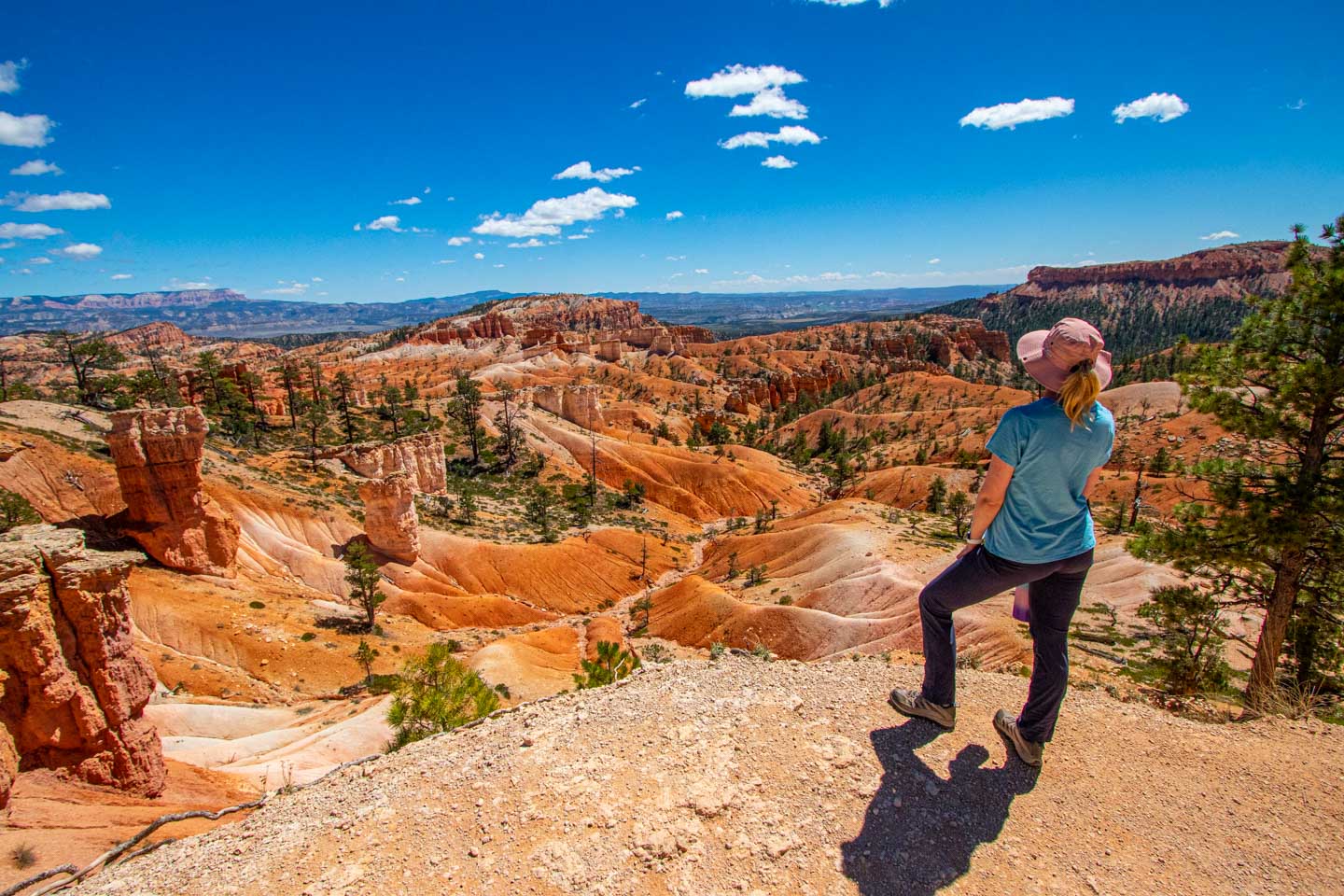
6. Sunset to Sunrise
Length: 1 mile (1.6 km)
Time: ~1 hour
Elevation gain: 82 ft (25 m)
Level: Very easy, paved trail
Not every day is for 5 miles down and 1,476 feet of climbing. And that’s exactly why this route is so good.
The walk between Sunset Point and Sunrise Point is the simplest way to see the essence of Bryce Canyon National Park without major effort. The trail is paved, almost flat, and accessible to practically everyone.
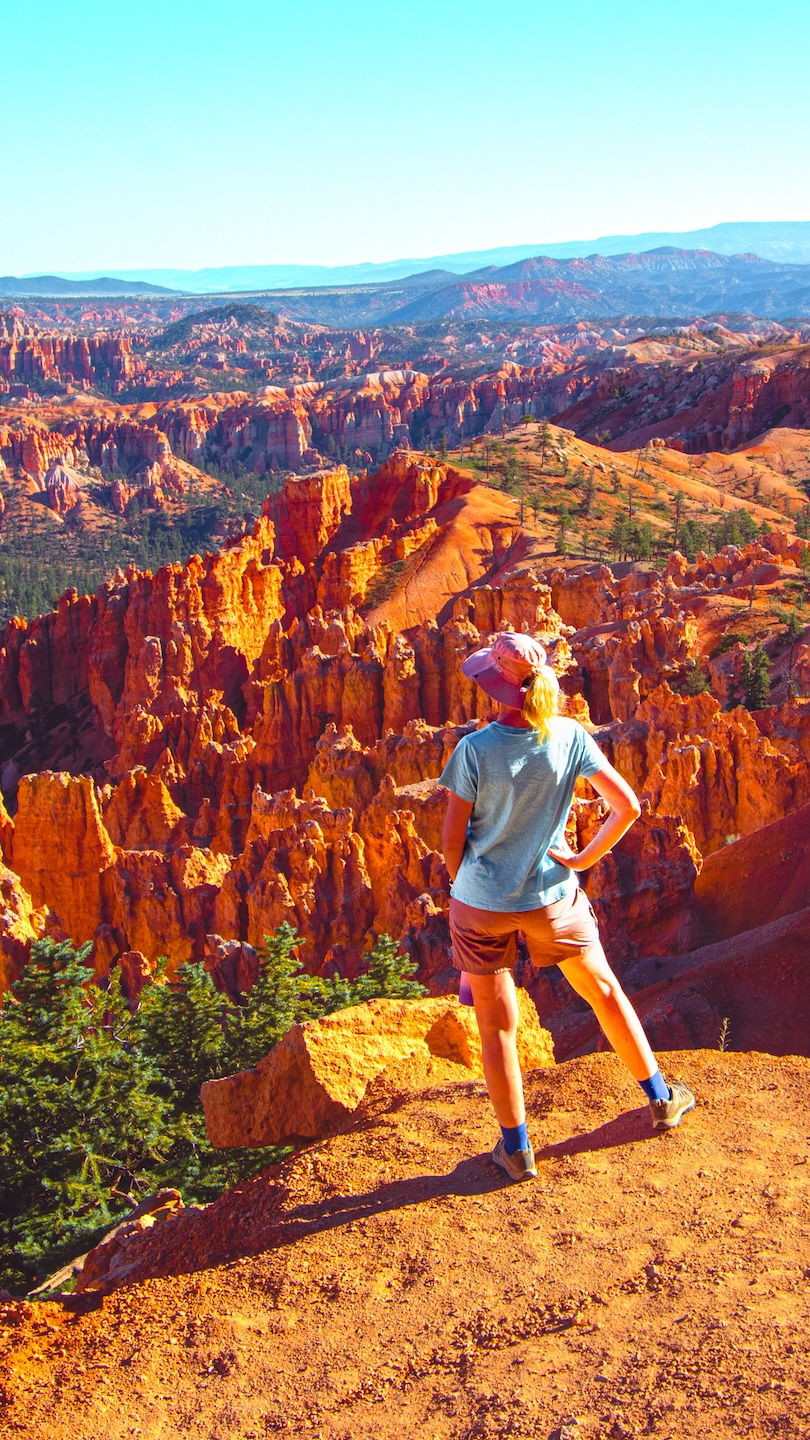
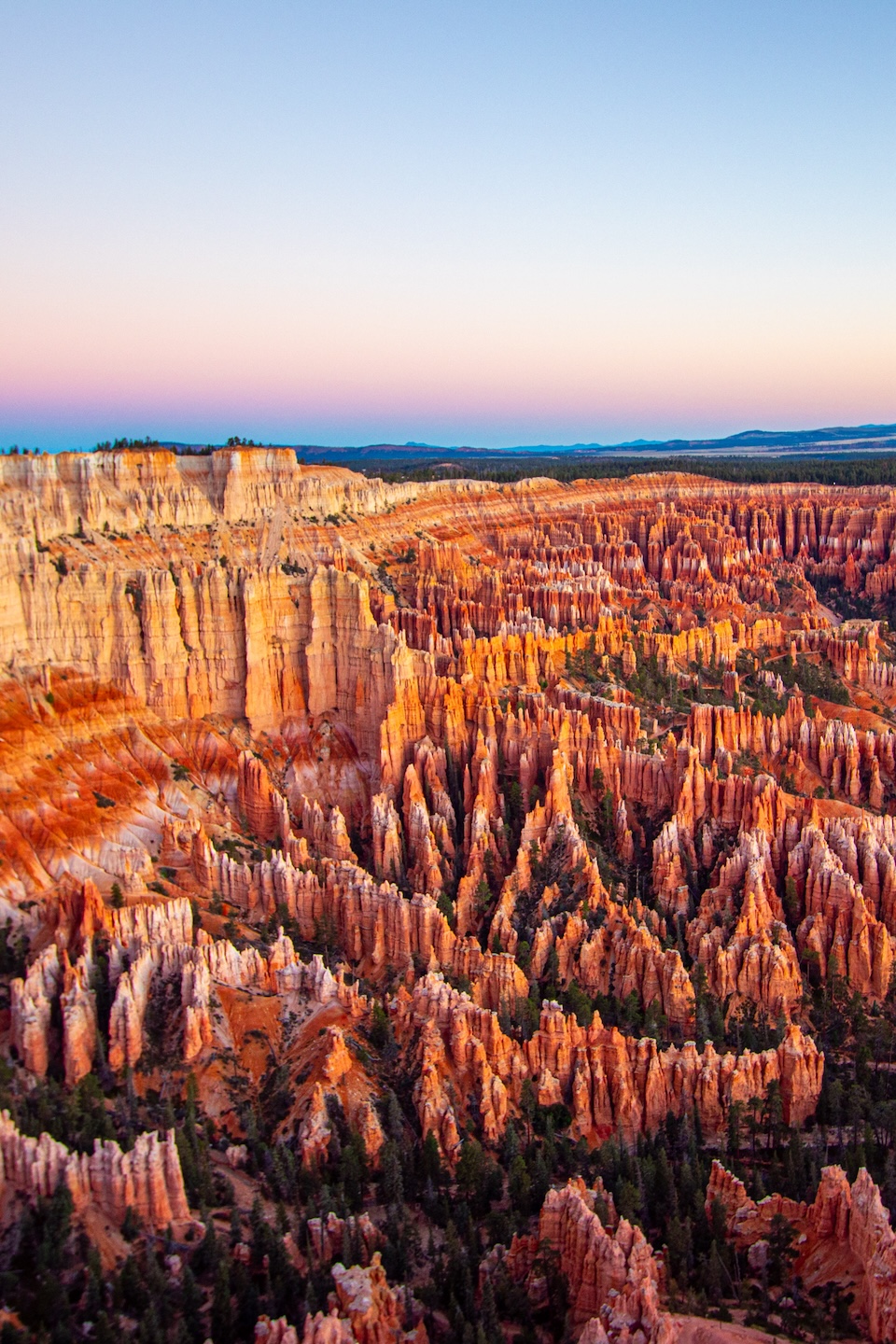
You walk along the canyon rim, and before you stretches the entire Bryce Amphitheater. Hundreds of hoodoos, pink and orange waves of rocks that change color depending on the light.
From Sunset Point you’ll also see one of the most recognizable formations in the park – Thor’s Hammer. This solitary, powerful rock indeed resembles a hammer driven into the ground.
Best to come here at sunrise or just before sunset. Then the light does something no photo can capture. The rocks start glowing from within, and you stand there feeling time has slowed.
It’s a short walk, but huge views. Perfect if you want to feel Bryce without breathlessness.
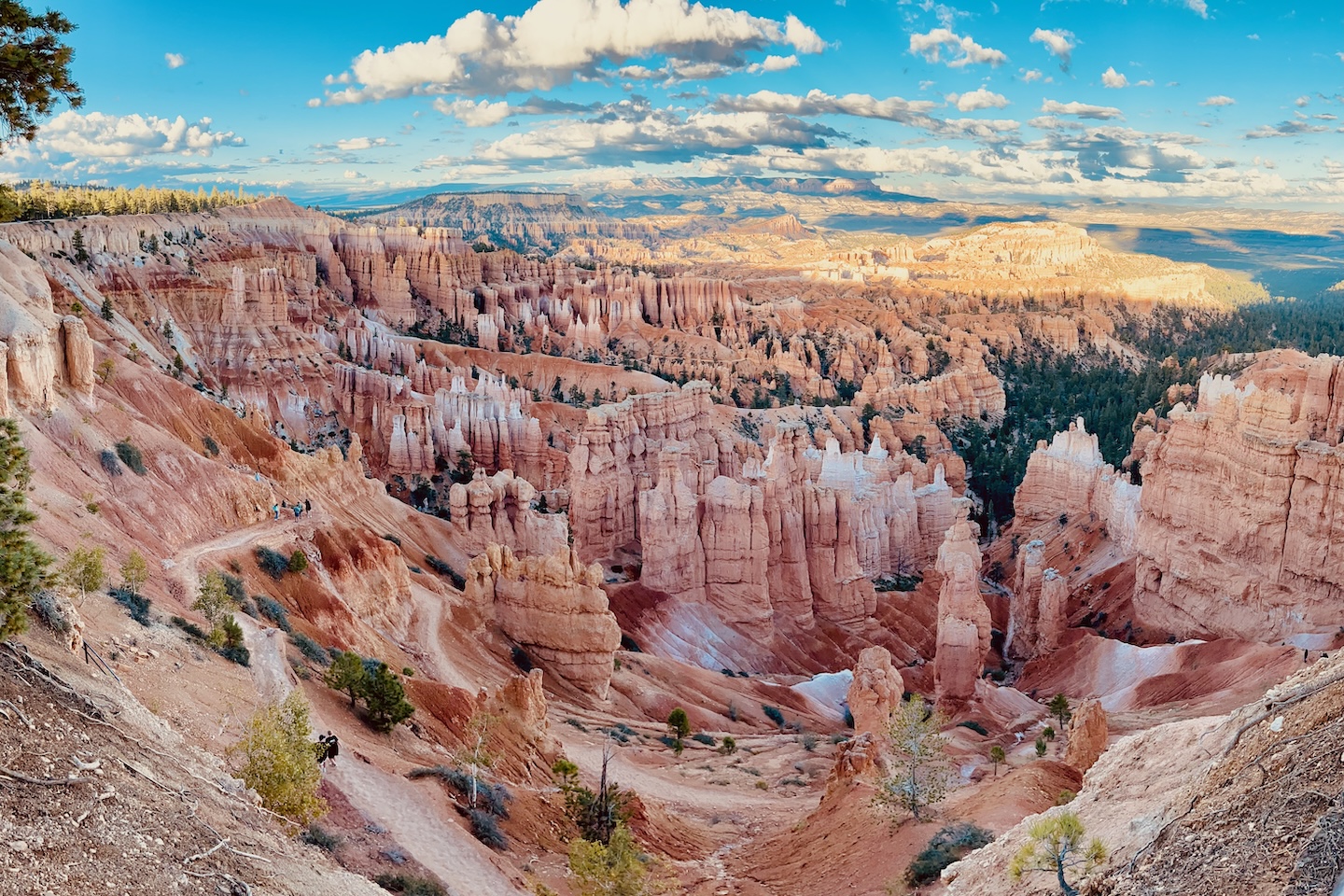
7. Mossy Cave
Length: 0.8 miles (1.3 km)
Time: ~1 hour
Level: Easy
If you think Bryce is only red spires and dry landscapes, Mossy Cave will surprise you.
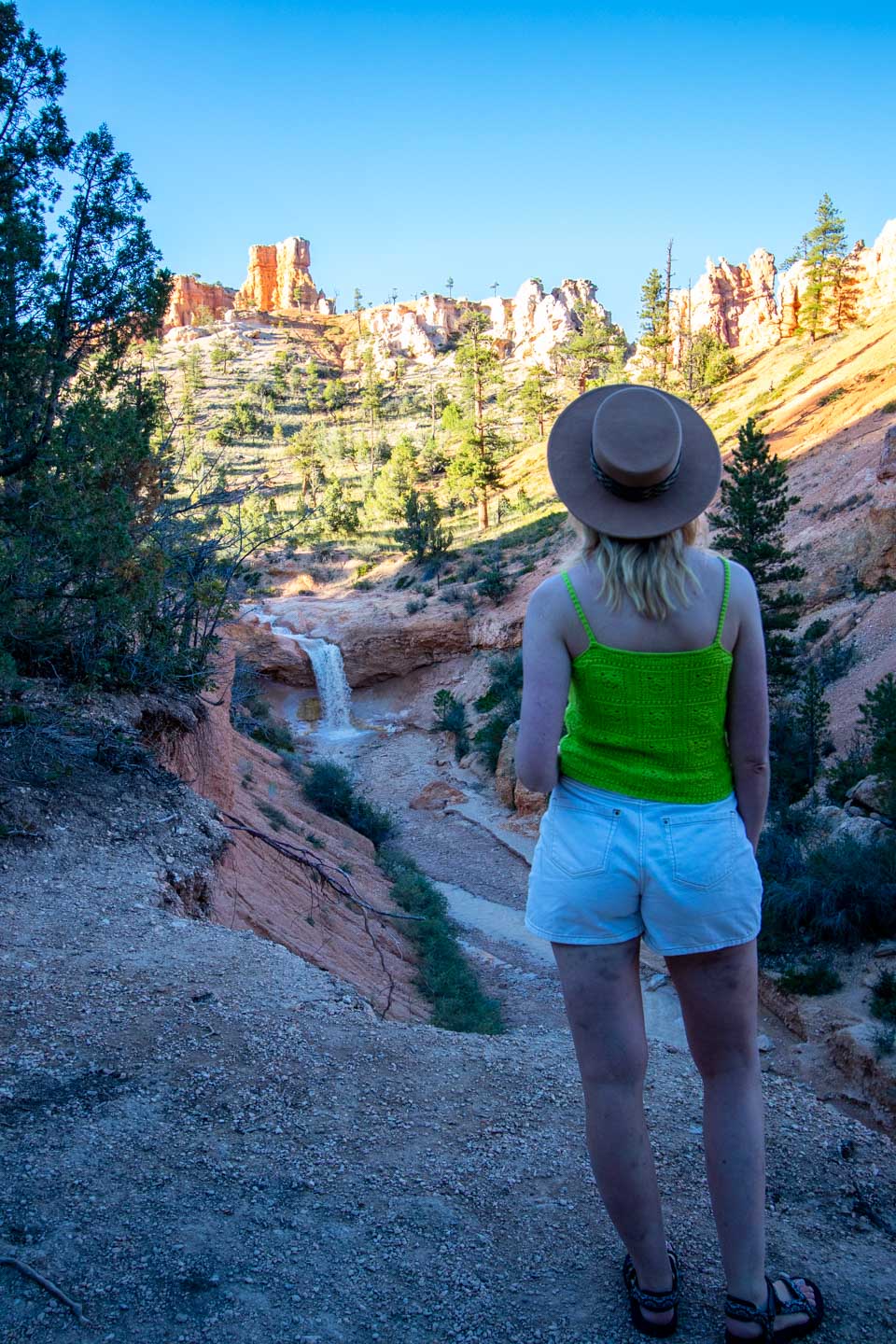
This short trail is located in the lower part of Bryce Canyon National Park and has a completely different vibe than the main amphitheater. The path leads along a stream, in the shade of rocks, all the way to a small grotto.
In winter, the cave is covered with icicles and looks almost fairy-tale-like. In summer, it attracts with the greenery of moss and coolness that brings relief after walks in full sun.
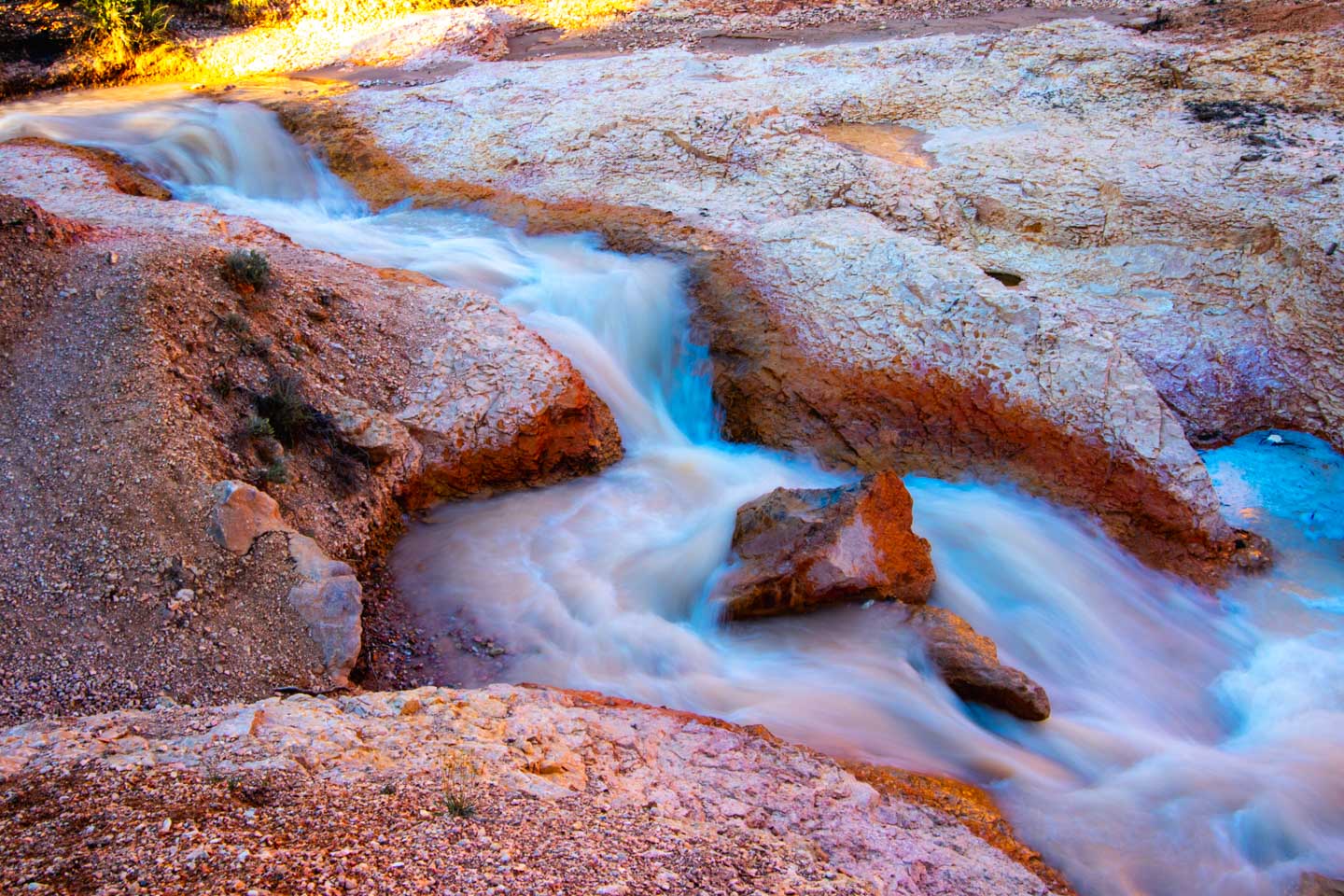
Along the way you’ll also see a small waterfall. It’s not huge or spectacular like in the Pacific Northwest parks, but in the desert landscape it makes an impression.
This is one of the lowest-elevation places in the park, so it works great if you have less time or are traveling with kids. The route is short, pleasant, and gives a somewhat different picture of Bryce.
Mossy Cave is proof that even among red rocks you can find water, greenery, and completely different silence.
8. Rim Trail
Length: 11 miles (17.7 km) (total)
Time: ~7-8 hours
Elevation gain: 718 ft (219 m)
Level: Easy to moderate
If you like walking without constantly descending and climbing back up, Rim Trail will be your path.
It’s a walk along the canyon rim, with views of the entire Bryce Amphitheater. You walk almost flat, and before you stretches for miles a landscape of hoodoos in various shades of pink, orange, and rust.
The trail connects among others Bryce Point and Fairyland Point, leading through the most spectacular viewpoints in Bryce Canyon National Park.
The whole thing is 11 miles and takes about 7-8 hours, but you don’t have to do it all. That’s the biggest advantage of this route.
You can choose a section between two viewpoints, then return by shuttle bus, which runs in season.
Rim Trail gives something different than trails down into the canyon. Here you’re above the landscape. You look wide. You have time to stop at each point and just stand.
If you want to see Bryce in panoramic version, without great effort, Rim Trail will be perfect.
9. Fairyland Loop
Length: 8 miles (12.9 km)
Time: 4-5 hours
Elevation gain: 1,900 ft (579 m)
Level: Strenuous
If you’re looking for Bryce in a wilder, quieter version, Fairyland Loop will hit the mark.
It’s one of the longer trails in Bryce Canyon National Park, with serious elevation gain and moments you really feel in your legs. But in return you get space. Fewer people. More breathing room.
The route starts at Fairyland Point and leads down toward Boat Mesa, then in a wide loop through landscape that sometimes looks like another planet.
The hoodoos here are more scattered, rock lines more undulating, and panoramas truly expansive.
1,900 feet of elevation gain means this isn’t a “quick” walk. Worth bringing plenty of water and giving yourself time. This trail is best enjoyed without rushing.
What’s most beautiful is that Fairyland Loop is usually less crowded than trails by the main amphitheater. Here you can really hear the wind, your own steps, and silence among the rocks.
If you have half a day and want to feel Bryce deeper, farther from the viewpoints, Fairyland Loop gives exactly that.
How do you want to explore more of the Southwest?
🏔️ Utah’s Mighty Five → 7-Day Road Trip Through Utah – My tested plan through the Big Five
🌵 Desert Adventures → Arizona Travel Guide – Neighboring state full of surprises
🏕️ Camping & Van Life → Camper Van Travel Across USA – How to travel cheaply through the American West
🎬 California Coast → 7 Days on the Coast – Perfect combination with Utah
What intrigues you most?
Practical Tips
How Much is It to Enter Bryce Canyon?
Entry to Bryce Canyon National Park costs $35 per car (Standard Pass). You can also buy tickets for pedestrians, motorcycles, or an Annual Pass.
If you plan to visit more national parks, consider getting the America the Beautiful Pass – $80 for US residents or $250 for non-residents (starting January 2026).
It gives you year-round access to all U.S. national parks and, for non-residents, it also waives the new $100 per-person surcharge in premium parks like Bryce Canyon.
How to Get to Bryce Canyon?
Bryce Canyon National Park is about 270 km (170 miles) northeast of Las Vegas. By car it’s roughly 4 hours’ drive, depending on stops.
The most convenient route from Las Vegas goes via I-15 N highway, then exit onto UT-20 E, and later UT-63 S, which leads directly to the park gate.
If you’re driving from the north, head I-15 S, exit 95 onto UT-20 E, then UT-63 S to Bryce Canyon.
It’s a route I recommend myself – simple, well-marked, and with nice views along the way.
If you’re planning a road trip through Utah and Arizona, Bryce most often connects with Zion, Page, or Kanab. It’s a natural stop on the route through the Southwest USA.
When is the Best Time to Visit Bryce Canyon?
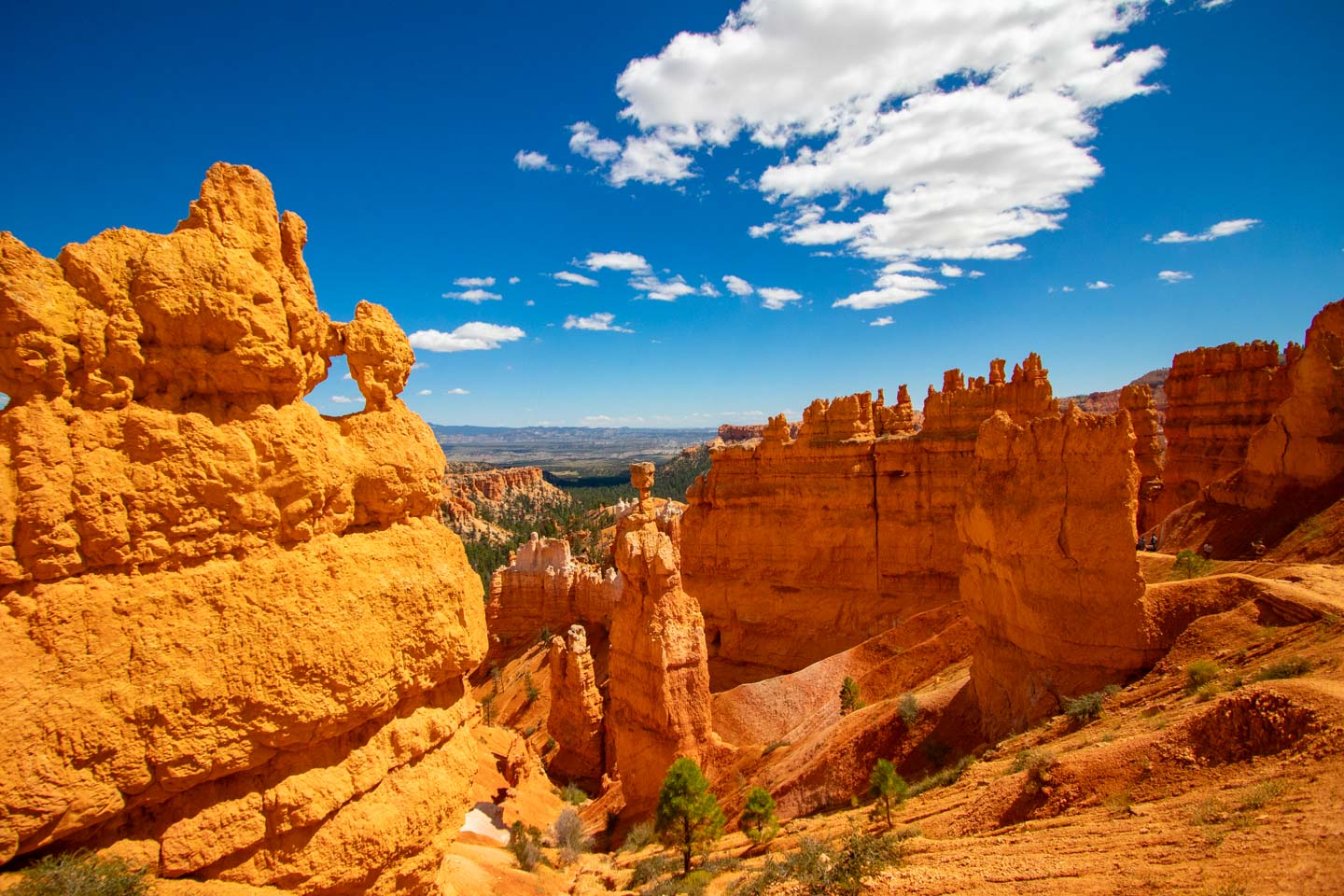
The best times to visit Bryce Canyon National Park are spring and fall.
May-June and September-October are in my opinion the best time to visit.
Temperatures are pleasant then, ideal for longer hikes, and the light is soft and more golden. It’s also easier to find quiet on the trails, especially early morning.
Summer can get hot, though remember that Bryce sits high, over 8,000 ft (2,400 m) above sea level, so temperatures are lower than in Zion or Page.
Still, midday sun can be intense, and the park is then most crowded.
Winter nights are very cold, and some trails may be icy. But there’s something special about it.
Red hoodoos under snow look like from another planet. If you’re not afraid of cold, it’s the best time to see Bryce without crowds.
The simplest? If you care about comfort and balance between weather and tourist numbers, aim for late spring or early fall.
Which is Better Zion or Bryce?
Both Zion and Bryce Canyon National Park feel completely different, even though they’re only a short drive apart.
Zion is all about scale. Towering red cliffs, dramatic canyon walls, narrow trails carved between rock. It’s powerful, intense, sometimes overwhelming.
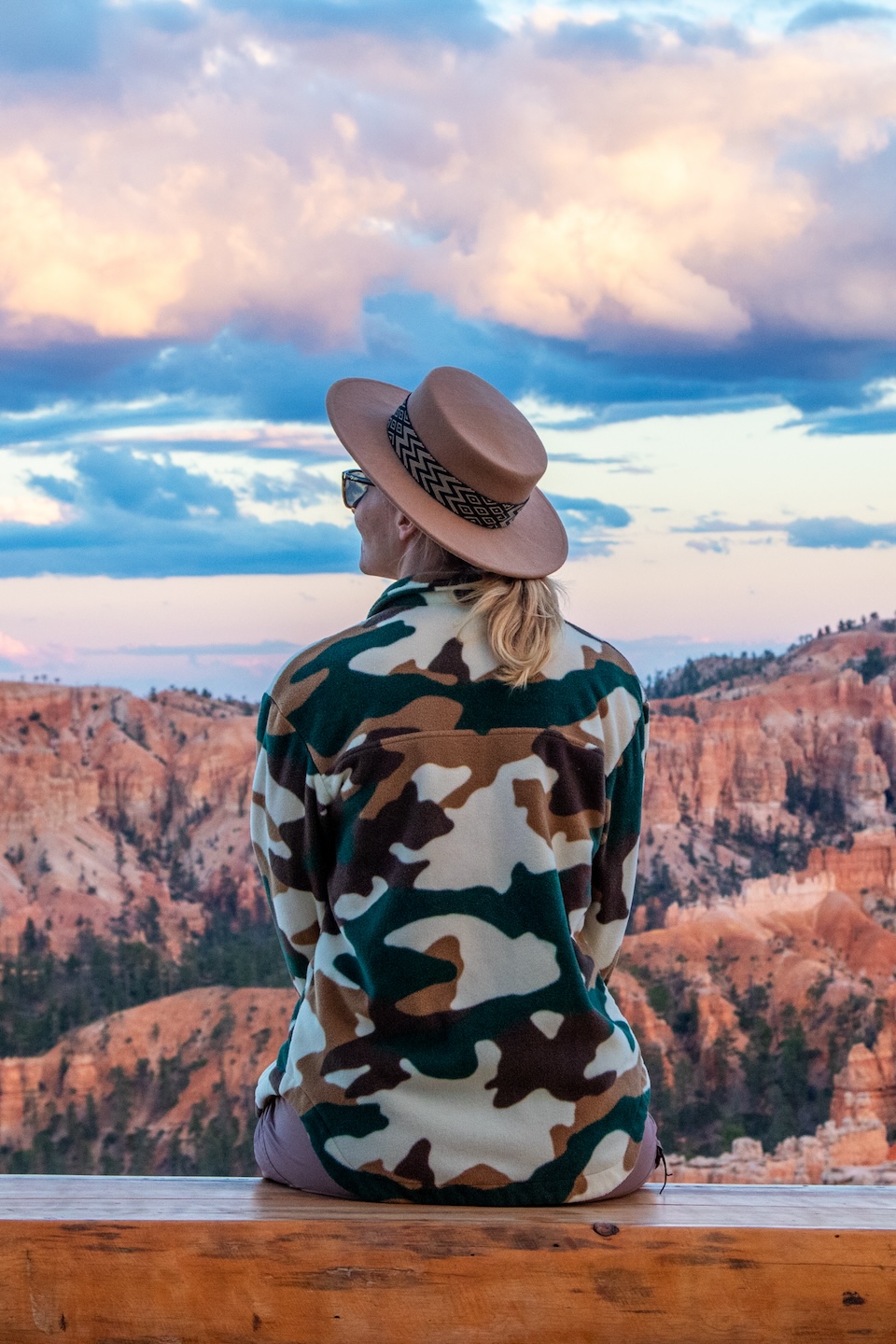
Bryce Canyon is quieter. More surreal. A whole amphitheater filled with hoodoos that look like a stone forest glowing at sunrise. You don’t just look at it, you walk into it.
In the end, it depends on what you’re craving. Big drama and iconic hikes? Zion. Silence, space, and that slightly otherworldly feeling? For me, it’s Bryce. Especially when Zion starts to feel a little too crowded.
Is One Day in Bryce Canyon Enough?
It depends on how you want to experience it.
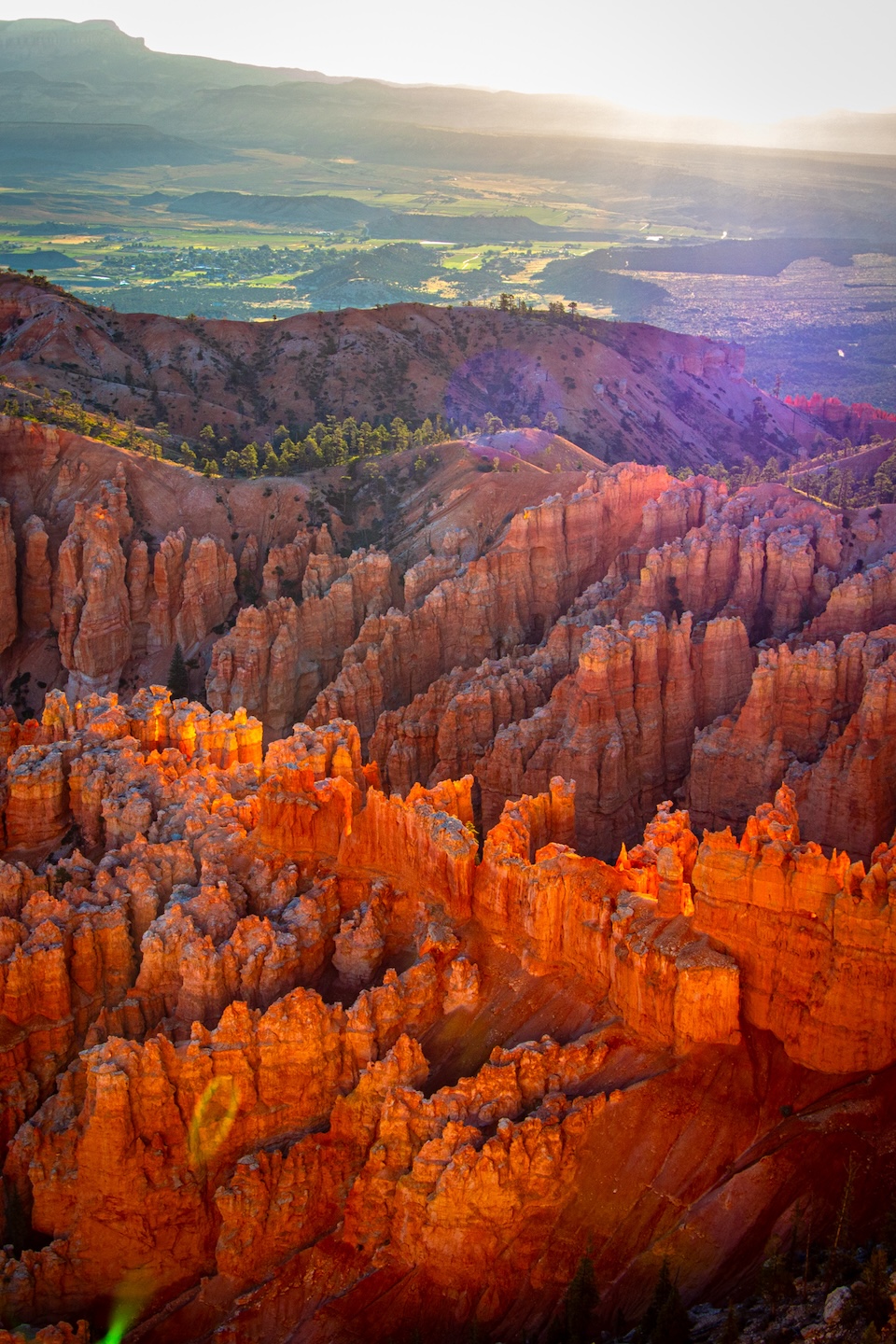
If you’re focusing on the main viewpoints and one or two shorter trails, one full day is enough. Two days is ideal if you want a slower pace.
This is the ideal option during a road trip through Utah when Bryce is one of several stops.
But if you want to descend deeper into the canyon, walk longer loops like Fairyland or combined Navajo/Peekaboo, plus see sunrise and sunset and the night sky without hurry, plan 3-4 days.
Bryce isn’t huge, but it changes with light. And it’s exactly this light that makes it worth staying here a bit longer.
What to Pack for a Hike in Bryce Canyon?
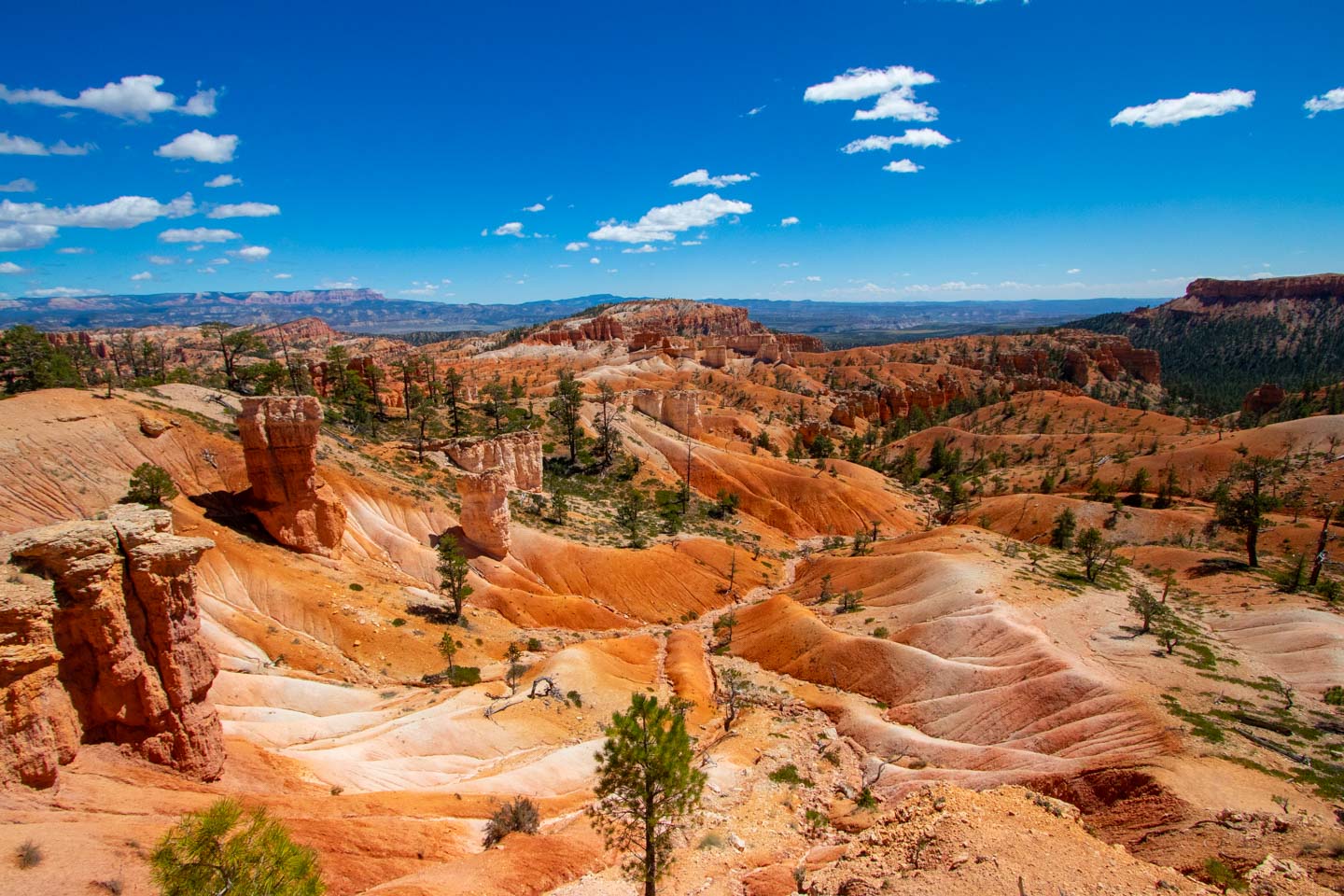
In Bryce Canyon National Park, elevation makes a difference. It’s over 8,000 ft (2,400 m) above sea level, the sun is strong, and the air is dry. So packing isn’t a detail here, it’s the foundation.
Plenty of Water
This is most important. Even shorter routes can dehydrate faster than you expect. Minimum 1-2 liters per person on longer hikes. Here’s my favorite water bottle.
Sun Protection
Hat or cap with visor, sunscreen, and sunglasses. Sun reflects off light rocks and can really tire you out. I swear by this sunscreen.
Comfortable Hiking Boots
Trails are well-maintained, but descents and climbs can be steep. Good grip is essential, especially on loose ground. These are my recommended pair.
Trekking Poles
Not mandatory, but very helpful on longer loops like Peekaboo or Fairyland. Especially on climbs at the end of routes. These are the ones I use.
Snacks
Nuts, bars, something salty. Bryce isn’t a place for “ah, I’ll manage without.” Energy drops faster due to elevation and dry air.
I’d also add a light layer for cool mornings. Even in summer at dawn it can be surprisingly cold.
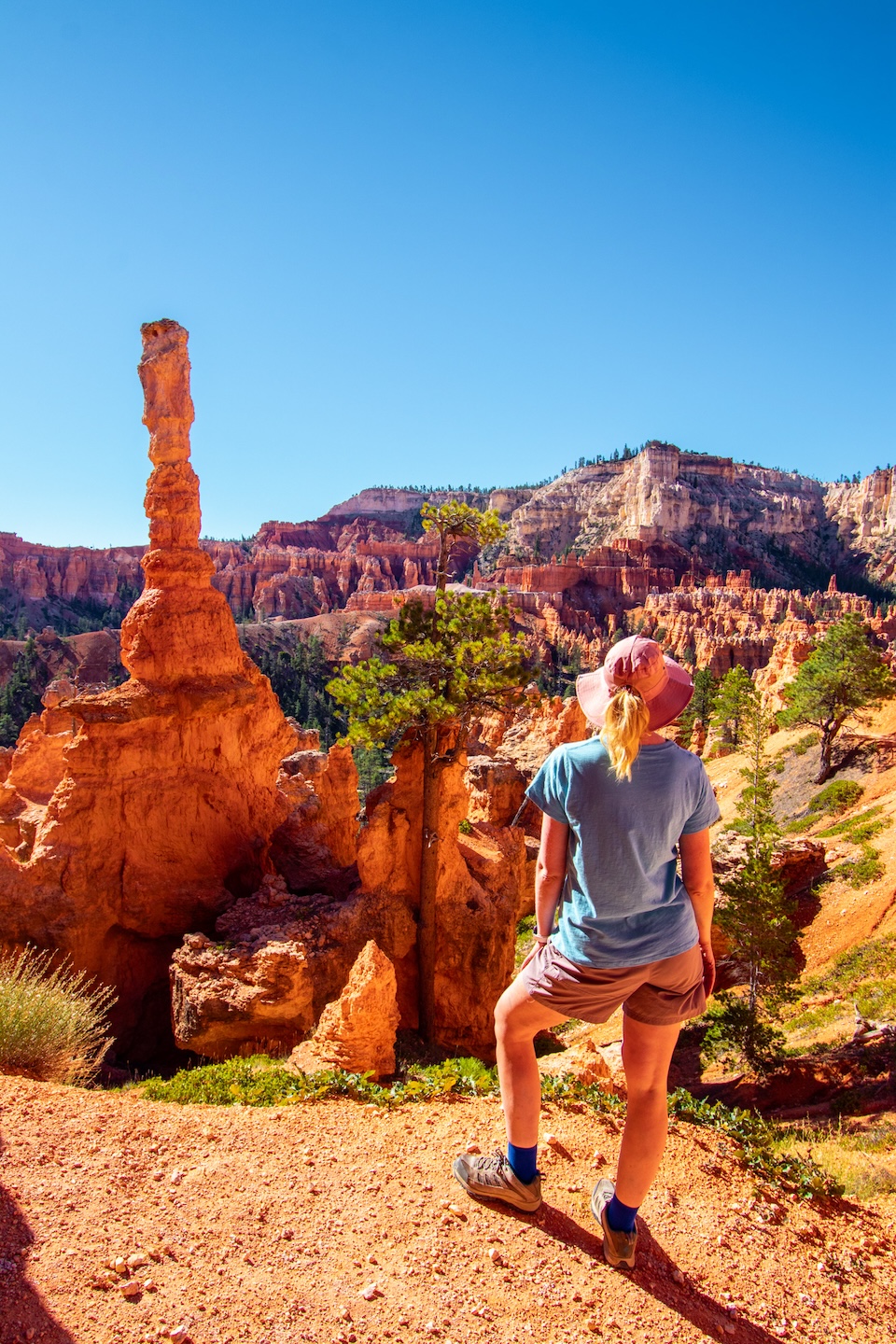
Can You Just Drive Through Bryce Canyon?
Yes, you absolutely can.
At Bryce Canyon National Park, the main scenic road runs about 18 miles and takes you to multiple breathtaking viewpoints.
You can simply drive from overlook to overlook, pull over, step out for a few minutes, and take it all in.
Many of the most famous viewpoints are right next to the parking areas, so you don’t need to hike to see something spectacular.
That said, if you really want to feel Bryce, not just see it, park the car and walk down into the amphitheater. Even a short trail between the hoodoos completely changes the experience.
In peak season, you can also use the free shuttle, which makes it easier to move between viewpoints without worrying about parking.
Driving through Bryce Canyon is easy. But stepping into it? That’s when it becomes unforgettable.
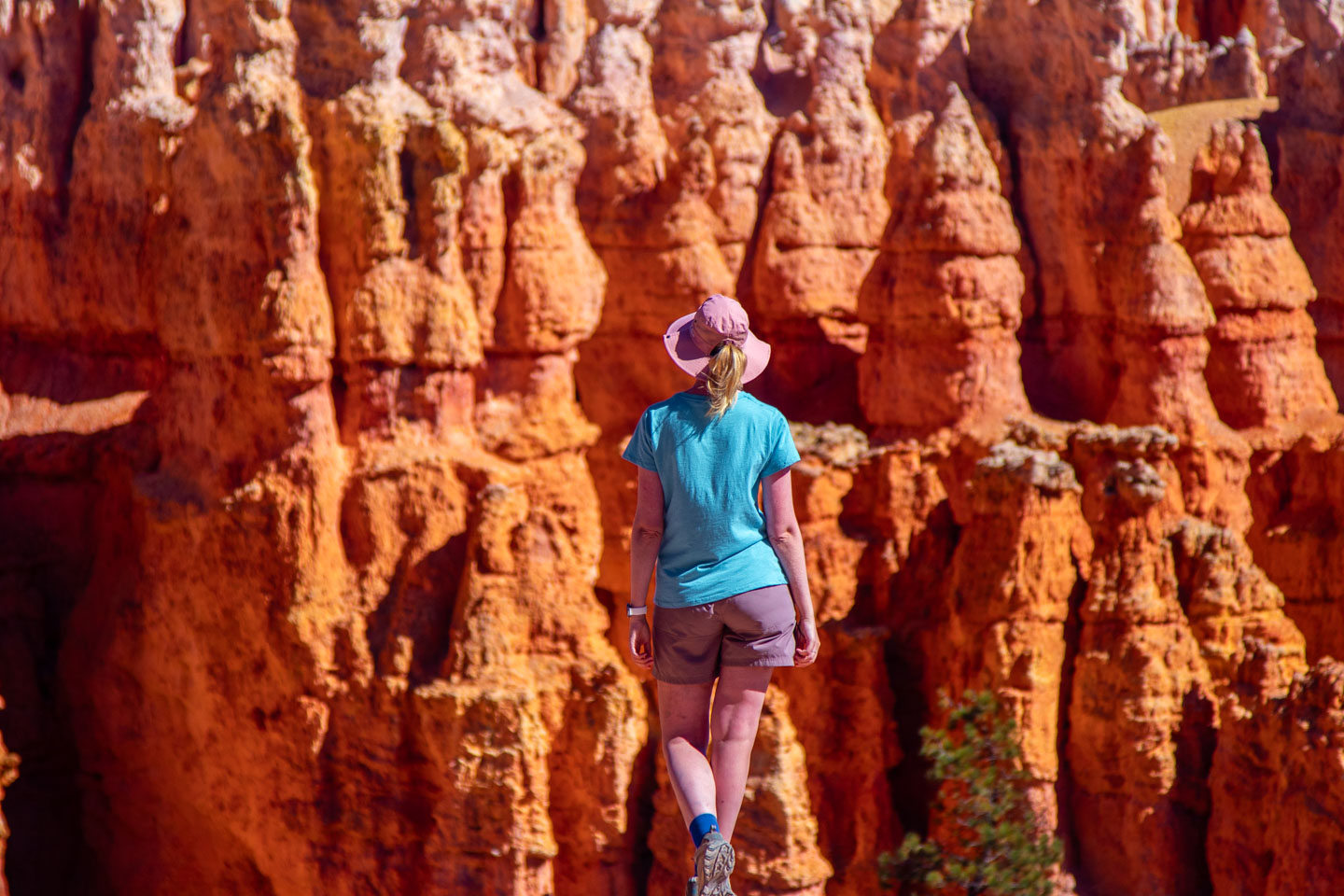
Where to Stay in Bryce Canyon?
Around Bryce Canyon National Park you have several options – from sleeping under stars to a comfortable hotel with pool.
Camping in the Park
Closest to trails and sunrises.
- North Campground – open year-round, about $30 per night.
- Sunset Campground – open seasonally (usually until fall), about $30 per night.
Reservations in season from May to October through recreation.gov. If you care about night sky and morning without driving, this is the best option.
Bryce Canyon City
Closest to park gate.
- Best Western Plus Bryce Canyon Grand Hotel – comfortable hotel with pool and breakfast, prices from about $200.
- Best Western Plus Ruby’s Inn – historic hotel with restaurant and pool, prices from about $180.
It’s a convenient choice if you want to be 5 minutes from park entrance.
Tropic
Quieter, more local, 15-20 minutes from park.
- Bryce Pioneer Village – rustic cabins, prices from about $140.
- Stone Canyon Inn – more boutique vibe, prices from about $180.
Hatch and Panguitch
Good options if you’re looking for lower prices and a 30-40 minute drive doesn’t bother you.
Hatch:
- Bryce Canyon Pines – hotel with restaurant, prices from about $150.
- Galaxy of Harley Bikers – simple motel, prices from about $110.
Panguitch:
- Panguitch House Inn – intimate guesthouse, prices from about $130.
- Purple Sage Motel – retro vibe, prices from about $100.
If you care about sunrise without getting up at 4:00 and driving in darkness, sleep as close to the park as possible. If you’re counting budget – Panguitch often works out most favorably.
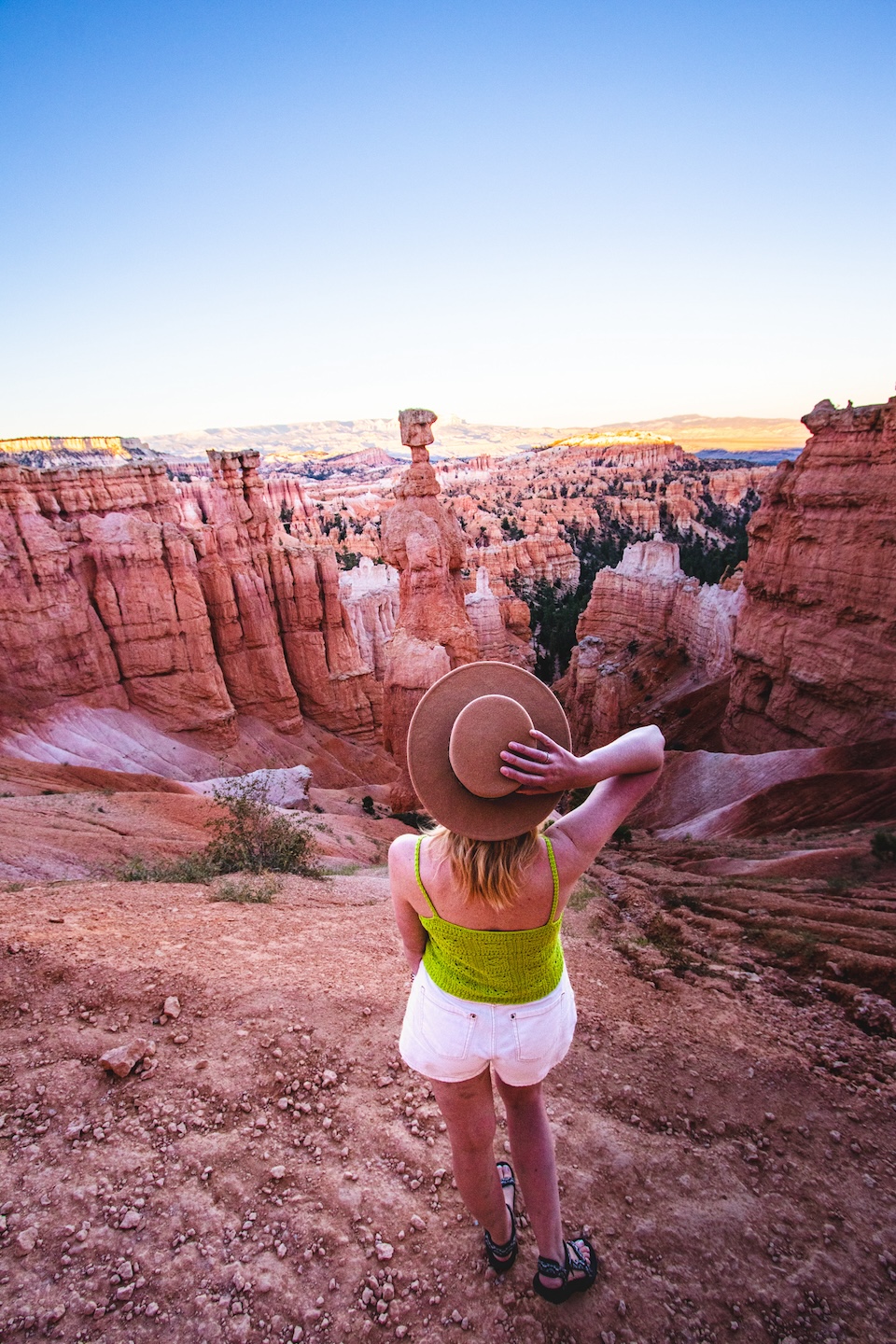
Other Tips
Below are a few things that really make a difference during a visit to Bryce Canyon National Park:
Use the Free Shuttle Bus
In season, parking at most popular viewpoints can be difficult. The free shuttle saves both time and stress.
Come Early or Stay Until Sunset
Dawn and golden hour is the best light and fewest people. Bryce changes with the sun, worth seeing it.
Dress in Layers
The park sits high, over 8,000 ft (2,400 m) above sea level. Mornings and evenings can be cool even in summer.
Bring Water and Snacks
The dry air and altitude can tire you out faster than you expect.
Match Trail to Your Abilities
From short Rim Trail walk to demanding Fairyland Loop. You don’t have to go longest to be amazed.
Check Weather Forecast
During storms avoid narrow canyons and steep descents. Sudden rain can be dangerous.
Take Advantage of Ranger Programs
Evening talks or guided walks let you look at Bryce differently, deeper.
Leave No Trace Principle
Take with you everything you brought. This is a fragile environment easy to destroy.
Bryce is harsh, but if you give it some attention, it will repay you with something more than just a nice view.
Bryce Canyon – Fun Facts
Hoodoos, the Stone Spires
Bryce is famous for hoodoos – unusual rock formations created through weathering and erosion.
It’s exactly the cycle of freezing and thawing water that has torn the rock apart for thousands of years, creating these surrealistic shapes.
It’s Not a Classic Canyon
Though the name might suggest otherwise, Bryce is primarily a rock amphitheater, not a canyon carved by a river. The formations were created through erosion of the plateau edge.
Ancient Utah Lakes
Before hoodoos appeared, this area was filled with water. Between about 55 and 40 million years ago, Utah was a basin with large lakes. It’s exactly sediments from that period that today create the colorful rock layers.
Rising Colorado Plateau
About 20 million years ago the Colorado Plateau began to rise. Lakes dried up, and exposed sediment layers began being shaped by wind, rain, and frost.
One of the Darkest Skies in the USA
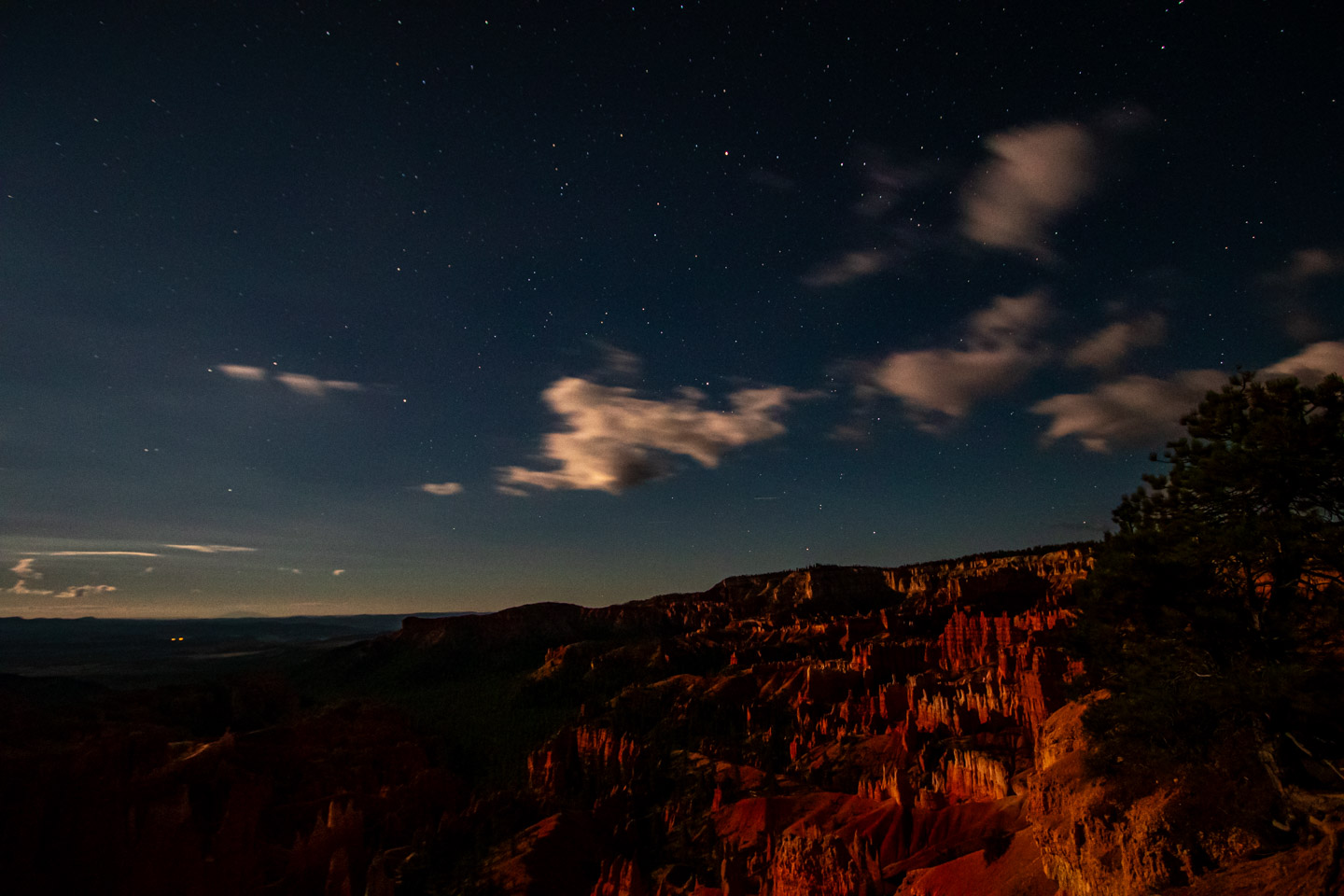
Bryce Canyon National Park is considered one of the best places for stargazing in the States. On moonless nights the Milky Way looks like a silver ribbon stretched across the canyon.
Planets That Cast Shadows
Venus or Jupiter can be so bright that with clear sky they can gently illuminate the landscape.
Large Temperature Swings
Bryce sits high, over 8,000 ft (2,400 m) above sea level, so for about 180 days a year there are large temperature differences between morning and afternoon. Freezing nights and warm days are the norm here.
Travel lighter, even before you leave.
start with something simple.
Download The Minimum Plan – Slow Travel:
Watch our Travel Movie
9 Bryce Canyon Best Hikes – Summary
Bryce Canyon National Park is a place truly hard to compare with anything else. It’s not the biggest. It’s not the most spectacular in the Hollywood sense. But it has something that stays with you for a long time.
Here you’ll find short, easy routes perfect for a peaceful walk along the canyon rim. And longer loops that will let you descend among the hoodoos and feel the scale of this landscape really up close.
Bryce doesn’t need hurry. It’s most beautiful at dawn, when rocks start glowing from within, and at dusk, when the Milky Way lights up above the canyon.
I hope this list of trails helps you plan your own visit and choose a route matched to your rhythm.
Ready to Plan Your Adventure?
- 7-Day Utah Road Trip – My tested plan day by day, no chaos, with logical route and places truly worth seeing
- Best Things to Do in Utah – My list of 10 places that get under your skin, from red canyons to lunar landscapes
- Arizona Travel Guide – Natural extension of Utah, more desert, more space and completely different vibe
- 7-Day California Coast Road Trip – If after rocks you’re dreaming of ocean, this is the next step
What part of Bryce Canyon are you most excited to explore?
Share this with fellow Southwest dreamers and tell me about your own discoveries in the comments!
Save pin for later
This article contains affiliate links. If you make a booking through these links, I may earn a commission, supporting this blog. Rest assured, my recommendations are based on honest assessments, and using these links doesn't affect prices for you. Thank you for your support!