
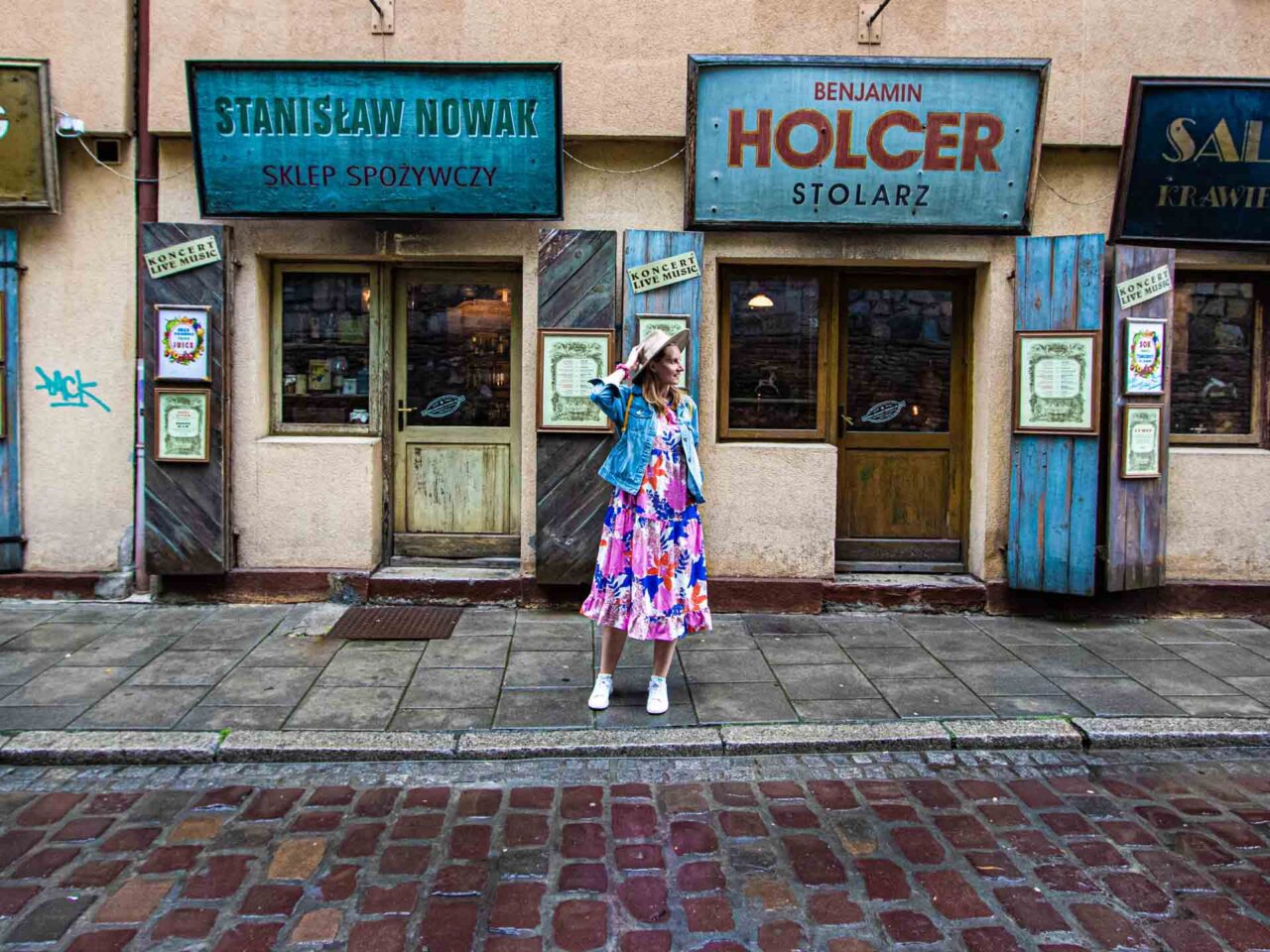
Looking for a 1-day Krakow itinerary that actually makes sense and doesn’t feel rushed? This guide is for you.
Kraków is a city best explored on foot, moving naturally from one place to another. Even with just one day, you can see its most important landmarks without turning your visit into a checklist.
In this itinerary, I share a simple, walkable route covering Krakow’s key sights, including the Main Market Square, Wawel Castle, Kazimierz, and Krakus Mound. The plan is paced so you can actually enjoy the city, not just pass through it.
Along the way, you’ll find practical tips and food stops where it makes sense to slow down, sit for a while, and recharge between walks.
This is a realistic one-day plan for Krakow – ideal if it’s your first visit or if you only have a short city break and want to experience the city at a comfortable pace.
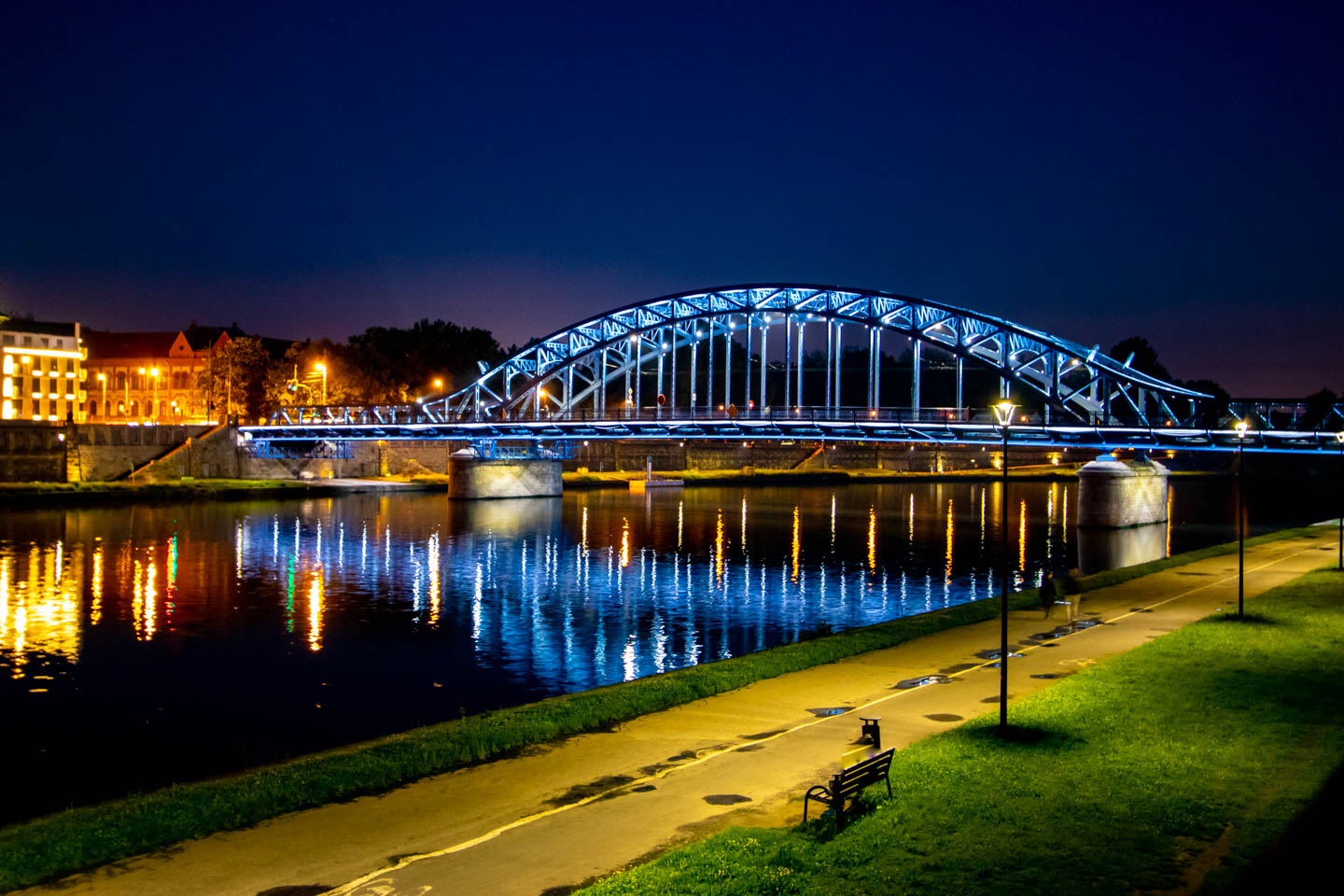
9:00 AM – Breakfast in Krakow’s Old Town
A good breakfast sets the tone for the whole day, especially if you’re planning to explore Krakow mostly on foot.
I like to start the morning at Charlotte Bistro, a well-known café just off the Main Market Square. It’s an easy first stop before the city gets busy and a convenient place to ease into the day.
Charlotte is located in an Art Nouveau building on Szczepański Square, only a few minutes’ walk from the Old Town. You can sit in the bright main room upstairs or head downstairs to the bakery space, where the smell of fresh bread fills the air.
It’s a relaxed place to slow down, have a proper breakfast, and plan the rest of your one-day Krakow route before heading back out into the city.

The breakfast menu at Charlotte Bistro is varied, with prices ranging from 14 to 32 PLN. If you’re curious what to order, the Charles breakfast is a solid choice – a simple set with a basket of bread, eggs, coffee, and a glass of sparkling wine.
It’s an easy place to sit for a while, ease into the day, and enjoy the slower morning rhythm of Kraków before heading out to explore.
Download a free map with 100+ places in Kraków
10:00 AM – Main Market Square and the Cloth Hall
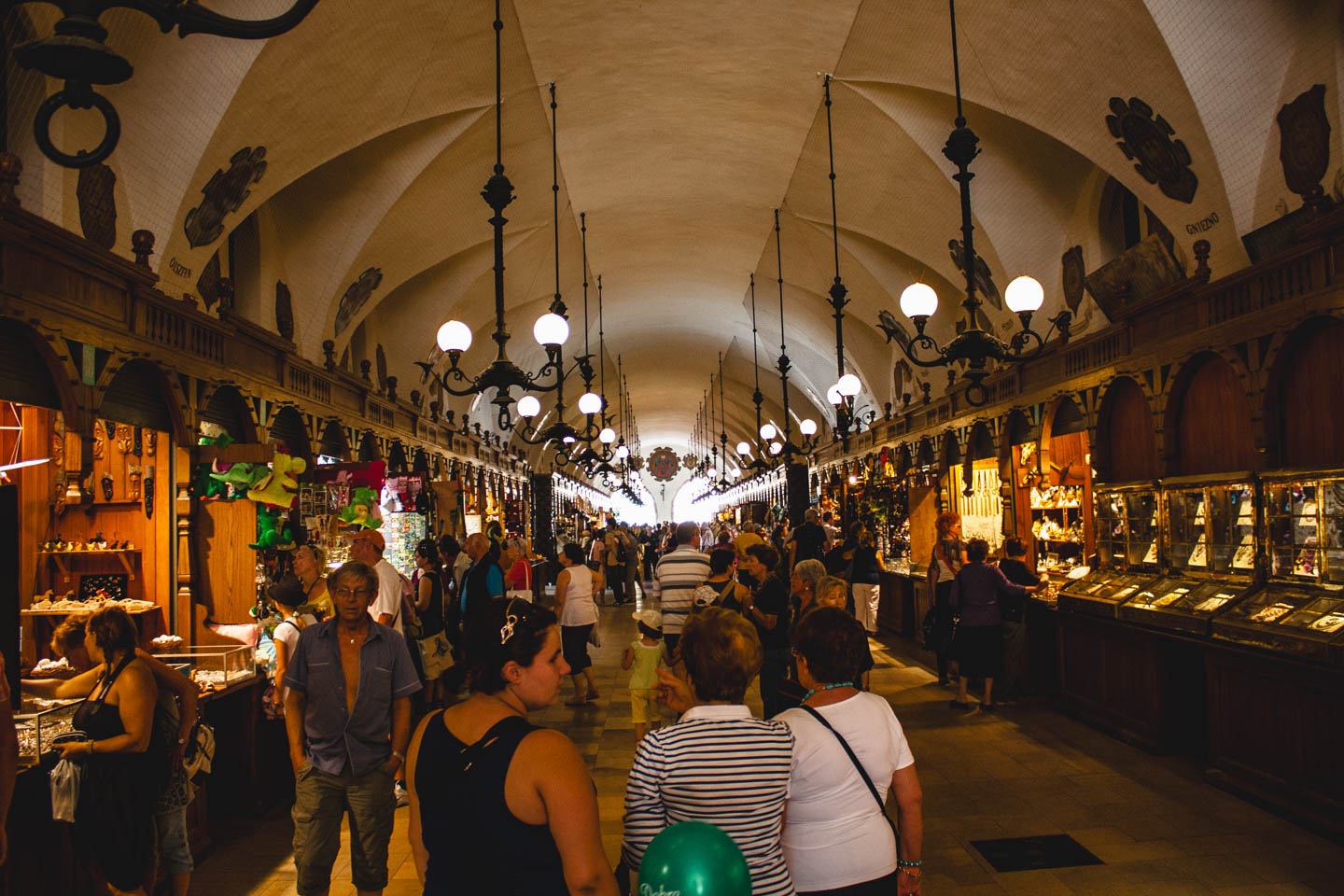
Continue your walk through Main Market Square, the natural center of the Old Town and one of the largest medieval squares in Europe.
The square is surrounded by historic townhouses and landmarks, including the Cloth Hall, which has been part of Krakow’s daily life for centuries.
Once an important trading hub, today the Cloth Hall houses rows of stalls selling souvenirs, handmade items, and traditional crafts.
It’s an easy place to step inside for a short walk through the arcade and get a sense of Krakow’s long commercial history.
This stop fits naturally into a one-day Krakow itinerary and doesn’t require much planning – you’ll likely pass through the square several times throughout the day.
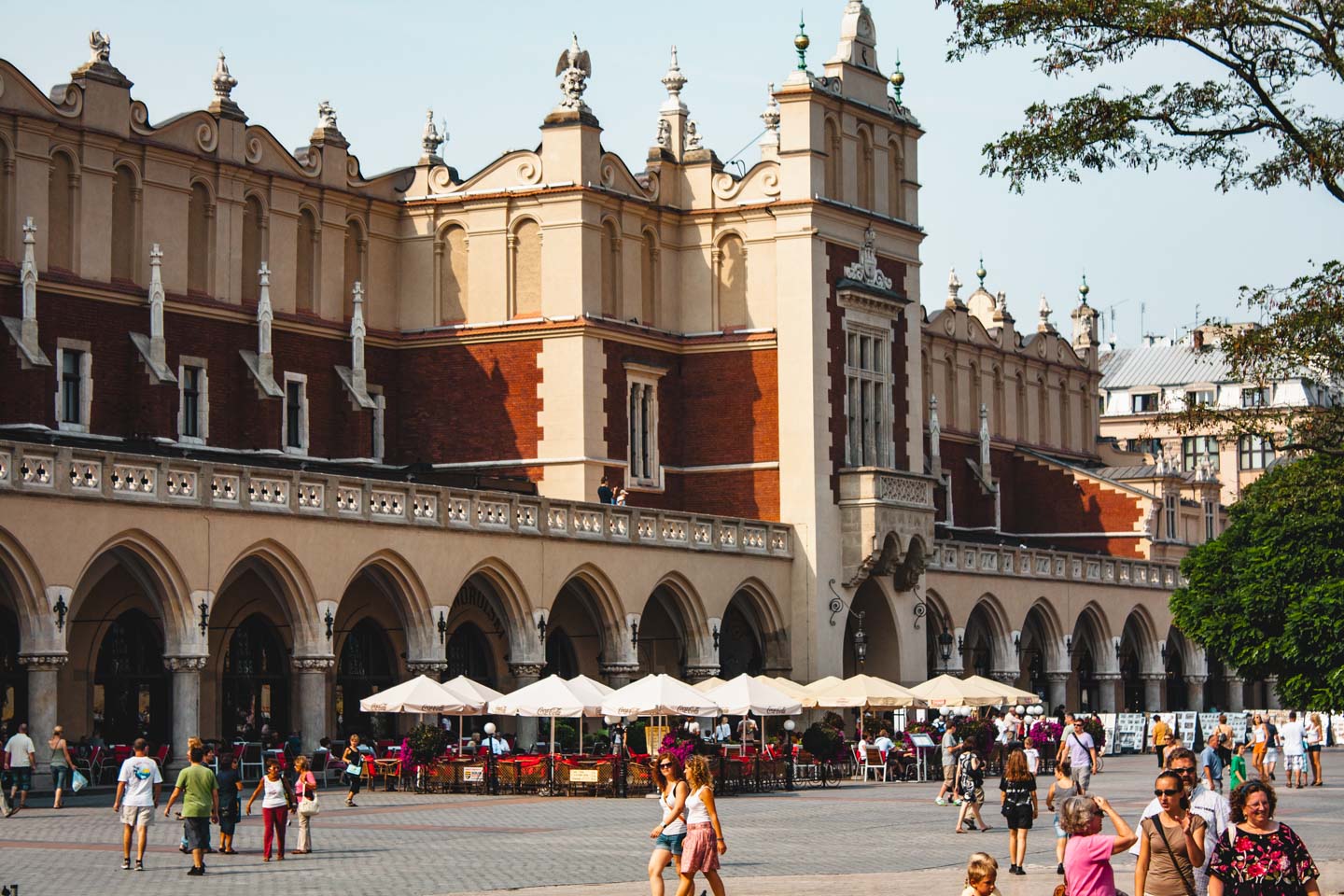
The Cloth Hall also houses several art galleries. On the upper floor, you can see works by Polish artists that add a quieter, museum-like layer to this otherwise busy space.
At the entrance to the Cloth Hall stands the Adam Mickiewicz Monument, a natural meeting point on the square and an important symbol of Polish culture.
Both the Main Market Square and the Cloth Hall are places worth slowing down for. Even a short pause here helps put the scale, history, and everyday rhythm of Krakow into context.
11:00 AM – A Walk Along Floriańska Street
After leaving the Cloth Hall, continue on foot along Floriańska Street, one of the main walking routes through Krakow’s Old Town.
Floriańska connects the Main Market Square with the Florian Gate and has been part of the city’s daily life since medieval times. The street is short – about 335 meters – but it carries a lot of historical weight.
As you walk, you’ll pass historic townhouses, shops, and cafés, all leading toward the gate that once marked the northern entrance to the city. The street takes its name from Florian Gate, which opens in the direction of St. Florian’s Church.
It’s an easy, natural walk that fits well into a one-day Krakow itinerary and requires no special planning – just follow the flow of the Old Town.
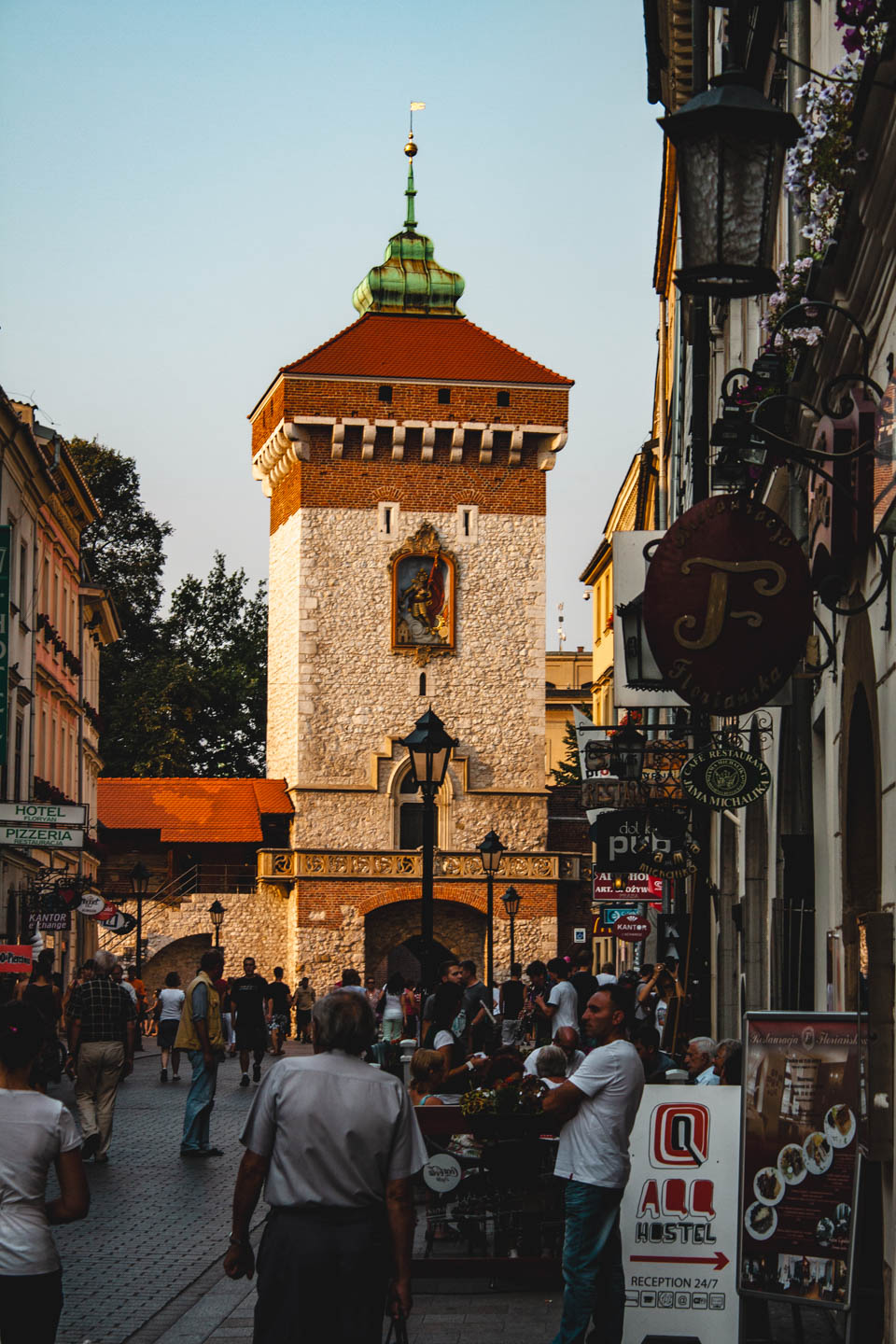
As you walk along Floriańska Street, you’ll pass historic townhouses that once served as private homes and now house hotels, cafés, and small restaurants.
The street is also lined with souvenir shops, making it an easy place to pick up something simple from Krakow without going out of your way.
At the northern end of Floriańska stands the Florian Gate, one of the few remaining medieval gates in the city walls. From here, the route continues toward St. Florian’s Church, following the line of the old city fortifications.
Floriańska is a short walk, but it offers a clear sense of Krakow’s historical layout and works naturally as part of a one-day walk through the Old Town.
Love elegant streets? Check out my guide to Wrocław in one day – you’ll find beautiful historic streets there too!
11:30 AM – St. Mary’s Basilica
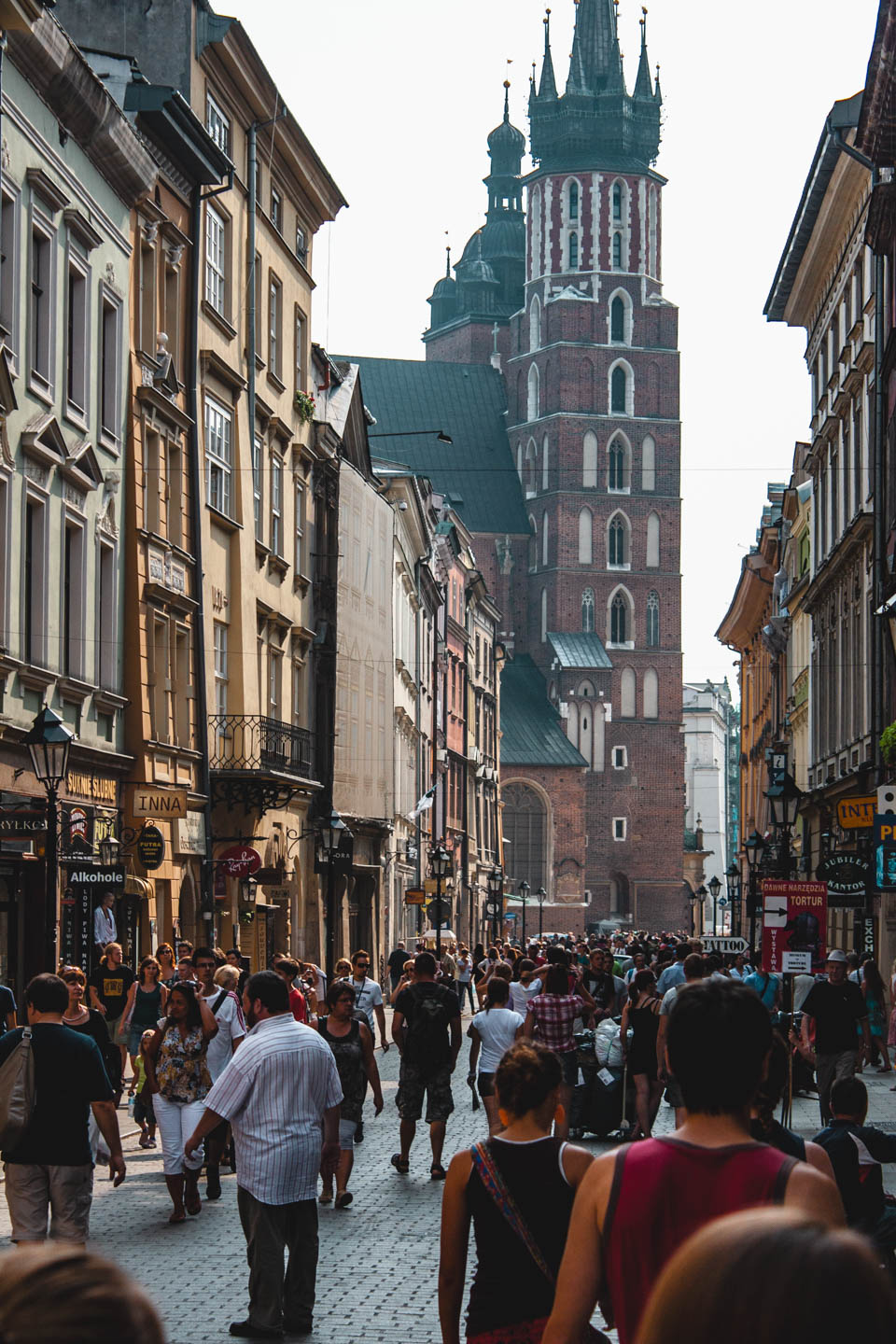
A short walk from the Main Market Square brings you to St. Mary’s Basilica, one of the most recognizable landmarks in the Old Town.
The basilica is known for its stained glass windows and richly decorated interior. With nearly 700 years of history, it has long been part of Krakow’s everyday rhythm, marking time on the square just as much as shaping the skyline.
Visitors can explore the main nave and surrounding chapels, which give a good sense of the church’s scale and craftsmanship.
If you want to add a viewpoint to your day, it’s also possible to climb the tower for a look over the rooftops of Kraków.
This stop fits naturally into a one-day Krakow itinerary and doesn’t require much advance planning, especially if you time it between walks through the Old Town.
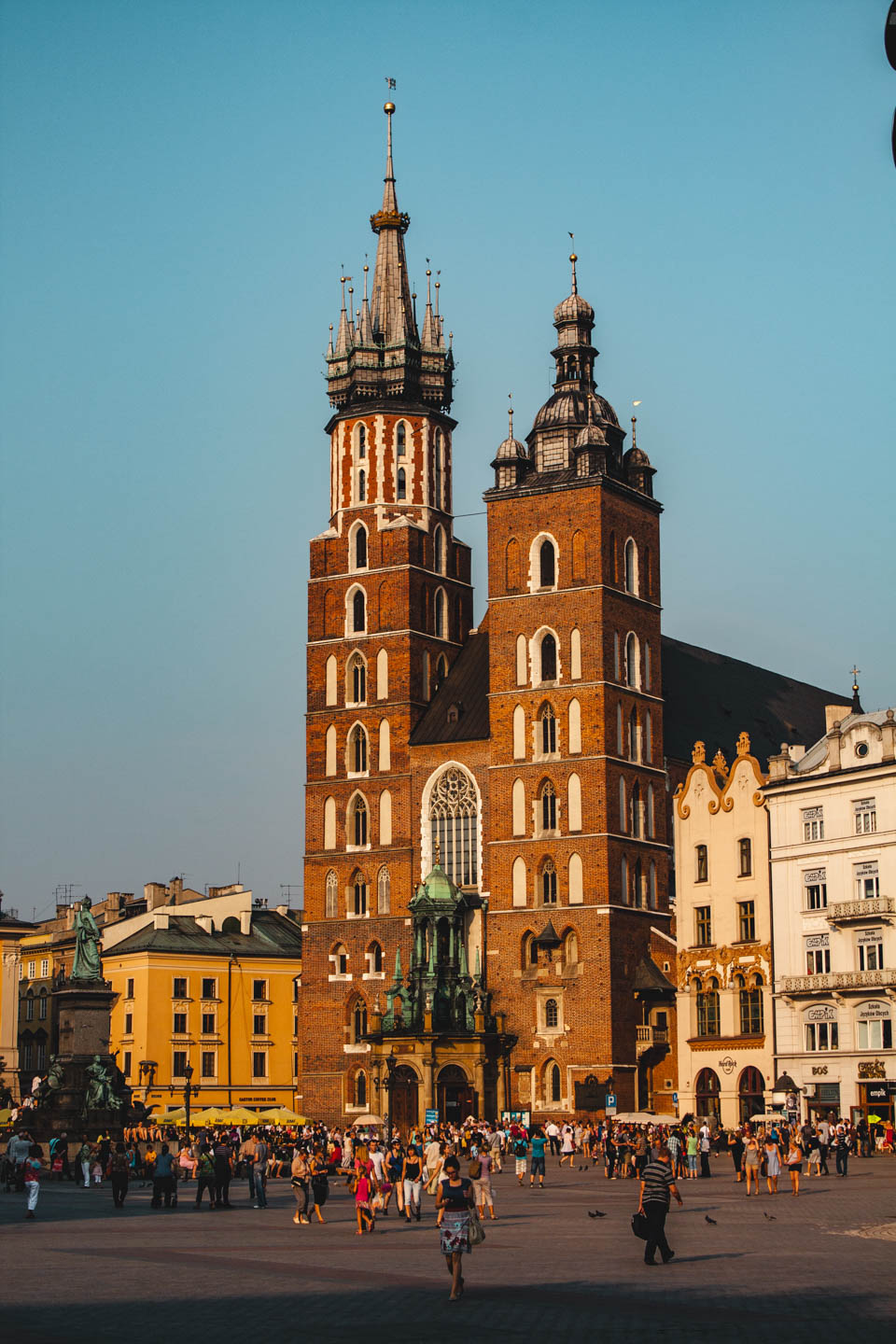
One of the traditions linked to St. Mary’s Basilica is the hejnal – a short trumpet call played from the tower at the top of every hour. It’s a small but distinctive moment that has been part of Krakow’s daily rhythm for centuries.
Visitors enter the basilica from the south side, where tickets and audio guides are available.
Inside, it’s worth taking a moment to look closely at the artworks and wall paintings, which add depth and context to the space beyond its first impression.
St. Mary’s Basilica works well as a short but meaningful stop during a one-day walk through Krakow’s Old Town.
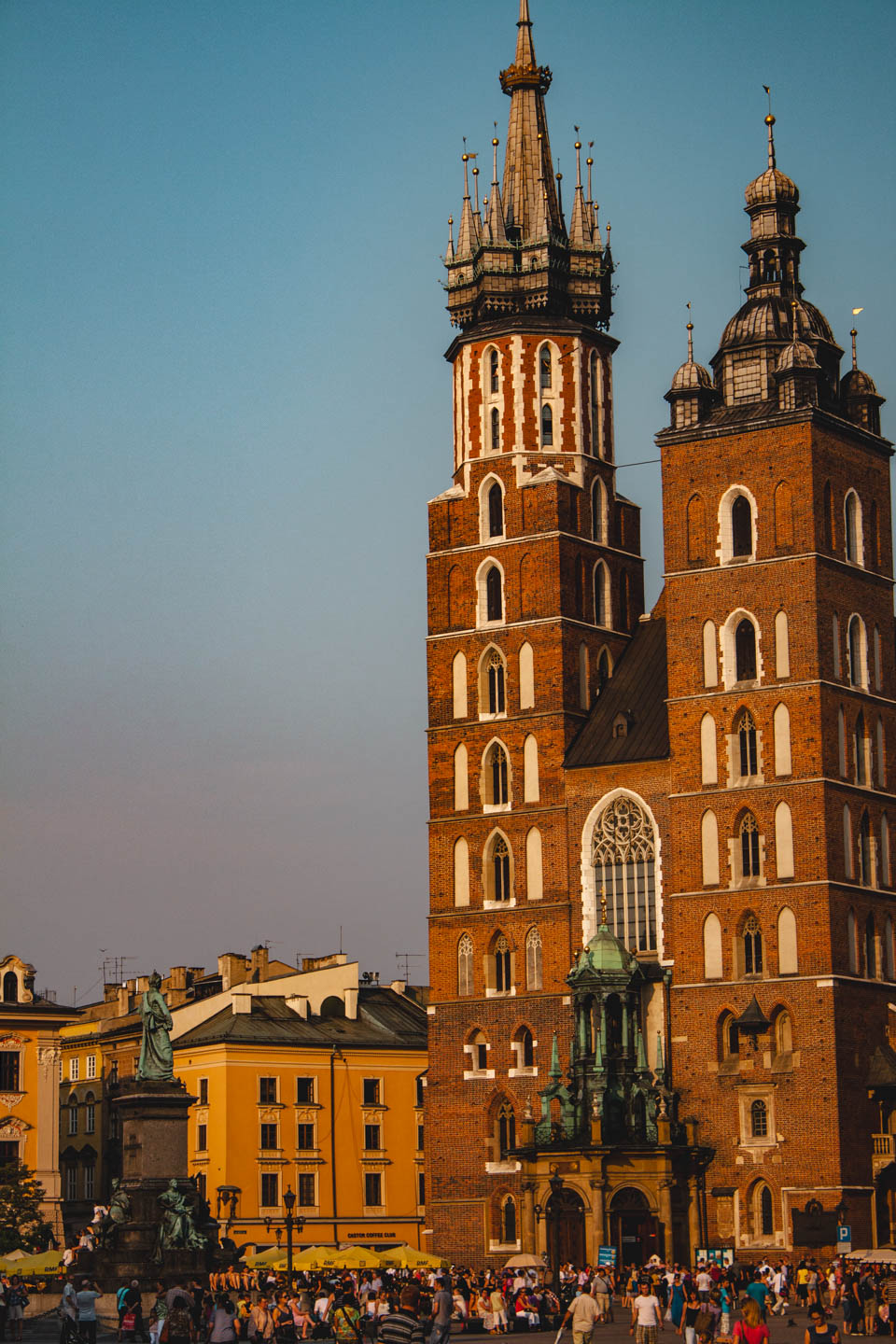
12:30 PM – Wawel Royal Castle and Wawel Hill
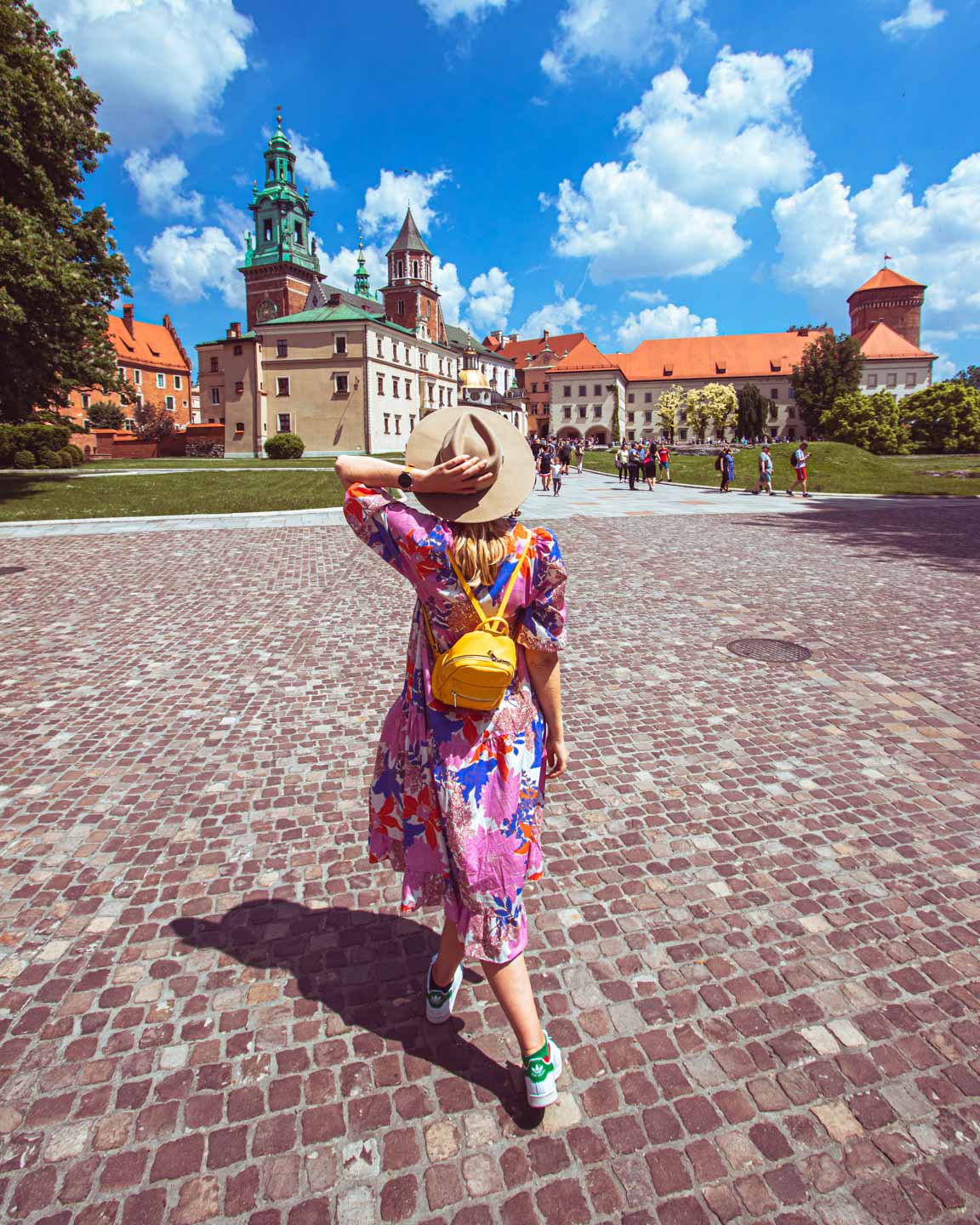
From the Old Town, the route naturally leads toward Wawel Royal Castle, set on a hill overlooking the Vistula River.
For centuries, Wawel served as the seat of Polish kings and remains one of the most historically significant sites in the country.
Today, the castle complex functions as a museum, allowing visitors to explore different layers of Krakow’s royal and cultural past.
The castle buildings date mainly from the 13th to the 15th centuries. Inside, the museum spans over 7,000 square meters and includes dozens of exhibition rooms, ranging from royal chambers to curated historical collections.
Even without entering every exhibition, a walk around Wawel Hill helps put the city’s history into perspective and offers a quieter pause in the middle of a one-day Krakow itinerary.
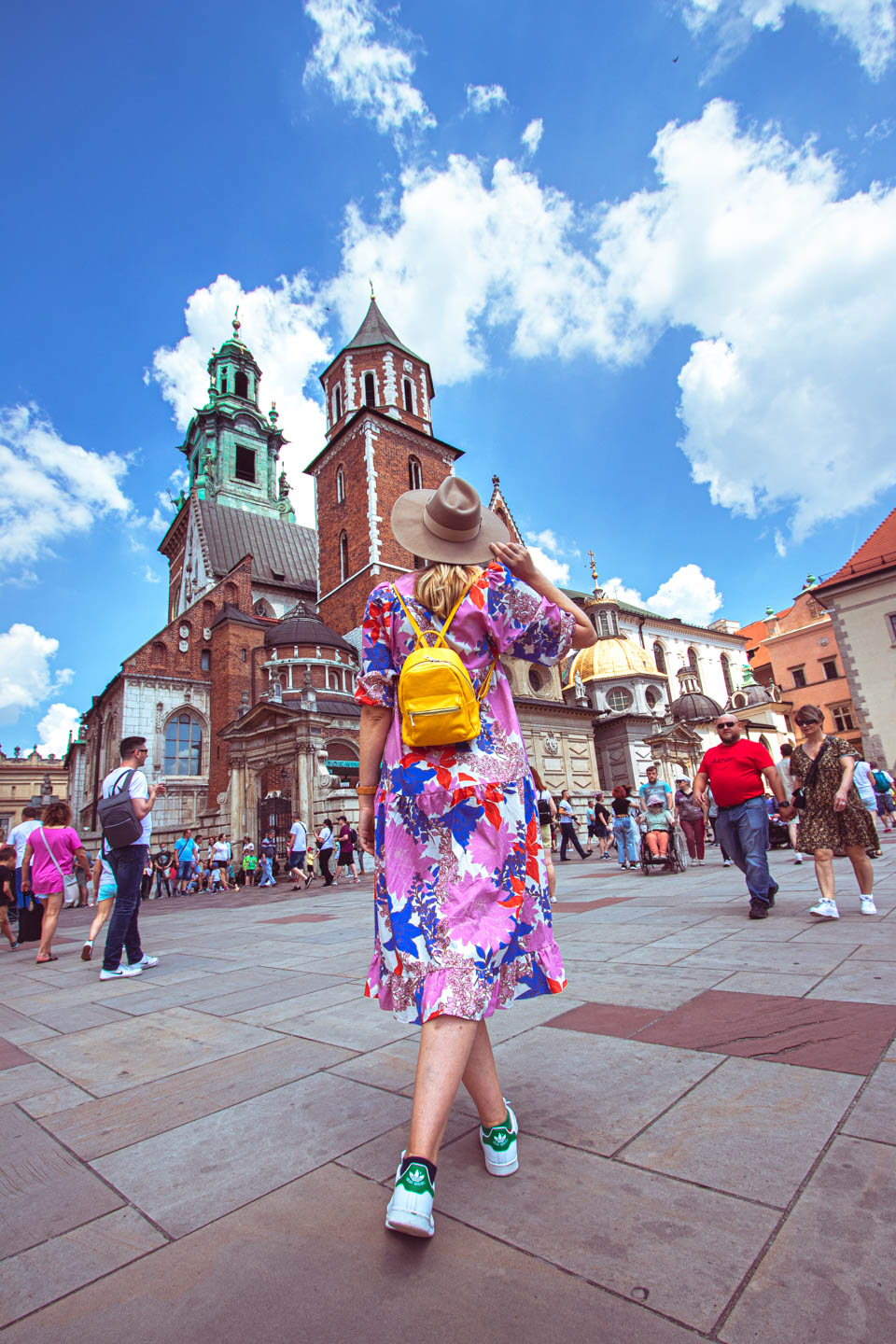
Inside Wawel Royal Castle, visitors can see the Sigismund Augustus tapestries as well as Italian Renaissance paintings from the Lanckoroński collection.
The museum also includes an extensive collection of Eastern art, known in part for its historic tents, which add an unexpected layer to the castle’s exhibitions.
After visiting the interiors, it’s worth taking a walk around Wawel Hill, which offers quieter paths and views over the city.
In spring, summer, and early autumn, you can also visit Smocza Jama (the Dragon’s Den) and climb Sandomierska Tower, which helps put the layout and history of the castle hill into perspective.
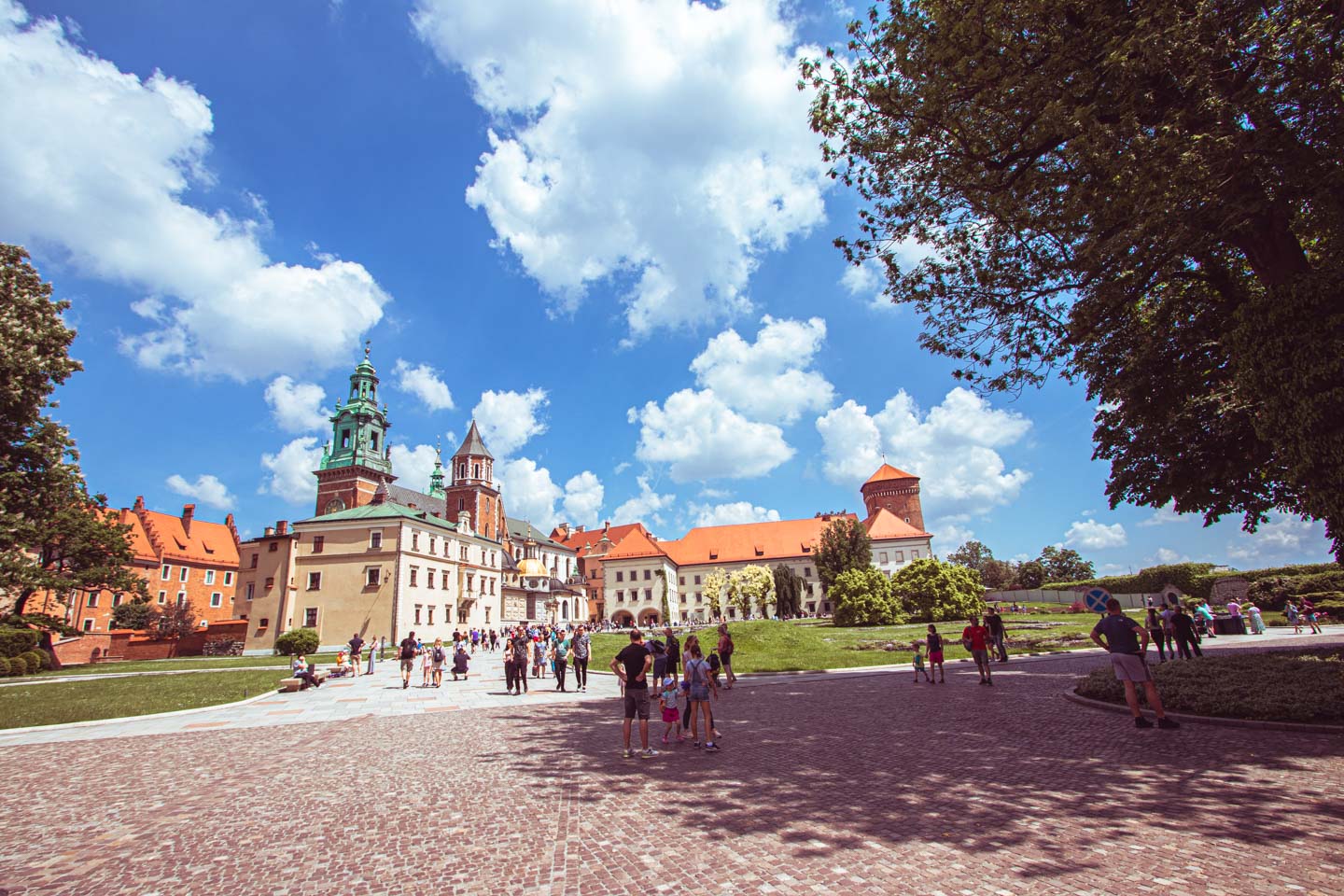
If you prefer more context, joining a guided visit or one of the outdoor routes around Wawel Royal Castle can help make sense of the site’s layout and history.
The museum also hosts temporary exhibitions alongside its permanent collections, so the experience can differ from one visit to the next.
To avoid queues, it’s worth planning ahead and buying tickets in advance. Exploring both the castle interiors and the paths around Wawel Hill gives a fuller picture of Krakow’s historical core and how it developed over time in Kraków.
If you’re drawn to Polish coastal cities, Gdansk offers a completely different architectural style worth experiencing.
3:00 PM – Food and a Walk Through Kazimierz
In the afternoon, the route leads to Kazimierz, a district shaped by centuries of cultural overlap and everyday life.
For a long time, Jewish and Christian communities lived side by side here, leaving a strong mark on the area’s layout, architecture, and atmosphere.
Today, Kazimierz is known for its mix of historic sites and a dense network of cafés, bars, and small restaurants.
It’s a good place to slow the pace of the day, sit down for a proper meal, and take a break from walking. Food plays an important role here, and choosing a place to eat is part of understanding how the district functions today.
Spending some time in Kazimierz adds a different layer to a day in Krakow – quieter, more local, and less centered around monuments.
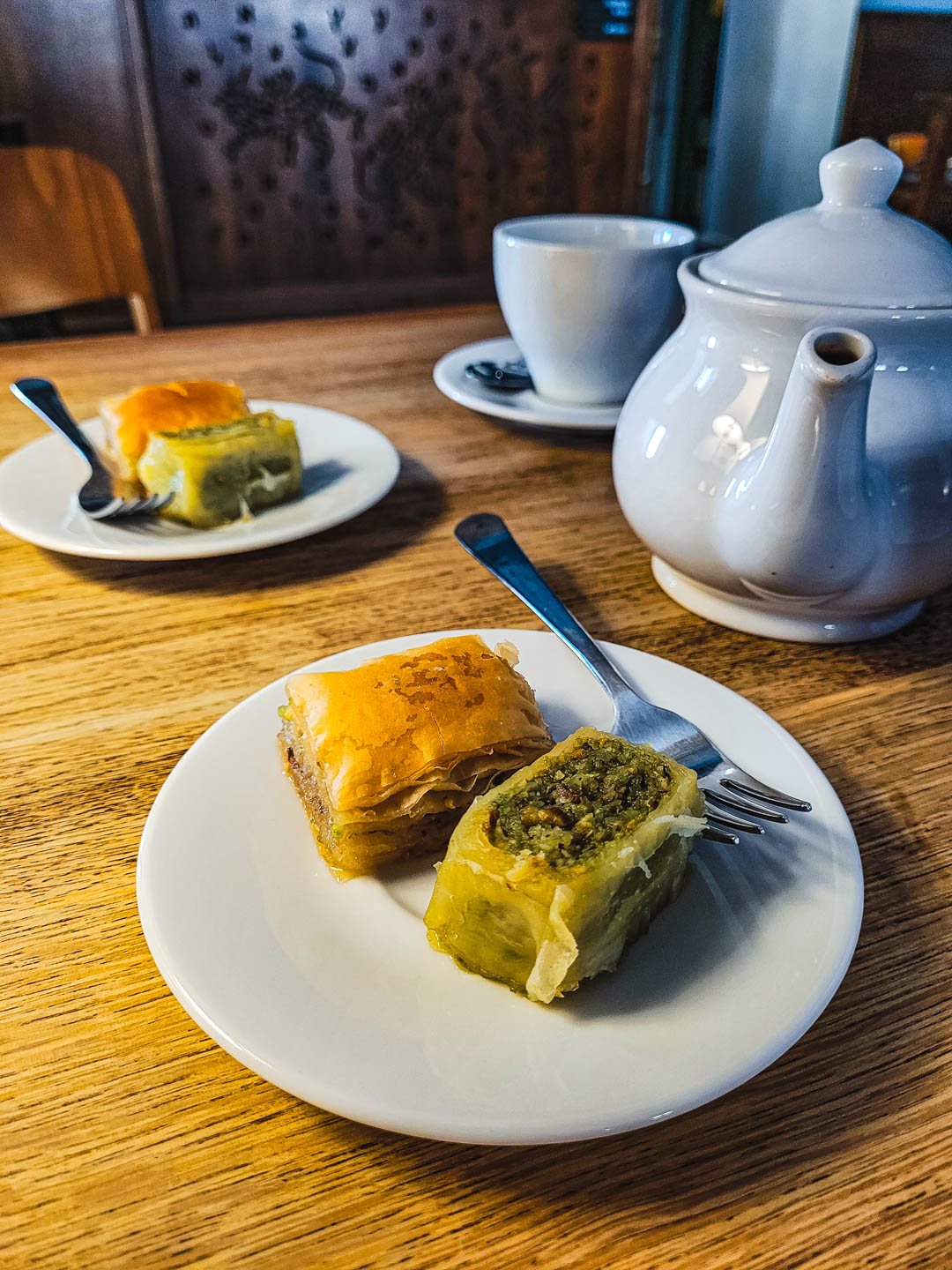
If you’re interested in Italian food, Nolio is a solid option on Kazimierz. The menu focuses on classic Italian dishes, including Neapolitan–style pizza prepared according to traditional methods.
On warmer days, it’s possible to sit outside in the small garden and pair the meal with a glass of wine from their well-curated list.
For something less traditional, Alchemia offers a changing menu of seasonal, internationally inspired dishes, with plenty of vegetarian and vegan options. It also works well for a short stop later in the day, whether for food or a drink.

Alchemia works both as a place to eat and as a cultural venue in the evening. During the day, it’s an easy stop for a coffee, a light meal, or a drink while taking a break from sightseeing.
In the evenings, the space often hosts live music and concerts, adding another layer to its role on Kazimierz.
For a more traditional lunch setting, Zazie Bistro offers classic French cuisine in a cozy, two-level interior. The atmosphere is relaxed and intimate, making it a good option if you want to slow down and enjoy a longer meal.

Zazie Bistro offers a broad selection of classic French dishes, alongside vegetarian options and seafood.
Each of the restaurants mentioned above works well at a different moment of the day, so the choice depends mostly on your mood and how much time you want to spend over the meal.
Stopping for food on Kazimierz isn’t about chasing highlights, but about taking a break, sitting down for a while, and letting the district’s everyday rhythm set the pace.
Exploring historic Jewish quarters across Europe? Don’t miss Berlin’s equally compelling history and cultural sites.

4:00 PM – A Walk Through Kazimierz
After lunch, it’s worth spending some time walking through Kazimierz, a district shaped by layers of history and everyday life.
Kazimierz is home to several historic synagogues that reflect the long presence of Jewish culture in Krakow.
One of the most important is the Old Synagogue, dating back to the 15th century and considered one of the oldest preserved synagogues in Poland.
Walking through this part of the city offers a quieter contrast to the Old Town and helps place Krakow’s past into a broader cultural context.
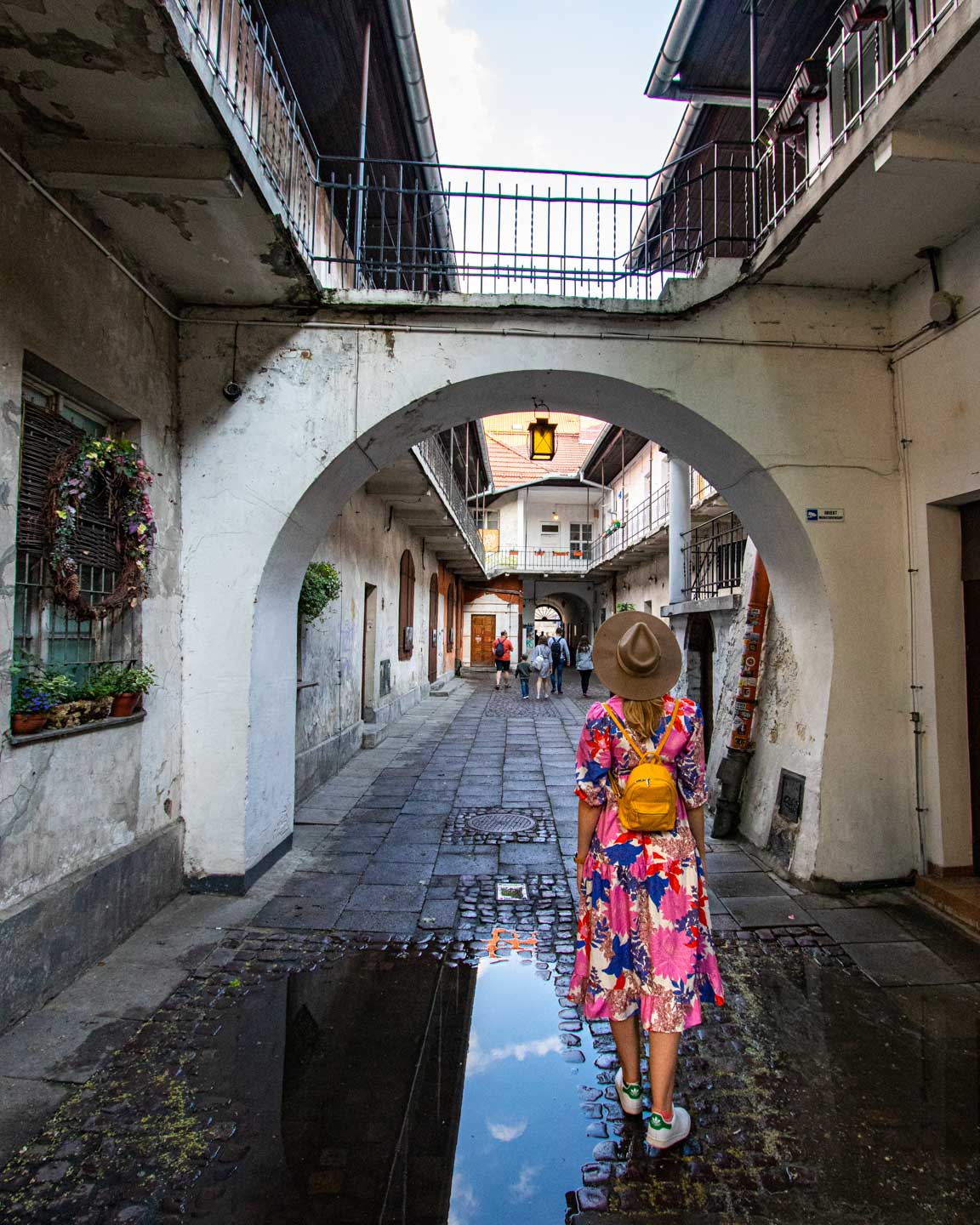
If you’re interested in the history of Jewish life in Krakow, the Remuh Synagogue is one of the key places to visit in Kazimierz.
Alongside the synagogue itself, the site includes a small museum and a historic Jewish cemetery, offering insight into the everyday life of the local community over centuries.
Another important stop nearby is the Kupa Synagogue, which once served as a cultural and educational center for the district.
Today, it adds another layer to understanding how Kazimierz functioned as a living neighborhood, not just a place of worship.
Together, these sites help place Krakow’s Jewish heritage in a broader historical and urban context.
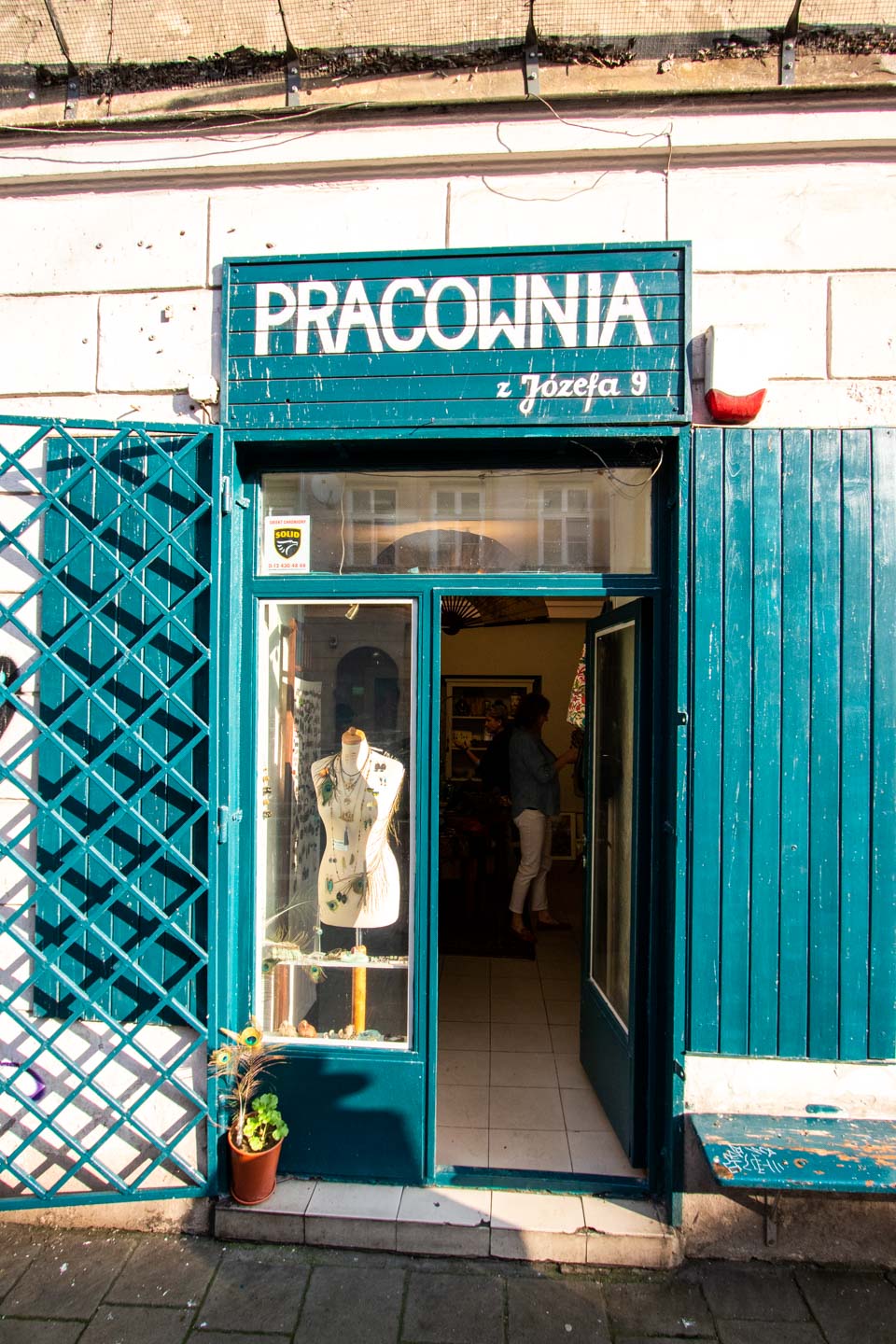
A walk through Kazimierz often leads to Szeroka Street, a central point of the district and a place closely tied to its history.
During the day, Szeroka feels calm and open, with historic buildings and traces of the area’s past. In the evening, it becomes more animated, with restaurants, small venues, and occasional live music shaping the rhythm of the neighborhood.
Spending some time here helps connect Kazimierz’s historical background with how the district functions today.
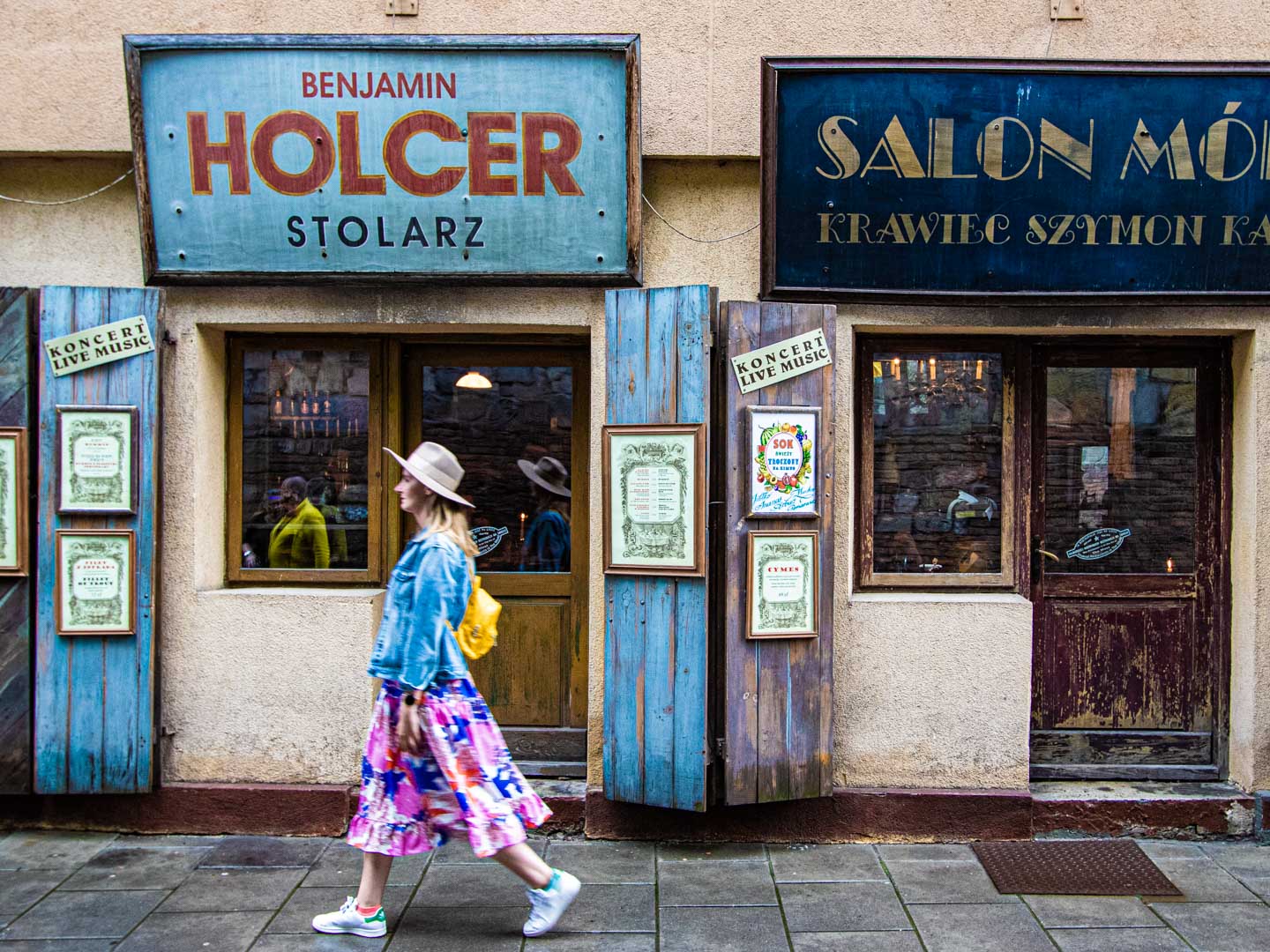
Kazimierz is shaped not only by history, but also by an active cultural calendar. One of the most visible examples is the Jewish Culture Festival, held here every year.
During the festival, Kazimierz becomes a meeting point for artists, musicians, and visitors interested in Jewish culture from different parts of the world.
Public spaces and courtyards are used for events that bring the district into everyday focus rather than turning it into a stage.
The program goes beyond concerts and includes exhibitions, workshops, talks, and performances. Together, these elements show Kazimierz as a living neighborhood where culture continues to evolve alongside its historical background.
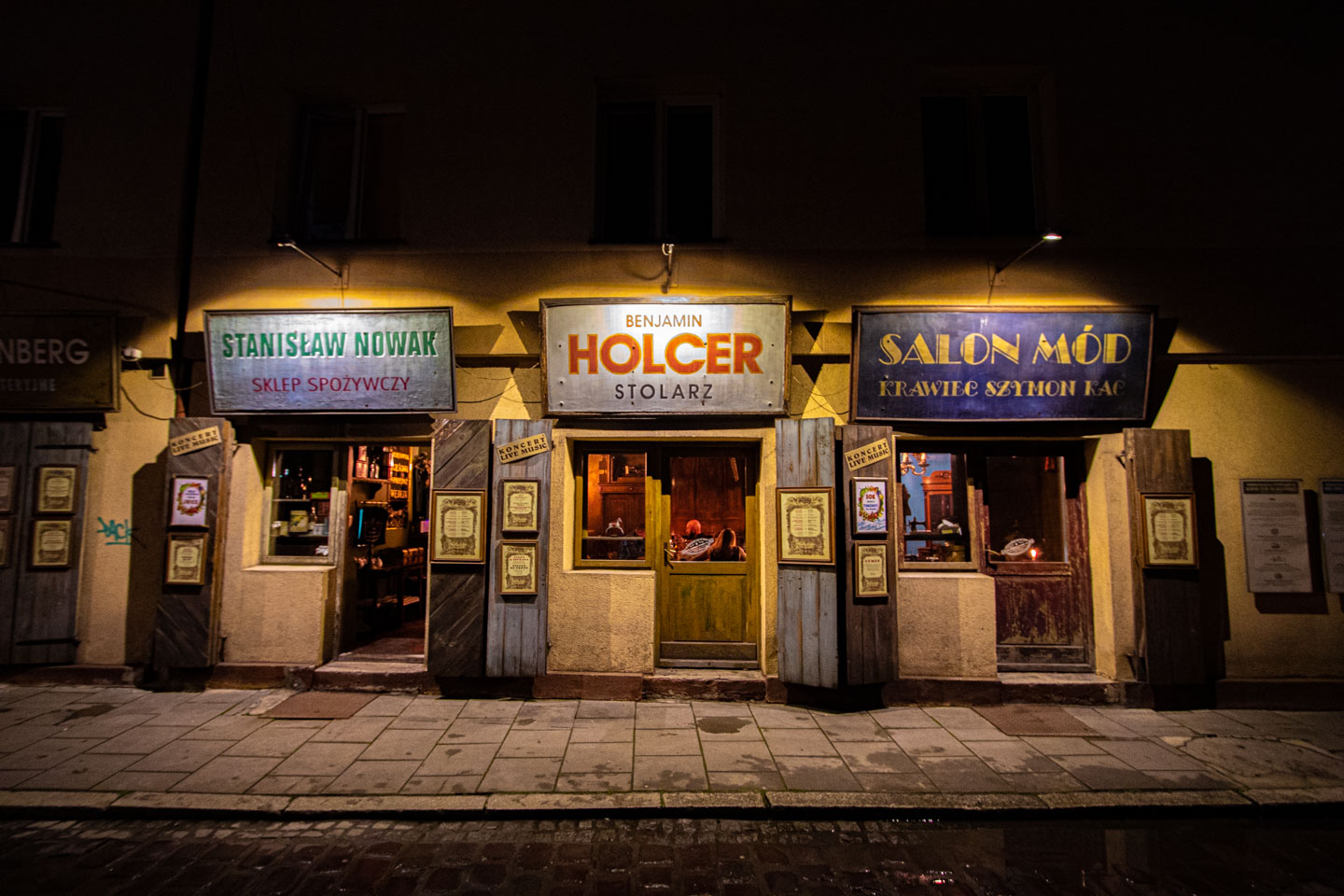
5:30 PM – Oskar Schindler’s Enamel Factory Museum
After spending time in Kazimierz, the route continues to Oskar Schindler’s Enamel Factory Museum, a place closely connected to the history of World War II and the Jewish community of Krakow.
During the war, the factory employed Jewish workers from the nearby ghetto. Through the actions of Oskar Schindler, many of them were protected from deportation and survived the occupation.
Today, the museum presents this history within a broader context of Krakow under Nazi rule.
The exhibitions include original documents, photographs, film footage, and everyday objects that help explain life in the city during the occupation, as well as the realities of the ghetto and forced labor.
Walking through the museum offers a deeper understanding not only of Schindler’s story, but also of the wider impact of World War II on Krakow and its residents.
It is a demanding visit, but one that adds important historical perspective to a day spent exploring the city.
How do you want to explore Poland next?
🏛️ Warsaw in one day → History, modern architecture, and contrasting neighborhoods
🌊 Gdansk in one day → Coastal pearl with unique architecture
🎨 Wroclaw in one day → City of bridges and dwarfs awaits discovery
What appeals to you most?
7:30 PM – Sunset at Krakus Mound
In the evening, head to Podgórze to visit Krakus Mound, one of the oldest viewpoints in the city.
The mound is believed to date back to the 9th or 10th century and is traditionally linked to legends about King Krak, the city’s mythical founder.
Rising about 16 meters above the surrounding area, it is one of several historic mounds scattered across Krakow.
From the top, the view opens over the city, with Wawel Castle visible in the distance. It’s a quiet place to slow down and watch the light change at the end of the day.
The surrounding park makes it easy to linger a bit longer, offering a calm contrast to the busier parts of the city and a gentle way to close a full day of walking.
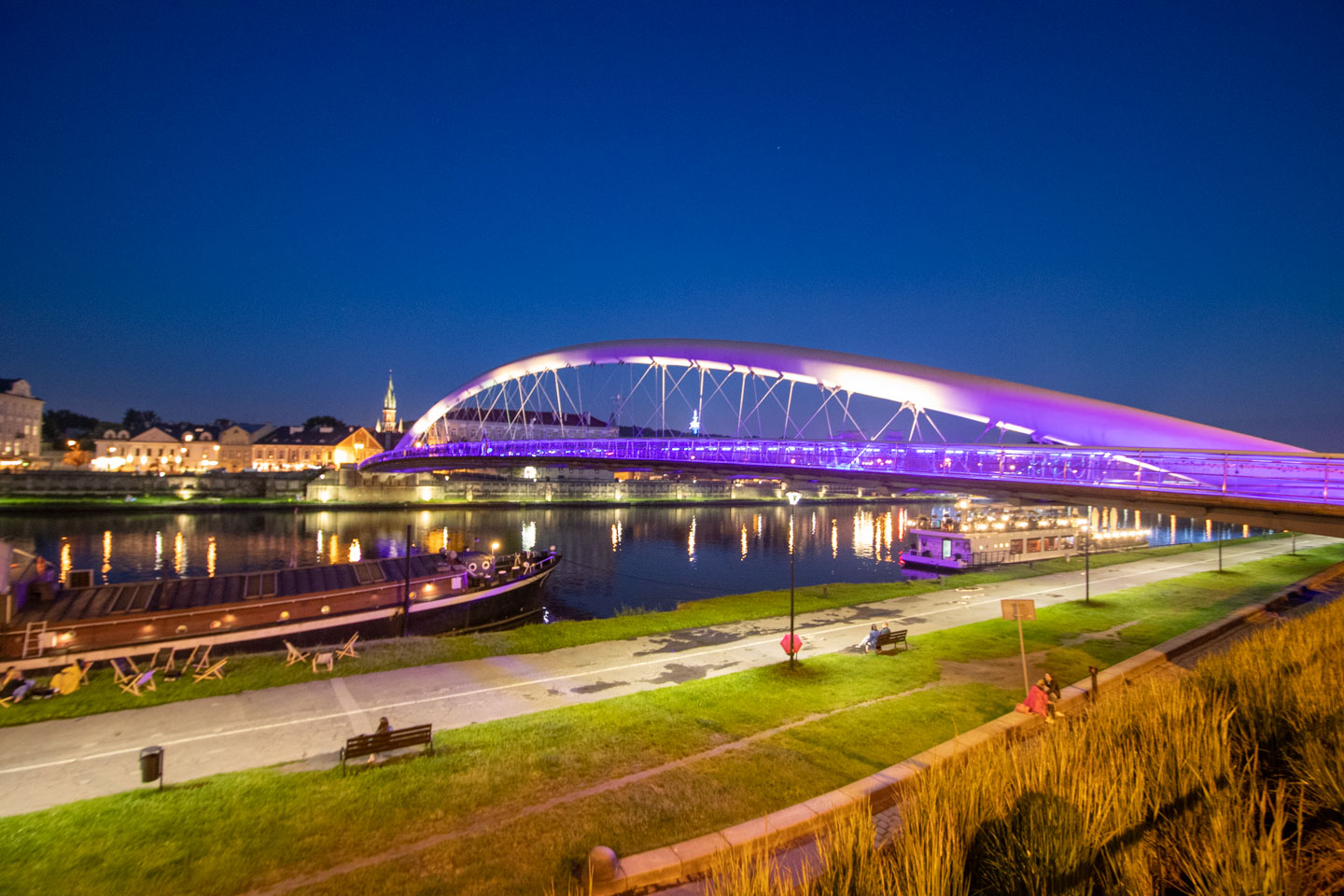
Helpful Tips
How to Get to Krakow
If you’re traveling to Kraków from the United States, the most common option is flying into John Paul II International Airport Kraków-Balice (KRK).
There are currently no direct flights from the U.S. to Krakow, so the journey usually includes a connection through a major European hub such as Warsaw, Amsterdam, Paris, or Munich.
Flight time from the U.S. to Europe typically ranges from 10 to 12 hours, followed by a short connecting flight of around 1-2 hours to Krakow.
Once you land at KRK, the city center is about 11 km (7 miles) away. You can reach it easily by train, bus, or taxi, depending on your arrival time and preference.
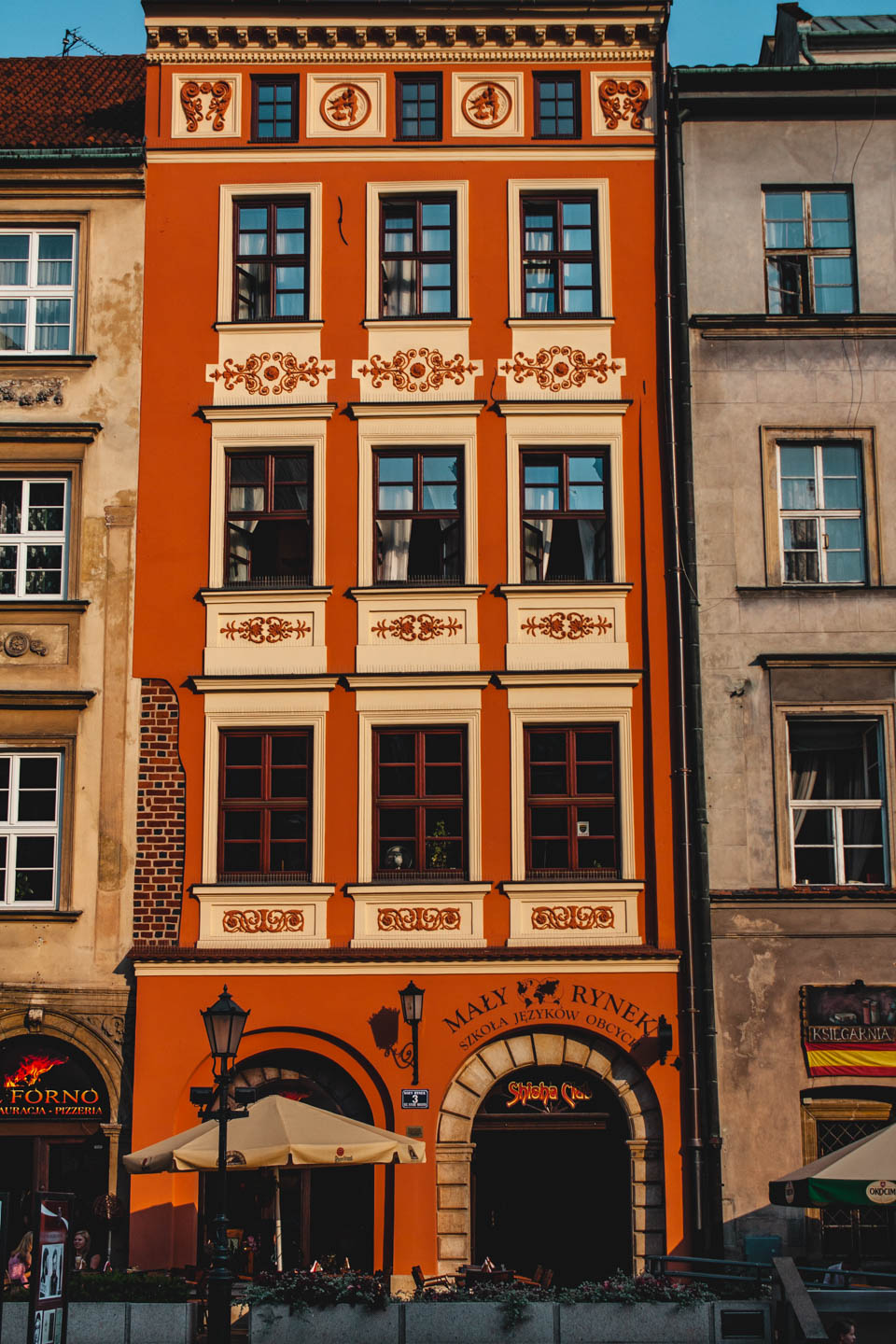
Best Time to Visit Krakow
The timing of a trip to Kraków depends on what you’re looking for, but spring and autumn are generally the most comfortable seasons to explore the city.
April, May, September, and October usually bring mild temperatures and fewer visitors than the summer months, making it easier to move around on foot and enjoy the Old Town without crowds.
Summer (June to August) offers longer days and warmer weather, but it also comes with higher visitor numbers and increased prices, especially around the Main Market Square.
Winter has a quieter rhythm, particularly outside the holiday period.
In December, the city takes on a different atmosphere with seasonal decorations and Christmas markets on the Main Market Square, which can be worth planning around if you enjoy winter travel.
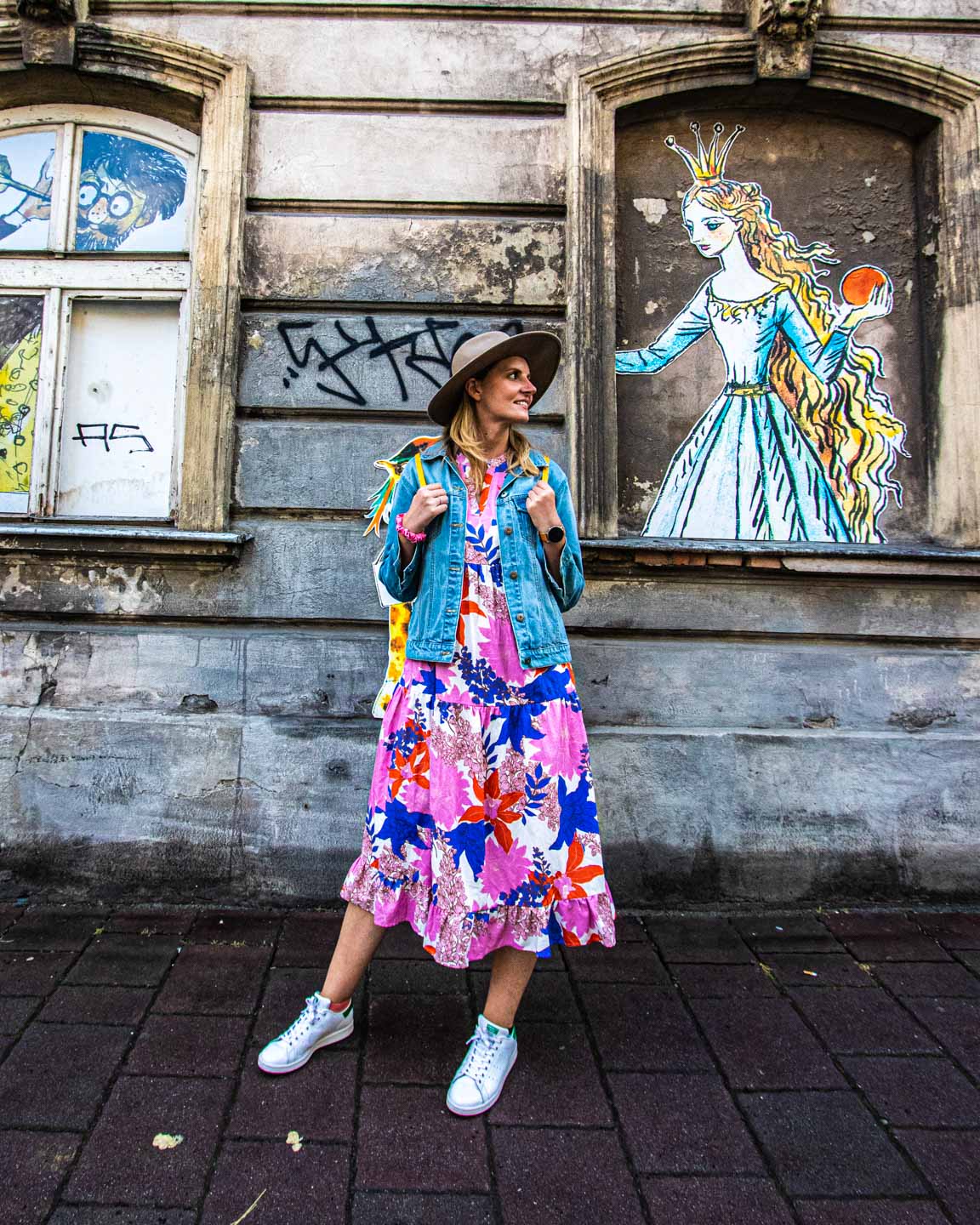
How to Get Around Krakow
Getting around Kraków is easiest on foot, especially in the Old Town, where most attractions are close to one another and naturally connected by walking routes.
For longer distances, the city offers a reliable public transport system, including trams and buses. City bikes (Wavelo), electric scooters, and taxis such as Uber or Bolt are also widely available.
Driving in the city center is generally not recommended, as parking is limited and traffic restrictions are common.
Travel lighter, even before you leave.
start with something simple.
Download The Minimum Plan – Slow Travel:
Where to Stay in Krakow
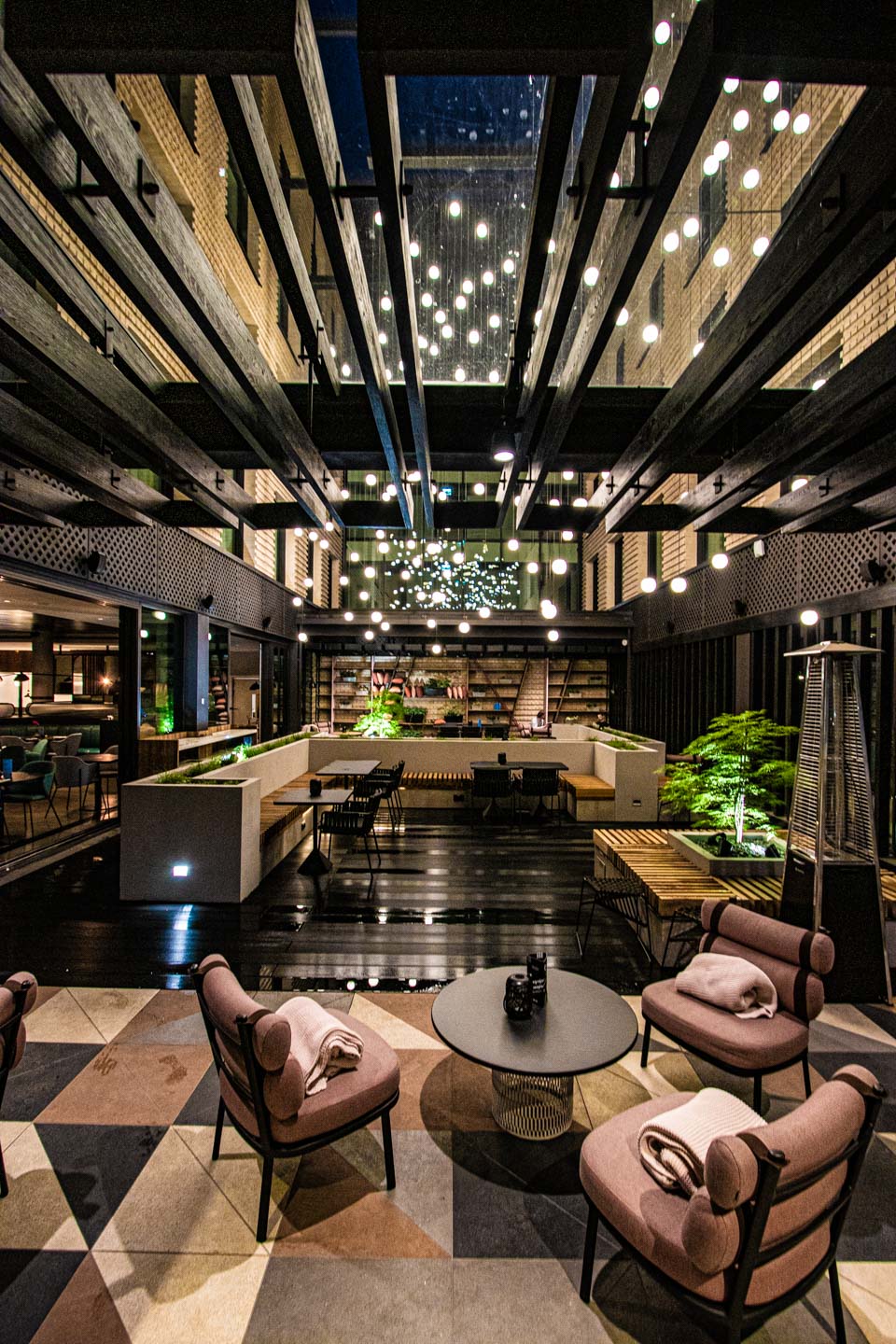
If you’re planning a short stay in Krakow, PURO Kraków Kazimierz works well as a practical base. I stayed there myself and found it comfortable and easy to return to between walks.
The hotel’s modern interiors fit naturally into the character of Kazimierz, and the rooms are designed with rest in mind. On site, there’s a restaurant, café, and bakery, which makes it convenient to start or end the day without going far.
Guests also have access to a spa and bike rentals, which can be useful if you want to explore beyond the immediate area.
Its location in Kazimierz makes it easy to reach restaurants, cafés, and many of the district’s main sights on foot.
Krakow in One Day – A City That Stays With You
Walking through Kraków’s Old Town, I kept noticing how naturally the city reveals itself.
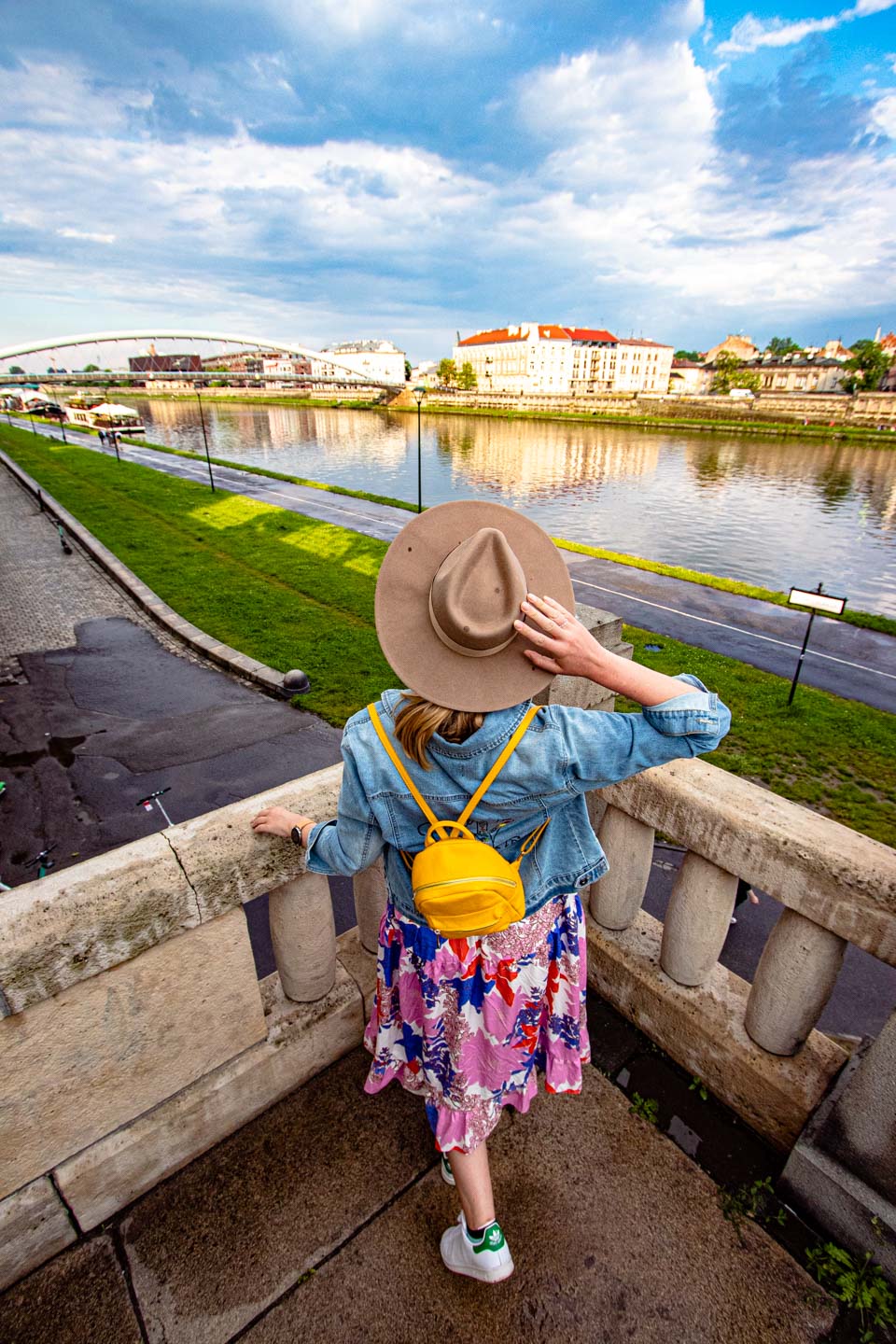
One street leads to another discovery, one square opens onto a different century. This isn’t a place you check off a list. It’s a city that asks you to slow down and pay attention.
What struck me most was how Krakow holds both weight and lightness.
You can spend the morning confronting difficult history at Schindler’s Factory, then find yourself in the evening watching the sunset from an ancient mound, feeling unexpectedly hopeful about what cities can preserve and pass forward.
Whether you follow this itinerary closely or allow yourself to wander off route, Krakow rewards the effort. The pierogi will be better than expected.
The architecture will surprise you. And you’ll likely find yourself planning a return visit before you’ve even left.
Ready to explore more of Poland and Central Europe?
- Wroclaw One-Day Guide – Poland’s most underrated city
- Gdansk Complete Walking Tour – Stunning Baltic architecture
- Berlin’s 20 Best Experiences – Another layered European capital
- Europe Car Rental Guide – Essential for exploring beyond cities
Which Polish city are you planning to visit next?
If this guide helped you plan your Krakow day, share it with someone else planning their Polish adventure.
Pin it for later
This article contains affiliate links. If you make a booking through these links, I may earn a commission, supporting this blog. Rest assured, my recommendations are based on honest assessments, and using these links doesn't affect prices for you. Thank you for your support!