
When people ask me about Mexico City, they usually expect a list.
“30 must-see places.” “The perfect 3-day route.” “How to fit everything into one weekend.”
But after four days in this city, I learned something more important: Mexico City slow travel isn’t about checking off attractions. It’s about letting the city reveal itself at its own pace.
And that’s exactly why I know I’ll be back: four days were enough to fall in love with Coyoacán and Condesa, but definitely not enough to really know them.
This article won’t tell you how many places you should see each day. It’s not a list of attractions or a point-to-point plan.
It’s a story about finding your rhythm in the chaos of one of the largest cities in the world.
About walks without a map, coffee among locals, and churros eaten on the street. About moments that don’t make it into guidebooks but stay with you long after.
This isn’t the only Mexico article on my blog – I’ve gathered other places and routes in one place here → Mexico – Runaway Ann’s Guide.
Mexico City – Slow Travel Itinerary (In Brief)
Day 1: Arrival, Coyoacán, street food, and first churros
Day 2: Coyoacán without rush – walks, cafes, evening dinner
Day 3: Casa Azul, local coffee, street food
Day 4: Condesa – parks, cafes, relaxed dinner
This is a reference point, not a checklist.
Who This Travel Style Is For (And Who It’s Not)
This post is for you if:
- You prefer exploring two neighborhoods well over ten superficially
- You like discovering cafes and local food, not just places “from the list”
- You want to feel a city, not just see it
- You give yourself space for spontaneity and changing plans
- You have at least 4-5 days and don’t need to rush
This post is NOT for you if:
- You want to see all the major attractions in one trip
- You need a detailed plan day by day, hour by hour
- You only have 2 days and a tight schedule
- You’re looking for intense attractions and adrenaline
This trip was quiet. Based on walks, food, conversations, and observing the city. And that’s exactly how it was meant to be.
Day 1: Arrival and First Churros
We arrived in Mexico City in the evening. Tired from the flight, but excited about what lay ahead.
Casa Tuna, a boutique hotel in Coyoacán, turned out to be one of the best choices of this trip.
Casa Tuna – A Hotel Like a Gateway to Another World
The entrance to Casa Tuna looked like stepping into another world.
Though you could hear the city beyond the walls – cars, conversations, daily life – inside there was a calm I didn’t expect in the center of one of the largest cities in the world.
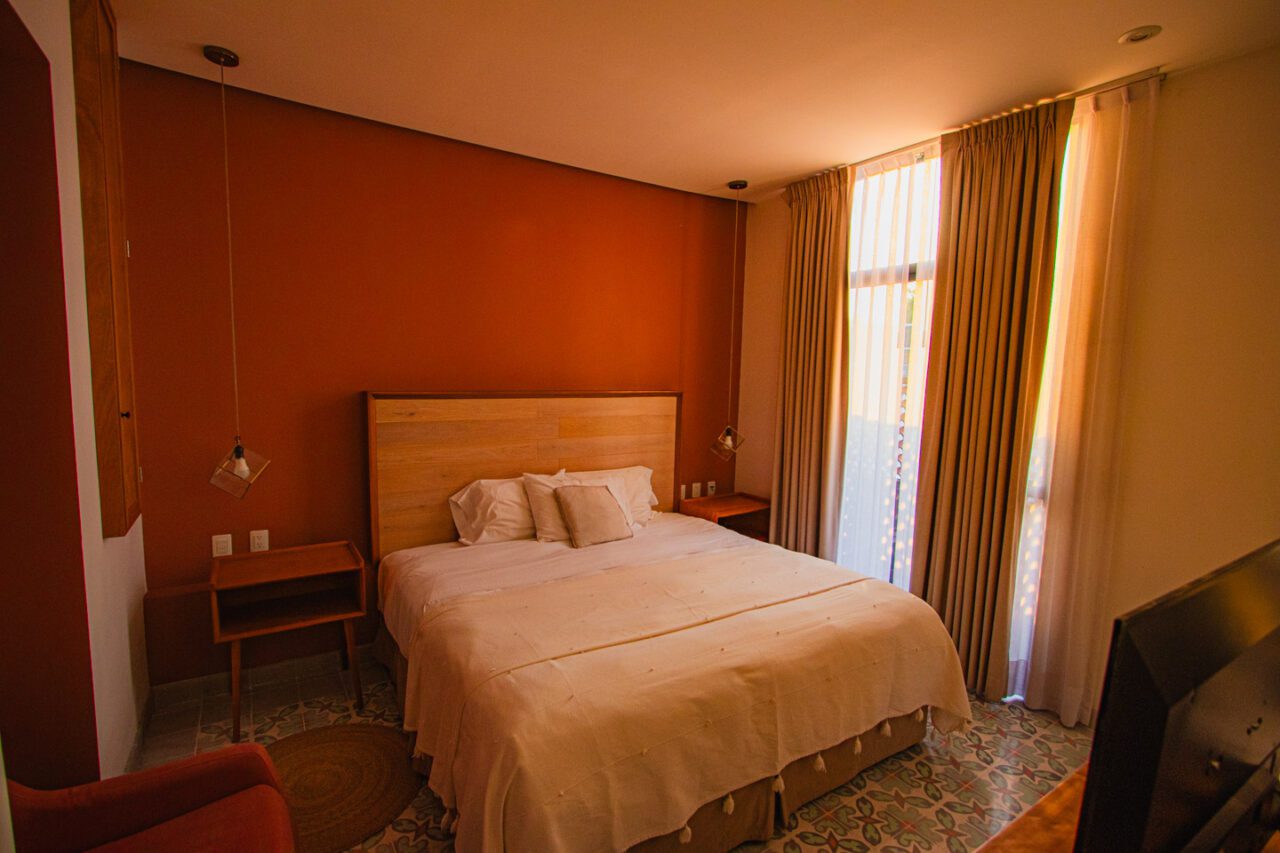
Our upstairs apartment had everything we needed. Light streamed through the shutters and drew bright stripes on the walls, and the balcony overlooked the city’s rooftops.
It was spacious, clean, and very comfortable. A kitchenette with basic equipment, a comfortable sofa, a reading chair, and a large king-size bed.
Walls painted a warm pink color that caught the last rays at sunset and became even softer and more magical.
The Terrace That Stops Time
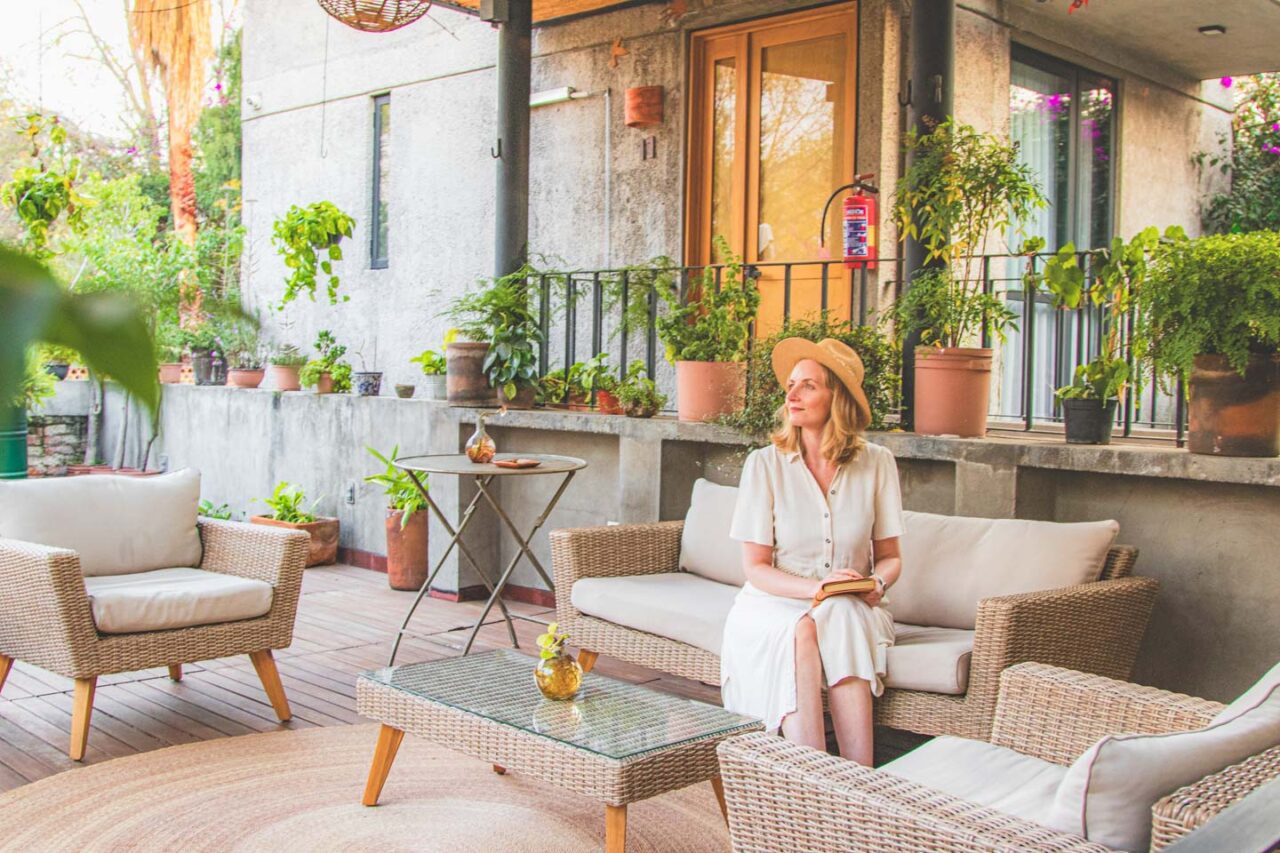
But what really captivated me about Casa Tuna was the shared terrace in front of our apartment.
Flower pots were literally everywhere: begonias, succulents, blooming geraniums. Boho chairs with soft pillows, rattan lamps, warm light.
From the terrace, you could see the yellow domes of the Parish of St. John the Baptist – especially beautiful at sunset.
In the evenings, I’d sit there with coffee or a glass of wine, watching the lit-up basilica and the city slowly falling asleep around it.
These were the moments you can’t plan. The ones that make a hotel stop being just a place to sleep.
And in the morning – a charming courtyard on the ground floor where breakfast is served. Plants, tables in the shade, and the smell of fresh coffee floating in the air. The perfect start to a peaceful day.
Price: About 2,600 pesos per night (around $130 USD). And honestly? Worth every peso. This wasn’t just accommodation. It was an experience.
If you’re looking for peaceful, atmospheric accommodation in Coyoacán, find Casa Tuna here.
La Casa de los Tacos – Dinner Like It’s 1970
After unpacking, we went out into the city, led by hunger and curiosity.
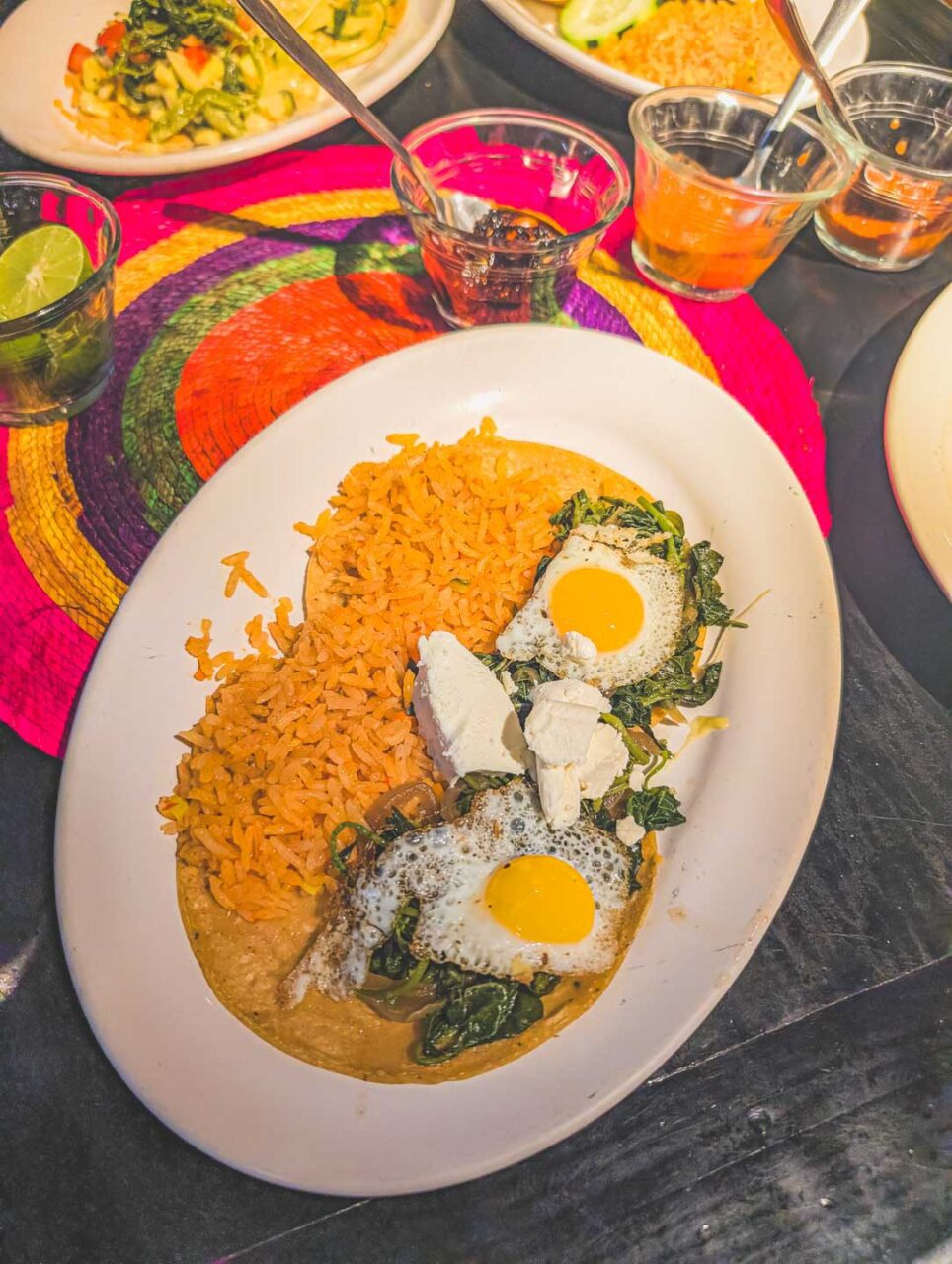
La Casa de los Tacos, a place operating continuously since 1970, greeted us with the smell of fresh tortillas and salsa so intense you could smell it from the entrance.
We ordered vegetarian tacos. All were very good. Mushrooms with cheese and chives – earthy, full of flavor. Peppers with corn – sweet and crunchy.
But the best turned out to be ancho chile with beans, cheese, and caramelized onion. Spicy and sweet at the same time. A perfect combination that once again showed me that Mexican cuisine is much more than beef tacos.
We sat by the window and ate slowly, watching the street. People coming home from work, a couple passing with their dog, and a street vendor setting up his stall with bags.
El Moro Churreria – Churros on the Street in Mexico City
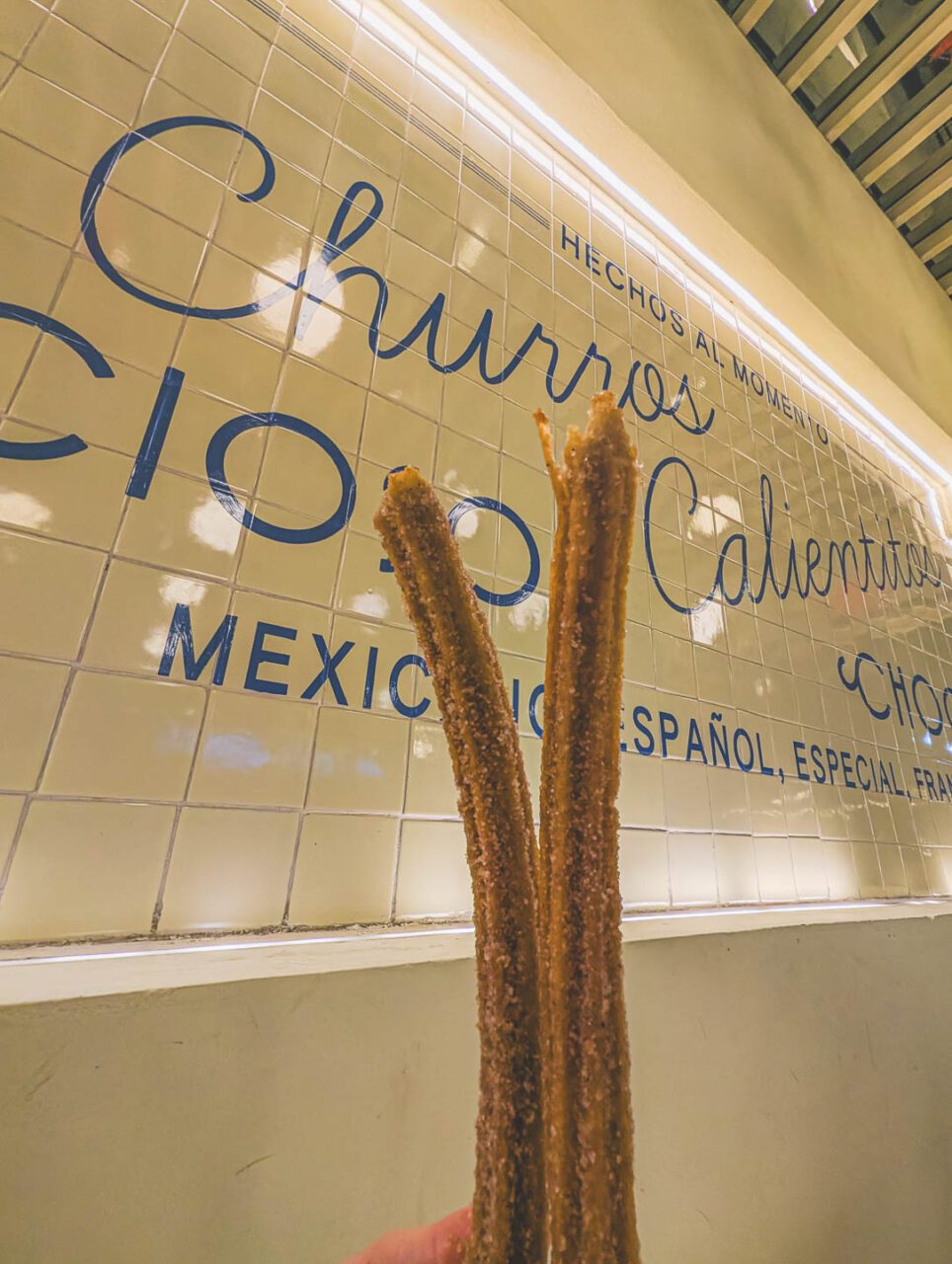
After dinner came time for churros. El Moro Churrería is a large, modern place with a long tradition. Spacious interior, high ceilings, lots of people.
For 60 pesos I got four churros dusted with sugar and cinnamon. Plus cajeta – caramelized goat’s milk – for an additional 30 pesos.
And that’s when, as I was eating these warm, crispy churros, a singer appeared in front of the place. He stood on the sidewalk and started singing karaoke.
No microphone. Loudly. With all his heart. Old Mexican ballads that everyone around knew perfectly.
No one, except us, was surprised. People walked by, smiled, sometimes hummed along with him.
That was the moment I understood: this is Mexico City. Normalcy and magic in one.
Walking back to the hotel, I felt tired but happy. The first evening showed me that Mexico City isn’t just attractions to check off.
It’s a city to experience. With all its sounds, tastes, and surprises.
Day 2: Coyoacán – When a Neighborhood Becomes a Discovery
Lazy morning at the hotel. No alarm, no rush.
Light streamed through the shutters, the church dome gleamed in the sunshine, birds sang on the terrace.
Café Fortunata – Breakfast on the Terrace
Around 10:00 AM we went for breakfast at Café Fortunata – a small cafe we’d discovered by chance the day before during an evening walk.
Tables stood on a terrace full of plants. Ferns hung from pots, monstera grew in large ceramic vases. It was cramped but very atmospheric.
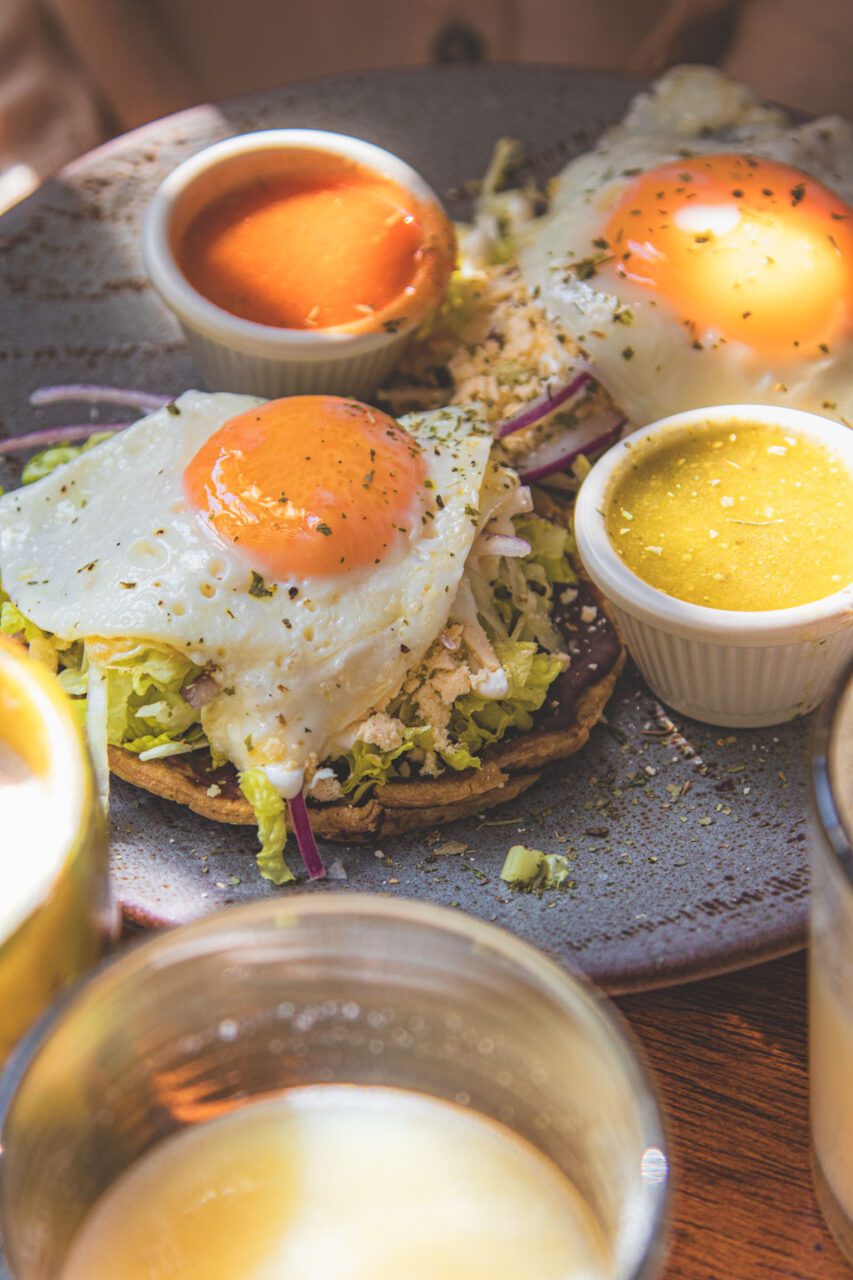
I ordered sopes – crispy, thick corn cakes with cheese, lettuce, fried egg, and beans.
Plus two salsas: salsa aguacate (green, tangy, slightly spicy, perfect for eggs) and salsa roja (red, more pronounced, great for beans). The cappuccino came warm, with soft milk foam.
Everything arrived on beautiful plates. You could immediately see that someone here cares about details.
The waiter also brought me guava juice – thick and refreshing, in a surprisingly green color. I’d never drunk anything like it before.
I sat there for almost an hour. Eating slowly, sipping coffee in small gulps, and just observing.
At the next table, two friends were having lunch and burst into laughter every few moments. The waiter chatted in Spanish with regular customers.
My advice: Don’t look for the “best” cafe on Google Maps. Find one that looks good, has local guests, and where you feel good energy. It almost always works better than reviews.
The bill: Two breakfasts – 210 pesos, coffee – 76 pesos, juice – 40 pesos.
Walk Through Coyoacán – Colorful Buildings and the Smell of Eucalyptus
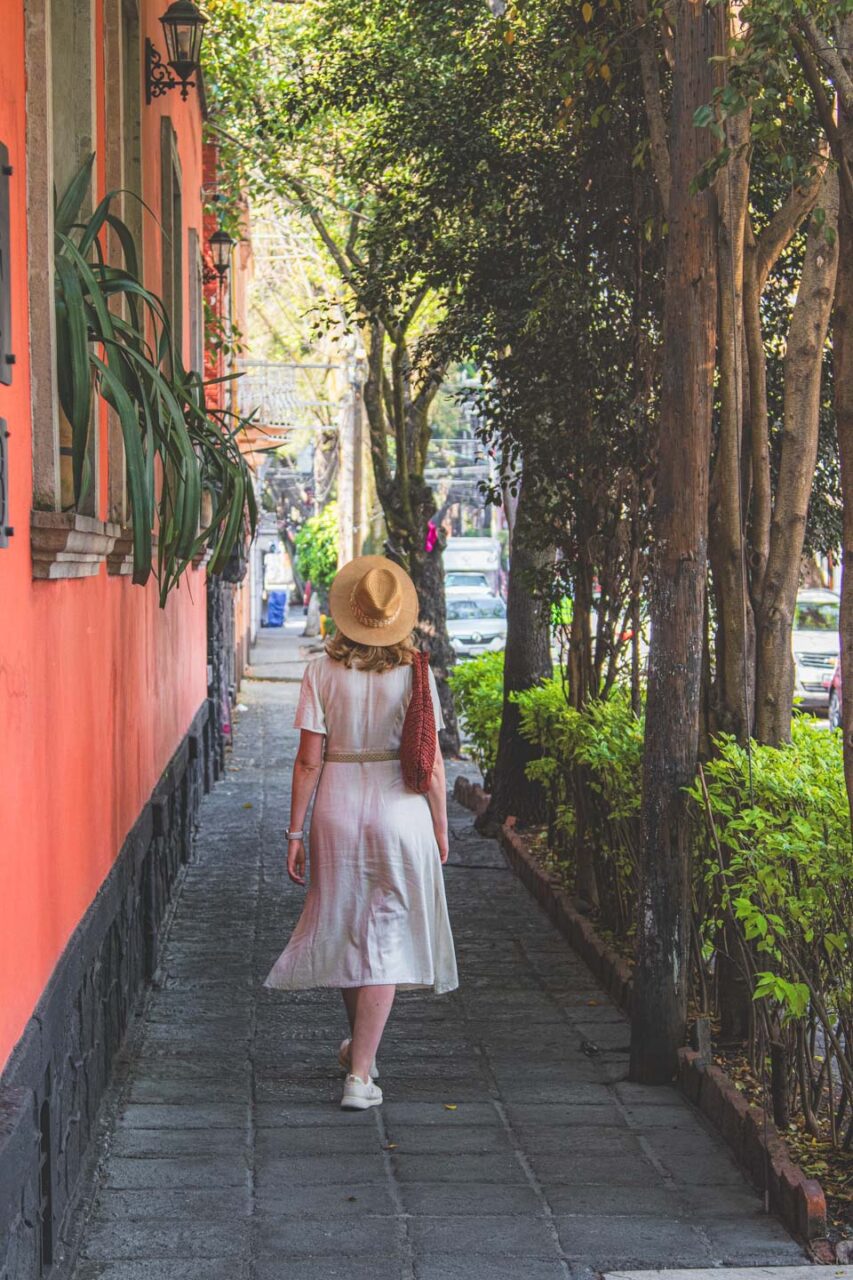
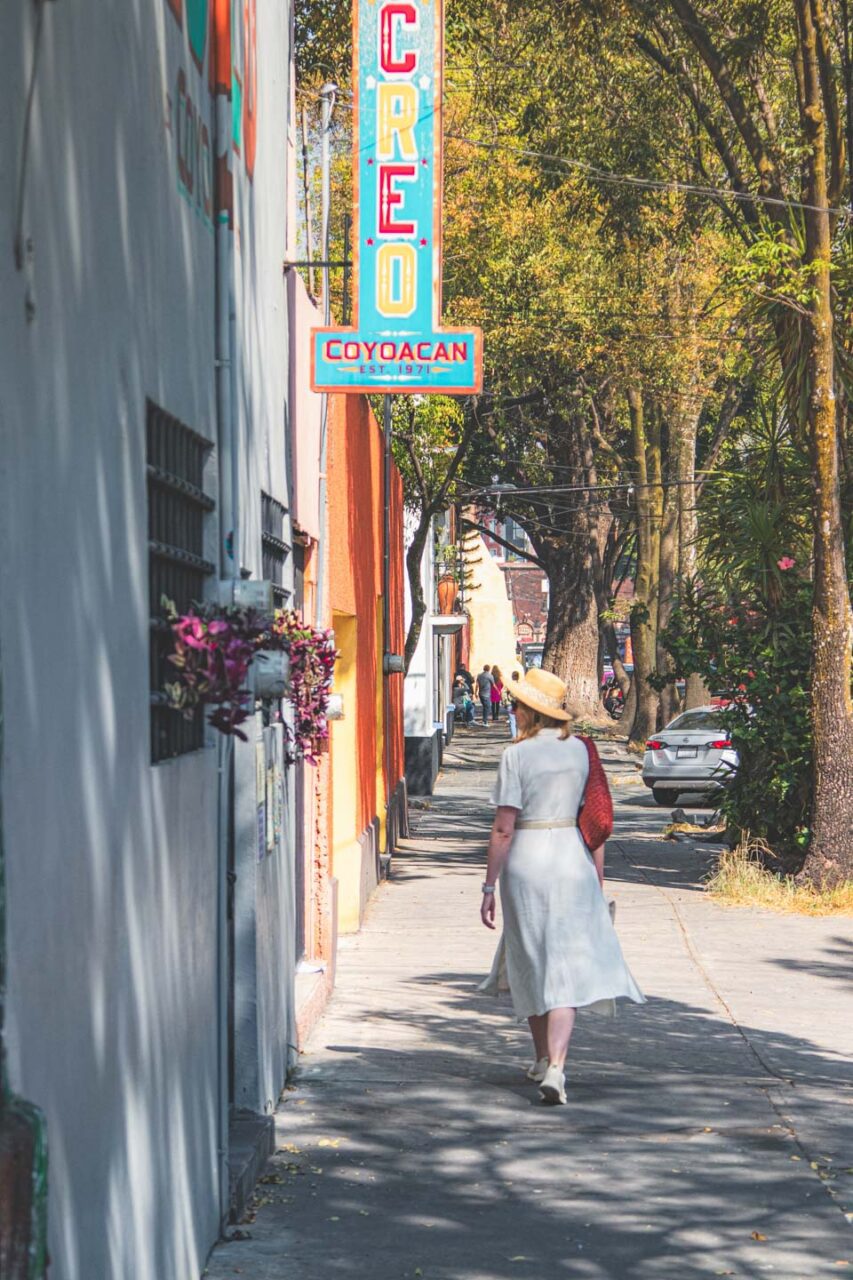
After breakfast, we went for a walk without a destination. No map, no plan. This is what I love most about traveling: letting the city show itself, instead of chasing a list of attractions.
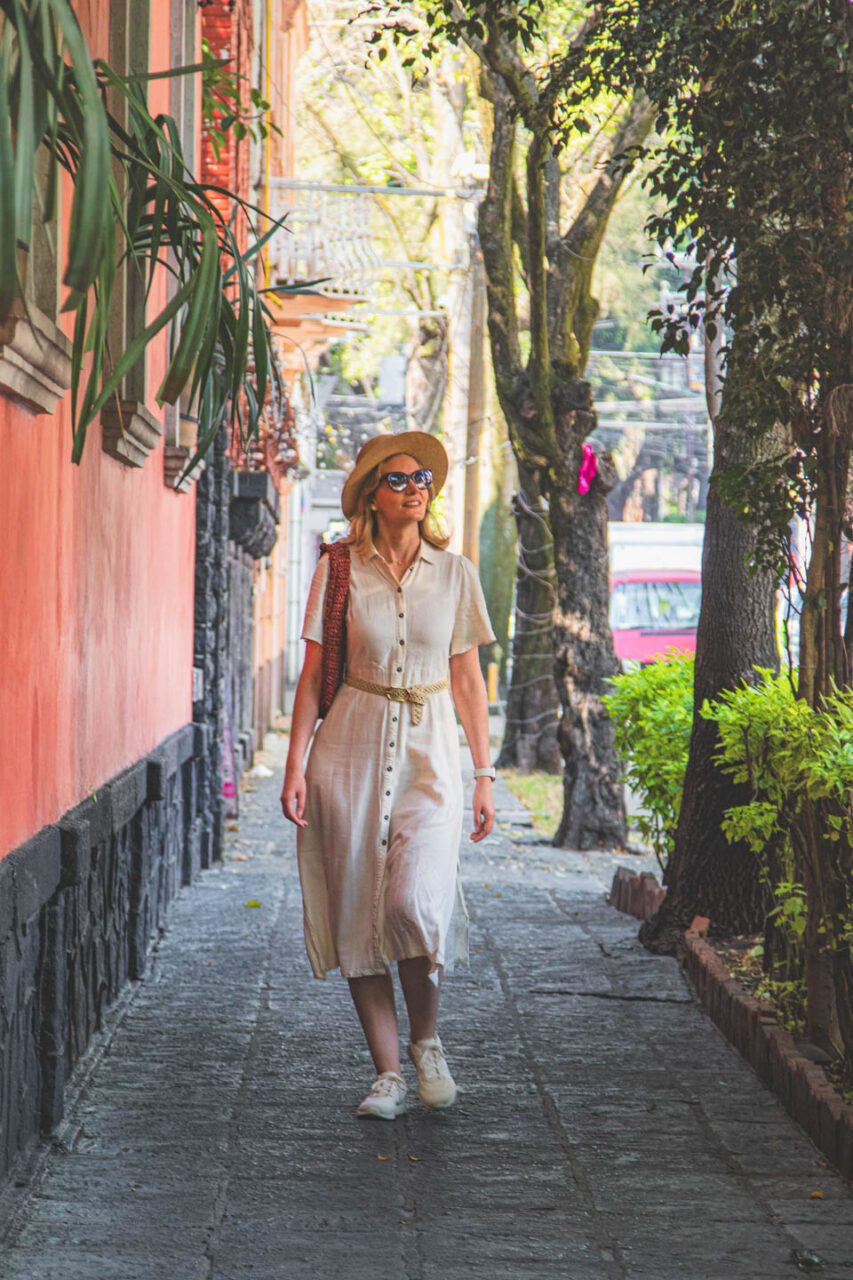
Colorful buildings – yellow, blue, pink, orange – each different, each beautiful. Well-maintained parks with benches under trees where elderly ladies fed pigeons.
Streets full of people with bags full of shopping. Shoe shiners on every corner. And agaves everywhere, growing like natural city decoration.
The smell of eucalyptus hung in the air – fresh, clean, soothing. Something completely unexpected in a nine-million-person city.
And yet Coyoacán doesn’t feel like a metropolis. It’s more like a small town that accidentally found itself in the very heart of a giant.
The Moment You Stop Being a Tourist
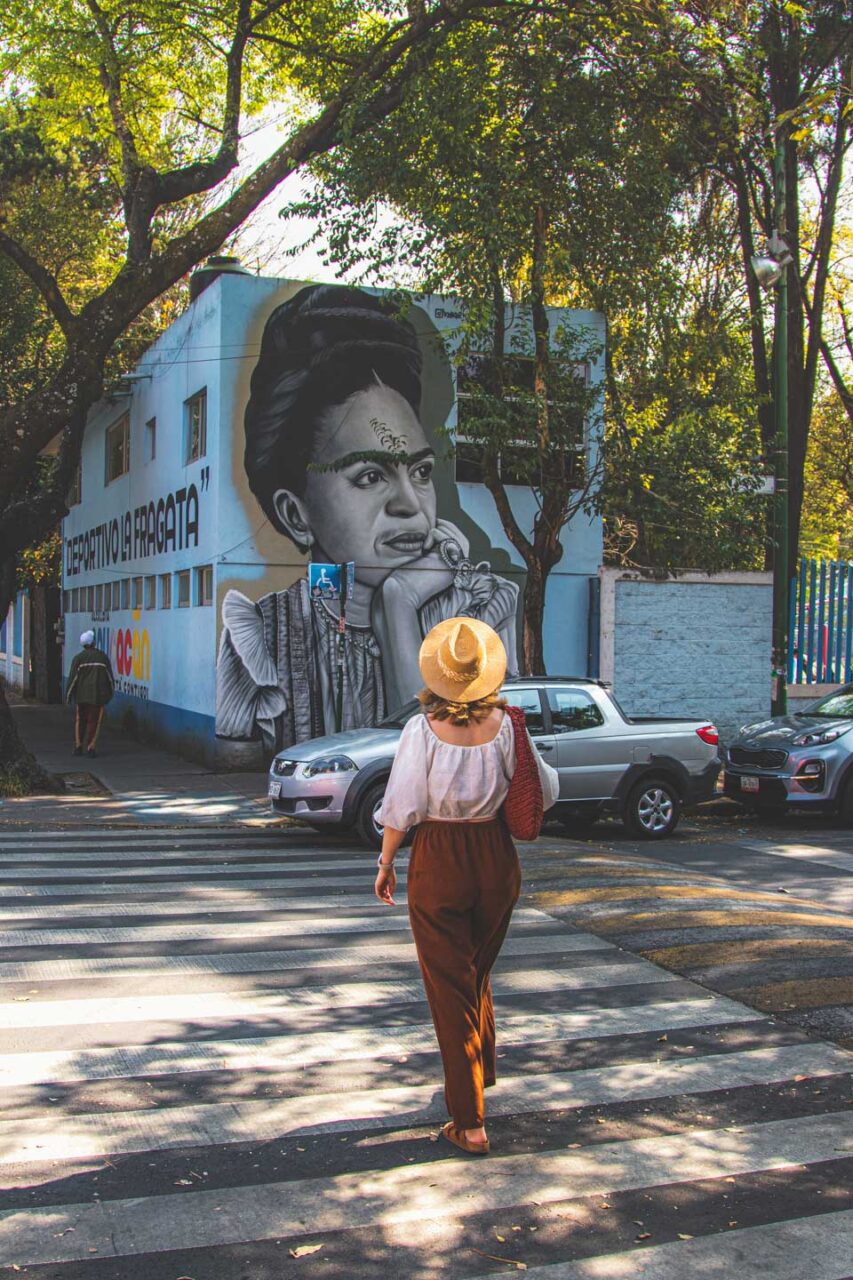
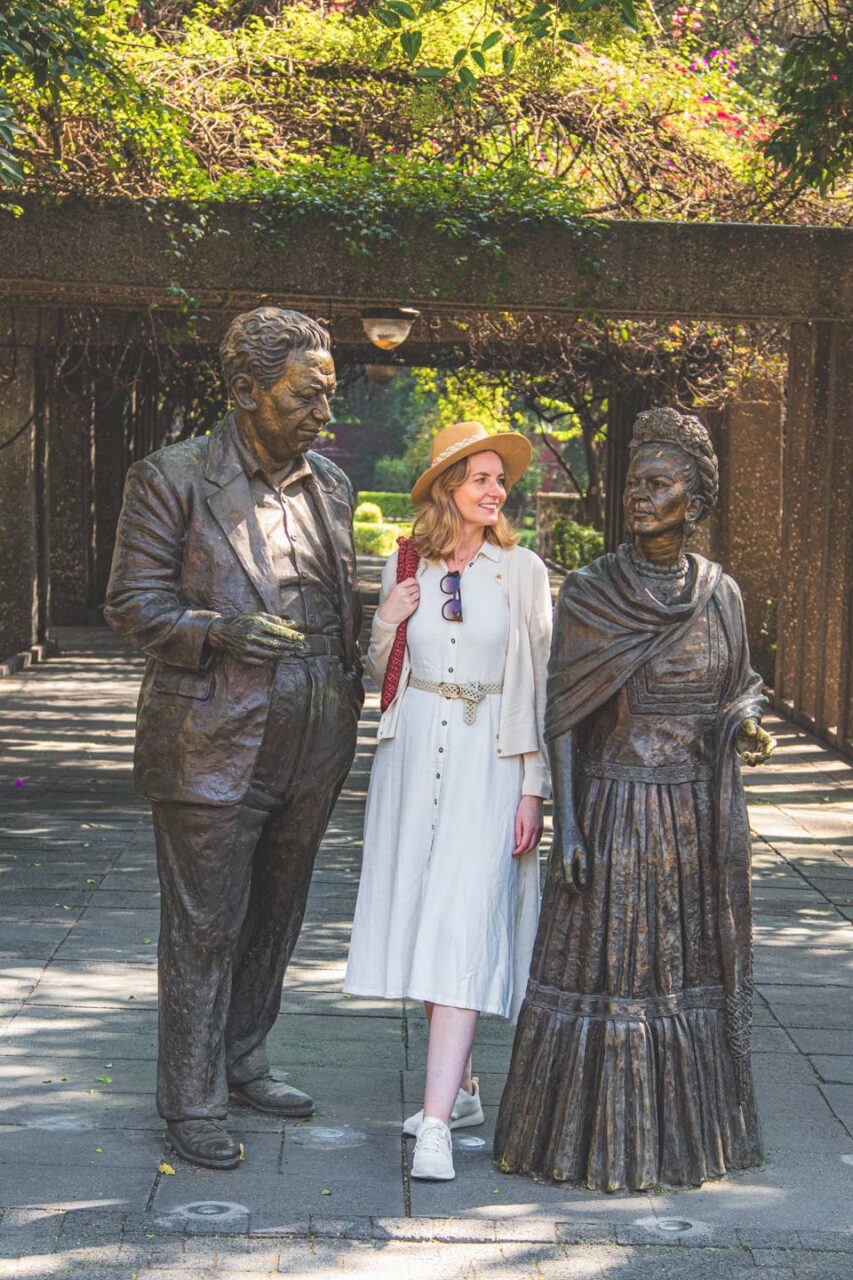
We stopped at Parque Frida Kahlo. Monuments of Frida and Diego Rivera stand there side by side – turned toward each other, yet with perceptible distance.
Then Jardín Centenario. Benches freshly painted green. The fountain with a coyote was under renovation, but it didn’t matter much. We sat in the shade of tall trees.
Just sitting. Just observing. Just being.
These are moments you can’t plan. They don’t look impressive in photos. But it’s precisely these moments that make you stop being a tourist and just start to be.
Mercado de Coyoacán – Too Much of Everything
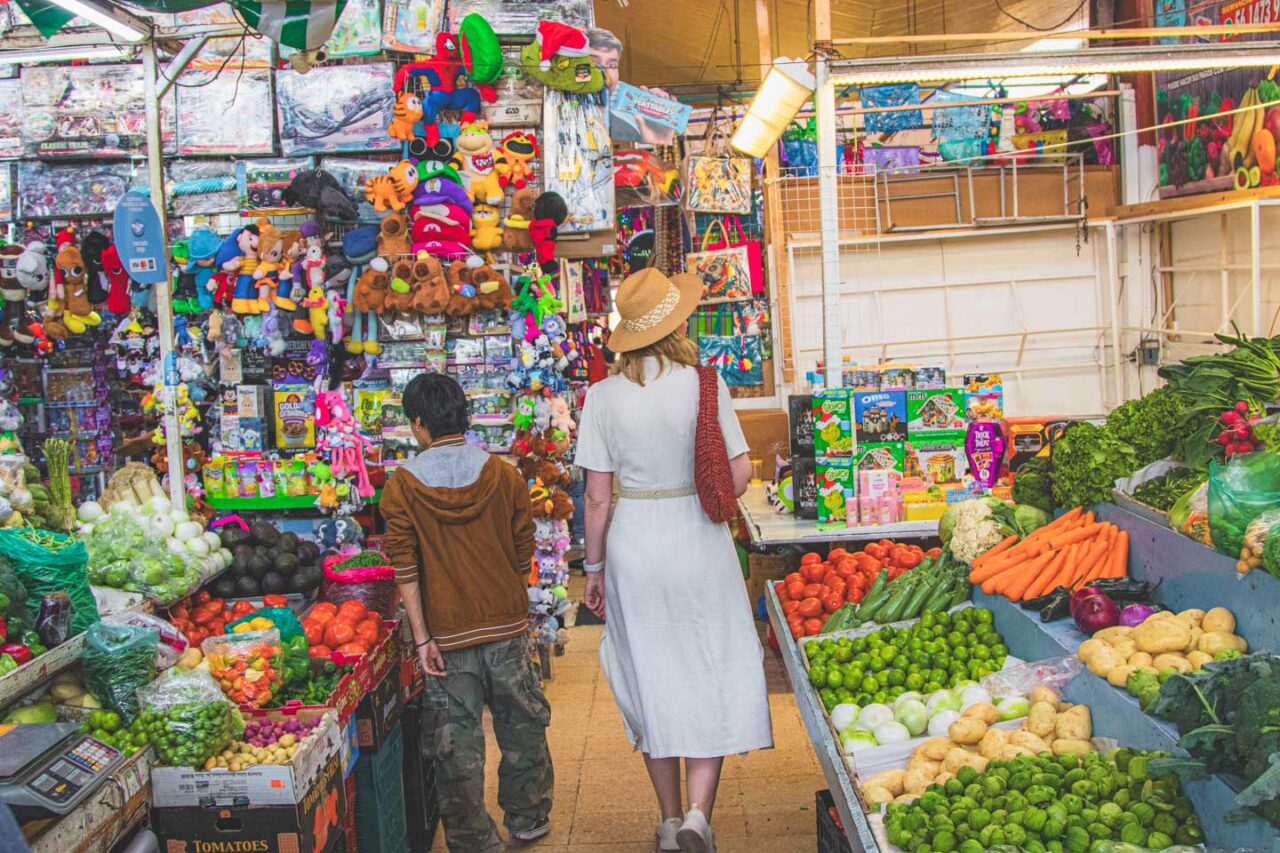
Around noon we ended up at Mercado de Coyoacán – and this was the weakest part of the day.
A labyrinth of stalls with food and souvenirs. Lots of tourists, some locals. The smells of food mixed with incense smoke and perfumes sold at the stall next door.
Inside, a well-known place called “Original” operates with traditional cuisine, mainly meat-based. Tostadas here cost about 45 pesos.
For me, it was claustrophobic. Crowds, noise, gentle solicitation from vendors. Too many stimuli at once.
Honestly? This wasn’t my kind of place. Too touristy, too loud, too commercial. But also part of the Coyoacán experience. Sometimes you need to see what doesn’t fit to appreciate even more what does.
We left after fifteen minutes.
Mondo Panaderia – A Real Discovery
And then we discovered a real gem – Mondo Panaderia Rustica. A small bakery smelling of fresh bread.
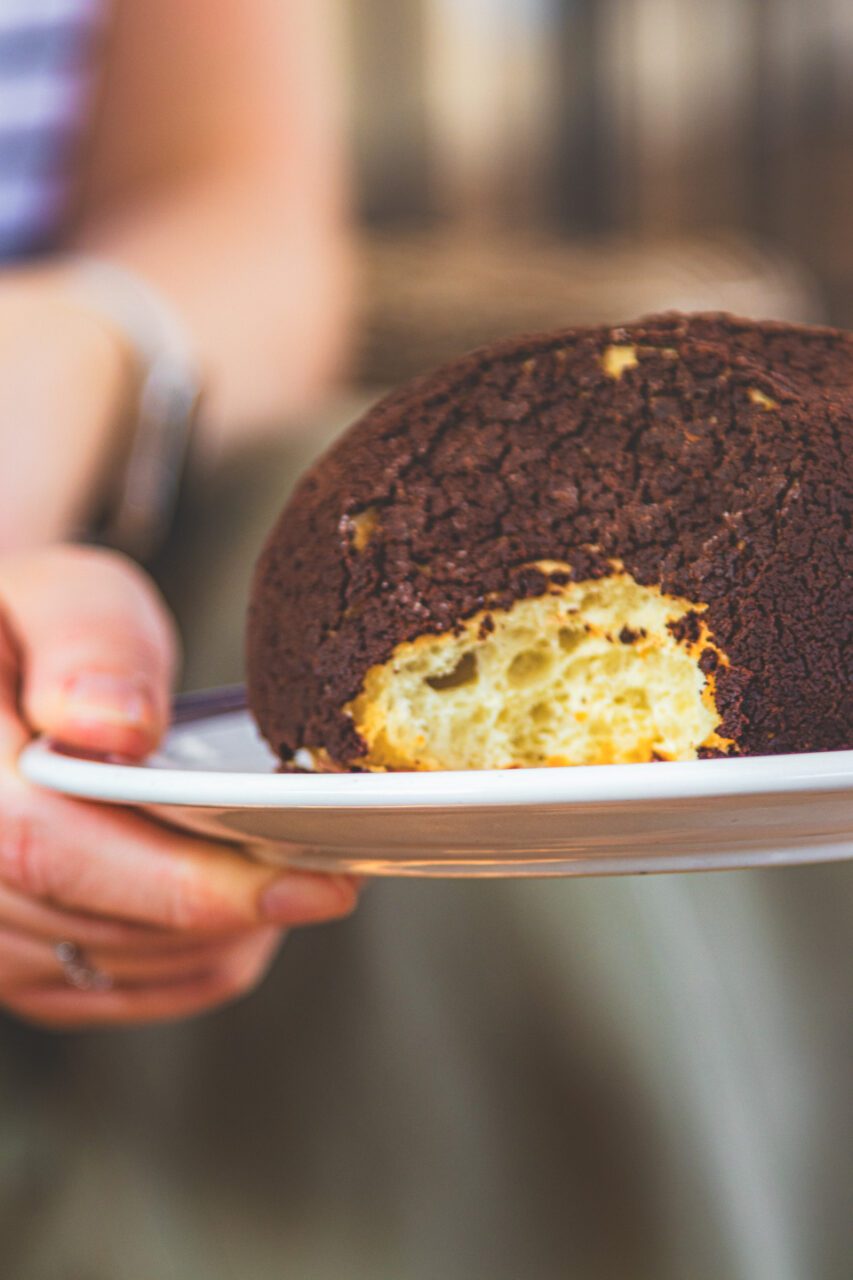
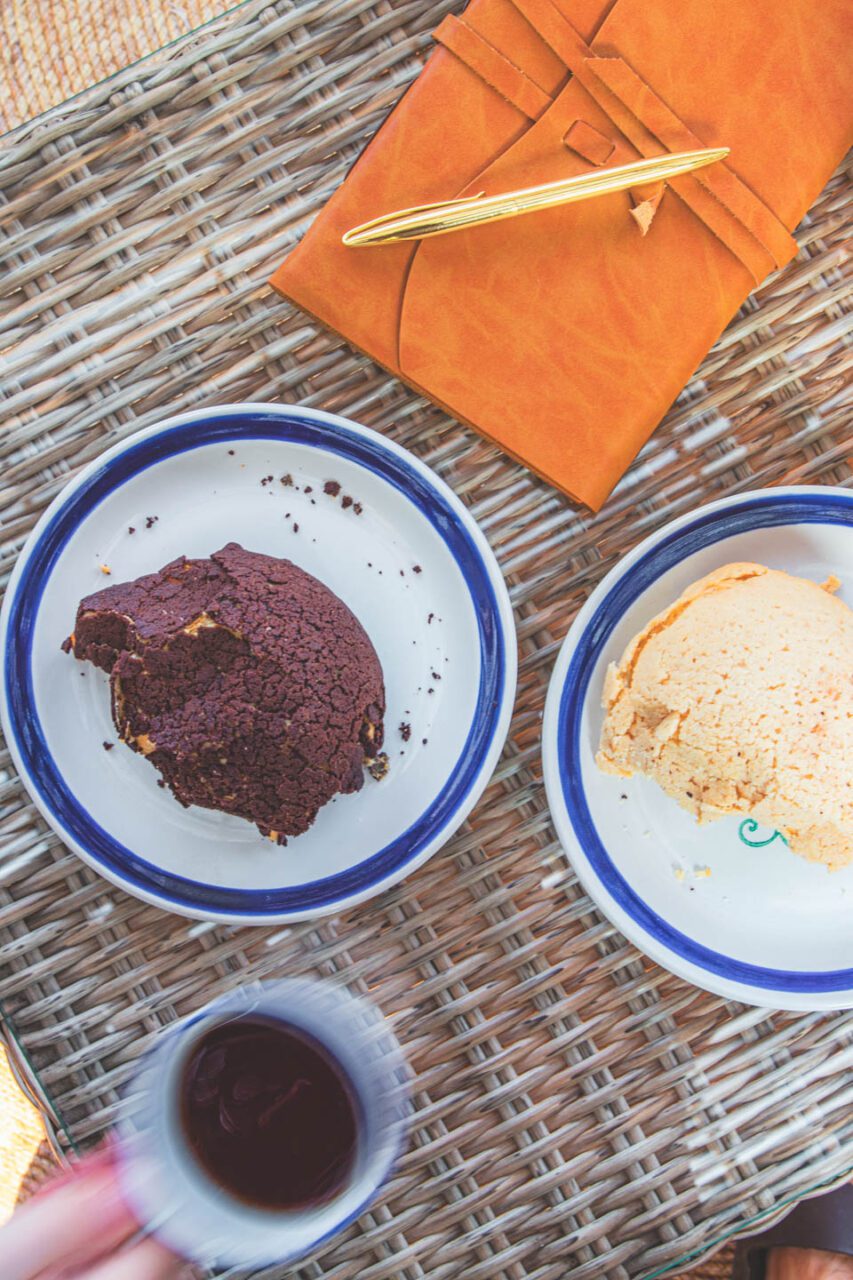
Conchas – traditional Mexican pastries – vanilla and chocolate, stacked one on top of another. Tall, soft, with a crunchy shell-like layer on top. 28 pesos each.
We bought four – two vanilla and two chocolate. We ate one right away, standing on the street, while sugar sprinkles fell on our clothes.
We took the rest to the hotel and ate them in the evening on the terrace, watching the pink sky at sunset and the church dome lit by the last rays.
These small moments – a pastry from a local bakery, a terrace full of flowers, silence after a day full of impressions – that’s luxury you can’t buy with any amount of money.
Sentimentos de Coyoacán – Installation Full of Love
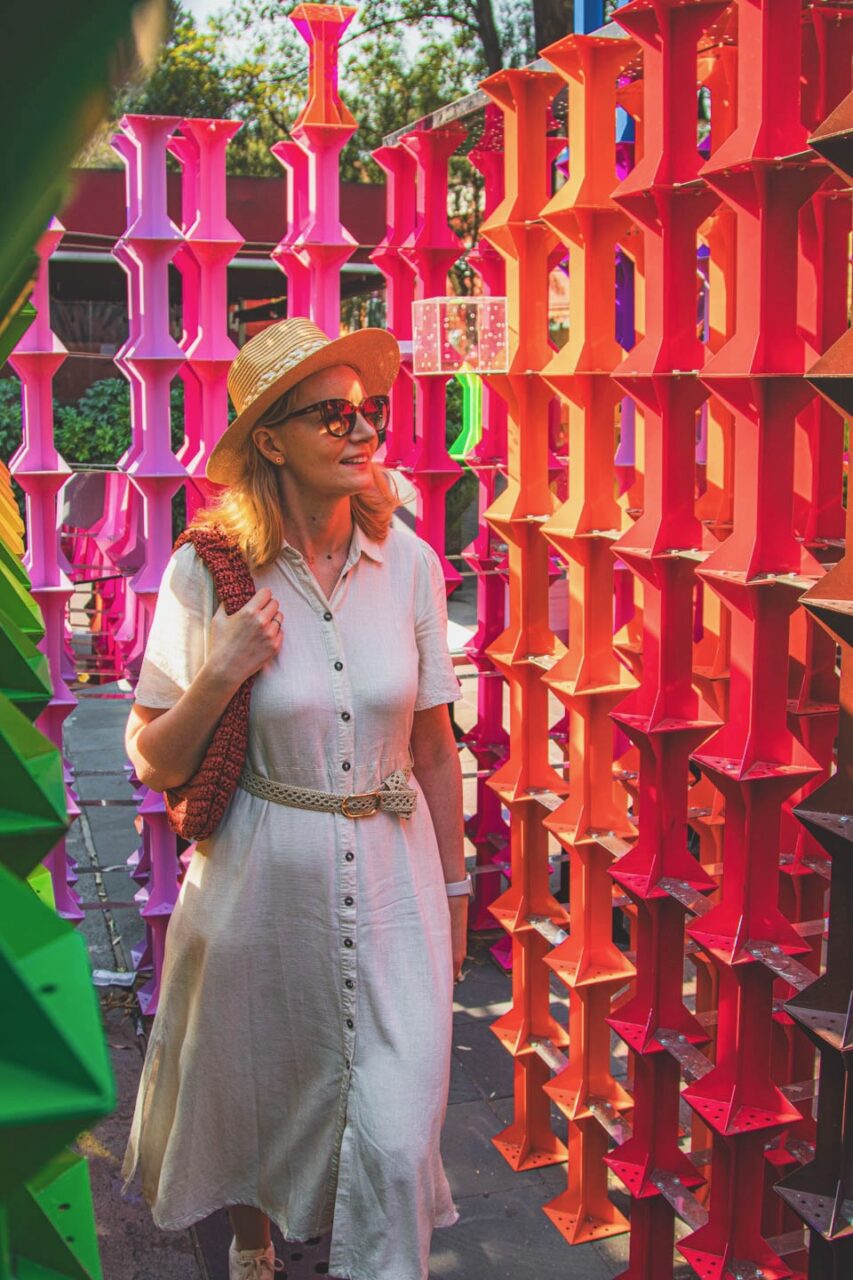
In front of the Church of St. John the Baptist, we came across a temporary art installation “Sentimentos de Coyoacán.”
A colorful labyrinth of vertical strips hanging between posts, creating a semi-transparent structure you could walk through.
People pinned cards to it answering the question: what do I love about this neighborhood?
I read a few. Most in Spanish, but the emotions were universal:
“Por el sol de la mañana” (For the morning sun)
“Por los árboles viejos” (For the old trees)
“Por el café de Avellaneda” (For the coffee from Avellaneda)
“Aquí me enamoré” (I fell in love here)
Everyone loved this place for similar things as me: peace, beauty, authenticity. And yet everyone loved it differently, for their own private reasons.
Parish of St. John the Baptist – Frescoes on the Ceiling
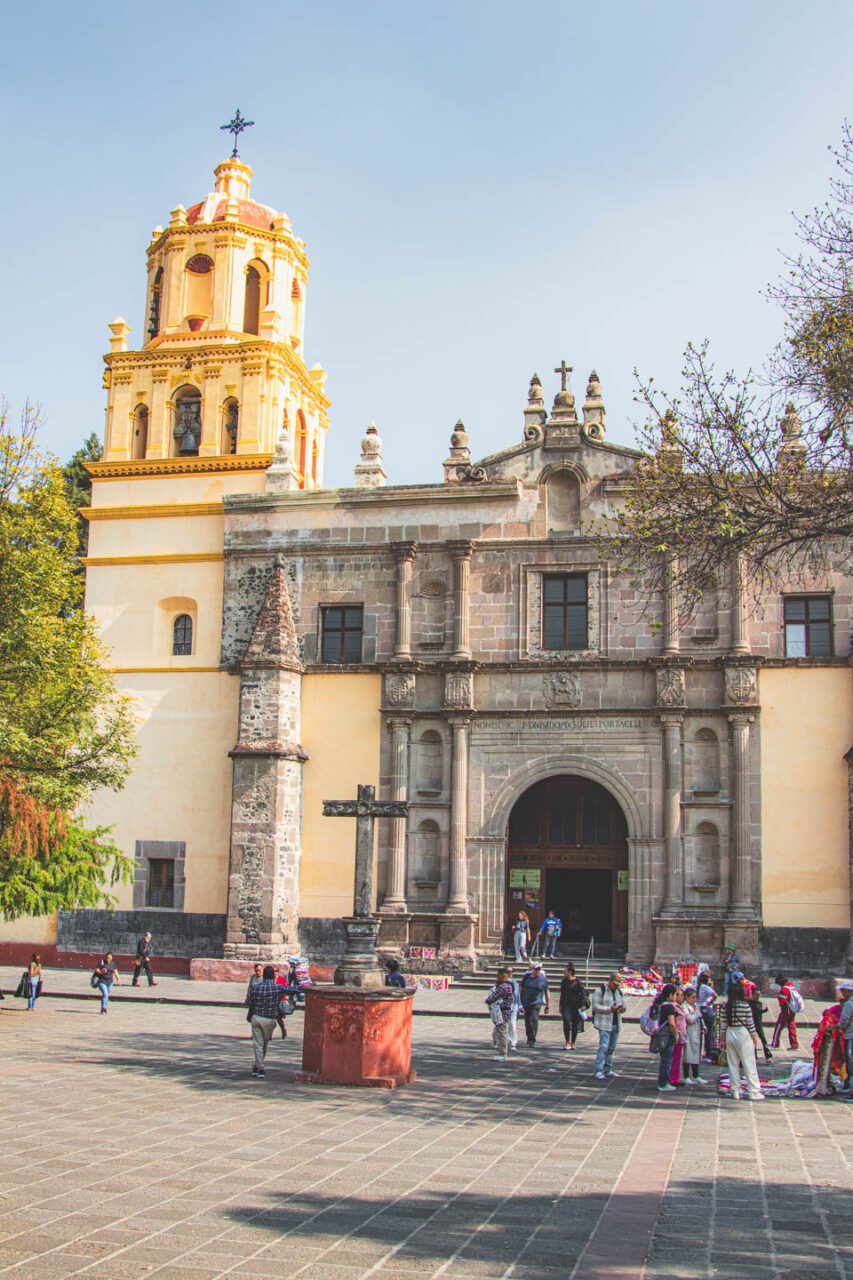
We entered the Church of St. John the Baptist. Inside, the frescoes on the ceiling immediately caught attention, depicting scenes from Jesus’s life.
Bright colors on a white background gave the interior lightness and peace. Outside, yellow domes gleamed in the sun.
Someone asked us not to take photos. We respected the request and simply allowed ourselves to be in this space for a moment.
In front of the church, city life began again – vendors set up stalls, a barrel organ played old melodies, someone offered us leather belts.
Los Danzantes – Romantic Dinner for Foodies
In the evening, we went for dinner at Los Danzantes and it was a real feast.
For an appetizer, we ordered hoja santa, a leaf of the same name stuffed with cheese and served with spicy salsa – intense, cheesy, slightly tangy.
Plus betabeles crujientes: beets in crispy breading with almonds, served on delicate goat cheese cream.
For main courses came tacos de coliflor, grilled cauliflower with spices in a tortilla with guacamole, and tlayuda with oyster mushrooms on a large, crispy tortilla with Oaxaca cheese and salsa verde.
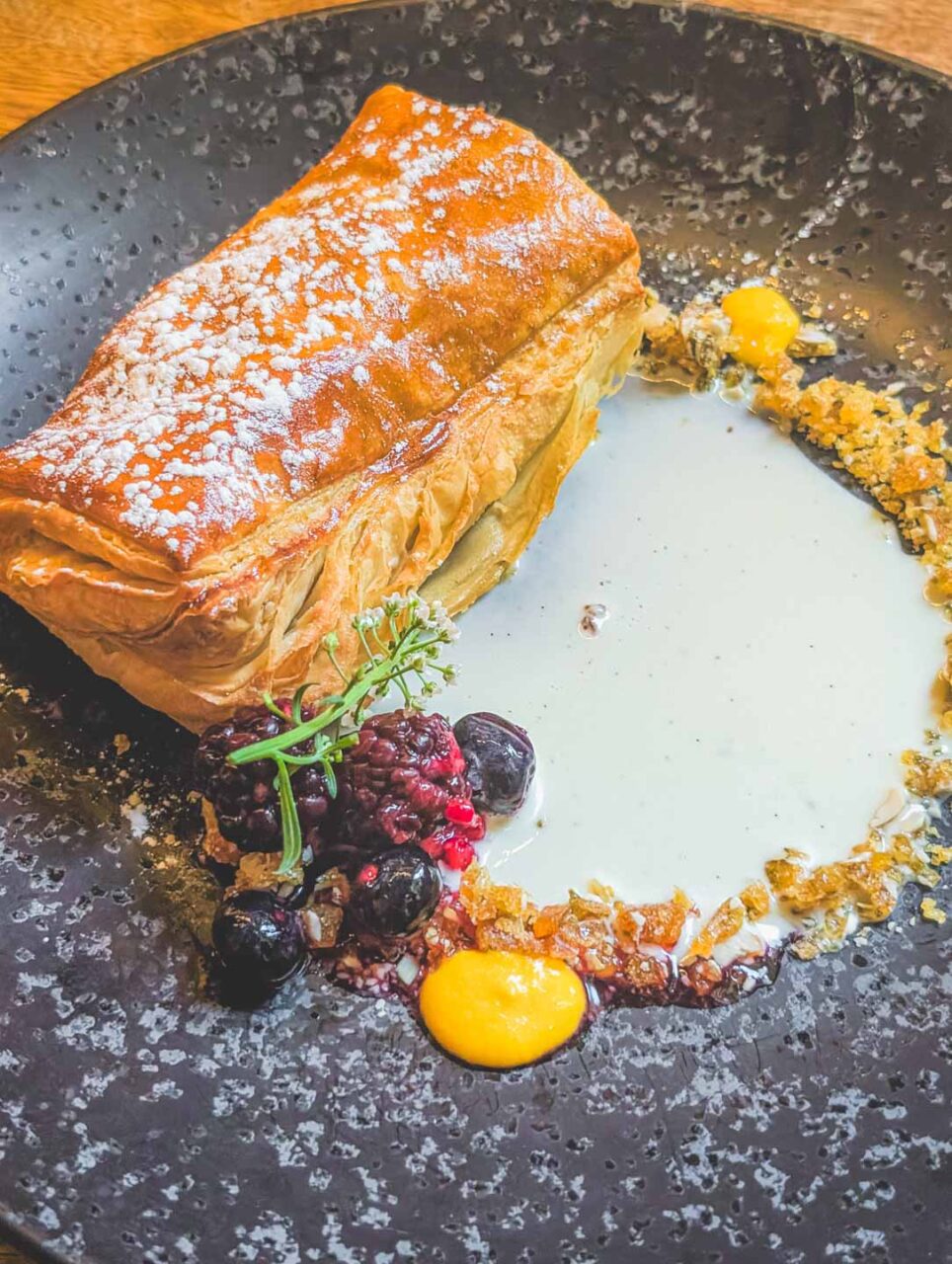
For dessert, we ordered semifrio de maíz – corn semifreddo with caramelized popcorn – and empanada with quince and soft cheese, flaky and perfectly balanced.
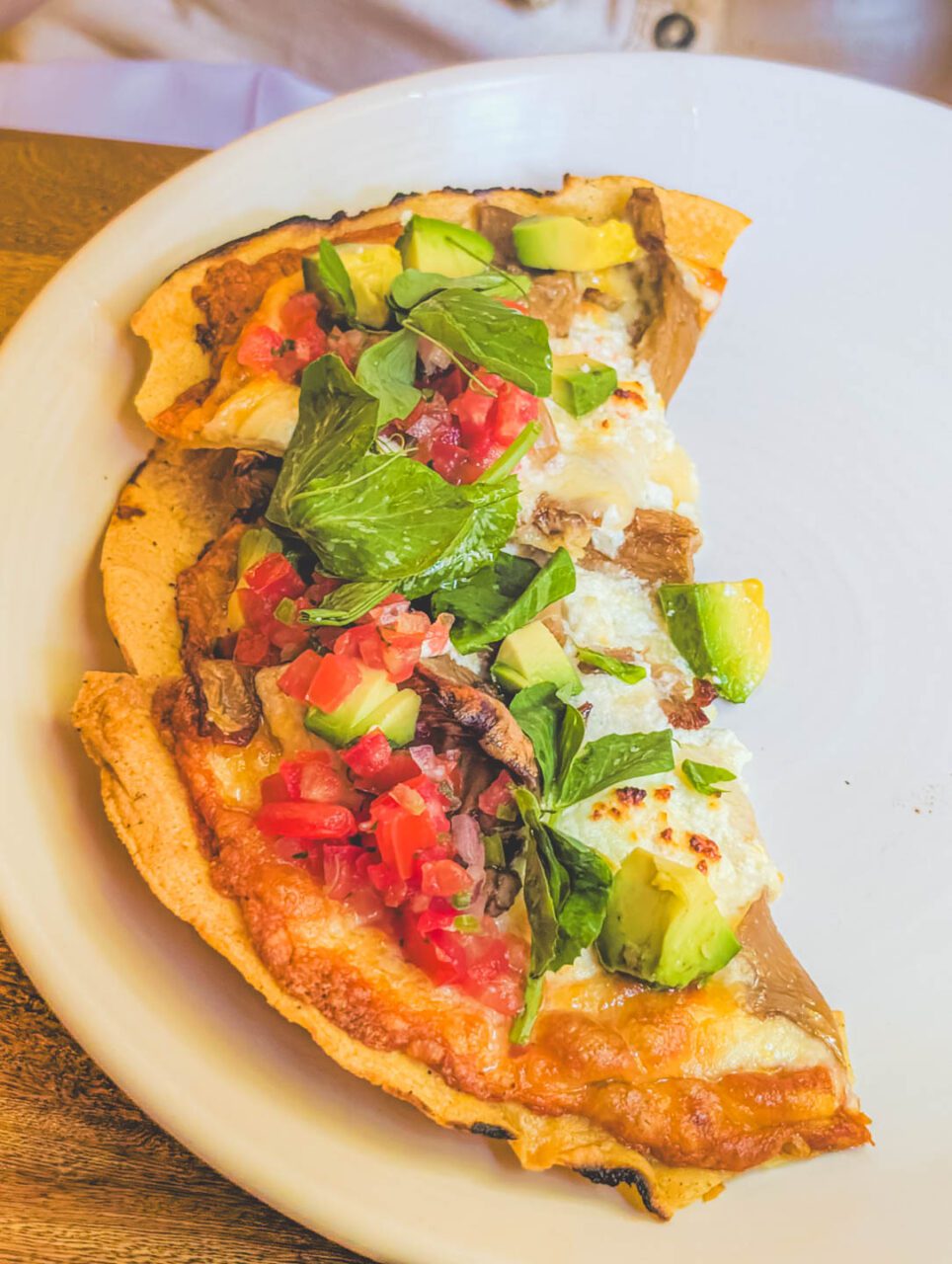
Every dish was a small work of art. Beautifully presented, thoughtful, full of flavor. Very nice service – unobtrusive but always present when needed.
We sat at a table by the window overlooking the plaza. Outside, a singer performed together with her little son, and around them vendors spread blankets on the ground with their goods.
Plus drinks: mezcal with prickly pear and rose. Smoky, sweet, floral. I’d never drunk anything like it before.
Prices: About 200-300 pesos per dish, total about 2,000 pesos (around $100 USD). Perfect place for a special occasion. It’s not cheap, but an experience worth every peso.
After this day, I knew one thing: Mexico City knows how to positively surprise.
Day 3: Frida Museum and the Taste of Huitlacoche
Early wake-up, this time planned. I wanted to be at Frida Museum at 10:15 AM, but before the visit, we still went out for a short walk to a local bakery.
Lesaroz de Coyoacán – Morning Pastries
Lesaroz de Coyoacán is a small bakery where locals buy fresh bread for breakfast.
We got conchas and orejos. Four pastries in total cost 55 pesos. They were fresh, still warm, perfect for morning coffee drunk later on the hotel terrace.
Conchas – soft, sweet, with a crunchy shell-like layer on top. Orejos – French pastries shaped like ears (hence the name), flaky, buttery, with sugar. Simple, traditional, and very good.
Frida Kahlo Museum – Casa Azul in the Morning Sun
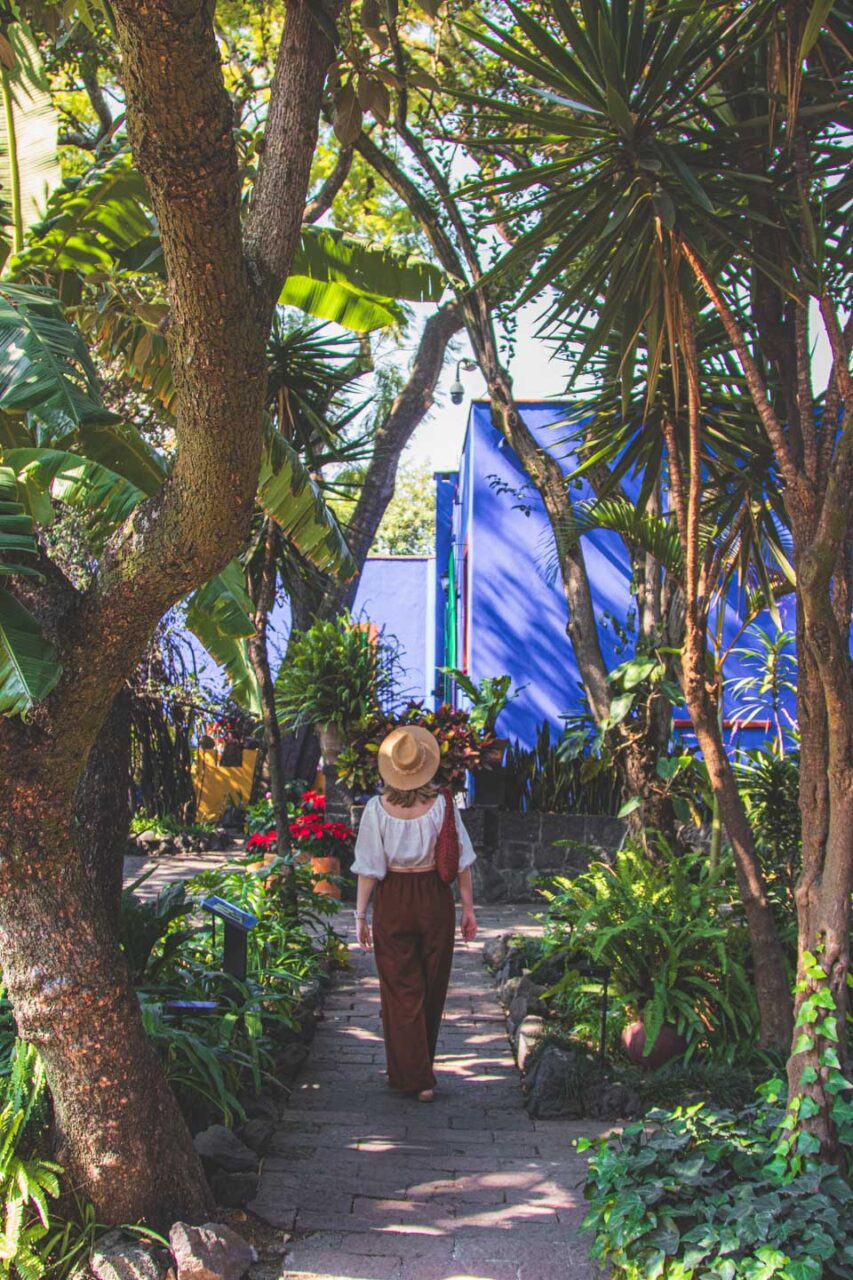
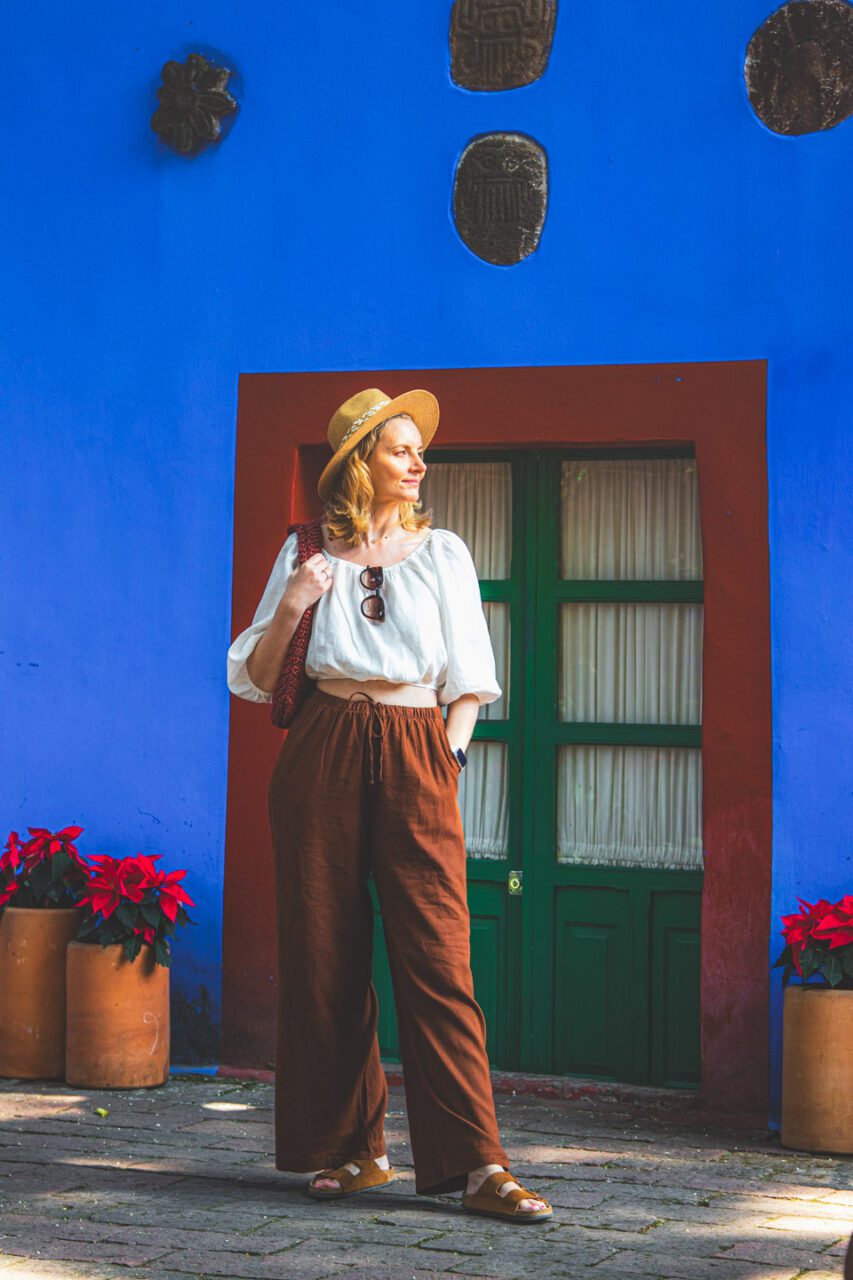
At 10:15 AM we were in front of Casa Azul, Frida Kahlo’s blue house.
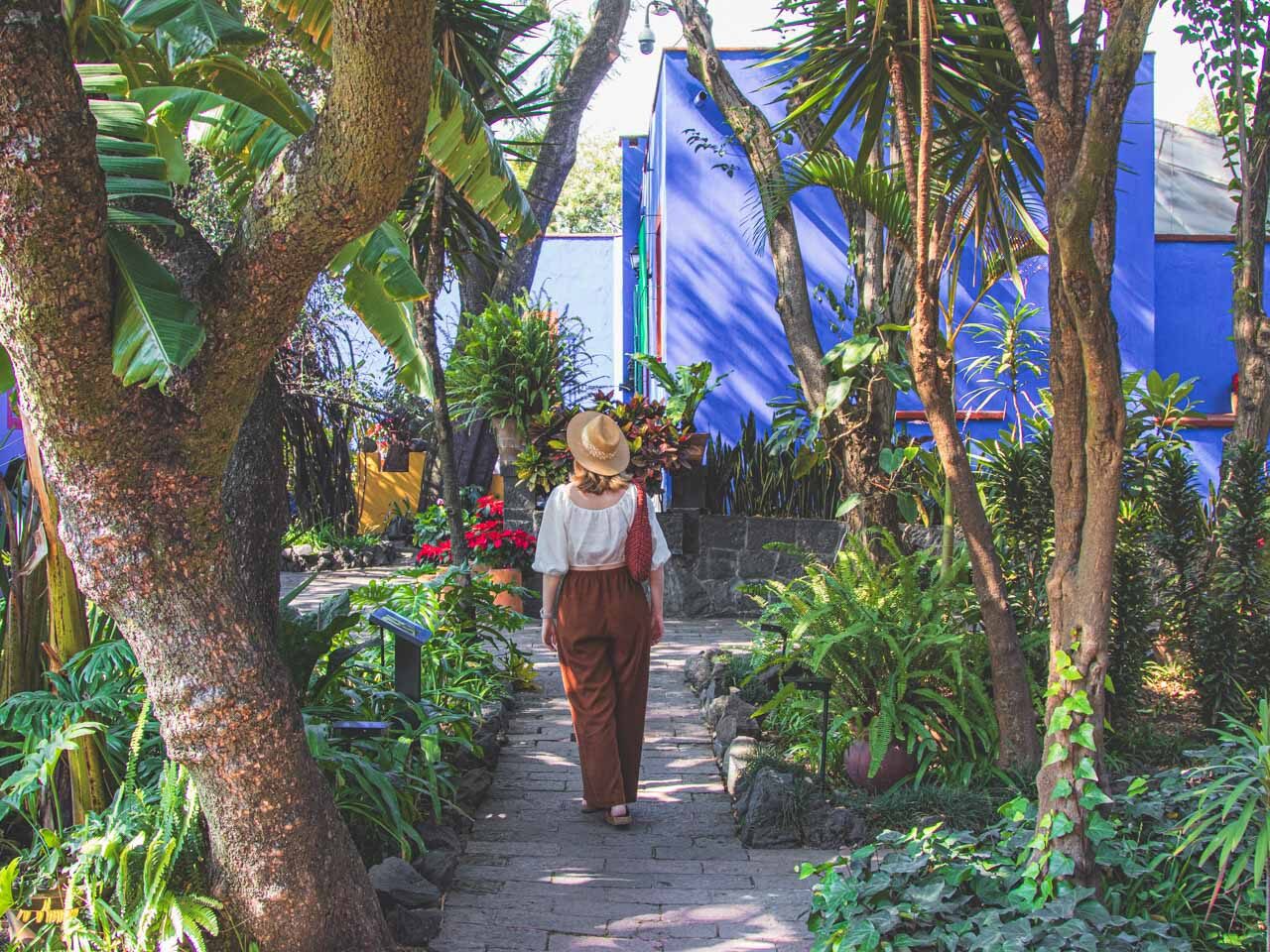
In the morning sun rays, it looked beautiful. Intense cobalt blue contrasted with the greenery of a garden full of palms, cacti, and begonias.
Despite having a reserved time, a long line formed before the entrance, but waiting was part of the experience. People from all over the world, languages mixing around: Spanish, English, French, Japanese.
After crossing the threshold, I felt like I’d entered another era. Every detail was thoughtful, every corner carried a story. This house told Frida’s life story without words – through colors, objects, and space.
First, rooms dedicated to her history: photos of Frida as a child, young woman, artist. Then passage to the living quarters. Dining room with a long table, Diego’s bedroom full of his paintings, kitchen with pottery from Puebla.
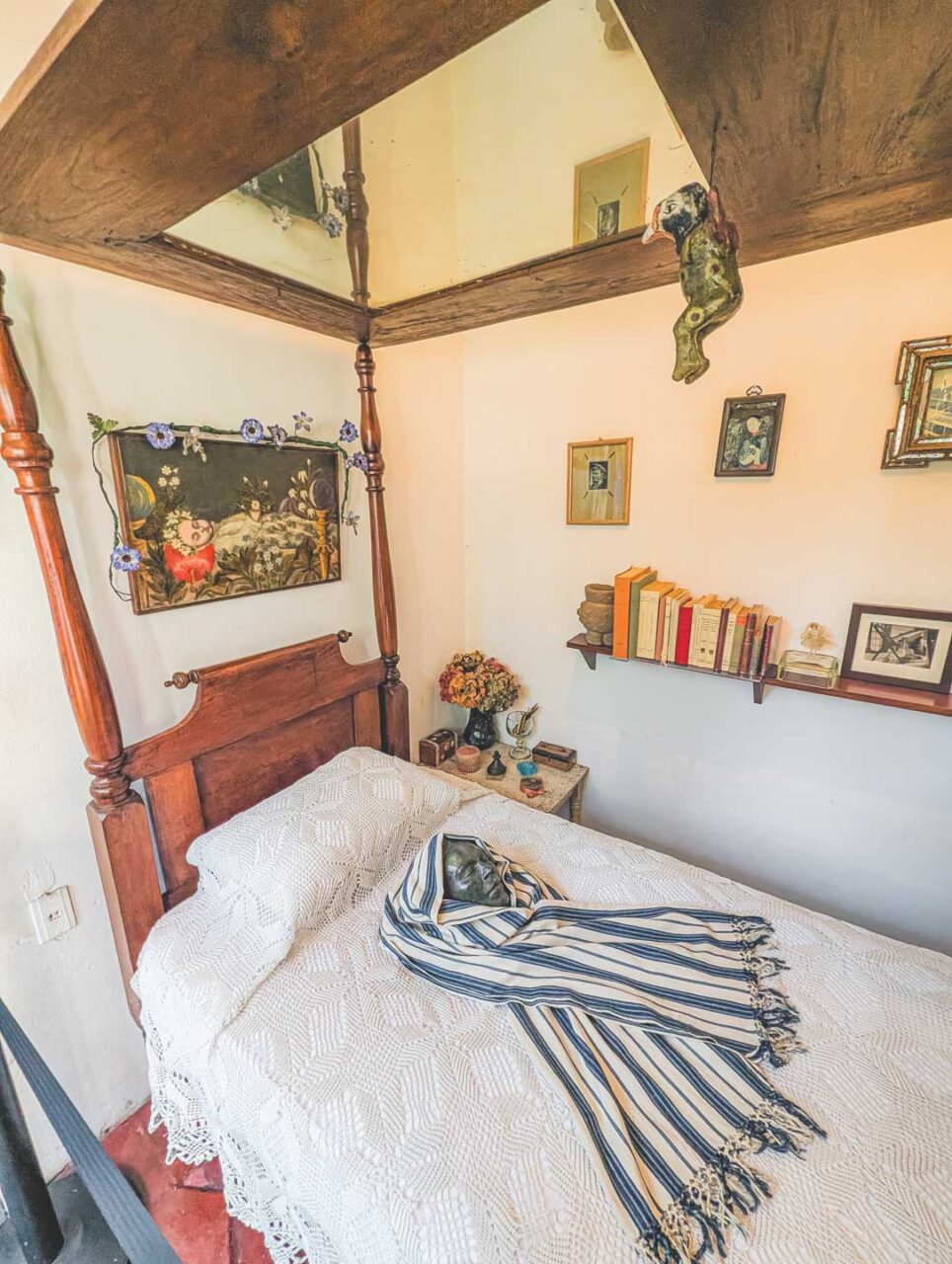
Upstairs, Frida’s small room. A bed with a mirror hung above it so she could paint self-portraits lying down when pain from the accident didn’t let her sit.
On the dresser, an urn with ashes in the shape of a frog – apparently that’s what she called her husband, Diego.
Next door, the painting studio. Paints on easels as if the artist had just stepped out for a moment. Desks full of brushes and sketches. Frida’s chair – empty, but with the impression she’d return any moment and sit down to work again.
Frida’s Life Written in Body and Clothes
Frida’s life from her youngest years was marked by pain. First polio at age six, which left her with a shorter right leg.
Then a bus accident at eighteen – a metal rod pierced her body, breaking her spine and pelvis. In total, she underwent twenty-two operations. A year before her death, gangrene took her right leg.
The museum shows orthopedic corsets she had to wear – ceramic, leather, metal. Next to them, dresses brought from Oaxaca that she loved so much: long, colorful, richly embroidered.
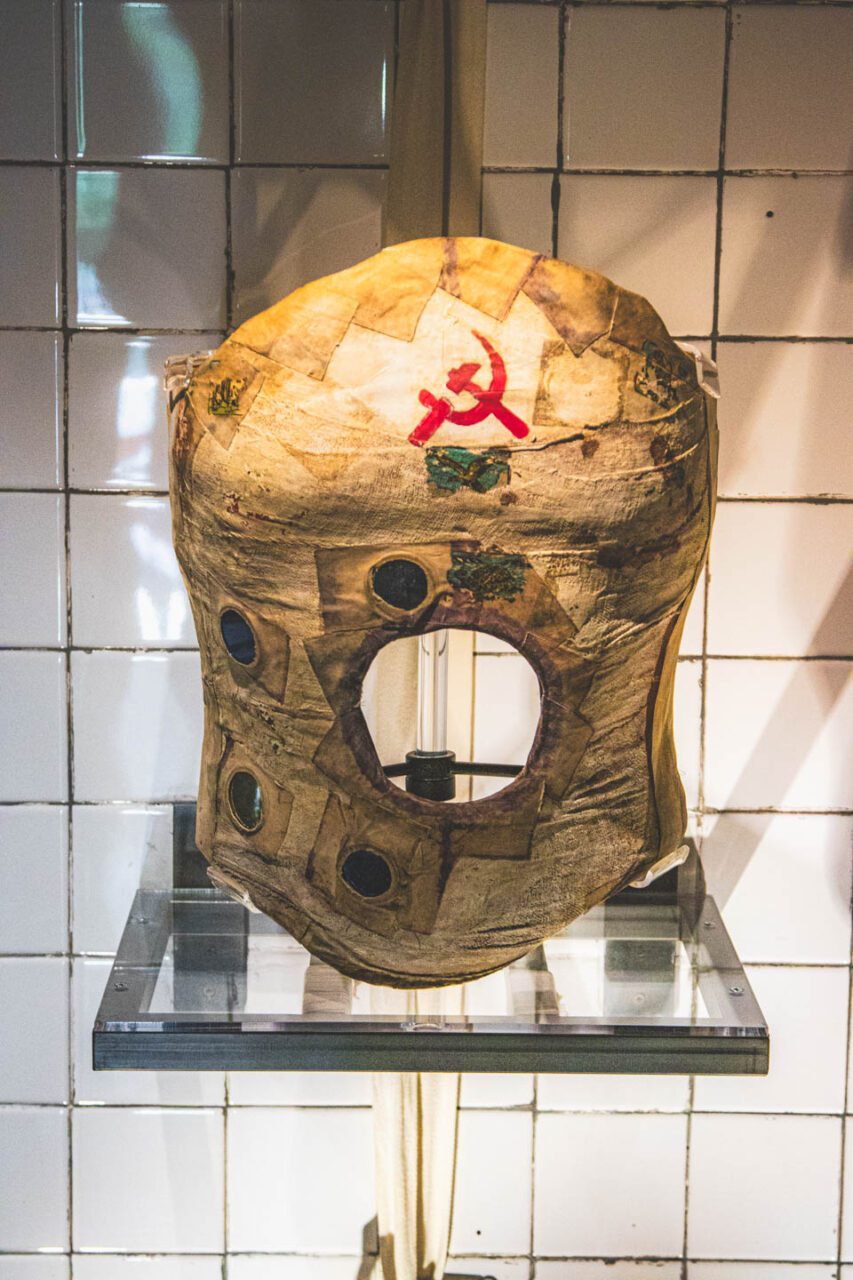
These outfits were armor for her. They masked disabilities but also let her express herself. In the 1930s, she even appeared in the pages of Vogue. Her style was both scandalous and beautiful.
All the outfits from the current exhibition were only found after fifty years.
After Frida’s death, Diego Rivera ordered her small upstairs bathroom closed. Only in 2004 was it discovered what was inside.
At the very end, gardens. Palms, cacti, begonias, monstera. Silence, greenery, and a moment to breathe after an intense, emotional experience.
Café Avellaneda – A Local’s Cafe
After visiting the museum, I needed coffee and quiet. Café Avellaneda turned out to be the perfect place.
It’s more of a hole in the wall than a classic cafe. A few bar tables, a bench against the wall. We barely found a spot at the bar, squeezed between two Mexicans reading newspapers.
Inside, all locals. People drinking coffee, reading the press, talking in Spanish about politics and weather.
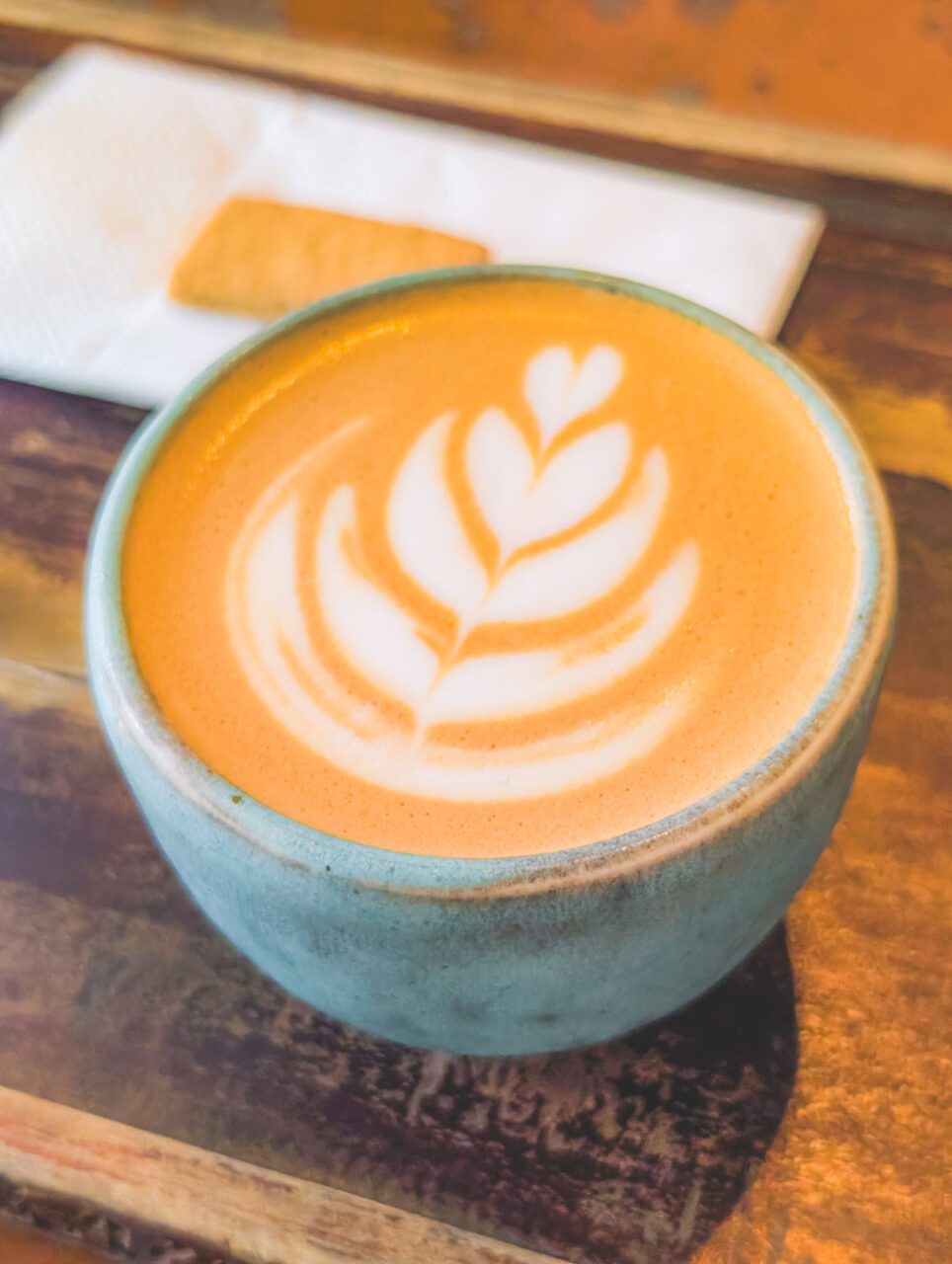
Cappuccino cost 65 pesos. Served on a metal tray, with water on the side and a small cookie. Coffee in a thick cup, milk perfectly foamed, temperature exactly as it should be.
The menu also included more unusual items: horchata, a traditional drink made of rice, cinnamon, and milk, and Juanito with juniper kefir, a fermented drink made with wild cultures from juniper berries.
I sat there for almost an hour. This was the moment I felt like part of the city. Not like a tourist, but like someone who for a moment really lives in Mexico City.
Tlacoyos at Ecosenti – Thick Corn Cakes
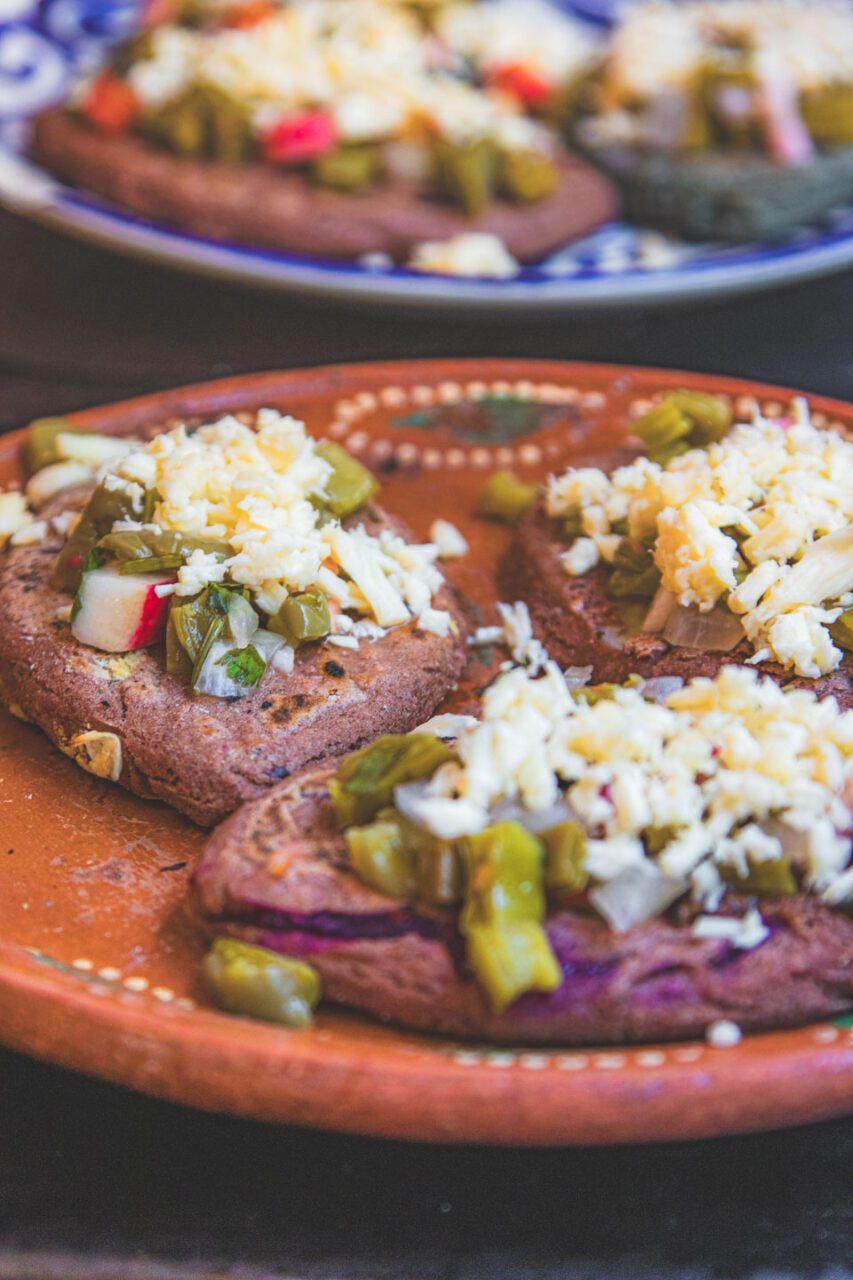
For lunch, we ended up at Ecosenti, a charming restaurant where two ladies made tlacoyos fresh to order.
Tlacoyos are thick, oblong cakes made from corn masa, stuffed with various ingredients and fried on a flat griddle, similar to a tortilla.
We ordered four types: alverja (peas), camote morado (sweet purple sweet potato), frijoles (beans), and papa con chile (potatoes with chili).
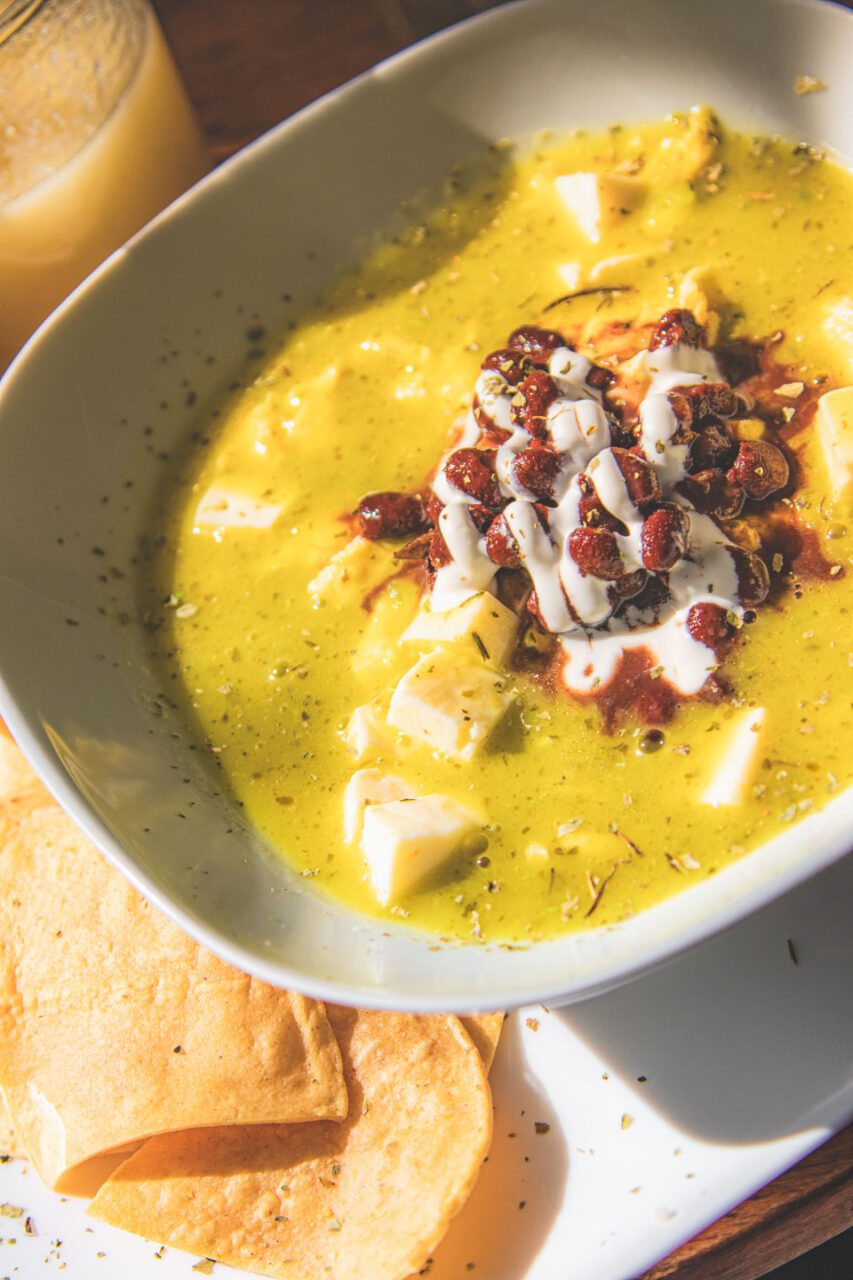
Each tlacoya had a different color: green from peas, purple from sweet potato, brown from beans, yellow from potatoes. All served with salsa verde and crema.
Plus agua de Jamaica drinks, made from hibiscus, sweet-and-sour and very refreshing. Two dishes and drinks cost us about 300 pesos.
Simple, authentic, delicious. And cheap. Exactly the kind of meal I look for when traveling: local, fresh, prepared with heart by people who’ve been doing this for years.
Mercado Artesanal – City at Night
In the evening, the city came alive completely differently than during the day.
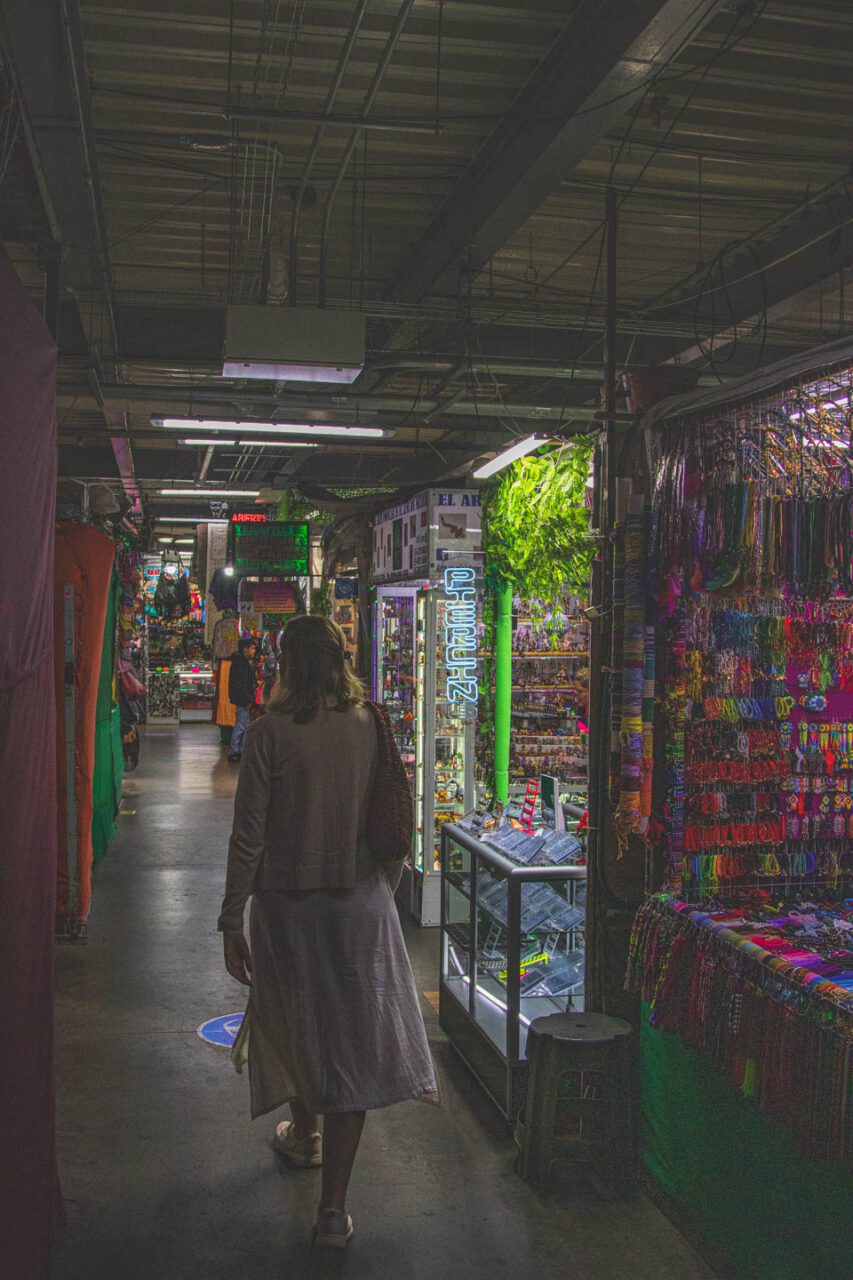
Mercado Artesanal, which during the day was calm and almost sleepy, at night filled with handicraft stalls. Colorful bags, fabrics, bracelets, ceramics, masks everywhere.
The main plaza with coyotes filled with street vendors. Music flowed from every direction: here a guitar, there violins, somewhere further drums.
People sat on benches, children played by the fountain, couples danced between stalls.
Mexico City lives differently at night than during the day. Everything becomes more intense: colors, sounds, energy.
And yet in this chaos, there’s something surprisingly natural, as if the city simply breathes at its own rhythm.
Quesadilla Huitlacoche – Corn Mushrooms on the Street
At the end of the day, we got classic Mexico City street food to go: quesadilla with huitlacoche.
The same ladies from Ecosenti made dark tortillas filled with corn mushrooms and Oaxaca cheese, fried on a flat griddle.
I’d never eaten huitlacoche before. These are mushrooms growing on corn cobs – black, unremarkable, but full of deep umami. Taste somewhere between mushroom and truffle, with a light, earthy note.
We ate these quesadillas sitting on a park bench, watching the world around us. The mushrooms were soft, cheese stretchy, tortilla crispy. A completely new taste. A bit strange, but very addictive.
This is exactly the kind of discovery I look for when traveling. Not the ones from guidebooks, but accidental ones that show me new flavors and let me peek beneath the surface of a place.
Ending the day, I felt tired but happy. In Phoenix, there’s no such diversity: people walking at 10 PM, street vendors, musicians in front of restaurants.
Mexico City lives differently. And I wanted to live with it, even for just a moment.
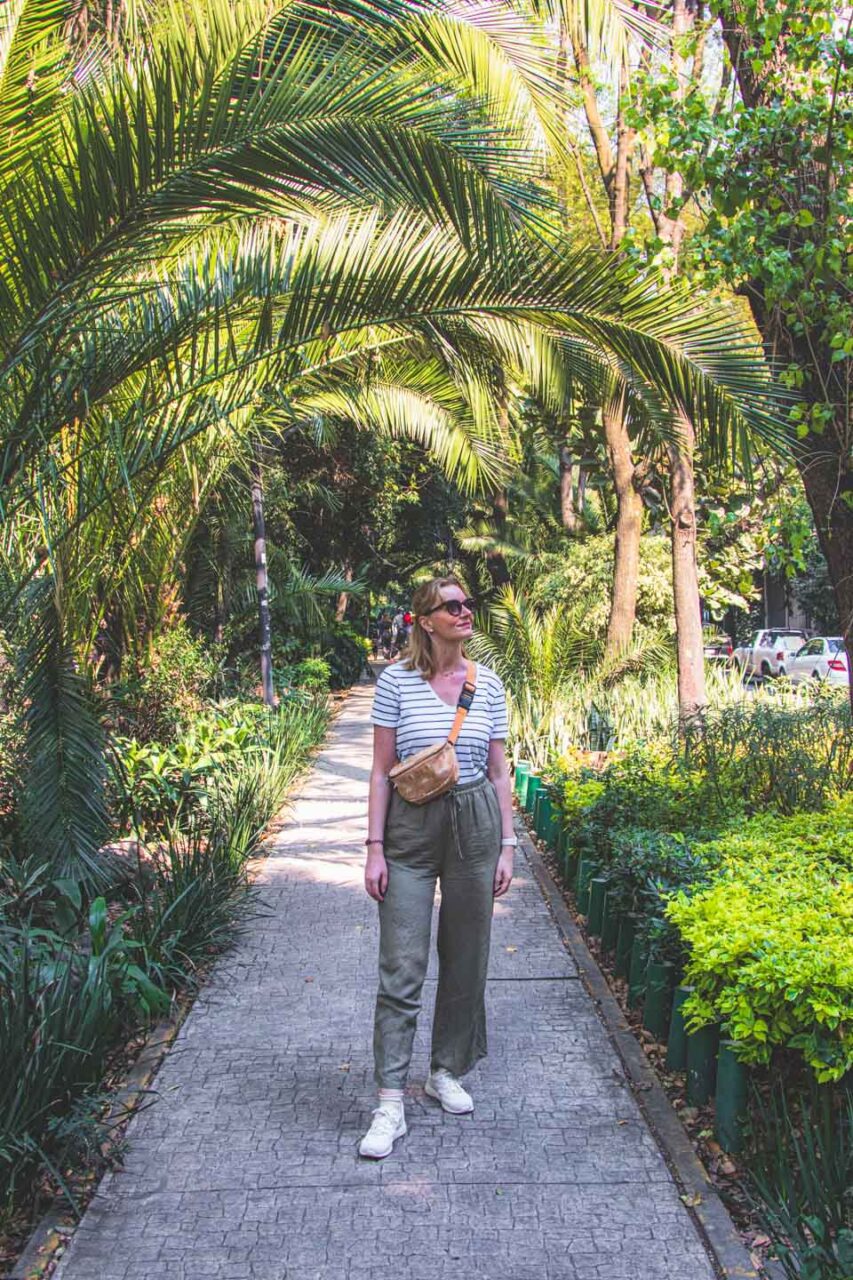
Day 4: Condesa and the “I Could Live Here” Moment
On the last day, we ended up in Condesa and immediately fell in love with it.
Condesa – Neighborhood of Dog Walkers
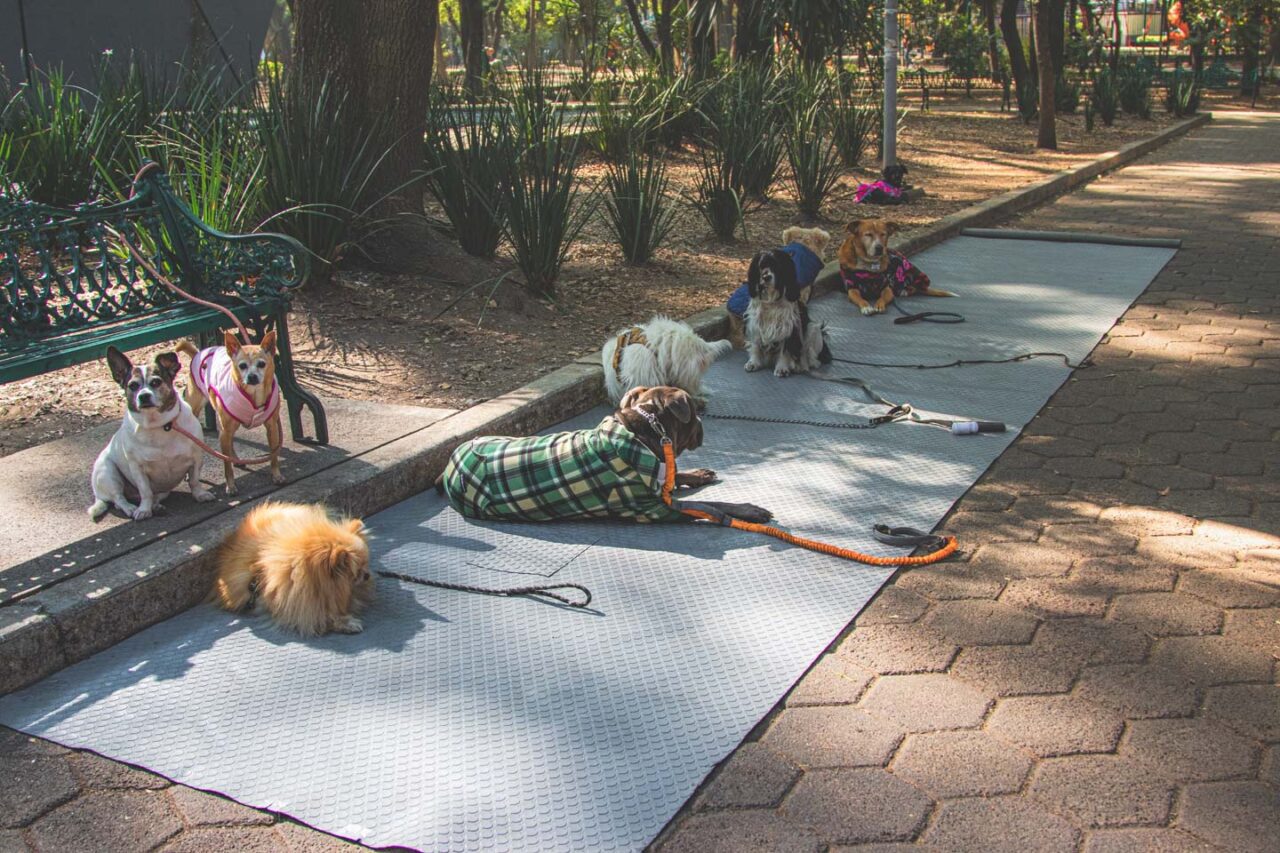
Condesa is full of dog walkers. Parks fill with dogs of all breeds: golden retrievers, poodles, corgis, huskies, chihuahuas, mixed breeds.
It looked like almost every resident had a dog, often walked by hired dog walkers.
One man was leading eight dogs at once on leashes. All different sizes, yet marching in agreement, in one rhythm. I’d never seen so many dogs in one place before.
Parque México and Parque España pulsed with life. But not just canine. People really used this space.
Boxing training outdoors. Yoga on the grass. Families on picnics. Young people with laptops working remotely on benches.
This kind of atmosphere is really missing in the US, where life often closes up in cars and houses.
Here everything happens outside. And that’s when I thought for the first time: I could live here.
Noon Without Lunch
Condesa is full of charming cafes and restaurants. Small bistros with terraces filled with plants. Vegan cafes with swings. Trendy places with industrial decor.
And yet at 12:00 PM, none of them served lunch. Everywhere only breakfasts.
In Mexico, the morning menu can stretch on for a long time, often until 2 or 3 PM, and lunch only starts later. For us, it was a slight surprise.
So we wandered around the area hungry until we finally found Mora Mora.
Mora Mora – Vegan Burrito
Mora Mora is a vegan restaurant with swings in the windows. The interior is simple and modern: concrete floor, bright walls, wooden tables.
Blue tiled wall, cool mural, and turquoise logo above the bar give it a slightly industrial character.
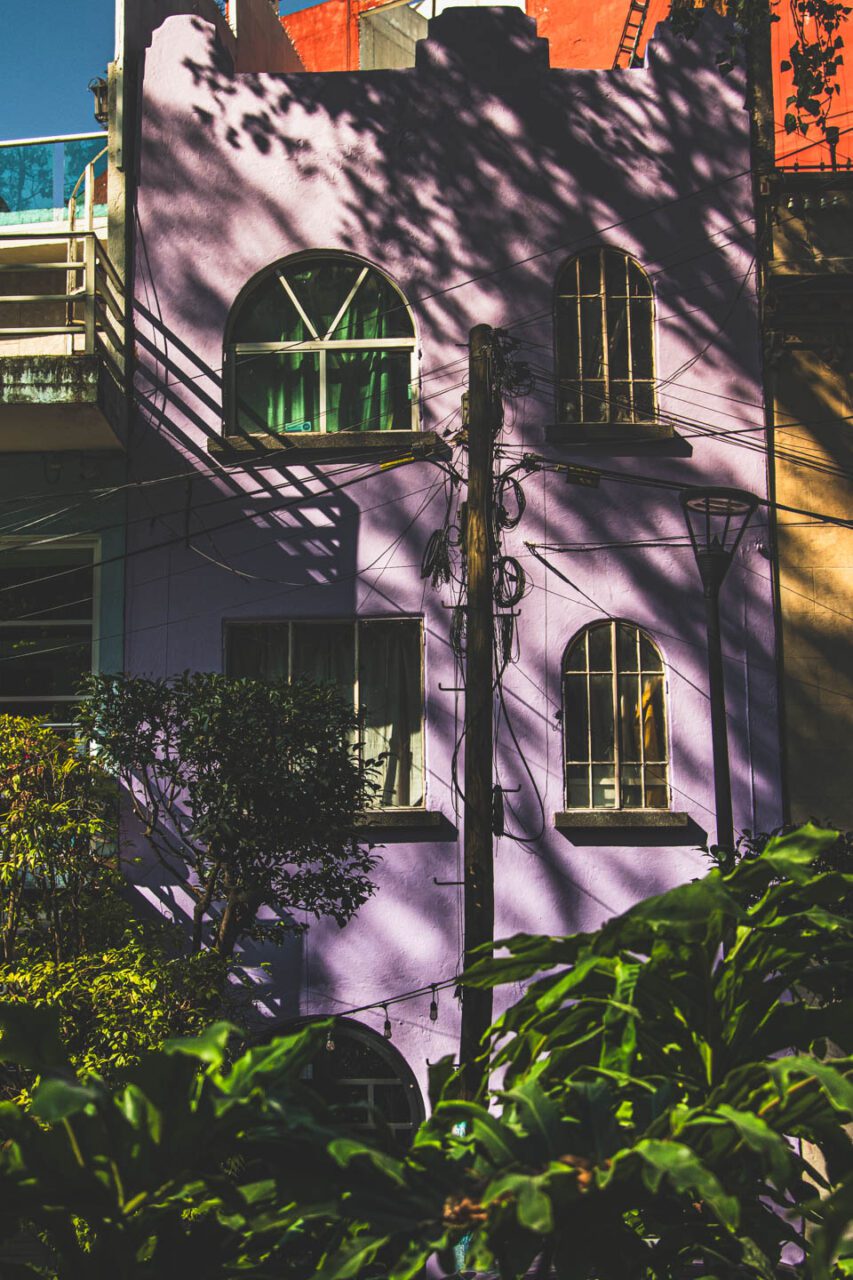
We ordered two burritos. One with black beans, rice, guacamole, and pico de gallo. The other with roasted sweet potato, quinoa, and salsa verde.
Both were so big I could barely eat half. We packed the rest to go and it was still enough for the flight home the next day.
Delicious, fresh, full of vegetables. Perfect for vegans, which isn’t so obvious in Mexico.
Parque México – Walk Among Trees
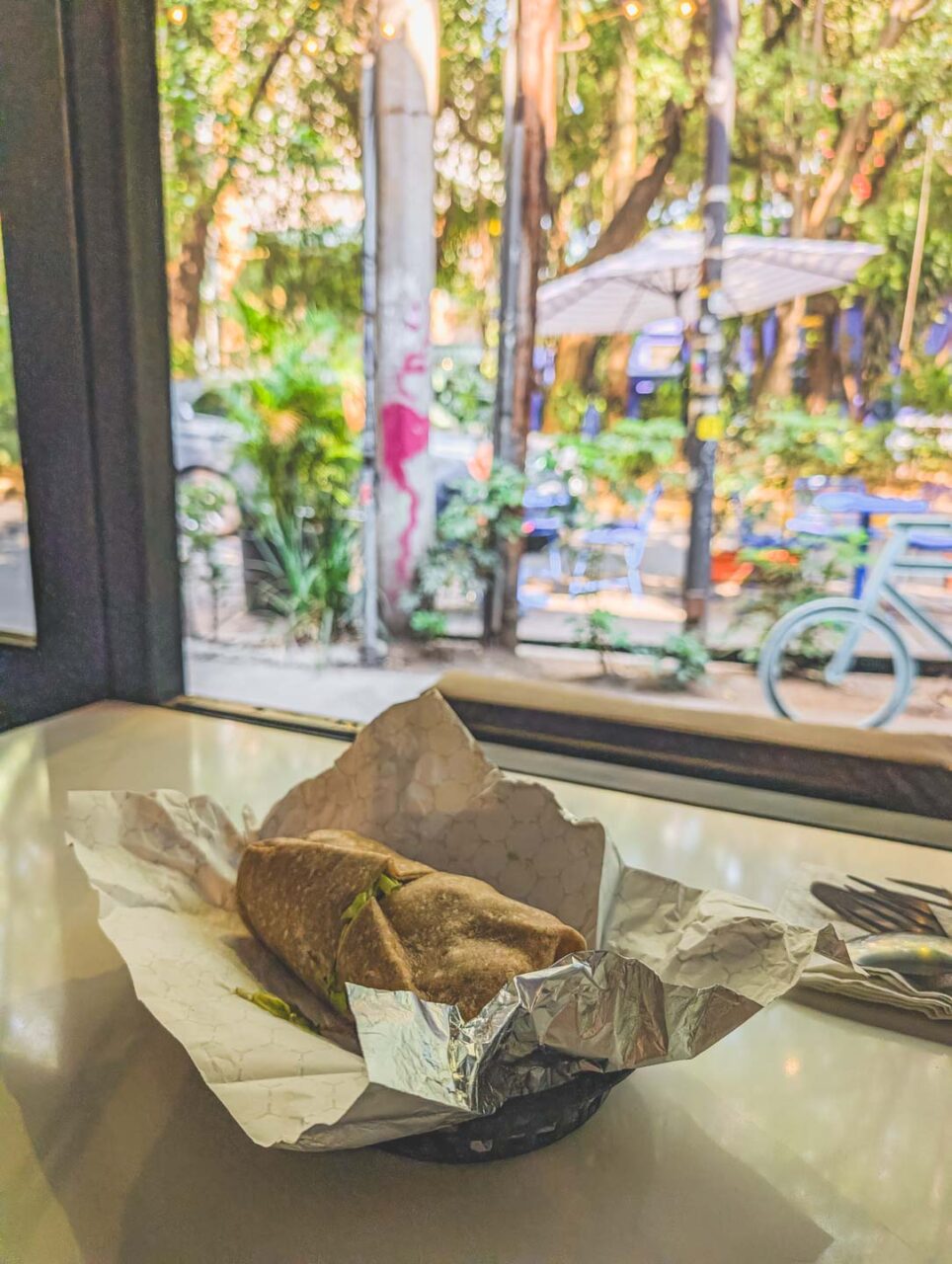
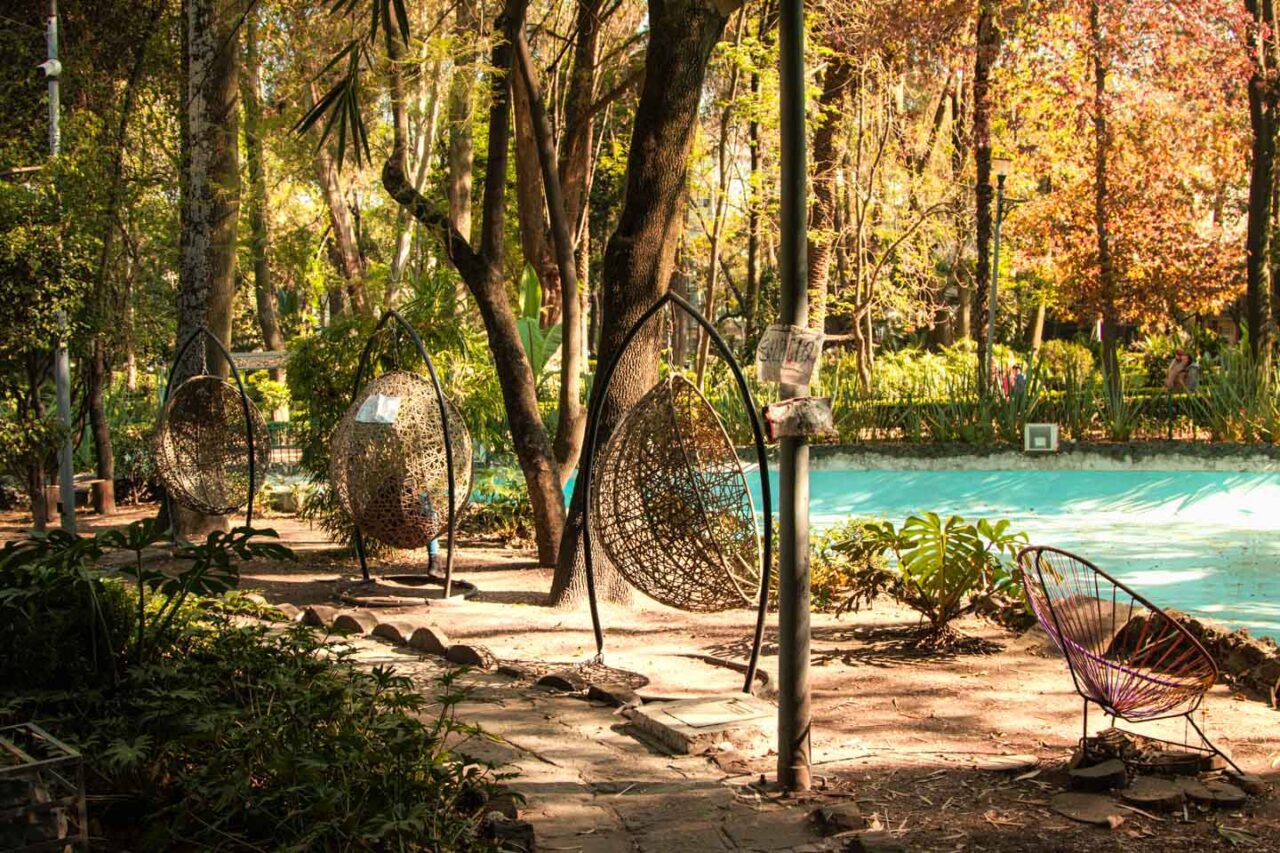
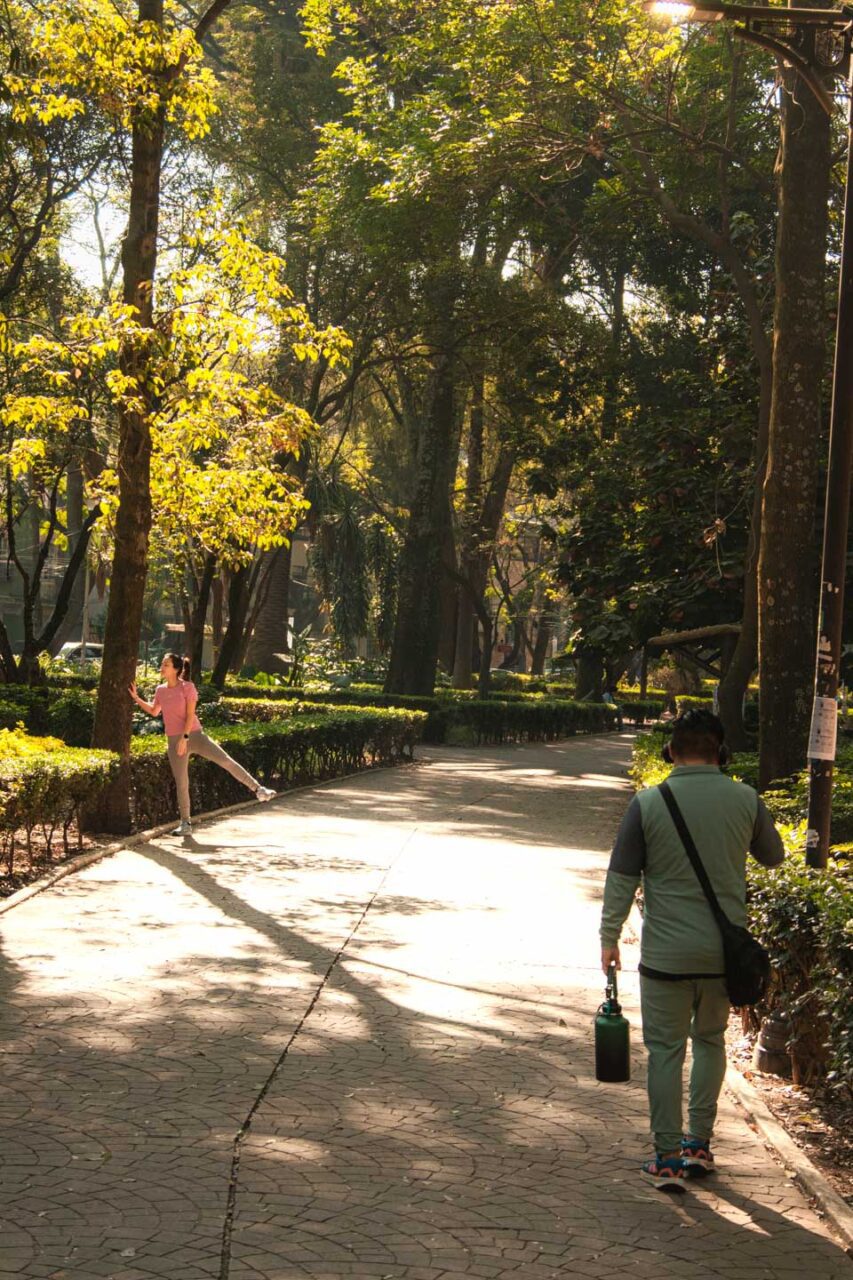
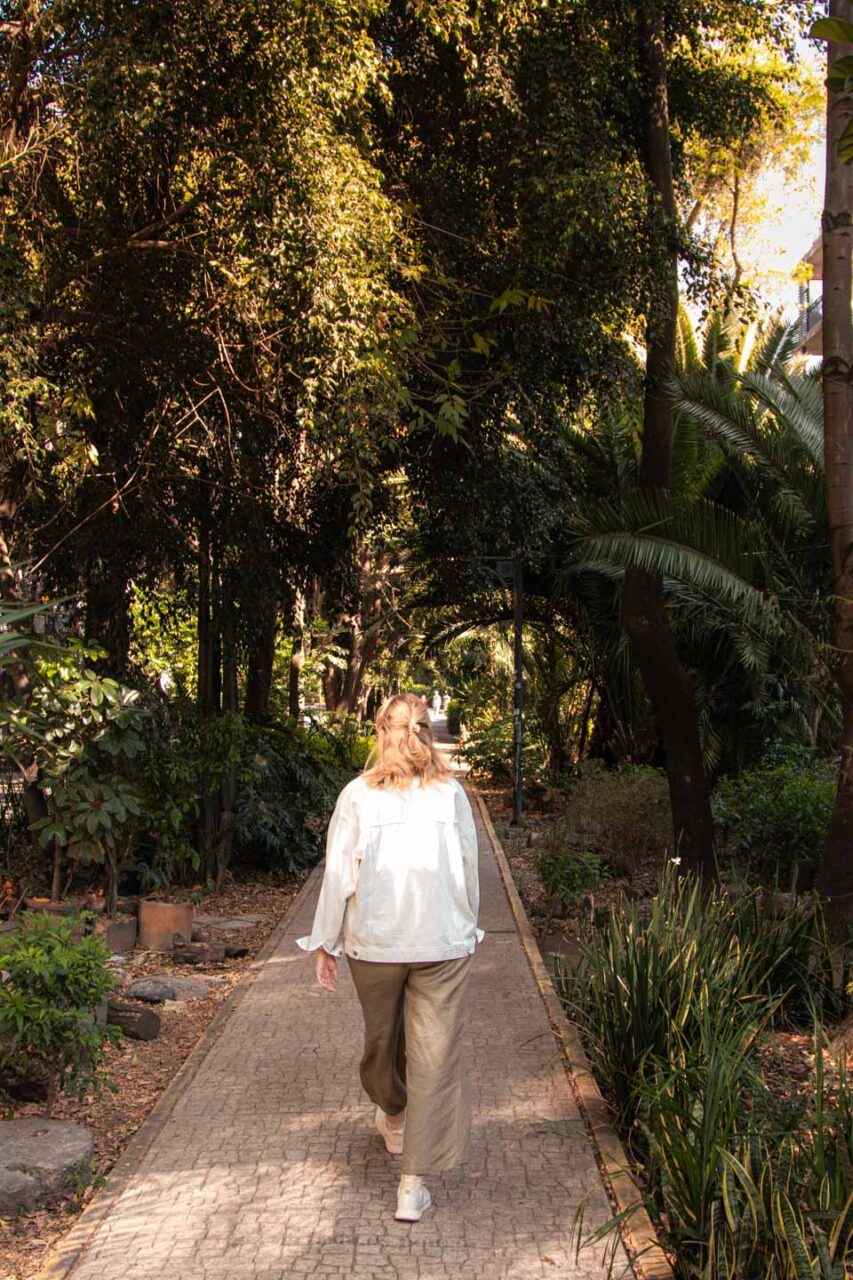
After lunch, we went for a long walk through Parque México. A large park full of tall trees, fountains, benches, and winding paths.
Dogs everywhere, people everywhere. A couple practiced tango under one of the trees. Children ran after a ball. A group of seniors played cards in the shade.
We sat on a bench and just observed. Sunlight breaking through leaves. Dogs playing together. People living their daily rhythm.
This was one of the most peaceful moments of the entire trip. No plan, no goal, no lists to check off. Just being.
Mei – Vegan Ramen with Mexican Accent
In the evening, we walked to dinner at Mei, a small restaurant combining Japanese and Mexican cuisine.
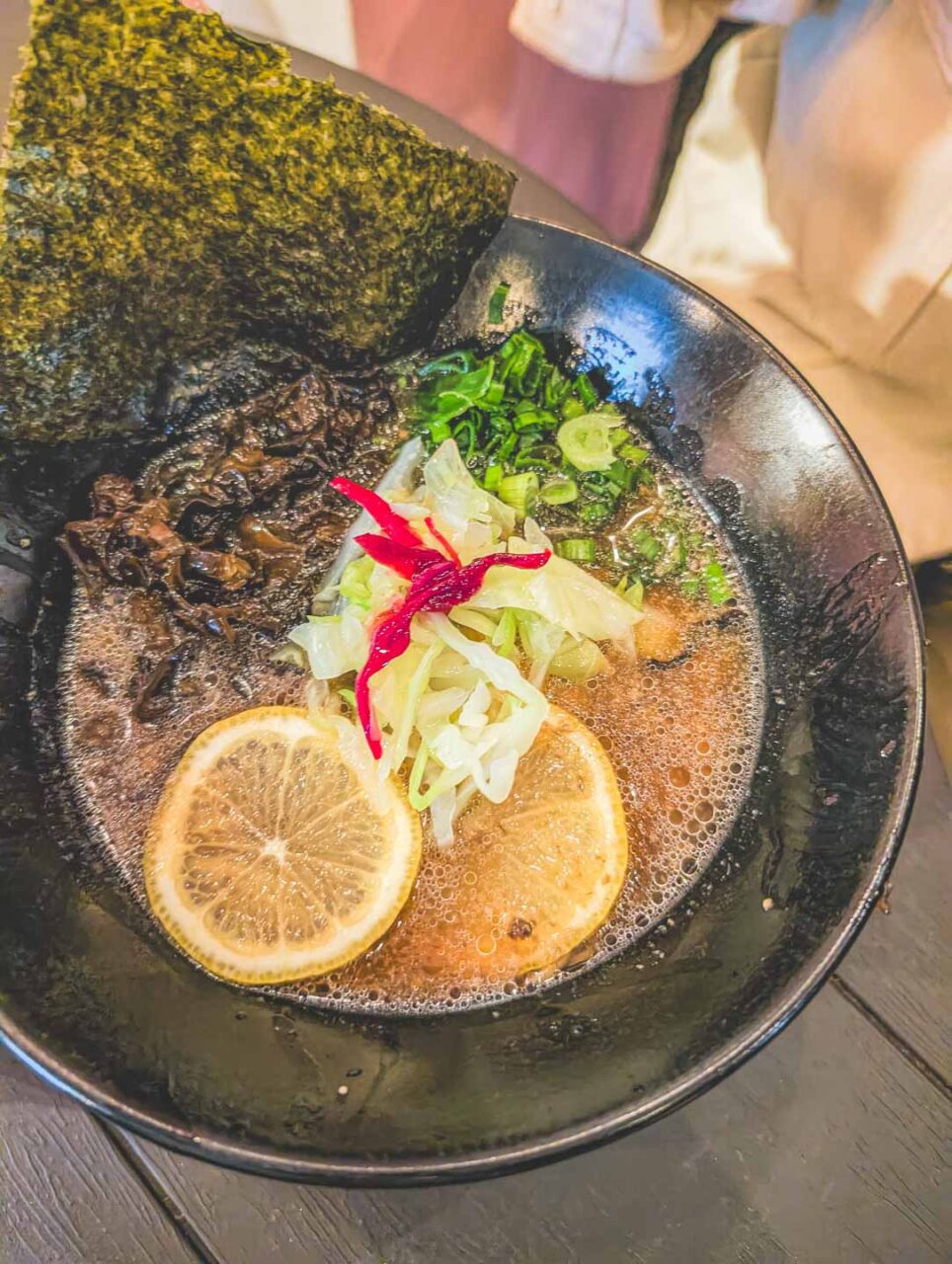
We ordered vegan lemon ramen. The broth was light and refreshing, with a distinct note of lemon and ginger. Noodles perfectly cooked.
The toppings – edamame, corn, shiitake, wakame, and chili serrano – created a cohesive, surprisingly harmonious whole.
This was a combination I didn’t expect at all in Mexico City. Japanese techniques, Mexican ingredients, vegan philosophy. And everything worked.
Last Evening in Condesa
Walking back to the hotel, I felt regret. Last evening. Tomorrow, flight home.
But something else appeared too. A thought that was very calm and very clear: I could live here.
This wasn’t a tourist’s momentary delight. Rather a deep certainty that this place fits my life rhythm. Who I am and how I want to live.
Walking through Condesa, watching dog walkers, entering cafes full of young people with laptops, I felt my place could be right here. Not as a guest. As a resident.
And that’s exactly why I know I’ll be back.
Practical Tips (That Really Make Life Easier)
Where to Stay – Coyoacán or Condesa?
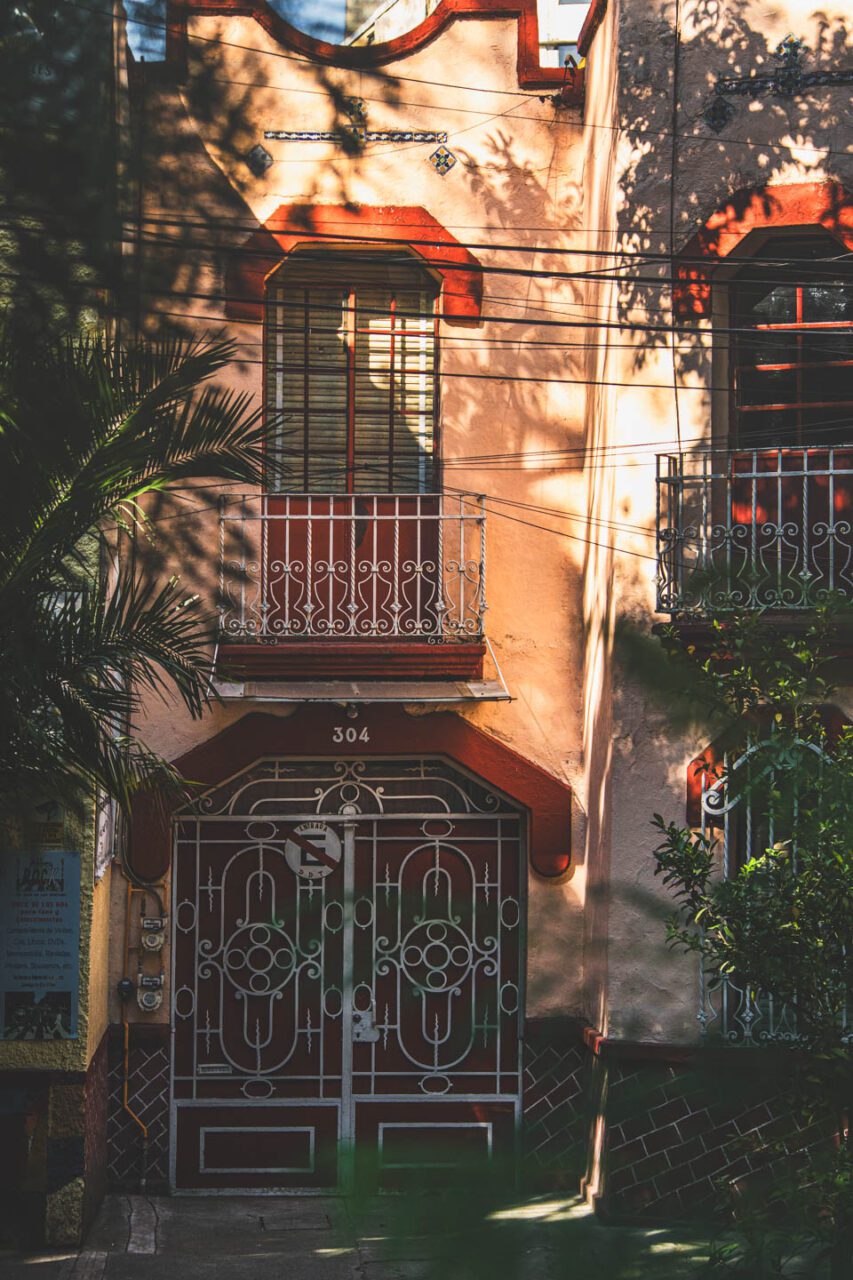
Coyoacán is the calmer, more traditional side of the city. Colorful buildings, older architecture, local cafes, and everyday life that moves more slowly. A good choice if you’re looking for quiet and authenticity.
Condesa has a completely different rhythm. More cafes, parks, and life outside. It’s more modern, younger, more urban.
I stayed in Coyoacán and it was a great choice, but Condesa also stole my heart.
My advice? If you have 4-5 days, choose one neighborhood as a base and explore the other calmly during the day. You don’t need to move to feel two different city rhythms.
Transportation – Uber and Walks
Mexico City is huge, but in Coyoacán and Condesa, most places can be reached on foot. These are neighborhoods that really favor walking.
For longer trips, I used Uber – from the airport to the hotel or between neighborhoods. Rides usually cost 40-80 pesos (around $2-4 USD).
Practical tip: Download the Uber app before departure and add a card. In Mexico City, it works very smoothly.
Safety – Normal Precautions
In Coyoacán and Condesa, I felt safe during the day and evening. Lots of people on the streets, light, urban movement.
Basic precautions are enough: phone tucked away, bag close to body, less ostentatious jewelry, and it’s better to leave more distant neighborhoods for when you know the city better.
For the first time, it’s best to stick to Coyoacán, Condesa, Roma, and Polanco. Centro has a completely different rhythm in the evening.
Costs – Very Affordable
My daily budget (without hotel):
- Breakfast: 100-200 pesos ($5-10 USD)
- Lunch: 150-300 pesos ($8-15 USD)
- Dinner: 200-400 pesos ($10-20 USD) – or about 2,000 pesos ($100 USD) at a special occasion place
- Coffee/snacks: 50-100 pesos ($2.50-5 USD)
- Transportation: About 100 pesos ($5 USD)
- Museum: About 335 pesos ($17 USD)
Total: About 900-1,450 pesos daily (around $45-75 USD), without accommodation.
Accommodation: Casa Tuna – about 2,600 pesos per night (around $130 USD).
Travel lighter, even before you leave.
start with something simple.
Download The Minimum Plan – Slow Travel:
When to Go – December Was Perfect
I was in Mexico City in early December and the timing was perfect.
During the day, it was very pleasant for walks and sightseeing – around 68-77°F (20-25°C). Warm but not hot. Lots of sun, blue sky, practically zero rain.
Evenings and nights were cooler, around 50-59°F (10-15°C). In the room, I sometimes turned the heating on for a moment, mostly in the early morning.
Other times of year in brief:
- March-May: Dry and getting warmer, good time for sightseeing
- June-September: Rainy season, rains usually appear in the afternoon
- October-February: Dry and pleasant, one of the best periods to visit
If you like cities in walking version, without extreme temperatures, late fall and winter work best here.
My Most Important Lesson from Mexico City
Mexico City taught me that the best trips aren’t the ones where I saw the most, but the ones where I felt the most.
Coffee in a cramped cafe full of locals where no one spoke English. Churros on the street with music in the background.
A park full of dogs in Condesa. Huitlacoche for the first time in my life. Sunset on the Casa Tuna terrace.
These are the moments I remember. Not a list of attractions. Not the number of museums. But moments that made me feel like part of the city.
And that’s why I know I’ll be back.
If you’re curious where this change in my approach to travel came from, I wrote a separate post about it → Mexico, Not Like on Instagram – The Moment I Realized I’d Changed
Because four days were enough to fall in love, yet too short to really take it all in.
Saying goodbye to Condesa on the last day, I felt regret. But also certainty – I could live here.
I want to come back to see this city in a different season. To discover more cafes, more streets, more of these moments.
Mexico City, I’ll miss you. But I’ll be back.
Want to Stay in Mexico a Bit Longer?
🍽️ Flavors of Mexico → 10 Yucatan Dishes You Must Try – guide to local cuisine
🏖️ Paradise island → Isla Holbox Guide – small island without cars
🏛️ Mayan Culture → Things to Do in Tulum – ruins, cenotes and more
🏨 Where to stay → My Experience from 2 Tulum Hotels – honest reviews without BS
What tempts you most?
Have you been to Mexico City? Which neighborhood stole your heart – Coyoacán, Condesa, Roma, or maybe another? Shoot me an email – I’d love to hear about your discoveries!
If you liked this post, share it with a friend planning Mexico City. And if you want more honest guides without the pressure to “see everything” – sign up for my newsletter.