
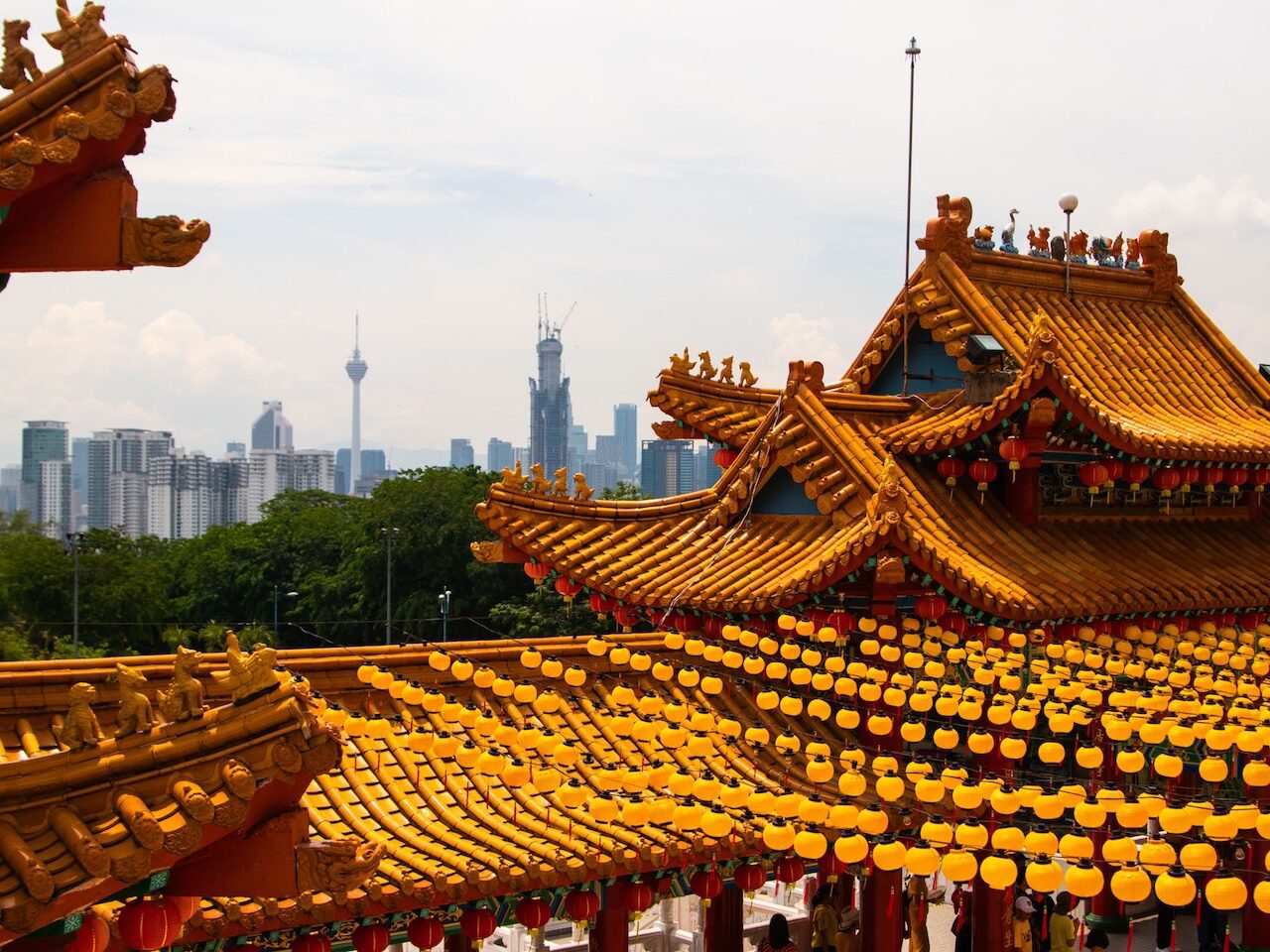
Planning to explore Kuala Lumpur in 2 days? That’s a great idea. This city can surprise you if you just give it a moment and don’t try to see everything at once.
Kuala Lumpur stole my heart faster than I expected, and to this day I think back to it as one of those Asian cities with its own rhythm and quiet softness.
Here, modern skyscrapers meet street food, temples neighbor cafes, and different cultures blend together quite naturally.
It’s a city of flavors, scents, and contrasts – perfect for slow walks, good food, and simply observing everyday life.
This 2-day Kuala Lumpur itinerary is designed to help you experience the city without rushing – focusing on the most interesting places and tried-and-tested restaurants that are truly worth visiting.
I hope this guide helps you feel the city’s rhythm, choose what resonates most with you, and plan your trip without pressure.
Enjoy reading and safe travels.
Kuala Lumpur in 2 Days: What to Know Before You Go
Did you know that Kuala Lumpur, together with its surrounding suburbs, is home to over 8 million people? That’s fewer than Mumbai, but more than enough to feel the scale and energy of this sprawling metropolis.
Locals simply call it KL. The city’s name comes from the “muddy” confluence of two rivers: the Gombak and the Klang.
If you take a closer look, you’ll really notice that distinctive brown color. It’s one of those small details that suddenly makes the city’s name feel completely logical.
Kuala Lumpur forms a calm yet very distinct mosaic of influences. Malay, Chinese, and Indian cultures coexist here on a daily basis, without being forced or loudly emphasized.
You can see it in the architecture, hear it in the streets, and taste it in the food – which can change completely from one block to the next.
It’s a city that doesn’t overwhelm with too many stimuli. Instead, it gently invites you to slow down and pay attention.
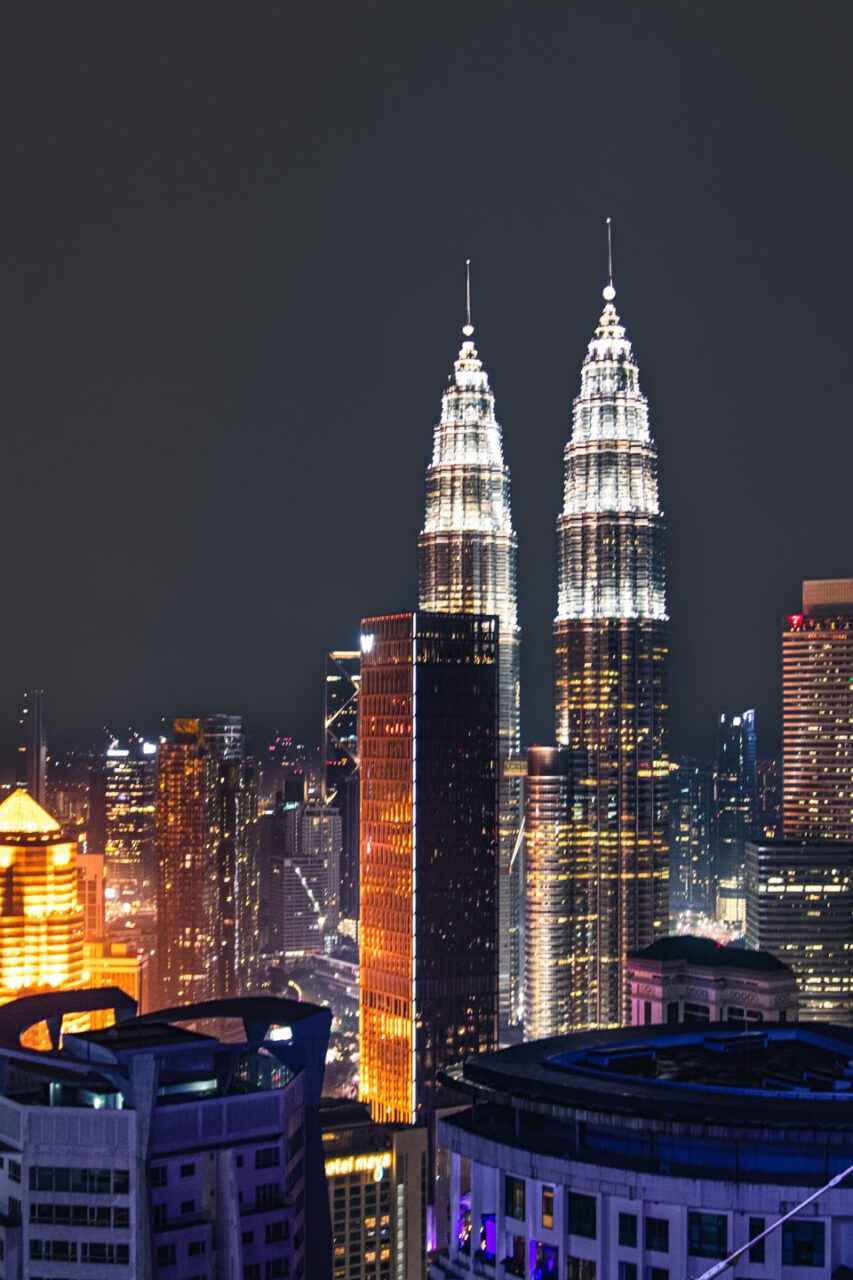
Right next to modern icons like the Petronas Towers, you’ll easily stumble into a completely different world. Kampong Baru is a traditional Malay village on stilts, where everyday life still unfolds among wooden houses.
Just a few streets away, Chinatown begins – with colorful shophouses, hanging lanterns, and the scent of street food lingering in the air.
And while Kuala Lumpur, like many Asian capitals, is shaped by layers and contrasts, it wasn’t the height of the skyscrapers that left the strongest impression on me.
What stayed with me most was the food – easily one of the most diverse and fascinating cuisines in all of Asia.
Flavors blend here naturally, without trying to prove anything. Each day brings a different plate, a different scent, a different story. One thing I can promise without hesitation: it’s genuinely hard to leave Kuala Lumpur hungry.
If you want to see the full list of my favorite dishes, definitely check out 10 dishes you must try in Kuala Lumpur.
Day 1 in Kuala Lumpur: Downtown Highlights, Food & Chinatown
Petronas Towers & Suria KLCC (Kuala Lumpur)
It’s worth planning at least 2 days to explore Kuala Lumpur. I spent 3 nights here and it was a very good balance. Without rushing, but with a sense that I really managed to feel the city.
The first day is best started from the city’s most recognizable symbol – the Petronas Towers.
Even if you’re not usually drawn to “must-sees,” they’re hard to skip. They’re impressive, and their scale makes an impact even when you’re not a skyscraper fan.
Inside the towers themselves is Suria KLCC, the largest and most famous shopping mall in Malaysia.
I’ll admit honestly, at first I was quite skeptical about such places. I quickly understood, though, why Malaysians really like them.
In Kuala Lumpur, like throughout Malaysia, it’s hot. Often humid and with sudden rain showers. Air-conditioned, covered shopping centers become something more than just a place to shop.
It’s a moment of respite, cooling down, and a calm walk when the city outside slows down a bit.
The Petronas Towers are not only a great landmark but also one of those places that really impress in person. Especially in the evening, when the towers are lit up and the city around them softens.
It’s one of those views best enjoyed without rushing, just standing and looking.
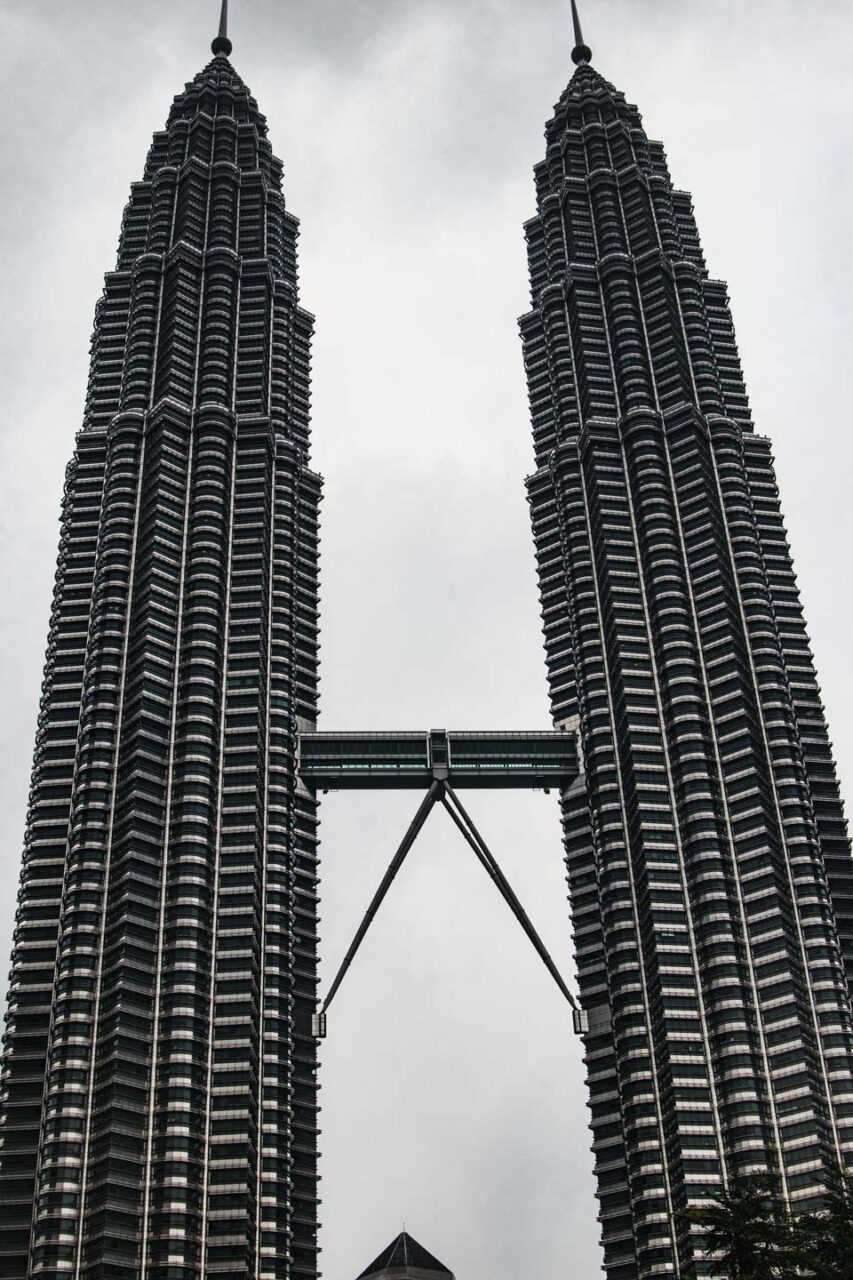
Inside, the magic fades. The interiors resemble typical office buildings and aren’t particularly impressive. Still, it’s worth seeing them at least once, because they’re still a very important symbol of the city and all of Malaysia.
For a long time, they were the world’s tallest buildings – they have 88 floors and reach 452 meters in height. Today they’re further down the rankings, with first place belonging to the tower in Dubai, but their significance in Kuala Lumpur hasn’t suffered at all.
If you catch good weather, it’s worth going up to the Sky Bridge – the bridge connecting both buildings. The view from there lets you see the city from a completely different perspective.
Right next to Suria KLCC is also Aquaria KLCC – one of the more interesting aquariums in this part of Asia, with about 250 species of animals and a glass tunnel over which sharks swim.
Finally, it’s good to check out the city park near the towers. It’s a well-maintained, green space where tourists and locals meet.
The perfect place to sit for a moment, catch your breath, and see what Kuala Lumpur looks like in its everyday rhythm.
Tickets and Prices – Petronas Towers
Entry ticket costs from 127 ringgit per adult. It’s worth buying it in advance online to avoid queues and ensure entry at your chosen time.
Tickets and Prices – Aquaria KLCC
Ticket prices start from 80 ringgit per adult. Here too, it’s best to book tickets online early, especially on weekends and during the season.
Pavilion KL – Where to Eat Downtown
If you get hungry like a real Malaysian, the answer is simple – you go to a shopping center. No joke. That’s where a big part of the city’s culinary life takes place.
Pavilion KL is one of those places where food matters just as much as shopping.
You’ll find a wide range of restaurants and food courts serving cuisines from all over Asia – from Malaysian classics to Chinese and Indian dishes, as well as Vietnamese and Thai options.
It’s a very safe choice if you want to eat well, quickly, and comfortably, especially in the middle of the day when the heat and humidity start to slow everything down.
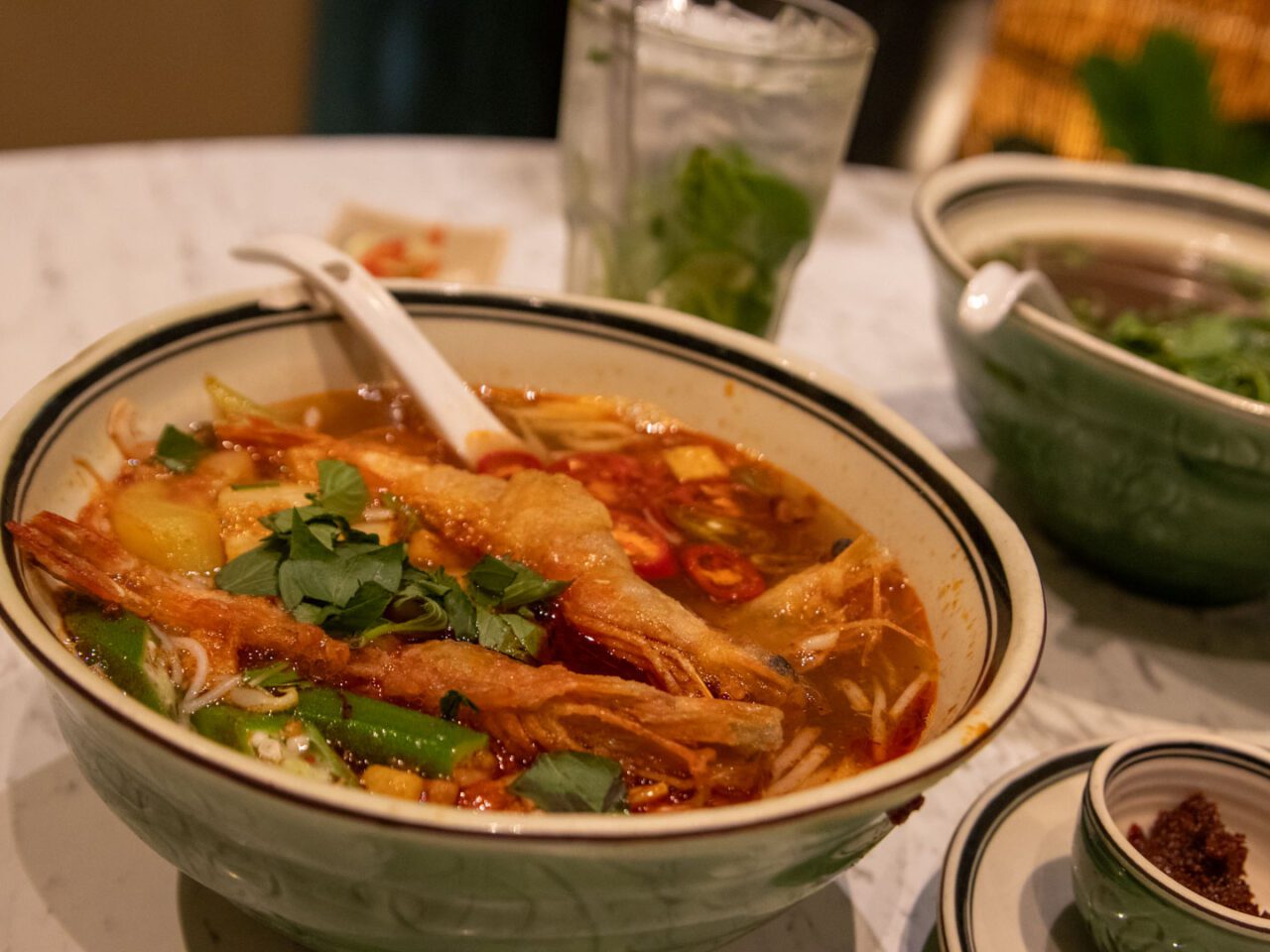
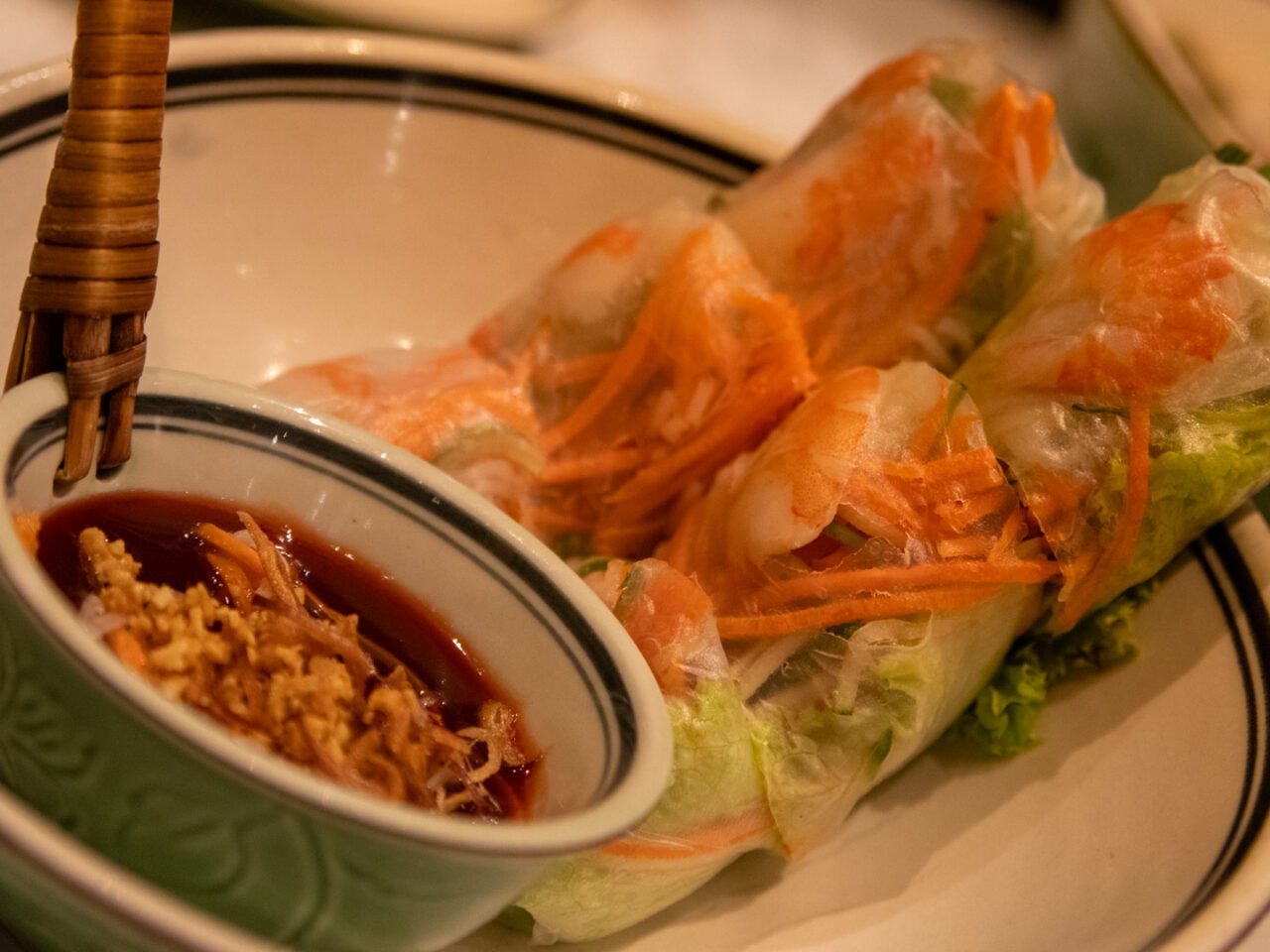
Menus usually feature familiar classics: shrimp spring rolls, meat dumplings, wok-fried noodles, and several versions of the iconic pho soup.
If I had to point to one dish that rarely disappoints, it would be pho – ideally with beef or seafood.
An aromatic broth, delicate vermicelli noodles, fish sauce, and a generous handful of fresh cilantro (there’s never too much) do exactly what they’re meant to do: bring you back to life and offer a moment of real comfort in the middle of the city.
It’s one of those meals after which you feel like heading back out to explore, rather than hunting for the nearest air-conditioned café.
Kuala Lumpur Bird Park
After lunch, it’s worth changing pace and moving to a greener, calmer part of the city.
A good direction is Kuala Lumpur Bird Park – located on the grounds of extensive botanical gardens. It’s one of the largest places of this type in Asia and a very pleasant escape from the urban hustle.
The park is quite far from Pavilion Kuala Lumpur, so instead of figuring out public transport, it’s best to order a taxi through Grab.
It’s fast, convenient, and surprisingly cheap – a solution that saves a lot of energy. And in Kuala Lumpur, energy is currency that’s really worth managing well.
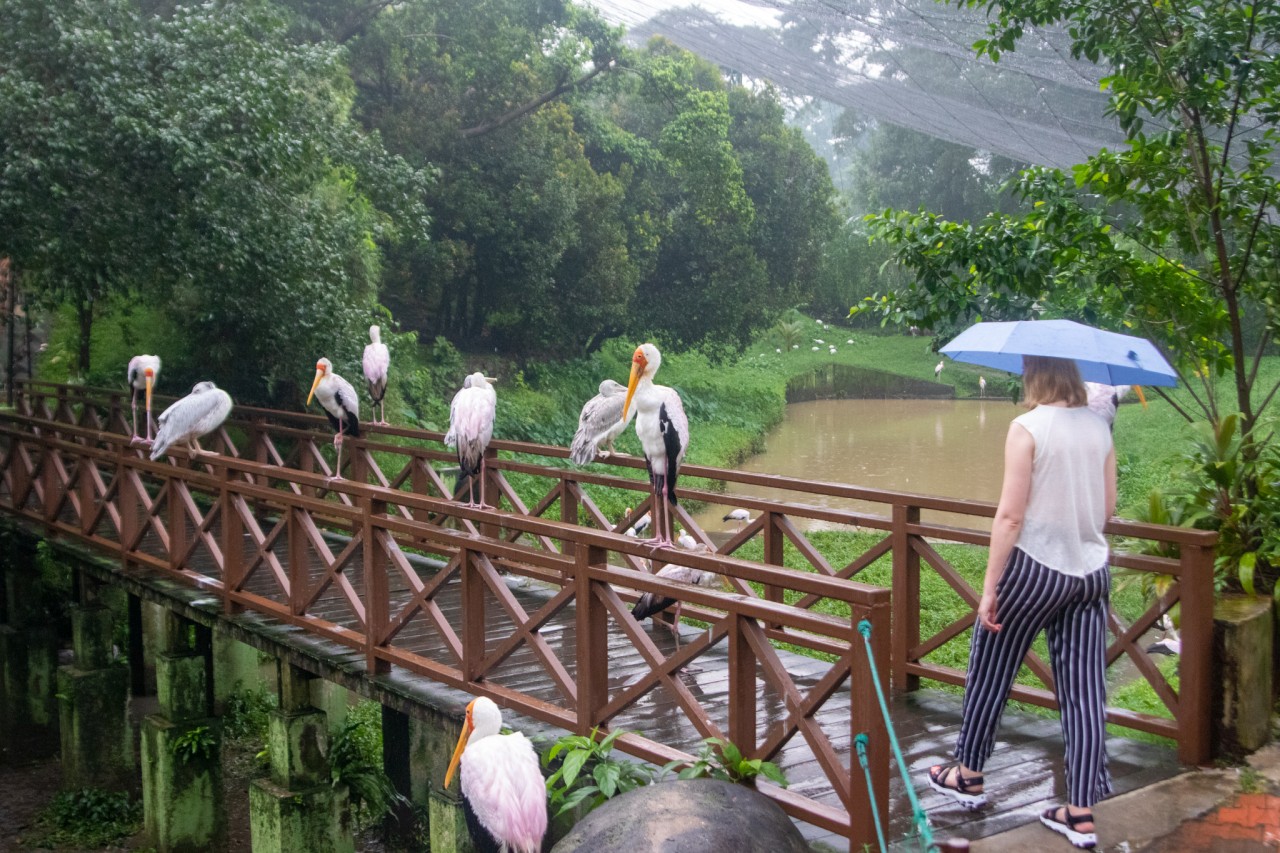
Kuala Lumpur Bird Park is one of the city’s most popular attractions – about 200,000 people visit it annually.
On a large, green area, over 3,000 birds live here representing nearly 200 species, of which as many as 90% come from Malaysia.
Walking around the park, you can see pink flamingos, intensely colorful parrots, and also the hornbill – Malaysia’s national bird, which unfortunately is now an endangered species.
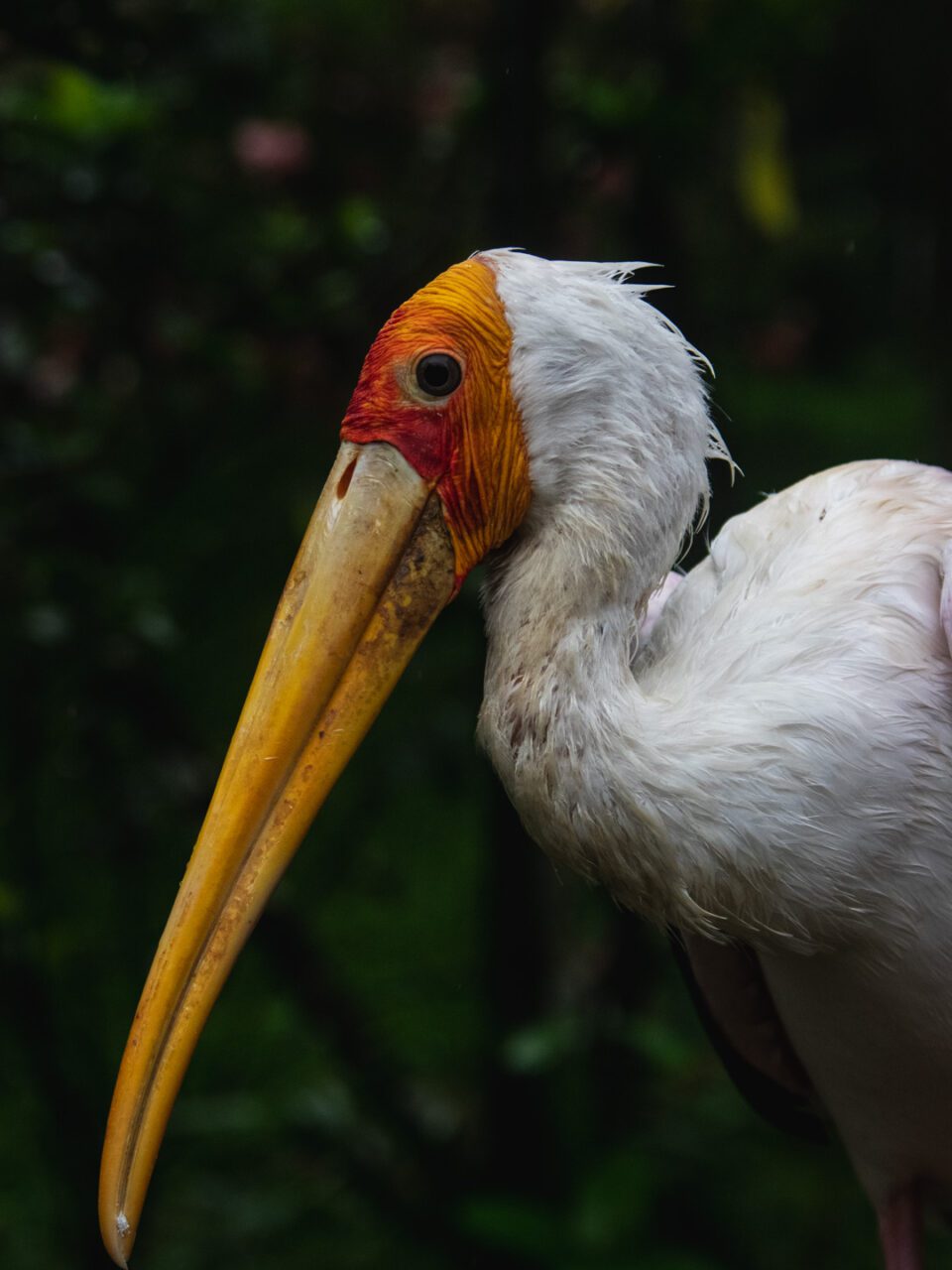
This place doesn’t impress with scale as much as with its closeness to nature. The birds aren’t “exhibits” here – they move freely, appear right nearby, perch on railings and tree branches.
The whole thing more closely resembles a green garden where you’re a guest than a classic zoo. Only a few species are in designated areas; the rest live here in their own, peaceful rhythm.
So don’t be surprised if your path is suddenly blocked by… a flock of flamingos. That’s completely normal in Kuala Lumpur.
On-site, you can feed the birds with specially prepared grain, and with a bit of luck, you’ll also catch feeding time or one of the additional attractions organized in the park.
It’s worth slowing down and simply letting yourself be led by this rhythm, instead of trying to see everything in order.
Kuala Lumpur Bird Park is divided into several themed zones.
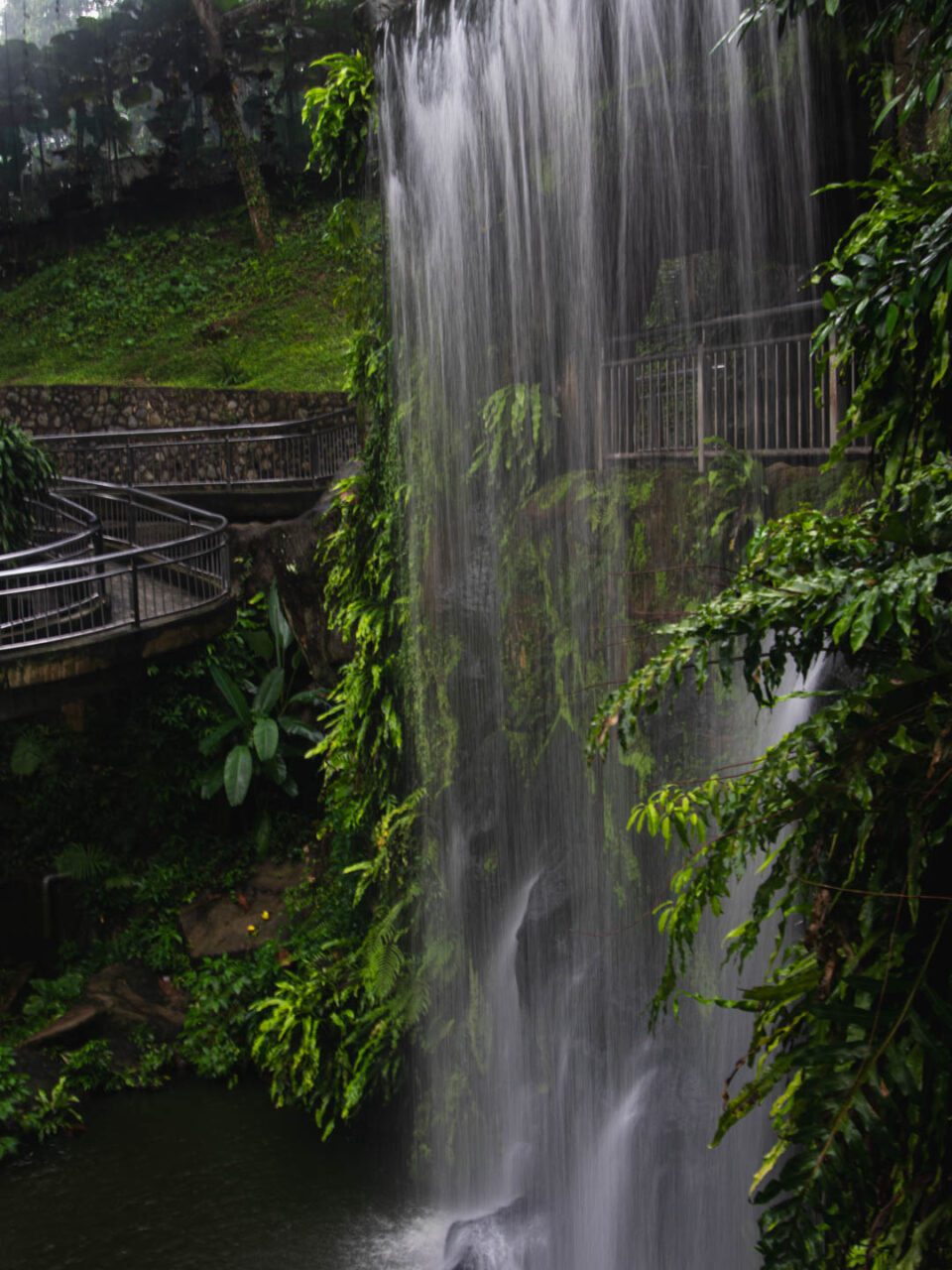
I was most captivated by the part with picturesque waterfalls – cool, green, and soothing, perfect for a breather after an intense morning in the city.
Bird Park – Tickets and Visiting Time
Entry costs 90 ringgit per adult. It’s worth reserving at least 2 hours for visiting, preferably without rushing, with time for a calm walk and stops in the shade.
Chinatown Kuala Lumpur – Walking, Eating & Temples
After visiting the park, it’s worth heading straight to Chinatown and just walking around without a plan. This is one of those Kuala Lumpur neighborhoods best explored by turning into side streets and letting the city guide you itself.
The heart of the district is Jalan Petaling – a street covered with red lanterns that give this place an almost theatrical atmosphere after dusk. In the evening, everything here thickens: light, smells, conversations, and music coming from small stalls.
The walk very quickly builds appetite. Chinatown is the perfect place if you get hungry again.
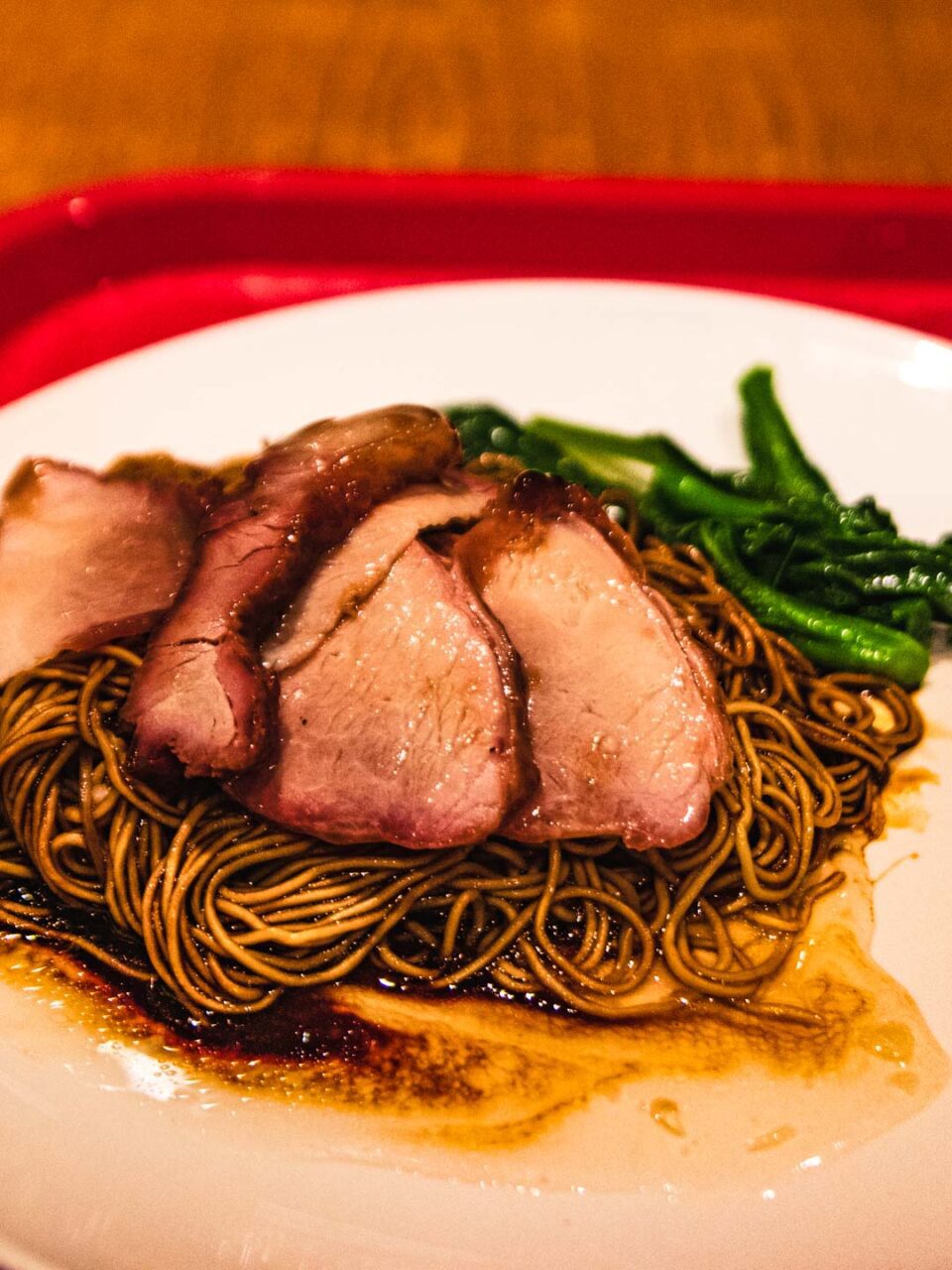
At every turn, you’ll find cheap restaurants and street stalls serving simple, classic dishes: noodles with pork, wonton soup, or quick wok dishes.
This isn’t show-off cuisine. It’s everyday food, honest and exactly what you need after a long day of walking around the city.
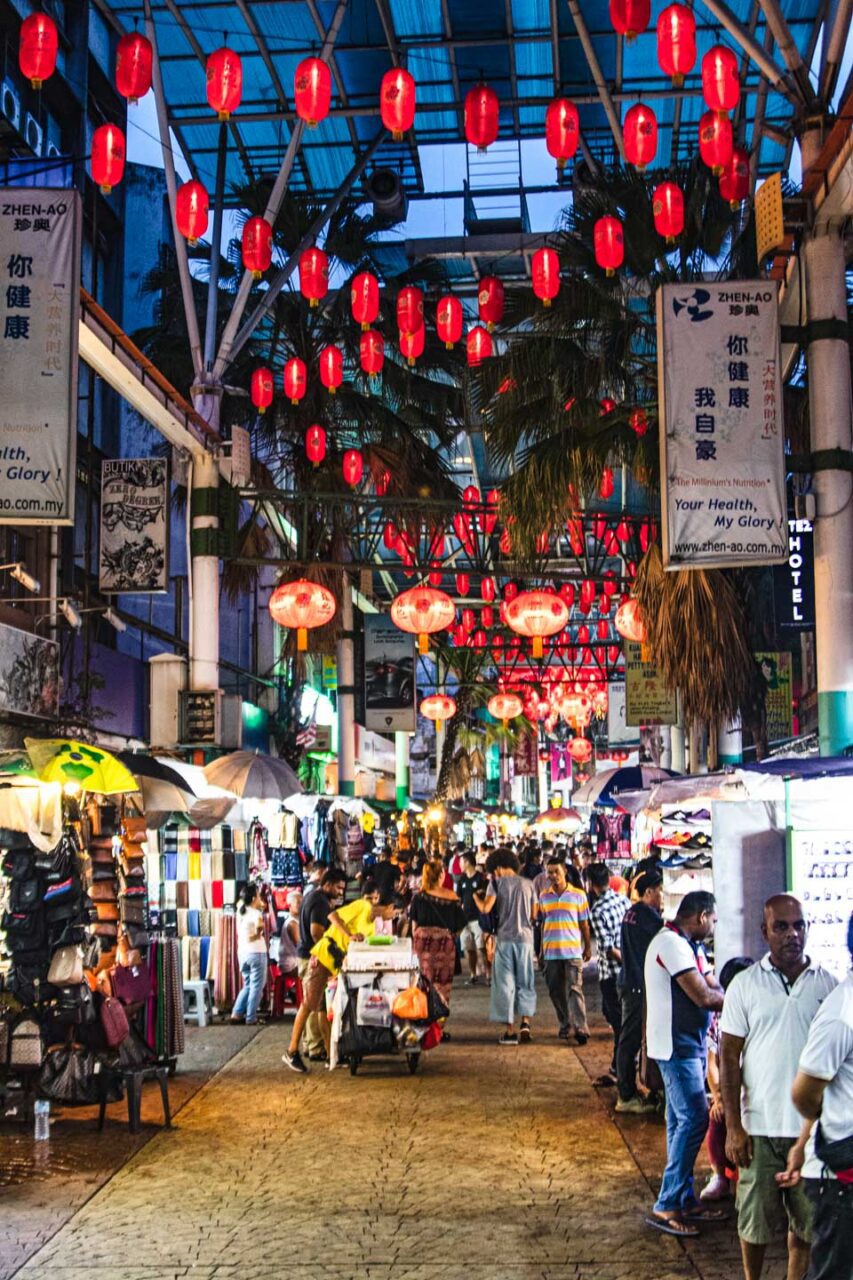
Chinatown is also a backpacker–friendly district. You’ll find plenty of hostels here and a market full of knock-offs of famous brands. That’s actually an element that doesn’t appeal to me, but it’s part of the local landscape and daily life of this area.
If you like street cuisine and unhurried browsing between stalls, Chinatown can be a little paradise for you. One important rule: bargaining is absolutely natural here.
Walking around the district, it’s also worth checking out several important spiritual places. Right next to each other stand temples of different traditions, which beautifully show the city’s cultural diversity.
Stop by Sri Mahamariamman Temple, one of the most important Hindu temples in Kuala Lumpur, as well as the Taoist Guan Di Temple and Sin Sze Si Ya Temple.
Finally, it’s worth slowing down. After an intensive walk, Chinatown is great for a coffee and dessert break. In old buildings, often on upper floors or in narrow passages, atmospheric cafes hide, which are easy to walk past indifferently.
These are exactly the places I like most: unassuming from the outside, full of character, history, and details inside. Perfect to sit, breathe, and let the day quietly close.
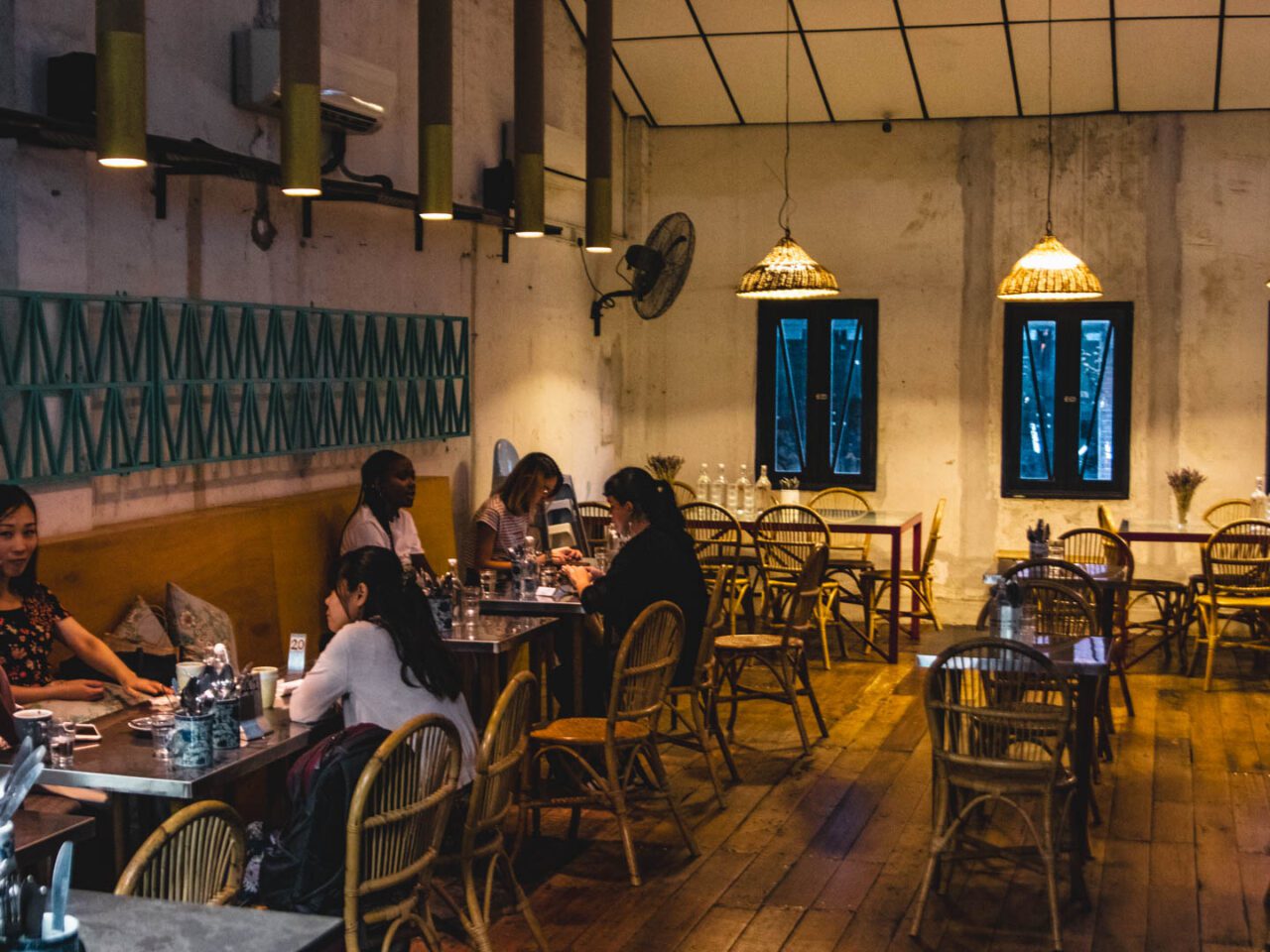
Evening Fountain Show at KLCC
After a walk through Chinatown, it’s worth closing the day with something light and undemanding – the music-and-light fountain show over the lake at KLCC. It’s a pleasant moment of transition between an intensive day and a calm evening.
The show itself lasts about 20 minutes and is exactly what you’d expect from Kuala Lumpur – impressive but not intrusive.
The music pairs well with the “dancing” water streams, and colorful lights reflecting on the lake’s surface create a nice, evening atmosphere.
This isn’t a mandatory point, but a very pleasant ending to the first day in the city.
Worth Knowing Before the Show
The show takes place daily at 8:00 PM, 9:00 PM, and 10:00 PM, right in front of Suria KLCC. It’s worth coming a bit earlier and finding a spot by the lake shore.
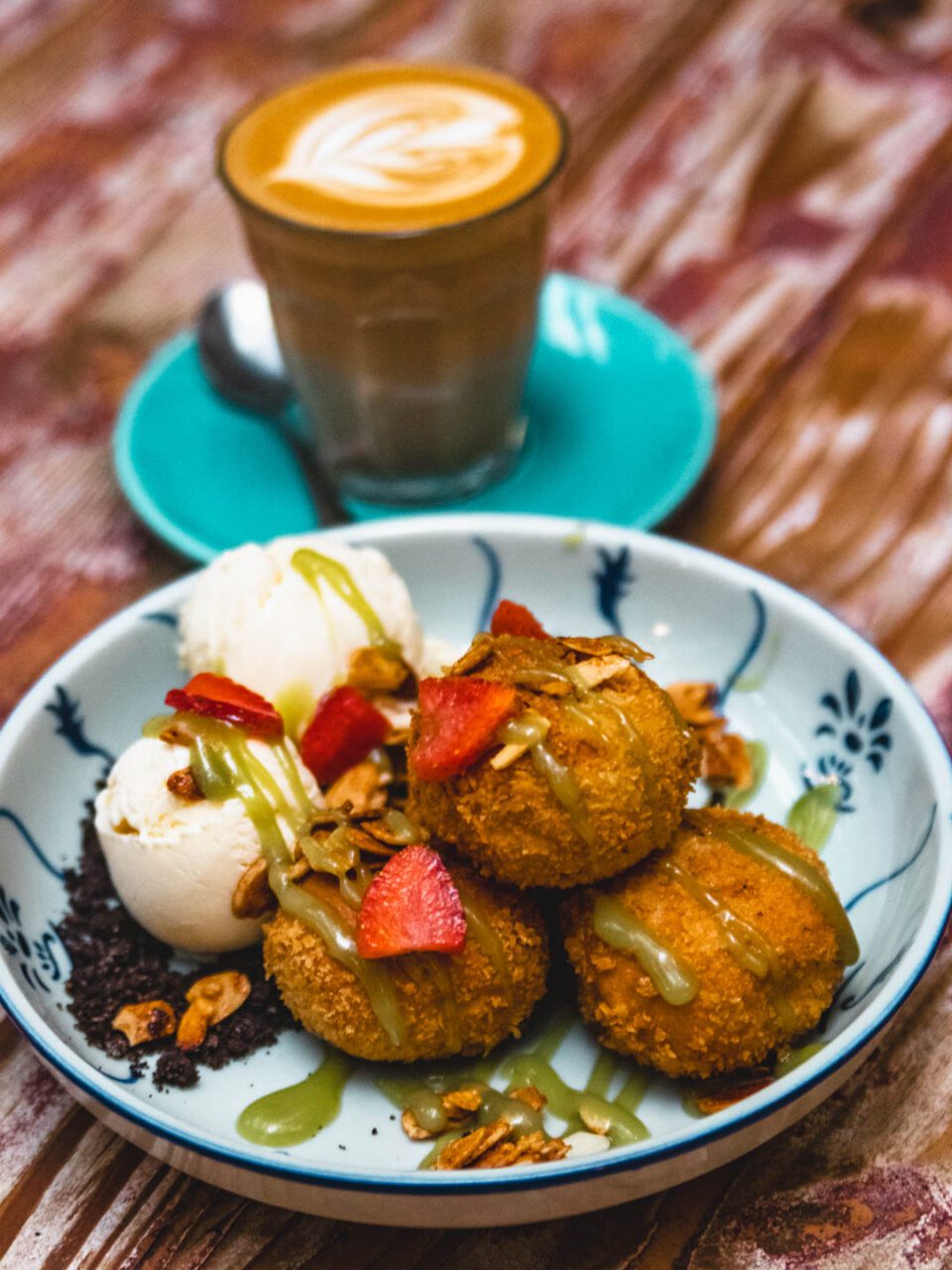
Day 2 in Kuala Lumpur: Temples, Views & Local Flavors
VCR Café Kuala Lumpur – Breakfast
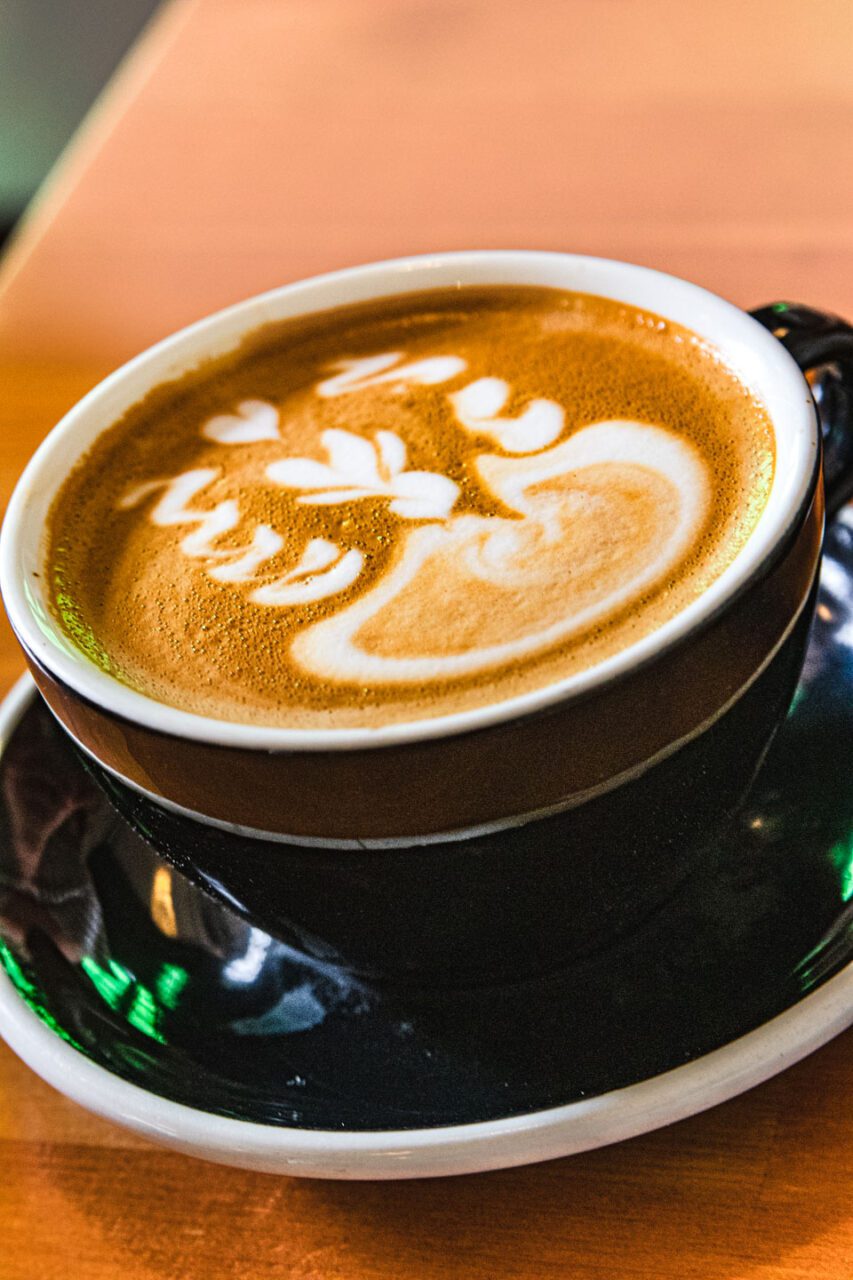
The second day in Kuala Lumpur is worth starting calmly and with a good breakfast. VCR Café Kuala Lumpur is one of those places that really stands out and that you want to return to not just for the coffee.
The cafe gained popularity thanks to carefully crafted breakfasts and brunches, as well as Tripadvisor’s Traveler’s Choice distinction.
The menu is thoughtful and diverse, so regardless of whether you eat vegetarian or prefer substantial, filling breakfasts, you’ll easily find something for yourself.
It’s a good place to slow down after an intensive first day and enter the city’s rhythm from its calmer, morning side.
An interesting fact is the cafe’s location itself. VCR Café is housed in the old Pudu district, in a building that once served as quarters for guards of the nearby prison.
Today there’s no trace of that – the interior is bright, calm, and perfectly fits the city’s morning rhythm.
When it comes to food, it’s worth going for something substantial. I recommend the homemade chipolata lamb sausage, served with roasted tomato, bacon, and toast with poached egg.
For a meatless version, a great choice is toast with feta, egg, and creamy avocado puree – simple but perfected in every detail.
It’s one of those breakfasts after which the day really starts well.
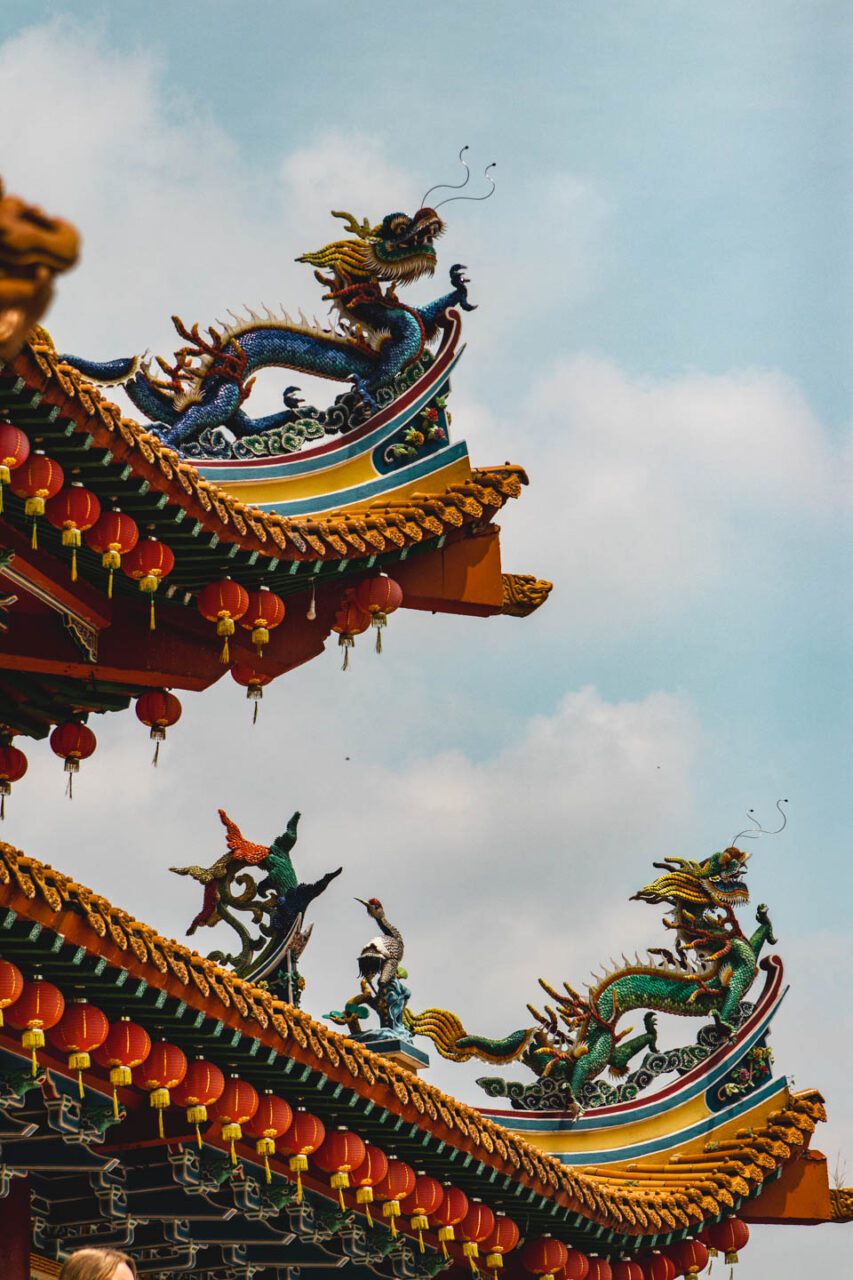
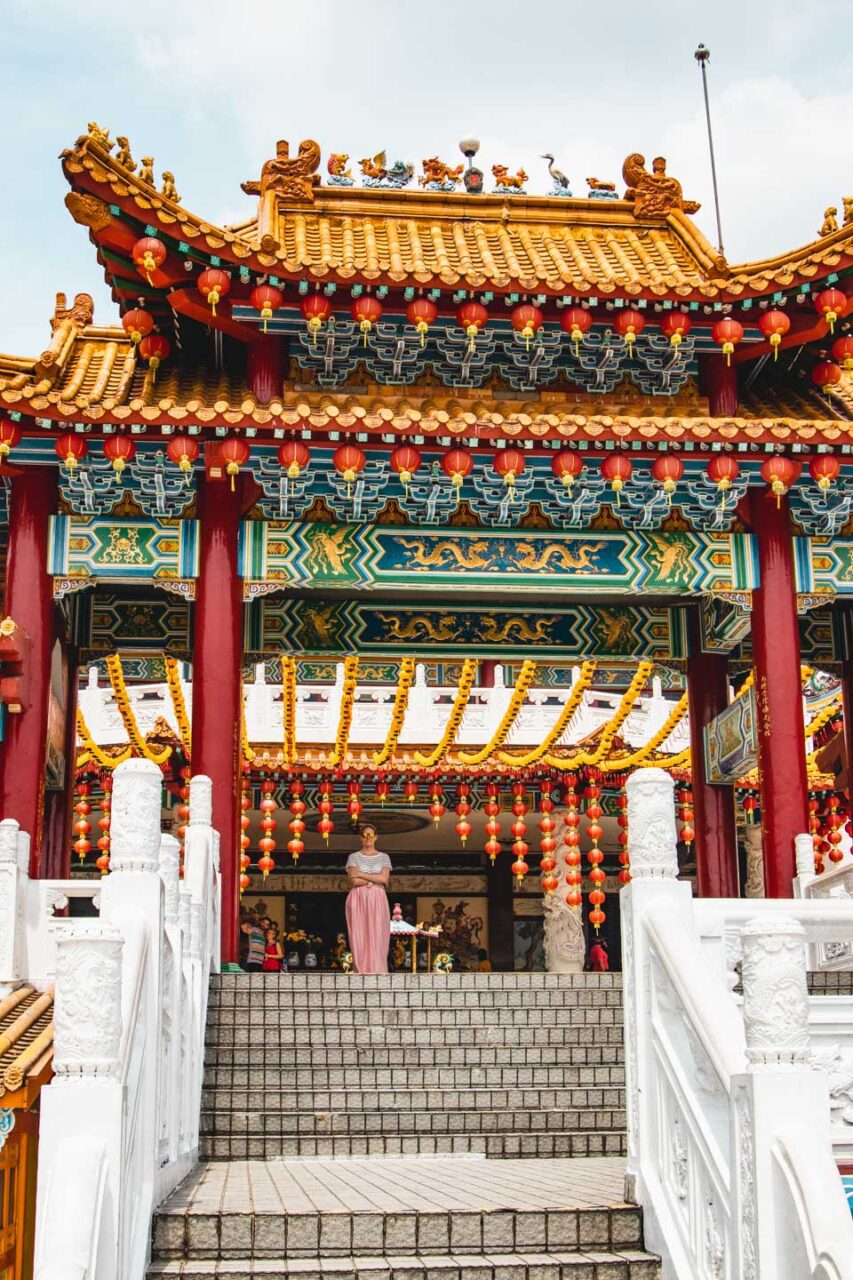
Thean Hou Temple – Chinese Temple
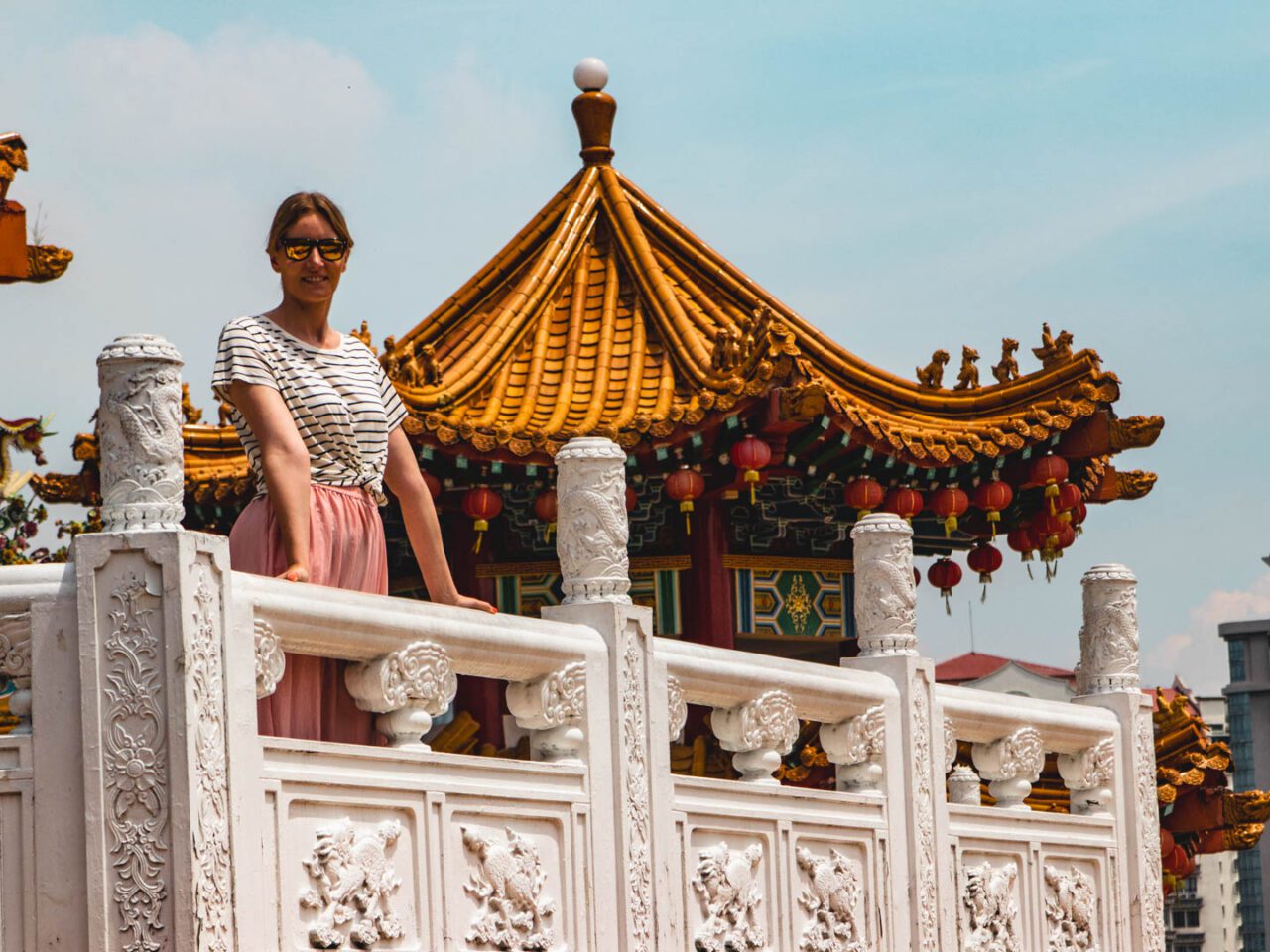
After breakfast, it’s worth going a bit outside the strict center and visiting Thean Hou Temple – one of the largest and most important Chinese temples in Kuala Lumpur.
The temple is dedicated to the sea goddess and its scale alone is impressive.
What captivated me most here was the surroundings. Extensive gardens full of sculptures seemingly taken straight from Chinese mythology, and views of the city stretching from Robson Hill make this place have peace and lightness.
Perfect for a moment of stopping and breathing after an urban morning.
Not everything there matched my taste, though. The section with souvenirs and religious items on the ground floor is quite commercial and somewhat spoils the atmosphere.
So it’s worth treating it as an addition and focusing on what’s truly unique – the space, details, and silence high above the city.
![Thean Hou Temple in Kuala Lumpur – one of the most photogenic places in the city]
An interesting fact is that on the first floor of the temple there’s a hall rented out for various celebrations, including traditional Chinese weddings.
It’s a quite surprising combination of the sacred with a very practical approach to everyday life.
Next to the richly decorated prayer hall with an image of the goddess, you’ll also find a completely ordinary interior – with a waiting room, chairs, a display screen, and a machine dispensing numbers.
This contrast may initially seem odd, but it quickly becomes one of the most characteristic elements of this place.
And of course, every Chinese wedding includes a commemorative photo. A specially prepared photo wall awaits newlywed couples, and the whole thing has something very local, sincere, and not overly stylized about it.
It’s exactly for such details that I love Thean Hou Temple – it combines spirituality with everyday life in a completely natural way.
Thean Hou Temple – Getting There and Entry
- Entry: free, though donations are welcome.
- Getting there: no direct public transport. The most convenient option is a taxi, preferably through Grab.
- Food: on the ground floor there’s a restaurant serving Chinese cuisine and vegetarian options at affordable prices. A good place for a quick meal before further sightseeing.
Lot 10 Hutong – Where to Eat Locally
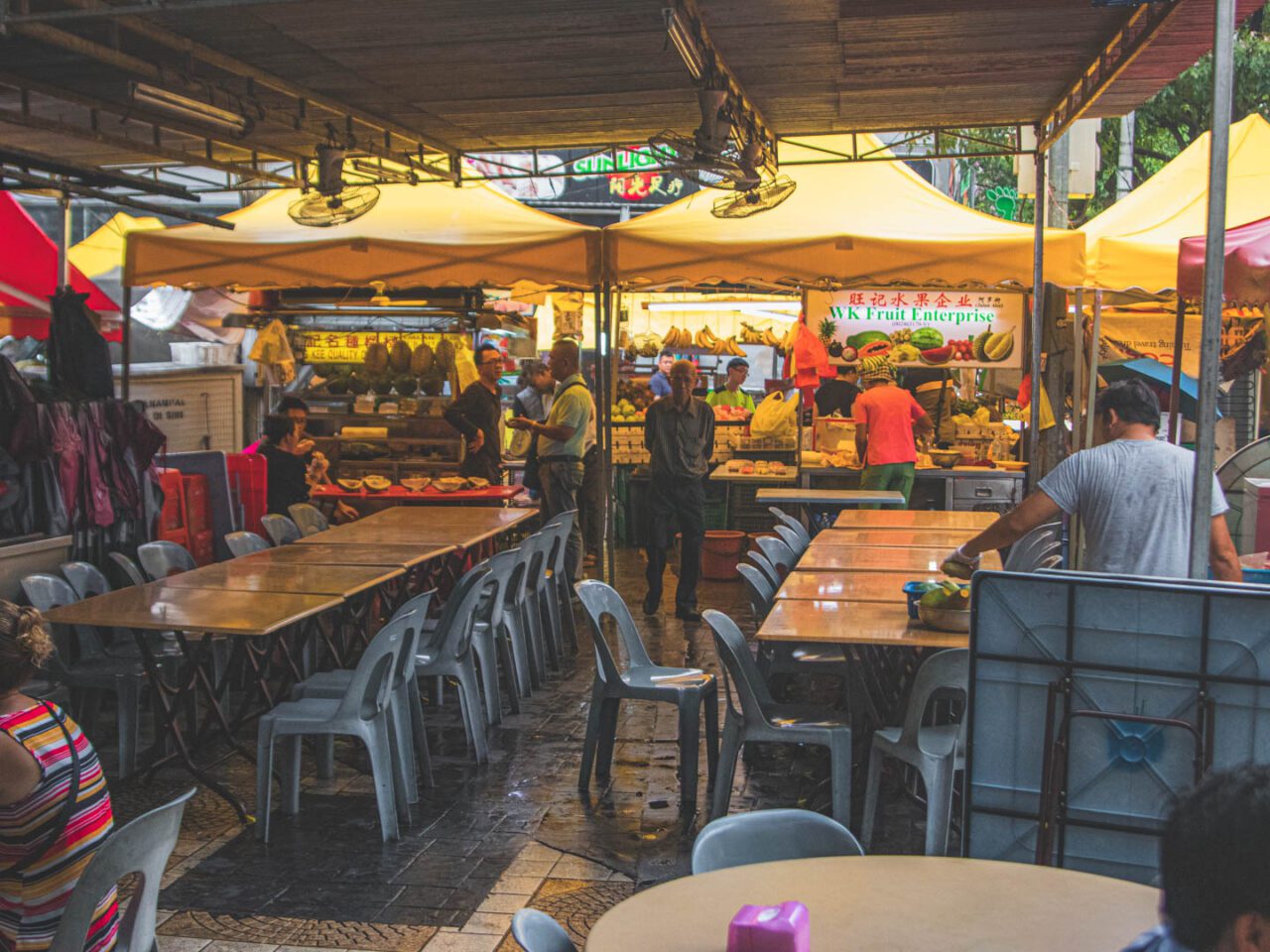
The penultimate place really worth visiting when exploring Kuala Lumpur in 2 days is Lot 10 Hutong – a food court hidden in the basement of the Lot 10 shopping center.
This isn’t an ordinary food court. Lot 10 Hutong is a tribute to local cuisine and street food that Malaysians take very seriously.
You’ll find over 30 stalls here, often run by the same families for several generations. No pretense, no trends – what counts is taste and consistency.
If you don’t know where to start, I recommend these tried classics:
- Wonton pork noodles from Ho Weng Kee
- Beef noodles from Soong Kee – worth trying both versions
- Char kway teow from Penang Famous Fried Kway Tiao & Prawn Mee
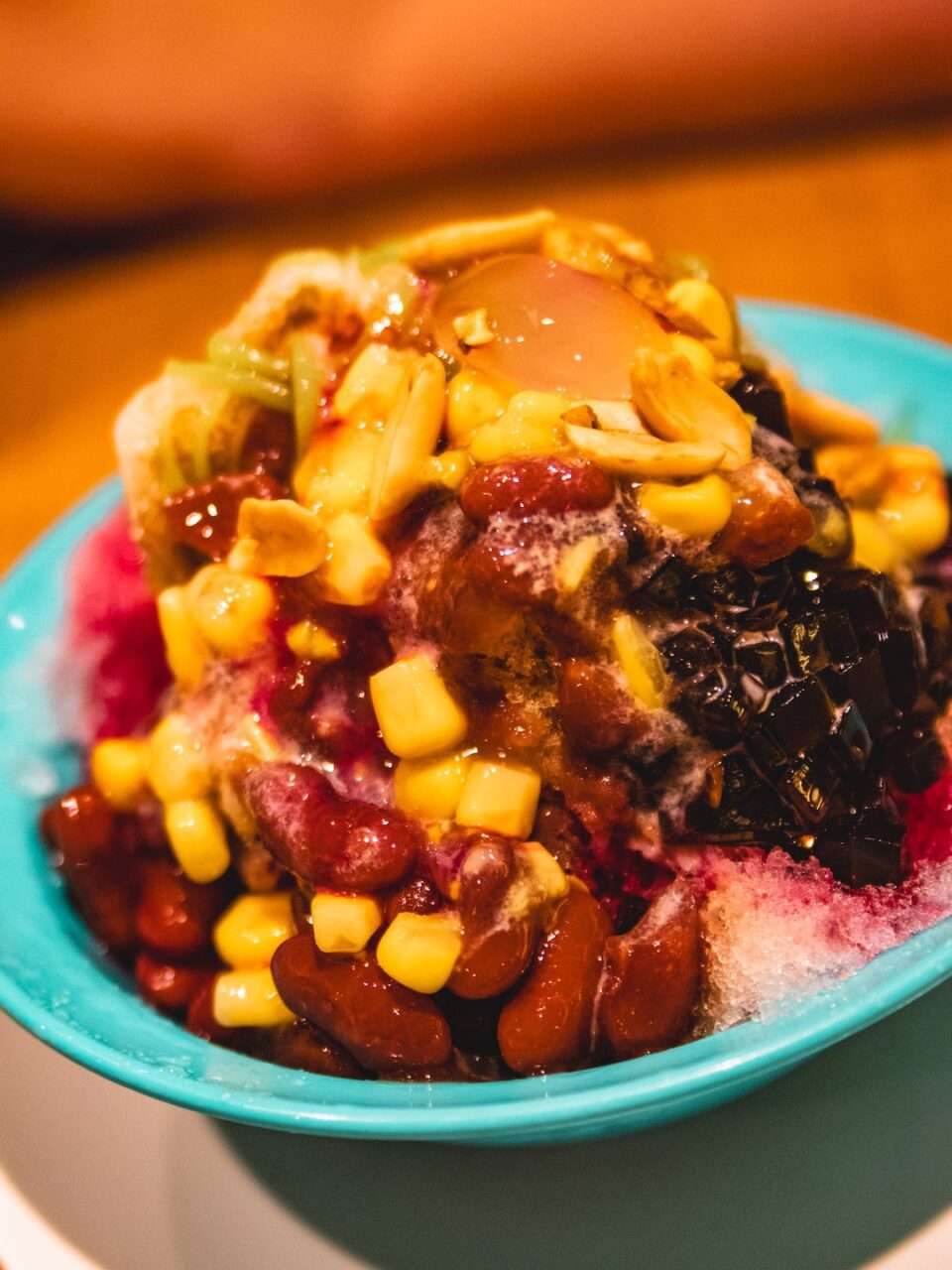
- Ais kacang from Oriental Dessert
I have to admit that ais kacang quickly became one of my favorite Asian desserts.
Who would have thought that a combination of ice, beans, and sweet toppings could be that good? It’s the perfect ending to a day – light, cooling, and very local.
If you want to really taste Kuala Lumpur, this place says more about the city than many guidebooks.
If you want to discover more culinary gems of Kuala Lumpur, see my complete guide to the best dishes in the Malaysian capital.
If you want to discover more culinary gems of Kuala Lumpur, see my complete guide to the best dishes in the Malaysian capital.
Menara Kuala Lumpur – Viewpoint
Exploring Kuala Lumpur in 2 days is worth closing high – literally.
Menara Kuala Lumpur is one of the world’s tallest TV towers, measuring 421 meters, and the view from the observation deck really stays in your memory.
The city stretches from here in all directions and you suddenly see how sprawling and green it is.
At a height of 282 meters, there’s also the SkyBox and a modern, revolving restaurant – a proposition for those who like to combine dinner with a view and a light “wow” effect.
Even if you don’t decide to go inside, just being at the top does its thing.
It’s a very pleasant way to peacefully end your stay in the Malaysian capital – with distance, a view, and a moment of reflection on a city that can surprise you right to the very end.
Menara Kuala Lumpur – Tickets and Hours
Entry:
- Sky Deck + Observation Deck: 110 ringgit per adult
- SkyBox: additional 10 ringgit per person
It’s worth buying tickets online in advance, especially if you’re aiming for a specific time or sunset.
How Do You Want to Continue Your Asian Adventure?
🍜 Culinary Express → 10 Must-try Dishes in KL – full list of my favorite flavors
🇲🇾 Discover All of Malaysia → Best Places in Malaysia – where to go after Kuala Lumpur
🌴 The Jungle Awaits → 10 Reasons to Visit Taman Negara – real Malaysian nature
🇸🇬 Next Stop → Singapore Slow City Guide – perfect combination with KL
Which adventure appeals to you most?
Useful Tips Before Traveling to Kuala Lumpur
Are 2 Days Enough for Kuala Lumpur?
Yes – 2 days in Kuala Lumpur are completely sufficient if you’re not trying to see everything at once.
It’s a good amount of time to get to know the city center, check out a few characteristic neighborhoods, eat well, and see how this city really functions day-to-day.
Two days allow you to see the most important places without pressure and leave room for spontaneous moments – coffee in Chinatown, an evening walk by the towers, or dinner at a local food court.
This isn’t a city that requires a week of intensive sightseeing.
However, if you like to dig deeper, slow down the pace, and return to the same places several times, 3 days will be even more comfortable. But as a first contact with the city – two days work very well.
If you’re planning a longer stay in Malaysia, definitely check out the most interesting places to visit in the entire country – Kuala Lumpur is an excellent starting point for further travel.
If you’re planning a longer stay in Malaysia, definitely check out the most interesting places to visit in the entire country – Kuala Lumpur is an excellent starting point for further travel.
Is Kuala Lumpur a Good Stop in Malaysia?
Yes. Kuala Lumpur works very well as a stop on a journey through Malaysia, especially at the beginning of the route or between flights.
It’s a city that lets you quickly feel the country – its diversity, cuisine, and pace – without needing a long stay.
KL has great flight connections and is a convenient starting point for further travel, for example to islands, into the jungle, or to smaller cities.
For many people, it’s also their first encounter with Malaysia, helping them ease into the rhythm of Southeast Asia.
So if you’re hesitating whether to stop here at least for a moment or just fly on – it’s worth giving Kuala Lumpur its own place on the route rather than treating it solely as a transit airport.
When to Visit to Kuala Lumpur?
The best time to visit Kuala Lumpur is considered to be from June to August.
These are the months when the weather is most predictable – there’s usually less rain, and temperatures, though still high, are easier to bear.
June worked out very well for me. Sure, there were passing showers, but they weren’t bothersome and didn’t interfere with sightseeing at all.
In a tropical climate, rain often appears suddenly and disappears just as quickly – it cools the air more than it ruins plans.
However, it’s worth keeping in mind one thing: Kuala Lumpur lies in a tropical climate zone, so rain can appear at any time of year.
The best approach is to accept this rhythm, plan your day with a margin of flexibility, and… a light jacket in your backpack.
How to Get to Kuala Lumpur?
The most convenient way to reach Kuala Lumpur from the USA is by plane.
Currently, there are no direct flights, so the journey will involve at least one layover – but fortunately, there are several sensible route options.
The most popular departure points from the USA are San Francisco (SFO), Los Angeles (LAX), and New York (JFK). All three cities offer well-connected routes to Kuala Lumpur International Airport (KLIA).
Airlines offering connections to Kuala Lumpur include:
- Emirates – with a layover in Dubai
- Qatar Airways – with a layover in Doha
- Singapore Airlines – with a layover in Singapore (this was my chosen option and I was very happy with it)
The flight is long – depending on the chosen route and layover duration, you’re looking at about 15 to 20 hours total travel time. But a well-planned layover can make a huge difference.
If you can, choose a connection that gives you a bit of breathing room between flights. In Southeast Asia, you really appreciate comfort after arrival.
Looking for cheap flights? Check out my proven ways to find the best flight deals – I use the same methods for every trip.
Round-trip ticket prices typically start around $800 USD, though with promotions and flexible dates you can sometimes find better deals. For standard dates and popular travel times, it’s worth budgeting a bit higher.
The main airport is Kuala Lumpur International Airport (KLIA), from where you can easily get to the city center by train (KLIA Express), taxi, or Grab.
Good news at the end: US citizens can stay in Malaysia without a visa for up to 90 days. Just remember that your passport must be valid for at least 6 months from your planned entry date.
It’s one of those destinations where formalities are simple, and the rest depends only on how much you want to slow down on the other side of the world.
How to Get Around Kuala Lumpur?
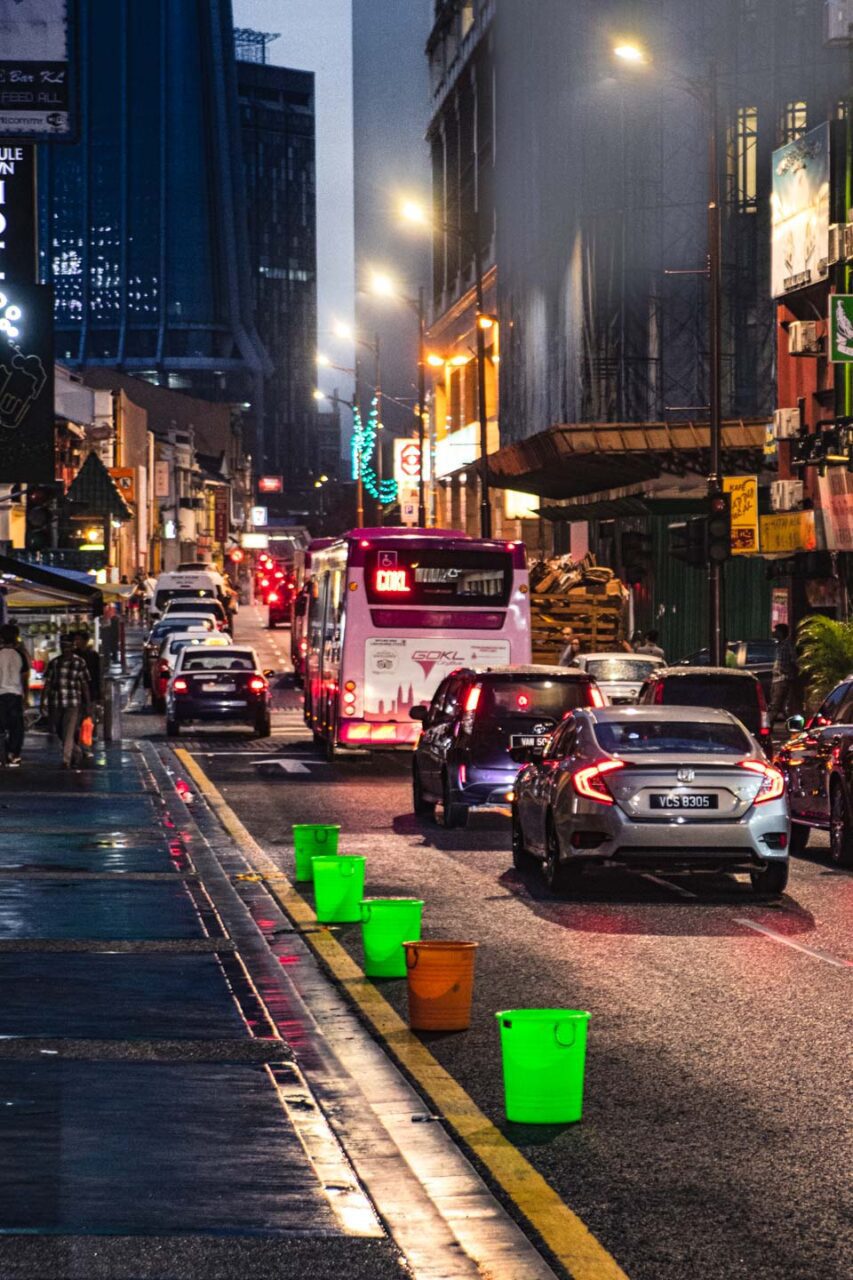
Getting around Kuala Lumpur is simple and convenient, even if you’re here for the first time.
I most often used Grab and that’s definitely the best option for a short stay. Rides are cheap, fast, and save a lot of energy, especially in the heat and humidity.
From Kuala Lumpur International Airport (KLIA) to the city center, you can easily get by train (KLIA Express), taxi, or Grab.
All options are well organized, so from the very start of the trip, you don’t need to “figure anything out.”
Public transport in the center works properly, but with limited time it’s often less practical than a taxi.
That’s why if you’re planning sightseeing according to points scattered around the city, Grab wins on convenience.
In Kuala Lumpur, it’s really worth managing your energy sensibly – the city is sprawling, and the pace of the day can take its toll.
How Much Do 2 Days in Kuala Lumpur Cost? (Without Accommodation & Flights)
Two days in Kuala Lumpur don’t have to be expensive, especially if you focus on food, walks, and a few selected attractions instead of intensive “checking off.”
With a very comfortable but sensible pace, it’s worth assuming approximately:
Food
- breakfast at a cafe: 25-40 MYR
- lunch or dinner at a food court or local eatery: 15-30 MYR
- coffee or dessert: 10-20 MYR
Realistically, 60-90 MYR per day is enough for food, and with street food even less.
Transport
The most convenient option is Grab. Short rides in the center usually cost 6-15 MYR, and 30-50 MYR is easily enough for two days of sightseeing.
Attractions
Many places in Kuala Lumpur are free. If you choose 1-2 paid attractions, like an observation deck or Bird Park, you need to add about 90-130 MYR per ticket.
Summary
A realistic budget for 2 days in Kuala Lumpur is about 200-350 MYR per person, depending on sightseeing style and number of attractions.
It’s a very good price-to-quality ratio – great food, cheap transport, and a lot of city, without the feeling that every day strains the budget.
Travel lighter, even before you leave.
start with something simple.
Download The Minimum Plan – Slow Travel:
Where to Stay in Kuala Lumpur – Tried Location
Kuala Lumpur offers a huge choice of places to stay – from simple, budget hotels in Chinatown to modern apartments and luxury high-rises with city views. Regardless of budget, it’s really easy to find something sensible.
I chose KL Platinum Suite 42 By SNC and it was an absolute bullseye.
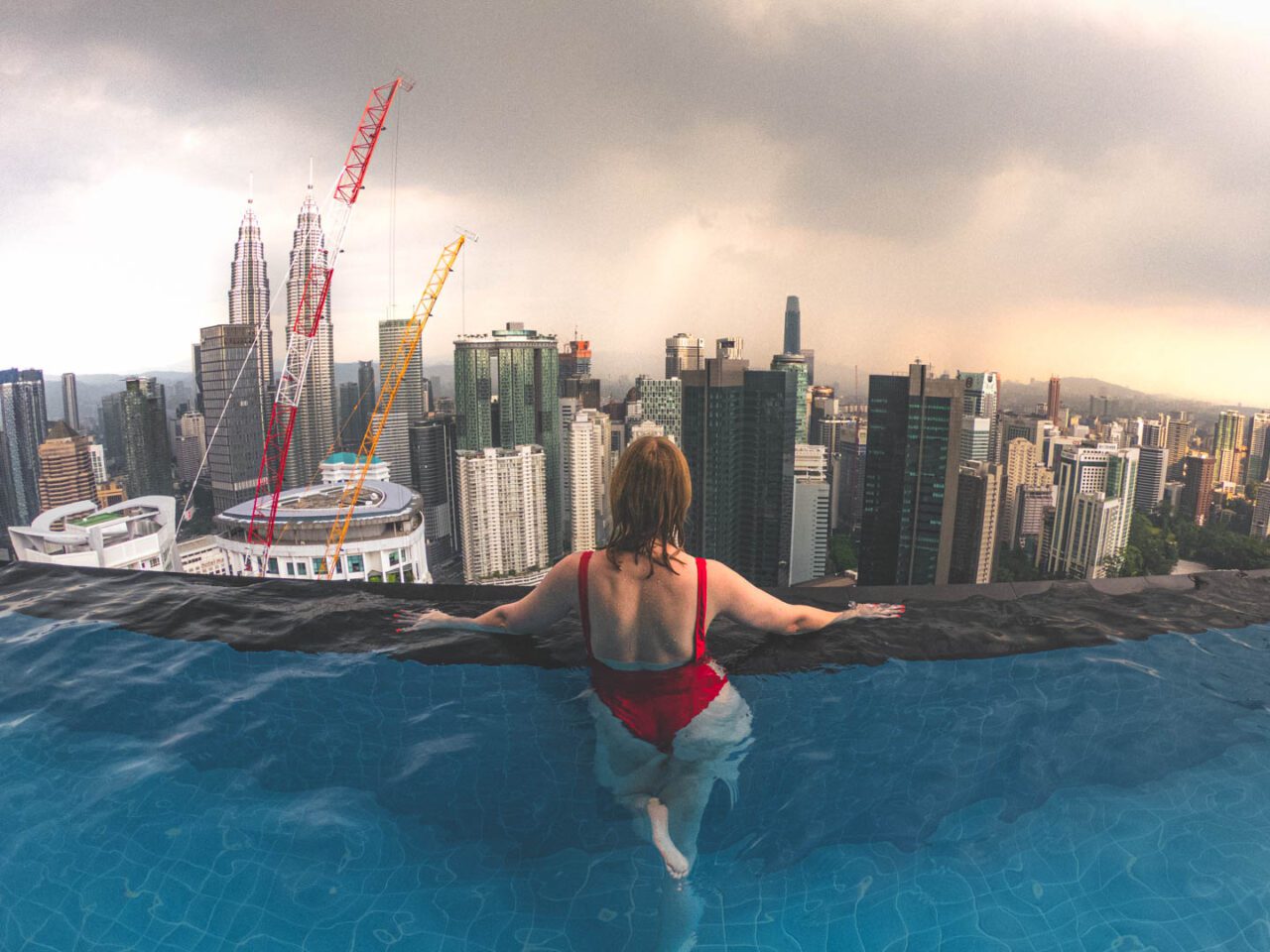
The apartment was spacious, modernly furnished, and offered views of the Petronas Towers, less than a kilometer away. The view was especially impressive in the evening when the city started to light up.
A huge plus was the infinity pool on the 51st floor and fitness center, accessible until late hours. These are some of those amenities that really raise comfort and make even a day “without a plan” pleasant.
The only minus was the lack of breakfast included in the price. Sure, you could order it at the restaurant in the building, but the cost was definitely higher than my daily food budget.
Fortunately, in Kuala Lumpur that’s no problem. If you don’t feel like leaving the apartment, just order food through Foodpanda.
They deliver right to your door, quickly and for a really small fee. Perfect solution after a long day of sightseeing or when the rooftop pool wins out over city plans.
Kuala Lumpur Stays in Your Memory
Kuala Lumpur taught me that big cities can be soft. That modernity doesn’t have to exclude tradition, and cultural diversity can simply taste good.
It’s a city best explored through food, walks, and allowing yourself spontaneous turns into unknown streets. Two days are enough to feel it. Enough to want to come back.
Kuala Lumpur has everything you can expect from an Asian capital, and a bit more. Modernity mixes with tradition here, and the city’s pace allows for both intensive sightseeing and moments of simply being.
KL’s greatest strength is its cuisine. Diverse, deep, and absolutely engaging. And the places that show how many cultures meet here daily. It’s an ideal destination if you want to feel Asia without the pressure of “checking off everything.”
If Kuala Lumpur appears on your route through Malaysia, it’s really worth stopping here for a moment instead of treating it solely as a transit point.
Ready to Explore More of Asia?
- 10 Must-try Dishes in KL – complete guide to Malaysian flavors
- Best Places to Visit in Malaysia – where to go from Kuala Lumpur
- How to Find Cheap Flights – proven methods for saving
- Singapore Slow Guide – combines perfectly with KL on one route
If you’re reading this text while planning a trip, I hope it helps you find your own rhythm in this city. If you’ve already been to Kuala Lumpur, let me know in the comments what surprised you most.
If this guide proved helpful, I’d be very happy if you passed it along.
Save the pin!
This article contains affiliate links. If you make a booking through these links, I may earn a commission, supporting this blog. Rest assured, my recommendations are based on honest assessments, and using these links doesn't affect prices for you. Thank you for your support!