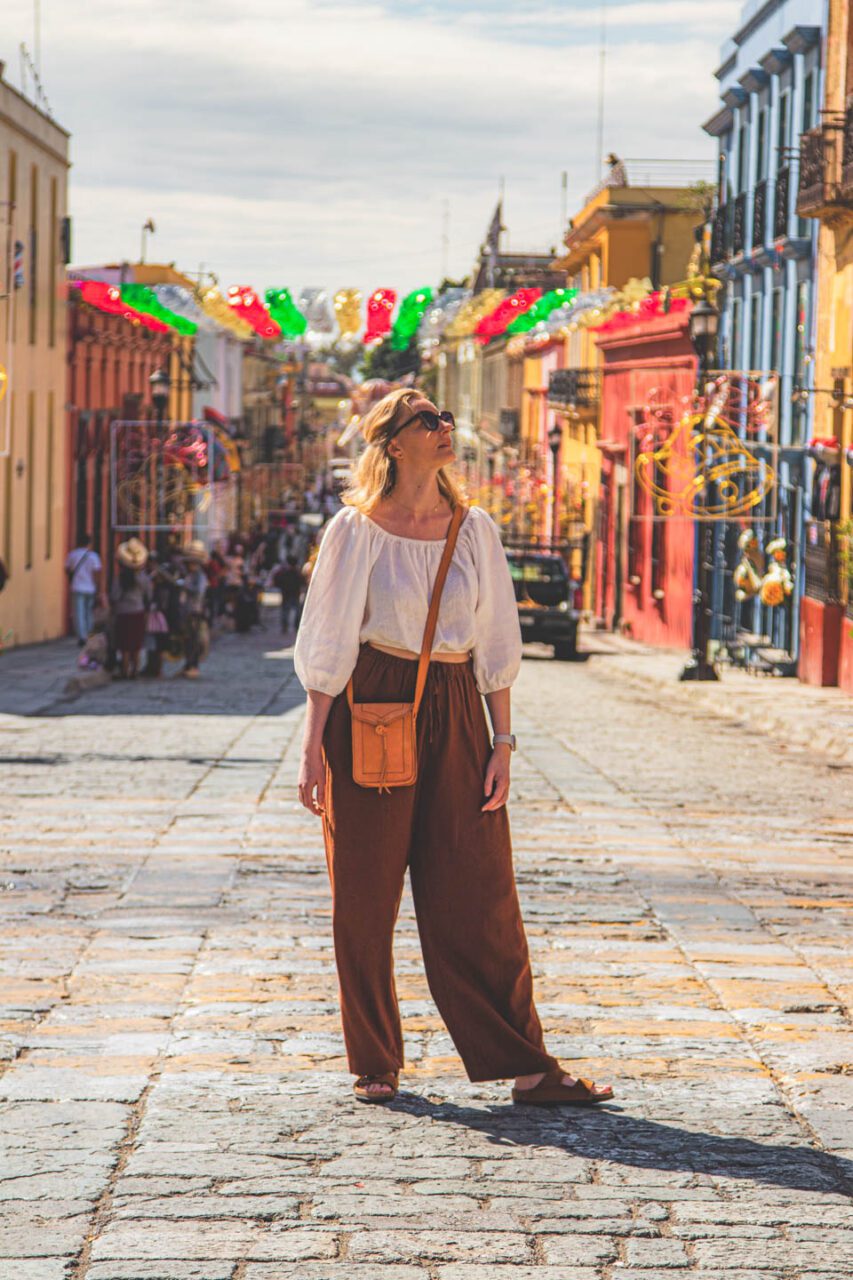
If I had to describe Oaxaca in one sentence, I’d say it’s a city you smell before you see.
If you’re wondering what to see in Oaxaca, the answer isn’t obvious. This isn’t a city for “checking off attractions” – it’s a place you get to know slowly, through scents, flavors, and daily rituals.
The smell of copal rising in churches mixes with the aroma of freshlygroundcoffee from Oaxaca’s mountains and smoke from comal where tortillas have been baking since dawn.
In the background, there’s the tart note of fermenting pineapple in tepache.
Oaxaca is ritual. In every cup of cacao. In every plate of mole. In the murals on the walls of Barrio de Jalatlaco.
It’s also a city of contrasts. Michelin-starred restaurants and polished boutique hotels. Next to them, the simple life of residents. Food stalls wedged between buildings. Houses with corrugated metal on the hills beyond the city.
Ceremonial cacao and plastic carts with tejate exist here side by side. Without tension. Without needing to choose.
I spent four days here. And I know one thing. It wasn’t enough.
Day 1: First immersion in the city – cooking class, wedding processions, grilled tlayudas
Day 2: Tejate from the street, Mercado 20 de Noviembre market, Barrio de Jalatlaco and long coffee shop stays
Day 3: Monte Albán, local crafts, two kilos of liquid chocolate, and dinners off the map
Day 4: Museum at Santo Domingo, last walks and saying goodbye to the city at the table
This is a reference point, not a checklist. Oaxaca tastes best when you let the days flow.
Who This Travel Style Is For (And Who It’s Not)
This Oaxaca guide was created for people who want to feel the city from the inside – at their own pace, without a checklist.
This plan is for you if you:
Can sit in a cafe for an hour without your phone
Prefer one good meal over five eaten in a rush
Count moments, not attractions
Accept that sometimes coffee spills and nothing happens
Look for places that feel, not just look
This plan might not be for you if you:
Must “check off” everything on the list
Plan five cities in a week
Can’t sit still in one place
Need a plan for every hour
Before you go further, it’s worth sitting down for a moment. Oaxaca doesn’t like rushing.
Casa Arrona – A Boutique Hotel in Oaxaca with Soul
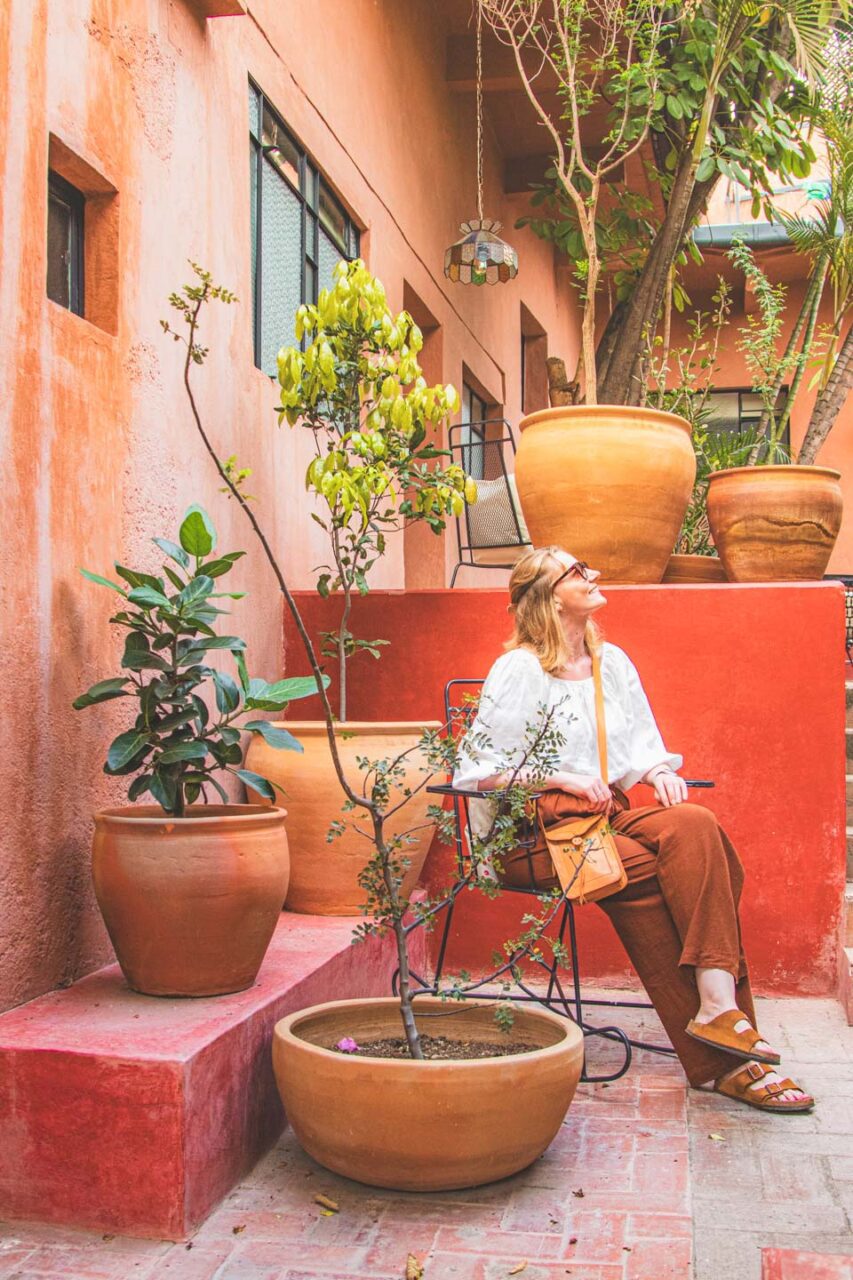
We stayed at Casa Arrona, a boutique hotel in Oaxaca, located not far from Centro Histórico.
A restored building from the 1950s, where you feel the design immediately. In the tiles on the floor. In the wooden beams on the ceiling. In proportions that are rare today.
Our room was spacious, with a private patio. That’s where I drank coffee in the morning, listening to the sounds of Oaxaca waking up. Footsteps on the street. First conversations. A city just beginning its day.
Breakfast from the chef was included in the price – fresh tostadas with avocado, coffee from a local roaster, Mexican eggs. But it wasn’t about the food. It was about having time to feel it.
Price: $180 per night with breakfast. And honestly? One of the best boutique hotels in Mexico I’ve stayed in.
I also described Casa Arrona separately – with details, photos, and who this hotel really makes sense for. Full Casa Arrona review here.
I also described Casa Arrona separately – with details, photos, and who this hotel really makes sense for. Full Casa Arrona review here.
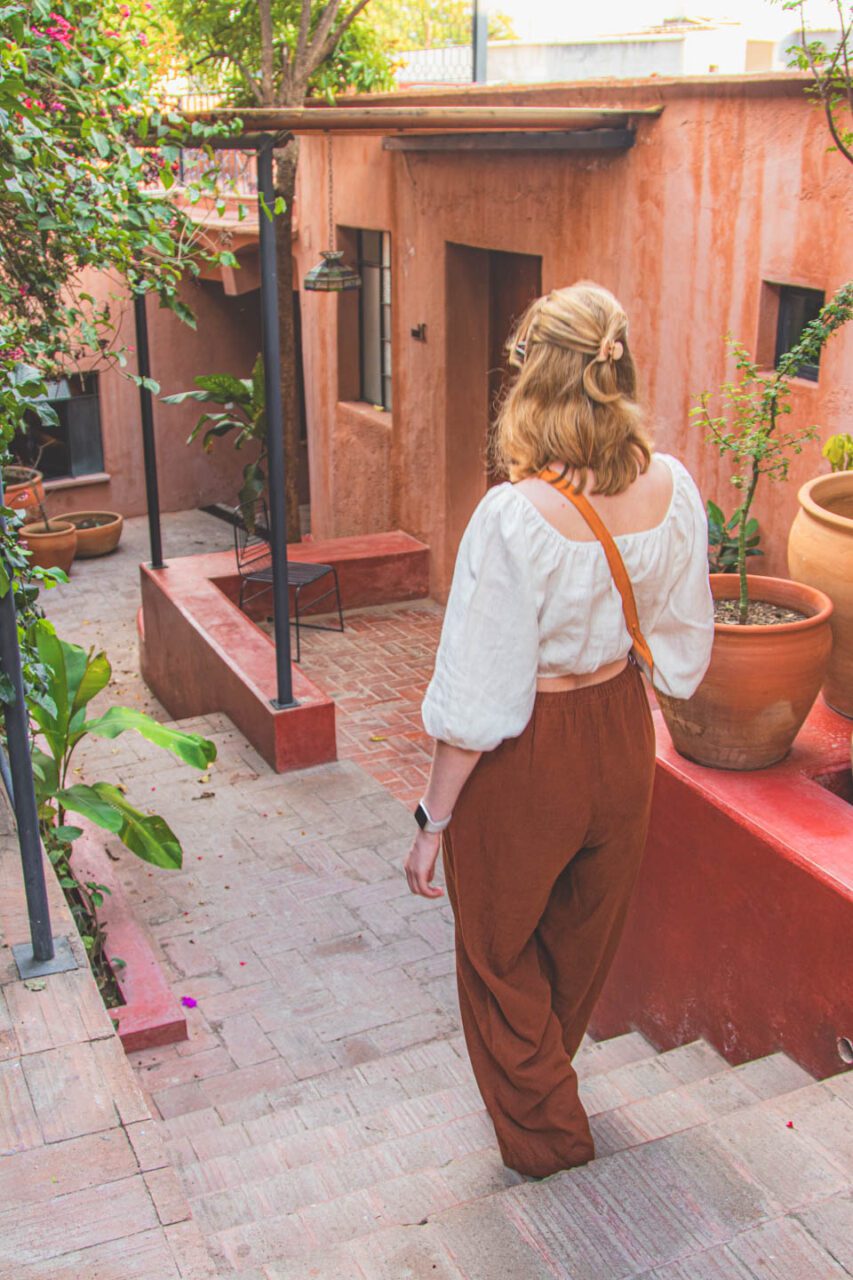
Walking back through the courtyard. Casa Arrona, Oaxaca
If you’re wondering where to stay in Oaxaca on a smaller budget, it’s worth checking out guesthouses and small boutique hotels around Centro Histórico and Barrio de Jalatlaco.
These are some of the best neighborhoods to stay in Oaxaca if you want to be close to the city but without the tourist bustle.
What to See in Oaxaca (Beyond the Checklist)
If I had to point out what to see in Oaxaca, I’d start not with monuments but with experiences.
Monte Albán, Mercado 20 de Noviembre, Barrio de Jalatlaco, and local kitchens are places that best show what Oaxaca really is.
This city’s attractions aren’t about “seeing” – they’re about being in the middle, at the table, at the market, on the street.
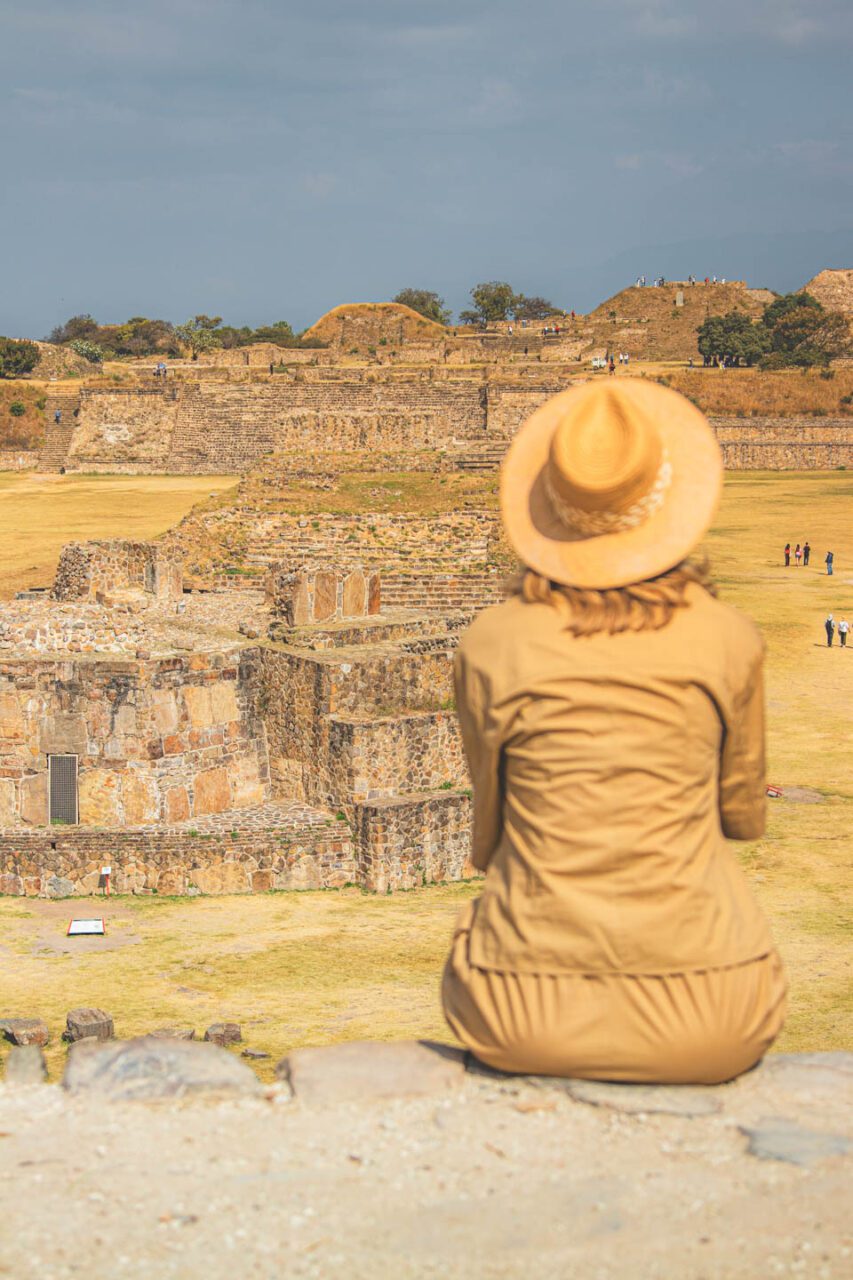
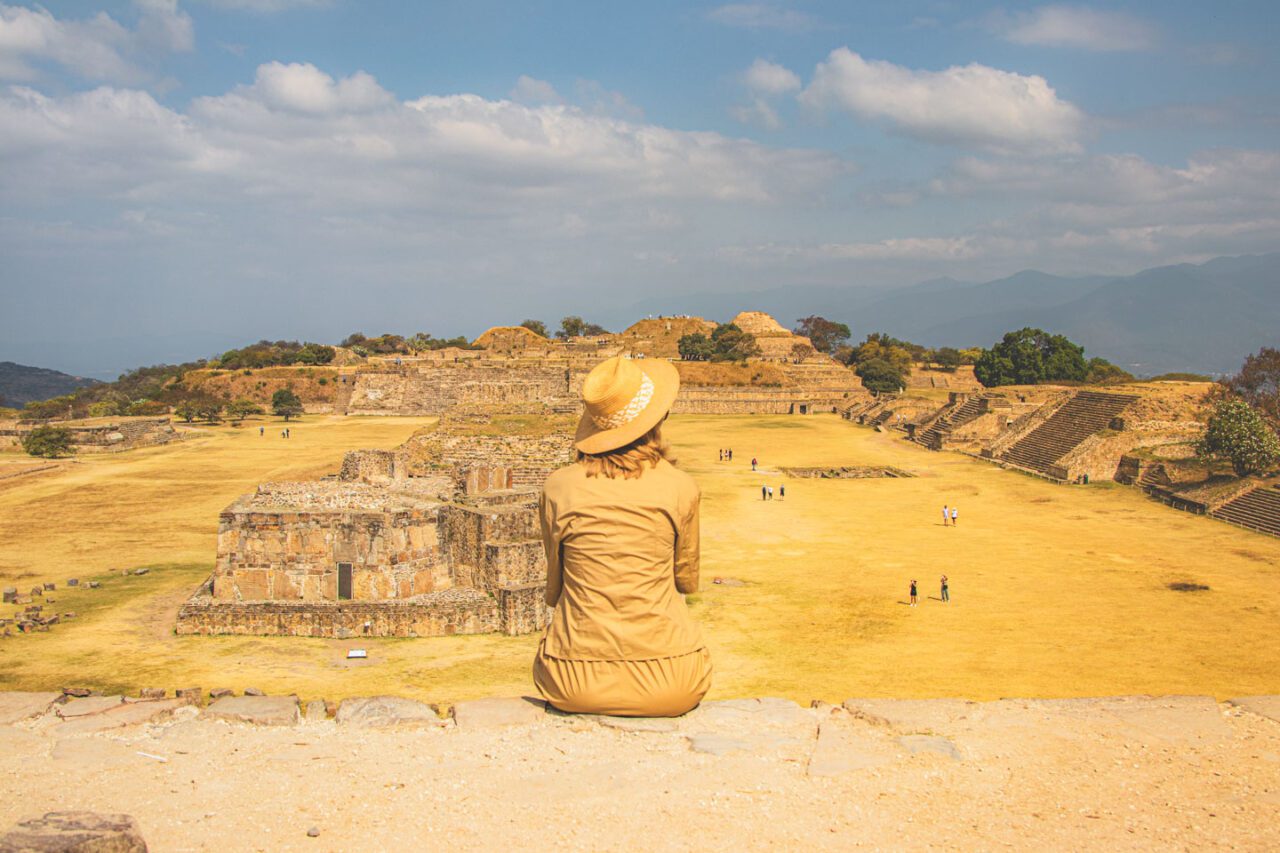
Monte Albán. Before you read anything about history, it’s worth just sitting here.
Day 1 in Oaxaca: Puppets, Mole, and Tlayudas
A Cooking Class at Quinta Brava
It’s worth remembering that Oaxaca sits at about 5,085 feet above sea level, so on the first day you might feel slightly tired or sleepy.
This isn’t anything strange and another good reason not to plan too intense a start and let yourself ease into the city’s rhythm.
We started the day with a cooking class at Quinta Brava. We met a group of people from New York. Everyone but us. There was also José – our chef, who brought tons of energy to the whole experience.
We were welcomed with hot drinking chocolate and a mini quesadilla. Good start.
Before we entered the kitchen, we went to a localmarket. Vegetables whose names I didn’t know. Meat hanging on hooks. Grandmothers selling mole from plastic buckets. With a list of ingredients in hand, we went shopping.
I came back from there with one thought – that Mexican cooking isn’t a recipe. It’s a ritual.
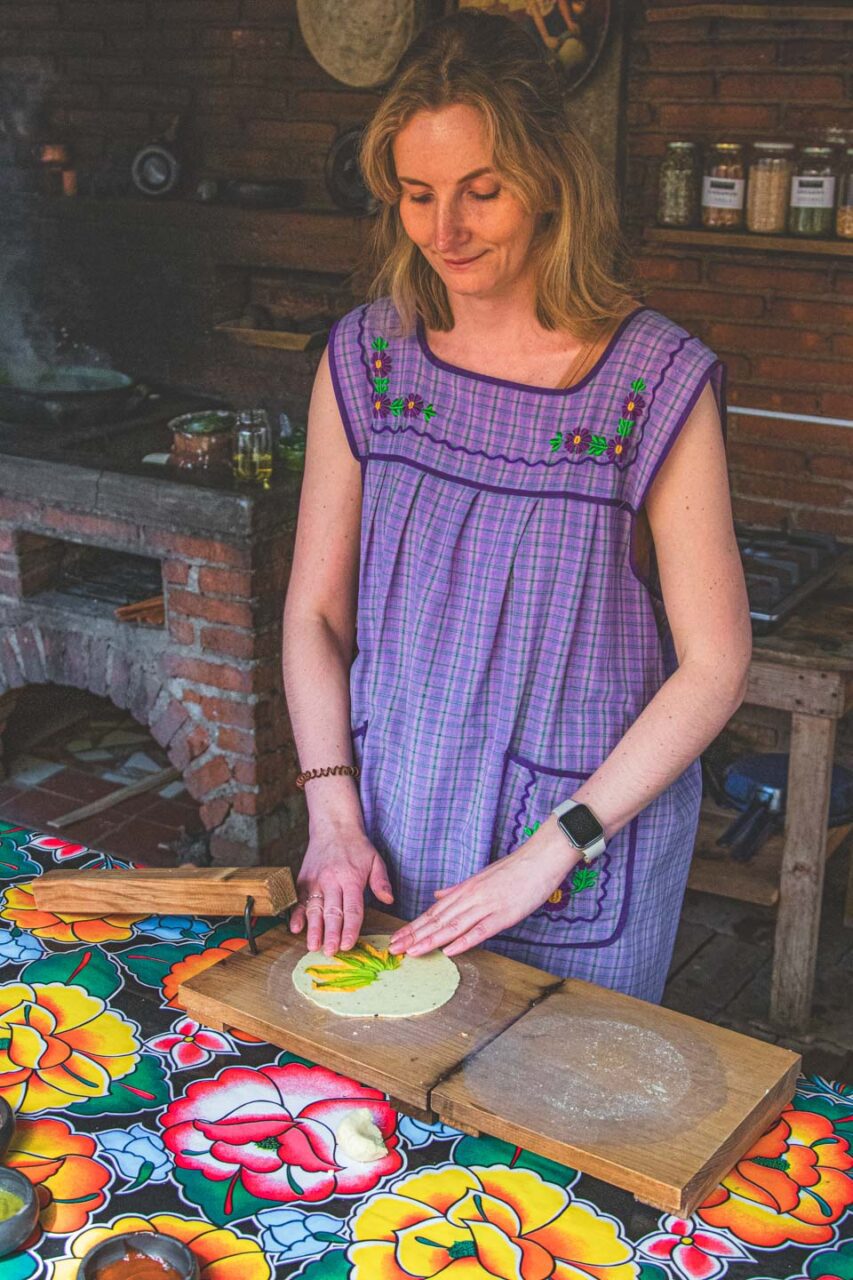
Hands in corn flour, warm comal, and time that slows down for a moment. This is how Oaxaca’s kitchen begins.
Then came cooking time. We made masa from corn, formed tortillas, and placed them on a heated comal.
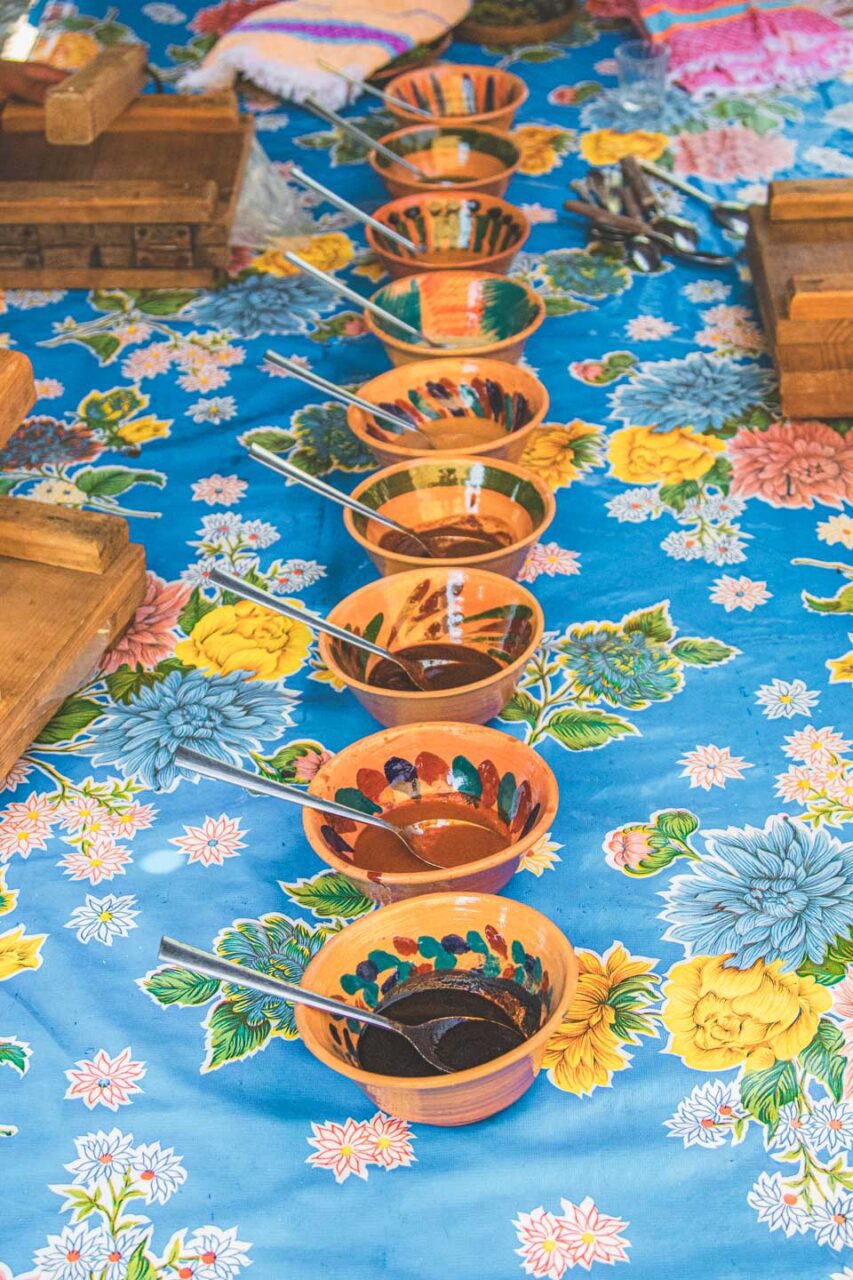
We tried nine types of mole – each different in flavor, color, and spice. The best turned out to be mole rojo and mole de cacahuate.
We prepared two moles from scratch, empanadas with squash blossoms and mushrooms, four types of salsa, and tamales. For dessert, plantains with cacao, vanilla, and cinnamon.
The food was genuinely good, the atmosphere relaxed, and overall it was a good introduction to Oaxaca’s cuisine.
Though at times I wanted a bit more hands-on cooking, it was a pleasant, calm start to the day.
Price: 1,900 pesos per person (about $95).
Mole in Oaxaca isn’t a sauce. It’s a story passed from hand to hand, generation to generation.
Wedding Processions and Giant Puppets
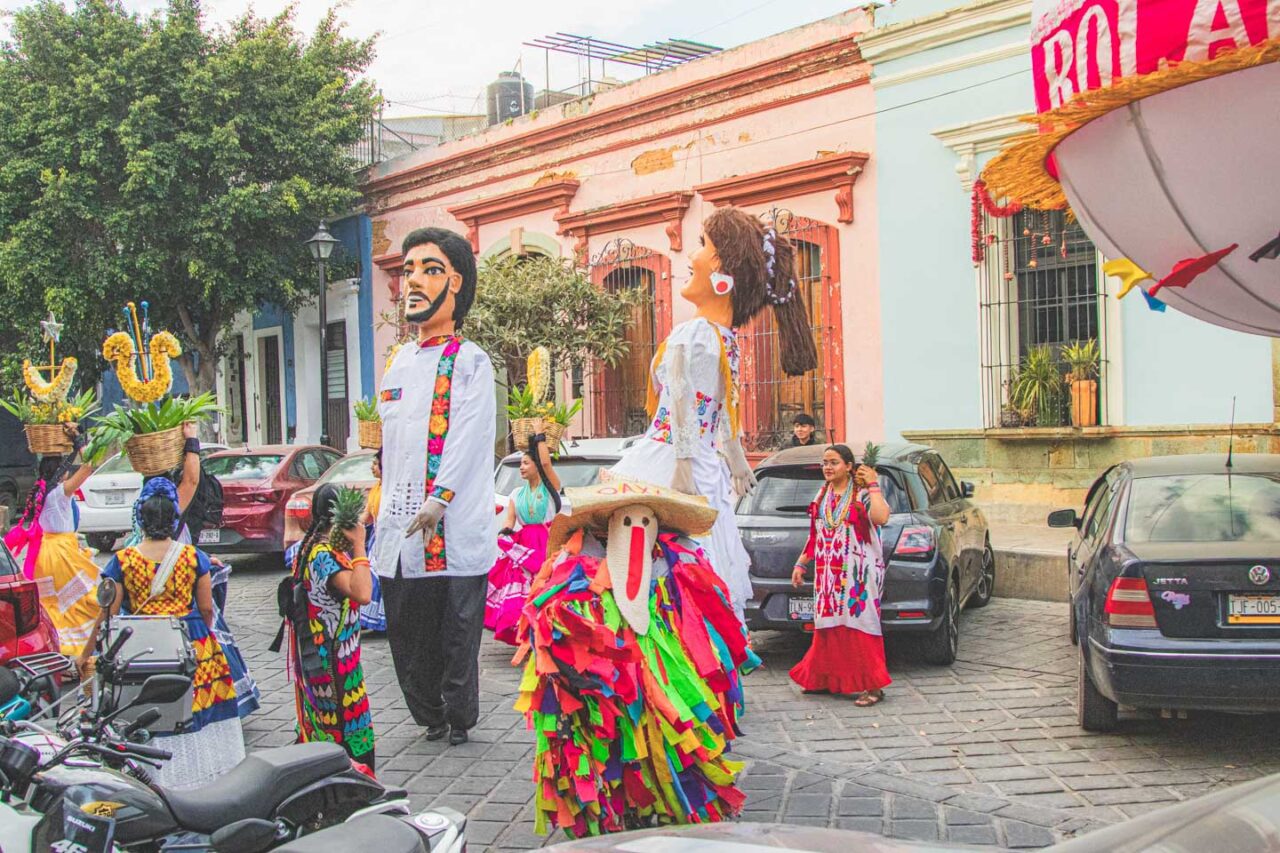
After returning to the hotel, we went out into the city for the first time. And we walked straight into a weddingprocession. In Oaxaca, Saturdays belong to weddings.
The streets quickly filled with music, dancing, and giantpuppets. One especially made me laugh. The groom was bald, but his puppet had luxurious hair. Mexican humor in its purest form.
The procession led us toward the mainsquare. From there we continued, more quietly now, looking for coffee.
The first impression was simple: the city seemed more touristy than Coyoacán. Probably because it was the weekend.
We stopped at MuseCafé, which turned out to be part of a luxury hotel. Beautiful interior, silence after all the commotion, and good coffee. A good moment for a first stop in Oaxaca.
Oaxaca can stop street traffic for a ritual. And no one’s in a hurry.
Tlayudas Los Ánimas – Street Food in Oaxaca
In the evening we were looking for something simple for dinner. Restaurants in the center looked like they were from a Michelinguide, and street food seemed to have disappeared.
We walked slowly, without a plan, letting ourselves get lost in side streets. Only then did we see a girl blow-drying the coals of a grill with a hair dryer.
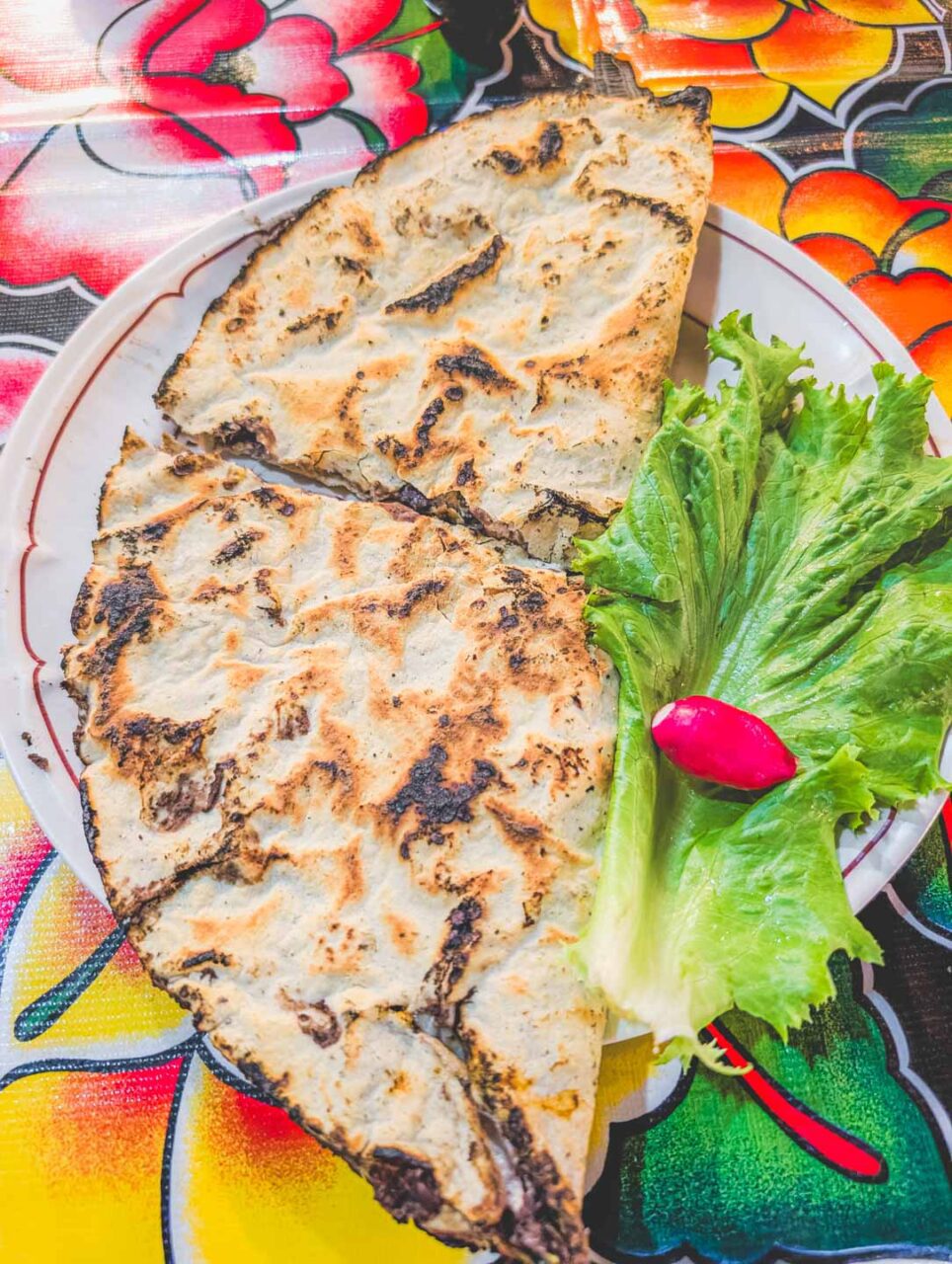
Small sign: Tlayudas Los Ánimas. There was no menu. Just the smell of smoke from the comal.
We ordered vegetarian tlayudas with cheese. Crispy, straight from the grill, drizzled with spicy green salsa. 95 pesos each. With that, agua de Jamaica.
Exactly what we needed after a long day.
Tlayudas – one of those dishes that in Oaxaca you eat slowly, at a simple table, absorbing the city’s everyday life.
Day 2 in Oaxaca: Tejate, Jalatlaco, and Local Rituals
Tejate – Oaxaca’s Traditional Drink
In the morning, after breakfast at the hotel and a short yoga session on the patio, we headed to RitaChocolatería. Oaxaca is famous for chocolate, so it was an obvious first stop.
The magic quickly faded when it turned out there was nowhere to sit. Only takeout.
But literally around the corner, a cart with the sign “tejate” appeared. We ran up without hesitation.
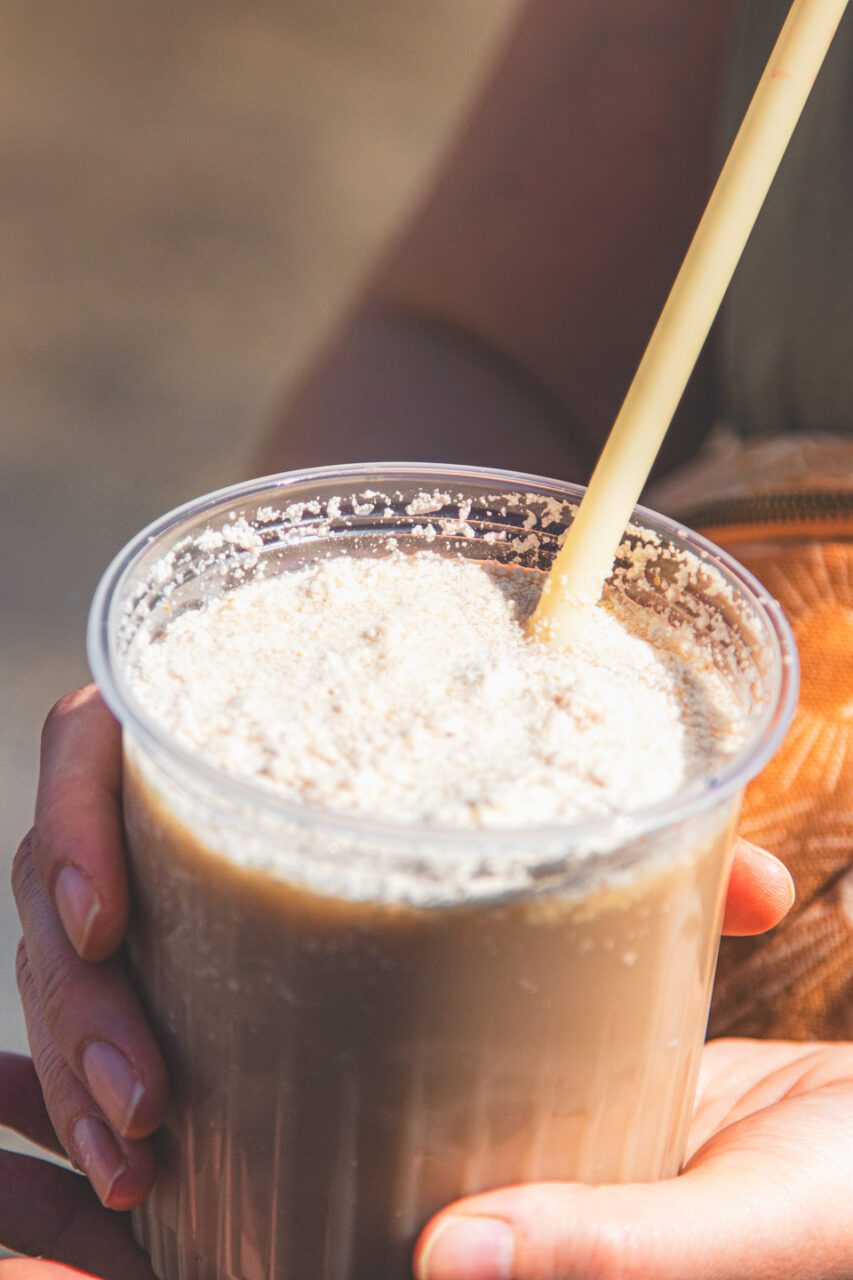
The lady stirred a large pot with a cocoadrink covered in white foam and poured us a big cup for 50 pesos (about $2.50). Refreshment came immediately. Along with a smile.
And that’s when it hit me that I don’t need a table or a plan. The street and this cup in my hand are enough.
Tejate is a pre-Columbian drink. Water, cacao, fermented corn, mamey seeds, and sugar. Sounds weird? Tastes divine.
Tejate. Thick, cold, slightly earthy. One of those flavors you remember long after returning home.
Mercado 20 de Noviembre – One of Oaxaca’s Most Famous Markets
Then we went to Mercado 20 de Noviembre – one of the most famous markets in Oaxaca.
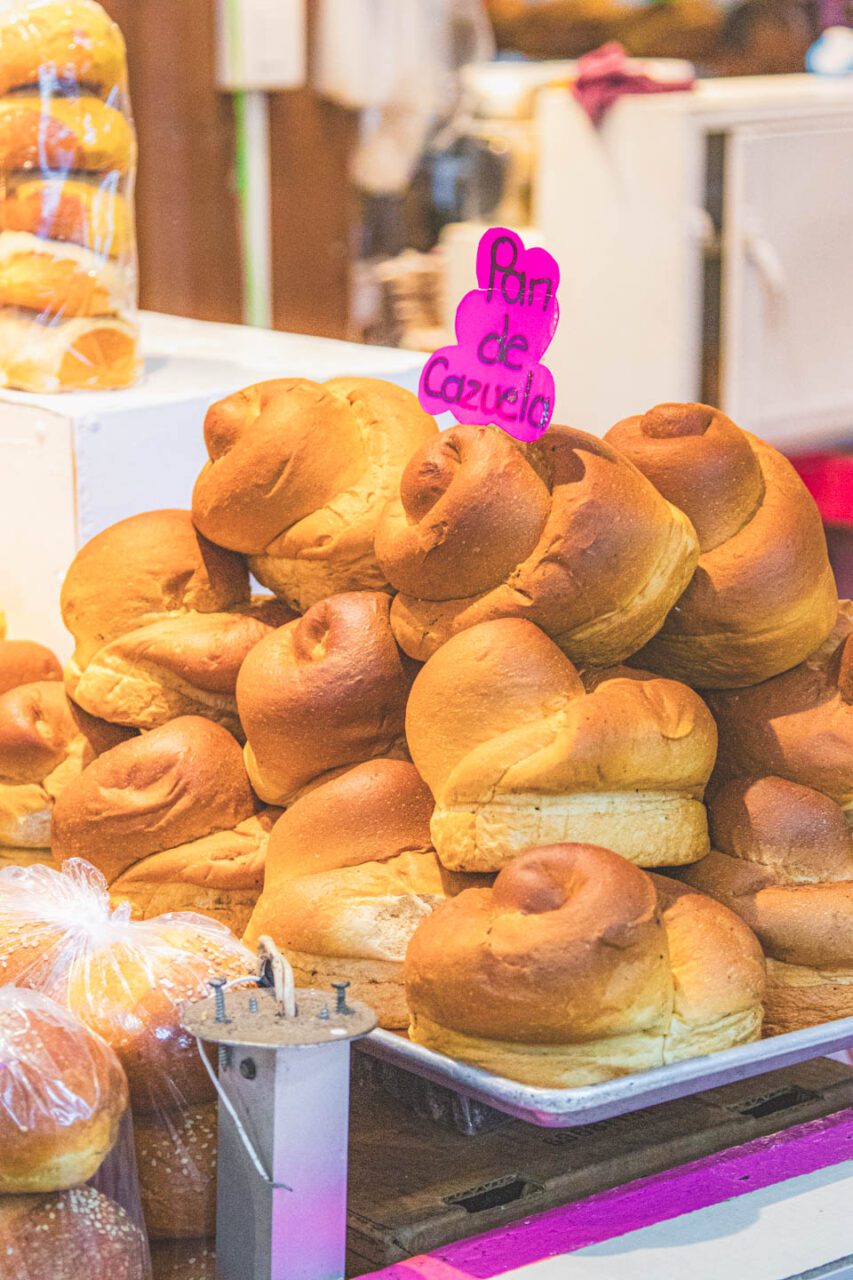
We walked through it completely, bought two pan de cazuela for 80 pesos (about $4) – Mexican cinnamon bread – and sat at a stall where there were more residents than tourists.
We ordered champurrado. Something between hot chocolate and pudding. Thick and filling. 45 pesos (about $2.25). And we sat.
Finally, we bought a green hat à la Indiana Jones and moved on. Without a plan.
Pan de cazuela – Oaxaca’s everyday bread. Warm, simple, bought without hurry at a local market.
Sabina Sabe – A Netflix-Recommended Spot in Oaxaca
We had lunch at SabinaSabe, a place known from the show Somebody Feed Phil on Netflix.
We ordered two outstanding cocktails:
Micky Miguel – sweet and refreshing, with chili on the rim
Chilito Rosé – multi-dimensional delicacy with caramelized red orange floating in the glass like a Mexican ship
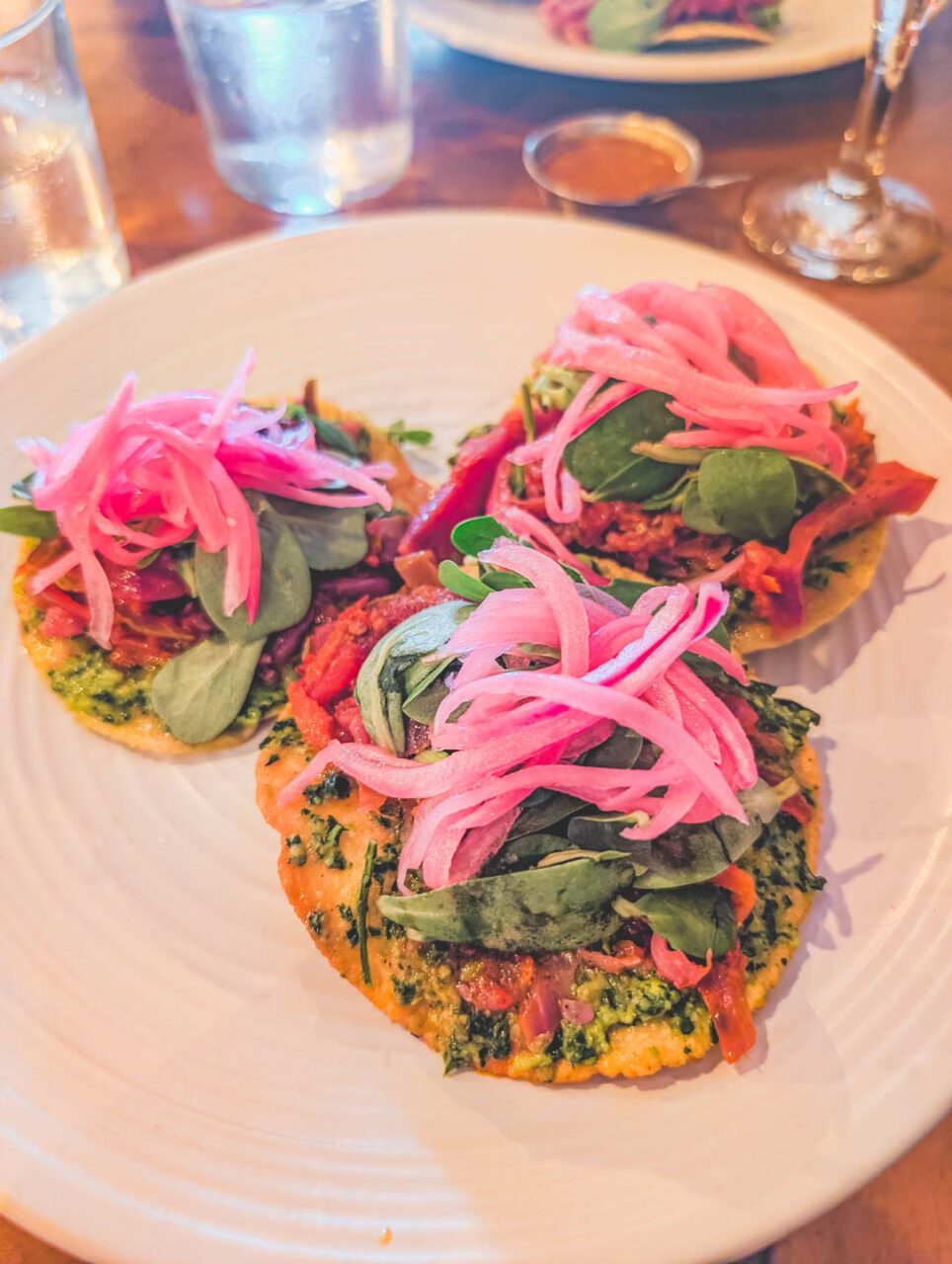
Plus very good vegetariantostadas. Kind of like filling for Polish fish Greek-style, but with a Mexican twist and pickled onion.
210 pesos per dish (about $10.50).
We sat there for over an hour. Not because the food was prepared slowly. We just didn’t want to leave. There was nowhere to rush to.
Vegetarian tostadas at Sabina Sabe – simple ingredients, bold flavors, and Oaxaca tasting exactly how I like it best.
Once in Oaxaca and a Spilled Coffee
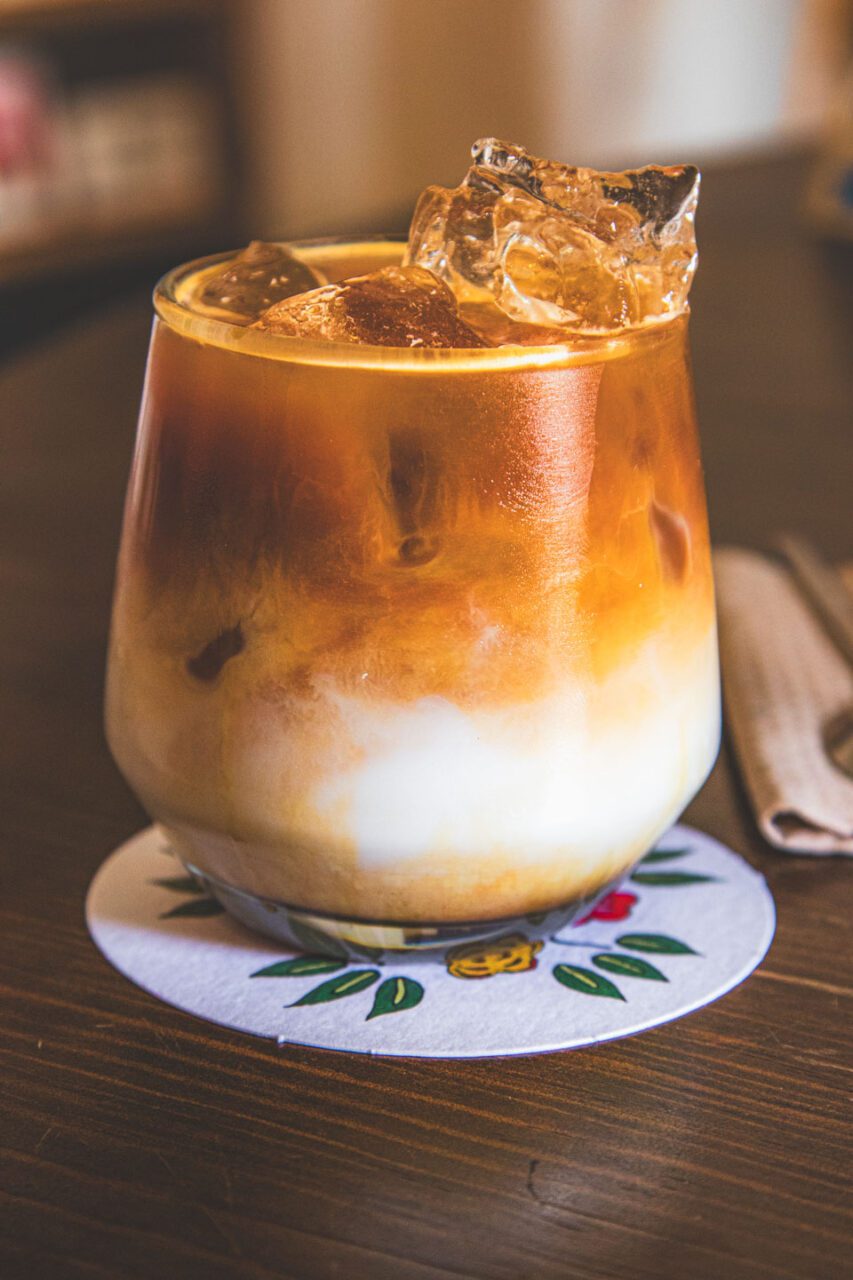
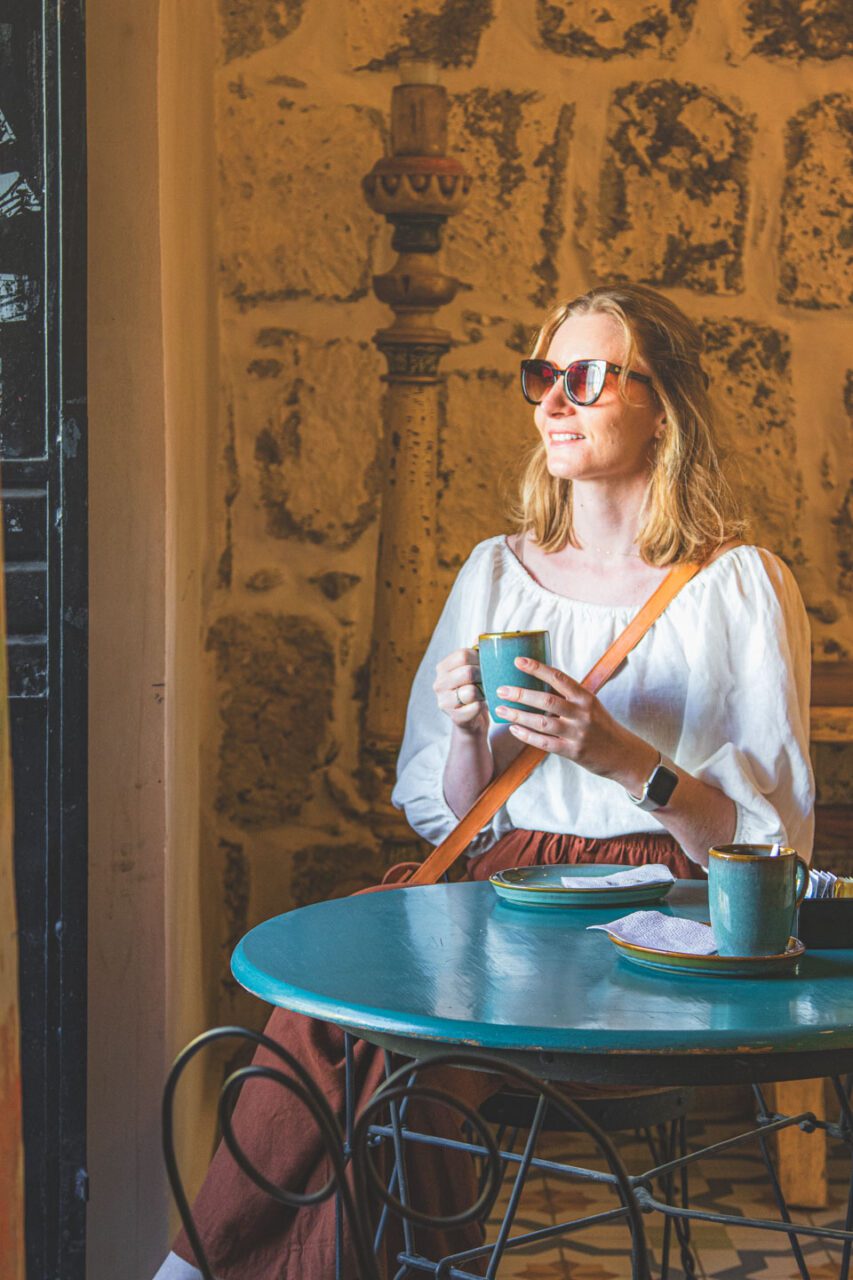
Then we went to Once in Oaxaca – a hipster cafe where we ordered two iced coffees.
There were almost no seats, so we sat at a round table that looked like it had seen more stories in its life than many museums. Plus two tiny stools like for dolls. We looked like giants in Lilliput.
Next to us sat an illustrator. She was drawing people on the street, slowly, line by line.
And then I caught my hand on the glass of coffee. It spilled straight onto my dress.
I spent fifteen minutes in the bathroom trying to clean it. Then I went outside for a moment. In the sun it dried quickly.
I stayed there a bit longer and thought about how many places I actually see while traveling, and how many others just escape me.
Going back inside, I saw a postcardrack. We sent one to Poland.
That coffee from Once in Oaxaca spilled a bit. And that’s exactly what that moment was like. Imperfect and real.
Barrio de Jalatlaco – A Quiet Neighborhood in Oaxaca
After visiting the cafe, we went for a walk in Barrio de Jalatlaco – a neighborhood recommended by the guy from the taqueria next to our hotel.
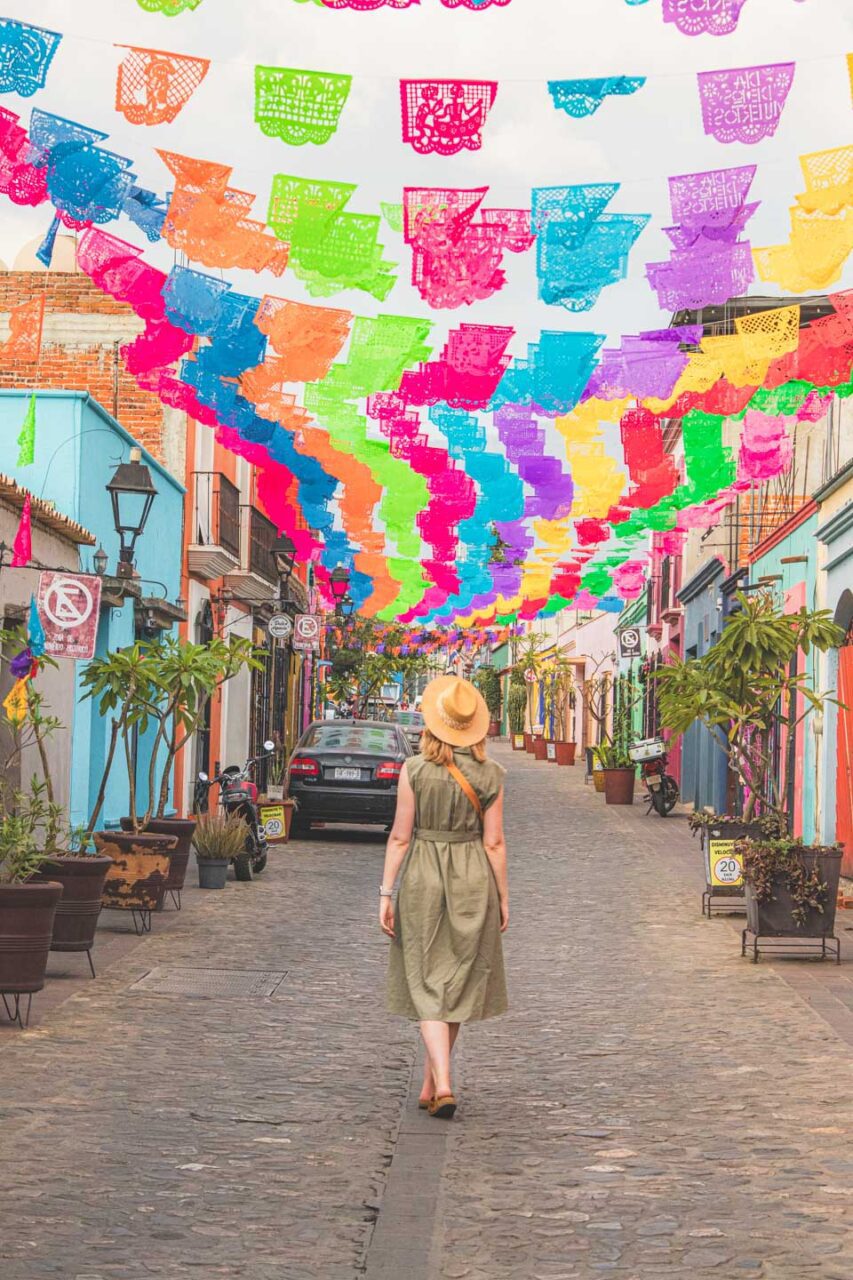
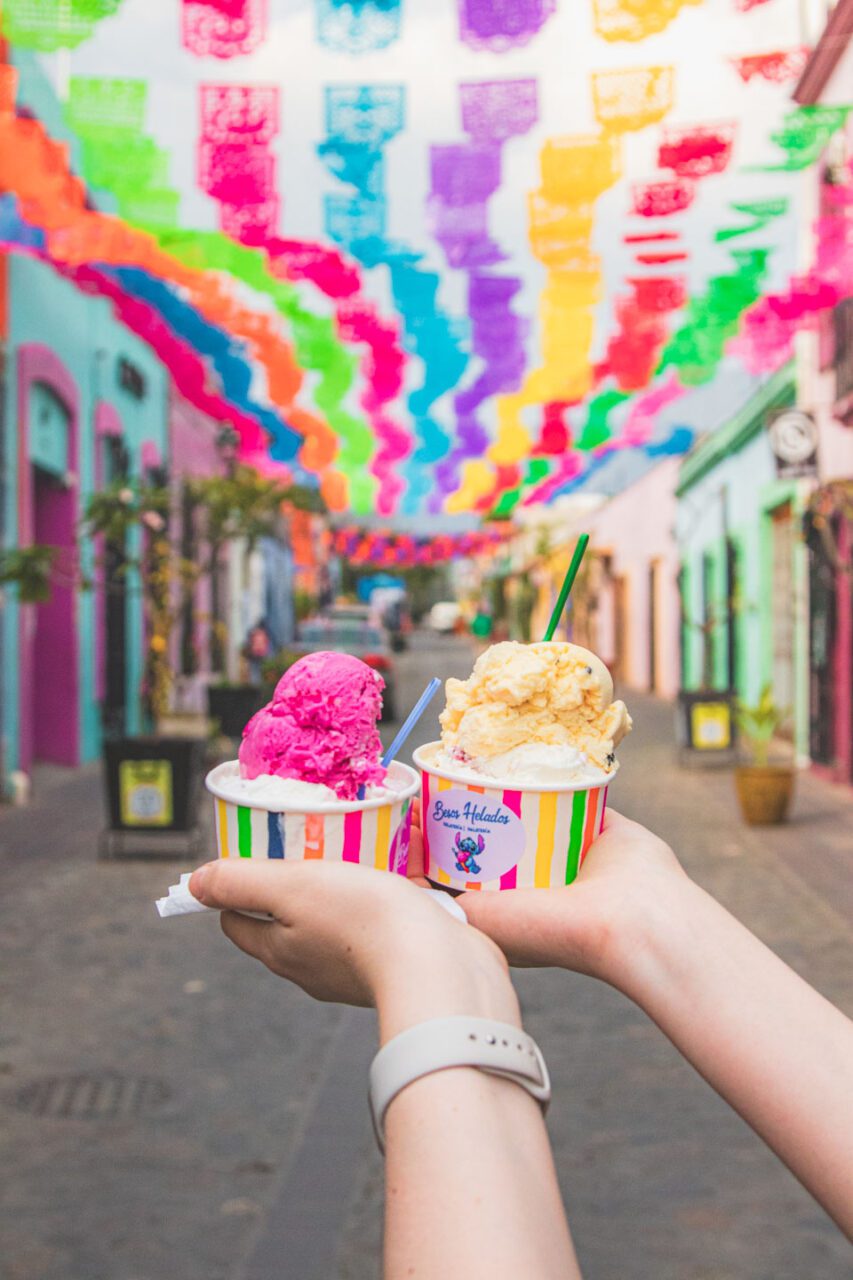
Walking under colorful papel picado, in slow, afternoon light, we came across an ice cream shop, BesosHelados. We tried several flavors: mango with chili, berries with cheese, and passion fruit with mezcal.
We ultimately chose berries with cheese and passion fruit with mezcal – exactly what we needed after a long walk. 200 pesos total (about $10).
And suddenly there was silence.
Streets full of colorful houses and murals. The neighborhood surprisingly empty compared to the center. We walked slowly, stopping every now and then. Not to take pictures. Just to look.
It was like discovering a secret garden in the middle of the city.
Artisan ice cream in Oaxaca tastes best eaten on the street, under colorful papel picado.
La Cosecha and Boulenc – An Evening without a Plan
In the evening we visited La Cosecha Organic Market – a place hidden in a gateway, leading to a quiet courtyard.
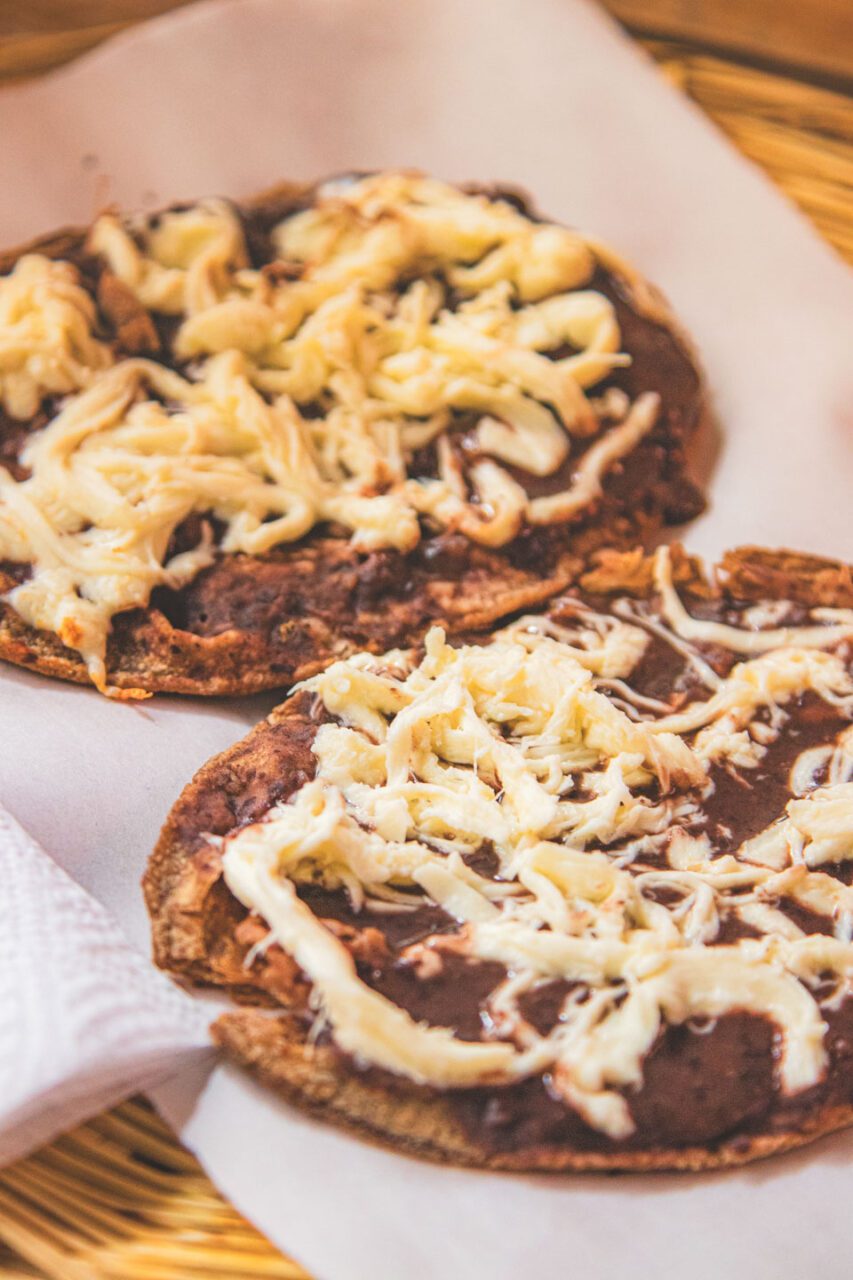
We ordered chocolatefromOaxaca made with water, memelas with local quesillo cheese (tastes a bit like Polish oscypek), tepache from fermented pineapple, and coffee beans from Oaxaca’s mountains.
We sat in the courtyard, surrounded by plants, and talked. About nothing specific. About everything at once.
Then it rained a bit, so we returned to the hotel.
In the evening, when the weather cleared, we went for pizza at Boulenc – a place in an abandoned tenement building, in a courtyard under the open sky.
The pizza was outstanding.
We sat there until late, discussing whether pizza with Mexican ingredients is still Italian or already Mexican, and sipping drinks with mezcal.
We didn’t rush. Because where to?
Memelas with black corn, bean paste, and cheese at La Cosecha Organic Market in Oaxaca
Day 3 in Oaxaca: Monte Albán and Local Discoveries
Monte Albán – How to Visit the Ruins Above Oaxaca
Early in the morning, after breakfast at the hotel, we set out for Monte Albán – pre-Columbian ruins on a hill beyond the city.
Reception advised us against the “dangerous” shuttlebus up (120 pesos per person, about $6) and suggested a taxi (about 1,000 pesos, or $50).
But we’re risk-takers. Or we just trust that the world isn’t as scary as they paint it.
We walked to the bus departure point. At the ticket office, a few gringos – we figured it couldn’t be that bad.
The bus turned out to be an old Mercedes. The driver only closed the doors when he didn’t want someone to jump inside at an intersection.
The green transport climbed the serpentines efficiently, passed a checkpoint with armed officials, and after about 20 minutes we were already at the top.
Entrance: 100 pesos per person (about $5).
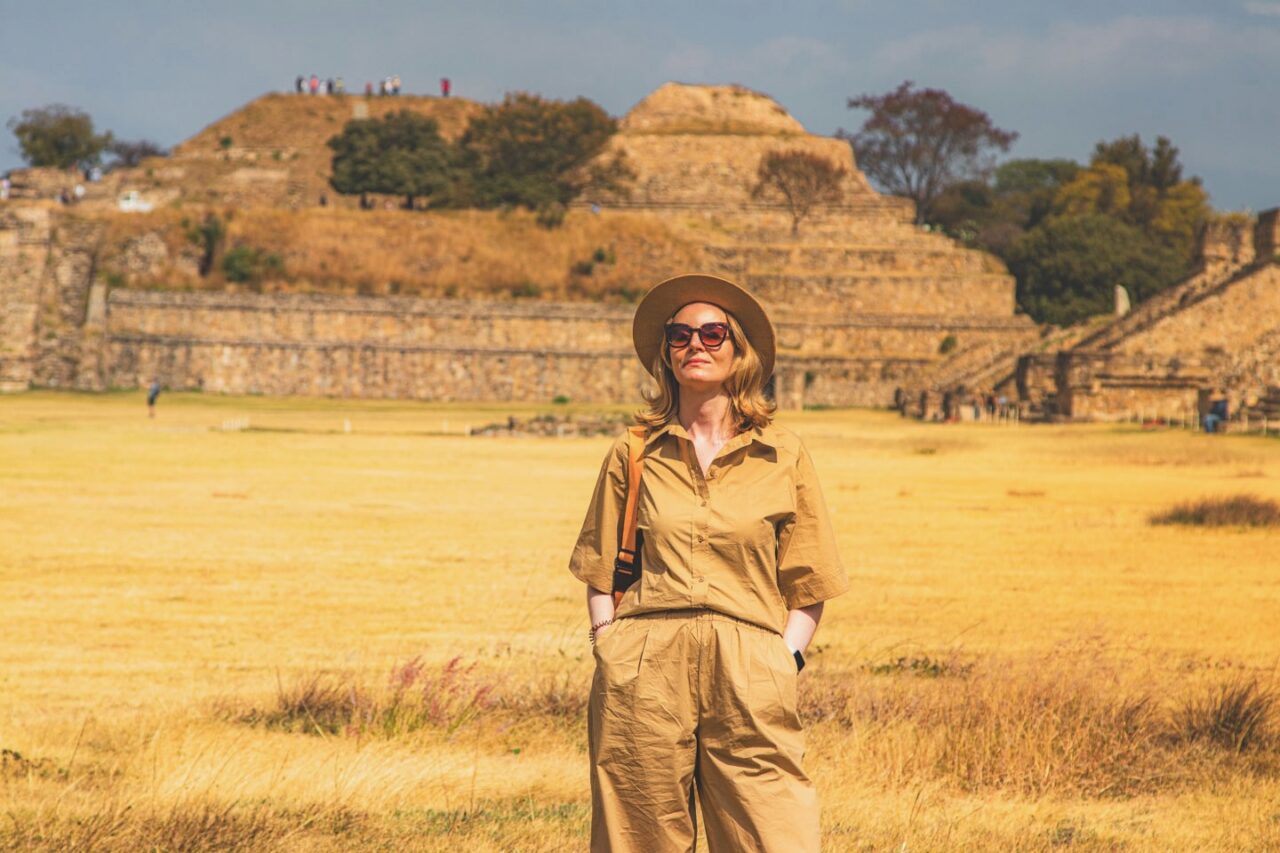
Monte Albán. Silence, space, and the sense that this place was important long before us.
Monte Albán made a huge impression on us. Not because they’re ruins. Because this place still breathes.
We admired Los Danzantes – drawings carved in stone, depicting castrated enemies captured by Monte Albán’s inhabitants. This was supposed to effectively deter opponents. I think it worked.
When we turned our eyes from the stone reliefs, we hear in the distance: “Ewka, come on!”
A bus tour from Poland was just conquering the pyramid. We laugh. Because the world is small.
We spent the next two hours exploring the ruins and eating pandecazuela. After walking the entire complex and climbing two pyramids with views of the Oaxaca valley, we sat on a stone.
We didn’t take pictures. We didn’t check our phones. We just looked.
In the background you could hear fireworks – apparently normal in the city in December. But we were already somewhere else. In time that stopped for a moment.
Monte Albán is one of those places that stay in your head for a long time – not through details, but through scale and silence.
Two Kilos of Liquid Chocolate in a Bag
On the way to the hotel, we entered ChocolateMayordomo – one of the most well-known places in the city when it comes to traditional chocolate.
We could have bought a ready-made bar. But instead we chose a mixture of cacao, cinnamon, sugar, and almonds. 615 pesos (about $31).
The cashier was clearly surprised that we wanted as much as two kilos.
After a moment, all the ingredients landed in the melanger. We stood and watched as shiny, chocolate mass slowly flowed out at the bottom.
It took time. But we weren’t rushing anywhere.
Finally, the man packed everything into a plastic bag. And so we continued through the city with two kilograms of liquid chocolate in hand, looking for a craft shop.
Absurd? Maybe. But these are exactly the moments you remember best.
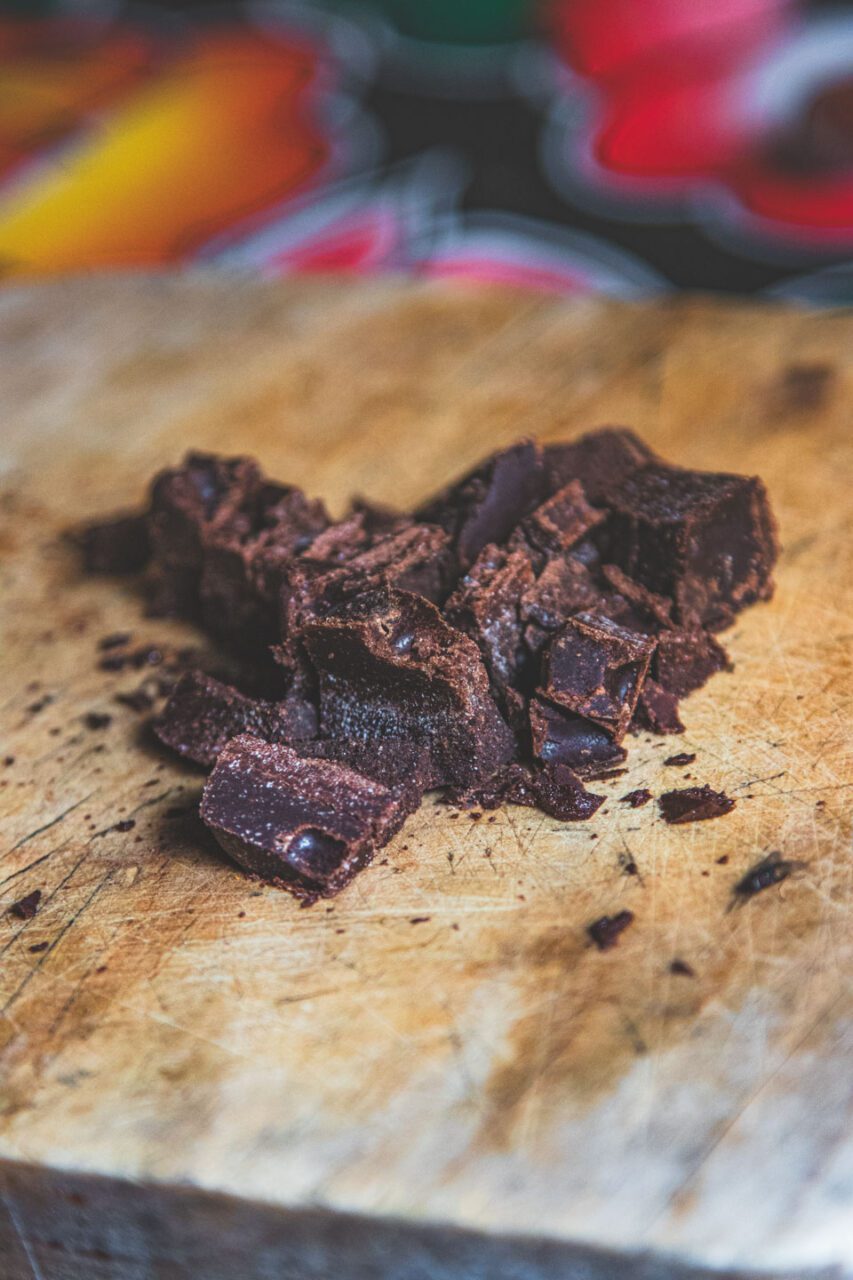
Handmade chocolate from Oaxaca, intense and grainy, tasting more like a ritual than a dessert.
Barro Negro – When Shopping Becomes a Discovery
We spotted the shop from afar because there was a giant puppet standing in front of it. It was La Casa de las Artesanías de Oaxaca. Inside – paradise.
Everything from Oaxaca artists, at fair prices. No fakes and mass production that you see at street stalls.
I bought two black face-shaped cups made from barronegro, a leather bag like from Italy but for a fraction of the price, and copal to burn at home.
Total: just under 1,400 pesos (about $70).
But the purchases weren’t the most important thing.
The most important was the conversation with the lady who told us about each item. About the artists who created them. About the tradition that still lives here.
I stood in that shop for an hour. And I don’t regret a minute.
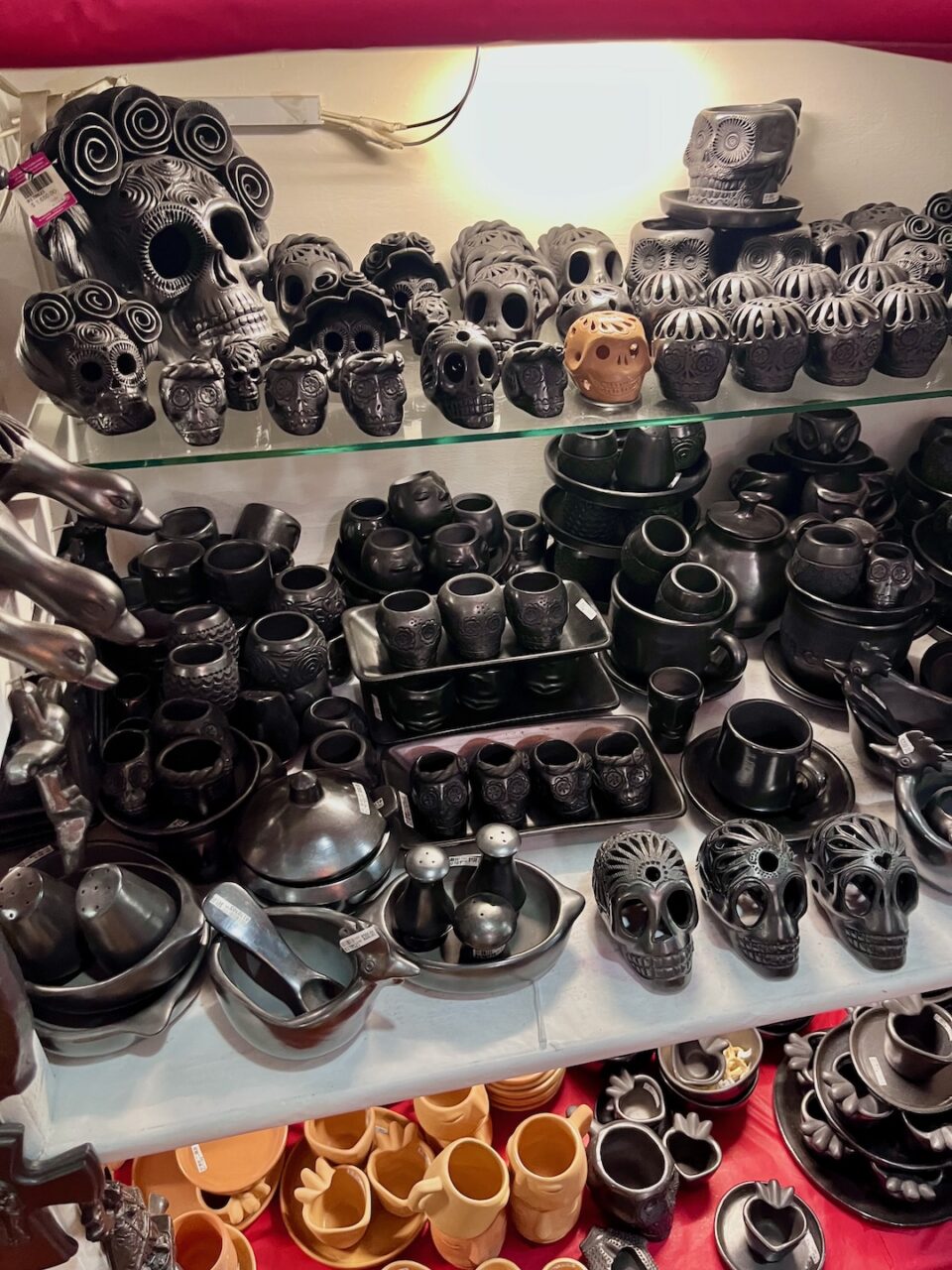
Barro negro – traditional ceramics from Oaxaca. Deep black, shine, and forms that are simultaneously art and everyday objects.
Metate Cocina Tradicional – A Garage Kitchen with Soul
We had lunch at Metate Cocina Tradicional – a place in a garage.
A surprising mix of styles. Minimalist decor like from Vogue, and dishes cheap, classic, and delicious like from a street stall.
We got the menu on a small, handwritten card. It looked like a spy note.
We ordered empanadas with squash blossoms and another with mushrooms, plus agua de naranja – refreshing juice from green oranges. Everything served in beautiful local clay dishes.
Bill: 310 pesos (about $15.50).
We sat there long after eating. The place had something that made you not want to leave.
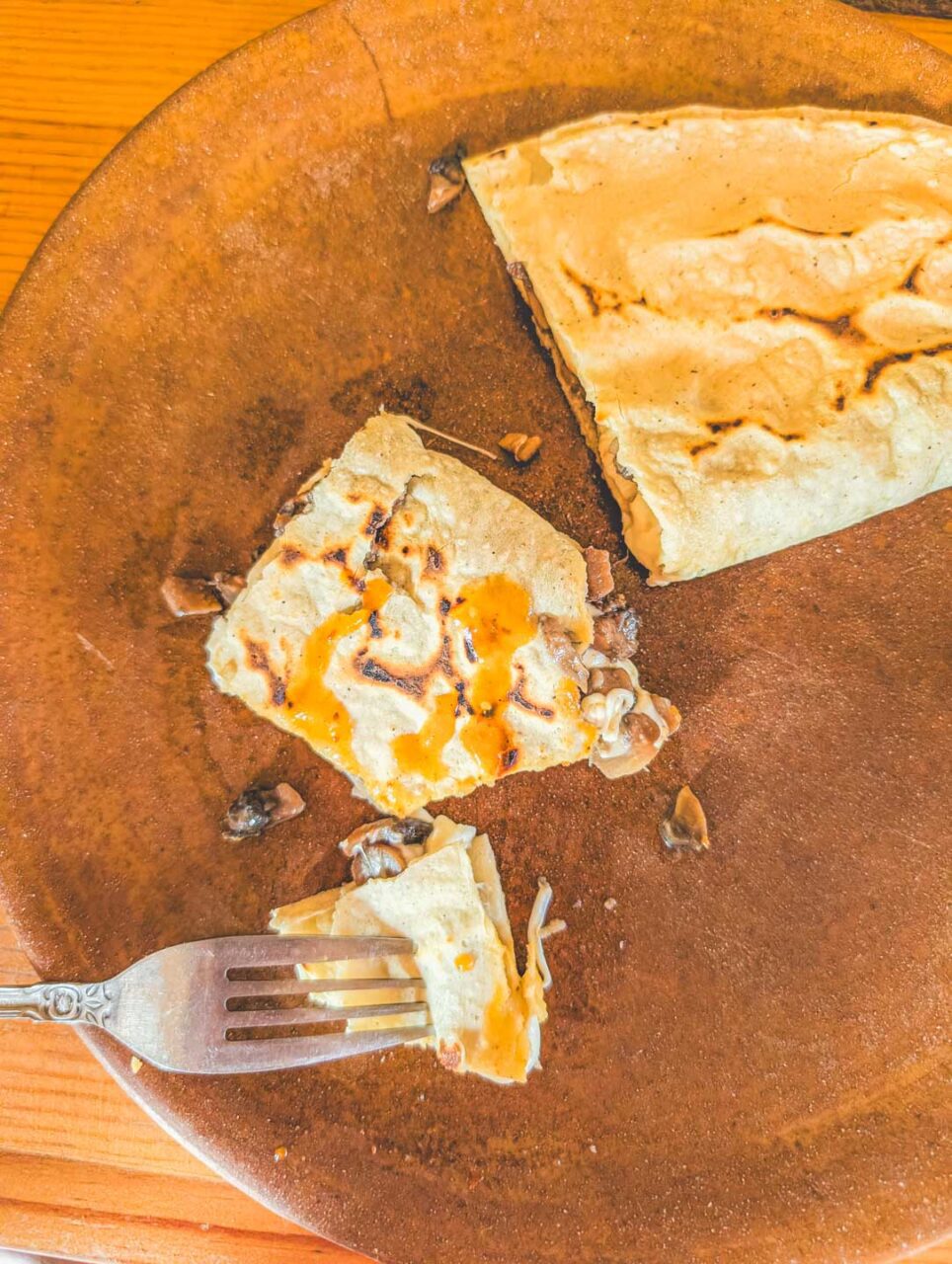
Empanadas from Metate Cocina Tradicional – garage Mexican cuisine based on craft and flavor.
Tlayudas Don Ramón – One Meter Wide, Full of Life
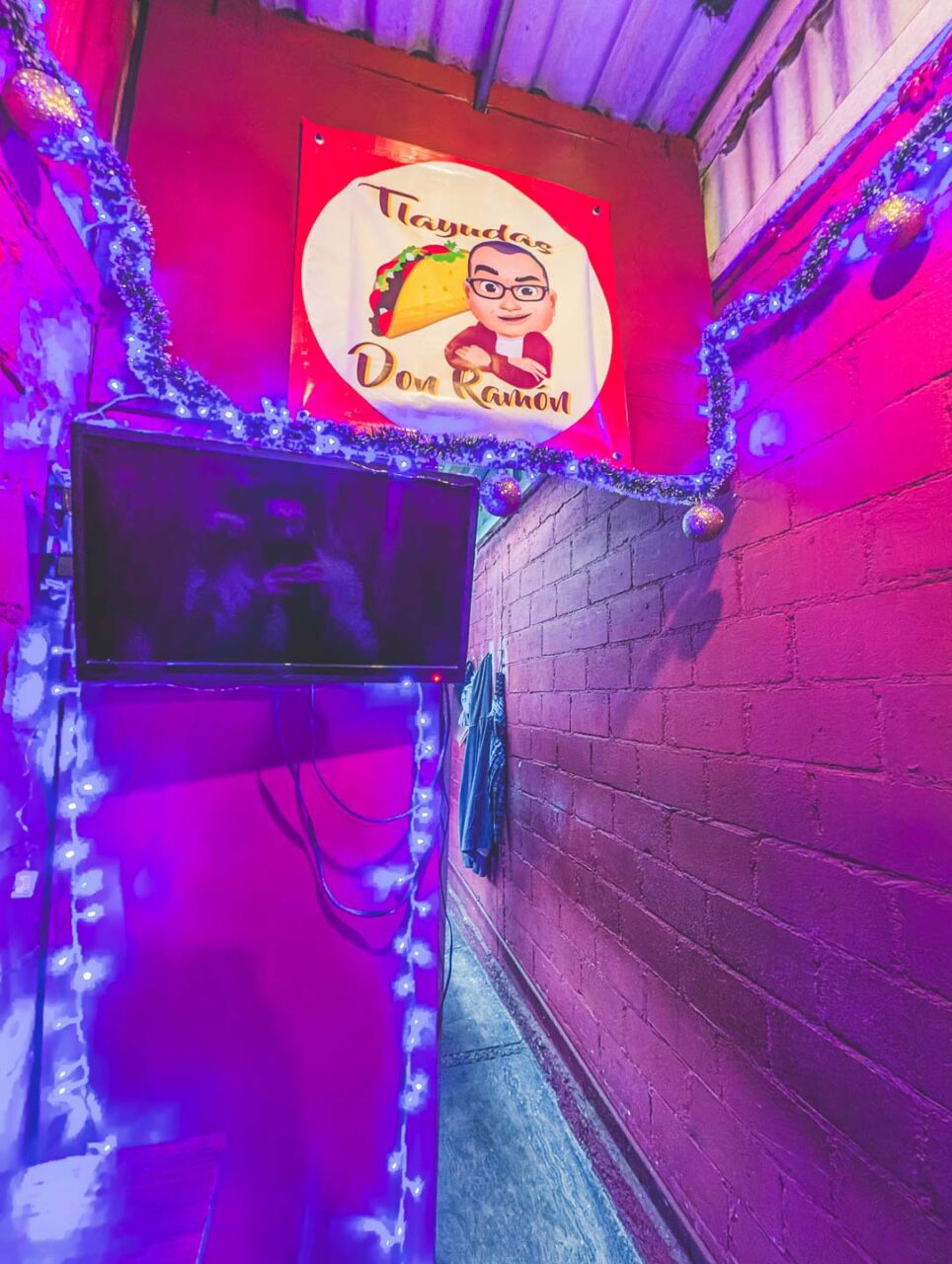
In the evening was dinner at Tlayudas Don Ramón. A place squeezed between two buildings, barely a meter wide.
The food was great. Horchata too.
Bill: 200 pesos (about $10).
But it wasn’t just about the food. It was about the fact that again we found a place that’s not on any tourist map. And that’s exactly why it was perfect.
Tlayudas Don Ramón – a place one meter wide, but with character that can’t be measured.
Day 4 in Oaxaca: Museum, Food, and Letting the City Go
Museo de las Culturas de Oaxaca – Where Time Slows Down
The last day we started with breakfast at the hotel. Avocado toast. Coffee. Silence.
I knew it was our last morning in Oaxaca. And instead of rushing to “manage to see everything,” I slowed down even more.
Then was the last walk through the city. A real goodbye, not a transit. Stopping and the thought that I’ll return here.
I didn’t count steps. I counted moments.
We visited the Museo de las Culturas de Oaxaca at the Santo Domingo church. Ticket cost 100 pesos per person (about $5).
Before entering, street vendors and local guides approached us. This time without irritation. A smile, short “no, gracias” and we moved on.
We spent 1.5-2 hours in the museum, though time stopped having meaning.
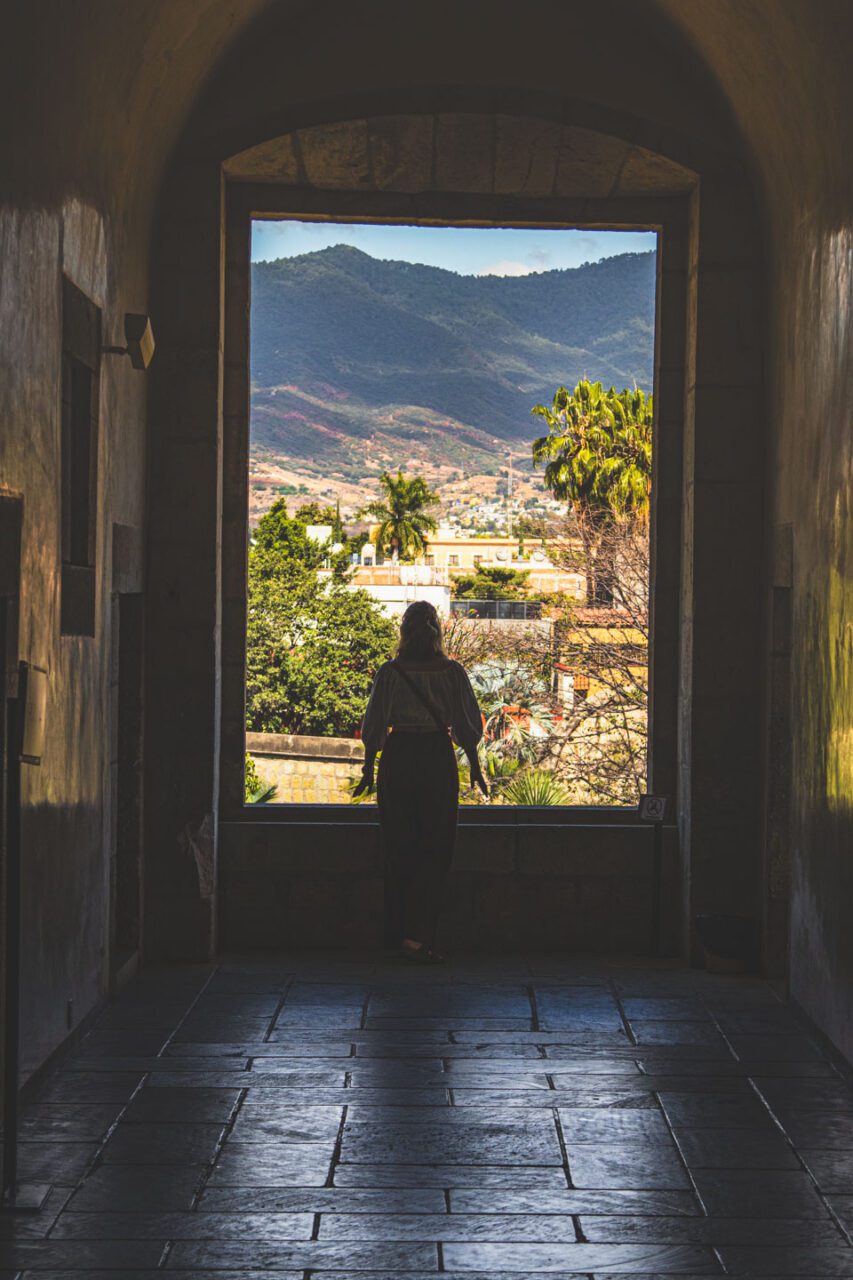
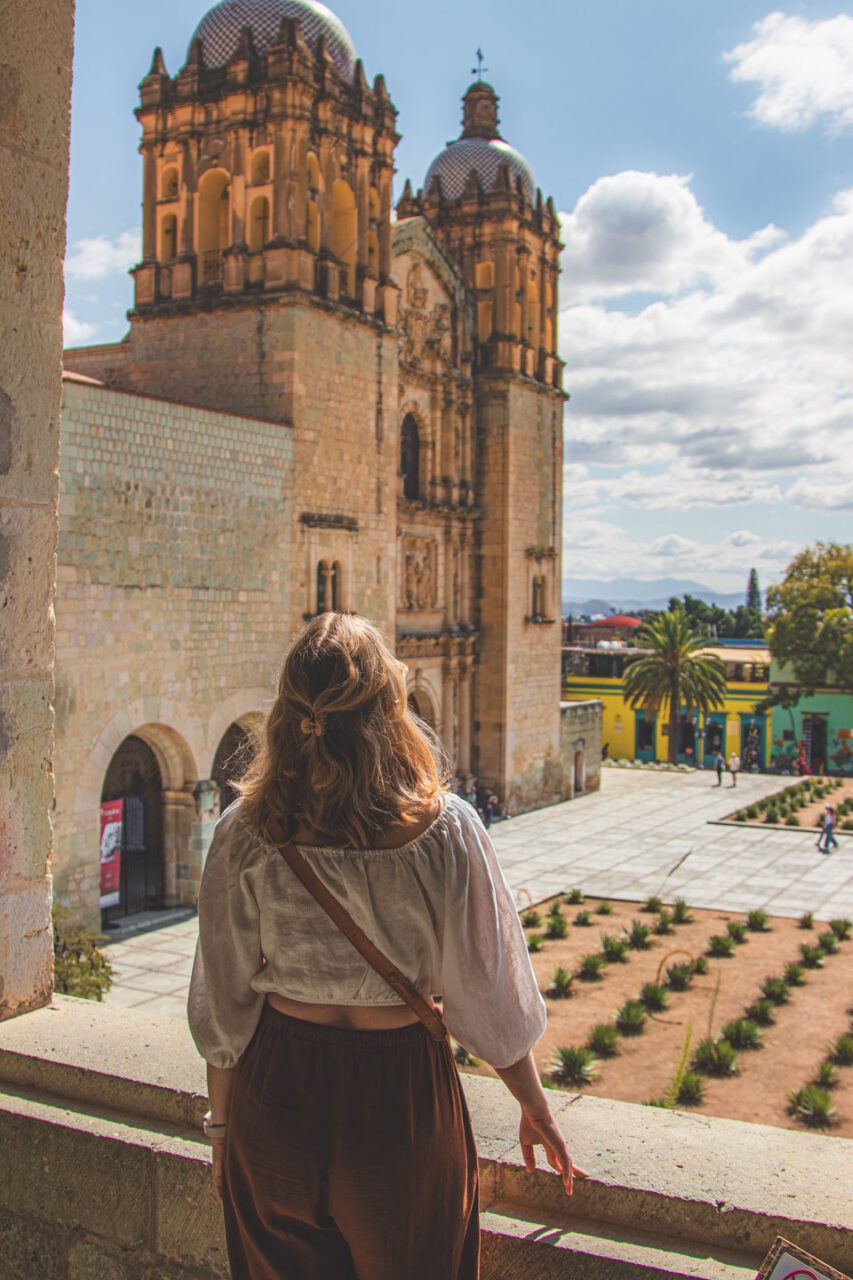
View from the former Santo Domingo monastery. A moment of silence over Oaxaca.
We started with a magical library that looked straight out of HarryPotter. I thought that if I lived in Oaxaca, I’d come here regularly.
Then a room with an exhibition of alebrijes – fantastic, vividly painted animal sculptures. Each different. Each with its own character.
Upstairs, each room told the region’s story – frompre-Columbian times and the Zapotec kingdom, through conquest, to modern times.
We walked long corridors, moving through time. We read plaques. We looked at details. We didn’t rush anywhere.
Along the way appeared views of the botanicalgarden full of cacti and succulents and of the square and Santo Domingo church.
Here even the bathrooms told stories – marble with a view of the main courtyard. In such a place, photos really took themselves.
The former Santo Domingo monastery – today one of the most important cultural places in Oaxaca.
Levadura de Olla – A Meal That Felt Like a Ritual
After visiting the museum, we stopped for cappuccino for 50 pesos (about $2.50) at one of the cafes on a less touristy street.
A moment’s pause. I watched people on the street. I thought about how we’re going back tomorrow. And that I already miss this city, even though I’m still in it.
Then was lunch at Levadura de Olla – a restaurant recommended by Phil from Netflix, with a Michelinstar (better to have a reservation).
We got an intimate table by the window, in a separate room with a bar. Wall to ceiling filled with local clay dishes.
We ordered four dishes and two desserts. Not because we wanted to try everything. Because we wanted to stretch out this moment in time.
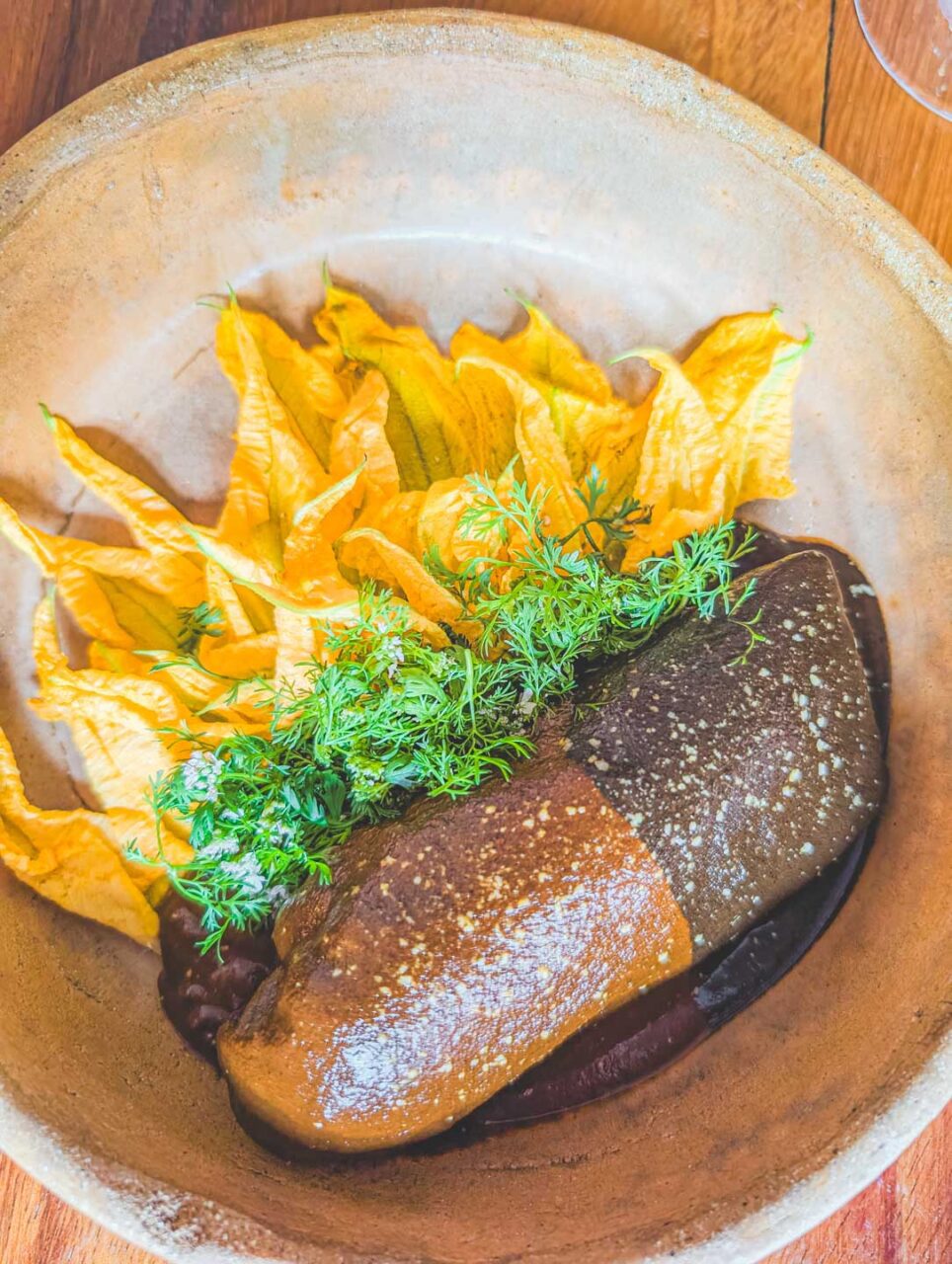
Dish at Levadura de Olla, which you experience more than eat.
First on the table landed all of Oaxaca’stomatoes – in different shades, arranged like a mosaic. From classic red, through purple, green, and yellow. They tasted more like tropical fruits than tomatoes.
Then came tamales with requesóncheese and squash blossoms, served with two moles: negro and coloradito.
Next, machucadas – simple, rustic dish from undercooked tortillas and sauces – and nativesquash varieties, full of textures and deep flavors.
Alongside that came mezcal-based drinks: mezcalpiña with passion fruit, a cilantro mojito, and chalchiuhtlicue, as well as a non-alcoholic agave juice and pozontle – a pre-Columbian ceremonial drink served in a gourd shell.
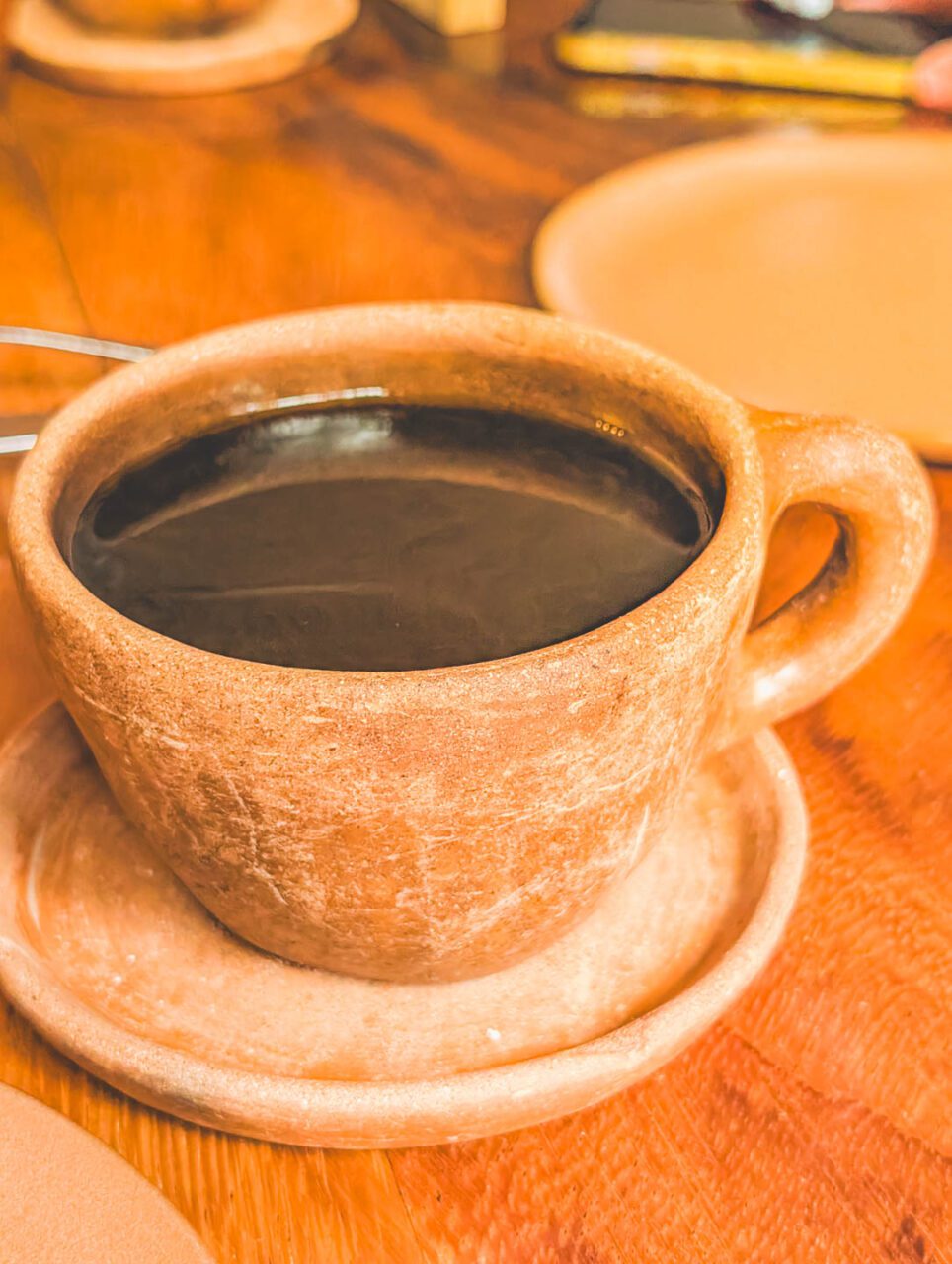
Finally, flan de calabaza, light as a cloud, and café de olla – traditional Mexican coffee brewed in a clay pot with cinnamon and piloncillo.
We sat there over two hours. We didn’t rush. Because it was the last meal in Oaxaca. And I wanted to remember it.
Bill: 3,000 pesos (about $150).
Coffee in clay, served at the end of the meal – quiet period at the end of the whole story.
Practical Information – Before I Close This Chapter
Below I’ve gathered a few simple pieces of information to help you on your way to Oaxaca – not to plan everything, but to make your journey lighter.
How to Get from Mexico City to Oaxaca?
You have two main options: bus or plane.
1. ADO Platino Bus (9-9.5 hours)
The ADO line offers several travel standards – from cheaper, more basic options to the most comfortable ADOPlatino variant, which we chose.
ADOPlatino is the version for those who prefer to arrive in peace.
Price: 1,480 pesos per person (about $74)
What’s included: 25 seats on board, reclining seats with footrests, TV, bathroom
Note: Winding road, bus sways a lot – not for sensitive stomachs.
The first hour is leaving Mexico City – traffic and city. Then the road opens up, and outside the window appears Puebla, majestically located at the foot of two volcanoes.
Cheaper ADO options (e.g., ADO Clásico or ADO GL) are less comfortable but will still safely get you to Oaxaca if you’re counting your budget.
Practical tip: don’t plan anything on your arrival day. You’ll be tired. The best plan is a plate of good food and bed.
ADO Platino bus. Nine hours on the road that teach patience – and give time to really rest.
2. Plane (1 hour 15 min)
Price: about 600-1,000 pesos (roughly $30-50 one way)
Paradoxically, the flight is often cheaper than the ADO Platino night bus and saves a whole day of travel.
This is the fastest option, but it deprives you of a momentoftransition – the slow change of landscape and road rhythm, which for me was an important part of this journey.
When worth it: if you have little time or don’t tolerate long bus rides well.
If you’re starting your journey in the capital, it’s worth giving yourself a few calm days there – this Mexico City plan without rushing sets a good rhythm before continuing to Oaxaca.
How Many Days in Oaxaca Do You Really Need?
Minimum 3 days. But honestly? Give yourself 5-7 days if you can.
Oaxaca isn’t a city you pass through. It’s a city you need to feel. And that requires time.
Oaxaca needs a minimum of 3 days, but 5-7 days lets you really feel it.
How to Get Around Oaxaca?
We saw the most by walking. The rest was just extra.
On foot: The center is compact. Most places can be visited on foot. And it’s worth it. Because then you see more.
Taxis: 40-80 pesos per ride (about $2-4). Negotiate the price before getting in or make sure the meter is on.
Buses and mototaxis: We treated them as part of the landscape, not the plan – sometimes they just happened.
Shuttle to Monte Albán: 120 pesos (about $6) vs about 1,000 pesos for a taxi (about $50).
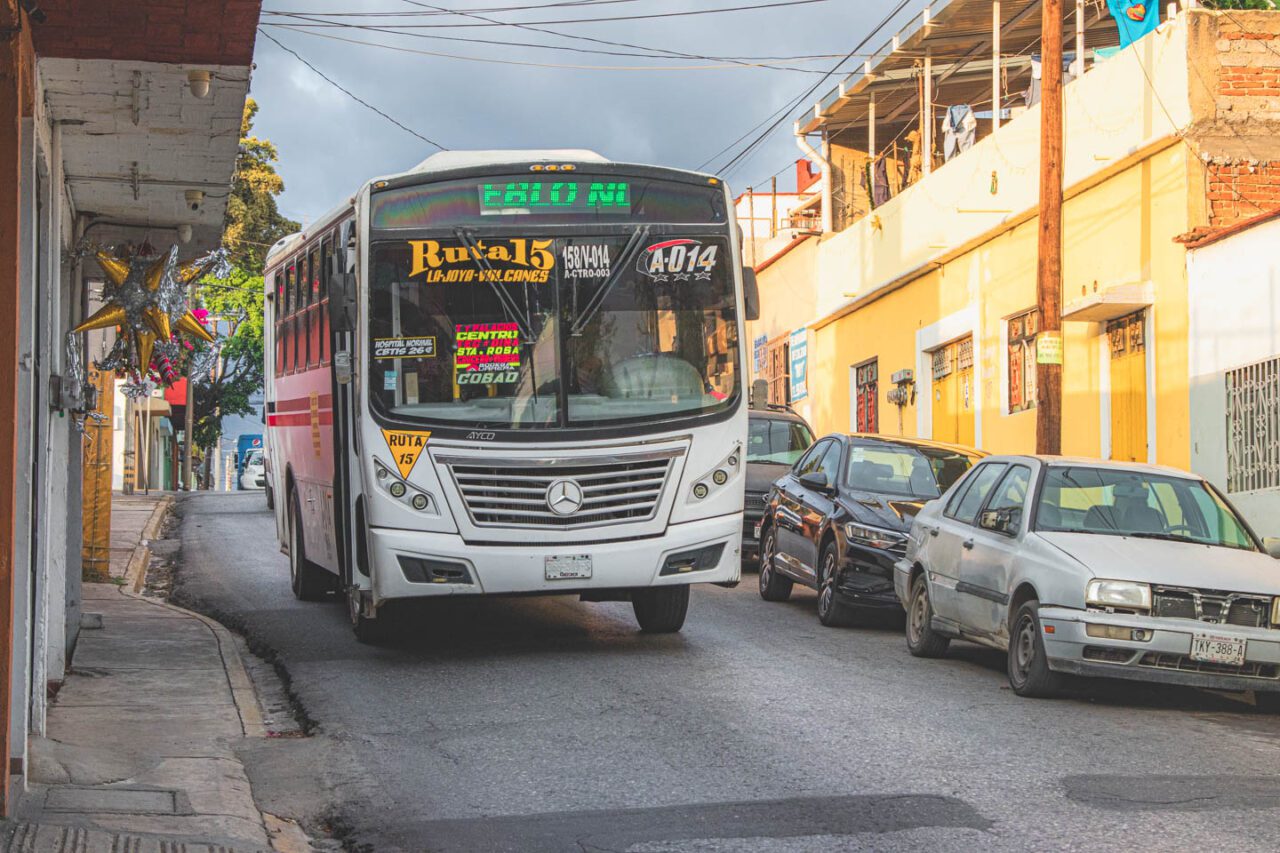
Local bus in Oaxaca. The simplest way to see the city as it really is.
Normal city rules. During the day we felt comfortable almost everywhere. In the evening we returned by main streets and that was completely sufficient.
How Much Does a Day in Oaxaca Cost?
This is one of the most common questions I get when planning travel to Oaxaca. Good news: this city can be felt without a big budget.
Daily (food + drinks + transport): about $35-50 per day if you eat both street food and at regular restaurants.
Accommodation: Reasonable guesthouses and small hotels cost from $75-110 per night, and very good boutique hotels from $150-225 per night.
Michelin restaurant: about $75 per person.
Everyday pleasures, like coffee at a local cafe in Oaxaca, are affordable and easily fit into a daily budget.
Travel lighter, even before you leave.
If planning a trip starts to feel more overwhelming than exciting, start with something simple.
Download The Minimum Plan – Slow Travel:
A short, free guide to help unburden your itinerary and make room for the journey itself.
When to Go to Oaxaca?
I was there in December. And it would be hard to imagine a better time.
During the day 68-77°F, cooler in evenings. Perfect for long walks, sitting in cafes, eating on the street without heat exhaustion. The city breathes calmly. You do too.
If not December, then November-March in general are very good times for Oaxaca. Dry, bright, pleasant. No extremes.
Spring can be warmer but still good if you like sun and slower pace during the day.
Summer (July-August) is a different story. Rain, humidity, heavier air. It’s doable, but not that rhythm that encourages aimless wandering.
Oaxaca tastes best when you can just go ahead. That’s why the time of year really matters.
The rest will happen in between anyway – in a cafe without a table, on the street with a cup of tejate in hand, in moments that can’t be planned.
December in Oaxaca is sunshine during the day and ideal conditions for calm sightseeing.
The Most Important Lesson I Took From Oaxaca
On the last evening I sat on the patio at Casa Arrona with a cup of café de olla in hand. I already knew that tomorrow we’re going back to Mexico City. And then home. And that part of me will stay here.
Because Oaxaca isn’t a place you visit and close. It’s a place that stays in you.
In the scent of copal. In the taste of tejate drunk on the street. In the sound of fireworks at Monte Albán. In the image of a girl blowing a hair dryer into comal coals.
Over these four days I learned something simple: traveling isn’t a checklist. It’s not “I checked off, I saw, I was there.” It’s a way of being. The ability to stop and say: this is enough. I don’t have to go further.
Sitting at a table in Metate Cocina and eating empanadas from a clay bowl. Standing on the street with a cup of tejate in hand.
Watching a wedding procession pass through the square. Listening to stories about mole that someone’s grandmother made.
This is enough. And maybe even more than enough.
Because the best places are those that aren’t on maps. The girl with the hair dryer. The market stall full of residents. Empty Barrio de Jalatlaco. The shop with barro negro where every item has its story.
Oaxaca requires patience. You can’t rush or it will break. You have to give it time. And if you do that – this city will give you something very rare.
Not an image. Not a photo. Just a feeling.
This is not a typical Oaxaca travel guide. It’s a slow, sensory way of experiencing the city through food, rituals and everyday moments.
Because Oaxaca isn’t a place for sightseeing. It’s a place to feel.
If You Want to Travel More Slowly
If this way of traveling feels close to you, I’ve prepared a free mini-guide “How to Travel Consciously” – with questions worth asking yourself before you leave.
Have you been to Oaxaca? What tasted best to you – tejate from a cart, tlayudas from a plastic table, or maybe mole at a Michelin restaurant? Or maybe you found your own place that’s not in any guidebook?
Write to me – I’d love to hear about your discoveries!
If you liked this article, share it with a friend who dreams of Mexico. And if you want more honest guides like this without rushing and the pressure of “you must see everything” – sign up for my newsletter.