

Who doesn’t dream of discovering the world? Of mornings in a new city, the smell of the airport before sunrise, that first step on a sidewalk you’ve never walked before?
But between the dream and clicking “book,” there’s often one question: how do you find cheap flights?
Ticket prices can effectively cool your enthusiasm. But the truth is, cheap flights really do exist. You just need to know where and how to look for them.
After almost a decade of traveling on my own terms, searching through hundreds of connections, and testing various strategies, I’ve gathered my proven methods for cheap flights – ones that actually let you save money.
If you don’t want to overpay for tickets and prefer to spend your budget on good food, accommodations with character, and experiences instead of just the flight itself, this guide is for you.
Want to travel smarter without spending more? Explore my guide with 20 budget travel tips – only practical strategies that actually reduce your travel costs.
1. Be Flexible – That’s Essential
Flexibility is your best friend when searching for cheap flights. If you can, don’t cling stubbornly to one date on the calendar.
The difference between a Tuesday flight and a Saturday one can be several hundred dollars. Mid-week is often cheaper because most people plan weekend getaways.
Sometimes it’s enough to shift your departure by a day or two for the ticket price to drop significantly.
Even better if you can be flexible about the destination too. You dream of Asia? Wonderful. But does it have to be exactly Thailand in February? Maybe during that same time, you can fly cheaper to Vietnam, Malaysia, or the Philippines.
Instead of typing one specific destination, compare different options and check where cheap flights appear at that moment. Openness really pays off.
Some of my best trips started with a simple question: Where can I fly the cheapest?
And very often, these “random” destinations turned out to be the most magical.
2. Flight Search Engines – Your New Best Friends
Flight search engines are the basic tool today if you really want to find cheap flights. Most of us know Skyscanner or Kayak, but few people use their full potential.
Here are a few ways that really make a difference:
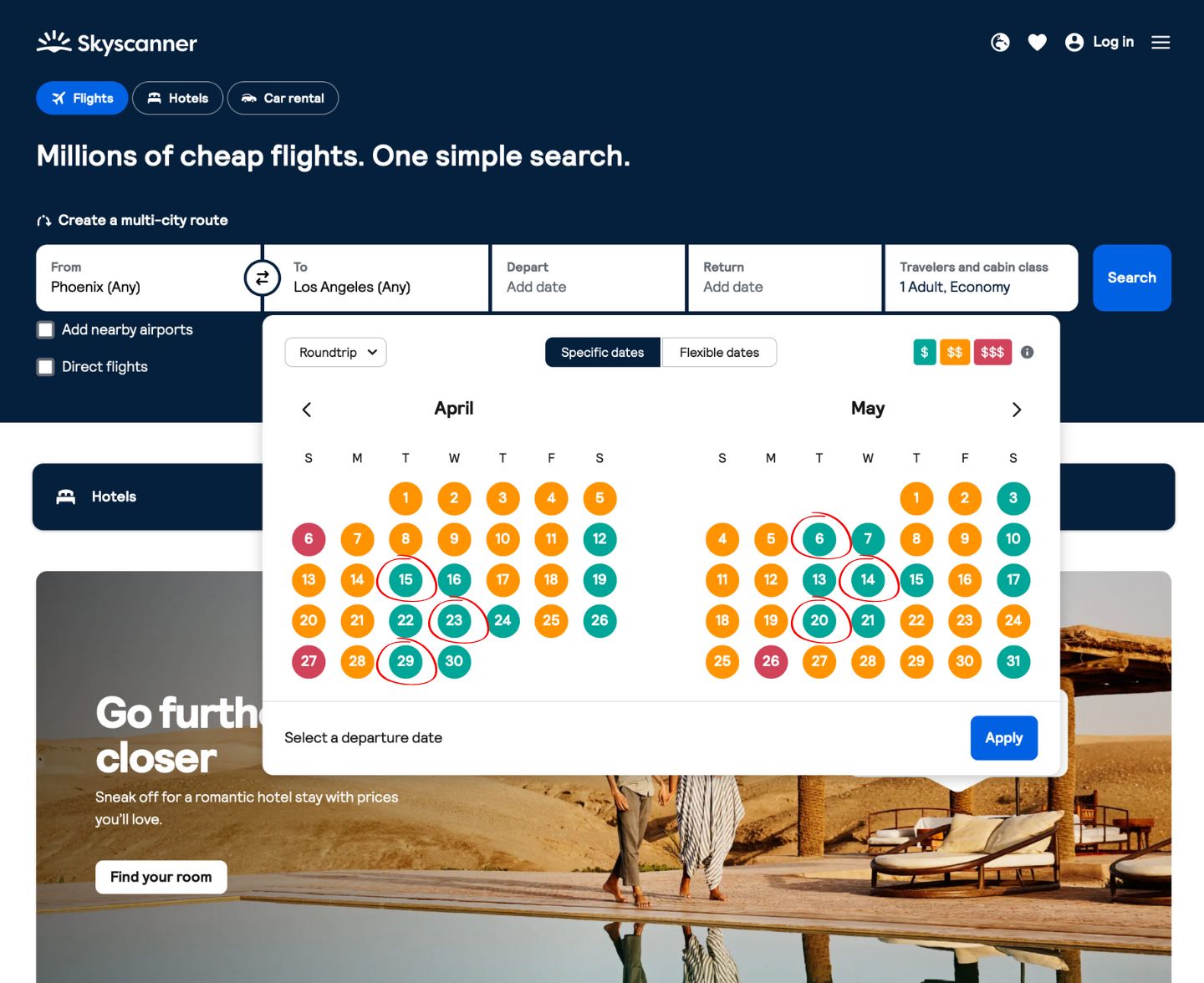
Search entire months instead of specific dates.
The “entire month” option lets you see which days are cheapest. Sometimes shifting departure by two days lowers the ticket price by hundreds of dollars.
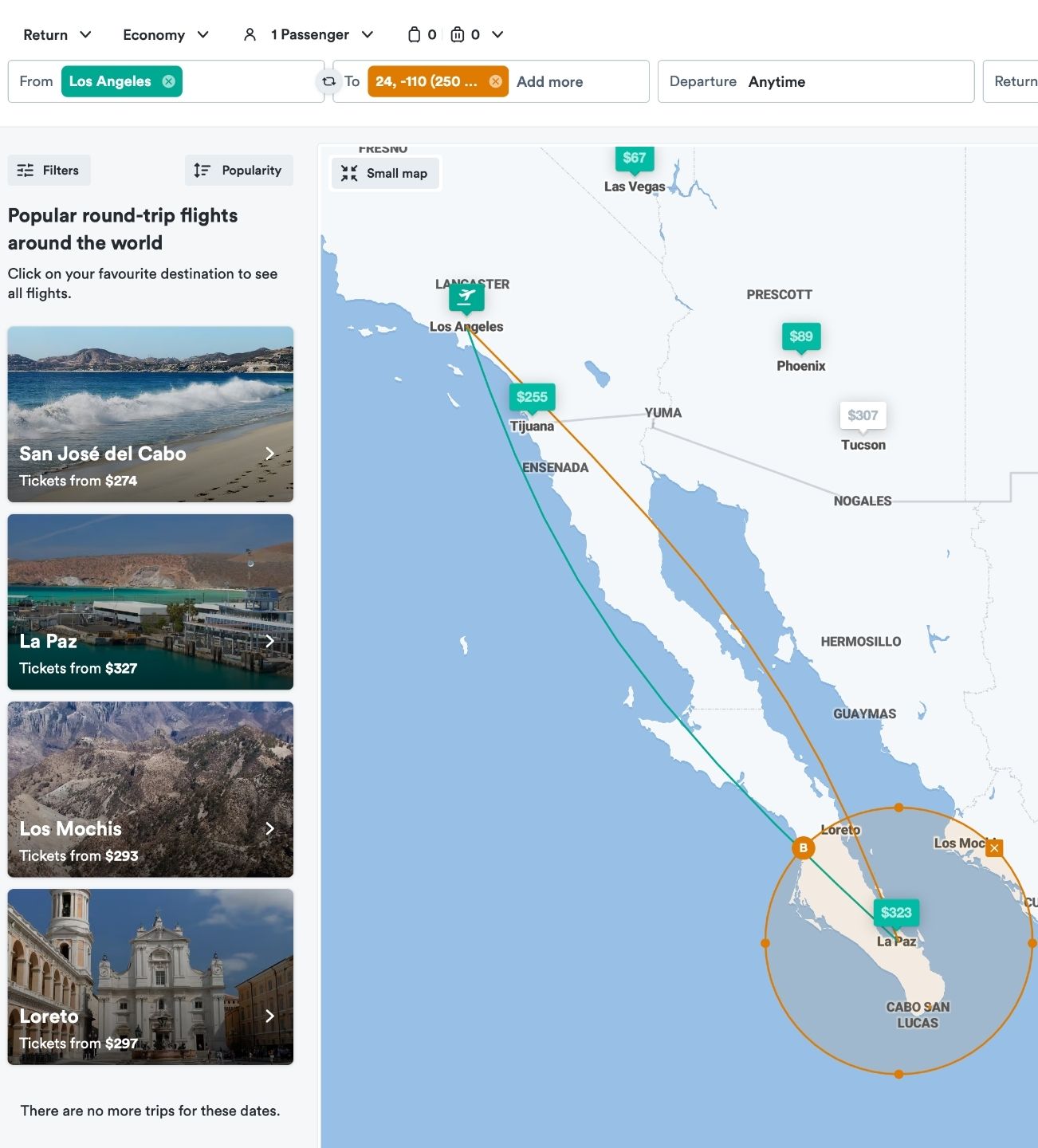
Choose “everywhere” as your destination.
This is one of my favorite features. You enter your departure city, and for the destination, you select “everywhere” or “anywhere.” In seconds, you see a map of the cheapest destinations. If you’re flexible, this is gold.
Compare different search engines.
Not all show the same prices. It’s worth checking several sources before making a decision. Sometimes the differences are really noticeable.
I most often use:
- Skyscanner
- Google Flights
- Momondo
- Kiwi.com
- Azair
I especially like Kiwi for the option to search within a specific radius of kilometers from a chosen city. This is a great solution if you’re planning a regional trip and don’t care about one specific airport.
Sometimes the cheapest flight doesn’t lead exactly where you originally planned – but that’s how the best stories begin.
3. Incognito Mode – Does It Really Matter?
You may have heard the theory that flight prices rise when you check the same destination several times. Many stories circulate about this online, but the truth is somewhat less sensational.
Airlines use dynamic pricing. This means ticket prices change depending on demand, number of seats sold, and time until departure.
If you return to searching and see a higher price, it often simply results from the fact that the cheaper pool of seats has already been sold.
There’s no clear evidence that the mere act of checking a flight multiple times automatically raises its price just for you.
Should you still use incognito mode? Yes. Not because it’s a magic way to get cheaper flights, but because it:
- eliminates result personalization,
- lets you compare prices “cleanly,”
- gives you more control over searching.
You can also check the offer in a different browser or on a different device. It’s a simple thing, but on more expensive routes, even a small price difference matters.
Finding cheap flights isn’t about clever hacks. It’s about making conscious decisions and comparing your options.
Want to know what to watch out for when renting a car abroad? Check out my guide – I describe all the hidden costs and rental company tricks there.
Planning to rent a car in Europe? Read my guide where I break down the hidden fees and common rental company tricks to watch out for
4. Newsletters and Price Alerts – Don’t Miss Out on Deals
The best deals on cheap flights often appear suddenly and disappear just as quickly. You can’t refresh search engines all the time, so it’s worth setting up a system that will do it for you.
Subscribe to newsletters from airlines and services that inform about promotions and fare errors.
Popular ones include Secret Flying, Scott’s Cheap Flights (now Going), and The Flight Deal. Really good offers sometimes appear there.
Even more effective are price alerts. You can set them up on:
- Google Flights
- Skyscanner
- Kayak
You choose a route and dates, and the system notifies you when the price drops. It’s simple, and it works.
I bought tickets to New York this way for almost half the standard price. I got a notification, checked the details, and booked the flight that same day.
It’s not about pressure or acting on emotion. Rather about readiness. If you have a budget set and know where you want to fly, you make decisions faster and without stress.
With cheap flights, timing matters – but preparation matters even more.

5. Flights with Layovers – When It’s Worth It
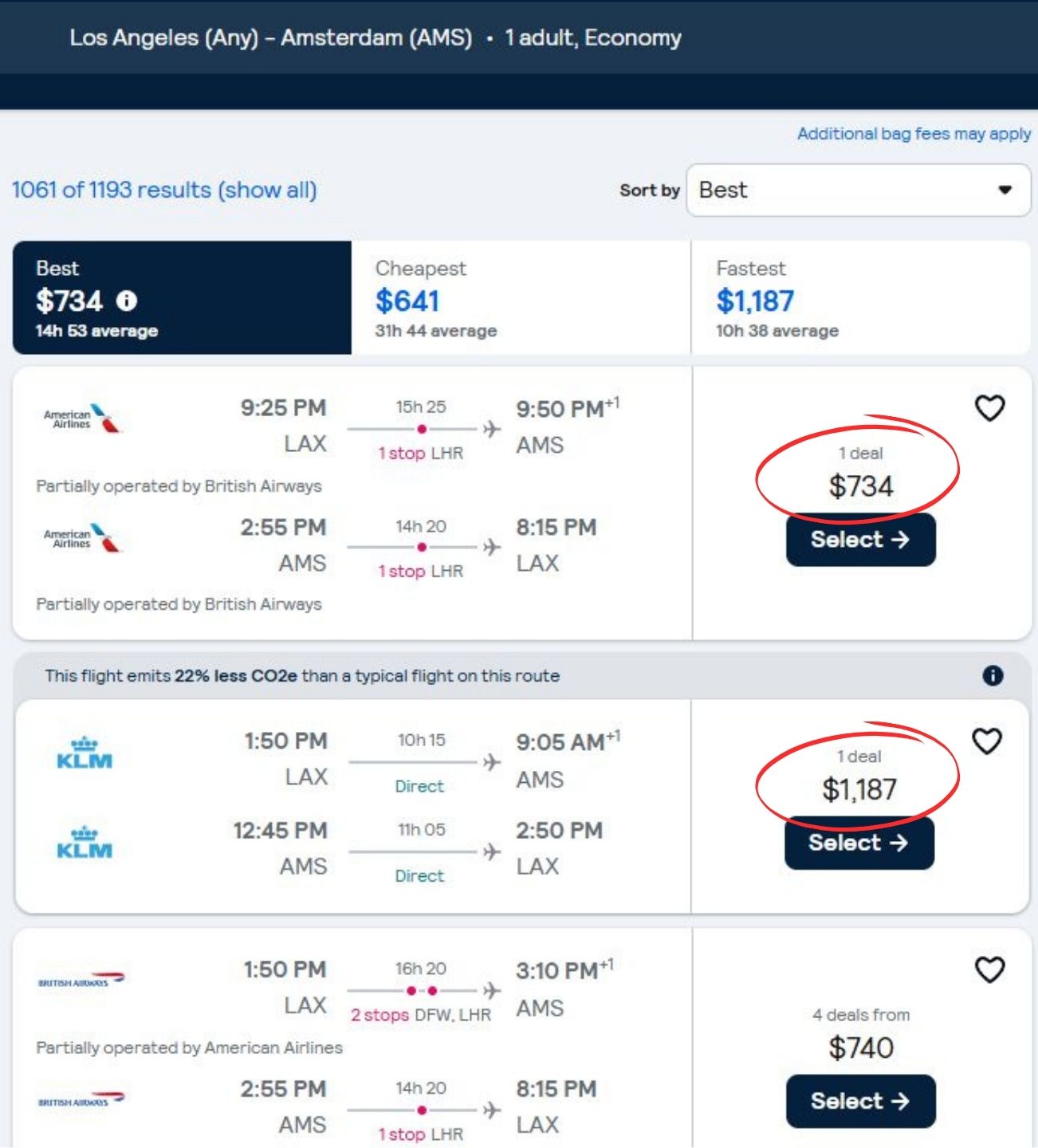
Direct flights are convenient, that’s a fact. But convenience has its price. Sometimes the difference between a non-stop flight and a connection with one plane change is several hundred dollars.
If you have some time and don’t need to arrive as quickly as possible, connecting flights can be a real way to find cheaper tickets.
An additional plus? A longer layover can be an opportunity to see another city.
With a stop lasting 6-8 hours, you can often leave the airport and at least briefly feel the place’s atmosphere. Of course, provided you don’t need a visa and the airport is close to the city center.
Some airlines even offer sightseeing programs for passengers with long layovers. For example, Turkish Airlines has a program of free Istanbul tours for people with longer connections.
However, it’s worth being sensible when planning timing. Minimum safe connection time depends on the airport, but roughly:
- about 1.5 hours in Europe,
- 2-3 hours at large international airports,
- more if you’re changing terminals or need to go through security again.
Finding cheap flights isn’t about risking it. Sometimes it’s better to spend an hour longer at the airport than stress about whether you’ll make the next plane.
In practice, the difference can be really significant – on the route from New York to London, a connecting flight can cost up to $300 less than a direct one.
6. Budget Airlines – Yes, But Use Your Head
Ryanair, Wizz Air, or easyJet are symbols of cheap flying for many people. And rightly so – thanks to them, you can find really good prices.
But the price visible at the start is often just the starting point.
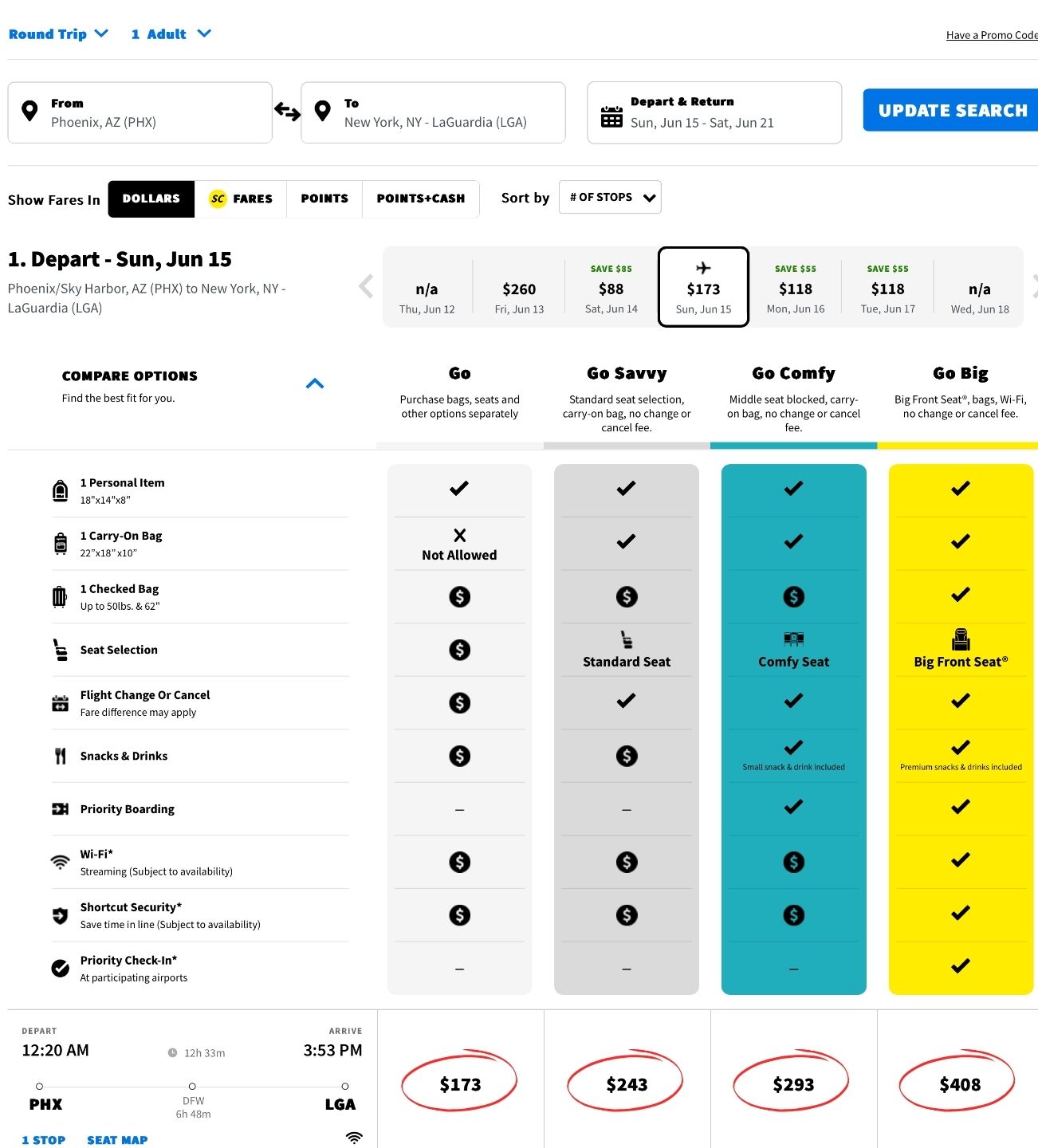
Budget airlines operate on a simple model: you pay a low base rate and customize the rest to your needs. The problem starts when you don’t check the details.
The most common additional costs are:
- checked baggage,
- larger carry-on,
- seat selection,
- airport check-in,
- sometimes specific payment methods.
Imagine you find a flight for $25. Sounds great. But if you need a suitcase, want to choose a seat, and can’t fit into a small backpack, the final amount can be several times higher.
So always look at the final price, not just the initial one. Only after adding everything you actually need, compare the offer with other airlines.
It happens that traditional airlines – with baggage included and more convenient times – come out similarly or even more favorably.
Budget airlines are a great tool for finding cheap flights. You just need to use them consciously and without emotion.with add-ons.
7. Error Fare – Airline Mistakes to Your Advantage
From time to time, pricing errors appear in booking systems, so-called error fares. These are situations where a ticket is listed at a much lower price than it should be.
Such deals are rare but can be spectacular. It happens that distant routes cost a fraction of the standard price.
How to find them? Most often, sites monitoring flight promotions report them, including Secret Flying or Scott’s Cheap Flights. With such offers, quick decisions matter because they can disappear within hours.
However, it’s worth being sensible.
Airlines have the right to cancel tickets issued due to obvious pricing errors. In Europe, consumer law can be favorable for passengers, but there’s no hundred percent guarantee the ticket will be honored.
So when purchasing error fares, it’s best to:
- not immediately book non-refundable accommodations,
- not buy additional connecting flights,
- wait a few days and make sure the ticket has been issued and confirmed.
Error fare is an interesting opportunity but not a strategy. In finding cheap flights, it’s better to rely on a system and patience rather than one-time luck.
Want more budget travel secrets like these?
I share tested money-saving strategies, hidden local spots, and practical travel tips from every destination I explore – the real tricks that actually work, not the generic advice everyone repeats.
Bonus for new subscribers: Budget Travel Calculator 📍

8. Use Loyalty Programs – It Really Pays Off
Loyalty programs remind many people of someone who flies business class weekly. But the truth is, even with 2-3 trips a year, you can start collecting miles.
This isn’t a quick method for a free ticket tomorrow. It’s rather a strategy for the future.
The key is focusing on one airline alliance and consistently collecting points within it. The three biggest are:
- Star Alliance
- SkyTeam
- Oneworld
In practice, this means if you fly an airline belonging to one of these alliances, you can collect miles in one chosen program.
Collected points can later be exchanged for:
- award tickets,
- upgrade to a higher class,
- extra baggage,
- lounge access.
If you live in the USA, it’s also worth checking credit cards linked to loyalty programs. They often offer a welcome bonus in the form of a large number of miles and points for everyday spending. Of course, provided you use the card responsibly and pay it in full.
Loyalty programs won’t replace search engines and promotions, but in the longer term, they can really reduce travel costs.
It’s not a trick. It’s a long-term system.

9. Best Time to Book – Not Too Early, Not Too Late
When should you buy tickets to find cheap flights? There’s no one magic date, but there are certain rough timeframes that usually work.
Domestic and European flights: usually 1-3 months before departure.
Long-haul flights: typically 2-5 months earlier.
Summer season, holidays, long weekends: even 5-7 months before the planned trip.
Contrary to what you often hear, booking a year in advance rarely gives the best price.
Airlines usually start with moderate rates, then promotions appear, and the closer to departure, prices rise again with demand.
What about last minute? Good deals happen, but they’re exceptions rather than the rule. If you have specific vacation dates and care about a specific destination, it’s better not to base plans on hope.
In finding cheap flights, it pays more to monitor prices for several weeks than hunt for one perfect moment.
10. Split Reservations When Traveling in a Group
Few people know this, but with a larger number of passengers, the system can inflate the price for everyone.
Why? In one reservation, the search engine must find tickets at the same fare for the entire group. If the cheapest pool covers only some seats, the system automatically raises the price to the next available level.
Example:
Let’s say there are:
- 2 tickets at $75
- 3 tickets at $125
If you search for a flight for 5 people in one reservation, the system will show a price of $125 per person because that’s how many seats are available in one fare for the whole group.
If instead you split the reservation into two parts, 2 people can buy tickets for $75, and 3 people for $125. In effect, you save $100.
It’s a simple trick that sometimes really works.
However, remember that with separate reservations, the airline doesn’t guarantee seats together or the same protection in case of flight changes.
So before splitting, check the conditions and decide what’s more important to you: savings or full flexibility.
In finding cheap flights, details matter – and this one can make a big difference.
Looking for more ways to travel cheaper?
💸 Travel Cost Calculator → calculate the real budget for your trip
🏕️ Van Life → 10 things worth knowing before you start
✈️ 20 Budget Travel Tricks → practical ways that genuinely lower your travel costs
And you? What do you struggle with most when planning a budget trip?
Travel lighter, even before you leave.
start with something simple.
Download The Minimum Plan – Slow Travel:
11. Don’t Be Afraid of Non-standard Solutions
When searching for cheap flights, it’s sometimes worth going beyond obvious patterns.
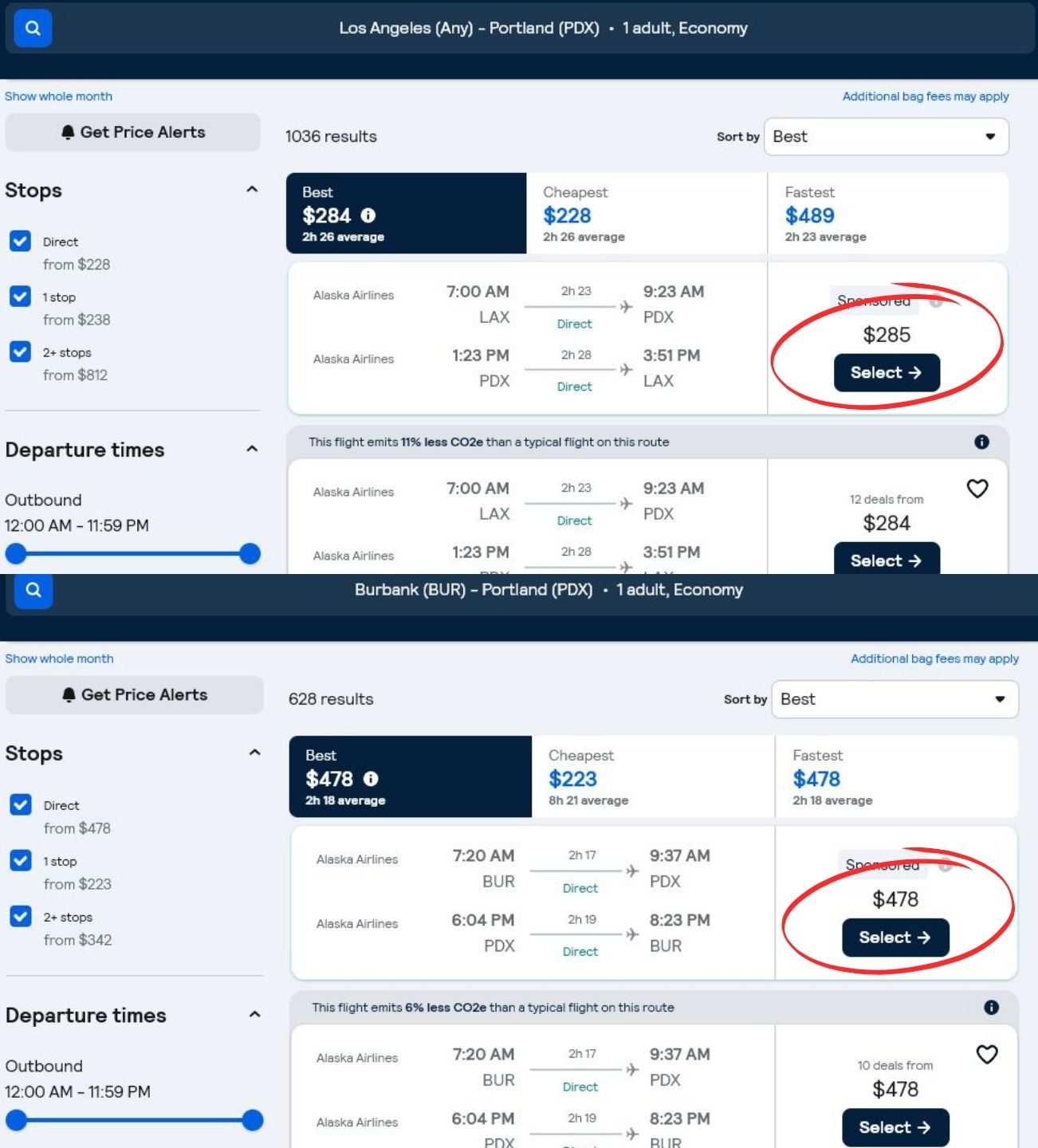
Check flights from neighboring airports
The price difference can be really significant. If you live near a border or have good train connections, it’s worth comparing prices from other cities. Sometimes a flight from a different airport reduces travel costs by even tens of percent.
Consider flexible routes
It happens that a connecting flight is cheaper than a direct one. Some people use so-called “hidden city ticketing,” meaning they get off at the layover airport instead of flying to the final destination.
However, it’s worth knowing that most airlines don’t accept this practice and may impose consequences, especially with frequent use.
Additionally, it only works with carry-on baggage and only for one-way travel. This is a risky solution and rather for aware travelers.
Check charter spots
Travel agencies sometimes sell individual vacant seats on charter planes. Such offers appear irregularly but can be very attractive price-wise.
Non-standard solutions require more attention and flexibility, but that’s precisely why the best deals sometimes appear through them.
In finding cheap flights, openness gives the most – not just to destinations but also to the way you plan travel.
How to Find Cheap Flights – Summary
Now you know how to find cheap flights – and most importantly, where to start.
Finding good prices isn’t about luck. It’s rather a combination of patience, flexibility, and conscious decisions. When you know where to check prices, how to set alerts, and when to book, it stops being chaotic and becomes a strategy.
At the same time, it’s worth remembering one thing.
Price isn’t everything.
Sometimes paying an extra $50 or $100 means a shorter layover, better arrival time, or less stress along the way. Your time, energy, and comfort also have value. Cheap flights are great, but the best trip is one you start calmly.
If you have your own ways of finding cheap tickets, write to me. I’m always curious about stories of well-planned trips and smart decisions.
And if this guide was helpful to you, save it for later or send it to someone who’s planning a trip.
Travel doesn’t have to cost a fortune. You just need to know how to approach it.
Save this guide for later