
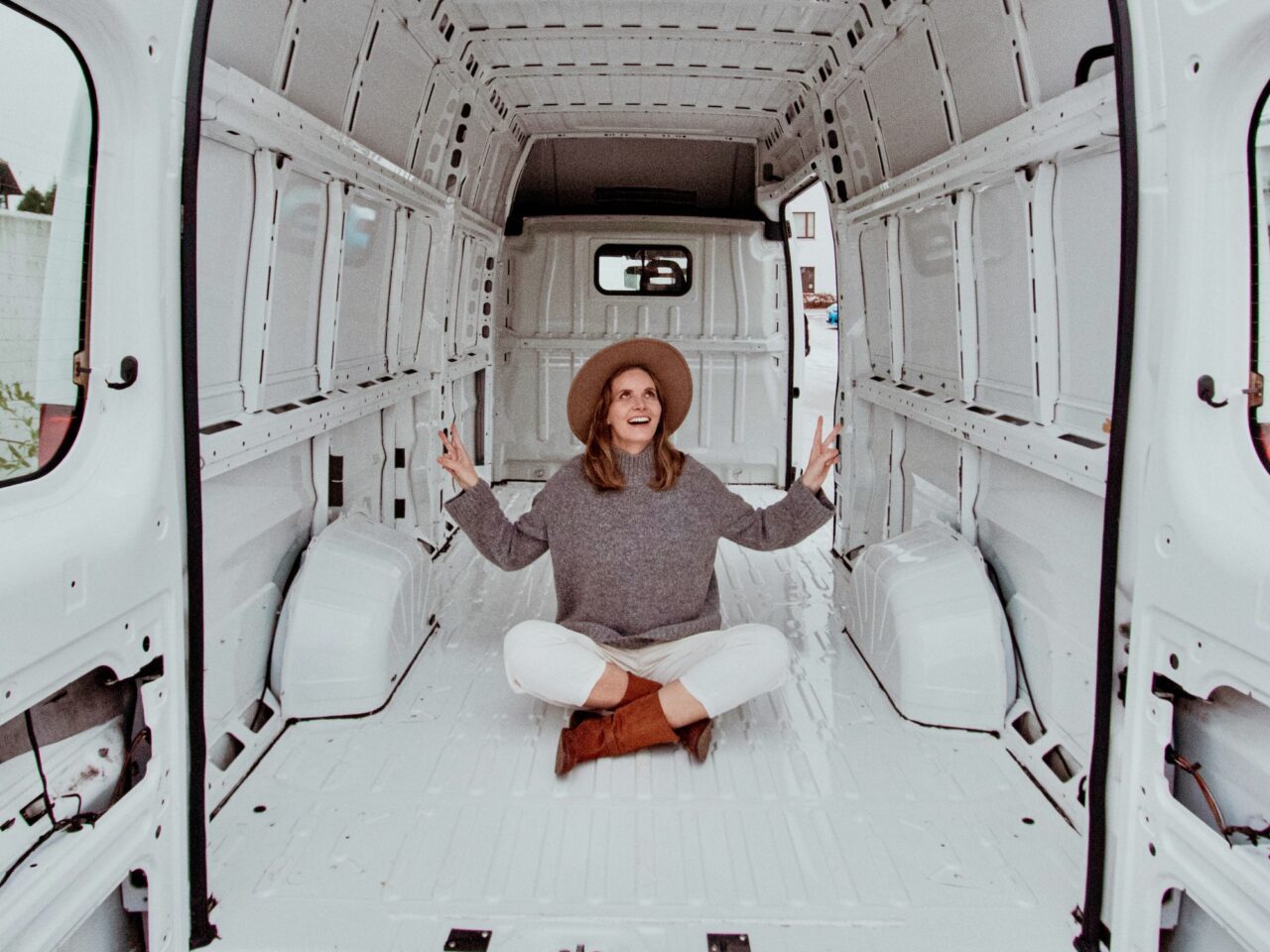
We spent around $40,000 building our campervan – and this is where the money actually went.
I still remember the moment we sat down and said, “Okay. We’re doing this. We’re building a campervan.”
Not buying one. Not renting. Building it from scratch. With our own hands.
It sounds romantic. And in many ways, it was.
But very quickly, alongside the excitement, one very practical question showed up: how much does it actually cost?
If you’re currently browsing vans, opening your first spreadsheet, or wondering whether this is even realistic, we were exactly there a few years ago.
On one side, freedom. On the other, a calculator and that quiet question: would this actually make sense financially?
That’s exactly why this guide exists.
Not in theory. Not in a polished YouTube version of reality. But in real life, after 8 months of building and several years of traveling in a campervan we know down to every screw.
If you’re wondering how much it costs to build a campervan, especially in the US, this guide will give you real numbers, a full breakdown, and what actually drives the cost.
Want to learn more about traveling by campervan?
On my Van Life Hub, you’ll find more articles on building a campervan, van travel, real costs of van life, and practical tips from routes across the U.S.
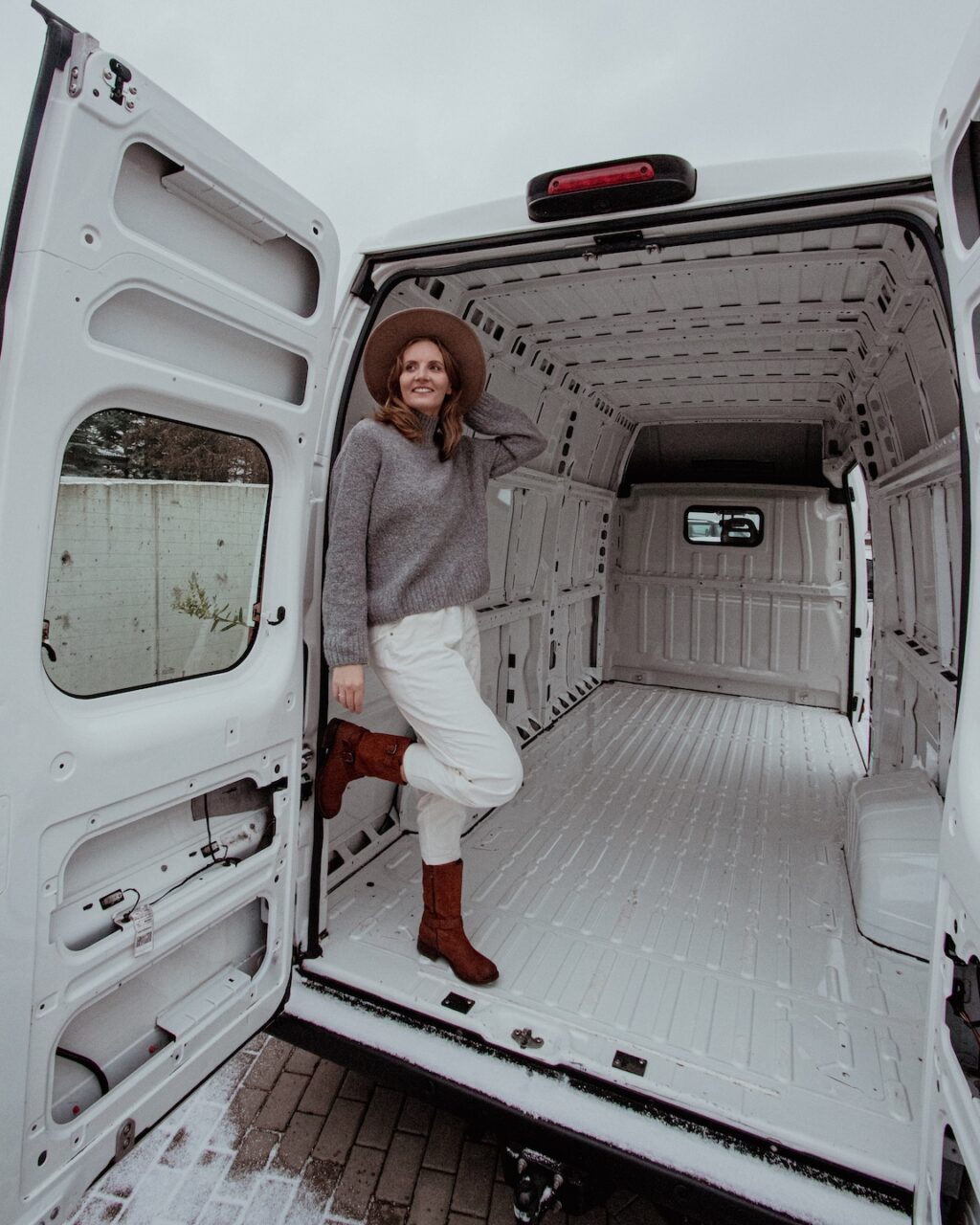
Quick Answer: Campervan Build Cost in 2026
Before we go into details, here’s the short answer.
The cost of building a campervan varies a lot depending on your setup, but in 2026, most builds fall into three ranges:
- Budget build: $20,000-30,000
- Mid-range build: $40,000-70,000
- High-end build: $80,000+
That includes both the van and the conversion.
Where you land depends on a few key factors: the type of van, your level of finish, and how much of the work you do yourself.
DIY builds can be significantly cheaper than buying a ready-made campervan, but they’re never “cheap.” You’re trading money for time, skills, and flexibility.
And that trade can absolutely be worth it.
Why We Chose to Build Instead of Buy
First: fit.
Because of our height, most standard campervan layouts simply didn’t work for us.
We looked at ready-made vans, compared options, and tried to find something that made sense – but in reality, they all involved compromises in a space where we planned to spend hundreds of nights.
So we had two options: buy a finished campervan or build one ourselves.
Building gave us full control over the layout, comfort, and budget.
It Wasn’t About Doing It Cheap
The second reason was money, but not in the sense of “doing it as cheaply as possible.”
It was more about doing it intentionally.
A custom build made by a professional company, tailored to our needs, would have cost significantly more.
DIY allowed us to decide where to invest more – and where we could simplify or optimize.
Did We Have a Fixed Budget?
Not really.
We estimated that the conversion itself would cost somewhere between ~$14,000 and $18,000 (55,000-75,000 PLN), likely closer to the upper end.
And interestingly, those early estimates turned out to be fairly accurate.
Of course, there were expenses we didn’t anticipate – the kind you only discover once you’re actually in the process.
The Biggest Decision: Choosing the Van
The most stressful part was choosing the base vehicle.
If you buy the wrong van, that’s not something you can easily fix later.
Everything else can be adjusted, upgraded, or rebuilt over time.
But the van itself – that’s your foundation.
Looking Back
When I think about this project now, it feels well thought through.
And maybe more importantly – it showed me that a spontaneous decision can still be a rational one, as long as you approach it with intention afterward.
Our Real Campervan Build Cost (Case Study)
Let’s move from estimates to real numbers.
Our full DIY campervan build cost ~$40,000-45,000 (155,842 PLN), including both the van and the entire conversion.
Here’s how it broke down:
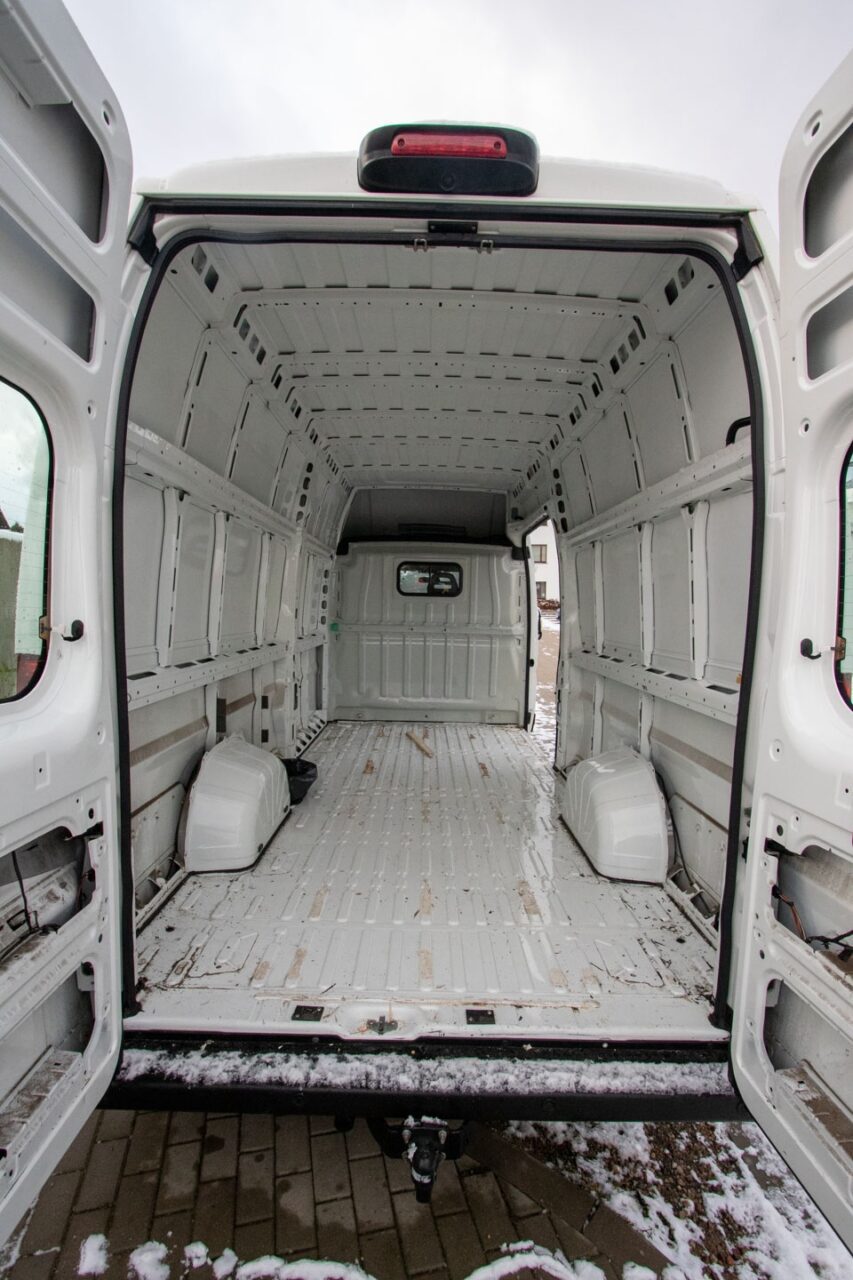
- Van (Peugeot Boxer 2019): ~$20,000 (79,000 PLN)
- Conversion & systems: ~$20,000-25,000 (76,842 PLN)
These are real numbers from 2022 – tracked carefully and without rounding things down to make them look better.
Today, with higher material and vehicle prices, a similar build would likely cost 20-35% more.
Our build was done in Europe, but the cost structure is very similar to what you’ll see in the US – especially when it comes to where the money actually goes.
And that’s the part most people underestimate.

How Much Did the Van Cost?
Our van cost ~$20,000 (79,000 PLN).
For many people, buying the van is the real starting point of a campervan build – and often the single biggest expense in the entire project.
We didn’t choose this model out of sentiment or because we had a dream van in mind.
We chose it because it was one of the very few vans where we could both stand up comfortably inside. Given our height, that wasn’t something we could take for granted.
We looked at other models, compared options – but this was the only one that met that key requirement.
Was It a Good Deal?
At the time, yes.
It felt like a solid balance between age, mileage, and overall condition.
Maybe there were small things we didn’t notice right away, but over the years of using it, we never had any major issues. Just standard maintenance – nothing unexpected.
Finding the Right Van Took Time
We spent a few months searching.
The market was tight at the time – still affected by the post-pandemic demand – and good vans were disappearing quickly.
We checked listings online, visited vans in person, and spoke with multiple owners.
This one felt like the most reasonable option, so in the end, we made a fairly spontaneous decision.
Why This Specific Model?
We chose the model and engine version intentionally.
It had mixed reviews, but it also came with lower ownership costs at the time – which made sense for our budget.
Even if additional costs showed up later, the overall trade-off still felt justified.
Any Hidden Costs After Buying?
Not really.
We did a standard initial service after purchase – and that was it.
No surprises.
Now that we’ve covered the base cost, let’s move on to what most people are really curious about: how much the actual conversion cost – and which systems took the biggest part of the budget.
Planning your own campervan trip and not sure where to start?
Check this first: 10 things you need to know before building a campervan →
Where Does the Money Actually Go?
One of the biggest surprises during our build wasn’t the total cost – it was where the money actually went.
It’s easy to think the budget disappears on “nice finishes” or aesthetics. In reality, most of it goes into things you barely see: insulation, wiring, structural work.
Here’s how our conversion cost was distributed:
- Vehicle modifications: the biggest category – insulation, flooring, windows
- Gas & heating system: essential for year-round travel
- Electrical system: batteries, solar, wiring
- Water system: tanks, pump, boiler
- Furniture & finish: surprisingly one of the smaller parts
These are the systems that turn a van into a functional home – not just a place to sleep.
And they’re also the parts where cutting corners can cost you more in the long run.
Campervan Build Cost Breakdown (Our Build)
Here’s a simplified breakdown of our actual conversion costs:
- Vehicle modifications: ~$7,000 (28,533 PLN)
- Gas & heating: ~$4,000 (17,029 PLN)
- Electrical system: ~$4,000 (16,395 PLN)
- Water system: ~$2,000 (8,885 PLN)
- Furniture & finish: ~$1,500 (6,000 PLN)
These numbers are from 2022. Today, you can expect each of these categories to be 20-35% higher, depending on materials and availability.
What stood out the most?
The biggest expenses were not the visible parts of the van – but the systems that make it livable in real conditions.
Vehicle Modifications – ~$7,000
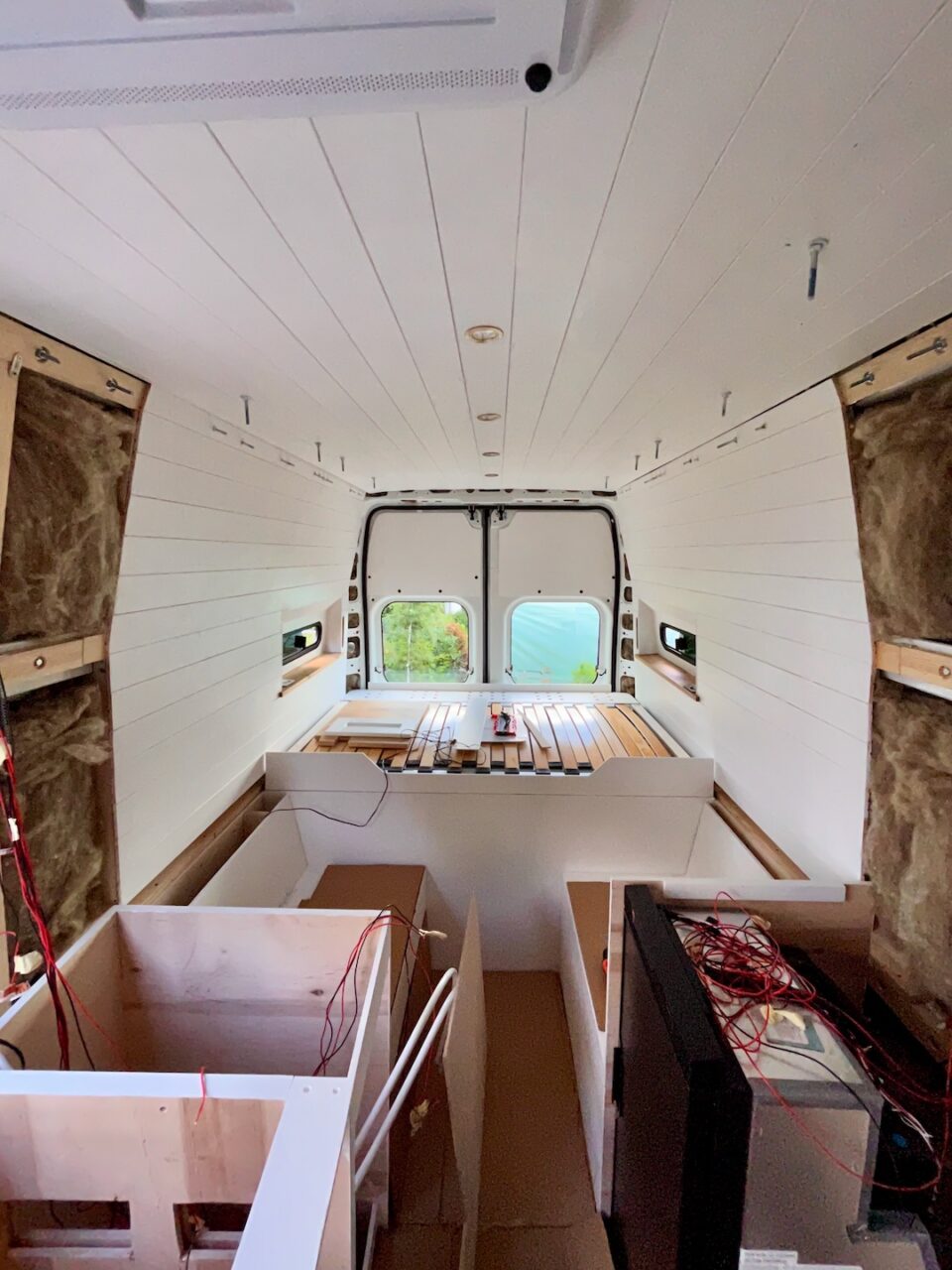
This was the most expensive part of the entire build – and not because of aesthetics, but because of the technical foundation.
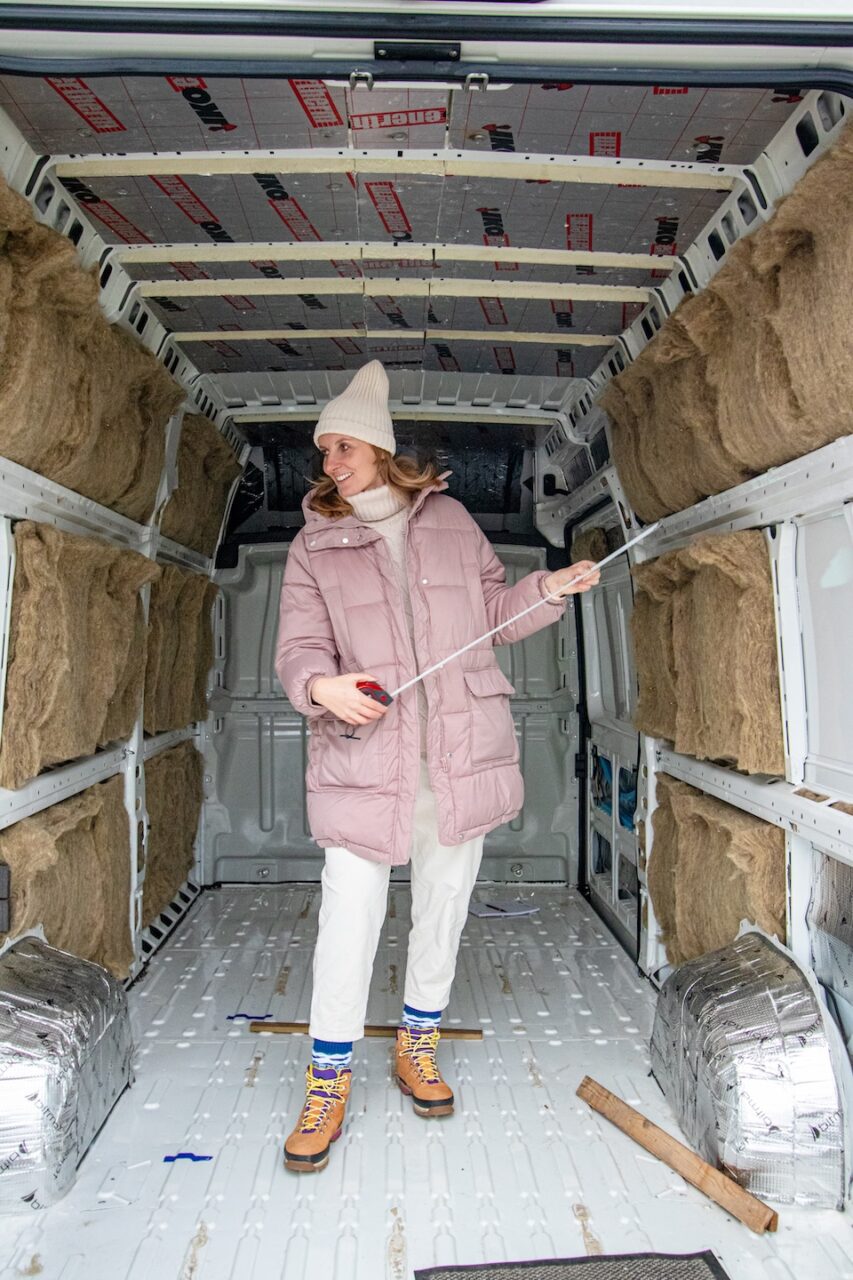
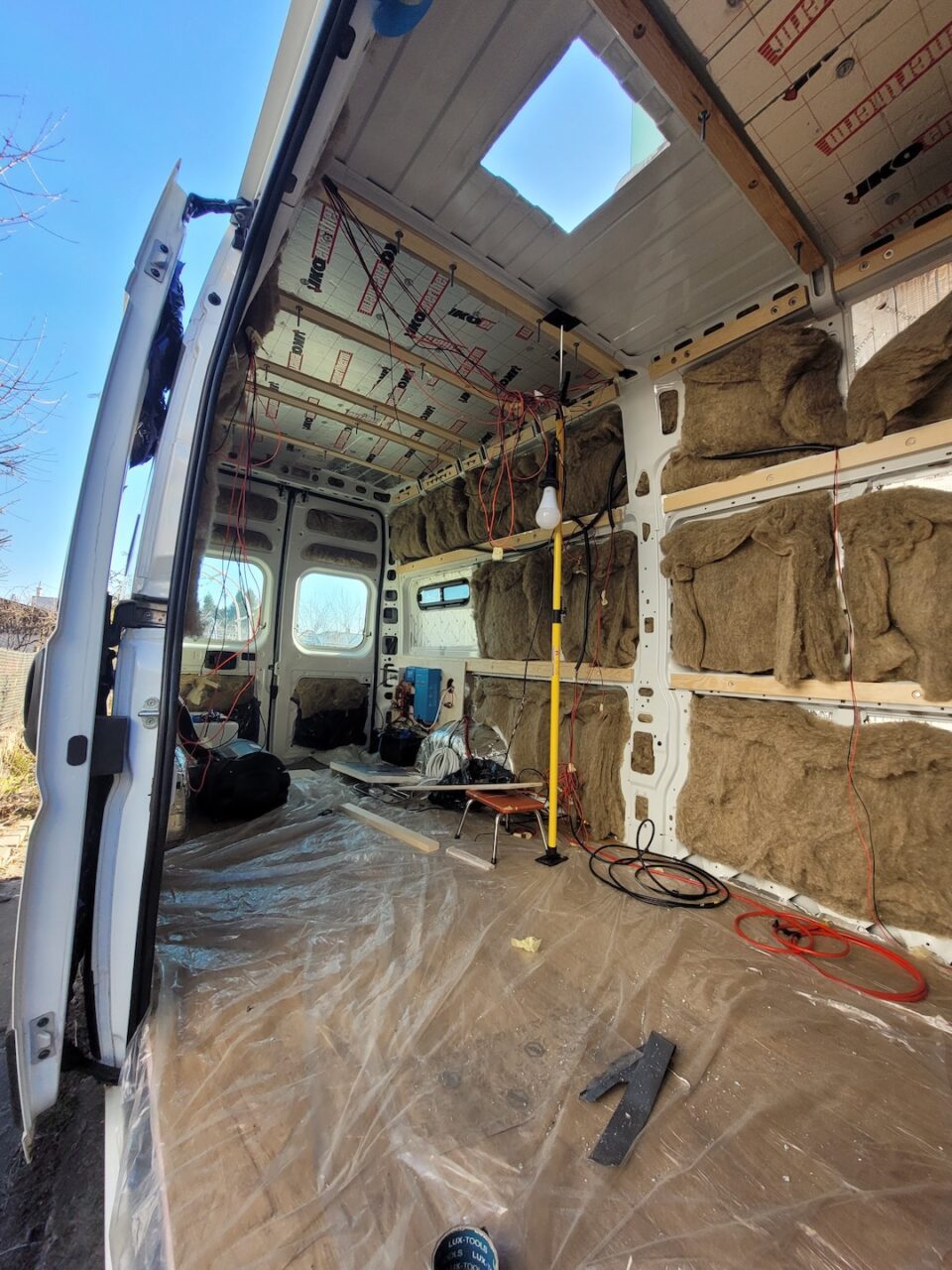
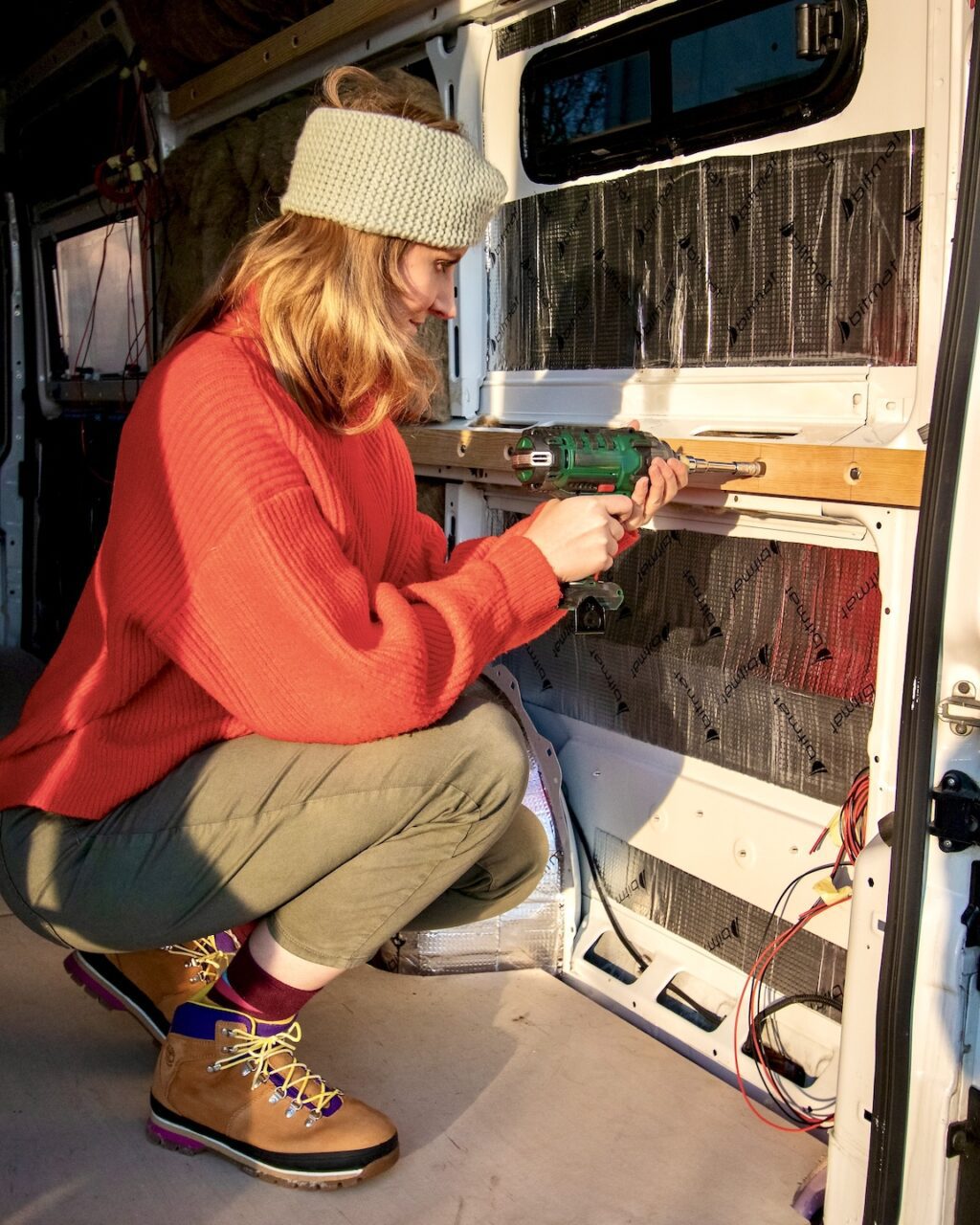
The essentials came first: removing the bulkhead, insulation, and flooring.
This is the base if you want to travel in different conditions and not freeze on your first cold morning.
On top of that, we installed windows, a roof vent, and prepared the structure for the entire build.
These are the costs you don’t see in photos. You don’t see insulation. You don’t see the floor. But they’re exactly what takes up the biggest part of the budget.
A Small Design Lesson
This category also included the passenger swivel seat – and a small mistake we learned from.
At first, we wanted to keep three front seats with a rotating bench. In theory, it sounded great.
In practice, it was uncomfortable and not very ergonomic.
We ended up replacing it with a standard passenger seat with a swivel base.
It cost us roughly the same as our initial (not-so-great) decision.
Looking back, we would have chosen a solid, proven solution from the start – ideally with a high-quality or even electric swivel.
Electrical System – ~$4,000
The electrical system is one of the parts I’m most proud of.
We designed it around our actual needs – not “just in case.” We knew what devices we would use and how long we wanted to stay off-grid.
Our system included:
- battery
- inverter
- solar panels
- charge controller
- wiring
- alternator charging
Throughout our travels, we only ran out of power a couple of times – and each time it was due to a minor external issue, not the system itself.
We used a lot of electronics: laptops, drones, chargers. Everything worked reliably. Solar while parked. Charging while driving.
The system balanced itself and gave us full flexibility – which is exactly what allowed us to stay off-grid without worrying about power.
If you’re wondering how much a campervan electrical system costs, this was one of our bigger investments – but also one of the most valuable in everyday use.
Today, the same setup would likely cost significantly more.
Water System – ~$2,000
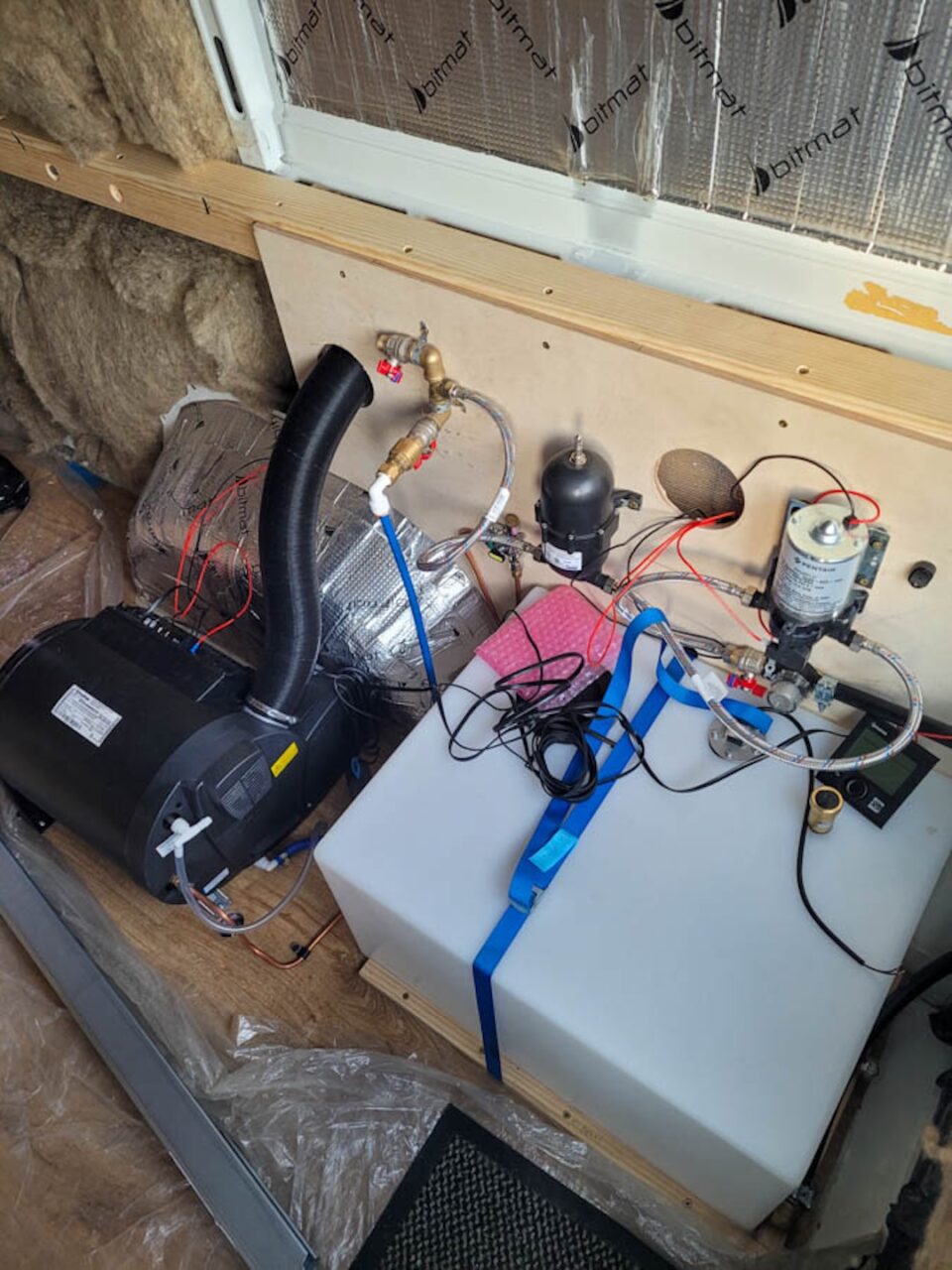
Our water system cost 8,885 PLN (~$2,000) and included fresh and grey water tanks, a pump, a boiler, plumbing, and a toilet.
The setup worked well in practice.
It allowed us to function comfortably for 2-3 days at a time, sometimes even four, without needing to look for campsites or facilities.
We could wash dishes, take showers, and live normally – without constantly thinking about water.
A Small but Important Detail
The only issue? The grey water tank filled up slightly faster than the fresh water tank emptied.
We solved it in a very simple way – with a flat 10-15L container.
Whenever needed, we would transfer some grey water and empty it at a gas station restroom.
It sounds like a small detail, but this is exactly the kind of thing that makes a system work in real life – not just on paper.
Was the Boiler Worth It?
Absolutely. Without hot water, you’re much more dependent on campsites and public showers.
During our travels in the US, where we spent months on the road, we realized something important:
There are plenty of places to park – but far fewer that feel truly comfortable and safe for overnight stays.
Having hot water gave us real independence.
Comfort vs. Just “Sleeping in a Van”
This is one of those elements that truly changes the experience.
It’s the difference between having a bed in a vehicle – and having a home on wheels.
A Small Issue at the Start
We did run into a minor problem early on. A pipe connected to the boiler leaked a few times.
Once we sealed it properly, the issue disappeared completely – and never came back.
Heating & Gas System – ~$4,000
Our gas and heating system cost ~$4,000 (17,029 PLN).
It was one of the bigger expenses in our build – and a very intentional decision.
We chose an LPG heating system because we wanted full independence and the ability to travel year-round.
We slept in the van with outside temperatures of -10°C to -15°C (14-5°F) – and inside, it was genuinely warm and comfortable.
We also stayed at different elevations, and unlike diesel heaters, our LPG system had no issues with altitude.
Why We Didn’t Install It Ourselves
We hired professionals to install the Truma system and the gas setup.
Yes, we could have saved money by doing it ourselves. But with gas, we didn’t want to experiment.
We wanted the confidence that everything was done properly – and safely.
Seasonal vs. Year-Round Travel
In many builds, the heating system is what defines whether your campervan is:
- seasonal
- or truly year-round
For us, this wasn’t just about comfort.
It was about freedom – the ability to travel whenever and wherever we wanted, without worrying about the weather.
Was It Worth It?
Absolutely.
This was one of those investments that paid off every single time we used the van.
Furniture & Finish – ~$1,500
Our furniture and interior finish cost around ~$1,500 (6,000 PLN).
Compared to the rest of the build, this was a relatively small part of the budget – mainly because we did most of the work ourselves and chose materials carefully, without chasing “Instagram-worthy” trends.
What Was Surprisingly Expensive
The most expensive items were actually the camper-specific components – the ones sold as ready-made solutions.
For example, the swivel table leg cost around ~$200 (800 PLN) – and it wasn’t particularly durable. We had issues with it.
It was a good reminder that “made for campervans” doesn’t always mean “better.”
Materials That Were Worth It
Most of our budget here went into wood: boards, structural elements, and countertops.
In total, it cost a few thousand PLN – and it was absolutely worth it. Easy to work with, durable, and reliable.
We also invested in soft-close drawer systems.
They were a bit more expensive and heavier – but the comfort they added was something I wouldn’t trade for savings.
Did Aesthetics Increase the Cost?
Not really.
Most of the visual elements were simple, low-cost additions that made a big difference.
For us, functionality mattered more than creating something that looked perfect in photos.
Did We Buy Anything Unnecessary?
If I really tried, I could probably find a few things we didn’t need.
But overall – not much.
Almost everything we designed ended up being useful in everyday life.
One Important Takeaway
“Looking good” doesn’t have to be expensive – especially if you build a lot yourself. But “campervan-specific” often does mean more expensive.
Many components are niche products, sold as specialized solutions – and that comes with a higher price tag.
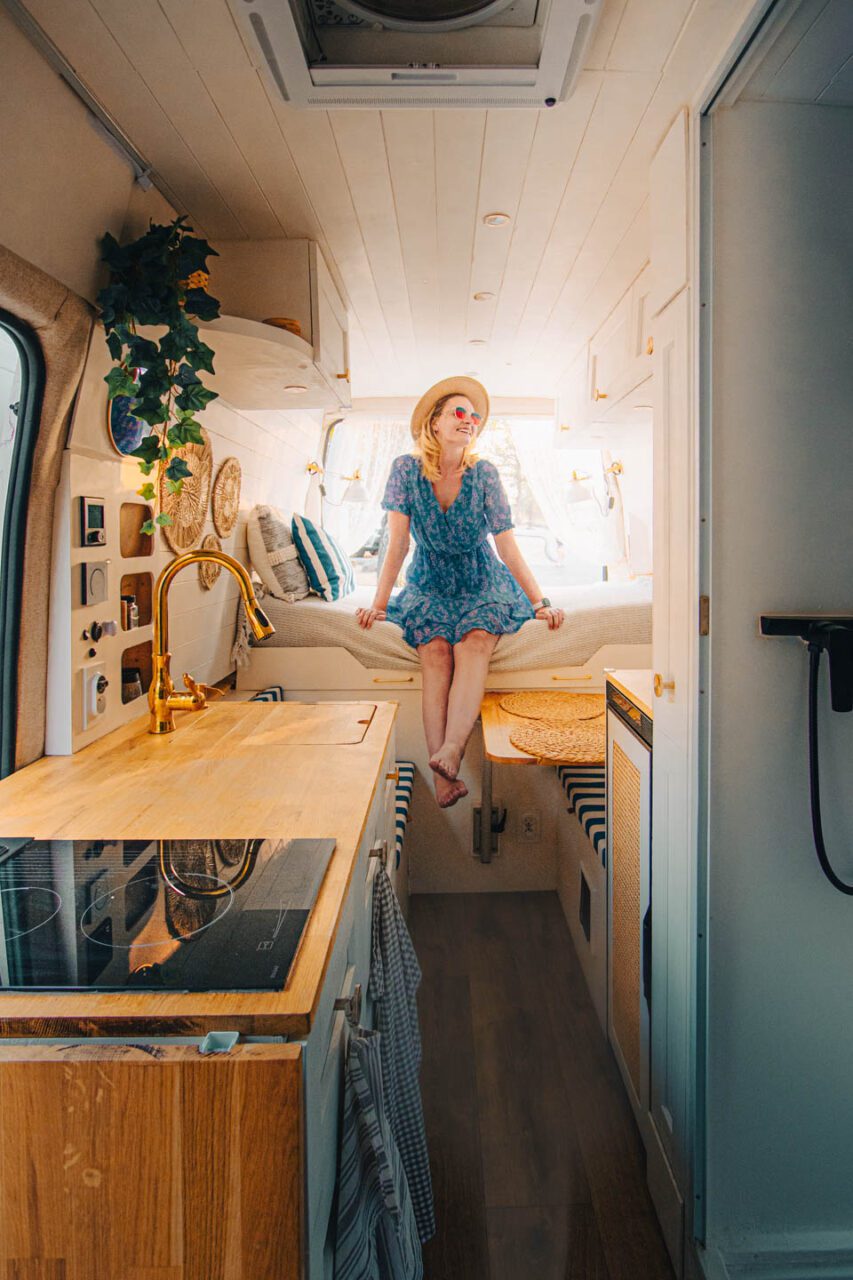
Typical Campervan Build Costs in the USA (2026 Guide)
Our build was done in Europe, but the cost structure is surprisingly similar in the US. Here’s what it typically looks like today:
| Category | Budget Build | Mid-Range Build | High-End Build |
|---|---|---|---|
| Van | $8,000-15,000 | $20,000-40,000 | $50,000+ |
| Electrical | $1,500-3,000 | $4,000-10,000 | $10,000+ |
| Water system | $500-1,500 | $2,000-5,000 | $5,000+ |
| Heating & gas | $500-2,000 | $2,000-5,000 | $5,000+ |
| Insulation & structure | $1,000-3,000 | $3,000-8,000 | $10,000+ |
| Furniture & finish | $1,000-3,000 | $3,000-10,000 | $15,000+ |
Estimated total:
- Budget: $20,000-30,000
- Mid-range: $40,000-70,000
- High-end: $80,000+
This is where most people underestimate the cost – especially electrical systems and the van itself.
These ranges reflect typical DIY builds, not high-end custom professional conversions.
What Makes a Campervan Build Expensive?
Not all parts of a build impact the budget equally.
A few key decisions can dramatically increase the total cost:
- Lithium battery systems – significantly more expensive than AGM, but lighter and more efficient
- Large solar setups – more panels, better independence, higher cost
- Heating system – especially if installed professionally
- Professional labor – saves time, increases cost quickly
- High-end finishes – custom cabinetry, premium materials
The truth is, you can build a campervan on almost any budget – but comfort and independence come at a price.
Building a campervan – or just dreaming about van life?
I share real tips from our build, along with the mistakes we made – so you can avoid them.
Bonus for new subscribers: Complete van build shopping list – everything you need from A to Z 🚐

The Hidden Cost No One Talks About: Time
There’s one thing that almost never shows up in cost breakdowns: time. And in a DIY campervan build, time is often the biggest hidden cost.
Our build took 8 months.
We were both working full-time, which meant evenings, weekends, and almost every free moment went into the van.
Could it have been faster? Yes – if we had quit our jobs or outsourced parts of the build.
But doing it ourselves gave us something else: learning, problem-solving, and the feeling of building something we truly understood.
And that changes the experience completely. This wasn’t just a project. It was a process.
One that taught us patience, forced us to slow down, and showed us that not everything can – or should – be rushed.
Curious what van life really looks like from the inside?
10 things you need to know about van life →
Where Could You Save Money?
If there’s one thing we learned, it’s this: don’t save money on safety.
We outsourced the gas installation and heating system. It cost more, but it gave us peace of mind – and that’s not something you want to compromise on.
We also chose solid mounting solutions for our solar panels and a proper passenger seat setup. These are the kinds of decisions that matter when you’re driving thousands of miles.
So where can you realistically save money?
Mostly in small things: gadgets, extra accessories, and “nice to have” items. These are the costs that quietly add up and blur your budget.
Some of the things we bought turned out to be great and we still use them today. Others were less necessary or simply average in quality.
Looking back, we could probably shorten our shopping list by a few items.
But during the build, it’s hard to predict what will be essential and what will just be convenient. That’s something you only learn through actually using the van.
Could we have built more things ourselves instead of buying ready-made components? Maybe. But overall, I think we made balanced decisions.
I don’t remember anything we bought blindly that we could have easily made ourselves without risking quality or safety.
The biggest savings in a campervan build don’t come from cutting everything.
They come from thoughtful planning – and avoiding impulsive decisions.
Want to see how to design a campervan interior?
Campervan layout ideas →
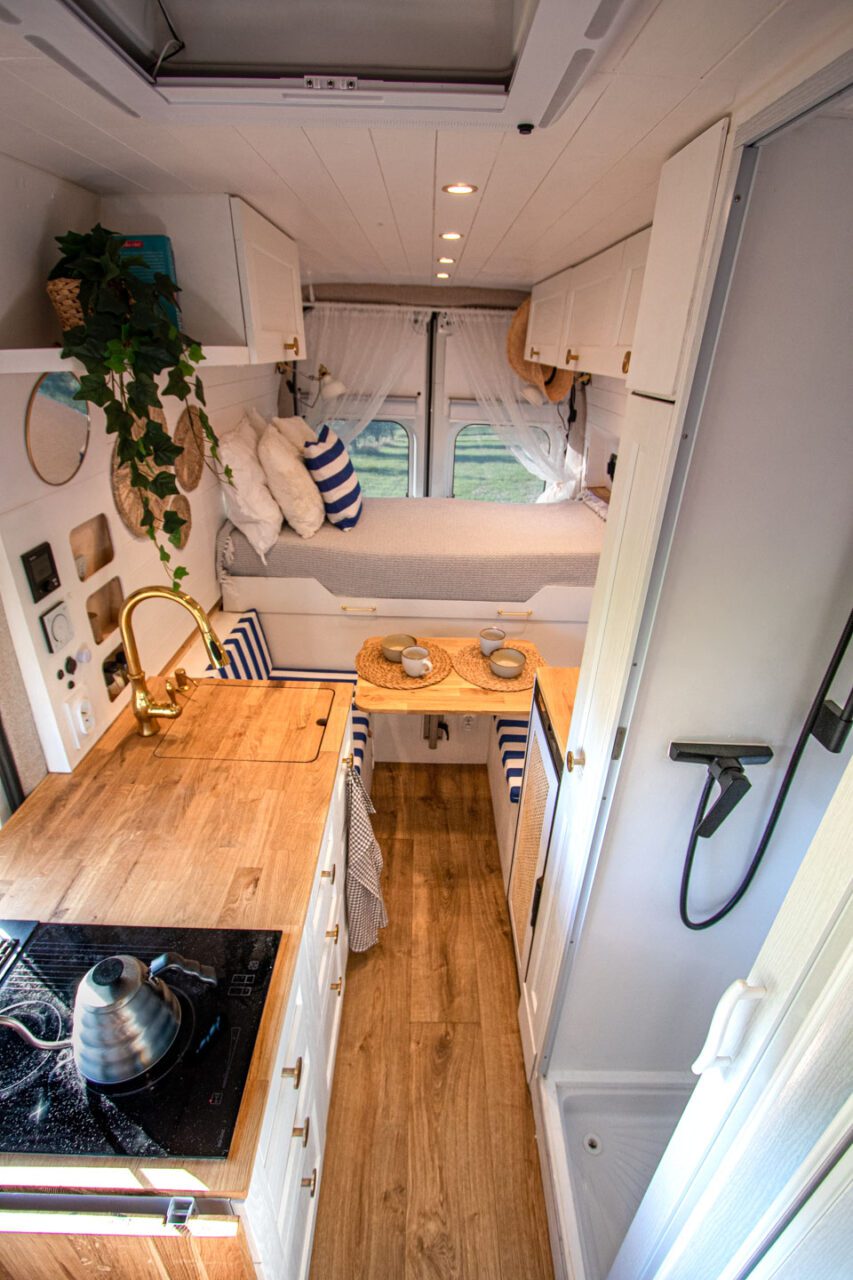
How Much Would the Same Build Cost Today?
More. Realistically, about 20-35% more, depending on the build standard and when you’re buying.
If you’re reading this in 2026 and trying to estimate your own budget, treat our numbers as a reference point – not a current price list.
Since 2022, the cost of materials, electrical components, heating systems, and many campervan-specific parts has increased significantly.
The van itself is also a big factor. Prices for used vans have gone up, and newer models tend to be more expensive across the board.
Our full build in 2022 cost around ~$40,000-45,000 (155,842 PLN), including both the van and the conversion.
Today, a similar build would likely fall somewhere around $50,000-70,000, depending on the van, material prices, and how much of the work you do yourself.
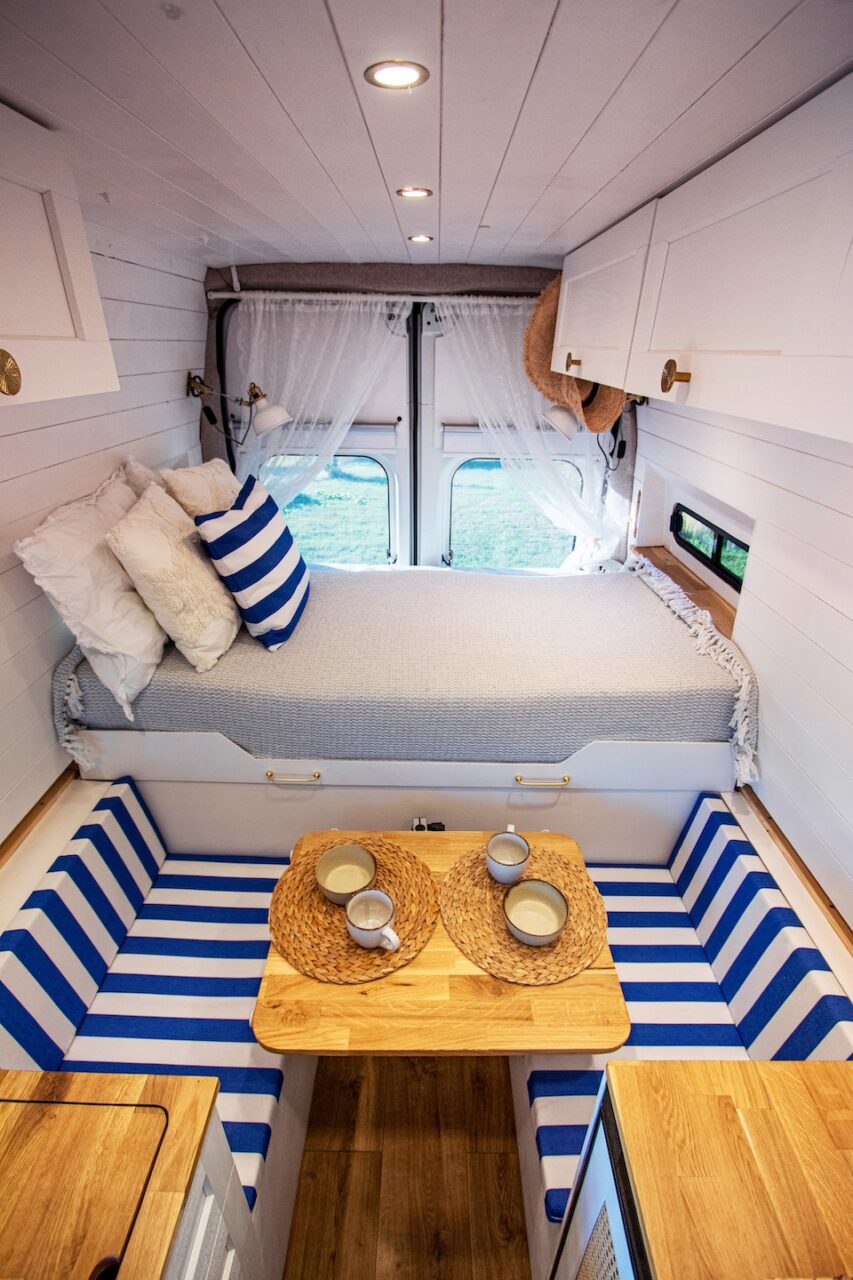
Is Building a Campervan Worth It?
This is probably the second most common question – right after cost. And the honest answer is: it depends on what you’re looking for.
Financially
If we sold our campervan today, we probably wouldn’t recover the full amount we invested.
That’s the reality of DIY builds – buyers are often cautious about someone else’s work, even if it’s done well.
But that’s only one side of the equation.
When I look at how much we traveled – across Europe and the US – and compare it to flights, hotels, and rental cars, the numbers start to shift.
Building was cheaper than buying a ready-made campervan of a similar standard.
Not dramatically cheaper. But reasonably.
You don’t save 80%. You save smart – in exchange for your time and effort. And that’s a fair trade.
In Real Life
This part is harder to measure. Building a campervan is not just a project. It’s a test.
Of patience. Of problem-solving. Of your ability to learn quickly and keep going when things don’t work the first time.
There were moments of frustration. Moments where something had to be taken apart and done again.
But also moments where everything finally worked – and that feeling stays with you.
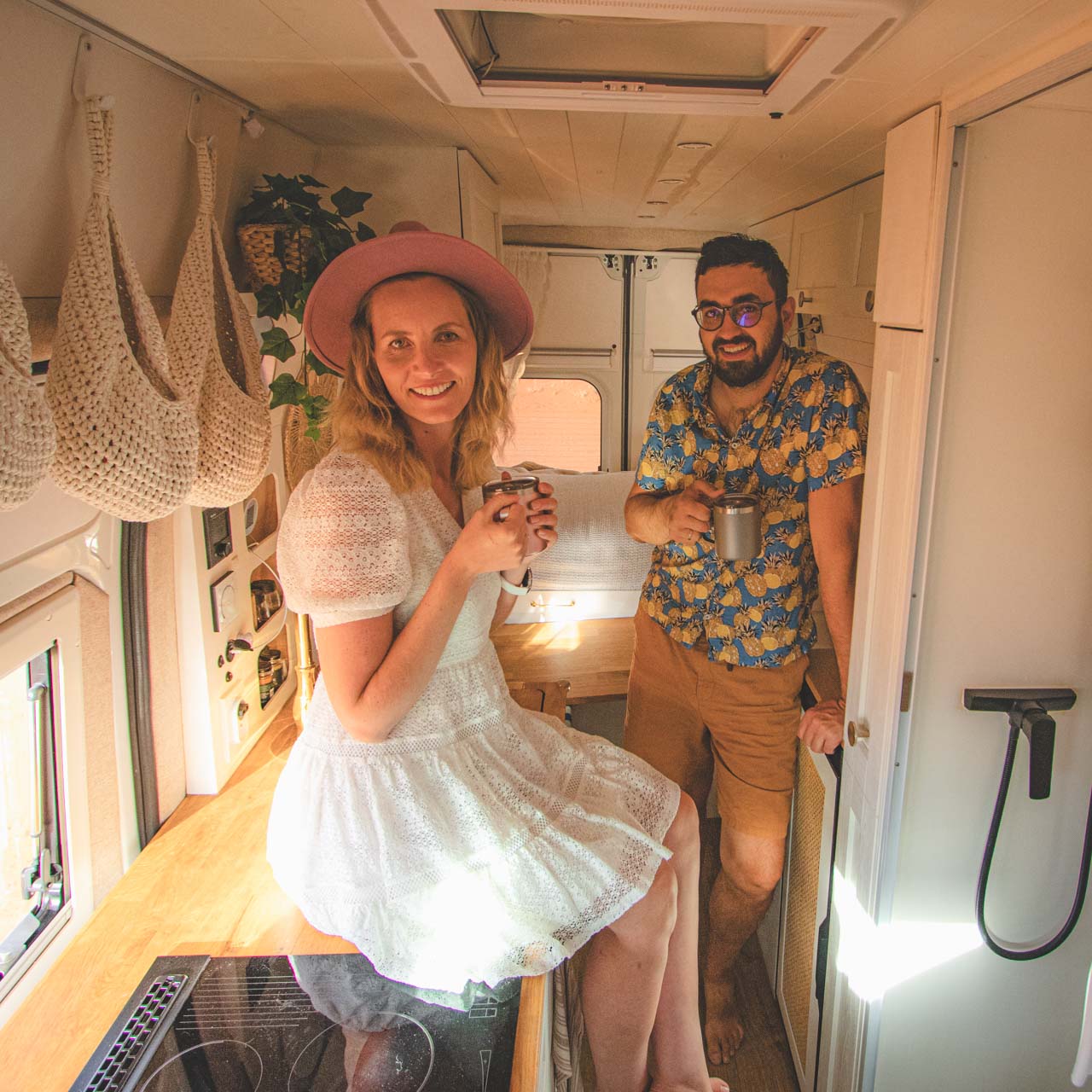
For us, it wasn’t just about having a van. It was about knowing how it works. Fixing things on the road. Feeling at home in something we built ourselves.
Who Should (and Shouldn’t) Build a Campervan
Building a campervan makes sense for someone who can plan – and stick to that plan, even when things don’t go as expected.
You don’t need previous DIY experience. We didn’t have any. But you do need to be willing to learn – and to learn fast.
Or at least be ready for a few months where your main “hobby” becomes YouTube tutorials, forums, and figuring things out as you go.
Building a campervan makes sense if:
- you have time you’re willing to invest
- you’re comfortable making decisions and sticking to them
- you don’t panic when something needs to be taken apart and done again
You don’t need to know everything at the start.
But you do need curiosity, patience, and the willingness to keep going when things don’t work the first time.
When It’s Better to Buy One
There are moments in life when DIY just isn’t the right choice.
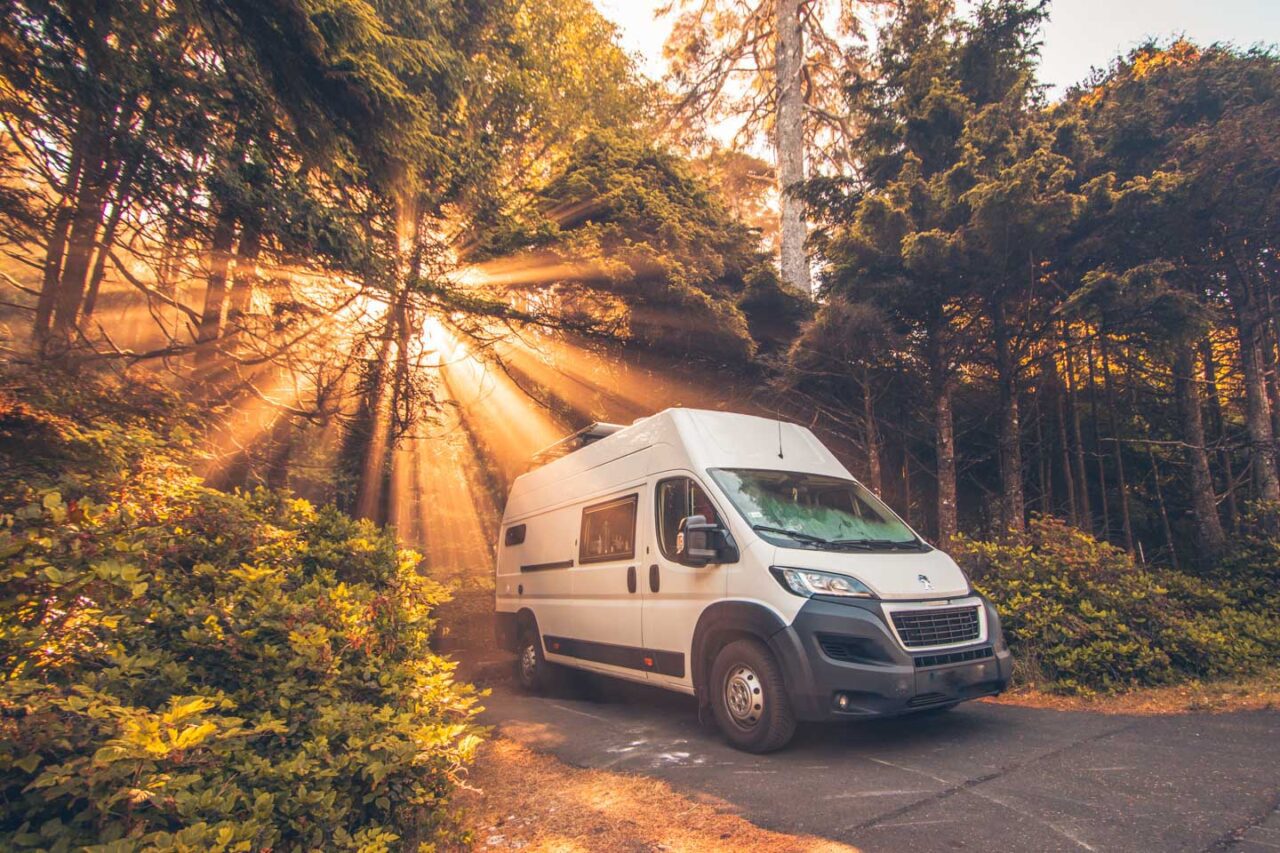
If you don’t have time, but you do have the budget – buying a ready campervan might be the better option.
Especially if:
- you’re already overwhelmed with work or life
- you want to travel now, not in 6-12 months
- you don’t want to take on a long-term project
DIY is not just a financial cost. It’s a time and energy investment. And not every stage of life is right for that.
Who Might Underestimate It?
Most often – people who think they can do everything themselves for almost nothing.
There’s a base cost you can’t really escape. You can optimize parts of it by 20-30% in certain areas – but not by 90%.
If you want a real campervan – with a water system, heating, electrical setup, and a safe build – you need to plan for a real budget.
A mattress in the back of a van is not the same as a fully functional home on wheels.
Travel lighter, even before you leave.
start with something simple.
Download The Minimum Plan – Slow Travel:
Do You Need to Enjoy DIY?
Not necessarily.
But you do need to find your reason to enjoy it.
For me, it was the sense of control and ownership, building something from scratch and understanding how everything works.
For someone else, it might be the idea of freedom on the road, or the satisfaction of doing things independently.
Without that one anchor – the thing that keeps you going – the project can quickly start to feel heavy.
What do you want to do next?
🔨 I want to start building a campervan – show me step by step
→ How to build a campervan
📐 I want to explore layout ideas
→ 10 campervan layout ideas
💡 I want to learn practical van life hacks
→ 20 van life hacks that make life on the road easier
🗺️ I want to see where to travel in Europe by campervan
→ 10 places that will truly inspire you
What’s calling you the most?
So… Would I Do It Again?
If you asked me today, I’d say this: building a campervan is not a logistical project. It’s a test of character.
Build one if you want to create something that’s truly yours – from the very first screw.
Something that gives you as much adrenaline during the build as your first night parked in the middle of nowhere.
Something that makes you know your home on wheels inside out – so when something breaks down in the middle of Nevada, you don’t panic. You just reach for your tools.
Don’t build one if your only goal is to hit the road as quickly as possible and budget isn’t a concern.
In that case, buying a ready-made campervan is the simpler, more comfortable path.
Our decision was emotional – we just wanted to do it. But the execution was purely rational.
And I think that balance is what made the project work. Emotion alone wouldn’t have finished it. Logic alone probably wouldn’t have started it.
The cost wasn’t just financial.
There was exhaustion. Frustration. The kind of tiredness that comes from working late nights for months.
But there was also ownership. Building something from scratch.
And years of traveling across Europe and North America in a van we understood completely.
Was it worth it? Yes. Not because it was cheaper. But because it was ours.
If you’re in the phase of running the numbers, treat this article as a map – not a fixed answer.
A campervan build isn’t one number. It’s a series of decisions.
And if you already have your own van, I’d love to hear your numbers – how does your build compare?