Wondering what to see in Hampi, India? In this guide, I’m sharing the places I visited, my favorite views, and practical tips to help you plan your trip.
Located in Karnataka, Hampi was once the capital of the Vijayanagara Empire. Today, its temples, palace remains, and historic market streets form a UNESCO World Heritage Site.
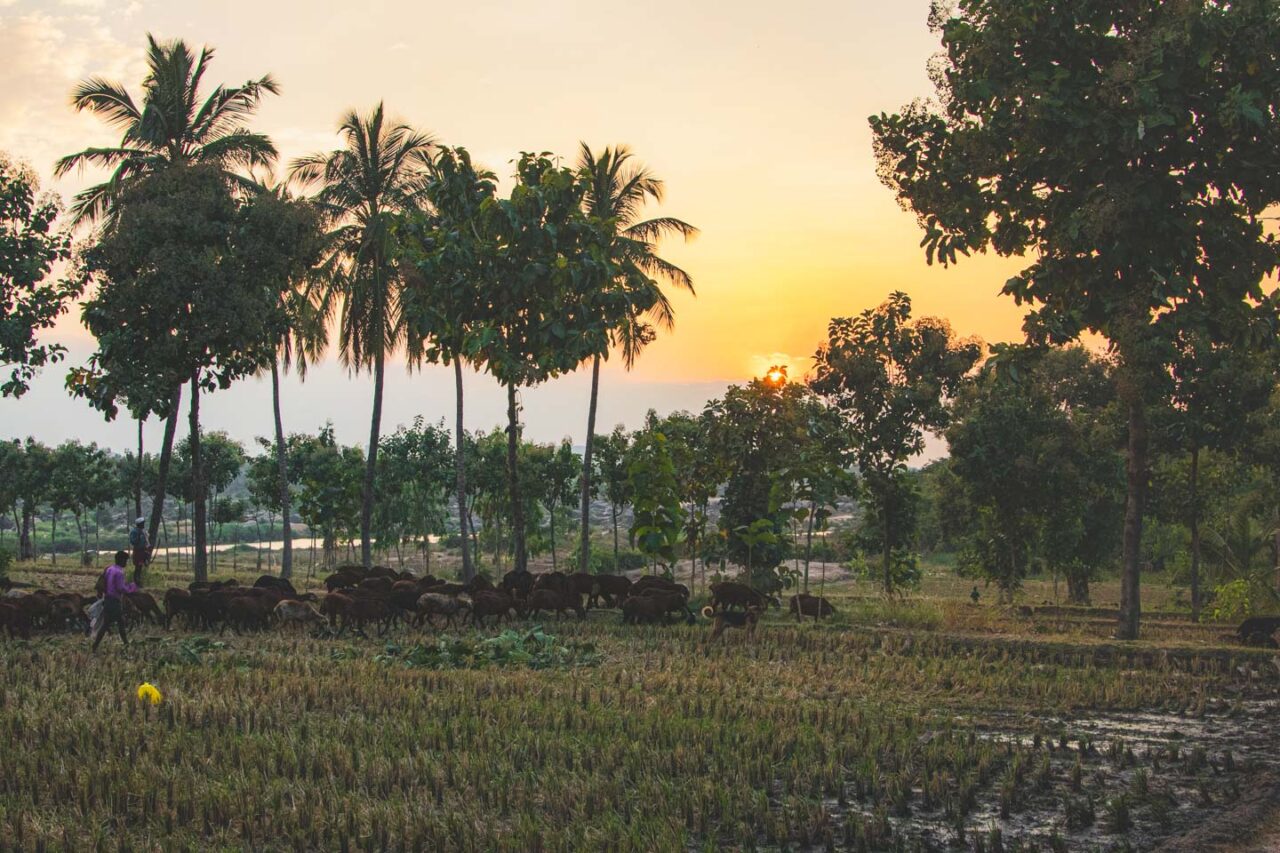
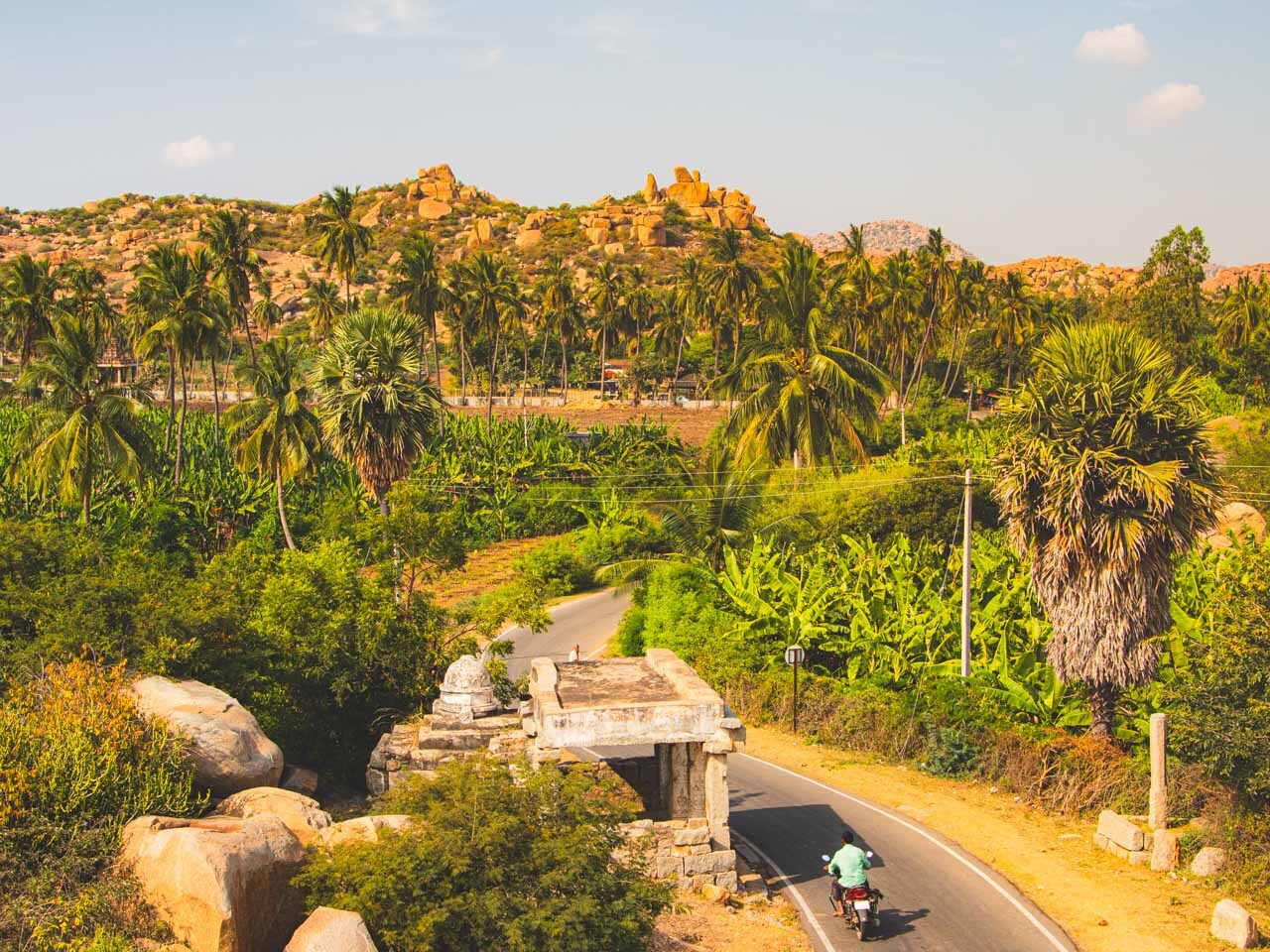
What I remember most, though, is the setting: enormous boulders, green banana plantations, and the Tungabhadra River winding between rocky hills.
Hampi was one of my favorite stops in India. I enjoyed exploring the temples, but also taking breaks between sights and looking out over the landscape. Sunrise from Matanga Hill remains one of my best memories of the trip.
Hampi stays with you. See how I continued this journey through South India. After sacred hills and temple ruins, I followed the quiet road south – through palaces, jungles, tea plantations and the backwaters of Kerala.
What to See in Hampi: 12 Places for Your Itinerary
This list includes temples, buildings from the former royal center, and a viewpoint. Some sights are close together, but the wider area is spread out, so it helps to group your stops before setting off.
Use my Hampi attractions map to check their locations and put together your own route.
1. Vittala Temple: The Stone Chariot and Musical Pillars
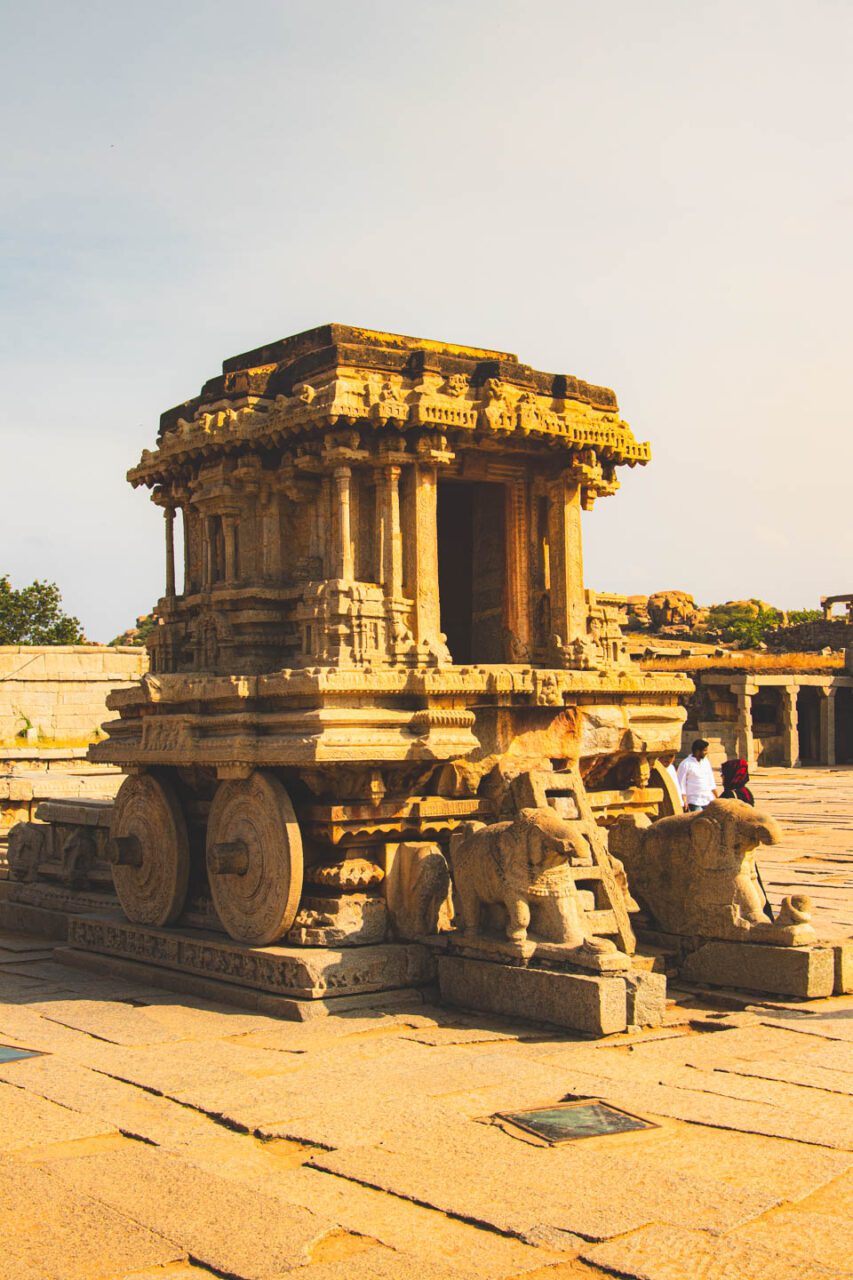
Vittala Temple is one of Hampi’s most recognizable monuments. Its famous stone chariot is a shrine dedicated to Garuda, the divine vehicle of Vishnu.
The complex is also known for its musical pillars, whose carved elements have acoustic properties. They’re a fascinating feature, but visitors should avoid tapping the historic columns themselves.
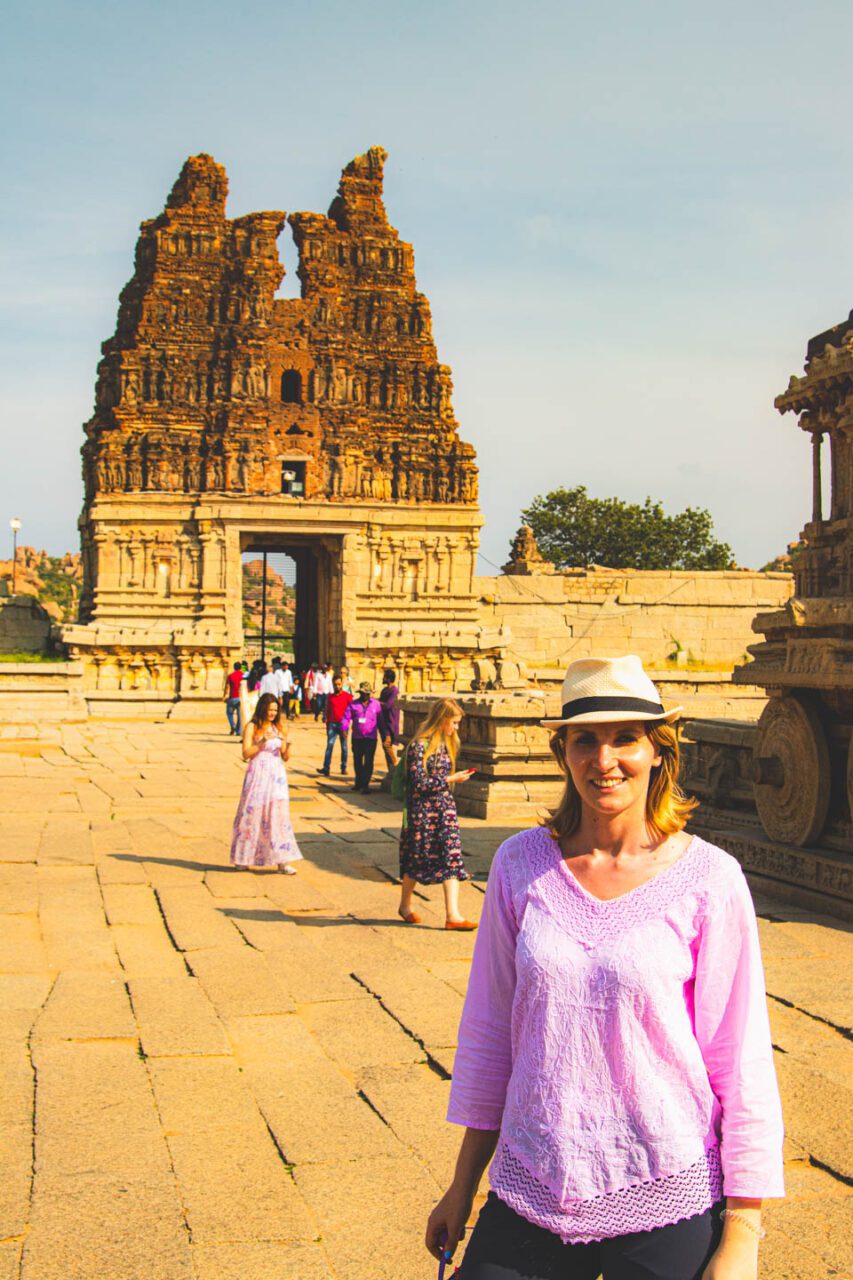
There’s plenty to see beyond the chariot. Take time to look at the carved pillars, stone pavilions, and smaller details around the complex.
Admission is paid. Allow time to reach the entrance from the parking area, whether you walk or use the available electric transport.
I recommend visiting in the morning, when exploring the exposed grounds is more comfortable than in the midday heat.
2. Hampi Bazaar and Virupaksha Temple
Hampi Bazaar stretches out in front of Virupaksha Temple. Its surviving pillared pavilions give you an idea of the old market street and its importance to the city.
It’s a useful place to begin exploring Hampi, with options nearby for a meal or a short break.
Above the bazaar rises the tall entrance tower of Virupaksha Temple, dedicated to Shiva. The complex remains an active place of worship, adding another perspective to a day spent among historic ruins.
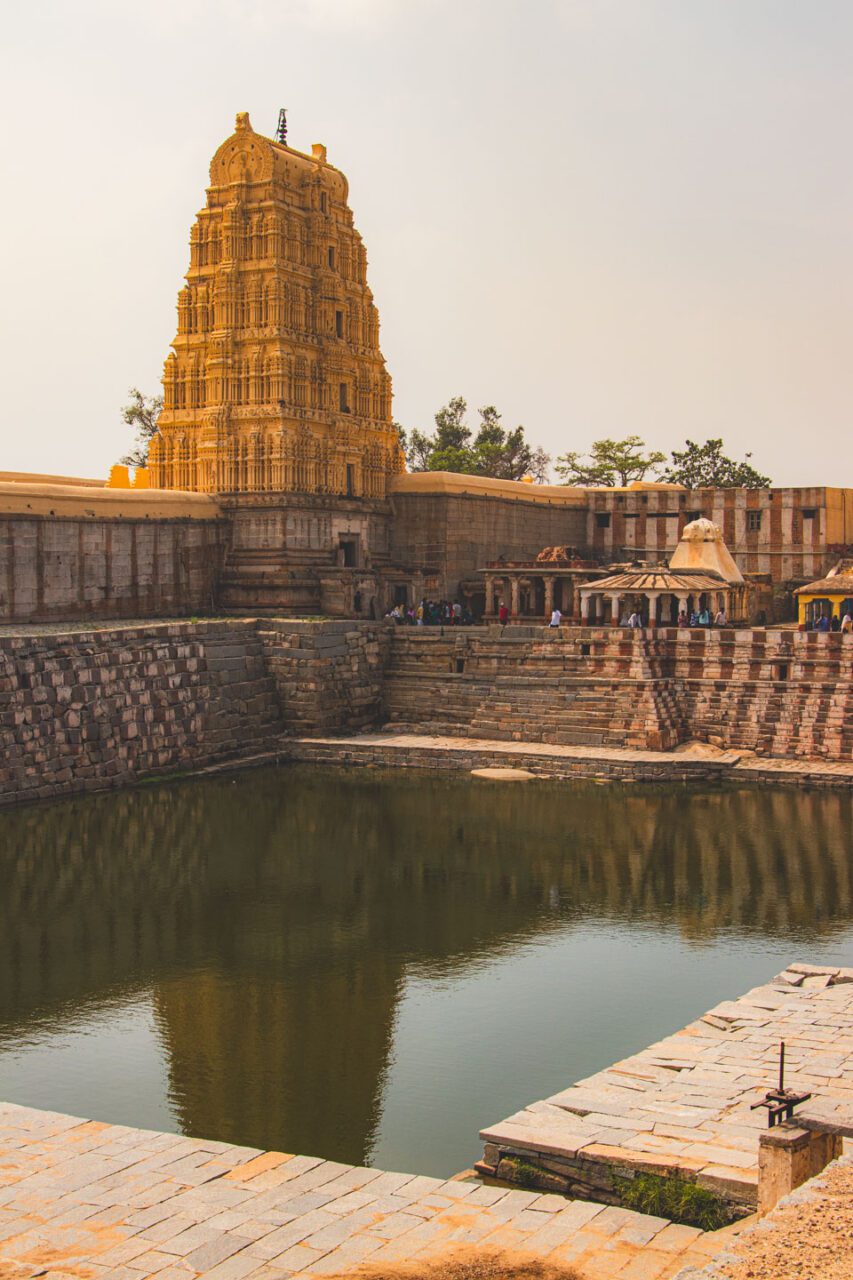
Take time to explore the courtyard and look at the buildings. Dress appropriately for a temple, remove your shoes where required, and respect any ceremonies taking place.
For me, Virupaksha was an important part of the visit because it showed how religious life continues alongside Hampi’s historic monuments.
3. Matanga Hill: My Favorite View in Hampi
If I had to choose one experience worth getting up early for, it would be climbing Matanga Hill for sunrise.
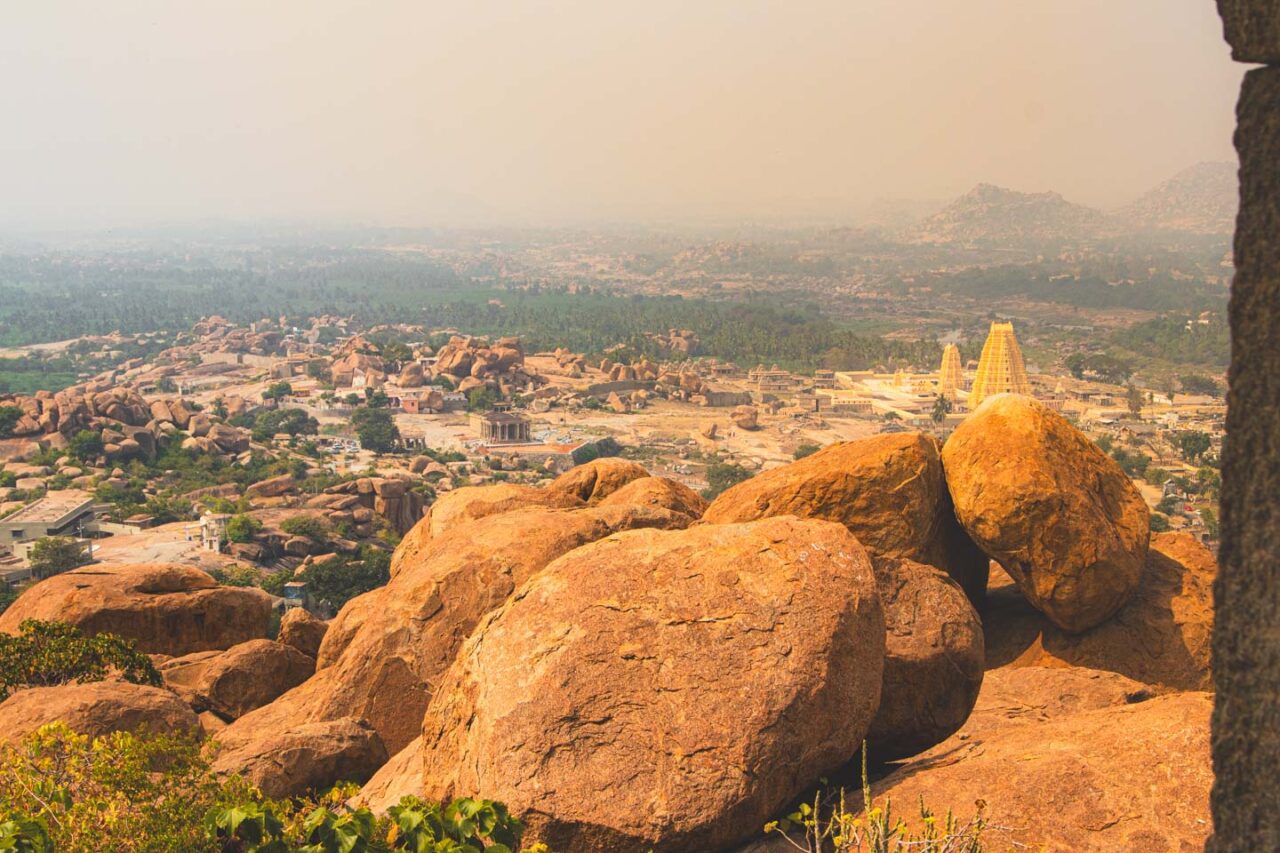
From the summit, you can see the Tungabhadra River, banana plantations, rocky hills, and temples scattered across the valley. Seeing everything from above helped me appreciate Hampi’s setting.
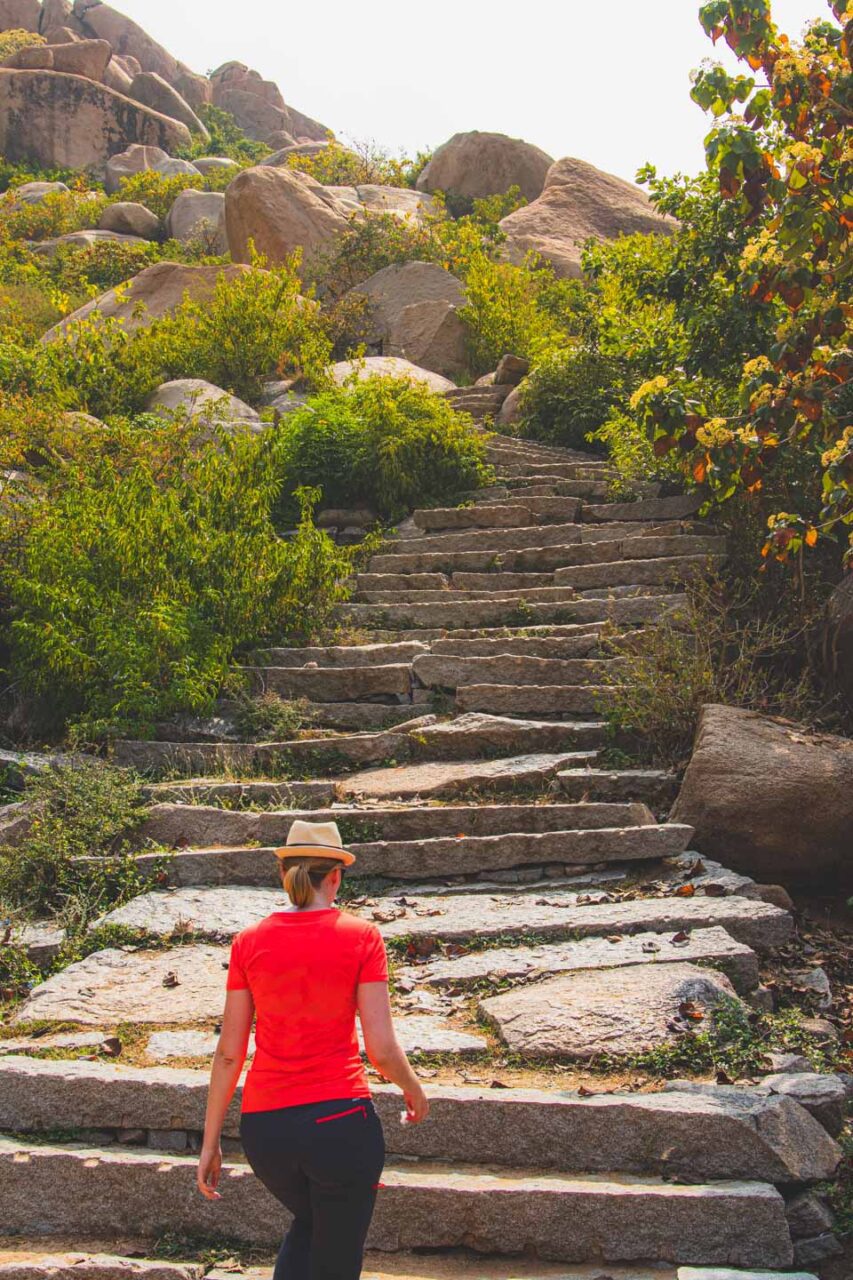
We accidentally chose the steeper western path with stone steps. The climb was challenging, particularly near the top, but I was glad we’d made the effort.
At the summit stands the small Veerabhadra Temple. From its surroundings, I watched the morning light spread across the ruins.
For the climb, bring:
- Shoes with good grip: the stone steps and rocks can be uneven.
- Water: even an early climb can be tiring.
- A flashlight or headlamp if you start before dawn.
- A hat and sunscreen for the return after sunrise.
The rocks can become slippery after rain. If you don’t know the route, checking the start of the path in daylight beforehand is useful.
You’ll find more about my climb, what to bring, and the views in my Matanga Hill guide.
Planning a trip to India?
In my newsletter, I share travel guides, favorite places, and practical tips from my trips.
New subscribers receive my Mumbai map with more than 100 attractions for their phone. 📱

4. Krishna Temple and Its Historic Bazaar
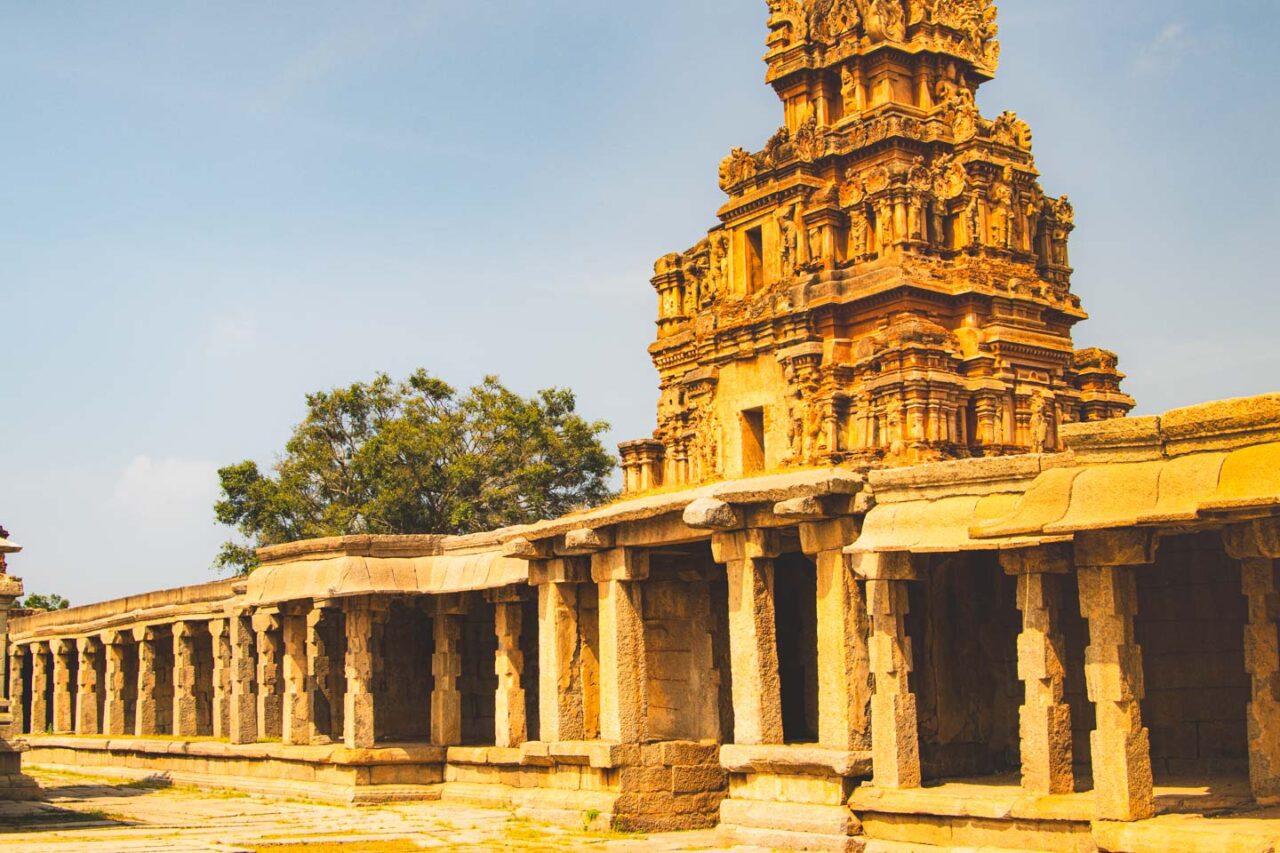
Krishna Temple dates to the 16th century, during the reign of King Krishnadevaraya. Although parts of the complex are damaged, the surviving carvings and layout make it worth exploring.
Across the road lies the former bazaar. Its pillared pavilions show how closely temple life and trade were connected in the city.
Look at the details on the gateways and pillars, then walk along the market remains. Visiting both helps you understand the setting beyond the temple entrance.
5. Lakshmi Narasimha: A Monumental Statue of Vishnu
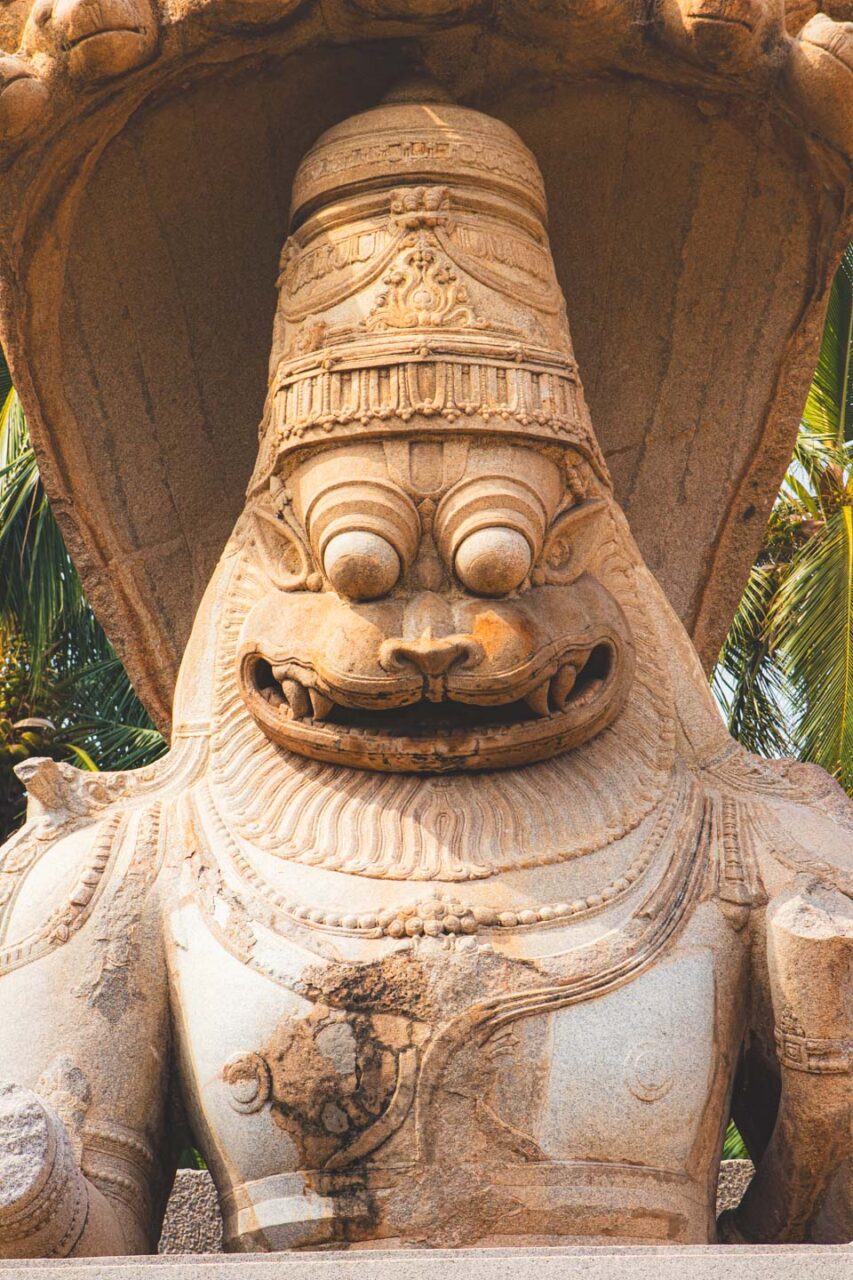
Lakshmi Narasimha is one of Hampi’s most distinctive sculptures. It depicts Narasimha, an incarnation of Vishnu with a human body and a lion’s head.
The statue stands approximately 6.7 meters tall. Its scale becomes particularly noticeable when you stand in front of it.
The original composition included the goddess Lakshmi, whose figure was severely damaged. The monument’s name still reflects that earlier arrangement.
Pause to look at Narasimha’s face and the sculptural elements around him. This is one of those monuments whose size is difficult to convey in a photograph.
6. Chandikeshwara Temple: Carved Pillars and Yali Figures
At Chandikeshwara Temple, the carved columns and smaller sculptural details deserve a closer look.
Among them are yali, mythical creatures frequently depicted in South Indian architecture.
Although the temple’s name suggests an association with Shiva, Hampi’s official tourism portal identifies features pointing to a Vaishnava temple, associated with Vishnu.
If you enjoy photographing ornamentation, stone textures, and architectural details, include it in your route. The carvings are easy to miss if you only glance at the building from a distance.
7. Underground Shiva Temple
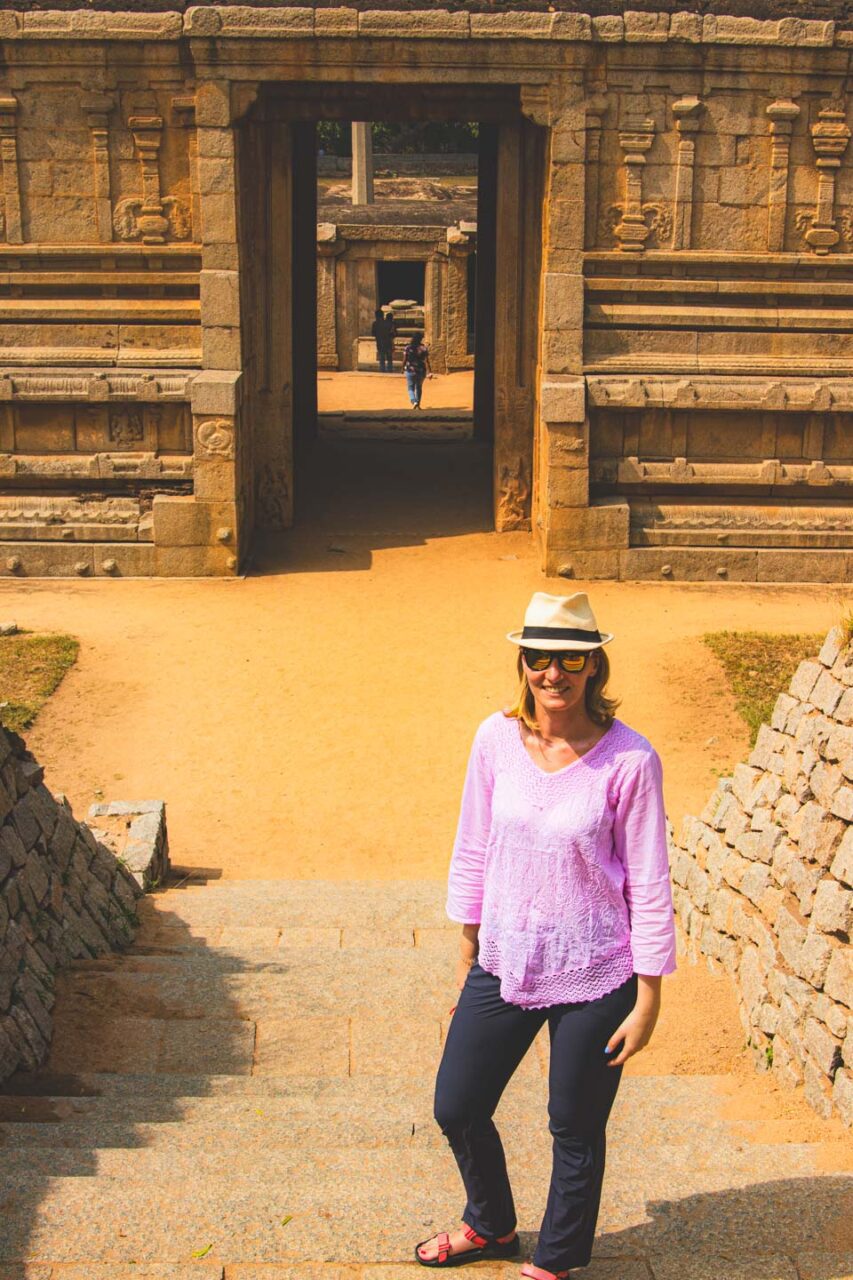
The Underground Shiva Temple, also known as Prasanna Virupaksha, sits below the level of the surrounding ground.
Its lower sections can flood, so access depends on conditions during your visit. You may not be able to enter every chamber.
The position of the building and its stone interiors make it an interesting stop. It feels quite different from the open courtyards of other temple complexes.
If a passage is flooded or closed, explore the accessible sections. You can appreciate the building without walking through the water.
8. Lotus Mahal and the Zenana Enclosure
Lotus Mahal stands out for its arches, symmetrical façade, and two-level design.
It sits within the Zenana Enclosure, traditionally associated with the women’s quarters of the royal court. The precise uses of individual buildings are not always clear.
Lotus Mahal combines different architectural influences. Look closely at the arches and balconies, which give the structure a lighter appearance than many of Hampi’s larger stone monuments.
After several temples, this is a pleasant change and a chance to see another side of the former capital’s architecture.
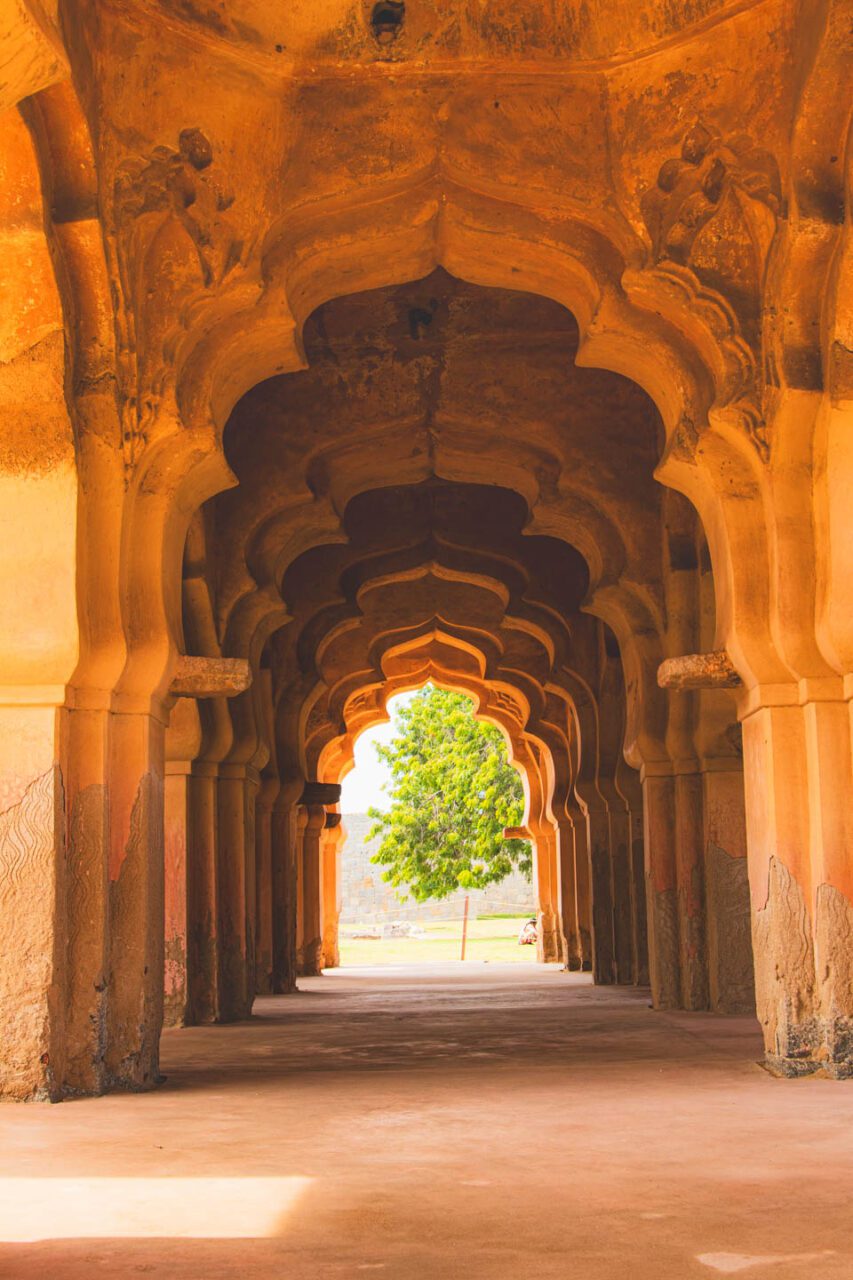
9. Elephant Stables: A Row of Distinctive Domes
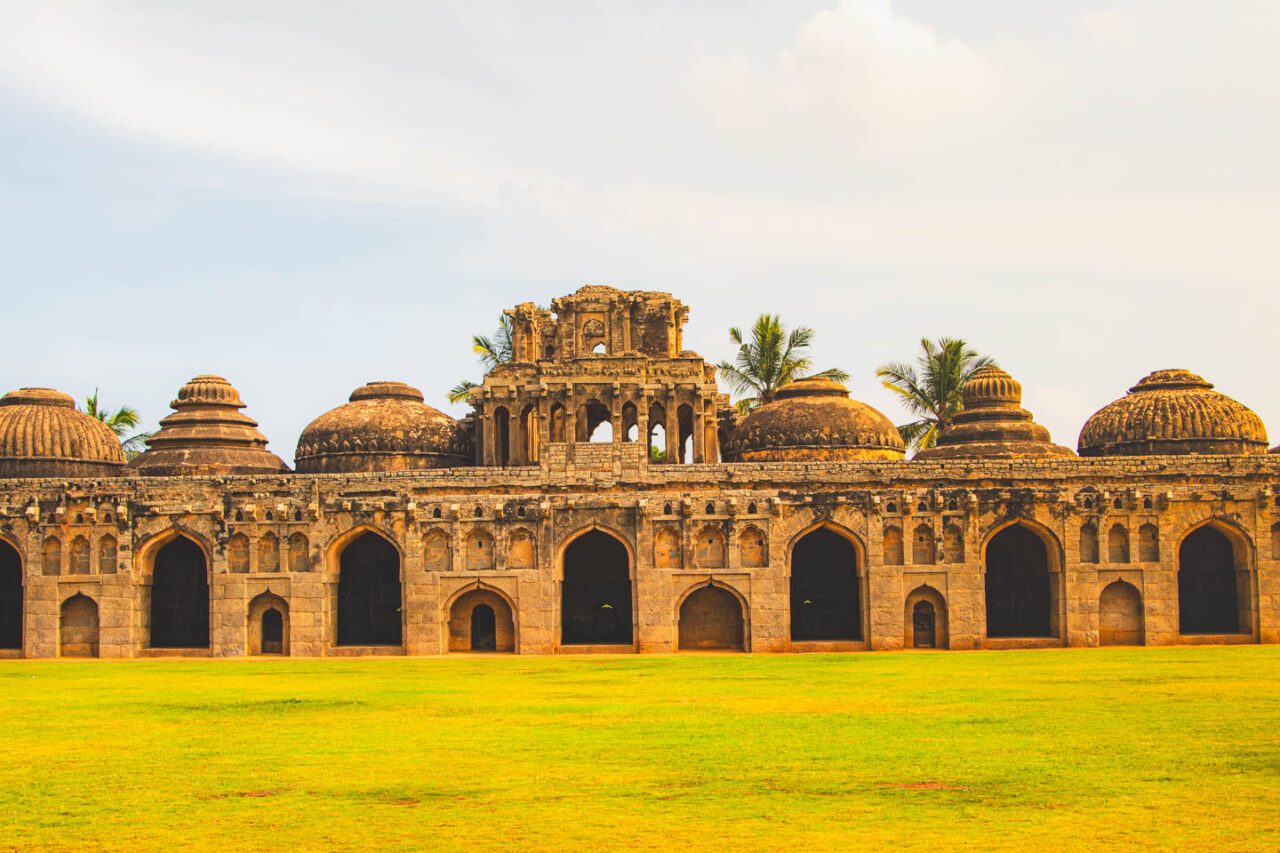
A short distance from Lotus Mahal are the Elephant Stables, built to house royal elephants.
The long structure contains eleven chambers, topped with domes of different shapes. First step back to see the whole façade, then move closer to compare the individual sections.
I liked the combination of the building’s considerable size and its regular layout. It’s one of the most recognizable monuments in the former royal center.
Plan to visit Lotus Mahal and the Elephant Stables together, as they’re close to each other.
Where would you like to go next?
🏖️ For time by the sea: Palolem, Goa Guide.
🌊 For exploring Kerala: Kochi in One Day.
🏙️ For a city stay: Mumbai Travel Guide.
10. The Stepped Tank: Pushkarni
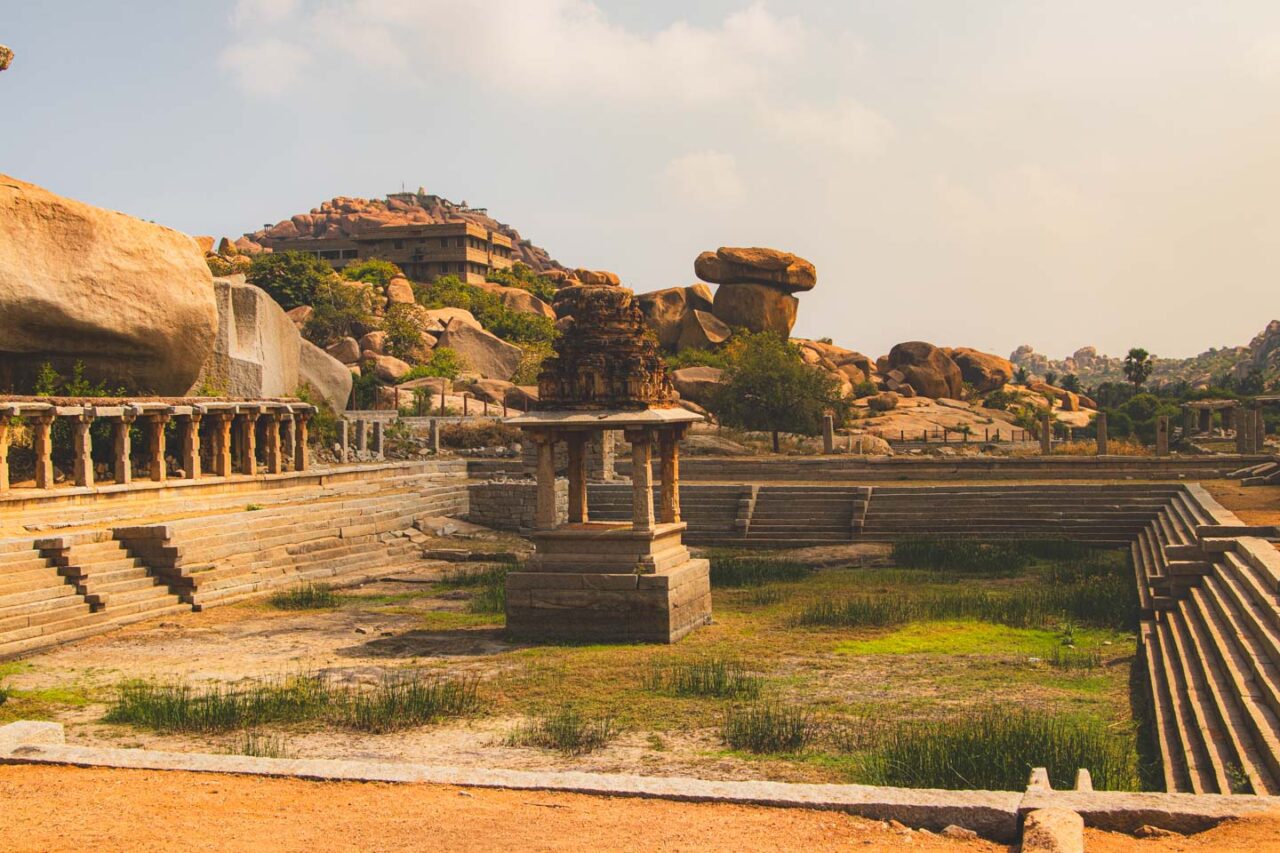
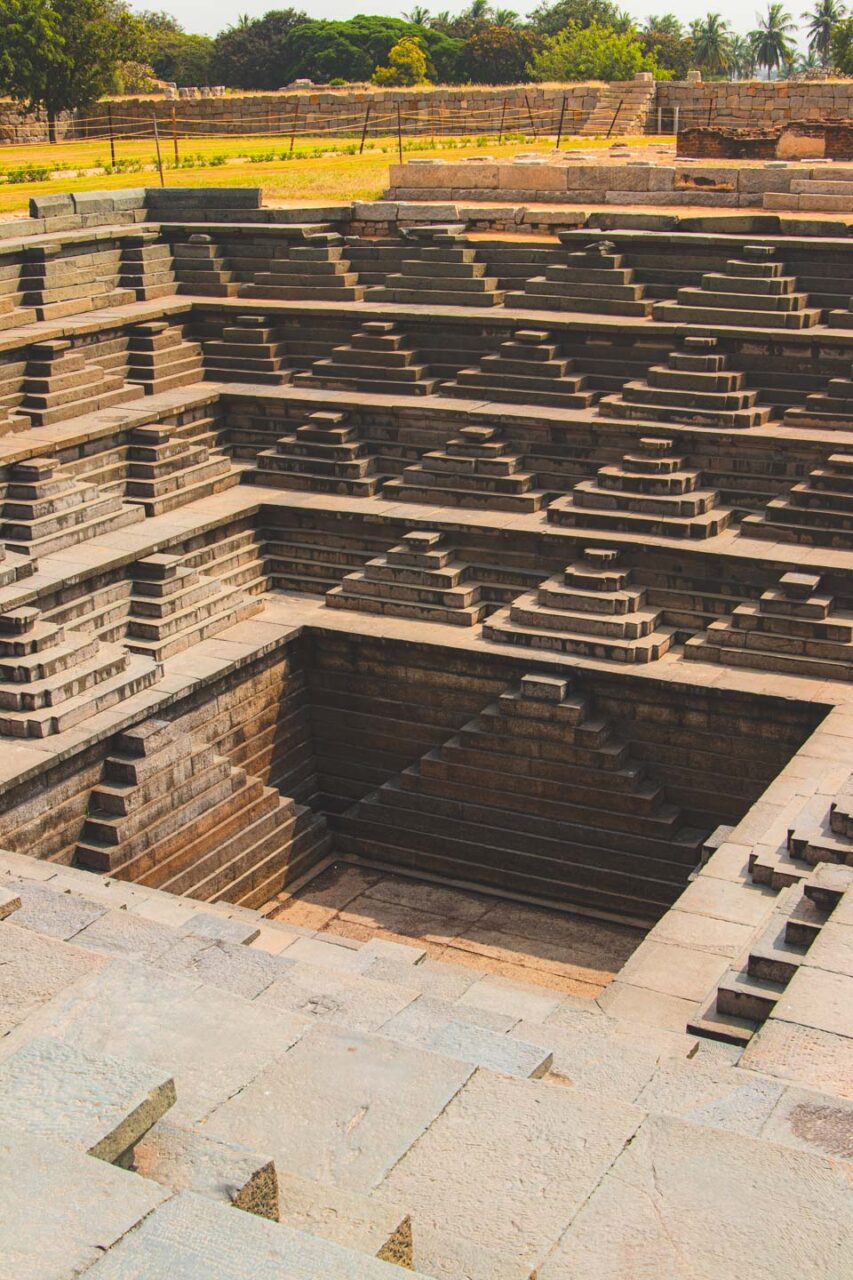
In the former royal center, look for the stepped water tank known as Pushkarni.
Its most striking feature is the geometric arrangement of steps descending toward the bottom. The repeated lines are particularly interesting when viewed from above.
The tank formed part of the palace complex. It’s a reminder to look beyond the temples and notice the infrastructure that supported the old city.
11. Mahanavami Platform: Royal Ceremonies and Processions
Mahanavami Dibba is a large, multilevel platform associated with royal ceremonies.
Rulers watched processions from here. Carved bands along its sides depict horses, soldiers, and scenes connected with courtly life.
Before going up, walk around the platform and examine the reliefs. The view from the top is only part of what makes this monument worth visiting.
You can easily combine this stop with the stepped tank and other remains of the royal center.
12. Queen’s Bath: Arches Around a Former Pool
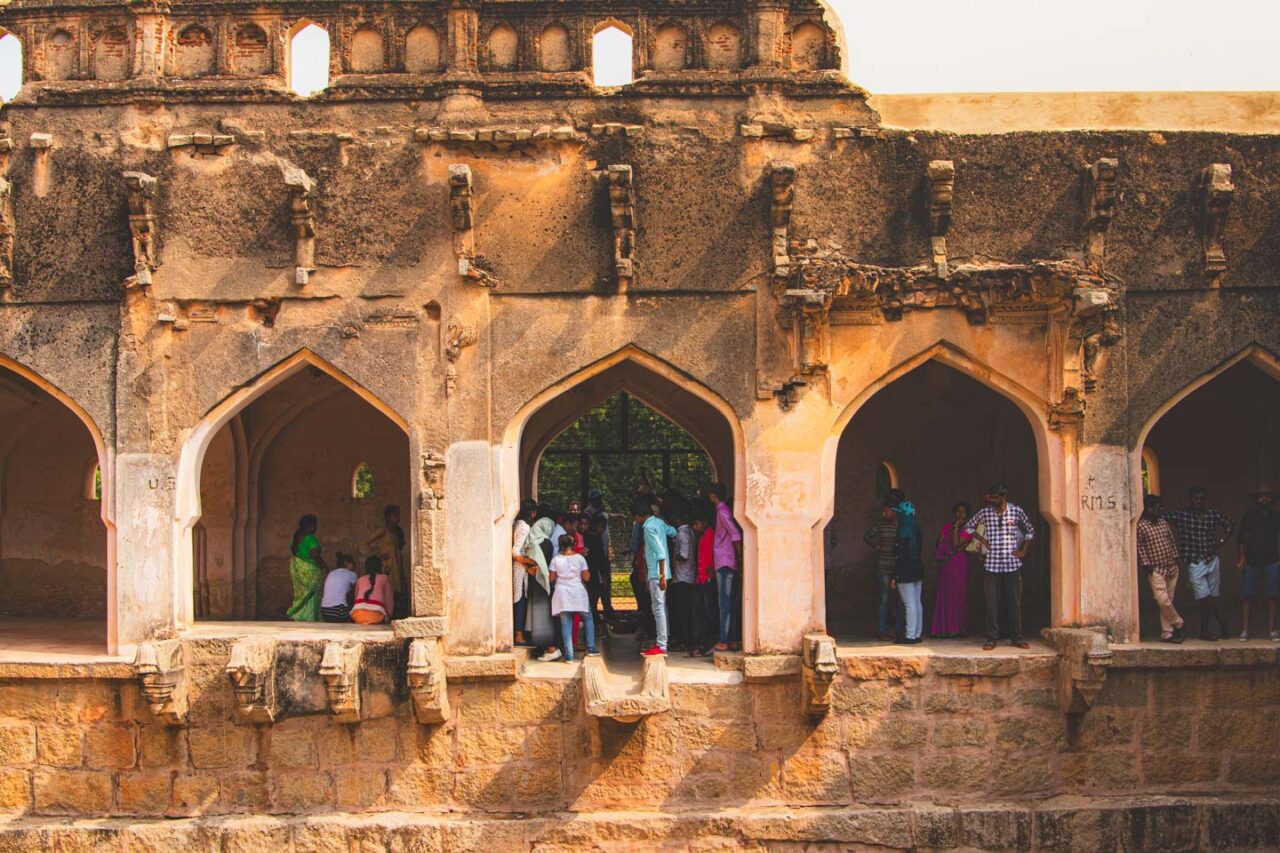
Queen’s Bath looks fairly simple from the outside. Inside, you’ll find decorative arcades and balconies surrounding the former bathing pool.
Its familiar name doesn’t establish exactly who used the building.
The proportions of the interior and the arched corridors are its main attractions. Indo-Islamic influences are visible in the design, as they are in several other secular buildings in Hampi.
It’s a good stop for a short walk around the interior and photographs of the architectural details.
When to Visit Hampi
The cooler months, particularly November to February, are a comfortable time for sightseeing. October and March are also commonly included in the travel season, although conditions vary and March can already be hot.
I visited in November and was happy with the timing. It was still warm during the day, so starting early made a difference.
During the hottest months, I’d reduce the number of stops and allow for a longer midday break.
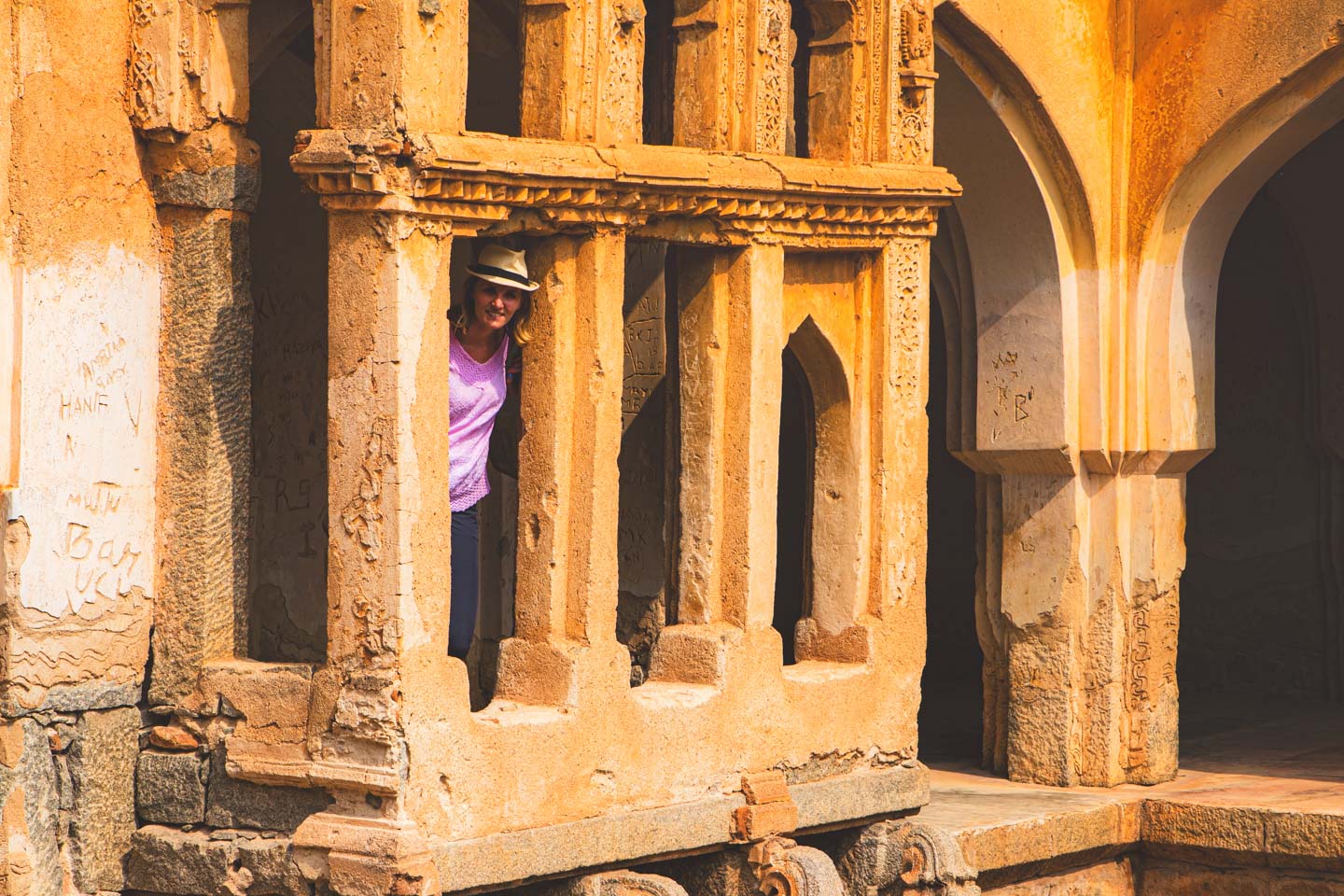
The rainy season brings greener scenery, but downpours can make exploring less comfortable. Take particular care on rocky paths and when climbing Matanga Hill.I visited in November, and it was absolutely perfect.
How to Get to Hampi
By Train
The nearest railway station is Hosapete Junction, also known as Hospet Junction, approximately 13 km from Hampi.
From there, you can continue by auto-rickshaw, taxi, or local bus.
If you’re traveling from Goa or Bengaluru, check services for your specific date. Journey times vary, and some trains don’t run every day.
You can check schedules and book tickets through IRCTC, the official railway booking website. Reserving ahead is useful during busy periods.
I enjoyed traveling by train in India. Being able to sit back and watch the landscape was part of the experience for me.

By Bus
Another option is to look for a bus to Hosapete, then continue to Hampi.
Check the exact arrival point before booking. A service advertised as going to “Hampi” may stop away from the main temple area.
For an overnight bus, compare the seat or berth type, arrival time, and onward journey to your accommodation. An early arrival works best when you’ve arranged somewhere to leave your luggage.

Getting Around Hampi
The distances between attractions can be larger than the photos suggest, and much of the route is exposed to the sun.
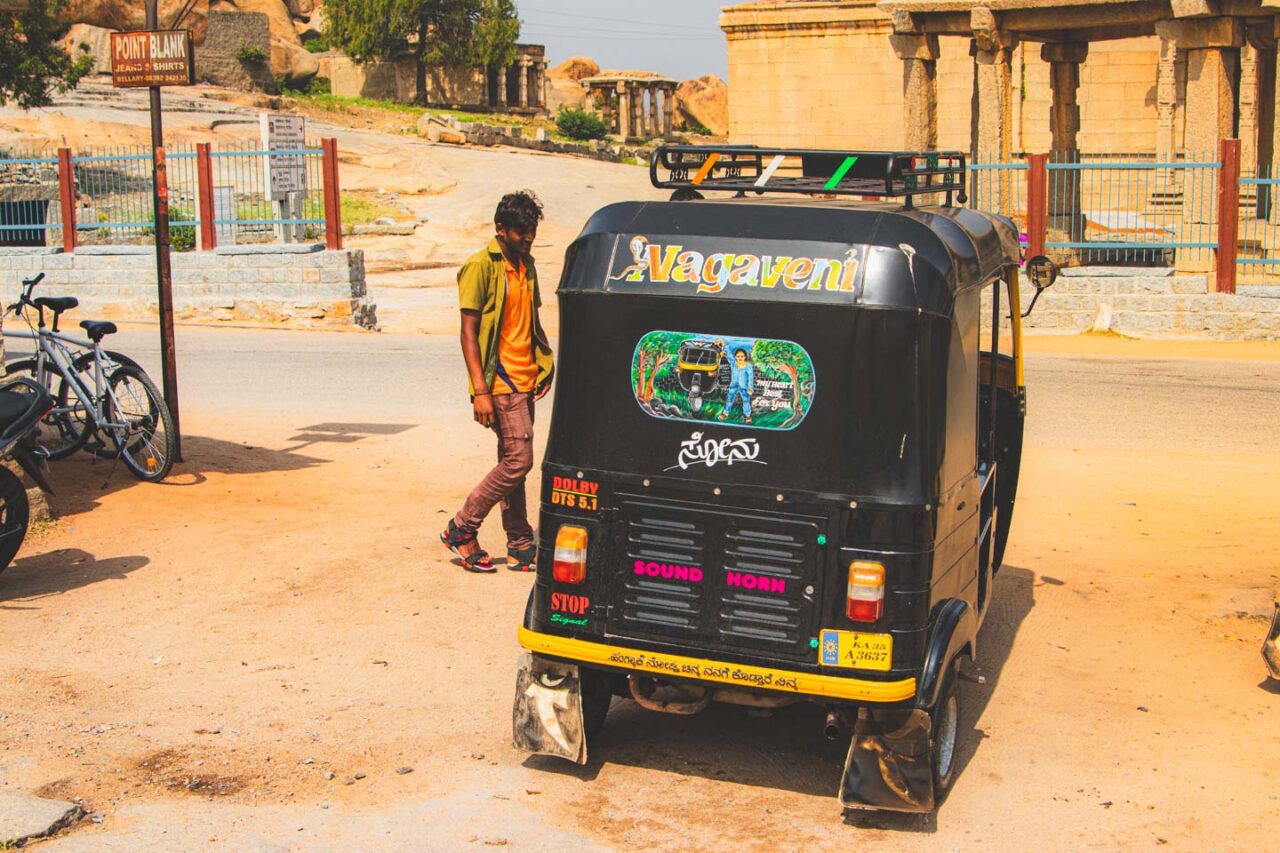
I explored with an auto-rickshaw and driver, which helped me visit several places without spending too much time walking in the heat.
Before setting off, agree on:
- The route and individual stops.
- How much time you have and whether the driver will wait.
- The total price.
- Where the journey will finish.
You can walk between nearby sights. For longer distances, transport helps you save your energy for exploring the monuments themselves.
Leave room for breaks, too. A meal, water, and some time in the shade make the day much more enjoyable.
Where to Eat in Hampi
I have good memories of two restaurants from my trip. Both have changed locations, so the surroundings I describe belong to my visits to their former premises.
Mango Tree: Curry, Chapati, and Mango Lassi
Mango Tree was one of my favorite meal stops. I enjoyed the relaxed atmosphere and the chance to take a proper break between visiting the ruins.
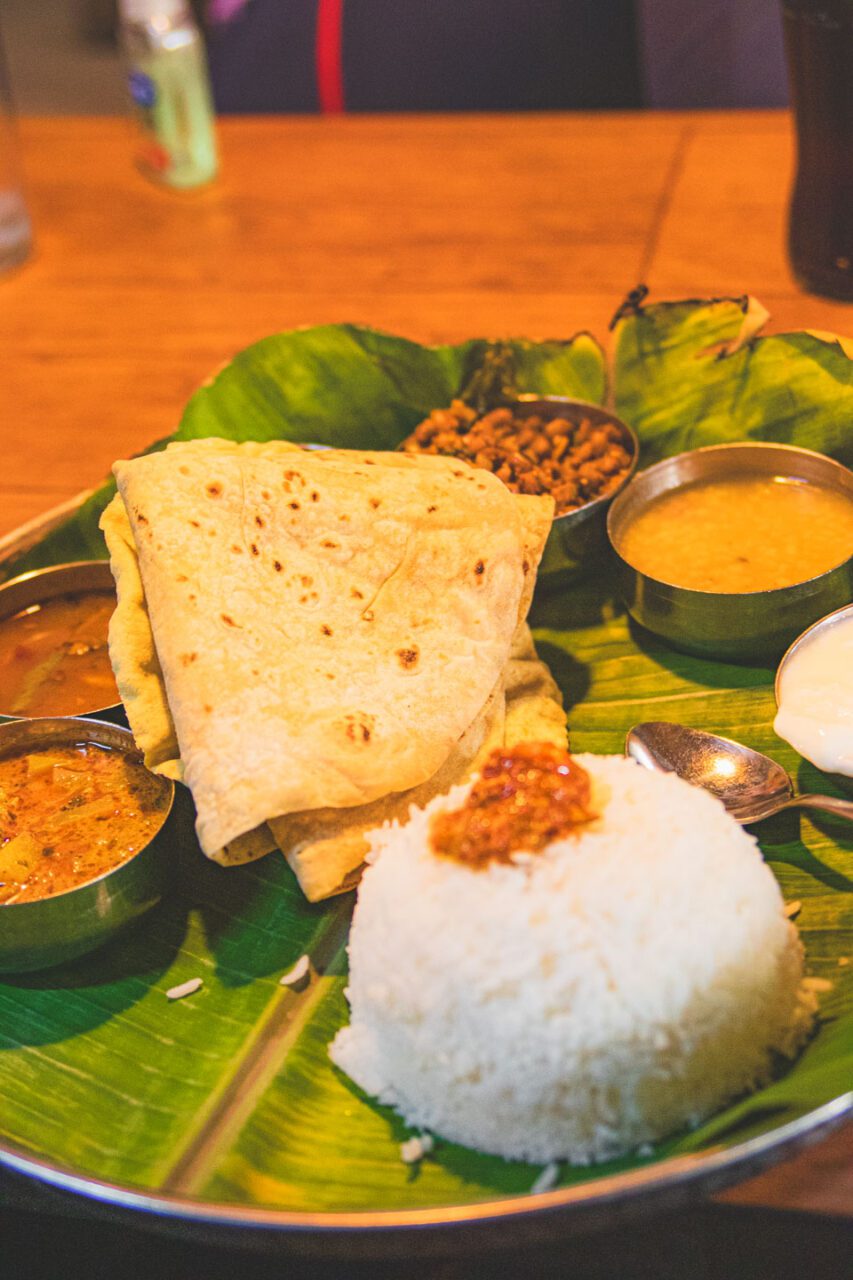
The meal I remember best included:
- Yellow cashew curry: creamy with a gentle amount of spice.
- Chapati for scooping up the sauce.
- Chilled mango lassi, particularly welcome on a hot day.
The restaurant moved to Kamalapura, so descriptions of its former riverside setting no longer reflect its location. Check the current address and opening hours before visiting.
Laughing Buddha: Memories of a Riverside Meal
What I remember most about the former Laughing Buddha is its position beside the Tungabhadra River and the view toward Hampi.
Low tables and a relaxed atmosphere made it easy to stay a little longer after eating.
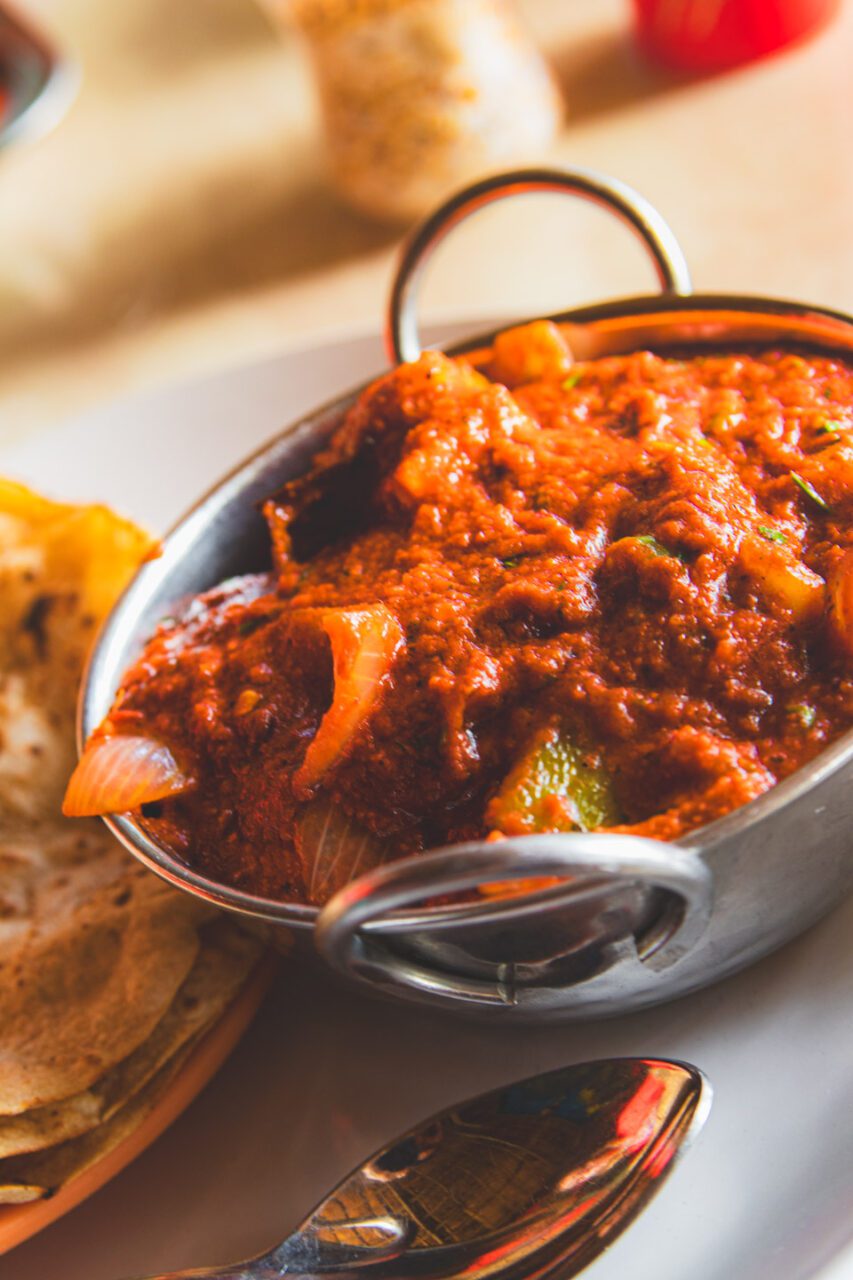
Among the dishes to consider were paneer butter masala and vegetarian thali, with something cold to drink. Mango juice was a refreshing choice during my visit.
The restaurant later relocated to the Basapur area. Check its current location if you’d like to visit, and bear in mind that the river and temple views described here belonged to the old premises.
Where to Stay in Hampi
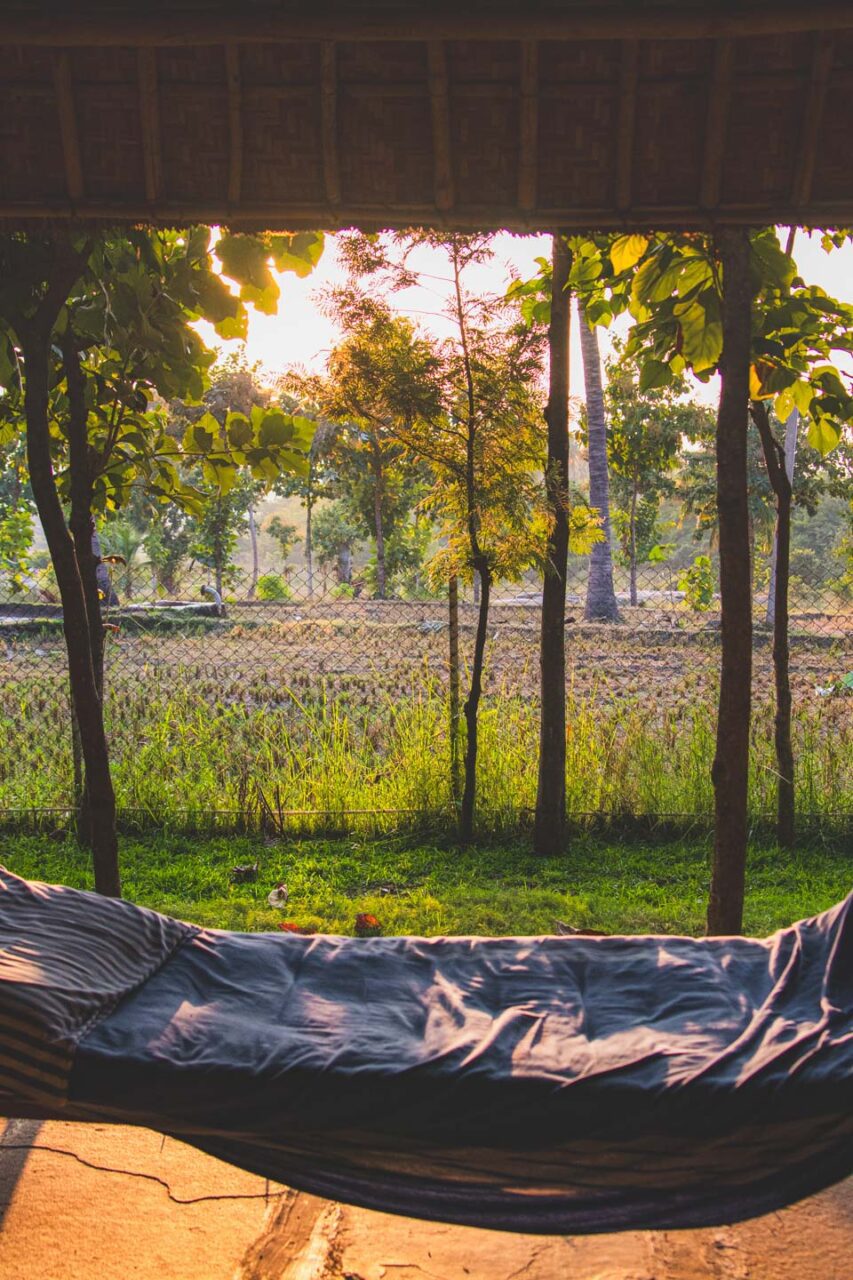
During my trip, I stayed across the Tungabhadra River, in the area known as Hippie Island or Virupapur Gaddi.
I remember the view from our hut and the short river crossings. The place where I stayed no longer exists.
The former tourist establishments at Virupapur Gaddi were demolished in 2020, so older accommodation guides for Hippie Island can be misleading.
When choosing a base, compare these areas:
- Hampi and the Virupaksha area: for staying close to this part of the monuments.
- Kamalapura: a base for exploring temples and the former royal center.
- Hosapete: convenient for rail connections and onward transport, with journeys required to reach the ruins.
- Anegundi or the Sanapur area: if you’d prefer to stay north of the river.
Check your accommodation’s exact location on a map. A property listed as being in “Hampi” may be several kilometers from the places you plan to visit.
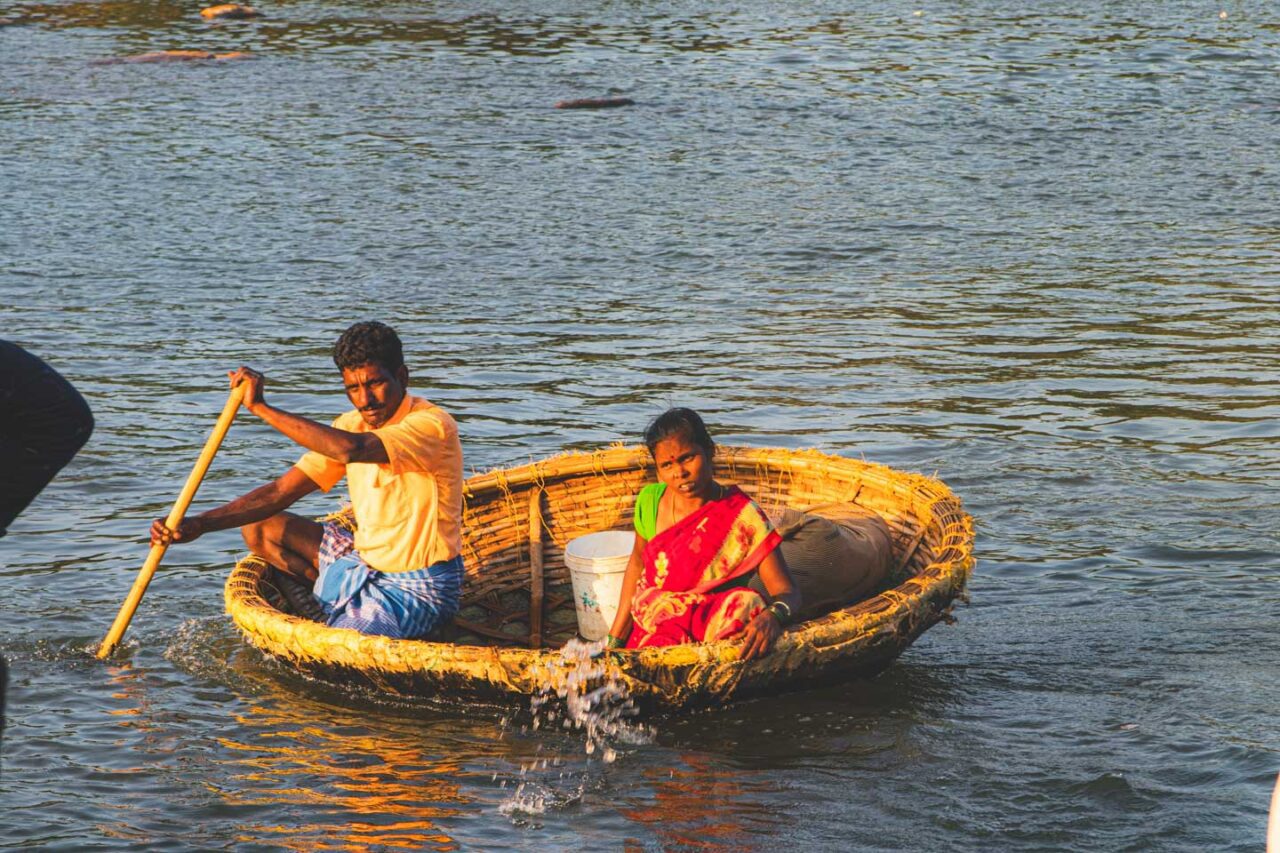
Crossing the River
Older accounts of cheap boats running throughout the day may no longer match the situation during your trip. Crossing availability depends on local conditions and current arrangements.
Ask your accommodation about the best way to arrive, river crossings, and transport after dark.
The northern side can also be reached by road, although that journey is longer than a short crossing by boat.
Travel lighter, even before you leave.
start with something simple.
Download The Minimum Plan – Slow Travel:
What I Remember Most About Hampi
Before arriving, I knew I’d be visiting the ruins of a former capital. What struck me most was how closely the monuments fit into the landscape.
Temples stand between boulders, old market streets stretch across open ground, and the hills offer views of both historic buildings and farmland.
I remember Vittala’s carvings, the domes of the Elephant Stables, and visiting the active Virupaksha Temple. But the morning on Matanga Hill is the memory that stands out most.
The climb was tiring. Once I reached the top, though, I wanted to sit down and look around for a while. Experiences like that are why I like leaving some space in a trip beyond the main sightseeing route.
Hampi is worth exploring at a comfortable pace. Choose the places that interest you, take the heat into account, and allow time for food and rest.
Planning More Stops in India?
These guides may help with the rest of your trip:
- Palolem, Goa Guide – the beach and practical tips for your stay.
- Matanga Hill Guide – my climbing experience and views from the summit.
- Kochi in One Day – sights and places to eat.
- Mumbai Travel Guide – ideas for exploring the city.
Have you visited Hampi? Which place do you remember most? Let me know in the comments – I’d love to hear about your trip.
Save this guide for later or send it to someone you’re planning to travel to India with.