
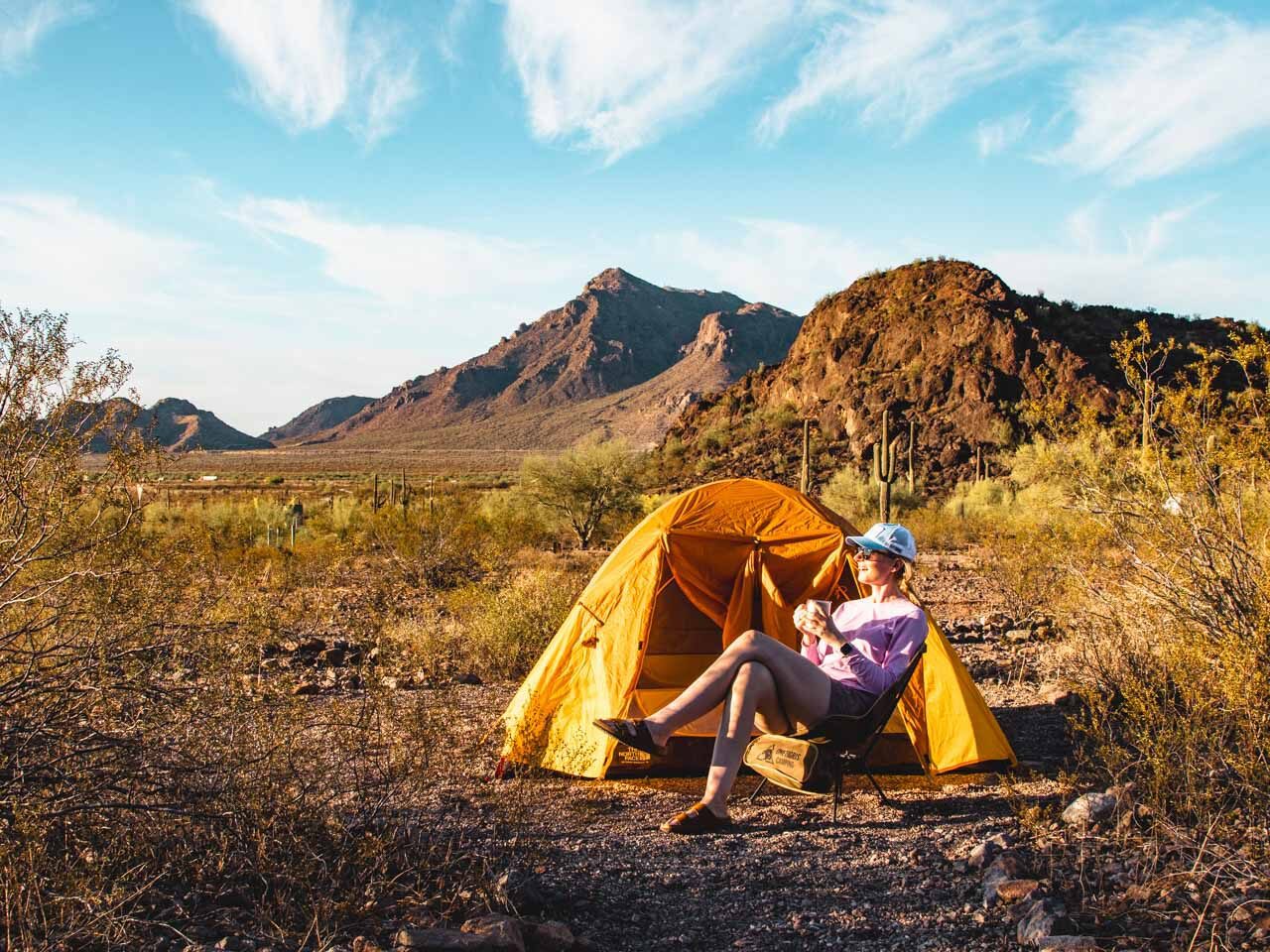
After spending more than a year traveling across the United States in my campervan, I never imagined I would willingly go back to tent camping.
Then my Peugeot Boxer had to be shipped back to Poland.
Suddenly, all the comforts I had grown used to were gone. No built-in bed. No tiny kitchen. No place to make coffee on a cold morning without stepping outside.
At first, it felt like a downgrade.
But after a few camping trips across Arizona – from desert campsites near Lake Havasu to cool mountain forests around Flagstaff – I remembered something important: camping was never about the gear.
It was about waking up to birdsong instead of notifications. Watching the sunset without feeling the need to photograph it. Drinking coffee outside while the world slowly wakes up.
That said, having the right gear definitely makes the experience more enjoyable.
Over the past few months, I’ve refined my camping setup to the items I genuinely use on every trip.
Not the gadgets outdoor brands try to convince you to buy, but the camping essentials that actually make a difference when you’re sleeping under the stars.
Whether you’re planning your first camping trip or looking to upgrade your setup, these are the camping essentials I never leave home without.
1. A Quality Tent
If there’s one item worth investing in, it’s your tent.
A cheap tent might seem like a great deal until you’re lying awake at 3 a.m. listening to the fabric flap violently in the wind and wondering if it’s about to collapse.
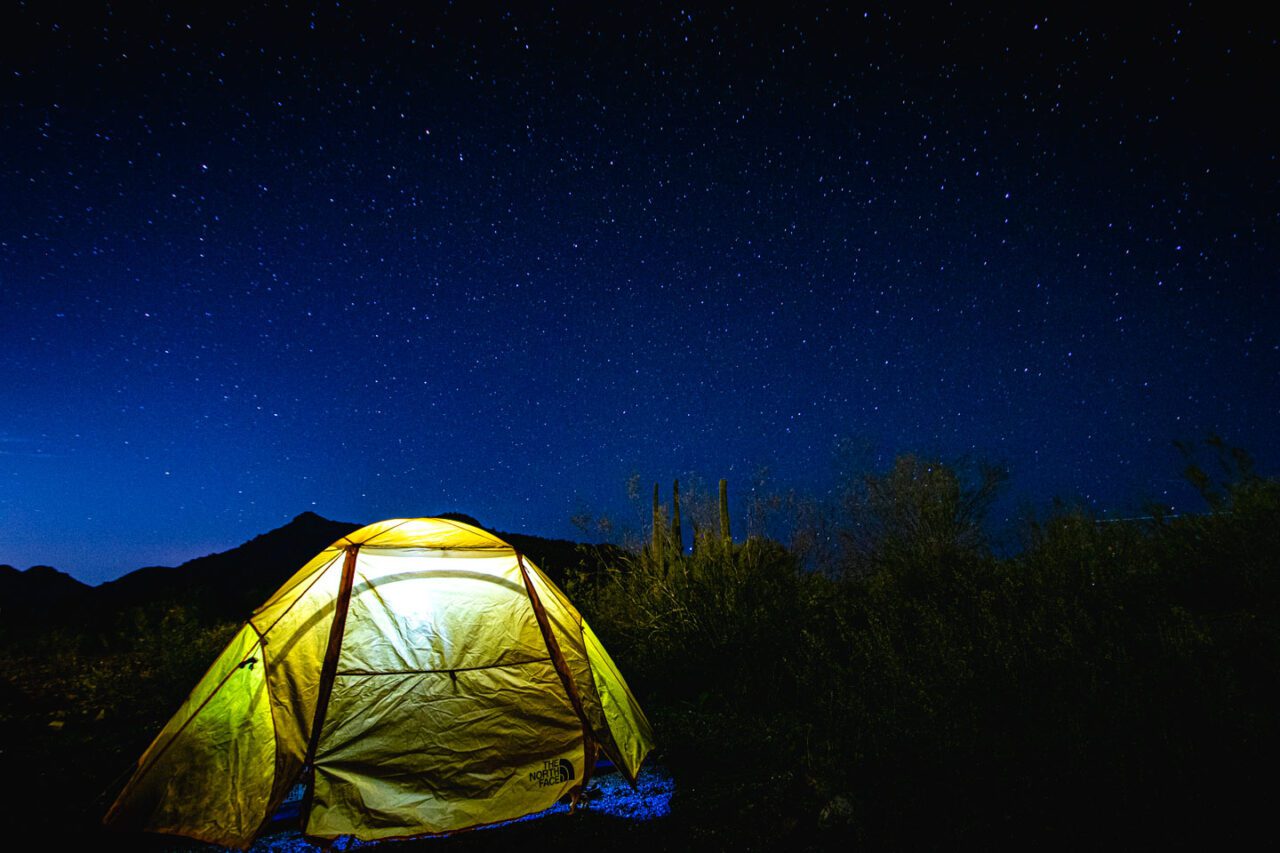
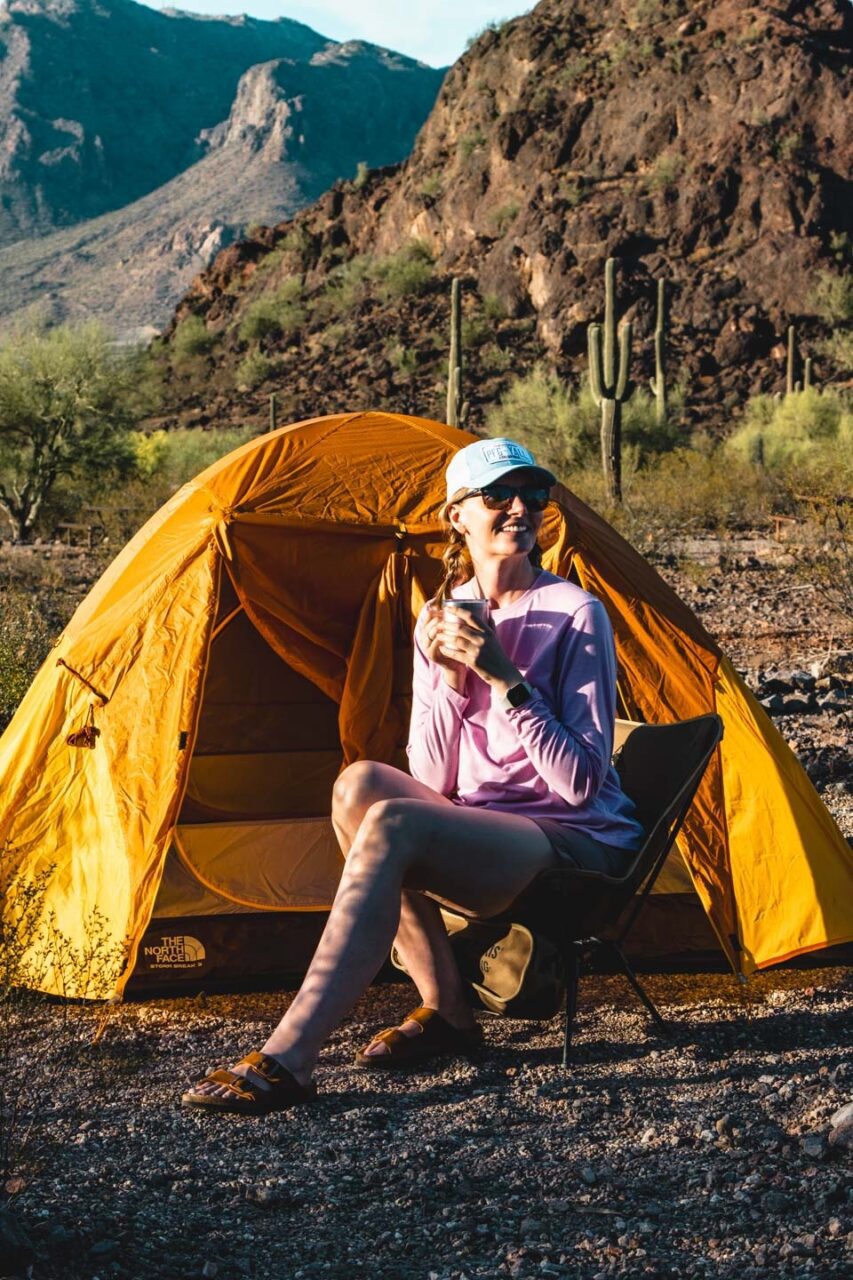
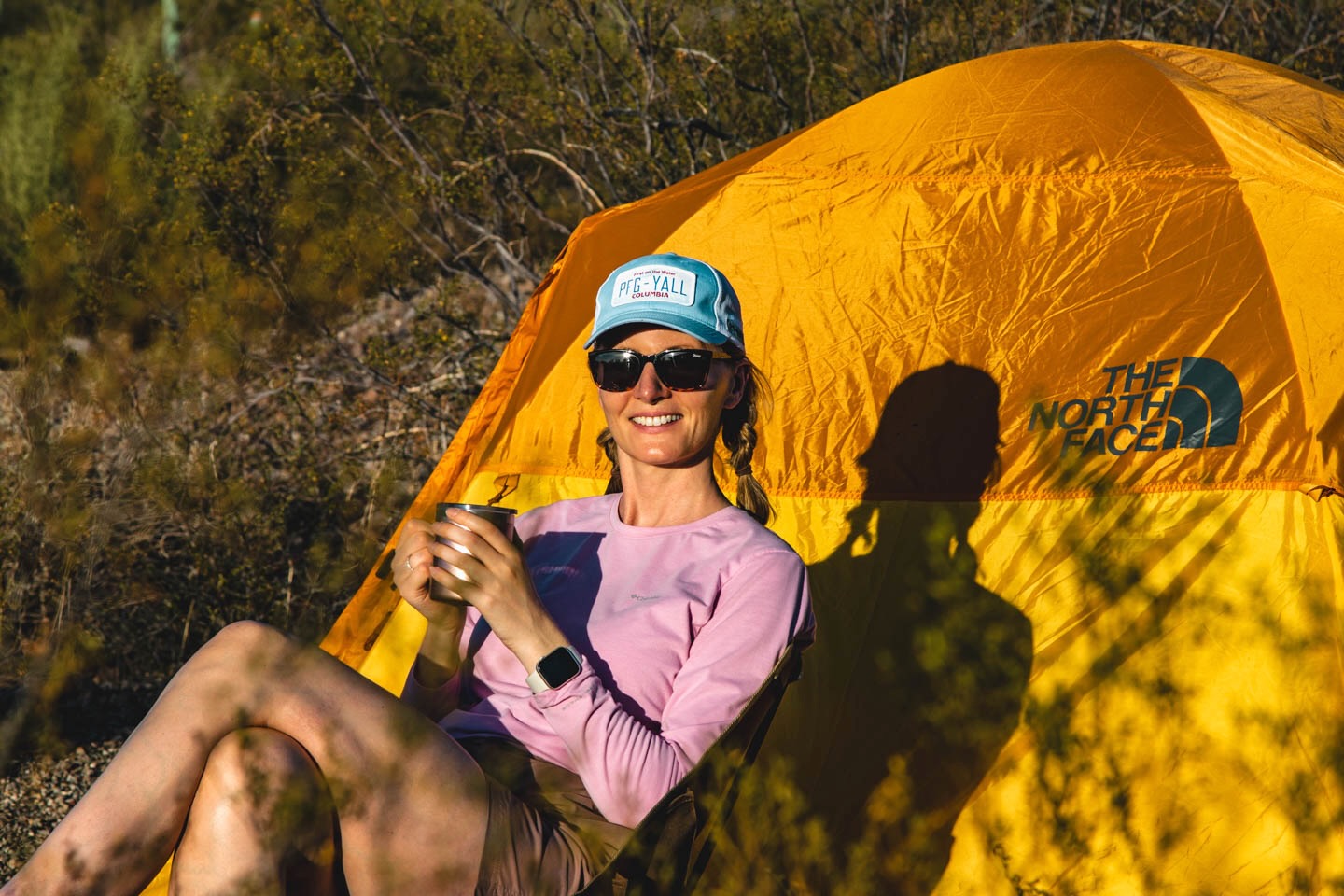
After returning to tent camping, I bought the North Face Stormbreak 3, and it has quickly become one of my favorite pieces of gear.
I’ve used it in Arizona’s deserts, where daytime temperatures can be intense and winds often pick up in the afternoon. It’s easy to pitch, surprisingly spacious, and has handled everything I’ve thrown at it so far.
More importantly, it gives me peace of mind.
Because when the weather changes unexpectedly, you’ll be grateful for every dollar you invested in a reliable shelter.
2. Tent Footprint
A tent footprint is one of those things that feels completely unnecessary – until the day you need it.
For years, I thought it was just another accessory outdoor brands wanted to sell me. Then I spent a rainy weekend camping by a lake and discovered how quickly moisture can find its way into your tent from below.
Since then, I never camp without one.
A footprint protects the bottom of your tent from sharp rocks, sticks, and abrasion while also adding an extra layer between you and damp ground. It weighs almost nothing, takes up very little space, and can significantly extend the life of your tent.
It’s not the most exciting item on this list, but it’s one of the smartest.
3. An Insulated Sleeping Pad
If you’re new to camping, here’s something nobody tells you:
The cold doesn’t come from the air.
It comes from the ground.
I learned this lesson the hard way during one of my first desert camping trips in Arizona. The daytime temperature was warm and sunny, so I assumed the night would be comfortable too.
I was wrong.
As soon as the sun disappeared, the ground quickly lost its heat, and I spent most of the night feeling cold despite having a decent sleeping bag.
That’s when I realized how important a good sleeping pad really is.
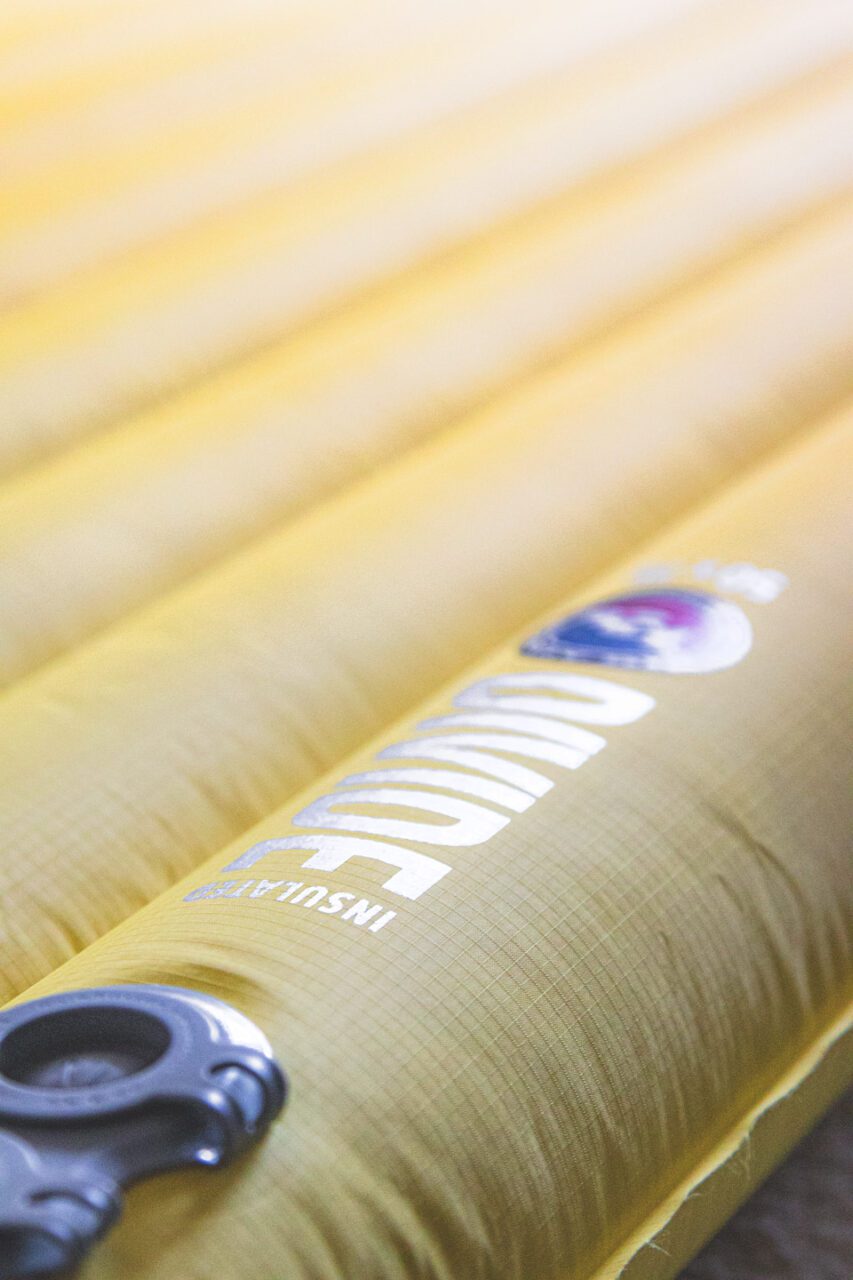
These days, I use the Big Agnes Divide insulated sleeping pad, and it’s one of the biggest upgrades I’ve made to my camping setup.
It’s comfortable, lightweight, easy to pack, and most importantly, it creates a layer of insulation between me and the cold ground.
The difference is remarkable.
A good sleeping pad doesn’t just improve comfort – it improves your sleep. And after a full day of hiking, kayaking, or exploring, that’s something you’ll appreciate more than almost any other piece of gear.
4. Reflective Sleeping Pad
This is probably the least glamorous item on my camping essentials list.
It’s basically a thin sheet of reflective foam.
And yet, it works surprisingly well.
I place it underneath my inflatable sleeping pad whenever I expect colder temperatures. It reflects body heat back toward your sleeping bag instead of letting it escape into the ground.
It’s lightweight, inexpensive, nearly indestructible, and especially useful during chilly desert nights when temperatures drop far more than you expect.
For something that costs so little, it makes a noticeable difference.
5. A Camping Pillow
For years, I tried to convince myself that I didn’t need a camping pillow.
I’d roll up a fleece jacket, use a sweatshirt, or stuff extra clothes into a bag and call it good enough.
It never was.
The problem isn’t falling asleep. The problem is waking up.
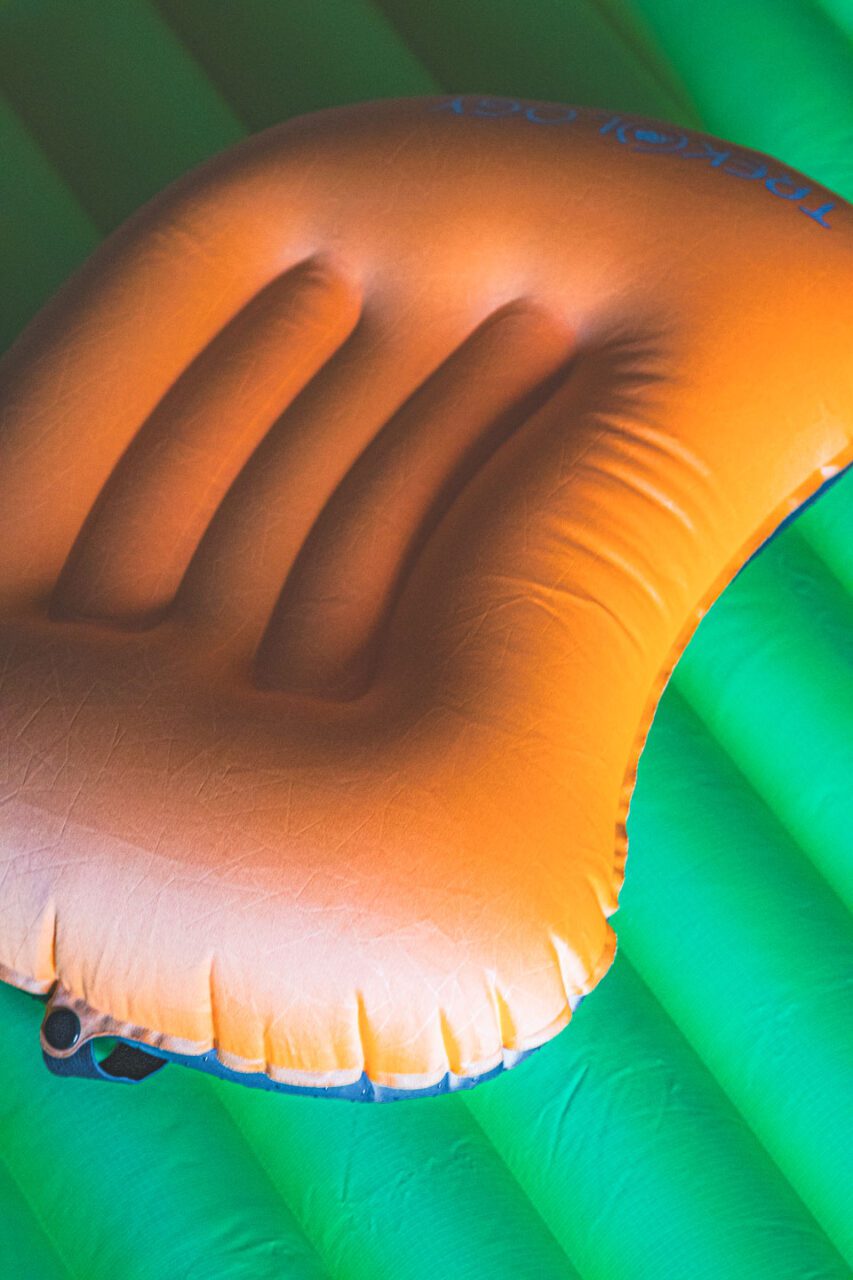
After enough mornings with a stiff neck, I finally bought a small inflatable camping pillow, and now I wouldn’t camp without one.
It packs down to almost nothing, weighs less than most snacks in my backpack, and dramatically improves my sleep quality.
It’s one of those small luxuries that makes camping feel much more comfortable without adding bulk or weight.
6. A Sleeping Bag Rated For Colder Temperatures Than You Expect
If there’s one camping mistake I’ve made repeatedly, it’s underestimating nighttime temperatures.
This is especially true in the American West.
Even when daytime temperatures feel hot, nights can become surprisingly cold, particularly in the mountains and deserts.
These days, I always choose a sleeping bag rated at least 10°F lower than the forecasted overnight temperature.
I’d rather unzip a sleeping bag because I’m too warm than spend the entire night wishing I’d packed a warmer one.
A good sleeping bag is one of the most important investments you can make as a camper. It can turn a miserable night into a comfortable one and make the difference between waking up refreshed or exhausted.
7. Camping Stove
One of the biggest lessons I’ve learned over the years is never to rely entirely on a campfire.
Sure, cooking over a fire sounds romantic. Until there’s a fire ban. Or it’s raining. Or you’re simply too tired after a long day to spend an hour trying to get wet wood to burn.
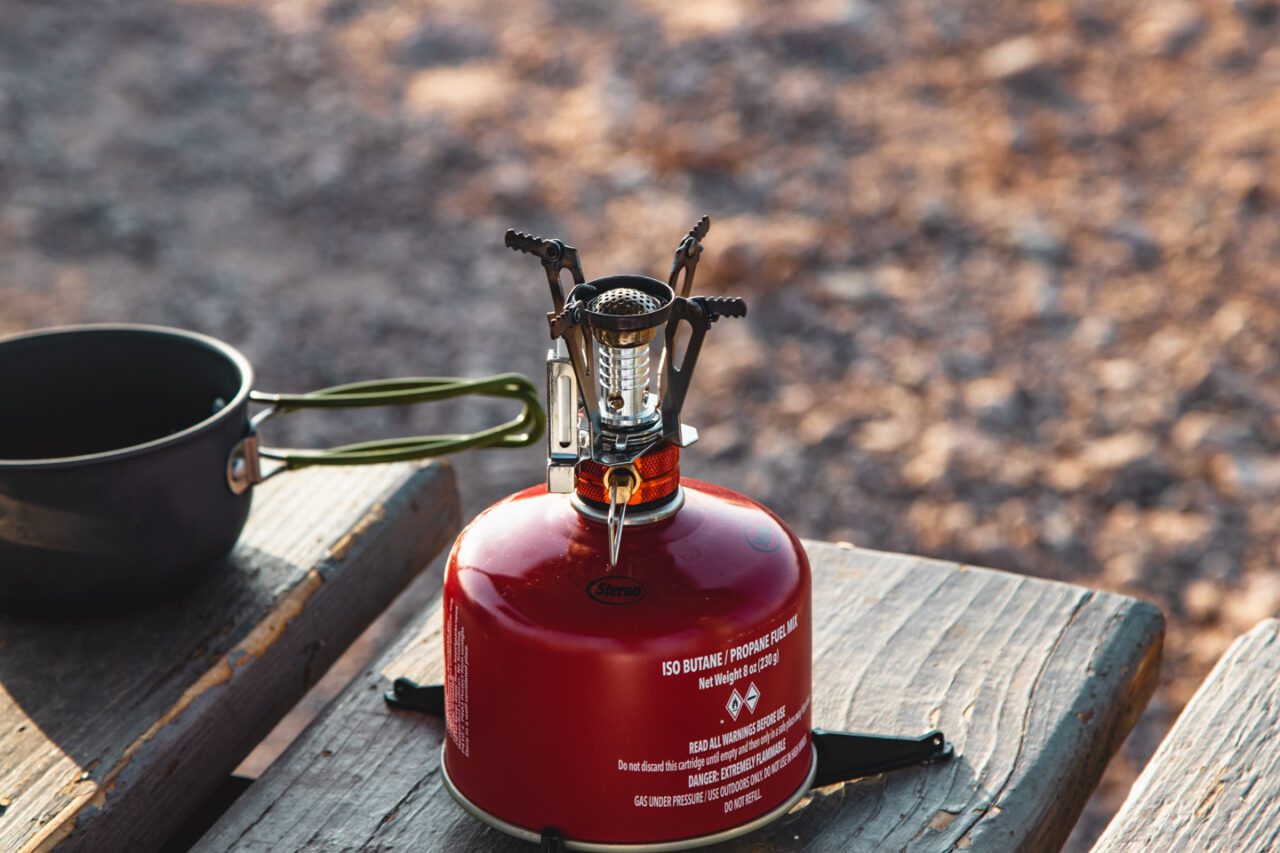
That’s why a camping stove is one of the first things I pack.
There’s something incredibly comforting about being able to boil water for coffee on a cold morning or make a simple hot meal after a day outdoors.
It doesn’t have to be fancy. A small gas stove takes up very little space and makes camping significantly easier.
8. Map and Compass
I know what you’re thinking.
Who carries a map anymore?
Most of the time, I rely on my phone too. But I’ve spent enough time exploring remote areas of Arizona, Oregon, and New Mexico to know that cell service isn’t guaranteed.
Batteries die. Phones break. Signal disappears.
A paper map weighs almost nothing and can be incredibly reassuring when you’re far from the nearest town.
Even if you rarely use it, it’s one of those camping essentials you’ll be glad to have when things don’t go according to plan.
9. Thermos
Few things make me happier while camping than a hot cup of tea on a cold morning.
Especially when the sun has just started rising and the campsite is still quiet.
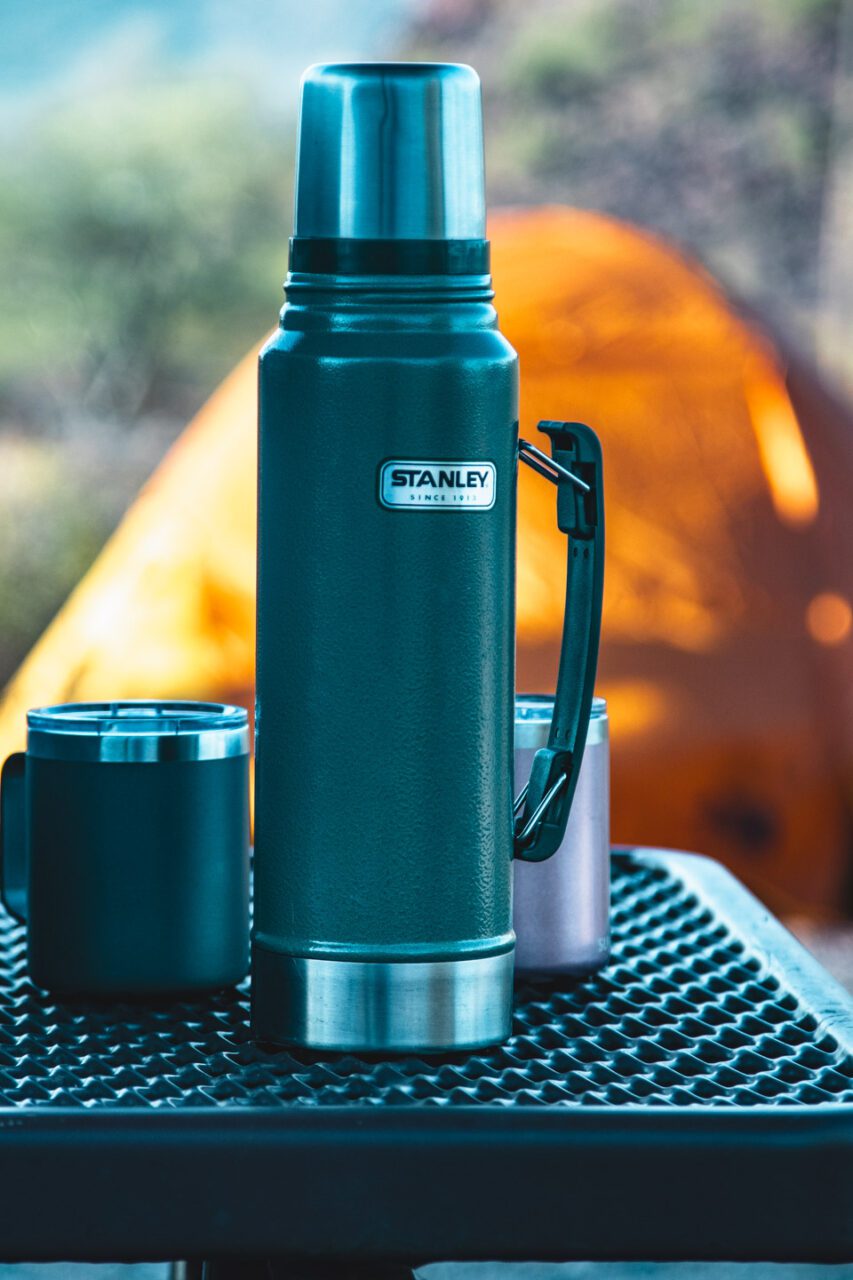
I use a Stanley thermos and I’m constantly impressed by how long it keeps drinks hot. Whether I’m camping in the Arizona mountains or spending a chilly morning by a lake, having something warm to drink instantly makes the day feel better.
It’s a small comfort, but camping is often about those small comforts.
10. Reusable Plates
After years of camping, I’ve learned that disposable plates create more frustration than convenience.
They bend, break, fly away in the wind, and generate unnecessary trash.
These days, I bring lightweight reusable plates that are durable, easy to wash, and can survive being thrown into a camping box without cracking.
Not the most exciting item on this list, but definitely one of the most practical.
11. Cooler
As a vegetarian, a good cooler completely changes the camping experience.
Without one, you’re mostly limited to shelf-stable foods and simple snacks.
With one, I can bring fresh fruit, vegetables, yogurt, cheese, tofu, and ingredients for actual meals.
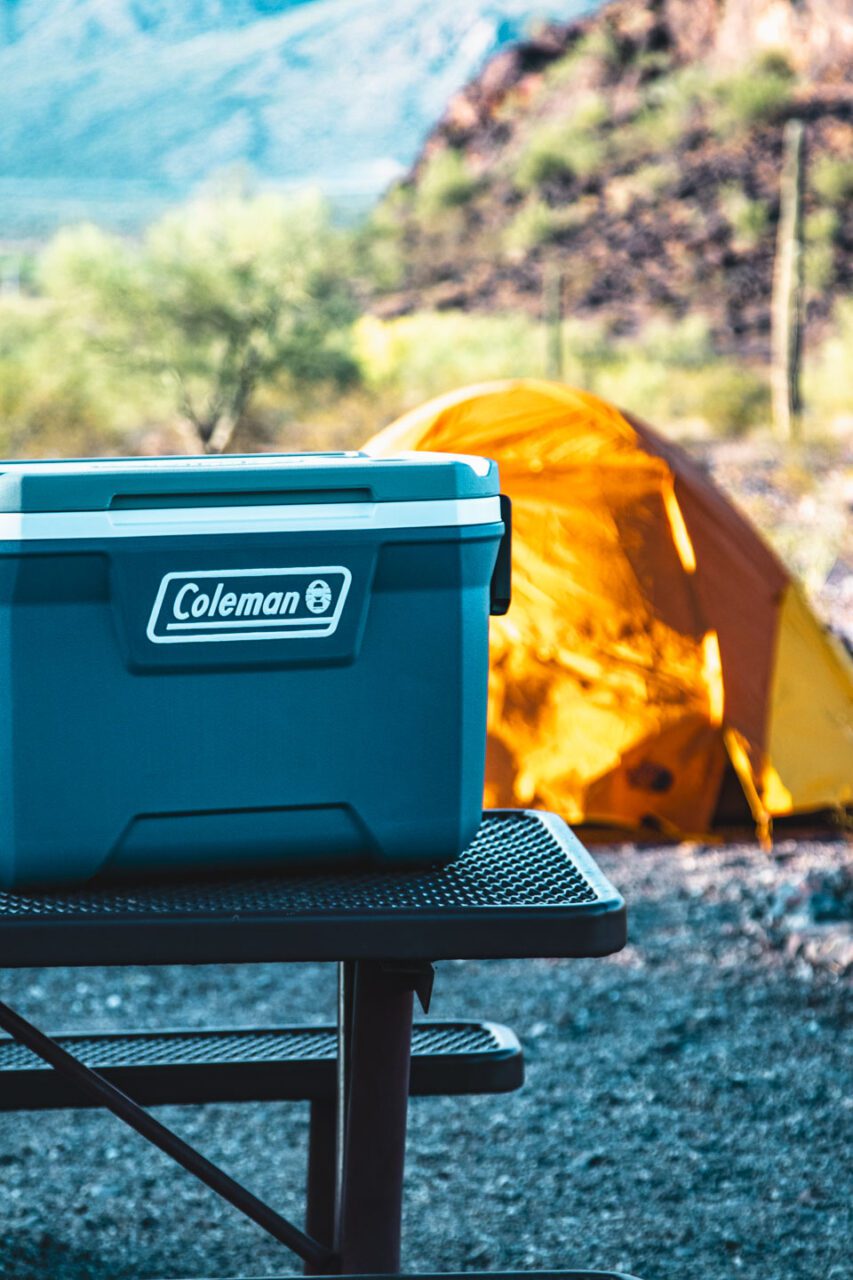
I currently use a Coleman cooler that keeps ice for several days, which is more than enough for most of my camping trips.
It may seem like a luxury at first, but after a few days of eating fresh food instead of surviving on granola bars, you’ll understand why I never leave it behind.
12. Multi-tool
If I could only bring one tool camping, it would be a multi-tool.
Opening packages. Fixing gear. Cutting rope. Preparing kindling.
I seem to find new uses for it on every trip.
The funny thing is that most camping gear sits unused most of the time. A multi-tool is the opposite. It’s one of the few items I reach for almost every day when I’m camping.
13. Thermal Mugs
I know this might sound excessive considering I already pack a thermos.
But they’re not the same thing.
The thermos stays at camp.
The thermal mug comes with me.
Whether I’m watching sunrise, sitting by a lake, or reading outside my tent in the evening, having a mug that keeps coffee or tea warm for hours makes the experience so much more enjoyable.
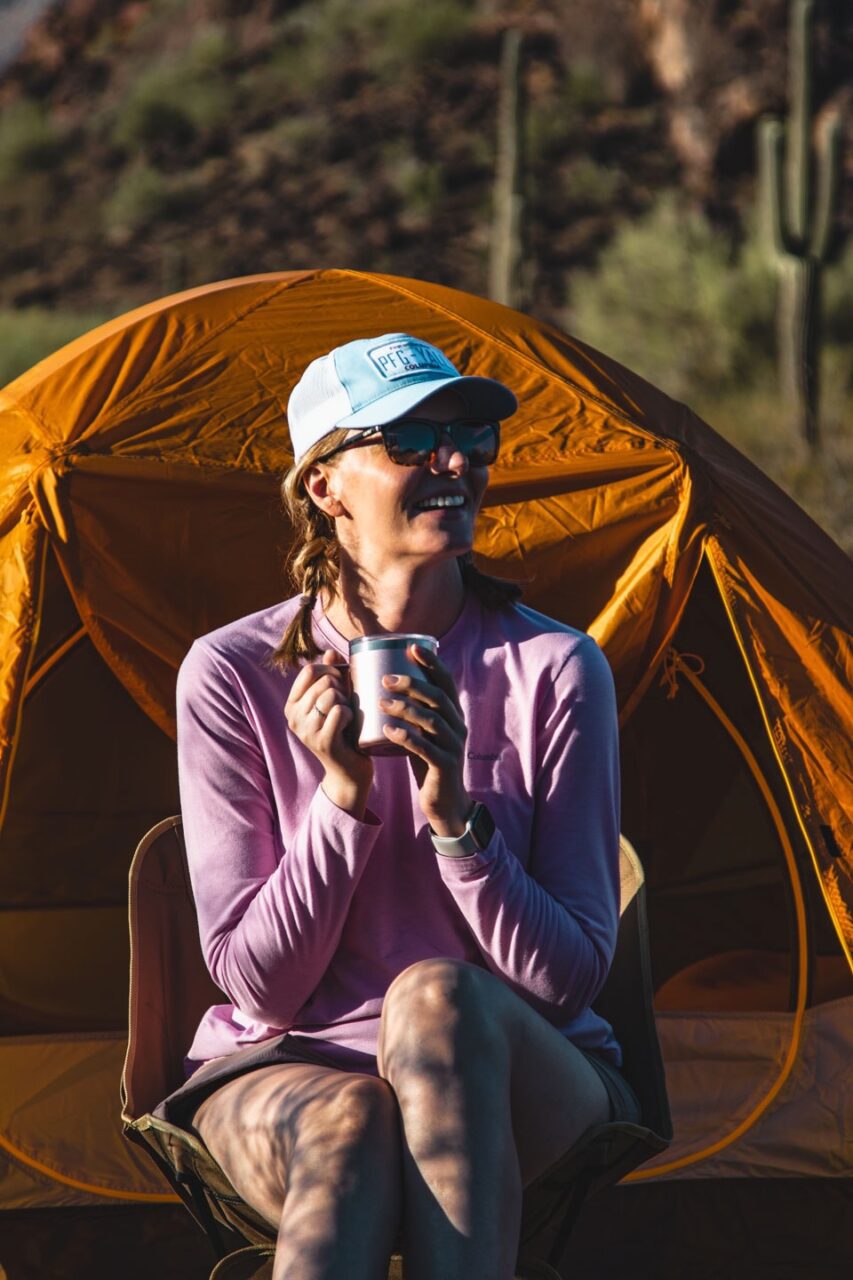
My rose gold Sunwill mug has become one of those little items that somehow joins every adventure.
14. Camping Utensils
Camping has taught me a surprising lesson:
Always know where your spoon is.
Because somehow it’s always the first thing to disappear.
I use a lightweight utensil set that includes a fork, knife, and spoon. It takes up almost no space and eliminates the need for disposable cutlery.
Simple. Practical. Easy to clean.
Exactly the kind of camping gear I like.
15. Power Bank
I love disconnecting while camping.
But I also like having a way to call for help if something goes wrong.
Whether you’re using your phone for maps, weather forecasts, campground reservations, or photos, battery life tends to disappear surprisingly fast outdoors.
That’s why a power bank is one of those items I never leave behind.
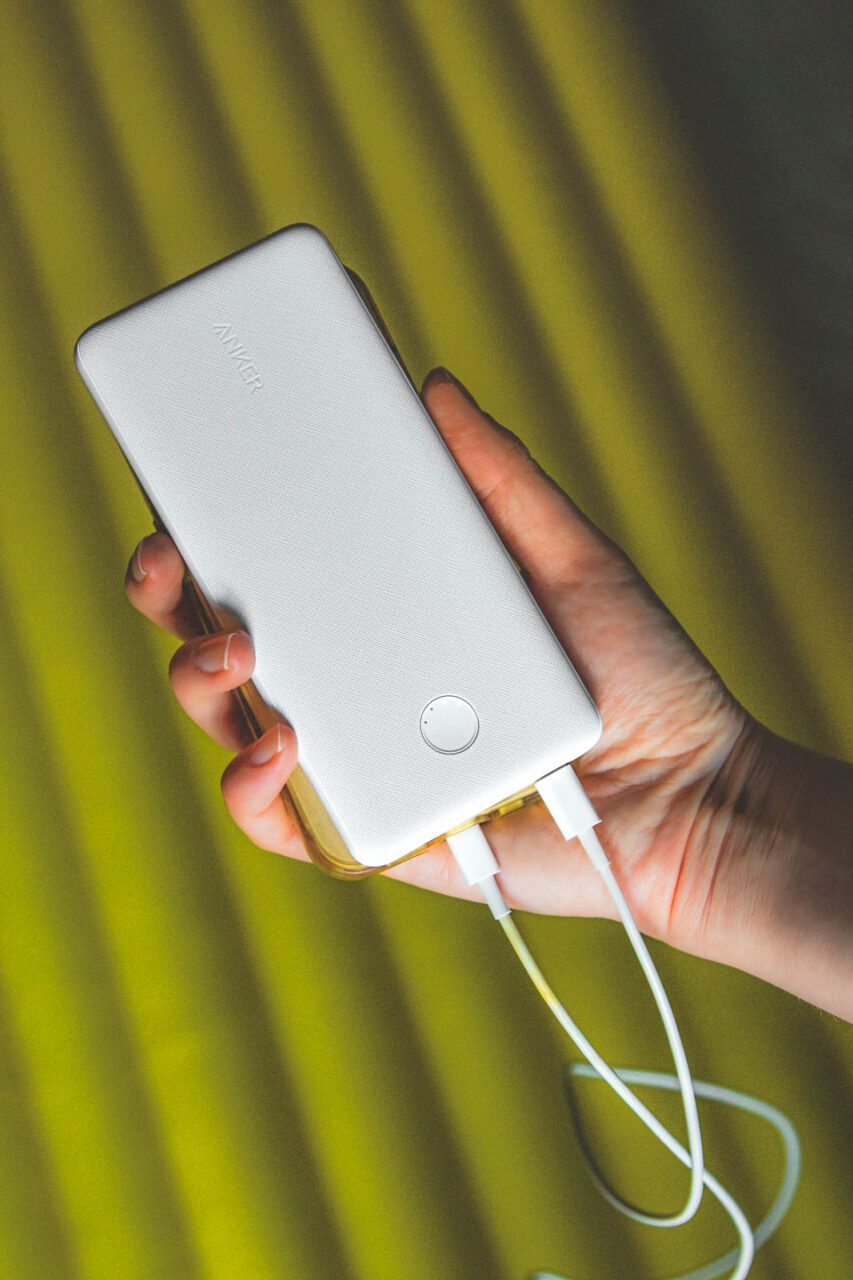
I use an Anker PowerCore 10K, which is compact enough to fit in a daypack but powerful enough to recharge my phone multiple times.
Hopefully you’ll never need it in an emergency.
But if you do, you’ll be glad you packed it.
16. First Aid Kit
This isn’t the most exciting piece of camping gear, but it might be the most important.
Fortunately, I’ve never had to deal with a serious injury while camping.
However, cuts, blisters, splinters, scrapes, and minor burns happen all the time.
A small first aid kit takes up very little space and gives you peace of mind when you’re miles from the nearest pharmacy.
At minimum, I always carry bandages, disinfectant wipes, gauze, tweezers, pain relievers, and blister treatment.
Hopefully it stays untouched.
But it’s one of those things you absolutely want when you need it.
17. Headlamp
Few camping experiences are as frustrating as trying to find something inside a tent after dark.
Especially when you’re convinced it’s right there.
A headlamp completely solves that problem.
Unlike a flashlight, it keeps both hands free, which is incredibly useful when you’re cooking dinner, setting up camp after sunset, or making a late-night bathroom run.
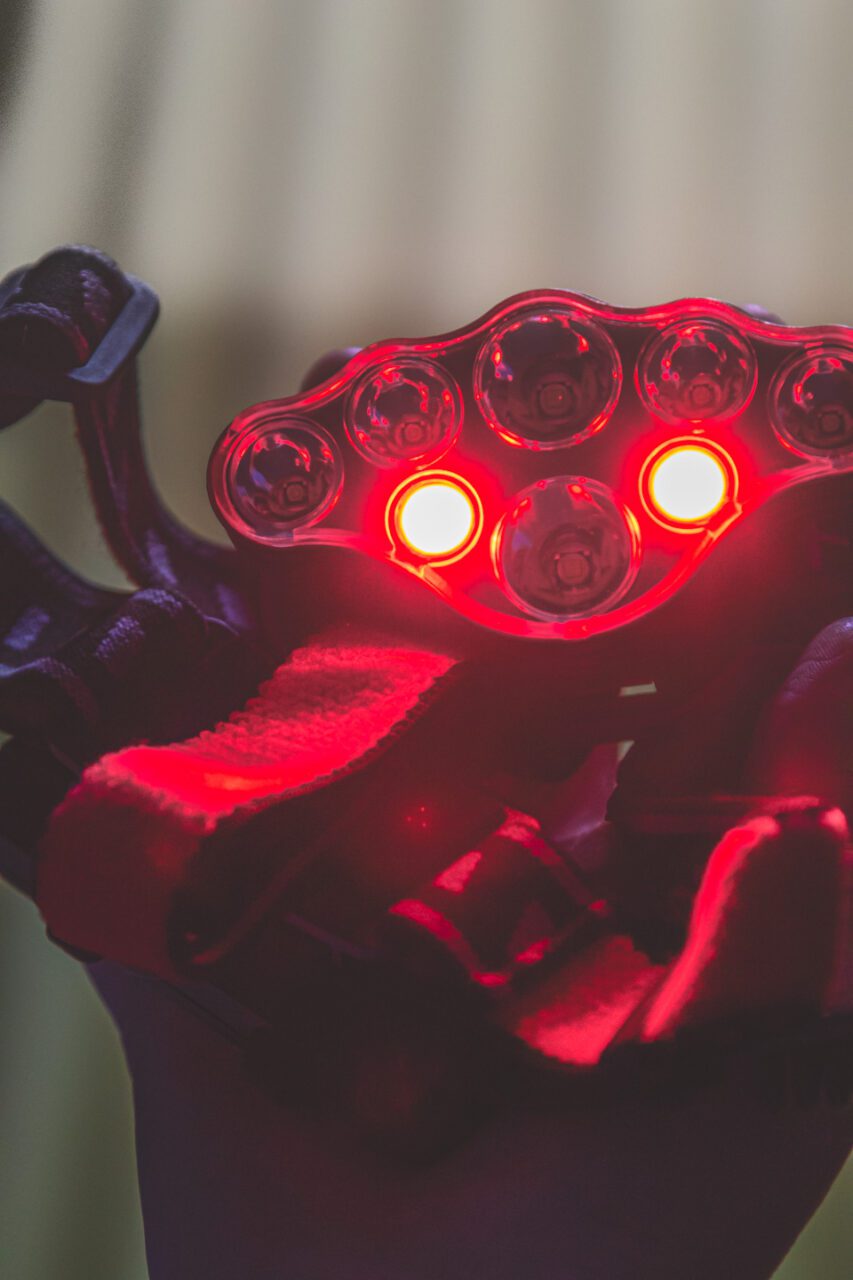
One feature I particularly recommend is a red light mode.
It preserves your night vision and feels much less harsh than bright white light when everyone else at the campsite is already asleep.
18. Appropriate Clothing
I’ve learned not to trust weather forecasts too much when camping.
Especially in the mountains.
One moment you’re hiking in a T-shirt. A few hours later you’re reaching for a fleece and rain jacket.
That’s why layering is one of my biggest camping rules.
I usually pack:
- a lightweight base layer
- a warm fleece or sweater
- a waterproof outer layer
And no matter how carefully I plan, I always bring extra socks.
Because somehow camping and wet socks seem determined to find each other.
As someone who camps throughout the Southwest, I also love quick-drying clothing. It takes up less space, dries faster, and makes life significantly easier on multi-day trips.
19. Warm Blanket
I know it sounds unnecessary when you already have a sleeping bag.
But somehow a blanket always finds a purpose.
I use mine around the campfire, during chilly mornings, as an extra layer on cold nights, and sometimes even as an improvised picnic blanket.
It’s one of those comfort items that makes camping feel a little more cozy and a little less rugged.
And after spending years living in a campervan, I’ve realized that small comforts often have the biggest impact.
20. Collapsible Sink
I’ll admit it.
I thought this was a completely unnecessary purchase.
Then I stayed at a campground without convenient access to water.
Suddenly, washing dishes became much more complicated than I expected.
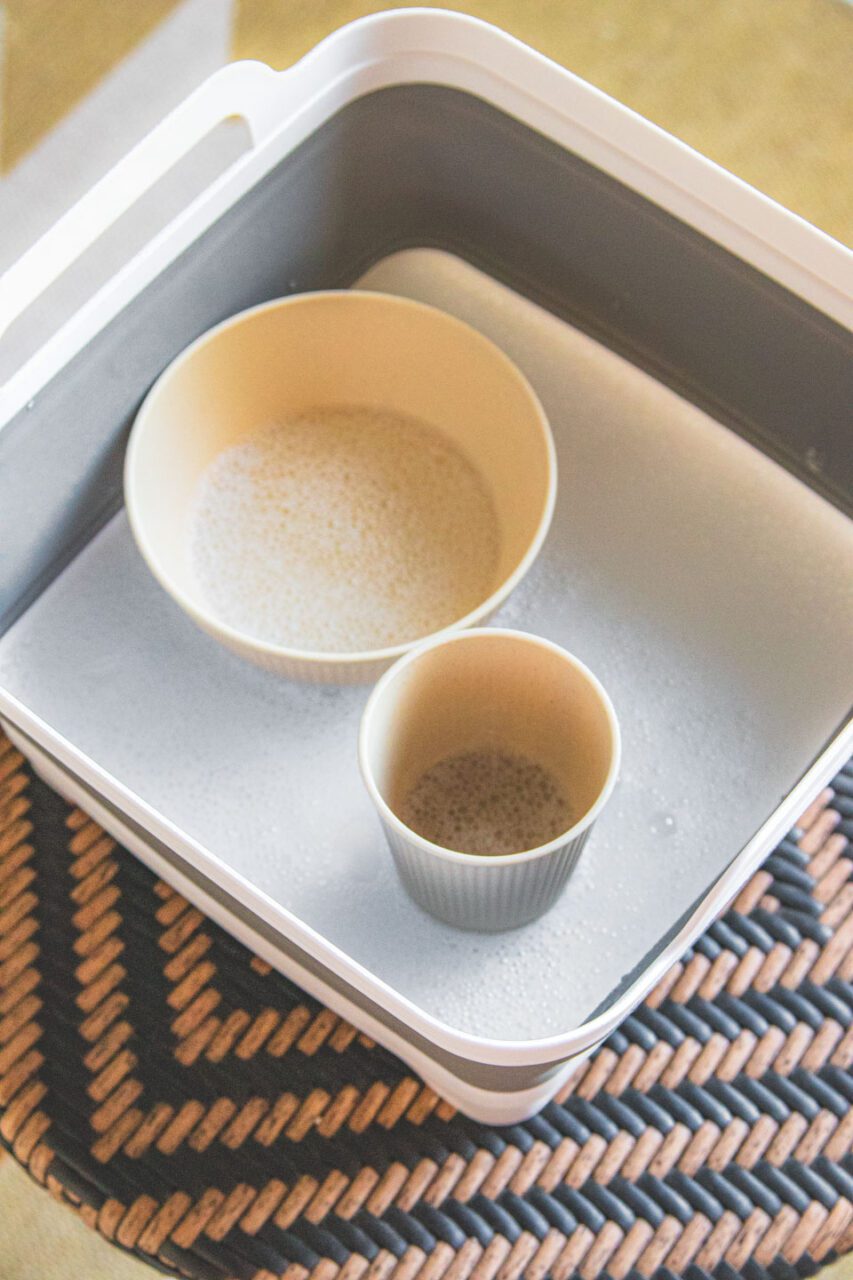
A collapsible sink weighs very little, folds flat, and makes campsite cleanup dramatically easier.
It’s not the first thing I would buy as a beginner camper.
But after using one, I wouldn’t want to camp without it.
21. Bug Repellent
Nothing ruins a peaceful evening outdoors quite like becoming dinner for an entire mosquito population.
Thankfully, this isn’t much of a problem during most of my Arizona camping trips.
But whenever I camp near lakes, rivers, forests, or higher elevations, bug protection becomes essential.
I personally prefer plant-based repellents whenever possible. They tend to feel gentler on my skin while still doing a good job keeping bugs away.
Whatever option you choose, don’t forget it.
Because once the mosquitoes arrive, you’ll wish you had packed two bottles.
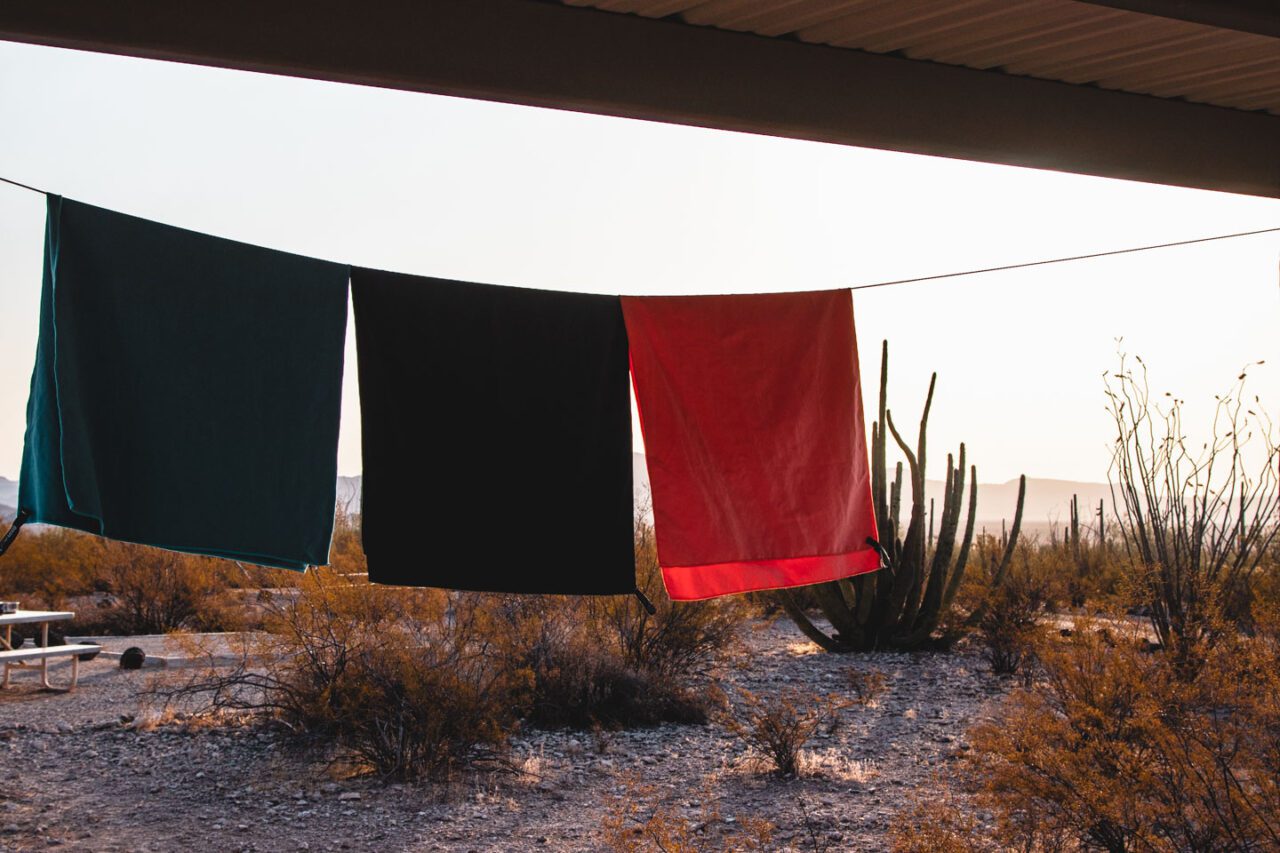
22. Clothesline
This might be one of the most underrated camping essentials on my list.
A simple clothesline takes up almost no space, yet I find myself using it on nearly every trip.
It’s perfect for drying wet towels, airing out clothes, hanging swimsuits after a lake day, or drying socks after an unexpected rain shower.
I’ve even used mine to secure tarps and create extra shade around camp.
Not glamorous, but surprisingly useful.
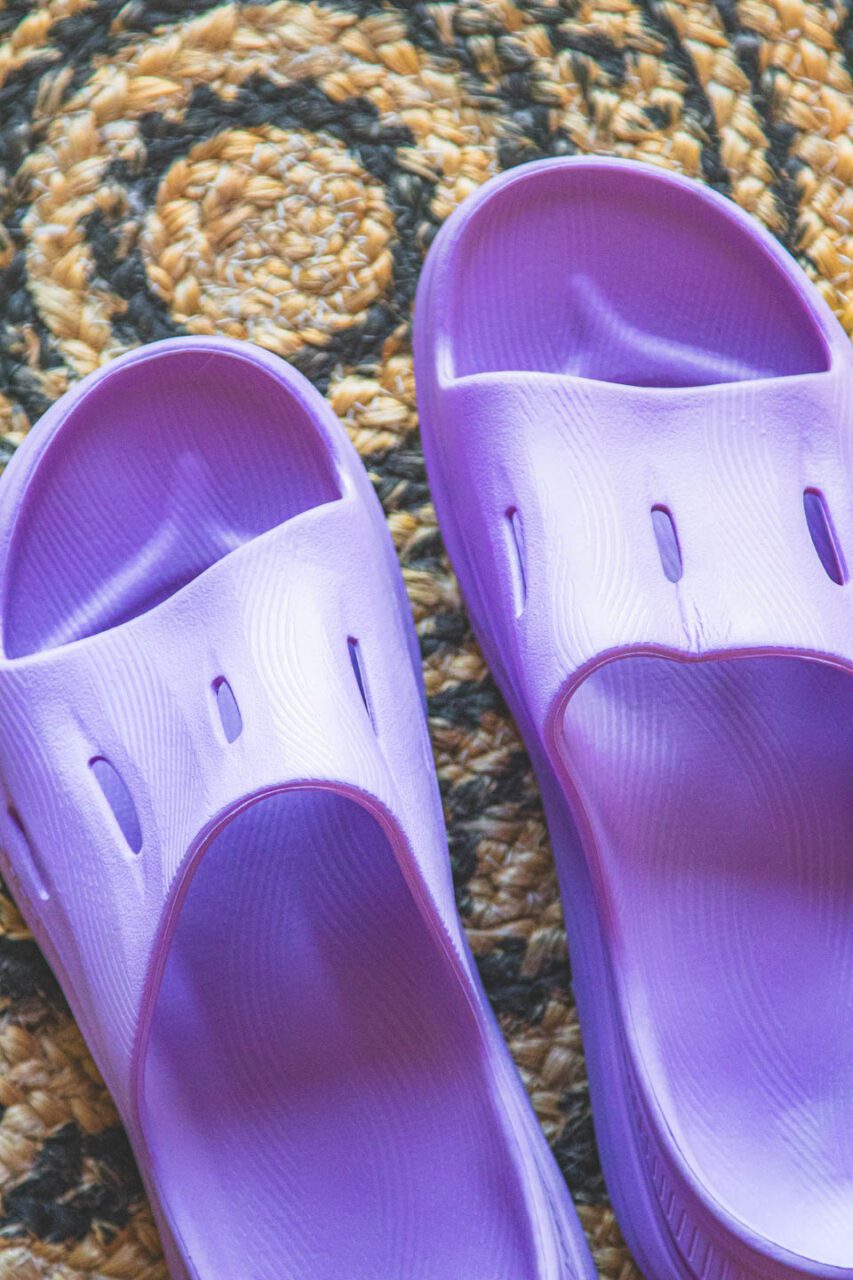
23. Shower Slides
If you’re camping at developed campgrounds, shower slides are non-negotiable.
Trust me on this one.
Campground showers aren’t always as clean as you’d hope, and having a pair of lightweight slides makes the entire experience much more comfortable.
I pack my Hoka rubber slides on every trip. They’re comfortable, dry quickly, and work just as well around camp as they do in the shower.
Plus, after a long day of hiking, it’s incredibly nice to take off your hiking shoes and let your feet breathe.
24. Eco-friendly Toiletries
One of the things I love most about camping is spending time in beautiful natural places.
The least I can do is leave as little impact as possible.
That’s why I try to choose biodegradable and environmentally friendly toiletries whenever I can.
My camping toiletry kit is intentionally simple:
- solid shampoo
- biodegradable soap
- toothbrush
- natural deodorant
- sunscreen
- a few basic skincare essentials
Over the years, I’ve discovered that camping doesn’t require nearly as many products as I use at home.
And honestly, I kind of enjoy that simplicity.
25. Quick-Drying Towels
I learned very quickly that traditional cotton towels are not designed for camping.
They’re bulky, heavy, and somehow always seem to stay damp forever.
Microfiber towels are the complete opposite.
They dry quickly, take up very little space, and are incredibly lightweight.
Whether I’m camping near a lake, taking a campground shower, or simply washing my face before bed, a quick-drying towel makes life easier.
It’s one of those upgrades that seems small until you experience the difference.
26. Garbage Bags
This probably isn’t the item people expect to see on a camping essentials list.
But I never leave home without a few garbage bags.
They’re useful for trash, wet clothing, muddy shoes, protecting gear from rain, storing dirty laundry, and countless other campsite emergencies.
More importantly, they help follow one of the most important outdoor principles:
Leave no trace.
I always try to leave campsites cleaner than I found them, and a few extra trash bags make that easy.
27. Matches and Fire Starter
Even if you’re experienced at building fires, there will eventually be a day when everything is wet.
That’s when you’ll appreciate having reliable fire starters.
I always keep waterproof matches and a small fire starter kit packed away in a dry container.
Most camping trips don’t require them.
But when temperatures drop unexpectedly and you need a fire quickly, they’re worth their weight in gold.
28. Camping Cookware
Good camping meals don’t have to mean surviving on instant noodles.
Some of my favorite camping memories involve cooking simple dinners outside while watching the sunset.
Nothing fancy.
Just good food, fresh air, and nowhere else to be.
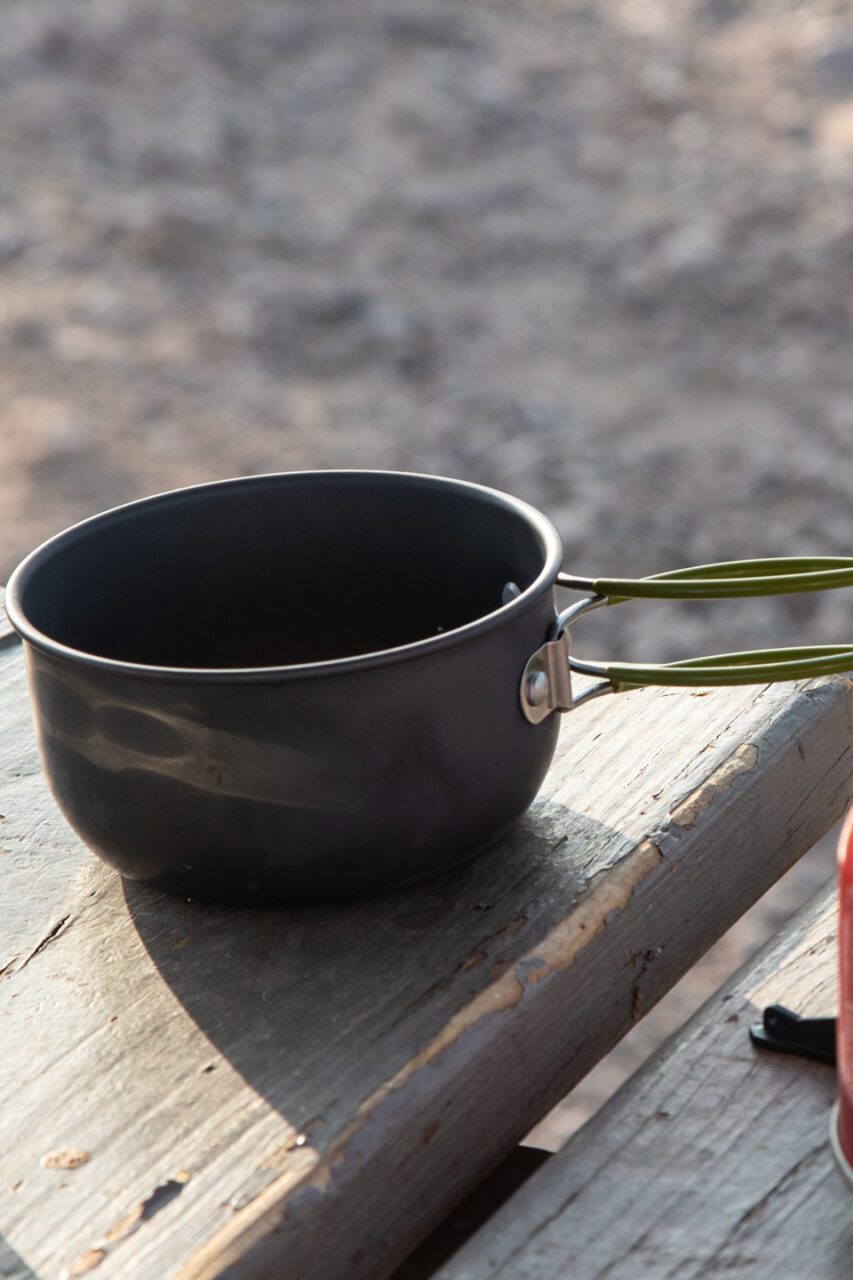
I use a compact nesting cookware set that includes pots and pans that stack together neatly. It saves space, cleans easily, and allows me to prepare actual meals instead of relying entirely on packaged food.
After years of road trips, van life, and camping, I’ve realized that good meals can completely change the way a trip feels.
And having cookware that makes cooking simple is worth every inch of storage space.
29. Backup Food
Even if you plan every meal perfectly, it’s always a good idea to bring extra food.
Hikes take longer than expected.
Weather changes.
Stores close earlier than Google claims.
Or sometimes you’re simply hungrier after spending the entire day outdoors.
I always keep a small stash of emergency snacks in my camping box – nuts, energy bars, dried fruit, and a few things that don’t require refrigeration.
Most of the time I don’t need them.
But when I do, I’m always grateful they’re there.
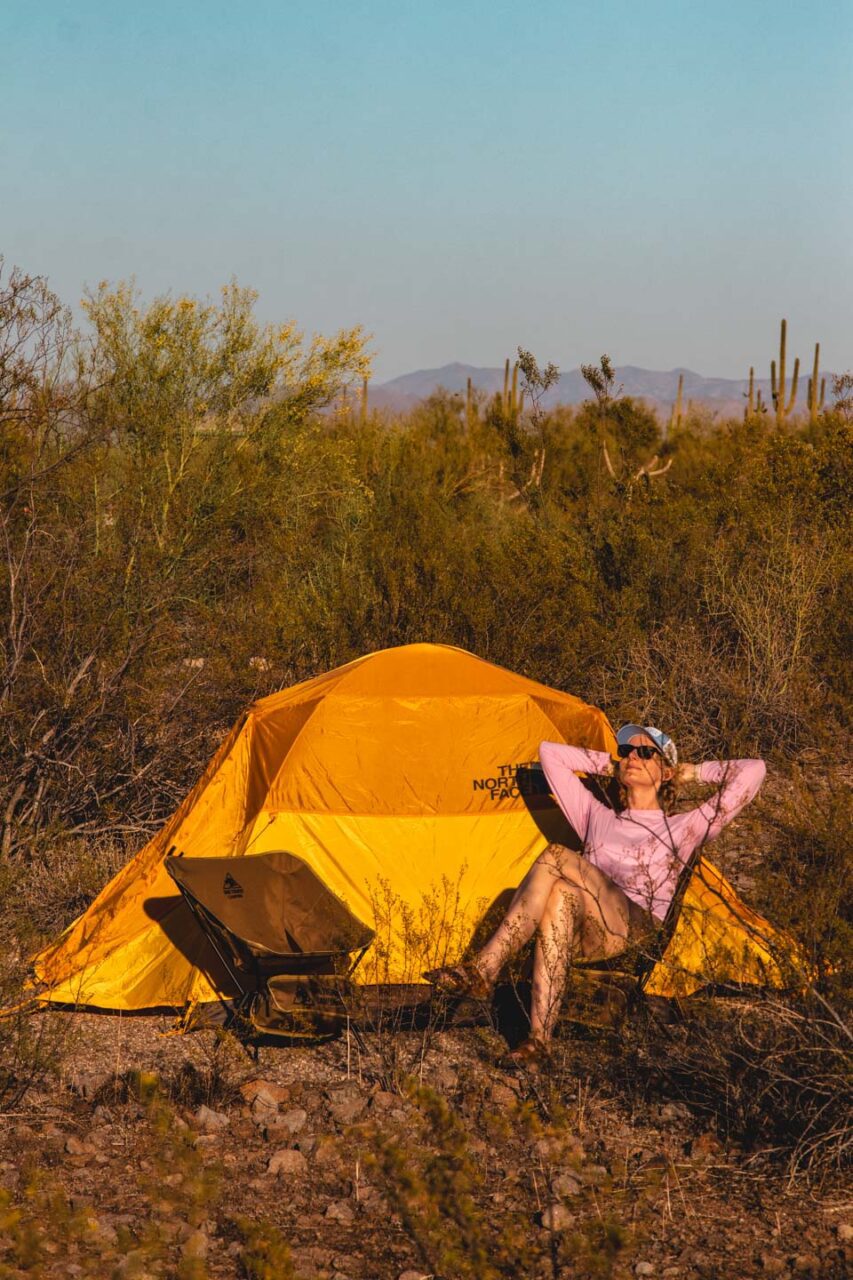
30. Camping Chair
For years, I thought camping chairs were optional.
Then I spent an entire evening sitting on a rock.
Now I understand.
After a long day of hiking or exploring, having a comfortable place to sit transforms the campsite experience.
Some of my favorite camping memories involve doing absolutely nothing – sitting outside my tent with a cup of tea, watching the light change across the landscape.
A good chair makes those moments much more enjoyable.
I currently use a lightweight folding chair that packs down surprisingly small but is comfortable enough to spend hours in.
31. Duct Tape
Few items have solved more camping problems than duct tape.
Torn tent?
Duct tape.
Broken gear?
Duct tape.
Cracked storage bin?
Duct tape.
Loose shoe sole?
You guessed it.
Thankfully, I’ve never had to deal with a major gear failure while camping, but I like knowing I have a simple solution for smaller problems.
It’s cheap, lightweight, and useful far more often than you’d expect.
32. Sunscreen and Sunglasses
As someone who spends a lot of time outdoors in Arizona, this one probably doesn’t need much explanation.
The desert sun is intense.
Even on cloudy days.
Even during cooler months.
I never leave camp without sunscreen, a hat, and a good pair of sunglasses.
Not only does sun protection prevent painful burns, but it also makes long days outside significantly more comfortable.
My polarized sunglasses are especially useful around lakes, beaches, and bright desert landscapes where glare can be surprisingly strong.
33. Dry Bag
The weather doesn’t always cooperate with our plans.
Neither do rivers, lakes, or accidentally spilled drinks.
A dry bag helps protect the things you really don’t want to get wet – electronics, cameras, documents, extra clothing, and sleeping gear.
I don’t use mine on every camping trip, but whenever rain appears unexpectedly, I’m reminded why I packed it.
It’s lightweight insurance for some of your most important belongings.
34. A Good Book
One of the reasons I love camping is that it creates space.
Space away from notifications.
Space away from endless scrolling.
Space away from feeling like I should always be doing something.
That’s why I almost always bring a book.
Some of my favorite camping evenings have been spent reading inside my tent while listening to the wind outside or watching the last light fade beyond the mountains.
A good book somehow feels different outdoors.
Slower.
More immersive.
More memorable.
And honestly, that’s exactly why I camp.
Travel lighter, even before you leave.
start with something simple.
Download The Minimum Plan – Slow Travel:
35. A Good Attitude
I know this sounds cliché.
But after years of traveling, van life, road trips, and camping adventures, I’ve realized that this is probably the most important item on the entire list.
Something will eventually go wrong.
You’ll forget something.
The weather won’t cooperate.
Your campsite won’t look like the photos.
The coffee will spill.
The tent will get dusty.
The mosquitoes will find you.
And somehow those moments often become the stories you remember most.
Camping becomes much more enjoyable when you stop expecting perfection and start embracing the adventure.
No piece of gear can replace that mindset.
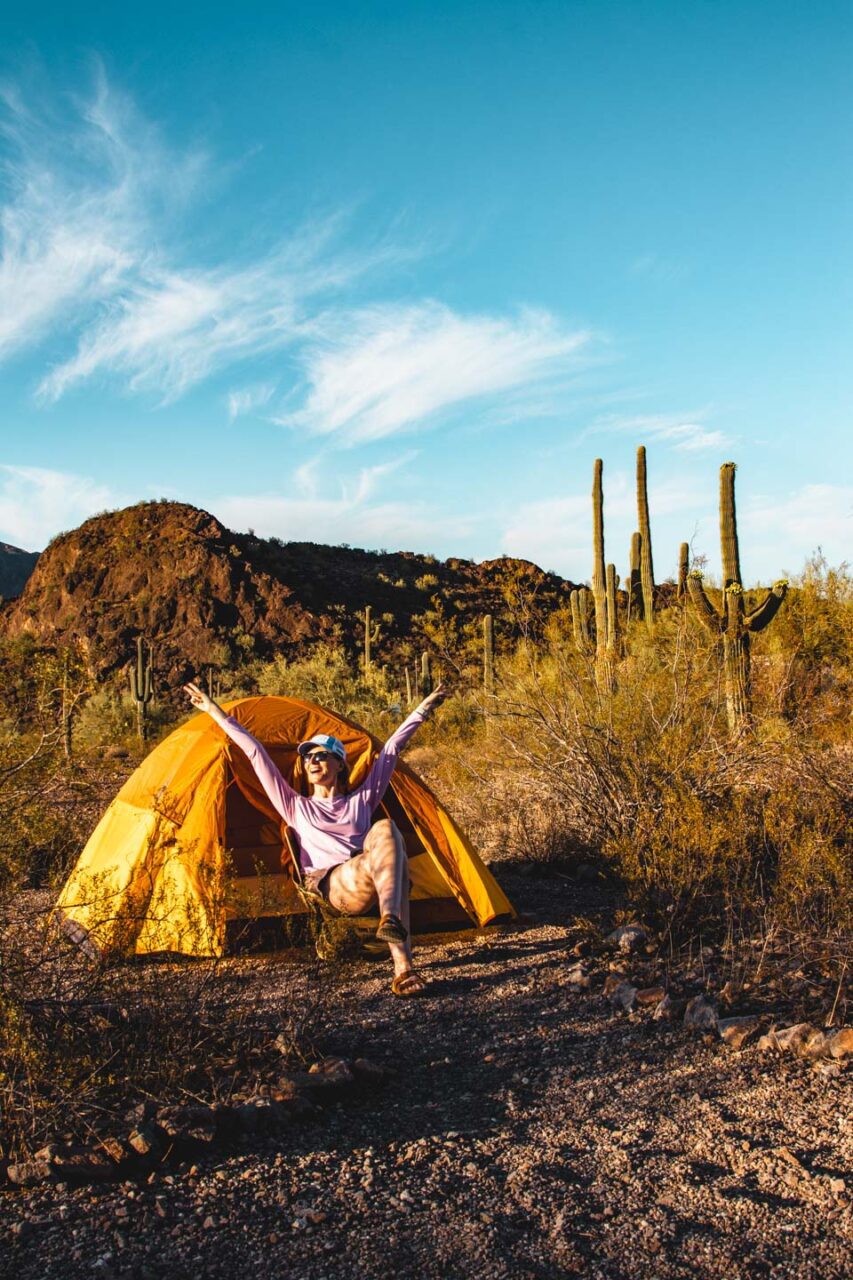
Final Thoughts on Camping Essentials
When my campervan was shipped back to Poland, I genuinely thought tent camping would feel like a step backward.
Instead, it reminded me why I fell in love with travel in the first place.
Not because of the vehicle.
Not because of the gear.
And certainly not because of having the perfect campsite setup.
It was the simple things.
Watching the sunrise with a cup of tea.
Listening to birds before anyone else wakes up.
Falling asleep to the sound of wind moving through the trees.
Camping has a way of stripping life back to the essentials.
Ironically, that’s exactly why this list exists.
Not because you need more stuff.
But because the right gear helps remove distractions and allows you to focus on what really matters: being outside, slowing down, and enjoying the experience.
What camping essential would you add to this list? I’d love to hear your recommendations – I’m always looking for ways to make my camping setup a little better.
More articles you might be interested in: