
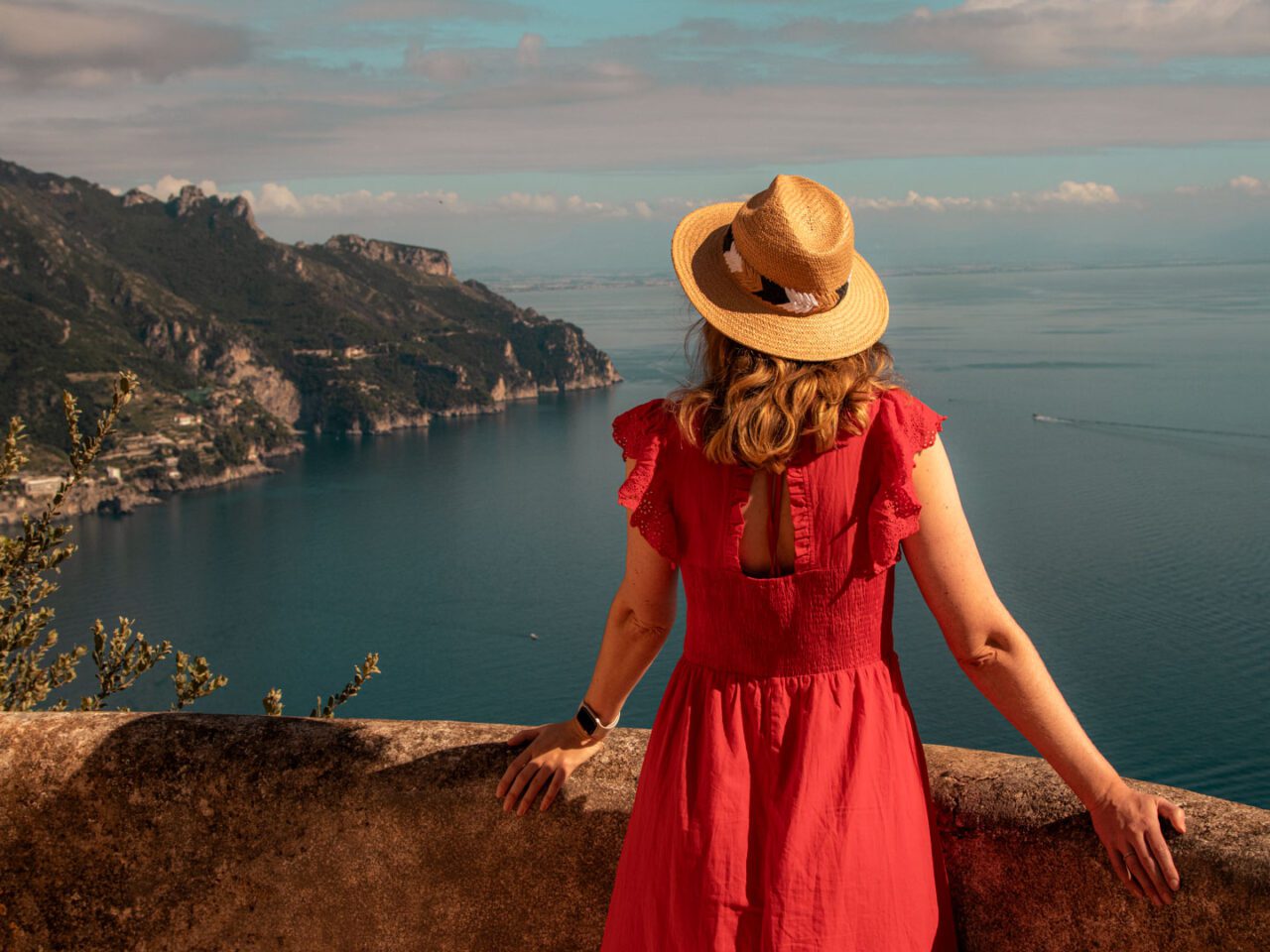
I had been waiting for this trip for a year and a half.
The Amalfi Coast. Five days. A plan mapped out down to the last detail.
If I’m flying all the way from the U.S. to Europe, I thought, I have to see everything. And I did.
Every stop on the list. Every photo-worthy view. Every town you’re “supposed” to visit along the Amalfi Coast.
On the day I left, I already felt sick at the airport.
My chest felt tight. I was dizzy. My body was sending clear signals – impossible to ignore.
And I ignored them anyway.
Because “it’s almost over.” Because “I’ve been waiting so long.” Because the plan was good – and it felt like a waste to change it at the last minute.
A few days later, I was in Poland.
I was supposed to spend a full week with my mom. Just simple, quiet time I had been craving after being away for so long.
Instead, I spent most of that week on the couch. Weak. Nauseous. Living on broth my brother brought me.
And that’s when it hit me.
I didn’t actually want to see all those places. I just wanted to be with someone I love. To have the energy for it. And the time.
For a long time, I thought it was normal to come back from a trip exhausted.
It wasn’t an exception. It was a pattern.
When I finally looked at it honestly, I realized that the Amalfi trip wasn’t random.
It was the peak of something that had been repeating for years.
I came back exhausted from Asia. From Mexico. From the U.S. From short trips and long ones, cheap and expensive, planned and spontaneous.
Every time, I told myself I was tired because of the distance. Because of the flights. Because of the time zones.
It wasn’t until Amalfi that I understood the truth.
The problem wasn’t the route. The problem was how I planned it.
I never lacked a plan. It was always good. Logical. “Optimized.”
I knew where I was going, in what order, how much time I had in each place.
But there was one question I never asked: How much energy do I actually have?
If You Want to Travel More Slowly
After that week on the couch, I started doing things differently.
I created a simple way of planning my trips – one I now use before every journey. If you’d like, you can use it too.
The free Minimum Plan is waiting for you here:

Why we come back from vacation exhausted – even when everything was planned
For years, I planned my trips as if time was the only limit.
I have seven days, so I fill seven days. There’s still some space – I add one more place. And another. Since I’m already there.
But in travel, time isn’t the only thing that runs out.
You run out of energy to make decisions. Energy to move from place to place.
Energy to actually be present in the place you traveled so far to see.
And when you plan a trip only around time, ignoring your energy – at some point, you just shut down.
Even if you’re in a beautiful place. Even if the plan is working exactly the way it was supposed to.
This is the kind of exhaustion you don’t see in photos. So maybe it’s not that you don’t know how to rest.
Maybe no one ever taught you how to plan a trip differently.
What I changed in the way I plan my trips
I didn’t stop planning. I just started planning differently.
The first change was simple – and a little uncomfortable:
I stopped asking “how much can I fit in?” and started asking “how much do I actually want to see?”
It’s a different question. It leads to different answers.
I also started paying attention to what things cost me – not just in time, but in energy.
A long drive costs something different than a slow walk through a city.
A crowded attraction costs something different than a quiet morning with coffee and a view.
Changing places every night costs something different than staying three days in one spot.
I started leaving space.
Not because “you’re supposed to.” But because without it, I wasn’t actually able to be where I was.
And suddenly, something shifted.
I started coming back calmer.
That was the moment I began shaping my own way of planning trips – the one that eventually became the foundation of my ebook.
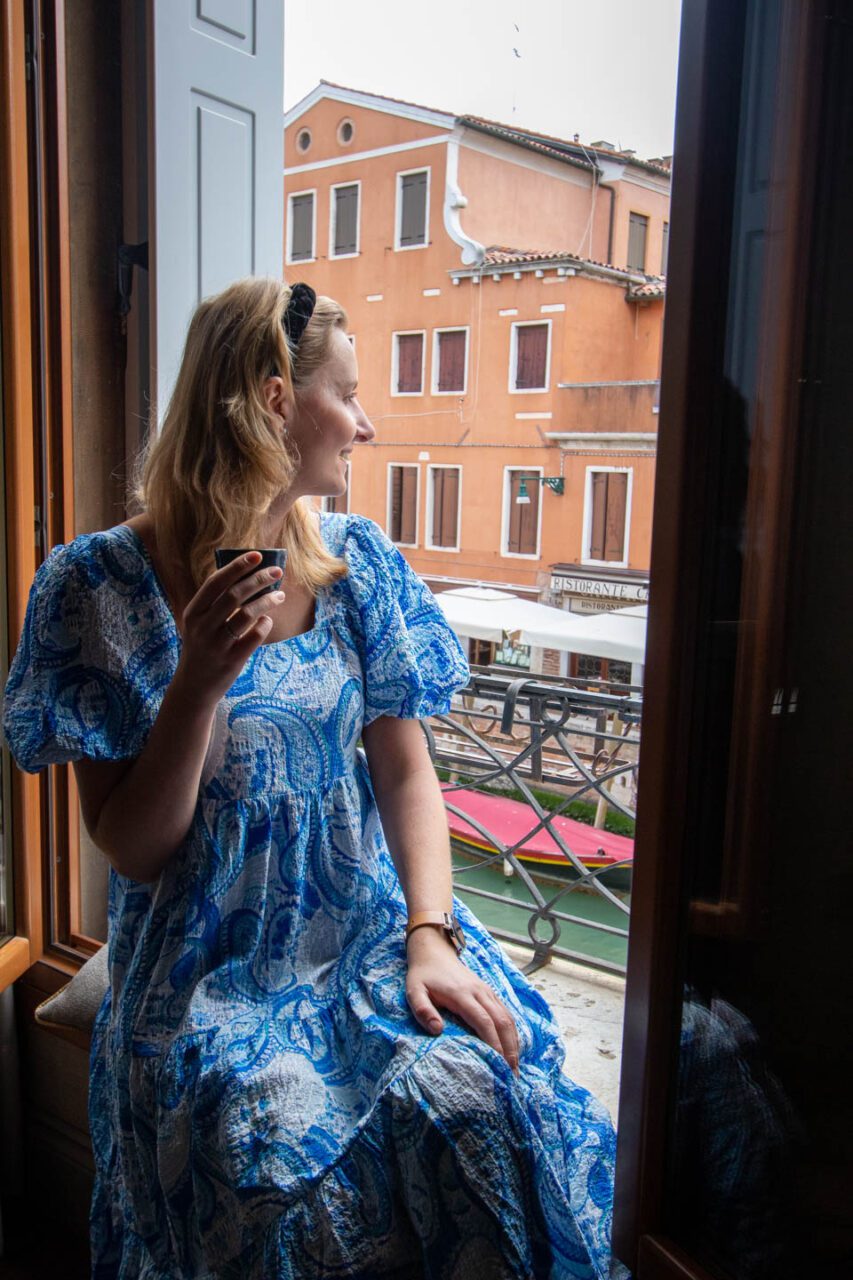
One morning in Venice – no plan, no list, just a random street and a small café where no one spoke English – I remember more clearly than half the attractions from that Amalfi trip.
Not because it was “better.” But because I was fully there.

Travel lighter, even before you leave.
start with something simple.
Download The Minimum Plan – Slow Travel:
How to stop coming back from vacation exhausted
This isn’t about traveling less. I’m not telling you to stay home.
And I’m not asking you to give up your dreams of faraway trips.
I’m inviting you to do one thing:
Before you go, ask yourself what you actually want to take from this trip.
If you keep coming back exhausted – and it happens again and again, across different places, no matter where you go – maybe the problem isn’t travel itself.
Maybe it’s how you plan it. And that’s something you can change.
How do you want to travel next?
✈️ I want to understand why I let go of bucket lists
→ Why I started traveling without rushing
🚐 I’m planning a campervan trip across the USA
→ Van Life USA: 10 Things You Should Know
🗺️ I want to plan a road trip differently
→ How to Plan a USA Road Trip
📖 I want to read more about intentional travel
→ Things I Regret in Travel