
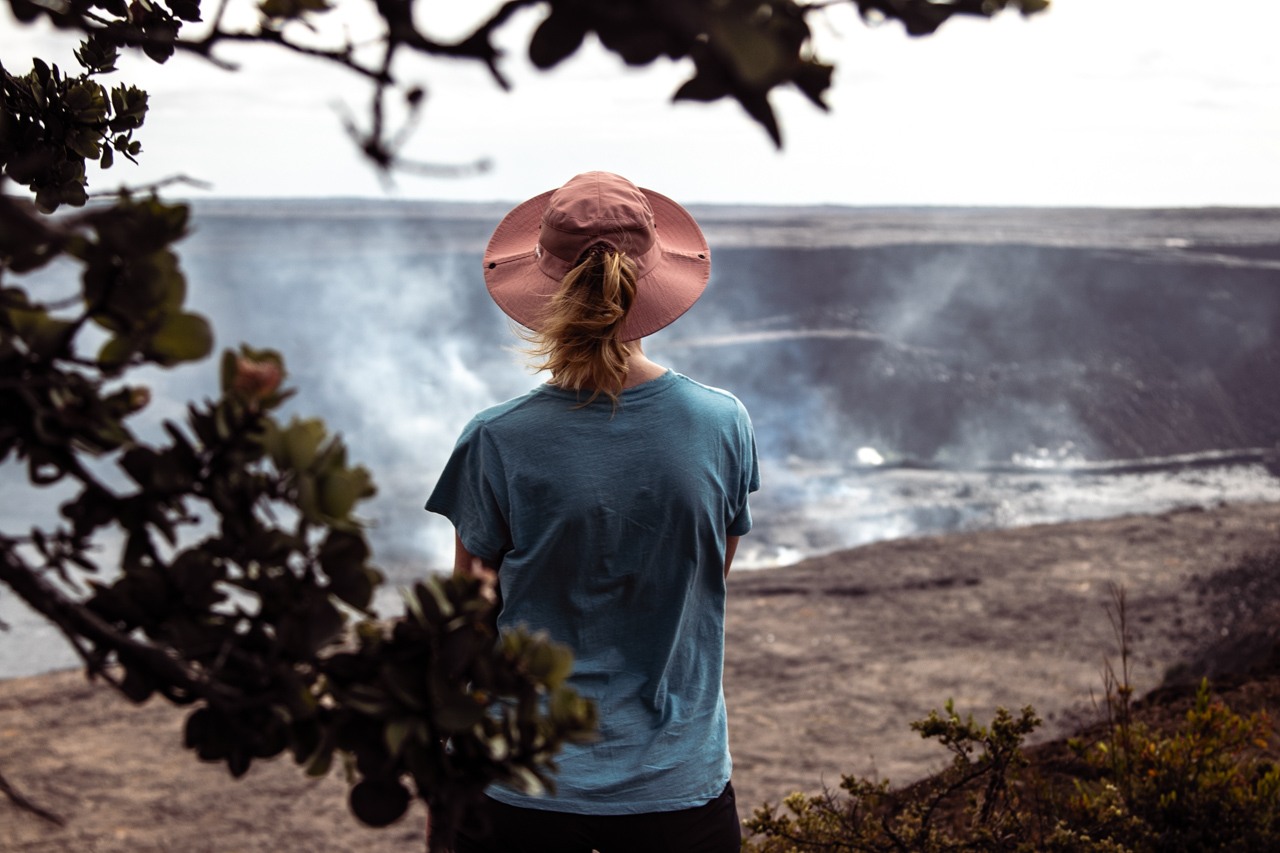
Looking for the best things to do in Hawaiʻi Volcanoes National Park? You’re in the right place.
I spent nearly a week here last November, slowly exploring different parts of the park – and it’s one of those places that stays with you.
This guide is a collection of the spots that felt most worth it. Not just the most popular ones, but the ones that truly make you pause.
From lava tubes hidden underground, to ancient petroglyphs, to the ever-changing landscape shaped by Kīlauea – every place here tells a different story.
It’s raw, quiet, and at times almost surreal.
If you take your time, Hawaiʻi Volcanoes National Park becomes more than just a stop on your itinerary – it becomes an experience you remember long after you leave.
Planning your Hawaii adventure? Check out my comprehensive Hawaii Travel Guide where I answer the 20 most common questions about visiting the islands!
1. Kilauea Iki Trail
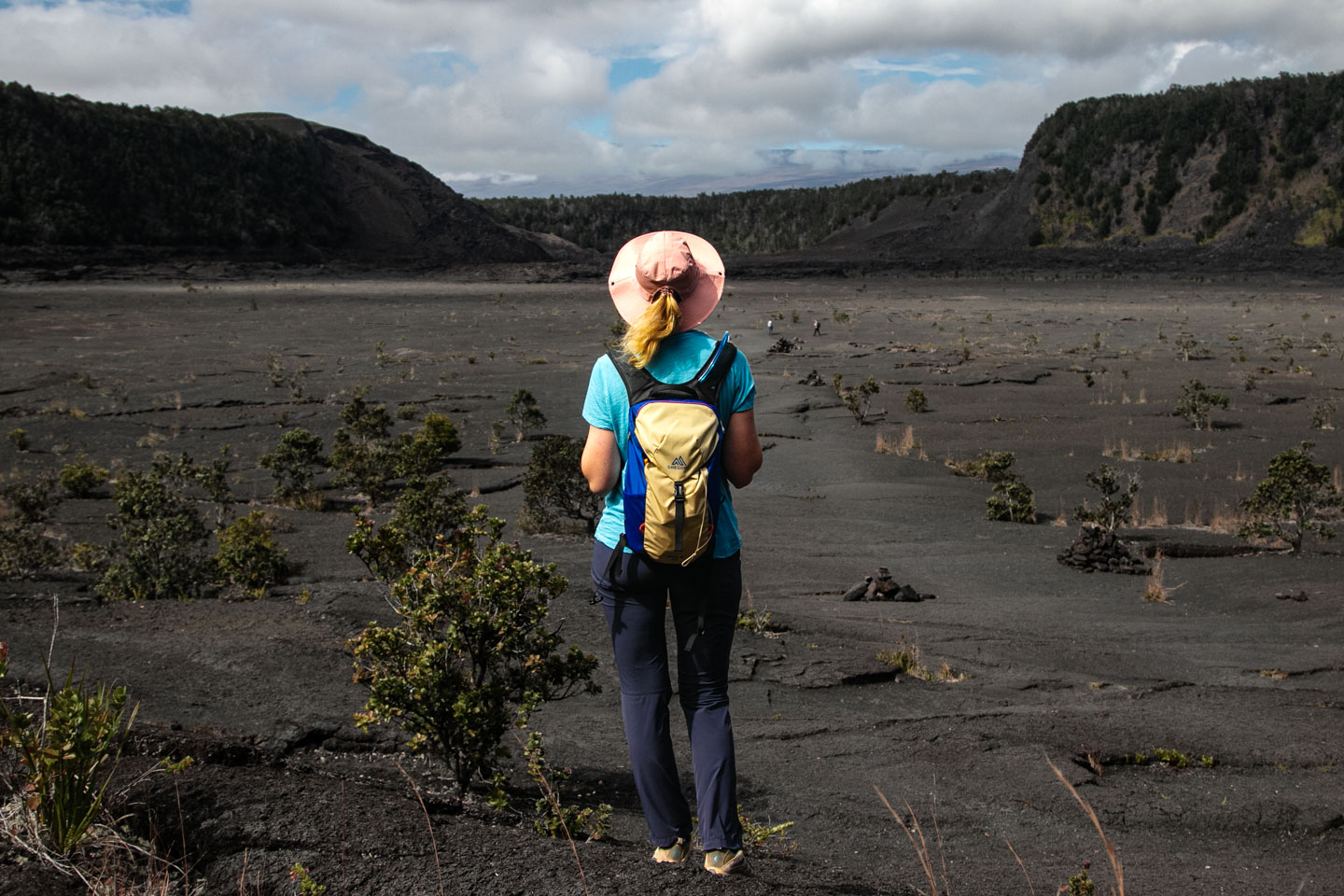
Hiking the Kīlauea Iki Trail is one of the most memorable experiences in the park.
It’s a trail that changes completely as you go. You start in dense, green rainforest – humid, quiet, almost enclosed – and then suddenly step out onto a vast, open lava lake inside the crater.
The contrast is what makes it special.
Walking across the hardened lava feels a little unreal. The surface is uneven, cracked in places, still carrying traces of heat and movement from the past.
It’s not dramatic in an obvious way – but it stays with you.
If you only choose one hike in the park, this is one worth making time for.
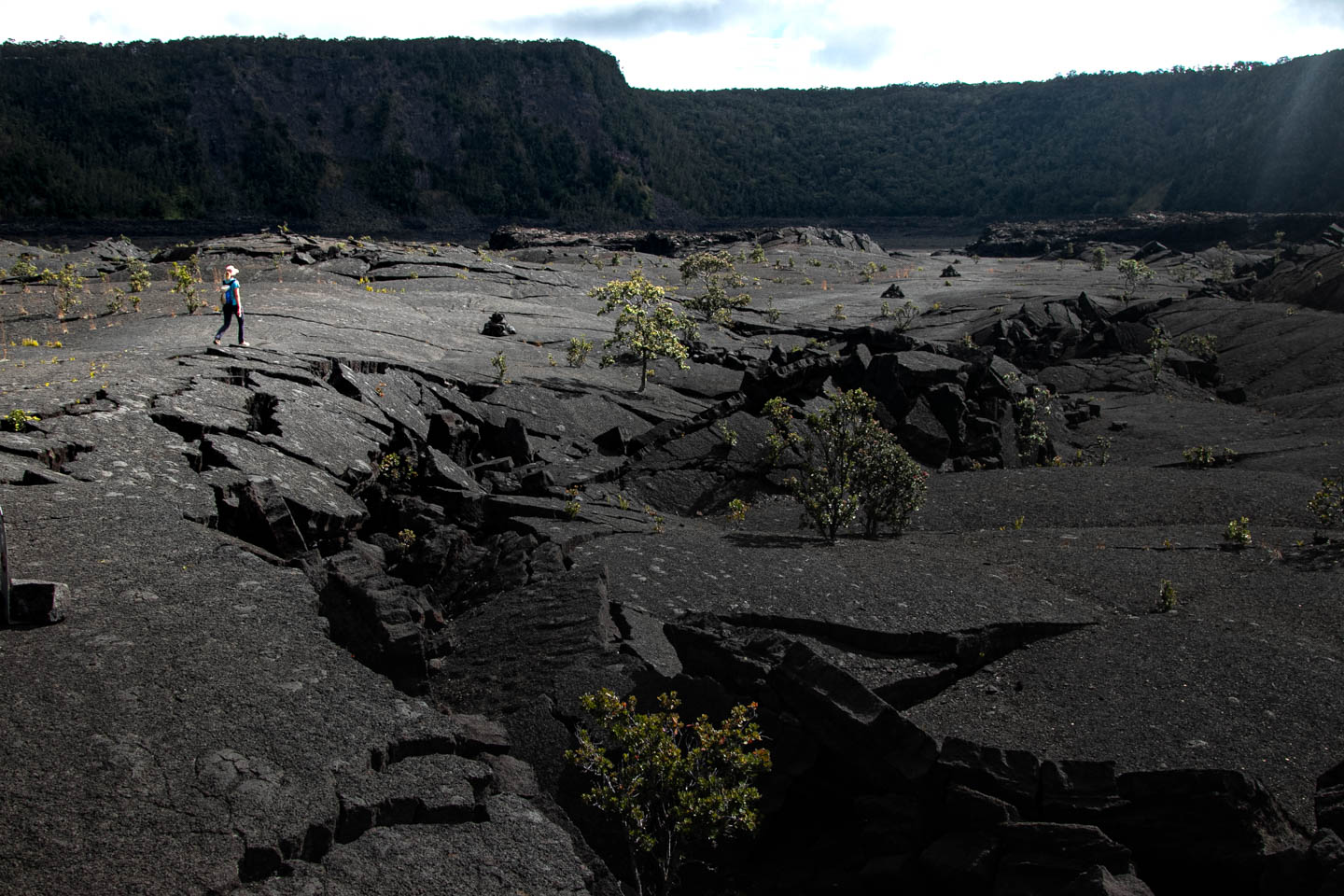
Kīlauea Iki erupted dramatically in 1959, with lava fountains reaching nearly 1900 feet into the air – higher than the Empire State Building.
Today, what’s left is quieter, but still powerful in its own way.
As you walk across the crater, you’ll notice different textures of lava, small crystalline formations catching the light, and the red blossoms of ʻōhiʻa trees growing at the edges – a plant deeply connected to Hawaiian culture.
It’s a place where nature slowly reclaims what was once intense and unpredictable.
If you can, start this hike early in the morning. The air is cooler, the trail is quieter, and the whole experience feels more still before the heat and crowds set in later in the day.
Trail Details
Difficulty: Moderate – a bit challenging in parts, but manageable
Elevation gain: ~400 ft
Distance: 3.3 miles (short loop) or 5.3 miles (longer route)
Time: 2-4 hours, depending on your pace and how often you stop
2. Halema’uma’u Trail
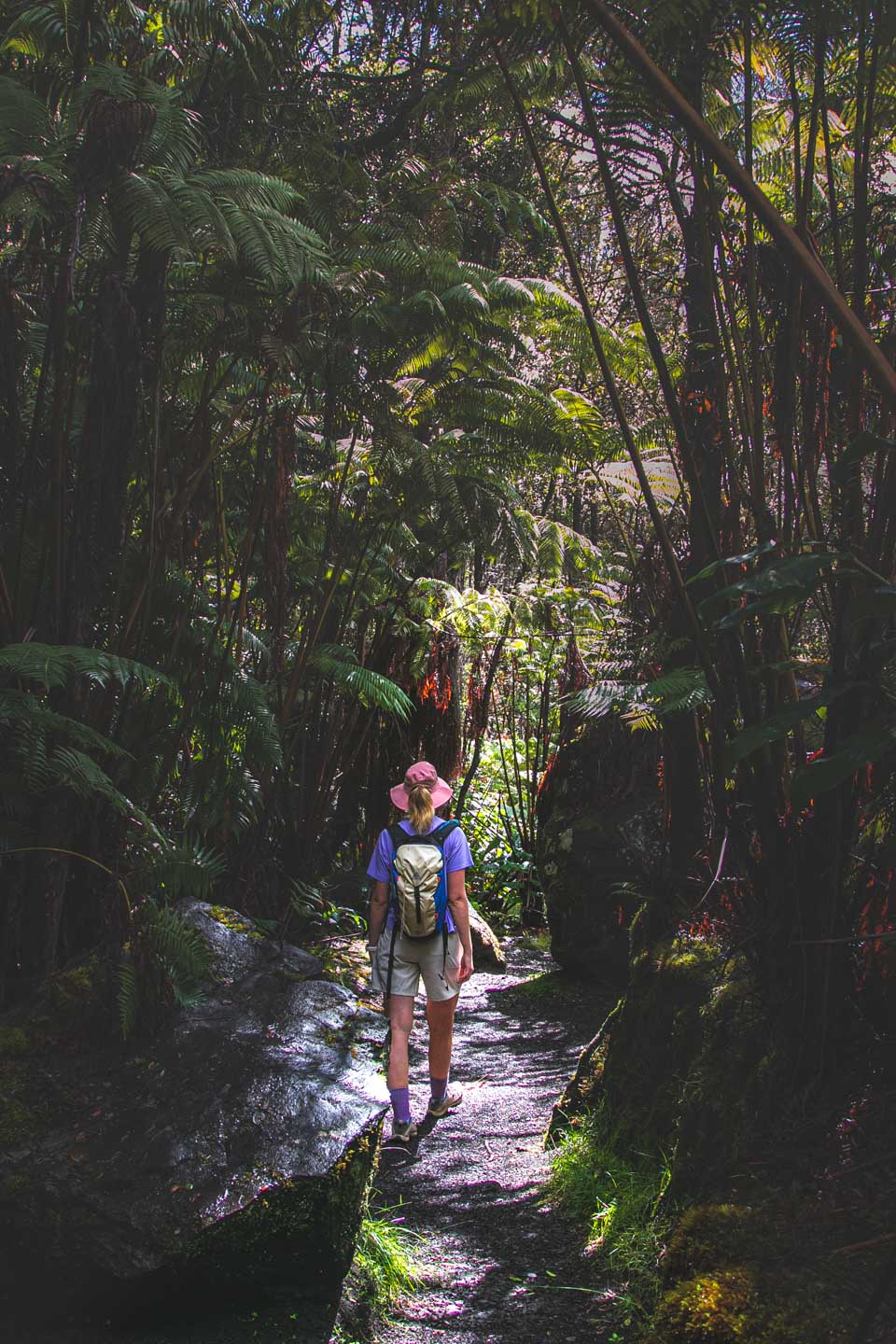
Hiking the Halemaʻumaʻu Trail is one of those experiences that stays with you.
The path leads you through dense, green forest before gradually opening up into the vast space of Kīlauea Caldera. The transition feels almost quiet, but powerful.
At the center lies Halemaʻumaʻu – a crater closely tied to the recent volcanic activity on the island. The landscape here is constantly changing, shaped by eruptions that remind you how alive this place still is.
Kīlauea itself rises to over 4,000 feet and is considered one of the most active volcanoes on Earth. You don’t just see it – you feel it in the scale and stillness of the surroundings.
There’s also a deeper layer to this place. In Hawaiian tradition, Halemaʻumaʻu is home to Pele, the goddess of volcanoes.
Many stories speak of her connection to the land and her relationship with her sister Hiʻiaka – stories that add another dimension to the landscape you’re walking through.
It’s not just a hike, but a place with presence – shaped by both nature and myth.
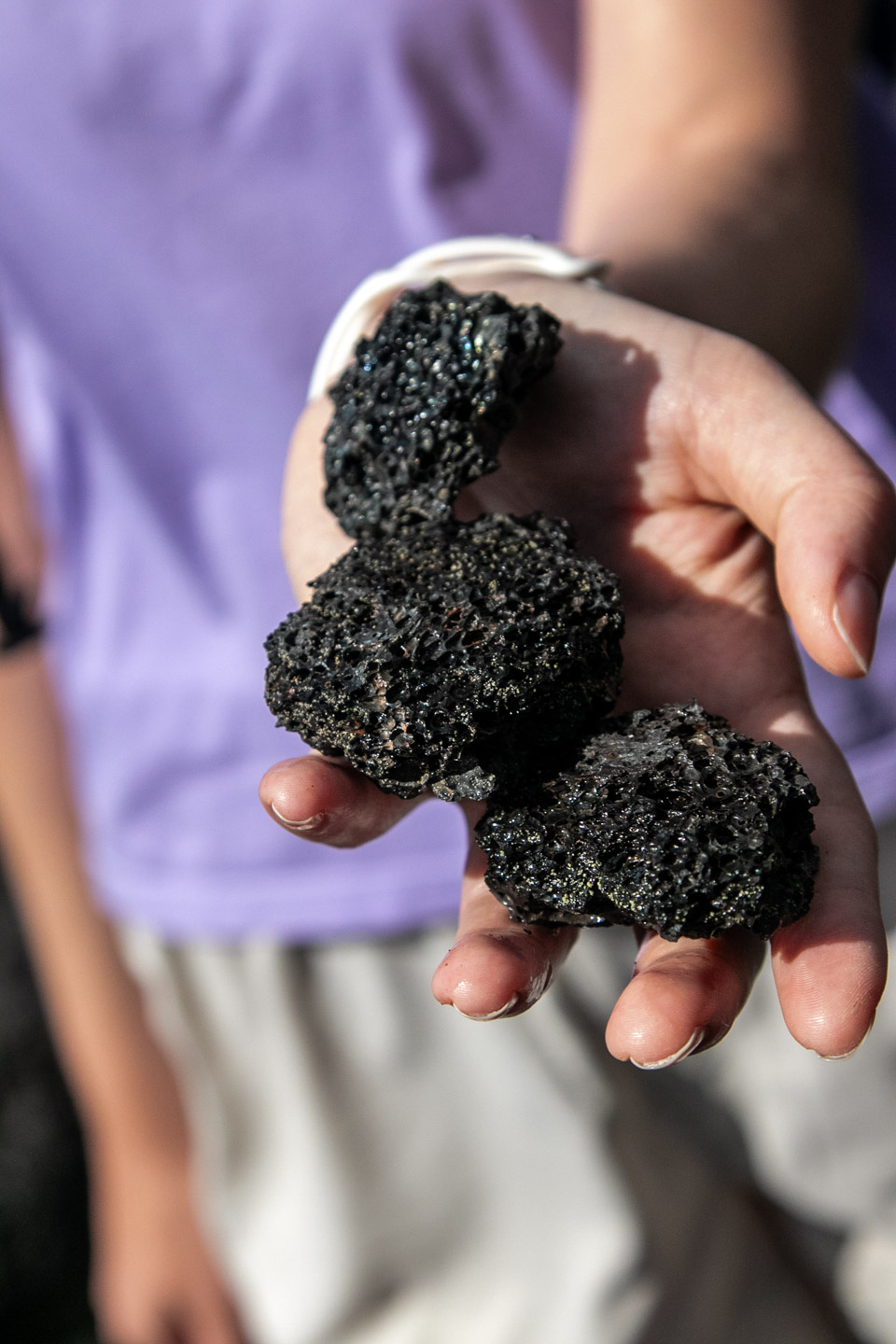
In the past, the Halemaʻumaʻu Trail led all the way down to the lava lake. Early visitors would get surprisingly close to the heat – something that feels almost unreal today.
After the eruption in September 2023, the trail was shortened for safety reasons and now ends at marker 10.
Even with that change, it’s still very much worth doing.
The landscape here feels different than Kīlauea Iki – more open, more raw, shaped by recent activity. It’s one of those places where you’re reminded that the ground beneath you is still changing.
Walking here isn’t just about the view. It’s about being close to something active, something ongoing.
And that’s what makes it memorable.
Trail Details
Difficulty: Moderate – manageable, but you’ll feel it in places
Elevation gain: ~425 ft
Distance: 1.6 miles (short loop) or 2.6 miles (longer route)
Time: 1-2 hours, depending on your pace
3. Thurston Lava Tube Trail
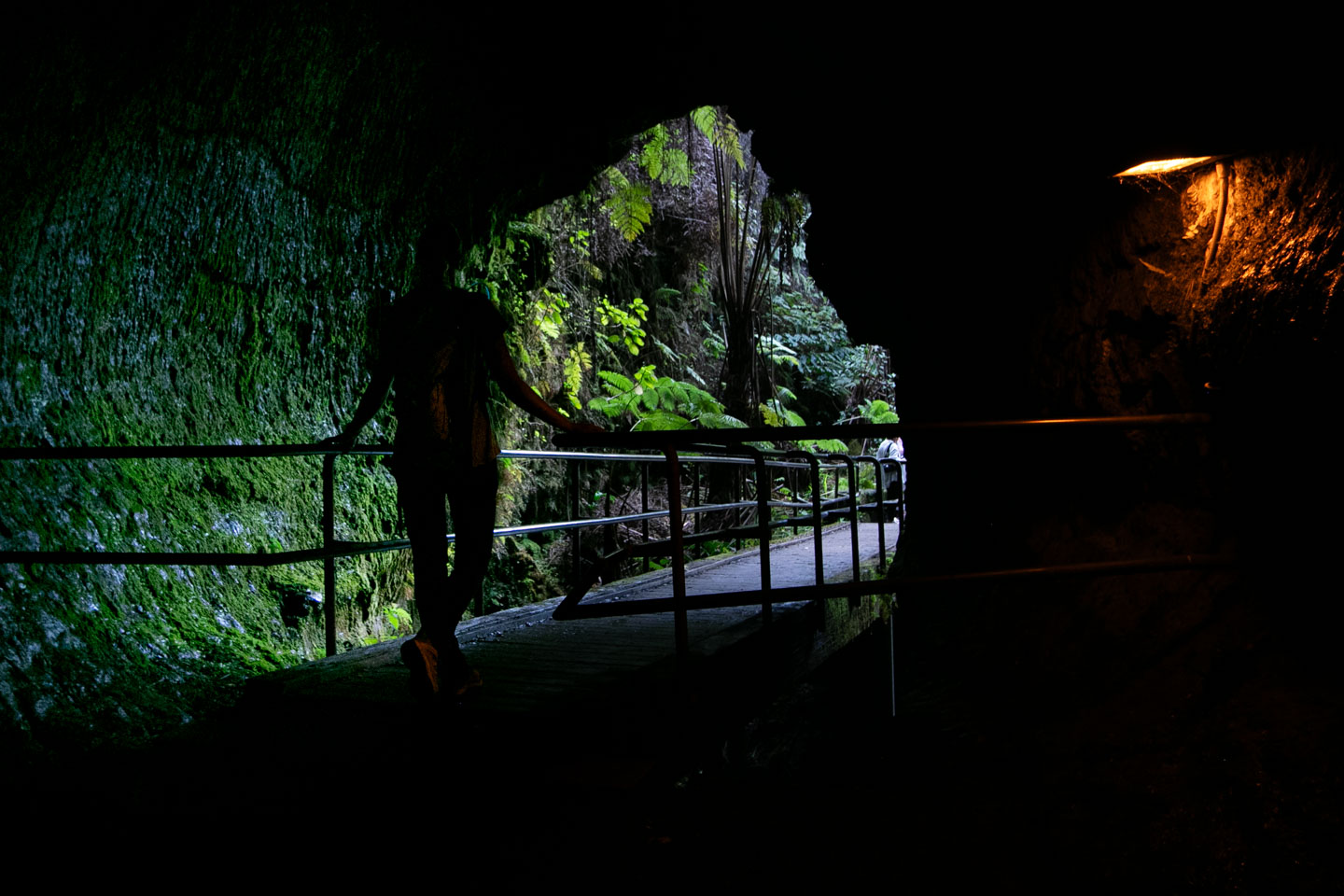
Thurston Lava Tube – also known as Nāhuku – is one of those places you shouldn’t skip in Hawaiʻi Volcanoes National Park.
It’s a natural lava tunnel formed hundreds of years ago, when molten lava flowed beneath the surface, leaving behind this hollow passage as it cooled.
Walking through it feels quiet and slightly surreal. The air is cooler, the light softer, and everything slows down for a moment.
The name Nāhuku is connected to the stalactites that once hung from the ceiling. Most of them are gone now, but the space still carries a sense of depth and history.
It’s a simple stop, but a powerful reminder of how the island was shaped – slowly, layer by layer, by volcanic activity.
And once you step inside, you can feel it.
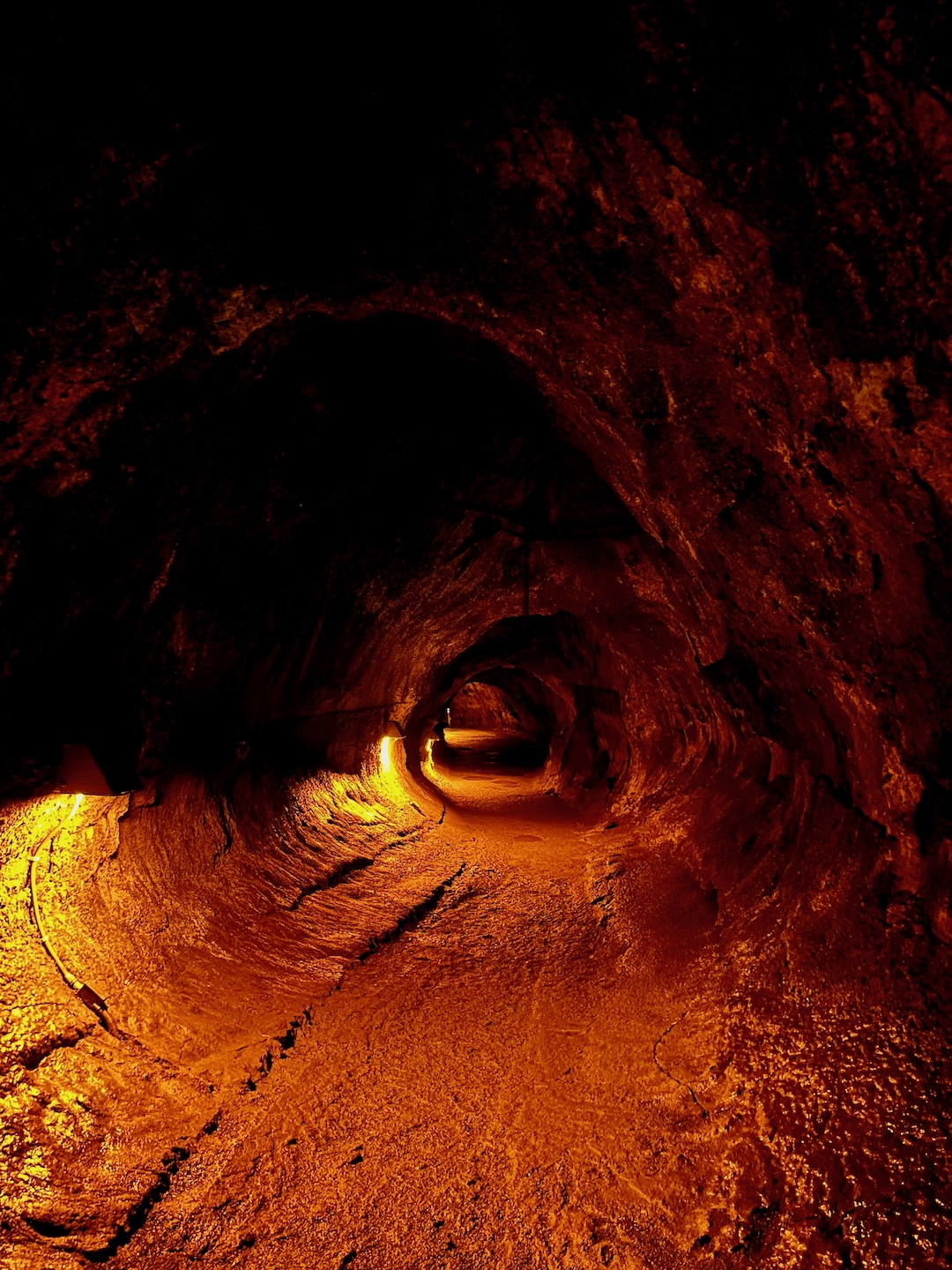
The trail to Thurston Lava Tube is short and easy, which makes it one of the most visited spots in the park.
It leads through a lush rainforest, full of dense greenery and the sound of birds – a quiet contrast to the volcanic landscape you’ve just seen.
Inside the cave, there’s soft lighting that makes it easy to walk through, while still keeping that slightly mysterious atmosphere.
If you can, come early in the morning or later in the evening, when it’s quieter. The experience feels completely different without the crowds.
And if you stay a little longer, you’ll notice how dark it really gets once you step away from the light – a kind of darkness that’s hard to find anywhere else.
If you plan to visit after sunset, it’s worth bringing a flashlight and taking your time.
Trail Details
Difficulty: Easy – suitable for almost everyone
Elevation gain: ~62 ft
Distance: 0.4 miles (round trip)
Time: ~20-30 minutes
4. Keanakako’i Crater Trail
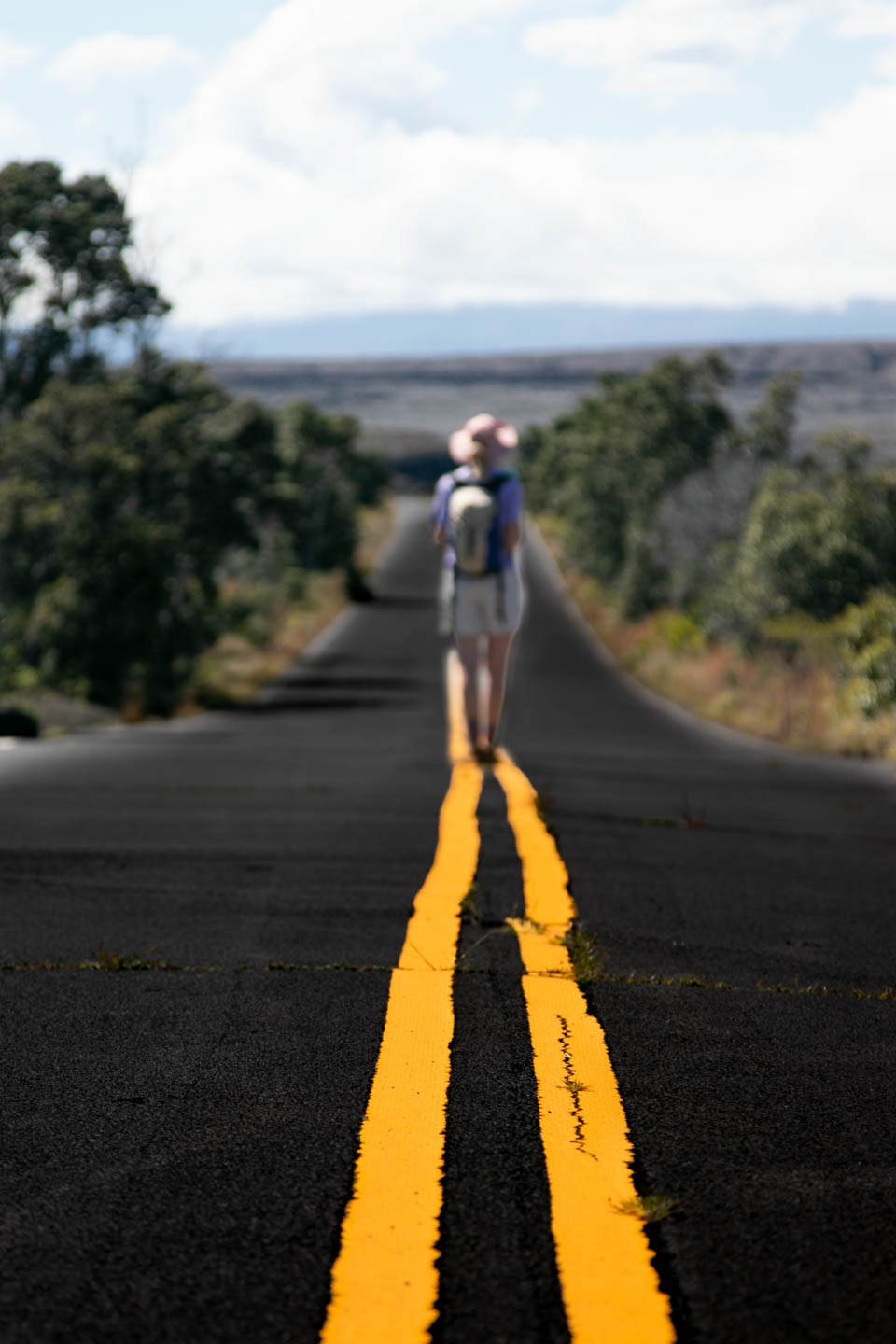
If you’re curious about Kīlauea and how the landscape here continues to change, the Keanakākoʻi Trail is one of the most interesting places to experience it.
The trail follows a section of the former Crater Rim Drive – a road that once circled the caldera, before parts of it were destroyed during the 2018 eruption.
Walking here, you can still see what remains of the road, gradually overtaken by lava and reshaped by volcanic activity. It’s a quiet reminder of how quickly things can shift in this landscape.
Today, the area is accessible only on foot or by bike, which makes the experience feel more open and less crowded.
It’s not just about the destination – but about seeing, step by step, how the island is still being formed.
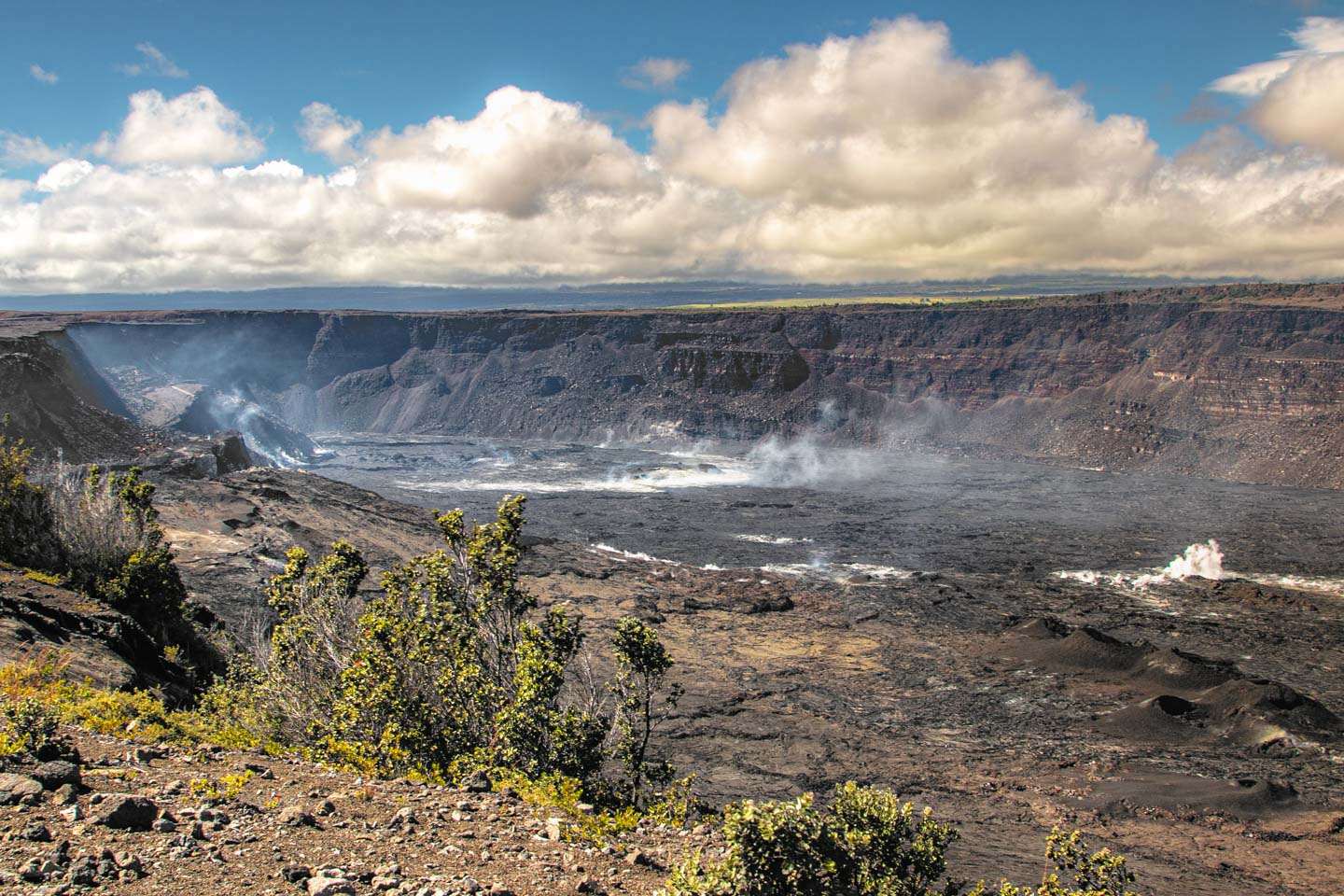
As you follow this former road, the landscape starts to feel almost surreal.
Along the way, you’ll pass Keanakākoʻi Crater – a place with a long history. It was once used by Native Hawaiians as a quarry for stone tools, before later being partially covered by lava flows. Layers of time, all visible in one place.
Keep an eye out for nēnē, the Hawaiian goose. They’re protected and still relatively rare, but sometimes you can spot them near the trail, moving quietly through the landscape.
And then there’s the view.
At the end, you reach a viewpoint overlooking Halemaʻumaʻu. It’s wide, open, and hard to fully take in at once. The scale of it slows you down – and for a moment, everything else fades a little.
It’s one of those views that stays with you long after you leave.
Trail Details
Difficulty: Easy
Elevation gain: ~226 ft
Distance: 2 miles (round trip)
Time: 1-1.5 hours
5. Ha’akulamanu Trail
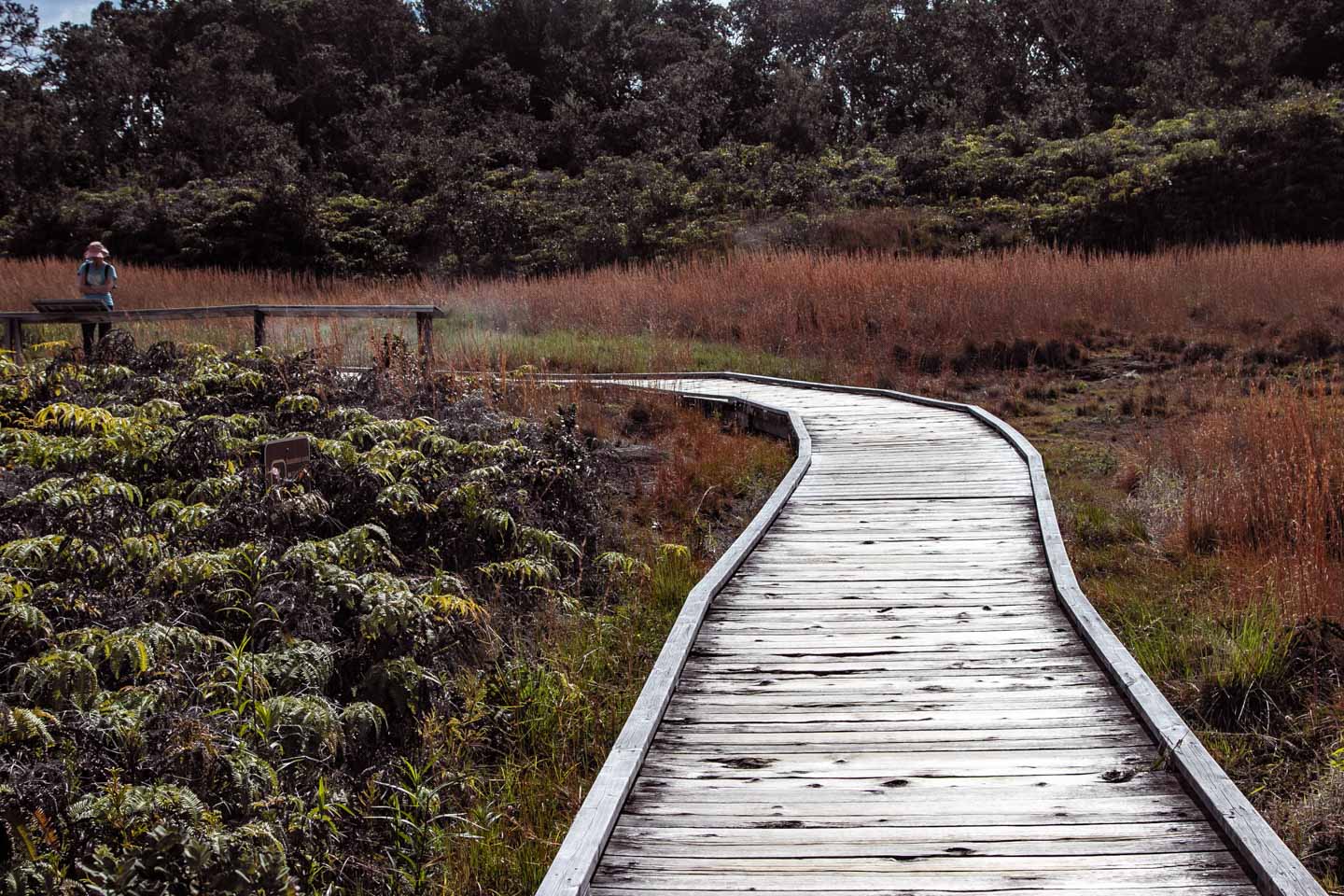
If you’re exploring Hawaiʻi Volcanoes National Park, the thermal area known as Haʻakulamanu (Sulphur Banks) is a short stop that’s worth making.
The landscape here feels very different – lighter in color, with mineral deposits and steam rising from the ground. It’s one of the places where you can clearly see how active the volcanic system still is.
Some of the steam comes from groundwater heated beneath the surface, while other vents release sulphur gases, which give the area its distinct smell.
It’s not a place to linger too long – but it’s a quiet reminder of what’s happening below your feet.
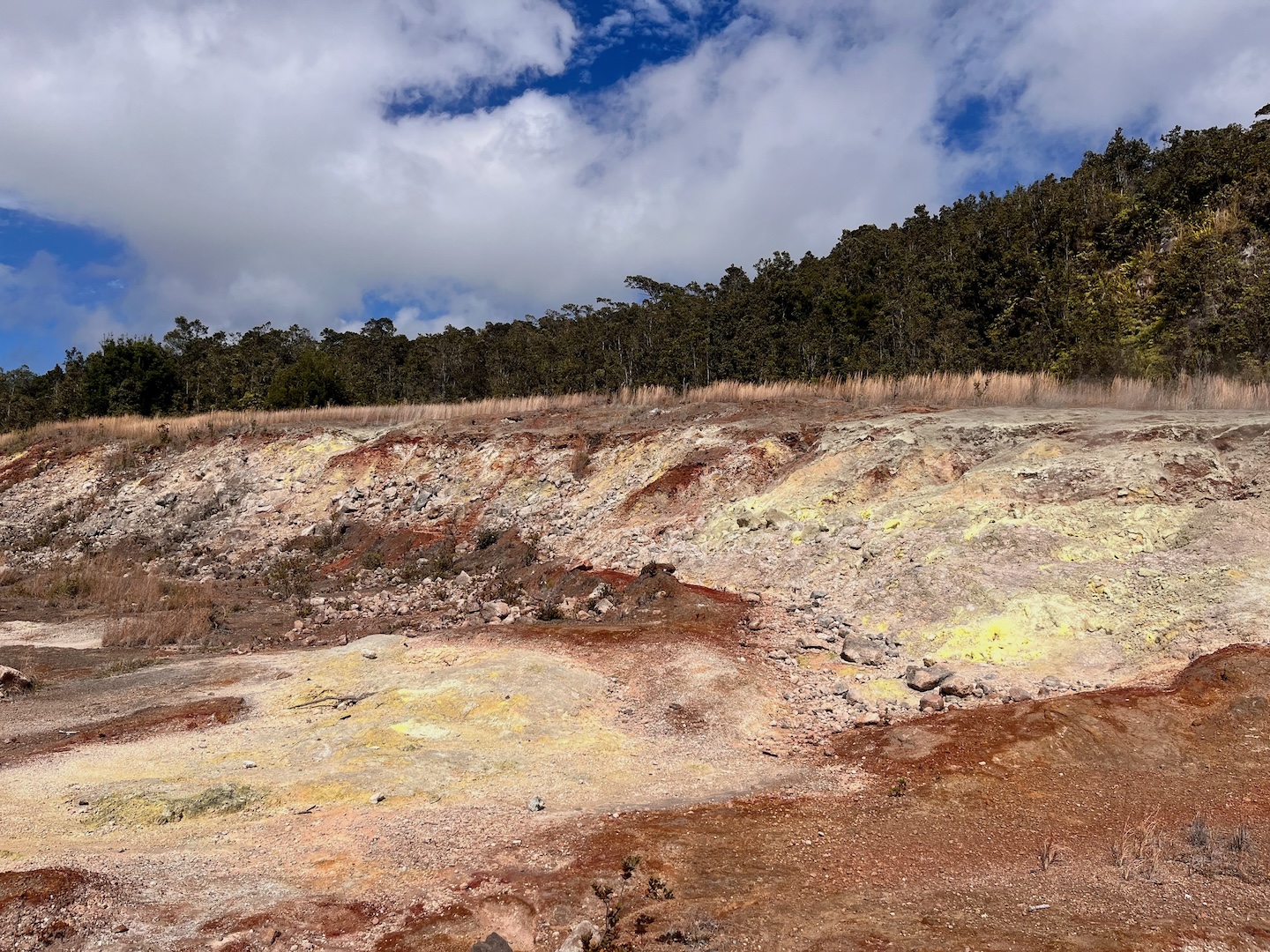
The gases rising from deep within the volcano slowly transform the landscape around them. Over time, they break down lava into soft clay and create mineral deposits in subtle shades of yellow, white, and green.
It’s a small area, but very distinctive.
You explore it along a short wooden boardwalk, which makes it easy to walk through while staying at a safe distance from the vents.
Along the way, there are a few information signs that help you understand what you’re seeing – and how these formations come to life.
The smell of sulphur is noticeable, especially on warmer days, and adds to the sense that this place is still very much active.
It’s a brief stop, but one that stays in your memory – more for the feeling than the time spent there.
Trail Details
Difficulty: Easy – suitable for almost everyone
Elevation change: Minimal (about 91 feet)
Distance: Around 1.2 miles from the Visitor Center
Time: About 30 minutes, or longer if you stop along the way
6. Mauna Ulu Trail
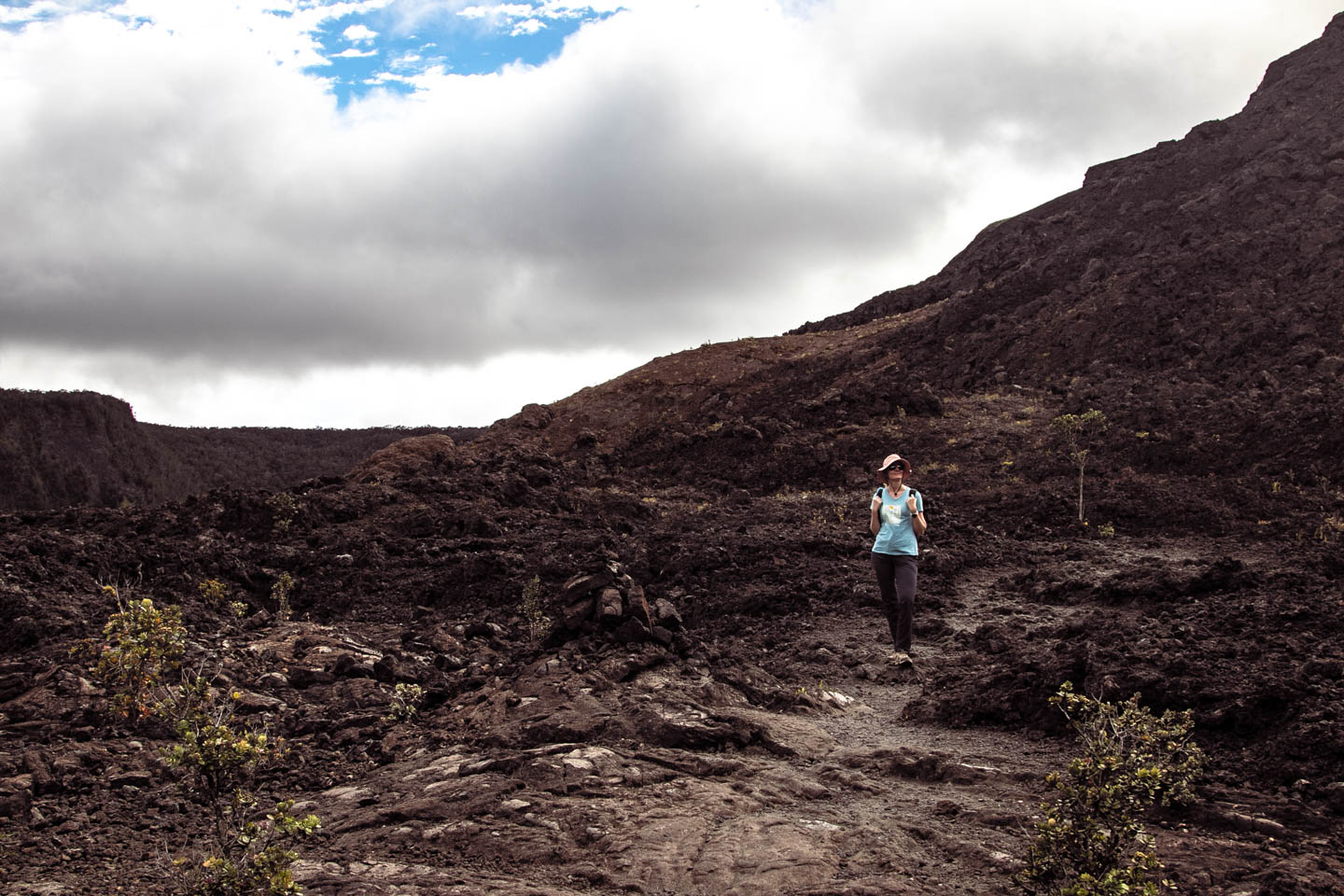
Among all the places to explore in Hawaiʻi Volcanoes National Park, the Mauna Ulu Trail feels a bit more hidden – and that’s exactly what makes it special.
Mauna Ulu itself is a relatively young volcano that erupted between 1969 and 1974, reshaping the surrounding landscape with steady lava flows. Its name means “growing mountain” – a quiet reminder of how this land is still evolving.
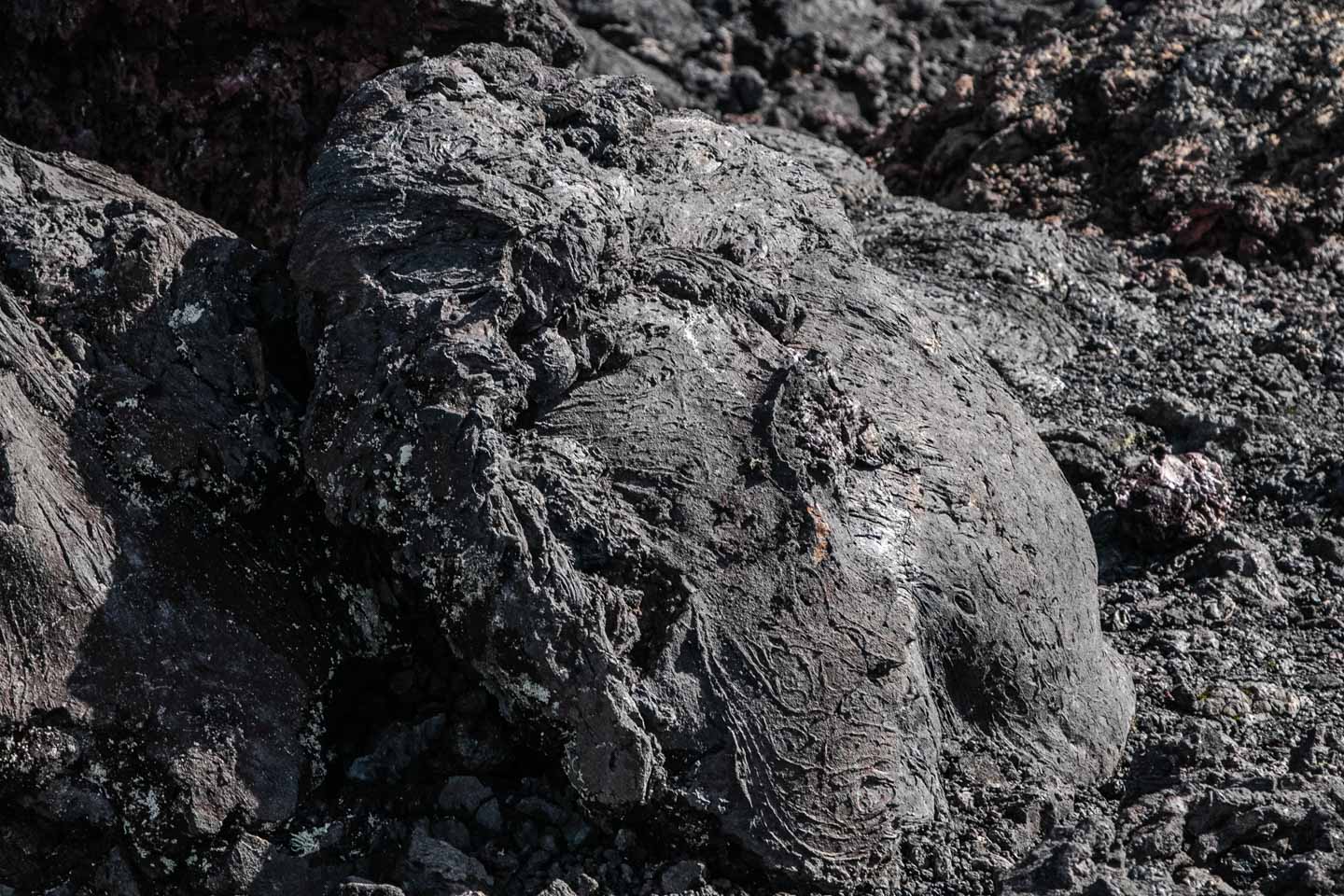
The trail leads you through a raw, almost otherworldly terrain. Vast lava fields stretch in every direction, broken only by unusual formations created as the lava cooled and hardened over time.
One of the most fascinating sights are the so-called lava trees – natural molds formed when hot lava surrounded tree trunks and preserved their shape. What’s left feels both fragile and surreal, like a memory captured in stone.
It’s not the most popular trail in the park, but that’s part of its beauty. There’s more space here. More silence. More time to take it all in.
Most of the trail is fairly gentle, but toward the end you reach the final stretch – the climb up the Puʻuhuluhulu volcanic cone.
It’s short, but you definitely feel it in your legs.
At the top, everything opens up. You’re standing above a vast, raw landscape shaped by lava – with wide views over Mauna Ulu and the surrounding fields.
On a clear day, you can spot Mauna Loa and Mauna Kea in the distance, and sometimes even a faint line of the Pacific on the horizon.
It’s quiet up there. Spacious. The kind of view that makes you pause for a moment before reaching for your camera.
Trail Details
Difficulty: Moderate in parts, especially the final climb
Elevation gain: About 210 feet
Distance: Around 2.5 miles round trip
Time: 1-2 hours (longer if you like to take it slow)
7. Devastation Trail
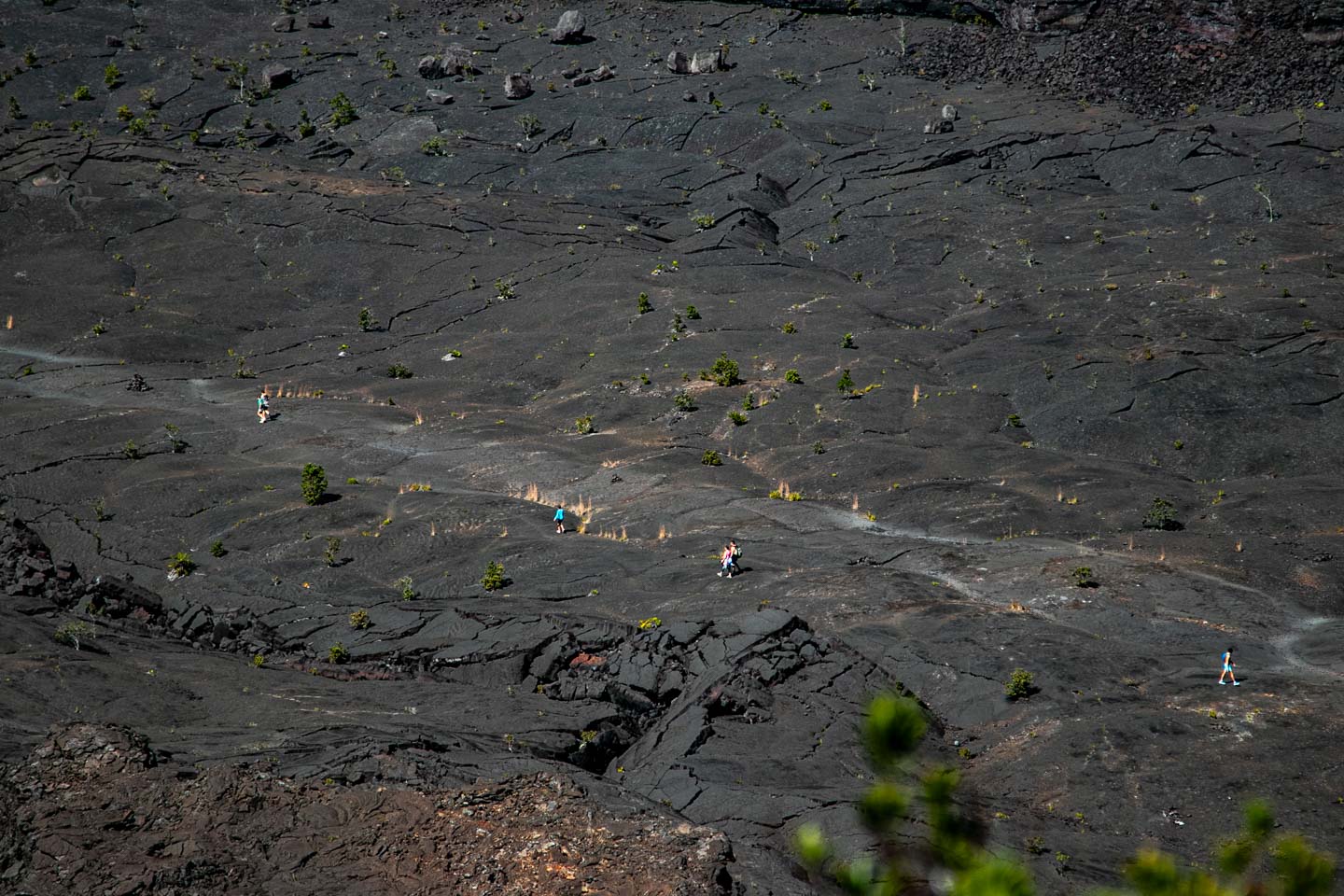
No visit to Hawaiʻi Volcanoes National Park feels complete without a walk along the Devastation Trail.
This short path tells a powerful story – one of sudden change and quiet recovery.
Before the 1959 eruption of Kīlauea Iki, this area was covered in dense rainforest. Today, it looks completely different. The eruption buried everything under layers of volcanic material, leaving behind an open, almost barren landscape.
As you walk the trail, you start to notice small signs of life returning – young plants slowly reclaiming the ground, growing through what once seemed completely destroyed.
It’s not the most dramatic trail in terms of distance or difficulty. But emotionally, it’s one of the most striking.
A reminder of how quickly nature can transform – and how patiently it begins again.

Along the trail, you’ll come across some of the most delicate volcanic formations – known as Pele’s hair and Pele’s tears.
Pele’s hair looks like fine, golden strands of volcanic glass, stretched by the wind as lava cooled. They’re incredibly light and fragile – and sharp, so it’s best to admire them without touching.
Pele’s tears, on the other hand, are small droplets of hardened lava, formed mid-air before they hit the ground.
Both are named after Pele, the Hawaiian goddess of volcanoes – a quiet reminder of the forces that shaped this landscape.
As you continue, the trail opens up to views of Puʻu Puaʻi, a cinder cone created during the same eruption. Its shape stands out against the surrounding terrain, almost sculptural in its simplicity.
One of the best things about this walk is how accessible it is. The path is paved and easy to follow, making it suitable for almost everyone – whether you’re visiting with kids, taking it slow, or just looking for a gentle stop between longer hikes.
Trail Details
Difficulty: Easy
Elevation change: Minimal (around 88 feet)
Distance: About 1 mile loop
Time: 30-60 minutes
8. Scenic Drive Along Chain of Craters Road

Chain of Craters Road is one of those drives you don’t rush.
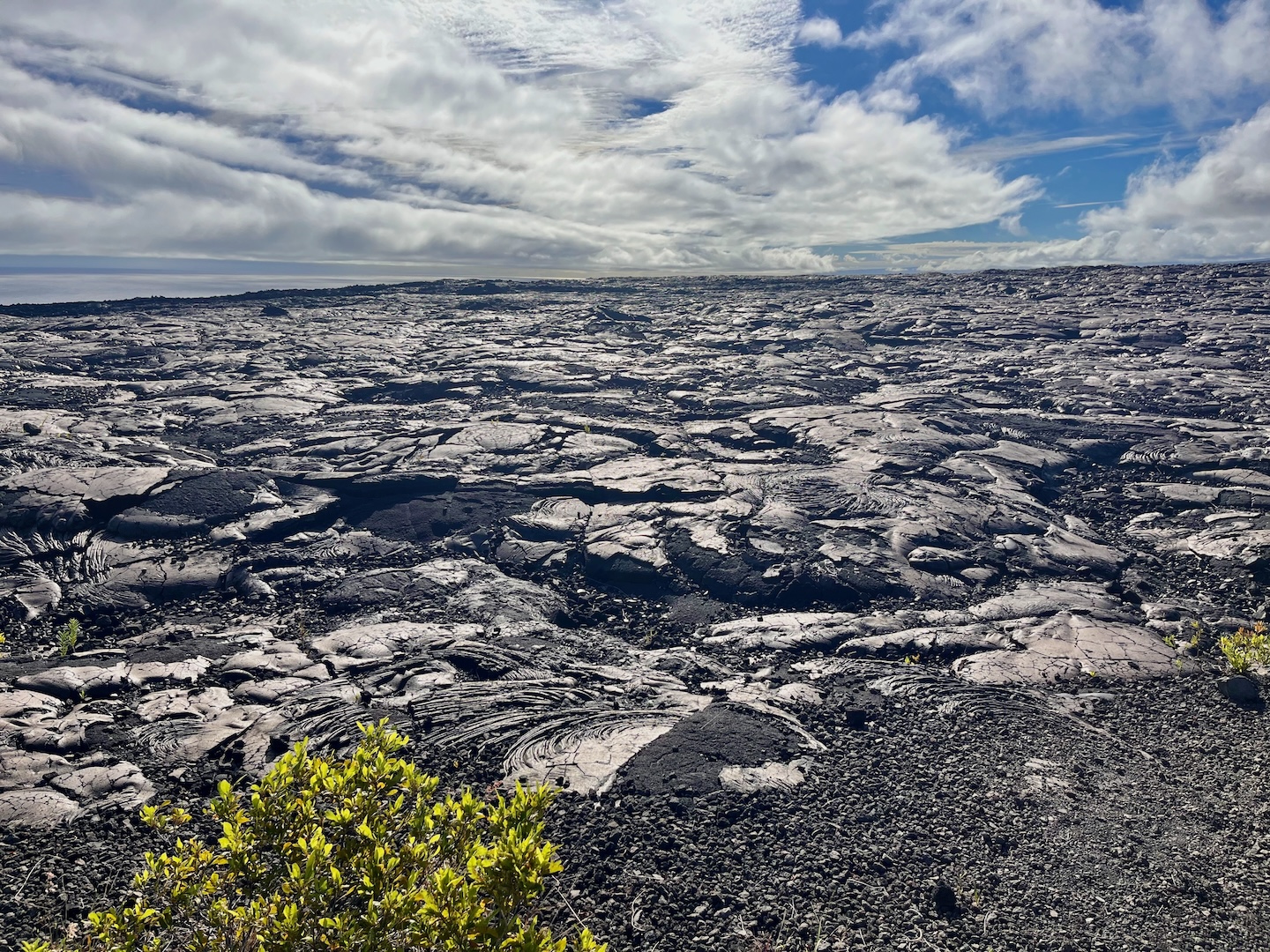
This 18.8-mile route slowly unfolds through a landscape shaped by time, lava, and silence. As you descend toward the coast, the scenery keeps changing – from higher elevations to vast lava fields stretching in every direction.
The colors shift between deep blacks, soft browns, and muted reds, depending on the age of the flows. Some areas feel raw and recent, others already touched by time.
It’s not just a scenic road – it’s a journey through different chapters of the island’s volcanic history. You can see it in the textures, the layers, the way the land seems to tell its own story.
There are plenty of pull-offs along the way, and it’s worth stopping often. Not just for photos, but to take in the scale of it all.
I ended up spending much longer here than planned – and it never felt rushed.
As you make your way along Chain of Craters Road, there are a few stops that are truly worth slowing down for.
Pauahi Crater is one of them – a quiet, expansive crater shaped by multiple eruptions. Standing at its edge, it’s hard to imagine the force that created it.
A little further along, Kealakomo Overlook opens up to one of the most beautiful views on this route. Endless lava plains stretch toward the ocean, with almost no signs of human presence.
I stopped here for lunch – and ended up just sitting, watching the landscape instead.
Another fascinating stop is Muliwai a Pele, where you can see the paths once carved by flowing lava. These channels feel almost like frozen rivers – a reminder of how fluid this land once was.
Nearby, the Mauna Ulu lava fields (from the 1969-1974 eruptions) still carry that raw, textured look, as if time moves differently here.
And then, at the very end, you reach the coast.
Black volcanic rock meets the deep blue of the Pacific – a sharp, beautiful contrast that feels like a natural conclusion to the journey.
It’s not a dramatic ending. More like a quiet one.
9. Pu’uloa Petroglyphs Trail
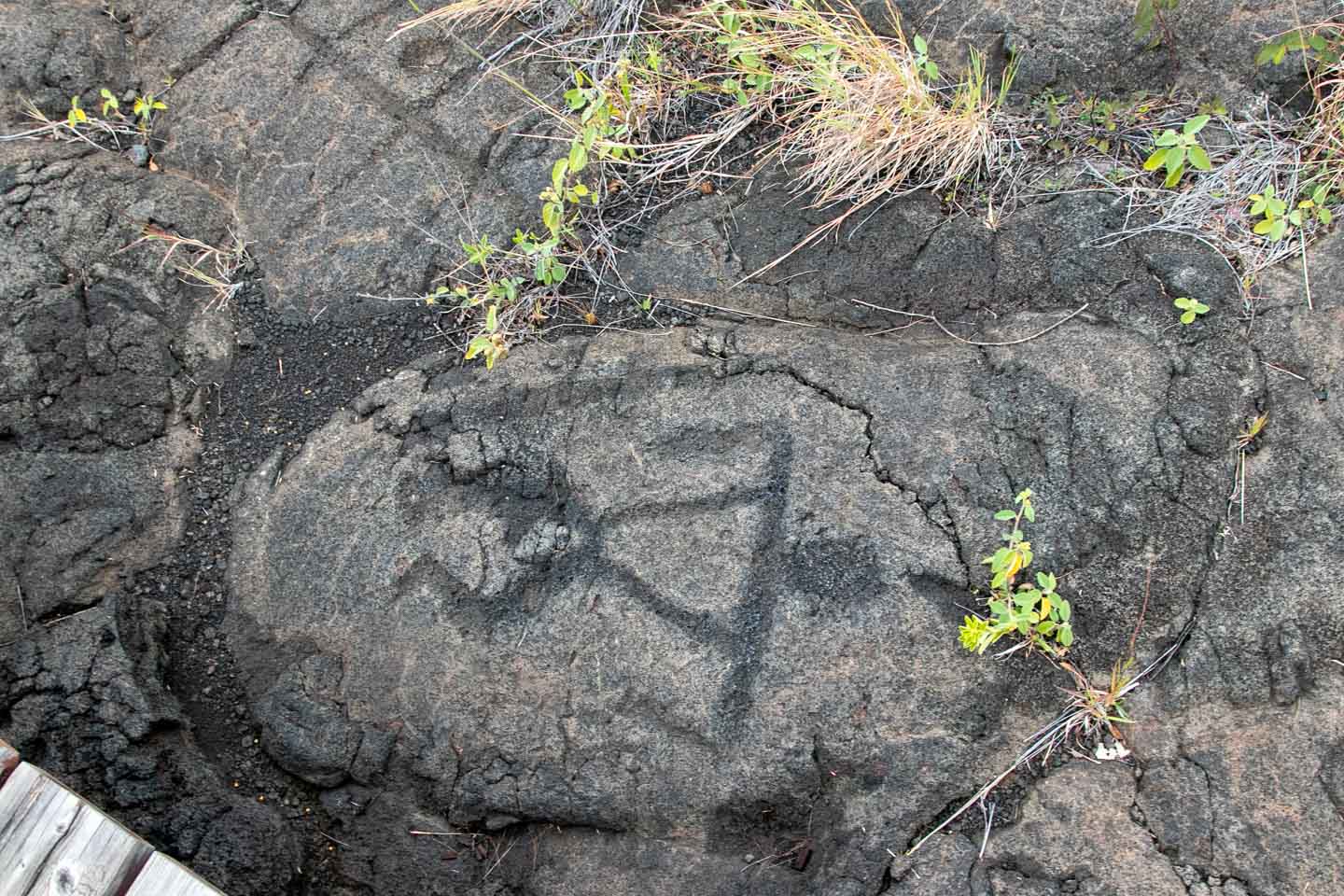
Hawaiʻi Volcanoes National Park is not only about lava and craters. Hidden within its landscape are places that feel much older – and much quieter.
One of them is the Puʻuloa Petroglyph Field, reached by a gentle walk across a vast pāhoehoe lava field – smooth, almost wave-like in texture.
Along the way, the ground begins to change. Small carvings start to appear in the stone.
And then more. And more.
This area holds around 23,000 petroglyphs, making it one of the largest collections in Hawaiʻi. Many of them are centuries old, created by Native Hawaiians as part of deeply personal and cultural traditions.
You’ll see simple shapes, lines, and symbols – some representing journeys, others marking births or important moments.
It’s not a place for rushing or ticking off a list.
It’s a place to slow down, walk gently, and observe.
The kind of place that stays with you – not because of how it looks, but because of what it carries.
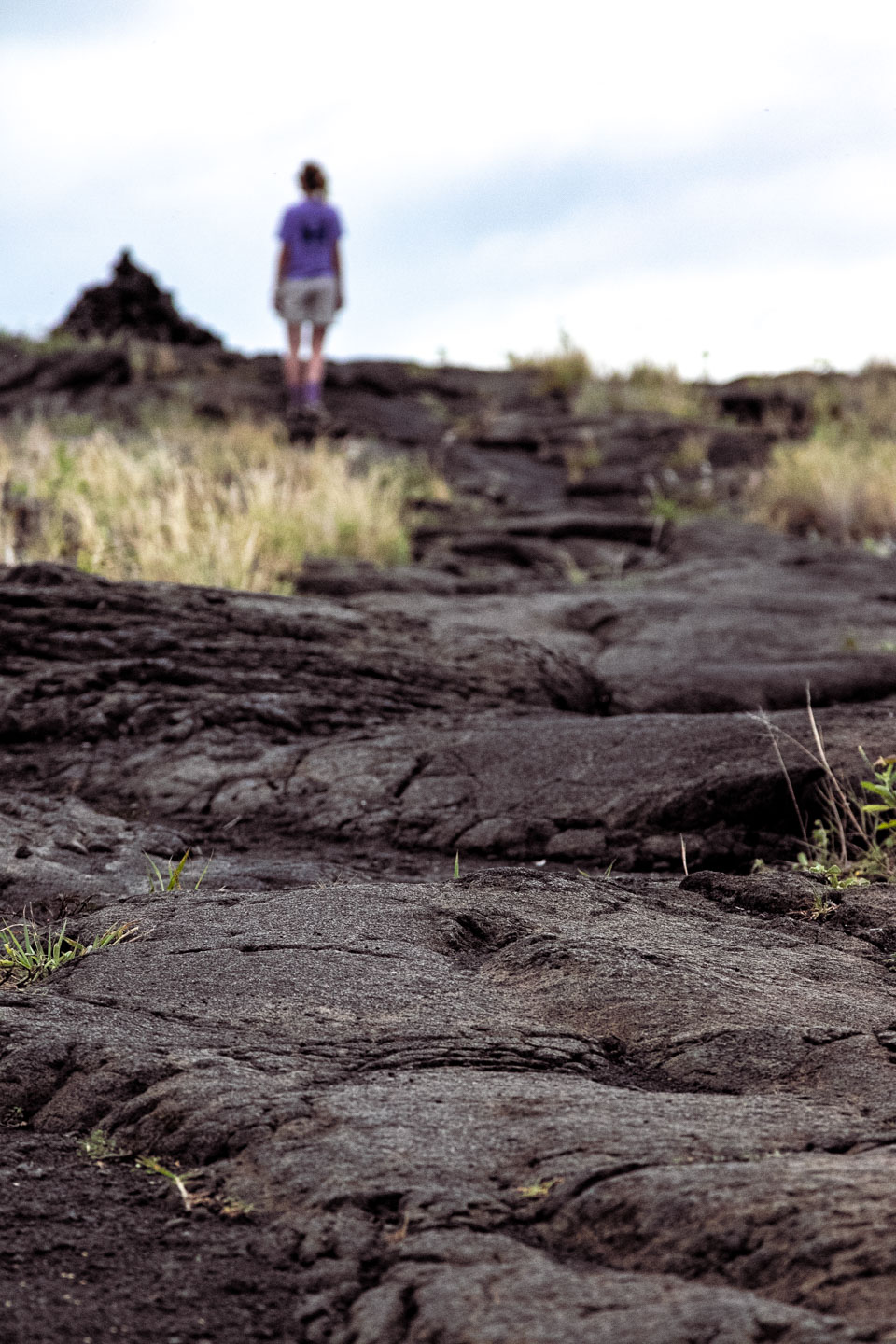
The petroglyphs depict fragments of everyday life – human figures, animals, and symbols whose meanings are still not fully understood.
Many of them can be viewed from a designated platform, which helps protect the area while still allowing you to take it in slowly.
Walking through this landscape feels different from the rest of the park. Quieter. More reflective.
There’s a sense that these markings are not just decoration, but something deeply personal – traces of people who lived here long before.
It’s one of those places where you naturally slow down, without even thinking about it.
Even my husband – who usually avoids anything that feels “too touristy” – lingered here longer than expected.
And that probably says the most.
Trail Details
Difficulty: Easy
Elevation change: Minimal (around 36 feet)
Distance: About 1.4 miles round trip
Time: 30-60 minutes, depending on how much time you spend exploring
10. Holei Sea Arch
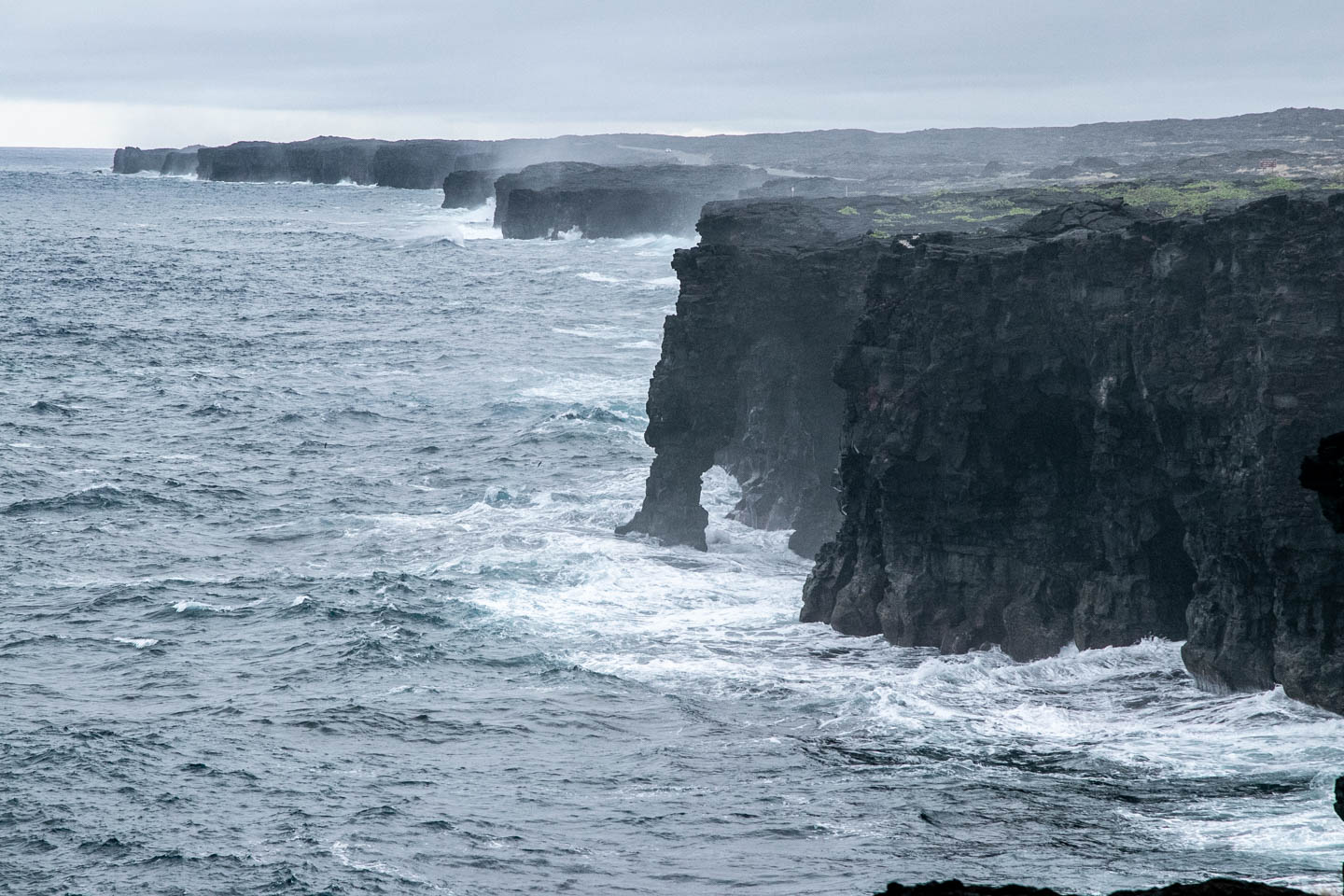
Last, but not least, is the Hōlei Sea Arch – a place where the island meets the ocean in the most dramatic way.
This natural rock arch rises about 90 feet above the water, shaped over time by wind and waves. It feels both solid and temporary at the same time – a reminder that even stone is always changing here.
Below, the Pacific crashes against the dark volcanic cliffs, creating a constant rhythm you can hear long before you reach the viewpoint.
It’s a popular stop, but even with other people around, there’s something grounding about standing there for a moment and watching the ocean move.
The contrast is striking – deep blue water against black lava rock.
A quiet, powerful ending to the drive.
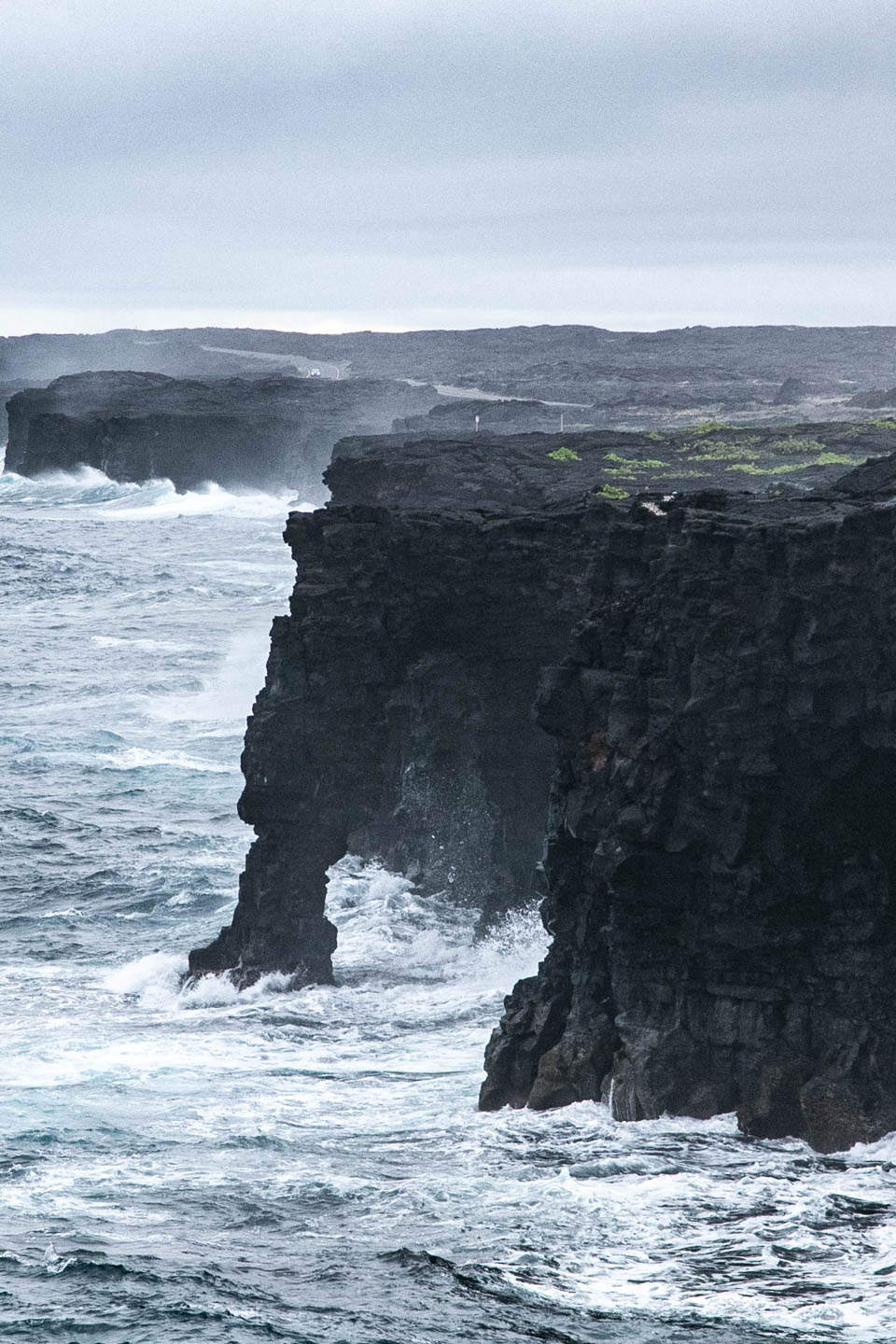
The arch is formed from basalt – dark volcanic rock that gives it that deep, almost sculptural look.
But it’s not permanent.
The ocean is slowly reshaping it, wave after wave. One day, the arch will collapse – and become part of the coastline again. It’s a quiet reminder that this landscape is never still.
You can view it from a designated lookout just past the end of Chain of Craters Road, about 1,000 feet beyond the gate.
It’s best to stay behind the barriers and take it in from there.
Not everything here is meant to be approached closely – some places are better experienced with a bit of distance.
And maybe that’s part of what makes them feel so powerful.
Travel lighter, even before you leave.
start with something simple.
Download The Minimum Plan – Slow Travel:
Final Thoughts on Things to Do in Hawaiʻi Volcanoes National Park
Hawaiʻi Volcanoes National Park is one of those places that stays with you long after you leave.
Not just because of the landscapes – though they are unforgettable – but because of how it makes you feel while you’re there.
There’s something grounding about walking across old lava fields, standing near an active crater, or simply sitting in silence, surrounded by a land that is still slowly shaping itself.
It’s not a place to rush through.
It’s a place to experience - slowly, with curiosity, and a bit of respect for how powerful nature can be.
I hope this guide helps you explore the park in a way that feels meaningful, not overwhelming.
And if you’ve already been – I’d genuinely love to hear what stayed with you the most.
Ready for your Hawaiian adventure?
- Hawaii Travel Guide – Practical info about planning your trip
- 14 Best Places to Eat on the Big Island of Hawaiʻi – Places I Loved
- 10-Day Pacific Northwest Itinerary – Explore more of the United States
- 15 Best Things to Do on the Big Island of Hawaiʻi – My favorite experiences